In a nutshell: Sharing a dev project running on your own machine with someone on the other side of the internet has always been a small ordeal: deploy it somewhere, wrestle with port forwarding, or talk a client through a VPN. There’s a free Cloudflare one-command fix for this however that just went viral among developers… five years after it shipped.
“Put localhost on the Internet,” was the new pitch for an old feature that had Cloudflare at the top of Hacker News and X’s dev circles for the last few days. The tool has existed since 2021, and let’s you run one command: cloudflared tunnel –url http://localhost:8000, and whatever is running on your machine gets a public, encrypted address on trycloudflare.com.
No account, no DNS records, no poking holes in your router. When you kill the process, the URL dies with it. For anyone who has ever needed to show a client a half-finished build, the appeal is obvious. The rediscovery of the old tool drew variations of two reactions: people who had never heard of this and had a use for it that same day, and people who had been quietly using it for years and were baffled to see it treated as news.
Cloudflare shipped Quick Tunnels in September 2021, built by a summer intern, and an account-free version existed even earlier under the old Argo Tunnel name. What changed this time is how the company marketed it again, with a new landing page that HN promptly dismantled as something that had apparently come out of a chatbot.
Advertisement
But regardless of this, we thought it was worth mentioning because many developers seemed genuinely surprised that this could solve a daily problem. Cloudflare, meanwhile, is repositioning the tool for the “agent era,” complete with JSON output so a coding agent can read the generated URL. Developers in the thread wanted precisely that: a way to give a remote AI agent a reachable endpoint for something running on a machine at home.
The big catch is the same one that always applied. That URL is public and bots tend to find it fast. Security firms have spent two years documenting criminals abusing the free, anonymous version to stage malware. ngrok’s founder, who invented this category, turned up in the thread to say his company killed anonymous tunnels years ago because the abuse wasn’t worth it. But granted, treated as a temporary solution for a temporary problem, it should do the trick.
Wharfedale has spent much of 2026 demonstrating that it has no intention of living entirely on the considerable success of the Linton, Denton and the rest of its Heritage Series.
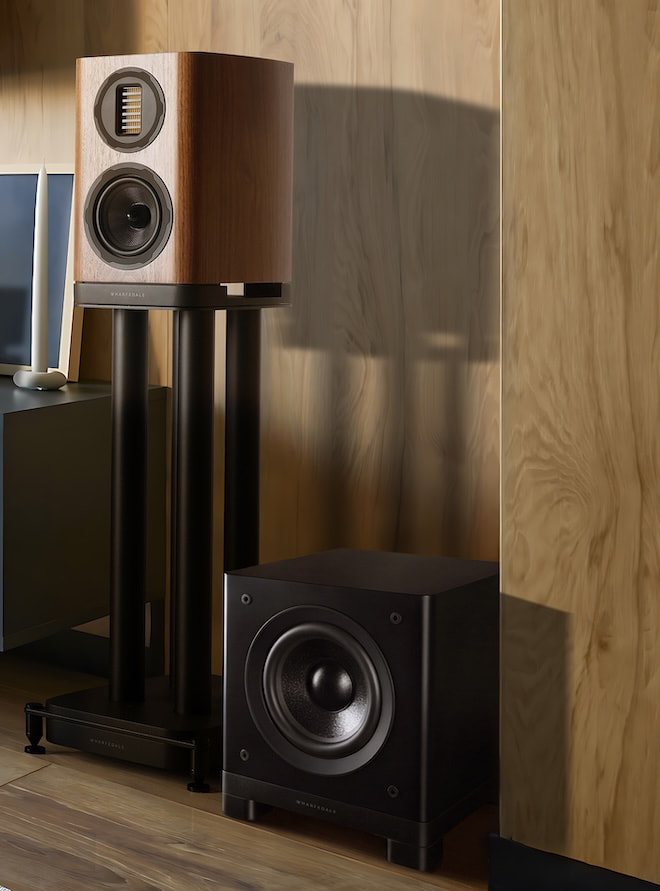
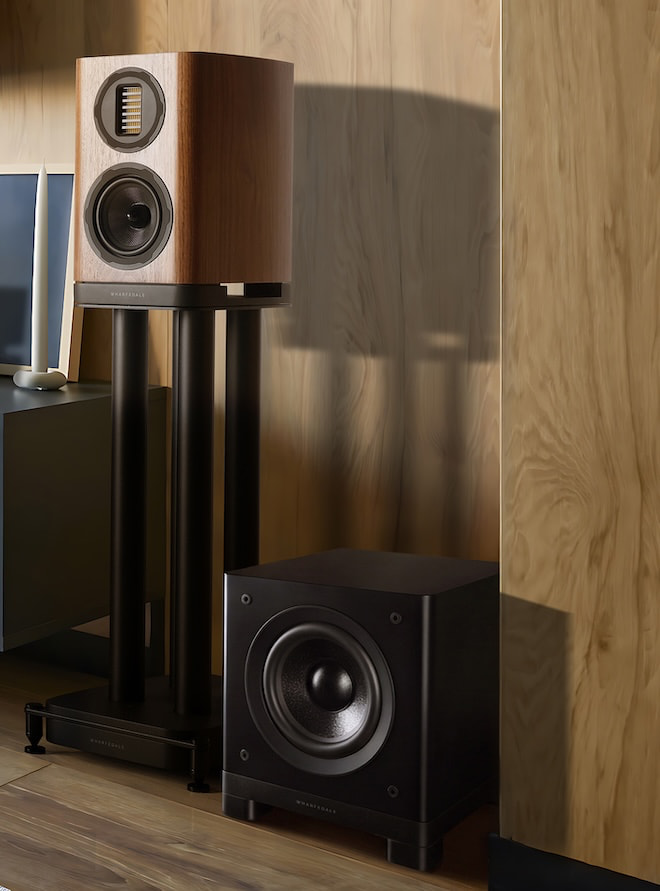
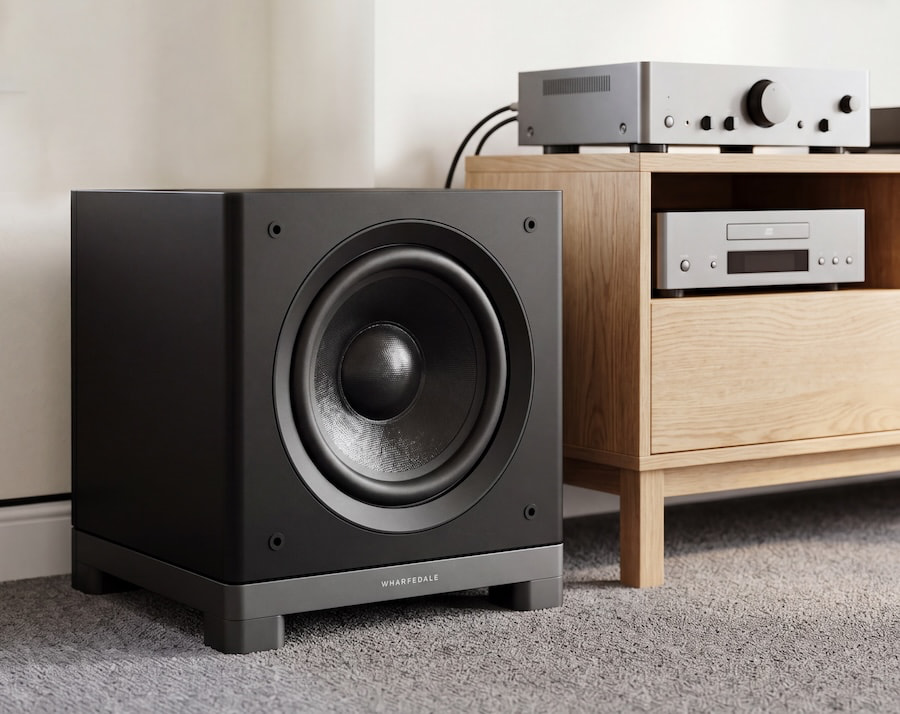
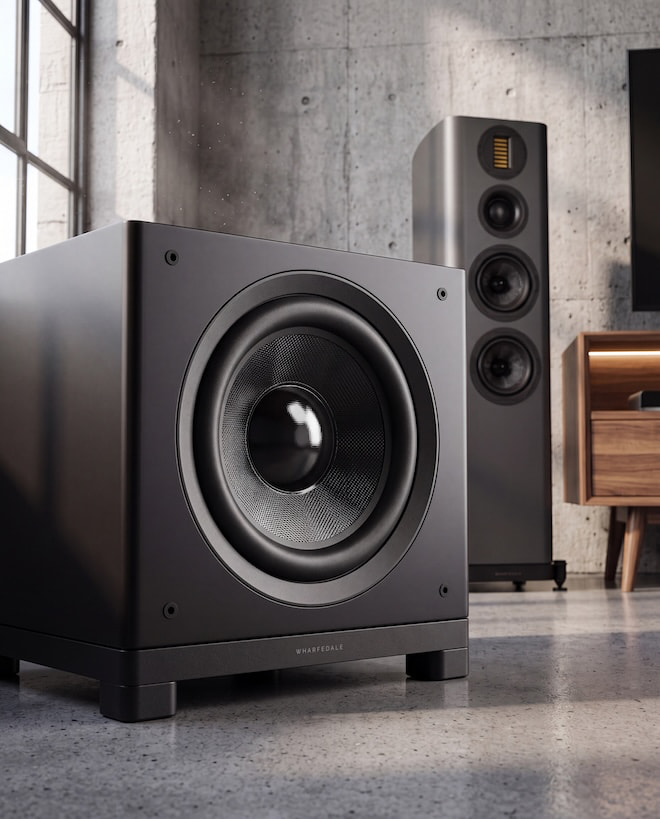
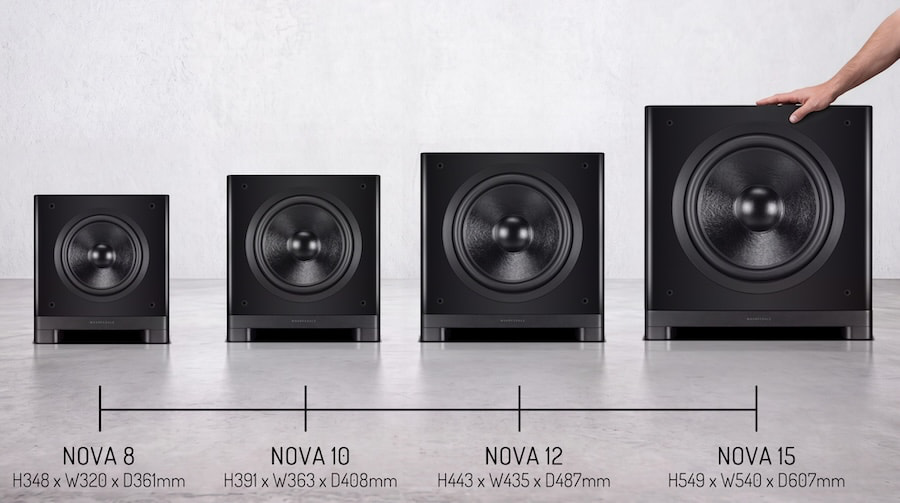
The new Wharfedale Nova Series consists of four active subwoofers ranging from the Nova 8 to the imposing Nova 15. They are intended for both two-channel systems and home theater, with Wharfedale focusing on extension, output and system integration rather than simply building four increasingly large boxes designed to rearrange the contents of your kitchen cabinets.
Advertisement
Related Reading:
Four Sizes, One Common Architecture
All four Nova models use newly developed long-throw active drivers with coated paper cones, die-cast chassis, oversized surrounds and high-excursion motor systems. An aluminum shorting ring is incorporated into the motor structure to improve linearity and reduce distortion as excursion increases.
Rather than using conventional bass-reflex ports, Wharfedale pairs each active woofer with a downward-firing, mass-loaded Auxiliary Bass Radiator (ABR). The passive radiator is intended to extend low-frequency output without introducing the turbulence and port noise that can affect reflex designs at higher playback levels.
The Nova 8 is the unusual member of the family because its 8-inch active driver is partnered with a larger 10-inch passive radiator. The Nova 10, Nova 12 and Nova 15 use passive radiators matching the diameter of their respective active woofers.
DSP Without Turning Your Subwoofer Into Another Computer
Each Nova combines its driver, cabinet loading, Class D amplifier and DSP as part of a single system. Wharfedale’s Dynamic EQ adjusts low-frequency behavior according to playback level, preserving more bass extension at lower volumes while controlling driver excursion as output increases.
Advertisement
Wharfedale also provides dedicated Music and Movie DSP modes, along with adjustable crossover, phase and output level controls. What you will not find is app-based setup or automated room correction, so some actual human involvement remains required.
All four models provide stereo RCA inputs, with the right channel supporting LFE, plus speaker-level inputs using binding posts. Stereo RCA outputs, a 12V trigger and USB connectivity for firmware updates are also standard across the range.
Those speaker-level inputs are particularly useful for two-channel systems built around integrated amplifiers without dedicated subwoofer outputs. Owners of Wharfedale Heritage speakers can therefore add one without replacing amplification that is already working perfectly well.
Advertisement. Scroll to continue reading.
Advertisement
Wharfedale Nova 8
The Nova 8 is the most compact model and the logical starting point for smaller rooms or stereo systems where floor space is limited. Its most interesting engineering detail is the larger 10-inch passive radiator working beneath the 8-inch active woofer.
Nova 8 Specifications
Active Driver: 8-inch coated paper cone
Passive Radiator: 10-inch downward-firing coated paper cone
Low-Frequency Extension: 33Hz (-6dB)
Amplification: 200 watts nominal / 500 watts peak
Crossover Range: 40Hz to 160Hz
Inputs: Stereo RCA with LFE support; speaker-level binding posts
Outputs: Stereo RCA
Other Connections: 12V trigger; USB for firmware updates
Dimensions (H x W x D): 13.7 x 12.6 x 14.2 inches
Weight: 35.9 pounds
Finish: Matte Black
U.S. Price: $1,099
Wharfedale currently positions the Nova 8 as the model for compact systems and smaller rooms, although $1,099 makes it very clear that this is not the company’s entry-level subwoofer.
Wharfedale Nova 10
The Nova 10 moves to a matching 10-inch active woofer and 10-inch passive radiator while increasing amplifier output and extending bass response to a claimed 29Hz at -6dB. The cabinet also grows substantially, but it remains a manageable option for medium-sized rooms.
Nova 10 Specifications
Active Driver: 10-inch coated paper cone
Passive Radiator: 10-inch downward-firing coated paper cone
Low-Frequency Extension: 29Hz (-6dB)
Amplification: 230 watts nominal / 500 watts peak
Crossover Range: 40Hz to 160Hz
Inputs: Stereo RCA with LFE support; speaker-level binding posts
Outputs: Stereo RCA
Other Connections: 12V trigger; USB for firmware updates
Dimensions (H x W x D): 15.4 x 14.3 x 16.1 inches
Weight: 48.9 pounds
Finish: Matte Black
U.S. Price: $1,299
The Nova 10 might prove to be the most broadly useful model in the lineup. It digs lower than the Nova 8 without making the significant jump in size and weight required by the two larger models.
Wharfedale Nova 12
The Nova 12 is where things begin getting considerably more serious. A 12-inch active woofer and matching passive radiator are backed by 280 watts of nominal power and 770 watts peak, while the cabinet tips the scales at almost 65 pounds.
Advertisement
Nova 12 Specifications
Active Driver: 12-inch coated paper cone
Passive Radiator: 12-inch downward-firing coated paper cone
Low-Frequency Extension: 28Hz (-6dB)
Amplification: 280 watts nominal / 770 watts peak
Crossover Range: 40Hz to 160Hz
Inputs: Stereo RCA with LFE support; speaker-level binding posts
Outputs: Stereo RCA
Other Connections: 12V trigger; USB for firmware updates
Dimensions (H x W x D): 17.4 x 17.1 x 19.2 inches
Weight: 64.6 pounds
Finish: Matte Black
U.S. Price: $1,599
Interestingly, the claimed low-frequency extension only improves by 1Hz compared with the Nova 10. The reason to move up is therefore more likely to be output capability and room-filling scale than chasing a dramatically lower frequency number.
Wharfedale Nova 15
And then there is the Nova 15.
The flagship uses a 15-inch active woofer and equally large downward-firing passive radiator inside a cabinet weighing 105.4 pounds. At more than 21 inches in both height and width, nobody is hiding this behind a ficus.
Nova 15 Specifications
Advertisement. Scroll to continue reading.
Advertisement
Active Driver: 15-inch coated paper cone
Passive Radiator: 15-inch downward-firing coated paper cone
Low-Frequency Extension: 28Hz (-6dB)
Amplification: 360 watts nominal / 770 watts peak
Crossover Range: 40Hz to 160Hz
Inputs: Stereo RCA with LFE support; speaker-level binding posts
Outputs: Stereo RCA
Other Connections: 12V trigger; USB for firmware updates
Dimensions (H x W x D): 21.6 x 21.3 x 23.9 inches
Weight: 105.4 pounds
Finish: Matte Black
U.S. Price: $1,999
The Nova 15 shares the Nova 12’s claimed 28Hz (-6dB) extension, so the larger driver and cabinet are again about greater displacement and potential output rather than winning a specification-sheet contest over the lowest printed frequency.
Calling it compact would require an extremely forgiving editor.
Any Color You Want
Wharfedale has become rather adventurous with finishes elsewhere in its lineup. The Denton 1S comes in matte black, white and blue, while Elysian R buyers can choose walnut high gloss, matte black or lunar grey.
Nova buyers face a somewhat shorter decision tree.
Matte Black.
Advertisement
That is currently the entire selection across all four models. It makes practical sense for a subwoofer designed to disappear visually into a room, although anyone hoping to perfectly match a walnut Linton or mahogany Super Denton will have to embrace the concept of contrast.
Henry Ford would presumably approve.
The Bottom Line
Wharfedale is entering a brutally competitive part of the subwoofer market with the Nova Series. Once the price crosses $1,000, buyers are no longer choosing between a decent subwoofer and a better one. They are choosing between established specialists offering very different approaches to low-frequency reproduction.
We have covered that market extensively, and the competition gets serious almost immediately. The $1,299 SVS SB-3000 R|Evolution uses a 13-inch driver, 1,200-watt RMS amplifier, extensive DSP and app control, with claimed extension to 17Hz ±3dB. Move up to the $1,799 PB-3000 R|Evolution and SVS adds a ported enclosure with claimed extension to 16Hz ±3dB. Those numbers make the Nova 10, 12 and 15 specifications look relatively conservative on paper, although frequency-extension figures alone tell us very little about how well a subwoofer actually integrates with a system or room.
Advertisement
REL presents a different challenge. The $1,299 T/7x and $1,699 T/9x are aimed heavily at two-channel listeners and, like the Nova models, provide high-level connectivity. The T/9x also combines a 10-inch active driver with a downward-firing 10-inch passive radiator, so Wharfedale is hardly alone in pursuing that particular approach. REL also offers black, white and grey finishes on the T/9x, which seems almost recklessly extravagant compared with Nova’s one-color democracy.
The MartinLogan Dynamo 10 creates another problem for the $1,099 Nova 8 and $1,299 Nova 10. At $1,199.99, it includes a 10-inch driver, app-based setup, built-in wireless connectivity and compatibility with Anthem Room Correction. Wharfedale’s more conventional controls will appeal to listeners who do not want another app in their lives, but buyers who value automated room integration are getting considerably more setup technology from MartinLogan at essentially the same price.
And then there is RSL. We have been recommending the Speedwoofer 12S for years, and its current $885 price makes the comparison rather uncomfortable. Its 12-inch driver, 500-watt RMS amplifier and claimed 16Hz ±3dB extension come in well below the price of even the smallest Nova. Our own testing found the Speedwoofer 12S capable of competing with considerably more expensive products, which means Wharfedale cannot rely on value alone to make its case.
Advertisement. Scroll to continue reading.
Advertisement
KEF also occupies this territory with its Kube MIE range. The Kube 12 MIE is currently $1,099.99, exactly where the Nova 8 begins, while the 15-inch Kube 15 MIE sells for $1,499.99. KEF offers sealed enclosures, placement-dependent DSP and multiple finish options, making it another established alternative for buyers who want something easier to integrate visually and physically.
That does not leave the Wharfedale Nova Series without an argument. The combination of passive-radiator loading, Dynamic EQ, Music and Movie modes, speaker-level inputs and four cabinet sizes makes these more flexible than a basic LFE box. They should also attract existing Wharfedale owners who want a subwoofer designed within the same engineering ecosystem as their loudspeakers.
But familiarity with the badge is not enough at these prices.
The Nova 8 has to compete with MartinLogan and KEF at roughly the same money. The Nova 10 runs directly into the SVS SB-3000 R|Evolution and REL T/7x. The $1,599 Nova 12 sits perilously close to the REL T/9x and SVS PB-3000 R|Evolution, while the $1,999 Nova 15 costs exactly the same as the formidable SVS SB-5000 R|Evolution, which uses a 15-inch driver, 2,000 watts RMS of amplification and is rated to 17Hz ±3dB.
Advertisement
That is a very tough neighborhood.
Wharfedale therefore has to prove that Nova’s real advantage is not a bigger driver, a lower number on the frequency-response chart, or another DSP mode. It has to be how convincingly these subwoofers disappear into a two-channel system while still having enough output for home theater — something the company’s loudspeaker customers will understandably care about more than winning an arms race on a specification sheet.
We will know that only after listening to them.
Until then, Wharfedale has produced an interesting series of subwoofers and dropped them into a market where nobody gets a free pass.
X on Monday announced it will now tell users when their posts have been “shadowbanned,” meaning shown to fewer people, due to the company’s compliance with local laws. The feature is an expansion of the social network’s earlier transparency tool called “Under the Hood,” which allows users to see if any labels have been applied to their account or their posts that could have affected their visibility on the platform.
It will also highlight any downranking of users’ posts due to government-required content filtering.
We’ve expanded Under The Hood after seeing people’s appreciation of more transparency into government-required content filtering.
Previously, information about how an X user’s account or posts were being labeled and downranked was not available to end users. As a result, many often accused the company, formerly known as Twitter, of having shadowbanned them.
In addition, most companies that share data about government requests do so on an aggregate basis through “transparency reports,” not at the account or post level.
That began to change when, in August, X rolled out its transparency tool to offer more visibility into its moderation decisions. The “Under the Hood” option in the X app settings allows anyone who has posted at least 10 times during the month to download their aggregate stats as a JSON file, a standard data format. (Non-technical users can drop the file into any AI chatbot to have it explained.)
This same process will now show if an account or posts have had their visibility limited because X is complying with local laws. The file will also include which posts were withheld in a country following a legal demand, and which country made the request.
Advertisement
Governments cite a range of reasons for such demands, from laws against hate speech to terrorism-related content to election rules. Of course, critics, including free-expression groups, say some countries also use these laws to squash political dissent.
The update follows a number of other transparency-related efforts at X, including the open-sourcing of its “For You” algorithm, which selects the posts in users’ main feed, and an expansion of its efforts to open source parts of its codebase. The latter involved adding more detail, including on the model configuration, filtering, and core ranking system details. That means the code now includes the parameters used to weight different signals — information that is key to understanding which posts are actually displayed.
At the time of that open-sourcing effort, X’s vice president of product, Keith Coleman, said it was “the kind of thing that I think people will be fairly shocked that we are releasing.”
When you purchase through links in our articles, we may earn a small commission. This doesn’t affect our editorial independence.
The Hunt: Roblox 20 is a special event that Roblox has created as part of its 20th anniversary celebrations. It lets players explore 20 years of Roblox’s journey through popular games from different years. As players proceed on their quest, they will be able to earn limited-release UGC rewards. After completing the major quest, players can continue to explore Year Infinity, which includes 20 games set in 2026 and later.
The Hunt: Roblox 20 Takes Players Through 20 Years of Roblox
The Hunt: Roblox 20 takes players through different years of Roblox’s 20-year history. The event features popular games that represent different periods since Roblox first launched. Players can enter these experiences and complete quests as they move through the event. Completing the quests also gives players a chance to collect limited-release UGC items. After finishing the main journey, players unlock Year Infinity. This stage adds 20 more games that represent Roblox in 2026 and beyond. The event connects older experiences like Crossroads with newer titles such as Grow a Garden.
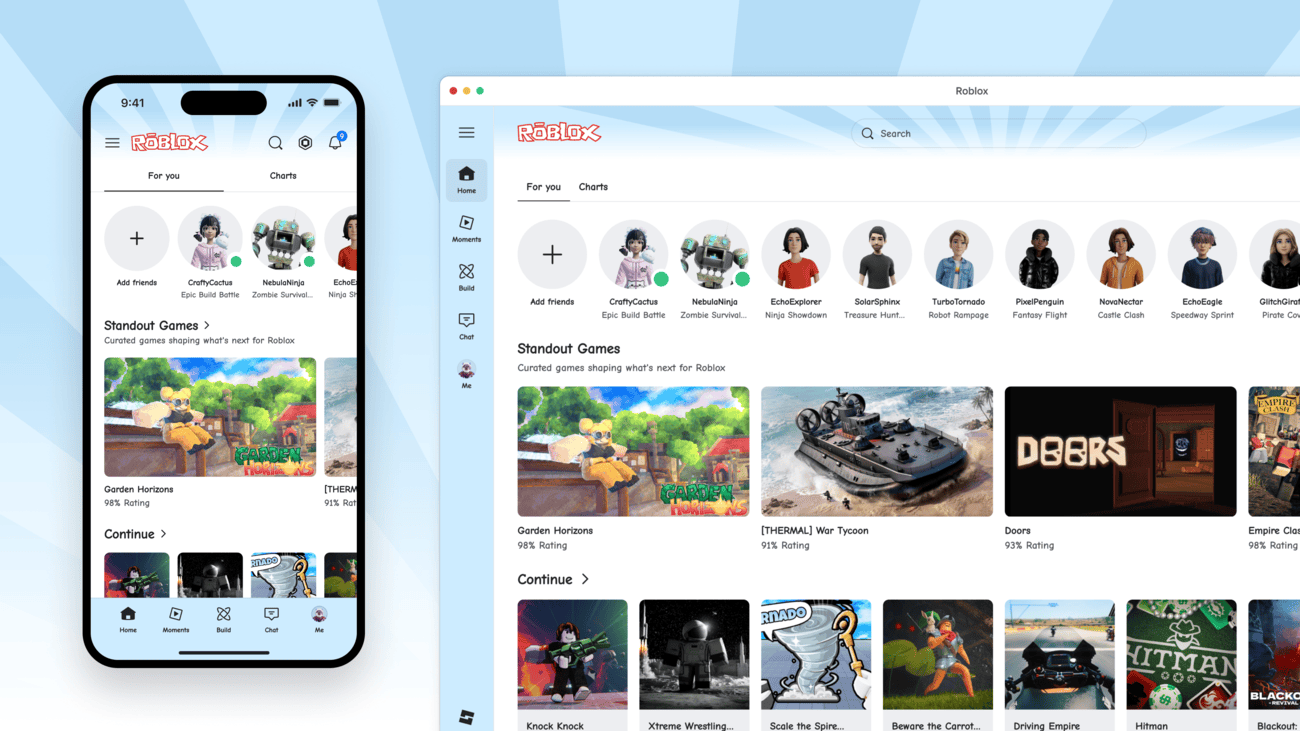
Roblox Plus subscribers can access some additional perks during the 20th-anniversary event. They get early access to the event hub and can earn three exclusive virtual items. Subscribers also get the Classic app theme, which brings back Roblox’s older logo, colors, and font. The throwback theme is not limited to Plus members, as all players can use it during the event. Roblox is using the anniversary to recognize the creators and experiences that have helped build its community over the past 20 years.
from the this-is-why-we-can’t-have-nice-things dept
California AG Rob Bonta has caved to what was a relentless, bipartisan pressure campaign to settle the 12 state antitrust lawsuit against Paramount. The AGs sued Paramount last July, arguing (correctly) that the $111 billion deal would largely be anti-competitive, resulting in mass layoffs as the even bigger Larry Ellison-owned company forces labor and consumers to pay down the deal’s mammoth debt load.
The final settlement language hasn’t been made public, but a Bloomberg report indicates there’s not much to it. It will feature some sort of board that will purportedly try and keep CNN from going the same direction as CBS under Bari Weiss (good luck), and some language holding Paramount’s feet to the fire in terms of its promise to deliver 30 traditional big studio releases per year.
It doesn’t sound like Paramount will be forced to sell any assets or provide labor promises of any kind.
Reports suggest that at least 4 of the state AGs weren’t exactly thrilled with the idea of settling. It also sounds like California Governor Gavin Newsom was a key player in pushing for a settlement:
Advertisement
“Golden State Governor Gavin Newsom, who has been advocating for a settlement publicly over the past month, was in “constant contact” with the parties as talks ebbed and flowed over the weekend. Very much aware of the harsh backlash to a settlement that erupted among Congressional Democrats, A-listers like Mark Ruffalo and others as deal talks accelerated, potential 2028 POTUS candidate Newsom is said to have cautioned both sides to find terms that addressed “core concerns” for Hollywood and the state.
“It’s jobs, job, jobs, that’s what this all about,” a source close to power players in Sacramento told Deadline.”
Generally conditions don’t mean much, aren’t permanent, and aren’t consistently enforced. They don’t do much of anything to combat the larger trend of media consolidation; particularly at the hands of autocrats who have taken a hatchet to regulatory autonomy and state authority via the courts as they look to dominate media and supplant journalism with propaganda.
Consumer and media watchdog groups like Free Press were not impressed by Bonta’s decision to fold:
“These minor concessions are largely unenforceable behavioral remedies that Bonta had previously denounced, and in some cases promise less than the two companies are already doing as standalone competitors. They came after Paramount owner David Ellison made multiple threats to move the studio out of California unless the attorneys general dropped their lawsuit. Previously, Bonta had maintained he’d only accept structural remedies, which block the merger or involve companies selling off significant parts of the combined businesses.”
Bonta and Newsom were intimidated by Ellison’s threat that he would move Paramount out of Hollywood if states tried to enforce antitrust law. Though that’s the thing about antitrust enforcement: if you actually enforce antitrust law — and ensure markets are heavily populated with small to mid-sized competitors — they lack the kind of consolidated power to make those kinds of threats.
Advertisement
What happens next? Well, the same thing that always happens. The deal moves forward, then Paramount will begin forcing labor, creatives, and consumers to pay down the massive debt load in the form of massive layoffs, higher prices, and the kind of corner cutting that results in lower quality product. This is literally what happens every single time a deal like this is approved. There’s not really any debate.
Once the layoffs come en masse the folks, like Newsom, who advocated for a settlement, will suddenly be nowhere to be found. Again, we know this because this is what always happens. There are literally fifty years of indisputable evidence that these deals always end badly for markets, consumers, and labor. And the dysfunction is frequently infuriatingly bipartisan.
In addition to the antitrust angle, this was an opportunity for Democrats to try and kick back against the right wing effort to dominate media for propaganda purposes. But Democrats generally have proven to be feckless and pathetic when it comes to both media reform generally, and fighting right wing information warfare specifically.
If there’s a positive note for the whole thing (and assuming you ignore all the human carnage that’s coming), there’s very little indication that Paramount executives and the Ellisons have any earthly idea what they’re doing; Bari Weiss’ makeover of CBS continues to be a disaster, and there’s endless financial and logistical minefields awaiting the Ellisons just over the horizon.
Advertisement
It remains very possible that this company simply won’t survive the evolutionary market challenges it faces in the social media era. Every single time Warner Brothers mergers it results in mass layoffs, higher prices, shittier product, and a lot of whimpering before the acquiring company gives up entirely (see: AT&T). There’s no reason to believe this time will be any different.
In brief: CEOs of major memory manufacturers have made varying predictions of how long ongoing shortages will last, with Acer offering the most optimistic assessment. Accusing other companies of overshooting estimates to influence profit margins, Acer’s CEO thinks the worst could pass by the end of next year.
Acer CEO Jason Chen recently told DigiTimes that PC price hikes related to RAM shortages might begin to reverse by late 2027. The statement counters earlier claims from other memory manufacturer CEOs that the situation would continue until at least 2030.
Since last year, explosive demand from AI data center construction has swallowed up supply and quintupled DRAM prices, pushing hardware makers to raise prices across any device that leans on large RAM pools.
PCs, smartphones, graphics cards, and game consoles have all felt the hit, and the fallout has spilled over into demand for CPUs and motherboards too. One recent study found that today’s memory market, on a per-unit basis, looks a lot like it did nearly two decades ago.
Advertisement
Estimates on how long the shortage and elevated pricing will last vary widely. Earlier this year, Micron CEO Sanjay Mehrotra predicted the situation would continue beyond 2027. Not long after, SK Hynix CEO Kwak Noh-Jung said shortages would peak in 2027 and supply would stay tight through 2030.
Adata chairman Chen Li-bai went further still, forecasting elevated prices for another decade – despite expansion plans from every major memory manufacturer.
Acer’s CEO sees it differently. Chen argues those predictions are less about supply realities and more about prolonging the fat profit margins the AI boom has handed memory makers. He claims supply of most RAM and SSD types has already caught up with demand, and that today’s shortages are limited to high-end parts – the fastest DDR5 modules and CPUs like Nvidia’s N1X among them.
Advertisement
Chen still expects PC prices to rise 5% to 20% later this year, with a peak in the first half of 2027 before prices finally start easing. New, cheaper supply from Chinese manufacturers like CXMT is a big part of that math, and recent reports suggest Apple is weighing CXMT as a supplier to ease its own cost pressure, even with the company still sitting on the Pentagon’s blacklist.
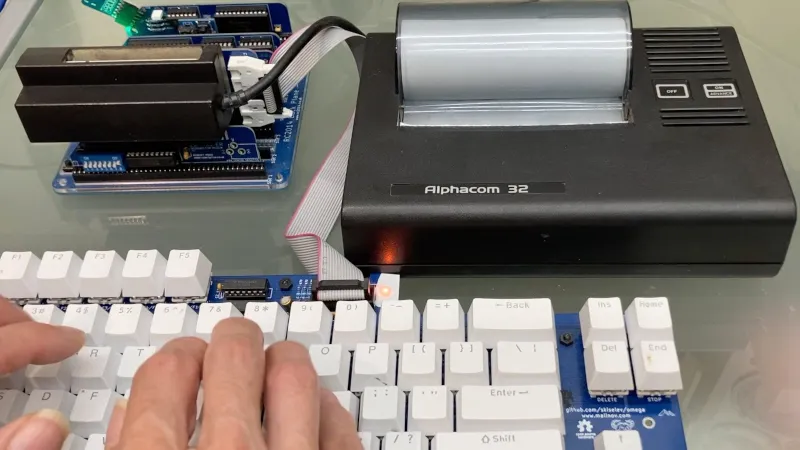
Here in 2026 if we need a terminal the chances are we fire one up on our computer and continue on our way without a thought. What we are doing of course is emulating the experience of earlier hardware terminals, ones with a serial port on the back, a keyboard, a screen, or if they are a bit older, a teletype printer. [Sheila Dixon] is recreating that experience for the RC2014 retrocomputer, and she’s using some period-appropriate hardware and techniques.
Perhaps the most obvious thing about her build is her choice of printer. Sir Clive released a notoriously bad thermal printer for the ZX81, and it wasn’t long before a third-party alternative appeared in the form of the Alphacom. This printer connected directly to the ZX’s bus via its expansion port, and like the Sinclair printer, was serviced by ROM routines linked to BASIC commands. This is joined by a keyboard, first an MSX item, and then one she’s made with some retro typewriter keycaps.
She’s interfaced her Alphacom to the RC2014’s Z80 bus in the same way as it would be with the ZX81, and with a few teething troubles created some routines in a ROM to drive it as though it was the RC2014 terminal output. The keyboard is scanned using an 8255 I/O port card, much as it might have been back in the day.
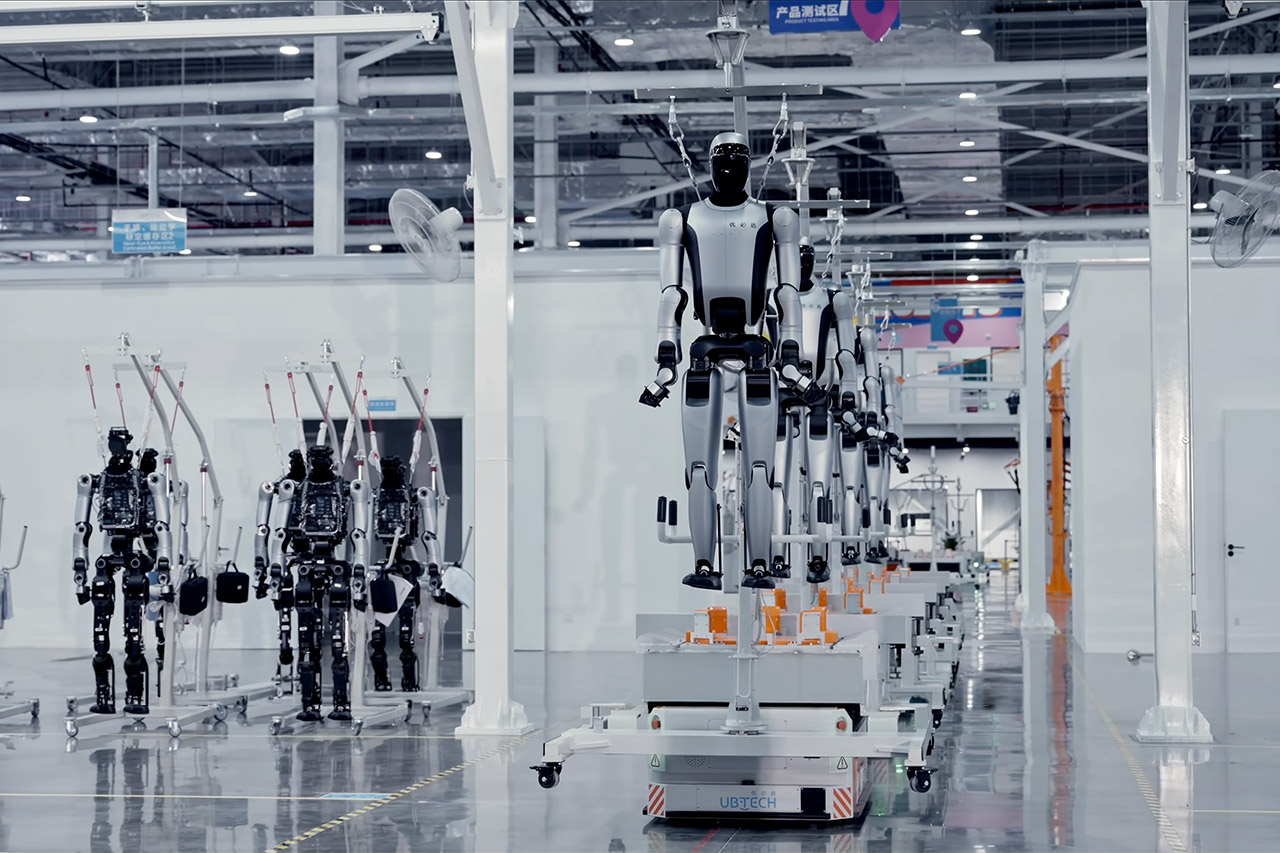
UBTECH Robotics commissioned its Industrial Humanoid Robot Super Smart Factory in Liuzhou, in China’s Guangxi Zhuang Autonomous Region, on September 12, 2026, with a line timed to finish one industrial humanoid every ten minutes and a planned yearly output above 10,000 machines.
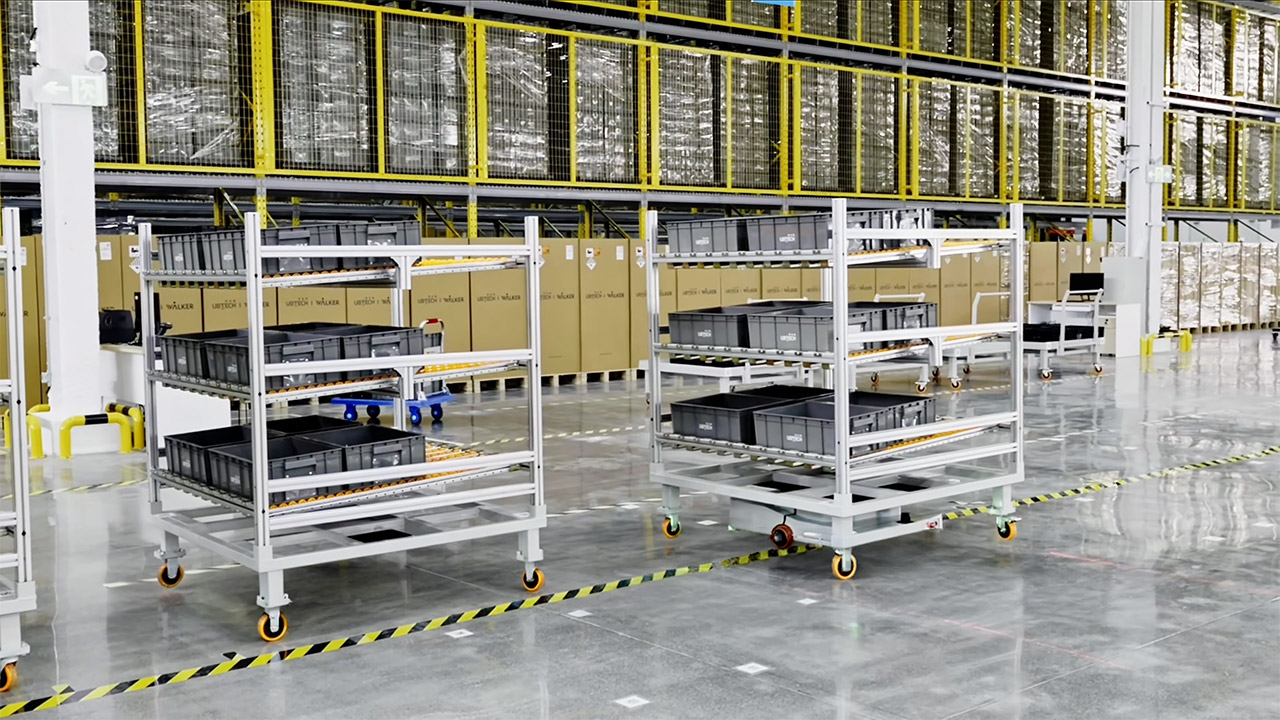
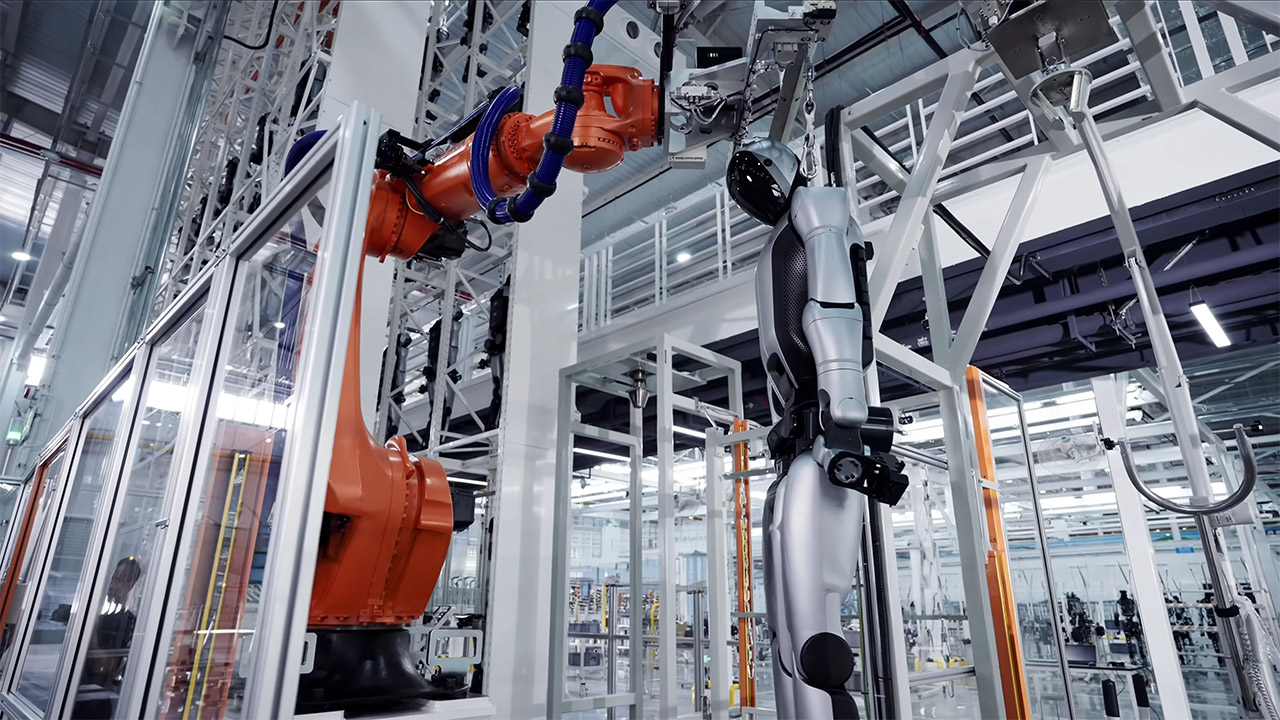
Fourteen thousand square meters of floor and 13.8 meters of height now hold a mixed assembly layout that skips fixed overhead conveyor chains. Instead, you’ve got rotating workbenches, collaborative arms, power assist manipulators, and self-docking carts all jumbled together in the same space, the same space that builds the bipedal Walker S units and wheeled Cruzr models, without having to rip the entire line down to switch between them.
LEGO SET FOR ADULTS – The WALL-E and EVE (43279) building set offers adults 18 years old and up an immersive construction challenge featuring…
4 DISNEY PIXAR CHARACTERS – Builders can create iconic robots WALL-E, EVE, M-O and Hal from the hit movie—each with authentic functionality like…
MINDFUL BUILDING EXPERIENCE – This detailed construction set lets builders practice advanced construction techniques for an immersive and relaxing…
Cruzr Y1 and Cruzr S2 machines equipped with 3D vision are busy removing parts from pallets, stacking totes, loading stations, and carrying kits across the floor. Humans are no longer running around like headless chickens fetching parts for the machines; instead, automated forklifts, guided vehicles, and unmanned logistics trolleys ferry all that sub-assembly, final assembly, testing, and storage around the place, and as a nice little bonus, the same robot families that do all the heavy lifting are also the ones that come off the production line, hence the phrase ‘robots building robots’.
Each Walker S chassis requires more than 2000 screws, with over 50 different sizes. Those automated torque stations are working long hours, feeding fasteners, ensuring the depth and angle are correct, and recording all of this information for safekeeping. That way, if a bolt goes missing or is stripped somewhere along the path, it will be detected in the system before the following station can begin work. The dollies are all equipped with RFID tags that link the chassis serial number to the batch of parts used to build it.
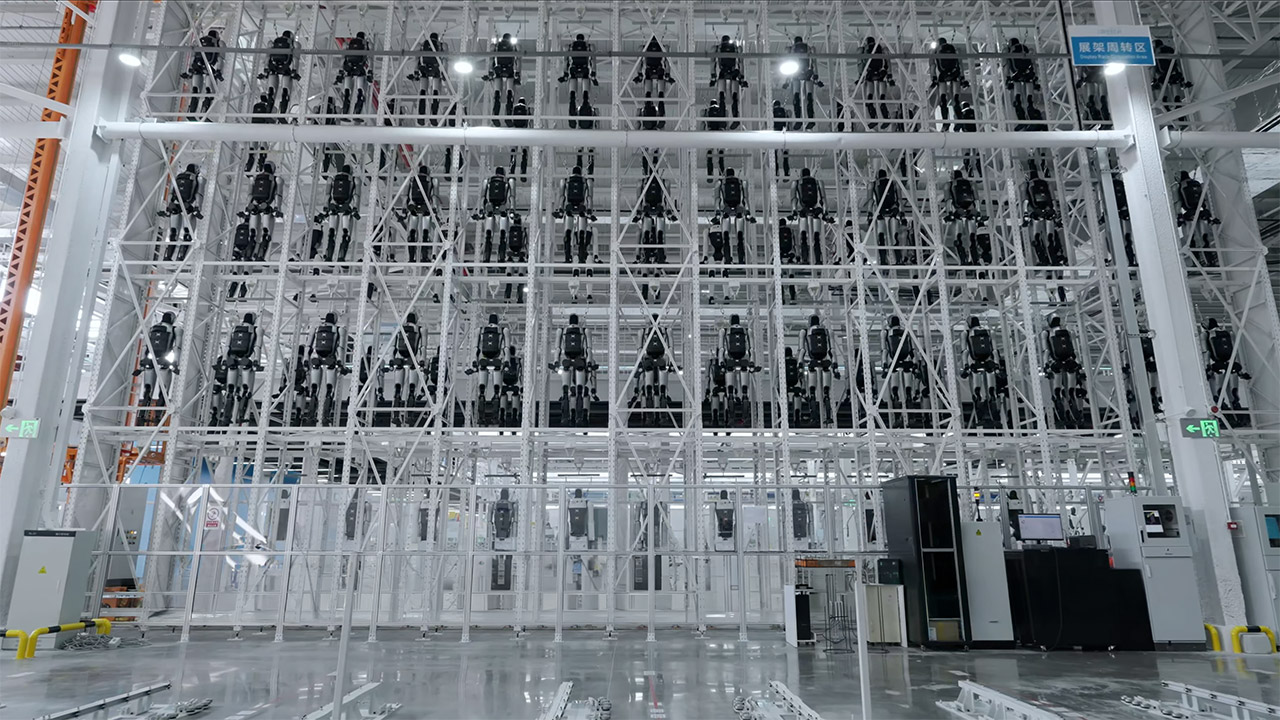
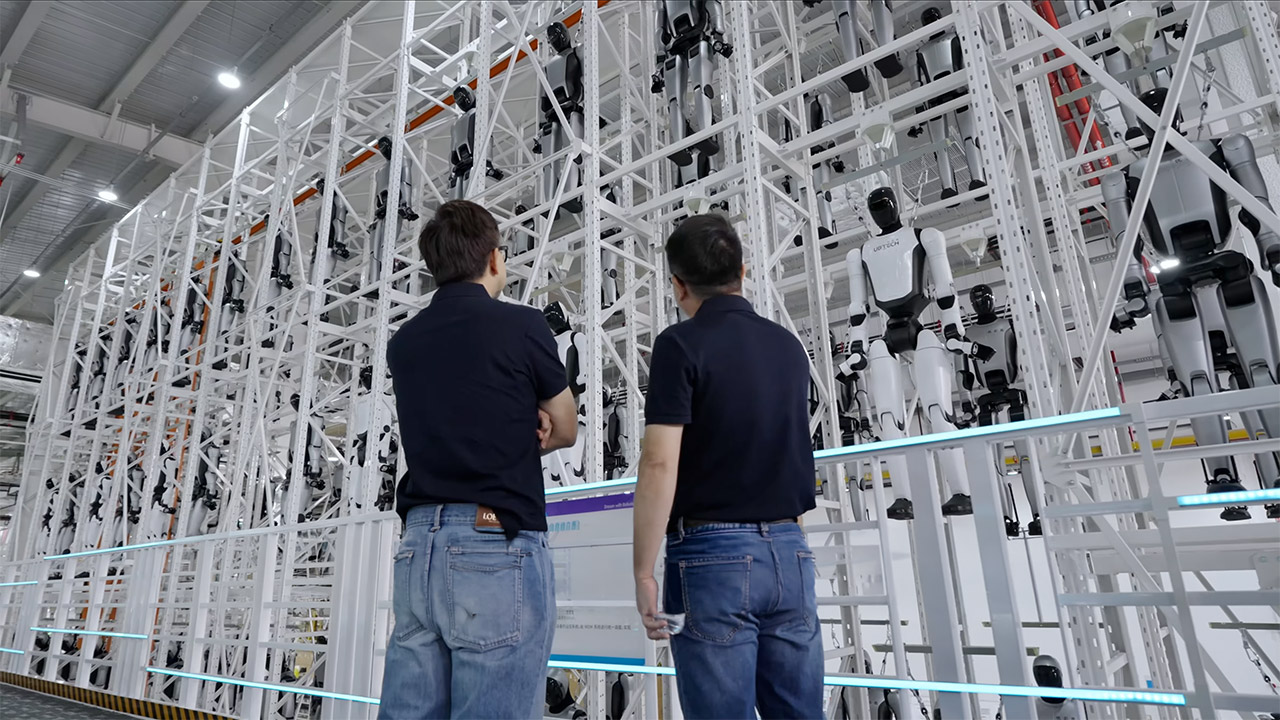
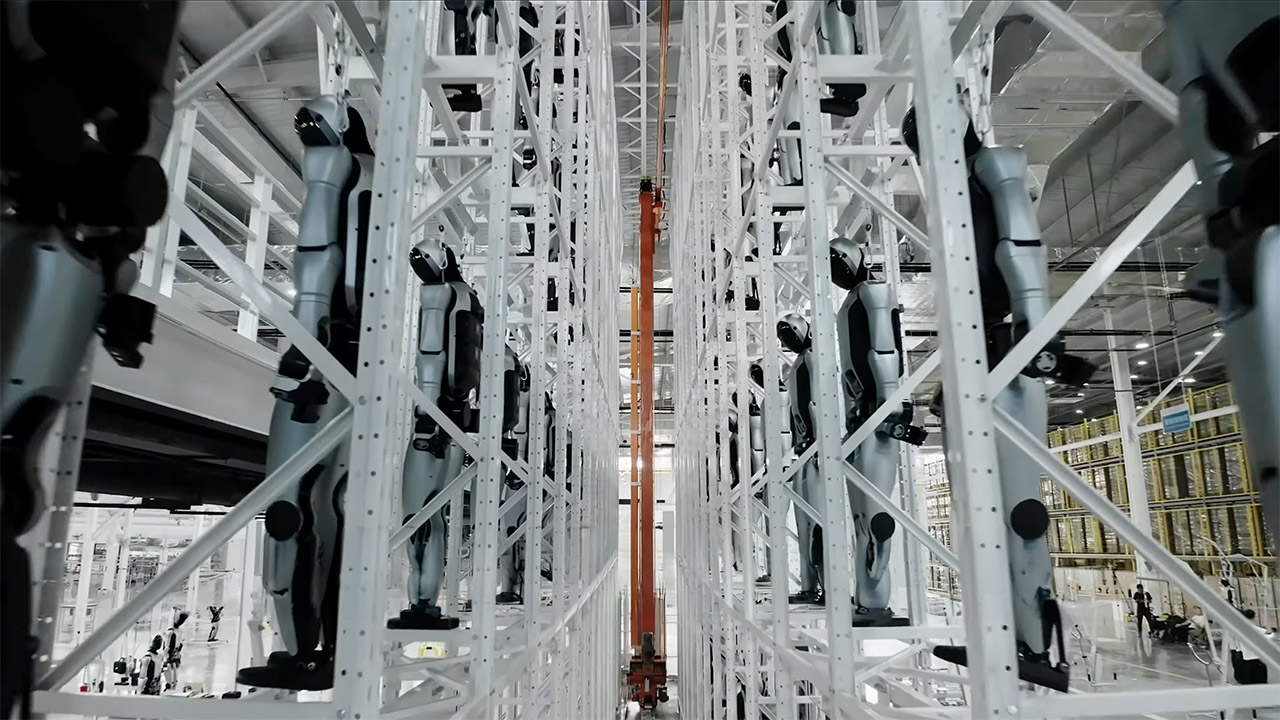
Once a machine is finished, it goes through a four-hour or more whole-unit test, checking joints, gait balance, and payload stability, followed by a nice spin through an automotive-grade lighting tunnel to make sure the seams, joint covers, and body panels are all looking ship-shape, with a nice 360-degree view. All of this is taking place in a tiny high-bay warehouse measuring only 65m2 yet including 112 finished robots. They claim to have used floor space more efficiently than a flat store of the same size, possibly by 50%.
Siemens Digital Industries Software assisted UBTECH in planning the site using a full-scale digital twin, as they modeled all the cart traffic, empty tote returns, and buffer times so they could figure out the layout before they even started building, and now, UBTECH calls this system the “smart brain” of the operation, and it’s in charge of scheduling work orders, moving materials around, and checking quality, and even stamps each robot with a serial number that follows that fastener right through to the point at which it finally leaves the plant.
The main biped, the Walker S2, stands 176cm tall and weighs approximately 70kg. It has 52 degrees of freedom and can walk at up to 2 meters per second while lifting 15 kilograms with each arm. The Cruzr models, on the other hand, remain on wheels and handle all of the plant’s hauling, which formerly required a crew of workers with trolleys. The early Walker units have already undergone testing at nearby auto manufacturers such as Dongfeng Liuzhou Motor and SAIC-GM-Wuling, and they have been working hard for a variety of companies including BYD, Geely, Foxconn, and SF Express.
Company vice president Pang Jianxin has said mass production of these complex parts would be extremely difficult without China’s component network, unless costs rose enough to erase the advantage. More than 90 percent of Walker S2 parts come from inside the country, and UBTECH points to that dense supplier base, plus years of factory use cases, as the reason a line of this size could go from a thousand-unit mark to a ten-thousand-unit plant in less than nine months. China’s wider robot output keeps rising on its own. July 2026 industrial robot production reached 98,677 units, up 30.2 percent from a year earlier, and the first seven months of the year totaled 635,056 units, up 28.5 percent.
Meta’s AI “personal agent” Muse overtook ChatGPT as the #1 iOS free app in the U.S. on Friday, reports CNBC — and it’s still showing more downloads as of Monday night.
Muse now has over 2.5 million downloads since its debut less than two weeks ago, according to analytics firm Sensor Tower…
[Muse] is currently ahead of popular services like OpenAI’s ChatGPT, Polymarket and Kashi… It’s also ahead of rival AI apps like Anthropic’s Claude and SpaceXAI’s Grok AI, in addition to the Facebook-parent’s own Meta AI app… Meta pitched the app as a way for consumers to manage and direct supercharged digital assistants that can perform a number of tasks across the web, like filling out electronic forms and organizing email inboxes… “I think up to this point most of the agentic use cases have not really been for normal people,” Bernstein analyst Stacy Rasgon told CNBC in a “Squawk on the Street” interview on Monday. “Now you’ve got Meta’s Muse and other agents out there that are starting to maybe get more potential for more broad-based adoption.” The buzz around Meta was also reflected in the stock, which surged more than 11% on Monday.
Amazon is already blocking Muse, reports GeekWire. Amazon first tried to get Meta to voluntarily exclude Amazon, but they were unsuccessful:
Advertisement
The problem, Amazon says, is that it never agreed to any of it. Meta didn’t tell Amazon that Muse would access its store, the agent doesn’t identify itself when it browses, and it appears to capture and store customer credentials, which the company says could create privacy and security risks. As of Sunday night, people trying to use Muse to shop on Amazon were seeing the popup, “Continued access by an unauthorized AI agent violates Amazon’s Conditions of Use, to which our customers have agreed…”
Amazon has spent the past year trying to keep outside agents off its site, suing Perplexity over its Comet browser and moving to block shopping agents from Google and OpenAI. [Amazon won a preliminary injunction against Perplexity in March, the article poitns out, “then lost it on Aug. 4, when the Ninth Circuit ruled that the user — not the AI company — was the one accessing Amazon’s computers under federal anti-hacking law. The court denied Amazon’s petition for rehearing on Sept. 10.”]
On Sunday night, Amazon said it is in direct conversation with Meta about the issue. Asked whether it would consider taking legal action, the company declined to comment. The business stakes are high for Amazon. In addition to operating its flagship e-commerce site, Amazon generated more than $68 billion in ad revenue last year — a business that depends on people browsing its pages and seeing sponsored products.
Muse also appears to scrape account data, reports CNBC. But Shopify, however, “is working with Meta on Muse access. Shopify CEO Tobias Lütke announced Monday that the e-commerce site was partnering with Muse to allow agentic checkout in its online stores.”
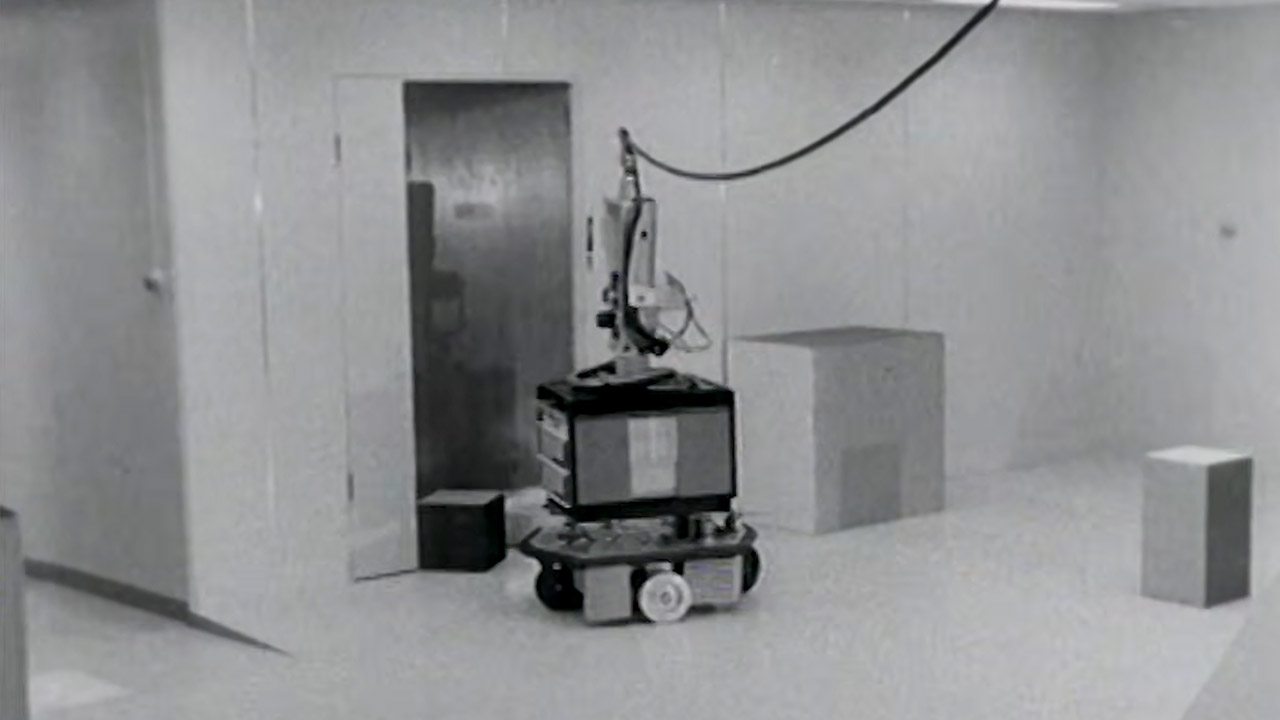
Opening a BBC ‘Towards Tomorrow’ special first shown on December 28, 1967 is a warning that mankind may already be obsolete. Population growth, pollution and a planet slipping out of human control could finish the job even without nuclear war. Intelligent machines might have to take Earth off our hands, the narration says, if only to keep life going after we have made a mess of it.
Isaac Asimov, regarded as one of the leading prophets of the robot age, views the looming challenges with robots in a social rather than technological perspective. They’ll be moving out of science fiction and into factories and households, causing people to wonder how humans and machines will cohabit. First, he sees them as useful aides, then as friends with whom people may identify and look up. Asimov raises the question of whether we may end up making robots so much like people and humans so much like robots that the borders between the two become blurred, resulting in a common culture. Or is that the point at which humanity will eventually vanish and be replaced by a machine culture that does not resemble one but nevertheless appears to be human to an outside observer?
Three models, one lightweight platform R1 Air (20 DOF, monocular camera), R1 (26 DOF, binocular camera, head+waist joints), and R1 Edu (26 DOF…
Easy setup – no coding required for basic use Unbox, power on, and start. Manual teaching feature: physically pose the robot, and it replays the…
More DOF = more expressive movement 26‑DOF models (R1 / R1 Edu) add head and waist articulation for smoother dance and running. For safety reasons…
That idea is worlds apart from Sim One, a plastic and metal medical dummy created by Don Carter, a mechanical engineer at the University of Southern California. It is intended for use by anesthesia students because the eyes dilate from 1 to 8 millimeters, the lungs breathe at 18 breaths per minute, and the eyelashes close over the eyes. The teachers can turn off the computer-driven responses, allowing a pupil to practice intubation without endangering anyone. Carter concedes that Sim One only manages to duplicate a handful of the outer physical indications, and there is still a long way to go before we can even start to envisage a united civilization like Asimov’s.
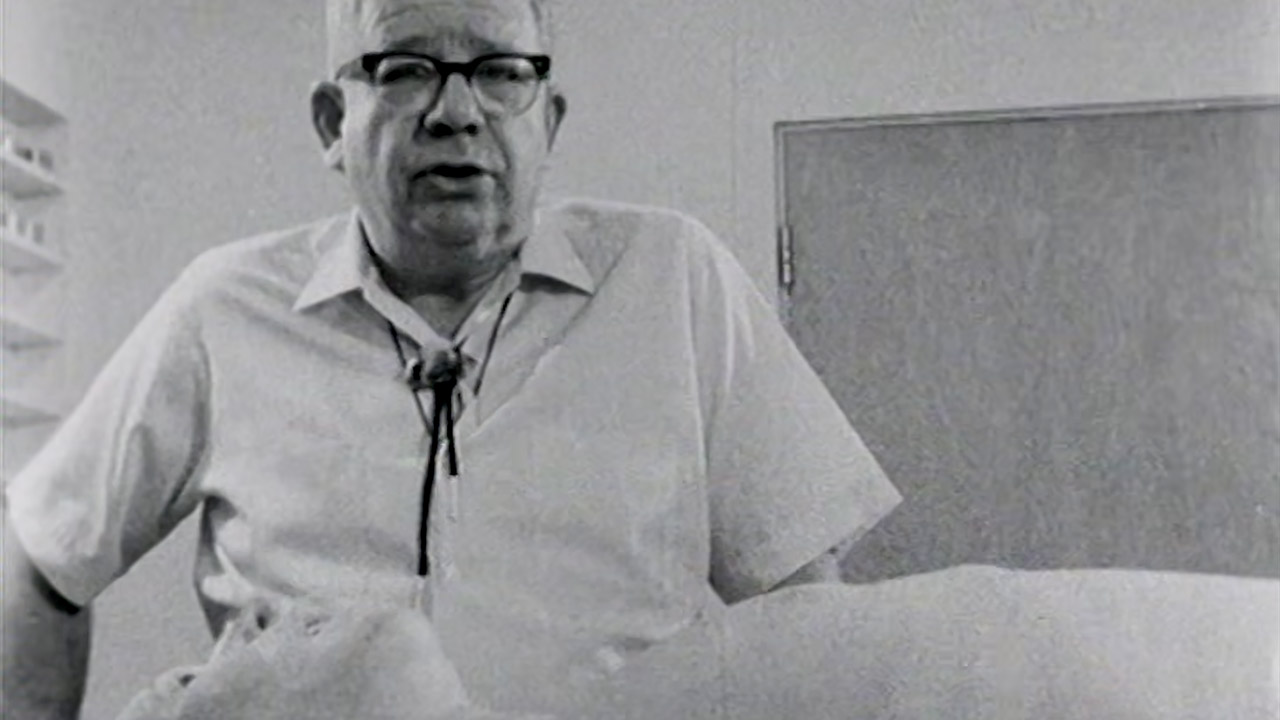
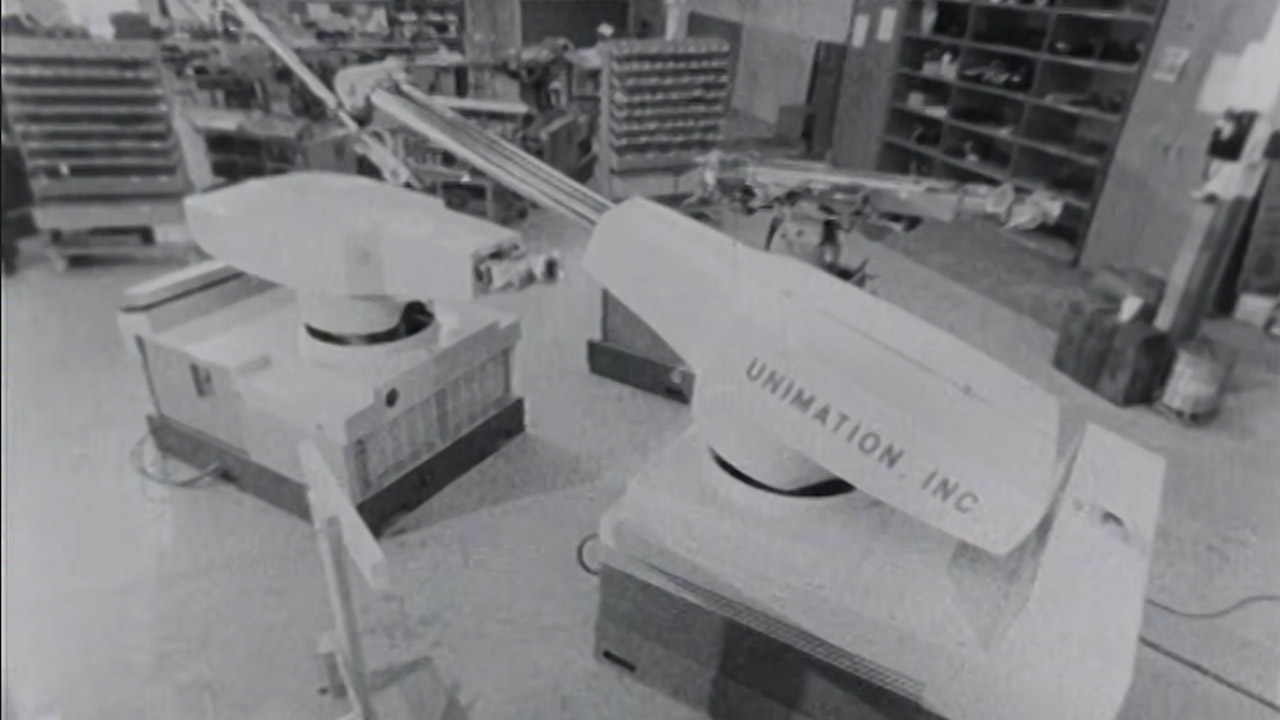
Meanwhile, in Bethel, Connecticut, Unimation president Joseph Engelberger is assembling other machines and believes there is no reason to be concerned about a robot uprising. After all, every movement is guided by a human brain, therefore he sees no reason to give robots independent thought. Robots, in his opinion, are already subject to the same regulations as humans: they must perform their duties without deviating from the norm. He is aware of and follows Asimov’s three laws: a robot must neither injure a human or allow a human to be harmed by doing nothing, must obey human orders as long as they do not violate the first law, and will only look after itself provided they do not conflict with the first two. He believes that in the actual world, humans already follow those norms when they engage with robots.
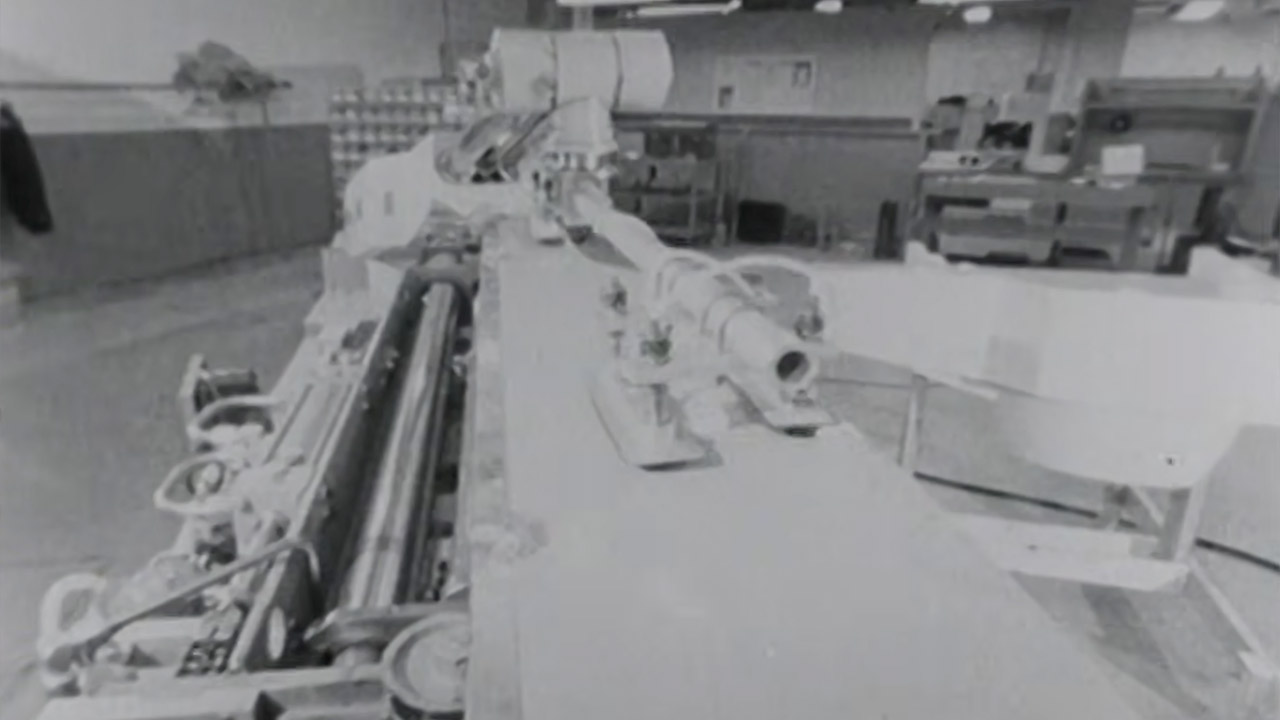
Unimation’s industrial arms are already unloading die cast machines and will soon be welding autos. Engelberger believes that 50,000 of these robots will be in American factories within the next 20 years. Some will be controlled by a central computer, but the majority will rely on a human to tell them what to do. He believes that these computers will take on all of the nasty and repetitious tasks that people do not want to do, but he does not see them replacing the person who chooses what has to be done.
Domestic life appears to be becoming increasingly difficult, as furniture appears to move around on its own, cups end up in new and strange places, and that one good dusting from last week is all but forgotten the next day. Professor Meredith Thring of Queen Mary College is working on a rudimentary but intriguing table-clearing prototype in a house on the outskirts of Epping Forest. The crucial component is a photoelectric eye that detects a mug and activates a series of pressure sensors, which close in and pick it up with a mechanical hand. The hand then raises the mug onto a rotating tray, which transports it to a secure position. Thring has a vision: he wants intelligent engineers of all stripes, not just computer whiz kids, to pitch in and help put an end to the drudgery of household duties. He even hopes that in around ten years, we’ll have a full-fledged domestic machine with nice old-fashioned senses in its fingers and priced reasonably, like a car.
Ecommerce platform BigCommerce has alerted multiple merchants to data breaches after attackers compromised credentials for third-party Ribon applications and used them to inject malicious scripts into online stores.
The cloud-based Software-as-a-Service (SaaS) ecommerce platform confirmed the credential compromise on September 17 and immediately removed the apps to protect its customers.
UK-based online spirits vendor Master of Malt is one of the BigCommerce customers that received the notification. The retailer said the attacker accessed shopper information.
The hacker used the compromised credentials to access shopper data in BigCommerce environments between September 13 and September 17, the company said.
Advertisement
In updates on the incident, Master of Malt says impacted shopper details include full names, email addresses, phone numbers, and shipping postal addresses.
“It looks like hackers were able to compromise a BigCommerce Application key held by Ribon, which they were able to use to gain access to customer data held on their system,” Master of Malt stated.
BigCommerce supports over 1,200 third-party applications and integrations, including Ribon, an application operated by Be A Part Of, a brand operated by Fastr, specialized in shopping experience optimization.
The e-commerce platform says it stores account passwords and payment card information separately and that this type of data was not exposed.
Advertisement
In a statement for BleepingComputer, BigCommerce said that the attacker compromised credentials for Ribon and Ribon 1.5 applications.
“On September 17, 2026, Commerce confirmed that credentials belonging to third-party applications Ribon and Ribon 1.5, owned and operated by ‘Be A Part Of,’ a Fastr company, had been compromised and used to inject malicious scripts into a small number of merchant storefronts.”
The company underlined that its systems or the BigCommerce platform were not breached.
“Acting in the best interest of our customers and their shoppers, we uninstalled the application from affected stores to revoke the attacker’s access, notified those merchants directly, and are providing log data to support the developer’s investigation,” the company told BleepingComputer.
Advertisement
Master of Malt reported the incident to the UK Information Commissioner’s Office (ICO) and noted that it may extend well beyond its own customers, potentially to hundreds of other stores.
Law firm Emery Reddy is seeking potential claimants linked to the incident, saying several retailers are currently notifying customers about data exposure linked to the Ribon app key theft, without naming any.
BleepingComputer has contacted Be A Part Of and Fastr for more information about the incident but we have not received a response by publication time.
The incident is similar to a 2024 breach affecting electronics accessory maker ZAGG, where attackers compromised the third-party FreshClick BigCommerce app and injected payment-skimming code into its online store.
Advertisement
At the time, BigCommerce told BleepingComputer that its platform was not breached and removed the compromised app from customers’ stores.
However, unlike the ZAGG incident, where attackers captured payment information entered by customers during checkout, the Ribon attackers used a compromised application key to access existing customer records through BigCommerce.
Join Mikko Hyppönen and security leaders from the NFL, CHANEL, and Atlassian for a two-hour digital summit on what AI-speed attacks change, what defenders should stop doing, and how to validate, decide, fix, and re-validate at machine speed.
























































You must be logged in to post a comment Login