

Tech
Thousands of Windows machines are being replaced in schools with MacBook Neo and iPads


The classroom laptop fight just got a real-world stress test. Kansas City Public Schools has already bought more than 4,500 MacBook Neo units for students in 8th grade and up, putting Apple’s new low-cost Mac into schools at a scale that goes well beyond a pilot program.
The district plans to retire more than 30,000 existing devices over time. That gives Apple a visible education-sector win as cheaper classroom laptops become more competitive, and it gives school IT teams another reason to rethink the old Windows, Chromebook, and Mac divide.
Why is KCPS going all Apple
KCPS says the move is meant to simplify how students and teachers work across devices. Instead of supporting several platforms at once, the district is moving toward one Apple-based setup across classrooms.

The first wave gives the plan real scale. Older students are getting MacBook Neo laptops, while iPads and existing MacBook Airs are expected to cover other grade levels as the transition continues. That creates a cleaner device lineup for the district, though KCPS still has to show how well the approach works once more schools are folded into the rollout.
How Windows stays in the fight
The MacBook Neo gives Apple a lower-cost Mac for an education market where Chromebooks and budget Windows laptops have built a strong position. For school IT teams, that puts macOS into a price range where it can be compared more directly with cheaper classroom machines.
Intel is also trying to keep Windows PCs in the conversation. Recent reporting says its Project Firefly push is aimed at sub-$600 Windows laptops built around more standardized designs, with cheaper Macs, Chromebooks, and Arm-based machines all adding pressure. Schools also have to weigh repairability, ports, battery life, software support, and fleet management before committing to one platform.

KCPS gives Apple a live classroom test instead of a spec-sheet argument. Thousands of students will use these machines for daily assignments, and that is where battery claims, durability, app access, and support costs start to count.
What should schools watch next
A first shipment is easier than a multi-year fleet change. KCPS still has to manage the long replacement cycle, support teachers through the transition, and keep costs predictable as older machines leave service.
The strongest signal will be whether KCPS can control repair, training, and management costs as the replacement cycle expands. If it can, other districts may look at the MacBook Neo as a more realistic Chromebook and Windows alternative. If it can’t, cheaper classroom laptops will still have a simple argument to make.


Biometric authentication is no longer limited to fingerprints and face unlock. Researchers are now exploring whether your earbuds can recognize you simply by listening to the tiny vibrations created by your heartbeat.
A new study published on the arXiv preprint server introduces “AccLock,” a passive authentication system that uses standard earphone hardware to verify a user’s identity. Instead of relying on microphones or voice prompts, the system works through built-in accelerometers already found in many modern earbuds.
Your heartbeat may become your next password
The technology captures heartbeat-induced vibrations inside the ear canal, known as ballistocardiography (BCG) signals. These signals travel through bones and tissues, creating patterns unique to each person. That uniqueness is what makes the system interesting. Once the earbuds register a user’s BCG signal, they can continuously check whether the same person is still wearing them. If another user puts on the earbuds, the authentication fails automatically.

Unlike older earphone-based authentication systems, AccLock does not require users to actively interact with the device. The entire process runs quietly in the background, which could eventually make tasks like unlocking devices, approving payments, or entering smart homes feel almost invisible.
It works well — until too much movement is involved
To improve reliability, the researchers used a deep learning model and a multi-stage denoising system to separate user-specific heartbeat patterns from environmental noise and general body movement. In tests involving 33 participants, the system achieved false acceptance and false rejection rates of 3.13% and 2.99%, respectively, which is fairly promising for an experimental prototype.

However, heavy movement remains a major problem. Walking, talking, or shaking the head significantly increased error rates, showing that the system still struggles in real-world conditions. The researchers also tested the technology on Apple AirPods and found that it remained functional despite hardware limitations. While AccLock is far from becoming a commercial feature today, it offers a glimpse of a future where your earbuds quietly recognize you before you even unlock your phone.

I recently wrote an article on why I am excited about the upcoming MacBook Pro. One of the reasons mentioned there was the expected display upgrades, which will include the move to an OLED panel and quite possibly the addition of a touch screen.
It seems that the OLED rumor is almost confirmed. According to TheElec, the OLED panels for MacBook Pro have already entered the mass production phase. Samsung Display has crossed a major manufacturing milestone, achieving a yield of over 90% for its 8.6th-generation OLED panels.
What does yield even mean?
In simple terms, yield refers to the percentage of panels that come out of production without defects. The display industry considers anything around 90% to be the sweet spot for mass production. Samsung has not only hit that number but pushed some individual processes to 95%, which the company calls a “golden yield.”

The process had only a 80% yield last month, so getting here in just over a month is impressive. Higher yields mean lower production costs, which can eventually translate into more affordable products for consumers. Although if Apple’s past record is anything to go by, the cost benefit will not be passed on to its users.
Samsung Display is currently running one production line at half its total capacity, producing 7,500 sheets per month. The panels are headed straight for Apple’s 14-inch and 16-inch MacBook Pro models, with shipments expected to begin as early as next month and a supply volume of around 2 million units estimated for this year.
Why is making laptop OLEDs so hard?
Laptop OLED displays are significantly harder to manufacture than smartphone panels. They are larger, stay on for longer periods, and require higher brightness, better lifespan, and brightness uniformity across a larger surface area.
Samsung’s panel uses a two-stack tandem structure that layers two light-emitting layers on top of each other, which is one of the reasons securing high yield has been such a challenge. It’s the same tandem-OLED technology that Apple uses in its iPad Pro lineup, which packs some of the best OLED displays on the market.

If sales of OLED MacBook Pros go well, Samsung is ready to activate its second production line, which would double output almost immediately. MacBook Neo has already become a runaway success for Apple, and Apple might be looking for a repeat.
However, the upcoming MacBook Pros are also rumored to receive a significant price hike, which might curtail some enthusiasm.

It’s been 17 years since I sat in on the iconic weekly search quality meeting in the Ouagadougou conference room at Google’s Mountain View campus. That Thursday morning, around three dozen engineers, product managers, and executives sat at a table or sprawled on the floor to discuss why certain search queries or categories didn’t yield a perfect result and to suggest fixes. In 2010 those meetings led Google to make 550 changes to its search algorithm, a number that seemed impressive at the time.
That memory seems like a tintype. At Google’s I/O developer conference this week, a keynote speaker—head of search Liz Reid—officially down-ranked good old-fashioned search to virtual oblivion. This was a continuation of a process that began two years ago, when Google introduced “AI Overview,” its summaries that sit at the top of its search results page and literally lurk over the famous “10 blue links.” By then those links had already been degraded, so that all too often the most relevant ones were buried beneath aggregators, spam, and Google’s own shopping results and maps. Now, in what Reid described as the most significant change to the search box in the company’s history, users are in direct communication with the latest version of Google’s Gemini. Even the term “query” seems outdated, as human inputs are conversation starters for the AI to collaborate. The process can also incorporate personal information Google knows about you, which can be a lot. The answer to a query could be a bespoke presentation, maybe bolstered by AI agents that forage digital backroads to root out information. The transformation is complete. Onstage, Google said it out loud: “Google Search is AI Search.”
The search box used to be a portal to the web. The new “intelligent” box is an invitation to order up a Gemini-powered, customized response to a user’s queries, sometimes even creating on the fly a bespoke mini-publication with charts, bullet points, and even animations. Google used to pride itself on interpreting cryptic search terms to divine user intent. Now it encourages searchers to engage with Gemini in a conversational prompt-a-thon. To emphasize the change, Google representatives at the conference wore T-shirts saying “Ask Me Anything,” reflecting the prompt that Gemini offers. Just as with the computerized version, if you asked for directions from these smiling aides, the answer did not result in a click to a website.
Our digital life these days is perched at an uncomfortable transition point. AI seems to be driving every business model, and giants like Google are weaving AI into all their products and operations. At the same time, there’s rising resistance and even disgust as this powerful and scary technology worms its way into our lives. Just note the boos when commencement speakers mention AI. But as Google sees it, AI search—if you still want to call it that—is an inevitability that even AI haters will embrace.
I was among those who recoiled at the introduction of AI Overview in 2024. Now I acknowledge that Overview—and the deeper “AI Mode” that it encourages you to use—is simply better for many things, whether finding out if Saturday Night Live has a new episode, getting an explanation of an agentic harness, or even finding a link. When I searched for my WIRED article where I described the meeting in the Ouagadougou, the blue links were less than useful. But when I explained in plain language what I was looking for, I found it immediately.
So it’s working. Google claims that more than a billion people a month are searching with AI Mode, a separate tab on Google’s website where links are even more peripheral. AI Mode queries are doubling every quarter.
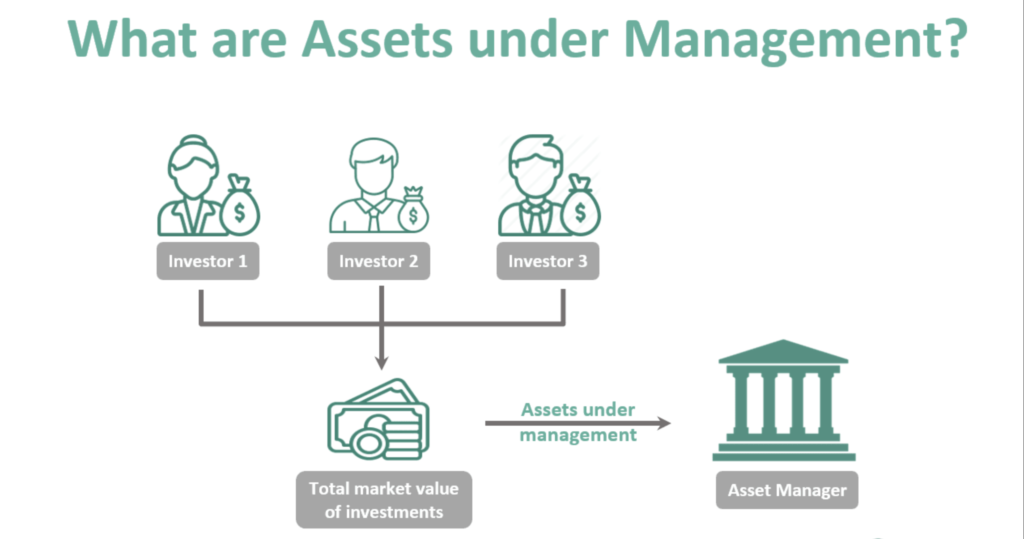
Investing your money at the right time and right place is key to fighting rapidly growing inflation. But when we invest our hard-earned money, it is essential to know where the money is going, who is managing it, and how. There are numerous schemes and ways to invest your money. While doing so, we often come across many heavy financial jargons, and one of them is AUM. You must have often heard this in mutual funds. So what is AUM in finance, and why is it so important?
Keep reading to discover interesting financial facts about AUM.
What does AUM mean?
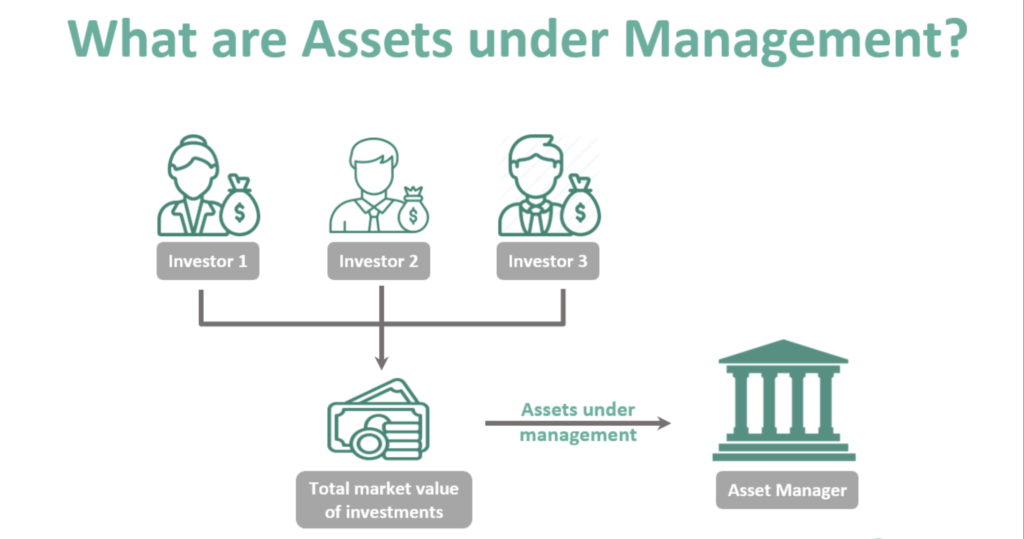
AUM refers to Assets Under Management, which is the total market value of investments managed by an investment manager/organization on behalf of their investor, with their consent. These assets can be anything, including stocks, bonds, mutual funds, ETFs, and other investment options.
The global asset under management (AUM) is expected to reach $200 trillion by 2030, growing at a CAGR of 6.2%. See the detailed market reports here.
How to calculate AUM?
It is calculated by adding the total current market value of all investments being managed.
AUM = ⅀ (Current Market Value of all Assets)
The formula, which is used to calculate the daily AUM value:
AUMtoday = AUMyesterday + Net Inflows + Market Profit/Losses
Here, net inflows are your new investments minus the redemptions, and market gains & losses are value changes of assets due to price movements.
How is your money turned into assets?
When you invest your money, it is converted into assets that are far more valuable than your paper money. These are the things bought with that money. And the value of these things keeps increasing faster than actual money. It can be anything, such as digital gold, ETFs, mutual funds, shares, stocks, and property.
Types of AUM Assets
As discussed above, your money can be converted into different types of assets by using it to buy various things. Let me tell you about some of them.
- Equities or Stocks: These are shares, or say you buy a certain percentage of a publicly traded company, including large-cap, mid-cap, and small-cap stocks.
- Debt Funds: These assets are essential components of mutual funds and emphasize fixed-income securities such as government bonds, corporate bonds, treasury bills, and marketable securities. They often have lower risks and a predictive outcome.
- Hybrid Funds: It is where investment managers diversify your money across assets like equities, debt, and sometimes even instruments like gold. It gives investors a wider portfolio and a good option for people choosing growth with less volatility.
- Thematic & Sectoral Investment: These are specified mutual funds for targeted industries or well-rounded investment themes. These have high growth potential but also come with significant risks due to condensed exposure. The risks are generally due to economic lows or sector-specific downfalls.
- IFs and ETFs: The index funds or exchange-traded funds are passive investments that track the performance of a specific market index. People like their simplicity and cost efficiency. Mostly, retailers and institutional investors prefer these investments.
- Alternative Investments: These investment approaches are different than traditional ones. Here you can invest in land, real estate, commodities, and gold. This can be used to diversify a portfolio, offer great returns over time, but comes with high risk.
Each of these investment types has more in-depth subcategories.
Factors that Affect AUM
The AUM value often keeps fluctuating; sometimes you gain, and sometimes you lose. There are different factors behind this, and some of them are listed below.
1. Market Graphs
The market often experiences upswings and downturns, and your underlying assets increase and decrease in value, respectively. Highly volatile assets such as stocks, commodities, crypto currencies etc can be frequently impacted.
2. Investor Activities
Here, AUM is affected by the investor’s action. Where there are inflows (new investments by investment) like buying new units, increasing capital, etc., the value of AUM increases. On the other hand, if there are outflows or redemptions by investors pulling out their money directly decreases the AUM.
3. Distribution
When a fund pays out dividends or interest, the AUM reduces, and if these payouts are compensated or reinvested, the value increases. When the funds with better performance outperform, the benchmarks tend to attract people to invest more, and this leads to increased AUM.
There are also some other factors, like sales and marketing. Different fund types, such as open-ended funds and different fund structures, also impact the AUM.
How do AUM Managers Earn?
You must be wondering if someone is using the brains and resources to invest your money, then what do they benefit? So here is how asset management companies make money.
These companies generally sell the investment solutions as products to their clients. They sell mutual funds, ETFs, and manage private accounts of other companies. In return, they either charge a fee or a percentage of assets under management.
The charges consider some factors such as investment type, asset class, investment sector, and transaction complexity. For instance, when an investment strategy involves a cultured process and tools like trading or taking short positions, then the clients can be charged a high fee.
Ongoing charge fee (OCF), performance fees, initial and exit charges, etc., are some charges incurred by companies that these agents charge to clients.

Types of Asset Management Companies
Different types of investment are managed by different specialized companies for the same purpose.
1. Mutual Fund Companies
These companies use the investor’s money to buy stocks, bonds, and other securities that align with the fund’s objective. These companies are best chosen by retail investors. The clients get fund units, and returns as per market performance.
2. Hedge Fund Companies
This is most opted for by high-net-worth people and institutional investors, where they use plans like leverage, short selling, and derivatives. The aim is to gain high returns in all sorts of market fluctuations. This involves high risk but has fewer regulatory restrictions.
3. Private Equity Firms
These are companies that invest directly in unlisted/private companies, or they pool capital from institutional investors and high-net-worth clients to take over, restructure, and improve private companies. Their goal is to increase their company’s worth over a period of time before selling it for a profit.
4. Real Estate Investment Trusts (REITs)
The firms invest in income-generating assets of real estate, like commercial spaces. The investors earn returns from real estate without actually owning the property. These corporations manage high-value real estate portfolios. Leasing, selling, and collecting rents, and later distributing among the shareholders as their incomes and dividends.
AUM vs. NAV
| Aspect | AUM | NAV |
|---|---|---|
| Meaning | Refer to as an asset under management, it is the total market value of all the assets managed by a firm. | Stands for net asset value, which is the net value of a fund equivalent to an investor’s equity. |
| Calculation | All assets of all funds (securities and cash) | Total assets minus total liabilities out of total outstanding units. |
| Usually refers to | Asset manager as a whole (total AUM of all funds) minus investor redemptions | Individual fund (based on per share or per fund) |
| It Indicates | It says a lot about the size of the asset manager, their position and trust among clients, performance gains, and experience | Tells about the share price (intrinsic value), and what is left is the liquidation value |
| Change Frequency | Fluctuates all day | Calculated at the end of the day |
Benefits of Asset Under Management
- Shows you trust and scalability, a higher AUM indicates that the fund or company is a trusted one. It reflects credibility, market position, and investor confidence.
- Larger AUM shows that fund managers can help you diversify your investments.
- When a company has bigger AUM, it can spread fixed costs for clients, which leads to lower expense ratios for investors.
- Fund houses with larger AUMs have better negotiating power and broader investment opportunities.
- Better AUM indicates the stability of a fund management company.
Conclusion
I hope this blog helped you understand what is AUM in finance. When you invest, you must know how and where the investment is happening. Learning and understanding about assets under management is the first step to doing so. We have discussed various aspects of it, such as types, risks involved, benefits, and how you can calculate AUM. I have also stated the clear difference between NAV and AUM, which often confuses investors. Keep reading, keep learning. And let me know in the comments, how you choose to invest your money?
Related: How Blockchain Can Transform the Financial Services Industry


If your house or apartment doesn’t have central air, the summertime can be brutal. This time of year, as the indoor temps climb higher and higher, many find themselves searching for a quick (and affordable) alternative to a full-fledged HVAC system. Typically, that comes down to a decision between a window air conditioner and a ductless mini-split system. And while both systems will do a good job cooling your home, they aren’t exactly identical… and not just because of the many different brand names.
Choosing between the two usually comes down to a few factors: Cost, comfort, and how permanent the solution is. Window AC units are one of the more common options for apartments, smaller homes, and short-term cooling needs because of how inexpensive and easy to install they are. That said, mini splits are becoming more and more popular for the long-term thanks to their quieter noise and better cooling efficiency.
Above all else, the biggest difference between the two systems is installation. A window AC is simply a single self-contained unit that sits in an open window and cools one room at a time. A mini split connects multiple units to refrigerant lines and indoor and outdoor components. That design lets mini splits distribute cooling more evenly throughout different parts of the home.
When to choose a window unit vs a mini split

Efficiency is nice and all, but your biggest deciding factor might come down to cost. If that’s the case, window units have the advantage over mini splits. Popular models can be purchased for well under $500, and installation usually only involves mounting the unit in the window and plugging it in. (Maybe adding some insulation if there are any gaps, as well.) And because they’re portable, they can also move with you from one place to the next without a complicated uninstall. If you’re a renter, this is almost certainly the best option for you.
Mini splits are better for people who own (or people with lax landlords, as rare as that might be). Yes, they’re quieter, more energy efficient, can handle both heating and cooling, but they also have to be installed by a pro. Mounting indoor air handlers and routing refrigerant lines through walls isn’t exactly a DIY project. Whole-home mini-split systems will also run you thousands of dollars more than a window unit, and that’s even before the cost of install. Still, if you’ve got the funds and the ability to put one in, it’s likely to do a better job than a window unit alone.
Tech
D&B’s database of 642 million businesses was built for humans, not AI agents. So they rebuilt it.
Dun & Bradstreet has spent over 180 years building a comprehensive commercial database. Its Commercial Graph, covering 642 million businesses and their relationships, corporate hierarchies and risk profiles, was designed for people. Credit analysts, risk managers and sales professionals who could wait for query results and work through ambiguous entity matches. AI agents cannot do any of those things.
When D&B’s customers started pushing agents into credit, procurement and supply chain workflows, the Commercial Graph that had reliably served nearly 200,000 customers globally became a problem. The systems built to serve human analysts were the wrong architecture for machines. So D&B rebuilt.
“We need to think about agents as our new consumer category, evolving from our standard credit analysts or sales and marketing professionals, et cetera, to also now catering to these customers’ agents,” Gary Kotovets, Chief Data and Analytics Officer at Dun & Bradstreet, told VentureBeat.
What broke when agents started querying
The Commercial Graph was not a single database. It was a collection of separate systems built for different use cases and different markets, held together by custom integrations. Human analysts navigated that fragmentation through SQL queries or pre-built interfaces. Agents could not.
The scale of the underlying data compounded the problem. The database had nearly doubled in five years, expanding from more than 300 million to more than 642 million business records, with 11,000 fields per record, according to D&B. The firm now runs approximately 100 billion data quality checks per month as records move through its systems. Querying that at the sub-second latency agents require, against a fragmented architecture, was not workable.
The relationships the graph tracked were also the wrong kind. Legacy systems recorded static connections between entities. A CEO was linked to a company. That was the line. Agents working on credit assessments or third-party risk need dynamic relationships: when that CEO leaves for a new company, which organization does their track record follow? When a subsidiary changes ownership, how does that propagate across a corporate hierarchy? Those questions required custom analyst work before. Agents cannot wait for custom analyst work.
The broader problem is not unique to D&B. Kotovets said he has spoken with hundreds of CDOs and CIOs over the past six months and consistently heard the same constraint: they could not build what they wanted in AI because their data foundations were not standardized, normalized or agent-queryable. D&B had that foundation, built over decades to serve human analysts. It still had to rebuild for agents.
What they actually built
The rebuild started with consolidation. D&B migrated its fragmented databases to cloud infrastructure, redesigned the underlying schema and built a data fabric layer that normalizes records across markets while preserving regional compliance requirements. The result is a unified knowledge graph that tracks billions of relationships across 642 million companies, continuously updated and enriched by AI-driven data processing.
On top of that graph, D&B built a structured access layer for agents. Raw SQL access at agent query volumes and latency requirements was not the answer. Instead, D&B created a set of tools and skills available through MCP that package data with context and route agents to the right records for specific queries. A match and entity resolution engine sits behind every query, confirming that when an agent asks about a company, the answer resolves to a verified, specific entity rather than a name match.
D&B solved agent identity from both directions
Rebuilding the graph and adding MCP access solved the data retrieval problem. It did not solve the identity problem. Agents are not humans, and the authentication model built for human users did not extend to machines.
D&B built a new registration model for agents. They must map to a verified IP address and register an individual access key, treated as an authenticated identity in the same pipeline as a human user.
“We actually have a concept of Know Your Agent, similar to know your customer, that does those additional verifications,” Kotovets said.
That handles the inbound problem: knowing which company an agent belongs to and what data it is entitled to query. But D&B also built for the outbound problem: what happens when a customer’s own multi-agent workflow loses track of which company it is analyzing.
In a workflow that chains a credit check agent, a KYC agent and a third-party risk agent, each queries D&B at a different step. Without a mechanism to confirm they are all referencing the same entity, a workflow can complete while operating on divergent records.
“They have to come back to our verification agent to ensure that they’re still talking to each other about the same entity,” Kotovets said. “It’s almost like a digital handshake, in a sense.”
D&B’s business verification agent can be embedded into any workflow as a persistent reference point and is available on Google’s A2A protocol regardless of which orchestration tool a customer uses.
Four things enterprises must get right before deploying AI agents
The rebuild exposed requirements that go beyond D&B’s own stack.
-
Data foundations come before agent infrastructure. The CDOs and CIOs Kotovets spoke with over the past six months consistently hit the same wall: they cannot build what they want in AI until their data is clean, normalized and consolidated. D&B had that foundation already. Most enterprises do not, and they will feel it.
-
Design for dynamic relationships, not static ones. Enterprise data systems typically record point-in-time connections: a person belongs to a company, an asset belongs to a subsidiary. Agents working on credit, risk or supply chain decisions need to reason across relationships that shift over time. If the underlying data only captures the static line, the agent will too.
-
Build entity consistency checks into multi-agent workflows. When multiple agents touch the same entity at different steps, there is no guarantee they are all referencing the same record by the time the workflow completes. That gap needs to be engineered for explicitly. Entity verification is a workflow design requirement, not an optional guardrail.
-
Embed lineage from the start, not as an afterthought. Every agent-produced answer should carry a traceable path back to its source. In credit, risk and supply chain decisions, the cost of an error is concrete. Lineage needs to be built in before scaling, not added after problems surface.
“You could always click and see where it came from, and validate it all the way back to the original source,” Kotovets said. “That’s been the key for us in unlocking a lot of other capabilities, because we have that level of certainty in the things that we’ve done.”

The London-based beauty and wellness booking platform has joined the UK unicorn club at a $1bn-plus valuation, in a deal that lands while the broader SaaS complex is busy arguing about its own funeral.
Fresha, the London-based booking and payments platform for salons and spas, has raised $80m from funds managed by KKR in a deal that values the company at more than $1bn, the company said on Thursday.
The round, structured as primary growth capital, takes Fresha to unicorn status and lifts the total raised since 2015 to $285m.
The cheque comes from KKR’s Next Generation Technology Growth fund, the firm’s growth-equity arm, which writes into companies that are already past the product-market-fit stage and are looking for scale capital rather than runway.
The numbers Fresha disclosed alongside the announcement explain the appetite. The platform is used by more than 130,000 beauty and wellness businesses across the UK, Australasia, the Gulf, North America and parts of South-East Asia, and processes more than 35 million appointments a month, or roughly 420 million a year, against $15bn in annual gross merchandise value.

The 💜 of EU tech
The latest rumblings from the EU tech scene, a story from our wise ol’ founder Boris, and some questionable AI art. It’s free, every week, in your inbox. Sign up now!
Annual revenue run-rate stands at more than $140m, growing at over 60% a year, and the business is profitable. The last time Fresha disclosed a valuation, in a Series C extension in late 2021, the figure was $640m.
Founded in 2015 by William Zeqiri and Nick Miller, Fresha has spent the past five years quietly displacing the older booking incumbents in its core markets and pushing into payments, capital, and, more recently, AI-driven scheduling and marketing tools.
Zeqiri, in a statement, called reaching unicorn status “a proud milestone” and said the round would fund further global expansion and AI investment.
Miller, the company’s chief product officer, framed the round as validation from customers, who he said were already using the platform as their primary operating layer.
KKR’s diligence ran for more than a year and included surveys of over 1,000 beauty and wellness businesses across the US, UK, Ireland, the EU and Australia, plus interviews with customers, former employees and competitors.
The research, according to KKR, ranked Fresha first across software quality, ease of use, support, set-up and marketplace strength, with an average score of 8.1 out of 10 against a competitor average of 6.7.
Patrick Devine, a partner on KKR’s Tech Growth team, said Fresha had built “a differentiated platform combining software, financial services and marketplace capabilities with embedded AI.”
Marta Szczerba, a director on the same team, said she had followed the founders for years and had been “highly impressed with the consistent performance.”
The deal lands at an awkward moment for the SaaS category Fresha sits inside. Salesforce is down roughly 30% year-to-date and the broader software complex has spent 2026 absorbing the argument that per-seat pricing is the wrong shape for the AI era.
A vertical platform earning revenue from payments and marketplace fees as well as subscriptions is, on the face of it, the kind of business that argument is least worried about, which is presumably part of what KKR’s diligence team concluded.
Fresha said the new capital will go toward expansion in the US, continental Europe, Africa and South-East Asia, and toward AI features across booking automation, marketing, accounting and workforce management. The company did not disclose a planned timeline to an IPO or any further fundraising.


Cyber-Crime
MFA? No problem, says crimeware that tricks users into handing attackers the keys to M365
The FBI has issued a public service announcement warning about a new phishing kit that’s stealing Microsoft OAuth tokens at an alarming rate.
OAuth token theft is a serious headache for organizations because stolen tokens can bypass multi-factor authentication (MFA) and grant access to privileged accounts within an organization without needing to know their credentials.
Think corporate espionage, data theft, maybe even ransomware.
The main culprit is Kali365, described as a phishing-as-a-service platform that’s being peddled on Telegram, first spotted by crimefighters in April 2026.
“Kali365 lowers the barrier of entry, providing less-technical attackers access to AI-generated phishing lures, automated campaign templates, real-time targeted individual/entity tracking dashboards, and OAuth token capture capabilities,” the FBI said in its announcement.
Phishing kits aren’t new. Different flavors are always in development, but the good ones can be especially problematic for organizations.
Kali365 lets attackers send convincing phishing emails that impersonate “trusted cloud productivity and document-sharing services,” – Adobe Acrobat Sign, DocuSign, and SharePoint – according to security shop Arctic Wolf.
That email contains a device code and instructions for the target to enter the code into a legitimate Microsoft page, a hyperlink for which is included in the email.
Entering that code registers the attacker’s device to the unwitting target’s M365 account, effectively surrendering access to emails, Teams, and all the rest of it. No MFA required.
Arctic Wolf published a deep dive on Kali365 back in April, noting that it also offers adversary-in-the-middle (AitM) capabilities that are distinct from the device code phishing described by the FBI.
The second attack Kali365 enables leads to the same outcome, accessing Microsoft accounts while bypassing MFA, just through slightly different mechanics.
Victims are sent an initial phishing email containing a cookie-based lure, which transparently proxies their browser via attacker-controlled infrastructure, Arctic Wolf said. Requests are then forwarded to a real Microsoft login page, and responses are beamed back to the victim, who authenticates the typical way using their valid credentials, passing Microsoft MFA.
Session cookies, related artifacts, and other session information are scooped up during this process and stored in the Kali365 attacker panel. From there, attackers can generate scripts to replay those sessions in their own environment, effectively borrowing the genuine user’s session.
The researchers’ analysis of Kali365 revealed three distinct tiers for subscribers.
The lowest Client Tier is for individual attackers, who can change the branding on the panels to give each a bespoke look while sporting the same underlying powers. The Agent Tier is for resellers who can provision and manage their own branded Kali365 panels and Client Tiers. The Admin Tier is reserved for Kali365’s developers.
Kali365 has a simple pricing structure: $250 per month per tenant, or $2,000 for a year. It supports an array of languages: Arabic, Chinese, Dutch, English, French, German, Italian, Japanese, Korean, Polish, Portuguese, Russian, Spanish, and Turkish.
Since emerging in April, Kali365 has often been mentioned in the same breath as EvilTokens, another device code phishing platform that hit headlines weeks earlier after Microsoft confirmed hundreds of compromises each day.
“Each campaign is distributed at scale, targeting hundreds of organizations with highly varied and unique payloads, making pattern-based detection more challenging,” Tanmay Ganacharya, VP of security research at Microsoft, told The Register.
“We continue to observe high-volume activity, with hundreds of compromises occurring daily across affected environments.”
Both Arctic Wolf and the FBI suggested organizations at risk should use conditional access policies to block device code flow where not required.
Defenders should also consider blocking authentication transfer policies, which let users move authentication between devices such as PCs and phones. ®

Samsung could finally be preparing the compact flagship Galaxy fans have been asking for.
A new leak suggests the company is working on a Galaxy S27 Pro model that would bring some of the Ultra’s premium features into a noticeably smaller phone.
According to reports from Korea, Samsung is developing a new 6.47-inch Galaxy S27 variant that would sit between the larger Galaxy S27 Plus and Ultra models alongside the standard Galaxy S27. If accurate, it would mark the first time Samsung has used this specific screen size in its flagship lineup.
More importantly, though, the Galaxy S27 Pro reportedly won’t just be another mid-tier option with a fancier name. The leak claims it could share “most” of the Galaxy S27 Ultra’s specs. However, it may drop features like the S Pen to keep the device smaller and more manageable.
That would make it a pretty interesting shift for Samsung. Right now, if you want the company’s best cameras, battery tech, and performance upgrades, you’re usually stuck buying the biggest phone in the lineup. The rumoured S27 Pro sounds closer to Google’s recent Pixel strategy. The Pixel 10 Pro offers nearly all the same flagship features as the larger Pro XL. However, it is in a more pocket-friendly size.
The reported 6.47-inch display would still make the S27 Pro larger than the regular Galaxy S26, which sits at 6.3 inches. However, it would be noticeably smaller than the Plus and Ultra models. That could hit a sweet spot for users who want flagship specs without carrying around something that feels tablet-adjacent.
Of course, there will probably be some compromises. A smaller phone usually means less internal space. Unless Samsung adopts newer silicon-carbon battery technology by then, battery capacity could end up being one of the trade-offs compared to the Ultra.
Still, this leak feels more believable than some of the earlier “Pro” rumours surrounding the Galaxy S27 series, largely because the market has shifted. Compact premium phones are quietly making a comeback, and Samsung doesn’t really have a true answer to devices like the Pixel 10 Pro yet.
There’s no official confirmation from Samsung for now. However, if the Galaxy S27 Pro does happen, it could end up being the most interesting model in the lineup — not the Ultra.


[Editor’s note: Alex Murray is a small business owner who has previously written for GeekWire about taxes in Washington state.]
Washington state’s tax debate has become trapped inside a single question: Who pays?
That question matters. But it is not the only question that matters.
Taxes serve two purposes. They raise revenue for public services, and they shape behavior. Every tax system encourages some activities while discouraging others. A tax on cigarettes is intended to reduce smoking. A carbon tax is intended to reduce emissions. A payroll tax makes hiring more expensive. A capital gains tax reduces the after-tax return on investment.
Yet when Washington’s tax structure is discussed publicly, nearly all of the attention centers on one claim: that Washington has one of the nation’s most regressive tax systems.
The label comes largely from reports by the Institute on Taxation and Economic Policy, or ITEP, which regularly rank Washington near the bottom nationally on tax fairness. Those rankings are widely cited by politicians, advocacy groups and media outlets as proof that Washington’s tax code harms lower-income residents while favoring the wealthy.
But the debate is more complicated than the rankings suggest.
ITEP’s analysis attempts to estimate the effective tax burden paid by households at different income levels. To do that, the model includes not only visible taxes like sales taxes, but also business taxes, payroll taxes, property taxes and other embedded costs. The model then estimates who ultimately bears those taxes economically.
That distinction matters because Washington relies heavily on taxes that are largely invisible to consumers.
Most residents see sales tax on a receipt. They do not see the state’s Business & Occupation tax embedded throughout the economy. They do not see employer payroll taxes, compliance costs or gross receipts taxes layered into supply chains and operating costs.
Washington’s B&O tax is particularly unusual because it taxes gross revenue rather than profit. Businesses owe it regardless of whether they make money. It also compounds through multiple stages of production and distribution.
The critical question in judging Washington’s level of tax regressivity is who ultimately bears those taxes economically, a question that is far more uncertain than many public discussions imply.
ITEP’s regressivity rankings depend heavily on the assumption that businesses can pass much of those costs on to consumers, and that consumers therefore bear the majority of those burdens rather than business owners, investors or workers.
That assumption may hold in some industries. In others, especially globally competitive sectors, it may not.
A Seattle software company competing nationally cannot always raise prices simply because local taxes increase. A cloud computing provider competing globally may absorb part of those costs through lower margins, slower hiring, reduced investment or lower compensation growth.
Small changes to those underlying assumptions can materially alter Washington’s estimated regressivity ranking. That does not make the model illegitimate. But it does mean the conclusions should be treated with more caution and nuance than they often receive in public debate.
Generally, when the outcome of a model depends heavily on a difficult-to-observe economic assumption, policymakers and media outlets should present those conclusions with appropriate humility rather than as settled fact.
That uncertainty matters because Washington’s tax structure differs fundamentally from states that rely primarily on income taxes. Washington historically chose to tax consumption more heavily than productivity, a model built around a specific set of economic incentives.
The logic was straightforward. Taxes on work discourage work. Taxes on investment discourage investment. Taxes on entrepreneurship discourage entrepreneurship.
Whether one agrees with that philosophy or not, it helped shape one of the country’s most successful economic regions. Washington became home to some of the world’s most influential companies, including Microsoft, Amazon, Costco and generations of aerospace and technology firms.
Critics often portray Washington’s reliance on sales taxes as inherently harmful to lower-income residents. But even that discussion lacks nuance.
Washington exempts many necessities from sales tax, including groceries and prescription medications. A household purchasing primarily essential goods pays relatively little direct sales tax compared with one spending heavily on discretionary consumption, travel, entertainment or luxury purchases.
That structure reflects policy choices about incentives. Consumption taxes discourage discretionary consumption while exempting many essentials. Policymakers routinely use taxes to influence behavior in other contexts, including environmental policy, yet that same logic is often ignored in broader tax debates.
In recent years, Washington and especially Seattle have moved away from the state’s traditional tax structure. Policymakers have increased B&O taxes, imposed payroll taxes and enacted a capital gains tax. Those decisions may raise revenue in the short term, but they also change incentives.
And incentives matter.
Seattle now faces office vacancy rates approaching 35% in parts of downtown, among the highest in the country. Across the lake, Bellevue and the broader Eastside market sit materially lower, generally in the low-to-mid 20% range depending on the submarket. The difference cannot be explained by geography alone. Both cities compete for many of the same employers, workers and industries.
Housing costs, public safety concerns and the local political climate have all contributed to Seattle’s struggles. But tax policy influences business decisions too, particularly at the margin where firms decide where future hiring and expansion will occur.
According to the Bureau of Labor Statistics, Seattle’s unemployment rate reached 5.7% as of January 2026, the highest level since the pandemic recovery period. Seattle’s heavy concentration in technology partly explains the increase. But taxes influence business behavior too. Higher payroll and business taxes raise the cost of hiring and expansion at precisely the moment many firms have more flexibility about where growth occurs.
The broader problem is that modern tax debates increasingly confuse progressive taxation with progressive outcomes.
Those are not the same thing.
Some states with highly progressive tax systems continue to struggle with persistent poverty, severe housing affordability problems and widening inequality.
California provides perhaps the clearest example. Despite having one of the nation’s most progressive tax structures, California posts one of the country’s highest Supplemental Poverty Measure rates once housing costs, taxes and cost-of-living adjustments are considered. According to recent Census Bureau data, California’s Supplemental Poverty Measure rate stands at 17.7%.
Washington, despite regularly being labeled one of the nation’s most “regressive” states, performs materially better under the same methodology at 10.8%.
That does not prove progressive taxation causes poverty. But it does challenge the assumption that more progressive taxation automatically solves it.
A state can redistribute wealth progressively while simultaneously becoming less effective at creating broad-based prosperity.
A tax code can appear highly progressive on paper while producing disappointing real-world outcomes for working families.
Likewise, a system that taxes consumption more heavily than productivity may create stronger incentives for investment, hiring and long-term economic growth that ultimately benefit workers over time.
Most regressivity rankings are fundamentally static exercises. They estimate who pays taxes today. They are not designed to fully capture the long-term effects of tax policy on investment, migration, wage growth, business formation or economic dynamism.
Those factors matter. Especially in a state whose prosperity depends heavily on innovation, entrepreneurship and high-skilled industries that can increasingly relocate elsewhere.
Washington should absolutely debate fairness, affordability and inequality. Those are legitimate concerns. But the conversation should also acknowledge that taxes shape behavior, hidden taxes are difficult to model and economic competitiveness matters.
The goal of tax policy should not simply be to optimize a distribution table. It should be to create a prosperous economy that expands opportunity broadly and remains competitive over the long term.
Washington’s future depends not only on how much revenue it raises, but on what kind of economy its policies encourage.
[Editor’s note: GeekWire publishes guest opinion pieces representing a range of perspectives. The views expressed are those of the author.]

Arne Slot makes ‘best in Europe’ claim about Arsenal after Premier League title win | Football

Rigetti Computing RGTI Stock Surges on $100M US Government Quantum Deal Amid 2026 Growth Push

Pro-Palestine Greens tell party: stop binning candidates to pander to Israel lobby


-

 Crypto World7 days ago
BloFin War of Whales 2026 Grand Prix opens registration for $5M trading championship
-

 Fashion7 days ago
Weekend Open Thread: Theory – Corporette.com
-

 Crypto World7 days ago
E-Estate Announces 1 Year Live: Washington DC Summit as Real Estate Tokenization Enters Its Next Phase
-

 Tech7 days ago
Google reimburses Register sources who were victims of API fraud
-

 Business7 days ago
H&R Real Estate Investment Trust (HR.UN:CA) Q1 2026 Earnings Call Transcript
-

 Sports7 days ago
Napoleonic enters 2026 Doomben 10,000 field via Abounding withdrawal
-

 Crypto World7 days ago
BeInCrypto 100 Institutional Awards Nomination: KAST for Best Digital Assets Neobank and Best Digital Assets Fintech
-

 Crypto World7 days ago
Bitcoin Battles US Bond Nerves With BTC Price Dip Toward New May Lows
-

 Crypto World7 days ago
ICE and CME urge US regulators to curb Hyperliquid energy trading
-

 Fashion6 days ago
On the Scene at Gucci’s Cruise Show in New York City: Mariah Carey, Kim Kardashian, Lindsay Lohan, Iman, and More!
-
 Crypto World7 days ago
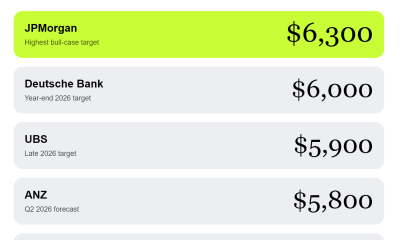
Wall Street’s Boldest Gold Prediction Has Russians Rushing to Buy
-

 Crypto World7 days ago
IREN closes $3 billion convertible notes deal amid AI infrastructure expansion
-

 Fashion6 days ago
Trending Western Style Vests Perfect for Summer
-

 Politics6 days ago
Watch: far-right flag-fanatics run over victim, attack locals – Setup By the Left wing for your entertainment
-

 Crypto World21 hours ago
Blockchain.com files with SEC for U.S. IPO
-

 Fashion5 days ago
Amazon Sundays: Memorial Day Hosting
-

 Crypto World7 days ago
Crypto Market Structure Bill Clears Committee; Senate Vote in Focus
-

 Entertainment5 days ago
Off Campus Easter Eggs Explained: Characters, Stories, More
-

 Crypto World7 days ago
BeInCrypto 100 Institutional Awards Nomination: KuCoin for Leader in Digital Asset Adoption and Best Trading Infrastructure
-

 Politics7 days ago
UK’s top intelligence body warns Mandelson files being withheld by government
You must be logged in to post a comment Login