Connect with us

Tech

Today’s NYT Connections Hints, Answers for July 11 #1126

Published

on

Looking for the most recent Connections answers? Click here for today’s Connections hints, as well as our daily answers and hints for The New York Times Mini Crossword, Wordle, Connections: Sports Edition and Strands puzzles.


Today’s NYT Connections puzzle was a true mix. The blue category words jumped right out at me and the purple category is really creative when you realize what it is. Read on for clues and today’s Connections answers.

The Times has a Connections Bot, like the one for Wordle. Go there after you play to receive a numeric score and to have the program analyze your answers. Players who are registered with the Times Games section can now nerd out by following their progress, including the number of puzzles completed, win rate, number of times they nabbed a perfect score and their win streak.

Advertisement

Read more: Hints, Tips and Strategies to Help You Win at NYT Connections Every Time

Hints for today’s Connections groups

Here are four hints for the groupings in today’s Connections puzzle, ranked from the easiest yellow group to the tough (and sometimes bizarre) purple group.

Yellow group hint: The big top.

Advertisement

Green group hint: Like a placid lake.

Blue group hint: To infinity, and beyond!

Purple group hint: Repeated letters in special spots.

Answers for today’s Connections groups

Yellow group: Circus equipment.

Advertisement

Green group: Undisturbed, as water.

Blue group: Toy Story characters.

Purple group: Double letters appearing in that letter’s alphabetical position.

Read more: Wordle Cheat Sheet: Here Are the Most Popular Letters Used in English Words

Advertisement

What are today’s Connections answers?

completed-nyt-connections-puzzle-for-july-11-2026.png

The completed NYT Connections puzzle for July 11, 2026.

NYT/Screenshot by CNET

The yellow words in today’s Connections

The theme is circus equipment. The four answers are cannon, stilts, trapeze and unicycle.

The green words in today’s Connections

The theme is undisturbed, as water. The four answers are calm, flat, glassy and still.

Advertisement

The blue words in today’s Connections

The theme is Toy Story characters. The four answers are Bo Peep, Jessie, Slinky and Woody.

The purple words in today’s Connections

The theme is double letters appearing in that letter’s alphabetical position. The four answers are aardvark, bocce, ebbing and twiddle.

Source link

Advertisement
Continue Reading
Click to comment

You must be logged in to post a comment Login

Leave a Reply

Tech

This $10 bundle of 100+ DRM-free games means to support laid-off game developers

Published

on

Why it matters: The video game industry has seen a historic wave of layoffs in recent years, with thousands of workers impacted in the last few weeks alone. To support some of the developers affected, indie game storefront itch.io is collaborating with an industry union to sell a collection of over 100 heavily discounted games.

The Game Industry Hardship Fund bundle is live on itch.io through August 13. The collection currently includes more than 100 indie titles, along with a few soundtracks, assets, and other materials, all for just $10.

All proceeds go toward the Game Industry Hardship Fund, which the United Videogame Workers union has promoted amid repeated massive rounds of layoffs throughout the industry. US and Canada-based developers can add more games to the bundle, so it will likely keep growing over the next couple of weeks. Customers can download any games added after their purchase at no additional cost.

The bundle mostly consists of small indie titles, but it also includes a few gems with positive Steam ratings. Examples include A Short Hike (MSRP: $8), Dungeon Bodega Simulator ($10), Eldritch ($15), Neon Struct ($18), Holedown ($10), and more.

Advertisement

Although games purchased through the bundle do not activate on Steam, downloads via the itch app or website are DRM-free. Many of the included titles also natively support macOS and Linux, and items from bundles appear in a separate tab on itch.io’s library section.

The Game Industry Hardship Fund aims to support the thousands of employees laid off over the past several years amid the industry’s pandemic-era overinvestment. The bundle page cites reports claiming that 33% of the industry’s workers have experienced job losses in the past two years.

Publishers have announced layoffs impacting thousands this summer alone. France’s video game union, the Syndicat des travailleurs et travailleuses du jeu vidéo, announced a strike after more than 1,000 workers lost their jobs. Bungie also recently eliminated roughly 400 positions after pivoting away from Destiny 2.

Ubisoft laid off 51 workers at its Barcelona studio shortly after the massively successful launch of Assassin’s Creed Black Flag Resynced, a game the office helped develop, and MindsEye developer Build A Rocket Boy recently faced protests from laid-off workers in the UK while flying in fans for playtesting.

Advertisement

Most notably, Microsoft recently eliminated 1,600 positions, with another 1,600 employees set to be laid off over the course of this year. In a bid to “reset” Xbox, the company let go of five studios and began reorganizing its gaming business. That move has already prompted further layoffs at the now-independent Double Fine.

Source link

Advertisement
Continue Reading

Tech

First Apple Silicon CrossOver build in testing as Intel’s end nears

Published

on

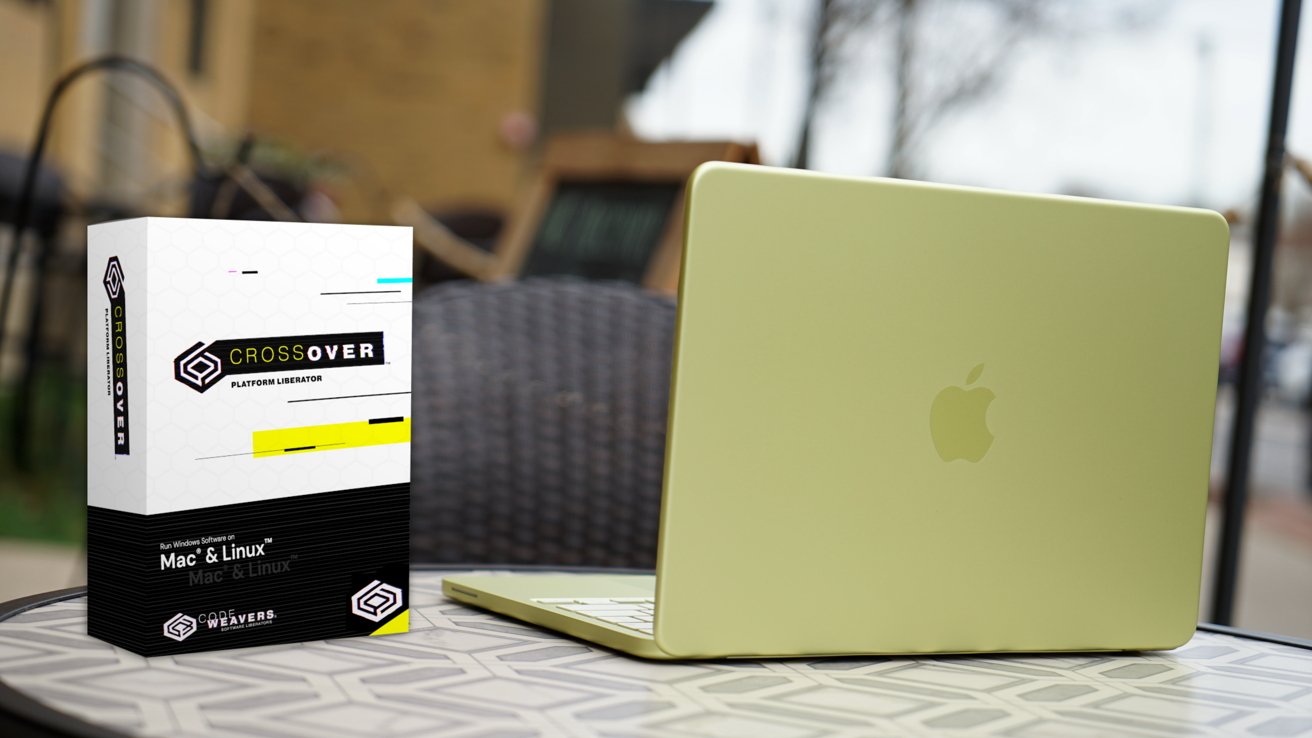
The writing is on the wall, so CodeWeavers is removing its reliance on Rosetta 2. A very early test version of Apple Silicon-native Crossover is now available for testing.

Cross-platform app compatibility tool CrossOver was designed to work on Intel Macs and could only work on newer M-series models thanks to Apple’s Rosetta 2 translation layer. Apple put developers on notice in June 2025, warning them that they would need to build apps designed without needing Rosetta 2 before 2027’s big macOS software update.

Since then, the developers of CrossOver have been working to get ready for the big transition. It announced in June 2026 that CrossOver 27 would ditch support for Intel Macs and transition fully to Apple Silicon.

Now, CodeWeavers has announced the availability of a preview version of CrossOver 27, complete with Apple Silicon support.

Advertisement

Very much a preview

Simplifying a complex issue, Apple Silicon uses ARM64 architecture. CodeWeavers has been working on an ARM64-native version of CrossOver for some time.

Wine, the compatibility layer that allows Windows apps to run on Macs, is core to CrossOver and began work to transition to ARM64 in January 2023.

There have been various milestones since that date, culminating in the release of this preview version of CrossOver.

However, while the preview can be downloaded and used on Apple Silicon Macs today, there are some caveats to keep in mind. CodeWeavers warns that the current very early preview has three big, known limitations.

Advertisement
  • No D3DMetal in this build. Direct3D 12 support coming soon.
  • Many game launchers do not function at all.
  • No way to convert existing bottles to ARM64: you will need to create new bottles for testing.

Thankfully, all three limitations are expected to be resolved before CrossOver 27 launches. It’s currently penciled in for a release in early 2027.

If you’re still using an Intel Mac, the good news is that CrossOver 26 will continue to work even after CrossOver 27 is released. But Apple’s upcoming macOS Golden Gate update will not support Intel Macs, giving Intel owners yet another reason to upgrade to a new model.

Source link

Advertisement
Continue Reading

Tech

Open Source Stream Deck Targets Flexibility

Published

on

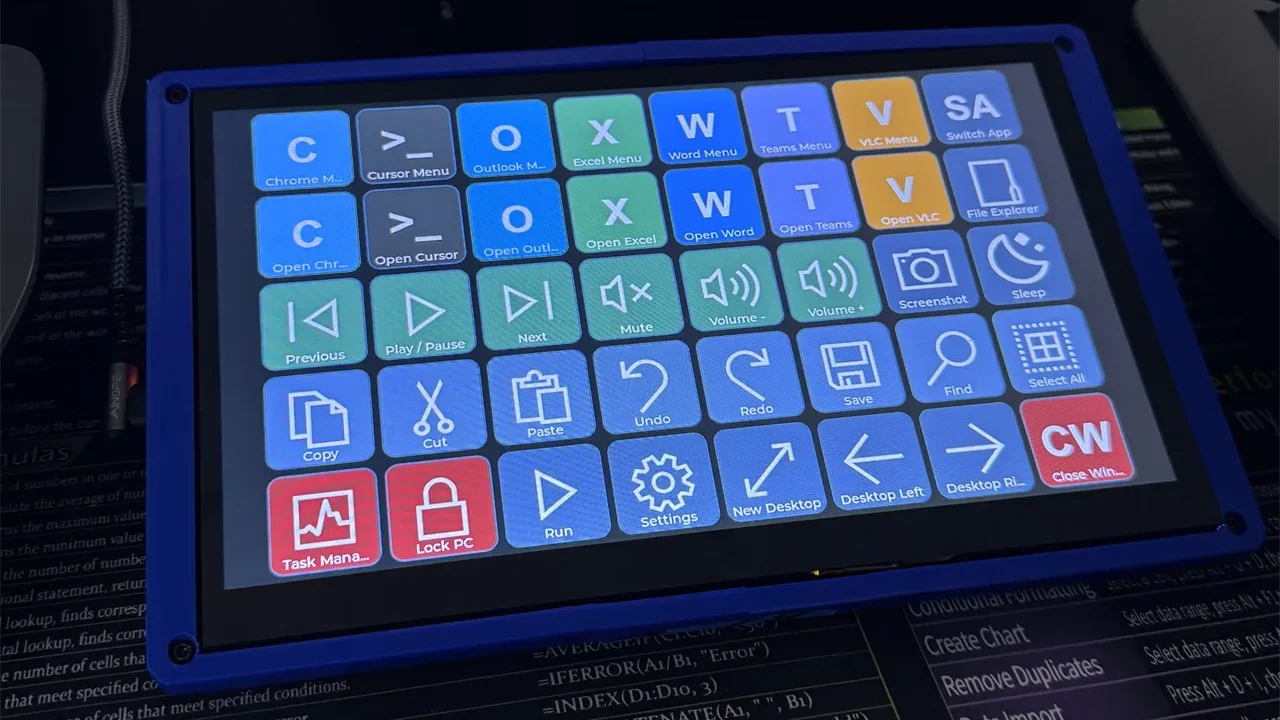
Stream decks are very useful when you’re live on camera and you need to hit some complicated macro at a glance. However, there is sometimes a perception that commercial options are a touch expensive for what they are, an attitude which has spawned many DIY builds. [Fady Faheem] has developed just such a device of his own.

Named Stream32, the build is intended to be simple to understand and adapt to one’s own individual workflow. Putting one together is as easy as buying a display, hooking it up to an ESP32, flashing the firmware, and then adding pages of shortcuts as desired. [Fady] has designed the firmware to be flexible with regards to screen choice — currently, it can be set up for a 4″ Waveshare LCD or a nice roomy 10.1″ display from Elecrow. Since it’s open source, adapting to a wider range of displays is a potential exercise for the builder.

The great thing about custom stream decks is you have all the freedom in the world to customize them to your own specific setup. Play with the code, the functionality, the visual layout—all to suit your own needs. If you’re working on your own custom hardware, be sure to tell us on the tipsline.

Advertisement

Source link

Advertisement
Continue Reading

Tech

Bike Trainers As Video Game Controllers

Published

on

While we’ve largely settled on analog sticks and digital buttons for controlling video games, there’s all sorts of projects to create truly esoteric controllers that allow playing games in unique ways. This one from [sukolupo] lets you use data from standard bike trainers to get your virtual character moving.

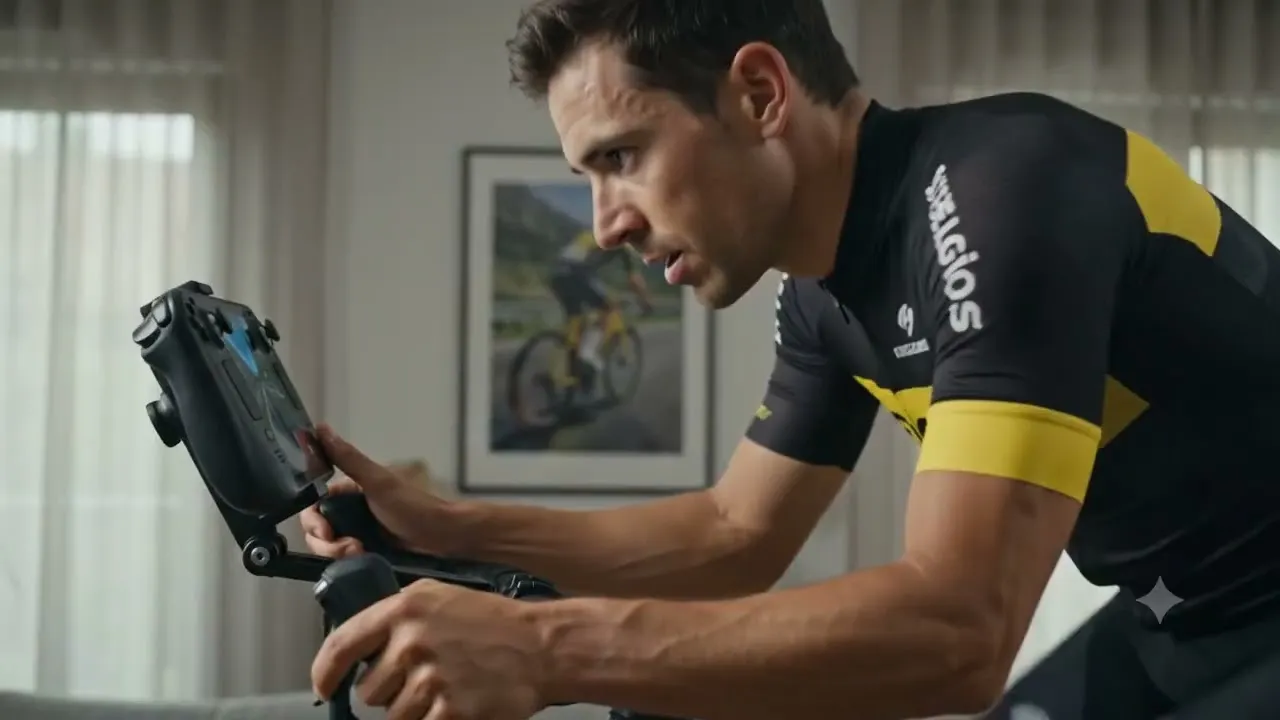
Called Deck de France, it maps the data coming from one of the supported bike trainers to a virtual controller which can then be “plugged in” to a gaming console of choice, in this case a Steam Deck mounted to the trainer’s handlebars. Although a bike trainer doesn’t have the same number of inputs as a modern gaming controller, it does have enough to play games like Rocket League. As you might expect, it’s also perfect for biking titles such as the Tour de France series.

As far as unique controllers for video games go, this one is surely up in the rankings with a real trombone or a controller purpose-built for riding virtual horses. It’s also a great way for those who are getting a bit bored of riding their trainers to breathe some new life into their exercise routine. We’ve also seen some open-source alternatives for modern bike trainer software as well, which is another great way to get excited about exercise equipment too.

Advertisement

Source link

Advertisement
Continue Reading

Tech

Startup uses Arm cores and 128TB of LPDDR6 to smash AI’s Memory Wall

Published

on


  • Startup replaces Nvidia GPUs with custom Arm-powered AI processing hardware
  • Prometheus packs up to 128TB of unified LPDDR6 memory onboard
  • New server promises 1,000× more memory available per processor

Majestic Labs, a startup founded in 2023 by former Google and Meta engineers, has unveiled a server built to rival Nvidia‘s GPU and HBM combination.

The Tel Aviv-based company argues that pairing costly graphics processors with high-bandwidth memory has become a fundamentally memory-bound and dead-end approach for AI inference.

Source link

Advertisement
Continue Reading

Tech

Services slowdown pushes Apple’s price target down to $360

Published

on

Morgan Stanley has pared its Apple price target from $364 to $360 after slowing Services growth and higher memory costs weakened its earnings outlook, despite strong demand for the company’s products.

The investment bank kept its Overweight rating on Apple, but analyst Erik Woodring said two of the three factors that usually support the stock are under pressure. Morgan Stanley identified those factors as the iPhone, Services, and gross margins.

The iPhone remains the strongest part of Morgan Stanley’s report, seen by AppleInsider. Services growth and margins now appear weaker than the firm expected, however, prompting it to reduce its fiscal 2027 earnings estimate from $10.39 to $10 per share.

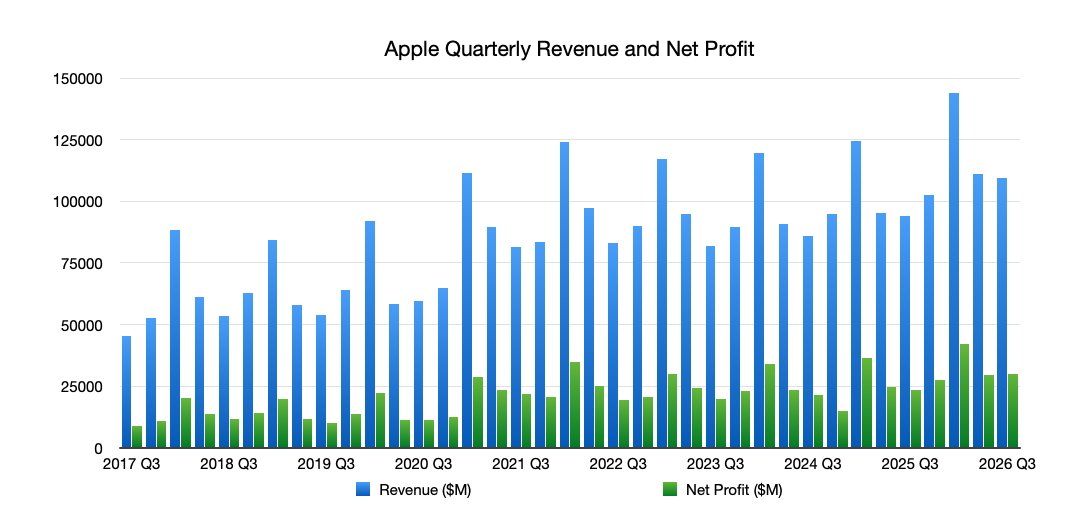
Apple reported fiscal third-quarter revenue of $109.4 billion on July 30, up 16% from the previous year. iPhone revenue reached a June-quarter record of $54.3 billion, while Mac revenue climbed 29%.

Advertisement

The company also told analysts that its active installed base and number of customers upgrading devices reached records. Morgan Stanley said the results could indicate that replacement cycles are beginning to shorten after several years of customers holding onto devices for longer.

Services growth is falling below 10%

Apple’s Services business generated $30.7 billion during the quarter, up 12% from 2025. Morgan Stanley said the growth rate missed its 14.6% consensus forecast.

The firm expects Services growth to slow to about 9.5% in the September quarter, which would mark the first result below 10% since the June 2023 quarter. Foreign exchange accounts for much of the slowdown, but Morgan Stanley also pointed to weaker App Store performance.

According to the report, Apple cited softer mobile gaming activity, uneven game-release schedules, litigation, and changes to App Store business models in some countries. Management also referred to broader changes in consumer engagement without blaming the weakness on a single factor.

Advertisement

Services gross margin fell from 76.7% in the March quarter to 75.6% in the June quarter. Morgan Stanley said the decline supports its view that the App Store is no longer outperforming the rest of the Services business.

Bar chart of Apple quarterly revenue and net profit from 2017 Q3 to 2026 Q3, showing tall blue revenue bars and shorter green profit bars, both generally increasing over timeApple’s Services business generated $30.7 billion during the quarter, up 12% from 2025.

The slowdown makes future price increases and the launch of Apple’s upgraded Siri more important to the investment case. Morgan Stanley said Apple described internal and developer feedback as overwhelmingly positive, but the company is still evaluating the feature’s computing costs and revenue potential.

Apple also suggested that heavier Siri use could create opportunities for higher-tier iCloud+ subscriptions. Morgan Stanley said it hasn’t yet seen a clear measurable boost from AI in either product demand or Services revenue.

Memory costs squeeze Apple’s margins

Apple guided for a September-quarter gross margin between 47% and 48%. Morgan Stanley estimates that tariff refunds contribute about one percentage point, leaving an underlying midpoint of roughly 46.5%.

Morgan Stanley’s estimated underlying gross margin of 46.5% would be about 1.5 percentage points lower than Apple’s June-quarter gross margin. The firm said Apple’s gross margin has historically remained flat or increased by as much as half a percentage point during the same seasonal transition.

Advertisement

Management told analysts that higher memory costs would account for more than the entire sequential decline. Savings on other components and a more profitable sales mix weren’t enough to offset the increase.

Morgan Stanley expects future iPhone price increases and shipments of a foldable iPhone assumed in its model to provide some relief in the December quarter. Neither has been announced by Apple, and the larger question is whether memory inflation will delay a sustained margin recovery into fiscal 2027.

The firm’s revised $360 target is based on projected calendar 2027 earnings of $10.30 per share and an unchanged multiple of about 35 times earnings.

Demand is strong, but supply is tight

Apple management also acknowledged constraints affecting advanced 3-nanometer chip production for the iPhone, Mac, and iPad during the September quarter. Morgan Stanley said the problem reflects demand exceeding Apple’s earlier forecasts more than a supplier failing to execute.

Advertisement
Line graph of year-on-year percentage changes in revenue and net profit from 2018 to 2025, showing fluctuating values with sharp profit spikes around 2021 and 2024 while revenue remains steadierApple’s outlook implies that iPhone revenue will grow in the mid-teens percentage range year over year during the quarter.

Apple also said its supply chain has less flexibility than usual to respond. Channel inventory was lean at the end of the June quarter, and Morgan Stanley expects it to remain tight through September.

Apple’s outlook implies that iPhone revenue will grow in the mid-teens percentage range year over year during the quarter. Morgan Stanley believes growth could have been stronger without the component constraints.

The firm’s supply-chain checks also indicate that Apple hasn’t reduced its production plans for the second half of calendar 2026. Morgan Stanley interprets that as a sign Apple still expects customers to upgrade when its next iPhones arrive, even if higher prices test demand.

Despite its near-term concerns, Morgan Stanley remains positive about Apple’s longer-term prospects. The firm pointed to the company’s growing installed base, strong cash generation, faster product launches, and potential expansion in AI, health, payments, cloud services, and the home.

Apple shares closed at $333.43 on July 30, leaving room for near-term upside in Morgan Stanley’s view. The firm expects the stock to remain under pressure until new iPhones, the upgraded Siri, regulatory approvals, or stronger earnings estimates give investors another reason to buy.

Advertisement

Source link

Continue Reading

Tech

Motorola’s Moto G Play (2024) Aims to be a Steady Companion (or Backup) for the Days That Keep Coming

Published

on

Motorola Moto G Play (2024) Smartphone
Some phones chase every new feature and leave most people behind. This one stays close to the ground and works through ordinary hours without complaint. Motorola built the Moto G Play (2024) around a clear idea: give people a large screen, a battery that lasts, and a camera that handles daylight without drama, all for $99.99 (was $150).


Sapphire Blue plastic wraps around the entire phone, and the edges bend just enough to fit comfortably in the palm of your hand. The matte texture effectively resists fingerprints, which are typically a major issue on lower-cost phones by lunchtime. The phone weighs 185 grams and is only 8.5mm thick, so it doesn’t seem fragile or heavy. If you’re caught in an unexpected deluge, a water-repellent coating will silently safeguard your phone from damage. The side-mounted fingerprint scanner lies nicely under the power button, and you’ll become used to unlocking the phone in a day or two because it’s so fast. A 3.5mm headphone port is prominently displayed on top, and the dual speakers perform admirably in terms of clarity, even at modest volumes.

Sale


Motorola Moto G Play LTE | Unlocked | Made for US 4/64GB | 50MP Camera | Sapphire Blue
  • Blazing-fast Qualcomm performance. Get the speed you need for great entertainment with a Snapdragon 680 processor and 4GB**** of RAM.
  • Fluid display + immersive stereo sound. Bring your entertainment to life with an ultrawide 6.5″ 90Hz* HD+ display plus stereo speakers, Dolby Atmos…
  • 50MP*** Quad Pixel camera. Capture sharper, more vibrant photos day or night with 4x the light sensitivity.


The large 6.5-inch LCD panel dominates the majority of the frontage, and with a resolution of 1600 by 720 pixels, text stays accessible for messaging, maps, and even viewing video on the go, all without requiring excessive power consumption. The 90 Hertz refresh rate also means that ordinary scrolling and light animation run smoothly, which is a nice feature at this price point. It’s not extremely bright, peaking at roughly 500 nits, which is adequate for indoor rooms and shaded outdoor areas. On a side note, the screen is covered by Gorilla Glass 3, which has proven its durability after months of being thrown around in pockets and bags.

Advertisement

The dependable Snapdragon 680 chip, along with 4GB of memory, is under the hood (a somewhat dated expression, but I hope you get the point). Everyday chores like as checking email, surfing social media, and playing casual games go smoothly and quickly. Standard storage is a fair 64GB, and there’s a dedicated microSD slot that can accommodate up to a 1TB card if you need more.

Motorola Moto G Play (2024) Smartphone
The single fifty-megapixel rear camera is combined with a respectable f/1.8 lens and phase-detect focus; in excellent light, the photographs are clear and colorful, with a reasonable amount of information. Pixel binning, which combines data to produce slightly more impressive 12-megapixel images by default, is also available. However, low light is a very different issue. As one might expect, detail fades and noise seeps in. To put it bluntly, the front eight megapixel camera is a bit of a compromise, but it does a good job of handling video calls and selfies as long as the subject keeps steady and the lighting is pretty even. For both cameras, the maximum video recording resolution is 1080p at 30 frames per second.

The battery life is quite excellent at 5000 milliamp-hours, which should last most people a full day with some charge remaining. Lighter users may even get a second day out of it. Fifteen watt charging is also present and accurate; with a compatible adapter, the battery will charge itself in a few hours. The phone comes with Android 13, and unless you’re on one of those low-cost carriers, you should expect at least one significant update to Android 14. Security patches will be available for a limited time after that, but Motorola has done its best to keep things neat and tidy, including some essential features like family space restrictions and basic privacy measures. Some carrier versions include a few extra apps that you can safely disable, but overall it’s a pleasant, clean experience.

Source link

Advertisement
Continue Reading

Tech

5 SUVs Quicker Than The Ford Mustang Mach-E

Published

on


In many people’s eyes, the Ford Mustang is, and always was, a prime symbol of American V8 sports cars. The Mustang is different from many other Ford mainstream models because it has been loved by enthusiasts for decades. The Mustang nameplate carries real weight, and it probably surprised a lot of people when Ford took the Mustang name and decided to make a four-door crossover family EV from it. 

Before the Mustang Mach-E, Ford thought about building a four-door pony car, but the project never advanced past a full-size clay model. If there is one thing the two Mustangs share, it’s speed and performance, although the Mach-E does not get its performance from a good old 5-liter Coyote V8. Thanks to electric motors, the Mach-E pushes 480 horsepower and up to 700 lb-ft of torque in its top-spec GT model. 

Advertisement

This is enough to propel the GT to 60 mph in just 3.3 seconds, quicker than any ICE Mustang ever. When autoevolution compared it to the Mustang Dark Horse, the Mach-E GT even managed to outrun it in the quarter mile — 12.3 seconds against the Dark Horse’s 12.8. However, the world of performance SUVs in 2026 is truly impressive, so much so that the Mach-E is nowhere near the top. Here are five SUVs quicker than the Ford Mustang Mach-E.

Advertisement

Tesla Model X Plaid

Tesla’s own spec sheet lists the tri-motor Model X Plaid at 0-60 in 2.5 seconds and the quarter mile in 9.9 seconds, putting it well ahead of the Mach-E GT’s 3.3-second sprint. Independent testing backs that figure up: using a VBOX performance recorder, InsideEVs clocked a stock Model X Plaid at 2.3 seconds to 60 mph and 9.75 seconds in the quarter mile at 144.88 mph, both quicker than Tesla’s claimed numbers.

The three-motor setup produces a combined 1,020 horsepower and 1,050 lb-ft of torque, routed to all four wheels, and the SUV can seat up to six people across three rows. That’s more than double the Mach-E GT’s 480 horsepower, and 350 lb-ft more torque than the Ford’s 700 lb-ft peak. Despite a curb weight north of 5,000 pounds, the Model X Plaid draws power from a 100-kWh battery pack and tops out at an electronically limited 149 mph.

Where the Mach-E GT needed 12.3 seconds to clear the quarter mile against the Mustang Dark Horse, the Model X Plaid covers the same distance in well under 10 seconds — a gap of more than two and a half seconds. At a starting price around $130,000, it undercuts plenty of gas-powered performance SUVs while out-accelerating nearly all of them in a straight line.

The Model X won’t be around much longer to enjoy that title, though — Tesla confirmed both the Model X and Model S will end production in 2026, with Fremont’s plant space shifting to Optimus robot manufacturing instead.

Advertisement

Porsche Cayenne Turbo GT

Who says that you need electrons to make an SUV go quick? The top-spec ICE Porsche Cayenne Turbo GT, the quickest ICE SUV Porsche has ever made, represents the very top-end of what dinosaur juice can give you in terms of speed. MotorTrend’s instrumented testing recorded a 2.9-second run to 60 mph for the Cayenne Turbo GT Coupe, along with a quarter-mile time of 11.21 seconds at 121 mph

Both of these are comfortably ahead of the Mach-E GT’s 3.3-second and 12.3-second marks. Porsche’s twin-turbo 4.0-liter V8 produces 650 horsepower and 626 lb-ft of torque, sent to all four wheels through an 8-speed automatic transmission, and the Turbo GT tops out at a manufacturer-claimed 190 mph. That’s 170 more horsepower than the Mach-E GT’s 480, though 74 lb-ft less torque than the Ford’s 700 lb-ft

Advertisement

This also shows the Porsche leans on raw power and a lighter curb weight rather than outright torque to close the gap. At under 5,000 pounds, the Cayenne Turbo GT is roughly 300-ish pounds lighter than the Mach-E GT, and it backs its straight-line numbers up on a track: Porsche set a Nürburgring Nordschleife SUV lap record with the Turbo GT, a benchmark the Mach-E GT has never targeted.

Pricing starts north of $200,000, positioning it well above the Mach-E GT on cost as well as capability. We do have to note that Porsche just recently came out with the very first electric Cayenne which promises performance metrics that go beyond the Turbo GT, but since it’s a brand-new model that hasn’t been nearly as tested, we decided to skip it for now.

Advertisement

Aston Martin DBX707

The Porsche Cayenne Turbo GT isn’t the only super expensive ICE SUV that manages to outrun the Mach-E. Coming from the U.K., the top-spec, all-out Aston Martin DBX 707 super SUV can even top out at a claimed 193 mph. Car and Driver’s testing clocked the DBX707 at 3.1 seconds to 60 mph, with a quarter-mile time of 11.5 seconds at 119 mph — both quicker than the Mach-E GT’s 3.3-second and 12.3-second figures.

Aston’s 4.0-liter twin-turbo V8 sends 697 horsepower and 664 lb-ft of torque through a 9-speed automatic to all four wheels. That’s 217 more horsepower than the Mach-E GT’s 480, though 36 lb-ft short of the Ford’s 700 lb-ft max. The V8 layout also brings extra mass: at 4,940 pounds, the DBX707 is a heavier machine than most rivals on this list, yet it still out-accelerates the Mach-E GT thanks to raw output and Aston’s aggressive launch tuning.

Aston built the DBX707 around a bonded-aluminum architecture developed specifically for this model, distinguishing it from the shared platforms other automakers use for their SUVs. Pricing starts at north of $270,000 – enough to buy a Mach-E for every one of Snow White’s seven dwarfs. Either way, when we reviewed the 2025 Aston Martin DBX707, we gave it a near perfect nine out of ten, and even included it in our Editor’s Choice list.

Advertisement

Lotus Eletre R

Lotus was never really about mainstream crossover EVs, but rather small, nimble Exiges, Evoras, and the lot. However, when EVs started popping up left, right and center and many legacy brands found themselves at a crossroads of whether to go more EV or stick with ICE, Lotus took the former. A direct product of that is the Lotus Eletre R.

To drive home just how fast the Eletre R is, Top Gear tested it at a 2.94-second run to 60 mph, along with a quarter-mile time of 10.77 seconds at 133.9 mph — both well ahead of the Mach-E GT’s 3.3-second and 12.3-second figures. Two electric motors power the Eletre R — 905 horsepower and 726 lb-ft combined — with a rear-axle gearbox that shifts through two ratios instead of one, unusual for an EV.

Advertisement

That’s 425 more horsepower than the Mach-E GT’s 480, and 26 lb-ft more torque than the Ford’s 700 lb-ft peak. Unlike the gas-powered entries on this list, the Eletre R draws power from a 109-kWh lithium-ion battery pack. An 800-volt architecture lets it accept up to 350 kW of charging power, well above the 400-volt systems most EV rivals use.

The top speed comes in at a claimed 165 mph, the lowest ceiling of any SUV on this list, since Lotus prioritized off-the-line acceleration over sustained high-speed running. The Eletre R also carries a curb weight north of 5,800 pounds, proof that even a machine that heavy can out-accelerate a Mustang. When we took the 2024 Lotus Eletre for a first drive, we noted that it didn’t feel overly fast on the road, in spite of the numbers.

Advertisement

Ferrari Purosangue

Most ICE cars that keep pace with EVs lean on turbochargers, hybrid assist, or superchargers to do it. The Ferrari Purosangue skips all of that. No hybrid assist, no forced induction of any kind — yet it still outruns the Mach-E. That’s why it earns the title of thoroughbred SUV — although Ferrari really does not like it when you call it an SUV.

When we took the Ferrari Purosangue for a first drive, we agreed because while it is absolutely amazing, it does not really do SUV things all that well. The Purosangue runs on a naturally aspirated 6.5-liter V12, a genuinely non-existent setup in a segment now dominated by turbos and hybrids. Car and Driver’s testing recorded a 3.2-second run to 60 mph, ahead of the Mach-E GT’s 3.3-second mark, with a claimed top speed of 193 mph.

The V12 revs to 8,250 rpm and produces 715 horsepower and 528 lb-ft of torque, sent through an 8-speed dual-clutch transmission to all four wheels. That’s 235 more horsepower than the Mach-E GT’s 480, though 172 lb-ft short of the Ford’s 700 lb-ft of torque — a gap the Ferrari closes by revving harder instead of leaning on low-end muscle.

At 4,784 pounds, it’s also the lightest SUV on this list by a wide margin, thanks to heavy use of carbon fiber in the body. Pricing starts north of $393,000, which is enough to buy a Mach-E for all nine members of the Fellowship of the Ring, with a spare left over for Gollum to call his precious.

Advertisement

How we made the list

Putting this list together, we wanted more than five ways to hit the same number. That’s why you’ll find a naturally aspirated V12 sitting next to twin-turbo V8s, a six-seat family EV, and a plug-in hybrid SUV all on the same page. Each entry represents a genuinely different way of going fast: forced induction, electrification, raw displacement, or some combination of the three. If an SUV only proved that turbochargers work, we didn’t need five of those.

To keep it honest, we leaned on manufacturer specs only where independent testing is not available, and flagged those cases directly in the text. Wherever possible, we pulled tested 0-60 mph and quarter-mile figures from outlets with a track record of running their own instrumented tests — Car and Driver, MotorTrend, Top Gear, InsideEVs, KBB, and autoevolution among them — rather than relying on secondhand aggregator numbers. 

Advertisement

Every figure in this list is sourced and linked, so you can check our math yourself. This piece also builds on groundwork laid by other writers on our team who’ve covered and tested these SUVs individually over the past few years, and their reporting helped shape which vehicles made the cut here.


Advertisement

Source link

Continue Reading

Tech

Recovery Seeds Reportedly Breached for Coldcard Hardware Bitcoin Wallets, $75M Taken

Published

on

“A hardware wallet is supposed to be the safest place to keep Bitcoin,” writes The Street, since it never connects to the internet, its keys never leave the device, and “the whole point is that an attacker would need to physically hold it to steal anything.”

The problem is that anyone who can reproduce the recovery seed doesn’t need to possess the COLDCAR, Nerds.xyz points out. More from The Street:

[The recovery seed] is supposed to come from a hardware random number generator producing 128 bits of entropy, a number so large that guessing it is computationally impossible. It wasn’t. According to Block’s engineering team a single code change on March 1, 2021 caused the firmware to silently fall back to a software-based generator instead of the hardware one. On Mk3 devices the effective search space collapsed to roughly 40 bits. Coinkite has confirmed that figure and called it preliminary. The gap between 128 bits and 40 bits is not a matter of degree. It is the difference between a lock that cannot be picked and one that can be brute-forced by anyone with rented cloud computing….

Chainalysis found the attacker went after the largest balances first, pulling more than $30 million in the opening ten minutes. Within about 25 minutes, roughly 594 BTC had moved out of some 500 single-signature wallets. One victim lost around $1.8 million… Coinkite has shipped fixed firmware, but with a warning that matters more than the patch itself. Updating does not repair an existing seed. A seed created with weak entropy stays weak forever. Affected users have to generate an entirely new wallet on updated hardware and move their coins to it.
By Saturday morning Galaxy research was tracking 1,158.66 BTC, worth roughly $75.1 million, taken from 2,673 addresses, according to the article. And “The Coldcard exploit is ONGOING,” Galaxy Research posted an hour ago on X.com. “Move Coldcard single-sig funds to safe locations immediately!”

Advertisement


We have reported ~600 addresses we believe to be hackers holding funds stolen from Coldcard-generated weak entropy addresses to federal investigators, industry compliance firms, and cross-industry cyber investigators.

Thanks to Slashdot reader BrianFagioli for sharing the news.

Source link

Continue Reading

Tech

Boroux vs. Rorra vs. Culligan: Water Filters, Tested Head to Head

Published

on

Perhaps more importantly, Rorra, Boroux, and Culligan have shed nearly all plastic from their devices, especially in areas that come in contact with filtered water. Boroux in particular has taken the extra step of attaining certification for microplastic filtration. If microplastics are a big concern for you, the new generation of gravity-fed filters does quite a bit to alleviate these worries.

Best Countertop Water Filter Overall: Boroux Legacy

  • Photograph: Matthew Korfhage

  • Photograph: Matthew Korfhage

Boroux

Legacy Water Filter System

Advertisement

WIRED

  • NSF-certified microplastic and particulate filtration
  • Independent testing shows yearlong filtration of PFAs, heavy metals, chlorine
  • Gosh, it’s handsome

TIRED

  • Big, bulky
  • Setup and filter priming is tedious

Of the three new-school gravity-fed systems I tested, the Boroux is my Goldilocks choice among usability, aesthetics, filter life, and extensive third-party testing. It’s also obtained international certifications to NSF criteria (in this case, through the WQA) for particulate and microplastic removal, in addition to lead-free manufacturing.

Independent third-party testing showed efficacy against chlorine, PFAS, and lead. And my own testing showed its efficacy in chloramine-treated water systems, reducing total chlorine by more than 95 percent. The water tasted good. And the Boroux is also the prettiest water filter system I know, which matters quite a bit if it’s going to live in your kitchen for years.

Boroux also sells supplemental fluoride filters, for those worried about fluoridated water. I wasn’t able to test the efficacy of this, because I live in Portland, Oregon, the largest metropolitan area in America without fluoride in its water. But independent, third-party testing backs up these claims.

One reason for Boroux’s performance is simple: Boroux’s filters are a trusted technology, functionally identical to the original Berkey black filters made with a mix of activated carbon and antimicrobial silver. In fact, they’re made by the Berkey filters’ original manufacturer, Clearbrook, which also separately sells its own filters.

Advertisement

Berkey is not currently selling those filters. The company is instead embroiled in a long fight with the Environmental Protection Agency, which issued a stop-sale notice in 2023 on Berkey’s classic black activated-carbon filters, saying the company’s antimicrobial claims meant the Berkey water systems were being sold as unregulated pesticides. Berkey’s maker, New Millennium Concepts, has since been fighting this order in court, but has also endorsed a filter called the Phoenix that I’m in the process of testing.

Source link

Continue Reading

Trending

Copyright © 2025