

A new, bipartisan idea is taking Washington by storm: collective ownership of the means of production.
Tech
Trump floats government ownership of OpenAI and Anthropic


Last Friday, President Donald Trump announced that he would soon be meeting with the executives of top AI companies to discuss a financial “partnership.”
“There are concepts where pieces [of these companies] could be given to the American public, where the American public essentially becomes a partner with the companies,” Trump said. “And by doing that, they’re going to like it better.”
- President Donald Trump says the government may take ownership stakes in major AI companies and share the returns with the public — an idea pitched to him by OpenAI’s Sam Altman.
- Critics suspect OpenAI’s real aim is to insulate itself from regulation and competition by aligning its profits with the government’s interests.
- A broad, well-governed public wealth fund could genuinely help counter AI-driven inequality.
- But an informal deal between the White House and a few favored firms is more likely to breed cronyism than spread wealth.
By this, the president (seemingly) meant that the US government may take an ownership stake in major AI companies and then distribute the fruits of its investments to the general public, perhaps through universal dividend payments.
This proposal did not come to Trump via some undercover, socialist operative embedded deep within the White House — but rather, from the CEO of OpenAI.
As NOTUS reported last week, Altman first pitched Trump on the concept in early 2025 and discussions between the administration and OpenAI have heated up more recently. No deal has been finalized. But talks have centered on an arrangement in which top AI labs voluntarily donate shares to the government — an approach that might enable Uncle Sam to partially nationalize the AI industry without Congress passing any law.
Officially, OpenAI’s interest in effectively transferring wealth from its shareholders to Uncle Sam is public-spirited. The company maintains that advances in AI are likely to generate massive profits for top labs, while sowing wrenching disruptions through labor markets. Thus, to ensure that ordinary people “share in the upside” of AI-fueled economic growth, the company has called for the creation of a “Public Wealth Fund,” which would invest in “both AI companies and the broader set of firms adopting and deploying AI,” and then send a portion of the returns to every American. In other words, it would pay out a universal basic income (another popular idea in Silicon Valley).
Yet many suspect OpenAI’s motives are more self-interested: By giving the US government a direct stake in its success, the company may be trying to insulate itself from stringent regulation or open competition. Moreover, whatever Altman’s intentions, skeptics argue that the government getting into cahoots with individual AI companies is a recipe for cronyism and conflicts of interest. (Disclosure: Vox Media is one of several publishers that have signed partnership agreements with OpenAI. Our reporting remains editorially independent.)
These concerns seem well-founded. A narrow partnership between the federal government and select AI companies would plausibly do more to generate corruption than redistribute income.
Yet there is a real risk that artificial intelligence will shift massive amounts of income away from workers and towards capital. And a highly diversified, scrupulously managed public wealth fund could help mitigate that hazard. Unfortunately, the Trump administration has evinced little interest in that approach to social ownership (or in scruples more broadly).
Why is OpenAI trying to get itself nationalized?
Companies don’t typically cook up schemes for reducing the value of their own shares. And yet, on its face, OpenAI’s reported proposal amounts to precisely that: If the company donates equity to the government, it will dilute the value of all its existing stock.
This invites the question: What’s in it for them?
There are multiple plausible answers. OpenAI may be trying to limit its exposure to regulation. In opinion polls, a supermajority of Americans express concern for where AI is taking their society — and support for more heavily regulating the industry.
Turning every American into an OpenAI shareholder could theoretically reduce the company’s susceptibility to onerous new rules in a couple of different ways. First, doing so may simply soften the AI industry’s image and buy it some goodwill from the American electorate (Trump seemed to reference this when saying that his arrangement would make Americans like AI better).
Second, such an arrangement would more closely align the public’s interests with those of OpenAI. After all, regulations that reduce the firm’s profitability would now also cut government revenue and/or, Americans’ dividend payments (such payouts might be small at first, but could become substantial over time, particularly if the government cuts deals with other major AI labs). Voters might be less inclined to protest a noisy data center if they think they’re directly profiting from it.
Similarly, accepting partial nationalization could boost OpenAI’s odds of securing a federal bailout if its revenues do not grow fast enough to cover its debts (a scenario that some analysts consider quite likely). There is a long history of governments shielding state-owned enterprises from market discipline. Thus, the progressive economist Dean Baker fears that an AI wealth fund would “end up being a mechanism to shovel yet more money” at billionaires aligned with the administration.
It is also possible that, by donating shares to the government, individual AI firms might buy themselves an advantage over their competitors. For its part, the Trump administration has displayed no shyness about rewarding businesses that curry its favor, and retaliating against those who do not.
Indeed, the White House has already tried to sabotage OpenAI’s chief rival. In February, Anthropic refused to sign a contract that would have authorized the Pentagon to use its AI for mass surveillance and fully autonomous weapons systems. The Defense Department responded by declaring Anthropic a “supply chain risk” — a designation that would restrict the capacity of government contractors to do business with the AI company. If a federal judge had not blocked that move, it could have done serious damage to Anthropic’s business — while benefiting both OpenAI and xAI, which is owned by Trump megadonor Elon Musk.
If the government took a stake in OpenAI but not Anthropic — or in all the major AI labs but not in more recent startups — the Trump administration might have further incentive to intervene on behalf of its favored firms.
Separately, the White House could use a public wealth fund to unduly influence AI labs’ decision-making. The government’s shares could give it the power to vote on companies’ internal policies — or else, seek to deter certain decisions with threats of selling off the firm’s stock.
These risks are amplified by the reportedly informal and ad-hoc nature of the public wealth fund being contemplated. Without congressionally authorized rules governing the fund’s management and investment decisions, the administration could have wide latitude to use its newfound financial power in self-interested ways.
“It would be good for OpenAI to have every American underwriting them,” Samuel Hammond, Director of Artificial Intelligence Policy at the Foundation for American Innovation, told me. “But in America’s political context, we’re likely to get a corrupted version of a state enterprise that is used for personal enrichment and the partisan motives of whoever’s in charge.”
The case for having a little communism, as a treat
Although Trump’s (reported) version of a public wealth fund seems to invite more risks than benefits, this would not necessarily be true of all such funds.
As a general concept, combating AI-induced inequality by increasing public ownership of corporations has much to recommend it.
Artificial intelligence could greatly increase investors’ share of national income at workers’ expense: If companies replace much of their high-skill workforce with AI, their shareholders could reap the benefits, even as white-collar laborers lose their jobs and bargaining power.
And if the technology truly takes off, generating an explosively productive economy run by software and robots instead of people, the AI giants could end up harvesting profits of mind-bending scale.
At the very least, this is what a lot of investors are seemingly betting on. Despite myriad economic headwinds, stock prices are hovering near record highs, due largely to the sky-high valuations of AI stocks. Meanwhile, Anthropic and OpenAI’s impending initial public offerings are expected to be among the biggest in history, and Musk could soon become a trillionaire.
The government could seek to share this wealth through traditional tax and transfer policies: If investors and tech firms are raking in cash, Congress can raise rates on capital gains, inheritances, and corporate income, then use the proceeds to fund more generous social programs or cash benefits for ordinary Americans.
Conventional taxes are surely part of the solution. As an approach to redistributing business income, however, a public (or “social”) wealth fund has some advantages over corporate taxes.
The corporate income tax applies only to the profits a company reports, which firms have considerable latitude and incentive to minimize. Large enterprises spend vast sums of money each year on finding innovative ways to defer or relocate their profits, so as to reduce their liabilities. The government then must dedicate its own resources to auditing these practices. This system not only enables corporations to weasel out of their obligations but also generates tremendous waste: All the skilled labor and entrepreneurial energy currently devoted to tax avoidance could otherwise be deployed towards creating actual value for consumers.
A public wealth fund circumvents these problems. Suppose that, instead of taxing corporate profits at 25 percent, the government required each firm to hand over newly issued shares equal to 25 percent of its total stock. From then on, whenever the company paid a dividend or bought back shares, the government would automatically collect a quarter of the payout. With this approach, a business’s profits have nowhere to hide: A company can shift its earnings to a subsidiary in Dublin or a mailbox in Singapore. Regardless, if that corporation wants to reward its shareholders, Uncle Sam will get his cut. And even if the company hoards its cash, when its operations get more profitable, its stock will rise — and the government’s portfolio will gain value.
Separately, a public wealth fund could have political advantages over traditional tax-and-transfer programs. Once voters get accustomed to the idea that they collectively own a share of their society’s financial wealth, dividends paid out of those assets may be seen more as an entitlement than a handout.
The Alaska Permanent Fund is a case in point. In the 1970s, Alaska used royalties on its oil resources to seed a financial fund owned by all its residents in common. This year, it will pay out $1,200 to each Alaskan. Critically, despite Alaska’s conservative bent — and Americans’ general skepticism toward unconditional cash welfare — the permanent fund is overwhelmingly popular among Alaskans, and no serious effort has been made to restrict eligibility for dividends.
“There’s this notion that we all own this,” Matt Bruenig, founder of the People’s Policy Project and a leading advocate for social wealth funds, said. “So, there’s this attitude of: Maybe I disapprove of you or speculate that you’re going to blow your dividend on a snow machine or whatever. But it’s not my business. It’s your money.”
It’s possible that this consensus reflects the particular origins of Alaska’s fund: The idea that everyone has some entitlement to their state’s oil reserves — which no human being brought into existence — may be more intuitive than the notion that we all deserve a share of corporate profits writ large.
Yet American companies’ value derives in large part from inherited technologies, knowledge, and institutions that no living person created — as well as public goods that all US workers and taxpayers help to sustain.
And artificial intelligence may make the social origins of private profits more readily apparent: As Bernie Sanders recently noted, when AI generates useful code, images, or writing, it does so by synthesizing vast corpuses of data that humanity collectively produced.
Granted, America would probably screw this up
To be sure, a broad social wealth fund would present some of the same risks as the rumored Trump-Altman proposal.
Although a fund that invested in all corporations would be less likely to fuel government favoritism towards select firms or industries, such a policy would still align the government’s interests with those of corporate shareholders: Any new regulation that reduced the corporate sector’s profitability — whether by increasing its labor costs, environmental responsibilities, or some other mechanism — would simultaneously reduce the government’s revenue and potentially, voters’ dividend payments. Some on the left oppose social wealth funds on these grounds.
And yet, the government already has a stake in corporate profitability: When firms earn less profit, they pay less in taxes. A public wealth fund might make this reality more apparent. But the alignment of interest between the state and corporate shareholders is inherent in capitalism. And democratic governments have nonetheless constrained businesses’ profits in myriad ways, for better and worse.
This said, a public wealth fund would undoubtedly risk centralizing economic power and thus, abetting corruption: The government could theoretically leverage its status as a mega-shareholder to micro-manage the internal operations of private businesses. A world in which the Trump administration and its allies exercised influence over every corporate news outlet — rather than just some — would be less than favorable for democratic freedom.
This threat is also manageable in principle. One approach would be to simply have the public wealth fund hold exclusively nonvoting shares, which would limit the government’s role in corporate decisionmaking. Another would be to establish transparent, technocratic, and bipartisan rules for how the public wealth fund will exercise its voice in corporate affairs, as Norway has already done for its own fund.
Of course, many things are possible in principle but not in today’s United States. A rule-bound, universal social wealth fund might help ordinary Americans share in the fruits of AI-fueled economic growth. A voluntary partnership between the Trump administration and select AI firms, by contrast, seems more likely to help the president’s favorite companies limit their investors’ downside risks.
If so, Trump’s wealth fund would be less of a bold reform for unprecedented times than a new spin on an age-old tradition: Socialism for the rich, capitalism for the poor.

Continue Reading
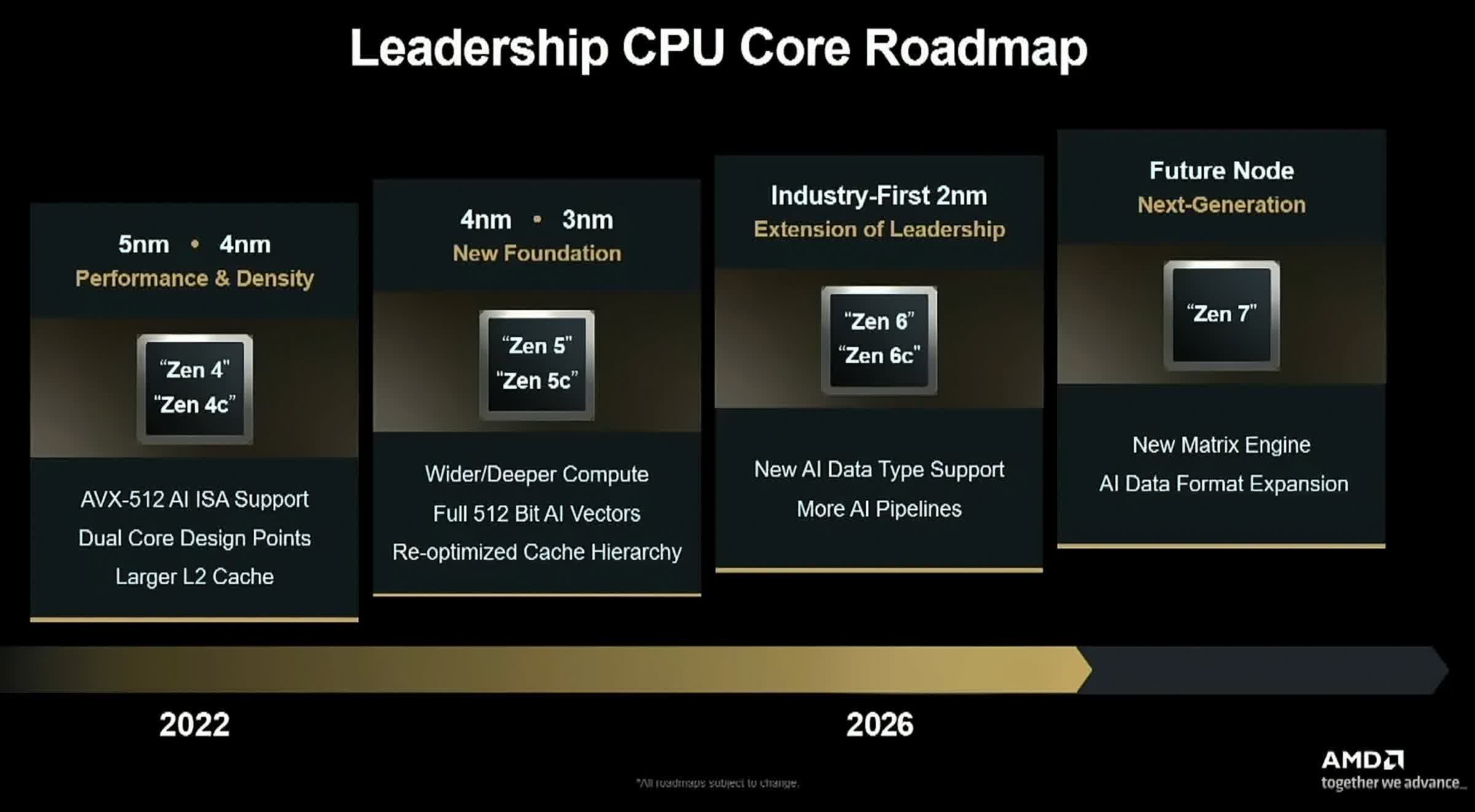
Weird if True: Integrated graphics have been a fixture on AMD’s desktop Ryzen lineup since the Ryzen 7000 series launched in 2022, less useful for gaming and more as a fallback when a discrete GPU fails or during hardware troubleshooting. But according to a new rumor, that may be coming to an end with Zen 6, because AI is apparently claiming whatever silicon it can find.
AMD is expected to launch its Zen 6 “Morpheus” processors later this year or in early 2027 at the latest. The new CPU line is shaping up to bring meaningful changes on both the architectural and platform fronts. Now, a fresh leak suggests the Ryzen 10000 desktop series will also abandon the integrated GPU entirely – replacing it with a dedicated NPU aimed at local AI workloads.
The claim comes from notorious leaker Gotou_kai3, who states that the Zen 6-based “Olympic Ridge” desktop platform will gain an integrated NPU and CUDIMM support, while dropping integrated graphics. The same source adds that Olympic Ridge will still lack native USB4 controller support, meaning motherboard makers will continue relying on external chips for USB4 connectivity, as they do today on AM5 boards.
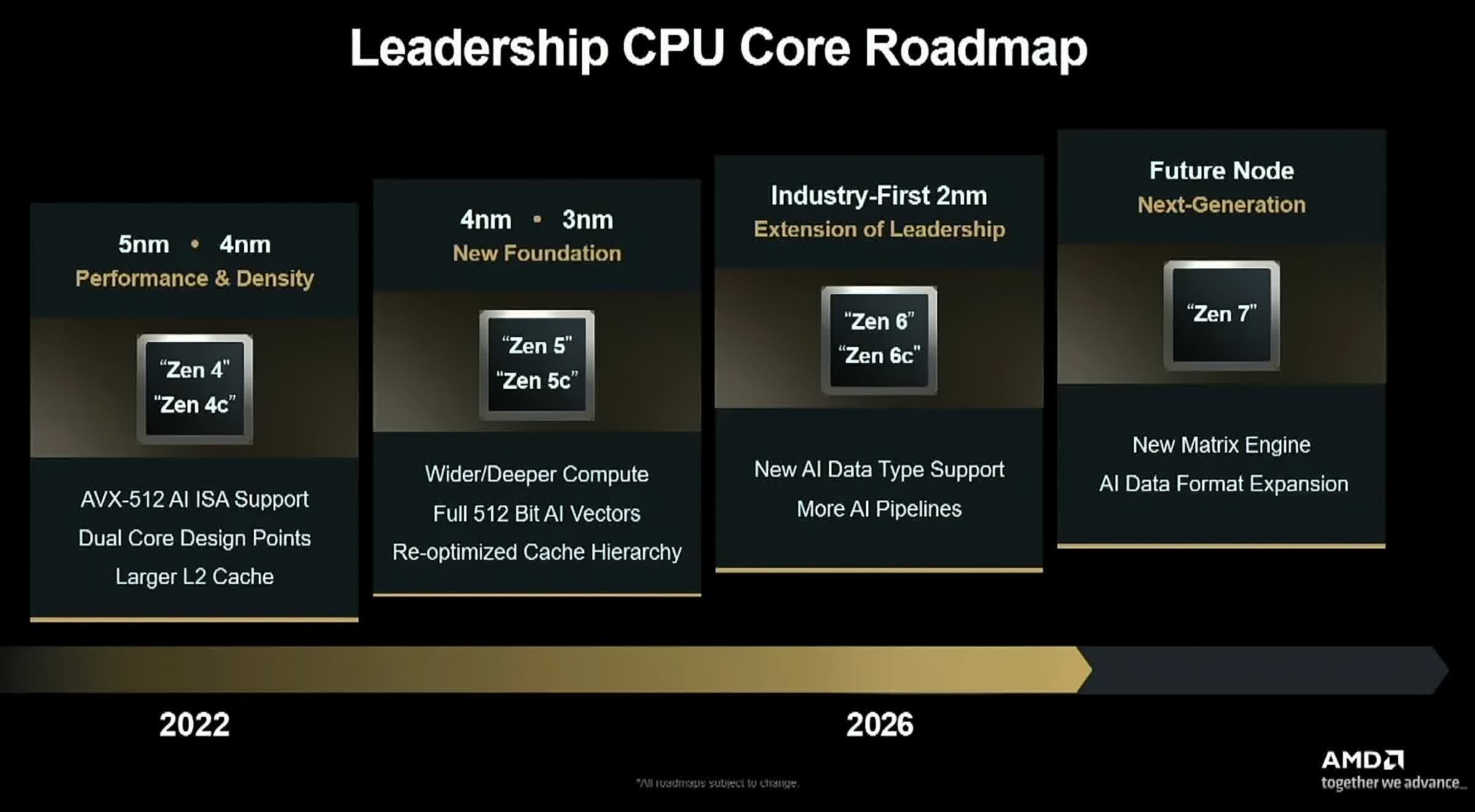
AMD has included integrated graphics in its mainstream desktop CPUs since the Zen 4-based Ryzen 7000 series, continuing through the Zen 5-based Ryzen 9000 family. With Olympic Ridge, the company appears to be reallocating that silicon for different purposes as the role of integrated graphics in enthusiast desktop builds continues to diminish.
NPUs, short for Neural Processing Units, have become a baseline requirement for Microsoft’s Copilot+ PC certification, where they handle AI inference tasks – from background model processing to LLM interactions – more efficiently than a general-purpose CPU or GPU.
– Gotou_3rd (@Gotou_kai3) June 15, 2026
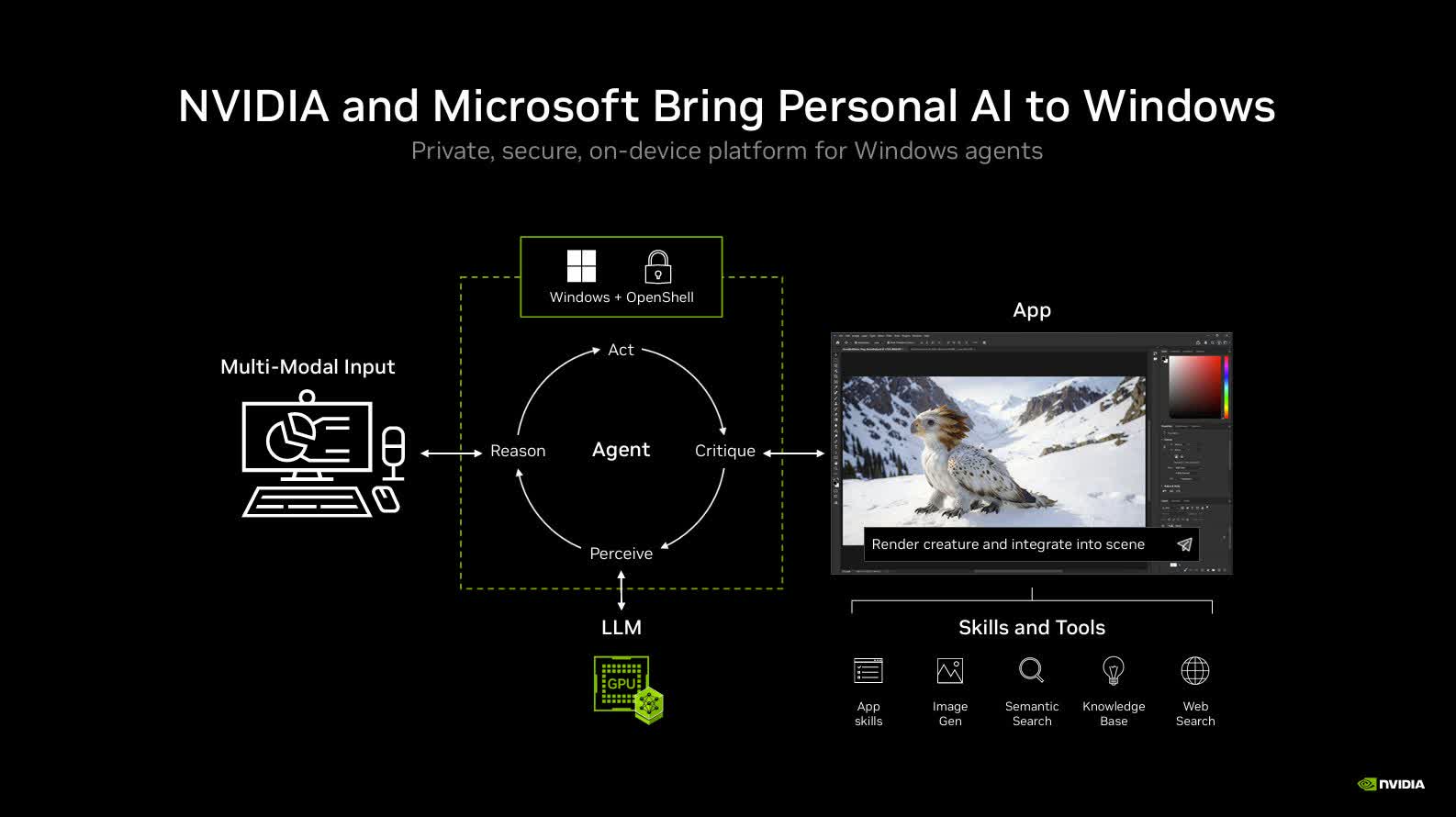
That rationale makes sense for laptops and all-in-ones, where power budgets are constrained and efficiency matters. On the desktop, it’s a harder sell. Microsoft has since extended Windows AI model support to discrete Nvidia GPUs, which further undercuts the case for a dedicated desktop NPU.
Integrated GPUs have their uses on budget PCs and in other specific scenarios. Onboard graphics allow a system to POST and display output even when a discrete GPU is malfunctioning – a scenario that matters to builders, repair technicians, and anyone who has swapped a graphics card mid-troubleshooting.
Removing that safety net from a platform aimed squarely at power users and gamers is a questionable tradeoff, particularly when the NPU replacing it serves a narrower use case. Then again, Nvidia’s RTX Spark CPUs are expected to hit shelves later this year, and there is mounting expectation around local AI workloads becoming a standard part of the Windows OS experience. AMD’s move may well be a preemptive response to that emerging competitive pressure.
Beyond the iGPU controversy, Zen 6 “Morpheus” is targeting clock speeds of up to 7GHz on TSMC’s 2nm process, and each new CCD is expected to pack up to 12 cores and 48MB of L3 cache, with desktop configurations scaling from 6 cores up to 24 with SMT support.
That would mark a new core-count ceiling for mainstream AMD desktop CPUs. Whether pairing those specs with an NPU and no iGPU reflects a coherent product vision – or a forced hand from the AI PC trend – will likely depend on how useful desktop NPUs actually become by the time Ryzen 10000 ships.


Egypt and Belgium played to a 1-1 draw in a FIFA World Cup matchup in Seattle on Monday. Fans who looked to the sky near Seattle Center later that night got a visual win.
Visit Seattle calls the lighted display the first-ever drone scoreboard, and the destination marketing organization plans to repeat the feat for five more matches hosted in Seattle.
The Egypt vs. Belgium match at Seattle Stadium (Lumen Field) attracted more than 66,000 fans for a noon start time. Thanks to the Pacific Northwest’s late sunsets this time of year, the 400 drones didn’t take flight near the Space Needle until 10:05 p.m. The scoreboard was up for 2 minutes, 45 seconds.
Certainly there are quicker ways to determine a match outcome, but Visit Seattle views the effort as a way to celebrate the city’s first World Cup and embody “Seattle’s history of innovation, strong sports fandom, and iconic skyline.”

The drones are flown by Sky Elements, the Fort Worth, Texas-based company that has put on shows at T-Mobile Park for a Mariners game, Lumen Field for the Seahawks, and at the Needle for New Year’s Eve
The next scoreboard will be live on Friday for USA vs. Australia. The showing is free and open to the public, with schedules here.
Here is the schedule for remaining FIFA World Cup matches in Seattle:
- June 19 (noon): United States vs. Australia (Group D)
- June 24 (noon): Qatar vs. TBD (Winner of Playoff A: Italy/NI/Wales/BIH) (Group B)
- June 26 (8 p.m.): Egypt vs. Iran (Group G)
- July 1 (1 p.m): Round of 32 Match 82
- July 6 (5 p.m.): Round of 16 Match 94
Tech
Qualcomm launches Snapdragon Reality Elite and a white-label toolkit for AI glasses, betting the next platform is not a phone

TL;DR
Qualcomm unveiled Snapdragon Reality Elite for MR headsets and START, a turnkey smart glasses toolkit. CEO says 40+ AI wearable designs are underway.
Qualcomm announced two products on Tuesday aimed at positioning the company as the silicon supplier for whatever computing device eventually displaces the smartphone. The first is Snapdragon Reality Elite, a mixed reality chip platform with substantially improved AI processing for headsets and tethered glasses. The second is START, a white-label toolkit that gives eyewear manufacturers a near-complete smart glasses design they can brand, customise, and ship without building the technology stack themselves.
The announcements came alongside comments from CEO Cristiano Amon, who told CNBC that Qualcomm is working on more than 40 different AI wearable devices spanning jewelry, camera-equipped earbuds, pins, and watches. “I think there’s going to be a lot of experimentation with different form factors,” Amon said. He described the unifying principle as “something that you wear, something that is with you all the time, something that can see the world around you.”
Snapdragon Reality Elite delivers up to 60% higher GPU performance, 30% higher CPU performance, and 160% higher NPU performance compared to the previous XR2+ Gen 2 platform. The chip’s neural processing unit is rated at 48 TOPS, enough to run a 3-billion-parameter language model at 45 tokens per second on-device, according to Qualcomm. The platform also runs up to 20% longer on battery and up to 12 degrees Celsius cooler under the same workloads.

The 💜 of EU tech
The latest rumblings from the EU tech scene, a story from our wise ol’ founder Boris, and some questionable AI art. It’s free, every week, in your inbox. Sign up now!
The display capability supports 4.4K per-eye resolution at 90 frames per second, a modest increase from the XR2+ Gen 2’s 4.3K per-eye figure. Qualcomm says the chip enables improved head and hand tracking alongside better see-through performance. Those improvements matter for reducing the motion sickness and eye strain that have historically limited how long users can wear mixed reality headsets.
Reality Elite is designed to power two categories of device. The first is standalone video-see-through headsets that overlay digital content on a camera feed of the real world, the approach used by devices like the Meta Quest. The second is lightweight, tethered optical-see-through glasses that blend digital imagery directly into the wearer’s field of view.
Among the first products using the platform are XREAL’s Project Aura, the Android XR glasses shown at Google I/O with a 70-degree field of view and binocular displays, and an upcoming device from Play for Dream. Qualcomm has not disclosed pricing for the platform or a timeline for when consumer devices will reach retail.
START, which stands for Scalable Turnkey AI-Ready Toolkit, takes a different approach to market entry. It bundles a hardware module built on Qualcomm’s AR1+ chip with a software platform, companion iOS and Android apps, an AI cloud solution, and three white-label reference designs. The designs cover an audio-and-camera configuration similar to Meta’s Ray-Ban smart glasses, a monocular display variant, and a binocular display variant.
The programme’s first partners are eyewear manufacturer Inspecs and O’Neill, the latter owned by TitanFlex. Qualcomm has also made a $10 million strategic equity investment in Inspecs, subscribing for 7.5 million new shares at £1 each. The investment signals that Qualcomm is not merely licensing silicon but taking a financial stake in the supply chain that will manufacture and distribute the devices.
The strategic logic is that traditional eyewear companies have the design expertise, retail distribution, and consumer trust to sell smart glasses as fashion accessories, but lack the chip architecture, AI software, and sensor integration to build the technology themselves. START is Qualcomm’s attempt to bridge that gap, mirroring the reference design programme it used in the early 2010s to help manufacturers build smartphones on its Snapdragon platform. Qualcomm says START will expand beyond smart glasses to other form factors in the future, though it has not specified which.
The competitive landscape is crowded and moving fast. Meta has sold more than seven million pairs of Ray-Ban smart glasses and commands roughly 82% of the market, with annual production capacity being expanded to 10 million units by the end of 2026. Snap launched its $2,195 Specs AR glasses this week.
Apple is reportedly testing multiple frame designs for a possible 2027 launch. Google is shipping Android XR audio glasses this autumn with Samsung, Warby Parker, and Gentle Monster. Qualcomm silicon already powers many of these devices, but the company is now building the full stack rather than waiting for partners to assemble it themselves.
What Qualcomm is betting on is that none of those companies will dominate the category alone. If the smart glasses market fragments the way the smartphone market did, with dozens of manufacturers building on a shared platform, the company supplying the foundational silicon layer captures value regardless of which brand wins. That is the same bet Qualcomm made with mobile phones, and Amon’s 40-device pipeline suggests the company sees the transition accelerating faster than the public market does.
The claims remain largely forward-looking, however. The 48 TOPS figure and performance percentages are Qualcomm’s own, measured against its own previous generation, and no independent benchmarks have been published. The 40 AI wearable designs Amon referenced are in various stages of development, not shipping products.
Whether the smart glasses category actually becomes large enough to justify Qualcomm’s investment depends on consumer adoption that has so far been limited to Meta’s ecosystem and a handful of developer-focused devices. The company is placing a structural bet that the transition away from smartphones is inevitable, but the timeline remains anyone’s guess.


The funny-sounding name offers new insights into galaxy formation.
Many of the developments shared by astronomers using the James Webb Space Telescope and similar instruments center on trying to understand the history of the galaxy. The latest update from the Webb telescope researchers confirms the existence of a phenomenon known as “bulge fossil fragments” that can offer new insights on the Milky Way’s formation.
The subject of this latest investigation is known as Terzan 5, a region in the center of the galaxy often dubbed “the bulge” that has been challenging for astronomers to study due to the density of stars and presence of dust. Between their observations with the Webb telescope and archival observations taken from the Hubble Space Telescope, the team was able to confirm that Terzan 5 is not a globular star cluster, as it was previously classified. Globular star clusters usually only have one ancient star population. Instead, Terzan 5 has experienced at least four distinct phases of star formation. According to the researchers’ survey, it has two older star populations that were formed 12.5 billion and 4.7 billion years ago. The astronomers also found two more contemporary populations that formed 3.8 billion years ago and 2.5 billion years ago.
“For some reason, this peculiar clump of stars formed separately from the bulge and was not destroyed as the bulge itself formed,” said University of Bologna professor Francesco R. Ferraro, principal investigator of the Webb observations. “Terzan 5 is what we now call a bulge fossil fragment because it resembles the primordial clumps that contributed to the formation of the bulge.”
“Based on observations and in-depth simulations, we think that galaxies in the early Universe had huge discs of gas that fragmented into clumps and formed stars. These clumps migrated to the center of the galaxies, and many merged to form their bulges,” co-author and University of Bologna associate professor Barbara Lanzoni said.
The findings were published in the journal Astronomy & Astrophysics.

HPE’s new promotion aims to entice customers to more deeply consider migrating off VMware. While numerous third-party surveys have pointed to a significant amount of VMware customers looking to reduce or eliminate their VMware use over the next few years, concerns around time and cost are also expected to slow or deter migration plans, especially given that migration can require paying for two virtualization products simultaneously.
“One of the big things we see is that as customers are going through this journey on transforming their operating model, you end up with double expenses,” HPE’s EVP and CTO Fidelma Russo said, according to The Register.
Dean Colpitts, CTO of Canadian managed services provider (MSP) Members IT Group (MITG), which VMware cut from its reseller program after 19 years of partnership a year ago, doesn’t expect the promotion to drive sales much.
“All our clients work on three, four, or five-year life cycles and generally roll that purchase into their initial buy,” he told Ars. “The biggest issue I’m seeing right now that is affecting VM Essentials sales and adoption is [that] the high prices and constraints of DRAM [are] affecting customers’ ability to obtain new hardware to migrate onto.”
Colpitts pointed to a lack of available hardware for permanent migrations and “to temporarily facilitate a brownfield reimage of the customer’s existing equipment from VMware to” VM Essentials.
On the other hand, one of HPE’s biggest channel partners, San Diego-based Nth Generation, is expecting its “VM Essentials sales pipeline to as much as quadruple and sales to grow at about that rate” because of HPE’s promotion, CRN reported.
“These additional free licensing and migration capabilities are going to drastically lower the risk of moving to VM Essentials,” Nth Generation co-president and CTO Dan Molina told the publication.
Partner promotion
HPE also announced that it would give 600 reseller partners who earn the HPE partner program’s Private Cloud with Virtualization competency by the end of the year free VM Essentials software licenses for three years. Partners still have to pay support costs, though.
Colpitts said that the benefit is “a step in the correct direction” but that limiting the promotion to 600 partners is “very shortsighted.” He believes that HPE should give all of its partners VM Essentials “to facilitate getting [VM Essentials] into customer sites and displacing the competitors.”
“They need to fling [VM Essentials] as far and as fast as they possibly [can] to immediately gain traction and draw ISVs to them, which will increase adoption even more,” he said.

In a World Cup 2026 group that also contains Argentina and Algeria, Austria vs Jordan will be a must-win game for both teams if they are to make a deep run in the tournament. While this is Jordan’s maiden World Cup appearance, the Burschen are returning to football’s biggest stage for the first time since 1998.
Ralf Rangnick’s men are coming on the back of an excellent qualifying campaign, winning six, drawing one, and losing just one of their eight matches. They also won all three of their warm-up matches against Ghana, South Korea and Tunisia, and are currently on a five-match unbeaten run.
Jordan are, of course, the underdogs heading into this match given their 65th-place world ranking and the fact that they’ve only narrowly secured their World Cup berth. They also come into the game on a five-match winless run, including two defeats (by Colombia and Switzerland) in their four friendlies ahead of the tournament.
So, read on as we show you exactly how to watch Austria vs Jordan for free from anywhere in the FIFA World Cup 2026.
How to watch Austria vs Jordan for free
Austria vs Jordan is available to watch for free in multiple countries, including the UK, Austria, Australia, Brazil, Belgium, Ireland, Netherlands, Switzerland and Turkey.
Abroad? Can’t access your free stream? Unblock your free World Cup stream with Norton VPN — more on that below.
Use a VPN to watch Austria vs Jordan live streams
It’s the World Cup, and if you’re traveling, you might discover your usual Austria vs Jordan stream is suddenly unavailable due to geo-restrictions.
Don’t worry, that’s exactly where a VPN can help. A virtual private network lets you connect to servers around the world so you can securely access your usual World Cup coverage as if you were back home.
We recommend Norton VPN. Here’s why:
How to watch Austria vs Jordan in the US

US viewers can watch Austria vs Jordan on FS1.
Cord-cutters can access FS1 through live TV services like YouTube TV (free trial), Hulu+Live TV, Sling (select markets), Fubo or DirecTV.
Those looking for a streaming service instead can watch Austria vs Jordan on Fox One (3-day free trial).
If you are looking for a stream in Spanish you can watch on Telemundo which is available via Peacock.
Visiting the US from the UK? You can still watch your World Cup stream for free thanks to Norton VPN (try for 60 days).
How to watch Austria vs Jordan in the UK

UK customers are in luck as they can stream Austria vs Jordan for free on BBC iPlayer. Live coverage is also available on the BBC One TV channel.
You require a TV license and a valid UK postcode for an account (e.g. SE1 7PB).
Norton VPN can unlock your stream if you’re abroad today.
How to watch Austria vs Jordan in Australia

Austria vs Jordan will be shown for free in Australia on SBS On Demand.
The streaming platform has every game of the tournament for free, making it the perfect place for your World Cup viewing.
Traveling for work or on holiday? A VPN like Norton VPN can help unlock your free stream.
How to watch Austria vs Jordan in Canada

In Canada, TSN will be broadcasting Austria vs Jordan.
You can live stream via the TSN+ streaming platform, which costs CA$8 per month or CA$80 per year.
Outside of Canada? Use Norton VPN whilst you’re traveling away from home to unlock your stream.
Austria vs Jordan: Match Information
What time does Austria vs Jordan start?
Austria vs Jordan kicks-off at 12am ET / 5am BST / 2pm AEST on Wednesday, June 17.
What are the squads for Austria vs Jordan?
Austria
Goalkeepers: Alexander Schlager (Red Bull Salzburg), Florian Wiegele (Viktoria Plzen), Patrick Pentz (Brondby)
Defenders: David Affengruber (Elche), Kevin Danso (Tottenham Hotspur), Stefan Posch (Mainz 05), David Alaba (Real Madrid), Philipp Leinhart (SC Freiburg), Phillipp Mwene (Mainz 05), Alexander Prass (TSG Hoffenheim), Marco Friedl (Werder Bremen), Michael Svoboda (Venezia)
Midfielders: Xaver Schlager (RB Leipzig), Nicolas Seiwald (RB Leipzig), Marcel Sabitzer (Borussia Dortmund), Florian Grillitsch (Braga), Carney Chukwuemeka (Borussia Dortmund), Romano Schmid (Werder Bremen), Christoph Baumgartner (RB Leipzig), Konrad Laimer (Bayern Munich), Patrick Wimmer (VfL Wolfsburg), Paul Wanner (PSV Eindhoven), Alessandro Schopf (Wolfsberger AC)
Forwards: Marko Arnautovic (Red Star Belgrade), Michael Gregoritsch (FC Augsburg), Sasa Kalajdzic (LASK)
Jordan
Goalkeepers: Yazeed Abulaila (Al-Hussein), Abdallah Al-Fakhouri (Al-Wehdat), Abdel Rahman Al-Talalga (Al-Faisaly)
Defenders: Abdallah Nasib (Al-Zawraa), Yazan Al-Arab (FC Seoul), Husam Abu Dahab (Al-Faisaly), Mohammad Abulnadi (Selangor), Yousef Abu Al-Jazar (Al-Hussein), Salim Obaid (Al-Hussein), Ahmad Assaf (Al-Hussein)
Midfielders: Noor Al-Rawabdeh (Selangor), Ibrahim Sa’deh (Al-Karma), Mohammad Abu Hashish (Al-Karma), Nizar Al-Rashdan (Qatar SC), Mohannad Abu Taha (Al-Quwa Al-Jawiya), Amer Jamous (Al-Zawraa), Mohammad Al-Dawoud (Al-Wehdat), Yousef Qashi (Al-Hussein), Mohammad Taha (Al-Hussein)
Forwards: Musa Al-Taamari (Rennes), Mahmoud Al-Mardi (Al-Hussein), Baha’ Faisal (Al-Waab), Mohammad Abu Zrayq (Raja Casablanca), Ibrahim Sabra (Lokomotiva Zagreb), Odeh Al-Fakhouri (Pyramids), Ali Azaizeh (Al-Shabab)
Swipe to scroll horizontally
|
Position |
Team |
GD |
Points |
|---|---|---|---|
|
1 |
Argentina |
0 |
0 |
|
2 |
Algeria |
0 |
0 |
|
3 |
Austria |
0 |
0 |
|
4 |
Jordan |
0 |
0 |
Can I watch Austria vs Jordan on my mobile?
Of course, most broadcasters have streaming services that you can access through mobile apps or via your phone’s browser.
You can also stay up-to-date with all of the key World Cup moments on the official social media channels on X/Twitter (@FIFAWorldCup), Instagram (@FIFAWorldCup), TikTok (@FIFAWorldCup) and YouTube (@FIFA).
We test and review VPN services in the context of legal recreational uses. For example: 1. Accessing a service from another country (subject to the terms and conditions of that service). 2. Protecting your online security and strengthening your online privacy when abroad. We do not support or condone the illegal or malicious use of VPN services. Consuming pirated content that is paid-for is neither endorsed nor approved by Future Publishing.
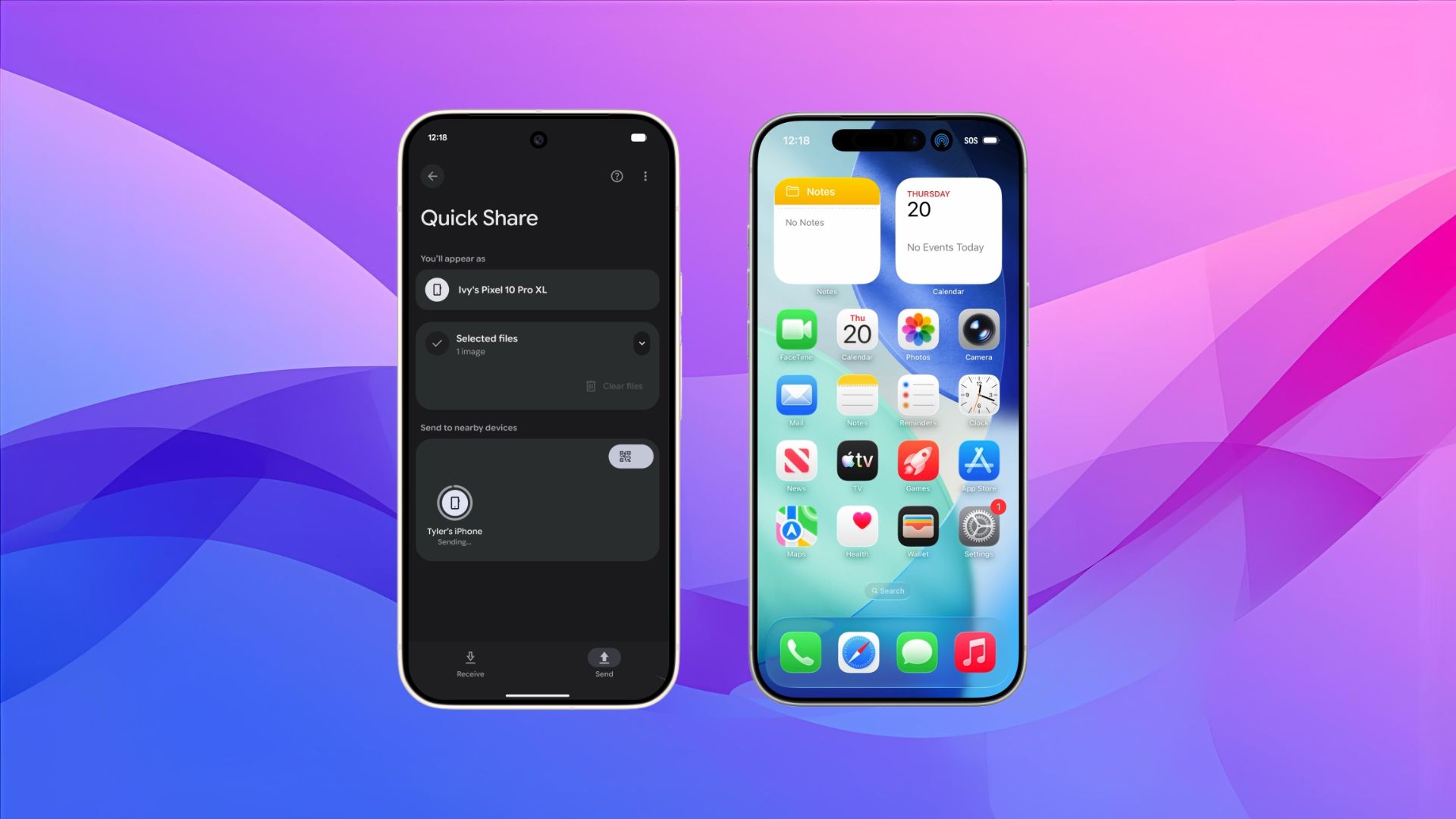
Apple’s long-rumoured foldable iPhone may not reach customers until 2027, despite continued speculation that the company plans to unveil the device in the coming months.
According to a new report from Taiwan’s Economic Daily News, comments from suppliers linked to Apple’s foldable plans suggest the launch timeline may have shifted.
While the iPhone Fold is still widely expected to be announced in late 2026, several supply chain sources now indicate that shipping could slip into early 2027.
The report points to remarks from Largan Precision CEO Enping Lin. He said that some upcoming products due to be announced in the third quarter have been moved to the beginning of next year. Although Lin did not mention Apple or a foldable iPhone by name, Largan is a long-time Apple supplier. This then fuels speculation that the comments relate to the company’s first foldable device.
Further weight comes from Xinrixing, a supplier believed to be producing bearings for the foldable handset. The company’s general manager suggested that production is largely ready and is now waiting for Apple to finalise a shipping schedule.
None of this confirms a delay, but it does add to a growing number of reports suggesting the iPhone Fold’s roadmap remains in flux.
Rumours surrounding Apple’s foldable ambitions have circulated for years. Predictions of an imminent launch have appeared almost annually since Samsung introduced its first Galaxy Fold in 2019. More recently, however, reports have become increasingly specific. Many point to a September 2026 unveiling.
Even then, some analysts believed availability would be limited at launch. This could potentially mirror Apple’s staggered rollout of products such as the original AirPods. Other reports have gone further, claiming production challenges could push the device entirely into 2027.
For now, Apple remains silent on its foldable plans. But if the latest supply chain chatter is accurate, prospective buyers may have to wait a little longer. They might not see the company’s first foldable iPhone reach store shelves soon.

Tiny cameras in your ears may be part of Apple’s AI future. The company is preparing camera-equipped AirPods for release in late 2027, according to a report from Bloomberg’s Mark Gurman on Tuesday.
The new earbuds are expected to arrive around the same time as a second-generation foldable iPhone and a 20th-anniversary iPhone model, Bloomberg reported, citing unnamed people familiar with Apple’s plans. Apple didn’t immediately respond to a request for comment.
The cameras reportedly wouldn’t be meant for taking photos or recording video of the inside of your ear. Instead, they would act more like AI sensors, giving Siri visual context about the world around you.
That could let someone ask Siri questions about what they’re looking at, like what to make for dinner based on a set of ingredients, according to Bloomberg. This would most likely use Apple’s Visual Intelligence feature, which is designed to analyze images and provide context based on what the camera on your device sees.
Apple announced new Siri and Visual Intelligence features last week at WWDC 2026 as part of iOS 27 and its other operating system updates. The new Apple Intelligence features are expected to arrive this fall, while Siri AI will be available as a beta later this year.
Bloomberg reported that the camera AirPods are code-named B798 and were originally planned for 2026 but were slightly delayed due to Apple’s struggles with AI software. The company also reportedly needed more time to develop visual AI models capable of identifying objects in its surroundings.
The earbuds are expected to look similar to current AirPods Pro models, aside from cameras embedded in the stems. Bloomberg also reported that the device would include external lights to show when data is being sent to the cloud for processing.
The reported AI-powered AirPods are part of Apple’s broader push into AI hardware. Bloomberg said Apple is also working on smart glasses that could arrive as early as late 2027, along with a camera-equipped pendant that could be worn on clothing or around the neck.
Apple is reportedly preparing a busy iPhone lineup. Bloomberg previously reported that Apple’s first foldable iPhone is expected to launch in 2026. Apple is also said to be working on a 20th-anniversary iPhone with a nearly edge-to-edge display and curved glass that wraps around the sides.
The timing could still change, as it has in the past. Apple hasn’t announced camera-equipped AirPods, a foldable iPhone or a 20th-anniversary iPhone.

Let’s stop for a moment and pause to consider the smart bulb. Imagine going back 20 years and telling yourself that people will be putting computers capable of acting as web servers into light bulbs just so they can control them from their telephone instead of hitting the switch. The whole thing seems crazy — but its great, because it enables hacks like this one where [RickOOOOOO] takes a commercially-available ESP32 smart bulb, and hacks it into a local file server and digital library for banned books.
The word “banned” gets bandied about a lot — but assured, there’s nothing getting served up by [RickOOOOOO]’s bulb that’s going to help somebody will ill-intent build an improvised explosive device. No, at least as conceived here, it appears to be full of easily-available e-books that were pulled from school libraries in the USA, which may-or-may not meet your personal definition of ‘banned’. Whatever you want to call them, we appreciate the idea that a student could hypothetically replace one of the bulbs at school with a hacked version serving up that sort of content. a bulb in such a school with a bulb hacked to host that sort of content–in minecraft, naturally.
In any case, the hardest part of the hack was carving the ESP32C3 in the bulb out of the IoToreo bulb enough to access it. Unfortunately having done so, [Rick] wasn’t able to get an SDcard interface soldered on, so he’s stuck with just 4MB for books and webserver. That means only a few epubs can fit on the bulb, but it’s better than those books being unavailable.
Like the solarpunk message board we featured recently, which also ran on an ESP32, the bulb broadcasts a public network that uses a captive portal to take you to the web interface of the library. From there, users can browse books– including learning from where they were banned and why–and admins can access a password-protected control panel. One neat work-in-progress feature on the control panel is that the bulb can still be used as a smart bulb, so you can try and match the light to its surroundings. In Minecraft, because of course we would never encourage kids to change light bulbs. Perish the thought!
Speaking of Minecraft, you can run a server on a lightbulb, too. Or DOOM, because of course even the light bulbs run DOOM now. What a time to be alive!

But will it see the same success as the MacBook Neo?

Dell announced the return of the XPS 13 late last month and said broadly that it would be available in June. The low-cost laptop is now available on both virtual and brick-and-mortar store shelves. It retails starting at $599 for students and $699 for other customers.
The Dell XPS 13 announcement came hot on the heels of Apple unveiling its first true budget laptop. The MacBook Neo is designed for education, targeting both teachers and students as its likely buyers and it impressed in our review. Apple even secured a deal to bring its gear, including more than 4,500 MacBook Neos, to the Kansas City Public Schools. It should be interesting to watch whether Dell will see the same success as Apple has been enjoying for such a similar laptop.

Sports47 seconds ago
'Magnificent' – Messi scores hat-trick to equal Klose scoring record

Tech2 minutes ago
AMD Zen 6 desktop CPUs may ditch integrated graphics for a built-in NPU

NewsBeat4 minutes ago
Ruth Langsford set to write more books after memoir becomes a bestseller

Crypto World4 weeks ago
Blockchain.com files with SEC for U.S. IPO

NewsBeat3 weeks ago
Israel says it has killed new Hamas military leader in Gaza City airstrikes

Business3 weeks ago
NYT Strands Answers May 24 2026 Revealed for Puzzle No. 812 Theme Summer Essentials

News Videos9 minutes ago
CLARITY ACT UPDATE! Prepare for a Massive Crypto SUPERCYCLE – Raoul Pal

News Videos30 minutes ago
Trump Family Earned $500M From Crypto Deal While Investors Took Losses

News Videos37 minutes ago
Financial Freedom! #shortvideo #affirmations #short #ytshort #ytviral #manifestation #selfhelp
-

 Business3 days ago
No Jackpot Winner as $257 Million Prize Rolls Over to $269 Million Monday Draw
-

 Crypto World5 days ago
Oppenheimer backs SpaceX as $70 billion retail frenzy builds
-

 Fashion4 days ago
Weekend Open Thread: Tuckernuck – Corporette.com
-

 Crypto World5 days ago
Markets Rally as SpaceX IPO Looms Amid Iran Tensions and Inflation Surge
-
 Crypto World2 days ago
Zimbabwe Requires Crypto Businesses to Register Annually Under New FIU Regulations
-

 Business7 days ago
Thailand Ranks Second Worldwide for AI Adoption Growth, Microsoft Reports
-

 Tech4 days ago
NanoClaw integrates JFrog registries to secure AI agent downloads
-

 Tech5 days ago
This Week In Security: Microsoft On Microsoft, Register Your Domains, Linux On ARM, And FreeBSD Joins The File Cache Club
-

 Crypto World4 days ago
Bitget enters Argentina’s regulated crypto market through PSAV registration
-
 Tech6 days ago
Dutton Ranch star claims they ‘didn’t see any disruption’ on set following Chad Feehan’s exit from Yellowstone spinoff fueled by Taylor Sheridan clash rumors
-

 NewsBeat5 days ago
El Nino has formed in the Pacific and could set records, forecasters say
-

 Politics6 days ago
Politics Home | Healey Resignation Is “Colossal Failure Of Government”, Says Former Labour Defence Secretary
-

 Tech7 days ago
‘This is Seattle’s position on AI’: City Council votes unanimously to pause big new data centers
-
 Entertainment5 days ago
Donnie Wahlberg & More Heat Up Las Vegas at Circa’s Barry’s Downtown Prime
-
 Tech5 days ago
Opendoor Ends India Operations, Fueling a Bigger Conversation About AI and Outsourcing
-

 Sports6 days ago
First Time Since 1971: Australia Register Historic Low In ODI Cricket
-

 Politics6 days ago
Belfast burns, while Met chief points finger at Iran and Russia
-

 NewsBeat4 days ago
FBI searches office of Ohio voter registration group
-

 Business5 days ago
AT&T: Verizon's 27% Outperformance Sets Up A Solid Entry Point
-

 Politics6 days ago
Modi thanks Trump for wishes as US attacks Indian seafarers
You must be logged in to post a comment Login