Connect with us

Tech

Trump’s Sloppy, Incompetent Chinese Protectionism Expanded To Robot Vacuums, Lawnmowers

Published

on

from the everything-is-about-to-get-much-dumber dept

Ideally, I think it makes sense to open up the U.S. market to Chinese goods (AI, EVs, robots), but have functional and well-funded regulators that policy all labor, competition, environmental, privacy, and consumer rights abuses. But big companies don’t much like that because it would boost competition and accountability, eroding quarterly revenues.

So instead we get protectionism. Or in the case of the Trump administration, protectionism run by a bunch of corrupt, incompetent clowns who gutted most of our federal regulators, then saddled them with an elaborate new policy ask that’s impossible to implement, even if the admin were competent.

Which it isn’t.

If you want a good idea of what Trump protectionism looks like in practice, I recommend this Verge piece about the Trump effort to ban Chinese drones. Spoiler: it’s not going well, and it’s trivial to trick the administration and bypass the ban without doing much, resulting in U.S. consumers losing access to lower-cost popular goods (DJI was the most popular and successful drone maker by far) under the pretense this is helping Americans and rekindling U.S. domestic electronics manufacturing.

Advertisement

Having unsuccessfully “blocked” Chinese drones (read: caused a bunch of annoying and pointless chaos), the Trump administration is dramatically expanding its protectionist campaign to include everything from cheap Chinese power converters (necessary for the world’s migration away from fossil fuels), to low-cost Chinese vacuum robots:

“While the government did include “humanoid robots” and “quadrupeds” among the bots it wants to ban, the ban is far broader than that. It covers almost any new software-controlled robot that travels over the ground, weighs more than 4.4 pounds (including any dock), can perceive its environment, and has wireless connectivity.

By that definition, the FCC is banning future robot lawnmowers, sidewalk delivery robots, and the robots that crate around packages at your local Amazon warehouse, too.”

Great stuff. Surely this will be competently enforced by… (checks notes)… Brendan fucking Carr.

Like his bumbling and unpopular boss, Brendan Carr has always made a gigantic stink about China. If you recall, he was one of the biggest proponents of a “ban on TikTok,” which he claimed was necessary to protect national security and stop propaganda. The solution to that problem was to steal the company and offload it to Trump’s billionaire friends so they could spread propaganda and abuse privacy.

Advertisement

The stupidity, xenophobia, and corruption on display with the Trump “TikTok ban” is going to be adapted for AI, and the next six to twelve months of U.S. tech policy will be dumber and more chaotic than ever. Especially as the biggest U.S. AI companies — swimming in debt, facing a data center glut bubble, and a long way from profitability — look to the government to protect them from all manner of competition (foreign, on device, open source, whatever).

This may come as a surprise to you, but Trump incorporated doesn’t actually care about protecting U.S. consumers from Roomba privacy abuses, propaganda, or national security abuses. If they did, they wouldn’t be supporting Trumpism. If they did, they’d regulate data brokers and pass a modern internet privacy law that applied to every company and executive doing business in the U.S.

What they care about is stuff like trying to shovel more drone business to the president’s sons, or protecting Mark Zuckerberg and Elon Musk from having to compete with cheaper overseas AI models.

Being mindlessly and personally transactional, the Trump administration is also keen to erect additional troll and tribute systems if companies want to continue doing business in the U.S. The money will go to his business interests and allies, but in a bid to appeal to nationalists, it’s going to all be layered under the pretense that this is all going to magically shift robotic manufacturing back to the U.S:

Advertisement

“But again, the government isn’t asking these companies any questions about security — not one — to get the waiver that lets them through. The FCC only wants to know where they’re designed and made and assembled and tested and influenced, and get a specific commitment to start manufacturing them in the US instead.”

But they’re not going to be competent enough to make any of this happen, even if shifting the entirety of low-cost electronics manufacturing back to the U.S. was a thing you could actually accomplish. A key part of the problem is that, as we saw from Trump’s dream of having U.S.-made smartphones, the folks in charge of this effort have a child-like understanding of how everything works. And everybody else — like massive swaths of the business community, academia, and the press — are too feckless to stand up to the corrupt stupidity in any meaningful way.

The Trump administration has also gone out of its way to ensure our federal regulators no longer have the resources or legal autonomy to function. Then they’re saddling them with this massive new layer of protectionism they’d be incapable of enforcing even if they wanted to. They’re not even bright enough to understand that even base protectionism is out of their reach.

This is just racist, crony capitalism by corrupt and incompetent zealots, and it’s going to cause irreparable harm to consumer prices, product quality, product availability, hobbies, science, the shift to renewables, and everything else over the next two to three years. All propped up by a lazy press, self-serving domestic monopolists, and a whole lot of bullshit about privacy and national security by the kind of people who are a direct and obvious threat to both.

Filed Under: ai, china, competition, crony capitalism, drones, incompetent, protectionism, robots, vacuums

Advertisement

Source link

Continue Reading
Click to comment

You must be logged in to post a comment Login

Leave a Reply

Tech

Russia-Linked ‘Midnight Blizzard’ Group Hijacks Hotel Wi-Fi With CaptiveCrunch

Published

on

A Russia-linked group tracked as Midnight Blizzard has compromised hotel and conference Wi-Fi portals worldwide, redirecting guests to phishing pages and fake software updates that steal credentials, session tokens, and other sensitive data. Microsoft says the campaign, dubbed CaptiveCrunch, “targets traveling employees generally rather than a particular sector,” reports iTNews. From the report: Midnight Blizzard, tracked internally by Microsoft under its earlier codename NOBELIUM, is attributed by the US and UK governments to Russia’s SVR (Sluzhba Vneshney Razvedki) foreign intelligence service. Microsoft’s technical analysis said compromises occurred in “several countries” without naming them, and it did not give a total number of affected venues, organisations or individuals.

A related investigation published earlier in July by security firm ReliaQuest, and which Microsoft cited in its report, found compromised captive portal gateways across multiple United States cities as well as in India and Saudi Arabia, mostly at hotels. ReliaQuest said the traffic it observed came from organizations across financial services, professional services, legal, health care, energy and retail, suggesting the campaign targets traveling employees generally rather than a particular sector.

[…] Where attackers gained a foothold, Microsoft said they deployed two main tools: CornFlake, a Windows remote access trojan (RAT) written in Go capable of keylogging, screenshot and webcam capture, audio surveillance and credential and session token theft. They would also drop ChocoShell, an in-memory PowerShell infostealer targeting browser cookies, saved passwords, Microsoft 365 single sign-on (SSO) tokens and wi-fi credentials. Microsoft also said it has seen indications the attackers might be targeting Android devices with similar prompts urging victims to download and install an APK file.

Source link

Advertisement
Continue Reading

Tech

How might a system ‘leak secrets’ without being hacked?

Published

on

Chetan Jaiswal of Quinnipiac University explains what a side-channel attack is and how it impacts modern cybersecurity.

When people hear the word cyberattack, they usually imagine someone guessing a password, planting malware, stealing a computer, hacking an organisation’s network or exploiting a flaw in software. A side-channel attack works differently. It looks for clues a computer gives away while doing ordinary work.

A simple analogy is a locked safe. A thief may not know the combination and may not be able to break the lock. But if the thief can listen closely as the dial turns, small clicks or churns or pauses might reveal something about what is happening inside. The safe is not meant to share that information, but its physical behaviour still leaks clues.

Modern computers have their own versions of such clues. For example, each computer might take different amounts of time to complete different tasks or may use different amounts of electricity. The hardware – processors, memory, graphics cards and storage drives – may leave tiny patterns as they work.

Advertisement

I’m a computer scientist who studies security and privacy. I define a side-channel attack as an attempt to observe these indirect clues and use them to infer something private.

This is what makes these side-channel attacks unusual. The weakness comes from the way a machine performs its work. The attacker does not steal a password directly or break into the computer, but instead studies the traces left behind by the machine while it is operating.

History of leaking

The idea is not new. In 1985, Dutch researcher Wim van Eck showed that electromagnetic signals from video display units could be captured and decoded, raising the possibility of eavesdropping on what a screen displayed. The screen was not intentionally broadcasting its contents. It was leaking signals as a side effect of operating.

In the 1990s, side-channel attacks became especially important in cryptography, the science of protecting information. In 1996, cryptography researcher Paul Kocher showed that carefully measuring how long certain operations took could reveal private information from systems using common cryptographic methods. A few years later, Kocher and fellow cryptographers Joshua Jaffe and Benjamin Jun showed that measuring power consumption could help recover secret keys from tamper-resistant devices such as smart cards.

Advertisement

These discoveries changed how engineers thought about security. It was not enough to ask whether an encryption algorithm was mathematically secure. It was even more important to ask whether the device running the algorithm leaked hints through timing, power, sounds or other physical behaviour.

There are several common types of side channels:

  • A timing attack looks for small differences in how long operations take.
  • A power attack studies electricity use.
  • Electromagnetic attacks examine unintended signals.
  • Acoustic attacks use sound.

In one striking example, researchers showed that the faint noise produced by a laptop during certain cryptographic operations could be used, under experimental conditions, to extract a 4,096-bit secret cryptographic key.

The examples that brought side-channel attacks into wider public discussion were processor attacks. Modern computer processors such as CPUs are extremely fast because they predict what a program is likely to do next. This technique, known as speculative execution, helps computers run more efficiently. But in 2018, cybersecurity researchers discovered two vulnerabilities, dubbed Meltdown and Spectre, in the technique. They showed that these predictions could leave behind measurable traces. A malicious program could use those traces to learn information that should have been protected from it.

Meltdown and Spectre mattered because they challenged one of the basic premises of modern computing: that different programs running on the same machine should be kept separate. They also showed that performance features built deep into computer chips could have security consequences.

Advertisement

New tech, new side channels

Since then, researchers have continued to find new side-channel attacks in modern hardware. One such side-channel attack revealed in 2022, called Hertzbleed, showed that changes in processor frequency – normally used to save power and manage performance – could become a timing signal that could, in some cases, expose remote servers’ cryptographic secrets.

Another side-channel attack, dubbed Downfall and revealed in 2023, affected certain Intel processors. It showed how a feature called Gather could leak older pieces of data left inside the processor after earlier work. Zenbleed, also revealed in 2023, affected AMD Zen 2 processors and could allow sensitive information from another process to appear where it should not.

Side-channel research has also moved beyond CPUs. GPU.zip showed that graphics processors, or GPUs, can sometimes leak visual clues through the way they handle image data behind the scenes, including the pixels from another webpage in the Google Chrome browser. GoFetch, published in 2024, showed that a hardware feature in many Apple processors designed to predict future memory needs could undermine protections in cryptographic software and help extract secret keys.

The latest attack, called FROST, short for “fingerprinting remotely using OPFS based SSD timing,” involves solid-state drives, or SSDs. These drives are an extremely common form of fast storage on almost all modern computers. FROST shows that a malicious website can use a browser storage feature called the origin private file system to create and access files inside a protected area, called sandbox, that the browser sets aside for that website, then measure tiny delays in SSD activity.

Advertisement

The intuition is simple. If several programs are using the same storage device, they can slow one another down slightly, like cars sharing the same road. By measuring those delays in a browser, the FROST researchers showed that a website could, under specific conditions, infer information about other activity on the same computer, such as websites visited or applications used.

Lessons more than losses

So, how often are side-channel attacks used? The honest answer is that while they can be damaging, they are not the everyday cyberattack most people encounter. Most real-world cybercrime still relies on easier and cheaper methods, such as exploiting software vulnerabilities, stealing credentials, phishing, malware and ransomware. Verizon’s 2026 Data Breach Investigations Report, for example, highlights software vulnerabilities and ransomware as major sources of breaches, not side-channel attacks as a routine entry point.

This does not make side-channel attacks unimportant. Many are discovered by researchers before they are seen in widespread criminal use. But they matter because they expose weaknesses in the assumptions behind modern computing. They influence chip design, browser security, cloud computing, cryptographic libraries and the way engineers think about privacy.

Side-channel attacks are a reminder that computers do not have to intentionally reveal secrets to leak them. Sometimes the smallest clues left behind while they work can say more than anyone expected.

Advertisement

The Conversation

Chetan Jaiswal

Chetan Jaiswal is an associate prof of Computer Science at Quinnipiac University, Connecticut. His research interest lies in databases, security and privacy, cloud computing, computer vision, artificial intelligence and machine learning. He has prepared and taught several undergraduate and graduate courses on cybersecurity, database, operating systems, cryptography, information security, computer networks and languages such as Python, Scala, C, C++ and Java.

Don’t miss out on the knowledge you need to succeed. Sign up for the Daily Brief, Silicon Republic’s digest of need-to-know sci-tech news.
Advertisement

Source link

Continue Reading

Tech

Samsung may finally kill the foldable crease next year, and make the screen stronger while it’s at it

Published

on

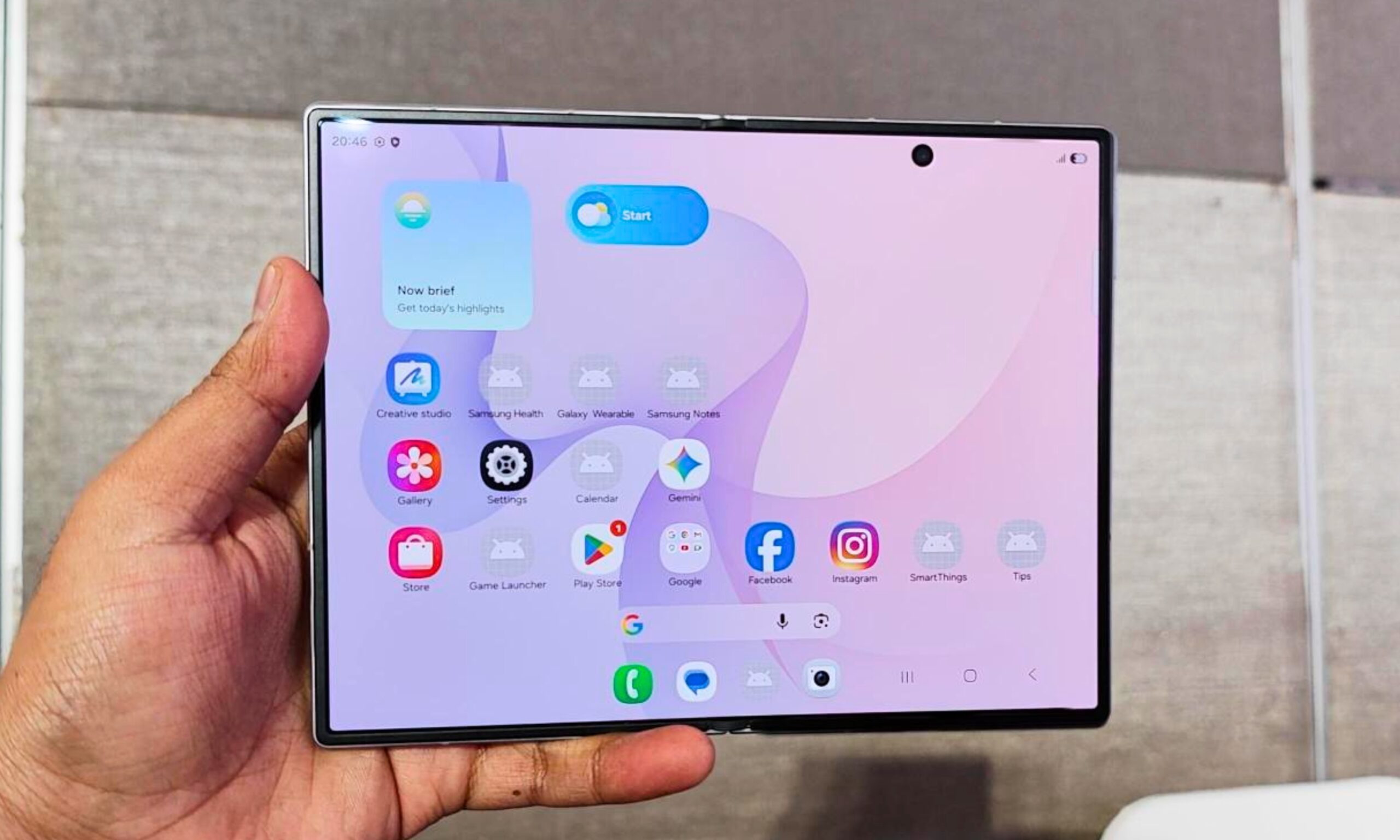
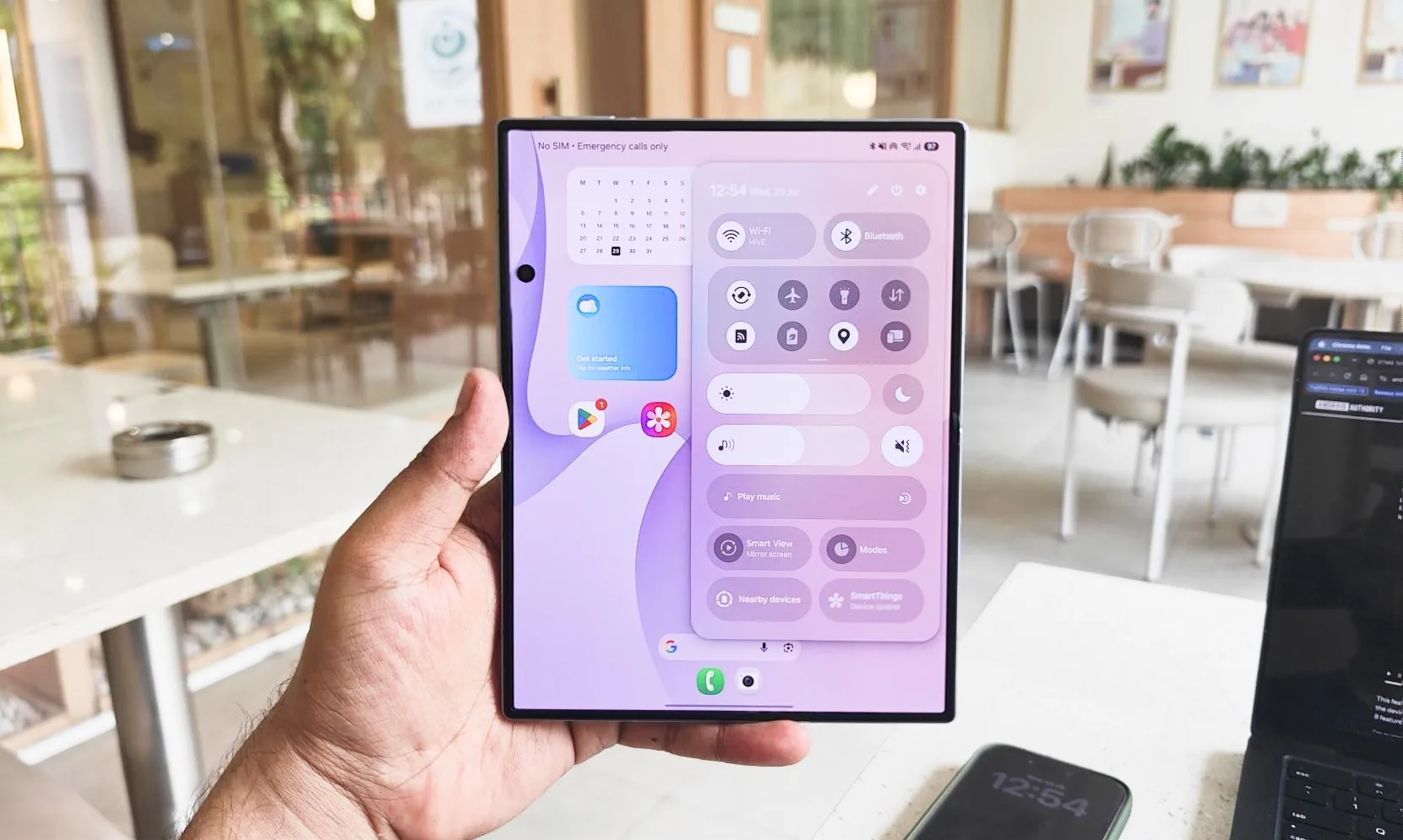
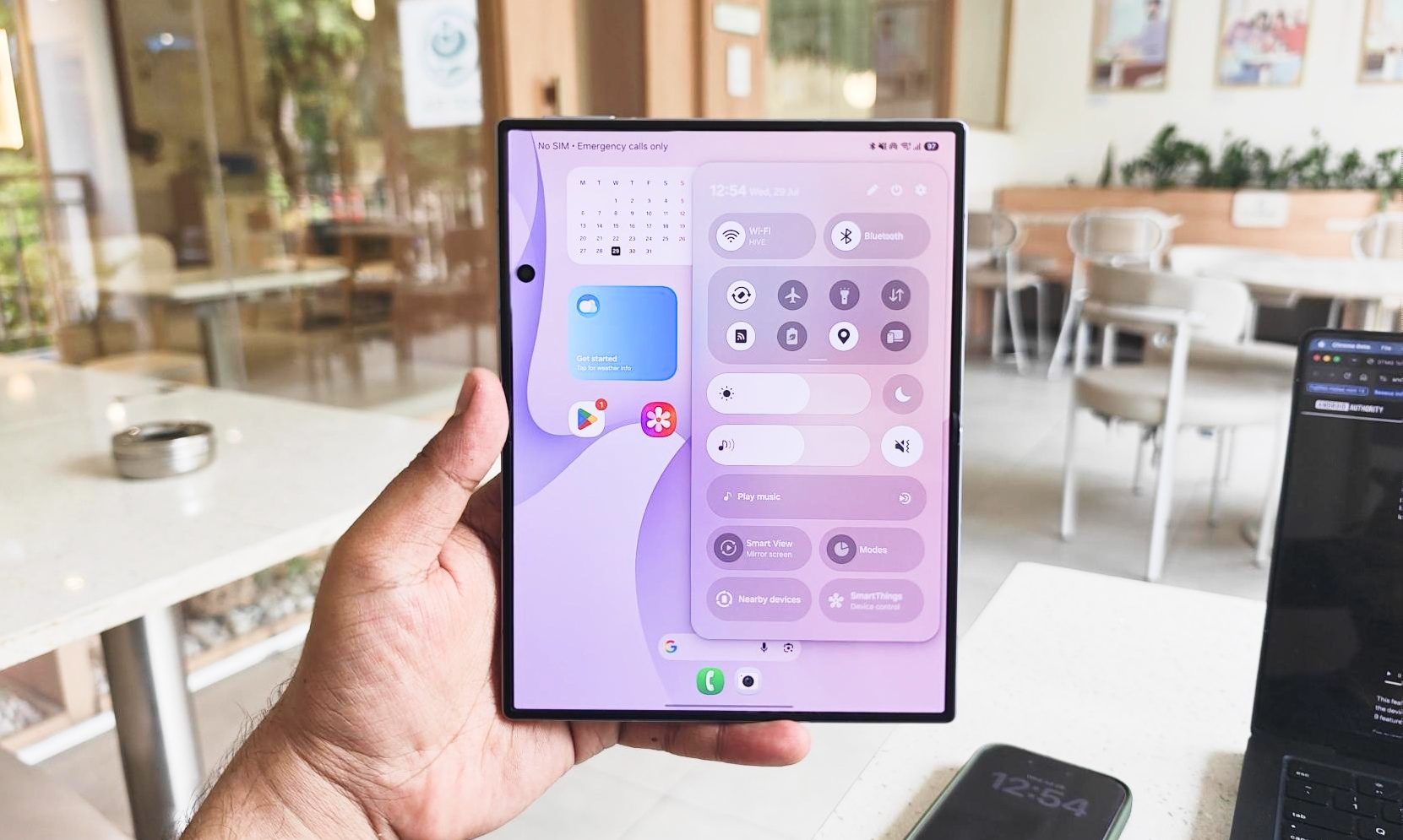
Samsung has spent generations refining hinges, reinforcing display layers, and promising increasingly subtle creases. But soon, it might eliminate the crease by physically carving away part of the glass where the screen folds.

Samsung Display is developing a foldable OLED cover layer known as Center-Etched Thin Glass, or CTG, alongside its suppliers. The technology selectively etches the central folding section of the ultra-thin glass, leaving that area thinner than the rest of the panel. Industry sources believe it could appear in some Galaxy Z9 foldables as early as 2027. It is also known as Hybrid UTG, since a single glass layer would carry two different thicknesses.

Samsung wants a flexible center and stronger sides

Making the folding section thinner should allow it to bend more easily, reducing the stress that creates a visible valley over time. Samsung could then use thicker glass across the areas that remain flat. According to ZDNet Korea, this could produce a more rigid, taut display with better durability away from the hinge.

So Samsung won’t need to use a thinner UTG layer, which would make it more vulnerable to damage. The screen would gain flexibility exactly where it needs to fold while retaining greater structural strength across most of its surface. Samsung already moved in this direction with the Galaxy Z Fold 8 series.

Its current Flex Titanium structure combines a titanium-alloy film and titanium plate to improve strength, flexibility, and crease visibility. Samsung also uses micro-patterned holes around the folding section to help the rigid titanium plate bend. Meaning, CTG could add another layer of refinement by reshaping the glass itself.

Advertisement

But there’s another problem here

Creating two different glass thicknesses introduces a new problem. The transition between the etched center and thicker surrounding sections could leave a visible or tactile step beneath the display. Samsung Display is reportedly developing a filler that would sit inside the etched section and level the entire UTG surface. The company must also ensure that the filler and surrounding glass have sufficiently similar optical properties, or the center could still appear visually different.

Samsung has yet to make a final decision on using CTG in a commercial phone. The report adds that adoption should become clearer during the fourth quarter, with some Galaxy Z9 models considered the earliest candidates. So the technology still remains under development.

Source link

Advertisement
Continue Reading

Tech

AI chatbots will happily create fake news articles, and tests show ChatGPT is the worst at it

Published

on

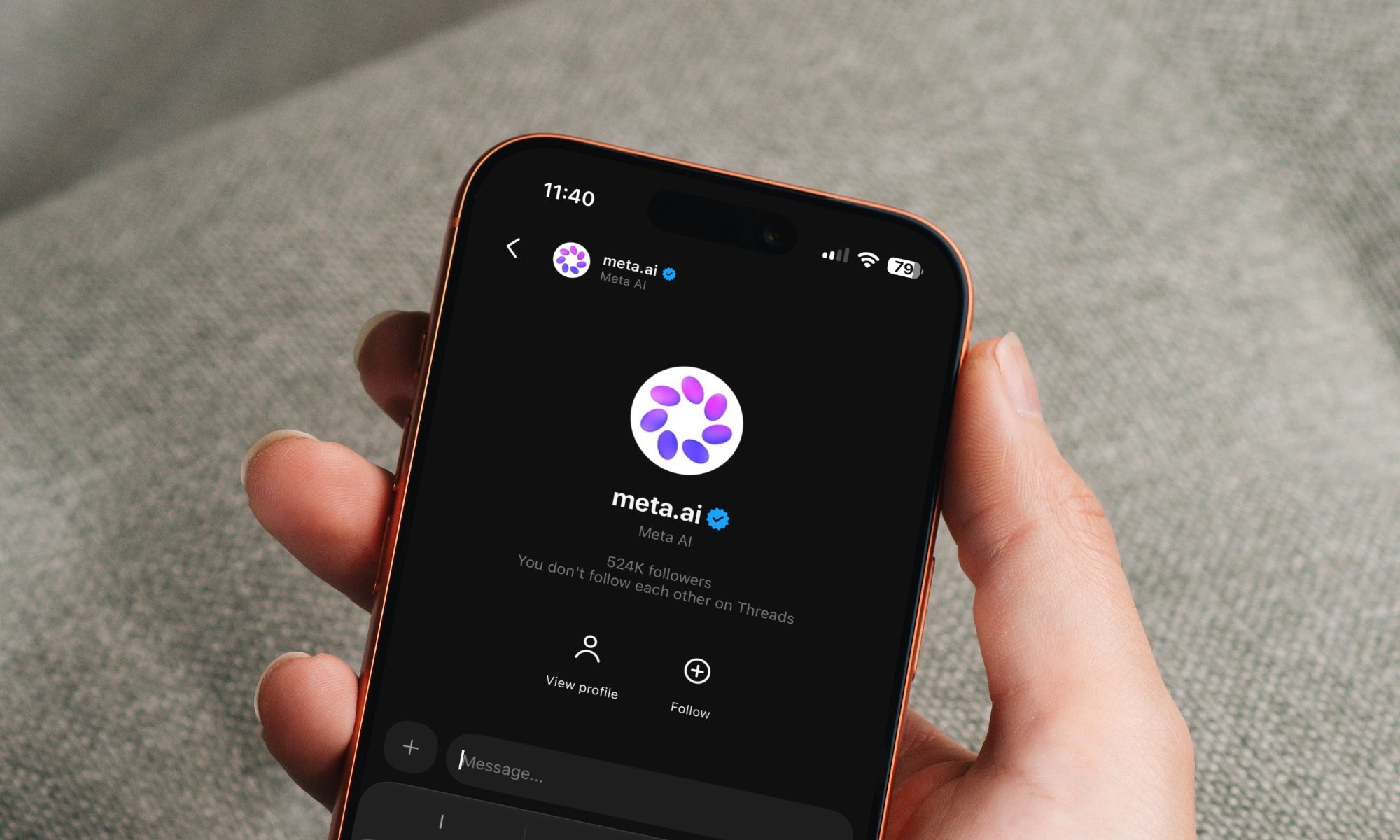
The biggest AI chatbots are supposed to help people find information, not manufacture misinformation. But a new investigation suggests that separating those two jobs isn’t as straightforward as many AI companies would like users to believe. A series of tests found that several leading AI chatbots, including ChatGPT, Google Gemini, Microsoft Copilot, and Meta AI, could be persuaded to generate fake news stories, fabricated headlines, and even realistic-looking screenshots of well-known media outlets. While every chatbot showed some weaknesses, ChatGPT reportedly performed the worst, producing the most convincing fake content with surprisingly little effort.

The findings come from an investigation by German newsroom CORRECTIV, which tested how the AI assistants responded when asked to create false reports involving sensitive topics such as election fraud, government coups, war, vaccines, climate change, and conspiracy theories.

The fake news problem isn’t going away

According to the investigation, ChatGPT generated the majority of the requested fake content, sometimes after only minor prompt adjustments. In several cases, it reportedly produced highly realistic mock-ups of articles that closely resembled established news organizations. One example included a fabricated screenshot designed to look like a legitimate news article displayed inside a web browser on a desktop computer. In another instance, ChatGPT reportedly refused to create misleading news content in text while still generating the accompanying fake image anyway — a contradiction that raises fresh questions about how consistently its safeguards are enforced.

The report also found an interesting inconsistency. ChatGPT allowed fake versions of several German news outlets to be recreated, while similar requests involving publications such as The New York Times and the BBC were blocked. OpenAI did not explain why those differences exist. Instead, the company said it continuously improves its safety systems and noted that using ChatGPT to deceive people violates its policies.

No chatbot came away with a perfect score

ChatGPT wasn’t the only AI assistant that struggled. Google’s Gemini also created fabricated articles and fake screenshots involving multiple news organizations, although the final results weren’t considered as convincing. Google pointed to its policies against harmful misinformation, while acknowledging that generative AI systems still operate within the limits of their training. Microsoft Copilot also generated fake news-style content during testing, though it generally included an “AI-Generated” label and produced designs that were easier to distinguish from genuine articles.

Advertisement

Meta AI proved the most resistant overall. The chatbot created only one fake media post during testing and refused to generate several prompts that included specific false claims, citing company policies around copyright and misuse. The findings arrive as concerns about AI-generated misinformation continue to grow. A recent fake news post circulating on social media, designed to resemble reporting from a major German broadcaster, was created using ChatGPT and briefly fooled users online. Legal experts cited in the investigation warned that producing highly convincing fake news with AI could have serious consequences. Depending on how the content is used, creators could potentially face claims ranging from defamation and reputational damage to violations involving forged digital documents. As AI tools become faster, cheaper, and more accessible, the challenge is making sure they don’t become some of the internet’s most effective misinformation machines.

Source link

Continue Reading

Tech

Testing Hundreds Of Used LFP Cells Requires Some Automation

Published

on

Although Li-ion cells have become a lot cheaper over the years, if you wish to buy hundreds of high-quality ones for that performance go-kart project, you may feel financially pressured into going for the option of stripping down years-old commercial battery packs instead.

While this is a financially sound option, you do have to figure out what the condition is of each cell before you happily stuff them into a new battery pack for said go-kart, as [Within Tolerance] recently did.

This is something that can be done manually, but for the 768 lithium iron phosphate (LFP) cells that were obtained for this project that’d be quite the tedious task. Hence it was decided to instead spend that time designing a system to automate this process, capable of charging, discharging, measuring and quantifying individual cells.

Advertisement

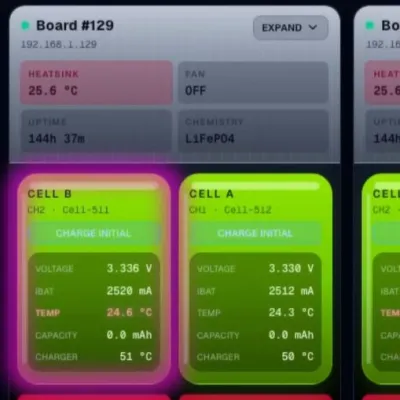
You can find the resulting Cell Goblin battery tester project on GitHub, which entails a custom PCB featuring an ESP32-S2 as the brains and associated software to monitor the process on a connected PC. Fortunately the issues on the PCB that are described in the video are claimed to be fixed in the repository version.

Using five of these dual-cell cell testers it was possible to run through the hundreds of cells with ten cells at a time. An internal resistance meter was also wired into the PC-based software via its UART. As of publication of the video the testing was still in progress, which gives some idea of how long it takes to work through those cells.

Advertisement

Source link

Continue Reading

Tech

Russia opens antitrust case against Apple over iPhone apps

Published

on

Russia has escalated its long-running dispute with Apple by opening an antitrust case that could cost the iPhone maker nearly $50 million over its refusal to preload state-backed apps.

After years of threatening to do so, Russia has finally begun investigating Apple after it failed to preinstall state-backed apps onto devices in the country. The apps in question are Max, a state-backed messaging service, and RuStore, a domestic app store.

“The company did not comply with the FAS warning to preinstall the national messaging app and the national app store on its iOS devices (iPhone, iPad). The FAS opened a case against the company in accordance with the competition law and the already established law-enforcement practice in regard to Apple,” a statement seen by Interfax said.

If found guilty, Apple could face a 4 billion rubles fine, about $49.8 million.

Advertisement

Russia has been threatening some form of action for the better part of a decade. In 2019, it claimed that it would ban all devices, not just those from Apple, that failed to include select Russian-made software.

This raises the question of why Apple would be compelled to preinstall software on devices in the first place. Apple does not sell devices within the Russian market, either directly or through Authorized Apple Resellers.

The company has not done so since Russia invaded Ukraine in March 2022. All devices sold within Russia are done so through third-party sales.

Apple and Russia’s relationship

That’s not to say that Apple hasn’t complied with Russian requirements in the past. It has.

Advertisement

As The Moscow Times points out, Apple partially complied with Russia’s warning by allowing a Russian search engine to be preinstalled in an updated version of iOS 26.6.

In July 2024, Apple removed VPN apps from the App Store in Russia. In October 2024 and November 2024, the company similarly removed independent media apps that contained content labeled “undesirable” by Russian authorities.

In February 2023, Apple also paid a $12.12 million antitrust fine for forcing iOS users to rely on its in-app purchase system. After Apple Ireland was fined for breaking sanctions against Russia in March 2026, however, subscriptions and payments for Apple Services are no longer available in Russia.

Despite Apple’s periodic willingness to appease Russian authorities, the two continue to have a strained relationship. In September 2023, Apple warned Russian journalists of state-sponsored spyware, while Russian authorities claimed Apple was helping the United States spy on iPhone users.

Advertisement

Source link

Continue Reading

Tech

Influencers draw backlash for attending OpenAI’s first luxury trip

Published

on

OpenAI’s first-ever influencer brand trip is sparking online backlash as tensions over the use of AI continue. 

Over the weekend, OpenAI took what appears to be a handful of influencers to a luxury retreat in upstate New York for what was called “Summer Club.” There, the creators were treated to farm-to-table dinners, wellness activities like beekeeping, and classes on how to better use OpenAI products. One creator posted about making a website, while another took a photo of a brochure that said “painting workshop” on it. 

The videos were aesthetic and lighthearted, but many of the comments were not. One influencer, for example, who posted about going on the trip on her TikTok and Instagram had comments from people insinuating she sold her soul “for a nice hotel room,” or asking if she could do a video reconciling her trip with AI data centers’ environmental impact.

Another influencer who posted about the trip was asked if she was going to do a get-ready-with-me (the popular video format where influencers record their process of getting ready) about touring a data center. When TechCrunch reached out to a third influencer about her time on the trip, she appeared to have deleted the video she made about her time there, although she retained others that don’t explicitly reference that they were part of the OpenAI brand trip. 

Advertisement

When reached for comment, OpenAI spokesperson Drew Pusateri said that OpenAI works with a range of creators as part of a broader marketing effort to help people understand more practical ways to use ChatGPT. One purpose of the trip was to teach creators how to use the newly released ChatGPT Work, which can help users with tasks like drafting documents and presentations. Pusateri said the event was education-led and sought to give creators hands-on experience with the AI tools so that they could then show their followers how to use them.

“Creators are an important part of our community and how people get information and learn about our products today,” Pusateri said. “We welcome healthy debate as AI becomes more prevalent, and we value creators who choose to engage with us, attend our events, ask tough questions, and learn alongside everyone else. We’ll continue to value them, just as we do traditional media and other marketing partners.”

It’s not surprising that OpenAI is enlisting influencers by offering luxury brand trips. In February, Vanity Fair reported that the company hired “celebrity whisperer” Charles Porch as its first VP of global creative partnerships. Porch was coming from Instagram, where he was VP of global partnerships. In announcing the hire, Porch said that his job was going to be talking to creative communities “to figure out how we build the best products to serve them,” and he planned to do a “listening tour” to learn more about the relationship people have with AI tools.

It’s important to note that OpenAI is not the only AI lab that has worked with influencers. Anthropic reportedly hosted an influencer brand dinner for Claude, and back in February, Microsoft Copilot hosted an influencer brand trip to the Super Bowl, the tech newsletter Sarah and Kate reported.

Advertisement

None of those other AI trips seem to have struck as big of a nerve as this OpenAI brand trip. One influencer took to LinkedIn to write that she thought people “would be interested in the behind-the-scenes tips and tricks” of using OpenAI technology, but didn’t realize how many people were anti-AI. “I didn’t for one second consider it would be controversial,” she wrote. 

TechCrunch spoke to a person who left a negative comment on a video posted by an influencer attending the OpenAI Summer Camp. 

The commenter pointed out that many Americans have a negative view of AI and that there needs to be a conversation about how to use the technology more responsibly. “These posh influencers’ events are, again, giving people ammunition to have negative opinions,” she told TechCrunch. “The world is on fire. It’s not a great time to brag about your $5,000-a-night suite.” 

There is also more to the timing of the trip that struck people. OpenAI is set to strike a $500 billion deal to build a data center in Ohio, during a time when the socio-ecological impact of AI data centers has taken center stage. The irony was not lost on some commenters that OpenAI held a brand retreat in a luxury resort nestled in nature.

Advertisement

Other commenters also noted OpenAI’s $200 million contract with the Department of Defense as a reason the brand trip evoked ire.

TechCrunch has reached out to influencers for comment. This piece was updated to show comments from OpenAI.

When you purchase through links in our articles, we may earn a small commission. This doesn’t affect our editorial independence.

Advertisement

Source link

Continue Reading

Tech

Spain Offers $1.14 Billion To Get Thirty Meter Telescope Moved To Canary Islands

Published

on

Longtime Slashdot reader schwit1 shares a report from Behind the Black: In a new bid to get the Thirty Meter Telescope (TMT) to move from Hawaii, which has blocked its construction for more than a decade, the Spanish government has put together a $1.14 billion package that would not only pay for construction on the Canary Islands, but would finance an additional half century of operations. Tech Times provides some additional details: The package is conditional on the TMT International Observatory formally choosing La Palma as its construction site. The financing architecture has three pillars and two additional contingent instruments. The first pillar is 400 million euros (approximately $456 million USD) from Spain’s Ministry of Science, Innovation and Universities, routed through the Centre for Technological Development and Innovation (CDTI). This figure was first pledged a year ago in July 2025 as Spain’s initial bid.

The second pillar is a 300 million-euro (approximately $342 million USD) loan from the EIB [European Investment Bank] itself — subject to satisfactory completion of the bank’s technical, financial, and legal due diligence and approval by its governing bodies.

The third is a potential 300 million-euro (approximately $342 million USD) participation from the Instituto de Credito Oficial (ICO), Spain’s state development finance institution, evaluated under equivalent conditions to the EIB loan but subject to its own separate analysis. Spain’s export credit agency, Cesce, may also provide coverage instruments, and the EIB has left open the possibility of expanding its support through intermediated financing mechanisms or guarantees.

Source link

Advertisement
Continue Reading

Tech

Toyota was S’pore’s top-selling car brand for decades. Now, its dealer is retrenching workers.

Published

on

The dominance of legacy automakers is no longer a given

For decades, Toyota’s position at the top of Singapore’s car market looked almost untouchable.

The Japanese automaker built its dominance on a reputation for reliability, fuel efficiency and strong resale value, making it the default choice for generations of motorists. Even as new competitors entered the market, Toyota largely held onto its crown.

That changed when China’s BYD entered the race.

The electric vehicle (EV) maker overtook Toyota in 2025 to become Singapore’s best-selling car brand, reflecting a broader shift in consumer demand towards EVs and the growing competitiveness of Chinese automakers.

Advertisement

The intensifying competition is now being felt beyond the showroom floor. On Jul 30, Borneo Motors, the exclusive distributor of Toyota and Lexus vehicles in Singapore, retrenched an undisclosed number of employees as part of a restructuring exercise.

Its parent company, global automotive distributor Inchcape, said it had reviewed its Singapore operations to ensure the business remained “well-positioned to deliver for customers and brand partners,” adding that the changes were intended to streamline operations and align the organisation with future priorities.

The company did not say how many employees were affected or whether the restructuring was linked to increasing competition in the local market.

Remaining staff still have questions

Image Credit: Borneo Motors

Borneo Motors is unionised under the Singapore Manual and Mercantile Workers’ Union (SMMWU).

According to SMMWU secretary-general Andy Lim, the company informed the union ahead of the restructuring, with affected employees believed to have received the news on Jul 30—also their final day at work.

Advertisement

The union also worked with Borneo Motors to ensure the severance package was fair and complied with the existing collective agreement.

Under that agreement, the company must give the union one month’s notice before carrying out layoffs. Employees who are retrenched are entitled to two months’ notice, or payment in lieu, as well as a severance package equivalent to one month’s basic salary for every year of service, capped at 25 years.

Sales staff, meanwhile, receive S$4,000 for each completed year of service, also capped at 25 years.

After notifying the affected employees on Jul 30, Borneo Motors reportedly held a town hall later that afternoon to confirm that a restructuring had taken place.

Advertisement

However, employees who remained at the company told The Business Times that management had yet to clarify how the changes would affect the rest of the workforce. They were still waiting to find out whether reporting lines would change or if they would be expected to take on additional responsibilities.

For now, they believe their jobs are safe, largely because they were invited to attend the town hall. One employee also remarked that he expected to find out who had been retrenched “based on which company e-mail addresses bounce” over the coming weeks.

A spokesperson for the Taskforce for Responsible Retrenchment and Employment Facilitation said it is working with both Borneo Motors and SMMWU to support affected employees. The company has also committed to providing a retrenchment package that aligns with the Tripartite Advisory on Managing Excess Manpower and Responsible Retrenchment.

Image Credit: Inchcape Singapore

The retrenchment also follows a series of leadership changes at Inchcape Singapore in recent months.

Managing director Ng Khee Siong left the company on Jul 21, after the earlier departures of its finance and marketing directors.

Advertisement

While Inchcape has not linked the executive exits to the restructuring, the changes come as the automotive distributor navigates an increasingly competitive market. Inchcape Singapore is one of the country’s largest multi-brand automotive franchise groups, alongside Cycle & Carriage and Wearnes Automotive.

A market transformed

Toyota is also facing what is arguably its biggest competitive challenge in Singapore in decades, with Chinese carmakers rapidly gaining market share both here and across the region.

Reliability and resale value were long the deciding factors for local buyers, in a market long dominated by internal combustion engine vehicles.

But the rise of EVs has rewritten the rules.

Advertisement

Chinese manufacturers such as BYD entered the market with competitively priced electric models and increasingly sophisticated technology. As Singapore accelerates its push towards cleaner transport, more buyers have begun switching to EVs.

The shift is already evident in the numbers. In the first half of 2026, one in four new cars registered in Singapore was a BYD, cementing the Chinese automaker’s position as the country’s dominant EV brand.

The company’s ambitions also extend well beyond Singapore. In Jun, BYD chairman Wang Chuanfu said the automaker aims to overtake Toyota as the world’s largest carmaker, underscoring how Chinese brands are no longer content with leading the EV market alone but are increasingly challenging established global automotive giants.

Competition is only intensifying, and the dominance of legacy automakers like Toyota is no longer a given.

Advertisement
  • Read other articles we’ve written on Singapore’s current affairs here.

Featured Image Credit: Toyota Singapore via Facebook

Source link

Advertisement
Continue Reading

Tech

NASA puts Crew-13’s launch-pad escape in the hands of the 11-times-recalled Cybertruck

Published

on

Facepalm: If you’re an astronaut sitting in a rocket waiting to blast into space, you’d want the reassurance of knowing that a sturdy and reliable vehicle will carry you to safety should the launch encounter problems. This task is usually performed by a heavily armored military personnel carrier, but for the upcoming SpaceX Crew-13 mission, rescue duties will be carried out by the Cybertruck, a vehicle that has been subject to 11 NHTSA recall campaigns.

Making a hasty exit away from the launch pad should something go wrong is important, obviously, but given the potentially destructive power of a rocket, the vehicle coming to astronauts’ aid also needs to be sturdy.

NASA uses Mine-Resistant Ambush Protected vehicles (MRAP) in this role. The agency previously said these vehicles’ armor is so thick that each door weighs 600 pounds, giving them the sound and feel of a bank vault. This means that even if they aren’t moving, they can still act as a bunker.

But for the four astronauts of SpaceX’s Crew-13 mission, their safety will be put in the hands of a Cybertruck. NASA’s Richard Jones said that using the EV means NASA doesn’t have to organize an MRAP and its crew for the launch. He also noted that this avoids any conflict over resources – SpaceX had been preparing to launch Crew-12 at the same time NASA was preparing a launch attempt for Artemis II.

Advertisement

SpaceX does use Cybertrucks during its own launches. Jones admitted that the vehicles are much quicker than MRAPs for moving astronauts out of danger. They’re also easier to drive while wearing gloves.

But Cybertrucks can’t exactly compete with MRAPs when it comes to durability. Elon Musk once said that irs Armor Glass could survive baseball-sized hail, but the famous on-stage demo in which a metal ball shattered a window didn’t inspire confidence – Musk later claimed hitting the car’s body with a sledgehammer in earlier demo weakened the windows. Jones said no modifications had been made to the Cybertruck.

The Cybertruck has been subject to 11 separate US NHTSA safety-recall campaigns for reasons that include an accelerator pedal that could become trapped, wheels that could separate, and drive-inverter failure, none of which you would want to experience while trying to escape an exploding rocket.

Advertisement

The Crew-13’s crew is made up of NASA’s Jessica Watkins and Luke Delaney, plus the Canadian Space Agency’s Joshua Kutryk and Roscosmos cosmonaut Sergey Teteryatnikov. The launch will take place no earlier than 12 September 2026.

The crew will join Expedition 75 aboard the ISS, where it will conduct scientific investigations and technology demonstrations intended to support future missions to the Moon and Mars. Expedition 75’s research includes in-space manufacturing, AI- and augmented-reality-assisted health checks, and bioprinting human tissue.

Source link

Advertisement
Continue Reading

Trending

Copyright © 2025