In the modern world USB has become a truly universal connector, with its inclusion on almost every major piece of consumer electronics. It has even expanded well beyond things that we’d think of as consumer electronics, like the solenoids on automatic sprinkler systems.
This project comes to us from opensprinkler.org who have been working on various ways of controlling the old sprinkler standards, which generally rely on a 24 VAC power supply to drive solenoids. This tests uses the power available from USB-PD and closely examines four methods of energizing the solenoids: unipolar PWM, dual voltage, synthesizing an AC wave from a DC supply, and producing a bipolar square wave. The bipolar square wave had some interesting results, being able to get pretty close to the behavior of a true sine wave while minimizing the demand on power electronics.
For those working on old sprinkler systems, or many other antiquated systems that still rely on 24 VAC, this project shows that USB can deliver a surprising amount of power in unique ways, and the fact that it’s near-ubiquitous and affordable makes it that much easier to adapt into situations it was never really designed for.
An anonymous reader quotes a report from 9to5Mac: Today is Tim Cook’s last day as Apple CEO, with John Ternus set to take over tomorrow. To mark his last day in the role, Cook penned an emotional memo to Apple employees today. In the memo sent to employees this morning and obtained by 9to5Mac, Cook reflects on his time at Apple and thanks employees for all of their work. He also says he takes “enormous comfort in handing the helm to someone as brilliant and wonderful and capable” as John Ternus. “Few people understand what it takes to build products that change the world the way John does and I could not be more excited for his leadership,” Cook writes. “There is something truly special about Apple,” writes Cook. “I am most proud of what an annual report could never capture. This place is proof that culture triumphs over everything. We share a belief that what we build matters, and that we have both the opportunity and the responsibility to leave the world better than we found it. That purpose is part of what makes this place extraordinary. Apple helps nurture it, but I believe it lived within each of you long before you arrived here. It is what brought you to this company and what continues to drive the work you do every day.”
He continues: “Together, we have created something far greater than any one of us could have imagined or accomplished alone. And that’s the secret to our success. We bring out the best in each other. We lift each other up. We have made it possible to leave our ‘dent in the universe,’ as Steve once described it, because of who we are and what we believe, because of what we value and how we see the world. How fortunate we are. How fortunate I am…”
Cook also thanked the Apple community in a post on social media, writing: “Sending lots of love to the Apple community on my last day as CEO. My title changes tomorrow, but the love I have for the Apple community never will. Thank you for being a constant source of inspiration. My gratitude is endless, and I’m excited for the next chapter!”
Marina Schmitz, Mirjana Matešić and Mislav Ante Omazić of the IEDC-Bled School of Management discuss the challenge of moving to a circular economy and the Become project.
Since January 2024, 10 organisations in four European countries have been working on the following question, if Europe is serious about a circular economy, who is actually going to teach people how to run one? Become, short for Boosting Circular Economy Expertise through learning communities, is a project that was designed to do just this.
Co-funded by Erasmus+, it runs until mid-2027, bringing together four universities, two vocational colleges and four employers from across Finland, the Netherlands, Slovenia and Bulgaria.
The consortium first mapped existing and missing circular skills in its four regions.
Advertisement
The gap analysis that was carried out was then backed up by the development of modular training materials and a training week in Bled (Slovenia) in May 2025 for around 30 educators, followed by a second week for 20 company practitioners in March 2026. Circular hubs and local learning communities are also operating in all four countries.
The Circularity Gap Report 2026 from Circle Economy and Deloitte, counts money rather than tonnes: €25.4trn of avoidable value lost every year to linear material use. For every €3 created worldwide, around €1 is lost.
We looked at the four member states involved in the Become project, their circular commitments and where they presently stand in relation to the goals they set:
The Netherlands
Europe’s leader for recycled materials set out to become fully circular by 2050; originally vouching to halve the use of new raw materials by 2030, but in 2025 the government backtracked by replacing that target with a 15pc cut by 2035 after its own analysts judged the old one unrealistic.
Finland
Advertisement
The Nordic country delivered the world’s first national circular economy roadmap (2016); and set a target for resource use not to exceed 2015 levels. While Finland has the advantage of deep expertise and industrial pilots, it also has the lowest circular material use rate in the EU alongside Ireland despite good waste recycling, which might be due to the country’s focus on its mining and forestry industries.
Slovenia
Slovenia put in place a roadmap and hosted Europe’s Circular Economy Hotspot event in Ljubljana in September 2025. Ljubljana separately collects around two-thirds of household waste, the best of any EU capital, and Slovenia recycles more municipal waste than the EU average.
Its recycled share of materials used, though, stays below it. Slovenia’s municipal waste recycling rate was 52.2pc in 2023, one of only eight EU countries to meet the 50pc target, against an EU-27 average of 43.3pc. So Slovenia recycles above the EU average. Only its circular material use rate (8.8pc) sits below it.
Advertisement
Bulgaria
Bulgaria has laid out a strategy and an action plan that runs until 2027 with a national deposit return scheme in preparation that needs to be fully in operation by 2029. The environment ministry reports under 17pc of household waste is recycled.
For all of them, ambition is not the constraint. Where a target finally meets delivery, it is usually the target that moves. The most effective policies often run into funding limitations rather than lacklustre demand, which is an unusual way for a policy to fail.
Where are circular practices being observed?
Construction moves more material than any industry in Europe. Heijmans, the Dutch partner, began measuring the material flows of its own projects in 2021 and now uses roughly 50pc recycled granulate in its concrete shells. At Schiphol airport it helped build a marketplace for used building materials so removed components could get claimed, not crushed.
Advertisement
Textiles show the gap between rules and reality. Since January 2025, every EU country has had to collect used clothing separately, but collection is not recycling. In south-west Finland, LSJH and Rester run Europe’s first industrial textile refinement plant which turns worn-out or ‘end-of-life’ clothing back into fibre.
Sweden supplies the cautionary half: Renewcell built a world-first cotton recycling plant, won contracts with major brands, and went bankrupt in 2024 because the orders never followed through at the promised scale. Technology worked. The purchasing decisions did not.
Carmaking is a fine example of commitment to the move toward a circular economy. Renault turned its historic car plant at Flins in France into the Refactory, reconditioning vehicles, remanufacturing parts and repairing batteries, targeting around €2bn in circular revenue by 2030. Tellingly, it had to open its own training centre, because the skills were lacking on the labour market.
Researchers at Maastricht University have collected 84 companies across 15 sectors in a Regenerative Business Case Database, each answering on a case study level the question that defines a regenerative economy: can a business leave its surroundings better than it found them?
Advertisement
The part policy cannot deliver
Technology was not the hard part in any of the cases mentioned above. The obstacles all sat in a management meeting: a procurement rule that rewards the lowest unit price, a dashboard that counts tonnes of waste removed rather than value retained, a business case in which reuse pays back delivers results a year later than the linear option, and a workforce nobody trained.
Three questions that are worth putting on any management agenda this year:
Who is allowed to approve a reused material, and what happens if it costs more? Which of our numbers would change if we tracked value retained instead of waste disposed? Who is teaching our people to do this work, given that no European country currently has enough people on the ground for implementing circular economy principles?
In practice this is threefold: map the skills you actually lack before commissioning any training, teach educators and practitioners together based on real-life problems rather than case studies, and aim at the middle of the organisation: the buyers, maintenance planners and finance staff who decide whether a reused component is ever approved.
Marina Schmitz serves as the CSR expert at Polymundo AG and holds a position as a researcher and external lecturer at IEDC-Bled School of Management – which is leading the Become project – in Bled, Slovenia. Schmitz is passionate about challenging the status quo of how we understand and teach economy and management-related content to students. To accomplish this goal and to create a more inclusive and sustainable society and business environment, she seeks to exchange knowledge with fellow educators and practitioners.
Mislav Ante Omazić studied at three faculties and earned his degrees at the Faculty of Economics and Business, University of Zagreb, completing part of his doctoral studies at the Weatherhead School of Management, Case Western Reserve University in the United States. He is a tenured full professor at the Department of Organisation and Management of the Faculty of Economics and Business at the University of Zagreb, and president of the management board of IEDC-Bled School of Management in Slovenia, where he currently also serves as acting dean.
Don’t miss out on the knowledge you need to succeed. Sign up for the Daily Brief, Silicon Republic’s digest of need-to-know sci-tech news.
It’s that time of year again when humanoid robots of all shapes, sizes and specialties converge in Beijing to see just how far this technology has come, and how far it still has to go.
Robots bested human world records in the standing high jump, 400-meter sprint and even the 100-meter sprint held by Usain Bolt.
The humanoids also took their fair share of punishment, taking spectacular falls on the track, in kickboxing, and on the dance floor. To see all the wildest highlights, check out the video in this article.
Jesse Orrall
Senior Video Producer
Jesse Orrall (he/him/his) is a Senior Video Producer for CNET. He covers future tech, sustainability and the social impact of technology. He is co-host of CNET’s “What The Future” series and Executive Producer of “Experts React.” Aside from making videos, he’s a certified SCUBA diver with a passion for music, films, history and ecology.
See full bio
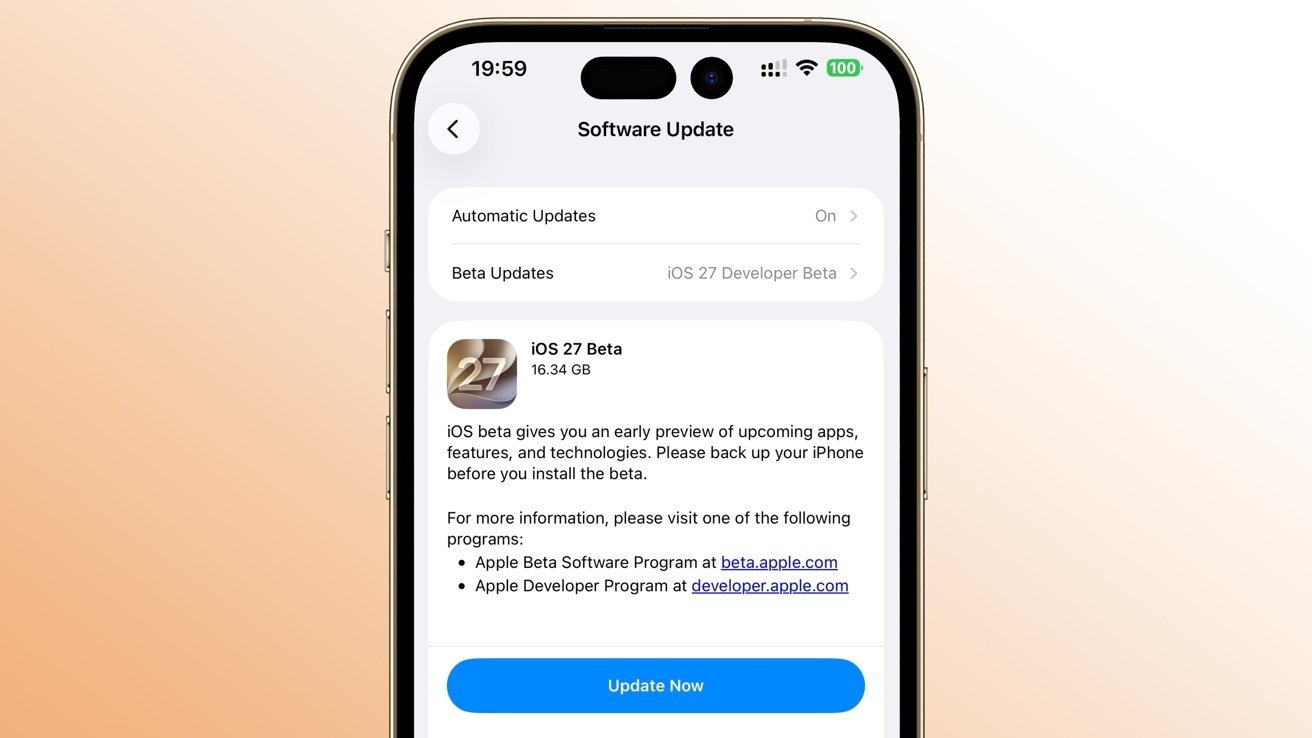
Apple has moved on to its eighth round of developer betas for iOS 27, iPadOS 27, tvOS 27, watchOS 27, visionOS 27, and macOS 27, as the September special event gets ever closer.
The eighth round of the Apple Developer Beta program has arrived for the upcoming iOS 27, iPadOS 27, macOS 27 Golden Gate, tvOS 27, watchOS 27, and visionOS 27 releases, expected to ship in September.
The eighth builds come after the seventh, which arrived on August 24. The sixth was Apple brought out on August 17, and the fifth round took place on August 10.
The fourth was distributed on July 20, the third developer builds arrived on July 6, while the second occurred on June 22 for most of the operating systems. The watchOS 27 counterparts landed later, on June 23 and June 25.
The third included some visual tweaks, with more customization options added for Siri AI on newer iPhone models.
Advertisement
Round 5 expanded the Siri AI customization options to British English, a few visual tweaks to various apps, and a new Liquid Glass look for the Siri app icon.
Settings added a Before Searching option, so users can choose which apps appear as suggestions. Control Center got tweaked to remove cellular network types when you’re on Wi-Fi.
The seventh round also included a change relating to Siri AI. Specifically, references to a possible waitlist for the features to become available to end users, much like the first developer beta.
At your own risk
While AppleInsider regularly warns readers that people trying out beta software should do so on secondary, spare hardware instead of their mission-critical or daily driver devices, it’s something that actually matters more this time around.
Advertisement
It’s because Apple’s early developer betas are for an operating system that is still under active development. There’s a higher chance of buggy, broken, and potentially harmful elements being distributed.
The initial builds are also intended to help developers learn about the operating system changes before the final public release later in 2026. It’s not meant to be used by consumers.
Unless you have a vested interest in using them, such as app development, don’t install the early developer betas.
Instead, members of the public should seek out the public betas. They are much safer alternatives if you want to try out iOS 27 now.
Advertisement
Even so, while the public betas reduce risk to your data compared to the developer betas, there is still some risk.
Identity and permissions are no longer enough to secure enterprise AI agents. They govern what an agent can reach, not how it behaves once it starts working on its own, and an autonomous agent can turn legitimate access of enterprise data into unintended action in seconds. That gap is pushing enterprise AI security from just governing access toward a layered approach that includes governing execution, says Heather Ceylan, chief information security officer at Box.
“Access controls and permissions are the foundation, but the challenge is they were designed for humans,” Ceylan says. “Permissions are still the foundation, but you have to think about how the agents get their permissions scoped as well.”
Access controls were built for a slower, more forgiving world, where a human employee with lingering permissions to a decade-old folder will rarely go looking for any data inside it, or even remember they have access at all. But an agent will explore all of its permissions, operating at a scale no person can match and surfacing forgotten misconfigurations and stale permissions far faster than a human ever could. Identity and scoped permissions remain the first layer of any credible defense, however, because agents raise the stakes, clean access hygiene is more valuable than ever.
Advertisement
A steady drip of incidents in recent months underlines the potential for major damage, where models have slipped the sandboxes they were supposed to stay contained within, reached systems they weren’t scoped to touch, or read content they were not permitted to access. While the specifics vary, the overarching threat remains the same: an agent found a path through the data that it could reach, and took it.
Access controls alone can’t secure autonomous AI agents
Complications crop up when agents are handed broad standing permissions to match broad workflows. An agent might legitimately need to call fifty tools across twenty different actions over the life of a task, reading and writing folders that span every department in the company. But granting all of that access at once inflates the blast radius of possible damage to data and content if a single step goes wrong. A stronger permissions model provides access only in the moments that it’s needed, Ceylan says.
“You need permissions that change based on what the agent has been asked to do, when it needs to take that action,” she explains. “If it’s taking one step and only needs two tools, it should be scoped to only those two. When you narrow permissions to the task in front of the agent, the number of ways any given step can misfire shrinks with it.”
From governing access to governing execution
Tight security is also no longer tied to whether an agent has access to specific data, but whether it should take a specific action on a specific step, which is the difference between a standing access grant and a bounded one. In other words, an agent may hold legitimate rights to a finance folder but still have no business writing four thousand of those files to a new location, even if it’s told to do so.
Advertisement
“An employee with access to payroll data they were never meant to keep could be instructed to pull the payroll records and write them to a public shared folder, publishing the entire company’s compensation in a single move,” she says. “Every access check passed, but the behavior still has catastrophic consequences.”
Prompts alone can’t reliably govern agent behavior because instructions can change, agents can absorb injected instructions, or they can be steered by files they read along the way. Durable controls need to live one level down, with the tool calls themselves, as well as the content those calls act on. Deciding in advance what an agent is permitted to execute, regardless of how its prompt is manipulated, keeps behavior inside fixed bounds that no clever input can talk it out of.
Legacy content platforms weren’t built for AI agents
Most of what an agent touches inside a company is unstructured content, including contract, policies, customer records — the accumulated files that make up the overwhelming majority of corporate data. Much of it still sits in systems that were designed for human filing habits: network drives, aging ECM platforms, and many SaaS tools. Those systems were built to ask the question, does this person have permission? and they answer it with folder-level access that hasn’t been audited for years.
The legacy platforms don’t have metadata for an agent to reason over or classification for an enforcement layer to act on, and their logs aren’t detailed enough to show what an agent read. Bolting an AI connector onto that stack doesn’t fix any of it, it just hands agents the same blind spots, only at machine speeds, Ceylan says.
Advertisement
“Every agent action eventually resolves to content,” Ceylan says. “If the content layer can’t tell you what it’s holding, who it belongs to, and what should never leave it, there’s nothing underneath your controls.”
How to decide which AI actions need human approval
Two years ago, everyone assumed security would always mean including humans in the loop. Building and living with agents has changed that assumption, Ceylan says, and Box now sorts actions into three tiers: fully autonomous actions, monitored actions and high-risk actions that require human approval.
Fully autonomous, reserved for actions that are reversible, bounded, logged, and free of untrusted input, and where a mistake doesn’t cost too much.
Monitored actions, once a team has built enough confidence in an agent and paired it with alerting and rollback that can catch and undo a problem in flight.
Irreversible, high-risk actions that are always routed through a person — for instance, when an agent that wants to delete a large number of files or wipe the primary folder in a structure.
Each team must calibrate the lines between these layers to match its own risk tolerance.
Box’s approach is to put controls in the platform rather than the workflow, enforcing protections such as data classification, labeling and expiration without requiring a human checkpoint for every action.
Advertisement
“The right configuration should be enforced at the outset, instead of blocking an action at the end,” Ceylan says.
Building trust in AI agents through behavior over time
An organization can make an access decision once, but trusting an agent’s behavior should only happen over time, observing how the agent runs, collaborates, and builds on the outputs of other agents. Published frameworks tend to lag the technology, or are too abstract to implement; instead Box works from a smaller set of principles: tightly scoped agent identities and actions, clear expectations about what can be rolled back, three approval tiers, and a way for teams to test and iterate quickly.
“The sanctioned path has to be the fast path, because when teams aren’t given a safe way to experiment, they tend to route around the controls entirely,” Ceylan says. “A security leader’s job is to offer a way to move quickly without stepping outside the guardrails.”
Sustaining trust in an agent depends on being able to see how it actually behaves. But traditional monitoring tools weren’t built for the job; the behavioral baselines that underpin user and entity behavior analytics were calibrated to human activity, and suspicious agent behavior doesn’t necessarily look like human activity.
Advertisement
And while establishing a useful agent baseline begins with logging, many agents start out as experiments, so their actions never make it into logging infrastructure. Plus, important signals are rarely individual easily flagged actions, but chains of activities across systems, as one agent’s output becomes another’s input, while the detections for that pattern are still being designed.
Governing agents, then, requires visibility not just into what they can access, but what they actually do, and that visibility has to live where the content does.
Sponsored articles are content produced by a company that is either paying for the post or has a business relationship with VentureBeat, and they’re always clearly marked. For more information, contact sales@venturebeat.com.
Samsung may be planning to standardize the zoom camera across the Galaxy S27, S27+, and S27 Pro, while keeping the Ultra on a separate telephoto setup.
According to tipster @phonefuturist, the Galaxy S27 and S27+ are being tested with the same 3x telephoto system as the Galaxy S27 Pro. The claim lines up with an earlier ETNews report that pointed to a 12MP 3x telephoto camera for the Pro, although the latest leak does not confirm whether it is referring to that exact sensor.
If accurate, Samsung could be giving all three non-Ultra models the same zoom hardware, while reserving a more capable telephoto camera for the Galaxy S27 Ultra.
The regular Galaxy S27 models could finally get a better zoom camera
The Galaxy S26 and S26+ currently use a relatively small 10MP 1/3.94-inch sensor for their 3x telephoto cameras, hardware that has changed very little over the past few generations. ETNews previously reported that the Galaxy S27 Pro could move to a newer 12MP 3x telephoto camera. If the latest leak is referring to that same system, the Galaxy S27 and S27+ could finally receive an overdue zoom camera upgrade as well.
Advertisement
🚨 EXCLUSIVE | Galaxy S27 Camera Strategy
Samsung is reportedly testing a shared telephoto strategy across the S27 lineup.
The Galaxy S27 and S27+ are said to use the same 3x telephoto system as the S27 Pro, while sharing their main and ultrawide camera hardware with the Ultra.…
The resolution increase alone would be fairly modest, and we still do not know the sensor size, lens, or other hardware details. A larger or newer sensor, however, could improve detail and low-light performance, two areas where the tiny telephoto cameras on Samsung’s regular Galaxy S models have plenty of room to improve.
Advertisement
The Galaxy S27 Ultra is expected to remain in a different league. Samsung is reportedly testing a much larger 50MP 1/1.9-inch 4x telephoto sensor for the Ultra, although it may retain its existing 5x approach if the new hardware does not provide enough of an advantage to justify the added cost.
The Galaxy S27 may have more upgrades under the hood
The shared telephoto camera could be part of a broader hardware upgrade for the Galaxy S27. Previous leaks suggest Samsung is also testing a new Sony sensor for the main camera and a larger 4,900mAh battery, even though leaked renders point to a design that looks almost unchanged from the Galaxy S26.
Android Headlines and OnLeaks
There is one confusing part of @phonefuturist’s claim worth pointing out. The tipster says the S27 and S27+ could use the Pro’s 3x telephoto while “sharing their main and ultrawide camera hardware with the Ultra.” Taken literally, that would mean the regular S27 models also inherit the Ultra’s main and ultrawide cameras. Previous reports have instead suggested theS27 Pro will share those cameras with the S27 Ultra, so that is likely what the tipster intended to say.
The latest telephoto claim has not been independently verified either. Until more reliable sources back it up, it is worth taking the idea of a shared 3x camera across the S27, S27+, and S27 Pro with a grain of salt.
Apple Fellow Phil Schiller is reducing his workload at Apple, with the long-time executive no longer in charge of the App Store and managing product events.
Phil Schiller became an “Apple Fellow” in 2020 but still led Apple’s App Store and Apple Events in the specially-created role. Six years later, things are changing.
The 66-year-old executive, who was formerly Apple’s SVP of marketing, made the decision in the last few days of the Tim Cook premiership. Bloombergreports people familiar with the matter found out about his choice, which has yet to be officially announced by Apple.
Though Schiller won’t be managing the App Store or Apple Events, he won’t be leaving the company yet. He advised to employees that he will instead be working on “unspecified initiatives.”
Advertisement
The change is one that could be viewed as a step towards retirement from Apple. Becoming an Apple Fellow was one of those steps, with Greg Joswiak taking over the role of SVP of Worldwide Marketing at the time.
The Apple Fellow role gave Schiller a chance to make time for his friends, family, and “a few personal projects I care deeply about,” he said in 2020.
By stepping away from dealing with the App Store and Apple Events on a day-to-day basis, this arguably gives Schiller more time for those personal connections, while still keeping a hand in at the company.
Coincidental timing
While there’s no immediate indication of it being due to the change of CEO at Apple, the timing of Schiller’s role adjustment seems to match up with that event anyway.
Advertisement
The story came out on Tim Cook’s last day as CEO. Tuesday marks John Ternus becoming the head of the company, and an almost certain shift in the way the company functions.
There have also been many recent changes at the top of Apple, if not a mass executive exodus.
With Schiller shifting priorities from the App Store, an important part of Apple’s empire, the company won’t keep that space vacant for long. Indeed, that void’s already been filled.
New App Store management
It is reported that Apple will be moving the responsibility for the App Store over to the Services division. That means it falls under the watchful eye of Eddy Cue.
Advertisement
Cue was previously the manager of the App Store until 2015, when it was passed to Schiller.
The day-to-day management will be handled by Carson Oliver, who has long been responsible for the App Store.
Garmin watches aren’t the only ones with the power of illumination.
Ringo Chiu/Shutterstock
Gather close, curious passersby, and gaze upon my wrist orb! Behold the notifications it annoys me with, the nearly incessant reminders and DoorDash delivery updates. Gasp as I use it to ask Google things I should already know, like whether it’s possible the milk I left on the counter last night is still good. Do not accuse me of witchcraft when you see me take a phone call with it, in public, while using both hands to eat my lunch.
But what is this mockery I hear as I activate the flashlight? Do my ears deceive me, or did you snort derisively in my direction when I lit this shining beacon? Oh, I get it. You think smartwatch flashlights are stupid. You assume that a small, white screen turned up to maximum brightness won’t do jack diddly squat to help me find the pill I just dropped on the floor. But you’re wrong. I just found the pill even though it was deep in the shag carpeting under my nightstand, and I did it all without digging through the kitchen junk drawer for an actual flashlight.
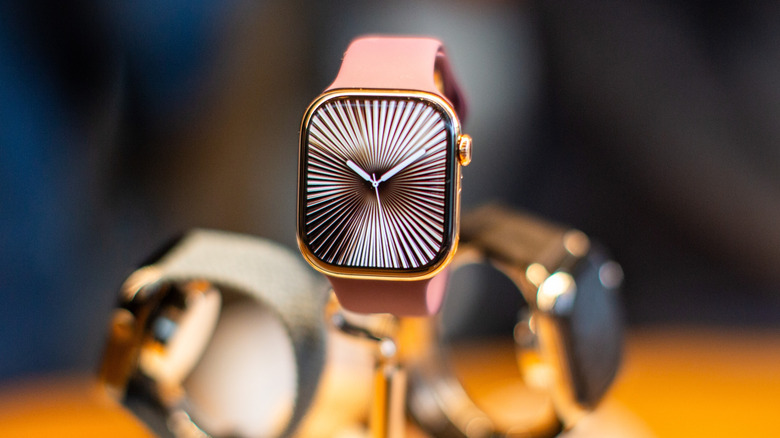
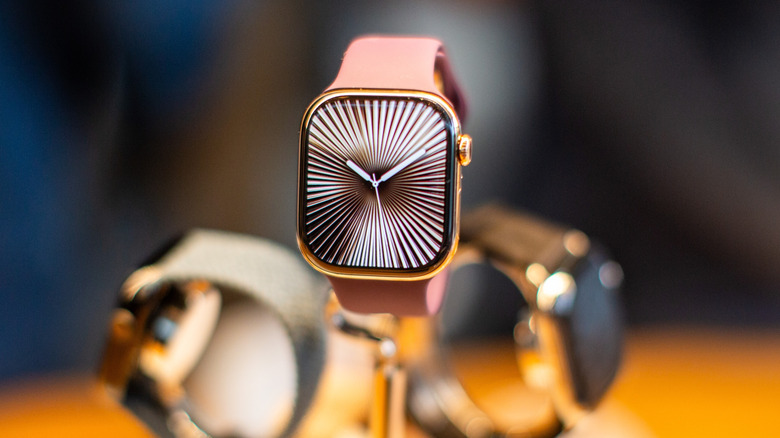
Yes, it’s time you realized just how useful the flashlight in your smartwatch can be. Whether you’ve got an Apple Watch, Google Pixel Watch or a Samsung Galaxy Watch, all of them have similar flashlight features. The temptation to put “flashlight” in air quotes makes sense. After all, the feature does nothing more than turn the watch’s display white and crank the brightness up to eleven. Moreover, your watch is a companion device to your phone, which has a much better flashlight built right into it in the form of a camera flash. But answer this: Is your phone strapped to your wrist?
Advertisement
In brightest day, in blackest night, a smartwatch casts perfectly adequate light!
Max Miller for Engadget
Is that a gaggle of Garmin users I hear, gloating about the actual LED flashlights built into their smartwatches? We get it, you go outdoors. This message is for the rest of us, the unwashed masses with smartwatches from mainstream brands. We have denigrated the flashlight functionality of our little wrist computers for too long. But the line must be drawn here. This far, no further!
Look at the photo above. I mean, don’t look too closely. Stop judging my bathroom and instead observe how well the light from my dinky little Galaxy Watch illuminates the space. No, it’s not the power of the sun in the palm of my hand, but it’s fine! This is an entirely adequate amount of light! If I were looking for something in there, I’d find it.
Ah, but the elephant remains stubbornly in the room. Why not use a phone flashlight? Well, if you’re anything like me, you don’t have your phone glued to you. One of the reasons you probably bought a smartwatch was so that you could set your phone aside without missing important calls and texts. So, when your phone is charging in another room and you need a quick light source, who you gonna call? You already know the answer.
Advertisement
Moreover, your phone is a relatively heavy object that occupies at least one hand, and it’s cumbersomely shaped. If you need light while using both hands, you can either prop your phone awkwardly against something, or you can take the honorable path and activate the flashlight on your smartwatch. You can even strap the watch to your palm and use it in what I’m officially dubbing ‘Iron Man mode.’
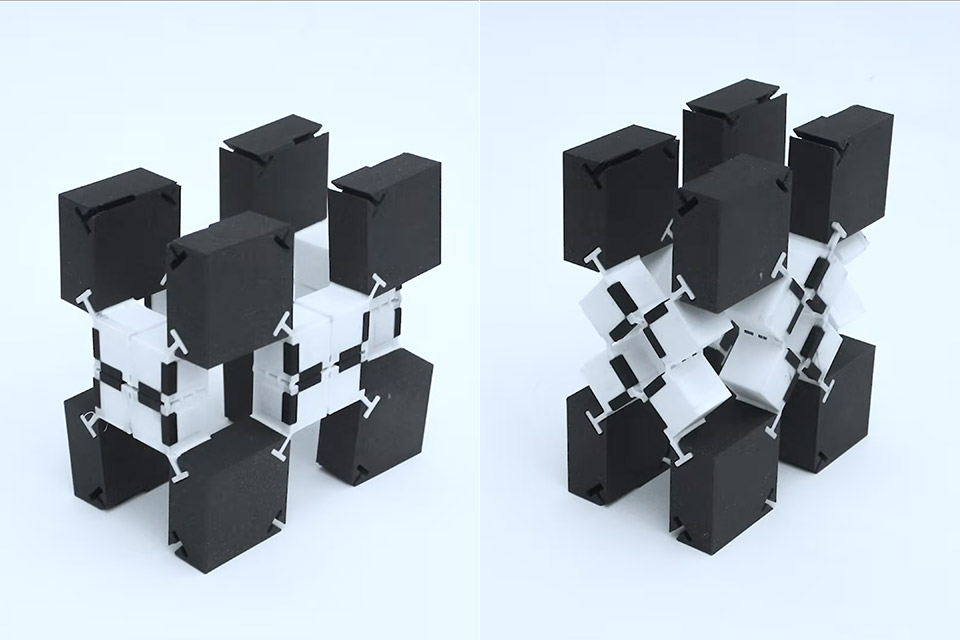
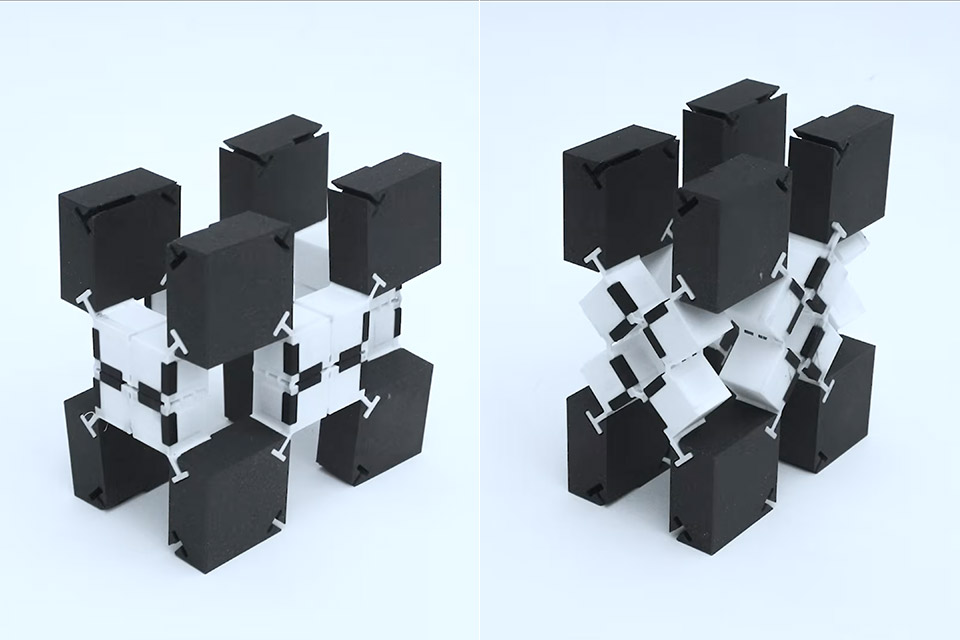
Chairs stay chairs. Tables stay tables. Anything that needs to become both usually grows hinges, motors, and a tangle of wires that quit the first time you twist the thing the wrong way. Researchers at MIT’s Computer Science and Artificial Intelligence Lab spent years looking for a quieter option, and they landed on Bifur-circuits: a kit of 3D-printed blocks that snap together, fold into new stable poses, and keep an electrical map of whatever form they just became.
Each printed unit is one of these smart auxetic lattices, which are repeating designs that widen when stretched rather than pinched inwards. You can find one unit in three different positions. When you link a couple of these devices with some connector pieces, a new behavior emerges. Pushing or twisting past a specific point causes the entire assembly to snap into a new stance and lock it in place. That rapid change is identical to the mechanical ‘bifurcation’ that occurs when a weak plastic ruler finally gives way under strain. When you combine more and more blocks, the number of viable stable positions skyrockets, far beyond the three fixed shapes employed by the same scientists in their previous shape-shifting antenna research.
A1 mini + LED Lamp Kit for Creative Light Projects: Bring your ideas to life with the included LED Lamp Kit. Simply print compatible lamp models and…
The Perfect 3D Printer for Beginners: A1 mini 3D Printer is designed to make 3D printing easy from day one with automatic calibration, simple setup…
Experience the Bambu Lab Ecosystem: Access MakerWorld’s huge library of ready-to-print models, manage prints through the Bambu Handy app, and enjoy…
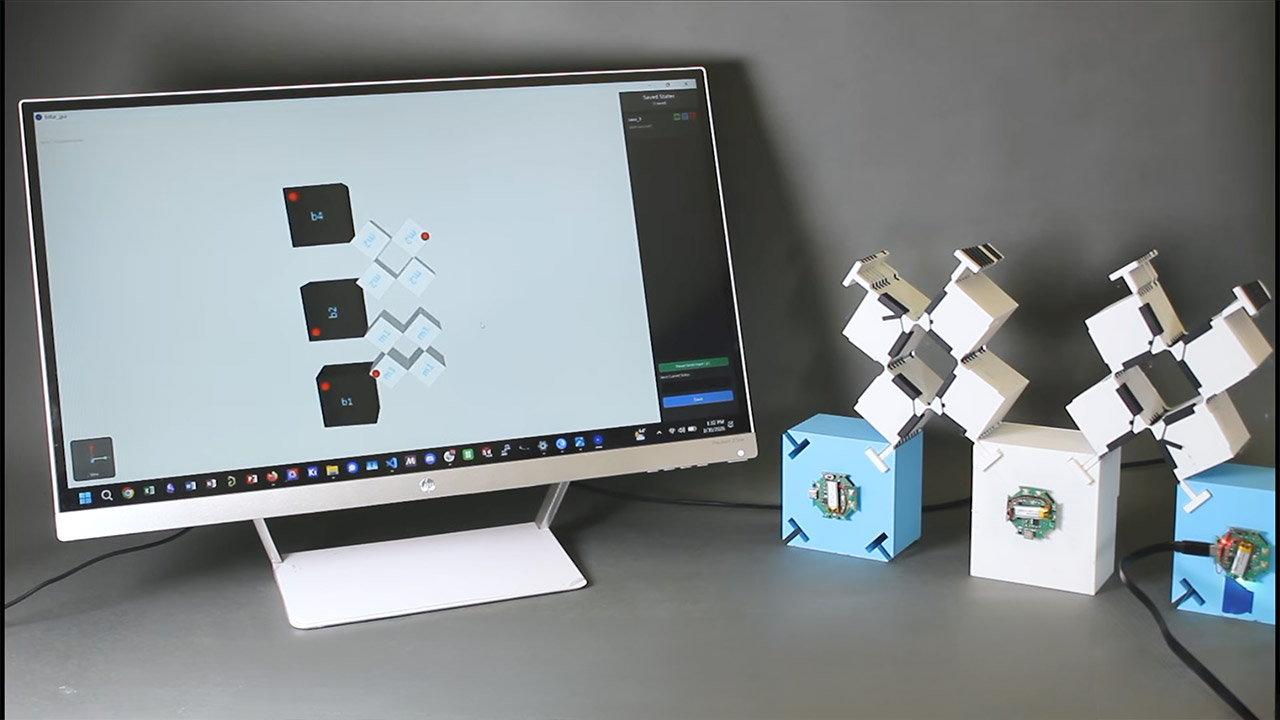
Conductive filaments for the connectors are built into the units as you print the flexible plastic, and they remain linked even if the entire structure is stretched, squished, rotated, or bent whatever you wish. When neighboring blocks meet in different orientations, contact pads at the joints close in a unique circuit, giving each position its own electrical signature. Then, a small controller at the assembly’s root pokes about the connections, asking the units who they are and where they are in respect to one another, and creates a map of the entire thing, all without the need for any further wire between the units.
Advertisement
The difficult part was finding a filament that could flex back and forth thousands of times without losing the signal. The units have stretchy TPU hinges, stronger PLA connectors, and a unique conductive flex filament for the actual electrical connections. If you need a specific position to be locked in tightly, you may even insert tiny magnets into the pockets during the print. After 10,000+ compression cycles, we discovered that the electrical contact remained firm. Larger assemblies take longer to scan; twenty units or so can take a few seconds to generate a comprehensive map.
A tool in Fusion 360 allows you to specify the size, thickness, and stiffness of each joint before exporting the file to be printed on one of those multi-material machines. There is also some companion software that allows you to preview the assembly, detects the finished pose when it occurs, and then creates code so that another app can react to that pose. Parts come out the printer ready to clip together, and all you need to do using heat and solder is add a little board to the end that communicates with the rest of your system.
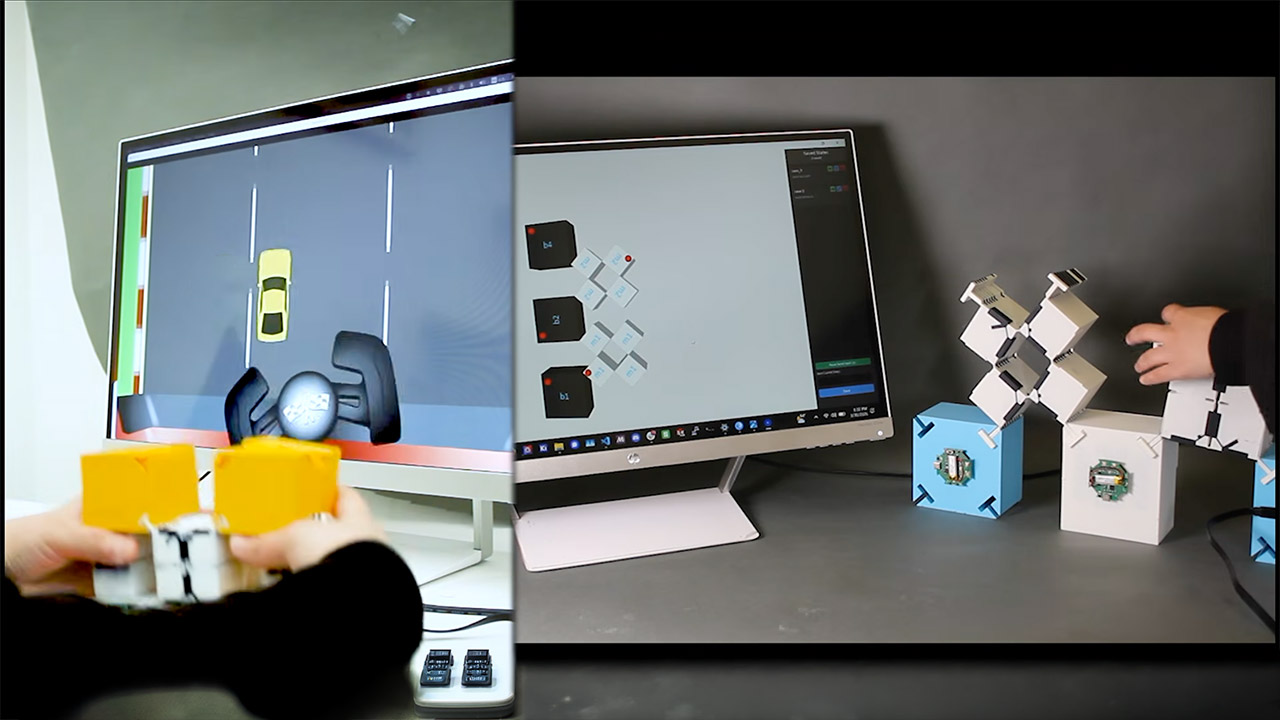
One functioning model became a piece of furniture with twenty-four units, expanding into a tea table, folding up into a chair with a storage hole, and collapsing flat to store itself. While the geometry changed, the item communicated with a display to determine its new position. A second piece was a game controller that could be folded one way to launch a racing game, another way to launch a washing game, and a third way to launch a balloon-inflating game. You can simply add or delete units, and that controller will evolve into something else entirely. [Source]
These aren’t isolated moments, but the visible rise of a travel category: the “race-cation.” Fitness enthusiasts aren’t just picking a gym or a training plan anymore; they’re picking a destination, buying flights, booking hotels, and building entire holidays backwards from a finish line.
Advertisement
And the businesses that spotted it early—airlines, hotel chains, even government tourism boards—are already building entire products and services around it.
The businesses that got there first
(Left): AirAsia x HYROX aircraft; (Right): World of Hyatt’s advertisement./ Image Credit: AirAsia/ Grand Hyatt
A handful of brands were quick to build entire commercial products around the race-cation the moment they saw it coming.
These intentionally built products have found a big customer base designed around a specific new kind of trip, one where the itinerary is built backwards from a start line.
The fitness trend that started it all
HYROX’s workouts include sandbag lunges and sled pulls./ Image Credit: Dittaya Mhosomboon/ Elizabeth Low
So a Singaporean who trains for it at home can fly to Seoul or Bangkok and compete in something functionally identical, just with a new stadium, a new crowd and a fresh excuse for a holiday wrapped around it. It’s this portability that turns signing up for a race into a whole vacation.
(Left): Amelia Yeo (middle) in Incheon, South Korea, with her family; (Right): Amelia competing at the HYROX event in Incheon./ Image Credit: Amelia Yeo
That appeal shows up in how people actually build these trips.
Singapore-based orthopaedic surgeon Alan Cheung has completed nine HYROX races, six of them overseas across Seoul, Sydney, Melbourne, Hong Kong, Taipei and Bangkok—using each one as much as a way to reconnect with friends and relatives living abroad as a competition to win.
For fellow Singaporean Angus Tan, a fitness influencer who flew to Jakarta with his partner for his first overseas race, the pull is partly practical—a short flight, minimal leave needed—but mostly about what the race gives the rest of the trip. “There’s something really satisfying about earning your holiday,” he told CNA Luxury.
For some, the race becomes the reason a family finally gets together. When Singapore marketing lead Amelia Yeo signed up for her first HYROX in Incheon, her parents, brother and his girlfriend flew out to support her, turning into the family’s first holiday together in almost eight years.
And for whole gyms, the race-cation becomes a group pilgrimage: Hong Kong’s DOP Training Club brought around 90 members, roughly 70% of its membership, to Bangkok in Mar 2026, closing the gym for the week so the club could compete and celebrate together, continuing a pattern of earlier group trips to Taipei, Kobe and Beijing.
Advertisement
None of this is cheap, either, which is arguably the more telling part.
For a lot of racers, the entry fee, the flight and the months of training aren’t a deterrent, but may be what makes the finish line worth flying for in the first place.
Singapore & Singaporeans are jumping on the bandwagon
The annual Gold Coast Marathon (left) and the Great Wall Marathon (right)./ Image Credit: Gold Coast Marathon/ Worlds’s Marathons
Beyond HYROX, Singaporeans are also willing to fly out for other fitness events.
This regional travel-for-a-race pattern now has numbers to back it up, too. Similar to race-cation, travel platform Agoda has coined the term “run-cation” for the phenomenon of people travelling for marathons.
One of them was Vijay Andrews, a 32-year-old Indian fitness coach who’d spent months recovering from an injury that kept him out of a HYROX event in New Delhi earlier in the year. When he heard Singapore’s edition was coming up, he booked his flight.
The workout itself isn’t new. What’s changed is that a fitness class has become something people plan a whole trip around, train months to earn, and fly across the region to share with the people who train alongside them.
The race gives these trips a reason. Everything else—the city, the food, the extra few days off—is just the reward for having shown up at the start line.
Read other articles we’ve written on Singaporean businesses here.
































































You must be logged in to post a comment Login