In context: Most companies mark a major birthday with a press release and a photo of a cake in the break room. But Valve has done nothing of the sort so far for the big day. On August 24, 1996, thirty years ago today, Gabe Newell and Mike Harrington signed the paperwork on a company they registered as Valve, LLC.
Interestingly, both Newell and Harrington had just quit Microsoft before they started Valve. Newell had been there for thirteen years by that point, working on early versions of Windows. The job had also made him rich enough to fund a startup himself, since he left with more than a million dollars of his own money.
However, it was Harrington who suggested they spend it on games. The two had known each other since a birthday party in 1987, and once they agreed to go ahead, they set up shop in Kirkland, Washington. That put their new office about five miles down the road from the Microsoft campus in Redmond.
Their own savings did not cover the whole endeavor, though. A publisher in the same state, Sierra On-Line, agreed to back them with roughly a million dollars. In exchange, Sierra took 30% of the revenue and every scrap of intellectual property.
Advertisement
Even with that deal signed, the pair were still four million dollars short. Harrington sold his Microsoft shares to cover his side of the gap. Newell would not part with his, so he borrowed against them instead.
The bet paid off about two years later. Half-Life arrived in November 1998 and sold 2.5 million copies within twelve months. A lot of that came down to how it handled its story, which played out around you as you kept moving rather than pausing to show you a scene.
Steam came along five years later, and you’d be surprised to know that it started off as something far less ambitious. Valve built it just to deliver updates because patches for games like Counter-Strike kept breaking them for days at a stretch.
Eventually, Steam grew into a storefront also stocking everyone else’s games. Today, it’s where the bulk of Valve’s revenue comes from. The company takes a 30% cut of most titles sold through the store. They’re doing pretty well, too, with Alinea Analytics estimating that Steam grossed $11.1 billion in the first six months of this year.
Advertisement
Money on that scale is what let Valve start building its own machines. The Steam Deck handheld landed in 2022, and this June brought the Steam Machine, a compact living-room PC. It starts at $1,049 for the 512GB model, a number Valve settled on after a shortage of memory chips ruined its original pricing.
The Cybersecurity and Infrastructure Security Agency (CISA) has ordered U.S. government agencies to patch an actively exploited vulnerability in Zimbra Collaboration Suite (ZCS) within three days.
The Zimbra security team patched the security flaw (tracked as CVE-2026-73570) in version 10.1.20, released on July 20.
Successful exploitation allows unauthenticated attackers to gain remote code execution by exploiting a command injection weakness in the SNMP monitoring component when SNMP notifications are enabled on the targeted system.
“Due to improper sanitization of untrusted input during SNMP notification processing, an unauthenticated attacker can send specially crafted SMTP requests that may result in execution of arbitrary operating system commands as the Zimbra user,” it explained.
CISA’s warning comes after CERT Polska, the Polish Computer Emergency Response Team (CERT), first flagged the vulnerability as targeted in the wild last Monday.
Advertisement
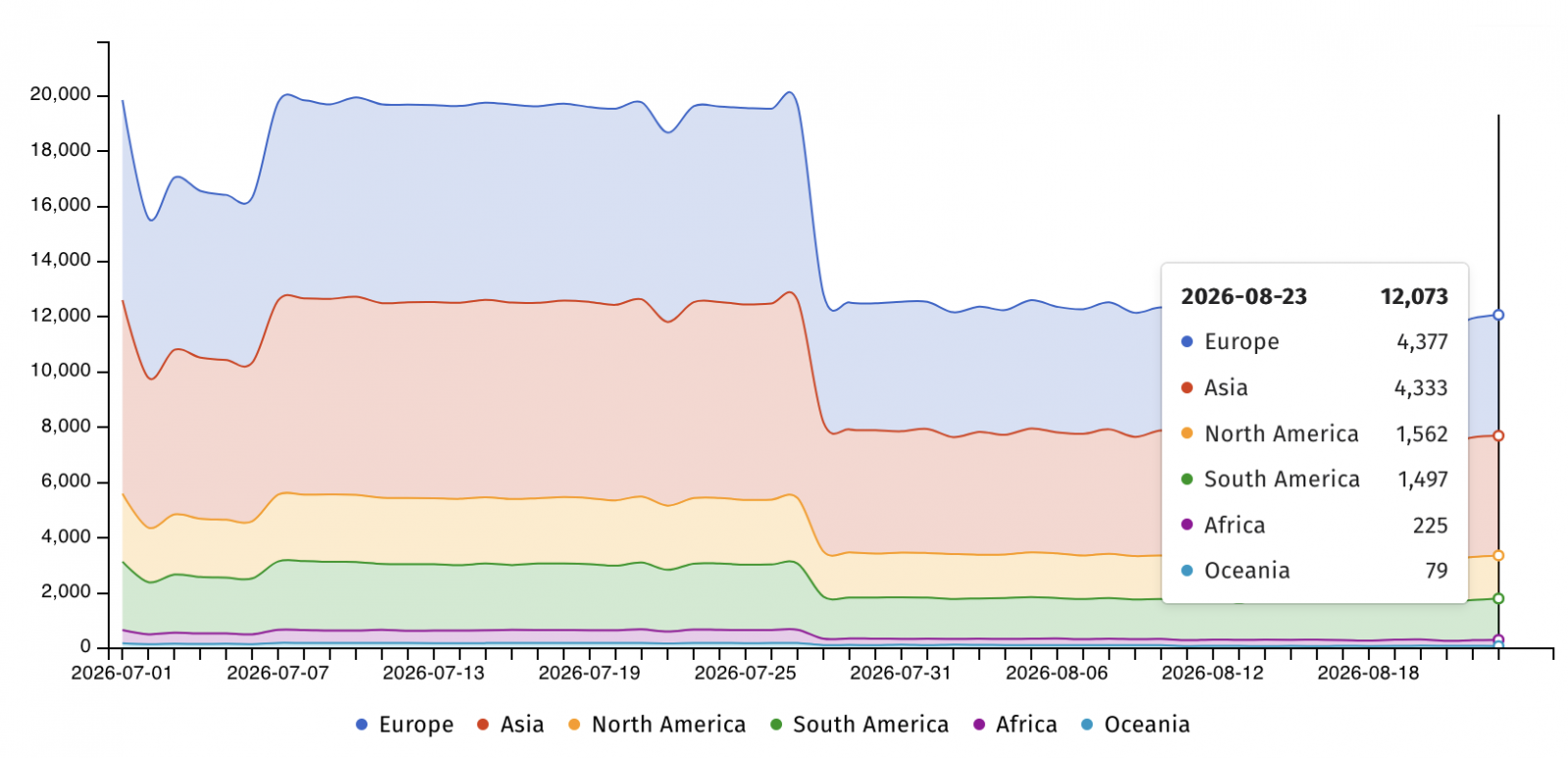
While threat security watchdog Shadowserver tracks more than 12,000 Zimbra servers exposed on the Internet, there is no information on how many are honeypots or have already been secured against attacks exploiting the CVE-2026-73570 flaw.
Zimbra Collaboration Suite servers exposed online (Shadowserver)
On Friday, CISA confirmed CERT Polska’s alert, added the flaw to its KEV catalog, and ordered U.S. Federal Civilian Executive Branch (FCEB) agencies to secure their systems within three days, by August 24.
Although CISA didn’t share any information on these ongoing attacks, the Polish CERT team asked security teams to check logs for suspicious activity, such as the Zimbra service restarting unexpectedly, and for files created in the /opt/zimbra/jetty/webapps/, /opt/zimbra/jetty_base/webapps/, and /tmp/ folders by user zimbra over the last 30 days.
ZCS is a popular email and collaboration suite used by hundreds of millions of organizations and people worldwide, including hundreds of government agencies and thousands of businesses.
Advertisement
Zimbra security issues are commonly targeted in the wild and have been used to steal sensitive data from vulnerable email servers in recent years.
Most recently, Seqrite Labs researchers revealed in March that APT28 (a state-sponsored threat group linked to Russia’s military intelligence service) was exploiting a stored cross-site scripting (XSS) vulnerability in attacks targeting Ukrainian government ZCS servers.
In October 2024, U.S. and UK cyber agencies warned that APT29 hackers (tracked as Midnight Blizzard and Cozy Bear) linked to Russia’s Foreign Intelligence Service were targeting Zimbra servers using a flaw previously exploited to steal email account credentials.
Russian Winter Vivern cyber spies have also abused a reflected Cross-Site Scripting (XSS) vulnerability to steal emails belonging to NATO-aligned individuals and organizations via Zimbra webmail portals.
Advertisement
Overall prevention scores can hide what happens after initial access. Once attackers are using valid credentials, prevention drops sharply.
The Blue Report 2026 measures defenses technique by technique across 338 million simulations run in customer production environments.
IBM is announcing today at the annual Hot Chips conference what may be the most consequential change to mainframe architecture in decades: a processor whose cores can natively execute both IBM’s own instruction set and Arm’s — switching between the two in nanoseconds.
The chip, which will power the next generation of IBM Z and LinuxONE systems, is the first dual-architecture mainframe processor ever built. It is designed to let enterprises run the vast and fast-growing ecosystem of Arm-native Linux software — including the AI frameworks that increasingly define modern infrastructure — directly alongside the z/OS transaction-processing workloads that anchor the world’s banks, insurers, and governments.
“As technology enthusiasts on both sides, we’re really excited about being what I would consider one of the most powerful commercially available processors that’ll be dual architecture,” Tina Tarquinio, chief product officer for IBM Z and LinuxONE, told VentureBeat in an exclusive interview ahead of the announcement.
The announcement marks the first hardware milestone from the strategic collaboration IBM and Arm unveiled in April, and it offers an unusually direct answer to a question that has shadowed the mainframe for years: can the machine that processes most of the world’s regulated financial transactions remain a first-class citizen in an AI era built largely on other people’s silicon?
Advertisement
A computer-aided design layout of IBM’s new processor, the first mainframe chip capable of natively running both IBM’s instruction set and Arm’s. Each of its 11 cores can switch between the two architectures in nanoseconds. (Credit: IBM)
How IBM engineered a processor core that speaks two instruction sets
The most striking engineering decision is what IBM chose not to do. The company could have bolted a handful of standalone Arm cores onto the side of its processor — a simpler design that other chipmakers have used for heterogeneous computing. Instead, IBM built every core on the chip to be bilingual.
“On this chip are 11 cores, and each core can dynamically switch back and forth between Arm software mode and traditional Z software mode,” Jacobi explained in an exclusive interview with VentureBeat. “That enables us to run the mission-critical enterprise software right next, on the same chip, to the much broader software ecosystem of Arm applications.”
The mechanism relies on the open-source KVM hypervisor. Enterprises can run Arm64 Linux virtual machines and Linux on Z virtual machines side by side, and as the hypervisor dispatches each virtual machine onto a physical core, the core flips into the corresponding mode. The performance penalty, Jacobi said, is effectively zero. “That switch takes about the nanosecond scale,” he said. “Because you’re running for many milliseconds in the virtual image, this switching overhead sort of amortizes to zero — pretty much no impact at all.”
Advertisement
Traditional z/OS workloads run in a separate partition on the same chip, outside KVM — meaning a bank’s core ledger, its fraud models, and a modern Arm-native monitoring stack can all share the same silicon, the same memory fabric, and the same reliability guarantees. Jacobi was candid that IBM debated the easier path and rejected it. “We’re really not addressing their need if we just have a few, I’d say, loosely Arm cores in the corner of the chip,” he said. “It really needed to be deeply integrated into the entire system design for it to have the same qualities of service that clients are used to.”
The specifications underscore that this is no compromise design. Built on a leading-edge 2-nanometer process node, the chip runs its 11 high-performance cores at a base frequency above 5.7 GHz — extraordinarily fast by industry standards — with on-chip AI inference accelerators for in-transaction fraud detection, a dedicated data processing unit for I/O acceleration, and a large cache architecture. Full systems will scale to hundreds of cores and tens of terabytes of memory. “That’s really, really fast compared to what you otherwise get in the industry,” Jacobi said. “It’s just another example of how mainframe technology is not old technology. It’s very modern, leading-edge technology.”
Why the mainframe needed Arm’s 22 million developers
The strategic logic behind the chip is about software, not hardware. IBM’s s390x architecture runs an enormous share of the world’s mission-critical transactions, but the broader universe of enterprise software — monitoring tools, security agents, cloud-native middleware, and above all the AI stack of PyTorch, ONNX Runtime, and container workloads — was built for x86 and, increasingly, for Arm. By Arm’s own estimates, close to half of the compute shipped to major hyperscalers in 2025 was Arm-based, driven by AWS Graviton, Google Axion, and Microsoft’s Arm silicon. Arm counts more than 22 million developers worldwide.
Porting each application to s390x has been a grinding, one-ISV-at-a-time effort, and Tina Tarquinio, chief product officer for IBM Z and LinuxONE, described the calculus bluntly. “No matter how great our ecosystem team is, we would never be able to work with all of them and port them all,” she told VentureBeat. “There’s a lot of ISVs out there, and so we wanted to make a fundamental, big step-function forward. We took a swing from a technology point of view.”
Advertisement
Notably, she said customers weren’t asking for a dual-architecture chip per se — they were asking for outcomes. “I wouldn’t say our clients were saying, ‘Can you please make me a dual-architecture environment?’ But they were saying, ‘Help me get these surround workloads, or different types of workloads, to run in a quicker-to-market fashion.’”
The compatibility promise is ambitious: Arm Linux binaries should run unmodified. “The new Arm capabilities are designed to be 100% binary compatible,” Jacobi said. “Once you have, for example, Red Hat Linux for Arm, and you have applications that run on Red Hat Linux for Arm, they will run on the system without modifications.” Arm defines the instruction set architecture and supplies validation tooling to guarantee that IBM’s implementation behaves identically to every other Arm chip — while IBM designs and builds the silicon entirely in-house. “Very good partnership. Very solid engineering partnership as well,” Jacobi said of the collaboration.
What a next-generation Spyre accelerator means for enterprise AI on the mainframe
IBM is also previewing the next generation of its Spyre AI accelerator at Hot Chips, and the pairing is not coincidental. The current architecture already offers two tiers of AI: an on-processor accelerator, introduced with the Telum chip in 2022, that handles ultra-low-latency inference such as fraud scoring inside a payment transaction, and the Spyre accelerator card sitting in the I/O subsystem for heavier models.
The new Spyre raises the ceiling considerably. “We’re also bringing a much higher performance chip that is capable of running large language models for agentic workflows,” Jacobi said — both AI-ops workflows that administer the system itself and business workflows “for things like document understanding and insurance adjudication.” The new accelerator will ship with high-bandwidth memory to feed those models.
Advertisement
Here the dual-architecture bet and the AI bet converge. Enterprises want to run inference next to their data; the data lives on the mainframe; and the AI tooling is overwhelmingly Arm-native. Mohamed Awad, Arm’s executive vice president for cloud AI, framed the announcement in exactly those terms: “As AI scales, more of the computing landscape is converging on Arm. Bringing Arm compute and its software ecosystem to these platforms will extend that momentum into mission-critical enterprise infrastructure to give organizations greater choice in how they deploy AI.”
The timing tracks with where enterprise AI actually stands. McKinsey’s most recent State of AI survey found that while 88% of organizations now use AI in at least one business function, nearly two-thirds have not yet scaled it across the enterprise — and the companies capturing the most value are those redesigning core workflows rather than running detached pilots. For regulated industries whose systems of record sit on IBM Z, running AI where the transactions happen is arguably the most direct route to that kind of integration.
When the dual-architecture IBM Z system will ship — and why existing customers shouldn’t worry
Buyers will need patience. The chip will debut in the successor to the z17, which shipped in the second quarter of 2025, and IBM holds to a roughly three-year product cadence — pointing to a launch around 2028. But Tarquinio insisted the program is well past the concept stage. “It’s more than being on the drawing board. We’re full steam ahead on the whole system,” she said, adding that IBM will release more details in the run-up to launch.
For IBM’s installed base, the reflexive question is whether embracing Arm signals a slow sunset for the traditional architecture. Both executives pushed back hard. “This is a big and. It is not an or,” Tarquinio said. “I have a roadmap that goes out 10 or 15 years of hardware systems. Many of our teams are working on this next system; many are also working on the one after that, and the one after that.”
Advertisement
Jacobi cast the move as continuity rather than rupture. “The traditional mainframe that we have today as a z17 system is not just a faster version of what we built 25 years ago,” he said. “We didn’t have pervasive encryption capabilities. We didn’t have on-processor AI capabilities. Adding the Arm capability is the next big iteration in this continuous evolution.”
The competitive subtext is the cloud. Asked why an enterprise would run Arm workloads on a mainframe instead of a hyperscaler, Tarquinio pointed to the platform’s availability numbers: “We’re talking eight nines of availability — that’s 0.3 seconds of downtime a year. If you’re running your ledger, if you’re running your fraud detection, any of these mission-critical apps, you want that.” The pitch, she said, is fit for purpose: match the infrastructure to the SLA, not the fashion.
There are real caveats. IBM’s own press release notes that statements of future direction “represent goals and objectives only.” The Arm support is Linux-only for now, and the hardest engineering — running a foreign instruction set at production performance, with mainframe-grade fault detection and recovery, under real customer workloads — remains to be proven over the next two years.
But the ambition is unmistakable. For sixty years, the mainframe has survived every wave of technology that was supposed to kill it — minicomputers, client-server, the cloud — by absorbing what it needed from each. Now IBM is attempting its boldest act of absorption yet: teaching the machine that runs the world’s money to speak the language of the AI era, fluently and natively, on the same silicon. “Bringing something that’ll really be first of its kind in production,” Tarquinio said, “showcases again what IBM is capable of from a technology point of view.” The mainframe, it turns out, isn’t being left behind by the future. It’s learning to run it.
In the Thelonious Monk universe, I’ve noticed over the years a general perception among aficionados that the artist’s work diminished significantly later in his career. Personally, I have not found that to be accurate, as evidenced by the excellent 1968 Palo Alto concert that Impulse! Records issued several years ago. That notion comes to mind again while listening to an outstanding 1967 live concert recorded in Paris.
Monk Live in Paris 1967 (Volume One) marks the first in a series of official releases selected by Thelonious Sphere Monk III. This new release was sourced from digital remasters created in 2002 by the late, great audio engineer and producer Rudy Van Gelder, working from a pristine archival tape reel discovered in France. The recordings were restored at the time for the Monk Estate’s then-label, Thelonious Records, but unfortunately remained unreleased for more than 20 years.
These revelatory performances are finally being issued to the public on the Estate’s own terms. Portions of the recordings have circulated as bootlegs over the years.
For this performance, Monk’s classic mid-1960s quintet was expanded to a full nonet, adding several significant players, as documented in the album’s official press materials: “… it showcases Monk’s longstanding quartet featuring tenor man Charlie Rouse and the bass/drums tandem of Larry Gales and Ben Riley, who are joined by five very special guest horn men. Alto saxophonist Phil Woods, trombonist Jimmy Cleveland, Ray Copeland and tenor titan Johnny Griffin (Rouse’s predecessor in the quartet) perform in various permutations – with the full nonet, including trumpet legend Clark Terry…”
The 180-gram audiophile vinyl features disc mastering and lacquer cutting by Warren Defever of Third Man Mastering, with United Record Pressing handling the plating and pressing. The recording is also available as a digital download. You can order the vinyl now for about $30 from Amazon.
Advertisement
Pressed on translucent blue vinyl, the record is well centered and, happily, quite quiet. The album also includes a bonus insert with additional liner notes.
The band is swinging on Monk Live in Paris 1967 (Volume One) and, as far as I can tell, Monk seems to be having a great time taking the music into some interesting spaces. One of the standouts for me is trumpeter Ray Copeland, who launches into some joyful, soaring solo flights.
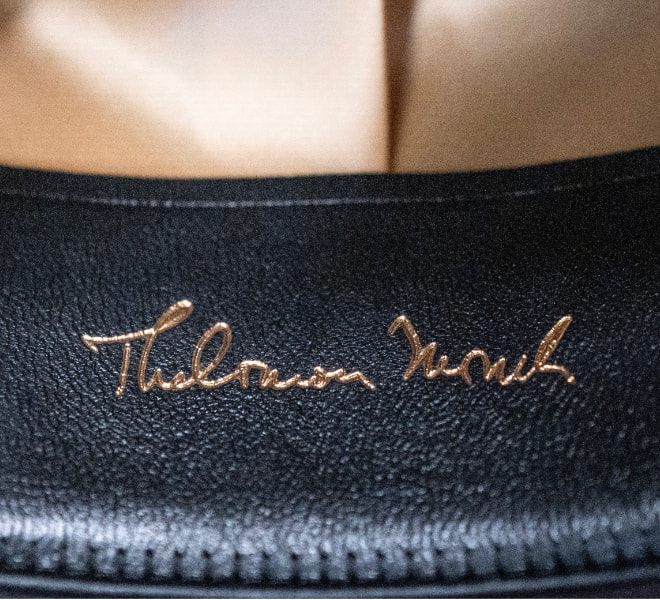
Thelonious Monk Signature inside the Hat
As an added bonus, the Monk Estate has partnered with luxury hatmaker Optimo to recreate a limited run of 88 hats, one for each key on a piano keyboard, like the one Thelonious Monk wore back in the day. Each hat comes with the first pressing of the recording, produced in a special edition color and signed by Thelonious Sphere Monk III and Optimo founder Graham Thompson. The hat is titled, simply, The Monk.
Part two of the concert is expected to be issued later this year, so as soon as we get our hands on it, I’ll be sure to follow up with a review. Can’t wait!
Advertisement. Scroll to continue reading.
Advertisement
Our Ratings:
★★★★★★★★★★ Music
★★★★★★★★★★ Sound Quality
★★★★★★★★★★ Packaging
Where to buy:
Mark Smotroff is a deep music enthusiast / collector who has also worked in entertainment oriented marketing communications for decades supporting the likes of DTS, Sega and many others. He reviews vinyl for Analog Planet and has written for Audiophile Review, Sound+Vision, Mix, EQ, etc. You can learn more about him at LinkedIn.
XPENG said on Monday that its robotics business has raised more than $900M in what the company described as its first funding round, a substantial sum for a unit that has yet to sell a single robot commercially.
The timing is deliberate, since the Chinese carmaker has committed to putting its IRON humanoid into mass production before the end of this year and is running out of calendar to do it in.
IRON was unveiled at XPENG’s AI Day in November 2025 and runs on the same Turing chips the company designed for its own electric vehicles. That shared silicon is the core of the pitch, alongside more than 60 joints, a spine with five degrees of freedom, and a layer of what XPENG calls bionic muscle fascia intended to soften the machine’s movement.
The robot demonstrated publicly is a seventh-generation prototype, with an eighth generation earmarked as the production model. Moreover, the company has said it wants full capability integrated before the production line starts, which is a considerable amount of engineering to compress into the remaining months of the year.
Advertisement
Deployment plans start close to home. The first units are expected to work as showroom assistants and tour guides, patrol XPENG campuses, and take positions on the company’s own factory floors, with commercial deliveries in China and abroad following in 2027.
Putting robots in your own dealerships is becoming a recognisable pattern in the Chinese car industry, with BYD already committing to a humanoid in every showroom. It has the useful property of generating deployment numbers without requiring a customer to be convinced first.
The longer-term target is a million units a year by 2030. He Xiaopeng, XPENG’s chief executive, has said the robots could eventually be priced at levels “very similar to car prices” within five years, and that software accounts for more than half the value of the machine from the first day it ships.
He has also taken personal charge of the division. In an internal note reported earlier this year, he wrote that the robot industry “is becoming increasingly hot and competitive, and we have clearly seen the direction and timing of victory, but it still requires more arduous implementation and extremely high decision-making ability”.
Advertisement
That reshuffle came alongside the departure of Shi Xiaoxin, the senior director of robotics product planning who had overseen the IRON project, which is not the sort of personnel change a company usually makes with a production deadline months away.
One point deserves care. XPENG Robotics, then known as Pengxing Intelligence, completed a $100mn Series A in July 2022, so the description of this as a first round most likely reflects a restructured entity rather than a first-ever raise, and XPENG has not published the investor list or a valuation for the new money.
The capital arrives in a market that has been repricing humanoid companies upwards for two years, with LimX Dynamics reaching a $2.2bn valuation before an IPO and Morgan Stanley doubling its forecast for Chinese humanoid shipments to 50,000 units. Against a million-a-year ambition, that industry-wide figure is a reminder of how early this all is.
Robotics also sits inside a wider reorientation at the company, which now describes itself as a physical AI business spanning humanoids, robotaxis, and flying vehicles rather than a carmaker with side projects. Each of those lines consumes capital on a scale that vehicle sales alone are not currently covering.
Advertisement
The car business is why the money matters, as XPENG reported a 17.6% revenue decline in the first quarter alongside widening net losses, having been profitable the quarter before, and management has been describing robotics, robotaxis, and flying vehicles as the eventual drivers of revenue and profit.
Raising outside capital for the robotics unit keeps that spending off the carmaker’s own balance sheet while the vehicle business works through a difficult year. Whether IRON reaches a production line before December is the question the $900M is meant to answer.
Microsoft has confirmed that .NET Framework updates released as part of the August 2026 Patch Tuesday are breaking printing and PDF export in some applications.
In a Windows release health alert seen by BleepingComputer, Microsoft says this known issue affects only apps that use the Windows Presentation Foundation (WPF) UI framework, an open-source graphical subsystem for building Windows desktop client applications.
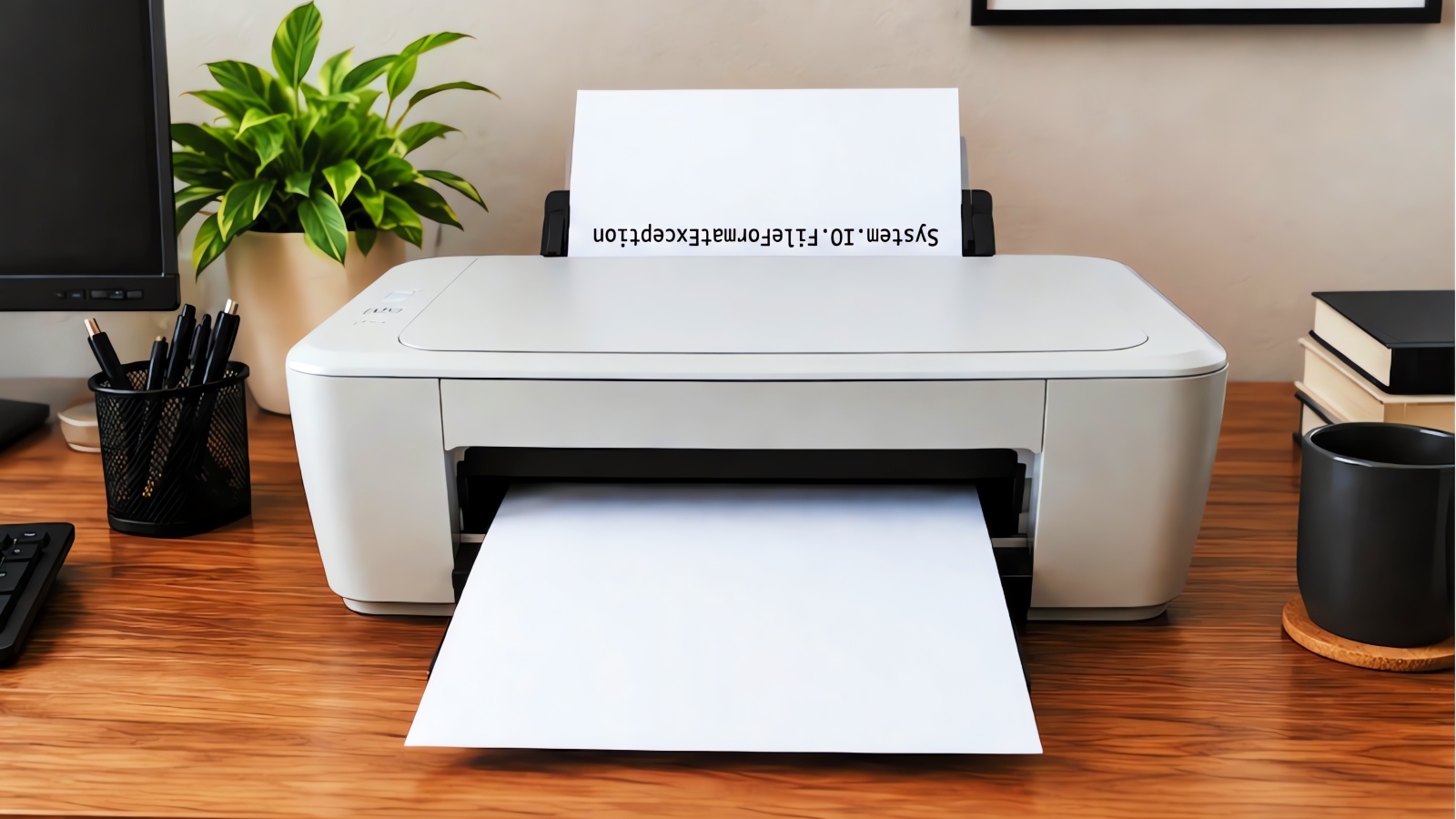
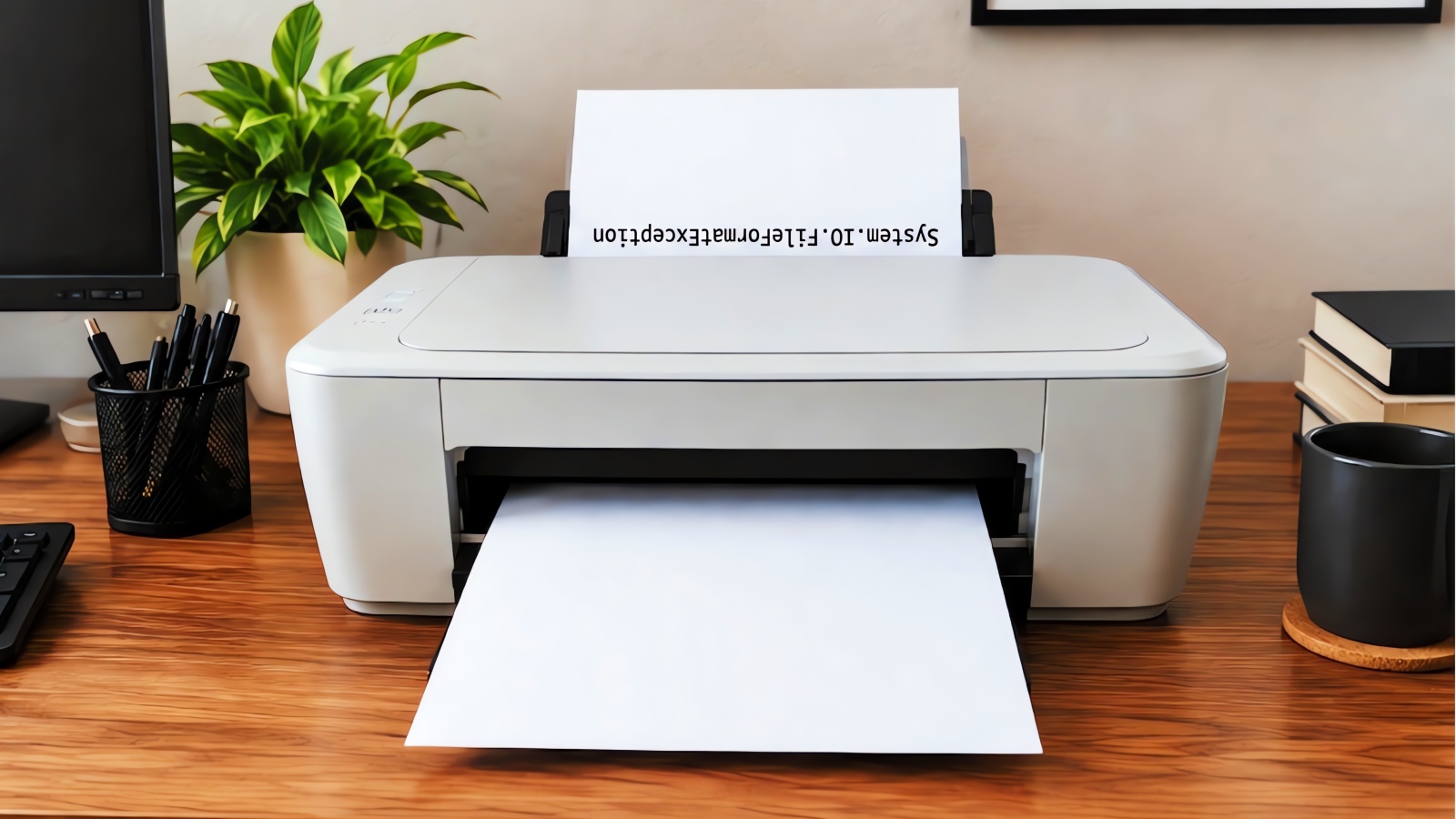
“After installing the August 2026 .NET Framework cumulative update, some WPF applications may fail with a System.IO.FileFormatException when printing or generating PDF/XPS content that uses certain fonts, including Calibri,” Microsoft says.
The complete list of impacted platforms includes both Windows client releases (including the latest versions of Windows 10 and Windows 11) and Windows Server (from Windows Server 2012 up to Windows Server 2025).
Microsoft says it is still investigating the issue and, until it can ship a permanent solution, has provided a temporary fix to help affected users work around these printing problems.
Advertisement
This workaround requires enabling the Switch.MS.Internal.TtfDelta.DisableCmapAndSbitOverflowProtection AppContext switch in the application config file by adding the following:
However, the company warned that doing this will also disable protections introduced with the August 2026 .NET Framework update, exposing the system to attacks that could exploit vulnerabilities addressed by this month’s security updates.
“Microsoft recommends using this workaround only as a temporary measure and only when required to address this issue,” it warned.
Roughly five years ago, in February 2021, Microsoft addressed another known issue that caused WPF apps and Visual Studio to crash after installing Windows 10 cumulative updates.
Advertisement
On Friday, Microsoft also shared a temporary workaround for a known issue triggered by Windows 11 updates released during the August 2026 Patch Tuesday and causing games like ARC Raiders, MARVEL Tōkon: Fighting Souls, and The Finals to crash and freeze.
Overall prevention scores can hide what happens after initial access. Once attackers are using valid credentials, prevention drops sharply.
The Blue Report 2026 measures defenses technique by technique across 338 million simulations run in customer production environments.
Even though I’ve been a bird-watcher most of my life, nothing prepared me for the experience of witnessing—on my phone—the entire process of birds being born in my own backyard.
I’ve maintained a regular “dumb” nest box for years, the birthplace of generations of black-capped chickadees. I’ve seen them going in and out, but I always wondered what was happening in there, especially the year I opened up the box in the fall and found five deceased fledglings at the bottom. How could this have happened? I wondered.
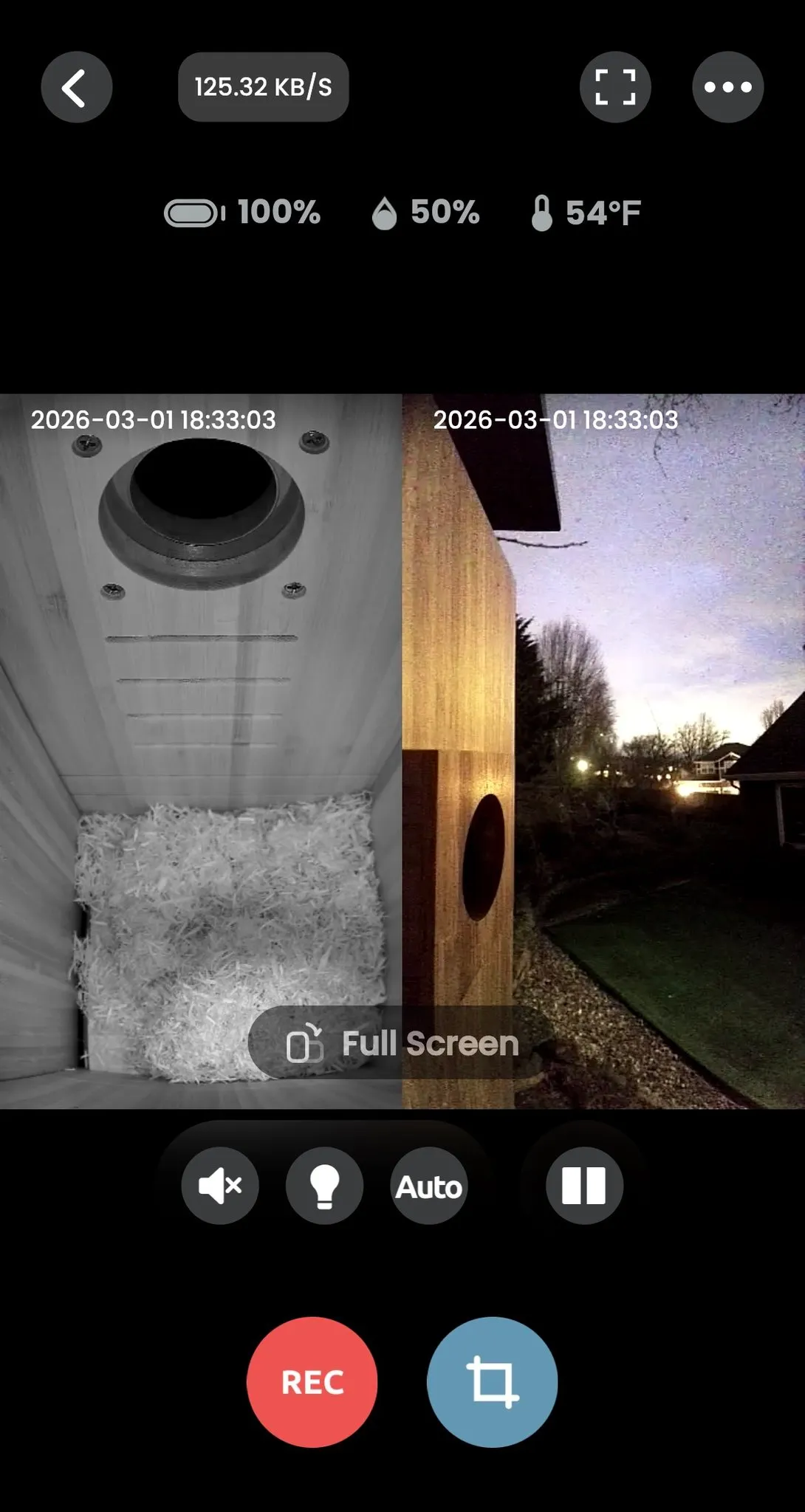
Thanks to the Birdfy Nest Duo smart nesting box and its built-in thermometer and hygrometer, I now at least have an educated guess. (The poor things likely overheated during an early season heat wave.) Being able to watch the entire nesting operation from all angles, starting with excavation and egg-laying and ending in hatching and fledging, has been one of the most educational and entertaining bird-watching experiences I have ever had, and something I’d recommend to anyone interested in birds, nature, or just life science in general.
Eye Spy
Birdfy makes three smart nest boxes in addition to the Duo. The original, the Birdfy Nest, has one camera—located inside the box—and can only hang from an eye hook screwed into the top. There’s also a version made out of solid fir in contrast to the others’ lightweight bamboo. I have also tested Birdfy’s artful Polygon, but persistent connection issues prevented me from using it this season.
Advertisement
I have not tested the first two single-camera versions, but I can’t imagine not having a second camera outside the hole to see who’s unexpectedly poking their head in. (At one point in my testing, it was a confused flicker; another, a curious starling—this is when I learned chickadees can hiss). It’s also critical to be able to pole-mount the box to keep it away from predators.
SCREENSHOT: Kat Merck
The Nest Duo is substantial—16 inches tall and about 8 pounds—with one 1080p HD camera facing the nest entry hole on the exterior and another tucked discreetly inside the nest box itself. There’s also an internal hygrometer (humidity) and thermometer (temperature) that show readings on the live view in Birdfy’s easy-to-use app. There are four easy-to-install, screw-on entry hole sizes for different species, from 0.9 inches for wrens up to 2 inches for starlings or bluebirds, along with corresponding metal predator guards to prevent chewing. The entire side of the box opens with a latch for easy cleaning and access.
In the app, each screen capture appears as a split-screen image, which you can tap to view 20-second videos (with audio) of both the inside and the outside of the box. The videos are immediately downloadable and shareable—no subscription is needed.
The screen captures work much like one of Birdfy’s smart bird feeders, but with images shunted to sections labeled “Prelude,” “Nesting,” “Brooding,” “Nestling,” “Fledgling,” and “End.” There seemed to be no rhyme or reason for what process the app thought was happening at the time (for example, if a nestling was simply turned around, the app asked if it should label it as “Fledgling”), but this story format was easy enough to ignore onscreen.
Advertisement
House Hunters
In March of this year, at the beginning of nesting season on the West Coast, I installed the Duo with the 1-inch entry hole on a pole stand and mounted the included solar panel below the box with hose clamps. Black-capped chickadees were consistently interested, popping in and looking around, but something was preventing them from staking a claim. It took me a while to realize they were looking askance at the holes on the metal tray “floor,” which is perforated for drainage. The idea is that this tray can be inserted into one of a series of slots to increase or decrease the nest cavity depth, depending on your local species’ preference.
Gluons are the quantum ‘Gorilla Glue’ involved in binding quarks together, ScienceAlert reminds us. But for nearly 50 years, physicists have hunted for “glueballs”, exotic particles predicted by this theory of the strong interaction — the only type of particle in nature composed entirely of force mediators:
Now, a collaboration working at a collider in Beijing says it has the clearest evidence yet that a known particle called X(2370) is dominated by one of these elusive states… Physicists sifted through the wreckage of high-energy particle collisions to find strong evidence of this glueball, made predominantly of gluons — massless force carriers of the strong interaction between quarks… The new evidence for this exotic, unstable glueball’s ephemeral existence comes from a recent preprint on arXiv, presented at the International Conference on High Energy Physics in Brazil… This collaboration uses the Beijing Electron Positron Collider II, a particle accelerator and collider that smashes electrons into their antimatter counterparts, called positrons, to probe perplexing particle physics.
The resultant glueball is an “unprecedented form of matter,” says Jin Shan, a particle physicist at Nanjing University and one of the research team’s leaders. “It not only enables the theory describing strong interactions to pass its most rigorous test, but also vastly expands the boundaries of our understanding of the physical world,” he told Fan Chen at South China Morning Post… Previously, in a study published in the journal Physical Review Letters in 2024, the researchers analyzed 10 billion meson decay events. They measured the X(2370) particle’s mass and spin parity — a property that dictates its interactions and almost-instantaneous decay — for the first time, finding complete agreement between their experimental values and predictions. Now, they’ve identified its additional decay modes and determined its flavor-singlet nature, “the most important characteristic of a glueball….”
The authors describe their work as the clearest experimental result to emerge from nearly 50 years of glueball searches, supporting the long-standing theoretical prediction that gluons can bind together into a new form of matter.
Advertisement
The discovery “”highlights advances in technology and analytical techniques that have recently revealed another decades-in-the-making physics mystery,” the article points out.
“More experiments are needed to further confirm and constrain the prototypes of the highly esoteric glueball; in other words, more particle smashing.”
The internet kind of sucks right now. And it’s been getting harder and harder to use over the past several years.
Imagine you’re training for a marathon, or just trying to get in better shape, and you want to buy a new pair of shoes. Well, good luck! You’re going to have to wade through sponsored links, affiliate marketing, AI summaries, and websites seemingly engineered for search engines instead of human shoppers.
Maybe you just want to connect with friends on Instagram or discover recipes on TikTok. But even there, everyone is selling something. “Get Ready With Me” videos are sponsored by CeraVe, movie reviews are actually ads for the movies being reviewed, and the guy who posts your favorite mobility routines really wants you to try his protein powder.
So people have developed a workaround: Simply add “Reddit” to the search.
Advertisement
Looking for a shoe with high energy return? Reddit. Want to know if an Airbnb you’ve been eyeing has a sketchy listing? Reddit. Trying to figure out the fastest way to the international terminal in Atlanta’s humongous airport? Chances are someone on Reddit has shared very specific thoughts and instructions.
It’s a strange situation. Reddit is filled with pseudonymous strangers, and yet these people can somehow feel more trustworthy recommending a skincare product than an influencer hawking cleansers to millions of followers. Why? Because the random person on Reddit doesn’t seem to have anything to sell you.
That’s why, for many people, Reddit feels like one of the last “real” places on the internet. The site has become so integral to navigating the internet that Google took notice; in recent years, it’s begun surfacing Reddit threads more prominently in search results.
Then came artificial intelligence. Chatbots need massive amounts of human language to learn how we communicate. AI-powered search also needs somewhere to turn when we ask the kinds of hyper-specific questions that newspapers, Wikipedia, and government websites haven’t answered. Reddit has plenty of both.
Advertisement
Unfortunately, whenever something online becomes valuable, people and companies figure out how to exploit it.
The stakes go far beyond a brand tricking someone into buying a lousy face cream. Reddit works because people trust that there’s a real person on the other side of the screen. It doesn’t have to become totally overrun by bots or marketers for that trust to disappear. We just have to start questioning who — or what — we’re talking to.
To break down how Reddit is changing, what the platform and its moderators are doing to push back, and what it could mean for the increasingly blurry line between human conversation, marketing, search, and AI, Today, Explained co-host Noel King spoke with the Verge’s Mia Sato, who recently wrote about the new wave of AI spam beleaguering the platform.
Below is an excerpt of their conversation, edited for length and clarity. There’s much more in the full podcast, so listen to Today, Explained wherever you get podcasts, including Apple Podcasts, Pandora, and Spotify.
Advertisement
Are you a big Reddit user?
What do you mainly use it for?
I think it’s become a big part of finding information on the internet. I usually use Google as the sort of doorway into Reddit, but if I search something on Google, really, it’s a high likelihood that I will end up on Reddit in the end.
That’s a trend that you write about in your piece, which I thought was very interesting because it was something that has also been happening to me and it happened without me realizing how often it was happening.
Advertisement
You start this piece in the Verge with an example from a post on a skincare-focused subreddit, a place you write that you visit often. Can you take us through what happened?
The skincare subreddits that I mentioned in my story are actually subreddits that I often read because I want unfiltered or true opinions about products before I buy them. And I go to Reddit for skincare recommendations quite a bit.
I suspected that if you are a skincare brand and you want people to be talking about your product, you will go to these subreddits because some of these subreddits get like one and a half million viewers a week. They’re doing crazy numbers and they have a very committed and active community. So I was like, if I were a brand and I wanted to market myself, I would probably post on Reddit.
I was curious how the moderators of these skincare subreddits were handling that, because also marketing firms had told me, “Yeah, all our clients, they really want to know how to crack Reddit. It’s really hard. They want to figure out Reddit.”
Advertisement
And so I talked to a subreddit moderator who does one of the skincare subreddits, and she gave me a ton of detail about the amount of spam that they were getting. She sent me one example, which was a thread of someone asking about a certain spray that people use for acne treatment.
The person who posted it asked, like: “Magic Molecule Hypochlorous Acid Spray – is it really that good? Recently I have seen a lot of good reviews about this product. Any of you tried? Do you recommend? What is your take on this?”
And, you know, it got like dozens of answers. Some people said, “Yeah, it’s great.” Others said, “They all work the same.” But one of the answers was from just a random account that said, “I’m sorry, I don’t have any experience with that product, but I have tried this other one that I was skeptical of, but I really like it actually.”
If you’re reading that comment, you probably would think nothing of it. But what you don’t see unless you click over to the profile and do some digging is that this random account had actually — over the course of several days, maybe even months, and across different skincare subreddits — been recommending the same product over and over and over, and using very specific terminology, saying, “It has all these recommendations from certified dermatologists, which made me feel a bit more confident trying it on sensitive skin.”
Advertisement
It was very controlled messaging. Of course, the moderators were like, “What normal person is going to go across different subreddits and keep pushing this product? For no reason?”
So that is one of the ways that this new type of spam on Reddit takes shape, which is brands pretending to be normal users on Reddit.
For Reddit moderators, I’m thinking they can’t individually suss it out immediately or it wouldn’t be happening. Are they doing the search themselves to try to figure out, like, is everything on here real? How are they dealing with this?
They have a bunch of tools. Some of them are auto-moderator tools, where basically a bot will look at every submission that comes through and move some things to a filtered folder where moderators can look at [it].
Advertisement
One of the funniest things that several moderators actually told me was they keep shit lists of companies that they think have spammed them in the past. The skincare subreddit told me about this. A weight-loss subreddit moderator whom I interviewed also said this. They have a running list in the background where if they think you’ve spammed or astroturfed their community in the past, they keep all those brands’ names. And now if you mention that brand name, your post will automatically get filtered out.
The moderators are trying to send a message: “If you spam us, all of the posts that are not even your spam will get filtered out and we will take a closer look at them.” They’re pretty strict with it. Some moderators that I spoke to said that they’ve really seen an increase over the last six to eight months, maybe.
I can give you a couple of the numbers that Reddit has released publicly because Reddit has said also that they know that this is a growing problem. The company said that it removes 25,000 spammy posts and comments a day. They block something like 23 million spam views. And they also tackle spam upvotes — a way on Reddit to sort of signal agreement.
But Reddit knows that it is kind of a new era of spam, and they’ve said that they’re using LLMs and other AI-powered moderation tools to try to catch this stuff better.
Advertisement
Let me ask you something. Maybe it comes down to what Reddit is and always has been, but I will go on Instagram, I will go on TikTok, and my sense is like half of it is just crap that’s trying to sell me something. It might not be real. It just all feels pretty garbagey to me.
I feel like when you wrote this piece, you were saying there are stakes here to Reddit being the thing that must kind of stay pure, must stay away from this. What is it about Reddit that makes it important?
One part is that the concept of influencers doesn’t really exist on Reddit in the same way that it exists elsewhere.
And if you are an influencer, there are very few places that you can post without getting in trouble. Many, many subreddits have explicit rules saying, “You may not self-promote here, and we will ban you if you do.” That is a totally different environment than Instagram, where sort of the expectation is that someone is selling you something.
Advertisement
The other part that makes Reddit unique, I think, is that for better or for worse, and deserve it or not, Reddit, in the minds of people using the internet, has come to sort of be associated with real opinions or real people. Which is funny because the platform is anonymous, you know? Most people are using just a random username, not their full name. So it’s kind of stumbled into this reputation of being filled with real, helpful opinions and perspectives.
Reddit has deals with certain AI companies where they allow LLMs to be trained on troves of Reddit data, of real people having conversations. And so I think over the last few years as Google search feels like it’s gotten worse and people have gone to places like Reddit to answer their questions, Reddit’s stock literally has skyrocketed as a place where you can find information where people aren’t trying to sell you something all the time. Or are they? That’s kind of the part that I wanted to untangle.
Does Reddit actually have to become overrun with marketing, fake posts, people saying, “Oh, you should definitely buy this skincare,” because they’re getting paid to say that for this to be a big problem? Or does it just have to get to the point where I am suspicious that I’m not talking to an actual person on Reddit and I start doubting a platform itself?
For me personally, in the course of reporting this story, I was like, “Hmm, maybe I shouldn’t buy things based on a recommendation from Reddit.”
Advertisement
It’s a new type of problem and a new way of looking at a platform. As it relates to AI search, if these chatbots love to cite Reddit so much for their answers, can the AI systems detect when something is spam? Can they detect when a comment is coming from a brand or when the person who left that comment, if you go to their account, they’re always promoting that product?
I am not convinced that Google’s Gemini or ChatGPT can suss out when something is promotional and when it isn’t. Because I’ve written about this before and I know that they can’t.
It’s a strange thing where I think the deception on one platform ends up trickling through other places as well, as the Reddit thread gets cited by search features and LLMs.
Have you changed your buying habits based on what you’re seeing now on Reddit?
Advertisement
I feel like I’m just way slower to buy things. I’m just like, let me keep this in my head. Let me put it on my wishlist and do some research to see what other people, what real people think, and also make sure that they have a good return policy.
The Ford Mustang is a fine example of a four-seater sports car, but other cars of its type have received higher ratings from numerous sources. Different publications have different criteria for rating vehicles, so any given list picking the best four-seater sports cars won’t be identical to the others. With that in mind, let’s first look at the Ford Mustang, our initial standard of comparison.
The 2026 Ford Mustang comes in both coupe and convertible, and is one of the car brands keeping convertibles alive in 2026. The current version is available with several different powertrains, starting with a 2.3-liter EcoBoost producing 315 hp, mated to a 10-speed automatic transmission driving the rear wheels. A larger, 5.0-liter V8 engine with 486 hp comes with the GT model, which also gives you the option of a six-speed manual. Above that is the track-capable, 500 hp Dark Horse, which itself sits a sizeable notch below the supercharged, 5.2-liter 795 hp Dark Horse SC.
Advertisement
Performance testing of the Mustang GT by Car and Driver revealed a 0-60 mph run of 3.7 seconds and a quarter-mile time of 12.2 seconds at 118 mph. The Dark Horse came in slower than the GT in straight-line speed, but out-cornered it, 1.07g to 0.97g, thanks to stickier, track-focused tires.
Practical aspects of the Mustang include 13 cubic feet of trunk space. Passengers get 55 cubic feet of space in the front, but just 30 cubic feet in the back seat. Pricing starts at $34,990 including destination.
Advertisement
Maserati GranTurismo/GranCabriolet
The Maserati GranTurismo coupe and GranCabrio convertible appeared on three of the lists we consulted, reaching fifth place on the Car and Driver list (above the sixth-place Mustang), sixth place on the Auto Express list (above the eighth-place Mustang), and ninth place on the MotorTrend list (below the third-place Mustang). Our review of the Maserati GranTurismo praised its exceptional performance, comfort, and looks.
The Maserati GranTurismo and GranCabrio are motivated by a 3.0-liter, twin-turbo V6 engine that has an output of 483 hp in the standard model, ramping up to 542 hp in the top-of-the-line Trofeo model. An eight-speed automatic transmission sends these cars’ power to all four wheels. Performance testing of the higher-powered Trofeo version by Car and Driver produced a 0-60 mph time of 3.2 seconds, with a quarter-mile time of 11.5 seconds at 121 mph. Cornering on the skidpad came out to 0.97g.
Trunk space in the GranTurismo coupe is around 11 cubic feet, but the GranCabrio convertible cuts that to 4.6 cubic feet when the top is folded down. Unlike most of the others here, the Maserati GranTurismo has a back seat suited to short trips for those under six feet in height.
Advertisement
Pricing is the highest of any car on this list, with the GranTurismo starting at $150,395 including destination, and the GranCabrio beginning at $160,495. And don’t forget to leave some room for options, as Maserati offers the services of its Officine Fuoriserie, where you can specify a one-of-a-kind Maserati.
Advertisement
BMW M4
The high-performance version of the 4-Series, the BMW M4 comes in both coupe and convertible versions. It placed third on the Auto Express list and seventh on the MotorTrend list. We also took a closer look at this car to see how fast the BMW M4 really is.
This car gets its power from a 3.0-liter inline six-cylinder engine with twin turbos, producing one of three power outputs. You get 473 hp in the standard M4 with a choice of six-speed manual or eight-speed automatic. This increases to 503 hp in the Competition model, which comes automatic-only and can also be optioned with an all-wheel drive system that kicks it up to 523 hp.
Testing of the base M4’s performance with a six-speed manual by Car and Driver produced a 0-60 mph sprint time of 3.8 seconds, with a quarter-mile run that took just 12 seconds, reaching 121 mph. Roadholding measured out to 1.03g on the skidpad. The M4 Competition model knocked a whole second off of the standard M4’s 0-60 mph time, with a spectacular 2.8-second run.
Inside the M4’s trunk, you will find 12 cubc feet of space for your belongings. Passenger volume inside the M4’s cabin totals out at 91 cubc feet. The M4 is also more expensive than the M2, with pricing starting at $87,950 including destination and handling charges (the M2 lands at $70,850). There’s also plenty of optional equipment to choose from on the BMW order list.
Advertisement
Subaru BRZ/Toyota GR86
The Subaru BRZ/Toyota GR86 twins are sold under two different brands, and did very well on the various lists of four-seater sports cars. These cars placed first (BRZ) and third (GR86) with Consumer Reports, second (GR86) and third (BRZ) with Car and Driver, and fifth (GR86) and sixth (BRZ) with MotorTrend. Our comparison of these two cars asked what’s the real difference, and should you pay extra?
Advertisement
These sports cars are both powered by a naturally aspirated, 2.4-liter flat-four engine producing 228 hp, mated to a six-speed manual or six-speed automatic transmission driving the rear wheels. Performance testing of a six-speed manual BRZ by Car and Driver achieved a 0-60 mph time of 5.5 seconds and a quarter-mile time of 14.0 seconds at 101 mph. Skidpad roadholding was measured at 0.97g.
The amount of trunk space in these two cars is rather meager at 6 cubic feet and the tiny rear seat does not hold actual people. However, it does fold down expand the trunk space, holding four wheels and tires for your outings to a local track. Passenger space measures 48 cubic feet in the front and 30 cubic feet in the rear. Pricing begins at $32,795 including delivery for the GR86, while the Subaru BRZ starts at $37,055 including delivery. Be aware that the two brands merchandise their cars differently and also that equipment levels can vary between the vehicles, so check what’s standard before deciding on one or the other.
Advertisement
BMW 2-Series and M2
Both the BMW 2-Series and its hi-po sibling the M2 made all of our lists, placing first (2-Series) with MotorTrend, second with Consumer Reports (2-Series) and Auto Express (M2), and fourth (M2) with Car and Driver. Our own review of the BMW M2 found it to be too good to be thought of as merely a teaser for the M3 or M4.
Available as a two-door coupe, the 2-Series starts with the 255 hp turbo four in the 230i, moves to a 382 hp turbo six in the M240i, then goes ballistic with the 473 hp twin-turbo six in the M2, adding 50 more horses for a total of 523 in the M2 CS model. A six-speed manual or eight-speed auto can be had on the basic M2, but all other models come only with the eight-speed automatic. Rear-wheel drive is standard, but all-wheel drive is an option on all but the top-trim CS.
Testing by Car and Driver provided a variety of 0-60 mph times ranging from 5.1 seconds for the 230i down to 3.3 seconds for the M2 CS. Times in the quarter-mile went from 13.7 seconds at 101 mph for the 230i to 11.3 seconds at 128 mph for the CS. Roadholding was on a spectrum of 0.92g for the 230i up to 1.05g for the sticky-tired CS.
Advertisement
Trunk space amounts to 14 cubic feet in these BMWs. Passenger volume is 54 cubic feet in the front seat and 34 cubic feet in the rear, with Car and Driver calling the rear seat “fairly useless.” Pricing starts at $43,550 including destination.
Advertisement
Porsche 911
The Porsche 911 ranked highly on the lists of four-seater sports cars, placing first with both Car and Driver, who called it a “sports car benchmark,” and also the Auto Express list, while placing fourth on MotorTrend (below the third-place Mustang).
Its most basic Carrera form, the Porsche 911 offers a staggering array of different versions, from the basic dual-clutch automatic Carrera to the Carrera T with a manual transmission to the hybridized GTS. Further excursions into the stratosphere, in both performance and price, can be yours with the superfast Turbo and the track-ready GT3. Our recent experience with the Porsche 911 confirmed that it still deserves its reputation as one of the great sports cars of all time.
The Porsche 911 is available as a coupe, a cabriolet (convertible), or a Targa in 4S form. Rear-wheel drive is standard, with all-wheel drive an option. In Car and Driver performance testing, the basic Porsche 911 Carrera with a 3.0-liter flat-six twin-turbocharged engine with 388 hp did 0-60 mph in 3.1 seconds, with the quarter-mile taking 11.4 seconds at 121 mph. Skidpad roadholding was measured at 1.09g. Not bad for the “entry-level” version, even if it does start at $137,850 including delivery. And that’s before you add any options.
Practically speaking, the Porsche 911 gives you a total of five cubic feet of space in its front trunk, with the passengers getting 49 cubic feet of room inside the vehicle. While the 911 is technically a four-seater car, the rear seats are pretty much unsuitable for anyone of adult size and height.
Advertisement
Methodology
Overall ratings were determined based on a variety of lists from different sources that included Car and Driver, Consumer Reports, MotorTrend, and Auto Express from the U.K. While the specific rankings varied between the different publications, the cars included here were rated higher than the Ford Mustang on most lists, with the exception of MotorTrend, which rated the Mustang in third place. The other lists rated it much lower.
Advertisement
As a result of this variability from list to list, these cars are ranked in approximate order of their ratings, from the lowest to the highest, with the Mustang placed first, since it is the car on which this comparison is based.





























































You must be logged in to post a comment Login