


Connect with us

Tech

Viral ad shows aged Musk, Altman, and Bezos using jobless humans to power AI

Published

on


The ad, set in 2036, sees Musk, Altman, and Bezos talking about their co-founded company, Energym. The eerily accurate AI-generated versions talk about how 80% of people had lost their jobs by 2030, leaving them with no money or purpose – but plenty of free time.
Read Entire Article
Source link

Continue Reading
Click to comment

Leave a Reply

Your email address will not be published. Required fields are marked *

Tech

Shuttered studio Bluepoint reportedly pitched a Bloodborne remake, but it got shot down by FromSoftware

Published

on

Bloodborne fans may not be happy to hear that a remake was reportedly rejected, but that doesn’t mean it’s completely off the table. Bluepoint Games, Sony’s closed-down studio behind many PlayStation remakes, pitched remaking the classic Gothic horror RPG in early 2025, but was blocked by the game’s developer, FromSoftware, according to a Bloomberg report.

As Bloomberg reported, Bluepoint pitched a Bloodborne remake after several years of working towards a live-service title in the God of War franchise that was ultimately canceled. Looking for the next project, a modern-day version of Bloodborne made a lot of sense, considering the title came out in 2015 and Bluepoint was responsible for the successful Demon’s Souls remake in 2020. However, Bloomberg‘s sources said that FromSoftware was against it, but didn’t offer a concrete reason why. With some digging, Bloomberg‘s Jason Schreier pointed to an interview from Kinda Funny Games with PlayStation exec Shuhei Yoshida, which aired last year. In the video, Yoshida mentioned that FromSoftware’s president, Hidetaka Miyazaki, wanted to pursue a Bloodborne remake, but was too busy to do it himself and “doesn’t want anyone else to touch it.”

After failing to get the Bloodborne remake greenlit, Bluepoint wasn’t able to secure another project for more than a year, according to the Bloomberg report. Now that Bluepoint has been shut down, we’re likely even further away from a remake. That’s not to say a remake will never happen, but when it does, it’ll have to get a stamp of approval and likely a lot of oversight from FromSoftware.

Source link

Advertisement
Continue Reading

Tech

Anthropic’s Claude Leaps to #2 on Apple’s ‘Top Apps’ Chart After Pentagon Controversy

Published

on

Anthropic’s Claude AI assistant “jumped to the No. 2 slot on Apple’s chart of top U.S. free apps late on Friday,” reports CNBC:


The rise in popularity suggests that Anthropic is benefiting from its presence in news headlines, stemming from its refusal to have its models used for mass domestic surveillance or for fully autonomous weapons… OpenAI’s ChatGPT sat at No. 1 on the App Store rankings on Saturday, while Google’s Gemini was at No. 3… On Jan. 30, [Claude] was ranked No. 131 in the U.S., and it bounced between the top 20 and the top 50 for much of February, according to data from analytics company Sensor Tower… [And Friday night, for 85.3 million followers] pop singer Katy Perry posted a screenshot of Anthropic’s Pro subscription for consumers, with a heart superimposed over it.

Friday Anthropic posted “We are deeply grateful to our users, and to the industry peers, policymakers, veterans, and members of the public who have voiced their support in recent days. Thank you. “

Advertisement

Source link

Continue Reading

Tech

Anthropic acquires former AI2 researchers’ start-up Vercept

Published

on

The acquisition comes after Anthropic unveiled Claude Sonnet 4.6, its best model yet for computer usage.

Anthropic has acquired Seattle-based AI computer interface builder Vercept for an undisclosed amount to help further the Claude product’s agentic abilities.

The acquisition comes just after Anthropic unveiled its latest Claude Sonnet 4.6, the company’s best model yet for computer usage.

Vercept was founded in 2024 by former Allen Institute for AI (AI2) researchers Matt Deitke, Kiana Ehsani, Ross Girshick, Luca Weihs and Oren Etzioni.

Advertisement

Etzioni served as AI2’s founding CEO, is the co-founder behind AI2 Incubator and a venture partner with Madrona, both of which have supported Vercept.

Shortly after emerging from stealth in early 2025, the AI start-up released its flagship product Vy, a cross-platform AI agent that enables users to control their computers with natural language for navigation of apps and content.

The start-up has raised more than $50m, including a $16m round in January 2025. Its backers include Fifty Years VC founding partner Seth Bannon – who also served as a board member on Vercept – Point Nine Capital, AI2 Incubator and Madrona.

Big Tech leaders, including former Google CEO and chair Eric Schmidt, Jeff Dean, the chief scientist at Google DeepMind, and Kyle Vogt, the founder and former CEO of Cruise, reportedly participated in the January 2025 raise.

Advertisement

Not all of Vercept’s founding team was pleased with the acquisition by Anthropic.

Etzioni, in a post on LinkedIn, said: “After a little bit more than a year, Vercept is throwing in the towel and giving their customers 30 days to get off the platform. Sad.” Vy is scheduled to shut down on 25 March.

In a separate post, he held lead investor Bannon as partly responsible for Vercept “failing to hire a single product [or] business person”. He alleged that the start-up’s board was led by Bannon and by CEO Ehsani, who had “zero experience”.

Meanwhile, founding member Deitke left Vercept to join Meta last summer for a pay package that reportedly amounted to $250m over four years.

Advertisement

Last December, Anthropic acquired the 2021-founded coding toolkit Bun to accelerate Claude Code. Bun, according to Anthropic, had improved the JavaScript and TypeScript developer experience by optimising for reliability and speed.

On Tuesday (24 February), Anthropic and DocuSign announced the integration of Claude Cowork to enable DocuSign users to create, review and manage agreements using natural language prompts.

Don’t miss out on the knowledge you need to succeed. Sign up for the Daily Brief, Silicon Republic’s digest of need-to-know sci-tech news.


Advertisement

Source link

Continue Reading

Tech

The Only Snail You Want In Your Garden Is A Seed-Starting Hack

Published

on

As temperatures warm up in the Northern Hemisphere, one’s mind naturally turns to the outdoors and the garden — even if some of our gardens are still snow-covered. One secret to good gardening is that many of the plants we love take too long to grow if started from seed outside, at least in relatively temperate climes. There are a myriad of ways to grow seedlings indoors, and this new hack highlighted by [GrowVeg] looks like a great way to get started.

The idea apparently comes from the seedier side of Instagram, where [Farida Sober] has been popularizing it as a “seed snail”, a name they seem to have coined. The technique is very simple: take a sheet of something cheap that won’t disintegrate when moist like bubble wrap or cardboard, layer it with soil — up to 5 cm depending on your seed size — and you roll the whole thing up like a piece of sushi to produce the spiral shape that gives the hack its name. With a piece of tape to hold the roll, it’s just a matter of planting your seeds according to the packet directions. If that’s clear as mud, check out the video embedded below.

Once the seedlings have grown, it looks like it will be very easy to unroll the spiral and pluck them out to plant in the ground or bigger pots without overly traumatizing their roots, like we always do starting in flats. If it weren’t for those delicate roots, it certainly looks like the snail might save some space compared to, say, peat pots. Just remember that starting under the proper LEDs can make a huge difference to how quickly your seeds grow. No dirt? No problem — once sprouted, your plants can be made to grow hydroponically. For the really adventurous, there’s even aeroponics.

Advertisement

Source link

Advertisement
Continue Reading

Tech

I wish Apple made this sleek wireless power bank, but it works just fine with the iPhone

Published

on

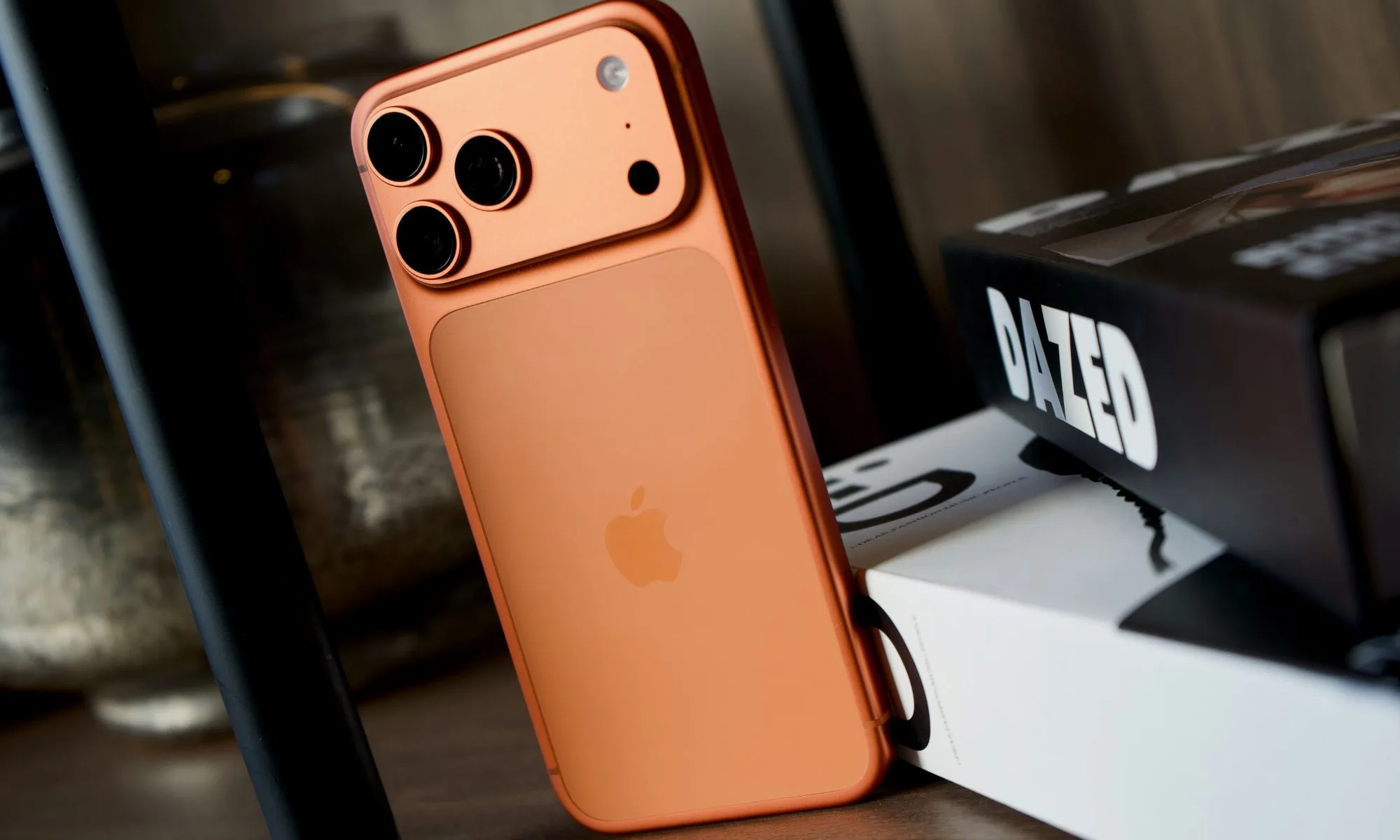
A new magnetic wireless power bank from Xiaomi is gaining attention – not because it’s an Android accessory, but because it feels like something Apple should have made. Its compact design, strong magnetic grip, and clean aesthetic make it look and behave like a premium iPhone-compatible accessory, offering a sleeker, more polished experience than many MagSafe alternatives.

And yes – it works flawlessly with the Apple iPhone, despite not being an Apple product.

A premium magnetic power bank that feels like it belongs to Apple’s ecosystem

Xiaomi’s new magnetic wireless power bank instantly stands out because of its ultra-thin profile, polished finish, and minimalist design. It clips onto the back of an iPhone with a firm, MagSafe-compatible lock, delivering wireless charging without wobbling or shifting in your hand.

While Apple’s official MagSafe Battery Pack was discontinued and third-party options vary in quality, Xiaomi’s take feels refined – almost intentional – with edges and materials that mimic Apple’s industrial design language more than typical Android-centric accessories.

Users who prefer pocketable designs will appreciate how easily it slips into a bag or pocket without adding bulk. The lightweight build makes it ideal for travel, commuting, or extended outdoor use, especially for iPhone models with aging batteries.

Advertisement

Beyond looks, the power bank is surprisingly capable

Xiaomi equips the unit with a 5000mAh battery, offering enough power to recharge most iPhones. The wireless charging surface delivers stable output, and the magnets ensure the phone stays aligned during use – a key issue for many cheaper MagSafe clones.

There’s also a wired output option for faster, cable-based charging when needed, giving it versatility for users who switch between devices. Xiaomi also includes safety layers for temperature control, foreign object detection, and overvoltage protection, making it feel dependable for all-day use.

What sets it apart is the attention to ergonomic usability. You can comfortably hold the phone while it charges, use it while gaming or streaming, or leave it in a pocket – and it still stays aligned.

Why this accessory matters in the broader market

With the iPhone’s shift to USB-C and the growing popularity of magnetic charging accessories, users are now looking for power banks that are not just functional but designed to blend seamlessly with their device. Apple’s exit from the MagSafe battery category left a gap that accessory makers are trying to fill. Xiaomi’s new wireless power bank stands out by offering a level of design polish and efficiency rare in the Android-first accessory landscape.

Advertisement

This also reflects a wider industry trend: top OEMs are expanding beyond traditional ecosystems. Accessories once thought to be Android-exclusive or Apple-exclusive are now intentionally designed with cross-device compatibility in mind.

For consumers, it means more options and better value without sacrificing design or performance.

Why you may care, even if you’re deep in Apple’s ecosystem

If you own an iPhone and need a reliable wireless power bank that looks premium, charges consistently, and doesn’t cost a fortune, this accessory is one of the best new options available globally. It’s especially appealing for users of the iPhone 13, 14, and 15 series, where battery life naturally declines over time.

It also appeals to travelers, students, creators, or anyone who needs clean, cable-free charging on the move. Given its slim profile, it could fit seamlessly into an existing Apple setup without feeling out of place.

Should you buy it?

Xiaomi’s new wireless power bank is already rolling out globally through its online store and regional partners. As the magnetic charging category continues to grow – especially with Apple expected to expand Qi2 support across future devices – more brands will likely release premium, iPhone-friendly accessories with similar design polish.

Advertisement

For now, this sleek wireless power bank stands as one of the nicest options you can buy for your iPhone, even if it didn’t come from Cupertino.

Source link

Advertisement
Continue Reading

Tech

Xcode with vibecoding AI agents to help build apps is now available

Published

on

Apple has released Xcode 26.3 with support for autonomous coding agents, that can directly analyze projects, modify files, and assist developers inside the official development environment.

Xcode app icon showing a metallic hammer diagonally over a blue rounded square with white technical blueprints forming a stylized letter A on a dark background
Xcode now runs with AI agents

Xcode, Apple’s central tool for building apps across various devices, is expanding its role with version 26.3. AI agents can actively participate in development, offering suggestions and documentation help.
The release includes Swift 6.2.3 and updated SDKs, but the defining change is agentic coding. Xcode is now a platform where AI helps developers plan, write, and maintain software.
Continue Reading on AppleInsider | Discuss on our Forums

Source link

Continue Reading

Tech

Blender shelves iPad app, says it's focusing on Android tablets first

Published

on

Blender’s long-anticipated native iPad app has been placed on hold as developers shift tablet priorities elsewhere.

Tablet displaying a room design app with a 3D room model featuring wooden floors, window, and teal wall. Office supplies and toys are scattered on the desk.
A previous mockup of the potential Blender for iPad app

In June 2025, Blender announced that it would be creating a native iPad version of its popular 3D creation software. According to the team, they would be releasing the app for the iPad Pro — though they provide a timeline for release.
Unfortunately, it doesn’t seem like we’ll be getting one anytime soon, either.
Continue Reading on AppleInsider | Discuss on our Forums

Source link

Continue Reading

Tech

16-inch M4 Pro MacBook Pro vs. Acer Predator Helios Neo 14: Apple's never been so far behind

Published

on

Apple’s 16-inch MacBook Pro has been my notebook of choice in recent years, but it isn’t perfect, and that led me to check out the competition — namely, Acer’s $2,000 Predator Helios Neo 14 AI laptop.

Two open laptops on a kitchen counter, both displaying bright abstract neon wallpapers, with a softly lit Christmas tree and home interior blurred in the background.
Two very different notebooks at very similar price points

My current notebook is an M4 Pro 16-inch MacBook Pro, and that replaced my M1 Pro 16-inch MacBook Pro after it took an unfortunate tumble from a table. As you might expect, I’m very comfortable with macOS, and switching to Windows full-time isn’t in the cards.
But that doesn’t mean that there isn’t room for a Windows PC in my life. Because as much as Apple might try to tell you otherwise, Mac gaming just doesn’t quite cut it.
Continue Reading on AppleInsider | Discuss on our Forums

Source link

Continue Reading

Tech

Vend-o-Vision: Trading Quarters For Watching TV In Public

Published

on

The timer mechanism of the Vend-o-Vision. (Credit: SpaceTime Junction, YouTube)

There was a time before portable TVs and personal media players when the idea of putting coin-operated TVs everywhere, from restaurants to airports and laundromats, would have seemed like a solid business model. Thus was born the Vend-o-Vision by Mini-TV USA, which presented itself as a cash earner for businesses and a way to make their customers even happier. One of these new-in-box units recently made its way over to [Mark] of the SpaceTime Junction YouTube channel.

This unit is very simple, with what appears to be an off-the-shelf Panasonic black-and-white TV with UHF and VHF reception capability, inside a metal box that contains the timer mechanism, which is linked to the coin mechanism. Depending on a physical slider with three positions, you get anywhere from 10 to 20 minutes per quarter, with the customer having to tune into the station themselves using the TV’s controls. A counter mechanism is provided as an option.

Time to enjoy your favorite TV shows. (Credit: SpaceTime Junction, YouTube)

As would be expected from a new-in-box unit, after chiseling off the 30-odd-year-old Styrofoam packaging, it fires right up and works fine. Of course, it’s a small black-and-white TV, so it’s not incredibly useful, and clearly wasn’t even back in 1989 when the Vend-o-Vision first appeared.

After some finagling with adapters, [Mark] gets everyone’s favorite movie playing on the tiny screen, giving us the first glimpse of what it would have been like to gaze at this miracle of technology back around the early 1990s in a noisy laundromat or restaurant. One can hardly imagine why it didn’t catch on.

We can see a patent for this appear in a 1990 scan of the USPTO’s gazette, where it’s listed as being first in commercial operation on the 29th of November 1989. The system was short-lived, however, with in 1995 the FTC settling with the company for deceptive practices, as the company had overinflated the projected earnings per TV when it started flaunting it at tradeshows in 1990. A few years prior, Mini TV USA appears to have already ceased operations, making these remaining Vend-o-Vision quite rare indeed. These types of coin-operated TVs were usually in public places or hotels. But we’ve seen coin-operated TVs that briefly appeared in homes, too.

Advertisement

Source link

Continue Reading

Tech

Running A Desktop PC Off AA Alkaline Cells

Published

on

Everyone is probably familiar with the concept of battery-powered devices, but generally, this involves a laptop with a beefy battery pack and hardware optimized for low power draw. You could also do the complete opposite and try to run a desktop PC off alkaline AA cells, as [ScuffedBits] recently did out of morbid curiosity. Exactly how many alkaline cells does it take to run a desktop PC for any reasonable amount of time?

One nice thing about using batteries with a desktop PC is that you can ditch the entire AC-DC power conversion step and instead use a DC-DC adapter like the well-known PicoATX and its many clones. These just take in 12 VDC and tend to have a fairly wide input voltage range, which is useful when your batteries begin to run out of juice. In this case, just above 10 VDC seemed to be the cut-off point for the used DC-DC adapter.

In the end, [ScuffedBits] used what looks like 56 alkaline AA cells connected in both parallel and series, along with two series-connected 6,800 µF, 40V electrolytic capacitors to buffer the spikes in power demand, after early experiments showed that the cells just cannot provide power that quickly. Although admittedly, the initial thin wiring didn’t help either. With alkaline rather than carbon AA cells, improved wiring, and some buffer capacitors, it turns out that you can indeed run a desktop PC off AA cells, if only just about long enough for a small game of Minesweeper.

Advertisement

Amusingly, the small LCD monitor used in the experiment drew so little power that it happily ran on eight NiMH cells for much longer, highlighting just how important power conservation is for battery-powered devices. We wonder if you could marry this project to a battery project we saw and end up with something practically portable?

Advertisement

Source link

Continue Reading

Trending

Copyright © 2025