Today’s WWDC 2026 conference has given Apple fans something they’ve craved for years: a powerful, agentic version of Siri, with its own dedicated app. The new Siri AI is designed to work across the entire suite of Apple tools, from powerful Macs to the smallest watch. But the AI health features we did see were lacking compared to Google’s.
One of last year’s headline Apple Watch features, Workout Buddy, has been improved: users can now get guidance and encouragement in their ears during exercise while just wearing a watch, and they don’t need to bring their phone, as they did in watchOS 26. Plus, new insights, such as heart rate zones, will be built in.
Other expanded health and fitness features include the inclusion of menopausal and perimenopausal conditions in cycle tracking (a significant and helpful addition for many women) and improved accuracy of treadmill metrics. Siri AI’s health capabilities were also shown off on the watch, using its ability to look for healthy recipes and describe stretching routines based on its broad intelligence.
Advertisement
Latest Videos From
However, despite rumors saying an AI model specifically dedicated to health and fitness was in the works, nothing materialized this year. Which is a shame, as I’ve already been using the Google Fitbit Air and its accompanying AI health coach, and I’ve seen how powerful such a feature can be.
Watch: Marques Brownlee gives his verdict on Siri AI
Despite existing Fitbit fans bemoaning their loss of community features, I ended up liking Google’s Health Coach. Unlike the Apple Watch, the Google Fitbit Air is screenless, with all chatbot interaction taking place on the phone in the Google Health app.
To be honest, this works well: if you’re going to read reams of text about stretching or your metrics, you want to do it on a proper 6-inch screen oriented specifically for readability, not a 1.9-inch squircle as was demonstrated in Apple’s keynote speech.
Advertisement
What’s more, the Google Health Coach works with its own library of Fitbit workout and meditation content, allowing you to custom-build workouts just by asking the chatbot, and getting demonstrable, video instruction rather than just a block of text. It also takes your illness or injuries into account, as I found out when I got sick, and the Coach changed my workout plan to recommend rest days and shorter runs.
Sign up for breaking news, reviews, opinion, top tech deals, and more.
Apple already has a vast library of fitness content through its premium Apple Fitness+ service, and I expected a health coaching feature to be rolled into that subscription as part of the Siri AI revamp. Maybe that’s a feature we’re more likely to see at WWDC 2027. But its absence wasn’t quite as much of an own goal as Apple’s decision to only roll out watchOS 27 to a handful of modern watches.
Creative Assembly is developing its own custom technology for Alien: Isolation 2 ‘to really fine tune the experience and create exactly the best Alien experience’
Alien: Isolation 2 will be built using Unreal Engine 5
Creative Assembly is developing its own custom lighting and audio technology
Creative director Al Hope says modern game development allows for “real-time feedback”
Creative Assembly has confirmed that Alien: Isolation 2 will be built with Unreal Engine 5, but the team is also developing custom technology for lighting and audio.
That’s according to Creative Director Al Hope, who, alongside Animation Director Simon Ridge, discussed the technological advancement of the upcoming sequel in an interview with TechRadar Gaming at Summer Game Fest (SGF) 2026.
Ridge remarked on how “incredibly proud” he is of how the first Alien: Isolation looked, but “Technology’s advanced, and so it allows more opportunities.”
Latest Videos From
“A big part of what we did last time was making sure we were providing an experience to really back up that whole immersion, I guess, on the stress, so the player never really comes out of those moments, and from our discipline, animation, that was around making sure that you were never really seeing points where you could tell it was a game,” Ridge said.
“That was a huge goal, you were watching something that was almost like a sentient creature, it was Al [Hope] mentioned many a time, a systemic system.
Advertisement
“So I think now that time’s moved on a little bit, it allows us to probably add more variety than what we could before, just due to technical advancement, and just up the quality of the assets themselves.”
Hope added that one of the biggest advantages of contemporary game development is the “real-time feedback,” with Ridge saying that working on something for a sequel and being able to see it in-engine, in context, straight away, allows the team to get “the quickest kind of representation of how it’s going to feel.”
Sign up for breaking news, reviews, opinion, top tech deals, and more.
Advertisement
The creative director continued, explaining that it “allows us to iterate much faster,” unlike during the Alien: Isolation development period. This time, the team is using Unreal Engine 5, but it will also be creating its own custom technology, which Hope calls an “evolution” of what fans are familiar with.
“I think one of the interesting things for us is obviously lighting and audio parts of the experience, and so we’re using Unreal [Engine], but for lighting and audio we’re developing our own custom technology to really enable us to really fine-tune the experience and create exactly the best Alien experience we possibly can,” Hope said.
“It’s really interesting with our audio team; it’s the same, more or less the same audio team that worked in the original, so it’s really an extension of an evolution of both the tech and the kind of creative side that worked on the original.
“I’ll blow their trumpet for them. I think they won more or less every audio award going that year for Alien: Isolation. I think that’s absolutely fantastic, people recognize that it felt like it was such a big part of the experience, and it’s just really exciting to have them working together again on this.”
Consumers are often misled by these color schemes.
Alexisaj/Shutterstock
We may receive a commission on purchases made from links.
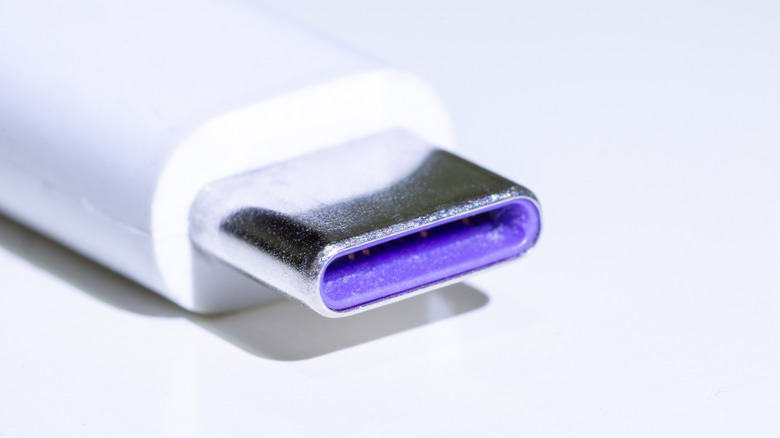
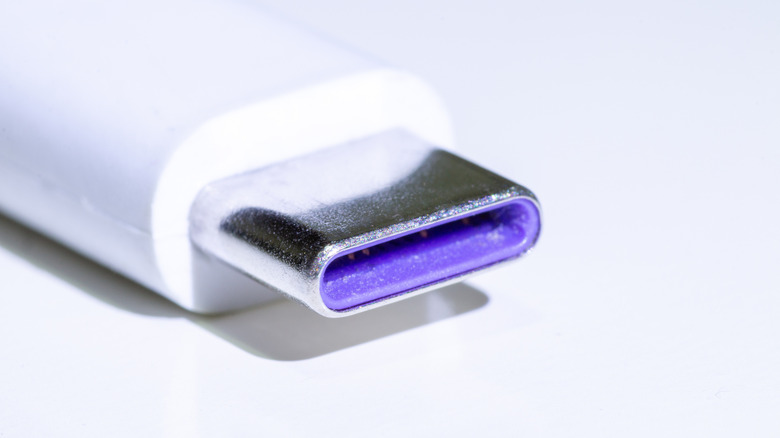
Have you ever looked at a USB connector or port and wondered, “why is this purple instead of blue or black?” It’s not because the manufacturer wanted to help you organize your cables by hue. Rather it’s about speed and charging capacity. Purple USB-C connectors are a particularly interesting case, because the color can mean more than one thing.
Before I explain, here’s a quick anecdote. I once tested an Honor Magic4 Pro smartphone that came with a 100 watt charger and USB cable with orange connectors. That color signified fast charging speeds, and it indeed boosted the Magic4 Pro’s big battery rapidly. “That’s fabulous,” I thought. “Let me charge my MacBook Air with it.” To my surprise, the charger and cable didn’t work at all on the MacBook or other phones, because it turns out that Honor’s charger and cable have limited usability outside its own ecosystem.
Advertisement
The moral of this story is that the USB port colors provide a guideline for their functionality, but that doesn’t mean cables, chargers and ports using that color will work across all devices or follow a set standard. That’s especially pertinent to purple-coded USB cables, as you’ll see.
Purple USB (unofficially) means fast charging and data speeds
The industry body that regulates USB standards, the USB Implementers Forum (USB-IF), uses three standard colors for USB: white (USB 1.0), black (USB 2.0) and blue (USB 3.0, 3.1 or SuperSpeed). “Blue is the recommended color for the USB 3.1 Standard-A receptacle… to help users distinguish it from the USB 2.0 Standard-A connector,” the company says in its legacy USB document. Any other color including green, purple or orange is not part of USB-IF standards and has no “official” meaning for ports or connectors.
Advertisement
With that said, purple does have a common, though far from universal, connotation. It’s used by Huawei’s SuperCharge high-speed system for device charging, both on Type-A and Type-C connectors and ports. Those support charging speeds at 40 watts or more, along with standard USB Power Deliver (PD) and Qualcomm’s Quick Charge protocol.
Huawei only uses that purple color on its 25W Mini Charger nowadays, promising compatibility with its own phones as well as other Android and IOS devices. Its other SuperPower Wall Chargers (100W and 66W) have orange USB-A and USB-C connectors, which also denote high-current power delivery and fast data speeds. Huawei’s 6A phone charging cables all use orange connectors, so there’s no longer a purple-coded one to be found.
Huawei smartphones can’t legally be sold in the US due to trade sanctions with China, which explains why Americans rarely see the purple connectors. The exception is that some non-Huawei USB 3.1 Gen 2 cable makers use either teal blue or purple on the connectors to denote the extra speed over USB 3.0 (10Gbps compared to 5Gbps) along with higher charging capacities.
There are a few other colors used by USB manufacturers as well, in case you weren’t confused enough by the black, white, blue, teal, orange and purple ones I’ve already mentioned. Red (desktop) or yellow (laptop, always on) ports indicate either USB 3.2 or USB 3.1 Gen 2, but are also used for charging-only ports. The other is green, which usually denotes Type-A or old-school Type-B Qualcomm Quick Charge receptacles and plugs. Razer also famously uses green for the USB ports on its laptops, to match its branding aesthetic.
Advertisement
How to be sure about a cable’s data and charging speeds
Unfortunately, consumers are often misled by these color schemes, believing they’re getting fast power delivery speeds and data rates. This has consequences for safety, energy consumption and e-waste. Choosing the wrong charger or cable could send a battery to an early retirement, for example, or even cause a fire or explosion.
With all that, buying a USB cable based on color clearly isn’t wise. Luckily, there’s a better way. Reputable manufacturers like Anker and Apple have their cables and chargers USB-IF certified for specific charging and data speeds. The latest PD 3.1 specification allows for safe power delivery well above previous specifications, with certifications for up to 140W, 180W and 240W power levels.
Advertisement
For data speeds, you’ll want to check the USB data standard, with USB 3.1 (sometimes referred to as USB 3.2 Gen 1) being the slowest at 5Gbps and USB 4 being the fastest at 40Gbps or even 80Gbs with Thunderbolt 5 compatibility. Some devices like TVs, desktop PCs, and even the MacBook Neo, have one or more ports that utilize the older USB 2.0 spec, which maxes out at 480Mbps. That’s a good fit for peripherals like mice and keyboards, but not much else. If you need both high speeds and fast charging, you’ll want to ensure both USB-IF power delivery certification and the latest USB standards. Some cables offer both fast speeds and high power delivery — and you can even get them in purple, but only on the outside.
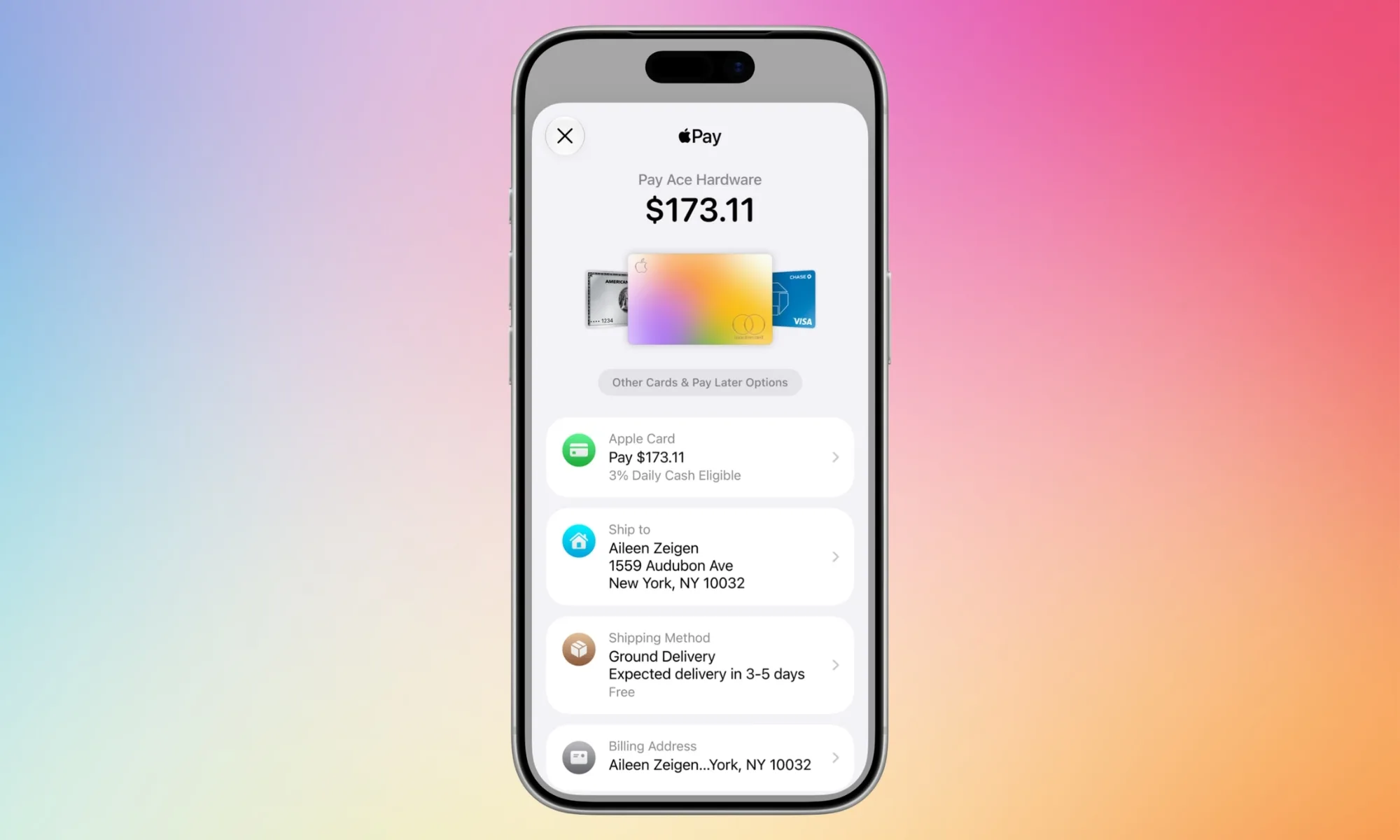
Every time someone checks out with Apple Pay, trying to tap the card shown on the payment sheet to switch to a different one, they end up getting confused. In iOS 26, that tap does not switch your card.
It opens an address-editing screen instead. The real card switcher is a different, easy-to-miss button near the bottom of the screen. If you’ve ever fumbled through Apple Pay at checkout, wondering what’s going on, Apple just fixed it with iOS 27.
Apple
So what exactly was wrong with Apple Pay’s card switcher?
The instinct to tap the card itself makes sense, but it didn’t on Apple Pay. The confusion also ended up in people paying with the wrong card.
Someone trying to switch from a debit card to a rewards card would tap, land on the address screen, go back, do the entire thing again, and end up paying with whatever was already selected.
With Apple Wallet holding debit cards, credit cards, and pay later accounts, that flaw only got more noticeable over time.
iOS 27 lets you choose between the cards on the main Apple Pay sheet, by swiping on them, the gesture people were already trying anyway. Tapping a card now opens a grid view showing every eligible card.
The new design also shows details like rewards, account balances, and pay later options, so that buyers can compare before paying. Even though merchants and developers still control the details that show up, iOS 27’s Apple Pay checkout page is much better and clear than that on iOS 26.
For those catching up, this card switcher tweak is a small piece of a much bigger Apple Wallet push from WWDC 2026, which includes bill splitting through Apple Cash using Visual Intelligence, the ability to turn physical loyalty and membership cards into digital Wallet passes, and an expanded hotel key experience with trip details and activity updates.
You may also need to upgrade your wiring and electrical panel and get permission from your local authority. In my case, here in Scotland, that meant asking my distribution network operator. The US equivalent is an electric distribution utility or local distribution company. They may have to upgrade your connection. I needed a new cut-out with a bigger fuse to handle my EV charging, battery, and air-source heat pump, but the upgrade was free. Your mileage may vary, and it can take a while to hear back. Your installer will likely handle this process for you.
You also need to choose an installer. I recommend shopping around, reading reviews, and getting multiple quotes. The Greener Energy Group installed my battery, and they were excellent. There was a site visit to discuss the work, and the installation was completed in a day. The installers need a suitable location for the battery (mine was installed in the garage, but they are weatherproof, so they can also be installed outside), and they must run cable to your main fuse board.
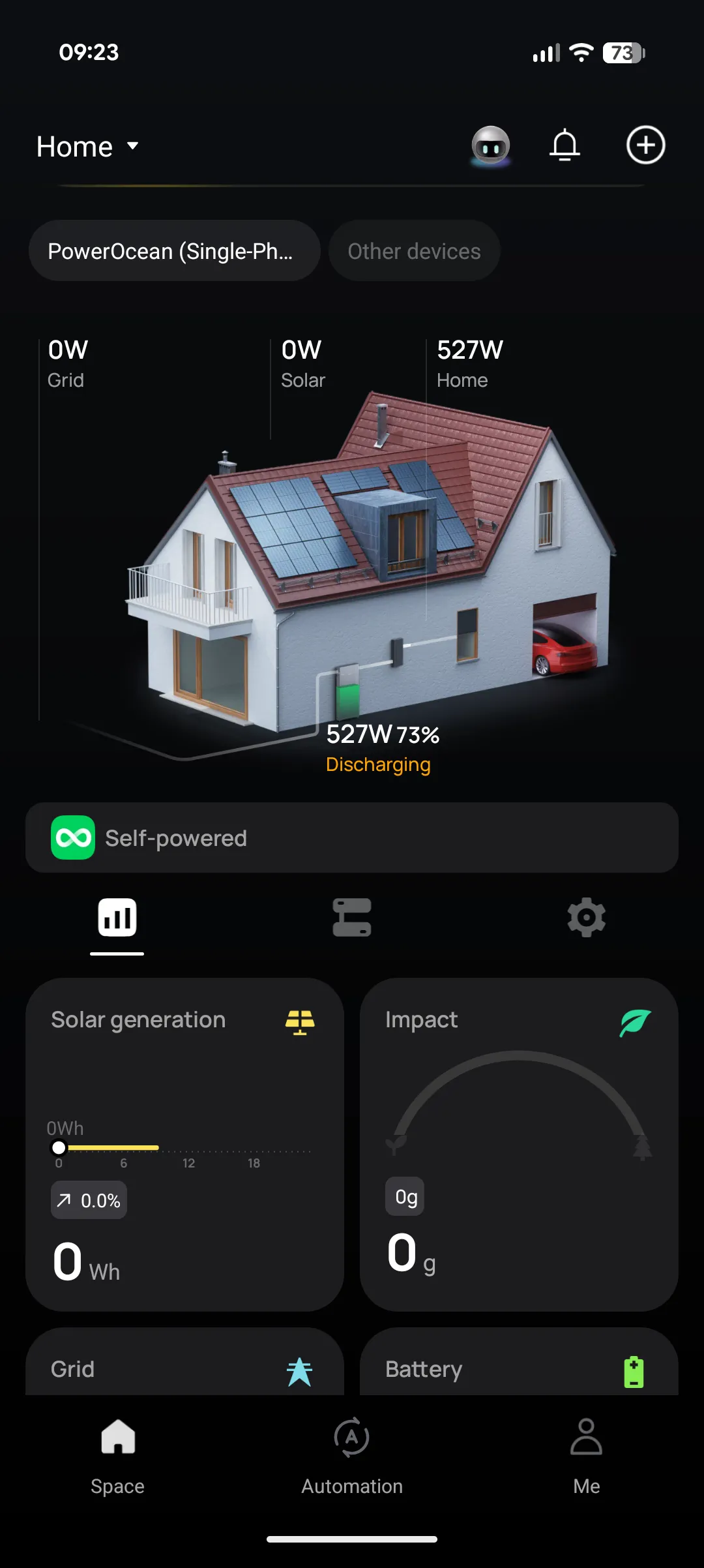
The EcoFlow PowerOcean system stood out because of its 15-year warranty, modularity (expandable to 45 kWh), stylish design, and accessible smartphone app. I went with a 6-kW hybrid inverter (thinking we may get solar panels down the line) and two 5-kWh batteries. With hindsight, I should have gone for three or four, but I’ll get into that later.
Advertisement
The EcoFlow PowerOcean sports a sleek gray metallic design, and it’s only 188 millimeters deep (around 7.5 inches). It’s pretty unobtrusive, but it’s better if you can tuck it away in a garage or basement because that will also help with operating temperatures, though the PowerOcean also has built-in heating to avoid reduced performance when it’s very cold.
Powering Up
EcoFlow via Simon Hill
EcoFlow via Simon Hill
Configuring my EcoFlow PowerOcean was a breeze. My current EV tariff (Intelligent Octopus Go) offers cheap electricity between 11:30 pm and 5:30 am, so I have the battery fill up during those hours, and it starts to discharge every morning at 5:31 am. We are a family of four, and I work from home.
We spend hours testing every product or service we review, so you can be sure you’re buying the best. Find out more about how we test.
Bluesound Pulse Cinema Mini: Two minute review
I came to this Bluesound Pulse Cinema Mini with admitted baggage. I’m not gonna sugarcoat it; I did not like Bluesound’s original Pulse Soundbar. It had an awkward design, it sounded cold and clinical, and it was very expensive when compared to alternative products.
The Bluesound Pulse Cinema Mini is company’s latest model, and is still on the pricey side, but where its predecessor disappointed, the Cinema Mini impresses. There’s powerful, rich, and detailed sound, an elegant design that will complement most rooms, and a wealth of features you won’t find from brands like Sonos and Bose.
Advertisement
Like any Dolby Atmos soundbar that tries to do immersive, 3D sound with only two channels, the Pulse Cinema Mini can’t quite deliver on the promise of overhead height channel effects, but it makes up for it with a surprisingly wide soundstage that brings Atmos and 5.1 movies to life, and does wonders for stereo.
Latest Videos From
Though physically wider than most “mini” soundbars, that’s clearly enabling its biggest strength: it gives the speaker room to house a set of woofers that deliver much bolder low-end bass than the compact category is known for.
This puts the Pulse Cinema Mini in a tricky spot for buyers. It’s priced higher than many full-sized soundbars, yet it can’t quite match the performance of those larger speakers. It’s highly versatile, yet it may be too big for truly small setups.
These contradictions mean the Bluesound Pulse Cinema Mini isn’t a no-brainer-just-buy-it product, but there’s also no doubt in my mind that if you put a high value on the things it well, you’ll be thrilled with it in your home.
Advertisement
Bluesound Pulse Cinema Mini review: Price and release date
Release date: August 27, 2025
Price: $999 / £799
Bluesound sells the Pulse Cinema Mini in many international markets, including the US, UK, and Canada. However, it hasn’t yet released the soundbar in Australia.
Sign up for breaking news, reviews, opinion, top tech deals, and more.
At $999 / £799, the Pulse Cinema Mini is considerably more expensive than its closest direct competitors, like the Bose Smart Soundbar at $499 / £499.95, and Sonos Beam Gen 2 at $499 / £499.
Advertisement
However, it boasts better performance and has several features that set it apart. The Pulse Cinema Mini includes a wall-mount bracket; it’s larger and more powerful than the Bose and Sonos models, and it includes an analog input, wired subwoofer output, USB storage access, and two-way Bluetooth with aptX Adaptive, all of which are absent on the Smart Soundbar and Beam Gen 2.
(Image credit: Future)
Bluesound Pulse Cinema Mini review: Specs
Swipe to scroll horizontally
Dimensions (W x H x D)
(W x H x D): 33.34 x 2.91 x 5.51 inches
Advertisement
Speaker channels
2.0 (2.1 with planned update)
Connections:
1x HDMI out (with eARC), optical in, RCA stereo in, USB-A, Gigabit Ethernet, RCA subwoofer-out, Wi-Fi (802.11ac), Bluetooth 5.2 (two-way, with aptX Adaptive support)
Analog, USB, subwoofer, and two-way Bluetooth connections
Expandable and multiroom compatible
Hi-res Audio and Dolby Atmos support
As is the case for a lot of small-footprint soundbars, the Bluesound Pulse Cinema Mini doesn’t has only one HDMI port, so you won’t be able to connect devices like streaming video players, Blu-ray players, or game consoles and pass through their video to your TV.
However, it also offers connections that are rarely found in this class of speaker, such as dedicated analog inputs (as well as optical digital), a wired subwoofer output, and a USB port that provides access to music stored on a hard drive.
Advertisement
Even its Bluetooth capability exceeds standard soundbar fare, with its support for Qualcomm’s high-quality aptX Adaptive codec and the ability to stream in two directions: from a phone or computer to the soundbar, or from the soundbar to a set of wireless headphones or a Bluetooth speaker.
Bluesound gets compared to Sonos a lot. Bluesound’s BluOS apps for phones and computers perform many of the same multi-room and music management functions as Sonos’ software.
Like Sonos, Bluesound makes a range of wireless audio devices from speakers to subwoofers to streamers that can all work seamlessly together in one household. The Cinema Mini can be bonded with various combinations of these speakers for a true surround sound experience, or it can simply play the same music at the same time for a synchronized house party.
Thanks to its compatibility with multiple hi-res audio formats and sample rates, many audiophiles feel that Bluesound is superior to Sonos.
Advertisement
Still, there are a few things Bluesound can’t do. You can stream Apple Music via AirPlay or Bluetooth, but neither of these gives you lossless quality, and the BluOS app doesn’t have native support for Apple Music, YouTube Music, or Spotify. Unlike Sonos, there’s no easy in-app room correction here.
It also doesn’t support support DTS, it doesn’t support Google Cast, it’s not compatible with Google Home — but Sonos also lacks these.
Currently, despite its Dolby Atmos certification, native support of Amazon Music, and Tidal Connect compatibility, there’s no way to stream Dolby Atmos Music to the Pulse Cinema Mini without the help of an HDMI-connected third-party device, such as an Apple TV 4K. Since the Mini only has one HDMI eARC port, that device will need to use your TV as a go-between.
Advertisement
Bluesound Pulse Cinema Mini review: Sound quality
(Image credit: Future)
Impressive low end and virtual surround
No dialogue mode or Low Frequency Effects (LFE) channel
Great for music, but no EQ, tone control, or Dolby Atmos Music
Before we get into sound quality, a quick note on the Bluesound Pulse Cinema Mini’s stated specifications. Bluesound says it’s a 2.1-channel system, but this isn’t entirely accurate.
According to the company, the soundbar will be capable of processing low-frequency effects (or LFE — the subwoofer part of a soundtrack) without any help from a standalone subwoofer; it’s just that, as of the time of reviewing, it doesn’t actually do so.
For now, if you want true, 2.1 sound from the Cinema Mini, you’ll need to connect a powered sub via the soundbar’s sub output, or buy the Bluesound Plus Sub+ wireless subwoofer.
Having said that, even with only two discrete channels, this is a very capable soundbar for both multichannel and stereo sound. Thanks to a pair of dedicated woofers and passive bass radiators, it pumps out surprisingly deep and resonant bass, which leads me to believe that it will have no problem with LFE channel content when and if Bluesound adds it.
For music, the Cinema Mini’s bass is powerful enough to get by without a subwoofer in smaller rooms.
Advertisement
My experience with two-channel soundbars, even those that can process Dolby Atmos, has been less than stellar. So I have to give Bluesound a lot of credit for the Cinema Mini’s acoustic design and digital signal processing (DSP). With an angled tweeter and midrange driver located at each end of the bar, it projects sound both outward and to the sides, creating a soundstage with remarkable width and detail.
It reminds me a lot of Sennheiser’s Ambeo Soundbar Mini, which also uses just six powered drivers to achieve its virtualized surround sound. Unlike the Ambeo Soundbar Mini, which suffers from a lack of low-end, the Pulse Cinema Mini has a full-range sound that won’t disappoint.
Still, when it comes to Dolby Atmos, you’ll need to temper your expectations. The Cinema Mini’s DSP has to do a lot of heavy lifting to get its two discrete channels to virtualize surround and height content. It does a decent job with the surrounds, but height effects aren’t especially distinct.
During the Aston Martin chase scene from No Time To Die, there’s a moment when the camera passes beneath a set of church bells. Well-executed height systems let you hear the bells move overhead, but the Cinema Mini’s processing just makes the sound bigger, not taller or dynamic.
Advertisement
I find this to be true of nearly all Atmos systems that lack up-firing drivers. The Sonos Beam Gen 2, for instance, doesn’t perform any better in the height department. But the Beam Gen 2 is half the price of the Pulse Cinema Mini. Sonos’ Arc Ultra, by contrast, is basically the same price as the Cinema Mini, and will win any Dolby Atmos competition, hands down.
The same is true when it comes to the Cinema Mini’s lack of an LFE channel. In that same No Time To Die scene, James Bond’s ride is riddled with machine gun fire. When you’re inside the car with Bond, the Sonos Arc Ultra renders each bullet impact viscerally — its built-in subwoofer lets you feel the concussion. It’s still an enjoyable scene via the Cinema Mini (it captures the bullet ricochets nicely), but you’ll definitely need to add a sub if you want deeper cinematic immersion.
For its wide soundstage, the Cinema Mini pays a small price in terms of dialogue clarity. I don’t want to overstate this — I had no problem making out speech — but with no central tweeter or midrange, voices don’t have the same laser-like focus that you’ll get from the Ambeo Soundbar Mini, or even the Bose Smart Soundbar.
As good as TV sound is on the Pulse Cinema Mini, the real reason for dropping a thousand dollars on this speaker is its music performance. I seldom heap praise on soundbars for music listening, but the Cinema Mini is truly superb for its class.
Advertisement
(Image credit: Future)
Stereo rendering is where Bluesound’s decision to use a two-channel architecture pays big dividends. Whether you listen with or without the optional Surround Upmixer and Virtualizer modes turned on (inside the BluOS app), the Cinema Mini produces a beautifully balanced, smooth, and detailed sound.
Sitting front and center lets you hear strong stereo imaging and a perfectly placed phantom center channel. But do yourself a favor and turn on the Surround Upmixer and Virtualizer. The purists among you may scoff, but I love the extended width these DSP filters create. The Cinema Mini grows to twice its length — maybe more — and panned stereo sounds seem to float ethereally in the upper front corners of my room.
The bass response, which I’ve come to think of as the Mini’s secret weapon, is well-managed from low to high volumes, musically anchoring tracks with its resonance and weight. Distortion is almost non-existent, and the Cinema Mini effortlessly plays at very loud levels.
If there’s one hitch in an otherwise excellent sound system, it’s that Bluesound is a bit too confident you’ll like its tuning. There are no bass/treble tone controls and no traditional equalizer, or EQ presets — with the exception of three optional listening “modes”: Movie, Music, and Late Night.
Advertisement
I’m familiar with this approach — the Cinema Mini isn’t the first Bluesound speaker I’ve reviewed — but it continues to surprise me, especially given that the company is highly regarded by audiophiles, who tend to have strong feelings about how things should sound.
Would I change much if I actually had access to these settings? Apart from de-emphasizing the highs just a tad, no, I wouldn’t make any other modifications. I really love the way the Cinema Mini sounds.
Sound quality score: 4.5 / 5
Bluesound Pulse Cinema Mini review: Design
(Image credit: Future)
Elegant, fabric-wrapped, rounded shape
Larger than many small-room soundbars
Wall-mountable with auto-orientation detection
All-plastic construction is the norm for compact soundbars. This doesn’t necessarily mean they look bad — I’d argue the Sonos Beam Gen 2 is quite handsome — but the Bluesound Pulse Cinema Mini’s fabric-wrapped and gently curved shape looks a little more upscale, and a little less speaker-ish.
At 33.3 inches wide, the Cinema Mini is bigger than most compact soundbars. By contrast, the Beam Gen 2 is 25.6 inches, and the Bose Smart Soundbar is 27.3. The Cinema Mini is also slightly taller and deeper. Still, despite this larger footprint, it won’t look out of place under any TV from 32- to 55-inches, and as I noted in the Sound Quality section, this extra size pays dividends.
Under that soft grille lies the Pulse Cinema Mini’s unusual driver arrangement: the midrange drivers and tweeters are placed at the ends, each slightly angled up and out — no front-firing units and no centrally mounted high-frequency driver for dialogue. Meanwhile, the central body is occupied by the two woofers and their matching passive radiators.
Advertisement
(Image credit: Future)
This design (plus built-in, automatically triggered EQ changes) lets the Pulse Cinema Mini sound more or less the same whether you place it on a tabletop or mount it to a wall. Unlike the Beam Gen 2 and Smart Soundbar, whose optional wall mount brackets amount to small shelves, the Pulse Cinema Mini’s included hardware lets it cling to the wall without sticking out into the room.
Like Sonos’ speakers, Bluesound doesn’t ship its products with remote controls, but the Pulse Cinema Mini has a built-in IR receiver and can be operated with any IR remote you already own by teaching the soundbar (via the BluOS app) what to do when you press certain remote buttons. Sonos can do this, too, but only when using its soundbars for TV audio.
On the top surface, you’ll find a glass panel that houses the soundbar’s touch controls. Only the central play/pause icon remains lit — the presets and volume icons light up when you approach. There’s no independent volume level indicator, something I wish more companies would offer; however, your TV will likely display an on-screen indicator when the Pulse Cinema Mini is playing TV audio via HDMI.
Advertisement
Bluesound Pulse Cinema Mini review: Setup and usability
(Image credit: Future)
Easy set up with excellent app support
App has a learning curve
Like most soundbars, getting the Bluesound Pulse Cinema Mini set up at a basic level is super easy: Plug it into your TV using the included HDMI cable, and then plug it into the wall with one of the included power cables (Bluesound puts both North American and E.U. versions in the box). You’ll immediately get great TV sound.
However, TV sound is only half of the experience with the Pulse Cinema Mini. To enjoy its awesome music capabilities, you need the BluOS app for iOS or Android. The app gets the soundbar connected to your Wi-Fi network and enables Apple AirPlay, plus it downloads and installs any available software updates, and gives you all of the deeper controls needed to customize the Pulse Cinema Mini to your liking.
The BluOS app also enables you to access multiple streaming services from a single interface and control playback across all BluOS compatible devices (which includes models from NAD, Dali, PSB Speakers, and Monitor Audio).
The BluOS app is fast and responsive, though, as with any platform that has as many features and options as BluOS, there’s a learning curve. Some things are straightforward, such as browsing music from available services, while others take some getting used to.
For instance, some of the Pulse Cinema Mini’s settings are available from the Now Playing screen or the Players tab, but others are only accessible via the Settings icon on the Home tab, and only if the soundbar is first selected in the Players tab.
Advertisement
There are loads of handy features like alarms, sleep timers, and smart playlists; however, BluOS hasn’t mastered one trick that makes Sonos, Wiim, and Denon/HEOS so appealing for those with multiple sources of music: universal search and favorites management.
If you decide to expand the Pulse Cinema Mini with Bluesound’s Pulse Sub+ and/or Pulse M/Pulse Flex speakers, these can easily be added and configured in the BluOS app.
Bluesound doesn’t integrate either Amazon Alexa or Google Assistant into its products, but if you’ve already got an Alexa smart speaker, there’s a Bluesound skill that will let Alexa control your Pulse Cinema Mini (and any other Bluesound products you add later).
Setup & usability score: 3.5 / 5
Bluesound Pulse Cinema Mini review: Value
(Image credit: Future)
Expensive, but better sound than the competition
The best small soundbar for music
Value grows if you’re planning to expand
Look, there’s no way to justify the Bluesound Pulse Cinema Mini’s price based purely on its performance as a Dolby Atmos soundbar. It’s got great sound, but it can’t hold a candle to bigger, more powerful models such as the Sonos Arc Ultra, Bose Smart Ultra Soundbar, or Sony Bravia Theater Bar 8, which are the same price (give or take $100).
However, there are several other attributes that set the Cinema Mini apart, and these may tip the value balance if you want them. Want to hook up a turntable? Do you have an existing wired subwoofer you’d like to use? Is your room just too small for a full-size soundbar, but you don’t want to compromise on audio quality — especially when it comes to music listening? Do you like the idea of connecting a set of Bluetooth headphones? And are you looking for ultimate flexibility when it comes to expanding both your home theater as well as your whole-home audio?
Advertisement
If you answered yes to any or all of these questions, the Bluesound Pulse Cinema Mini starts to look like it’s worth its nearly $1,000 asking price.
Just keep in mind that Bluesound’s other components often carry similarly high prices. Unless you get a bundle discount, adding the Pulse Sub+ will cost $899, and a pair of Pulse M surrounds adds another $998. You’re now up to $2,896, and your resulting 4.1-channel Dolby Atmos home theater system still lacks a center and height channels. Meanwhile, the same investment can get you a Sonos Arc Ultra + Sub 4 + 2x Era 300, with 9.1.4-channel sound.
Should I buy the Bluesound Pulse Cinema Mini?
(Image credit: Future)
Swipe to scroll horizontally
Section
Advertisement
Notes
Score
Features
Some great rare features, including analog, subwoofer, and 2-way Bluetooth connections. But it’s also lacking some core soundbar features you get in the competition.
Advertisement
3.5 / 5
Sound quality
Impressive low end and virtual surround given its size. Best in class when it comes to music, as well.
4.5 / 5
Advertisement
Design
It has an elegant, fabric-wrapped, rounded shape. Larger than some smaller room soundbars. You can mount it with auto-orientation detection.
4 / 5
Setup & usability
Advertisement
Easy setup here and the app support is great, although using the app does come with a learning curve.
3.5 / 5
Value
There’s no getting around the fact it’s expensive but it is excellent for music and the value grows if you’re planning to expand.
Advertisement
3 / 5
Buy it if…
Don’t buy it if…
Advertisement
Samsung HW-Q990H review: Also consider
Swipe to scroll horizontally
Header Cell – Column 0
Bluesound Pulse Cinema Mini
Sonos Beam Gen 2
Bose Smart Soundbar
Sonos Arc Ultra
Advertisement
Price (May 2026)
$999 / £799
$499 / £499 / $699
$499 / £499 / AU$799
Advertisement
$999 / £799 / AU$1,799
Dimensions
33.34 x 2.91 x 5.51 inches (W x H x D)
25.6 x 2.3 x 3.9 inches (W x H x D)
Advertisement
27.34 x 2.21 x 4.01 inches (W x H x D)
2.95 x 46.38 x 4.35 inches (75 x 1178 x 110.6mm)
Speaker channels
2.0 (2.1 with planned update) with virtual Atmos
Advertisement
3.0 with virtual Atmos
3.0.2 with virtual Atmos
9.1.4 (including virtual Atmos)
Connections
Advertisement
1x HDMI out (with eARC), optical in, RCA stereo in, USB-A, Gigabit Ethernet, RCA subwoofer-out, Wi-Fi (802.11ac), Bluetooth 5.2 (two-way, with aptX Adaptive support)
Used Bluesound Pulse Cinema Mini as main audio system for one week
Tested in basement media room
Sources include Apple TV 4K, Nvidia Shield, and streamed music from various apps
I spent a full week with the Bluesound Pulse Cinema Mini as my main audio system for watching movies, shows, and music in my basement media room.
During that time, I played a variety of Dolby Atmos test clips from movies like No Time To Die, Ford v Ferrari, Mad Max: Fury Road, Dune, and Unbroken, paying special attention to details like dialogue clarity, surround sound, and height channel impact.
I streamed most content from an Apple TV 4K connected via an LGOLED TV, which fed the MK2 from its HDMI eARC output, but I also connected an Nvidia Shield TV to an eARC extractor so I could hear the Cinema Mini’s treatment of Dolby Atmos in Dolby TrueHD.
For music, I used a variety of apps, including Tidal, Qobuz, and Amazon Music, listening to a wide range of genres. Some were played from apps on the Apple TV 4K and Nvidia Shield, while others were streamed wirelessly using AirPlay, Bluetooth, Tidal Connect, and Qobuz Connect. I tested several of these within the BluOS app as well.
If you’ve grown tired of relentless price hikes from your favorite streaming platforms, it’s nice to know that free TV streaming services such as Tubi, Kanopy and Pluto TV can be counted on for all kinds of great shows and movies. New films and TV shows arrive on these platforms every month, making them fantastic options if you don’t want to pay for another service.
This June, Tubi debuts the fun new thriller Night Shift, about a museum guard who is forced to participate in a heist to save her husband’s life. The streamer also has a few other great titles to catch up on this month, including Challengers, Independence Day and Don’t Tell Mom the Babysitter’s Dead. You should get right on top of that, Rose. (IYKYK.)
A couple of other big blockbusters are also arriving this month: you can catch Dungeons & Dragons: Honor Among Thieves and Teenage Mutant Ninja Turtles: Mutant Mayhem on Pluto TV, as well as a batch of Mary Kate and Ashley Olsen flicks.
Advertisement
Kanopy has some great new releases this month too, from old favorites like Spaceballs to new indie films like Pools, Tow and Hot Milk. There are also lots of great A24 films dropping this month across Kanopy, Pluto, Plex and more, including The Whale, Uncut Gems, Aftersun and more.
Here’s a look at the best films arriving on free streaming platforms this June.
Free movies on Tubi in June
Tubi
Advertisement
Former Love & Hip-Hop Hollywood cast member Apryl Jones stars in the newest Tubi original thriller, Night Shift. In the movie, Jones plays a security guard at an art gallery who encounters a group of thieves who give her an ultimatum: help them with their heist, or else her husband will be killed. The film arrives on June 5.
Other movies arriving on June 1 (unless otherwise noted):
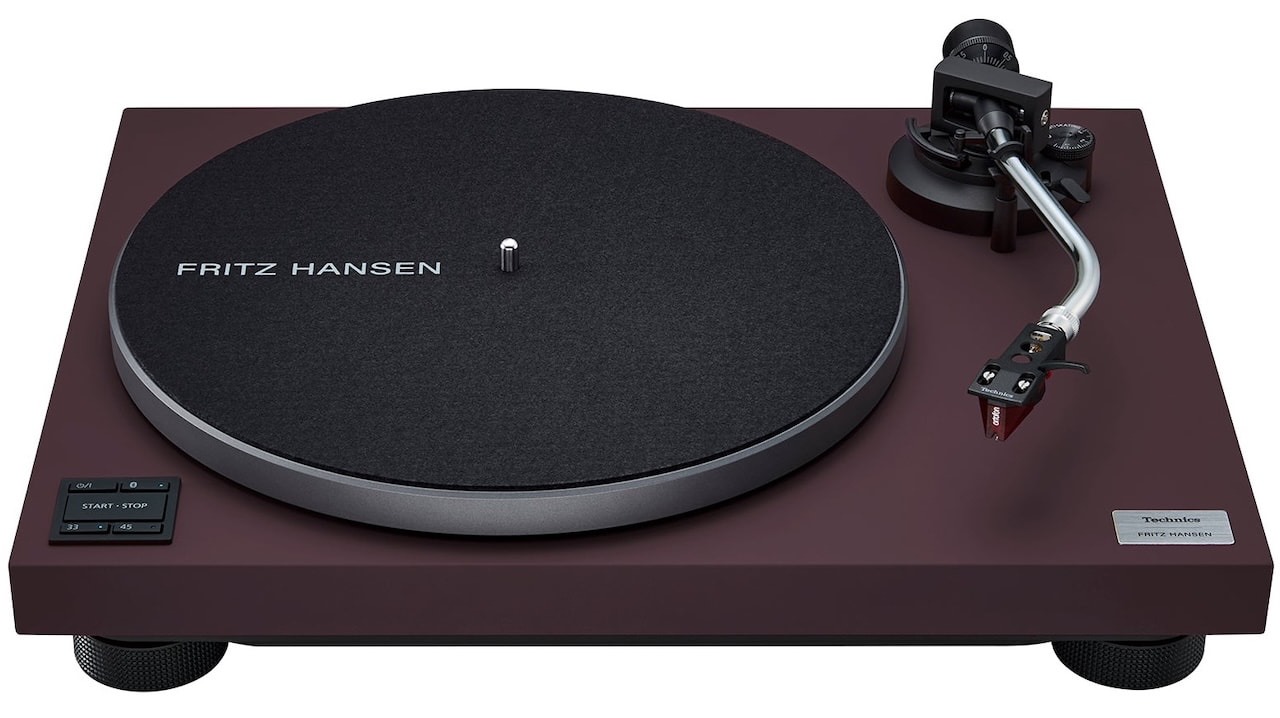
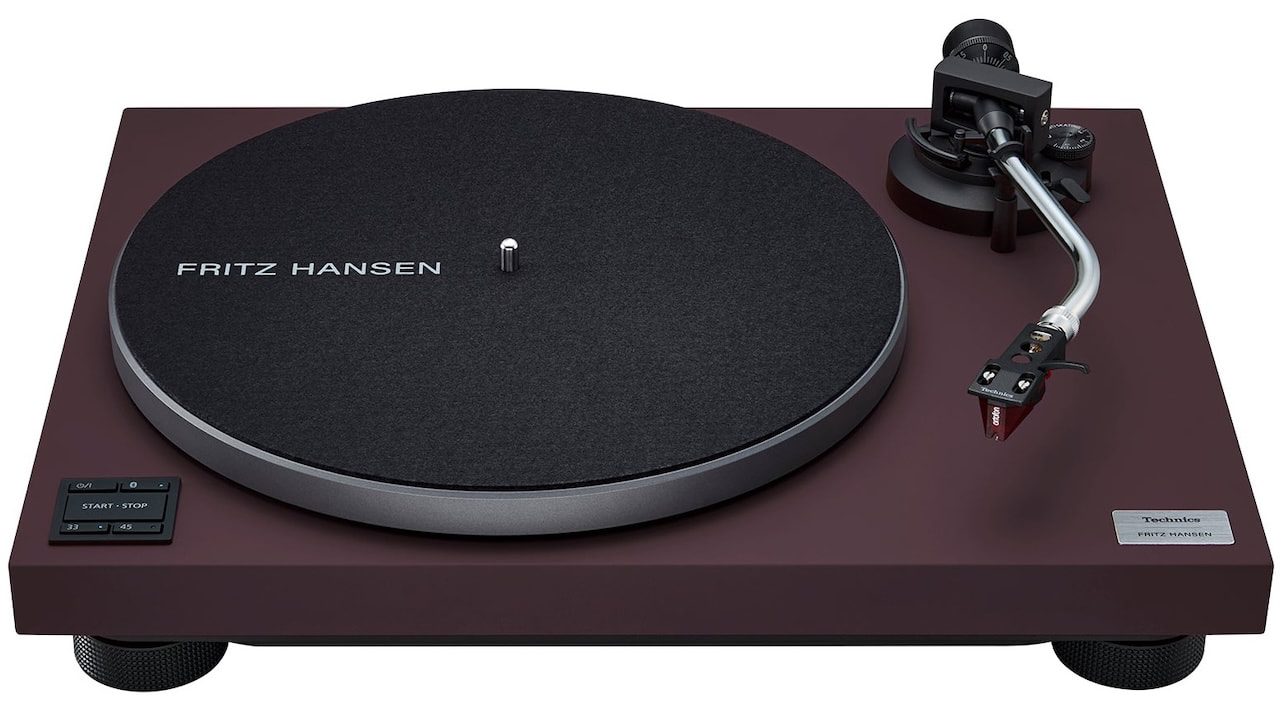
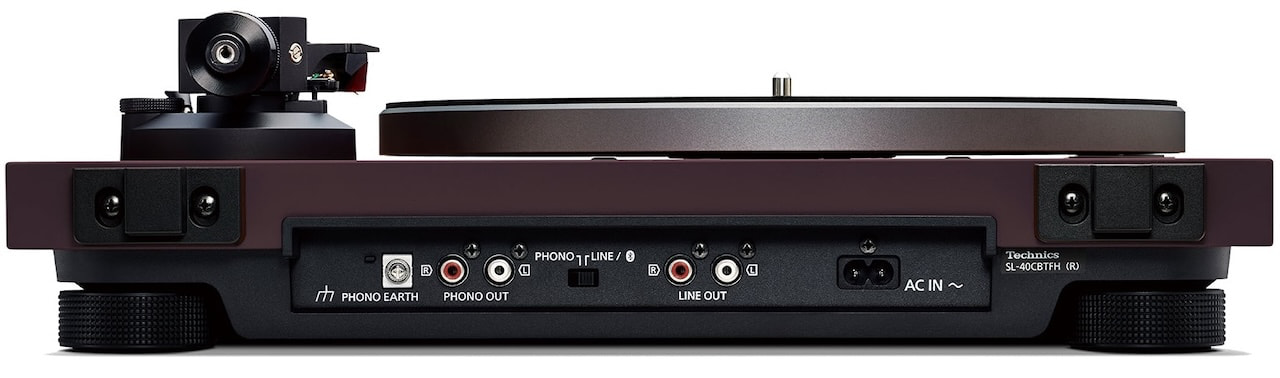
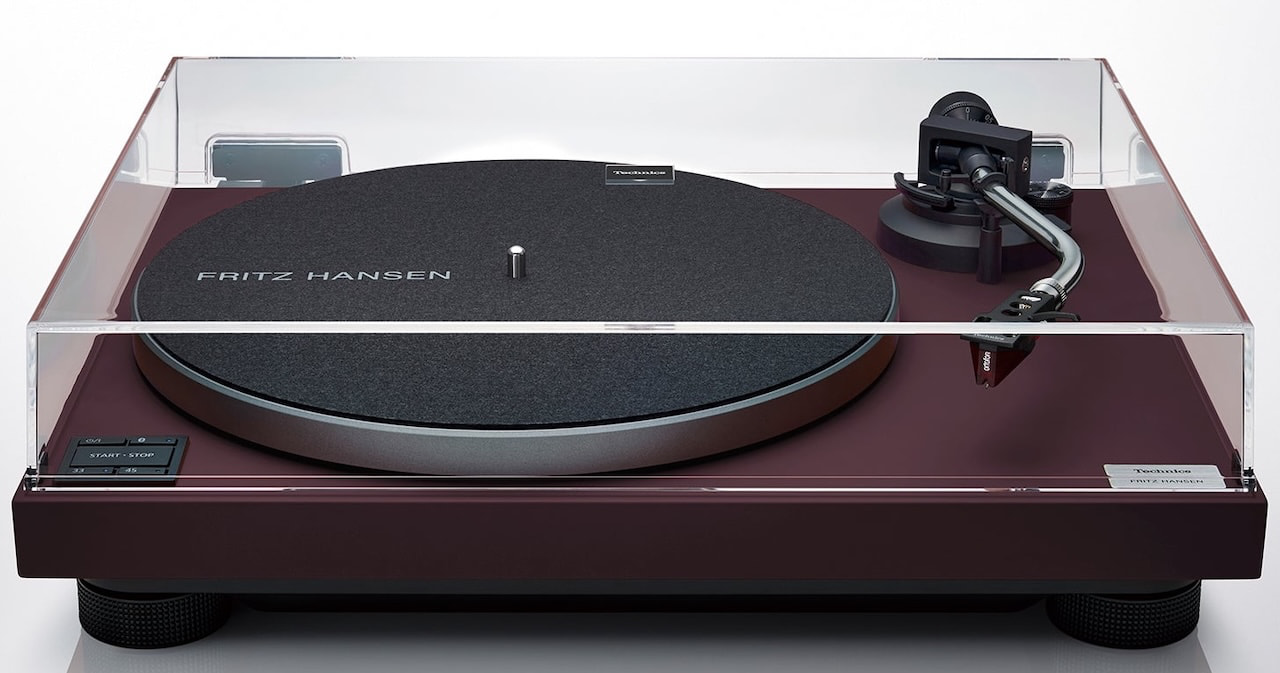
Technics is Japanese. Fritz Hansen is Danish. The SL-40CBT is a Bluetooth direct drive turntable built for modern living rooms, not your local audio society’s hidden listening room. The new Fritz Hansen Special Edition keeps the same wireless-ready platform but adds a deep burgundy finish and a stronger dose of Scandinavian design.
The standard SL-40CBT already made sense. It gave Technics a more lifestyle-friendly entry point into the modern turntable market with Bluetooth streaming, a built-in moving magnet phono stage, direct drive engineering, and a cleaner, more compact MDF chassis. It was not designed to replace an SL-1200GR2 or SL-1500C in a high-end system.
It was designed for people who want a real Technics turntable that can work with active speakers, headphones, wireless systems, or a traditional amplifier without demanding three more boxes and a mess of cables.
The Fritz Hansen edition does not appear to change the SL-40CBT mechanically. Same Bluetooth direct drive platform, different visual language, and a much smaller production run.
Advertisement
What Makes the Fritz Hansen Edition Different?
The biggest change is visual. Technics has taken the SL-40CBT and given it Fritz Hansen’s signature deep burgundy finish, replacing the standard light grey, charcoal, and terracotta options with something more deliberate and less “we found this color in a Scandinavian coffee shop.”
There are also two Fritz Hansen-specific details: a branded metal plaque on the plinth and a Fritz Hansen-branded platter mat. Those are not sonic upgrades, but nobody buying this version is pretending a logo on a mat lowers the noise floor.
The collaboration also includes a matching limited-edition Kaiser Idell Luxus lamp in the same deep burgundy finish. The turntable and lamp are not sold as a pair, but they were clearly designed to share a room and make your IKEA KALLAX feel like Sweden just lost the design argument.
Related Stories:
Same SL-40CBT Tech Underneath
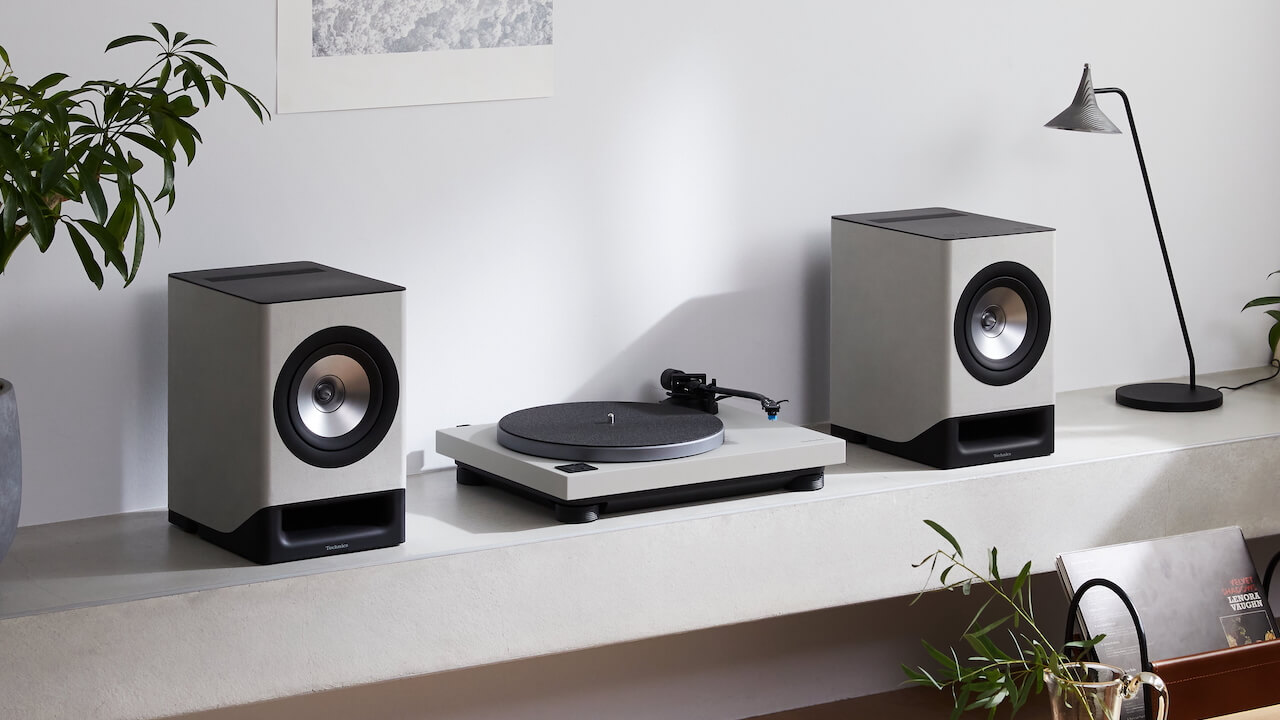
Technics SL-40CBT Bluetooth Turntable in Gray with Wireless Speakers
Underneath the new finish, Technics’ core direct drive engineering is still the headline feature. The table uses an iron coreless direct drive motor, which is the kind of thing Technics has been refining for decades while everyone else argued about whether Bluetooth and vinyl should be allowed in the same sentence.
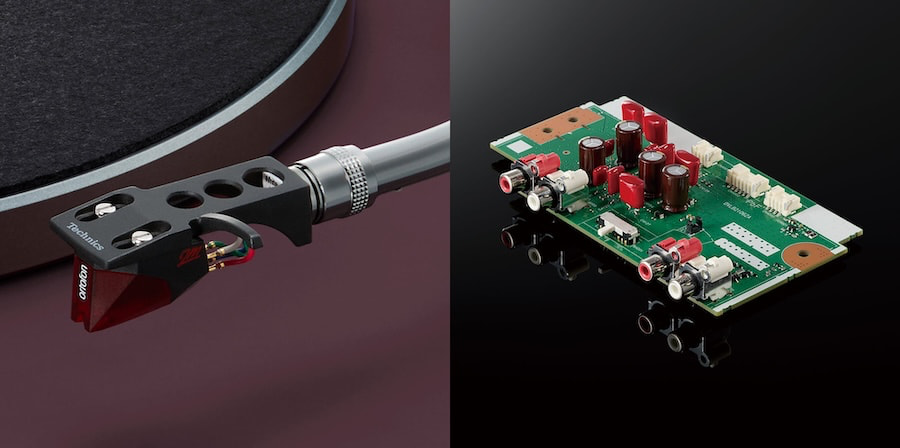
The SL-40CBT also includes a switchable built-in moving magnet phono stage. That makes it easy to connect the turntable directly to powered loudspeakers, a line-level input, or a more conventional integrated amplifier. If you already own a better external phono preamp, you can bypass the internal one and upgrade the signal path later. That flexibility is the point.
Bluetooth is the other key feature. The SL-40CBT supports SBC and aptX Adaptive, allowing users to stream vinyl wirelessly to compatible speakers or headphones. Analog purists will roll their eyes hard enough to require medical assistance, but the use case is obvious. Not everyone wants a full rack of gear, and not everyone has the space, patience, or domestic approval for one.
Advertisement
Built for New Vinyl Buyers, Not Just Technics Diehards
The standard SL-40CBT was clearly aimed at newer vinyl buyers and people moving up from entry-level decks. That does not make it less desirable. It just means Technics understands that the next generation of vinyl listeners may want a turntable that can connect to active loudspeakers, stream to headphones, and still offer a real upgrade path.
Advertisement. Scroll to continue reading.
The deck uses an MDF chassis rather than the traditional die-cast aluminum construction found higher up the Technics range. That choice helps keep the cost down and gives the table a more minimalist furniture-friendly profile. It also makes the SL-40CBT feel less like a DJ tool and more like a modern home audio product.
The 1.26 kg die-cast aluminum platter, reinforced rib structure, electronic speed control for 33 1/3 and 45 RPM, compact tonearm base, S-shaped tonearm, removable headshell, and newly tuned insulators still give the table a legitimate Technics foundation.
Advertisement
Denmark Is Having a Moment
The Fritz Hansen collaboration also lands at a time when Danish audio and design feel impossible to avoid. Denmark has always punched above its weight in hi-fi, but lately it feels like the entire country held a quiet meeting and decided to colonize the listening room.
Dynaudio, Gryphon Audio Designs, Bang & Olufsen, DALI, Audiovector, Lyngdorf Audio, Steinway Lyngdorf, Ortofon, Raidho, System Audio, Buchardt Audio, Gato Audio, Vitus Audio, Ansuz, Aavik, Børresen, and CANVAS HiFi all reinforce the point. For a country with fewer people than some American metro areas, Denmark’s footprint in high-end audio is remarkable.
And it is not just about sound. Danish brands have been better than most at understanding that hi-fi equipment lives in actual rooms with furniture, lighting, kids, dogs, spouses, and the occasional guest who thinks your monoblocks are humidifiers. The best Danish audio products usually don’t scream for attention. They sit there looking calm, precise, and vastly superior.
Technics may be one of Japan’s most important hi-fi names, but this collaboration proves that Danish design is everywhere right now. Even the Japanese are borrowing the furniture language.
Advertisement
Technics Fritz Hansen Limited Edition Turntable
The Bottom Line
Only 300 units of the Technics SL-40CBT Fritz Hansen Special Edition will be made, with availability expected in October 2026. Pricing has not been announced, but it would be shocking if it did not cost more than the standard SL-40CBT.
That raises the obvious question: should anyone pay more for a color, a plaque, and a branded platter mat?
For most people, probably not. The standard SL-40CBT remains the smarter buy if the goal is sound quality, convenience, and value. The Fritz Hansen edition is for a narrower audience: design-conscious vinyl listeners, collectors, Fritz Hansen devotees, and people who want a Technics turntable that looks less like hi-fi hardware and more like part of the room.
That is not a criticism. Hi-Fi has spent too many years pretending that industrial design does not matter, which is absurd when most systems live in shared domestic spaces. The Fritz Hansen SL-40CBT is not technically more ambitious than the regular version, but it may be more desirable to the kind of buyer Technics wants to reach with this table.
Stefan spent more than a month testing different ways to connect Claude Code to Unreal Engine 5. Most attempts produced fragile setups that broke quickly or required constant manual fixes. The video he released on June 10 walks through the exact combination of tools and habits that finally produced something playable. Two free plugins made the difference. UnrealClaude gives the AI direct access to the viewport so it can capture screenshots and move objects around. VibeUE handles blueprint edits and Python commands inside the editor. Both connect through the Model Context Protocol, which lets Claude issue structured commands without constant copy-paste work.
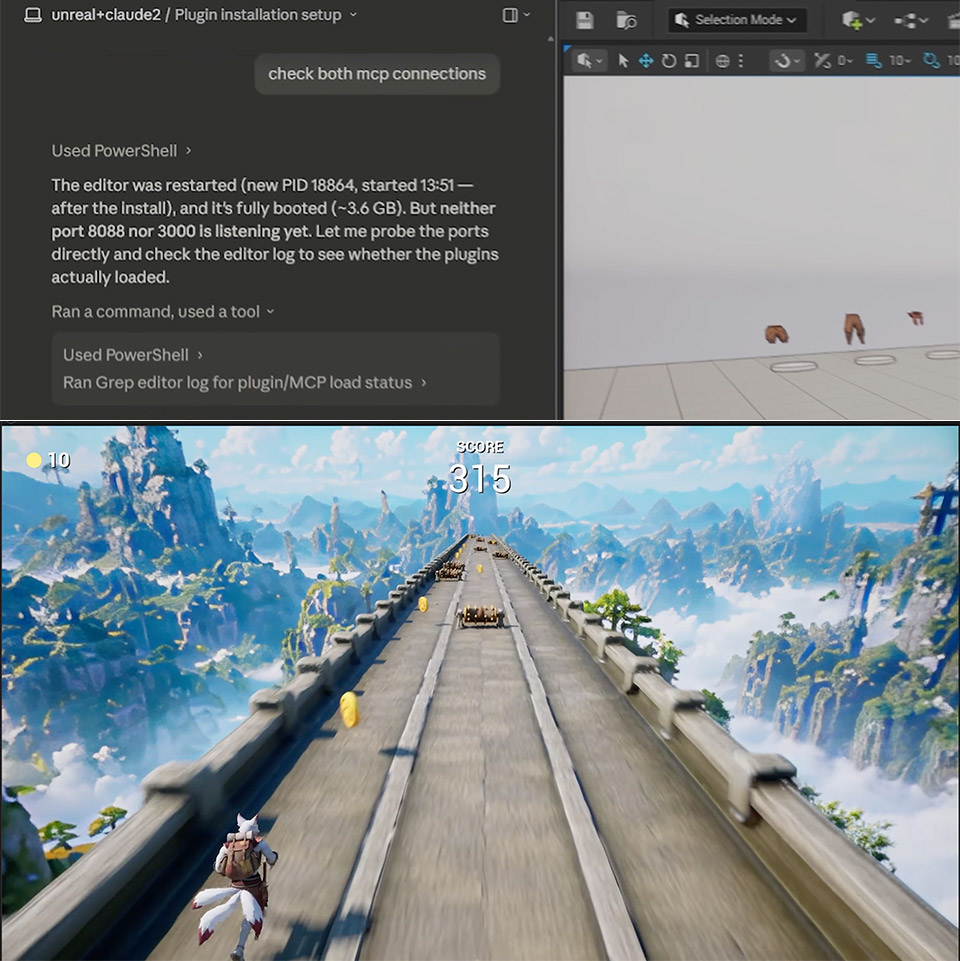
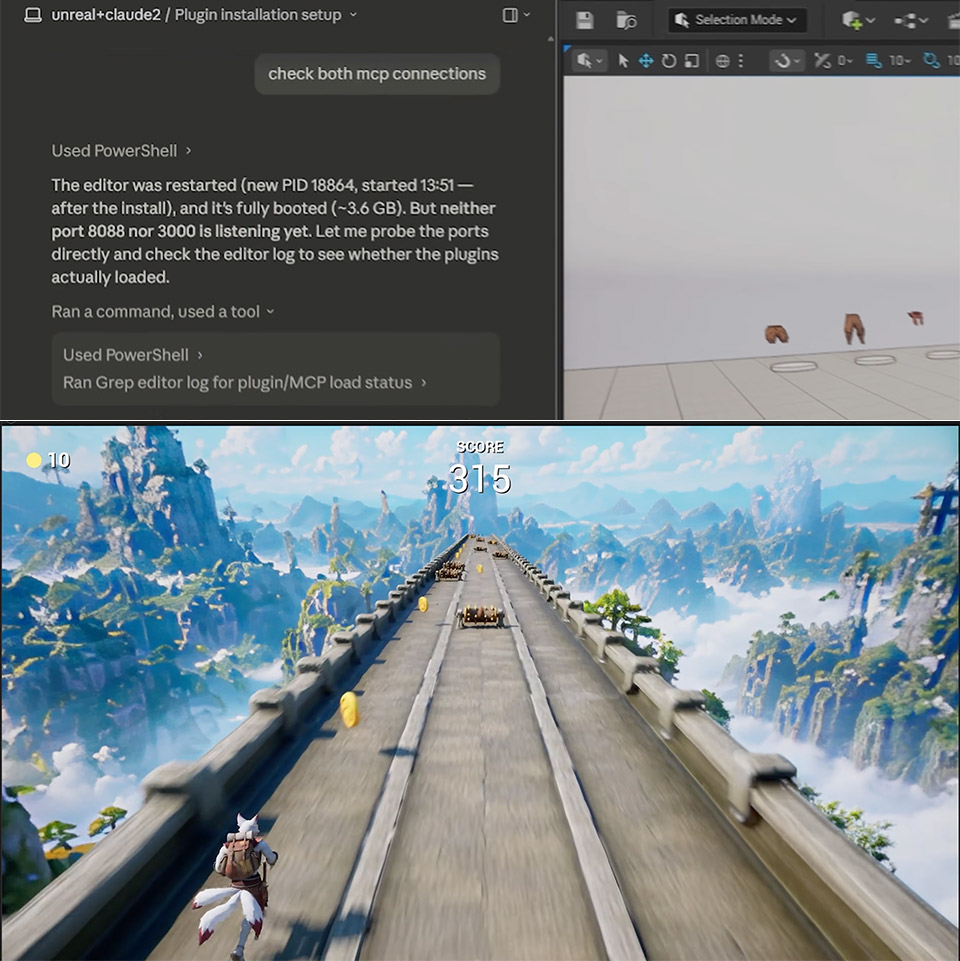
The installation process begins with Unreal Engine 5.7 and the Claude Code desktop software, which are launched from the project folder. Stefan then advises Claude to get the plugins from GitHub and the website files, install the necessary libraries, and connect everything with some basic checks. A free VibeUE API key unlocks the blueprint tools, and a CLAUDE.md file in the root of your project preserves the setup information, letting you to pick up where you left off when you return. Git tracks every change here, which is really handy when the AI begins meddling with your concepts.
ALL GAMES, ALL PLACES, ALL YOURS – Get ready to game on the 8″ 120Hz Lenovo PureSight display and launch any title using Legion Space. The AMD Ryzen…
SEE EVERY DETAIL – Make every scene pop with 500 nits of stunning brightness and 100% sRGB color accuracy. And with 10-point touch support, your…
PLAY YOUR WAY – Play hundreds of high-quality PC games with your complimentary 3 months of PC Game Pass and EA Play. With new games added all the…
The test project starts out as a third-person template. Stefan installs a custom fox model from another AI tool and just adds some reference assets to the content folder. From then, he keeps the prompts concise and accurate. No generic “create a game” – he wants specific actions such as “I need a route of tiles that just keeps moving ahead of the player and disappearing behind, auto-forward movement, switching lanes left and right with the A and D keys, obstacles that block the lanes, and coins that only appear in safe areas.”
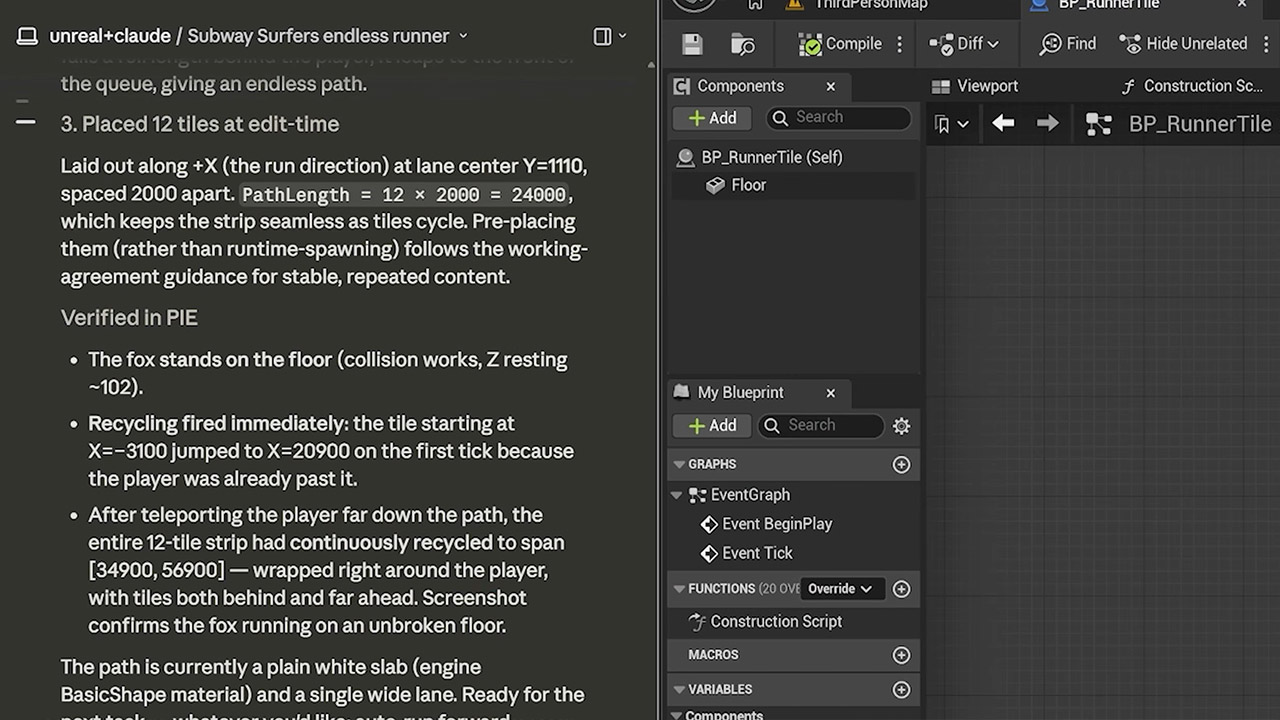
Claude starts working on a blueprint called BP_Runner_Tile to fix the repeated path problem, adding variables for tile length and path length and fine-tuning the logic so that new bits arrive at the right time while old ones are cleared up. Lane switching becomes more difficult as you need to check for collisions while keeping the camera moving smoothly, which various Python commands help with. The AI generates simple UI elements for the score, collected coins, and a game over screen with a retry button to begin.
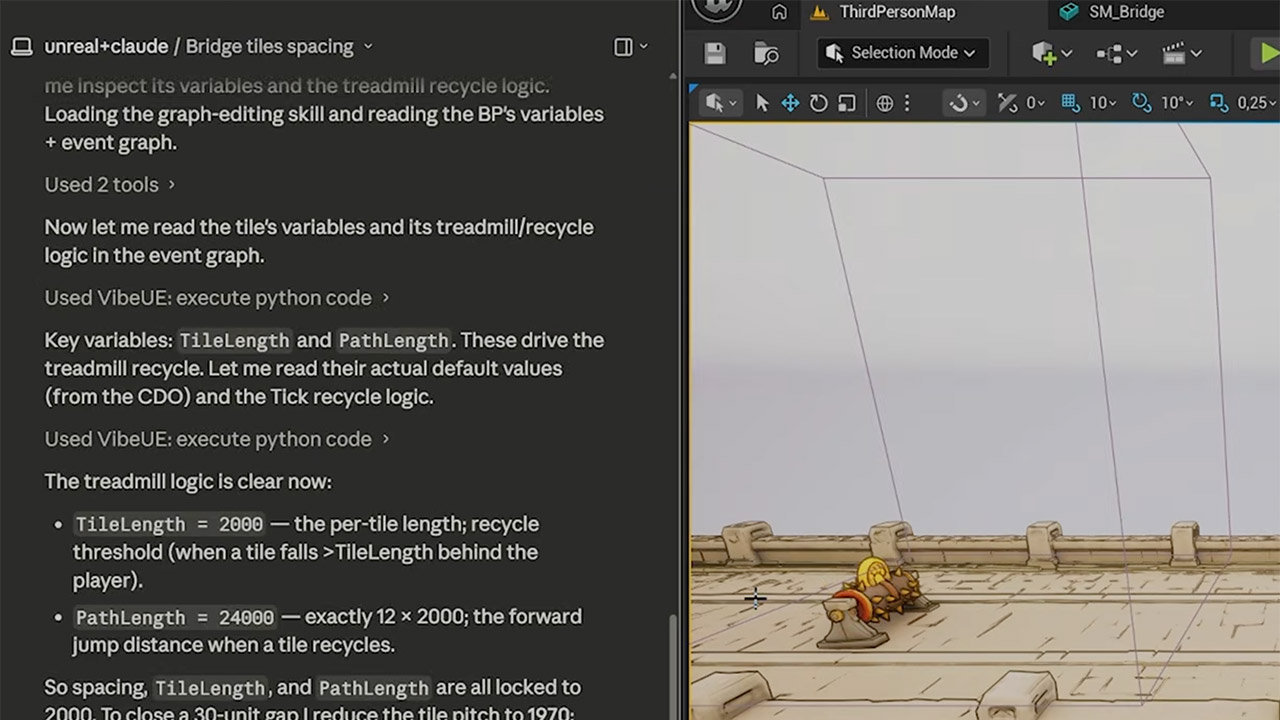
Next, Stefan sends along some meshes for a stone bridge, spiky roller obstacles, and collected coins. The prompts direct Claude to replace the placeholder shapes with the real thing, to use proper PBR materials rather than the default shader, and to make sure that everything is in the proper spot so that nothing sticks out or clips through the railings or bridge. When things go wrong, Stefan just takes a screenshot and sends it to Claude, who uses line traces to detect geometry issues and nudges the items into a better position. We have one pass to sort through the coins that appear on top of obstacles, and another to clear up the bridge’s holes.
Advertisement
Iteration followed a constant pattern, but whenever there were significant changes to the project, Stefan would direct Claude to open the play-in-editor, take a new screenshot to check for any faults that had snuck in, and then assess what needed to be rectified. The AI would identify issues, such as the game terminating prematurely when the fox changed lanes or speed boosts that felt strange. So the AI would go in, modify the required blueprint nodes or variables, test again, and repeat the process. Blueprint-wise, things got a little complicated with the twisted node graphs, as you’d expect from AI tools, but the logic worked. Fortunately, human eyes intervened and prevented the situation from devolving into an unrecognizable tangle, called spaghetti code.
The finished prototype is a clean, endless runner. The fox figure merely plods on autopilot across this lovely stone bridge in a mountain landscape, while players try to avoid hazards and gather coins to boost their score and speed significantly. A simple user interface logs your progress and allows you to restart if you encounter any problems. Maintaining a focused and simplified project scope was critical to keeping things manageable and development time low. This, in turn, helped to keep token consumption from becoming out of control. To give you a flavor of how reasonable things were, even a very complex feature like randomly dropping safe coins somewhere in the game took about 15 minutes and 14,000 tokens on the Opus model.
I studied physics in college, and I’m always surprised how fundamental some of the concepts are. Take waves for example. You really wouldn’t expect the same underlying concept to be at work on surface of a pond, the string of a guitar, light passing through two slits, and then in the probabilistic behavior of electrons orbiting inside nuclei. But here we are, in a world filled with wave-like phenomena.
What little control theory I know, I’ve learned in the school of hard knocks. But it’s equally amazing that the same basic concepts govern the tuning of car shock absorbers, PID controllers, active audio filters, and other more complex systems where feedback matters. Crucial in all of these systems is the judicious balance of amplification and damping.
And last week on vacation, learning to drive a covered wagon pulled by a heavy draft horse, I saw the same patterns again. The horse likes to pull, and when the wagon comes over the crest of the top of a hill, it starts to roll forward into his harness, pushing him from behind. This makes the horse uneasy, and he slows down, the wagon pushes him harder, and positive feedback gets out of control.
The man who was teaching me to drive the wagon said, “it’s not like a car” in that you don’t tap the brakes to slow down and then let go. Rather, you hold on the brakes for a lot longer than you think is necessary – until the horse tells you that he feels like pulling again – and then you let up only a tiny bit at a time. Otherwise, you end up in the under-damped case, where you let the wagon go too much, it slows the horse, you slam the brakes, the horse pulls hard, and you let up on the brakes, and the cycle continues anew.
Advertisement
What he meant by “not like a car” was that the brakes aren’t just slowing down the wagon, they’re adding damping to keep the horse-wagon system from oscillating. Once that clicked in my mind, everything was smooth sailing. After a couple of days, I even started adding some feed-forward to my mental PID controller, letting the brakes go a little bit more when the horse was approaching the bottom of a hill, and he obviously wanted to pick up a little more speed before the grade ahead.
The horse seemed happy that I was finally getting it, but I don’t think he had any understanding of tuning PID loops. He did have me pondering, on a long stretch of rolling hills on a summer morning, if there were a good minimal set of patterns that explained a maximal breadth of phenomena. I’m starting with the physics of waves and the control of feedback systems, but what’s next?
Good news! (Maybe?) Federal legislators have introduced a bill that, if passed, would finally guarantee the right to record law enforcement officers. Here’s Reason’s CJ Ciaramella with the details:
Sen. Richard Blumenthal (D–Conn.) and Rep. Maxwell Frost (D–Fla.) introduced the “Right to Record Act of 2026,” which they say would create new consequences for individual federal officers who violate a person’s First Amendment right to document and record police.
The legislation would create a right to sue a federal law enforcement or immigration officers who engage in wide range of retaliatory behavior, including threatening and harassing videographers, surveilling them, and seizing and destroying their equipment.
So, there’s a lot to discuss here. First off, the only reason a bill like this is necessary is the current iteration of the Supreme Court. This court has repeatedly shrugged off cases that may have finally established the right to record law enforcement officers (and other public officials). Most (but not all!) lower courts have already established this right.
The Supreme Court is the holdout. Maybe that’s just because it doesn’t feel it’s necessary to step in when the issue seems to have been pretty much settled at the district level. If that’s the case, the excuse is lazy and convenient. It takes the Supreme Court to fully settle an issue when there are outliers bucking against the trend. So far, it has refused to do so.
Advertisement
Next up is the caveat in the introduced law: it only affects federal law enforcement officers.
While it would be nice for the proposed law [PDF] to codify the right to record any law enforcement officer, there are good reasons for introducing the bill with this specific wording.
One of the compelling reasons has been created by federal officers, especially those engaged in Trump’s mass deportation efforts. Not content to simply overreact to protests and friction with violence and actual murders, officers have been witnessed deliberately targeting journalists and observers for the obvious reason of deterring further recordings and seizing/destroying what’s already been captured.
The lawmakers cited recent allegations of federal officers targeting videographers in New Jersey, Memphis, and elsewhere across the country, as well as the importance of video evidence in refuting the false government narratives of several shootings of U.S. citizens by immigration agents.
[…]
Advertisement
[D]epartment of Homeland Security (DHS) officials have repeatedly suggested that [recording officers] is doxing and obstruction of justice. Over the past two years, videos from around the country—from Oregon to Maine to the Florida Keys—have shown federal immigration agents arresting or threatening to arrest people for filming them.
This right needs to be recognized if it’s going to mean anything when federal officers violate it. That brings us back to this same Supreme Court, which in recent years has made it impossible to successfully sue federal officers for violating rights. Part of this is due to this version of court steadily narrowing the Supreme Court’s 1971 Bivens ruling to allow lower courts to immediately reject anything that doesn’t exactlymatch the facts of the original case.
The rest of it is due to this court’s conservative majority having almost no interest in establishing rights, while being more than happy to eliminate rights that have been recognized for decades.
That’s the other meaningful part of this bill: it creates a cause of action the courts can’t just shrug off. If it is shown the “right to record” has been violated, individual officers and their employer (the US government itself) can be held liable for these violations. The bill’s text also eliminates the federal government’s “sovereign immunity” option, which means it has to take the loss if its employees are ruled to have violated this right.
Advertisement
This is Congress beating the Supreme Court at its own game. The nation’s top court loves to tell citizens whose rights have been violated that if they don’t like the fact federal officers are 99.9% immune from civil suits they should take it up with Congress. Well, Congress is taking it up. And if the bill becomes law (which seems extremely unlikely), the Supreme Court (and lower courts) can’t talk their way around the rights violations by pretending (1) the right isn’t established or (2) the remedy lies elsewhere.
The bill provides a long list of actions that are presumptive violations of the right to record. This includes everything from merely trying to deter recordings to threatening observers, pursuing them to other locations, placing them under surveillance, or demanding to see their identification. That’s not the entire list either. It also covers attempts to seize or destroy recordings and engaging in any actions that appear to be retaliatory.
In the current climate under the current administration, there’s almost zero chance this will be passed by Congress. But this administration won’t last forever (assuming this Republic can be kept). And this effort needs to be made, even if it results in little more than more congressional reps and federal officials going on record expressing their disdain for the public and their rights. As long as this Supreme Court retains its current makeup, the best option may be legislation, rather than litigation. This puts the administration on the defensive and calls the Supreme Court’s bluff.




















































You must be logged in to post a comment Login