When high school students step into a cybersecurity internship, they enter a field where the stakes are real. The tools, threats and responsibilities extend well beyond the classroom. In rural communities, such opportunities can be transformative — for both learners and the regions working to build a future-ready workforce.
In eastern Alabama, cybersecurity pathways are creating new opportunities for collaboration between educators and employers, reflecting a broader lesson: Workforce development is more impactful when industry helps shape learning early. As cybersecurity threats grow more complex, many employers say preparing future talent does not begin at the point of hiring — it starts earlier, through partnerships connecting classrooms, credentials and real-world experience.
For district leaders and career and technical education (CTE) directors designing career-connected learning, these partnerships can help align instruction with workforce realities while expanding students’ access to high-demand careers.
Credentials matter, but they only tell part of the story. What really prepares students for cybersecurity work is exposure — seeing how systems operate in the real world and understanding the responsibility that comes with protecting them.— Scott Ross
Advertisement
Industry as a Co-Designer
Cybersecurity is a field that depends on industry insights. The tools and threats defining the work often evolve faster than traditional curriculum cycles, and employers see firsthand how quickly skill requirements change.
Scott Ross, director of information technology at HudsonAlpha Institute for Biotechnology, has seen how quickly the field changes throughout his career. While professional credentials such as Certified Information Systems Security Professional (CISSP) can signal readiness, Ross points to internships and applied experience as equally critical.
“Credentials matter, but they only tell part of the story,” Ross said. “What really prepares students for cybersecurity work is exposure — seeing how systems operate in the real world and understanding the responsibility that comes with protecting them.”
That perspective shapes HudsonAlpha’s engagement with regional education partners. As cybersecurity roles expand across sectors, from defense and healthcare to biotechnology and agriculture, employers are increasingly invested in helping students understand the range of opportunities available and the expectations that come with them.
Advertisement
How a regional alliance is opening doors to cybersecurity careers
A Regional Effort Takes Shape
In eastern Alabama, those connections are coordinated through the East Alabama Regional Cybersecurity Alliance (EARCA), a collaboration among K-12 districts, postsecondary institutions and industry partners focused on growing local cybersecurity talent. Rather than operating in isolation, schools and employers are aligning around shared goals: relevant curriculum, meaningful credentials and work-based learning opportunities tied to workforce needs.
Ross sees this regional approach as essential. “Cybersecurity isn’t limited to one industry,” he said. “When education and employers collaborate across sectors, students gain a clearer picture of where these skills apply, and regions build stronger, more adaptable talent pipelines.”
With thousands of unfilled cybersecurity roles in the state, that alignment helps keep learning connected to opportunity.
Advertisement
When students know their learning connects directly to real jobs, it changes how they approach the work. They’re not just completing assignments; they’re preparing for environments they know they’ll encounter.— Tanner Gamble
How Industry Partnerships Shape Learning
For educators, industry engagement can change what is possible inside schools. Tanner Gamble, the computer science and cybersecurity teacher at Childersburg High School in Talladega County, has seen how employer involvement reshapes student motivation and confidence.
“When students know their learning connects directly to real jobs, it changes how they approach the work,” Gamble said. “They’re not just completing assignments; they’re preparing for environments they know they’ll encounter.”
Preparing teachers for industry-aligned instruction is also central to the effort, said Ira Lacy, who trains educators and connects them with employers to support cybersecurity pathways across Alabama.
Advertisement
“When you train teachers using industry practices and give students access to authentic experiences, you start building a pipeline that lasts,” Lacy said. “We’ve seen graduates in North Alabama come back to mentor younger students and invest in their hometowns, and now we’re applying the same approach in eastern Alabama.”
Internships and industry-aligned credentials help validate pathways at the school level by demonstrating clear connections between classroom instruction and real workforce needs.
“Internships and credentials act as the ‘proof of work’ for school cybersecurity programs,” said Hillary Rogers, principal of Childersburg High School. “They bridge the gap between theory and real-world practice, ensuring students aren’t just learning about the digital front lines — they’re equipped to operate in them.”
Gavin (right), a junior at Childersburg High School, poses with a classmate after passing the Tech+ certification exam at Central Alabama Community College.
Learning That Changes Trajectories
That impact is evident in Gavin’s experience, a junior at Childersburg High School who participated in a summer internship with the IT department at Heritage South Credit Union. During the internship, Gavin worked alongside IT staff, troubleshooting real systems, building and maintaining network infrastructure, and learning how access and risk are managed in real-world settings.
Advertisement
The experience opened the door to continued applied learning. Gavin now supports the IT department at Childersburg High School and earned his CompTIA Tech+ certification, an early milestone in a pathway focused on technical skill development and professional responsibility.
“The internship allowed me to start dreaming for myself and what I want my future to look like,” Gavin said. “I’ve always been interested in space, and now I can see different paths, like working in aerospace or eventually leading an IT department near Huntsville.”
For employers and educators, helping students see concrete future pathways is a powerful outcome of early work-based learning.
Why Employers Invest
While not every employer is positioned to host interns, those who engage early gain clearer insight into student readiness and stronger workforce alignment. Early exposure helps employers identify motivated learners and reduce uncertainty in later hiring decisions.
Advertisement
“If we wait until graduation to connect with talent, we’ve missed an opportunity,” Ross said. “Early exposure helps students prepare, and it helps employers build a workforce that understands their needs.”
At a regional level, these investments can contribute to rural economic stability by increasing the likelihood that students will pursue and remain in local careers.
A Blueprint for Other Regions
EARCA is part of broader efforts led by Digital Promise’s Center for Learner Pathway Innovations to develop statewide cybersecurity pathways that connect education and workforce systems. Pathways are strongest when learning, work and community are connected early. For students like Gavin, that collaboration opens doors. For employers, it helps ensure the next generation is ready to meet that demand.
So you were busy, and you forgot to maintain your Duolingo streak. Now, Duo, that little green owl, is mad at you, and you’re disappointed in yourself. Whether you’re studying a language, chess, math, music or another course, a streak slip-up is not checkmate anymore.
On Monday, the language-learning program announced a one-month treat for forgetful customers. Beginning Monday, players who lose their streak of consecutive learning days can restore that streak by completing three lessons in one sitting.
But if you’re going to skip a day, do it in June, because this restoration feature lasts for only that month.
Advertisement
Streaks are a big deal for many Duolingo customers. More than 15 million players have a streak that’s over a year long, the company says, and an unofficial Duolingo streak hall of fame cited by USA Today reports that the longest Duolingo streaks run 13 years. It takes only one missed day to ruin a streak, so players who might be traveling, ill or otherwise distracted can easily lose a streak that took years to build.
To rebuild your streak, it must be at least 30 days long, and learners must complete the three required lessons in the same playing period.
Eligible learners will see the option appear in their app, prompting them to revive their streak.
Advertisement
Duolingo will offer you a chance to revive your lost streak, and honestly, who wouldn’t take that?
Duolingo
Recovering lost streaks has been one of the most consistent requests Duolingo hears from learners, a Duolingo representative said in a statement. “In the past year alone, tens of thousands of learners asked for their streak back across social media in more than 80 countries.”
For some time now [Tobi Friedly] has been tinkering away at porting the original Super Mario 64 from the Nintendo 64 to just about any device imaginable. One of these being the Nintendo DS, with the code and build instructions now up on GitHub, along with the demonstration video below that shows off the added multiplayer functionality.
We previously covered this project and the challenges involved. The main problem that kept him from just taking the existing Nintendo DSi port by [Hydr8gon] and running it on the original DS is that the latter doesn’t have enough RAM to load the entire game ROM into memory. The integration of NitroFS for asset streaming took some time, along with addressing sound support and overall stability. Meanwhile it appears that multiplayer support was also added along the way.
This multiplayer involves two DS systems, each running its own copy of the game. This can be nice for co-op playing of the game, as well as just for goofing around in a 120 star fully finished game with a buddy.
We may receive a commission on purchases made from links.
Amazon Prime Day is almost here, bringing Amazon Prime members four days of deals from Tuesday, June 23, to Friday, June 26. If you’re a Prime Member, this event can be even better than Black Friday. Members can save a lot of money on items from a wide range of popular categories. This, of course, includes Amazon devices. In fact, Amazon devices are some of the best deals you can get during Prime Day, with electronics up to 60% off.
Advertisement
If you are not a Prime member, you can sign up ahead of Prime Day if you want to take advantage of the discounts. You don’t even need to pay for a membership, either: When you sign up, you can join a 30-day free trial, which you can cancel before the first billing — after you’ve purchased the Amazon devices you wanted during Prime Day, of course. But you don’t have to wait for Tuesday to save on Amazon electronics; the retailer already has a handful of products on sale well before Prime Day kicks off, and here are some of the most exciting deals.
Advertisement
Blink Video Doorbell
Originally $189.99, the Blink Video Doorbell is 71% off at $54.99. This fourth-generation camera system allows you to see what’s happening at your front door. It comes with one Blink Video Doorbell, two Outdoor 4 cameras, one Sync Module Core, mounting kits for each device, a wall plate, a doorbell removal tool, wire extenders, batteries, and a power cord.
Using the Blink app, you can see everything that’s going on from wherever you are. The Video Doorbell captures HD video, and the Outdoor 4 cameras have motion detection and a wide field of view. You can speak through the doorbell to greet guests or thank delivery people. The Blink Subscription Plan provides alerts and lets you save and share clips. This is a great smart device for keeping your home secure, not least thanks to its impressive two-year battery life, which should provide added peace of mind.
Advertisement
Amazon Fire TV Stick devices
Amazon has big discounts on its Fire TV Stick devices ahead of Prime Day, making it a great time to spring for one if you need to add streaming functionality to a TV. The basic Amazon Fire TV Stick HD kicks things off with a 54% discount that brings its price down to $15.99. The Amazon Fire TV Stick 4K Select is available for a nice 55% off, or $17.99. The slightly higher-end Amazon Fire TV Stick 4K Plus is also on sale, with a 50% price cut making it available for $24.99. Similarly, the Amazon Fire TV Stick 4K Max has dropped from $59.99 to $34.99, a 42% discount.
All of Amazon’s Fire TV Stick devices offer the same basic functionality, letting you watch shows from all the major streaming services even on a TV without any smart functions. The main difference is that the more expensive models have extra features, such as 4K HDR streaming — available starting with the 4K Select — and Dolby Vision, present on the 4K Plus and 4K Max. The latter two also have support for Nvidia GeForce Now game streaming.
Advertisement
Amazon Echo Dot Max
The Amazon Echo Dot was one of the most-loved Amazon gadgets in 2025, with the device proving popular with users due to how useful it is in the home. The Amazon Echo Dot Max, an updated version of the Echo Dot, brings a range of improvements such as Alexa+ support and can connect to a ton of compatible electronics in your home, including speakers, televisions, lights, switches, and appliances. The Eco Dot gives you complete control of your smart home, letting you set routines, control lights, and lock devices.
Even on its own, the Amazon Echo Dot Max will double up as a useful personal assistant. Alexa will let you check the weather, set timers, play music, and have natural conversations. All of this is made even better thanks to the Echo Dot Max’s upgraded audio quality. It currently has a 4.4 out of 5-star average rating on Amazon, with many buyers noting they have more than one. Originally $99.99, it’s currently selling for $64.99 after a 35% discount.
Advertisement
Ring Battery Doorbell
Blink isn’t the only Amazon-owned video doorbell company with products on sale ahead of Prime Day. Ring also has a range of discounted devices, including its well-liked entry-level model, the Ring Battery Doorbell. This 2K-capable video doorbell is available at a 50% discount that drops the price from $99 to $49. You can also buy this doorbell in a two-pack, with a 55% discount on the usual $199.98 price making the pair available for $89.99.
Advertisement
The Battery Doorbell has a range of welcome features, including 6x Enhanced Zoom, Alexa support, a USB-C rechargeable battery, real-time alerts, plus the ability to see and speak to anyone at your door via Ring’s Live View and Two-Way Talk functions. If you get a Ring Protect subscription, which starts at $4.99 a month, you’ll also get access to features like AI smart alerts and up to 180 days of event logs, letting you scroll back to find specific moments or captures.
Ireland has a national target of 8GW of installed solar capacity by 2030 under the Renewable Electricity Support Scheme.
Ireland’s solar sector has almost quadrupled its total energy capacity to 2.7GW over the past three years, according to Solar Ireland’s annual ‘Scale of Solar’ report on the industry.
Ireland’s total connected solar capacity is now predicted to exceed 3.3GW by the end of this year, having grown by 297pc since 2023 and by 53pc, or nearly 1GW, in the 12 months to May 2026.
In the past year, solar generated more than 1.17TWh of electricity across Ireland, according to the report, with the equivalent of 460,000 homes powered by the country’s total connected solar capacity.
Advertisement
Solar farms providing utility-scale capacity surpassed the 1.5GW mark across the year. Small-scale capacity from rooftop systems installed at farms, schools, retail premises, community buildings and smaller industrial facilities reached 58MW, while micro-generation capacity from households, farms, schools and small businesses reached 805MW.
Ireland has a national target of 8GW of installed solar capacity by 2030 under the Renewable Electricity Support Scheme. To achieve this, the report estimated, an additional 0.8-1.3GW of capacity per year until 2030 will be required, with between 5,000 and 7,000 new jobs potentially being created and contributions of more than €2.3bn to Ireland’s economy possibly resulting from solar developments.
Minister for Climate, Environment and Energy Darragh O’Brien, TD said: “In just 12 months, Ireland added 1GW of solar capacity, helping to strengthen Ireland’s energy resilience, reduce emissions and increase the share of domestically generated renewable electricity on our system.
“As electricity demand continues to grow, driven by electrification across homes, transport and industry, investment in renewable energy infrastructure will be essential.
Advertisement
“Solar is already making an increasingly important contribution to Ireland’s electricity system and will continue to play a key role in supporting energy resilience, economic competitiveness and a sustainable energy future.”
The report noted that more than 190,000 Irish homes and businesses have implemented rooftop solar electricity generation capabilities, with Clare being the county with the highest such uptake per capita.
Rooftop solar adoption can account for an estimated removal of 155,000 tonnes of CO2 emissions over the past 12 months, according to the report.
For utility-scale or solar farm generation, Meath (441GWh), Wexford (174GWh) and Cork (110GWh) were the three most productive counties over the past year.
Advertisement
CEO of Solar Ireland Ronan Power said: “Ireland’s solar story is no longer defined solely by ambition. It is increasingly defined by delivery.
“Solar is now making a meaningful contribution to homes, farms, schools, businesses and communities nationwide. Maintaining this momentum will require continued collaboration across industry, Government, regulators and system operators.
“Grid infrastructure, planning processes, workforce capacity, market design and public participation will all play a critical role in determining how quickly Ireland can continue scaling solar generation.”
SiliconRepublic.com recently spoke to Calvin Lan, the CEO of Huawei Ireland, about Ireland’s solar and renewable energy targets.
Advertisement
Don’t miss out on the knowledge you need to succeed. Sign up for the Daily Brief, Silicon Republic’s digest of need-to-know sci-tech news.
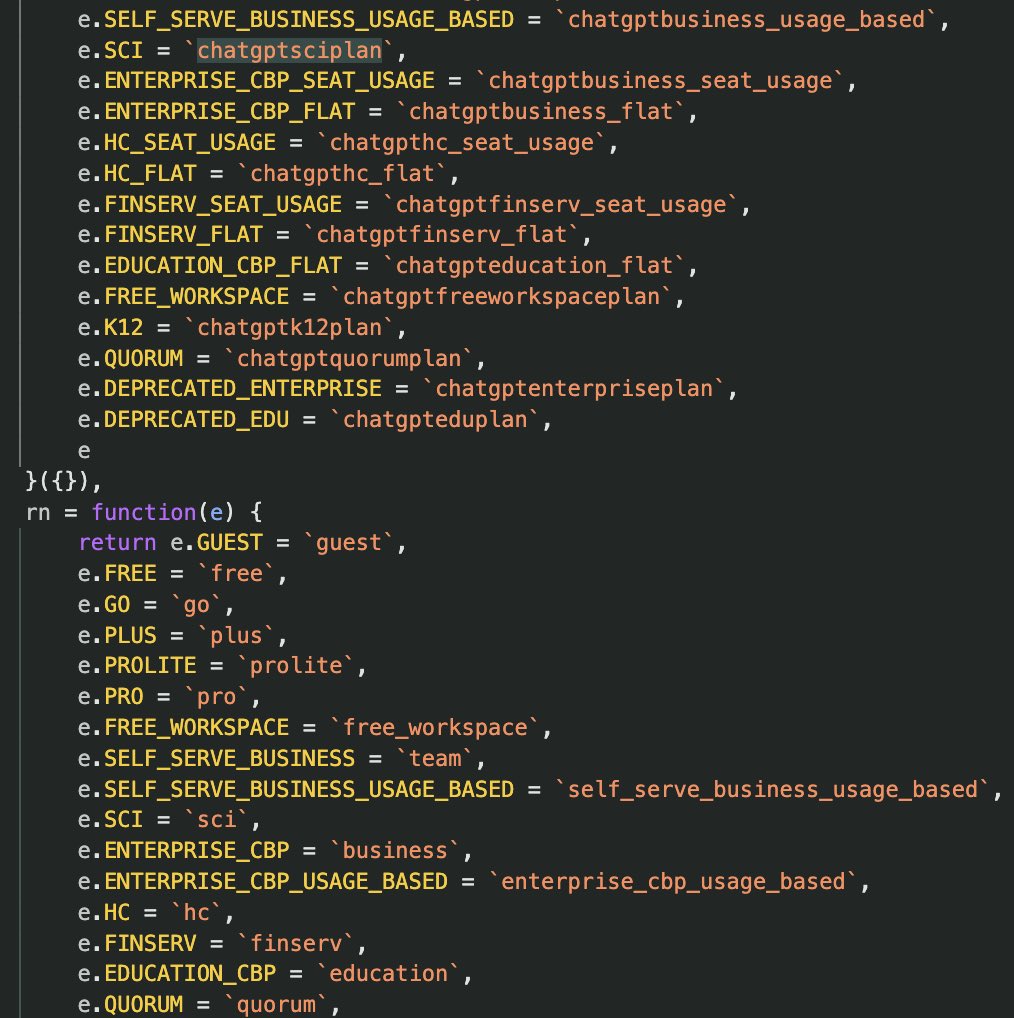
OpenAI appears to be testing a new subscription and experience for science use cases, but it’s unclear if it’ll be available to everyone regardless of their background.
As spotted on X, this new subscription/model is called “ChatGPT for Science,” and references to the feature were spotted on the web build.
References to a new ChatGPT subscription
Right now, OpenAI offers ChatGPT for personal use, Teams, and business/enterprise.
While ChatGPT personal works for everybody, Teams requires you to have a company domain and at least three users. On the other hand, ChatGPT business is restricted to legal entities.
It’s likely that ChatGPT for Science will have similar restrictions, and only verified institutes or universities would be able to use it.
OpenAI has been optimizing ChatGPT for scientific use cases
It’s not the first time we’ve seen OpenAI’s attempt to build models or subscriptions specifically for science use cases.
Advertisement
OpenAI recently announced GPT-Rosalind, which is built on the foundation of its advanced GPT-5.5 architecture, but it’s not just a reskinned ChatGPT with a science prompt.
Instead, it is a highly specialized, purpose-built model designed specifically for enterprise-scale life sciences research.
GPT-Rosalind is locked behind what OpenAI calls a “trusted-access deployment structure.”
This means the model is strictly available to eligible organizations, such as major pharmaceutical companies like Novo Nordisk or verified research institutions, that are conducting legitimate, public-benefit scientific research.
Advertisement
It requires enterprise-grade security and strong safety governance, mirroring and exceeding the strict requirements of ChatGPT Enterprise.
OpenAI may be planning to bring some of these capabilities to all institutions through ChatGPT for Science, rather than locking them to select partners.
In other words, ChatGPT for Science will have special grounding in discoveries and research around scientific topics compared to a regular subscription.
At the moment, we don’t know when ChatGPT for Science will go live, but it’s being actively tested on the web, and an announcement is likely weeks away.
Advertisement
Security teams log 54% of successful attacks and alert on just 14%. The rest move through your environment unseen.
The Picus whitepaper shows how breach and attack simulation tests your SIEM and EDR rules so threats stop slipping by detection.
What just happened? President Trump says that Apple has agreed to work with Intel to design and build its chips in America. In a Truth Social post, Trump complained that “Stupid Presidents” had “let Taiwan and others steal our Semiconductor Factories.”
“When I won my Second Term (Third, actually!), it was clear America needed its Semiconductor Industry to come back to the U.S.A. We design everything, but we need to BUILD it here, NOW!” Trump wrote. “So I decided to help Intel because we need to design and build our Chips right here in America.”
The post comes just over a month after reports that Apple and Intel were working on a chip manufacturing deal. The discussions had been underway for more than a year and recently evolved into a formal arrangement.
Advertisement
It’s no secret that Apple’s reliance on TSMC is becoming strained as AI chipmakers such as Nvidia and AMD battle it out for the most advanced production capacity. Partnering with Intel would help Apple increase its chip capacity as it diversifies its manufacturing base.
Apple and Intel did not immediately respond to requests for comment outside regular business hours, so for now the announcement remains a Trump post rather than a joint confirmation. There are also questions around timing, scale, process nodes, yields, and which components Intel would make.
If this proves to be true, the deal would be a major win for Intel Foundry. Team Blue has spent years trying to convince outside customers that it can again compete at the top end of semiconductor manufacturing. Landing even a limited slice of Apple’s business would give that effort a huge boost.
Apple has spent the decade so far moving Macs away from Intel-designed processors after launching its own Arm-based M-series chips in 2020. This time, however, Intel would be acting as a contract manufacturer for chips Apple designs itself.
Advertisement
Trump has made domestic manufacturing one of the biggest issues of his second term, especially in semiconductors. Apple pledged $500 billion in US investment at the start of 2025, which arrived amid tariff pressure on Chinese imports and possible semiconductor duties. The company later unveiled another $100 billion US investment plan after Trump repeatedly criticized Apple for assembling iPhones overseas.
Trump’s post also mentions the US government’s investment in Intel. Early last year, his administration converted almost $9 billion in federal funding into Intel equity, giving it roughly a 10% stake. The government has also backed tariffs of around 100% on imported semiconductors, with exemptions for companies producing in the US or promising to do so.
This isn’t a sign that US-made iPhones are suddenly realistic. As we’ve noted before, moving final iPhone assembly to America would be wildly difficult, potentially expensive, and time consuming. Chips are a different matter, though. Reliable US capacity from Intel could give Apple a little more breathing room in the world’s tightest chip market.
Supplements are “like a religion” for Pachi Paris, a 29-year-old from Miami who works in finance. So when he and his wife started trying to conceive last year, it felt only natural that he started taking pills meant to boost his fertility, to the tune of $250 per month.
Six months later, “we found it odd that she’s not pregnant yet,” Paris said. “We both got a workup done, and it turns out that I was one that had some health issues going on with my sperm.” That came as a surprise, given Paris is young, works out, and has a healthy diet—but he’s hardly alone.
Beyond taking fertility supplements, men are going to increasingly extreme lengths to optimize their sperm health. They’re icing their testicles, avoiding pornography, and monitoring their semen’s “vitality scores” as part of the so-called sperm-maxxing trend.
While many sperm-maxxing influencers offer classic wellness misinformation—no, you don’t need to replace all your briefs with organic cotton boxers to keep cool down there—and many biohackers are relying on unproven metrics, the trend has an unexpected upside: a large male audience is newly interested in their reproductive health. It comes just as researchers are making the case that men’s well-being plays a key role in fertility—as well as pregnancy health and early child development.
Advertisement
“I’m encouraged anytime the spotlight shifts to male fertility,” says Michael Eisenberg, a professor of urology at Stanford University. “I think it’s been underappreciated for a long time … [and] fertility is a team sport.”
Infertility, or the inability to conceive after a year of trying, affects about one in six people worldwide. Reproductive health has long been seen as women’s territory, given women bear the physical burden of pregnancy. While some studies suggest male factors cause an estimated 30 percent to 50 percent of infertility cases, men are not evaluated in roughly one in four cases.
Men’s health plays a role in whether a pregnancy ends in miscarriage, the mother suffers from preeclampsia—a potentially life-threatening pregnancy complication—or the baby is born with birth defects, though the overall risks are low. Sperm carry epigenetic marks that are sensitive to a man’s environment before conception, meaning lifestyle choices can affect sperm health.
That’s where sperm-maxxers come in, tracking their sperm count, motility (the sperm’s ability to swim to the egg), morphology (the sperm’s shape and size), and DNA fragmentation. It takes roughly two to three months for a new sperm to fully mature, so lifestyle changes to improve sperm health can quickly yield results.
Advertisement
While some viral accountssuggest men eat lots of beef, butter, and raw milk, studies show that diets high in saturated fats are tied to lower sperm count, which makes pregnancy less likely. The Mediterranean diet, rich in omega-3 fatty acids, antioxidants, and fiber, is associated with better sperm quality, including sperm count, motility, and morphology.
Research also points to environmental toxins, such as endocrine-disrupting chemicals and microplastics, as potential culprits of male infertility. Prolonged exposure may cause oxidative stress—an imbalance in the body between antioxidants and unstable molecules known as free radicals, leading to cell damage—which can reduce sperm motility and viability.
Longevity influencer Bryan Johnson famously (or infamously, depending on your perspective) posted last month about allegedly ridding his semen of microplastics and the steps he took. Some of them are just good environmental advice—getting rid of plastic cutting boards, for example—but for fertility-minded men, there are other steps that are likely more important.
We may receive a commission on purchases made from links.
Over time, it’s incredibly easy to accumulate piles of tools in a garage, shed, or home workshop. Unfortunately, this means lots of old rusty junk to sort through when the time comes to clear the space out — especially if the space is that of your grandparents who’ve collected tools for decades. There are plenty of tools that never get used and should be tossed, those worth keeping around, and a rare few that fall somewhere in the middle: Old-school tools that may not be worth using in the modern era, but are worth holding onto or selling off due to their monetary value.
Advertisement
On the whole, just because tools are old doesn’t mean they’re worth a pretty penny; antiquated power tools from defunct brands and rusted hand tools from the early 20th century aren’t guaranteed moneymakers. With that said, there are some that longtime collectors could have around that fetch a few bucks. In some instances, their branding, build quality, rarity, and other factors come into play, making them sought-after pieces of tool history worthy of display or even occasional use.
The next time you’re looking through your grandparents’ garage or sifting through a flea market tool pile, keep an eye out for some of these items. You may just stumble upon a collector’s dream piece.
Advertisement
Russell Jennings auger bits
As mentioned, sometimes tools accumulate value due to the name attached to them. For instance, back in the late 19th and early 20th century, the Russell Jennings Manufacturing Company specialized in tools like chisels and auger bits. The company closed its doors in 1942 when The Stanley Works Inc. — now known as Stanley Black and Decker, the owner of several tool brands — purchased it. In the aftermath, Jennings tools took on the Stanley label, making older Jennings-branded bits rather pricey if you can find a complete set in good shape with the original three-tier wood case.
Should you go antique tool-hunting and find a complete, non-worn out authentic Jennings auger bit set, there could be some decent money in it for you. On the low end, eBay sale records indicate these kits go from around $45 to $60 on the low end to between $150 to over $200 in some instances. Some individual bits have even fetched between $20 and $30 on their own, which isn’t life-changing money, but it could beat having a bunch of century-old auger bits sitting around and collecting dust.
Advertisement
Davis level
A level is a simple yet crucial tool, ensuring a surface is sufficiently straight. The tool has advanced, with some even opting to use red or green laser levels depending on the situation, but there’s still plenty of love for antique models. Look no further than those from the Springfield, Massachusetts-based Davis Level and Tool Company, which dates back to the 1800s. In the modern era, they’re known and sought-after by collectors for their unique shapes and ornate detailing. That’s to say they’re aesthetically a far cry from current plastic or metal levels, and the same goes for their sold prices and desirability.
It doesn’t take much looking around online to tell that antique Davis levels are well-loved among antique tool enthusiasts. Depending on their condition, material, size, and shape, these tools have fetched anywhere from around $30 to $40 on the low end to well-over $400 for more ornate examples. Generally speaking, the wooden levels tend to go for less than those made from cast iron, even if they’re in need of some restoration. No matter the material, though, if you spot a Davis level, it’s more than worth getting ahold of.
Advertisement
World War II-era Snap-on tools
Throughout the Second World War, several companies contributed to the war effort by providing their wares to the United States government and military. Prolific tool-maker Snap-on joined this trend, supplying various hand tools to repair vehicles, appliances, and more. While untold numbers of Snap-on tools didn’t last through to end of the war, many sockets, wrenches, and ratchets did, becoming desirable collector’s items. While some items from the era are only worth around the $15 to $30 mark, others have sold for multiple hundreds of dollars. Ultimately, it comes down to what you have, how many pieces, and what their markings reveal.
Advertisement
Overall, World War II-era Snap-on products will go for more than the average old tool, but some demand significantly more than others. Much of this value can come down to the Snap-on date code stamped onto the tool, which reveals when it was made and, in some instances, for what purpose. Those emblazoned with a G symbol were made for government use way back when, making them wanted among tool lovers, history buffs, and military enthusiasts alike. Thus, if you find some old Snap-on tools with that telltale mark, at the very least it’s a good idea to do some research into their history and potential increased worth almost a century after their creation.
Advertisement
Goosewing axe
While many tools don’t see a lot of use time before breaking down, a rare few go the opposite direction. Some of the longest-lasting tools are surprisingly old yet still useful, going through job after job without fail. Axes are one such type, with there being functional samples that are centuries old still floating around today. Case in point are antique goosewing axes, which had their heyday throughout the 1700s and 1800s as the go-to tool for wood hewing. Given their historical significance, functionality, and durable nature, many antique tool collectors would love to add them to their collections.
As desired pieces, goosewing axes can go for big money on the aftermarket. It’s not unheard of for short-handle samples to fetch between $75 and $200 online, depending on their age and condition. Even the head of such an axe can creep up around $100. In some rare cases, complete samples have even gone as high as $400 to beyond $1,000 at auction, again with elements like size and condition playing a major role in their final sale prices. The moral of the story is, even if that rusty axe in the corner of the garage doesn’t look like much, don’t be so quick to pass it over without doing some research.
Advertisement
H.D. Smith ball peen hammers
Mas abbas/Shutterstock
Hammers are a dime a dozen and have been for decades. With that said, not every simple hammer is an item to disregard when digging through a pile of old tools. Some are worth keeping an eye out for, as they do go for quite a bit all these years after their creation. Look no further than the H.D. Smith ball peen hammer, a specialized tool that reached consumers in the early 20th century. These were known for their high quality and use of Smith’s “Perfect Handle” design that numerous of the brand’s tools used. Now, they’re pretty pricey collector’s items.
Compared to a new ball peen hammer, antique Smith samples aren’t for the budget-conscious. Recent online auction data indicates these hammers can sell for anywhere between $70 to over $100. Per usual, condition is a factor as well as the size of the hammer in question. Based on samples sold online, Smith ball peen hammers tend to sit between 9 and 10 inches in handle length. The Perfect Handle design means the wood portion should stop about halfway up and be rounded off on both ends.
Advertisement
How these tools were selected
Marianvejcik/Getty Images
A thorough process went into selecting these specific old yet valuable tools. The first step involved looking around and what tool collectors and archivists had to say on the matter. This informed which direction the research should take, as these sources pointed out specific brands, types, and certain iterations of antique tools that had proven desirable and valuable. These products also had to be relatively common, excluding anything so old or severely limited in production number that the odds of finding these in a grandparents’ garage or tool sale were slim to none.
From here, qualifying tools needed to have a robust sales records that also proved collectors are willing to drop quite a bit of money on them, at least compared to what modern equivalents or less valuable antique samples might cost. This way, the claim that these specific items go for a pretty penny had sufficient online backing. This involved consulting recent sales from online auction houses like eBay, ensuring that these items do commonly sell for well beyond what people might expect them to go for at first glance.
The prominent researcher is jumping ship at a critical point in the global race to develop the world’s most powerful AI technologies.
Noam Shazeer, the vice-president of engineering at Google and the Gemini AI model co-lead, has announced that he will be leaving the organisation in order to join rival artificial intelligence innovator Open AI.
Shazeer is a key figure in the AI space and his departure comes at a critical moment in the race by organisations to develop the most sophisticated and advanced AI models. Notably, he announced his departure ahead of Anthropic’s plans to become an IPO.
He co-authored a pioneering paper on AI in 2017, exploring the transformer architecture that defines the GenAI of today. He previously left Google in 2021 and founded his own company Character.AI, returning with a team of researchers in 2024, reportedly in a deal valued at roughly $2.7bn.
Advertisement
Commenting in a post on X, Shazeer said, “I’m excited to share that I’ll be joining OpenAI and look forward to working with the exceptional team there. It was a difficult decision to move on. I’m incredibly proud of the amazing team at Google and everything we’ve built together. It has been an honor and a pleasure to work with all of you.”
Shazeer is joining ahead of OpenAI’s anticipated plans to transition into an IPO and according to reports he will act as the organisation’s lead for AI architecture research, where he will essentially study how to build models.
In another comment on X, OpenAI’s Sam Altman explained that he had wanted to work with Shazeer “since the very beginning of OpenAI”, joking that it “only took 10 years” and would be “worth the wait”.
A Google spokesperson said, “We are grateful for Noam’s meaningful contributions to Google over the years and we wish him well.”
Advertisement
Also this week, senior US officials held discussions with several major AI companies regarding the potential for the federal government to acquire shares in their firms, according to Semafor. Reportedly, talks are still underway regarding AI companies ceding AI stakes to the government, with a potential meeting with US president Donald Trump yet to be confirmed.
Sources close to the matter, who spoke on the condition of anonymity, told Semafor that OpenAI’s Altman “has discussed the idea with senior Trump administration officials periodically since the president began his second term”.
Don’t miss out on the knowledge you need to succeed. Sign up for the Daily Brief, Silicon Republic’s digest of need-to-know sci-tech news.
Every buzzword deployed in quest to transform into ‘country that is equipped for an AI world’
The UK Cabinet Office is looking for an AI and Innovation Director who can develop civil servants’ use of artificial intelligence and change the way the civil service works.
The task of persuading public sector workers to love AI involves “re-imagining the future workforce and business model” for the UK’s civil service, promoting adoption of AI tools, “championing, coordinating, and tracking AI adoption” across government departments, and instilling an “AI-first culture,” according to the job advert.
Advertisement
As that list implies, the individual will need to be “a natural influencer” with a “deep understanding of the AI landscape,” both traditional and generative, ideally with experience of building AI services.
“My ambition is for the civil service to be a global leader in AI government transformation, to enable a more productive civil service that achieves world-class outcomes for citizens and a country that is equipped for an AI world,” writes Cabinet Secretary Antonia Romeo in an information pack published with the job ad. “We are seeking an exceptional individual who is an experienced strategic leader, can deliver under pressure, and will help shape the direction of the civil service at a pivotal time.”
The exceptional individual in question will need to be content to serve King and country for a relatively modest £100,000 to £163,000 a year, albeit with generous pension contributions, compared with some private sector equivalents. They will have to agree to an expected assignment period of at least three years, although this is not contractual, and be British, a national of most European countries, or any Commonwealth country. The right to work in the UK is another requirement.
Reg readers who fit the bill can apply by submitting a CV and a 1,000-word statement about why they are suitable by five minutes to midnight on Monday, July 13. While candidates can use AI in applying, “all examples and statements provided must be truthful, factually accurate, and taken directly from your own experience,” so perhaps championing AI adoption should wait until after getting the job given the technology’s propensity to make things up. ®





























































You must be logged in to post a comment Login