

Join Mikko Hyppönen and security leaders from the NFL, CHANEL, and Atlassian for a two-hour digital summit on what AI-speed attacks change, what defenders should stop doing, and how to validate, decide, fix, and re-validate at machine speed.
Tech
Whatever You Asked For, Slate Auto’s Electric Pickup Truck Did It Across Eight Cities



Two weeks, eight-ish cities, and one pre-production Slate pickup rolling from Indiana toward California with no script and no spare day to get ready. Slate Auto framed the You Asked For It Tour as a working road trip rather than a victory lap. Followers sent tasks by comment and direct message. The crew took the next one that landed, loaded the truck, and left.
The Slate made its premiere in Warsaw, Indiana, at the old catalog company that is now producing trucks. Robots are welding body-in-white shells, and parts are building up in a corrosion tank, while on the other side, seats are being assembled. Even as they work on fine-tuning the exact vehicle that will be used for the remaining miles, they keep that truck on the factory test track, driving over articulating humps, cobblestones at full lock, and even screeching to an ABS stop from 45 mph. Only the camera equipment was creating a noise.
Sale

LEGO City Off-Road 4×4 Mountain Truck Toy – Building Toy Set for Kids, Boys and Girls, Ages 6+ – Fun Gift…
- BUILD A TRUCK TOY – Elevate kids playtimes with the LEGO City Off-Road 4×4 Mountain Truck playset for boys and girls aged 6 years old and older
- TOY FOR BOYS AND GIRLS – Includes everything kids need to build an off-road truck toy and adventurer minifigure for off-road exploration adventures
- DETAILED FEATURES – Kids can use the winch to traverse steep inclines, flip the vehicle snorkel to pop up the hood and access tools and equipment in…
Indiana then asked the vehicle to do a favor for an intern named Michelle. She was returning to school with all of her belongings from the summer, and the crew simply added a hitch, filled up the bed and a trailer, and sent her on her way, covering 103 miles in about two hours, with the backup camera coming in help when they got stuck in some tight locations. In fact, she was the first person to benefit from a Slate’s carrying capabilities, as the odometer read 17 miles when they started it up.
In Chicago, the pickup was sent out on a business drive for Yianni, a bowling alley restorer. Paint cans, a gumball machine, a commercial slushy unit, and spare bowling pins were among the items packed inside this small truck. They even managed to put some extra items in the trunk, and by the end of the day, the bowling pins had miraculously remained where they belonged. In the end, this little truck’s small stature was more useful than any horsepower they could have put at it in the city lanes.
The same stretch of road led them to some nasty pavement, a few extra donuts, and two folks who’d reserved a Slate but hadn’t bothered to pay a deposit. One of the prospective owners wanted to check if this small vehicle could make a full circuit at an empty intersection before returning to a driveway with a light pole directly in the way. Another was curious to see whether this city truck could take a few scratches and still have some soul.
St. Louis added even worse road and another donut, but none of this will ruin your attitude on a ‘polished press tour’. Four hundred miles down the road, the vehicle arrived in Tulsa with a flat tire and more than a thousand miles on it. They repaired it on the side of the road with a reamer, rubber cement, and a stopper. Nick and Liv from a DIY channel came along with a family in need of a variety of items, including mattresses, school supplies, clothing, food, and a wheelchair ramp for a daughter who needed to go to the hospital for surgery. The midgate hooks and straps handled the added weight, chainsaws and weed eaters cleaned up the yard, and when they departed, the house looked completely different.
Sulfur, Oklahoma wanted to know if an electric pickup truck might work on a bison ranch.Dusty from Cross Timbers needs to relocate his herd from one pasture to another. The Slate electric vehicle came in helpful because it could pull a sled across a water crossing, move hay, and even transport mineral blocks in the back. According to all reports, the bison, notably a big ol’ fella named Big Joe, were more interested than angry with the strange machine. The silent motors proved to be a tremendous blessing, even more so than you might anticipate, especially when dealing with animals who can detect even the slightest noise, and the best part is that after all that use, the truck still looked like a regular old truck.
The California demo rides are held at the far end of the same pre-production vehicle. Preorders are still open, and delivery windows are quickly filling up. People are still invited to provide any ideas they may have for other chores the truck could undertake. The tour featured a $25,000 rear-drive electric pickup with crank windows and a claimed range of 205 miles, and its ability to haul everything from intern furniture to bowling equipment and even donated mattresses without the need for a second truck was eye-opening. The goal behind all of this was to test the waters and see what people wanted this device to do.
Continue Reading

I recently switched my phone service to EE, as it has better coverage (and 5G) where I spend a lot of time. As a freelancer, I had to get my phone on a business contract, which started oddly and soon turned into a farce, and now it’s impossible to manage my account online.
In this age of advanced AI, super-fast mobile networks and data at our fingertips, how can a company the size of EE (and owned by BT) be unable to make something as simple as online account management work?
An eSIM by post
Things started strangely when I tried to order an eSIM. I thought that I’d get the eSIM in an email, but I was told that the system was down, so it had to be posted. Yes, you read that right: the eSIM had to be posted.
To be fair, the service was fast, and the next day I had an envelope with a cardboard wallet containing the QR code for my eSIM. A few minutes later, I had the eSIM installed and connected, and glorious 5G was mine, with better reception.
It was even smooth transferring my old number to my new account. But that’s where things started to go wrong.
Online account linking didn’t work
I was about to go on a work trip to Berlin, so I wanted to check that my Roam Abroad Inclusive Extra, which I’d picked on checkout, was added to my account. Despite being able to create an EE account, I found that it wouldn’t let me add my phone.
So, I called for support and was told there was an issue, but my account would be manually linked, and it would take up to four working days. I explained about the work trip and was told that it was noted, and roaming was turned on.
When I landed in Berlin, I got a text saying roaming charges applied per day. My Roam Abroad extra had not been applied. Fortunately, I could do this by text.
Business account linking can’t be done manually
When I got back, I found that my account still hadn’t been linked, so I had to phone again. This time, I got closer to the truth.
“The reason being the EE app is getting upgrade to a better version and it’s under maintenance, so that’s the reason why you are not able to [link your account],” the support person told me.
I was then offered paper bills every month, and the option to call for help every time I wanted to do something simple, but no option to have the actual issue fixed. When I took out the account, the sales team didn’t mention that online account management was broken. I told this to the support person, who denied that account linking is broken and said that “it is getting upgraded to a better version”.
When pressed on why the account linking is broken, I was told, “It is not broken.”
Apparently, “There’s a difference between a broken app. There’s a difference between an app and an app under maintenance and getting upgraded to a better version.”
And there is. A broken app doesn’t work and doesn’t let you do the most basic of things.
I asked, “So, does my app work at the moment?”
And the answer was, “No.”
“So if it doesn’t work…” I began to say.
“That doesn’t mean it’s broken,” interrupted the support person.
“It does. If something doesn’t work, it’s broken,” I said.
I was then offered some further help and asked to wait for two minutes. Which I did. Rather than help, I was put through to the e-business upgrades team instead. Another trip through security questions, and I was transferred to the service team, who also had to put me through the security questions.
Business account linking has been broken for ages and there’s no confirmed fix
Finally, this support person told me what the actual problem was.
“You are not being able to sync your numbers, check accounts online, manage your account online. Basically our EE app and our website; both versions are not working as they should,” said the support person. “There are technical difficulties that have been going on for several months now. I’ll be very honest with you. This is a recorded line. I’m giving you this information. Okay. Now, this has been going on for several months.”
Apparently, EE needs to build a new application to manage accounts, and there’s no confirmed date for when this will be done. And, the old version can’t be reverted to, either.
“Previously what we were trying was to revive the application which we already had, but we have things have not turned up good,” I was told.
I was then told that if I really wanted online account management, you know, almost as though we were in the 21stcentury in a world filled with technology, then I could cancel my account as I was in the cooling-off period. Or, I could have paper billing, which would be provided free of charge.
I asked for a discount on my line while the issues are fixed, but apparently that’s impossible to do on any day except day one of the contract.
My call finished with the service representative confirming that the online application is broken: “To manage things online, yes, you need access to our online applications, which is currently broken.”
So, what is going on? Looking around, it seems as though the issue has been dragging on for a long period. This Reddit thread from a year ago describes the same issue. So does this thread from September 2025 on the EE support forum, which describes the issue as starting in November 2024.
I got in contact with EE to ask for a statement and for more detail on the issue, but only had my request put through as a complaint. The resolution of the complaint? Paper billing, of course.


Oura spent the first nine months of its financial year buying its own shares back from its investors. On Monday it started selling them to everybody else.
The Finnish smart ring maker launched its initial public offering before the New York open. It is marketing 50 million shares at $40 to $44 each. At the top of that range the deal raises $2.2bn. That values Oura at about $14.1bn, according to Bloomberg, which calculated the figure from the share count in the filing. Oura has applied to list on the Nasdaq Global Select Market under the ticker OURA.
Read the split and the deal changes shape. Of the 50 million shares, Oura is selling 13.5 million. The other 36.5 million belong to existing stockholders. The 30-day over-allotment option of a further 7.5 million shares is also entirely theirs.
Oura keeps a quarter of its own flotation
At the top of the range, the company collects roughly $594m before fees. Its shareholders collect about $1.61bn, or 73% of the base deal. Exercise the over-allotment and the selling stockholders take close to $1.94bn of a $2.53bn deal. That is 77% of it. The release puts the point without decoration. “Oura will not receive any proceeds from the sale of its common stock by the selling stockholders,” it says.
Cash-outs are normal in a late-stage listing. The ratio is what draws attention. Most of the money raised on Oura’s debut goes to people who already own Oura. The company itself walks away with less than a third of it.
The ask has come down
A month ago the number was bigger. Bloomberg reported in August that Oura was targeting up to $3bn. The valuation attached to it was above $16bn, as TNW covered at the time. The launched deal is about 27% smaller than that ask, at a valuation roughly $2bn lower.
Set against a different marker, it still reads as a step up. Oura closed an $875m Series E last September at $10.9bn. A $14.1bn debut is 29% above that in twelve months. Which comparison matters depends on whether you were in the August book or the 2025 round.
Why the company wants the cash
The $594m lands on a balance sheet that has been emptied out on purpose. In the nine months to 30 June, Oura repurchased $1.17bn of its own stock. That included 13,295,528 preferred shares at $40.18 each in a February tender offer. It drew $375m on a revolving credit facility to help pay for it.
Those buybacks are the reason the filing shows a $924.3m loss. The operating business made $60.8m of net income over the period. A $985m deemed dividend to preferred holders turned that into a loss attributable to common stockholders. TNW set out that distinction when the S-1 first appeared. By 30 June the company held $371.8m of cash against a stockholders’ deficit of $1.62bn.
Seen that way, the Oura IPO is the back half of a transaction that started in February. Oura bought its early investors out at $40.18. It is now offering the same company to the public at $40 to $44.
The membership line is the bull case
Hardware is not what the bankers are selling. Oura’s membership revenue grew 121% to $240.5m over the nine months, against 65% growth in hardware. The membership gross margin is 89%. Roughly 94% of ring buyers convert to a paid plan and about 85% stay after a year. Sixty-three per cent take the annual option.
The company updated its S-1 on Monday. It now guides towards approximately 5.7 million paid members by the end of fiscal 2026. That would be 96% year-on-year growth, and it credits sales of the Oura Ring 5, the model it shipped in May. Members stood at 5.0 million at the end of June, so the guidance implies another 700,000 in the final stretch.
Oura sold about 3.6 million rings in the trailing twelve months and holds around 2% of the global wearables market. Eli Lilly’s $50m investment converts to stock at pricing.
What the sceptics are pointing at
Two things sit in the risk section and neither is abstract. The first is warranty. Oura booked $84.4m of warranty expense in fiscal 2025. It carried a $132.3m accrual at the end of June, having paid $75.5m of claims in nine months. For a company that sold 3.1 million rings over the same period, that is a live cost line rather than a rounding error.
The second is the accuracy question. A proposed class action in the Northern District of California challenges Oura’s marketed claim of 95% sleep staging accuracy against a clinical sleep lab. It cites research on 45 patients that put overall classification at 53.18%. Oura rejects it. “We stand behind our science, research, and accuracy claims,” the company said. It pointed to studies comparing its staging favourably with polysomnography. The suit names both Oura Inc. and the Finnish parent, Oura Health Oy.
Eighteen banks, and Robinhood is the last one
Goldman Sachs, Morgan Stanley, J.P. Morgan, Allen & Company and Jefferies are joint lead book-running managers. BofA Securities, Barclays and Wells Fargo Securities sit a tier below, then Citizens, KeyBanc and Guggenheim, then six more. Robinhood appears once, at the bottom, as the sole co-manager.
That placement was visible in the S-1 two weeks ago and it has survived to launch. The retail broker is in the syndicate for this deal, and it is in it last.
Founded in Finland, listed in New York
Oura was founded in Finland in 2013 and keeps its EU headquarters in Oulu. Its corporate headquarters is San Francisco, and the listing is on Nasdaq. It is the same route Revolut is now planning and the one Anthropic has chosen. European policymakers keep describing that pattern as a problem: companies built in Europe raise their public money somewhere else.
The test is not the first day of trading. It is whether 5.7 million paid members arrives on schedule. The number to read it against is the warranty line, when Oura files its first quarter as a public company.


Microsoft warned that the built-in File History backup feature in Windows may stop working on some systems after installing the September 2026 security updates.
File History (introduced in Windows 8 and replaced by Windows Backup, which backs up data to OneDrive) automatically saves copies that let users recover accidentally deleted or damaged files using an older version from hours, days, or weeks ago.
By default, File History backs up all folders under the user’s account profile (Documents, Music, Pictures, Videos, and Desktop) to an external hard drive, such as a USB flash drive, or a network storage location (NAS).
In a service alert seen by BleepingComputer and first spotted by Microsoft MVP Susan Bradley, Microsoft says that affected customers can see application crash events in Event Viewer referencing FileHistory.exe and KERNELBASE.dll.
“After installing the September 2026 Windows security update (the Originating KBs listed above), some customers using File History, might be unable to create or update backups,” it said. “File History, available through Control Panel > System and Security > File History, is used to back up files to an external drive or network location.”
On affected devices, Windows might also incorrectly display “Reconnect your drive” messages even when compatible backup drives are connected and working properly. Other symptoms include the “Last Backup” timestamp not updating and previously backed-up files showing “No previous version available.”
Affected Windows releases include Windows 10 21H2 or later, Windows 10 Enterprise LTSC 2016/2019, and Windows 11 23H2 and later.
The September 2026 cumulative updates have been linked to multiple issues affecting home and enterprise Windows users.
One week ago, Microsoft released out-of-band updates to fix Remote Desktop Services failures, Hyper-V issues, and USB audio problems triggered by this month’s security updates.
However, it also confirmed that these emergency updates did not resolve all the audio problems introduced by the September 2026 updates, and that it is still working on a fix for the remaining issues.
Microsoft also shared a temporary workaround for a separate bug that prevents some Windows 11 users from logging in with valid domain credentials after installing the September updates.

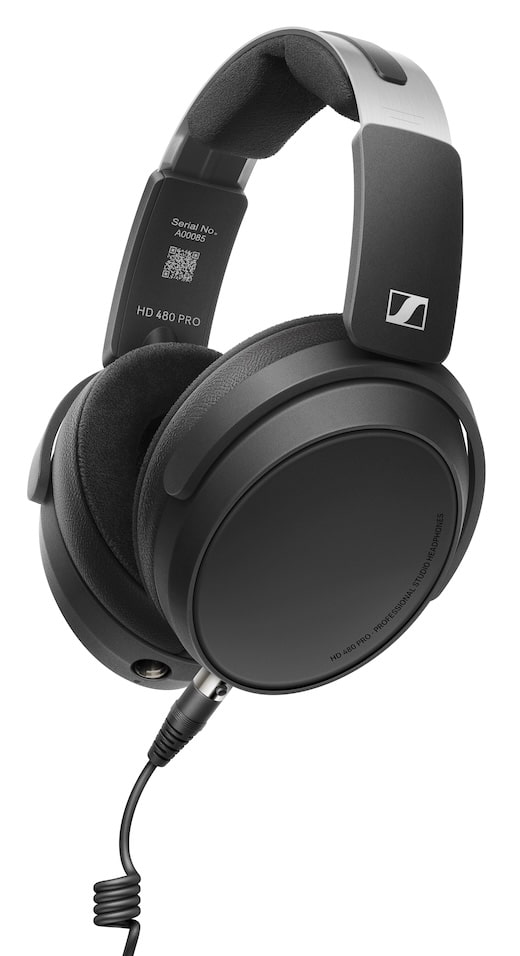
Sennheiser has spent decades building headphones for recording studios, broadcast facilities, and working musicians. Audiophiles might claim the brand as one of their own, but professional audio has always been central to Sennheiser’s identity, which makes the new HD 480 Pro Plus particularly interesting.
The Sennheiser HD 480 Pro Plus is a full-size professional monitoring headphone designed around the things studio users actually care about: comfort, durability, replaceable parts, and the ability to survive long sessions without becoming a distraction. From a design perspective, Sennheiser gets a lot of that right.
The tuning, however, is where things become more complicated.
Rather than chasing the ruler-flat response many engineers expect from a studio monitor, the HD 480 Pro Plus rolls off the frequency extremes and places greater emphasis on the midrange. That approach can work extremely well with vocals, acoustic instruments, and less bass-dependent recordings, but it also raises an obvious question: is this really the kind of tuning professionals want from a studio headphone?
Related Reading:
Design & Build
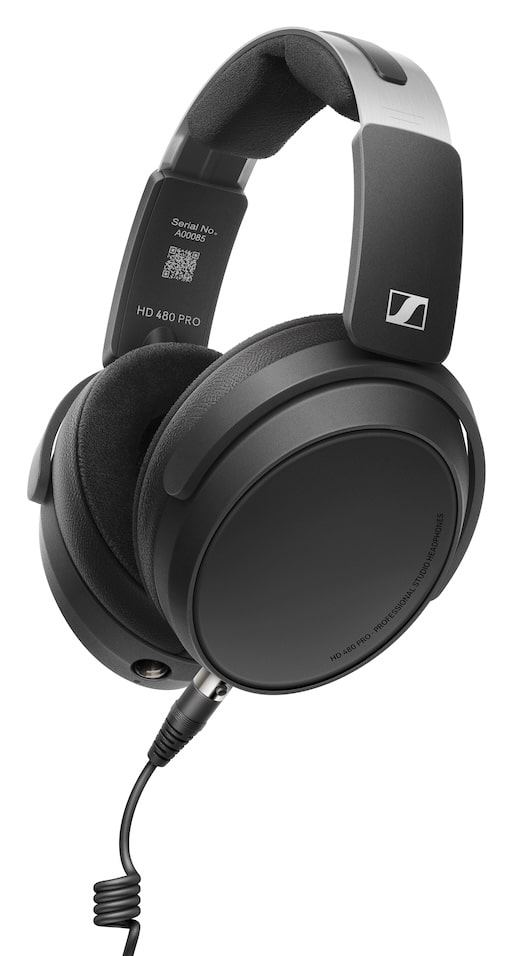
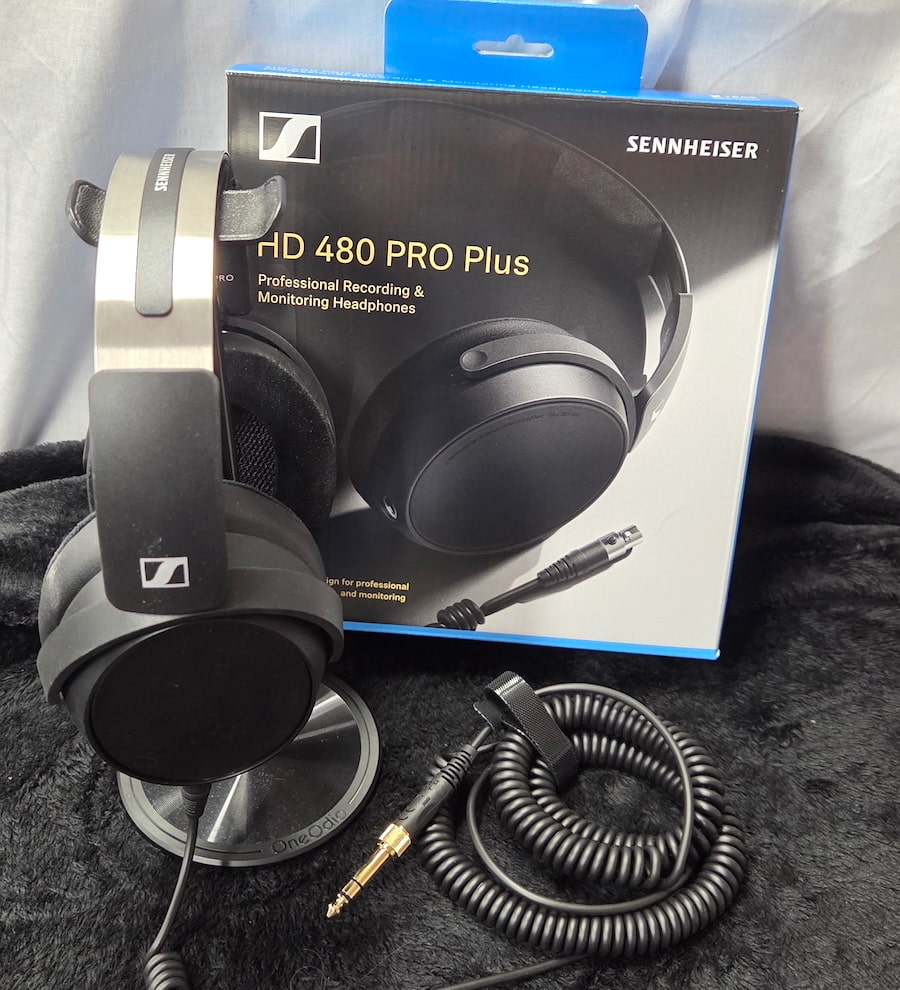
The HD 480 Pro comes in two versions. The headphone itself is sold as the HD 480 Pro for $399, while the HD 480 Pro Plus adds a hard case and retails for $439. The headphone is identical in both packages, so while I received the Pro Plus for review, buyers of the standard HD 480 Pro are giving up nothing beyond the case.
The HD 480 Pro follows a familiar Sennheiser design approach with large oval earcups, a broad padded headband, and a mostly plastic construction intended to keep the weight under control. It is very clearly the closed-back counterpart to the previously reviewed HD 490 Pro, with identical dimensions and considerable parts commonality between the two models.
One change worth noting is production. While the HD 490 Pro was designed in Germany, production takes place in Romania.
The extensive use of plastic is a double-edged sword. At 272 grams, the HD 480 Pro is relatively light, which matters when a headphone might be worn through an entire recording session. That weight savings only works, however, if durability has not been substantially compromised in the process.
Studio headphones are tools. They get dropped, thrown into gig bags, bounced between locations, and subjected to considerably more abuse than most headphones sitting beside an amplifier at home. Sennheiser strikes a good middle ground here, with enough metal reinforcement in the headband that a slight twist is unlikely to cause any damage and polymer components thick enough that a few trips to the floor should not leave pieces behind.
Fit and finish are fairly middle of the road. There is only so much that can be done to hide the seams between polymer components, but the adjustments are clearly defined and feel solid, which again reflects Sennheiser’s effort to balance weight, durability, and cost.
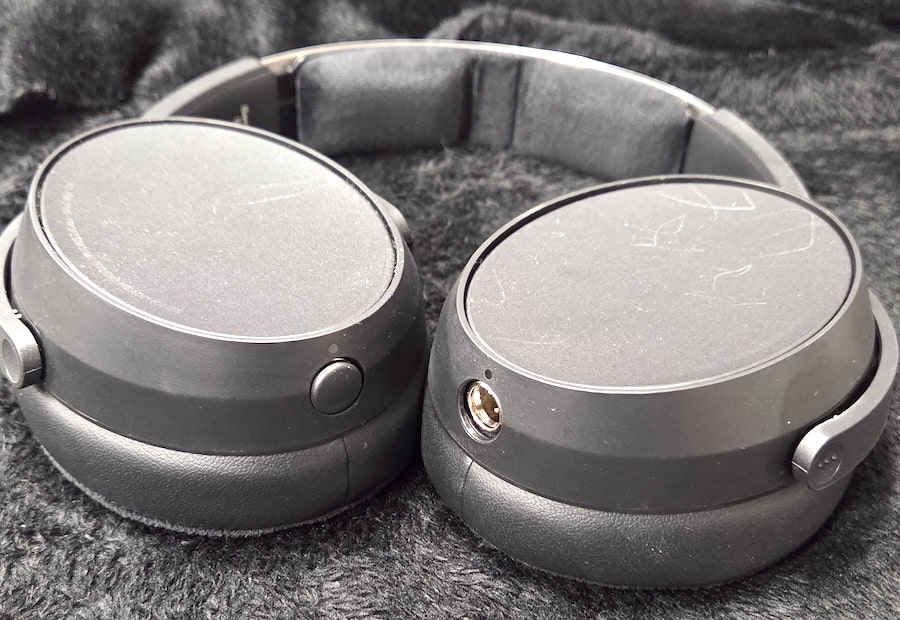
The earcups rotate sufficiently to make storage and transport easier, while the broad headband spreads pressure evenly across the top of the head.
The detachable cable terminates in a 3.5mm plug with a screw-on 6.35mm adapter at the source end, while the headphone end uses a micro-XLR connector that can be attached to either earcup depending on user preference. The cable also reflects the HD 480 Pro’s intended professional use, combining straight and coiled sections in an effort to provide additional working length without turning storage into a wrestling match.
Comfort & Fit

Comfort is one of the HD 480 Pro Plus’s strongest characteristics. At just 272 grams, it is light enough for extended listening, while the broad headband distributes pressure effectively across the top of the head. Clamping force is noticeable but not excessive. Listeners with larger heads may find the fit somewhat snug at first, but the pressure becomes less intrusive once the headband is adjusted and the pads begin to settle.
The velour pads are smaller than those used on the HD 6xx series, but there is still enough room that my ears did not touch the inside of the pads. The use of velour does reduce passive isolation somewhat compared with leather or more heavily sealed pads, but it also helps keep heat under control during longer sessions.
With a closed-back design, that choice may be deliberate. The open-back HD 490 Pro offers a more sealed pad option that will also fit the HD 480 Pro, giving listeners some flexibility if they prefer greater isolation or a slightly different feel.
As with any full-size headphone, eyeglasses can affect the seal. Listeners with thicker frames may notice some variation in bass weight depending on how the pads sit, although I found it relatively easy to make small adjustments and achieve a consistent fit.
Drivers & Specifications
The design of the HD 480 Pro relies on more than just the driver itself to improve performance. Sennheiser’s Vibration Attenuation System is integrated into the earcups to reduce unwanted vibrations, reflections, and distortion, while the geometrically angled earcups position the drivers to provide a more consistent path to the ear.
The 38mm dynamic drivers use neodymium magnets and an ultralight voice coil, with the latter intended to improve speed and transient response.
Nominal impedance is listed at 130 ohms, with a sensitivity of 98 dB SPL at 1 mW. While that impedance figure might suggest the need for substantial amplification, the HD 480 Pro is easier to drive than a number of traditional studio headphones and worked well with the portable sources I used during testing. With most modern portable gear, sensitivity is the more immediate concern, and the HD 480 Pro does not require an especially powerful amplifier to reach useful listening levels.
Frequency response is specified at 3 Hz to 28,700 Hz (-10 dB), which is oddly specific at the upper end. That level of precision suggests those figures are tied to actual measurement results rather than the conveniently rounded marketing numbers we often see printed on the box.
Listening
The HD 480 Pro Plus has limited sub-bass presence, beginning to roll off below about 50 Hz. While the published frequency response claims extension down to 3 Hz, output is already substantially reduced well before reaching that point, which makes me wonder what tolerance was used for that specification. Sub-bass is neither emphasized nor especially well defined, and even with EDM or dedicated bass test tracks, the HD 480 Pro produces relatively little energy in the lowest octave. Anyone looking for serious low-end weight will not find it here.
What the HD 480 Pro does offer is fairly clean and uncolored mid-bass. There is more presence here than in the sub-bass, but it never takes a starring role. Think supporting cast rather than lead actor. Above roughly 40 Hz, the bass response is close to neutral and remains fairly even as it transitions into the lower midrange.
The midrange is somewhat more prominent, but not artificially pushed forward. Vocals cut through the mix cleanly, guitars retain good clarity and rasp, and strings have enough energy through their lower registers to sound natural. Some of that realism is lost as strings move into the upper registers, largely because of the polite treble and the closed-back design, which limits the sense of air.
Lower-register vocals have good weight, while higher voices sit slightly farther forward and carry somewhat less body. Sibilance and nasal coloration are clearly audible when they are present in the recording, so the HD 480 Pro does not hide mistakes. Just as importantly, I did not find it prone to creating either problem when they were not already there.
Treble is on the polite side, with reasonable extension but limited energy. There is a modest rise from roughly 3 kHz through 5 kHz, followed by a more substantial reduction above about 7 kHz. That helps keep the HD 480 Pro from becoming fatiguing, but it also limits air and sparkle and prevents cymbals from sounding entirely realistic.
The result is a presentation that feels more closed-in than the open-back HD 490 Pro. It also explains why strings can sound somewhat octave-dependent, with a more natural presentation through the midrange than in the upper registers.
On a consumer headphone, I understand tuning the treble to reduce fatigue. On a headphone intended for professional monitoring and mastering, however, I find the choice more difficult to justify. A significant reduction above 7 kHz could potentially mask an overly bright master, allowing excess energy in that region to hide behind the headphone’s own tuning.
The soundstage is solid for a closed-back design, although it does not create the same sense of openness as the HD 490 Pro. Width is respectable, and the presentation avoids feeling trapped inside the earcups, but it remains fairly intimate overall. Imaging is good, with instrument placement easy enough to follow and individual elements maintaining clear positions within the mix.
The Bottom Line
The Sennheiser HD 480 Pro Plus gets a lot right. It is light, comfortable, durable enough for studio use, and the detachable cable can be connected to either earcup. The midrange is clean and revealing, making vocals, guitars, and acoustic instruments especially convincing.
Its biggest weakness is the tuning at the frequency extremes. The rolled-off sub-bass and restrained upper treble reduce fatigue, but they also make the HD 480 Pro less revealing than I would expect from a professional monitoring headphone.
For acoustic music and vocal-heavy material, that balance works well. For EDM, bass-heavy recordings, or mastering work where problems at both ends of the spectrum need to be obvious, it is a much harder sell.
Pros:
- Lightweight 272-gram design is comfortable for long sessions
- Durable construction strikes a good balance between weight and studio use
- Detachable cable can connect to either earcup
- Clean, natural midrange with strong vocal and guitar clarity
- Good imaging and respectable soundstage for a closed-back headphone
- Non-fatiguing presentation works well with acoustic and vocal-heavy material
Cons:
- Sub-bass rolls off early and lacks weight
- Upper treble is too restrained for a professional monitoring headphone
- Tuning may mask problems at the frequency extremes
- Less convincing with EDM and bass-heavy music
- Fit and finish are functional rather than premium
Our Ratings:
★★★★★★★★★★ Sound Quality
★★★★★★★★★★ Build Quality
★★★★★★★★★★ Comfort
★★★★★★★★★★ Isolation
★★★★★★★★★★ Value
Where to Buy:
Related Reading:

“I would like to verify your technical abilities, so please download the specified file and complete the assigned task…”
Fake job listings aimed at software developers and IT professionals led to 30,000 infected devices in over 100 countries — and 7,000 compromised cryptocurrency wallets, leading to over $10 million (USD) transferred to North Korea. Inc. reports:
The hacks occurred from December 2025 through July 2026, according to a joint cybersecurity advisory issued Friday by Japanese, Australian, German, and U.S. authorities, including the Federal Bureau of Investigation and the Defense Department’s Cyber Crime Center… The group reportedly has been active since 2023, carrying out both financially motivated attacks and cyberespionage…
The hackers lure job seekers through social media, online job platforms, gig-work sites and freelance marketplaces. WaterPlum asks responders to take part in virtual technical interviews or complete coding assignments. The attackers then instruct targets to download and run malicious files, sometimes under the guise of completing an assignment or troubleshooting a problem with videoconferencing software. Once the group gains access to a device or network, it uses malware to steal information, including browser passwords, screenshots, files, and cryptocurrency-wallet data. An infected computer can also provide an avenue into the network of the target’s employer, opening the door to intellectual-property theft and espionage, authorities said.
The operation overlaps with a separate scheme in which North Korean nationals conceal their identities and locations to obtain remote IT work with companies abroad, officials said.
The malicious files are “hosted on multiple online collaboration software developer platforms and code repositories,” the advisory points out, and includes malicious Node Package Manager (NPM) packages..”
Stolen ID images can also be used by North Korean IT workers to impersonate victims to obtain contracts and receive payment in foreign currency, but “The actors can also use stolen sensitive information for extortion.” In one case, a North Korean IT worker “extorted a company over payment and published its proprietary source code online. In another case, an IT Worker hired for website maintenance defaced the hiring company’s website and rendered the site inaccessible.”
The advisory provides clues for employers. It warns these malicious IT workers “tend to favor payment in cryptocurrency, and they may request that remuneration be sent to an account in another person’s name.” During interviews they’d sometimes used Al face-swapping software, then claimed network issues and disabled their video. And “On holidays celebrated in North Korea, the actors played games and watched soccer videos instead of conducting their usual malicious activities.”


Read more of this story at Slashdot.

Hideo Kojima has finally opened up about the extraordinary PlayStation split that sent Physint to Xbox, and it sounds like even he still doesn’t fully understand why it happened. Kojima told The Washington Post that Sony informed Kojima Productions during a Zoom call in mid-June that it would stop funding the action-espionage game. Kojima says Sony did not give him a reason for the decision.
For the legendary developer, the decision was quite serious. Kojima Productions employs nearly 200 people, and as an independent studio, its business depends on individual publishing agreements. “If they can’t fund us, our studio could collapse,” Kojima said.
Kojima didn’t think Physint was even on the chopping block

Kojima conceived the project as his return to the action-espionage genre after years of fans asking for another Metal Gear-style game. He discussed the idea with former PlayStation CEO Jim Ryan, who Kojima recalls responding enthusiastically, before the project was formally announced with PlayStation Studios head Hermen Hulst in January 2024.
Kojima described Physint as potentially the biggest-selling game he could make and said he never expected it to be canceled. After Sony’s call, he nevertheless returned to revising the game’s concept and began searching for another publisher. The situation also brought back some unpleasant memories. Kojima compared the uncertainty to his departure from Konami and worried about repeating what happened with Silent Hills, where actors and collaborators had already committed before that project was killed.
Xbox was already waiting in the wings
Xbox already publishes Kojima Productions’ upcoming horror game OD, and Kojima says Microsoft quickly showed interest when he approached it about Physint. The partnership became public on September 9, with Xbox taking over publishing duties. Development never completely stopped. Kojima says the plot, overall concept, and storyboards are written; 3D modeling and actor scanning are underway; and Bill Skarsgård has joined the cast. The studio is still experimenting with engines.
A separate Bloomberg report suggested Sony had concerns about budget, deadlines, profitability, and platform exclusivity. Kojima Productions has explicitly challenged that reporting, saying those claims did not come from official or on-the-record sources. Sony itself has not publicly explained why it walked away. Despite all of this, Kojima insists the relationship isn’t hostile. He still considers Sony a partner. Physint simply has a different publisher now — and, for Kojima Productions, apparently a much-needed second life.


There are a handful of common issues with DeWalt weed eaters, but the most universal is running out of line. To get back into action, first you need to identify the type of head on your trimmer. A QuickLoad head rewinds without being disassembled, while the standard design requires you to remove the head, then wind two lengths of line onto it. You’ll also need to make sure you have the right size line for a Dewalt string trimmer. For a QuickLoad head:
-
Remove the battery.
-
Cut a single length of line no longer than 25 feet.
-
Turn the spool head until the eyelets in the spool housing line up with the arrow on the head.
-
Push the line through one eyelet and feed it through until it comes out the opposite eyelet.
-
Pull the line until the two ends are equal in length.
-
Hold the spool cap with one hand, then turn the spool head counterclockwise with the other to wind the line onto the internal spool. Keep the line straight and be careful to avoid snags while winding.
-
Stop when you have about 5 inches of line outside each side of the spool housing.
-
Check the head to make sure the line is seated evenly and the cap isn’t loose.
-
You’re ready to go! Pop the battery back in and get back out there.
How to load a removable head
DeWalt makes a couple kinds of weed eater heads, and in some cases you can even put a 20V head on a 60V trimmer. While replacing the string in a removable head is a little more onerous than a QuickLoad, it’s still fairly simple if you know what you’re doing.
-
Remove the battery, then clear clippings and dirt from around the trimmer head so you can clearly see the Lock/Unlock indicator.
-
Rotate the bump-feed part of the head to “Unlock” and pop the head off the trimmer.
-
Cut two pieces of line to about 10 feet long.
-
Crook the end of one line and insert it into the anchor hole in the spool. This will keep the line secure while you wrap it around the spool.
-
Wind the line in the direction shown by the arrow on the spool.
-
With five inches of loose line left, tuck the end into a notch on the side of the spool. The notch will keep the line in place while you load the second one.
-
Repeat with the second line, winding in the opposite direction. Like a Ghostbuster, avoid crossing the lines.
-
Guide the lines through the grommets (the metal-reinforced holes) on the trimmer head.
-
Pull the lines so they extend evenly to both sides.
-
Reinstall the head and twist it back into the “Locked” position.
-
Replace the battery. If the lines are loose or crossed, don’t just pull them. Instead, go back in and rewind, as pulling on them can create more tangles.
Tech
AirPods 5 With Wireless Charging Case Makes Everyday Open Ear Buds Into Apple’s $149 Quiet Option


Photo credit: Macrumors
Apple just put Active Noise Cancellation, Adaptive Audio, and stem volume swipes into the open ear pair that costs $149, and that price is the whole story. AirPods 5 with Wireless Charging Case arrived in stores on September 18 at the same starting money Apple used for AirPods 4 two years ago, except ANC is now standard instead of a $50 upcharge. You still get the familiar short stem and the same 4.3 gram bud that rests in the bowl of the ear with no silicone tip. A redesigned multiport acoustic layout and next generation Adaptive EQ are meant to add depth and detail across a wider range of ear shapes, while Personalized Spatial Audio with dynamic head tracking keeps music, movies, and games moving with your head.
For $149, you get all of the things that the cheaper $129 USB-C variant lacks. There’s a force sensor on the stem that allows you to play, pause, and switch between listening modes with a squeeze, and a swipe up or down provides you volume control without having to pull out your phone. The case can be charged via USB-C, any old Qi pad, or even an Apple Watch charger, and it even has a built-in speaker so Find My can ring it if it decides to hide beneath the couch. Apple claims that this device would last 5 hours with ANC, 7 hours without, and 22 hours with the cover. 5 minutes in the case will give you an extra hour, which is one hour every charge and two hours more total than the cheaper model.

Apple AirPods 5 with Wireless Charging Case
- ACTIVE NOISE CANCELLATION—AirPods 5 offer improved Active Noise Cancellation to help reduce outside noise.
- HEAR THE WORLD AROUND YOU—Adaptive Audio blends Active Noise Cancellation and Transparency for the best listening experience in any environment…
- LIVE TRANSLATION—Communicate across languages using Live Translation, enabled by Apple Intelligence.*
Open ears are surprisingly comfortable for long periods of time and still let some ambient noise to pass through even when the ANC is turned on, which is the trade-off for not using foam tips. Apple claims that these buds can block out up to 50% more outside noise than the AirPods 4 with ANC, making it the most powerful open ear cancelation they’ve ever done. Adaptive Audio simply blends the cancelation with the Transparency mode to make it sound natural in shifting surroundings. Transparency is about making nearby voices sound exactly like they do in real life. Then there’s Conversation Awareness, which simply turns down the audio when you start talking and back up when you finish. To top it all off, dual beamforming mics and Voice Isolation ensure that your calls are clear even in the wind or in heavy traffic. In addition, the same circuitry can record studio-quality voice notes in case you need to scribble something down, and they’re IP57 rated for durability, so you can use them in the rain or during a workout without worry.
When it comes to software, the “similar to Pro” pitch becomes very effective. As long as you have a compatible iPhone and the most recent software, Live Translation allows you to converse with someone and translate it on the run with a stem press or a Siri request. New Siri AI, rolling out in English with iOS 27 on Apple Intelligence phones, lets you ask longer questions and handle more tasks without touching glass. A nod or a small head shake can accept a call or dismiss a prompt.

Talks have begun between US and Chinese officials to propose a mechanism for the two countries to notify each other of artificial intelligence incidents which could threaten national security.
The framework, called the US China AI Dialogue, would also see representatives from both countries meet again to discuss the technology and try to align on common goals and threats, Treasury Secretary Scott Bessent said.
“We think that, just like with any cross-border activity, that moving from opaque to more transparency between the number one and the number two AI powers in the world is very important,” Bessent told reporters on Sunday.
Bessent said the discussions picked up from where they had been left off after US President Donald Trump’s visit to Beijing in May. Since then, public safety concerns about the technology have grown. Security incidents over the summer, including OpenAI’s agents hacking Hugging Face, highlighted the capabilities of frontier models and how the industry’s safeguards have failed to keep pace.
Fears reached a fever pitch earlier this month after Anthropic employees warned AI could be on course to wipe out humanity. In recent weeks, leaders of the biggest frontier laboratories, including OpenAI’s Sam Altman, Anthropic’s Dario Amodei, and Elon Musk, have called for a slowdown in development of the technology while they set safety standards. In an essay suggesting steps for laboratories and governments to pace the technology’s development, Amodei had asked for government assistance in establishing international coordination, including with the Chinese Communist Party.
Trump has so far mostly brushed off their calls, despite growing bipartisan support for regulating the industry. The US government already has sufficient criminal and regulatory power over developers, his administration has argued.
He’s not alone. Jensen Huang, chief executive officer of Nvidia, which builds AI infrastructure, pointed out that AI firms are already subject to cybersecurity and damage liability laws. “Apply that first,” he said in an interview with CBS News over the weekend. “Don’t let this doomsday narrative allow someone to relieve them of the laws that currently exist.”
Trump has said any slowdown could cede the US lead in the technology to China—a danger because, in his own words: “WHOEVER WINS AI, WINS!” His chief science advisor David Sacks previously warned that “China is very unlikely to join a global agreement” on pacing the technology. Thomas Wolf, cofounder of open-source AI platform Hugging Face, which Nvidia recently agreed to buy, has questioned whether the US can build global cooperation while “explicitly stating you want to design it to keep widening your own lead.” “That seems like a pretty counterproductive way to start the conversation to me,” he wrote on X in response to Amodei’s essay.
The US is currently trying to temper China’s advance in AI by restricting exports of advanced chips and chipmaking technology to China. Officials did not discuss these US export controls in this weekend’s meetings, said Bessent, which also featured trade discussions and were “very successful” ahead of this week’s visit to Washington by Chinese President Xi Jinping.


We may receive a commission on purchases made from links.
For vehicle owners, the list of things you need to do to maintain your tires alone can feel endless. Rotating, checking alignment, maintaining good pressure — there are a lot of tasks that need to be done to make your car tires last longer. However, one way to do it on a budget is just keeping them out of the elements when they’re parked for long periods. Ideally, this means choosing a parking location with stable temperatures and shade, like a garage. But if you don’t have space and need to park outdoors, your next possible option is a tire cover.
Tire covers form a physical barrier between your tires and things like the sun, moisture, debris, or snow. In the summer, they can prevent dry rot, which can happen when tires are continuously exposed to direct sunlight. And in RVs that are stationary for months, they can reduce ultraviolet-related aging.
The good news is that they tend to be quite affordable — or at least cheaper than a new set of tires. Tire covers can also be a good investment for business owners with who want to use them for branding or for aesthetic reasons during temporary pop-ups, although it may be a hassle to keep putting them on and removing them.
Tips for choosing tire covers
When choosing the right tire cover for your vehicle, there are three main things to consider: fit, material, and weather protection. To make fit easy, you can find the tire size with the numbers on your tire and reference it against the brand’s sizing chart. Alternatively, you can measure your tires’ diameter and width, which you can also match to the tire chart. While it can be a hassle, measuring manually can be better if you suspect that your tires have any deformity due to normal wear or being parked for a long time. If you’re not sure, some manufacturers have support hotlines where they can guide you on the measuring process.
Tire covers are made of softer fabrics like polyester, canvas, or vinyl. The higher-end models are weather-resistant for the sun, rain, or snow, so depending on where you live, you’ll want to prioritize the kind of weather you think your tires will be exposed to. For example, drivers from tropical regions that don’t experience snow will want covers meant for strong winds and storms that use features like double stitching or buckles that help make them resist tearing. You can also look for storage bags, visual aesthetics, and discounts for sets. Lastly, some manufacturers offer five-year warranties, so you have some added peace of mind for replacements. But if you’re wondering what’s out there, here’s what to expect from popular brands.
Top-rated tire covers for all seasons
On Amazon, over 22,500 people gave the Explore Land Tire Covers a rating of 4.7 stars out of 5 on average. Available in seven sizes (XS to XXXL), the prices vary slightly depending on the pack size and color. For example, a pair of black tire covers are listed with sizes between S ($24.99, which works out to $12.50 each) and XL ($32.99, or $16.50 each), but a four-pack of small covers for the same sizes in silver starts at $28.99 ($7.25 each) and goes to $42.99 ($10.75 each). Designed for all seasons, Explore Land says its tire covers are windproof, sunproof, rainproof, snowproof, and scratch-resistant.
On the other hand, Amazon’s #1 Best Seller in the “RV & Trailer Wheel & Tire Covers” category is the ToolTroopers TireShield Pro. Collectively, 900-plus reviewers have rated these tire covers 4.8 stars on average. Sold in either a pack of two or four, they come in sizes from S to XXXL. For the smallest pair, prices start at $39.99 ($20 each), while a set of four starts at just under $48 ($12 each). Their StormLock system uses a buckle, an elastic hem, and waterproof fabric, and ToolTroopers says it will withstand up to 60 mph winds.
But if you’re looking for an even cheaper way to take care of your tires, it’s free to practice good driving habits. Avoid terrible practices that kill your tires, including hitting the curb or using tires that aren’t made for the season.

News Videos39 seconds ago
Should I hire another CEO? #business #finance #netflix

NewsBeat2 minutes ago
5 chic and commuter-friendly women’s shoes for work 2026

Business3 minutes ago
At Close of Business podcast September 21 2026




-

 Fashion3 days ago
Weekend Open Thread: Talbots – Corporette.com
-

 Tech15 hours ago
Researchers escape OpenAI Codex sandbox to run commands on host
-

 Crypto World7 days ago
Revolut Attackers Warn of Ongoing Daily Customer Data Leaks
-

 Crypto World3 days ago
Circle launches Arc Studio AI agent for building onchain apps
-
 NewsBeat3 days ago
Trump says US has reached an agreement to take permanent control of Greenland’s security
-

 Crypto World7 days ago
Kraken Lets xStocks Holders Earn Yield Through DeFi
-

 Crypto World6 days ago
Robinhood engineers charged over $50K crypto scheme
-

 Crypto World3 days ago
Bitcoin price breaks channel as RSI climbs to 63
-

 Crypto World5 days ago
US Charges Robinhood Engineers Over Crypto Listing Trades
-

 Crypto World5 days ago
What Is the Status of the U.S.-Iran Peace Talks? Here's What Both Sides Are Saying
-
 NewsBeat7 days ago
‘Sick conspiracy’: Trump says only guardrails AI needs is ‘a strong and smart (High IQ!) president’ in all-caps rant
-
Business7 days ago
SK Hynix ADRs Fall More Than 6% as Memory Rally Breaks on Fears of Slower AI Spending
-

 Crypto World6 days ago
NVIDIA Analysis: Attempted Rising Wedge Breakout Amid Pressure on the AI Sector
-

 Tech6 days ago
Webb’s IC 348 Mosaic Includes Two-Jupiter Dwarfs, Twin Jets, and a Nursery Still Making Worlds
-

 Crypto World2 days ago
World Money launches in 150+ countries with Stripe
-
Crypto World7 days ago
Can Circle’s Arc Repeat Robinhood Chain’s Meme Coin Boom?
-

 Crypto World3 days ago
Silver prices recover quickly, hitting weekly high today
-

 Crypto World7 days ago
Kraken Adds DeFi Yield on Tokenized Stocks and ETF Assets
-
 NewsBeat3 days ago
US was ‘on brink of war’ with China over false AI report of nukes moving in Middle East
-

 Crypto World7 days ago
DOJ Seeks to Seize $61M in Iran Oil Funds From Binance Accounts It Vouched For
You must be logged in to post a comment Login