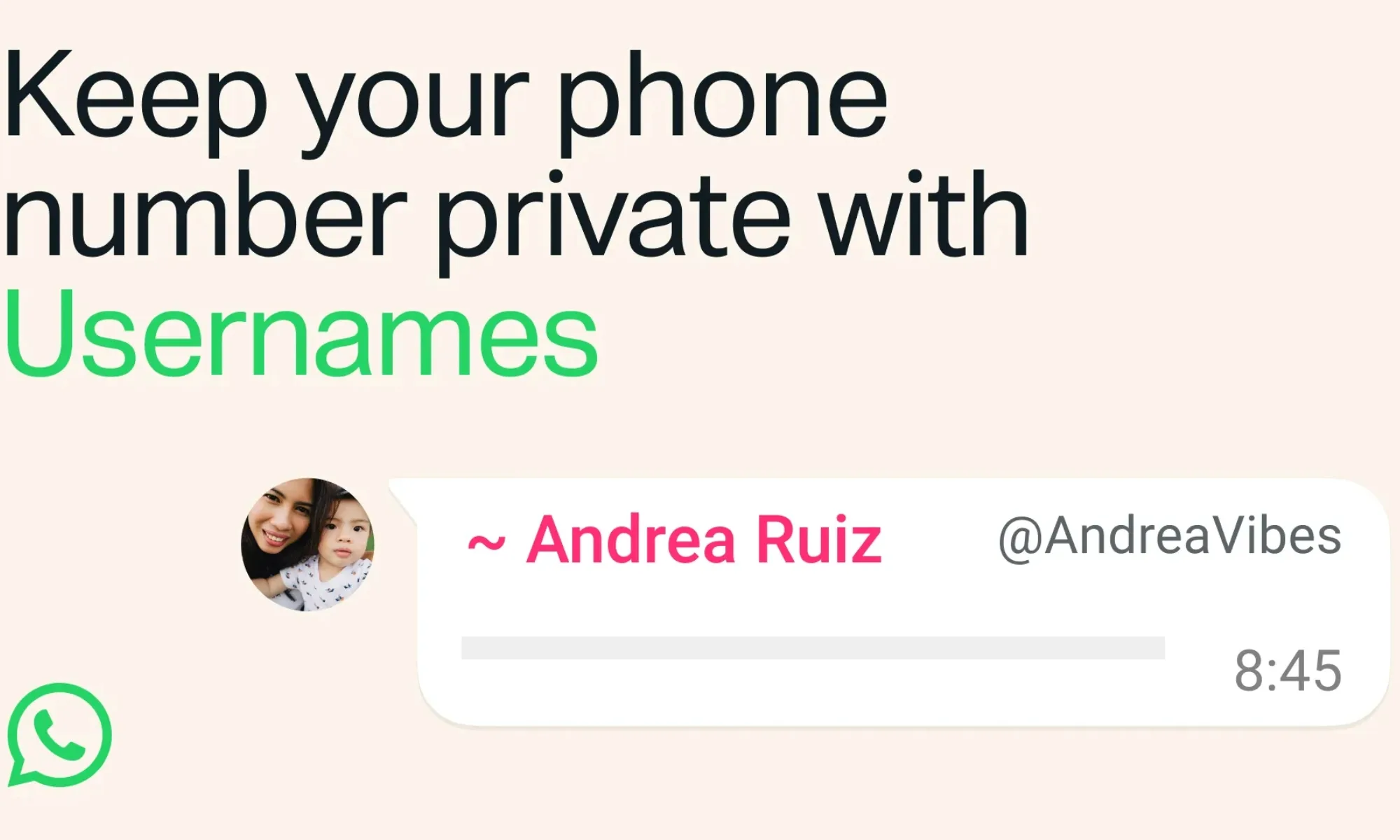
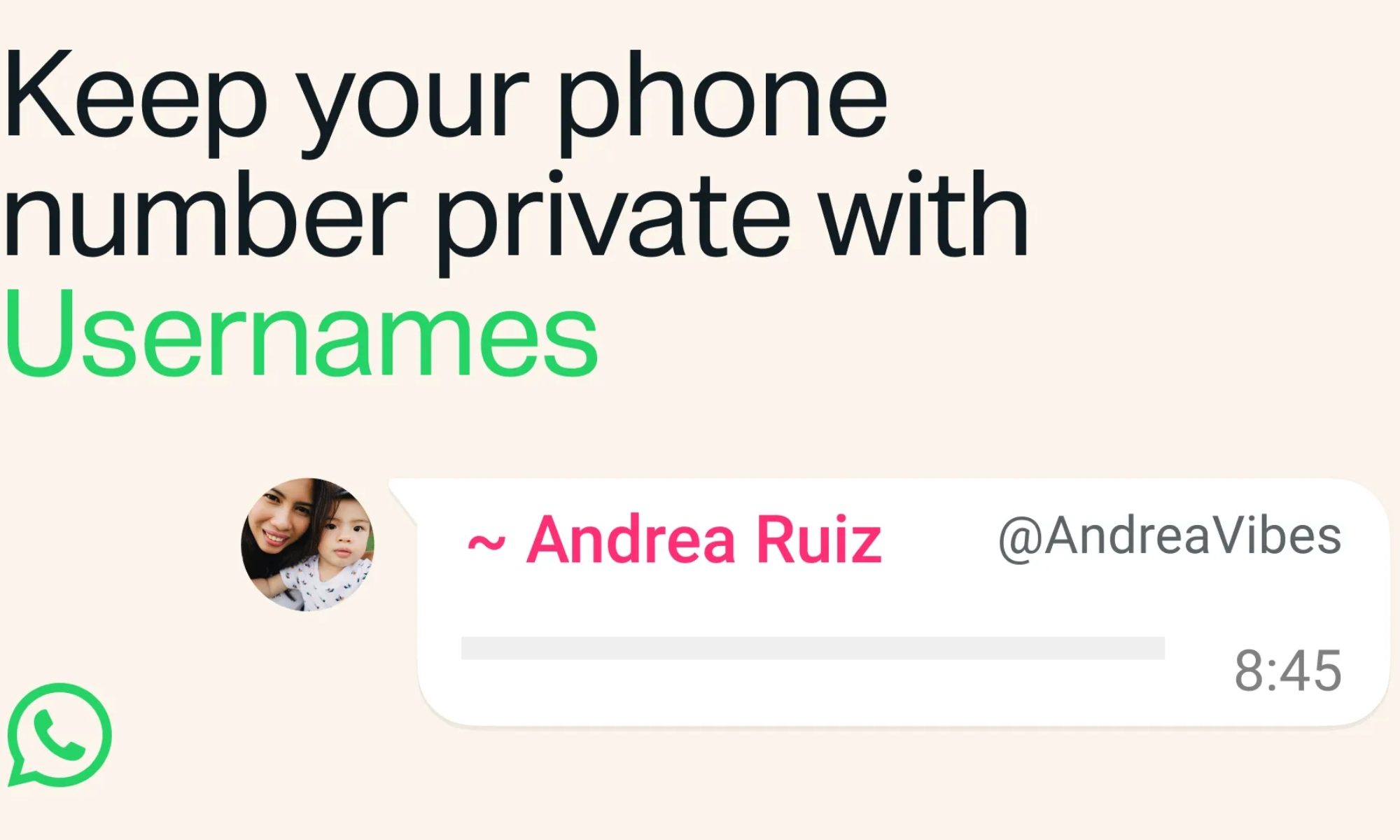
WhatsApp’s long-awaited username feature is now officially rolling out to users. But almost as soon as it was announced, many began asking an obvious question: won’t this make it easier for scammers to message strangers? Now, WhatsApp has stepped in to explain why it believes that won’t happen.
WhatsApp says usernames aren’t as open as Telegram’s
Much of the concern stems from comparisons with Telegram, where anyone can search for a public username and immediately start a conversation. Several users on X argued that hiding phone numbers improves privacy but also removes a layer of accountability that helped identify suspicious contacts.
usernames are our latest step to give our users more private options for how they show up in the app. it’s entirely optional and most users will choose unique usernames, but we’re mindful that some people want consistency in how they show up across apps.
As the rollout began, WhatsApp responded directly to users on X, explaining that its implementation works very differently. For starters, there won’t be a public directory or username suggestions to help people discover accounts. Instead, someone will need to know your exact username before they can even try to contact you.
we’ve built multiple layers of defense against scams into usernames: the optional username key limits who can reach you with your username and unlike Telegram, they need to know the exact username to message you. we will rate limit how many new people any account can contact,…
The company also revealed another privacy layer called a username key. If users choose to enable it, nobody can message them using their username unless they also know that key, adding an extra hurdle for unwanted messages. WhatsApp says it has built several anti-abuse measures into usernames from day one. The company will rate-limit how many new people an account can contact, block repeated attempts to guess someone’s username key, and use existing systems to detect and remove impersonation or other suspicious activity.
Furthermore, even if someone does message you, WhatsApp says the app will continue to provide useful context, including whether the sender is a new account, already in your contacts, shares a mutual group with you, or is based in another country. Users will still have the same options to block, report, or ignore unwanted conversations.
Advertisement
Privacy comes with new responsibilities
The funny thing is that WhatsApp’s biggest challenge isn’t the technology; it’s changing user habits. On most social platforms, people try to grab a username that matches their real name. While WhatsApp emphasizes there won’t be a public directory to browse, using your real name could still make your handle easier to guess. If privacy is the ultimate goal, choosing a more unique username may be the smarter move.
WhatsApp
As usernames gradually roll out to more users, it’ll become clearer how well these protections hold up in the real world. But one thing is already clear: WhatsApp knew the scam concerns were coming, and it has designed usernames to prioritize privacy over discoverability, making them far less open than many users initially feared.
Hacks don’t have to be practical but it helps if they are educational or clever or amusing, as [Ray Foss] demonstrates with his auto-docking Steam Controller.
It’s an open-source web application that combines a camera, a Steam Controller, and some clever software for the sole purpose of saving the user from the tyranny of having to manually set the controller onto its magnetic charging puck. Instead, one can simply lay the controller down nearby and let the computer do the rest of the work.
First one fires up the web interface, ensures a webcam has a good top-down view of both the charging puck and the controller, connects wirelessly to the controller, then clicks a few points on the camera view to tell the system where things are.
After that, the system buzzes the controller’s haptic feedback motors to make it skitter across the desktop until — guided by the camera and implementing obstacle avoidance — it docks successfully with its magnetic charging puck.
Advertisement
It may not be super practical and may even seem a bit Rube Goldberg-esque, but it’s fun and demonstrates a few interesting things. One is moving a controller via slip-stick friction by asymmetrically pulsing the feedback motors. Another is automatically reducing the pulse frequency to make smaller movements when it gets close to the charging puck, for finer control.
The computer vision part also ignores anything in expected cable locations, removing the need to deal with them algorithmically. WebHID via the browser takes care of talking to the controller, and confirming a successful docking by watching messages to detect when charging has begun.
Upon completion of the deal, the French energy services giant will combine Cognite with its own industrial software business, Aveva.
Schneider Electric has agreed to acquire industrial data and AI software company Cognite in an all-cash transaction worth $3.1bn.
Upon completion of the deal – which will see Schneider acquire 100pc of Cognite’s share capital – the French energy services giant will combine Cognite with its own industrial software business, Aveva.
Specifically, Schneider plans to integrate Cognite’s capabilities into Connect, Aveva’s cloud-based industrial intelligence platform, which uses a suite of shared software services to “achieve rapid and reliable integration” of industrial data, models, applications, and AI and analytics.
Advertisement
Cognite, founded in 2016 by Geir Engdahl, John Markus Lervik and Stein Danielsen, specialises in industrial software to improve production efficiency in areas such as energy and process manufacturing, among others. Last year, the company’s annual revenue exceeded $170m.
Originally headquartered in Oslo, Norway, Cognite – which currently employs more than 800 people globally – moved its HQ to Arizona in the US in 2025.
“Cognite has built something rare, a truly industrial-grade AI platform that turns the complexity of operational data into a competitive advantage,” said Schneider Electric CEO Olivier Blum.
“By bringing Cognite into Schneider Electric and AVEVA, we unite the world’s most comprehensive energy management and automation infrastructure with the software and AI capabilities to make it natively intelligent.”
Advertisement
The acquisition is expected to be completed “in the coming quarters”, according to Cognite, subject to customary closing conditions and regulatory approvals.
Schneider’s acquisition of Cognite comes amid an increased focus on industrial AI in Europe.
In a speech at the Hannover Messe trade fair, Merz warned that if Europe is to boost productivity, industrial AI will need more regulatory freedom than, for example, consumer AI.
Advertisement
“I will push to ease the regulatory burden in the EU on AI and, where possible, to exempt industrial AI from the current regulatory straitjacket that is too tight for AI within the European Union,” he said at the time.
Meanwhile, Busch warned in an interview at the event that Siemens would prioritise investments in the US and China if the EU did not lighten its regulations in a field he said is already subject to sector-specific regulations.
Don’t miss out on the knowledge you need to succeed. Sign up for the Daily Brief, Silicon Republic’s digest of need-to-know sci-tech news.
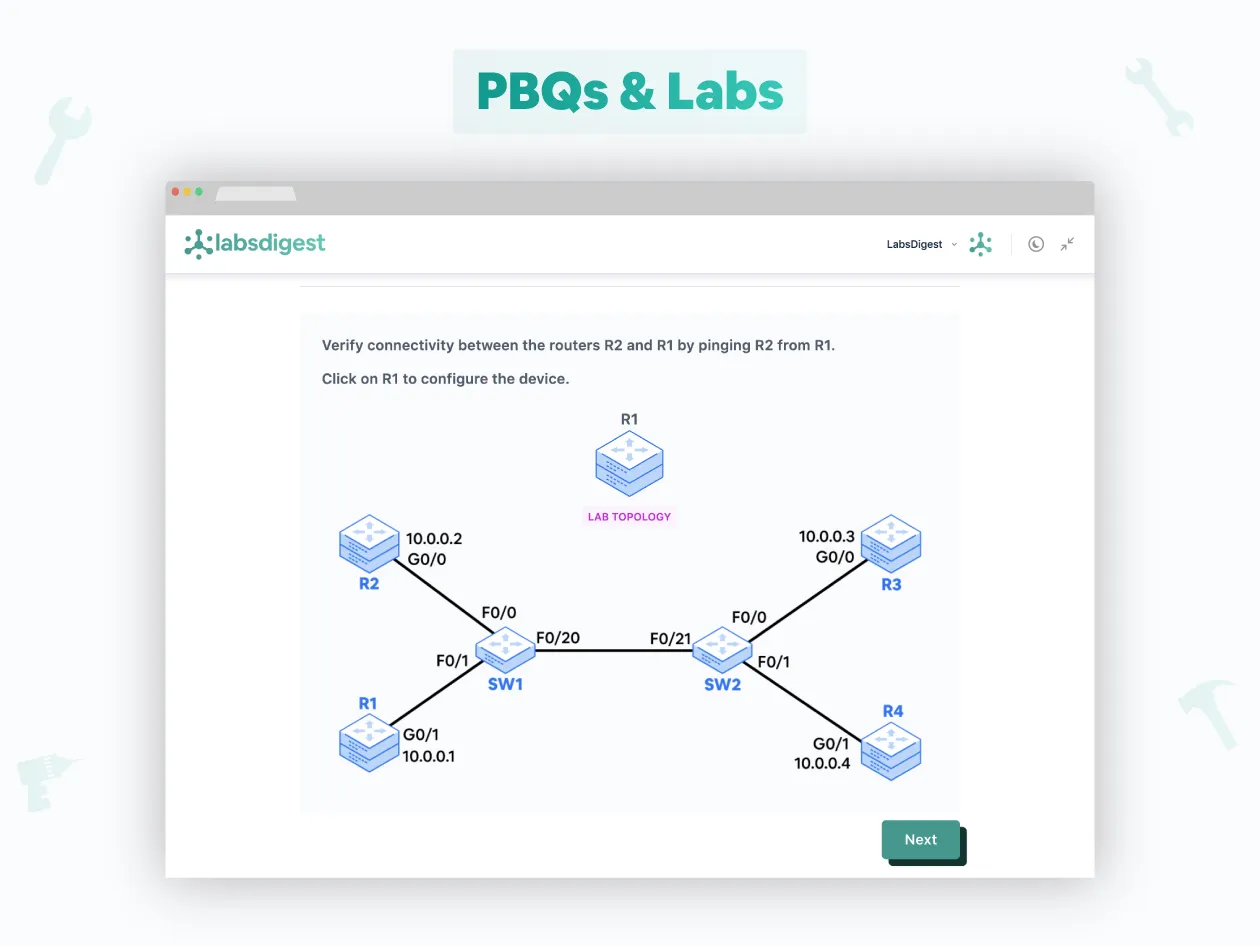
The Courses Digest, Labs Digest, and Exams Digest Bundle gives you unlimited access to expertly crafted online courses, interactive labs and study tools. Whether you’re aiming for industry-recognized certifications or expanding your tech expertise, this bundle will help you get there with courses on CompTIA, AWS, Microsoft, Cisco, Salesforce, and more. It’s on sale for $70 for a limited time.
Note: The Techdirt Deals Store is powered and curated by StackCommerce. A portion of all sales from Techdirt Deals helps support Techdirt. The products featured do not reflect endorsements by our editorial team.
This couple couldn’t find good Greek yoghurt in S’pore, so they built a factory from scratch
Most yoghurt consumed in Singapore has travelled thousands of kilometres before it reaches the fridge.
It typically starts at a dairy farm in Europe, Australia, or the United States, before being processed, packaged, shipped across oceans, and stocked on supermarket shelves weeks later.
Singaporean Haanee Tyebally and her American husband and co-founder, Braedan Tegenfeldt, both 36, wanted to change that. The result is Annie’s All Natural, which claims to be Singapore’s first commercial producer of Greek yoghurt and cultured creams, made in a 2,000 sq ft factory in Mandai.
We spoke with Haanee about how she and Braedan—both with backgrounds in international development and no prior experience in food science, dairy, or manufacturing—built the factory from the ground up and a supply chain that now serves some of the country’s most prestigious hotels.
Advertisement
A family recipe
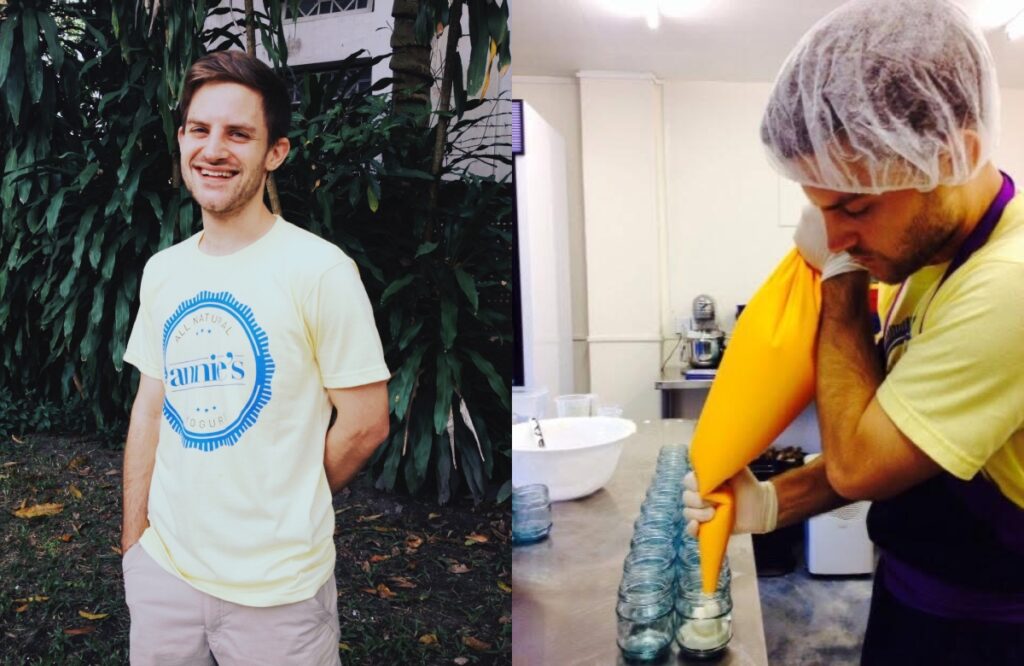
Braedan handled all of Annie’s operations in Myanmar by himself from his family’s garage./ Image Credit: Annie’s All Natural
Annie’s story began not in Singapore, but in Yangon, Myanmar, where the couple grew up and built their lives together.
Braedan founded the business in 2014 after spotting a gap in the market. His mother had begun making Greek yoghurt at home after a holiday in Greece, recreating a staple of his American upbringing in Myanmar.
At the time, the country was seeing an influx of returning nationals and expatriates, but good-quality Greek yoghurt was virtually impossible to find. Seeing the opportunity, Braedan decided to turn the family recipe into a business.
Alongside his full-time job, Braedan started producing artisanal Greek yoghurt out of his parents’ garage, made in small batches and entirely by hand. Gradually, the business grew steadily from supplying small luxury hotels such as Belmond’s Governor’s Residence to being stocked at Myanmar’s largest grocery stores.
Haanee, who was working in Myanmar at the time for an NGO focused on family planning and women’s health, wasn’t involved in the business then. However, she later joined as his co-founder when the pair eventually moved to Singapore in 2020.
Advertisement
Annie’s was available in Myanmar at supermarkets and farmers’ markets up until 2020./ Image Credit: Annie’s All Natural
During the circuit breaker, the couple watched supermarket shelves empty as supply chains strained, and found nothing locally made that matched the quality of the Greek yoghurt they’d been eating and producing in Myanmar.
We didn’t really see anything that was comparable that was available in Singapore—something made either locally or within our region, something high quality, made of really good milk.
Haanee Tyebally
The same gap Braedan had spotted years earlier in Myanmar had emerged again, this time in Singapore. That convinced the couple to make a bold move: build a production facility from scratch and establish a new life in Singapore.
From July 2021 to early 2023, the couple spent nearly two years building the facility from the ground up. They commissioned custom machinery from Italy, installed cold rooms, fitted out a food-grade processing plant, and ran batch after batch through R&D until they were satisfied with the final product.
The investment came close to six figures—a scale that was far beyond anything they had undertaken in Yangon.
Advertisement
But what makes Annie’s different?
Image Credit: Annie’s All Natural
The answer lies in almost every step of its production process.
Firstly, it’s the brand’s flavours. Annie’s sources grass-fed, free-range milk from New Zealand, specifically from a dairy processor powered by geothermal energy—one of the few in the world to run on a renewable energy source.
According to Haanee, sourcing milk from Southeast Asia wasn’t a serious option because the region’s tropical climate isn’t well suited for dairy cows. She also believes grass-fed milk offers a better micronutrient profile while reflecting higher animal welfare standards.
The brand is equally intentional about its flavours. Rather than sticking to the usual fruit varieties, Annie’s offers six options: plain, vanilla bean, passionfruit, ginger, coffee, and its newest flavour, raspberry.
Haanee and Braedan visits Annie’s production facility daily./ Image Credit: Annie’s All Natural
The biggest difference, however, is how the yoghurt is made.
While many products labelled “Greek yoghurt” achieve their thick texture through mechanised straining or added milk proteins and solids, Annie’s follows the traditional method. After the milk is cultured, the yoghurt is transferred into large cloth bags and left to strain naturally for 14 to 16 hours.
Advertisement
According to Haanee, this slow process naturally concentrates the yoghurt’s proteins, fats, and flavour, creating a dense, creamy texture without thickeners, stabilisers, emulsifiers, or other unnecessary additives.
We really want consumers to have the experience of eating a super minimal product that’s made in a way that takes time, effort, intention, and care.
Haanee Tyebally
Building a client base from scratch
(Left): Besides yoghurt, Annie’s crème fraîche (S$9.98) is also available for sale directly to consumers; (Right): Annie’s is a familiar face at farmers’ markets./ Image Credit: Annie’s All Natural
When Annie’s officially launched in Singapore in 2023, it had no distribution network, no established connections in Singapore’s F&B industry, and no existing retail relationships. What they had was yoghurt they believed in.
Their first strategy was to target the hospitality sector.
Hotels, they reasoned, consumed large volumes of yoghurt on breakfast buffets, had stringent food safety standards that played to their strengths, and had procurement teams who could evaluate products on merit. Getting through those doors required a lot of cold emails and door-knocking, but it eventually paid off.
Advertisement
Today, Annie’s supplies an impressive roster of properties: Shangri-La on Orange Grove Road, Fullerton Hotel and Fullerton Bay Hotel, Sofitel City Centre, JW Marriott South Beach, W Hotel in Sentosa, and multiple Resorts World properties, including the newly opened Lis Hotel. Hotels and restaurants now account for the bulk of the company’s sales.
Beyond Greek yoghurt, Annie’s also produces sour cream, crème fraîche, and labneh—a lightly salted yoghurt cheese—with culturing times of between 24 and 40 hours to meet the needs of its hospitality and foodservice clients.
Annie’s is regularly stocked at Little Farms’ supermarkets, apart from RedMart./ Image Credit: Annie’s All Natural
On the retail front, Annie’s has been stocked at Little Farms since shortly after launch, a partnership Haanee shared was built on shared values around clean ingredients and transparent sourcing. The brand has also expanded online through RedMart, with each 120g tub retailing for S$4.20.
For now, though, major supermarket chains still remain out of reach.
High listing fees, upfront production costs, and long payment cycles pose significant barriers for a small producer, though Haanee hopes Annie’s will eventually make its way onto mainstream supermarket shelves so more Singaporeans can access its products.
Advertisement
A growing market
Image Credit: Annie’s All Natural
Today, Annie’s produces more than 4,000kg of Greek yoghurt each month, processing over 8,000 litres of milk.
Haanee attributes that growth to changing consumer habits. Once a niche product, Greek yoghurt has become increasingly mainstream as social media, greater nutrition awareness, and more well-travelled consumers drive demand for high-protein foods.
She also noted that Greek yoghurt’s naturally lower lactose content than regular yoghurt makes it well-suited to Asian consumers, many of whom are lactose intolerant.
To reach more customers, Annie’s has been doing pop-ups at various farmers’ markets like City Spouts, AIR restaurant at Dempsey and the Singapore Agro-Food Enterprises Federation over the years.
That said, the team remains small, comprising six full-time and part-time staff, with Haanee and Braedan still directly involved in daily production.
Advertisement
Haanee shared that labour is one of the industry’s most persistent challenges. Finding people willing to do the physical, time-intensive work of food manufacturing in Singapore is increasingly difficult in the F&B sector.
The other running challenge is cost. Producing at a small, artisanal scale with premium ingredients in Singapore means that its price point cannot compete with multinational dairy brands that benefit from industrial-scale economics.
Annie’s yoghurt isn’t cheap, and Haanee doesn’t shy away from that, but she believes that her products provide good value for customers for a high-quality dairy producer.
To reduce costs, Annie’s encourages its corporate clients to participate in its very own glass jar recycling programme. It collects, sterilises, and reuses yoghurt jars for its next batch of production.
Advertisement
In the past year alone, close to 40,000 jars have been recovered and reincorporated into the supply chain rather than going to waste.
In it for the long run
Annie’s currently offers six flavours./ Image Credit: Acapella Photography, Annie’s All Natural
Haanee is cautious about trend dependency.
Greek yoghurt is having a moment between viral social media content, growing protein consciousness, and a more nutritionally savvy consumer, but the goal at Annie’s isn’t to ride the wave. It’s to outlast it.
“I hope that our products build beyond trends and that people actually eat them—one, because they enjoy them, but two, because they are really good for you,” she said.
For a brand that spent close to six figures building a factory here before selling a single jar, that long-term thinking is baked into everything Annie’s does, from its values to the 14-hour strain. It’s a business built around doing things the hard way, because the founders believe the product speaks for itself.
Advertisement
We want to make sure we are doing the best by our customers and making the best product we can and standing by every ingredient we use.
Looking for the most recent regular Connections answers? Click here for today’s Connections hints, as well as our daily answers and hints for The New York Times Mini Crossword, Wordle and Strands puzzles.
There’s another World Cup category in today’s Connections: Sports Edition, and some of the other clues are World Cup-related, too. If you’re struggling with the puzzle but still want to solve it, read on for hints and the answers.
Connections: Sports Edition is published by The Athletic, the subscription-based sports journalism site owned by The Times. It doesn’t appear in the NYT Games app, but it does in The Athletic’s own app. Or you can play it for free online.
Hints for today’s Connections: Sports Edition groups
Here are four hints for the groupings in today’s Connections: Sports Edition puzzle, ranked from the easiest yellow group to the tough (and sometimes bizarre) purple group.
Yellow group hint: Where are you sitting?
Advertisement
Green group hint: Soccer (OK, football) group
Blue group hint: Roar!
Purple group hint: Gosling or Reynolds.
Answers for today’s Connections: Sports Edition groups
What are today’s Connections: Sports Edition answers?
The completed NYT Connections: Sports Edition puzzle for July 1, 2026.
NYT/Screenshot by CNET
The yellow words in today’s Connections
The theme is stadium seating sections. The four answers are bleachers, mezzanine, suite and upper deck.
The green words in today’s Connections
The theme is CONCACAF teams in World Cup. The four answers are Canada, Curaçao, Mexico and United States.
Advertisement
The blue words in today’s Connections
The theme is teams with Lion nicknames. The four answers are Columbia, Detroit, England and Penn State.
The purple words in today’s Connections
The theme is Ryans. The four answers are Crouser, Day, Fitzpatrick and Poles.
Toughest Connections: Sports Edition categories
The Connections: Sports Edition puzzle can be tough, but it really depends on which sports you know the most about. My husband aces anything having to do with Formula 1, my best friend is a hockey buff, and I can answer any question about Minnesota teams.
That said, it’s hard to pick the toughest Connections categories, but here are some I found exceptionally mind-blowing.
Advertisement
#1: Serie A Clubs. Answers: Atalanta, Juventus, Lazio, Roma.
#2: WNBA MVPs. Answers: Catchings, Delle Donne, Fowles and Stewart.
#3: Premier League team nicknames. Answers: Bees, Cherries, Foxes and Hammers.
#4: Homophones of NBA player names. Answers: Barns, Connect, Heart and Hero.
We spend hours testing every product or service we review, so you can be sure you’re buying the best. Find out more about how we test.
Easemate.ai launched in 2025 with a simple pitch: one platform for everything AI.
It doesn’t make you choose between a chat assistant, an image generator, or a video tool. You get all three, alongside study utilities, document readers, and image editing features. The range of supported models is equally wide, covering GPT, Gemini, Claude, DeepSeek, Grok, Kimi K2, and Qwen 3 on the chat side alone.
Advertisement
The creative side is where things get particularly ambitious. Easemate integrates image models including Nano Banana, Midjourney, Flux Kontext, GPT-4o, and Seedream, with a video catalogue stretching to Sora 2, Google Veo 3, Kling, Seedance, and Runway. Few platforms at this price point give you that many models in one place.
Latest Videos From
We’ve been reviewing B2B software and AI platforms at TechRadar Pro since 2012. Easemate sits in a crowded but useful category of multi-model AI aggregators that we’ve tracked closely. You can also check out our AI tool roundup for 2026 and deep dives into platforms like OpenClaw or Moltbook.
What is Easemate.ai?
Easemate.ai is a web-based AI platform that consolidates multiple AI models and task-specific tools into a single subscription.
Rather than routing you to one underlying model, it lets you switch between GPT, Gemini, Claude, DeepSeek, and others depending on what you need, without juggling separate accounts.
Advertisement
The platform divides its offering into four main areas: AI Chat, AI Study & Research, AI Photo, and AI Video. Within those, you’ll find tools for ChatPDF, document summarization, math and science solvers, flashcard generation, image-to-video conversion, and YouTube transcript extraction.
Sign up to the TechRadar Pro newsletter to get all the top news, opinion, features and guidance your business needs to succeed!
It targets a broad user base (students, solo creators, freelancers, and small businesses) rather than positioning itself as a developer tool or enterprise solution. If you want a single dashboard that covers daily AI tasks without managing multiple subscriptions, Easemate’s pitch is worth considering.
Advertisement
Easemate.ai: At a glance
Swipe to scroll horizontally
Attribute
Notes
Underlying model(s)
Multi-model: GPT (various), Gemini, Claude 3 Haiku, DeepSeek, Grok 4, Kimi K2, Qwen 3 for chat; Nano Banana, Midjourney, Flux Kontext, Wan, Kling, Seedream and more for image/video
Advertisement
Best for
Students, solo creators, and small businesses needing all-in-one AI access
Distinguishing functions
Multi-model chat, ChatPDF, image generation, video generation, math/science solvers, AI writing tools, face swap, YouTube summarization
Advertisement
UI features
Browser-based interface, desktop and mobile (iOS and Android); no-login trial available for select tools
Subscription costs
Basic (free), Lite ($8.90/month intro, then $9.90/month), Pro ($19.90/month intro, then $24.90/month)
Advertisement
API pricing
No public API; consumer-facing platform only
Buy it if…
You want multi-model AI chat without juggling accounts. Easemate puts GPT, Gemini, Claude, DeepSeek, and Grok 4 in one place, which saves real time if you regularly compare outputs across models.
You need creative tools alongside a chat assistant. The combination of image generators and video models in one subscription is hard to match at Easemate’s price point.
You’re a student or researcher on a budget. The free tier includes 30 sign-up credits, daily check-in bonuses, and up to 200K AI chat tokens per day.
Don’t buy it if…
You need consistent professional image or video output. Users report a “prompt drift” issue where the platform ignores specific instructions, alters faces, or changes scenes unexpectedly.
Reliable customer support matters to you. Support is online-only and has drawn criticism for being slow to resolve credit-related problems.
You want granular model control. Access to Veo 3 and Sora 2 comes through Easemate’s own interface rather than direct API access, which limits parameter customization.
My time with Easemate.ai
Getting started on Easemate.ai is frictionless. The platform lets you try select tools without an account, and signing up takes under a minute. Once logged in, the 30 free credits appeared immediately, and the interface guided me clearly toward the main tool categories. For a platform with this many features, the navigation stayed surprisingly tidy.
Advertisement
Where I hit friction was in creative generation. I ran several image prompts through Nano Banana and Flux Kontext and found outputs solid roughly two-thirds of the time. There were noticeable cases where the platform deviated from my descriptions, and rerunning the same prompt sometimes produced very different results. Video tools showed similar inconsistency.
The value case is real at the Lite tier, though. For $8.90 in the first month, rising to $9.90 after that, you get 1,200 credits, access to up to 120 images and 60 videos per month, and multi-model AI chat. That’s a fair deal for casual creative work or students managing multiple AI tasks, as long as you aren’t expecting the precision of a dedicated tool.
Easemate.ai: Features
The AI Chat section covers GPT (multiple versions), Gemini, Claude 3 Haiku, DeepSeek, Grok 4, Kimi K2, and Qwen 3. For most conversational tasks (drafting, translating, summarizing), having that range in one tab is useful. The daily free token limit of 200K is also more generous than most comparable platforms.
Advertisement
The study and research tools are well-executed and clearly the original backbone of the platform. Math, physics, and chemistry solvers work step-by-step, making them practical for students rather than just returning a final answer. Flashcard and quiz generators, mind maps, and AI Scholar round out a toolkit that serves academic workflows more carefully than most multi-purpose AI platforms do.
On the image side, the model selection is broad: Nano Banana, Midjourney, Flux Kontext, GPT-4o, and Wan 2.5 are all accessible on paid plans. Nano Banana produces good commercial-style images; Flux Kontext handles text-in-image prompts reasonably well. The consistency problem persists, particularly with prompts involving specific faces or complex scenes.
Document tools perform well. ChatPDF, Chat Doc, and Chat PPT let you upload files and query them conversationally, with OCR support for scanned content. The YouTube summarization tool is a genuine highlight: paste a link and get structured notes with timestamps, which worked better than expected in testing.
Advertisement
Easemate.ai: User experience
The interface is clean and well-organized. Tool categories sit in a top navigation bar, each expanding into a dropdown with clearly labeled options. First-time users shouldn’t need a tutorial to find their way around, and the browser-based experience works consistently across devices.
The credit system is where the UX gets murky. Different tools consume different credit amounts, and it’s not always clear how many you’re spending before you generate. A failed generation still costs credits, which user reviews flag repeatedly. Easemate’s team has acknowledged this in public responses, but the system itself hasn’t changed.
Easemate.ai: Customer support
Easemate offers support via email at support@easemate.ai and through a help portal on the website. There’s no live chat, phone line, or priority tier for paid subscribers. Documentation covers pricing and credits at a surface level but doesn’t go deep enough for troubleshooting edge cases.
Advertisement
User perception is mixed. As of early 2026, Easemate held an overall rating of 2.0 to 3.0 out of 5 stars with most review aggregators, with positive feedback on ease of use offset by complaints about reliability and support responsiveness. More recent reviewers show a wider range of experiences — solo creators praise the video output quality, while others report credits consumed by failed generations with no satisfying resolution.
(Image credit: Easemate)
Easemate.ai: Pricing
Basic (free): 30 sign-up credits, daily check-in bonuses, up to 200K AI chat tokens per day, limited image and video access
Lite ($8.90/month intro, then $9.90/month): 1,200 credits, up to 120 images and 60 videos per month, full model access; annual billing drops this to $7.49/month intro, then $8.49/month
Pro ($19.90/month intro, then $24.90/month): 3,000 credits, up to 300 images and 150 videos; annual billing drops to $16.90/month intro, then $20.9/month
The free tier is actually usable for light AI chat and occasional image generation — it’s not a locked demo. Lite is the sweet spot for individuals. Easemate also sells one-time credit packs that never expire, ranging from 500 credits at $4.90 up to 15,000 credits at $104.90, with discounts of 10–30% depending on bundle size. There’s no API access or developer-tier pricing.
Easemate.ai alternatives you should consider
ChatGPT Plus: At $20/month, you get GPT-4o, o4-mini, and DALL-E 3 in a more mature, reliable environment. A better choice if text generation and image creation are your primary needs.
Perplexity Pro: Covers multi-model chat with web search grounding and document uploads. Weaker on creative generation but more dependable for research-heavy workflows.
Adobe Firefly: Produces commercially safe, high-consistency image output with better prompt fidelity than Easemate’s image tools, though it lacks the platform’s broad AI chat and video coverage.
How I tested Easemate.ai
Tested AI chat tools across GPT, Gemini, Claude, and DeepSeek for writing, summarizing, and translating tasks, comparing output quality and response speed across models.
Generated images and video clips using Nano Banana, Flux Kontext, Kling, and Veo 3 with a range of prompt types to assess consistency and prompt adherence.
Used document and study tools, uploading multi-page PDFs and PowerPoint files to test ChatPDF accuracy, and running math and science problems through the step-by-step solvers.
My testing involved hands-on use of Easemate.ai across its four main tool categories over several sessions, combined with a review of third-party user feedback on Trustpilot and review platforms to benchmark real-world reliability against my own observations. Pricing details were verified directly against the official Easemate.ai pricing page.
Google is upgrading its AI image generation capabilities today with the debut of Nano Banana 2 (NB2) Lite, an optimized model built for rapid execution and tight infrastructure budgets.
Technically designated as Gemini 3.1 Flash-Lite Image on Google’s application programming interface (API), NB2 Lite is positioned as the fastest and most cost-effective option within Google’s creative model family, capable of generating images in 4 seconds at a flat rate of $0.034 per 1,000 images.
It’s available immediately to enterprise developers through Google AI Studio, the Gemini API, and the Gemini Enterprise Agent Platform (GEAP).
It’s not quite as fast or customizable as startup Krea’s new, partially open licensed Krea 2 Turbo (which allows for open modification and commercial usage by small enterprises), but the big selling point here is the low price and bundling with Google’s larger Workplace and AI offerings.
Advertisement
This release lands alongside the public preview of Gemini Omni Flash, a multimodal conversational video generation and editing model.
However, while Omni Flash represents Google’s long-term bet on agentic video manipulation, Nano Banana 2 Lite is the immediate infrastructure workhorse, tailored specifically for high-throughput commercial application, rapid programmatic prototyping, and automated asset generation workflows.
The technology of speed
At its core, Nano Banana 2 Lite is built directly upon the Gemini 3.1 Flash Lite architecture, engineered to solve the persistent tension between computational latency and operational overhead.
In high-velocity enterprise frameworks, traditional large-scale image models introduce significant friction due to multi-second processing delays and high per-token costs. Google’s new lightweight model circumvents these bottlenecks by generating a standard 1k resolution image in under four seconds.
Advertisement
This represents a stark performance optimization over its legacy predecessor, Nano Banana (Gemini 2.5 Flash Image), achieved through targeted enhancements in core baseline capabilities.
According to internal documentation, the model features upgraded world knowledge for drafting rough data visualizations and contextual layouts, enhanced character consistency to preserve identity across continuous image streams, and localized typographic rendering capabilities.
The trade-offs inherent to this “Lite” designation are transparently outlined in Google’s technical data sheets.
Unlike the broader standard Nano Banana 2 (NB2) and Nano Banana Pro (NB Pro) lines, which support versatile multi-resolution scaling across 1k, 2k, and 4k outputs, Nano Banana 2 Lite restricts its resolution support exclusively to a 1k canvas. Yet, within this specialized operational boundary, the architectural tuning yields surprising competitive efficiencies. In standardized internal benchmarks, Nano Banana 2 Lite achieved a Text to Image arena Elo score of 1251. This score comfortably eclipses the legacy NB1 score of 1151 and remarkably edges out the bulkier, more expensive NB Pro, which sits at 1245 in the same text-to-image track. For specialized editing tasks, the model maintains a single-image editing Elo score of 1308 and a multiple-image editing score of 1294, providing a highly optimized sweet spot for real-time applications.
Advertisement
VB Transform · July 14–15 · Menlo Park · Agentic orchestration
Intuit rebuilt its multi-agent system in 60 days. What did they change — and why?
At Transform, engineering leaders from Intuit, Target, and Instacart break down how they redesigned their orchestration architectures for reliability, scale, and real customers.
A boost to rapid prototyping and marketing research
From a product implementation perspective, Google is marketing Nano Banana 2 Lite not as an artistic engine, but as an invisible, high-throughput utility layer for automated workflows. T
Advertisement
he target demographic spans software engineers, programmatic ad platforms, and digital commerce applications where rapid iteration is crucial.
Think real-time A/B testing for thousands of targeted advertising variations or immediate layout adjustments on localized storefronts. Google highlights three specific production environments where the model excels.
First, its world knowledge allows systems to instantly draft accurate contextual scenes or location-specific mockups.
Second, its character consistency handles the rigorous demands of storyboarding tools and digital fashion try-ons, where keeping object fidelity static across sequential generations is historically difficult.
Advertisement
Finally, its text rendering improvements mean legible copy can be embedded directly into rapid ad generations, allowing teams to verify layout compatibility across various languages on the fly.
Developers should note, however, that while native image generation operates with lowest-latency profiles, conditional image editing tasks may experience marginally higher response times due to the secondary processing layers required to rewrite existing pixels.
Licensing and acess
The deployment mechanism of Nano Banana 2 Lite via proprietary APIs underscores an enterprise-first commercial licensing strategy.
Unlike open-weights models that developers can pull down to run locally under open-source frameworks like Apache 2.0 or modified OpenRAIL licenses, Google’s latest models remain tightly integrated into its managed cloud stack.
Advertisement
For enterprises, this eliminates the operational complexity of hosting hardware but binds usage strictly to Google’s metered pricing terms.Financially, this commercial strategy is highly aggressive.
At $0.034 per 1,000 images across both AI Studio and GEAP channels, the model undercuts the older, less capable NB1 model ($0.039) and slashes costs dramatically compared to standard NB2 ($0.067) and NB Pro ($0.134) tiers. Internal notes indicate that the model delivers roughly 60–70% of the general capability of NB2 and NB Pro while executing at significantly higher speeds and a fraction of the cost.
By lowering the fiscal barrier to high-frequency image generation, Google is making a direct play to lock enterprise developers into its commercial platform ecosystem.
The European Space Agency released a satellite image that shows the upheaval left behind by the pair of earthquakes that rocked Venezuela last week.
The image was created using observations from the Sentinel-1 satellites, which are part of the European Copernicus program. These satellites do not take conventional photographs; instead, they use their radars to “illuminate” the Earth’s surface and record the time it takes for the signal to return to the sensor. By comparing two measurements of the same location taken on different dates, scientists can determine whether the ground has shifted, even when that shift is too small to be seen with the naked eye.
To create the map, scientists compared an observation taken on June 18—one week before the earthquakes—with another taken on June 25, the day after the pair of earthquakes that were mangitude 7.2 and 7.5 respectively. This comparison allowed them to construct what’s known as an interferogram revealing how much the ground deformed following the event.
This satellite image shows the area around Caracas, Venezuela, which was struck by a double earthquake on Wednesday, June 24.
Advertisement
Illustration courtesy of Copernicus Sentinel/ESA
The ESA explains that what stands out in the map are the repeating colored bands that form horizontal rows in the north. Each complete repetition of the sequence—blue, green, yellow, red, and blue again—represents a fixed increase in the change in distance between the satellite and the ground. The more complete cycles that appear between one area and another, the greater the cumulative ground displacement.
The pattern of bands observed in the northern part of the map corresponds to the region at the epicenter of the earthquakes, which is also where the main deformation occurred. The bands roughly follow the path of the San Sebastián fault system, one of the main tectonic structures in northern Venezuela. The ESA estimates that the displacement in the region was on the order of 30 centimeters (12 inches).
Rescue teams continue to search for victims and work through collapsed buildings in the aftermath of the earthquake that struck Venezuela and other regions of the Caribbean. June 28, 2026. Caraballeda, La Guaira.
Nadiem Makarim vows to appeal sentence given he was found not to have profited from $600 million laptops-for-schools program
An Indonesian corruption court has sentenced the nation’s former education minister Nadiem Makarim, who is also a hero of the nation’s tech startup scene, to ten years in jail for his role in buying a stack of Chromebooks.
Nadiem is a co-founder of Gojek, a so-called superapp that offers ride share, food delivery, digital payments, and even logistics services. In 2021, Gojek merged with its rival Tokopedia. The combined entity became a ubiquitous part of daily life in Indonesia and other southeast Asian nations.
Advertisement
In 2019, Gojek’s success and prominence saw then-Indonesian-president Joko Widodo ask Nadiem to become Education Minister, with a remit to improve the nation’s schools. Nadiem took the job but kept a minority stake in Gojek during his time in government.
During his time as minister, Nadiem oversaw a $600 million program to acquire laptops for use in schools. Departmental officials compared Chromebooks to Windows laptops and found the latter performed better, because Google’s machines need constant internet access which isn’t available in much of the sprawling Indonesian archipelago.
The Ministry nonetheless decided to order Chromebooks because they are cheaper than Windows machines.
As the laptop program rolled out, observers noted that Google has invested in Gojek, and that the two companies had collaborated on various projects. Some saw that as suggesting a possibility that the decision to acquire Chromebooks might not have been motivated by technical merit and cost factors alone.
Advertisement
Prosecutors eventually decided to pursue a case on the basis that the decision to acquire Chromebooks cost Indonesia over $100 million in avoidable costs.
The matter went to trial and was decided on Tuesday, when a majority of judges found Nadiem guilty of improper conduct as minister – but not of personally profiting from the Chromebook procurement.
The former minister has vowed to appeal and described the judgement as deeply flawed given that the decision to purchase Chromebooks was made at arm’s length and because he did not personally benefit from the program.
Some see the affair as an example of established power brokers in Indonesia flexing their muscle against an emerging bloc of technocratic reformers. That bloc has lost influence since Widodo’s term as President ended. Under that interpretation, prosecuting the Singapore-born, Harvard-educated Nadiem is a significant exercise of old guard power.
Advertisement
Another view is that the affair is so tawdry, it shows Indonesia remains a very difficult nation in which to do business and that if even a local hero can be brought low, foreign tech companies may struggle to make inroads. ®
TikTok settled with a Florida teen ahead of the second bellwether social media addiction trial, leaving Meta and Snap as the remaining defendants.
TikTok has reached a confidential settlement with a Florida teenager who accused the platform of contributing to his mental health problems, removing itself from a jury trial scheduled to begin on July 27 in Los Angeles. The deal, first reported by Bloomberg on Tuesday, makes TikTok the second defendant to exit the case in recent weeks. YouTube settled with the same plaintiff last week.
The plaintiff, a 15-year-old boy identified in court filings by his initials, accuses Meta, YouTube, TikTok, and Snap of designing their platforms to be addictive through features such as infinite scroll and autoplay. He has been using social media since he was eight years old, according to his attorneys. He has been diagnosed with generalized anxiety disorder and major depressive disorder tied to his social media use, and began seeing therapists in 2023 for those conditions, including suicidal ideation.
With TikTok and YouTube now out, Meta and Snap are the only defendants still facing the jury. Snap CEO Evan Spiegel, who was removed from the witness list after Snap settled a previous case, could testify in court for the first time in this trial. Judge Carolyn Kuhl, who presided over the first bellwether, will also oversee this one.
Advertisement
The 💜 of EU tech
The latest rumblings from the EU tech scene, a story from our wise ol’ founder Boris, and some questionable AI art. It’s free, every week, in your inbox. Sign up now!
The settlement follows a pattern TikTok has now repeated twice. The company also settled the first bellwether case before it went to trial earlier this year, alongside Snap. That first case ended in March with a jury finding Meta and Google liable and awarding six million dollars in damages, the first social media addiction case to reach a verdict.
The platforms are facing thousands of similar complaints. More than 10,000 individual cases and nearly 800 school-district claims are pending in federal multidistrict litigation. The bellwether structure exists because trying them one by one would take decades, so early verdicts and settlements set the terms on which the rest get valued.
Advertisement
The plaintiff’s attorneys said the July case will offer a distinct perspective from the first trial, which centred on a young woman. “The impacts on a male and on somebody who’s a minor currently involve different circumstances and things for the jury to evaluate,” attorney Rahul Ravipudi told NBC News. His legal team plans to call some of the same major witnesses who testified previously, where Mark Zuckerberg and Instagram head Adam Mosseri both took the stand.
The school-district track of the litigation has been moving in the same direction. Snap, YouTube, and TikTok settled one school bellwether before trial, and Meta later settled the Kentucky case that would have been the first school-district trial over youth mental health. Companies that settle disclose nothing, while those that go to trial risk a number on a verdict form that becomes a reference point for every case that follows.
Meta now heads into its second consecutive trial as the company that has most consistently refused to settle. The July 27 trial in Los Angeles will test whether a second jury reaches the same conclusion as the first, and whether two verdicts create enough pressure to change the calculus for the thousands of cases still waiting.





 It’s an open-source web application that combines a camera, a Steam Controller, and some clever software for the sole purpose of saving the user from the tyranny of having to manually set the controller onto its magnetic charging puck. Instead, one can simply lay the controller down nearby and let the computer do the rest of the work.





























































You must be logged in to post a comment Login