Looking for a new flagship smartphone but are torn between iOS and Android? You’ve come to the right place.
With both the iPhone 17 and Pixel 10 Pro sporting plenty of AI features, flagship processors and brilliant cameras, choosing between the two can feel like a challenge. Fortunately, we’ve reviewed both and have compared our experiences below.
Keep reading to see how the iPhone 17 compares to the Pixel 10 Pro. If you’re not sold on either, make sure you visit our best smartphones guide, where we’ve listed our favourite iOS and Android models across all budgets.
Both the iPhone 17 and Pixel 10 Pro are readily available to buy now. The iPhone 17 has a cheaper starting RRP of £799/$799 and comes in a choice of five colours: White, Black, Lavender, Sage and Mist Blue.
SQUIRREL_PLAYLIST_10207955
In comparison, the Pixel 10 Pro starts at £999/$999 although it can be found with solid price cuts. For example, at the time of writing you can pick up the Pixel 10 Pro for just £749 on Amazon. Otherwise, the handset comes in a choice of four colours: Moonstone, Jade, Obsidian and Porcelain.
Advertisement
SQUIRREL_PLAYLIST_10207881
Design
Both the iPhone 17 and Pixel 10 Pro look similar to their respective predecessor – and that’s not necessarily a bad thing
iPhone 17 is fitted with Action and Camera Control buttons
Pixel 10 Pro supports Pixelsnap
The iPhone 17 looks similar to last year’s iPhone 16, and many other entry-level iPhones that came before it. However, this really isn’t a bad thing as the iPhone 17 is a sleek and well-designed handset, with flat edges and rounded corners that many of the best smartphones now sport. Plus, the five colour options give the iPhone that extra bit of personality too.
Advertisement
Much like its predecessor, the iPhone 17 is fitted with Action and Camera Control buttons. The Action button sits just above the volume rockers and can be customised to act as a shortcut to quickly open apps, while Camera Control works as a shortcut to the camera.
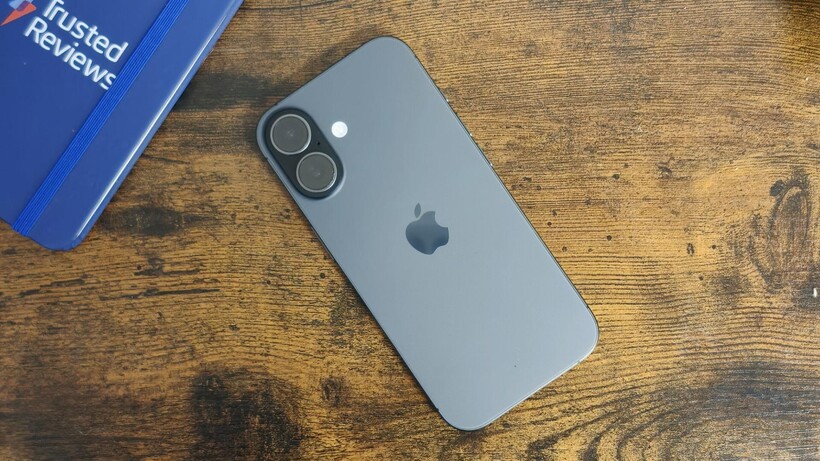
iPhone 17. Image Credit (Trusted Reviews)
Similarly, the Pixel 10 Pro looks remarkably similar to the Pixel 9 Pro, and sports the same pill-shaped camera bar that looks so much sleeker than the Pixel 8 Pro’s own. In fact, the biggest difference between the Pixel 10 Pro and Pixel 9 Pro is the inclusion of Pixelsnap which supports Qi2 wireless charging.
The fact Google kept things similar this year isn’t a bad thing at all, as the handset feels great in hand and looks brilliant too.
Advertisement
Otherwise, both the iPhone 17 and Pixel 10 Pro are equipped with an IP68 rating which protects the handsets from dust and submersion in water.
Winner: Both are well-built and look great, but we’ll give the win to iPhone 17
Advertisement
Screen
Both have 6.3-inch displays
Pixel 10 Pro can get a bit brighter at 3300 nits compared to the iPhone 17’s peak of 3000 nits
Both screens are hard to fault
Ranking the iPhone 17 and Pixel 10 Pro’s respective displays is no easy task as both are packed with plenty of premium screen technologies, including an LTPO 1-120Hz refresh rate (the first for the entry-level iPhone), impressively high peak brightness levels and crisp resolutions too. However, we should note that the Pixel 10 Pro can reach a slightly higher peak brightness of 3300 nits while the iPhone 17’s peak is 3000 nits. Even so, the difference is negligible.
Not only that, but both are fitted with screen protection too which promises to offer scratch and drop resistance too. While the iPhone 17 sports Apple’s own Ceramic Shield 2, the Pixel 10 Pro is covered by Gorilla Glass Victus 2 instead.
Advertisement
Essentially, we’ve concluded that the iPhone 17 boasts the “best screen yet on an entry-level iPhone” while the Pixel 10 Pro has the title of owning “one of the best phone screens around”.
Winner: Tie
Advertisement
Camera
Pixel 10 Pro has a dedicated 48MP telephoto lens
iPhone 17 has an 18MP square selfie camera, which is a huge upgrade from last year
Pixel 10 Pro is fitted with Google’s AI Camera Coach which offers photography advice
The iPhone 17 is fitted with just two rear lenses, including a 48MP main and 48MP ultrawide. While its main lens does have a 2x in-sensor zoom that delivers good quality shots, and can even be pushed to around 4x before detail is lost, if you want a dedicated telephoto lens then you’ll be better off with the Pixel 10 Pro or the iPhone 17 Pro instead.
Having said that, we think the iPhone 17’s dual camera is enough to suit most people. Its main lens delivers sharp, colour-accurate images, even in low-light conditions. While its companion ultrawide lens isn’t quite as reliable in tougher conditions, it also manages to capture the likes of scenic vistas and even macro shots with ease too.
Advertisement
Image captured on iPhone 17. Image Credit (Trusted Reviews)
However, the key upgrade with the iPhone 17’s overall camera set-up is arguably with the new 18MP selfie lens. While the jump from 12MP to 18MP might not sound too exciting, the key difference is the new square sensor that allows you to shoot portrait and landscape shots without needing to rotate the phone.
Otherwise, Google’s phones have earned the title of being among the best camera phones, and fortunately the Pixel 10 Pro continues this trend – albeit with some slight issues that should be kept in mind.
Advertisement
Image captured on Pixel 10 Pro. Image Credit (Trusted Reviews)
With a 50MP main, 48MP ultrawide and 48MP 5x telephoto camera set-up, the Pixel 10 Pro reliably takes a good photo in most lighting conditions. Images look warm and rich during the day, while detail is preserved in night shots. While it does benefit from a dedicated telephoto lens, unlike the iPhone 17, zoom isn’t actually as reliable as we’d like. Push it past the 5x mark and shots feel artificial and too smooth, which suggests Google’s AI processing is at play.
So, although it lacks the telephoto lens, we’d argue the iPhone 17 is more of a reliable camera phone overall.
Winner: iPhone 17
Advertisement
Performance
Apple’s A19 vs Google’s Tensor G5 chips
Both perform well in everyday use, but the iPhone 17 sees better benchmark results
Pixel 10 Pro is built for AI capability rather than sheer power
We should start by saying that if you’re planning on playing demanding AAA titles or editing multiple 4K videos then neither the iPhone 17 nor the Pixel 10 Pro will suit you. Instead, you’re better off looking at more powerful options – perhaps one of the best gaming phones.
Advertisement
Otherwise, powering the iPhone 17 is Apple’s own A19 Bionic chip, while the Pixel 10 Pro runs on Google’s Tensor G5 processor instead. The iPhone 17 especially performs brilliantly in everyday use, with apps opening instantly and more casual titles playing admirably too. Plus, Apple has equipped the iPhone 17 with 256GB storage as a minimum, which is double the starting storage as the Pixel 10 Pro.
Similarly, the Pixel 10 Pro rarely sees any slowdown in day-to-day use, with apps and casual games opening and running quickly, although we did note that the camera has a slight lag to it, especially when shooting at 50MP. However, Tensor G5 is built with AI in mind so tends to prioritise performance in that area instead.
Winner: iPhone 17
Advertisement
AI features
Google AI is easily one of the best AI toolkits, with genuinely useful features
Apple Intelligence still feels like an afterthought
Following on from the above, the Pixel 10 Pro is well-equipped with plenty of Google’s AI features, which makes Apple Intelligence seem more like an afterthought in comparison. While some may go unused, tools like Circle to Search, Call Screening and Gemini are genuinely useful and come in handy. We especially found ourselves using Magic Cue more than we expected to, as it works behind the scenes but pops up when you’re likely to need it, say if you need directions to a restaurant you’ve booked.
Advertisement
Gemini on Pixel 10 Pro. Image Credit (Trusted Reviews)
We also find Google’s photo editing tools to be among the best, with the eraser reliably removing unwanted objects from the background. In comparison, Apple’s competing Clean Up feature often leaves you with pretty obvious signs that the photo has been tampered with.
iPhone 17. Image Credit (Trusted Reviews)
In addition, other Apple Intelligence tools like Image Playground and Siri just don’t feel as smooth or thought through as Google’s own. With this in mind, if you want a phone that is designed to support AI, then the Pixel 10 Pro is a much easier recommendation.
Winner: Google Pixel 10 Pro
Software
iPhone 17 runs on iOS 26 which is polished and easy-to-use
Pixel 10 Pro sports Material 3 Expressive which is one of the nicest phone operating systems to use
Google promises the Pixel 10 Pro will see seven years of updates but Apple doesn’t disclose the exact amount of support the iPhone 17 will see
Advertisement
The iPhone 17 runs on iOS 26 which saw the introduction of Liquid Glass, Apple’s new transparent UI design. While some weren’t keen on the redesign, we think it looks great and adds to the polished overall feel of iOS.
We especially like how well iOS integrates with other Apple devices, and how easy it is to share files between the ecosystem. It’s a level of integration that Androids just can’t quite seem to match.
Advertisement
This isn’t to say the Pixel 10 Pro’s software isn’t great. With Material 3 Expressive, the Pixel 10 Pro is easy-to-use, feels polished and offers plenty of customisation options that iOS doesn’t. Either way, both the iPhone 17 and Pixel 10 Pro boast brilliant software that we think you’ll struggle to fault.
Lastly, Google promises that the Pixel 10 Pro will see up to seven years of software updates, which will take you up to Android 23. While Apple doesn’t publicly disclose how many years of software updates the iPhone 17 will see, looking at previous years reveals it also offers around the seven year mark.
Winner: Pixel 10 Pro (as Google publicly announces its software updates)
Advertisement
Advertisement
Battery
Neither are two-day handsets
iPhone 17 supports faster wired charging at 40W compared to the Pixel 10 Pro’s 30W
Both support Qi2 wireless charging
While many of the best Android phones can comfortably see two-days of battery life, unfortunately the Pixel 10 Pro doesn’t boast this claim. Instead, we found the Pixel 10 Pro can comfortably last one day with three or four hours of screen time while more demanding days with up to six hours would deplete the battery.
Pixel 10 Pro on Pixelsnap. Image Credit (Trusted Reviews)
Fortunately, with support for 30W wired and 25W (Qi2) wireless charging, topping up is that bit more convenient than the Pixel 9 Pro.
In comparison, we found the iPhone 17 could end a day with five hours of screen time with around 20% left in the tank. Finally, though it shares the same 25W (Qi2) wireless speeds, it bests the Pixel 10 Pro with 40W wired speed support instead.
Winner: iPhone 17
Advertisement
Verdict
Of course, deciding between the iPhone 17 and Google Pixel 10 Pro may simply boil down to your existing ecosystem. While it is perfectly possible to use an iPhone with a Windows PC, or a Pixel with a Mac, naturally using either handset with their own ecosystem offers much more of a seamless experience.
Advertisement
However, if you’re open minded then there’s a lot of factors to consider. The iPhone 17 boasts a more reliable camera set-up, despite its lack of telephoto lens, sees higher benchmark scores with its A19 processor and is cheaper than the Pixel 10 Pro. However, the Pixel 10 Pro’s AI toolkit is genuinely useful, and could improve how you use your phone on a day-to-day basis.
Makers often look for computing devices that fit their daily routines rather than forcing routines to fit the devices. When Jankbu needed a new machine, he decided against buying a ready-made laptop. He spent months designing and assembling a cyberdeck around a Raspberry Pi 5 that delivers reliable power for browsing, running design software, and handling workshop tasks.
The main display here is a 10.1 IPS touchscreen that is mounted on a clever vertical sliding mechanism that folds down to cover the keyboard when you park the device. It’s lovely and firm, thanks to the use of steel linear rods and linear bearings; there’s no wobble in sight. The display connections are routed through a tiny cable chain repurposed from CNC machines. That way, they won’t be pinched or strained as the screen moves. The designers worked through multiple versions to get it perfect, and it shows in the smooth and consistent action you get.
One system, three play modes: TV, Tabletop, and Handheld
Larger, vivid, 7.9” LCD touch screen with support for HDR and up to 120 fps
The base is a full-depth mechanical keyboard that is extremely comfortable to type on even after several hours of use. Large grab grips on the sides make it simple to move this thing about your desk. One side has bespoke scroll controls laid out in both directions, while the other has a trackball made from a Logitech Trackman Marble component that they hacked together. Buttons on the screen have a very simple arrangement, much like the industrial panels you see all the time, so you can get to what you need quickly without having to navigate menus.
This device runs on NP-F batteries, which are also used in camcorders. There’s no need to shut down to change them out, and you get a live voltage display right on the front so you can know how much runtime you have left at a look. The entire power module simply slides in and connects via the rail system, allowing for quick replacement in the field. Modularity is an important aspect of how this device is put together, since the entire chassis is lined with NATO rails, allowing you to clip on or clip off modules without getting out the tools. They also carry power and data connections, so the bits you add on communicate directly with the main board. Long story short, it’s incredibly simple to add more storage or switch in alternative sensors or ports depending on the job.
The printed parts are constructed of a particular form of polycarbonate combined with chopped up carbon fiber strands. It’s good enough to leave in a hot car without becoming soft and losing its shape, and it provides the stiffness required for a genuine chunky-feeling build. Some of the high-stress components, such as the handles and trackball housing, were machined from blocks of aluminum to provide additional strength where it is needed.
Project files are available on GitHub for anyone who wants to look at the design, print their own parts, or simply experiment with it to see if it works for them. There’s still a lot of work to do on the finishing touches, but as it stands, this device functions as a functional, repairable computer that is entirely yours. Every aspect demonstrates how intelligent choices can transform a Raspberry Pi into something that is ready for serious work, rather than just a flashy display. [Source]
Patients who use mobile applications to manage medical conditions including depression and chronic pain might assume the apps have been evaluated by regulatory agencies to be safe and effective. But that isn’t necessarily the case.
Most of the more than 55,000 medical apps that claim to diagnose or treat a condition—or ones that provide clinical decision support, known as “therapeutic” apps—have never been assessed by any trusted neutral bodies or regulatory agencies to evaluate them for technical soundness, ethical design, or clinical benefit. The apps often don’t comply with regional data security and privacy laws to protect people’s sensitive health information.
Medical apps differ from traditional wellness apps, which provide users with insights into becoming healthier by, for example, tracking fitness activities, monitoring blood pressure, and analyzing sleep patterns.
There is no reliable way to verify that therapeutic apps deliver the results they indicate. To help ensure such apps are credible, the IEEE Standards Association (IEEE SA) recently launched the IEEE Global Medical Mobile App Assessment and Registry. The publicly searchable directory is designed to list apps that have been vetted by experts across several criteria including technical soundness, ethical design, compliance with data security and privacy regulations, and clinical efficacy, which is evidence of a clinical benefit for the patient.
Advertisement
“Patients, clinicians, payers, and health care systems often struggle to distinguish clinically meaningful therapeutic apps from those that are simply well-marketed,” says IEEE Senior Member Yuri Quintana, chair of the assessment and registry program. He is chief of the clinical informatics division at Beth Israel Deaconess Medical Center, in Boston. “Our goal is to establish a standardized review method using criteria developed by experts.”
Why regulation is lacking
Because the apps are intended for medical use without being part of a medical implement, they fall under the designation of software as a medical device (SaMD), according to the International Medical Device Regulators Forum. SaMD is supposed to be regulated by public health agencies such as the U.S. Food and Drug Administration, but the apps have developed and grown in popularity so quickly that regulators haven’t been able to keep up, Quintana says. Some companies have received approval, but most have not, he says.
Many users are unaware of the regulatory gap, he says.
“Seeing an app from a well-known company often creates the impression that it has been meaningfully vetted for safety and efficacy, even when that is not the case,” he says.
Advertisement
Some companies are using deceptive advertising to sell their product, he adds. Marketing materials might claim that all of a company’s health apps are certified, even though only one app has been approved by a regulatory body to treat a particular condition. Or the verbiage might imply the company has clinical evidence proving its application works, even though the app has never been tested independently.
Another concern is that updated apps aren’t being vetted, says Maria Palombini, IEEE SA’s director of health care and life sciences global practice lead.
“The original app might have received approval from a regulatory agency, but not the updated version,” Palombini says. “There could have been significant changes from the original.”
“Not every medical-related app triggers the same regulatory classification or review across jurisdictions,” Quintana adds. “That leaves a large gray zone of clinically relevant but lower-risk apps that haven’t undergone an independent assessment. The IEEE registry was created to help fill these gaps.
Advertisement
“IEEE is the best organization to address this problem because this is fundamentally a standards, trust, interoperability, and conformity assessment challenge,” he says. IEEE “is the world’s largest technical professional organization, with deep expertise in developing globally recognized standards including in health care, cybersecurity, AI ethics, and interoperability.”
“Through the IEEE Conformity Assessment Program, we already run rigorous assessment and registry programs,” Palombini says. “Our neutral, consensus-driven, multidisciplinary approach—bringing together clinicians, regulators, developers, and ethicists without commercial bias—makes IEEE uniquely positioned to create trustworthy global guardrails that can scale across jurisdictions and support regulatory harmonization.”
How the registry works
The assessment framework was developed by a multidisciplinary group of 35 volunteer experts from 10 countries, Quintana says. The panel includes academics, AI experts, app developers, clinicians, ethicists, mental health experts, patient advocates, regulators, researchers, technologists, and those who assess safety in health care.
The registry is for any app used for clinical care or therapeutics that claims to demonstrate a medical benefit. That includes apps designed for cardiology, diabetes, mental health, neurology, oncology, rehabilitation, and respiratory diseases, Quintana says.
Advertisement
Initially, he says, the focus will be on apps that aim to treat mental health conditions, given the large number of offerings in that area and the registry committee’s expertise.
The submission of apps is voluntary. There is no government mandate that requires a company to use the IEEE registry.
The products will be evaluated against about 150 consensus-based criteria across three major areas:
Clinical efficacy including therapeutic effectiveness, any sustained benefits, risk management, comparison to standard care, user engagement, and real clinical value.
Technical soundness including accessibility, privacy and security, error handling, interoperability, AI governance, usability, and operational quality.
Ethical design including bias prevention, patient consent, data governance, conflict-of-interest transparency, responsible use of AI and large language models, and prioritization of public health benefits.
IEEE charges a nonrefundable submission fee that covers the cost of the assessment plus the registry’s annual subscription for the first year.
Developers first must demonstrate they are a legally established entity before they can complete the app publisher registration form and then submit documentation and attestations about the product.
Advertisement
The IEEE review of an app is estimated to take six to eight weeks, Palombini says. The assessment results will be privately shared with the app publisher, she says, and to be listed in the registry, an app must achieve more than 85 percent compliance in each category.
Upgraded apps must be submitted and reassessed, Palombini says. Similar to how users are notified when an app on their smart devices has , the registry will be notified when listed apps have a new update available, she says.
Applicants who do not pass the assessment are to receive feedback explaining why. They will be given an opportunity to make changes or provide additional documentation, Palombini says.
“It’s a pretty methodological process, with checks and balances,” Quintana says. “We’re being very transparent about the process.”
Advertisement
Approved apps added to the registry receive an IEEE certification badge and submission identifier, which the company can display on its website, app store listings, and marketing materials.
“The badge serves as visible proof that the app has met the independent, consensus-based assessment for clinical value, technical robustness, and ethical design,” Quintana says.
The registry will be publicly available at no cost, he says.
Patients and families seeking safe, trustworthy apps—and payers and insurers evaluating reimbursement potential—will find the registry helpful, he says.
Advertisement
The application website is open. The public registry page does not yet list a specific count of approved apps because assessments are ongoing. Approved apps and their unique identifiers are to be published when the initial reviews are completed.
To learn more, you can watch a webinar recorded in March.
Late last year we wrote about a new startup that was flooding the internet with AI-generated podcast slop. Featuring fake hosts having fake discussions, the startup proudly stated it was creating about 3,000 new AI-generated podcasts every single week. The owners of the startup (who called critics of AI slop “Luddites,”) stated that because they cost so little to produce, even selling 30 episodes for a dollar nets them a tidy profit when scaled up appropriately.
That this results in an internet positively full of lazy mass-produced cack — and what that does to the public interest, authentic creators, and informed consensus — doesn’t really enter into it.
Not to be outdone, Amazon appears poised to join the AI slop podcast race. The company announced this week that it had begun mass producing AI-generated podcasts featuring two fake experts having conversations about all sorts of stuff. More specifically, Amazon is reformatting Alexa+’s extended answers on different topics and turning them into “podcasts.”
During this process, Jeff Bezos owned software will express manufactured opinions on all sorts of things, from the death of monoculture to the health of the U.S. recording industry:
Advertisement
“In an example clip shared by Amazon of the new Alexa Podcasts feature, the two AI-generated hosts discuss “the latest music releases.” A male Alexa+ narrator says more than 50% of music listening now comes from unsigned artists. “The monoculture is just gone,” a female-voiced Alexa+ narrator chimes in. The male Alexa+ host says there has been “stoner metal,” indie pop and experimental hip-hop music “all dropping on the same Friday,” and adds, “That’s not chaos — that’s the healthiest the music ecosystem has ever been.”
Cool.
For some reason the Variety story didn’t quote the best part of the shared Amazon example clip; namely where software in a female voice informs you that there’s no gatekeeping anymore and authenticity rules the day:
“There’s no gatekeeping anymore. If you make something real people are going to find it, and the algorithm is working for artists in a way it wasn’t five years ago.”
Clearly concerned that people would accuse them of creating yet more lazy and quickly automated engagement slop in the era of AI obituary scams, Amazon is pinky swearing that journalists will play a central role in fact-checking the content:
“Seemingly to dispel the notion that these “podcasts” will be AI audio slop, Amazon emphasized that it has deals with major news organizations to ensure “accurate, real-time news and information.” Those include the Associated Press, Reuters, the Washington Post, Time magazine, Forbes, Business Insider, Politico and USA Today; publications from Condé Nast, Hearst and Vox Media; and more than 200 local newspapers across the U.S.”
You know, all the places that have been hollowed out by layoffs and mismanaged into the ground by incompetent billionaires who have no idea how anything works and are keen to produce a giant badly automated engagement ouroborus that shits money without needing to pay human beings a living wage (or health insurance).
In effect they’re using software automation to algorithmically hijack and repackage the informed expertise of other people, then reselling it to you as something new. With some lip service to the idea that there are enough journalists left to maintain factual quality control over large language models prone to errors, plagiarism, and all sorts of disastrous fuckery at scale.
I desperately want to believe that as we accelerate into the era of badly automated mass engagement slop, there will be a value premium placed on authentic expertise. That the bland homogenized vibe coded half-assed sameness being plattered up at impossible new scale will usher forth a renaissance for real connection, genuine skill, actual talent, and human expertise.
But then I remember what most people buy at the grocery store. And the kind of people dictating the contours of both large language models and our increasingly consolidated, authoritarian-friendly media gatekeeping systems. And I quickly have my doubts that authentic expertise and connection has any meaningful chance of being heard above the din.
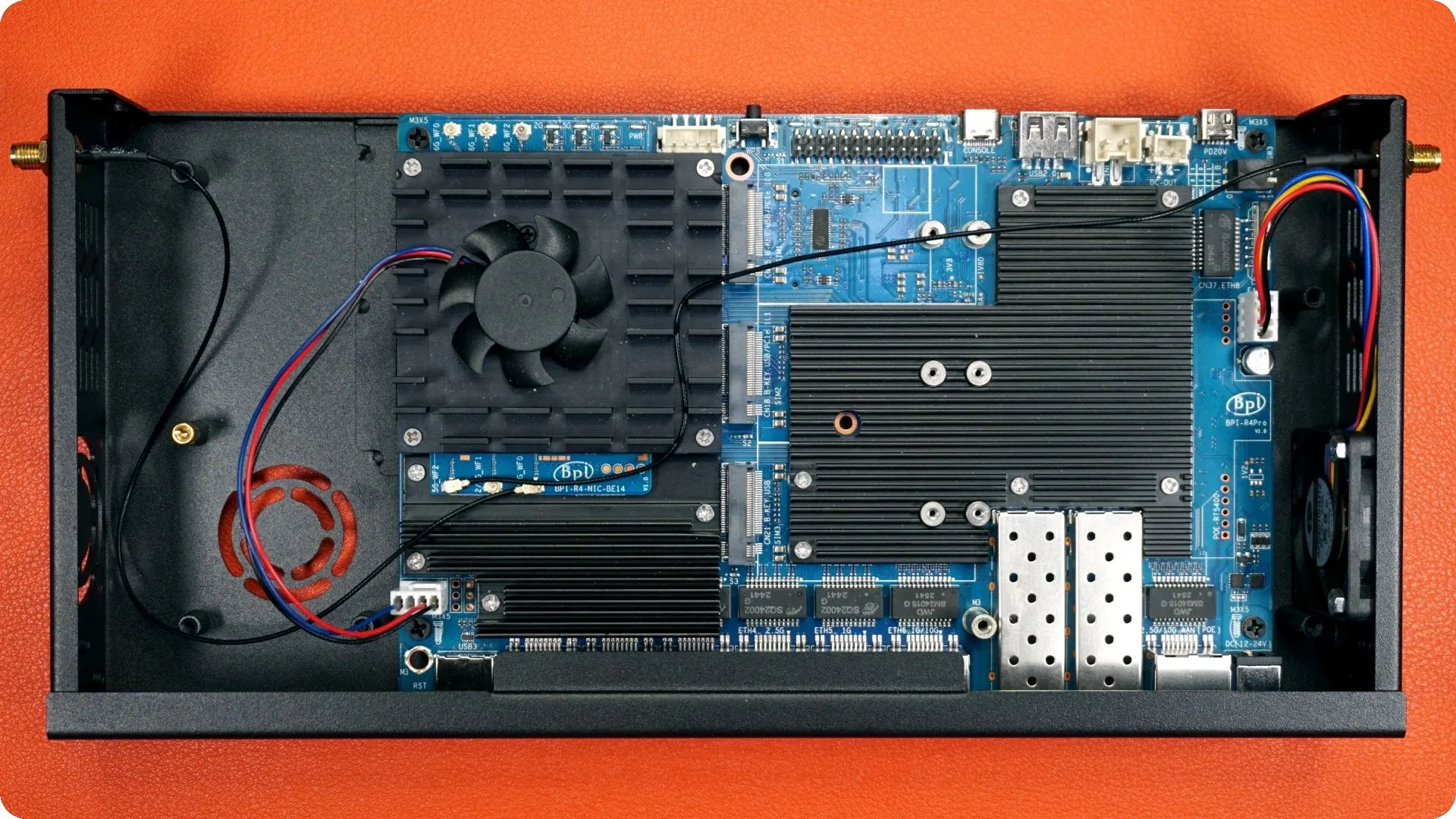
As fun as ARM and RISC-V single-board computers (SBCs) are, all too often getting the most out of the hardware requires the use of an unofficial firmware image. So too with the Banana Pi BPI-R4 Pro router SBC that has been out for a while, as OpenWRT support for it still very much unofficial. This is where [Interfacing Linux] goes on a bit of a rant while assembling one of these puppies into a sleek metal enclosure.
The first rule of OpenWRT Club is of course that you never run an unofficial image on any hardware that’s part of any network you care about. This is somewhat upsetting, as the testing shown in the video below reveals that performance is great when running it.
Currently OpenWRT support is painfully working its way through development, per the OpenWRT PR thread, so there’s hope that official support will appear at some point. As with all of such SBCs the question is always whether official support appears before the hardware has been rendered firmly obsolete. Until then the community Debian 13 image might actually be safer.
Biometric authentication is no longer limited to fingerprints and face unlock. Researchers are now exploring whether your earbuds can recognize you simply by listening to the tiny vibrations created by your heartbeat.
A new study published on the arXiv preprint server introduces “AccLock,” a passive authentication system that uses standard earphone hardware to verify a user’s identity. Instead of relying on microphones or voice prompts, the system works through built-in accelerometers already found in many modern earbuds.
Your heartbeat may become your next password
The technology captures heartbeat-induced vibrations inside the ear canal, known as ballistocardiography (BCG) signals. These signals travel through bones and tissues, creating patterns unique to each person. That uniqueness is what makes the system interesting. Once the earbuds register a user’s BCG signal, they can continuously check whether the same person is still wearing them. If another user puts on the earbuds, the authentication fails automatically.
Tech Xplore
Unlike older earphone-based authentication systems, AccLock does not require users to actively interact with the device. The entire process runs quietly in the background, which could eventually make tasks like unlocking devices, approving payments, or entering smart homes feel almost invisible.
It works well — until too much movement is involved
To improve reliability, the researchers used a deep learning model and a multi-stage denoising system to separate user-specific heartbeat patterns from environmental noise and general body movement. In tests involving 33 participants, the system achieved false acceptance and false rejection rates of 3.13% and 2.99%, respectively, which is fairly promising for an experimental prototype.
Advertisement
JBL
However, heavy movement remains a major problem. Walking, talking, or shaking the head significantly increased error rates, showing that the system still struggles in real-world conditions. The researchers also tested the technology on Apple AirPods and found that it remained functional despite hardware limitations. While AccLock is far from becoming a commercial feature today, it offers a glimpse of a future where your earbuds quietly recognize you before you even unlock your phone.
I recently wrote an article on why I am excited about the upcoming MacBook Pro. One of the reasons mentioned there was the expected display upgrades, which will include the move to an OLED panel and quite possibly the addition of a touch screen.
It seems that the OLED rumor is almost confirmed. According to TheElec, the OLED panels for MacBook Pro have already entered the mass production phase. Samsung Display has crossed a major manufacturing milestone, achieving a yield of over 90% for its 8.6th-generation OLED panels.
What does yield even mean?
In simple terms, yield refers to the percentage of panels that come out of production without defects. The display industry considers anything around 90% to be the sweet spot for mass production. Samsung has not only hit that number but pushed some individual processes to 95%, which the company calls a “golden yield.”
Rachit Agarwal / Digital Trends
The process had only a 80% yield last month, so getting here in just over a month is impressive. Higher yields mean lower production costs, which can eventually translate into more affordable products for consumers. Although if Apple’s past record is anything to go by, the cost benefit will not be passed on to its users.
Samsung Display is currently running one production line at half its total capacity, producing 7,500 sheets per month. The panels are headed straight for Apple’s 14-inch and 16-inch MacBook Pro models, with shipments expected to begin as early as next month and a supply volume of around 2 million units estimated for this year.
Advertisement
Why is making laptop OLEDs so hard?
Laptop OLED displays are significantly harder to manufacture than smartphone panels. They are larger, stay on for longer periods, and require higher brightness, better lifespan, and brightness uniformity across a larger surface area.
Samsung’s panel uses a two-stack tandem structure that layers two light-emitting layers on top of each other, which is one of the reasons securing high yield has been such a challenge. It’s the same tandem-OLED technology that Apple uses in its iPad Pro lineup, which packs some of the best OLED displays on the market.
If sales of OLED MacBook Pros go well, Samsung is ready to activate its second production line, which would double output almost immediately. MacBook Neo has already become a runaway success for Apple, and Apple might be looking for a repeat.
However, the upcoming MacBook Pros are also rumored to receive a significant price hike, which might curtail some enthusiasm.
It’s been 17 years since I sat in on the iconic weekly search quality meeting in the Ouagadougou conference room at Google’s Mountain View campus. That Thursday morning, around three dozen engineers, product managers, and executives sat at a table or sprawled on the floor to discuss why certain search queries or categories didn’t yield a perfect result and to suggest fixes. In 2010 those meetings led Google to make 550 changes to its search algorithm, a number that seemed impressive at the time.
That memory seems like a tintype. At Google’s I/O developerconference this week, a keynote speaker—head of search Liz Reid—officially down-ranked good old-fashioned search to virtual oblivion. This was a continuation of a process that began two years ago, when Google introduced “AI Overview,” its summaries that sit at the top of its search results page and literally lurk over the famous “10 blue links.” By then those links had already been degraded, so that all too often the most relevant ones were buried beneath aggregators, spam, and Google’s own shopping results and maps. Now, in what Reid described as the most significant change to the search box in the company’s history, users are in direct communication with the latest version of Google’s Gemini. Even the term “query” seems outdated, as human inputs are conversation starters for the AI to collaborate. The process can also incorporate personal information Google knows about you, which can be a lot. The answer to a query could be a bespoke presentation, maybe bolstered by AI agents that forage digital backroads to root out information. The transformation is complete. Onstage, Google said it out loud: “Google Search is AI Search.”
The search box used to be a portal to the web. The new “intelligent” box is an invitation to order up a Gemini-powered, customized response to a user’s queries, sometimes even creating on the fly a bespoke mini-publication with charts, bullet points, and even animations. Google used to pride itself on interpreting cryptic search terms to divine user intent. Now it encourages searchers to engage with Gemini in a conversational prompt-a-thon. To emphasize the change, Google representatives at the conference wore T-shirts saying “Ask Me Anything,” reflecting the prompt that Gemini offers. Just as with the computerized version, if you asked for directions from these smiling aides, the answer did not result in a click to a website.
Our digital life these days is perched at an uncomfortable transition point. AI seems to be driving every business model, and giants like Google are weaving AI into all their products and operations. At the same time, there’s rising resistance and even disgust as this powerful and scary technology worms its way into our lives. Just note the boos when commencement speakers mention AI. But as Google sees it, AI search—if you still want to call it that—is an inevitability that even AI haters will embrace.
Advertisement
I was among those who recoiled at the introduction of AI Overview in 2024. Now I acknowledge that Overview—and the deeper “AI Mode” that it encourages you to use—is simply better for many things, whether finding out if Saturday Night Live has a new episode, getting an explanation of an agentic harness, or even finding a link. When I searched for my WIRED article where I described the meeting in the Ouagadougou, the blue links were less than useful. But when I explained in plain language what I was looking for, I found it immediately.
So it’s working. Google claims that more than a billion people a month are searching with AI Mode, a separate tab on Google’s website where links are even more peripheral. AI Mode queries are doubling every quarter.
Investing your money at the right time and right place is key to fighting rapidly growing inflation. But when we invest our hard-earned money, it is essential to know where the money is going, who is managing it, and how. There are numerous schemes and ways to invest your money. While doing so, we often come across many heavy financial jargons, and one of them is AUM. You must have often heard this in mutual funds. So what is AUM in finance, and why is it so important?
Keep reading to discover interesting financial facts about AUM.
What does AUM mean?
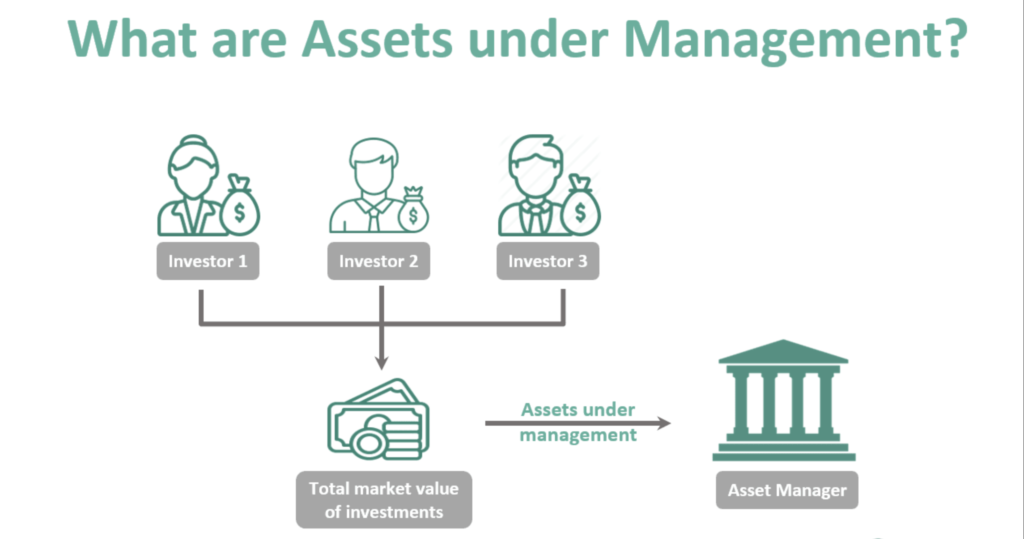
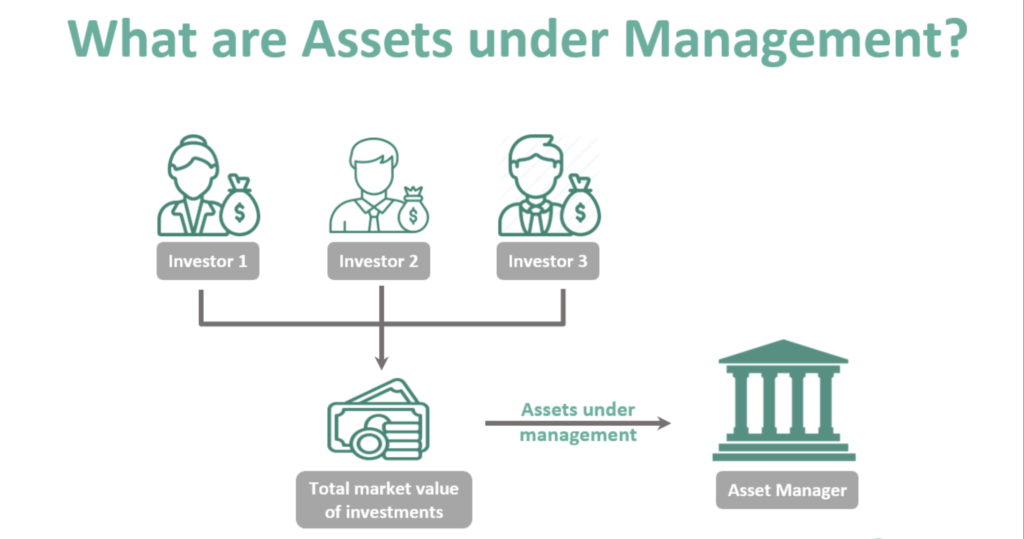
AUM refers to Assets Under Management, which is the total market value of investments managed by an investment manager/organization on behalf of their investor, with their consent. These assets can be anything, including stocks, bonds, mutual funds, ETFs, and other investment options.
The global asset under management (AUM) is expected to reach $200 trillion by 2030, growing at a CAGR of 6.2%. See the detailed market reports here.
Advertisement
How to calculate AUM?
It is calculated by adding the total current market value of all investments being managed.
AUM = ⅀ (Current Market Value of all Assets)
The formula, which is used to calculate the daily AUM value:
AUMtoday = AUMyesterday + Net Inflows + Market Profit/Losses
Advertisement
Here, net inflows are your new investments minus the redemptions, and market gains & losses are value changes of assets due to price movements.
How is your money turned into assets?
When you invest your money, it is converted into assets that are far more valuable than your paper money. These are the things bought with that money. And the value of these things keeps increasing faster than actual money. It can be anything, such as digital gold, ETFs, mutual funds, shares, stocks, and property.
Types of AUM Assets
As discussed above, your money can be converted into different types of assets by using it to buy various things. Let me tell you about some of them.
Equities or Stocks: These are shares, or say you buy a certain percentage of a publicly traded company, including large-cap, mid-cap, and small-cap stocks.
Debt Funds: These assets are essential components of mutual funds and emphasize fixed-income securities such as government bonds, corporate bonds, treasury bills, and marketable securities. They often have lower risks and a predictive outcome.
Hybrid Funds: It is where investment managers diversify your money across assets like equities, debt, and sometimes even instruments like gold. It gives investors a wider portfolio and a good option for people choosing growth with less volatility.
Thematic & Sectoral Investment: These are specified mutual funds for targeted industries or well-rounded investment themes. These have high growth potential but also come with significant risks due to condensed exposure. The risks are generally due to economic lows or sector-specific downfalls.
IFs and ETFs: The index funds or exchange-traded funds are passive investments that track the performance of a specific market index. People like their simplicity and cost efficiency. Mostly, retailers and institutional investors prefer these investments.
Alternative Investments: These investment approaches are different than traditional ones. Here you can invest in land, real estate, commodities, and gold. This can be used to diversify a portfolio, offer great returns over time, but comes with high risk.
Each of these investment types has more in-depth subcategories.
Factors that Affect AUM
The AUM value often keeps fluctuating; sometimes you gain, and sometimes you lose. There are different factors behind this, and some of them are listed below.
1. Market Graphs
The market often experiences upswings and downturns, and your underlying assets increase and decrease in value, respectively. Highly volatile assets such as stocks, commodities, crypto currencies etc can be frequently impacted.
Advertisement
2. Investor Activities
Here, AUM is affected by the investor’s action. Where there are inflows (new investments by investment) like buying new units, increasing capital, etc., the value of AUM increases. On the other hand, if there are outflows or redemptions by investors pulling out their money directly decreases the AUM.
3. Distribution
When a fund pays out dividends or interest, the AUM reduces, and if these payouts are compensated or reinvested, the value increases. When the funds with better performance outperform, the benchmarks tend to attract people to invest more, and this leads to increased AUM.
There are also some other factors, like sales and marketing. Different fund types, such as open-ended funds and different fund structures, also impact the AUM.
How do AUM Managers Earn?
You must be wondering if someone is using the brains and resources to invest your money, then what do they benefit? So here is how asset management companies make money.
Advertisement
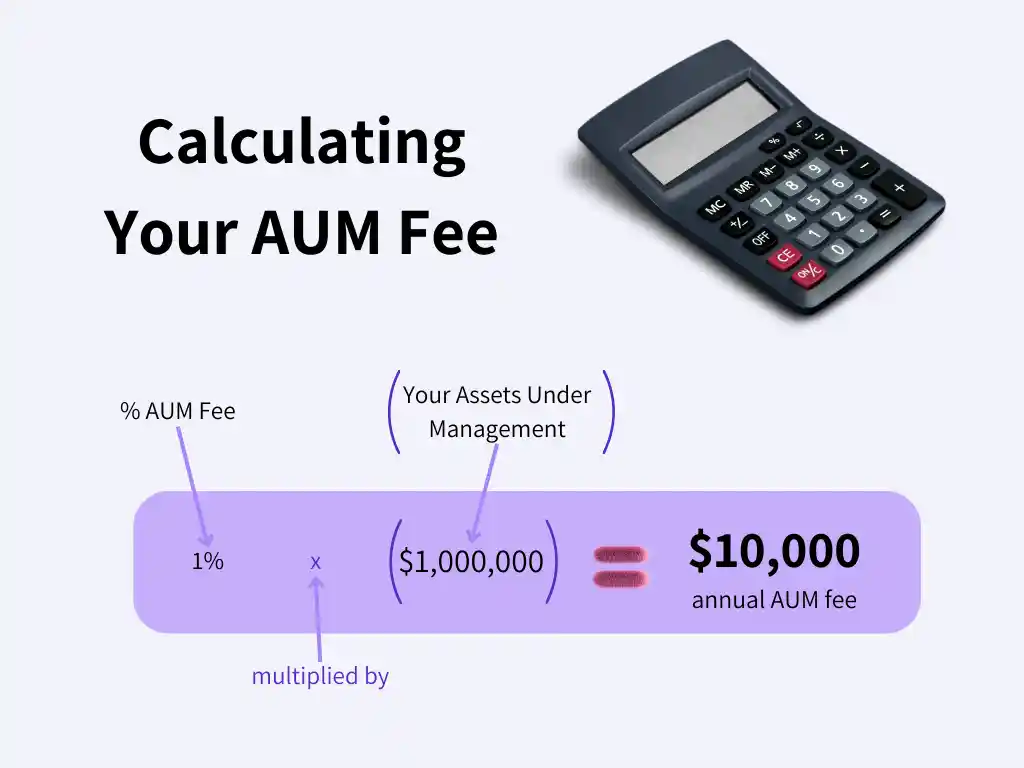
These companies generally sell the investment solutions as products to their clients. They sell mutual funds, ETFs, and manage private accounts of other companies. In return, they either charge a fee or a percentage of assets under management.
The charges consider some factors such as investment type, asset class, investment sector, and transaction complexity. For instance, when an investment strategy involves a cultured process and tools like trading or taking short positions, then the clients can be charged a high fee.
Ongoing charge fee (OCF), performance fees, initial and exit charges, etc., are some charges incurred by companies that these agents charge to clients.
Types of Asset Management Companies
Different types of investment are managed by different specialized companies for the same purpose.
1. Mutual Fund Companies
These companies use the investor’s money to buy stocks, bonds, and other securities that align with the fund’s objective. These companies are best chosen by retail investors. The clients get fund units, and returns as per market performance.
Advertisement
2. Hedge Fund Companies
This is most opted for by high-net-worth people and institutional investors, where they use plans like leverage, short selling, and derivatives. The aim is to gain high returns in all sorts of market fluctuations. This involves high risk but has fewer regulatory restrictions.
3. Private Equity Firms
These are companies that invest directly in unlisted/private companies, or they pool capital from institutional investors and high-net-worth clients to take over, restructure, and improve private companies. Their goal is to increase their company’s worth over a period of time before selling it for a profit.
4. Real Estate Investment Trusts (REITs)
The firms invest in income-generating assets of real estate, like commercial spaces. The investors earn returns from real estate without actually owning the property. These corporations manage high-value real estate portfolios. Leasing, selling, and collecting rents, and later distributing among the shareholders as their incomes and dividends.
AUM vs. NAV
Aspect
AUM
NAV
Meaning
Refer to as an asset under management, it is the total market value of all the assets managed by a firm.
Stands for net asset value, which is the net value of a fund equivalent to an investor’s equity.
Calculation
All assets of all funds (securities and cash)
Total assets minus total liabilities out of total outstanding units.
Usually refers to
Asset manager as a whole (total AUM of all funds) minus investor redemptions
Individual fund (based on per share or per fund)
It Indicates
It says a lot about the size of the asset manager, their position and trust among clients, performance gains, and experience
Tells about the share price (intrinsic value), and what is left is the liquidation value
Change Frequency
Fluctuates all day
Calculated at the end of the day
Benefits of Asset Under Management
Shows you trust and scalability, a higher AUM indicates that the fund or company is a trusted one. It reflects credibility, market position, and investor confidence.
Larger AUM shows that fund managers can help you diversify your investments.
When a company has bigger AUM, it can spread fixed costs for clients, which leads to lower expense ratios for investors.
Fund houses with larger AUMs have better negotiating power and broader investment opportunities.
Better AUM indicates the stability of a fund management company.
Conclusion
I hope this blog helped you understand what is AUM in finance. When you invest, you must know how and where the investment is happening. Learning and understanding about assets under management is the first step to doing so. We have discussed various aspects of it, such as types, risks involved, benefits, and how you can calculate AUM. I have also stated the clear difference between NAV and AUM, which often confuses investors. Keep reading, keep learning. And let me know in the comments, how you choose to invest your money?
If your house or apartment doesn’t have central air, the summertime can be brutal. This time of year, as the indoor temps climb higher and higher, many find themselves searching for a quick (and affordable) alternative to a full-fledged HVAC system. Typically, that comes down to a decision between a window air conditioner and a ductless mini-split system. And while both systems will do a good job cooling your home, they aren’t exactly identical… and not just because of the many different brand names.
Choosing between the two usually comes down to a few factors: Cost, comfort, and how permanent the solution is. Window AC units are one of the more common options for apartments, smaller homes, and short-term cooling needs because of how inexpensive and easy to install they are. That said, mini splits are becoming more and more popular for the long-term thanks to their quieter noise and better cooling efficiency.
Above all else, the biggest difference between the two systems is installation. A window AC is simply a single self-contained unit that sits in an open window and cools one room at a time. A mini split connects multiple units to refrigerant lines and indoor and outdoor components. That design lets mini splits distribute cooling more evenly throughout different parts of the home.
Advertisement
When to choose a window unit vs a mini split
antoniodiaz/Shutterstock
Efficiency is nice and all, but your biggest deciding factor might come down to cost. If that’s the case, window units have the advantage over mini splits. Popular models can be purchased for well under $500, and installation usually only involves mounting the unit in the window and plugging it in. (Maybe adding some insulation if there are any gaps, as well.) And because they’re portable, they can also move with you from one place to the next without a complicated uninstall. If you’re a renter, this is almost certainly the best option for you.
Mini splits are better for people who own (or people with lax landlords, as rare as that might be). Yes, they’re quieter, more energy efficient, can handle both heating and cooling, but they also have to be installed by a pro. Mounting indoor air handlers and routing refrigerant lines through walls isn’t exactly a DIY project. Whole-home mini-split systems will also run you thousands of dollars more than a window unit, and that’s even before the cost of install. Still, if you’ve got the funds and the ability to put one in, it’s likely to do a better job than a window unit alone.
Dun & Bradstreet has spent over 180 years building a comprehensive commercial database. Its Commercial Graph, covering 642 million businesses and their relationships, corporate hierarchies and risk profiles, was designed for people. Credit analysts, risk managers and sales professionals who could wait for query results and work through ambiguous entity matches. AI agents cannot do any of those things.
When D&B’s customers started pushing agents into credit, procurement and supply chain workflows, the Commercial Graph that had reliably served nearly 200,000 customers globally became a problem. The systems built to serve human analysts were the wrong architecture for machines. So D&B rebuilt.
“We need to think about agents as our new consumer category, evolving from our standard credit analysts or sales and marketing professionals, et cetera, to also now catering to these customers’ agents,” Gary Kotovets, Chief Data and Analytics Officer at Dun & Bradstreet, told VentureBeat.
What broke when agents started querying
The Commercial Graph was not a single database. It was a collection of separate systems built for different use cases and different markets, held together by custom integrations. Human analysts navigated that fragmentation through SQL queries or pre-built interfaces. Agents could not.
Advertisement
The scale of the underlying data compounded the problem. The database had nearly doubled in five years, expanding from more than 300 million to more than 642 million business records, with 11,000 fields per record, according to D&B. The firm now runs approximately 100 billion data quality checks per month as records move through its systems. Querying that at the sub-second latency agents require, against a fragmented architecture, was not workable.
The relationships the graph tracked were also the wrong kind. Legacy systems recorded static connections between entities. A CEO was linked to a company. That was the line. Agents working on credit assessments or third-party risk need dynamic relationships: when that CEO leaves for a new company, which organization does their track record follow? When a subsidiary changes ownership, how does that propagate across a corporate hierarchy? Those questions required custom analyst work before. Agents cannot wait for custom analyst work.
The broader problem is not unique to D&B. Kotovets said he has spoken with hundreds of CDOs and CIOs over the past six months and consistently heard the same constraint: they could not build what they wanted in AI because their data foundations were not standardized, normalized or agent-queryable. D&B had that foundation, built over decades to serve human analysts. It still had to rebuild for agents.
What they actually built
The rebuild started with consolidation. D&B migrated its fragmented databases to cloud infrastructure, redesigned the underlying schema and built a data fabric layer that normalizes records across markets while preserving regional compliance requirements. The result is a unified knowledge graph that tracks billions of relationships across 642 million companies, continuously updated and enriched by AI-driven data processing.
Advertisement
On top of that graph, D&B built a structured access layer for agents. Raw SQL access at agent query volumes and latency requirements was not the answer. Instead, D&B created a set of tools and skills available through MCP that package data with context and route agents to the right records for specific queries. A match and entity resolution engine sits behind every query, confirming that when an agent asks about a company, the answer resolves to a verified, specific entity rather than a name match.
D&B solved agent identity from both directions
Rebuilding the graph and adding MCP access solved the data retrieval problem. It did not solve the identity problem. Agents are not humans, and the authentication model built for human users did not extend to machines.
D&B built a new registration model for agents. They must map to a verified IP address and register an individual access key, treated as an authenticated identity in the same pipeline as a human user.
“We actually have a concept of Know Your Agent, similar to know your customer, that does those additional verifications,” Kotovets said.
Advertisement
That handles the inbound problem: knowing which company an agent belongs to and what data it is entitled to query. But D&B also built for the outbound problem: what happens when a customer’s own multi-agent workflow loses track of which company it is analyzing.
In a workflow that chains a credit check agent, a KYC agent and a third-party risk agent, each queries D&B at a different step. Without a mechanism to confirm they are all referencing the same entity, a workflow can complete while operating on divergent records.
“They have to come back to our verification agent to ensure that they’re still talking to each other about the same entity,” Kotovets said. “It’s almost like a digital handshake, in a sense.”
D&B’s business verification agent can be embedded into any workflow as a persistent reference point and is available on Google’s A2A protocol regardless of which orchestration tool a customer uses.
Advertisement
Four things enterprises must get right before deploying AI agents
The rebuild exposed requirements that go beyond D&B’s own stack.
Data foundations come before agent infrastructure. The CDOs and CIOs Kotovets spoke with over the past six months consistently hit the same wall: they cannot build what they want in AI until their data is clean, normalized and consolidated. D&B had that foundation already. Most enterprises do not, and they will feel it.
Design for dynamic relationships, not static ones. Enterprise data systems typically record point-in-time connections: a person belongs to a company, an asset belongs to a subsidiary. Agents working on credit, risk or supply chain decisions need to reason across relationships that shift over time. If the underlying data only captures the static line, the agent will too.
Build entity consistency checks into multi-agent workflows. When multiple agents touch the same entity at different steps, there is no guarantee they are all referencing the same record by the time the workflow completes. That gap needs to be engineered for explicitly. Entity verification is a workflow design requirement, not an optional guardrail.
Embed lineage from the start, not as an afterthought. Every agent-produced answer should carry a traceable path back to its source. In credit, risk and supply chain decisions, the cost of an error is concrete. Lineage needs to be built in before scaling, not added after problems surface.
“You could always click and see where it came from, and validate it all the way back to the original source,” Kotovets said. “That’s been the key for us in unlocking a lot of other capabilities, because we have that level of certainty in the things that we’ve done.”




































































You must be logged in to post a comment Login