Today in the U.S., it’s mostly crossover vehicles shaped like the Honda CR-V and the Toyota RAV4 you’ll find parked in driveways. The numbers back this up, too, with EPA production data for 2024 noting crossovers account for roughly half of every new vehicle built for the American market. Most of them are four wheel drive, part of a long climb that saw AWD officially overtake front wheel drive as the most common layout in 2017.
A lot of the climb comes from plain demand. AutoPacific, which surveyed more than 18,000 Americans planning to buy a new vehicle in 2025, found that for a majority of AWD fans, it wasn’t just an option — it was a necessity. 63% of people surveyed said they would straight up refuse a car without it.
That said, demand is only part of the equation, because a lot of it also has to do with regulation. The thing is, every carmaker has to hit an average fuel economy figure across its entire fleet that it sells in America. Under these same rules, no individual vehicle has to be efficient. What gets measured is the average across everything a company sells, and that average is tallied into two separate pools. One pool holds the cars. The other holds the trucks, though the problem is that the rules are less strict for them since they’re kind of ancient, written back when trucks truly were workhorses. Trucks just have a lower bar to clear, which is why automakers favor them.
Advertisement
Why automakers are incentivized to go with AWD
However, this doesn’t directly explain why most of these cars are AWD since those same cars can also be FWDs. The thing is, if a crossover is driven with two wheels, it gets filed with the cars – the same category as sedans. Give that same crossover four driven wheels and some extra ground clearance, and it gets filed with pickups instead, where, as already mentioned, the bar is lower. The automaker is able to clear the fuel economy rules much more easily.
Advertisement
To give a better idea about how irresistible flagging any car as a truck is to automakers, researchers at the Union of Concerned Scientists worked some numbers out. It’s a known fact that driving all four wheels hurts fuel efficiency – for a small SUV, it raises the CO2 emissions by roughly 14.2 grams per mile. However, count that same SUV as a truck (by upgrading it to AWD), and it suddenly wins an additional allowance of 39.8 grams per mile. The automaker then doesn’t need to touch the engine to bring emissions down, and adding a driveshaft is simply a lot cheaper than shrinking a motor. This pattern was already well established by the middle of the last decade and it’s not gone away. In fact, by the 2024 model year, 77% of the lightest SUVs on sale qualified as trucks.
Advertisement
Shoppers love AWDs, too
Marekuliasz/Getty Images
Regulate all you want, but the demand won’t flow if it doesn’t come from the shoppers themselves. One of the reasons why buyers keep going for AWDs is because winters frighten them, and justifiably so, given the crash figures: Snow, sleet, ice, and slush account for 41% of weather-related crashes on American roads. Automakers have spent decades convincing consumers that four wheel driven cars are the solution, and according to Consumer Reports, it’s one big reason why crossovers have become so popular. Trouble is, AWD does nothing to shorten your stopping distance, making it one of the winter driving myths you need to stop believing. Winter tires are still more reliable than any layout, which is why an AWD car still needs proper snow tires.
At the same time, ticking the AWD box has gotten cheaper, too. The Union of Concerned Scientists tracked comparable trims over the years and found that four wheel drive averaged $1,700 as an extra in 2010. Five years later, it fell to $1,490.
Another factor leading to the rise of AWDs is the growth in EV sales over the years, a lot of which come fitted with AWDs. It’s easier for an electric car to gain AWD functionality versus a gas car, as the latter requires a driveshaft running the length of the floor and a transfer case to split the drive. Meanwhile, all an electric car needs is a second motor. Sure, cheaper electric cars still have one motor driving two wheels, but according to InsideEVs, 75% of the 300-odd electric configurations on sale drive all four wheels.
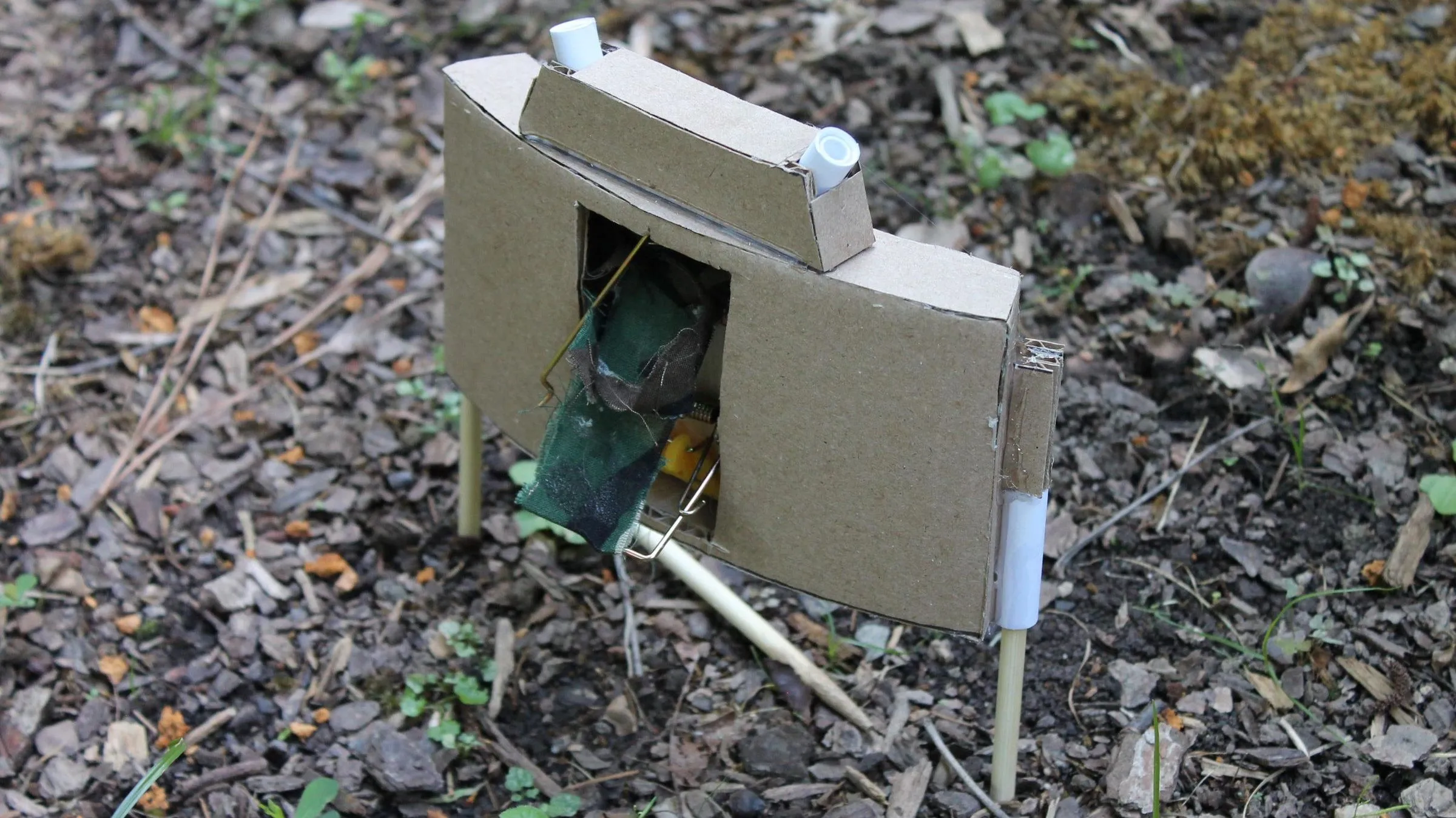
The Claymore mine is a rather fearsome weapon of war, using explosives to blast a cone of shrapnel towards advancing enemies. It’s not really something you should try and build at home. An airsoft version, though, is altogether more appropriate. [RegiBlackwood] has developed a simple way to build exactly that.
It’s a cheap and cheerful build, with the claymore housing itself built out of cardboard. Wooden dowels are used to stake it into the ground, just like the real thing. In the center of the housing sits a regular old mouse trap. Only, it’s been modified to hold a sling carrying a payload of BBs. The trap is also tweaked to make its spring more powerful, and to enable it to be triggered with the tug of a tripwire. When triggered, the mousetrap fires and hurls the sling forth, spewing a rain of BBs from the front of the device—ideally quelling the advance on your position.
Built properly, it’s a fun piece of airsoft hardware that could really change the dynamics of your regular game. If you’re looking to do point defence, you might also consider building yourself some automated turrets as well…
Unauthenticated intruders can mint admin tokens, and exposed servers are already being hit
Security researchers reported that someone is exploiting CVE-2026-82329, a critical JFrog Artifactory authentication-bypass bug, just days after the vendor patched the 9.8-rated flaw. And we don’t know if that someone is human.
Advertisement
Artifactory is a widely used tool for managing software artifacts, packages, binaries, and AI models. It’s also popular with AI agents that go rogue and need to communicate with each other while remaining undetected by their human babysitters.
JFrog disclosed CVE-2026-82329 on Friday, and by Tuesday, attackers had already begun exploiting internet-exposed systems, according to exposure-management biz watchTowr’s threat-intel team, which reported “attackers minting themselves admin tokens.”
In addition to creating new administrative credentials, watchTowr’s honeypot network caught miscreants “enumerating users, groups, credential sets and federated access topologies,” Yordan Ganchev, principal threat intelligence specialist at watchTowr, told The Register.
Advertisement
“Right now, we’re observing exploitation from a small number of IP addresses from varying geographies exploiting multiple of our honeypots,” Ganchev said. “Broad-scale scanning and mass exploitation has not been observed, but that is unlikely to stay the case for long.”
Ganchev urged organizations running vulnerable versions to “urgently patch” internet-exposed systems, and treat them as being potentially compromised – so inspect audit logs, rotate credentials, and investigate connected systems for any unusual changes or backdoor implants.
“When attackers gain admin level access to a central software supply chain system, they can do what every engineering team does best – build, ship and distribute software fast,” he said. “From there, they could tamper with build pipelines, move laterally into production systems and potentially push malicious changes downstream to customers.”
JFrog did not immediately respond to The Register’s inquiries. We will update this story when we receive any response. ®
Nvidia’s first official DLSS 5 benchmarks promise enormous frame rates, but the underlying render performance tells a very different story, with Neural Rendering looking exceptionally demanding.
A garage door opener is the type of convenience that’s easy to take for granted until it stops working properly. One way to guard against unexpected garage door opener failure is to familiarize yourself with the expected lifespan of such devices. Although numerous factors, such as how often you use it, can influence the lifespan of these machines, they typically should last between 15 and 20 years on average. Look into replacement options if yours is nearing 15 years or more of age. You should also be on the lookout for common signs indicating a garage door opener is dying and needs to be replaced.
Be aware that not all the problems affecting garage doors and garage door openers necessarily require investing in a full replacement. In many cases, it’s wise to assess the situation, perhaps with the help of a professional, to determine if a simple repair job would fix the issue. However, in some instances, even if it’s technically possible to repair a broken garage door opener, it might be more financially prudent in the long run to simply invest in a new model that’s unlikely to break down in the near future.
Advertisement
Inconsistent operation
GagoDesign/Shutterstock
Naturally, if your garage door opener doesn’t open the garage door reliably, that’s a sign of a problem. Even if it works some of the time, the fact that it’s not doing its job consistently is a red flag. That said, it’s also a bad sign if the garage door opens or closes on its own.
Any type of inconsistent or unexpected functioning could indicate some part of the garage door opener is malfunctioning. Unless you’re genuinely an expert in garage door opener repair, you should hire a professional to thoroughly inspect the system. Fixing it may only require swapping out an old component for a new one. Sometimes, if a garage door won’t open at all, installing a new battery is all that’s necessary.
If the issue is more widespread, affecting multiple components due to factors like age, you might be better off replacing the system entirely. Remember, in terms of long run expenses, staying on top of repairs and upkeep for an aging garage door opener system could be costlier than installing a replacement.
Advertisement
Strange noises or movements
Yuliya Taba/Getty Images
Even if your garage door opener is technically working, you should nevertheless pay attention to how smoothly it appears to be functioning. You might notice that the garage opens more slowly than it once did. Or, it could move in a jerky manner. Both of these could be signs of garage door opener trouble.
Similarly, listen to any sounds your garage door makes when the opener is in operation. Strange noises when the garage door is opening or closing could be a sign that something is wrong with the motor or another component.
Advertisement
Again, it’s possible that the cause of the problem is something that can be repaired without a full garage door opener replacement. However, these warning signs often arise when garage door opener systems are fairly old and reaching the end of their lifespans. Thus, if you want to avoid having to address more issues in the near future, your best bet may be to schedule replacement service.
Advertisement
The garage door doesn’t close completely
Marvin Samuel Tolentino Pineda/Getty Images
This is another form of inconsistent performance that can be very frustrating to encounter. When you trigger the garage door to close, you might notice that sometimes, it only closes slightly. Rather than close fully, it may reverse course and start to open again.
This can happen for various reasons. Often, a problem with the sensor or the motor is to blame. You might be lucky and discover that the sensors are merely detecting debris or other obstructions and interpreting them as signs that a person or animal is in the way. Clearing away the obstruction can fix the problem immediately. However, if the sensor is malfunctioning, you might have to replace the opener.
A similar problem can occur if the garage door doesn’t close all the way. If it closes somewhat, but doesn’t necessarily reverse course, it might indicate a problem with the tracks or rollers. Again, someone with professional experience or knowledge can help you better determine whether this is the type of problem that requires basic repairs or a full garage door opener replacement.
Advertisement
Your garage door opener relies on old tech
Seanpavonephoto/Getty Images
A garage door opener could theoretically work perfectly fine. Still, you might decide it’s time to replace yours simply because you want to upgrade to something that leverages newer tech to offer enhanced performance. For example, maybe you’ve studied the pros and cons of smart garage door openers and concluded that you’re ready to make the switch. This is a perfectly valid reason to schedule replacement service.
No matter what, it’s critical to keep in mind that garage door openers are complex machines. They can also be dangerous, particularly when they’re not working properly. Don’t attempt the DIY approach to diagnosing or addressing any garage door opener problems if you lack the necessary training and experience. Instead, if you notice any signs that your garage door opener is no longer working properly, get in touch with a professional who can take a closer look. In the meantime, you can also begin exploring options for replacing your current opener with something that not only works, but uses the latest innovations to deliver an exceptional experience.
X-Bow received nearly $11 million under a new interceptor development contract
The new interceptor system targets a cost below $750,000 per launch
Patriot missiles currently cost roughly one-fifth more than this new target
The Pentagon has awarded X-Bow Systems almost $11 million to develop a lower-cost interceptor system under a missile defense program.
The project falls under the Missile Defense Agency’s Rapid Response Small Launcher Technology program and seeks to create a weapon that could cost below $750,000 per launch.
That figure amounts to roughly one-fifth the cost of a Patriot missile, the current top-tier standard for air defense systems.
Latest Videos FromTechRadar
Advertisement
X-Bow develops a new interceptor approach
The Missile Defense Agency selected X-Bow through its Low-Cost Interceptor program, which focuses on developing affordable systems against advanced aerial threats.
The company will use the funding to continue propulsion work and prepare a prototype for a planned flight demonstration.
X-Bow produces its solid rocket motors and propellant internally, allowing the company to control more parts of its manufacturing process.
The agreement requires the firm to deliver a prototype system by late 2027, although that stage will not represent a fully operational weapon.
Are you a pro? Subscribe to our newsletter
Sign up to the TechRadar Pro newsletter to get all the top news, opinion, features and guidance your business needs to succeed!
Advertisement
The Pentagon has faced pressure because existing interceptor systems remain expensive and difficult to produce quickly.
The war in Iran revealed a major setback as the U.S. is now left with about 250 THAAD rounds and less than 1,000 Patriot interceptors.
Patriot replacement rounds cost around $3.9 million each, while manufacturing takes years and depends on a small number of established suppliers.
“The contract will aim to address the critical need to expand the SRM industrial base, which is currently reliant on a duopoly of two primary manufacturers,” said the US Department of Defense in its contract announcement.
X-Bow said its production methods could help create affordable weapons while increasing manufacturing speed for military requirements.
“America can’t out-produce today’s threats with yesterday’s supplier base,” said Jason Hundley, founder and CEO of X-Bow Systems.
The company is examining ways to reduce costs across interceptor components, including propulsion systems and other expensive sections.
Advertisement
Other nations explore cheaper missile defense systems
The search for lower-cost interceptors has expanded beyond the United States as allies face similar concerns.
Ukraine and European partners have started developing alternative approaches that could reduce reliance on existing expensive missile defense weapons.
One European effort called Freyja has been linked with an interceptor costing around $700,000 per round.
Advertisement
Lockheed Martin has also introduced the PAC-3 ACE missile concept, which the company says could lower costs compared with current Patriot versions.
The US Air Force previously requested proposals for a counter-air missile that could cost below $500,000.
That effort reflected wider interest in producing larger numbers of affordable weapons for future defense requirements.
The X-Bow project remains in an early development stage because testing and evaluation are still required before deployment.
Advertisement
Military officials will need to confirm whether the system can achieve lower costs while meeting operational standards.
“We’re taking a look at propulsion, we’re taking a look at all the expensive parts of an interceptor to look for opportunities to drive down every bit of cost,” said Lt. Gen. Heath Collins, director of the Missile Defense Agency.
The program shows the Pentagon is exploring alternatives as demand for missile defense grows worldwide.
However, the outcome will depend on whether new production methods can deliver affordable systems without reducing expected performance levels.
Anthropic wants AI agents to control programmable machines through common software rules
Model Hardware Standard (MHS) can connect microscopes, robotic arms, and liquid handling equipment
MHS allows different laboratory devices to communicate through standardized software drivers
Anthropic opened a preview of its Model Hardware Standard (MHS), designed to let AI agents control programmable machines through shared rules.
The proposed system is intended for laboratories, factories, and workplaces where different instruments must work together without custom software links.
MHS uses software drivers that translate between computer systems and individual machines, allowing equipment with different interfaces to communicate consistently.
Latest Videos FromTechRadar
Advertisement
A common system for physical machines
Its drivers rely on basic commands for reading measurements or changing settings, giving agents a method for controlling connected equipment.
The system records machine details that might otherwise remain inside manuals or depend on knowledge held by experienced laboratory staff.
Users can enter such information through natural language, after which MHS creates reference material describing capabilities, adjustments and safety restrictions.
Agents can then discover compatible equipment across networks without requiring separate software bridges for every machine they need to operate.
Are you a pro? Subscribe to our newsletter
Sign up to the TechRadar Pro newsletter to get all the top news, opinion, features and guidance your business needs to succeed!
Advertisement
The standard supports microscopes, liquid handlers, robotic arms and other equipment that offers some form of programmable interface for agents.
The company claims integration that once required weeks or months could instead take hours or minutes when equipment supports MHS.
According to Anthropic, Claude was tested with physical experiments, including laser alignment supported by camera-based observation during early physical trials.
The model successfully adjusted the laser, checked the image, and repeated the process while assessing each change carefully.
The design also lets agents combine commands from several devices, creating automated sequences for work that might otherwise require coordination.
Physical limits remain a concern
Anthropic said Claude interacts with experiments and hardware in an “exploratory manner, much as a scientist would,” during physical testing.
Advertisement
That model can then coordinate several instruments through one interface, rather than requiring separate control software for every connected device.
The company has shared MHS with manufacturers and research groups working across biotechnology, robotics and quantum computing fields.
Anthropic intends the preview to help establish safety checks before the standard becomes available widely to developers and equipment makers.
Amazon Web Services, Automata, Danaher, Doosan Robotics, MBF Bioscience, QIAGEN, Tecan and Universal Robots are among the early participants now.
Advertisement
Anthropic acknowledges that AI agents still require expert supervision because language models have clear limits when reasoning about physical equipment.
MHS cannot currently support equipment lacking a programmable interface, leaving some laboratory and industrial machines outside its current technical scope.
Anthropic says it plans to work with manufacturers to add drivers while expanding compatibility with more devices and robotics platforms.
The preview will also support new safety tests and practical rules for deploying AI agents around physical equipment.
Advertisement
The company says its eventual open-source release will include findings from these tests alongside detailed guidance for safer implementation.
The project therefore remains experimental, with practical limits still depending heavily on hardware design, software access and human oversight.
Phishing actors are abusing the legitimate Faronics Deploy endpoint-management platform to gain remote administrative control over victim computers and install the ScreenConnect remote support software.
In activity observed between July 21 and August 20, Faronics-themed lures reached more than 457 endpoints via emails disguised as invoices, tax documents, or other business files.
Faronics Deploy is a cloud-based endpoint management platform that allows IT administrators to remotely enroll and manage computers, deploy software, and execute scripts.
Researchers at managed detection and response company (MDR) Huntress say that the embedded malicious links lead to a website that profiles potential targets and guides them through a malicious download flow.
Advertisement
If the website is reached from an analysis environment, a decoy routine is activated, such as displaying an error message.
Huntress explains that a potential victim is prompted to download and launch a legitimate, signed Faronics Deploy installer that is disguised as an Adobe document, a reader app, or a plugin update.
Fake Adobe download page Source: Huntress
When the victim runs the Faronics installer, often named ‘Adobe.exe,’ their computer is enrolled in a Faronics deployment controlled by the attackers.
The threat actor then uses Faronics’ remote-deployment functionality to execute PowerShell scripts on the enrolled computer without further user interaction.
These scripts download additional tools from the attacker’s infrastructure or external locations, including GitHub, eventually installing another legitimate remote access tool, ConnectWise ScreenConnect.
Advertisement
“The delivery method varies between scripts, with observed examples using curl or mshta to retrieve additional content, while others invoke msiexec to install payloads hosted on attacker-controlled infrastructure,” Huntress says.
“These scripts are subsequently used to install ScreenConnect, establishing an additional remote access mechanism on the compromised endpoint.”
ScreenConnect gives attackers an additional remote-access channel independent of Faronics, providing hands-on remote control better suited to interactive access while also serving as redundancy if the malicious Faronics deployment is identified and terminated, or if defenders remove its agent.
Huntress notified Faronics of its findings on August 5, and the vendor confirmed the observed malicious activity, countering it by implementing additional anti-abuse measures.
Advertisement
Moreover, Faronics has contacted victimized organizations to notify them about potential compromise.
According to Huntress, the malicious activity dropped significantly starting August 21, indicating that Faronics’ actions worked.
Huntress recommends that administrators check the “C:\ProgramData\Faronics\Logs\” location for a ScriptRunner.log file, which may preserve remotely executed script names and download URLs.
The company says that the ck parameter in Faronics configuration requests is also an indicator, as it identifies the associated customer deployment and can help identify compromised endpoints or malicious accounts.
Advertisement
Administrators should also look for ScreenConnect installations where it is not normally deployed.
Overall prevention scores can hide what happens after initial access. Once attackers are using valid credentials, prevention drops sharply.
The Blue Report 2026 measures defenses technique by technique across 338 million simulations run in customer production environments.
It feels like we have been waiting an age for the Range Rover Electric. First announced back in December 2023, JLR’s luxury EV SUV was meant to hit the road in 2024, but extended development testing forced the carmaker to push its arrival back. Now it’s finally here—one of WIRED’s most anticipated rides—the first fully electric Range Rover.
The specs are as mighty as you would expect. Dual 260-kilowatt motors deliver “V8 levels of power” up to 542 horsepower and 850 newton-meters of torque (20 percent more than other motors of the same size, JLR claims). Inside, a double-stacked 118.5-kWh battery with 800-volt split-charging tech can recharge the cell from 10 to 80 percent in 22 minutes (or, if you prefer, 137 miles in 10 minutes). Max range is supposedly 372 miles (according to WLTP standards), and a claimed real-world distance of up to 333 miles.
Photograph: Courtesy of JLR
The Range Rover Electric will launch from a standstill to 60 mph in 4.3 seconds, which is rapid considering the car’s weight, though there’s no official figure.
All this comes at a price, naturally—one that’s high even for Range Rover. Available for order now, the UK entry-level Autobiography model is £154,070, or about $208,000, but this quickly climbs to £225,240 (north of $304,000) for the SV Black long-wheelbase model. It could go higher, too, as the “Ultra” models are listed as “price on application”—shorthand for “If you have to ask, you can’t afford it.” However, US customers can buy a lower SE-spec Range Rover Electric from $138,00—add $2,550 for delivery and destination.
GoPro plans to expand into AI infrastructure through a $285 million merger with optical-photonics company Starman Optical, whose transceivers will give the action-camera maker a foothold in the fast-growing data center market. GoPro also plans to push into defense, robotics, aerospace, and government markets while continuing its existing camera business. Engadget reports: Starman’s optical transceivers are expected to fall under its umbrella, “extending the Company’s reach into the large and rapidly growing market for AI infrastructure in optical transceivers,” according to a press release. GoPro is also planning a push into the defense, government, robotics and aerospace sectors, bolstered by the combined company’s IP, optics and imaging capabilities.
[…] As Reuters notes, GoPro briefly reached a valuation of $4 billion on its first day as a publicly traded company in 2014. Its stock has struggled in recent years, but the share price received a boost on Monday when it was revealed that YouTuber and filmmaker Markiplier (Mark Fischbach) had become GoPro’s largest individual shareholder after acquiring an 8.5 percent stake. The move follows a similar pivot made by the struggling shoe retailer Allbirds in April when it announced a pivot to AI compute infrastructure, sending the stock soaring more than 700%.


































































You must be logged in to post a comment Login