TL;DR
Windows 11 can now search with two characters instead of three. Local files also rank higher than web results and Copilot suggestions. June Patch Tuesday.



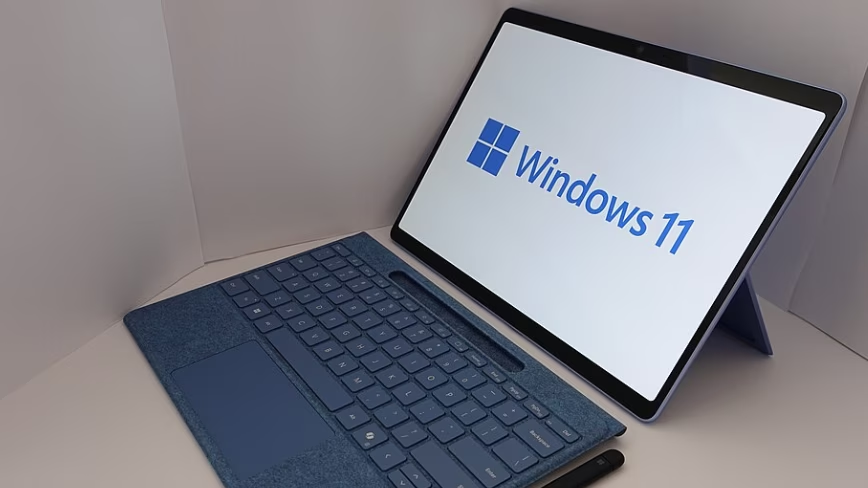
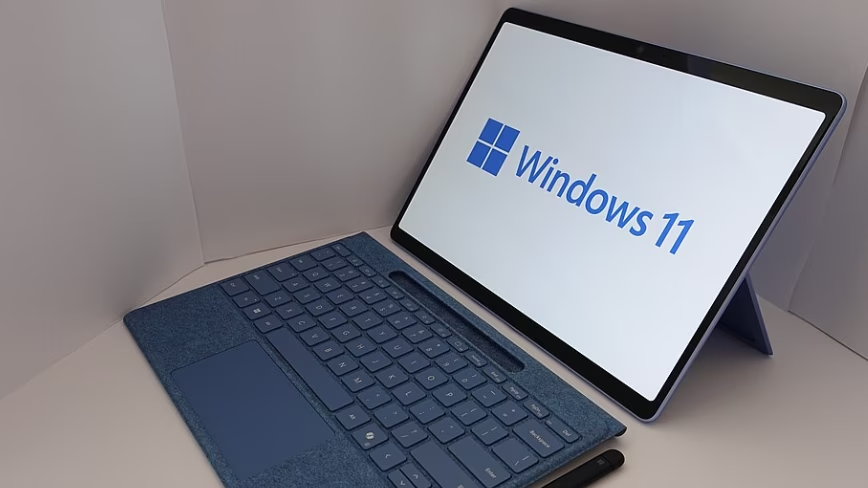
Windows 11 can now search with two characters instead of three. Local files also rank higher than web results and Copilot suggestions. June Patch Tuesday.
Microsoft’s June 2026 Patch Tuesday update quietly fixes one of Windows Search’s longest-standing irritations. The search box now finds files with as few as two characters, down from the previous three-character minimum. Files named Q3, V2, or any other short label are no longer invisible.
The update also changes how results are ranked. Local files now surface near the top instead of getting buried beneath web results, app suggestions, and Copilot prompts. For anyone who names files with short, practical labels, the improvement removes a small friction that compounded every time they searched.
Windows Latest called the June release the biggest Patch Tuesday of the year. Beyond the search fix, it includes the record 200 security patches that addressed 33 critical vulnerabilities and three publicly disclosed zero-days.
Dropping one character from the search minimum sounds trivial. It is not. Most people who work with dozens of files daily use two-character naming conventions without thinking about it. The old three-character floor meant those files required a third keystroke before Windows would even start looking, and when it did, the actual file often appeared below web links and AI suggestions that nobody asked for.
The fix is the kind of usability improvement that feels obvious only after it ships. Microsoft’s AI-first restructuring has dominated the company’s public messaging this year. But the most useful change it shipped in June was not an AI feature. It was letting you find a file called Q3.
It was published by KPMG, one of the world’s ‘Big Four’ accounting firms.
In October last year, KPMG published a report titled Total Experience: Redefining Excellence in the Age of Agentic AI, which was about how companies are using AI to cater to customers’ needs. KPMG is one of the “Big Four” professional services and accounting firms in the world, along with Deloitte, PricewaterhouseCoopers and Ernst & Young. Apparently, though, that report was full of AI hallucinations and included examples of agentic AIs that either did not exist or did not have the capabilities KPMG stated in the paper. Investigators for GPTZero, the maker of an AI content detection tool, found inaccuracies and fake footnotes all over the report, which were also verified by the Financial Times.
In its report of the investigation, GPTZero said that only five citations out of 45 in the paper accurately pointed to real sources. A total of 28 citations paraphrased titles or added fake components to real sources, while 12 were phrased too vaguely to determine whether they actually existed. GPTZero called the creation of fake references by AI models “vibe citing.”
In addition to the fake or inaccurate citations, the investigators also found that approximately half of the claims in the paper were fake or misattributed. They were “likely the result of an AI research tool over-complying with a request to find examples of ‘agentic AI’ in the wild,” GPTZero wrote. In one example, KPMG claimed that Emirates launched a mobile chatbot called Sara that can talk to passengers and alter their flights for them. Sara was a mobile assistant launched in 2023 and not an AI-powered chatbot, and it also didn’t have the power to change bookings for passengers.
KPMG also claimed that Swiss multinational investment bank UBS integrated agentic AI across its “investment advisory, risk management and compliance monitoring.” The bank told the Times that the information was “factually incorrect.” In another example, KMPG said that Swiss Federal Railways (SBB) has AI agents that can help passengers plan, book and optimize their trips based on preferences, real-time conditions and carbon impact. An SBB spokesperson said that was “not accurate.”
Papers by companies like KPMG are typically cited in other research papers and articles, since they’re considered as highly trusted sources. GPTZero chief executive Edward Tian explained that error-riddled papers published by the Big Four could “poison the well of information” and could lead to second-hand AI hallucinations. A KPMG spokesperson told the Times that the company “takes the accuracy and integrity of its published content seriously.” KPMG has since pulled the paper and is now “reviewing the circumstances surrounding its publication.”
Professional services firm KPMG has pulled a report titled, “Redefining excellence in the age of agentic AI,” after numerous organizations said the report’s claims about their AI usage were untrue.
Research group GPTZero identified a number of inaccuracies in the report, which was published in October 2025. GPTZero told the FT that the inaccuracies stemmed from AI hallucinations. In other words, the professional services firm appears to have used AI to help write a report about AI.
UBS, the UK’s National Health Service, Swiss Federal Railways, and Transport for London all told the FT that the report’s claims about their AI usage were either untrue or misleading. A KPMG spokesperson said the firm removed the report from its websites while conducting its own investigation.
“We expect all our people to follow our guidelines on the responsible use of AI, including human oversight to validate content and verify independent sources,” the spokesperson said.
Last month, EY withdrew a report on loyalty rewards programs that appeared to include fake footnotes and AI hallucinations.

While Hollywood has fake cities for filming movies, the FBI apparently has one for getting hacked. The agency has pulled back the curtain on its Kinetic Cyber Range, a 22,000-square-foot replica small town hidden inside its Huntsville, Alabama campus. But instead of training officers for shootouts or hostage rescues, the facility is designed to simulate realistic cyberattacks on homes, businesses, and critical infrastructure so investigators can practice responding to them in a controlled environment.
The indoor complex includes buildings such as homes, a hotel, a gas station, a courthouse, and even a fully functional data center packed with around 200 servers. Each location is wired with operating systems, connected devices, and live networks to mirror the kinds of digital environments agents encounter during real investigations.

According to the FBI, trainees can investigate simulated ransomware attacks, recover evidence from hacked vehicles, and trace digital footprints across multiple interconnected systems. Since opening last year, the facility has reportedly trained more than 1,400 FBI personnel and members of other government agencies. The goal is simple: replace classroom theory with realistic, hands-on scenarios where mistakes can be made safely before agents face similar incidents in the real world.
The idea might sound unusual, but it reflects how modern cyberattacks increasingly spill into the physical world. Ransomware can shut down hospitals, compromised industrial systems can disrupt utilities, and hacked vehicles or IoT devices often require investigators to understand both hardware and software simultaneously.
In many ways, the Kinetic Cyber Range is the cyber equivalent of the FBI’s famous Hogan’s Alley training town in Quantico, except the bullets have been replaced by malware and forensic tools. As digital attacks continue targeting everything from power grids to city infrastructure, having an entire fake town where agents can safely break and rebuild systems before responding to the real thing suddenly feels less like science fiction and more like a necessity.
Over two years after the Apple Car program was declared dead, Apple has offloaded its 5,500-acre Arizona proving ground to Waymo. It’s a sale that recoups $220M from the $10B Apple spent on the failed project.
The Apple Car project is a program believed to have been cancelled by Apple after about a decade of research and development. In what is the surest sign of it being dead, Apple has sold off a massive parcel of land used for self-driving vehicle testing.
In a filing reported by TechCrunch dated June 5, the property at Wittman, Arizona, has been acquired by Waymo. The sale, which was confirmed by Waymo, sees a payment of $220 million being handed over to Route 14 Investment Partners LLC.
Route 14 is a Delaware shell company believed to be connected to Apple. After renting the facility for a number of years, it Route 14 acquired it for $125 million in 2021.
The purchase gives Waymo yet another place to test out its vehicles. It already has locations in California and Ohio, but the Arizona lot will give it a massive amount of land for testing its fleet.
A Waymo spokesperson said the Arizona facility would be used to simulate driving scenarios in a controlled environment. This is to test its self-driving system, including rider-only testing, motion control, operational training workflows, and its future testing needs.
Apple’s renting and later purchase of the facility made sense at the time. It is a location that has a lot to offer companies in the automotive business.
The 5,458-acre site was previously used by Chrysler, again as a vehicle proving ground. It was then sold to a housing developer in 2005, but was later annexed by the City of Surprise and left alone.

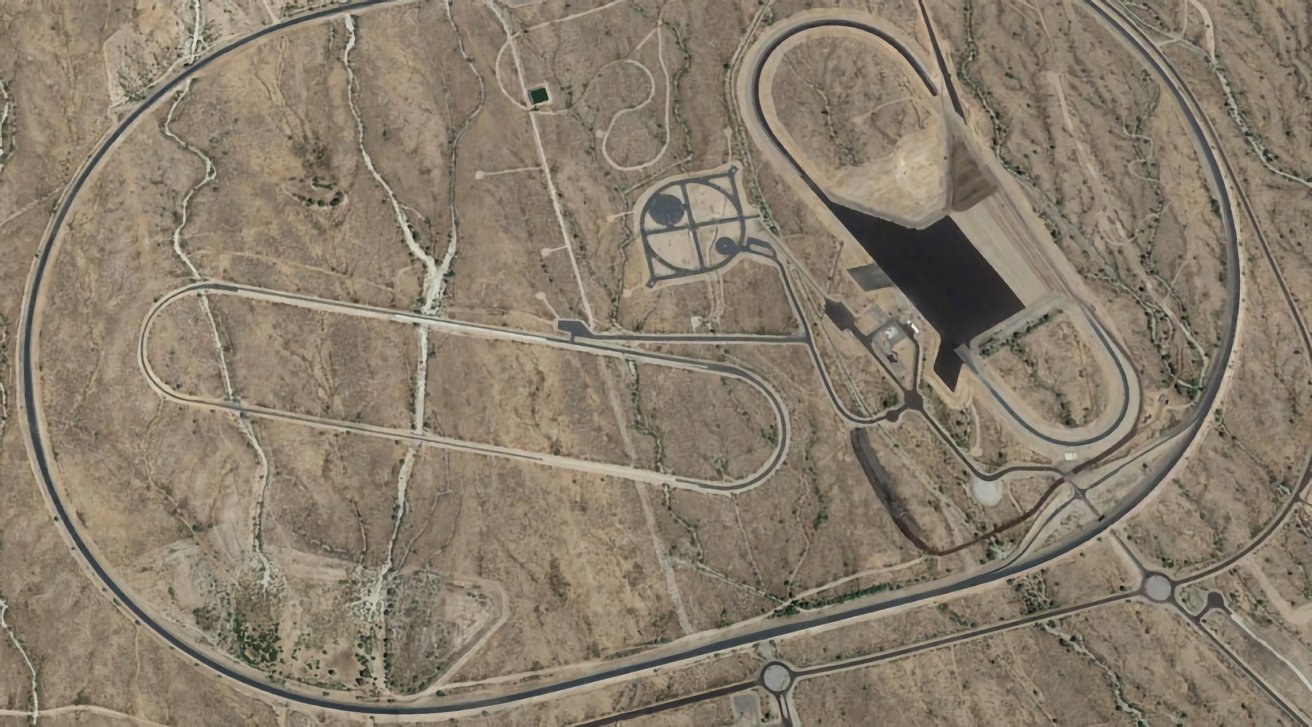
A view of the facility – Image credit: Google Earth
In 2016, the city signed a development agreement with the then-owner SFI Grand Vista LLC, under the intention that it would be used by Route 14.
Despite being over 5,000 acres in size, only a small part of the facility has been set up for testing purposes. There is a 115-acre city course, as well as a freeway course geared towards autonomous vehicle testing.
It also has a 35-acre vehicle dynamics area and a four-mile oval track.
The sheer size of the facility provides ample opportunity for occupiers to build out the area for extended testing. All while still maintaining a safe distance from the edge of the lot, which also helps keep the testing private.
The sale of $220 million in now-unused land sounds like a lot, and so does the $95 million in value the site earned in just five years. That is, until you remember that this involves Apple.
At Apple’s scale, the proceeds of the property sale will help fund other projects, but it’s pocket change compared to its other investments.
Indeed, compared to the $10 billion Apple has been estimated to have shelled out over a decade for Project Titan, it’s barely 2% of the outlay.
It is, however, an attempt by Apple to shed the last vestiges of the extremely expensive failure.
It’s no longer testing its self-driving system on roads, after cancelling the Autonomous Vehicles Program Manufacturer’s Testing Permit in September 2024. Holding onto private grounds for testing doesn’t make sense if there aren’t any planned for the future.
The work wasn’t entirely a bust for Apple, as the teams and research that went into it will have been absorbed by other parts of the company. It’s not hard to imagine some of the computer vision elements being incorporated into Apple Intelligence, or elements being used to push forward its robotics efforts.
The sale, two years after a very public funeral for a very secretive project, is merely Apple getting rid of a massive site that it has no use for anymore.
It’s a reminder of the costly mistake that hurt its wallet and with little to prove for it.


The Leadership Effectiveness Analysis best practices report explores the qualities that differentiate high-performing tech leadership professionals from their less effective counterparts.
Leadership skills in 2026 are a critical capability that enable professionals in all industries to navigate the highs and lows of the ever-changing global working environment. Whether a job announcement, acquisition, or restructuring, there is always a challenge to be overcome, and positive leadership is often the driving force towards success or a favourable outcome in a difficult situation.
Touchstone Executive Assessment recently published the results of its Leadership Effectiveness Analysis best practices report. The company collected data from 142 senior professionals in advanced technology roles, across multiple European organisations, between March 2023 and March 2026. The aim was to determine the specific leadership attributes that differentiate highly effective and less effective leaders.
The report said: “Many years of research and practice assert a direct connection between leadership effectiveness and organisational performance.
“Organisations, however, differ widely in terms of their culture, history, business strategy and people. Because organisations present unique cultural signatures, there is no one best model or profile of effective leadership behaviour.”
Leading in tech has undoubtedly become more complicated as professionals are working in a landscape that is being heavily impacted by political and social instability, threats to global supply chains and mass layoffs at major organisations. With that in mind, now more than ever, it is critical that tech leaders motivate and drive positive action in the workplace. To do that, a hefty arsenal of diverse skills is necessary.
Among those identified by Touchstone Executive Assessment (TEA) as the most critical skills for a modern-day tech leader was significant cognitive ability. TEA’s research found that leaders depend on the ability to learn quickly, think strategically, see the bigger picture and embrace ambiguity.
The report said: “Technical knowledge and domain expertise, while important in themselves, are not the factors that differentiate the best in class from the average. It is the ability of the individual to reason under uncertainty, in real time and in a very expansive manner.”
In blending domain expertise with the ability to view one’s industry through a strategic lens, TEA’s report found, professionals can take into account the long-term implications of decision-making, improve business aptitude and create that big picture perspective.
The data also suggested that operational and interpersonal skills are key areas to work on for professionals in demanding technology roles.
“This is where the worlds of technology and people really come together,” the research noted.
“While execution focus and a production mindset are important, leaders in advanced technology must also be able to manage stakeholder relationships, to communicate and influence effectively, and to drive accountability and engagement across their entire landscape.
“This goes well beyond project management; there is a real sophistication in understanding the organisational environment, knowing the rules of the game and rallying people behind the mission as well as the person.”
Strong leaders, it said, will have the ability to understand organisational dynamics, effectively lead organisational change and deliver results.
Perhaps unsurprisingly, given the current state of global instability and disruption, TEA’s report also indicated that professionals who show the ability to thrive under pressure and scrutiny perform better in leadership roles.
“This talks to the characteristics of the person, not just the person in their role. Our research indicates that personal and professional resilience are increasingly important factors, bringing an ability to sustain performance when the going gets tough and to bounce back quickly from setbacks.”
People in this position are, according to TEA, tenacious, determined and better able to sustain their performance in landscapes impacted by uncertainty and pressure. It found that they are unlikely to take issues personally or emotionally, as they demonstrate resilience, effective decision-making and a tolerance for ambiguity.
Commenting on the results of the study, David Ringwood, the head of assessment and executive coaching at TEA, said: “There is no single right or wrong way to lead – context is king. Technology and AI today are very different than they were 10 years ago, and leadership accordingly needs to recalibrate in line with that shifting context and the changing expectations of employees. The best technology experts don’t always make the best leaders.
“Hiring, developing and building a book of talent that includes those who have the headroom to grow is critical, not least in technology and AI where there is always competition for top talent. This is a ‘how do we’ question – how do we objectively know what predicts the greatest future potential, how do we measure what is exactly relevant and how do we know we’re being as objective as possible?
“Putting the wrong person in the wrong role or career path is an expensive way for everyone to find out. This research may contribute to the definition of what high potential looks like in the tech sector and gives organisations a much clearer sense of where to build performance for today and leadership for tomorrow.”
Notably, in May of this year, technology and consulting company Expleo released the results of its AI sentiment tracker, AI Pulse, for Ireland, a report which found that business leaders in Ireland, ahead of their contributing European counterparts, are far more likely to value empathy as a fundamental skill for managers in the age of AI.
Among Irish business leaders, human-centric skills were identified as the most critical abilities a manager can wield, particularly in the context of increased AI adoption.
Don’t miss out on the knowledge you need to succeed. Sign up for the Daily Brief, Silicon Republic’s digest of need-to-know sci-tech news.

“Battery breakthroughs will lessen AI’s demand on the electricity grid,” argues The Washington Post’s editoral board, arguing that GM’s latest moves “offer a fresh reminder that resource constraints can be solved by innovation.”
Or As Fortune put it, “America’s electric grid is buckling under extreme weather, aging infrastructure, and an AI build-out that is quietly rewriting U.S. power demand — and General Motors wants to turn that crisis into a business.” They describe GM’s plan as offering itself “as a distributed utility in disguise… stitching together hundreds of thousands of battery-powered cars, new grid-scale storage, and a unified charging platform into what amounts to a virtual fleet of power plants.”
The bet puts GM on a collision course with Ford’s newly branded Ford Energy unit as both Detroit rivals race to repurpose underused EV capacity for a more urgent problem: keeping the lights on in the AI era. GM’s case rests on three planks. The first is its existing fleet. GM says more than 250,000 of its EVs on U.S. roads can already charge bidirectionally — pulling electricity from the grid and sending it back. “Every evening, a quiet transformation occurs across the American landscape,” GM Energy vice president Wade Sheffer writes in an open letter to utilities and regulators, describing the EVs sitting in driveways as “a massive opportunity to aggregate energy storage capacity.”
A firmware update is rolling out to customers with GM Energy’s vehicle-to-home hardware, converting those systems into full vehicle-to-grid assets with no new hardware and turning home backup systems into grid resources when utilities need them. GM is piloting the idea in Michigan with DTE Energy at 30 employee homes, and has sketched a 2030 vision with Pacific Gas & Electric in which more than 52,000 GM EVs help balance the grid out of a projected 130,000 vehicles in the area.
GM is also “seeking partnerships with utility companies nationwide to assist in offering such vehicle-to-grid services for customers,” reports CNBC, noting it’s one of two moves “meant to address concerns about rising energy costs amid an artificial intelligence boom.”
Forbes reports that GM’s second goal “is to leapfrog the dominant battery cell tech used for energy storage packs right now” — right past the LFP (lithium-iron phosphate) stage, “which is dominated by China.”
Sodium batteries are cheaper to use than LFP because they don’t need an additional cooling system. They also have a 20-year usable life and are made from materials that can be sourced from within the U.S., the company said at a briefing in San Francisco on Tuesday.
“Sodium-ion actually is the better chemistry for that application. And when I say sodium-ion is better, I mean GM’s version of sodium-ion,” Kurt Kelty, GM’s battery chief and a long-time Tesla battery executive, told Forbes. He said GM is seeing great results from its prototypes, even at scorching temperatures of 55 Celsius (131 Fahrenheit).
“Sodium-ion-powered energy storage systems have the potential to operate without active cooling and with much less system complexity,” Kurt Kelty, GM’s vice president of battery and sustainability, said Tuesday in a blog post. “In large energy storage systems, that matters.” Not having to cool the battery cells could lead to lower upfront costs as well as operating costs, the automaker said.
TechCrunch reports on GM’s big new partnership with energy-storage startup Peak Energy to develop GM’s sodium-ion battery chemistry for grid-scale deployments:
GM wouldn’t share with TechCrunch how much money it is investing in this energy-storage effort. But we do know the company has committed $900 million to commercialize new battery chemistries, an investment that includes a new battery-development center. .. The first GM cells are expected to enter trial production at the company’s Battery Cell Development Center in 2028.
“Our next-generation sodium-ion cell development will drive energy density higher,” promises GM’s blog post, arguing they’re extending the company’s battery expertise and technical infrastructure “into the electrical grid itself. If we get this right, we will not just build better batteries. We will help create a more resilient, more affordable and more flexible energy future… Every improvement we make strengthens the development stack that supports both EVs and energy storage.”
“The message: GM isn’t just selling cars into a stressed grid; it’s supplying the batteries to stabilize it,” argues Fortune.
And GM also announced they’re augmenting their apps with an “Energy Pass” offering “seamless access to Tesla Supercharger, IONNA, Electrify America, and soon, ChargePoint and EVgo networks.” Their goal is to simplify the charging experience with an app “that covers nearly 70% of all DC fast chargers in the United States, plus many Level 2 chargers, all through one app.”
NASA this week announced the four-person crew that will lead its Artemis III mission in 2027: NASA astronauts Andre Douglas, Frank Rubio and Randy Bresnik along with ESA’s Luca Parmitano as the flight’s pilot. Plus, the Parker Solar Probe took another trip around the sun, solar energy overtook coal in May, and more. Here’s this week’s science news.
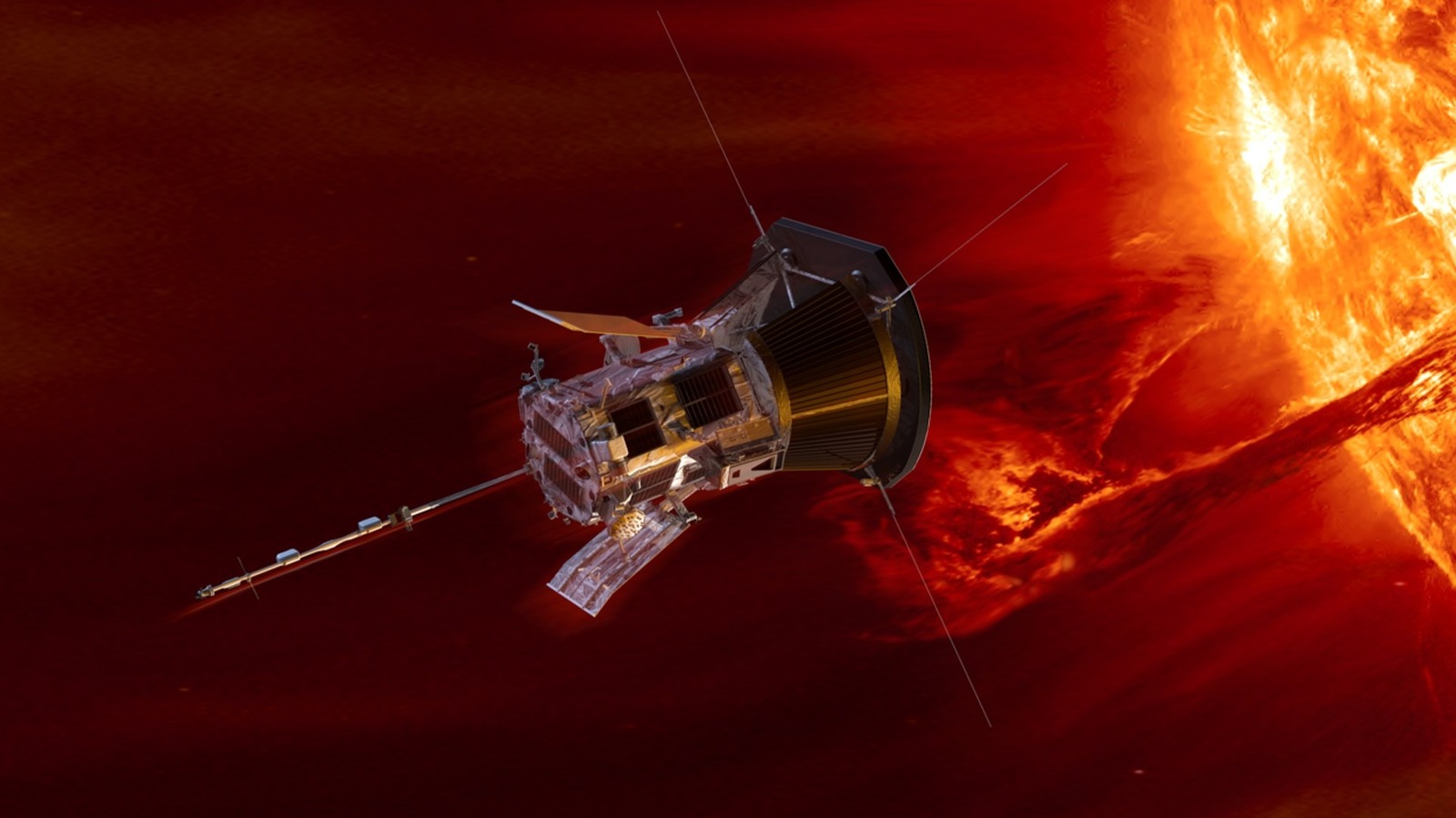
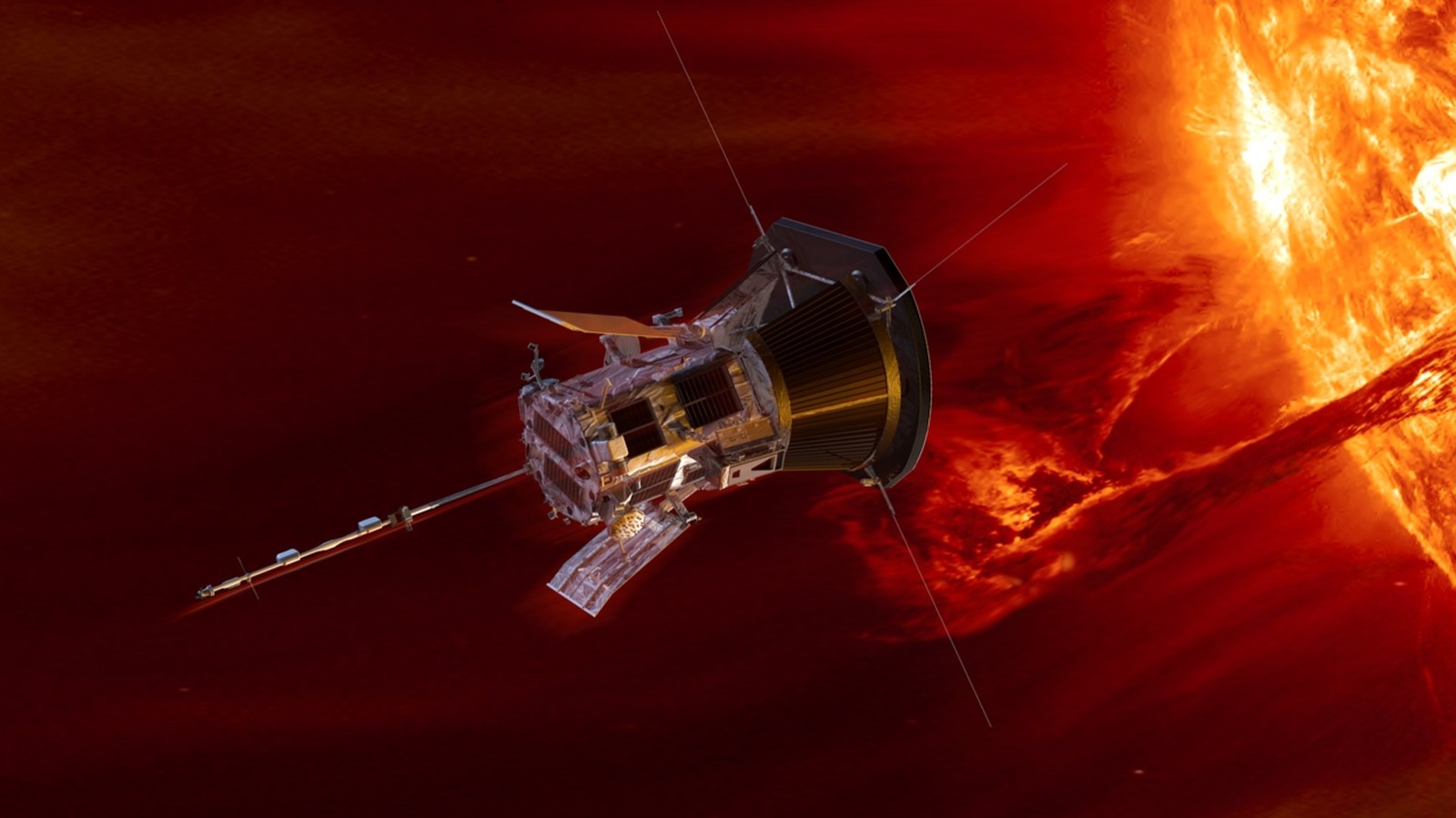
NASA’s Parker Solar Probe made another close pass around the sun this week, getting 3.8 million miles from the surface and reaching a speed of 430,000 mph. This marked its 28th flyby, and matched the speed and distance records the probe first set back in December 2024. It’s hit those numbers five times since. The spacecraft began its latest approach on June 3, and transmitted a beacon tone on Thursday to signal to the team that all is well.
The Parker Solar Probe has been studying our star for eight years, incrementally getting closer and closer to the surface. It launched in 2018 and made its first close approach to the sun that fall, when it came within 15 million miles of the sun’s surface. For its first flyby, it reached a maximum speed of 213,200 mph. Despite the harsh conditions in the sun’s vicinity — the heat shield reaches an estimated 1,700 degrees F when the spacecraft is closest to the sun — the Parker team says the probe still appears to be doing well after all this time. Below the heat shield, the Parker probe is protected by thermal blankets which have kept the temperature of the spacecraft itself consistent during these flybys.
“That temperature consistency is a major indicator of spacecraft health,” said John Wirzburger, Parker Solar Probe mission systems engineer at the Johns Hopkins Applied Physics Laboratory. “It tells us the heat shield isn’t degrading. If it were cracking or weakening, we’d see temperatures drift upward as more heat leaked through.”
Parker is observing solar wind and activity, keeping track of the changes that occur across the sun’s 11-year cycle. The space probe arrived at the sun near the quieter period known as solar minimum, and has been there long enough to see it reach solar maximum, which was confirmed in 2024. This is when solar activity peaks, giving rise to an increase in sunspots and events like solar flares and coronal mass ejections. Solar activity will soon begin to gradually decline as it moves through the next phase. The Parker probe has had a front row seat for all of this, gathering unprecedented data that will help us better understand our star and its effects on space weather.
According to a report from the energy think tank Ember, May 2026 marked the first month on record in which solar accounted for more electricity generation than coal in the United States. Despite the Trump administration’s push to revive the coal industry, “Solar supplied a record 12.8 percent of US electricity, while coal fell to 12.2 percent, its fourth-lowest monthly share ever,” according to Ember. The total output from solar last month was a record 45.5TWh, making it the third-largest source of electricity in the country, Ember reports.
Coal was only slightly behind it at 43.4TWh in May, but this marked an 11 percent drop compared to the same time last year. And in April, it dipped to its lowest-ever monthly total on record, at 39.3TWh. “The share of coal generation in the US mix has nearly halved in the last five years, falling from 19.7 percent in May 2021 to 12.2 percent in May 2026,” according to Ember. “In contrast, solar power’s share of the mix more than doubled from 5.4 percent to 12.8 percent over the same period.”
Solar still fell behind gas and nuclear, but analysts at Ember say clean power is still ticking upward even as policy shifts in the other direction. In March, according to Ember, “renewables collectively generated more electricity than gas for the first time in the US.”
Earlier this week, an astronaut on the International Space Station shared a breathtaking timelapse video of aurora australis (the southern lights). Jessica Meir, who is the spacecraft commander for NASA’s SpaceX Crew-12 mission, captured the footage from a Dragon spacecraft docked to the ISS. “As opposed to the previous aurora I’ve seen, this one danced and snaked its way directly below us, putting on quite a show,” Meir wrote on social media. “I am in awe of this y [sic] evocative phenomenon.”
A timelapse view from our @SpaceX Dragon of the spectacular southern aurora seen in yesterday’s post, a result of a recent solar event. As opposed to the previous aurora I’ve seen, this one danced and snaked its way directly below us, putting on quite a show. I am in awe of this… pic.twitter.com/ReztjH3x9H
— Jessica Meir (@Astro_Jessica) June 7, 2026
Astronauts may have some of the best views of auroras, but viewers down on the ground have been getting a pretty good show as of late, too. The NOAA’s National Space Weather Prediction Center last week issued G2 and G3 geomagnetic storm watches, giving enthusiasts a heads up that auroras may be visible in more regions than normal. In the Northern Hemisphere, auroras were predicted to be visible across Canada and the northern US, while viewers in Australia and New Zealand had a chance to catch the southern lights.
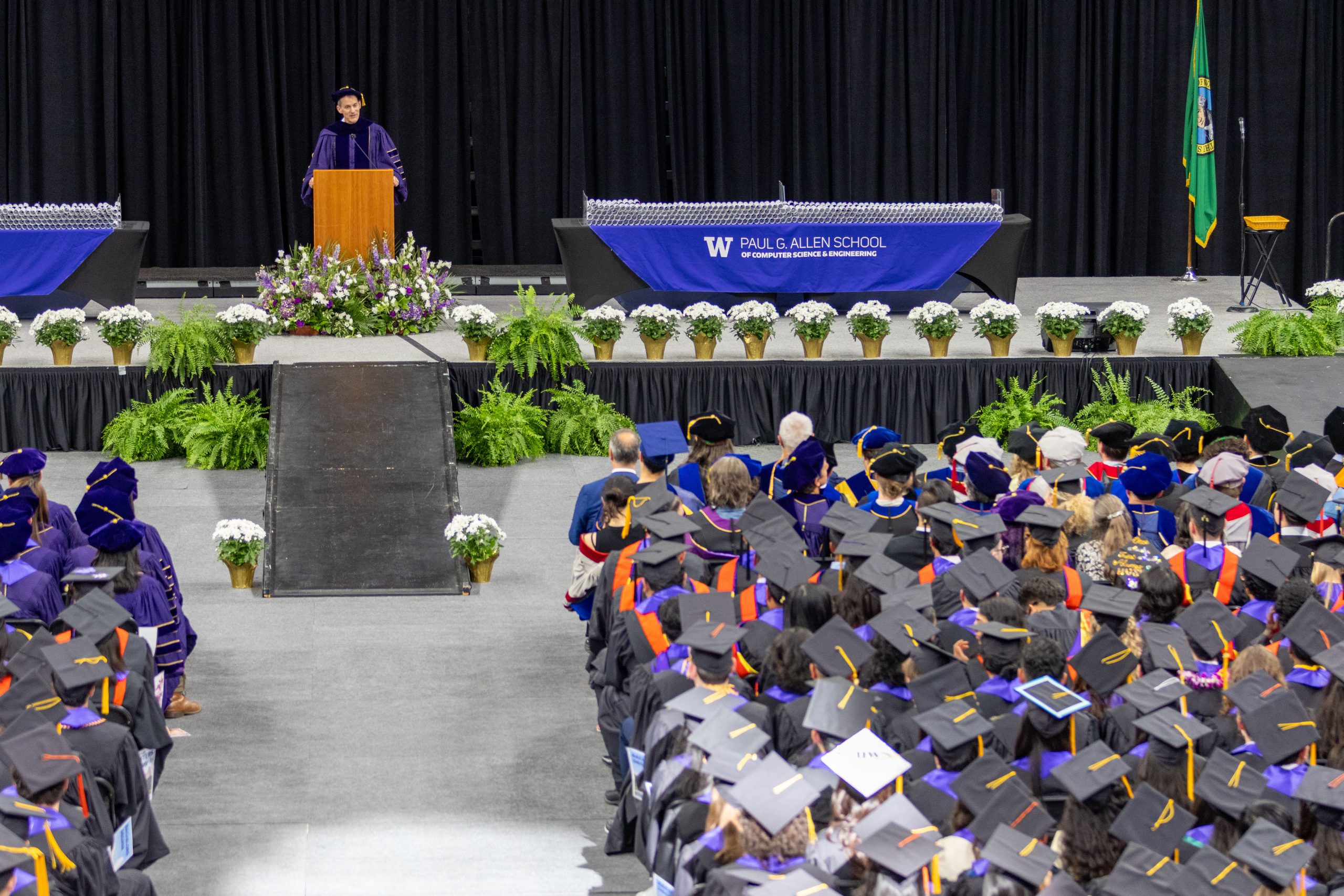

Jeff Dean was a University of Washington graduate student in the 1990s, optimizing software compilers for object-oriented programming languages in a trailer wedged next to the old computer science building.
On Friday evening, Dean returned to the UW’s Allen School of Computer Science & Engineering as Google’s chief scientist and a co-leader of its Gemini AI models, with a message for graduates about the technology he and his colleagues have shaped — and to which many of them will soon be contributing at places such as Anthropic, Amazon, Microsoft, Google, and Nvidia.
“AI is an incubator for ideas,” he said, “not a substitute for human ingenuity.”
Speaking to a packed audience at the Allen School commencement ceremonies at UW’s Alaska Airlines Arena, Dean told the graduates that AI technologies may be able to draft code and summarize data, but can’t replicate their experiences, their ethics, or their sense of what’s worth building. Knowing what matters, he said, “can be your superpower.”
He didn’t address the state of the tech job market, but said they’re graduating at a pivotal moment, when the world needs their fresh perspectives and sharp thinking.
The Allen School’s choice of graduation speaker and his focus on AI might have been a risky proposition in a different setting. But given the audience, there were cheers and applause — not booing or jeering of the sort that has made headlines at graduations around the country this spring.
It also helped that Dean’s message was clear-eyed and balanced. He acknowledged the real concerns about the technology, telling the graduates that powerful advances carry responsibility.

“We must intentionally design safeguards and ethical boundaries,” he said, “so technology serves the broader public good, not a select few.”
He also made the case for AI as a force for good, referencing its role in scientific and medical discovery and in forecasting natural disasters. For example, he cited the use of machine learning to predict the scope of severe flooding in Somalia (where he had lived for part of his youth because of his parents’ work in global health), helping to protect communities.
He pointed the graduates toward problems worth solving. In a paper he co-authored, he and eight others laid out 18 milestones where AI could make a difference: improving health care worldwide, giving every student an individual tutor, building tools to flag misinformation, speeding up scientific discovery.
Dean’s path to Google ran through the UW. He arrived in 1991 to study compilers under professor Craig Chambers, finished his Ph.D. in 1996, and joined Google three years later, when the company consisted of about 20 people working above a Palo Alto storefront.
On Friday he traced that arc for graduates who have studied in modern buildings named for Microsoft’s co-founders. Dean has fond memories of working in that cramped UW trailer, nicknamed “The Chateau,” alongside fellow students who became lifelong friends and colleagues.
@media (max-width: 600px) {
aside.callout { float:none !important; max-width:100% !important; margin-left:0 !important; margin-right:0 !important; }
aside.callout .callout-img { display:none !important; }
}
Be intentional about the people you keep around you, and stay in touch, he told the graduates, predicting that the relationships and memories they made at UW would shape their futures, as well.
Dean and his wife, Heidi, were drawn to Seattle and the University of Washington in part by a brochure photo of Drumheller Fountain framed by Mount Rainier on a sunny day. He joked that it was eight months before they saw the mountain clearly.
Earlier, as a senior at the University of Minnesota, Dean had been interested in neural networks but found they weren’t equipped at the time to address real problems. He guessed that the answer was more computing power, and he was right — it just took a while and a lot more of it than he had ever imagined. The technology needed about a million times more processing power than computers had in 1990, he said, a threshold the field didn’t cross until around 2012.
The takeaway from that: “Be patient and persistent,” he told the graduates. Something you learned long ago, he said, may later let you do what wasn’t possible before.
The UW’s Allen School awarded more than 800 degrees this year across its undergraduate, master’s and doctoral programs. The ceremony Friday evening drew a crowd of close to 7,500 graduates, families and faculty to the arena.
Magdalena Balazinska, the Allen School’s director, opened the ceremony by telling the graduates it felt like only yesterday the school had welcomed them. “I’m glad our future is in your energetic and passionate hands,” she said.

The ceremony featured the school’s first undergraduate student speaker, Vaishnavi Vidyasagar, a graduating senior from Sammamish, Wash. Computer scientists, she told her classmates, aren’t just writing code but opening doors. Her own capstone project, for example, was a tool to help people with misophonia navigate a world of overwhelming sound.
The evening also included recognition of two alumni with its Alumni Impact Awards: David Dawson, a 2006 graduate and co-founder of the recycling startup Ridwell; and Nodira Khoussainova, a 2012 Ph.D. graduate who co-founded the developer tool Streamlit and now leads the coworking platform Focused Space.
The Allen School handed out its end-of-year student and faculty awards at a separate ceremony earlier in the day, recognizing standouts in service, scholarship, teaching and thesis work.
Dean closed his remarks by urging the graduates to spend their careers on what counts — to use the new tools to amplify their ideas, and to work on problems that matter. Just as important, he said, is to “always treat people with respect and kindness, and have fun in what you do.”

Creative Assembly has confirmed that Alien: Isolation 2 will be built with Unreal Engine 5, but the team is also developing custom technology for lighting and audio.
That’s according to Creative Director Al Hope, who, alongside Animation Director Simon Ridge, discussed the technological advancement of the upcoming sequel in an interview with TechRadar Gaming at Summer Game Fest (SGF) 2026.
Ridge remarked on how “incredibly proud” he is of how the first Alien: Isolation looked, but “Technology’s advanced, and so it allows more opportunities.”
“A big part of what we did last time was making sure we were providing an experience to really back up that whole immersion, I guess, on the stress, so the player never really comes out of those moments, and from our discipline, animation, that was around making sure that you were never really seeing points where you could tell it was a game,” Ridge said.
“That was a huge goal, you were watching something that was almost like a sentient creature, it was Al [Hope] mentioned many a time, a systemic system.
“So I think now that time’s moved on a little bit, it allows us to probably add more variety than what we could before, just due to technical advancement, and just up the quality of the assets themselves.”
Hope added that one of the biggest advantages of contemporary game development is the “real-time feedback,” with Ridge saying that working on something for a sequel and being able to see it in-engine, in context, straight away, allows the team to get “the quickest kind of representation of how it’s going to feel.”
The creative director continued, explaining that it “allows us to iterate much faster,” unlike during the Alien: Isolation development period. This time, the team is using Unreal Engine 5, but it will also be creating its own custom technology, which Hope calls an “evolution” of what fans are familiar with.
“I think one of the interesting things for us is obviously lighting and audio parts of the experience, and so we’re using Unreal [Engine], but for lighting and audio we’re developing our own custom technology to really enable us to really fine-tune the experience and create exactly the best Alien experience we possibly can,” Hope said.
“It’s really interesting with our audio team; it’s the same, more or less the same audio team that worked in the original, so it’s really an extension of an evolution of both the tech and the kind of creative side that worked on the original.
“I’ll blow their trumpet for them. I think they won more or less every audio award going that year for Alien: Isolation. I think that’s absolutely fantastic, people recognize that it felt like it was such a big part of the experience, and it’s just really exciting to have them working together again on this.”
Alien: Isolation 2 is in active development and will launch on PS5, Xbox Series X and Series S, Nintendo Switch 2, and PC.

Follow TechRadar on Google News and add us as a preferred source to get our expert news, reviews, and opinion in your feeds. Make sure to click the Follow button!

The best gaming consoles
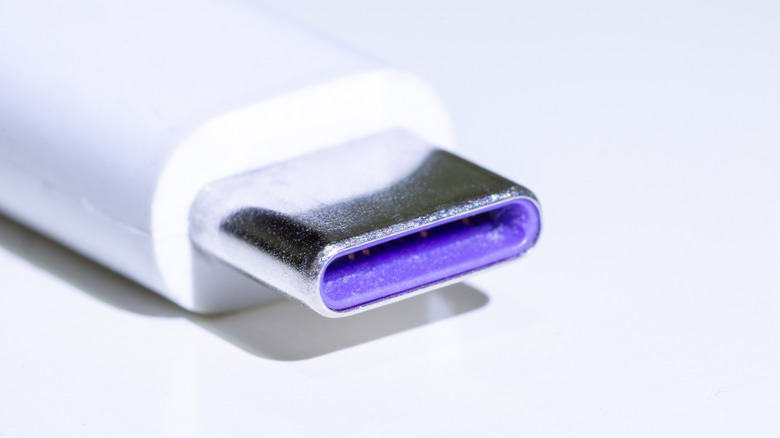
Consumers are often misled by these color schemes.
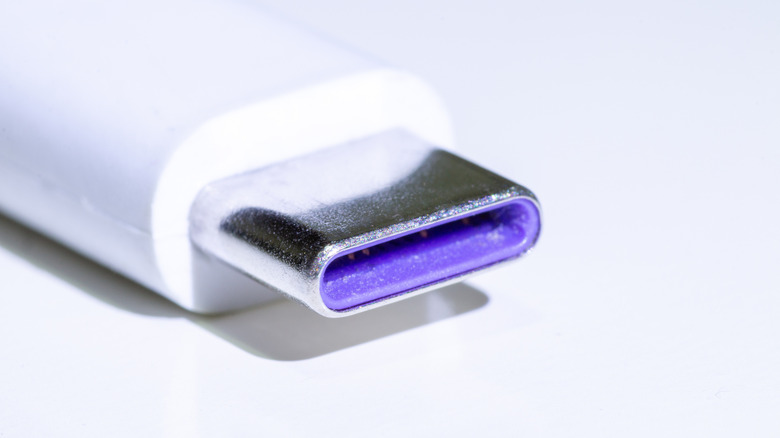
We may receive a commission on purchases made from links.
Have you ever looked at a USB connector or port and wondered, “why is this purple instead of blue or black?” It’s not because the manufacturer wanted to help you organize your cables by hue. Rather it’s about speed and charging capacity. Purple USB-C connectors are a particularly interesting case, because the color can mean more than one thing.
Before I explain, here’s a quick anecdote. I once tested an Honor Magic4 Pro smartphone that came with a 100 watt charger and USB cable with orange connectors. That color signified fast charging speeds, and it indeed boosted the Magic4 Pro’s big battery rapidly. “That’s fabulous,” I thought. “Let me charge my MacBook Air with it.” To my surprise, the charger and cable didn’t work at all on the MacBook or other phones, because it turns out that Honor’s charger and cable have limited usability outside its own ecosystem.
The moral of this story is that the USB port colors provide a guideline for their functionality, but that doesn’t mean cables, chargers and ports using that color will work across all devices or follow a set standard. That’s especially pertinent to purple-coded USB cables, as you’ll see.
The industry body that regulates USB standards, the USB Implementers Forum (USB-IF), uses three standard colors for USB: white (USB 1.0), black (USB 2.0) and blue (USB 3.0, 3.1 or SuperSpeed). “Blue is the recommended color for the USB 3.1 Standard-A receptacle… to help users distinguish it from the USB 2.0 Standard-A connector,” the company says in its legacy USB document. Any other color including green, purple or orange is not part of USB-IF standards and has no “official” meaning for ports or connectors.
With that said, purple does have a common, though far from universal, connotation. It’s used by Huawei’s SuperCharge high-speed system for device charging, both on Type-A and Type-C connectors and ports. Those support charging speeds at 40 watts or more, along with standard USB Power Deliver (PD) and Qualcomm’s Quick Charge protocol.
Huawei only uses that purple color on its 25W Mini Charger nowadays, promising compatibility with its own phones as well as other Android and IOS devices. Its other SuperPower Wall Chargers (100W and 66W) have orange USB-A and USB-C connectors, which also denote high-current power delivery and fast data speeds. Huawei’s 6A phone charging cables all use orange connectors, so there’s no longer a purple-coded one to be found.
Huawei smartphones can’t legally be sold in the US due to trade sanctions with China, which explains why Americans rarely see the purple connectors. The exception is that some non-Huawei USB 3.1 Gen 2 cable makers use either teal blue or purple on the connectors to denote the extra speed over USB 3.0 (10Gbps compared to 5Gbps) along with higher charging capacities.
There are a few other colors used by USB manufacturers as well, in case you weren’t confused enough by the black, white, blue, teal, orange and purple ones I’ve already mentioned. Red (desktop) or yellow (laptop, always on) ports indicate either USB 3.2 or USB 3.1 Gen 2, but are also used for charging-only ports. The other is green, which usually denotes Type-A or old-school Type-B Qualcomm Quick Charge receptacles and plugs. Razer also famously uses green for the USB ports on its laptops, to match its branding aesthetic.
Unfortunately, consumers are often misled by these color schemes, believing they’re getting fast power delivery speeds and data rates. This has consequences for safety, energy consumption and e-waste. Choosing the wrong charger or cable could send a battery to an early retirement, for example, or even cause a fire or explosion.
With all that, buying a USB cable based on color clearly isn’t wise. Luckily, there’s a better way. Reputable manufacturers like Anker and Apple have their cables and chargers USB-IF certified for specific charging and data speeds. The latest PD 3.1 specification allows for safe power delivery well above previous specifications, with certifications for up to 140W, 180W and 240W power levels.
For data speeds, you’ll want to check the USB data standard, with USB 3.1 (sometimes referred to as USB 3.2 Gen 1) being the slowest at 5Gbps and USB 4 being the fastest at 40Gbps or even 80Gbs with Thunderbolt 5 compatibility. Some devices like TVs, desktop PCs, and even the MacBook Neo, have one or more ports that utilize the older USB 2.0 spec, which maxes out at 480Mbps. That’s a good fit for peripherals like mice and keyboards, but not much else. If you need both high speeds and fast charging, you’ll want to ensure both USB-IF power delivery certification and the latest USB standards. Some cables offer both fast speeds and high power delivery — and you can even get them in purple, but only on the outside.





Alexander Zverev wins the French Open to finally earn a 1st Grand Slam title

The Best Mystery Series of All Time Is Surging on Streaming 30 Years After It Ended


Anatomy of the June crypto crash: Fed, Iran, Saylor


Oppenheimer backs SpaceX as $70 billion retail frenzy builds


Markets Rally as SpaceX IPO Looms Amid Iran Tensions and Inflation Surge

Alexander Zverev conquers demons and outlasts Flavio Cobolli to win French Open for first major title


Microsoft unveils seven homegrown AI models in new bid for ‘long term self-sufficiency’


High Stakes for Wembanyama as New York Pushes for 3-0 Lead


Notion restores access to Anthropic after service disruption

The Pain Points Taking a Fragile Tech Rally Down a Notch

Eli Lilly (LLY) Stock Surges 4% Following Breakthrough Sleep Apnea Trial Results

The investment to transform historic St Helen’s ground in Swansea


Trump’s AI Ownership Plan Could Benefit Anthropic at OpenAI’s Expense

Bangladesh beat Australia after 20 years in ODIs, register only their second win over six-time world champions | Cricket News


FIFA WC 2026 Group C: Morocco, Scotland challenge Brazil’s hunt for glory | FIFA World Cup 2022


NanoClaw integrates JFrog registries to secure AI agent downloads


Bitget enters Argentina’s regulated crypto market through PSAV registration


Weekend Open Thread: Tuckernuck – Corporette.com


This Week In Security: Microsoft On Microsoft, Register Your Domains, Linux On ARM, And FreeBSD Joins The File Cache Club


Politics Home | Healey Resignation Is “Colossal Failure Of Government”, Says Former Labour Defence Secretary




You must be logged in to post a comment Login