Connect with us

Tech

Xylitol Linked To Strokes and Heart Attacks, Study Finds

Published

on

An anonymous reader quotes a report from The Guardian: A common sweetener used in products such as chewing gum, toothpaste, jam, yoghurts and ice-cream has been linked to an increased risk of strokes, heart attacks and death. Xylitol is a sugar alcohol present in some natural foods in very low amounts. It is also added — often in amounts 1,000 times higher — to artificially sweeten foods, beverages and oral care products. Despite its growing use, the long-term health impacts of xylitol have never been widely studied.

In the largest study of its kind, researchers found high blood levels of xylitol were associated with an increased risk of major adverse cardiovascular events. The findings were presented in Munich at the European Society of Cardiology (ESC) annual congress, the world’s largest heart conference. Researchers looked at 17,710 people and compared the 25% with the highest levels of xylitol in their blood against the 25% with the lowest. Those who had the highest amount were 57% more likely to die or suffer a heart attack or stroke, than those with the least, within six years. Even after 30 years, they were still 18% more likely to have suffered one of these cardiac events.

Taken with data from the middle quartiles, the results from both cohorts suggested a dose-dependent relationship: the higher the xylitol blood levels, the higher the cardiovascular event rate. Furthermore, the researchers showed that there was consistent increase in cardiovascular events with xylitol irrespective of baseline characteristics, such as age and sex. The researchers also highlighted that the association was independent of underlying factors such as body mass index, hypertension, diabetes and lipid levels, which might predispose people to low-calorie products.

Read more of this story at Slashdot.

Advertisement

Source link

Continue Reading
Click to comment

You must be logged in to post a comment Login

Leave a Reply

Tech

How to watch Argentina vs Australia: Free streams & TV channels

Published

on

Watch Argentina vs Australia live streams as the Wallabies travel to San Salvador de Jujuy for the first of two Tests against Los Pumas. The hosts come into the game on the back of a hard-fought loss against South Africa, while the visitors secured successive wins over Japan.

Argentina showed their quality earlier this month when they came agonisingly close to ending South Africa’s run of 11 straight wins. Los Pumas pounded the visitors for 15 phases as they looked to snatch a draw but a final pass to an unmarked Matías Moroni was dropped and they succumbed to a 17-10 defeat. They’ll hope for more luck against the Wallabies and will be confident of returning to winning ways having beaten Australia 28-26 last year in Sydney.

Source link

Continue Reading

Tech

The Theragun Sense makes everyday recovery surprisingly easy

Published

on

As my 20s are set to come to an end later this year, I’ve officially reached the age where sleeping in the wrong position or stretching just a little too far can cause aches and pains. I’ve always been somewhat skeptical of massage guns, mostly because I’ve tried a few off-brand ones and just assumed they’d eventually end up collecting dust in a drawer.

But after a few weeks of testing the Therabody Theragun Sense (2nd Gen), I was surprised. Turns out massage guns aren’t as gimmicky as I had thought.

The Theragun Sense, which retails for $299, is a wellness-focused massage gun that’s designed for everyday aches, muscle tension, relaxation, and soreness. It’s more of a gentle massaging and relaxation tool rather than a hardcore recovery massage gun.

If you’re looking for more of a deep-tissue massage, it might be worth checking out the Theragun PRO or Prime. But if you don’t need a super heavy-duty massage gun with features like heated therapy and deep- tissue capabilities, the Theragun Sense is a great option for everyday use. 

Advertisement

My favorite thing about the massage gun is that it features built-in visually guided routines. The device comes with four routines, and you can access additional routines through the Therabody app and sync your favorite ones to the device using Bluetooth.

Image Credits:Therabody /

The Theragun Sense has an LCD screen that walks you through routines step by step. Once you select a routine, the screen shows you exactly where to use the massage gun, how long to spend on each area, and how much pressure to apply.

As someone who never really had an idea of what to do with a massage gun other than pointing it to a sore muscle and hoping for the best, I liked that the Therabody Sense takes a lot of the guesswork out of using a massage gun. 

My favorite routine was the six-minute “Sleep” routine that’s essentially a quick full-body massage to get you ready for the night. The app lets you choose from many other routines, like “Pre-Walk Warm-up,” “Desk Relief,” “Lower Back Recovery,” and more. 

The massage gun features five speeds to fine-tune pressure to allow for a more relaxing touch, moderate pressure, or a deeper tension release. I liked having the flexibility to change the intensity depending on how sore I was feeling that day.

Advertisement

Since the device is designed to be lightweight, I found it easy to hold and get to those spots on my back and shoulders that are harder to reach.

Image Credits:Therabody /

For people who want more personalization, the Therabody app takes the guided experience a step further with Coach, the company’s AI feature that creates personalized recovery recommendations based on your goals and activity. Coach can recommend which part of your body to target, which settings or attachments to use, and when to fit a recovery session into your day. 

The relatively quiet motor was another feature I appreciated, as I could easily use the device while watching TV or relaxing without the sound of the massage gun acting as a distraction. 

The Theragun Sense comes with a USB-C charging cable, a travel pouch, and two massage attachments: the Standard Ball and the Dampener, which is designed to target knots and tender areas. Separately, you can purchase the “Supersoft” attachment for $35 for extra sensitive areas on the body. 

Overall, the Theragun Sense (2nd Gen) won me over. It’s easy to use, comfortable to hold, and notably takes the guesswork out of using a massage gun. At $299, it isn’t cheap, but I think it’s a great option for people who want an everyday wellness device that can help them relax and recover.

Advertisement

When you purchase through links in our articles, we may earn a small commission. This doesn’t affect our editorial independence.

Source link

Continue Reading

Tech

Micron’s workers want the AI boom bonuses SK Hynix and Samsung already gave theirs

Published

on

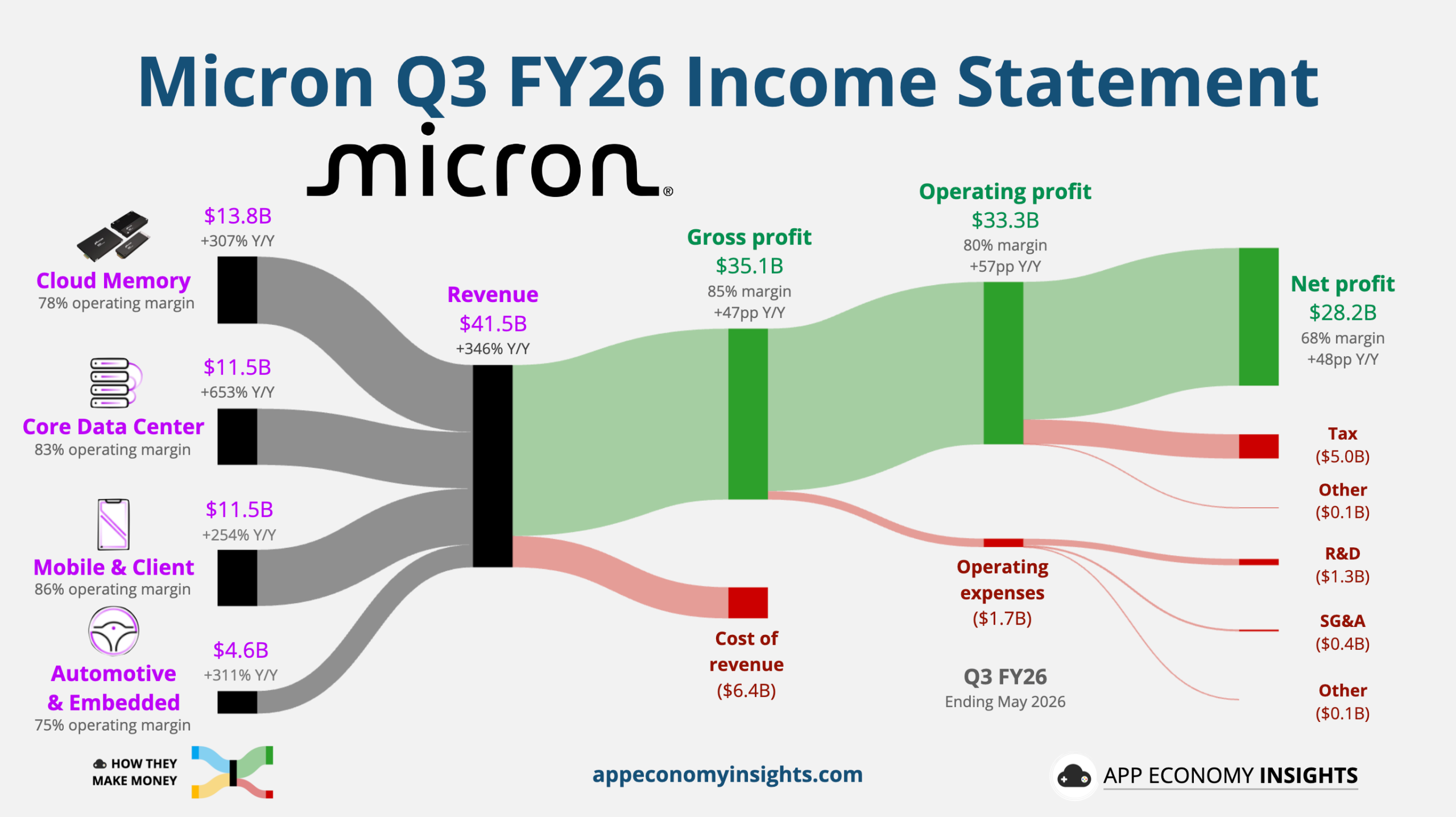
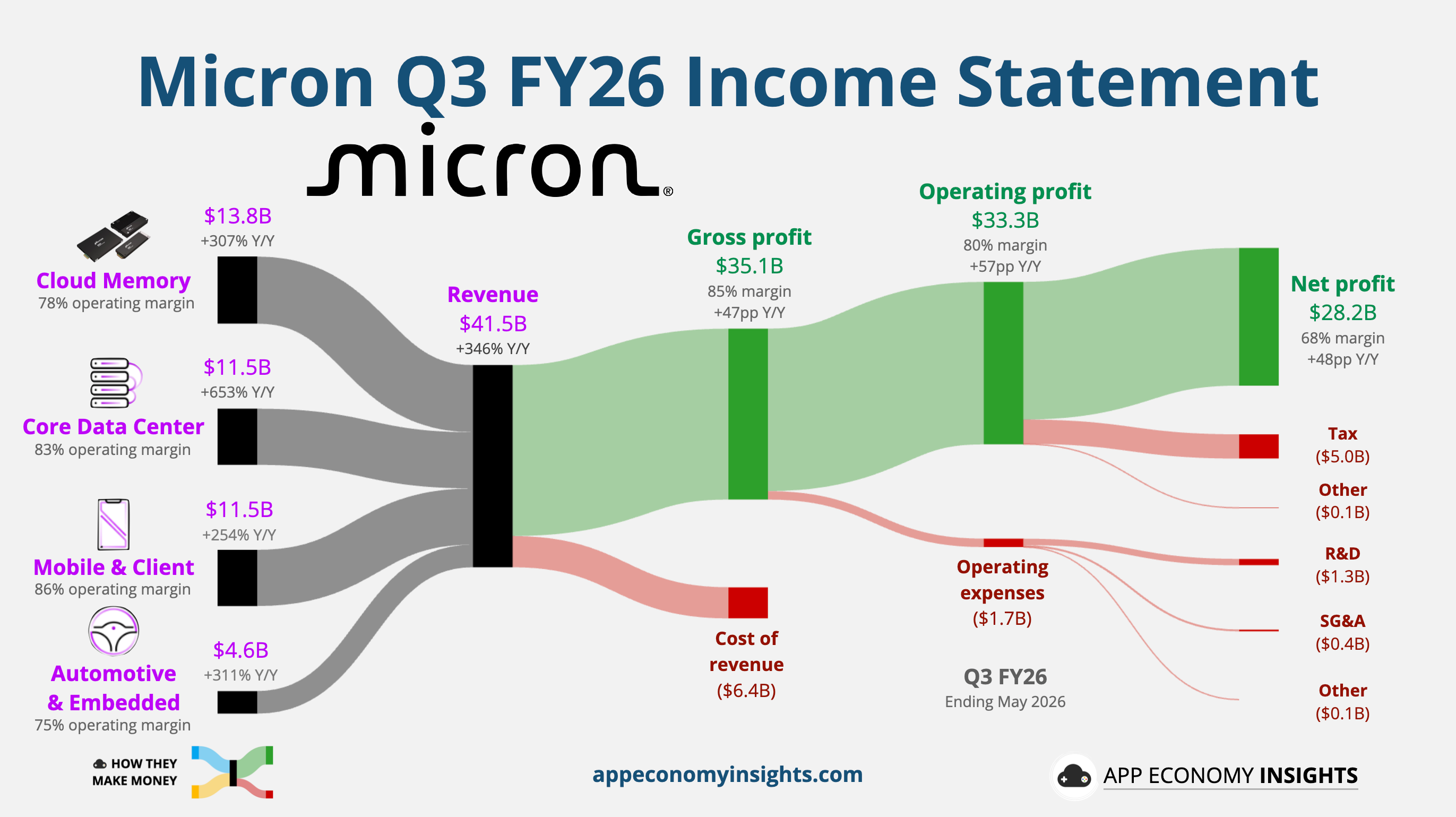
The big picture: The profits of DRAM and NAND manufacturers have skyrocketed since the AI boom drove up demand for memory. After SK Hynix and Samsung awarded their employees generous bonuses from the windfall, union members at Micron are now wondering when they will receive their share.

Taiwan-based media recently reported that Micron’s two primary unions are dissatisfied with worker compensation amid the company’s ballooning profits. The unions could threaten to strike, potentially disrupting an already strained global memory supply and worsening technology-related price increases.

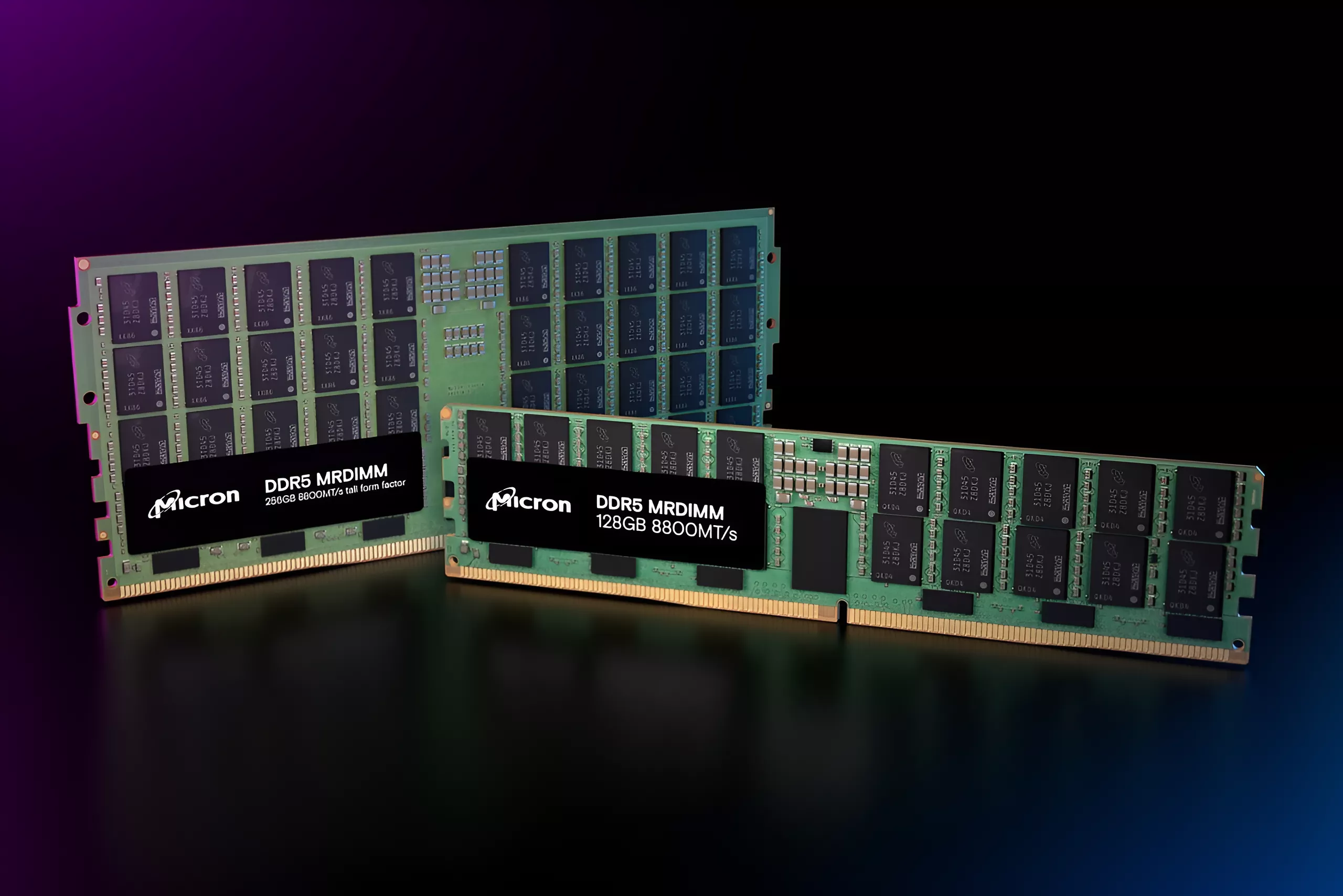
Union chairman Lin Zherui highlighted Micron’s record-high profits stemming from the AI boom. Because data centers and other hardware powering large language models require large amounts of memory, data center operators and tech giants pursuing generative AI have reserved much of the DRAM and NAND production capacity from manufacturers such as Micron, SK Hynix, and Samsung.

Advertisement

In response, the Big Three have hiked prices, passing higher costs on to consumers while boosting their profits to unprecedented levels. The boom has pushed Micron’s and SK Hynix’s market valuations above $1 trillion.

However, bonuses for Micron employees have not increased to match the windfall. According to an alleged union pamphlet circulating on a Taiwanese forum, bonuses remain capped at 200% of salary over a five-month period. The poster who shared the pamphlet claimed that Micron union membership has increased nearly tenfold this year as a result.

Micron employees likely view their counterparts at SK Hynix and Samsung with envy after the two South Korean giants awarded their employees hundreds of thousands of dollars earlier this year. SK Hynix paid out around $477,000 per employee, a figure that could increase to $900,000 next year, while Samsung narrowly avoided a strike by paying out around $340,000.

Even brief work stoppages at Micron’s plants could significantly hurt the company’s profits and create ripple effects across the supply chain, pushing consumer prices even higher. If the company’s unions threaten to strike, their demands could include increasing or removing bonus caps and overhauling retirement packages. Initial talks are expected to begin in mid-September.

Advertisement

Although uncertainty surrounds the sustainability of the AI boom, Nvidia’s surging profits have delayed fears of a bubble for now. Amid public pushback against data centers, construction delays, and concerns that AI giants are hiding massive amounts of debt, experts still estimate that memory price hikes will continue beyond 2027, with prices potentially remaining elevated past 2030.

Source link

Advertisement
Continue Reading

Tech

School Asks Cops To Stop Using Stun Gloves On Its Students

Published

on

from the today-in-what-the-everloving-fuck dept

Compliant Technologies probably would have preferred to keep flying under the radar. But a gaudy new no-bid contract with ICE (worth up to $20 million!) made it impossible.

Prior to ICE’s big purchase, it may as well have never existed. It only had a few clients, and those few clients purchased a few pairs for prison guards and jail staffers. That’s the sort of thing that kind of makes sense. Controlling inmates in enclosed spaces requires a bit more finesse than just beating them with batons.

Given the increased chance of losing control of a “compliance” option, turning gloves into quasi-stun guns made it easier to deploy force while simultaneously reducing the probability of losing a baton/Taser/OC canister to an inmate who’s stronger and faster than the average prison guard (i.e., most of them).

But ICE decided it wanted even more force to deploy, even though deploying force (a lot of it “excessive”) is basically all ICE does. Under-trained officers tend to underperform in the field, especially when they’re asked to do something more than seize the occasional website or find illegal substances hidden in cargo containers.

Advertisement

Here comes the shocker. Not only did a cop shop give officers some stun G.L.O.V.E.s (Generated Low Output Voltage Emitters), but it allowed them to deploy them in Omaha, Nebraska schools. With the G.L.O.V.E. backlash now fully engaged due to ICE’s interest in inflicting further unnecessary pain, an Omaha school district is “asking” cops not to use these gloves.

And the best thing we can say about this development is that the cops have actually agreed to stop glove-stunning students, without engaging in too much extracurricular bitching:

Omaha police agreed this week to stop carrying gloves that can deliver electric shocks to students in the halls of Nebraska’s largest public school district.

The Omaha mayor and police chief said in a joint statement Monday that the gloves were used twice in the last school year, including in a program for students with learning deficits.

Reread that last sentence a few more times. That’s extremely disturbing. While officers claim to have only used them “twice,” it did deploy them at least once to stun “students with learning deficits.”

Advertisement

And I only said there was a minimum of bitching by the cops. There was still some bitching, which arrived in the form of belated justification for stun-tech I can almost guarantee no parent was aware school resource officers (a fancy phrase for “school cop”) had access to, much less using on students.

“We believe it is the safest use-of-force option in the rare times when it is used,” the statement said.

“Safest?” As compared to what?!?! At what point do you decide a school discipline issue necessitates an ambush with literal shock tactics? Is this safer than NOT FUCKING DOING THIS AT ALL? I’m not an expert in “low voltage emissions” but I would like to believe any option that is less violent than stunning a student into submission is actually safer than any option that involves incapacitating someone with an electric shock.

What’s wild is that the school district actually had to make this request and then hope the cops would comply. And they had to hold onto this hope despite there being significant pushback from the community these cops are supposed to be serving. That it took the cops an entire day to simply agree to use the multiple violent force options they already have available to them doesn’t inspire a lot of confidence.

Destroying this minimal amount of confidence is the fact that this “agreement” (which hasn’t been made official) only extends to the Omaha PD. For some fucking reason, a bunch of Omaha-area cops “serving” Omaha schools apparently also have these gloves and aren’t promising to change a damn thing about how they handle policing schools.

Advertisement

However, the suburban Bellevue police department that patrols two Omaha schools and the large Bellevue district said its officers will continue carrying the gloves. Three other large school districts in the metro area that have Omaha school resource officers assigned to their buildings have not taken action to stop police from using the devices.

This agency saw the backlash and the semi-capitulation of the city’s largest law enforcement agency and then… did absolutely nothing. As far as the Bellevue PD is concerned, it’s still open season on students when it comes to SROs (school resource officers) and their stun gloves.

The schools in that district appear to be led by people who will never take issue with anything cops might do. Nothing to see here, says the district spokesperson, whose statement sounds like something delivered by someone who developed Stockholm Syndrome while undergoing a lobotomy:

Bellevue schools spokeswoman Amanda Oliver said the district has a great relationship with Bellevue police and doesn’t see a need to alter anything.

Oh, I’m sure the district has a “great relationship” with the cops. But we’re not worried about the administrators. We’re worried about the kids, who are the ones who will be subjected to violent force, including these novel stun gloves the kids at ICE keep talking about. And the Bellevue PD has used them just as often on students as the Omaha PD. And even though it was only “two” instances, the Omaha PD was at least willing to swear off using this tech in schools.

Meanwhile, in Bellevue, it’s apparently business as usual, even though no one (other than the PD and this weirdly cheery PR person) wants cops to have this option when patrolling schools.

Advertisement

At last week’s school board meeting, about 30 people spoke out against police using the gloves. Residents and board members alike said they were appalled at the practice. No one spoke in favor of it.

No one except the people who will never be subjected to the stun gloves, which the company helpfully points out won’t leave evidence “burn or contact marks” on the minors subjected to them. Bellevue schools — via its PR flack — said everything is fine. The chief of the Bellevue PD, Ken Clary, similarly claims to have a healthy relationship with the G.L.O.V.E.

“I am not comfortable having our officers give up a tool that has repeatedly proven to be safe, effective, and less harmful than the alternatives,” Clary said in a statement.

Again: as compared to what? You can’t just say this option is better than others without providing any evidence to support this statement. I mean, you can, but you shouldn’t expect anyone to believe you. This just sounds like a top cop claiming each new force option is more “effective” and “safer” than whatever the department is already using. Adding yet another option is never viewed as adding to the excess. It’s just folded in with everything else and glossed over in public statements until the public’s attention is focused elsewhere.

There’s no reason for ICE to have these gloves. Officers already have tons of force options, as well as the full permission/judicial immunity to use whatever option they feel will inflict the most pain at any given point. The G.L.O.V.E. may have started out as a prison option, but now it’s clear cops want this option whenever they’re dealing with… shall we say… captive audiences. And the defenders of this tech are making it clear they think inmates and students are interchangeable, at least when it comes to deploying force.

Filed Under: ice, nebraska, police misconduct, police violence, school resource officer, stun gloves, wtaf

Companies: compliant technologies

Advertisement

Source link

Continue Reading

Tech

NESCD-001 Slides a Compact Disc Drive Under the Original Nintendo Entertainment System

Published

on

NESCD-001 Nintendo Entertainment System Mod
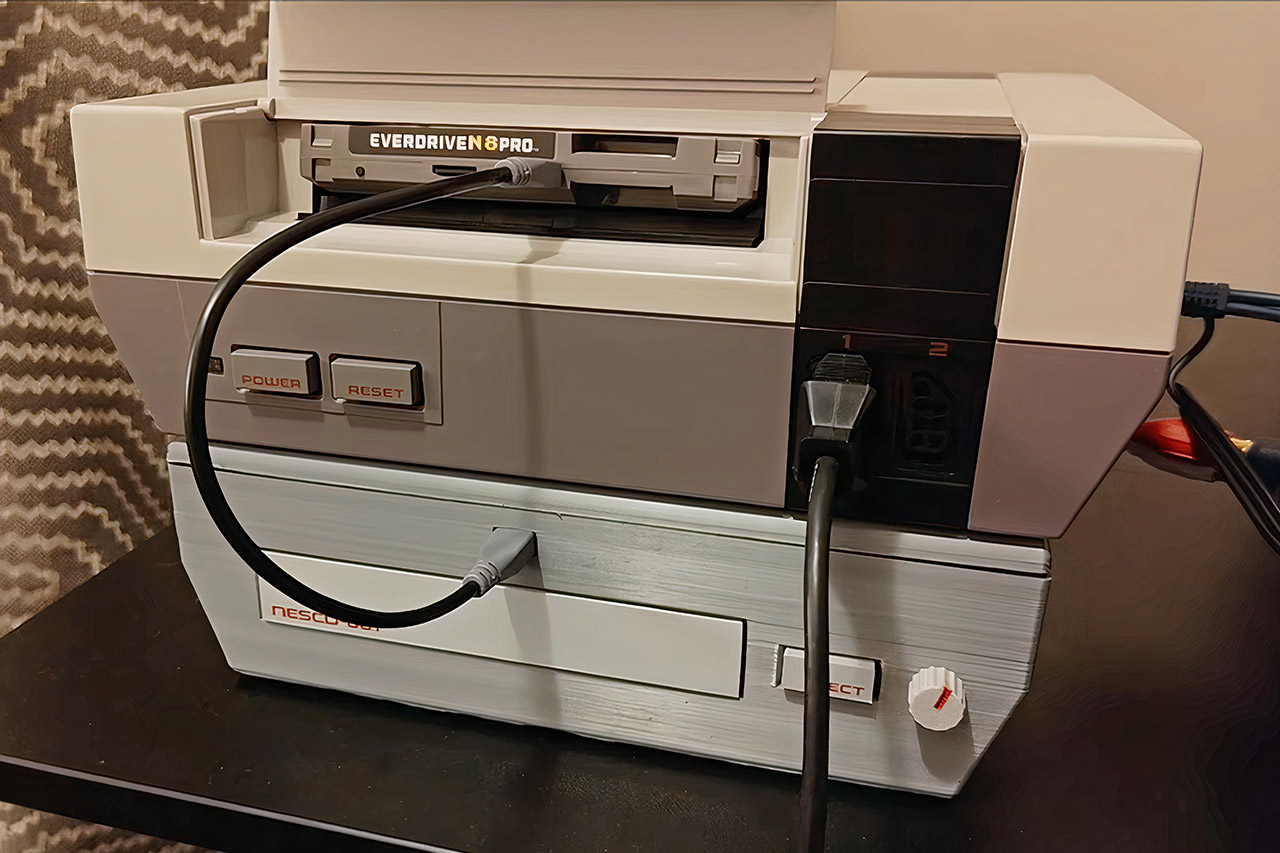
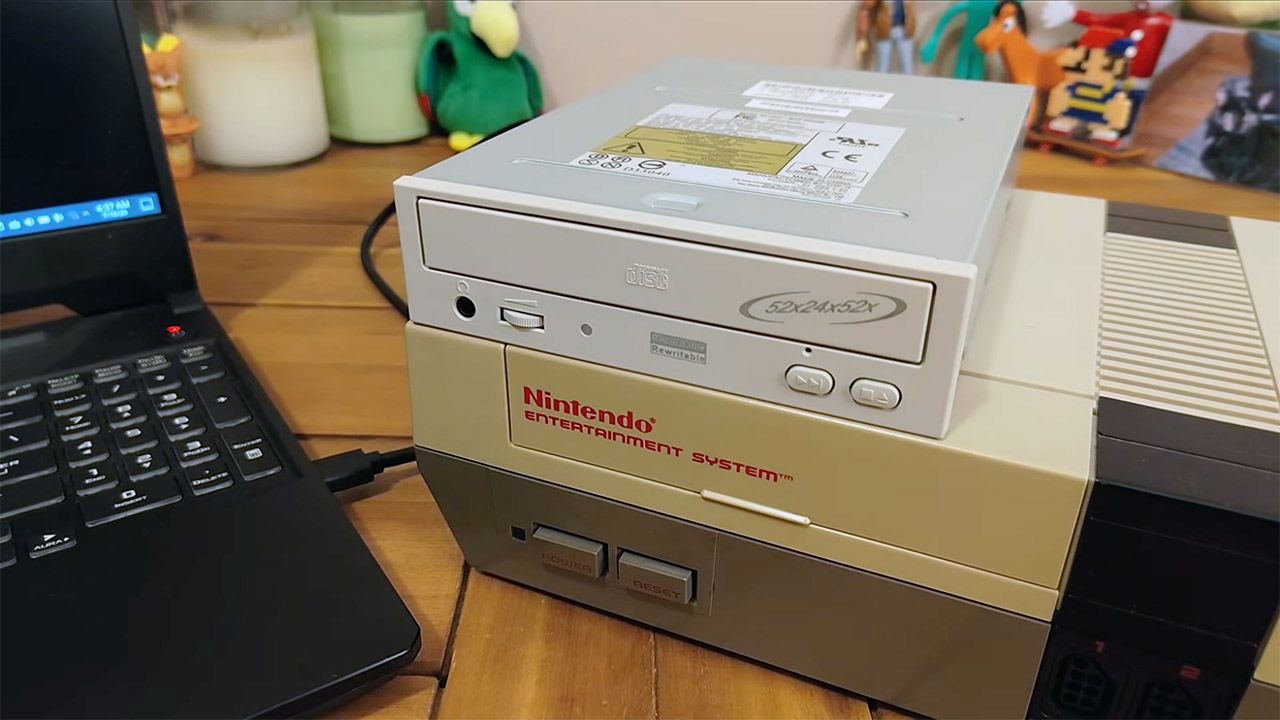
Nintendo and Sony spent the early nineties arguing over a Super NES compact disc attachment that never reached store shelves. Throaty Mumbo read that history and aimed lower, at the original front-loading NES, a console with no disc hardware and an expansion port that sat unused on the bottom of millions of gray boxes. His project page calls the result NESCD-001, an unofficial homemade compact disc add-on built for fun and documented in a build video plus a public GitHub repo.


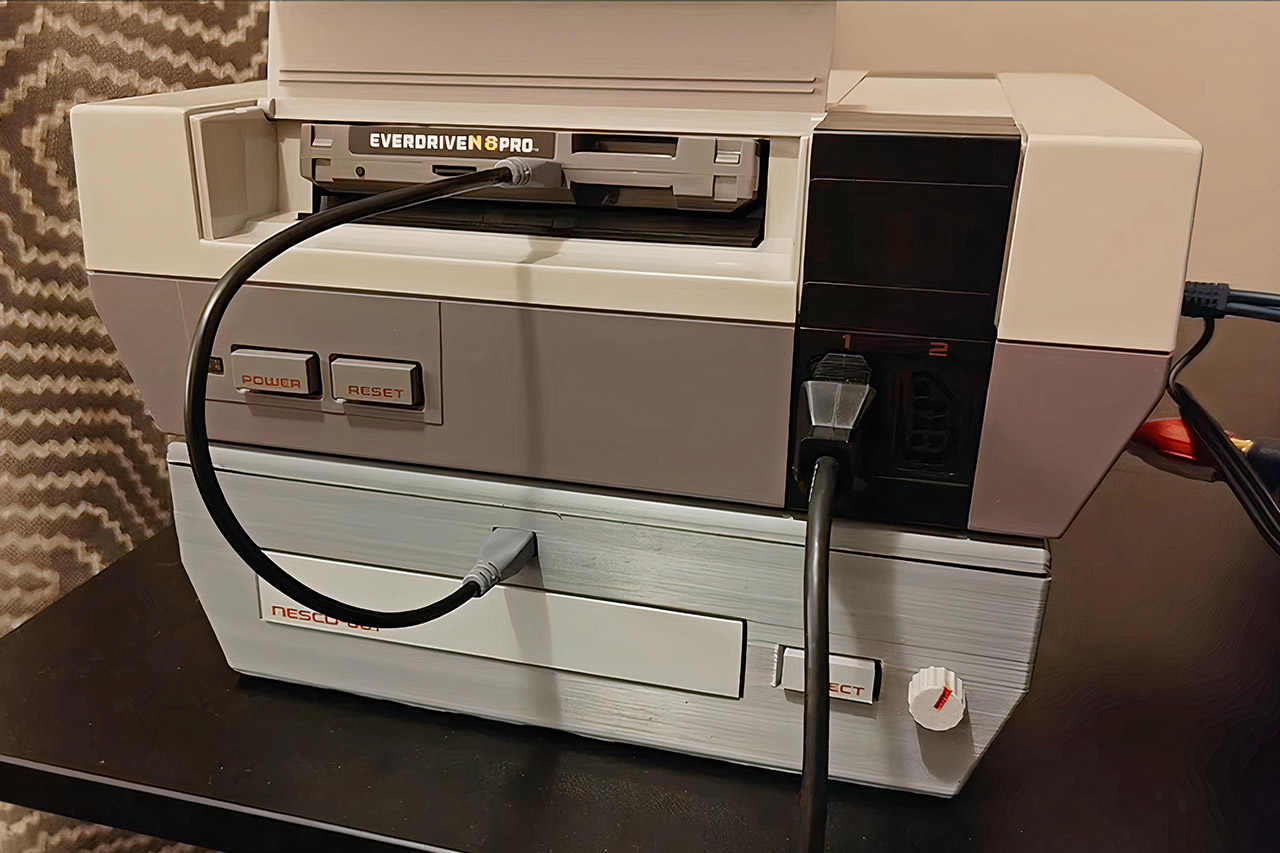
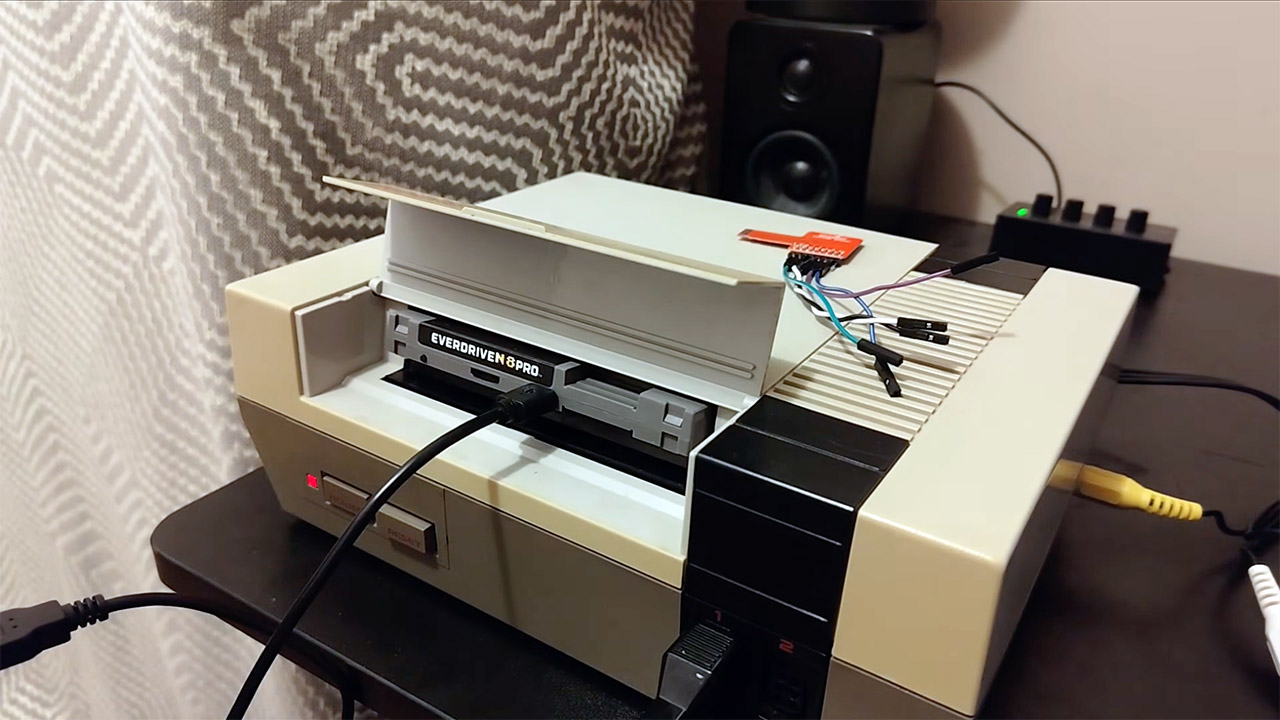
His finished unit is a gray 3D printed slab that fits under the console in the same way as the old Famicom Disk System did. A white disk tray with glossy red lettering faces forward, accompanied by an eject button and volume knob. Inside, there’s a conventional 40-pin IDE compact disk drive (the Pacific Digital Mach 52, as seen in the movie), a custom circuit board, a PCM5102 converter, and an RP2350B microcontroller that communicates with both the drive and an Everdrive N8 Pro flash cartridge. The printable shell files and sticker art for that board layout are available in the same source as the board layout itself.

NESCD-001 Nintendo Entertainment System Mod
Games do not run directly from the disc in the same way as later CD consoles do. What happens is that the RP2350B reads the ROM from the disk, transfers it to the Everdrive over USB, and runs it. After things are up and running, the microcontroller monitors a CHR mailbox at memory address 0x21FF8 for any requests from the running game, which could be for additional audio or a chunk of full motion video. Frames of video are delivered over the same USB link and written into NES video memory using proprietary bitstream code from the Cyclone IV FPGA already installed on the Everdrive N8 Pro.

NESCD-001 Nintendo Entertainment System Mod
Then there’s the audio side, which has gone its own way on purpose. Compact disk sound exits the PCM5102 and enters the NES via the expansion port mixer pin, an input pin that Nintendo slipped onto American hardware but never seemed to use. That method prevents any additional sound from clogging the already congested USB link, while simultaneously allowing the front knob to do something. One Molex cable from a wall adapter supplies 5 and 12 volts to the drive and board. A buck converter then reduces the 12V to around 9.5V, allowing you to utilize a spare NES power plug to power the console from the top of the box, using only one outlet to power the entire stack. Of course, you can still use the original brick to power the NES.

NESCD-001 Nintendo Entertainment System Mod
Proof of concept can be found on a homemade disc labeled “Super Mario Bros. CD edition”. Yes, it’s still the 1985 platformer, but now the music comes from compact disc recordings and small cutscenes pop in. Mario and Luigi are talking about a picnic, while Bowser is checking into a local hotel. When you take the disk out, the extra layer stops working. Early tests also ran standard cartridge games through the Everdrive while the drive and board were being wired, including a sanity check to ensure Contra was still operational when some flash carts decided to cause problems.

NESCD-001 Nintendo Entertainment System Mod
The full motion video functionality is still very much in beta. Something Nerdy Studios already showed that an Everdrive N8 Pro can push Bad Apple across the full NES screen from an SD card by stuffing tiles into CHR RAM as fast as the machine will take them. Throaty Mumbo leaned on that work for a disc-fed version, then held the firmware back because parts of it were reverse engineered from that demo.

Source link

Advertisement
Continue Reading

Tech

5 New Milwaukee Packout Products Available In August 2026

Published

on


We may receive a commission on purchases made from links.

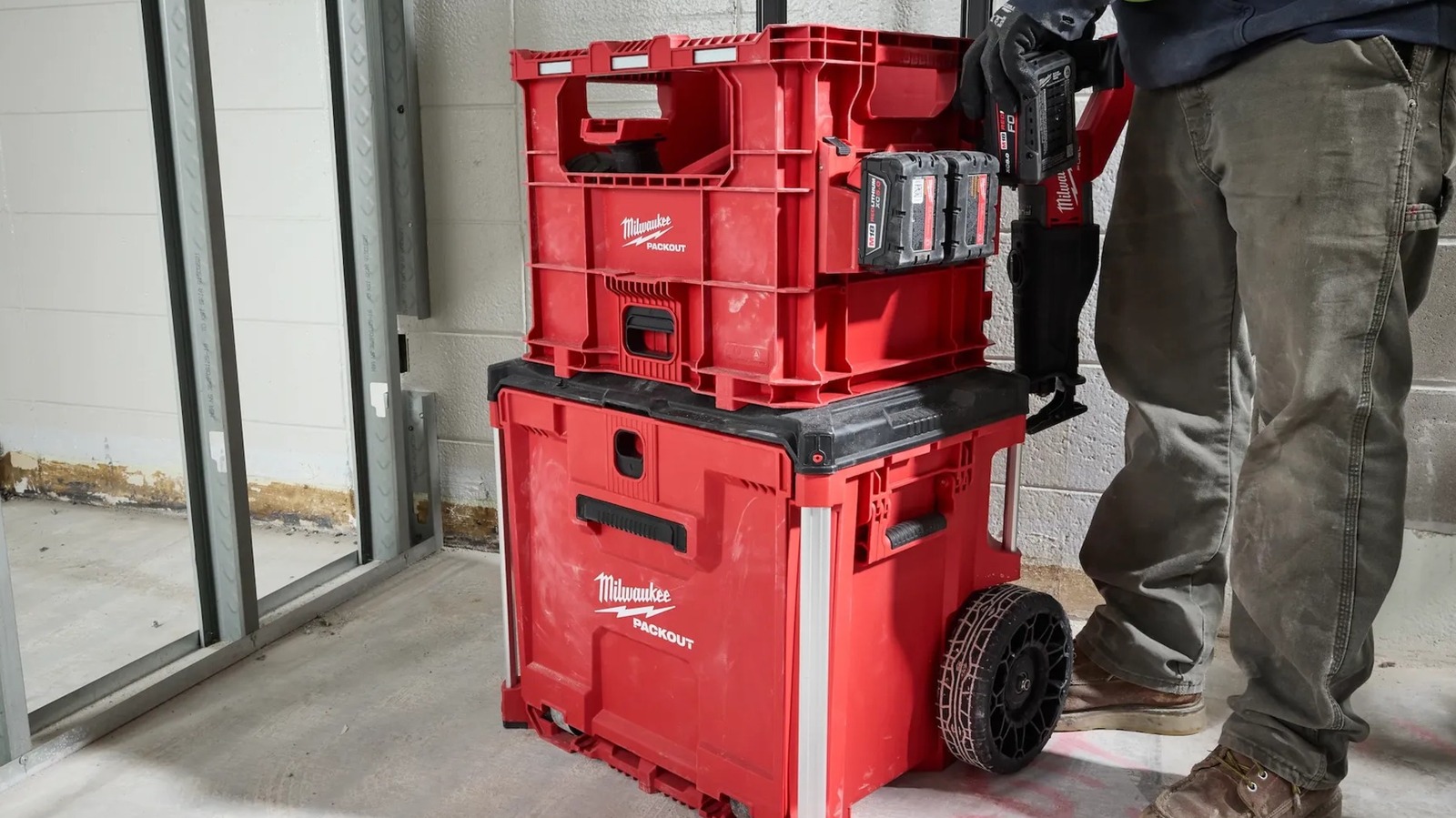
One of the Milwaukee hardware brand’s claims to fame is its Packout series of stackable storage options. These feature various types of storage crates and drawers, as well as add-ons like lights and lunch coolers to liven up your workspace, all of which can be stacked and locked into a mobile tool tower. Given that Packout is one of Milwaukee’s standby systems, the brand is always working on new additions, including both large and small storage boxes and crates to fit assorted use cases.

Advertisement

For the month of August 2026, most of Packout’s new developments are focused around various types of simple, quick-access crates. These include crates you can quickly pull tools from and place back, as well as relatively simple tool boxes with locking drawers for safety and security. All of these new products are available at participating retailers like Home Depot, Ace Hardware, and Acme Tools. If you’re a fan of the Packout system, consider perusing the latest offerings for new and interesting additions to your existing Packout stack.

Advertisement

Milwaukee Packout XL Crate

As good as Packout is at keeping your tool collection organized, sometimes you just want a reliable spot where you can quickly dump whatever you’re using and pull out something else without fussing with drawers and latches. To add such a spot to your Packout stack, that’d be a use case for the Milwaukee Packout XL Crate, available at Home Depot for $69.97.

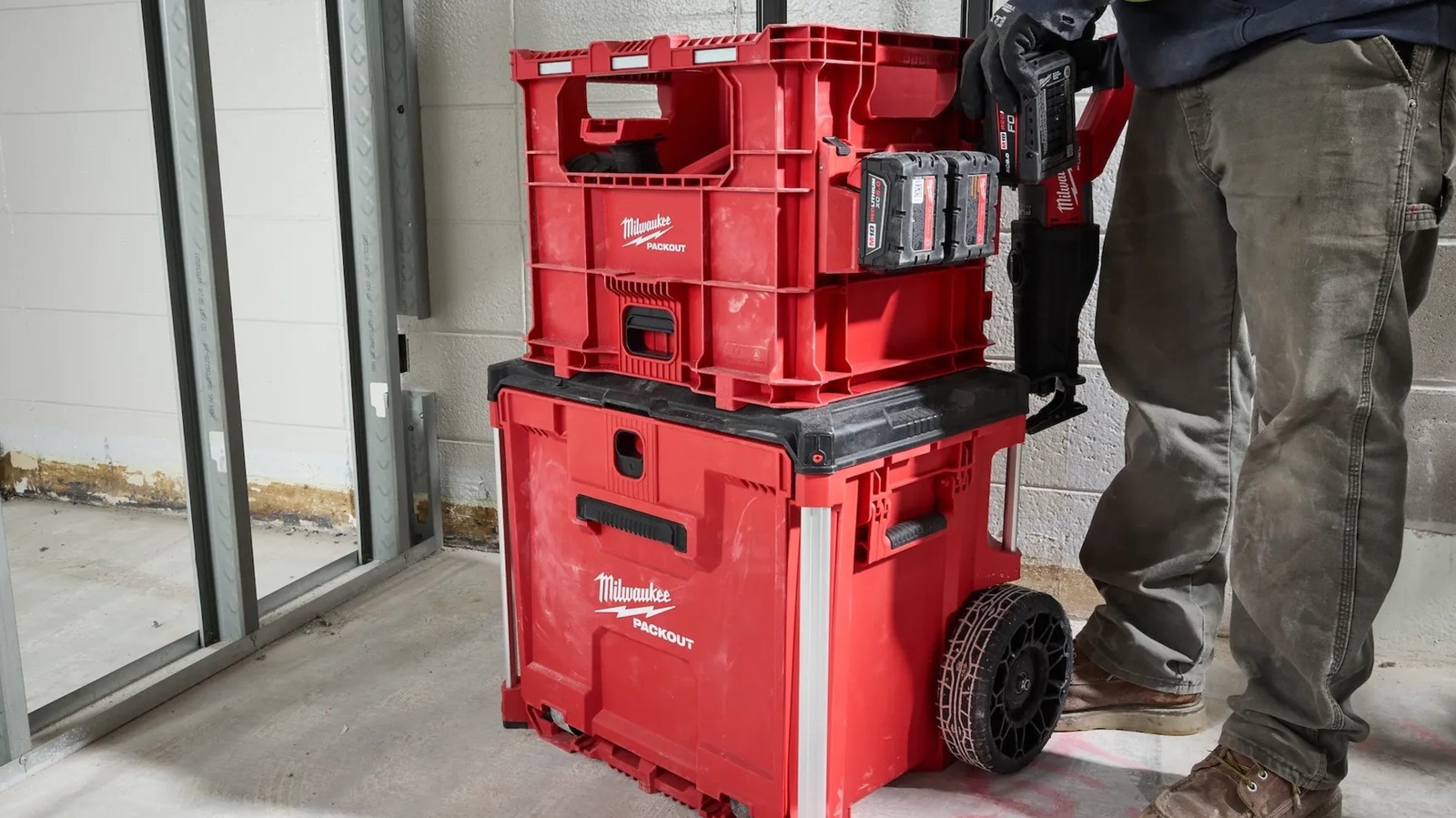
The Packout XL Crate is exactly what it sounds like: An extra-large crate with the necessary latches to snap onto a Packout stack, though it can also clip onto the side of a stack to hang freely. It has a 75-pound carry capacity for hauling assorted tools and accessories, as well as mounting spots for hanging tools like power drills or battery chargers. While you can reach right into the top of this crate to grab a tool, if there’s something else stacked on top of it, you can also reach into the large opening at the front, which still provides enough clearance for deposit and retrieval.

Advertisement

Milwaukee Packout Wire Pulling XL Crate

Depending on your line of work or crafting interest, you may need different types of modular storage to best suit your purposes. For example, if you’re an electrician regularly working with different types and lengths of wire, a regular storage crate may not be the optimal choice for storing your large wire spools. In this specific use case, Milwaukee offers the Packout Wire Pulling XL Crate, available at Home Depot for $119.00.

At a glance, this crate is very similar to the regular Packout XL Crate. It has several of the same features, including a 75-pound carrying capacity, an easy-retrieval front opening, and the ability to both stack and hang on a Packout stack. Where it differentiates itself is in the interior mounts specifically designed to hold up to six spools of 500 feet, 12-gauge THHN wire. The mounts allow the spools to spin when their wire is pulled, so you can grab all the wire you need without having to move the spools around. As an extra perk, the front opening has wire retention slots, which hold pulled wire in place and help keep everything organized.

Advertisement

Milwaukee Packout Low-Profile Crate

If you’ve already got a very tall Packout stack, adding more full-sized crates and drawers on top isn’t the best idea. At a certain point, it’s going to become too high to comfortably reach into, not to mention potentially at risk of toppling over. Rather than stacking another full-sized crate on top of everything, it may be better to add something a little smaller, such as the Milwaukee Packout Low-Profile Crate. It’s available at Home Depot for $44.97.

This Packout crate is best-suited for the top of your Packout stack, with an open top that you can reach into to grab whatever you need, as well as a body that’s about half the size of a regular Packout crate. It has a slightly reduced carrying capacity — 50 pounds versus the usual 75 pounds — but it still has all of the necessary latches to clip onto a stack, plus integrated side handles for easier carrying. It also comes bundled with a set of quick-adjust dividers, including eight short dividers, two long dividers, and one middle divider, which you can use to set up the interior of the crate to your liking.

Advertisement

Milwaukee Packout Compact Crate

The Packout Low-Profile Crate is designed to give you some extra storage space while reducing your Packout stack’s vertical profile. However, that’s not the only way you can reduce your stack, as you can also opt for a crate that slices down vertically instead of horizontally. Such is the design of the Milwaukee Packout Compact Crate, available at Home Depot for $39.97.

Advertisement

This crate is the inverse of the Low-Profile Crate, being approximately as tall as a regular crate while being half as wide. This means you can stack two of them at once on top of a regular crate if you want to keep two sets of tools or accessories separate from each other. Like the Low-Profile Crate, it comes with two customizable dividers, as well as a large front opening you can reach into to grab something. One noteworthy difference between this crate and others is that it has an integrated folding metal handle, which you can use to haul a handful of tools when you need to take a quick jaunt away from your main stack.

Advertisement

Milwaukee Packout Single Drawer Tool Box

While the majority of Milwaukee’s new Packout offerings for August 2026 are various forms of crates, there are some outliers. For example, if you want storage with a little bit of extra security in the form of a locking drawer, an open crate may not be the best choice. Rather, that may be a job for the Milwaukee Packout Single Drawer Tool Box, available at Home Depot for $164.00.

As opposed to the crates being primarily accessible from the top, the Single Drawer Tool Box conceals a sliding drawer that you can pop open and access from the front, even when it’s in the middle of a tall Packout stack. The box comes bundled with one large divider and two regular dividers for organizing the inside, and it has mounting points on the side for hanging tools and chargers, with a total carrying capacity of 50 pounds. That said, the most important feature is the locking metal security bar, which keeps the drawer firmly closed when not in use and in transit.

Advertisement


Source link

Continue Reading

Tech

What The Numbers On Your Chainsaw Chain Actually Mean

Published

on


The numbers stamped on your chainsaw chain are the shorthand that tells you exactly which replacement chain will fit your saw safely. But there’s no single universal code across all brands. Stihl, Husqvarna, Oregon, and all the other major chainsaw brands each use their own marking systems, and the placement of those numbers can vary from the chain’s drive links to the bar’s heel or even the packaging.

What almost every system conveys are three core specs: pitch, gauge, and drive-link count. Pitch is the chain’s “size,” defined as half the distance between any three consecutive rivets; common values are ¼”, .325″, ⅜”, and .404″. Gauge is the thickness of the drive links, typically .043″, .050″, .058″, or .063″. Drive-link count is simply how many drive links form the full loop; it determines overall chain length and must match the bar’s specified length.

On many of the best chainsaws, pitch and gauge are stamped directly on the side of each drive link on the chain. Guide bars often carry stamps near the powerhead end, listing bar length, pitch, and gauge; some also include the required drive-link count. For example, Husqvarna’s X-CUT chains show pitch and gauge as single digits on the drive link (e.g., “8” and “5” for ⅜” pitch and .050″ gauge), while Stihl encodes gauge as a final digit (1 = .043″, 3 = .050″, 5 = .058″, 6 = .063″). Oregon, by contrast, uses a two-digit “series” code on the drive link that maps to a specific pitch-and-gauge pair.

Advertisement

Reading the stamps without guesswork

Start by locating the markings. On the chain, look at the flat side of the drive links for small stamped numbers or codes. On the guide bar, check near the base where it meets the powerhead; you’ll often see a string like “16 3/8 .050 57DL” or a brand-specific code. The first number is usually bar length in inches, followed by pitch and gauge, and sometimes the drive-link count.

Decode pitch first: if you see “⅜” or “.375,” that’s ⅜” pitch; “.325” and “.404” are also common. Gauge will appear as a decimal like .050 or .063, or as a single digit in certain brand codes. Drive-link count may be shown as “57DL,” “57,” or embedded in a longer part number; it must match exactly, or the chain won’t fit the bar and sprocket properly. You can also measure manually. For pitch, measure across any three consecutive rivets and divide by two. For gauge, use calipers on the thickness of a drive link where it engages the bar groove. Then count the drive links around the full loop.

Advertisement

Finally, remember that matching all three specs — pitch, gauge, and drive-link count — is non-negotiable, and it critical for chainsaw maintenance. A chain with the right pitch but the wrong gauge can wobble or bind; the wrong drive-link count won’t wrap the bar correctly. When in doubt, use your saw’s model number and the bar’s stamps to look up the exact chain in the manufacturer’s chart rather than guessing from generic numbers.


Advertisement

Source link

Continue Reading

Tech

The World's Busiest Spaceport Is About To Get a Lot Quieter, At Least For Now

Published

on

SpaceX is significantly reducing Falcon 9 launches from Florida this year, ending the Space Coast’s decade-long run as the world’s busiest spaceport as more missions shift to Vandenberg Space Force Base in California. The slowdown is expected to continue until Starship begins flying regularly from Florida. Longtime Slashdot reader schwit1 shares a report from Ars Technica: A Falcon 9 launch early Tuesday was the last planned Starlink mission from Cape Canaveral until SpaceX begins flying Starship missions from Florida, according to Kiko Dontchev, the company’s vice president of launch. For at least the rest of the year, and maybe longer, this means the launch rate at the Florida spaceport will drop from eight or nine per month to perhaps two per month.
It wasn’t long ago when two launches per month was the norm, an indication of just how quickly SpaceX’s launch cadence has grown. Cape Canaveral and Kennedy Space Center sit on adjoining property and share the same range on Florida’s east coast, so it is worth considering them a single spaceport. The last time the Florida spaceport did not lead the world in space launches was in 2015.
“From here on, Starlink missions out of Florida will fly on Starship,” Dontchev wrote on X. “The West Coast team will continue regularly launching Starlink from Vandenberg.” “Yep, that’ll be louder — but everybody knows the real action will be in Louisiana, starting in 2029 or so,” writes schwit1. SpaceX on Tuesday announced plans to spend up to $100 billion building a new Starship launch facility in Vermilion Parish, Louisiana, which the state says could eventually “support thousands of launches annually.”

Further reading: Musk’s other unstated reasons for shutting down Falcon 9 in Florida (Behind The Black)

Read more of this story at Slashdot.

Advertisement

Source link

Continue Reading

Tech

AI Is Accelerating Vulnerability Discovery. Can Defenders Keep Up?

Published

on

AI pressing a button

Author: Gene Moody, Field CTO at Action1

AI can help us find vulnerabilities faster than ever. But what happens when the rest of the vulnerability management ecosystem can’t keep up?

When Vulnerability Volume Outpaces the System

In April, NIST released a statement regarding updates to NVD operations that reflects a necessary response to scale. CVE volume has grown beyond what the current enrichment model was designed to handle. As part of the change, roughly 30,000 vulnerabilities published before March 1, 2026, were reclassified as “Not Scheduled.”

Prioritization, automation, and selective processing are reasonable adjustments in principle. In practice, however, the shift introduces a set of risks that may not be fully understood, particularly for those responsible for defending enterprise environments.

Advertisement

The pressure is not theoretical. Action1’s 2026 Software Vulnerability Ratings Report found that disclosed vulnerabilities across the enterprise software categories analyzed increased 92% in 2025 compared with 2024. Critical and high-severity vulnerabilities increased 103% each, while vulnerabilities enabling remote code execution increased 128%. 

Today, the volume of disclosures that must be validated, enriched, prioritized, and ultimately remediated is likely to place even greater pressure on systems designed for a slower era of vulnerability discovery.

The core issue is therefore not simply the existence of a backlog. Backlogs are an expected outcome in any system operating under rapid growth. The concern is how that backlog is managed and, more importantly, what signals are created by the decision to prioritize newer vulnerabilities over older, unprocessed ones.

What Happens When Enrichment Falls Behind

By focusing enrichment efforts only on recent CVEs, the system implicitly deprioritizes vulnerabilities that may already be known, confirmed, and, in some cases, actively discussed by vendors or researchers but lack full NVD context. 

Advertisement

This creates an information asymmetry of a particularly difficult kind: partial intelligence without the second half that makes it readily actionable. Security teams that rely heavily on NVD as a normalized source of vulnerability information may see incomplete or delayed data.

Attackers, meanwhile, do not need to wait for standardized enrichment before correlating vendor advisories, security research, patch releases, exploit information, and public disclosures.

That gap matters because enrichment is not cosmetic. Structured metadata, affected-platform information, severity scoring, configuration details, and other contextual information allow defenders to determine whether a vulnerability actually applies to their environment and how urgently it should be addressed.

When that information is missing or delayed, organizations are often forced to either wait for additional context or make decisions using fragmented information. Neither outcome is ideal in a threat landscape where exploitation can move faster than internal validation and remediation processes.

Advertisement

But That’s Not All

There is also a second-order effect that is harder to quantify but equally important. A rolling backlog that is continuously fed while being selectively drained creates uncertainty about coverage. Without a clear commitment to processing older entries within a defined timeframe, the backlog becomes a semi-permanent condition.

Some vulnerabilities will be enriched quickly, others will remain in limbo, and there will be limited visibility into which category any given CVE falls into at a given moment.

For practitioners, this overly complicates prioritization. If affected-product information such as CPE data is incomplete or overly broad, organizations face a greater risk of false positives. Teams may spend time investigating vulnerabilities that do not apply to their environment while potentially overlooking risks that do.

Over time, this will certainly erode confidence in the dataset and push organizations to build alternative intelligence pipelines. That will lead to additional cost, tooling, and operational complexity. As well, as one may predict, increasing failure rates.

Advertisement

Action1’s 2026 Software Vulnerability Ratings Report found enterprise application exploitation surged 800% in the last year.

Explore which software categories saw the biggest shifts in vulnerabilities, severity, and attacker activity. 

Read the Report

Vulnerability Management Is Changing

None of this suggests that NIST is acting irresponsibly. The scale problem is real, and the existing model was not designed for the volume of vulnerability information now entering the ecosystem.But the introduced trade-off pushes more responsibility downstream.

Organizations will need to rely less on a single authoritative source and more on correlation across multiple sources, including NVD, vendor advisories, independent vulnerability-intelligence providers, threat intelligence platforms, and internal asset inventories.

Advertisement

Zoom out, and the view is that vulnerability management is becoming less about consuming a curated list and more about synthesizing accurate intel from incomplete data in near real time. That requires maturity, tooling, and process discipline that not all organizations currently possess. 

If this direction continues, the NVD will remain a critical component of the vulnerability-management ecosystem, but it will no longer function as a comprehensive baseline on its own. Instead, it becomes one input among many, and one that may lag significantly behind the realities of exploitation in the field.

The more important question then becomes not simply, “What vulnerabilities exist?” but “Which of them affect us, which represent the greatest risk, and how quickly can we act?”

How Defenders Should Adapt

The first lesson is that vulnerability management can no longer depend on any single source of enrichment. NVD remains enormously valuable, but security teams increasingly need to subscribe to cumulative works of vendors and organizations that aggregate the available data into usable intelligence

Advertisement

More importantly, collecting additional feeds is only part of the answer. More information can simply create another prioritization problem. The real objective is to turn fragmented vulnerability intelligence into a decision: Does this vulnerability affect us, how urgent is it, and what can we do about it now?

This is the model Action1 has adopted for vulnerability management. Rather than relying exclusively on NVD enrichment, Action1 combines intelligence from sources including VulnCheckNVD++, NIST NVD, CISA’s KEV Catalog, Microsoft’s own MSRC data, and vendor release notes, then scores each vulnerability based on CVE data, CVSS severity, CISA KEV status, and known usage in ransomware campaigns, providing initial prioritization in minutes.

That intelligence is correlated with real-time endpoint data so teams can determine which vulnerabilities actually affect software deployed in their environment and prioritize remediation accordingly.

Once an affected endpoint has been identified, remediation should not require another export, manual correlation exercise, or lengthy handoff before patching begins. 

Advertisement

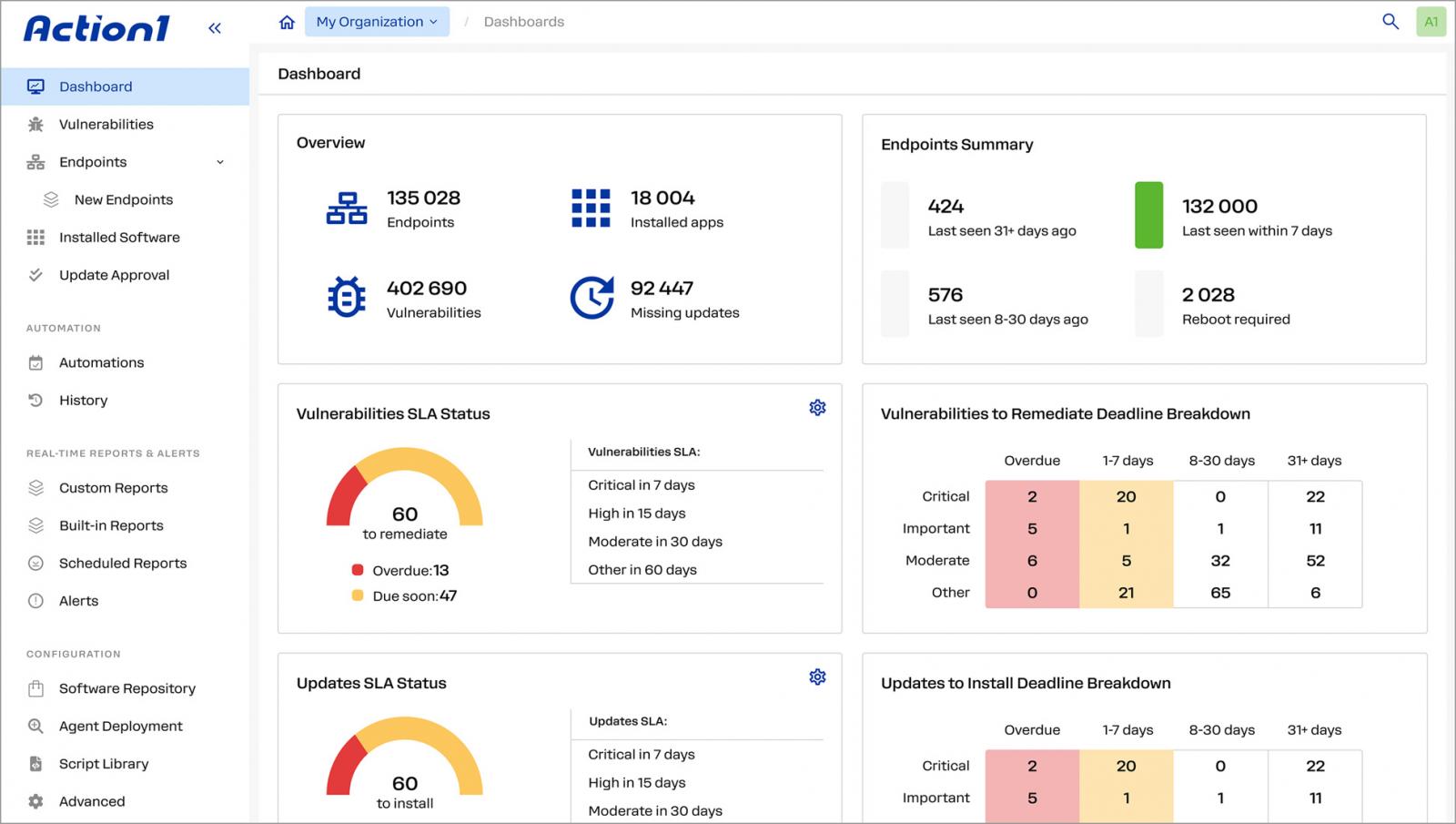
Action1 brings vulnerability assessment and remediation into the same workflow, allowingorganizations to move from learning that a vulnerability exists to reducing actual exposure much faster, all from a single console.

Action1 dashboard

The AI vulnerability era will not be defined by how fast IT and security teams can find flaws, but by how quickly they can understand, prioritize, and patch them. Discovery is accelerating, soremediation must accelerate with it.

See how Action1 connects real-time OS and third-party vulnerability intelligence with automated remediation to help your team reduce exposure faster. 

Start free and scale when you’re ready.

Advertisement

Sponsored and written by Action1.

Source link

Advertisement
Continue Reading

Tech

Watch Tottenham vs Newcastle: Live Streams, Team News & TV Channels

Published

on

The Tottenham vs Newcastle live stream involves two teams looking for their first wins of the new season. Tottenham were humbled by Brentford on matchday one, while Newcastle were denied all three points by a last-gasp Liverpool equaliser.

There were few positives for Roberto De Zerbi to take from this side’s display against Brentford. Spurs finished 17th last season, and their performance at the Gtech Community Stadium was worse than most of their showings in 2025/26. The only saving grace is that Tottenham’s starting XI will be significantly different going forward, starting with the visit of Newcastle.

Advertisement

Source link

Continue Reading

Trending

Copyright © 2025