

Business
65% Chance of Epic World Cup 2026 Quarterfinal Clash


Lionel Messi and Cristiano Ronaldo have never met in a World Cup match during their two-decade rivalry. With the 2026 tournament just months away, the bracket has aligned perfectly for what could be their final showdown — and analysts now put the odds of an Argentina-Portugal quarterfinal at roughly 65 percent if both stars deliver as expected.

The expanded 48-team World Cup draw, completed in December 2025, placed defending champion Argentina in Group J with Algeria, Austria and Jordan. Portugal landed in Group K alongside Colombia, Uzbekistan and a playoff winner. Both teams enter as overwhelming favorites to top their groups, setting up a high-probability path through the knockout stages.
Under the new format, the top two teams from each group plus the eight best third-place finishers advance to a 32-team knockout round. If Argentina and Portugal win their groups — a scenario bookmakers give better than 80 percent probability for each side individually — they would meet in the quarterfinals on July 11 at Arrowhead Stadium, provided they navigate the round of 32 and round of 16.
Projection models from sites like Opta and betting markets currently estimate the combined likelihood of that exact quarterfinal matchup at around 60-70 percent, with many settling near 65 percent when factoring in group dominance and early knockout form. Earlier clashes remain possible but less likely: a round-of-16 meeting if one team finishes second (around 20-25 percent) or a remote round-of-32 scenario if both drop to third.
Ronaldo, turning 41 in February 2026, has made clear this will be his last World Cup. The Portuguese captain continues to score prolifically for Al-Nassr and recently posted recovery updates after a minor hamstring issue. Coach Roberto Martinez has expressed full confidence in Ronaldo’s fitness for June.

Messi, who turns 39 during the tournament, has been more reserved but strong signals point to his participation. The eight-time Ballon d’Or winner has already designated Kansas City as Argentina’s base camp, with group-stage matches scheduled at Arrowhead and AT&T Stadium. Inter Miami and Argentina coaching staff have indicated he plans to be there for what could be his farewell tour.
Argentina remains the tournament favorite according to most oddsmakers, buoyed by its 2022 triumph and deep squad. Portugal sits further back but possesses enough talent to reach the later stages even with managed minutes for its aging superstar.
The potential July 11 clash in Kansas City has already sent ticket demand soaring on resale platforms, with some listings for the projected quarterfinal jumping 300 percent since the draw. Global TV audiences for such a matchup could reach billions, adding one final unforgettable chapter to a rivalry that has produced countless classics at club level.
For Messi, a second World Cup title would solidify his legacy. For Ronaldo, the tournament represents perhaps his last realistic shot at the one major honor missing from his glittering career. They have combined for 48 World Cup appearances without ever sharing the pitch in the competition.
Analysts caution that football’s unpredictability remains. Upsets in the group stage or early knockouts could derail the dream scenario. Yet the bracket’s structure, combined with both teams’ quality, makes the quarterfinal meeting the most probable outcome of any Messi-Ronaldo World Cup encounter.
FIFA President Gianni Infantino has repeatedly highlighted the tournament’s potential for “dream matches,” and few would top this one. As friendlies continue in March and squads take shape, the soccer world is already counting down to what could be the ultimate last dance.
Whether it ends in a Messi masterclass, Ronaldo heroics or dramatic extra time, a 65 percent chance feels tantalizingly close to destiny for two players who have defined an era.

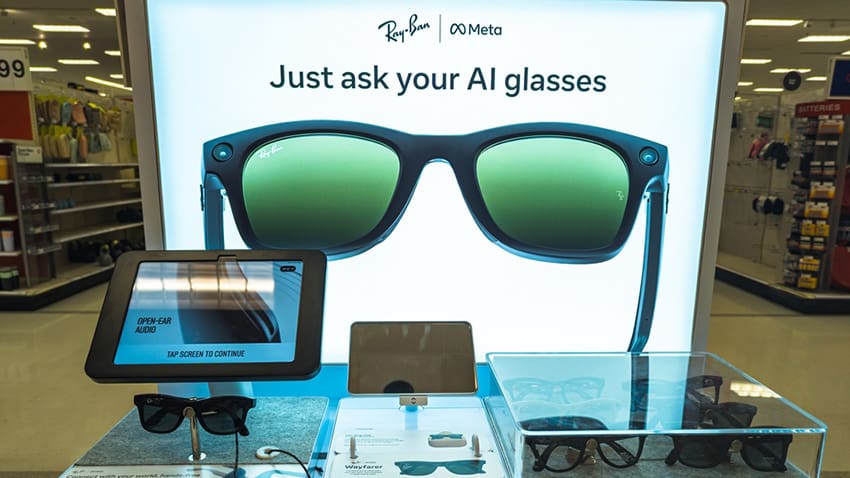
For all the hand-wringing over privacy, Britain’s high streets, gyms and offices are about to be flooded with cameras hiding in plain sight.
The latest generation of so-called smart glasses, most notably Meta’s Ray-Ban range, has become one of the fastest-selling consumer electronics products in history, and the world’s largest technology companies are queuing up to follow suit.
The commercial momentum is undeniable. Meta has now shipped more than seven million pairs of its Ray-Ban smart glasses, made in partnership with Franco-Italian eyewear giant EssilorLuxottica, and the device accounts for more than 80 per cent of the global AI eyewear market, according to Counterpoint Research. Mark Zuckerberg, Meta’s chief executive, told investors earlier this year that the glasses were “some of the fastest-growing consumer electronics in history”, a rare bright spot for a company that has spent tens of billions of dollars chasing the metaverse with limited return.
But the same product line is now sitting at the centre of a rapidly widening privacy row that could shape regulation, workplace policy and consumer trust for years to come, and which British SMEs, from beauty salons to cafés, are already being forced to think about.
A camera in every frame
The appeal of the device, on paper, is straightforward. The Ray-Ban model carries an almost invisible camera in the frame, small open-ear speakers in the arms, and a discreet indicator light. Wearers can take a photo, capture video, place a phone call or summon Meta’s AI assistant with a tap on the temple. For early adopters such as Mark Smith, a partner at advisory firm ISG, the attraction is mundane rather than futuristic. He wears his every day, he says, because they let him take a call or listen to a podcast while washing up without blocking out the room, and spare him from pulling out a phone to capture a moment while travelling.
The problem, as Smith himself concedes, is that nobody around the wearer can tell. The recording light is dim in daylight and easily missed. To the casual observer, the glasses look like any other pair of Wayfarers.
That ambiguity is now generating an uncomfortable run of headlines. Women have reported being approached on beaches, in shops and on the street by men wearing the glasses, who film their reactions to scripted pick-up lines or intrusive questions and then upload the clips for clicks. Victims often only discover the footage exists once it has gone viral — and any subsequent abuse with it. As photography in public places is broadly lawful in the UK, legal recourse is limited. One woman who asked for her secretly recorded video to be removed told the BBC she was informed by the poster that takedown was “a paid service”.
Lawsuits, content moderators and a Kenyan flashpoint
The reputational pressure on Meta has been compounded by the working conditions of those who train the AI behind the product. Content moderators in Kenya, tasked with reviewing footage captured through the glasses to build training data, alleged they had been required to watch graphic material including sexual activity and people using the lavatory. Two lawsuits followed from owners of the glasses themselves: one group claiming they had no idea such videos had ever been captured, another that they had not realised the footage was being shared back to Meta for human review.
The company has pointed to its terms of service, arguing that the possibility of human review in certain circumstances had been disclosed. A Meta spokesman, Tracy Clayton, told the BBC: “We have teams dedicated to limiting and combating misuse, but as with any technology, the onus is ultimately on individual people to not actively exploit it.”
That defence is unlikely to satisfy the regulators now circling the category. Meta is reportedly preparing to add facial recognition to a forthcoming version of the glasses, according to The New York Times, a feature that would allow wearers not just to record passers-by, but to identify them in real time.
The rest of Silicon Valley piles in
For all the controversy, the rest of Big Tech sees a market it cannot afford to miss. Apple is widely reported to be developing its own smart glasses, with Bloomberg suggesting a launch as soon as next year. Snap has confirmed a new, lighter pair of its Specs for 2026. Google, more than a decade on from the spectacular failure of Google Glass, pulled within two years of launch amid a furious privacy backlash, is preparing another attempt under its Android XR platform.
Analysts at Citigroup and researchers at UC Berkeley reckon as many as 100 million people could be wearing AI-enabled glasses within a few years. For investors, that points to a genuinely new product category, the first since the smartwatch. For regulators, public bodies and small businesses, it raises a far thornier question: how do you enforce existing rules against recording in courtrooms, hospitals, changing rooms, museums, cinemas and bathrooms when a meaningful slice of the population is wearing a camera on their face?
David Kessler, who leads the US privacy practice at international law firm Norton Rose Fulbright, says corporate clients are already wrestling with it. “There are some pretty dark places we could go here,” he said. “I’m not anti-technology in any sense, but as a societal matter… will I need to think [of being recorded] anytime I go out in public?”
What it means for British SMEs
For owner-managers in the UK, this is no longer a Silicon Valley curiosity. Anecdotes are mounting of customers and staff being caught off guard: the online influencer Aniessa Navarro recounted feeling “sick” when she realised mid-treatment that her beauty technician was wearing Meta’s glasses. The technician insisted they were neither charged nor recording, and were needed for prescription lenses — but the reputational risk for the salon is obvious.
Smaller businesses in hospitality, retail, healthcare, fitness and personal services should expect to revisit their acceptable-use policies, customer-facing signage and staff training. Under UK GDPR, covert recording of identifiable individuals on a business’s premises is likely to fall on the operator as well as the wearer once that footage is processed for any purpose beyond purely personal use. Insurers and trade bodies are likely to start asking questions.
Meta markets the product under the tagline “Designed for privacy, controlled by you”, and tells wearers not to record people who object and to switch the glasses off entirely in sensitive spaces. Those suggestions, by the company’s own admission, are honoured more in the breach than the observance. A growing genre of “prank” content sees young men in Ray-Bans persuading retail workers to smell candles laced with foul odours, getting members of the public to sign fake petitions, or filming themselves snatching food at drive-throughs.
A Google Glass moment, or a tipping point?
Andrew Bosworth, Meta’s chief technology officer, was asked on Instagram about “the stigma around people wearing smart glasses every day”. His answer leant heavily on the sales figures, arguing that the sheer volume shifted “suggest these are widely accepted”.
Not everyone is convinced. David Harris, a former Meta AI researcher now teaching at UC Berkeley and advising policymakers in the US and EU, believes the category is heading for the same wall that flattened Google Glass. “Technology like this is fundamentally an invasion of privacy and it’s really going to face more and more backlash,” he said.
The signs are already there. In December, a New York man posted a clip lamenting that a woman he had been filming on the subway had broken his Meta glasses. The internet did not commiserate. It crowned her a folk hero.
For Meta, for Apple, for Snap and for Google, the commercial prize from owning the face is enormous. But for an industry that has spent the past decade trying to rebuild public trust, betting the next platform on a device most bystanders cannot tell is a camera may yet prove the most expensive miscalculation of all.

Jamie Young
Jamie is Senior Reporter at Business Matters, bringing over a decade of experience in UK SME business reporting.
Jamie holds a degree in Business Administration and regularly participates in industry conferences and workshops.
When not reporting on the latest business developments, Jamie is passionate about mentoring up-and-coming journalists and entrepreneurs to inspire the next generation of business leaders.
Business
Oil Supply Crisis 2026: IEA Warns of 1.8m Barrel Shortfall as Strait of Hormuz Closure Bites

Global oil stockpiles are emptying at the fastest pace ever recorded as the war in the Middle East tips the world into a deepening supply deficit, in a development that threatens to derail the recovery of Britain’s small and medium-sized businesses just as they were beginning to find their footing.
The International Energy Agency has warned of an “unprecedented supply shock” following the effective closure of the Strait of Hormuz, the narrow shipping lane that until recently carried roughly a fifth of the world’s oil and gas. The destruction of energy infrastructure across the Gulf has compounded the damage, leaving traders, hauliers and manufacturers scrambling to absorb costs that were unthinkable only six months ago.
The Paris-based agency now expects a shortfall of around 1.8 million barrels a day to materialise this year, a dramatic reversal of the 410,000-barrel surplus it had forecast as recently as last month. The shift has come even as the economic damage of the conflict pulls demand sharply lower.
“With global oil inventories already drawing at a record clip, further price volatility appears likely ahead of the peak summer demand period,” the IEA cautioned.
Global supply is forecast to fall by an average 3.9 million barrels a day this year to 102.2 million, on the assumption that tanker traffic through the strait gradually resumes from the end of June. Even on that optimistic footing, the market is expected to remain in deficit until the final quarter.
Markets have whipsawed since hostilities between the United States and Iran erupted, with Brent crude, the international benchmark, surging to as high as $126 a barrel from just $60 at the start of the year. On Wednesday evening Brent snapped a three-day winning streak, sliding 2 per cent to $105.63 in its sharpest one-day retreat in a week. Even so, the benchmark is up 73.6 per cent year-to-date, a move that has rippled through every corner of the British economy from the haulage yards of the Midlands to the petrol forecourts of the south coast.
The IEA estimates that 246 million barrels have been drawn from inventories since the war began, leaving a perilously thin buffer against further shocks. In March the agency, which represents 32 member countries, released 400 million barrels of strategic reserves as a “stop-gap measure” in a co-ordinated bid to steady nerves.
Producers outside the Middle East have been pumping flat out to plug the gap. Forecasts for supply growth from the Americas have been raised by more than 600,000 barrels a day since January, to 1.5 million barrels a day this year, with Texan shale operators and Brazilian deepwater producers leading the charge. It has not been enough. Global supply slumped by a further 1.8 million barrels a day in April to 95.1 million, taking total losses since February to 12.8 million barrels a day. Output from Gulf states affected by the closure of the strait is running 14.4 million barrels a day below pre-war levels.
For Britain’s SME community, the second-order effects are arguably more punishing than the headline oil price itself. The IEA expects the economic fallout, rising inflation, slower growth and a sharp squeeze on household budgets, to drag global oil demand down by 420,000 barrels a day this year. That compares with a forecast decline of just 80,000 a day last month and projected growth of 850,000 barrels a day before the war began. It is the rapidity of the reversal, rather than its absolute scale, that has unnerved policymakers.
“Escalating demand destruction is underpinned by a surge in oil prices since the start of the war,” the IEA said. “Slower economic growth in both OECD and non-OECD countries is also beginning to weigh on consumer and industrial consumption.”
Fatih Birol, the agency’s executive director, last month described the current squeeze as the worst energy crisis the world has ever faced, eclipsing the oil shocks of the 1970s. “We are indeed facing the biggest energy security threat in history,” he said.
For owner-managed businesses already absorbing higher employment costs, stubborn inflation and fragile consumer confidence, the message from Paris is sobering. With warnings that the conflict could push Britain to the brink of recession, the next quarter is shaping up to be the most demanding test of SME resilience in a generation.

Amy Ingham
Amy is a newly qualified journalist specialising in business journalism at Business Matters with responsibility for news content for what is now the UK’s largest print and online source of current business news.

Britain’s small and medium-sized businesses have given the King’s Speech a decidedly lukewarm reception, with industry leaders accusing ministers of squandering a “critical opportunity” to ease the mounting cost pressures threatening to choke off growth across the economy.
While the legislative programme offered some genuine wins, most notably a long-awaited crackdown on late payments and a meaningful overhaul of City regulation, there was a conspicuous silence on the three issues that dominate the in-tray of every SME owner in the country: business rates, soaring energy bills and the rising cost of employing staff.
Coming as the deepening conflict in the Middle East drives up energy and shipping costs, the omissions felt particularly raw to firms already navigating what the CBI’s chief executive, Rain Newton-Smith, described as “strong global headwinds”.
A missed moment on rates and energy
Shevaun Haviland, director-general of the British Chambers of Commerce, did not mince her words. “With the Middle East conflict ratcheting up cost pressures, this was a critical opportunity to deliver meaningful change and give companies the certainty they urgently need,” she said. “Businesses will be disappointed to see no clear progress on reforming business rates, which remain a major cost burden for firms across the UK.”
Haviland was equally pointed on what she called the speech’s failure to grapple with supply-chain resilience, urging ministers to accelerate work on infrastructure, planning reform and the chronic backlog of grid connections that has become a binding constraint on industrial investment. Businesses, she said, wanted “a relentless focus on reducing costs, boosting investment and improving competitiveness”.
Newton-Smith struck a similar note. Firms, she argued, “want to go for growth, but they need strong leadership from government to reform an unfair business rates system, lower business energy bills and find appropriate landing zones on the Employment Rights Act”.
The British Retail Consortium went further, warning that ministers risked allowing an “inflationary storm” to take hold. Helen Dickinson, its chief executive, said: “Government cannot raise living standards without reducing the costs of doing business. Every moment of indecision will deepen the damage done to the British economy and extend the pain felt by households everywhere.”
Late payments: a long-overdue win for SMEs
For all the grumbling, one measure was greeted with something close to euphoria in the SME community. The Small Business Protections (Late Payments) Bill will impose maximum payment terms of 60 days, mandate interest on overdue invoices and arm the Small Business Commissioner with powers to investigate serial offenders and issue fines.
The economic case is stark. Late payments drain an estimated £11 billion from the UK economy every year and, according to government figures, contribute to the closure of 38 businesses every day.
Tina McKenzie, policy chair at the Federation of Small Businesses, called the bill “an historic moment for small firms”, adding: “Late payment destroys thousands of viable small firms a year. For too long, large businesses have used small suppliers as a free overdraft.”
Emma Jones, the Small Business Commissioner, described the package as “excellent news for UK businesses”. Steve Thomas, insolvency partner at Excello Law, said the measures could finally arrest the “domino effect” of large companies pushing smaller suppliers towards insolvency, though he argued the 60-day deadline should ultimately be tightened to 28.
The City cheers a regulatory reset
In the Square Mile, the mood was markedly brighter. The Enhancing Financial Services Bill promises a significant pruning of the post-crisis regulatory thicket, including an overhaul of the Financial Ombudsman Service, the absorption of the Payment Systems Regulator into the Financial Conduct Authority, and a streamlining of the Senior Managers and Certification Regime.
Miles Celic, chief executive of TheCityUK, said the package “signals a clear commitment to strengthening the UK’s position as a leading international financial centre”. Hannah Gurga, director-general of the Association of British Insurers, hailed it as “a significant step towards strengthening the UK’s competitiveness and long-term economic stability”.
Chris Hayward, policy chairman at the City of London Corporation, struck a note of cautious optimism. “Delivery will be key,” he said. “We must now maintain momentum and ensure reforms translate into tangible improvements in how regulation operates in practice.”
The accompanying Competition Reform Bill, which aims to speed up merger investigations and bake a growth duty into regulators’ decision-making, was similarly well received. Michael Moore, chief executive of UK Private Capital, said quicker, more focused investigations would provide “increased clarity” for private capital firms weighing UK investments.
Hospitality braced for a holiday tax
If the City had cause to smile, the hospitality sector did not. Proposals for local tourist levies have alarmed an industry already grappling with the highest employment and energy costs in its recent history.
Allen Simpson, chief executive of UK Hospitality, was blunt: a holiday tax, he said, would be “wildly unpopular, as well as economically destructive. A holiday tax will increase the cost of a staycation for Brits, it will hit lower income families hardest, it will lose the Treasury money and it will cost 33,000 jobs.”
Matthew Price, chief executive of Awaze, the holiday rentals group behind cottages.com and Hoseasons, warned that any levy on overnight stays “risks placing further pressure on consumers with already tight budgets, and by extension the communities and businesses that rely on holidaymakers for their living”. If a levy is unavoidable, he urged, it must be applied through “a standardised national framework that minimises the impact on guests, owners and the wider visitor economy in Britain”.
Steel, Europe and a leasehold flashpoint
Elsewhere, the Steel Industry (Nationalisation) Bill gives ministers the powers to take British Steel into full public ownership, subject to a public interest test. The CBI cautiously described nationalisation as “an expensive option of last resort”, while conceding that preserving sovereign steelmaking capability mattered for economic security.
The European Partnership Bill, which would fast-track future UK-EU agreements, was warmly welcomed by exporters and retailers. The BRC called it a “golden opportunity” to cut red tape for food businesses, manufacturers and suppliers trading across the Channel, though it pressed for clear guidance on the sanitary and phytosanitary arrangements that will follow.
The Commonhold and Leasehold Reform Bill, which will ban leasehold for new flats in England and Wales and cap ground rents at £250 a year, drew predictable battle lines. Matthew Pennycook, the housing minister, said the legislation “marks the beginning of the end for the leasehold system that has tainted the dream of home ownership for so many”. The Residential Freehold Association countered that the proposals were “a wholly unjustified interference with existing property rights” that risked damaging investor confidence in the housing market.
Regulatory sandboxes for the innovators
Finally, the Regulating for Growth Bill empowers regulators to establish “sandbox” schemes allowing firms to trial emerging technologies — from defence innovations to AI-controlled ships — under lighter-touch oversight. It was warmly received by investors, with Moore suggesting the powers would help founders and backers “grow, innovate and support jobs” in sectors often dependent on private capital.
The verdict
Across 37 bills, the King’s Speech offered something for almost every business constituency, and, in the eyes of many SMEs, not nearly enough. The late payments crackdown will rightly be celebrated as a structural reform a generation overdue. The City has its long-promised regulatory reset. Exporters have a route to a closer European relationship.
But for the corner-shop retailer staring at a quadrupled rates bill, the manufacturer absorbing yet another energy price spike, or the publican counting the cost of the Employment Rights Act, the speech will feel like a missed opportunity. The political theatre may have moved on; the economic anxiety on Britain’s high streets has not.

Paul Jones
Harvard alumni and former New York Times journalist. Editor of Business Matters for over 15 years, the UKs largest business magazine. I am also head of Capital Business Media’s automotive division working for clients such as Red Bull Racing, Honda, Aston Martin and Infiniti.
Business
Manufacturing exports, earnings revival and AI: Why Mukul Kochhar sees Indian market staying resilient

He pointed out that fourth-quarter earnings have been far stronger than expected, with profit growth for the BSE 500 universe running above 20% so far. According to him, if current quarterly earnings are annualised, they are already in line with analyst projections for FY27 earnings, suggesting that corporate profitability may have bottomed out.
“So, Q4 earnings have been really solid. So, just to give you an idea, it is so far quarter to date companies reported, pat growth is north of 20%. This is BSE 500, as a pack companies reported quarter to date,” Kochhar said.
He added that historically, annualising fourth-quarter earnings in a growing economy like India often results in further upside to earnings estimates over the following year.
While investors remain worried about near-term pressure from rising commodity prices in Q1 and Q2, Kochhar believes companies possess enough pricing power to pass on higher costs. He expects earnings estimates for FY27 to either remain stable or move higher once the temporary impact fades.

This optimism around earnings, he said, explains why markets have recovered despite the ongoing conflict in the Middle East. Midcaps have bounced back sharply and benchmark indices have regained momentum, supported by confidence in corporate growth.
Kochhar, however, cautioned that a prolonged geopolitical crisis leading to a major spike in crude oil prices could still pose risks.“Of course, if this war prolongs beyond July, August and we start getting shortage of crude and the crude price blows up beyond 150 and things start shutting down, that is a tail event that is not getting priced in by the markets today,” he said.
Manufacturing Exports Emerging As The Big Theme
Beyond short-term volatility, Kochhar believes India’s most important investment theme for the next five years will be manufacturing exports.
He argued that India’s trade agreements are dramatically changing the country’s export competitiveness. According to him, India previously had export access arrangements covering only about 20% of the global economy, but that number has now risen sharply with agreements involving Europe, Australia, New Zealand, the UK and ongoing understandings with the United States.
“Actually, more importantly, the theme of the next five years from India is going to be manufacturing exports,” Kochhar said.
He noted that Indian manufacturers historically struggled because of unfavourable trade tariffs compared with global competitors. With new trade frameworks narrowing that gap, sectors such as electronics, auto components and even defence manufacturing are beginning to benefit.
Kochhar said conversations with companies indicate growing confidence around export demand, especially in electronics manufacturing, where firms are preparing for stronger overseas opportunities amid expectations of new government incentives.
He also highlighted that India remains significantly underrepresented in global manufacturing exports. While India accounts for roughly 3.5% of global GDP, its share in manufacturing exports stands at only 1.9%, leaving considerable room for expansion.
“So, we are practically half of what our proportionate market share in manufacturing exports as it should be,” he said.
According to Kochhar, improving logistics, lower electricity costs, GST reforms and lower effective tax rates have strengthened India’s manufacturing competitiveness over the last decade. He expects export growth in several manufacturing categories to expand at 15-20% in dollar terms because of the relatively low base.
That growth potential, he argued, also justifies premium valuations for select manufacturing companies.
“So, if we are getting some manufacturing companies for 30 multiple on FY27 and which we are getting today, I am a happy buyer,” he said.
AI Disruption Could Reshape Indian IT
Kochhar also addressed concerns around artificial intelligence and its impact on India’s IT sector, especially after repeated selloffs in IT stocks whenever global AI companies announce new products or features.
He believes part of the correction in Indian IT came because valuations had become unsustainably high relative to expected growth rates.
According to Kochhar, India already commands about 4.5% of the global services exports market, making it difficult for large IT companies to sustain very high growth rates. He estimates large Indian IT firms may only grow at around 3-4%, while smaller, niche-focused companies could grow faster.
“For a 3-4% growth company, paying 18-19 multiples which we were paying on forward basis like six months ago was untenable,” he said.
Still, he does not see AI permanently damaging India’s IT services opportunity. Kochhar argued that global companies have consistently increased IT spending over the last two decades because technology investments are viewed as productivity and revenue-generating tools.
“This year the best thing to do is AI. So, most of your budget will go towards AI this year,” he said.
He expects the next wave of opportunities to emerge in application-layer AI services, where Indian firms could remain highly competitive. While foundational AI models may dominate headlines, Kochhar believes companies that build practical AI applications and client solutions will create significant value.
“There may be a year or two disruption where these things get reconfigured, but I do not expect India’s services pie to get impacted especially in IT services if we look at the medium term,” he said.
When asked whether it is time to buy IT stocks, Kochhar said he remains selective. He prefers companies working directly on AI-driven services and solutions, particularly smaller and more agile firms capable of adapting quickly to technological change.
“But yes, the real excitement will be in some of these new companies that come up which are really-really nimble and are using the latest tool to solve problems for clients,” he said.

Earnings call transcript: Honda Motor Q4 2026 reveals EV losses and strategic pivot
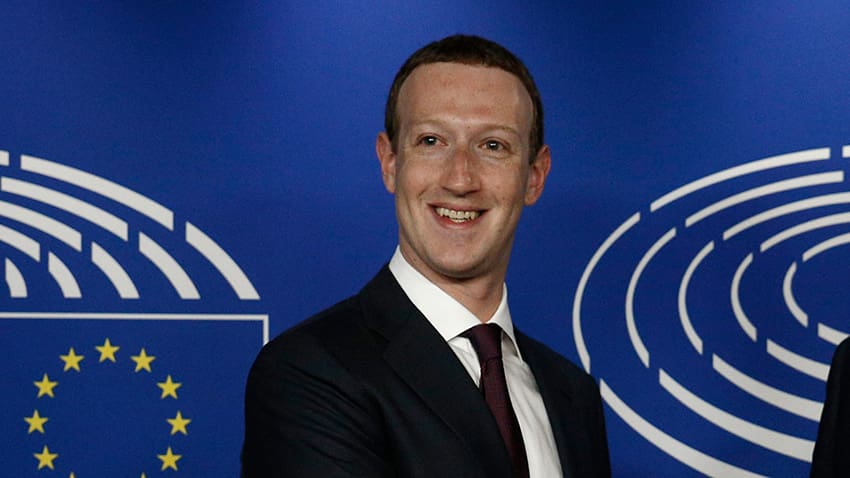
Mark Zuckerberg’s Meta Platforms has suffered a significant legal setback in Europe after the bloc’s highest court ruled that national regulators have the power to enforce compensation arrangements between online platforms and news publishers for the use of their journalism.
The Court of Justice of the European Union, sitting in Luxembourg, found in favour of Italy’s communications regulator, AGCOM, which Meta had accused of overstepping its remit by setting the price the social media group must pay for displaying snippets of press articles on Facebook and Instagram. The judgment is likely to embolden newspaper groups across the continent, including in the UK, that have long argued they are negotiating from a position of structural weakness against a handful of dominant American technology platforms.
“The court finds that a right to fair compensation for publishers is consistent with EU law, provided that that remuneration constitutes consideration for authorising their publications to be used online,” the judges said in their ruling.
Meta had argued that the Italian measures were incompatible with the rights publishers already enjoy under European copyright law, and that allowing national regulators to dictate commercial terms amounted to regulatory overreach. The company, which owns WhatsApp alongside its flagship social platforms, said it would study the judgment in full and “engage constructively as the matter returns to the Italian courts”.
For Britain’s beleaguered publishing sector, where regional titles in particular have been hollowed out over the past decade as advertising revenue migrated to Silicon Valley, the ruling will be watched closely. Although the UK is no longer bound by Court of Justice decisions following Brexit, Westminster has been drafting its own framework for compelling platforms to strike commercial deals with news publishers under the Digital Markets, Competition and Consumers Act. The European judgment provides political cover for ministers minded to take a firmer line.
The European Publishers Council was quick to claim victory. Angela Mills Wade, its executive director, said the ruling acknowledged “the economic reality that publishers cannot negotiate on equal terms with dominant online platforms without transparency, access to relevant data, and safeguards against coercive behaviour”.
“This crucial decision comes at a time when AI-driven and platform-mediated uses of journalistic content are rapidly expanding,” she added. “This important ruling will pave the way for fairer negotiations with gatekeepers which have been abusing their dominance by refusing to negotiate in good faith. Quality journalism depends on the ability of publishers to recoup the investments required to produce trusted news and information.”
The decision lands at a fraught moment for relations between the technology industry and the creative economy. Earlier this month, five of the world’s largest publishing houses, including Elsevier, Hachette and Macmillan, filed a class-action lawsuit against Meta in a New York federal court, alleging that the Silicon Valley group pirated millions of books and academic articles to train Llama, its large language model. Works cited in the complaint include N. K. Jemisin’s award-winning novel The Fifth Season and Peter Brown’s bestselling children’s book The Wild Robot.
Meta has vowed to fight the case “aggressively”, but the action is symptomatic of a broader reckoning. Anthropic, the AI start-up backed by Amazon and Google, last year became the first major artificial intelligence company to settle such a claim, agreeing to pay a group of authors $1.5 billion to resolve litigation that the company’s lawyers feared could have run into many billions more had it gone to trial.
For owner-managed publishers, freelance journalists and the broader content economy, the direction of travel is becoming clearer. After two decades in which platforms harvested editorial output largely on their own terms, the legal pendulum is swinging, slowly, but unmistakably, back towards those who produce the work in the first place. Whether the compensation flowing from rulings such as this one will be enough to sustain quality journalism is a separate, and arguably more difficult, question.
Jamie Young
Jamie is Senior Reporter at Business Matters, bringing over a decade of experience in UK SME business reporting.
Jamie holds a degree in Business Administration and regularly participates in industry conferences and workshops.
When not reporting on the latest business developments, Jamie is passionate about mentoring up-and-coming journalists and entrepreneurs to inspire the next generation of business leaders.

In the natural resources and energy and heavy industry sectors, fuel is a production dependency.
Quantexa, a financial data platform, won the £175m contract to spot fraud and tax return errors.

Operator
Good day, ladies and gentlemen, and welcome to AmpliTech Group’s Quarterly Investor Update Call, where the company will discuss its first quarter 2026 financial results. Present in this call, we have the executive team of AmpliTech Group, Fawad Maqbool, CEO, CTO and Board Chair; Jorge Flores, COO; Louisa Sanfratello, CFO. [Operator Instructions] As a reminder, today’s conference is being recorded.
I would now like to turn the call over to AmpliTech’s COO, Jorge Flores.
Jorge Flores
Chief Operating Officer
Thank you, Drew, and thank you for joining today’s call to review AmpliTech’s first quarter 2026 financial results, review of our company’s outlook and to answer investor questions. Following the initial management comments, we will open the call to these questions.
An archived replay of today’s call will be posted to the Investor Relations section of AmpliTech’s corporate website. This call is taking place on Wednesday, May 13, 2026. Remarks that follow and answers to questions may include statements that the company believes to be forward-looking within the meaning of the Private Securities Litigation Reform Act of 1995. These forward-looking statements generally include words such as anticipate, believe, expect or words of similar importance. Likewise, statements that describe future plans, objectives or goals are also forward-looking.
These forward-looking statements are subject to various risks that could cause actual results to be materially different than expected. Such risks include, among others, matters that the company has described in its press releases and in its filings with the Securities and Exchange Commission. Except
Earnings call transcript: Shinhan Financial Group beats Q1 2026 forecasts
Nakamoto revenue jumps, but Q1 loss hits $238.8M

Phillies’ Alec Bohm gets expected trade update after years of rumors

M5 Max 16-inch MacBook Pro vs Samsung Galaxy Book6 Ultra: Compared

Manchester United reach agreement with Casemiro over contract clause amid transfer speculation

US brings back mandatory military draft registration

Steven Gerrard disagrees with Gary Neville over ‘shock’ Chelsea and Arsenal claim | Football


-
 Crypto World6 days ago
HarrisX Poll Found 52% of Registered Voters Support the CLARITY Act
-

 Fashion6 days ago
Weekend Open Thread: Marianne Dress
-

 Crypto World7 days ago
Upbit adds B3 Korean won pair as Base token gains Korea access
-
 NewsBeat7 days ago
NCP car park operator enters administration putting 340 UK sites at risk of closure
-

 Fashion3 days ago
Coffee Break: Travel Steam Iron
-

 Tech4 days ago
Auto Enthusiast Carves Functional Two-Stroke Engine from Solid Metal
-

 Fashion3 days ago
What to Know Before Buying a Curling Wand or Curling Iron
-

 Politics2 days ago
What to expect when you’re expecting a budget
-
 Business5 days ago
Ignore market noise, India’s long-term story intact, say D-Street bulls Ramesh Damani and Sunil Singhania
-

 Politics5 days ago
Politics Home Article | Starmer Enters The Danger Zone
-

 Tech3 days ago
GM Agrees To Pay $12.75 Million To Settle California Lawsuit Over Misuse Of Customers’ Driving Data
-

 Politics7 days ago
Simon Cowell Says He Was ‘Horrible’ To Susan Boyle During BGT Audition
-

 Entertainment6 days ago
General Hospital: Ric & Ava Bombshell – Ric’s Massive Secret Exposed!
-

 Entertainment7 days ago
Why David Letterman Called CBS ‘Lying Weasels’
-
Entertainment7 days ago
Hayden Panettiere reveals she's estranged from mom, addresses brother Jansen's sudden death: 'I was floored'
-
 Entertainment7 days ago
Paramount+’s ‘Landman’ Season 3 Gets Promising New Update From Returning Director
-

 Sports6 days ago
Bayern Munich vs PSG UEFA Champions League SF2 live match time, streaming | Football News
-

 Entertainment5 days ago
YNW Melly Denied Bond Again Ahead Of Double Murder Retrial
-

 Tech2 days ago
GM agrees to $12.75M California settlement over sale of drivers’ data
-

 Politics7 days ago
Euphoria Creator Praises Sydney Sweeney Amid Season 3 Scenes Backlash
You must be logged in to post a comment Login