Connect with us
DAPA Banner
DAPA Coin
DAPA
COIN PAYMENT ASSET
PRIVACY · BLOCKDAG · HOMOMORPHIC ENCRYPTION · RUST
ElGamal Encrypted MINE DAPA
🚫 GENESIS SOLD OUT
DAPAPAY COMING

Politics

People With Poor Mental Health Are Five Times Lonelier

Published

on

People With Poor Mental Health Are Five Times Lonelier

According to the World Health Organisation, about 16% of people worldwide are facing social isolation and loneliness. In 2024, 22% of UK adults said they felt lonely at least some of the time.

But that loneliness is not shared equally. Younger generations seem to be lonelier than older ones, while almost half of people in poverty say they feel lonely compared to 15% of high earners.

And new data from the Belonging Forum’s 2026 Belonging Barometer has found that “people reporting poor mental health are five times more likely to feel lonely” than those with good mental health.

Advertisement

What did the research find?

The survey, conducted with Opinium, involved 10,000 UK adults.

It’s part of the Belonging Barometer, which the Belonging Forum says is designed to look at “how connected people feel to others, their communities, and their sense of purpose”.

  • Roughly one in five people with poor mental (21%) or physical health (20%) say they have no close friends,
  • Only 27% of those with poor mental health say the things they do in life are worthwhile, compared to 85% in good mental health,
  • Only 33% of people with poor mental health said they feel a strong sense of belonging to their neighbourhood, compared to 65% in good mental health,
  • Nearly two-thirds (64%) of people with poor mental health reported high anxiety yesterday, vs 29% of those in good mental health,
  • Though 76% of those with good mental health say they are satisfied with their friendships, this falls to 52% among those reporting poor mental health,
  • Two in five people with poor mental health report feeling lonely often or always, compared to 3% of people in good mental health.

That means about 2.9 million people in the UK with poor mental health say they feel lonely often or always – “roughly the population of Greater Manchester”.

“Health and belonging are closely connected”

Advertisement

Kim Samuel, founder and chief architect of the Belonging Forum, said: “Health and belonging are closely connected. When people struggle with their physical or mental health, they are much more likely to experience loneliness, weaker friendships, and higher levels of anxiety.”

He added, “These findings show that belonging is not only about community or identity. It is also about wellbeing. When people are unwell or facing barriers in their daily lives, it becomes harder to build and maintain the relationships that help us be connected and supported.

“A society where people cannot participate fully in social life is a society where belonging becomes harder to sustain.”

Advertisement

Source link

Continue Reading
Click to comment

You must be logged in to post a comment Login

Leave a Reply

Politics

Politics Home Article | Ed Miliband Allies Say He Has Numbers for Leadership Challenge

Published

on

Ed Miliband Allies Say He Has Numbers for Leadership Challenge

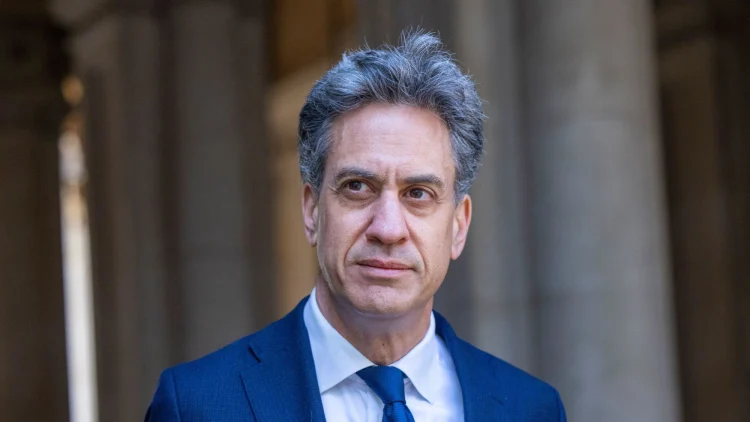
12th May, 2026. Ed Miliband, Secretary of State for Energy Security and Net Zero, in Downing Street for a Cabinet meeting. | Alamy


2 min read

Ed Miliband has the numbers to stand in a leadership contest if Andy Burnham is unable, his allies say.

Advertisement

The Energy Secretary is understood to be considering running for Labour leader if Health Secretary Wes Streeting triggers a contest in the coming days. 

According to Streeting’s allies he plans to resign and mount leadership challenge against the Prime Minister as early as tomorrow.

“If Miliband wants to run he has the numbers,” an ally told PoliticsHome

Advertisement

Pressure is mounting on Keir Starmer to resign after 93 of his MPs, including four ministers and several junior aides, called for him to set out an orderly timetable for departure.

The Times reports Starmer told his allies he will stand and fight if Streeting succeeds in triggering a leadership contest. The Prime Minister has met with ministers tonight to shore up support. 

The Greater Manchester Mayor is one of the candidates favoured among Labour MPs to replace Starmer, but would first have to return to Parliament as an MP.

It is still unclear which Greater Manchester MP will stand aside for Burnham and if the NEC would block him from standing again. There’s also no certainty Burnham would be able to find a route back to Parliament before a contest is triggered. 

Advertisement

Miliband and Angela Rayner are seen as the likely soft left candidates to run against Streeting if a contest is triggered. Miliband previously led the party from 2010 to 2015, but lost decisively to David Cameron’s Conservatives in 2015 including all but one of its Scottish MPs. 

A Rayner ally told PoliticsHome: “The left / soft left want Andy but most do want Angie if that doesn’t happen but Ed has growing support.”

LabourList polling in February found Ed Miliband is the most favoured member of the Labour Cabinet among party members with a net favourability of +70. 

Advertisement

A Labour MP on the centre right told PoliticsHome that Miliband becoming Labour leader again would be a “catastrophe”. 

Advertisement

Source link

Continue Reading

Politics

Trump says ‘I don’t think about Americans’ financial situation’

Published

on

Donald Trump

Donald Trump

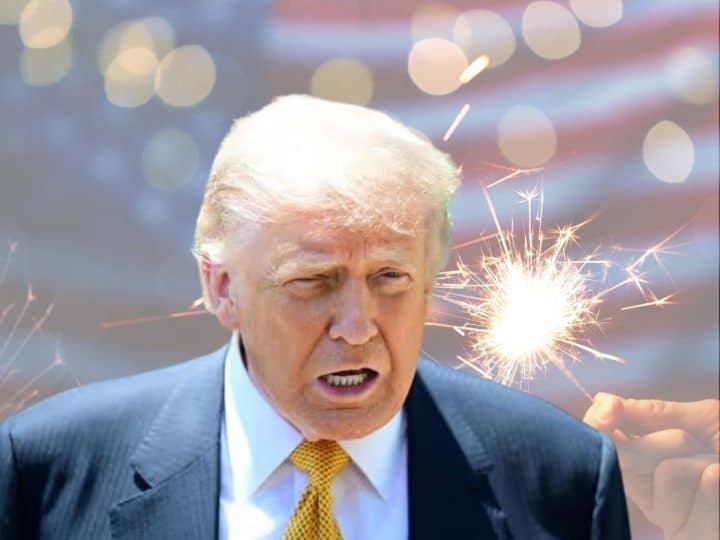
At this point, Donald Trump seems to be running the Democrats’ campaign to win the next election himself. How else do you explain comments like this:

So Trump, what happened to ‘America first’?

In the clip above, Trump is asked if he thinks about Americans’ financial situation when he’s negotiating with Iran. He responds:

Not even a little bit. The only thing that matters when I’m talking about Iran, they can’t have a nuclear weapon. I don’t think about financial situation. I don’t think about anybody. I think about one thing. We cannot let Iran have a nuclear weapon. That’s all. That’s the only thing that matters.

This would be a good line for him to take if anyone believed the war was actually about stopping Iran from getting a nuclear bomb. As people have responded, however:

Advertisement

Meanwhile, inflation is skyrocketing in the US as a result of Trump’s mishandling of the economy:

As the BBC reported on 12 May:

US prices rose in April at their fastest rate since May 2023 as the impact of the war in Iran was increasingly felt by consumers.

A jump in the cost of gasoline and groceries pushed the consumer price index (CPI), showing the rate prices rose by in the past 12 months, to 3.8%.

It is the highest level since inflation hit 4% three years ago.

Advertisement

Meanwhile, the US’s big hope is to get things back to where they were before Trump and Israel’s disastrous assault on Iran:

It’s also worth remembering that the US already had a successful nuclear deal with Iran. The reason it isn’t still standing is because Trump ripped it up. And now, of course, Iran has more reason than ever to pursue a nuclear weapons programme.

The state of this guy

The above wasn’t Trump’s only shameful interview on 12 May either:

Advertisement

America can’t keep running the White House as an end-of-life care facility for retired narcissists.

Featured image via The Canary

By Willem Moore

Advertisement

Source link

Continue Reading

Politics

Government must respond to Media Sovereignty Act parliamentary petition

Published

on

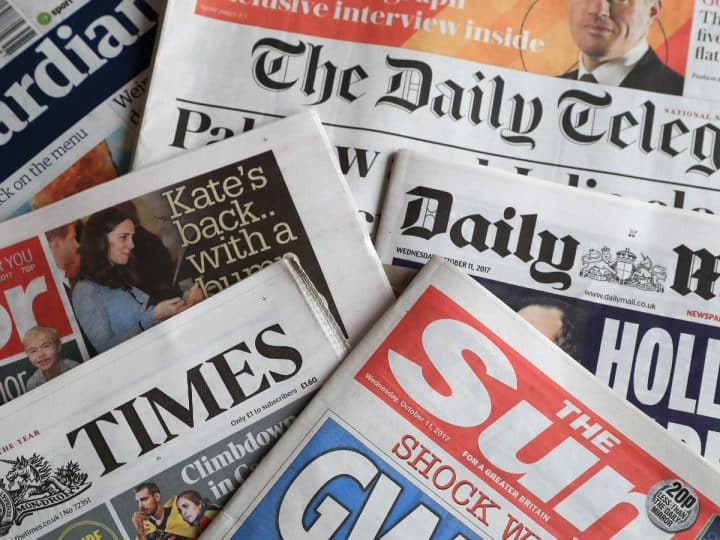
Image of multiple UK newspapers illustrating Media Sovereignty Act Corporate media

Image of multiple UK newspapers illustrating Media Sovereignty Act Corporate media

The Media Sovereignty Act Campaign has been in touch with news of its work to end the corporate media stranglehold on UK public life:

After just seven weeks, the parliamentary petition demanding that the government pass the Media Sovereignty Act has reached the first threshold of 10,000 signatures.

This means that the Labour government now has to state its position on the domination of UK politics, through the hijacking of our media, by a tiny billionaire elite.

We do not have a free democracy, as a tiny billionaire elite has captured our media.

Advertisement

The Media Sovereignty Act has five demands:

  • Bans foreign media ownership.
  • Bans the concentration of UK national media ownership by one person or corporation.
  • Funds independent and local media with a social media levy.
  • Requires national media to be under the remit of the statutory regulator.
  • Requires dark-money funded thinktanks that are covered by the media to declare donations in real time.

Director of the Media Sovereignty Act Campaign Donnachadh McCarthy said:

In my extensive career, I have come across visceral fear of ‘the Daily Mail test’ across all sections of British society and its establishments. It is time to end this billionaire hijacking of our democracy once and for all.

Co-director Caspar Hughes said:

I believe deeply that the most urgent political issue of our time is ending the hijacking of political power by the billionaire media owners. They persuade the UK population to vote against their own best interests, and this must stop.

Featured image via the Canary

By The Canary

Advertisement

Source link

Continue Reading

Politics

BBC shamefully plays politics with vile racism in the NHS

Published

on

BBC

BBC

The BBC has released an important report on the vile racism that NHS workers are increasingly facing, but has simultaneously exposed its preference for a ‘hierarchy of racism’.

Increasing racism against NHS staff

A damning BBC article from 12 May led with the headline:

‘Patients have tried to punch me because of my skin colour’

The outlet had asked all “NHS hospital and mental health trusts in England” how much racial abuse from patients their staff had reported. And it said:

From the 106 trusts which provided data, there were 8,235 such reports in 2024, a 17% increase on the 7,002 reports in 2023. Several trusts did not record reports of racism prior to 2023, meaning older comparison figures are not available, but campaigners claim the issue has been growing for several years.

The article also gave examples of racism — specifically against people who came to the UK from other countries. These included:

Advertisement
  • A nurse from the Philippines who mentioned facing slurs, attempts to physically assault him, and patients refusing medication — all because of his skin colour.
  • A campaign group, Equality 4 Black Nurses, that said some nurses have left healthcare or gone back to their home countries due to the abuse they’ve faced. The group also asserted that most people avoid reporting incidents because they “don’t trust the system to protect them”.
  • A call handler from India who noted a significant increase in abuse in the last year, with numerous daily incidents of racism.

The BBC’s hierarchy of racism in one line

We should all know by now that the BBC is a state propaganda outlet. So when it echoes government talking points, we really shouldn’t be surprised. But it’s particularly sad to see when, in doing so, it undermines reporting that’s both serious and important. And that’s exactly what happened in the article about racism against NHS staff.

In just one line, the BBC amplified one form of racism above others, despite not giving any examples of such abuse in the article itself. It may argue that it was paraphrasing the words of the Department of Health and Social Care (DHSC), but the BBC said:

A review was being conducted into antisemitism and other forms of racism and a support package to protect frontline staff from violence and aggression had been announced in 2025, the DHSC said.

This was the only mention of antisemitism in the article. Yet suddenly, it gained prominence and special emphasis above all “other forms of racism” — particularly the types that target people because their skin is Black or Brown, or because their accent is different. The mention of the ‘other forms’ was almost a throwaway comment.

Perhaps this was the BBC passing on the ruling Labour Party‘s clear hierarchy of racism. But that doesn’t change the fact that the outlet chose to highlight antisemitism while failing to specifically mention the other types of racism that it had literally reported on in depth in the same article.

We need a consistently anti-racist media

All racism is vile. And with the far right making big inroads in British politics, it’s unsurprisingly on the rise. The sea of racist media propaganda, meanwhile, is adding to this toxic situation. As is the dangerous and cynical political weaponisation of antisemitism accusations.

Advertisement

We need media that challenges all forms of racism in equal measure. We need media that doesn’t prioritise one community’s concerns over another’s. But as we’ve seen all too often, it seems the BBC is unable to be (or uninterested in being) the media that we so badly need right now.

Featured image via the Canary

By Ed Sykes

Source link

Advertisement
Continue Reading

Politics

Pay ratio between bosses and workers continues to grow

Published

on

Image of UK banknotes, illustrating pay ratio between CEOs and workers

Image of UK banknotes, illustrating pay ratio between CEOs and workers

The cost of living crisis is continuing to bite with price rises and shrinkflation eating into workers’ pay. But hope springs eternal for hard-pressed CEOs. Their pay rises are comfortably outstripping those of the rank and file. And this means the pay ratio is an ever-growing chasm.

The High Pay Centre, a think tank focused on pay, corporate governance and responsible business, has published a briefing on trends in executive director compensation, CEO-to-employee pay ratios and employee pay. The High Pay Centre suggests that a wide pay ratio can lead to poor business outcomes.

This is intended as an update on figures assessed in the High Pay Centre’s ‘CEO Pay’ and ‘Pay Ratios’ reports, providing data from FTSE 100 firms that have released annual reports with year ends after 1 April 2025. The sample contains 64 companies, meaning there is potential for change as more reports come out during the year.

The High Pay Centre believes it’s vital to consider how to allocate a corporation’s wealth. Bosses should ensure that jobs are secure, fulfilling and provide the necessary income for a good standard of living.

Advertisement

Pay ratio ever-widening

Median (half get more, half get less) CEO pay stood at £5.2m. This represents a 15% increase in a year for the same group of companies. The mean (everyone’s pay added up and divided by the number of people) was £6.2m. This is a 19.75% increase.

Across the eight industries in the sample, only technology saw a fall in CEO pay from the previous year.

UK employees’ pay growth is significantly trailing behind that of their bosses with median employee pay having increased 4.85% versus 15% for CEOs.

Among the sample companies, the pay ratio between a median CEO and median employee is 95:1. And, as things stand, that’s only going to increase.

Advertisement

Andrew Speke, spokesperson for the High Pay Centre, said:

The data in this initial update is both shocking and concerning. A 15% median CEO pay increase, at a time when real-term wages are stagnating and living standards falling, is in neither the country nor the economy’s best interests.

This reflects corporate short-termism at its clearest. Companies themselves should be concerned about these trends, as research shows that when CEO pay rises significantly faster than employee pay, firms may be more exposed to operational and reputational risks. These include staff turnover, weakened employee morale and absenteeism, all of which hold the potential to significantly undermine firm productivity.

Policymakers, regulators and companies must endeavour to ensure a balanced, fair and sustainable model of corporate reward that recognises the indispensable value of the workforce alongside executive leadership. Addressing pay gaps should not be viewed solely as a matter of fairness, but also as a vital step in building a resilient and productive business model.

Featured image via the Canary

Advertisement

By The Canary

Source link

Continue Reading

Politics

Top 10 strangest World Cup moments ever

Published

on

world cup

world cup

The FIFA World Cup, which began over ninety years ago, is one of the most prominent tournaments to have witnessed bizarre incidents—whether funny or painful—with these events remaining etched in the memory of football history.

The strangeness of World Cup events has not faded with the passing of time; rather, it has become even more ingrained in the minds of fans of this most important and popular tournament in the world of football.

For this reason, any event that takes place during the tournament remains fresh in the memory, no matter how many years pass. Fans of the World Cup, which is held every four years, look forward to its most notable events, as its stories are renewed with every new edition. In this report, the Canary reviews the strangest events in World Cup history.

World Cup history – a national team wearing Napoli shirts

In the third-place play-off at the 1934 World Cup, which pitted Germany against Austria, a unique incident occurred. The match was held at the Napoli stadium, and at that time each team had only one kit.

Advertisement

Due to the similarity in the colours of the two teams’ kits (white shirts and black shorts), it was impossible to distinguish between the players, leading to the match being temporarily halted. Following intervention by the referee and the crowd, a draw was held to determine which team would change their kit, and the choice fell on the Austrian team, but they did not have an alternative kit. A quick solution was found, with an official from Napoli providing the Austrian team with the club’s shirts, which they wore to complete the match, which ended in a 3-2 victory for Germany.

World Cup stolen twice

The theft of the World Cup is one of the strangest incidents, as the trophy, which was known as the Jules Rimet Cup after the tournament’s founder, was stolen twice, first in 1966 and then in 1983. Since then, the original versions of the trophies have not been found, prompting the organisers to produce three identical replicas to prevent a repeat of the incident.

From prison to the podium

At the 1982 World Cup held in Spain, an extraordinary story emerged involving Italian star Paolo Rossi, who was released from prison in the same year as the tournament to lead his national team to victory over West Germany.

Rossi scored six goals in the last three matches, including the opening goal in the final, a hat-trick against Brazil in the quarter-finals, and two goals in the semi-final against Poland.

Advertisement

A valid goal disallowed in a World Cup match

The match between Kuwait and France at the 1982 World Cup witnessed a unique moment, as play was halted after the French team scored a valid goal. The Kuwaiti team was participating in the World Cup for the first time in its history as the first Arab-Asian team.

The incident occurred after a spectator blew a whistle, leading the Kuwaiti players to believe the play had ended, so they stopped, whilst the French team continued playing and scored a goal. This angered the Kuwaiti players, prompting Sheikh Fahad Al-Ahmad Al-Sabah to take to the pitch demanding the goal be disallowed, which indeed happened, before the match resumed and ended in a 4-2 victory for France. This incident led to Soviet referee Miroslav Stopa being permanently banned from refereeing.

Advertisement

Maradona’s handball goal

The goal scored by the hand of Argentine legend Diego Armando Maradona against England in the quarter-final of the 1986 World Cup is considered one of the defining moments of Argentina’s victory in that tournament, and a major turning point in the striker’s career, which subsequently took him to the world stage.

Tunisian referee Ali Ben Nasser, who officiated the match, awarded Maradona’s handball goal against England, despite its illegality, as he did not see Maradona’s hand when he struck the ball and it entered the net; however, Maradona later apologised to the referee during a visit to his home in Tunisia.

Advertisement

Player sent off after 3 yellow cards

In the match between Croatia and Australia at the 2006 World Cup, player Josip Šimunić received three yellow cards before being sent off, due to an error by English referee Graham Poll, who recorded the first booking in another player’s name, causing the player to remain on the pitch until he received his third booking.

Advertisement

Zinedine Zidane’s headbutt

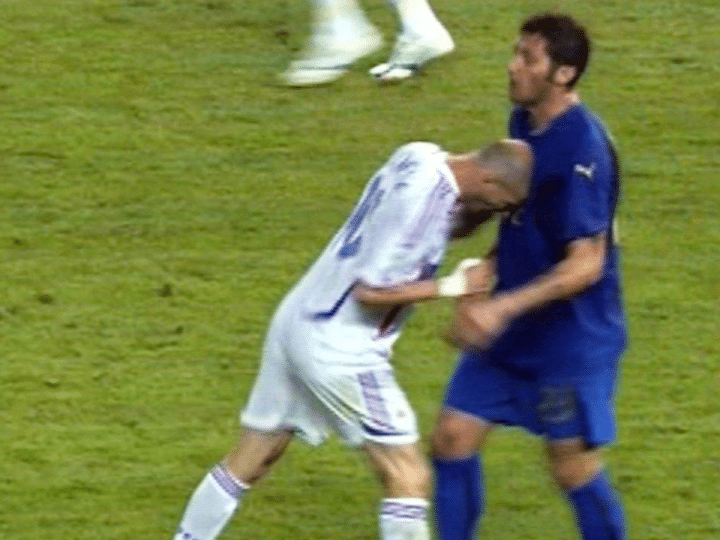
The 2006 World Cup final between France and Italy witnessed a famous incident when star player Zinedine Zidane delivered a powerful headbutt to the chest of Marco Materazzi following a verbal altercation between them, resulting in his sending-off with a red card in his final match.

Zidane later justified his actions by citing an insult he had received, and the incident remains one of the most famous moments in World Cup history.

Advertisement

Suárez bites Chiellini

In the group stage match between Italy and Uruguay at the 2014 World Cup, a bizarre incident occurred when Luis Suárez bit defender Giorgio Chiellini in the 40th minute, which astonished everyone and sparked widespread controversy in the world of football.

Advertisement

Featured image via the Canary

By Alaa Shamali

Source link

Advertisement
Continue Reading

Politics

NY’s Mamdani may have plugged $12bn deficit, but it’s not a long-term fix

Published

on

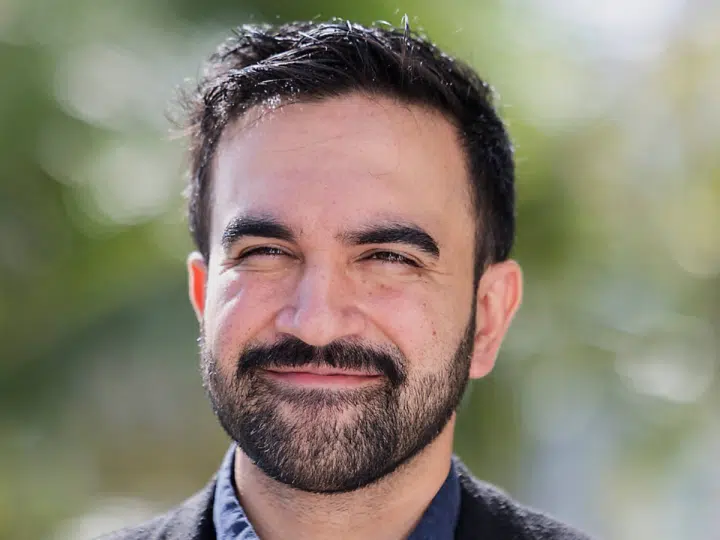
A sunny head shot of Zohran Mamdani

A sunny head shot of Zohran Mamdani

When the New York Democrat mayor Zohran Mamdani released his budget for the 2027 financial year, it was  heralded as zeroing the massive $12 billion budget deficit he inherited from his predecessor, Eric Adams.

In turn, it also strikes a symbolic blow against critics of Zohran’s fiscal politics, which struck a notably more socialist tone than those of Independent competitor, Andrew Cuomo. In a statement, Mamdani’s office announced:

Through strong fiscal management, Mayor Mamdani balanced the budget through a combination of aggressive savings, new tax revenue, partnership with Albany and critical new investments in the needs of working class New Yorkers.

The budget is balanced without raising property taxes, slashing services or drawing down the City’s Rainy Day or Retiree Health Benefit Trust reserves and makes the largest City capital commitment to NYCHA in recent history.

If this all sounds a little bit too good to be true, it’s because it is. Mamdani has drawn large chunks of his proposed savings from the state of New York, along with delays on several other key expenses. As such, the budget is more of a short-term patch than a long-term fix.

Advertisement

However, this isn’t necessarily as large a criticism as it may seem. A $12 billion deficit can’t exactly be plugged without massive tax hikes or cuts to public services, neither of which would be popular. As such, we might expect some one-time cash injections and delayed payments.

 Mamdani: ‘This budget rejects that failed politics’

Mayor Mamdani said:

For too long, working New Yorkers have been told that austerity was the answer to adversity. This budget rejects that failed politics.

We are restoring fiscal stability without slashing the services people depend on, without raising property taxes and without asking working families to pay for a crisis they did not create.

Instead, we are making government work for the people of this city: securing support from Albany and taxing the rich so we can invest in housing, safety, child care, parks, libraries and the public goods that make New York the greatest city in the world.

Advertisement

That tax on the rich takes the form of a ‘pied-à-terre’ second-home tax on properties worth more than $5 million. The mayor’s office values this new income stream at around $500 million.

Likewise, Mamdani is also proposing a reduction to Unincorporated Business Tax (UBT) tax credit. This credit, he claims, “overwhelmingly benefits millionaires”. However, the mayor will first have to get his proposal past  Speaker Julie Menin and the city council.

On top of this, Mamdani also conjured up $1.2 billion in otherwise-idle salary money. Politico largely attributed to this to “the city’s smaller-than-expected headcount in the current fiscal year, which the budget office is using to fund recurring expenses”.

Delayed costs not paid costs

Regarding those one-time cash injections, the mayor’s office stated:

Advertisement

Thanks to Governor Kathy Hochul, Senate Majority Leader Andrea Stewart-Cousins, and Assembly Speaker Carl Heastie, the City secured an additional $4 billion in state support and actions to help stabilise the budget. That includes $352 million in direct aid, $3.2 billion in state authorisations.

Those state authorisations include permission to delay compliance with maximum classroom size mandates. This law was a result of years of lobbying by the Union for Teachers, requiring limits of 20-25 students according to age. As such, the delay is bad news for both teachers and students, even if it does massage the budget.

Likewise, Mamdani also obtained the state’s approval to delay the city’s contributions to pension payments. However, this will also require the permission of four of New York’s five major public pension funds. The plan has also drawn fire from commentators such as Andrew Rein, of the Citizens Budget Commission.

He said:

We have to solve this budget gap today, and basically by stretching out pension payments we’re asking people in the mid-2030s to solve the 2027 budget gap, and that’s simply not fair. We’re going to ask people who don’t even live here yet to help us balance the budget now.

Public money for public services

However, solving this budget gap today is hardly a realistic proposal, especially alongside the ambitious public programmes and expansions that Mamdani has planned. These include, but are by no means limited to:

Advertisement
  • $15m for the Department of Parks and Recreation
  • $31.7m for the city’s libraries
  • $15m for the City University of New York
  • $2.3m to launch Little Apple — “the City’s first Municipal day care system”
  • $20.5m on supporting street vendors.
  • $47.3m for access to mental health care

Faced with a choice between austerity and investment, Mambani’s budget has lent more (but not completely) towards the latter. As such, his long-term gambles may prove an interesting proving ground for similar anti-austerity measures.

The real test will come in several years time, when such temporary fixes are less readily apparent.

Featured image via AP Photo/ Alejandro Granadillo 

By The Canary

Source link

Advertisement
Continue Reading

Politics

Guardiola slams Premier League VAR decisions a like ‘flipping a coin’

Published

on

guardiola

guardiola

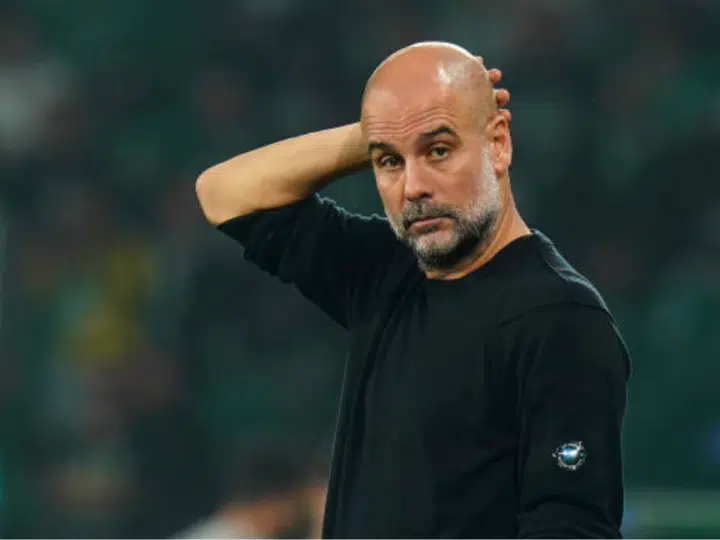
Spanish coach Pep Guardiola, manager of Manchester City, has cast doubt on the reliability of VAR, suggesting that refereeing decisions in English football have become akin to “flipping a coin” – a striking expression of his loss of confidence in the refereeing system despite the technical advances that are supposed to minimise errors.

According to the Guardian, Guardiola went into the match against Crystal Palace feeling deeply frustrated with video technology, insisting that Manchester City no longer has the luxury of waiting for refereeing fairness, but must now decide matches through their performance on the pitch, free from any considerations linked to referees or VAR screens.

He said:

I never trust anything since I arrived [at City] a long time ago. Always I learned you have do it better – be in a position to do it better because [if not] you blame yourself with what you have to do, because [VAR] is a flip of a coin. You have to do better and better for yourself, and that is focusing on Crystal Palace for us

Guardiola speaks out

The Spanish manager said that reliance on technology has not brought the clarity expected to English football, but has instead increased controversy and uncertainty, with divisive decisions continuing week after week.

Advertisement

Guardiola’s comments came after the recent refereeing storm following the disallowed West Ham United goal against Arsenal, an incident that has reignited the debate over the effectiveness of video technology and the limits of its intervention in major matches.

According to the report, the Manchester City manager still believes his team has paid the price for influential refereeing decisions over the past two seasons, including in the FA Cup final, but this time he chose to deliver his message directly: the only way to avoid the injustice of decisions is through overwhelming dominance on the pitch.

Featured image via the Canary

By Alaa Shamali

Advertisement

Source link

Continue Reading

Politics

Pep Guardiola distrusts the VAR

Published

on

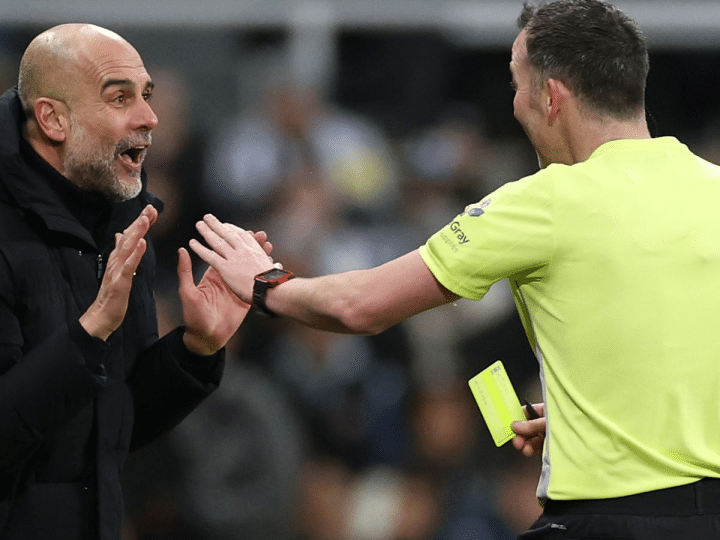
Pep Guardiola argues with ref Chris Kavanagh

Pep Guardiola argues with ref Chris Kavanagh

Manchester City manager Pep Guardiola’s reaction to the latest VAR drama was blunt and businesslike. He’s not interested in arguing about decisions he can’t control. After Arsenal’s late VAR-assisted win at West Ham widened the gap at the top of the Premier League, Guardiola insisted Manchester City must concentrate on their own standards and performances rather than refereeing controversies. The managers stance is clear: do better on the pitch and don’t hand control of your fate to others.

Guardiola’s words were sharp and familiar. He told reporters:

I have never trusted anything [with VAR] since I arrived a long time ago.

That line isn;t a rant, it’s Pep speaking from his own experiences. For Guardiola, VAR is an external variable, the only reliable lever is what his team does between the lines.

Pep repeatedly framed the issue as one of self-accountability: if City want to be in the title fight, they must put themselves in positions where marginal calls don’t decide outcomes.

Advertisement

Guardiola prepares for league finish

City’s immediate task is Crystal Palace at the Etihad Stadium. Guardiola refused to let the league table dictate his messaging; the focus is on the next game. Not Arsenal’s result or hypothetical permutations. He stressed routine and concentration. He has given his players a day off, reset, then prepare, the classic Guardiola reset button.

Pep knows better than the rest, with two games remaining,, panic helps nobody. His pragmatic approach is one where precision makes the difference.

Crystal Palace aren’t a walkover. Guardiola pointed to Palace’s professionalism and the competitive nature of late-season fixtures, even for teams with other priorities.

Palace have a UEFA Europa League Conference Final to consider, but Guardiola expects them to be tough and committed. He referenced recent examples of teams with “nothing to play for” still making life difficult for top sides, a reminder that complacency is the enemy.

Advertisement

Manchester City hope to welcome back Rodri after a groin problem and could see Abdukodir Khusanov return to the squad. Guardiola described both as “better” and fitness would be assessed in training.

Those returns matter massively for City: Rodri’s presence stabilises midfield control and reduces chances of sloppy moments that invite VAR scrutiny.

In a title race decided by fine margins, availability and sharpness are as decisive as refereeing decisions.

Demanding higher standards

Pep Guardiola’s message is simple and relentless, control the controllables. He’s not asking for conspiracy theories or institutional changes. He’s demanding higher standards from his players. This is nothing new from Pep as his methods have been very successful, he removes external pressure from his players, allowing them to flow on th epitch.

Advertisement

Whether that’s enough to catch Arsenal this season with only three games left, remains to be seen. What is for sure is the performance levels on the pitch cannot drop regardless of the decisions elsewhere.

Pep’s overall verdict on VAR is sceptical and settled. Many would argue that Manchester City are one the highest benefiting team of VAR decisions, regardless of Pep’s current view.

But, Pep’s message to his players is clear, focus on the next game, sharpen the basics, make sure the referee and VAR do not matter. If they can maintain that focus, they still have a strong chance of finishing with a domestic treble.

Featured image via Sky Sports

Advertisement

By Faz Ali

Source link

Continue Reading

Politics

Save the Children expose Israel’s sham ‘ceasefire’ as it keeps murdering kids in Lebanon

Published

on

lebanon

lebanon

Following weeks of Israeli bombardment, displacement and sheer terrorism inflicted on people in Lebanon a so-called ‘ceasefire’ was reached. By the time it took effect Israel had brutally murdered over 2,400 children.

However, true to murderous form, Israel has continued to kill Lebanese civilians – just as it violates every bullshit ‘ceasefire’ agreement it reaches with Palestine. Now, charity Save the Children have raised an urgent alarm regarding the fact that Israel has been killing, or injuring, four children every single day since the so-called ‘ceasefire’ began.

Once again, the Western-backed Zionist state shows that it doesn’t recognise Arab life as being of equal value to its own citizens, with the death toll now sitting at 2,900 Lebanese men, women and children.

Advertisement

Lebanon under Zionist attack

Save the Children works across the world to improve the lives of children through humanitarian support and advocacy. As such, they are leading that essential mission now by exposing that Israel is continuing to murder and maim children in Lebanon during its expansionist agenda. 

Furthermore, they highlight how escalating numbers of children are living with their families in collective shelters which have seen an increase of 5% since this alleged ceasefire took hold on April 17 2026. Israel’s renewed displacement orders and ongoing aggression have forced more than one million people from their homes, displacing roughly one sixth of the entire population in Lebanon.

Advertisement

Some families have reportedly stayed with relatives or host communities. However, 44,800 children and their families now endure insecure and overcrowded collective shelters, while 125,000 people lack adequate access to water, sanitation, and hygiene facilities. As a result, Save the Children report ‘growing health concerns’ including scabies.

Moreover, they have spoken to Lebanese families affected who have heartbreakingly reported that their children are struggling to sleep and have lost their appetite due to the traumatic conditions they are living under.

As families are forced from their communities, many children are subsequently losing access to both the internet and safe spaces to learn. In fact, some schools now serve as collective shelters in order to keep vulnerable families somewhat safe.

One Lebanese child told Save the Children:

Advertisement

I just want the war to end so I can go home to my village and sleep in my own bed. I really miss school, I want to see my teachers and be with my friends, and study and play again.

Black Wednesday

Israel has continued its expansionist agenda into Lebanese territory after destroying Gaza and killing potentially hundreds of thousands of Palestinian men, women and children. Recently, journalist Courtney Bonneau has worked hard to expose this genocide to the Western world.

For instance, on April 8th – or now referred to as ‘Black Wednesday’, Israel murdered 182 in Lebanon in just 10 minutes of widespread and catastrophic bombardments. This occurred while Iran agreed to a ceasefire, which many believed would extend to Israel’s neighbouring state as well.

On the contrary, as Courtney and Save the Children underscore, Israel purposely and repeatedly violates ceasefires. On the other hand, Zionist Israel is revealing just how hostile, barbaric and murderous it intrinsically is. 

Advertisement

That death toll is only going to grow, as Israel and the West shows it just doesn’t care about Arab life. This video has just been posted, showing Israel dropping bombs yet again in Lebanon:

Advertisement

Save the Children’s Country Director in Lebanon is quoted as saying:

This ‘so called’ ceasefire that still sees more than four children killed or injured every day is not a ceasefire for children.

Attacks on civilians have not stopped; They have simply continued under another name.

Colleagues have told me that the airstrikes feel more intense in some areas than they ever did before.

Children are not safe until there is a permanent and definitive ceasefire with no violations.

Advertisement

International community MUST stop Israel

State leaders and the right-wing mainstream media might believe they can continually shield Israel from accountability under international law. After all, they have made clear that the death of children really does not bother them. At least not when those children have brown skin. Before the UK’s racists clamour to suggest there is an ‘Islamist threat’ that must be wiped out, Lebanese Christians have also been murdered in Israeli airstrikes.

Citizens across the world, including huge numbers in the UK, continue to call out Israel’s genocidal acts, and leaders must start listening to their own citizens instead of their Zionist paymasters.

Therefore, condemnation is better late than never, and Western leaders must confront Israel once and for all.

“Never again” meant never again for anybody. It did not mean creating a hierarchy of life that values only Zionist Israeli lives above all others.

Advertisement

Featured image via the Canary

By Maddison Wheeldon

Source link

Advertisement
Continue Reading

Trending

Copyright © 2025