


Connect with us
DAPA Banner
DAPA Coin
DAPA
COIN PAYMENT ASSET
PRIVACY · BLOCKDAG · HOMOMORPHIC ENCRYPTION · RUST
ElGamal Encrypted MINE DAPA
🚫 GENESIS SOLD OUT
DAPAPAY COMING

Business

Tyson Foods adds prepared meat products

Published

on

Tyson Foods adds prepared meat products
Continue Reading
Click to comment

You must be logged in to post a comment Login

Leave a Reply

Business

Sting, The Beatles & Music Royalties

Published

on

Sting, The Beatles & Music Royalties

Somewhere in a damp Parisian hotel in October 1977, a young Geordie schoolteacher called Gordon Sumner picked up his bass, glanced at a faded poster of Cyrano de Bergerac in the foyer, leaned out of the window at the working girls below, and rattled off a small reggae-flavoured number about a prostitute he had never met.

He called her Roxanne. He spent, by most accounts, an afternoon on the thing. Possibly a long lunch. Certainly less time than I will have spent writing this column.

That song, in February 2022, helped Sting hand his entire songwriting catalogue, some six hundred tunes, to Universal Music Publishing for a reported $300 million. Roughly £240 million in real money. For lyrics scribbled on hotel notepads, in the back of tour buses, occasionally in the bath. Even allowing for inflation, alimony and the eye-watering price of his tantric retreats, it remains, in cold commercial terms, the single greatest example of “sweating the asset” I have ever encountered in business.

Consider the original economics. A pop song in 1977 was a perishable: three minutes of grooves pressed into a slab of polyvinyl chloride, designed to be bought for 75p, played to death, scratched by a teenager and replaced by next week’s offering. The label took the lion’s share. The writer, if he was lucky and his manager was honest, he usually wasn’t, got a few pence per copy. And yet here we are, half a century on, and Roxanne is still earning. Every car advert. Every karaoke licence. Every Spotify spin in a Bangkok cocktail bar at two in the morning. Every nostalgic Boomer thumbing repeat in his Range Rover on the M40 to Bicester Village.

Sting is not alone. Bob Dylan flogged his songwriting catalogue to Universal in late 2020 for around $300 million, then sold his recorded works to Sony the following summer for another $200 million. Bruce Springsteen, the working-class hero from Asbury Park, lifted somewhere between $500 and $600 million off Sony for his life’s work. Bowie’s estate, Genesis, Neil Young, Pink Floyd. The numbers are positively obscene, and rising.

Advertisement

Why? Because, according to the IFPI’s Global Music Report 2025, recorded music brought in $29.6 billion globally last year. Streaming alone topped $20 billion, fully 69 per cent of the pie. There are now 752 million paying subscribers worldwide and ten consecutive years of growth. The very technology that everyone solemnly said would kill the music industry, Napster, file-sharing, the iPod, the internet itself, has instead resurrected it as the perfect annuity. Music doesn’t sell once any more. It sells forever, in fractions of a penny, every second of every day, while the writer sleeps.

Compare that to the rest of us. The plumber who fitted my boiler in 2018 invoiced me, paid his VAT and moved on. The barrister who drafted our new sponsorship contracts billed by the hour and that was that. The architect, the dentist, the accountant, the management consultant, all selling time, all watching the clock, all running flat out until the day they retire and the cheques stop. Even the great industrial fortunes of the twentieth century, your Wedgwoods, your Hansons, your Goldsmiths, required factories, foundries, lorries, lawyers, picket lines and the occasional hostile takeover. Whereas Paul McCartney dreamt the melody of Yesterday in his girlfriend’s spare room in 1965, scribbled “scrambled eggs, oh my baby how I love your legs” as placeholder lyrics, and has since banked north of £19.5 million on a single song — the most-covered tune in human history, with more than three thousand versions. The Beatles’ catalogue is now valued comfortably north of £1.2 billion and reportedly throws off £70 to £90 million a year for owners who, gloriously, include almost none of the people who actually wrote it.

This is the lesson British business has been embarrassingly slow to learn. It is not what you make. It is what you make that keeps making. The whole intellectual property economy, software, brands, patents, content, is built on this principle. Microsoft writes Office once and bills you forever. Disney drew Mickey before the Wall Street Crash and is still suing people about him. Coca-Cola scribbled a formula on a piece of paper in 1886 and has paid for four generations of dividend cheques. But none of them, not one, possesses the casual, narcotic genius of the songwriter who spent an afternoon humming and is still cashing seven-figure royalty statements in his seventies.

We business owners should be furious. And inspired. In November 2023, The Beatles even released Now and Then, a John Lennon demo from the late seventies, patched up with artificial intelligence and a bit of Peter Jackson studio wizardry, and it strolled to number one in the UK, fifty-six years after their previous chart-topper. The asset, sweated and sweated and sweated again, and now sweating for a fourth generation of listeners who weren’t born when their grandparents bought the original LP.

Advertisement

So the next time some private equity grandee bangs the boardroom table demanding “operational efficiency” and “recurring revenue streams”, remind him gently that the most efficient business model in the modern economy is a paunchy Geordie with a guitar humming nonsense about a Parisian prostitute in 1977 and banking nine-figure cheques in his seventies. The rest of us should be so lucky. Or, more usefully, so clever.


Richard Alvin

Richard Alvin

Richard Alvin is a serial entrepreneur, a former advisor to the UK Government about small business and an Honorary Teaching Fellow on Business at Lancaster University.

A winner of the London Chamber of Commerce Business Person of the year and Freeman of the City of London for his services to business and charity. Richard is also Group MD of Capital Business Media and SME business research company Trends Research, regarded as one of the UK’s leading experts in the SME sector and an active angel investor and advisor to new start companies.

Richard is also the host of Save Our Business the U.S. based business advice television show.

Advertisement
Continue Reading

Business

The latest equity investment and acquisition deals in Welsh business

Published

on

Business Live

Firms freature include K3 Metrology, Mariposa, Elmatic, Alesi Surgical, Creo Medical and 1st Choice Accident Repair Centre.

Spinout from the National Physical Laboratory (NPL) K3 Metrology has launched with a £2.75m seed investment to commercialise Metralis, a next‑generation metrology platform designed for advanced manufacturing environments.

The funding round is supported by the Development Bank of Wales with a £1m equity investment alongside £1m from Parkwalk and £750,000 from the UK Innovation & Science Seed Fund (UKI2S.

Based at the Advanced Manufacturing Research Centre Cymru (AMRC-C) in Broughton, K3 Metrology enters the market as manufacturers across aerospace, defence, nuclear and other high‑value sectors are seeking more efficient, traceable and scalable measurement solutions.

The company was founded by Professor Ben Hughes (chief technology officer) and Dr Mike Campbell (chief executive), who have worked together for more than 12 years at NPL developing the Metralis technology and building strong relationships with major industrial partners.

Metralis was created in response to direct feedback from large industrial users who highlighted the limitations of legacy systems. In customer trials, the start-up has demonstrated significant performance gains and a timing study with a major manufacturing partner having found that using Metralis resulted in efficiency gains of 60%.

Dr Campbell said: “For decades, manufacturers have been forced to compromise between accuracy, speed and scalability. Metralis removes that trade‑off entirely.

Advertisement

“This investment enables us to bring a step‑change technology to market and support the UK’s most advanced industrial sectors. Metralis is the result of years of scientific development at NPL, and we are now grateful for the support of the development bank, Parkwalk and UKI2S. Our team is excited to deliver real‑time, high‑accuracy measurement at a scale that has never before been possible.”

READ MORE: UK set to shed 163,000 jobs amid Iran war falloutREAD MORE: One of Cardiff’s best known buildings under new ownership in multi-million-pound deal

Penny Holt, chief financial officer of NPL said: “K3 Metrology demonstrates how publicly funded science can translate into high‑value industrial capability for the UK. Metralis is a transformative technology with the ability to raise industrial productivity, strengthen UK manufacturing competitiveness, and set new international standards in large‑volume measurement.

“This seed investment marks an important step in translating 15 years of NPL research into real‑world impact, and we’re proud to support the K3M team as they take this capability to market.”

Advertisement

Gareth Mayhead and Tom Linney, investment executives in the technology ventures team at the Development Bank of Wales. They structured the investment deal for K3 Metrology.

Mr Mayhead said: “K3 Metrology is a high‑quality technical spin‑out with genuinely differentiated technology and clear commercial potential, making this a compelling early‑stage investment in the UK’s industrial deep‑tech sector. Our funding gives K3M the runway to complete product development, grow the team in North Wales and build early commercial proof points in sectors where precision and throughput matter. Its base at AMRC Cymru provides valuable proximity to industrial partners, collaborative facilities and a skilled regional workforce.”

Alun Williams, investment director, Parkwalk, the UK’s most active investor in university spin‑outs, brings deep experience in commercialising complex IP, said: “K3 Metrology is a great example of the world‑class, science‑led innovation that Parkwalk exists to back. Metralis embodies the kind of breakthrough, industrial deep‑tech we look for – addressing a clear need with a platform that can transform productivity for advanced manufacturers.

“Its real‑time, high‑accuracy measurement capability represents a significant step forward in precision metrology, overcoming the limitations of legacy systems and enabling throughput levels demanded by aerospace, defence and other high‑value sectors. We are excited to be investing in K3M as the team brings this rigorously validated, next‑generation technology into commercial deployment.”

Advertisement

UKI2S, managed by Future Planet Capital, is a specialist early‑stage investor in UK innovation. Sakura Holloway, investment director at Future Planet Capital, said: “K3 Metrology is exactly the type of company our fund exists to invest in and support the growth of.

“The Metralis system has been co-designed, co-built and being actively tested by commercial partners in the advanced manufacturing sector, with the commitment of the founders to continue to iterate the solution to address industry pain points. We are proud to have identified the opportunity and support spinout creation from NPL, through to investing alongside the Development Bank and ParkWalk in this round.”

Mariposa

Dr David Howat, Mariposa; Duncan Gray and Harry George, Development Bank of Wales.

Cardiff-based Mariposa Therapeutics has secured £750,000 in seed funding to advance the development of a potential treatment for rare and painful genetic skin condition epidermolysis bullosa simplex (EBS).

Advertisement

The investment was led by the Development Bank of Wales, which has committed up to £300,000 in equity from the Wales Technology Seed Fund. Co-investments have come from specialist rare disease charity DEBRA Research and the existing founders.

Mariposa will use the funds to undertake pre-clinical development of the drugMP5219 as a potential first disease-modifying therapy for EBS. The funding will support further studies as well as being used to secure scientific advice and early engagement with regulators.

EBS is a chronic, painful and potentially life-limiting genetic condition that causes the skin to blister and tear with the mildest friction or heat. There are no treatments that address the underlying cause.

MP5219 works by activating the expression of keratin 17 and other inducible keratins, restoring skin integrity and preventing blister formation. This approach has the potential to transform the lives of children and adults living with EBS by enabling normal mobility, extending life expectancy and offering the prospects of a life free from constant pain.

Advertisement

It is estimated to affect around 1 in 125,000 people throughout the US and Europe and upwards of 500,000 people worldwide. The potential size of the market for a treatment, based on currently diagnosed patients with access to treatment centres, is in the region of £1 billion.

It is likely that MP5219 will receive orphan drug status, a special regulatory designation which offers a host of benefits including reduced fees for regulatory activities, tax credits for clinical trials and extended market exclusivity. Specialised regulatory assistance is also often made available.

With Cardiff-based Dr Lucy Sykes as chief scientific officer, Mariposa intends to establish a Cardiff-based research facility with laboratory space this year, following its next funding round, as well as to recruit scientific staff in Wales to support formulation development and future manufacturing activities.

CEO Dr David Howat has decades of experience has a chief development officer in numerous companies, and his skillset will be vital in progressing the preclinical development of Mariposa’s asset.

Advertisement

Dr Howat said: “EBS is a devastating condition with no current disease-modifying treatment options. With this funding we can take MP5219 through preclinical development and build the foundations for clinical testing. We are committed to developing Mariposa as a Welsh company, and our longer-term vision is to establish a dedicated science base in Cardiff, creating high-value jobs and capabilities to support the next stages of development.

“The continued support of our founders and existing investors along with the backing of the development bank and DEBRA Research is a real vote of confidence in our potential to deliver a first-in-class treatment.”

Dr Martin Steiner, managing director at DEBRA Research, said: “Our investment in Mariposa exemplifies how impact capital can accelerate the translation of cutting-edge science into real hope for patients. EBS accounts for roughly 70% of all EB cases worldwide, yet there are still no treatments that address the root cause of the disease. We’re excited to support the development of MSP5219, which has the potential to become the first disease-modifying therapy for EBS, and to help bring it into the clinic, offering real, meaningful improvements for people living with this condition.”

Harry George, investment executive with the Development Bank of Wales. said; “This is an opportunity for an early-stage investment in a solution to a rare disease, which has the potential to achieve orphan drug status. Our investment provides the foundation for Mariposa to progress towards further funding that will drive the clinical development of a life-changing treatment. The backing of DEBRA is a strong endorsement of the company’s potential and reflects our commitment to working with co-investors to increase the flow of funding into Wales.”

Advertisement

Elmatic

Elmatic is under new ownership.

One of the UK’s oldest manufacturers of industrial electric heating elements, Cardiff-based Elmatic, has been Swedish corporate giant NIBE Industrier AB.

Founded in 1949, Elmatic (Cardiff) Ltd has operated as a family-run business dedicated to producing custom-built heating solutions for diverse industries.

NIBE Industrier AB brings more than 70 years of international industry leadership, originating in Markaryd, Sweden, and expanding to become a global group with a focus on sustainable, energy-efficient heating, climate and control solutions.

Advertisement

John Skalitzky, former owner of Elmatic (Cardiff) Ltd, “On behalf of my family and myself, we are reassured by the knowledge that Elmatic’s future will continue under the leadership of NIBE’s group of companies. I would like to thank the exceptional team of employees, who will continue their work in very capable hands.”

Following the acquisition, the value of which has not been disclosed, Elmatic will continue to operate with the same management team,

To support the transition and strengthen strategic alignment within the NIBE Element business area, Simon Ellam, managing director of Backer Heatrod and Heat Trace , will take on a chairman role supporting Elmatic’s leadership team. His extensive industry expertise and experience within NIBE Element’s UK operations will help guide Elmatic through its next chapter of growth.

Mr Ellam said “It’s clear that industrial heating technology has been at the heart of Elmatic’s strategy from the start and combining this core strength with both our UK and group capabilities will only go to strengthen the industrial heating solutions we can provide. John took the business on from his father and has continued to innovate from both a business and technology perspective ever since. I’m excited to learn from the team and to help guide Elmatic in the coming years.”

Advertisement

Cardiff-based Gambit Corporate Finance acted as lead advisor to the shareholders of Elmatic on initiating, negotiating, structuring and project managing the transaction. The Gambit team comprised Frank Holmes (partner), Cen Thomas (director), Sean David (executive) and Leo Crawford (analyst).

Mr Skalitzky added, “I would like to thank the team at Gambit for their role in advising us throughout the transaction. From the inception of the process to completion, their commercial experience and guidance was invaluable and they took a “sleeves-rolled up” approach to supporting us every step of the way.”

Mr Thomas, director at Gambit, said: “Elmatic is a great example of a leading industrial business with a strong family heritage and its acquisition by NIBE provides a strong platform for its future growth. We are delighted to have advised the shareholders of Elmatic with this landmark transaction.”

Geldards provided legal advice to the shareholders and its team was led by Alex Butler, Mina Dimitrova (corporate) and Henry Bright (commercial property).

Advertisement

Alesi Surgical

Cardiff-based surgical tech company Alesi Surgical, which is tackling surgical smoke in operating theatres, has successfully closed a £7m funding round that will support its growth plans.

The round was led by IW Capital and supported by existing shareholders, IP Group and Mercia Ventures.

Surgical smoke is produced in around 90% of procedures, of which there are an estimated 266 million each year. The smoke impairs surgeons’ visibility and exposes healthcare staff and patients to harmful aerosols and particulates.

Historically, adoption of smoke management solutions has been limited by cumbersome extraction systems that interrupt surgical workflow. But growing regulatory momentum – led by the US where 20 states have now passed regulation – is driving a shift towards smoke-free operating theatres becoming the standard of care.

Advertisement

Alesi’s proprietary ultravision platform technology provides an innovative alternative to existing products. It uses electrostatic precipitation to actively remove smoke as it is generated rather than relying on suction and mechanical filtration.

The first-generation ultravision system has already been used in over 50,000 “keyhole” laparoscopic and robotic procedures in Europe, the US and Japan, and independent industry studies have shown that in laparoscopic surgery, smoke is removed from the atmosphere up to 225 times faster than competing technologies..

The funding will support international commercial expansion and further development of Alesi’s ultravision2 platform as regulation around smoke control tightens.

Dr Dominic Griffiths, founder and chief executive of Alesi Surgical, said: “Electrosurgical tools have transformed modern surgery but also generate surgical smoke that affects the quality and efficiency of surgery and poses risks to operating theatre staff. For years, available solutions have required trade-offs between effectiveness and workflow disruption, slowing adoption across the industry.

Advertisement

“As awareness grows that smoke management is integral to surgical safety and efficiency, solutions that tackle smoke at its source, such as ultravision2 which is FDA-approved and CE-marked, are becoming increasingly important for supporting the next generation of minimally invasive and robotic procedures.”

Isobel Egemole, investment director at IW Capital, said: “Surgical smoke is becoming an increasingly important priority for hospitals with a need to address both visibility and safety in the operating room, supported by growing regulatory and compliance tailwinds. Solutions that integrate seamlessly into surgical workflows will define the next phase of adoption.

“Alesi Surgical offers a fundamentally different approach to smoke management that addresses the problem at its source. As the industry moves toward smoke-free operating theatres becoming the norm, Ultravision2 is well positioned to play a key role.”

Creo Medical

Advertisement

Creo Medical

Chepstow-based medical devices firm Creo Medical has agreed a sale of its manufacturing operation as part of an ongoing efficiency drive. The deal, the value of which has not been disclosed, is expected to be finalised next month via a management buyout.

Creo, which specialises in devices in the emerging field of minimally invasive surgical endoscopy for pre-cancer and cancer patients, said that 25 staff will transfer over to new entity NewCo, which will become a third party manufacturer of Creo devices.

It said the manufacturing disposal is consistent with its strategy to pivot to a “lean, new product introduction company that designs, builds and tests medical devices that are then produced by third party partners.” Having considered various options, it added that a management buyout represented the best outsourcing option.

Peter Tomlinson, current chief operating officer at Creo and chief executive of NewCo, said: “his strategic decision marks an exciting new chapter for the Creo Medical operations team. Having developed the manufacturing capability within Creo, we see a clear opportunity to establish a focused, world-class medical device manufacturing and engineering business.

Advertisement

“We will have the agility to invest, scale, and support a wide range of medical device innovators while continuing to serve as a trusted partner to Creo. Our ambition is to build a highly capable and globally competitive manufacturing platform for advanced medical technologies.

“We remain deeply committed to supporting Creo Medical’s growth and innovation, and the long-term partnership between our organisations will continue to be a cornerstone of our future.”

Creo’s chief executive Craig Guliford said: “We are extremely proud of the sophisticated manufacturing operation and talented team we have developed for our class leading products over the last few years which have enabled us to reach this point.

“Having looked at the options available for our outsourcing strategy, it became very clear that the capability within the operations team stands out in the UK peer group we evaluated. I am excited to see our volumes grow in the short term and working closely with Peter and the team as they embark on realising the growth potential in this area of the devices market.

Advertisement

“This enables the team at Creo to focus on that which is unique to us, significantly differentiated product design, clinical application and sales execution through our sales channels with real traction and momentum.”

1st Accident Repair Centre

One of the UK’s largest motor vehicle repair businesses has been acquired in a management buyout.

The deal, for Cardiff-based 1st Choice Accident Repair Centre, the value of which has not been disclosed, has been part funded with an investment of £600,000 from UK Steel Enterprise.

The deal provides an equity exit for the Development Bank of Wales, which backed a previous MBO of the business in 2018. The development bank would not disclosed the return on its equity investment. 1st Choice has expanded significantly in recent years, including the opening of a 30,204 sq ft flagship facility in 2022 following a £975,000 Development Bank loan. The business now employs 37 people and has grown into a £5m operation.

Advertisement

The newly completed MBO sees executive chairman Mervyn Ham – formerly non-executive chairman and principal advisor – lead a strengthened management structure. It also retains founding MBO lead Mike Summers, who brings over 45 years’ sector experience, who becomes a senior advisor to the board while retaining an equity stake.

Eight employees become shareholders. Joining Mr Ham and Mike Summers on the board are Calum Young, part of the original 2018 MBO team, along with Matthew Willecome, Joe Callaghan and Natalie Willecome.

Mr Ham said “1st Choice operates in a sector facing well‑documented pressures – rising repair costs, increasingly complex vehicle technology and the need for continuous investment in skills and performance standards. The business has consistently positioned itself at the forefront of these challenges through investment, strong governance and a commitment to high-quality repair excellence.

“Eight years on from the company’s first buy-out, today’s milestone signals continuity, confidence and a broader ownership model designed to support long-term resilience and growth.

Advertisement

“As a shared‑ownership model, this deal blends the engagement and loyalty often seen in employee‑owned firms with the discipline and performance focus commonly associated with private equity-led structures.

“The development Bank has been an excellent partner over the past eight years, providing equity, debt and property finance that has helped drive 1st Choice’s growth. This MBO represents the next chapter – an opportunity for the management team and our employee shareholders to build on strong foundations and take the business forward with real ambition. Most of the team started as apprentices, and we are now fully committed to supporting them as owners.”

Michelle Noble, area manager at UKSE, said: “We’re delighted to support the management buy‑out at 1st Choice Accident Repair Centre. The team has demonstrated strong leadership, a clear growth strategy and an unwavering commitment to high‑quality service. Their continued investment in people, technology and operational excellence has positioned the business as a leading repair centre in the region. This transaction represents exactly the type of ambition UKSE aims to back a skilled local team building a resilient, future‑focused business with long‑term potential. We’re proud to play a part in their next chapter and look forward to seeing the company continue to grow and contribute to the local economy.”

Mark Halliday of the Development Bank of Wales said: “Our relationship with 1st Choice spans eight years and reflects the full breadth of what the Development Bank can offer – from equity to debt and property finance. The team has grown the business into a market‑leading operation, and this transaction marks a strong and successful exit for us. We’re proud to have supported their journey and wish the new management team every success as they take the business forward.”
Advertisement
Continue Reading

Business

Coinbase CEO Brian Armstrong calls Senate crypto bill a ‘true compromise’

Published

on

Coinbase CEO Brian Armstrong calls Senate crypto bill a 'true compromise'

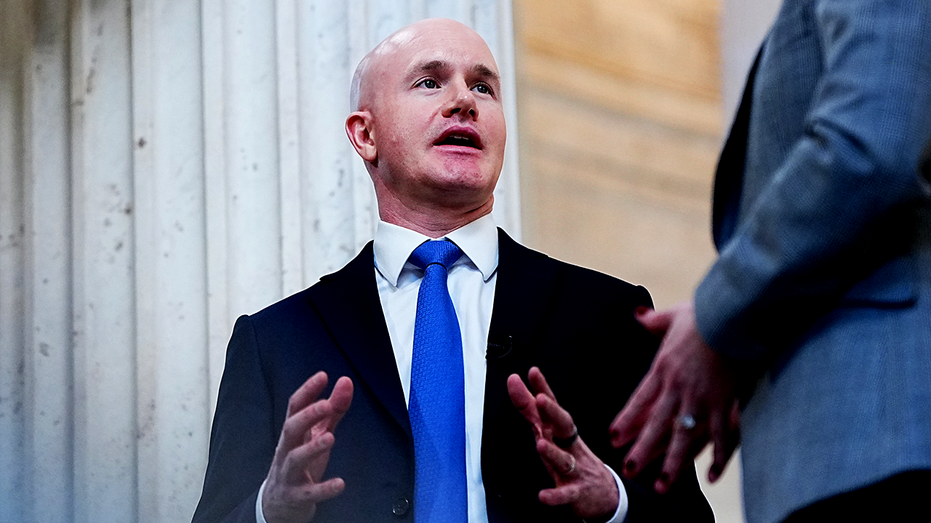
Coinbase CEO Brian Armstrong said a major cryptocurrency bill, the Clarity Act, moving through the Senate could reshape how Americans interact with money and financial markets as lawmakers work toward a potential Senate floor vote in the coming months.

Armstrong joined FOX Business’ Maria Bartiromo on “Mornings with Maria” to discuss the legislation, which aims to establish clearer regulatory rules for digital assets. The bill includes new compromises tied to stablecoin rewards and protections for software developers, as lawmakers, banks and crypto firms continue negotiations.

Advertisement
Chief executive officer of Coinbase

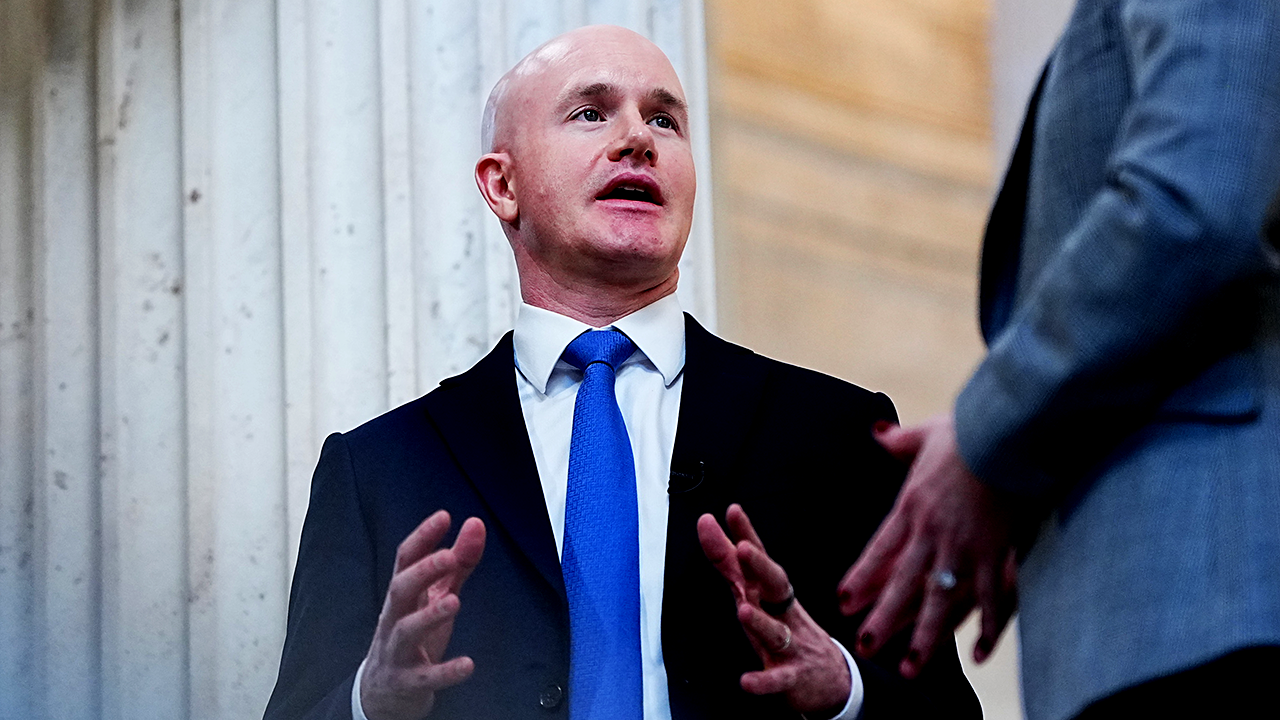
CEO of Coinbase Brian Armstrong on Capitol Hill in Washington, D.C. (Aaron Schwartz/Bloomberg / Getty Images)

Armstrong described the latest version of the bill as a “true compromise,” saying both the crypto industry and the banking sector have made concessions during negotiations.

“We met the asks of the bank lobby and the Senate,” Armstrong said, adding that rewards on stablecoins would only apply when there was “some sort of material activity on the account.”

The push comes as lawmakers are racing to establish clearer crypto rules in the U.S., while firms including Coinbase expand further into payments, tokenization and prediction markets. Armstrong argued the broader shift could make financial systems faster and cheaper for consumers and businesses.

Advertisement

KEVIN O’LEARY REVEALS THE ONLY TWO CRYPTOCURRENCIES HE SAYS ARE WORTH OWNING

“It’s just going to make everything more efficient in the financial system,” Armstrong said.

Armstrong also pointed to growing institutional interest in crypto, saying banks are increasingly integrating stablecoins and digital asset services as customer demand rises.

Beyond trading, Coinbase has been expanding into products tied to subscription, payment and prediction markets, which Armstrong said reached a roughly $100 million revenue run rate after only two months.

TRUMP PUSH TO MAKE US ‘CRYPTO CAPITAL OF THE WORLD’ GAINS STEAM AS CRYPTO BILL NEARS SENATE MARKUP

“We can just make that more efficient and more global,” Armstrong said of Coinbase’s broader push into financial services.

GET FOX BUSINESS ON THE GO BY CLICKING HERE

Advertisement
Continue Reading

Business

Reds10 Group takes stake in Hull steel fabrication firm ESL Fabrication Engineers

Published

on

Business Live

Hull steel fabrication business ESL Fabrication Engineers has been partially acquired by the Driffield-based offsite modular construction group

Reds10 Group operates five factories in Driffield.

Paul Ruddick, chief executive of Reds10 Group.(Image: Reds10 Group)

A Hull-based steelwork company employing just under 50 staff has been partially taken over by leading offsite and modular construction firm Reds10 Group. ESL Fabrication Engineers was established by father and son duo Paul and Gareth Thompson in 2010, and focuses on steel fabrication, encompassing walkways, spiral staircases and fire escapes.

The company operates out of a purpose-built facility on Burma Drive, where it has produced structures that have been exported to destinations as far afield as New York and Papua New Guinea. ESL is reported to have grown consistently since its inception 16 years ago, and now Reds10 — which manufactures its buildings in Driffield — has made a strategic investment in the business.

Advertisement

ESL will be incorporated into the recently formed Reds10 Group, alongside Reds10 and its eight sister companies. The two firms are said to have a well-established working relationship, having collaborated over the past five years on the delivery of public sector buildings.

ESL employs about 50 people.

ESL’s Hull operation.(Image: Google Streetview)

Paul Ruddick, chief executive of Reds10 Group, said: “Having worked with ESL for several years, we’ve seen first‐hand the consistent quality of their service and their ambition for excellence and growth, values that closely align with our own.

“Bringing steel fabrication into the Reds10 Group adds a critical piece of the jigsaw as we launch our next phase of strategic growth to exploit advancing technologies, while integrating AI at every level of the business.”

Gareth Thompson, co-founder and managing director of ESL said: “We’ve come a long way since ESL’s inception in 2010 and our partnership with Reds10 feels like a natural next step that will bring clear benefits to both businesses. This marks an exciting next phase in our evolution, and we look forward to building on the strong working relationship we’ve developed with Reds10 in recent years and maximising the opportunities ahead.”

Advertisement

Reds10 and ESL’s collaboration has concentrated on the defence, education, justice and health sectors. The fresh partnership comes after robust financial performance from Reds10, which posted revenue of £144.7m and operating profit of £6.8m, reports Hull Live.

The group, which also operates in the South East, is targeting revenue growth to £500m through expanded activity in the healthcare, affordable housing and temporary accommodation markets.

Its five Driffield manufacturing facilities span 300,000 sqft. The structures produced there are subsequently transported and erected on site at schemes throughout the UK.

Advertisement
Continue Reading

Business

Papa John’s partners with Alphabet’s Wing to test drone delivery

Published

on

Papa John’s partners with Alphabet’s Wing to test drone delivery

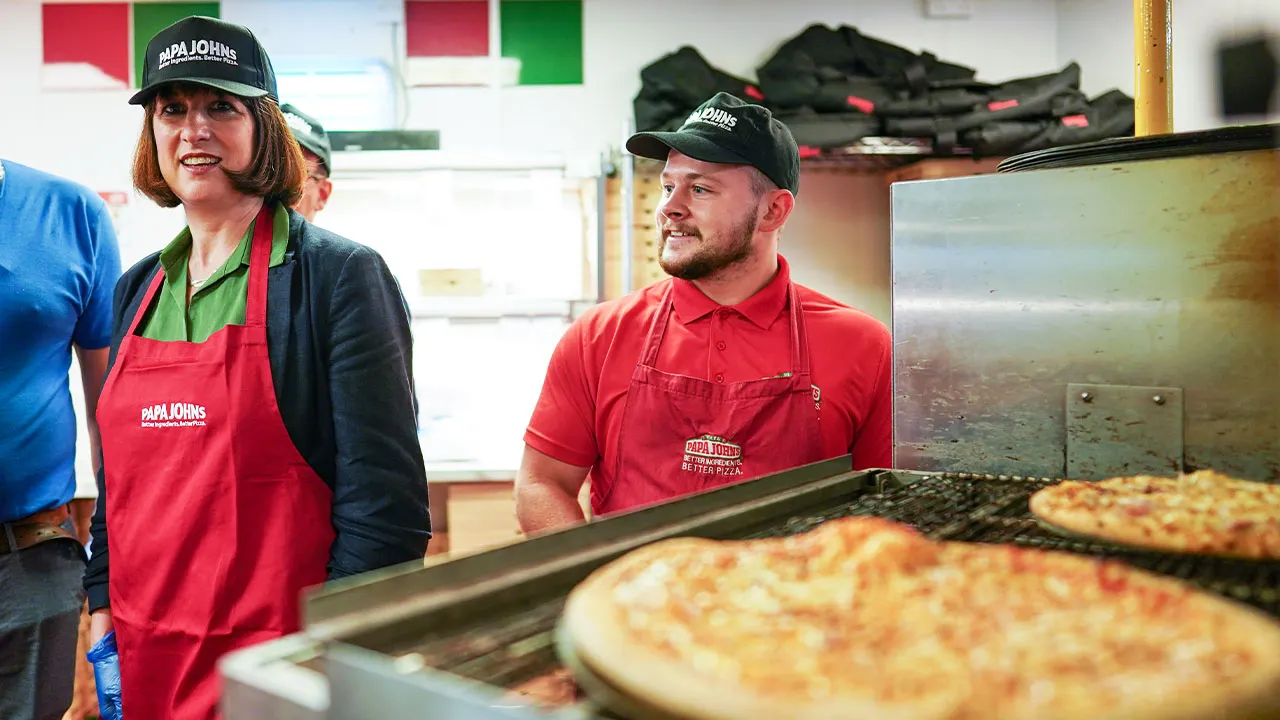
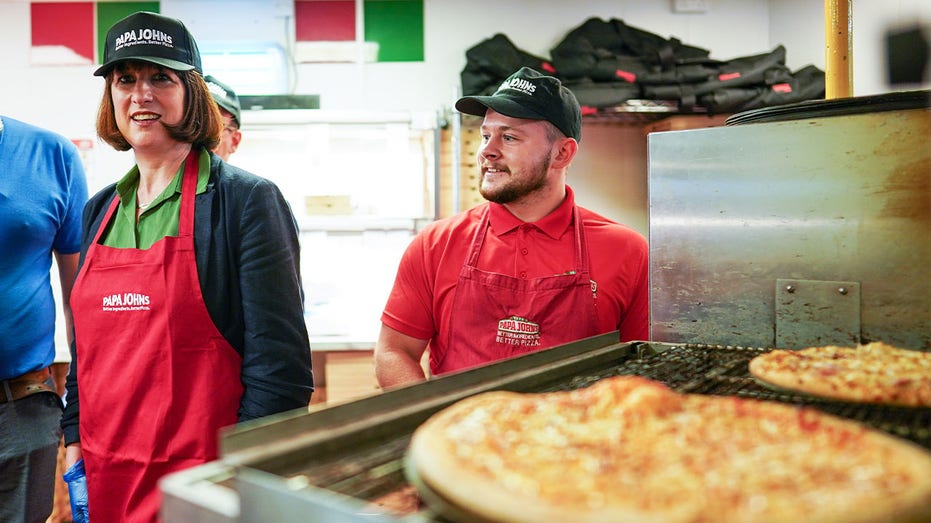
Papa John’s is teaming with Alphabet-owned drone company Wing to test autonomous food delivery in North Carolina, marking a new push by major restaurant chains into AI-powered logistics.

The pilot, launching in the Charlotte area, will allow customers near Sun Valley Commons in Indian Trail to order select Papa John’s menu items through the Wing app for drone delivery. The initial offering will focus primarily on oven-toasted sandwiches.

Advertisement

Executives say the partnership is aimed at addressing the costly “last mile” of delivery, a longstanding challenge for restaurants that rely heavily on drivers and third-party platforms.

papa john's pizza

The pilot program is taking off in the Charlotte, North Carolina, area. (Ian Forsyth/Getty Images)

FROZEN PIZZA SOLD AT WALMART, ALDI RECALLED OVER SALMONELLA CONCERNS

A delivery person carrying Papa Johns pizza box.

The drone delivery service will primarily focus on sandwiches. (Shelby Knowles/Bloomberg via Getty Images)

The effort is Wing’s first direct partnership with a national restaurant brand and builds on Papa John’s broader relationship with Google Cloud. Papa John’s is looking to eventually integrate drone delivery into its own app and AI-powered ordering system, known as “Lou AI.”

Papa John's

Papa John’s is partnering with Alphabet-owned Wing. (Luke Sharrett/Bloomberg via Getty Images / Getty Images)

The companies are also working through logistics challenges, including packaging and load design, as they explore how to safely transport hot food by air – a sign the technology remains in its early stages.

Advertisement

CLICK HERE TO GET FOX BUSINESS ON THE GO

While the pilot is limited in scope, it reflects growing interest across the restaurant and tech industries in automating delivery to cut costs and speed up service.

Continue Reading

Business

IT specialist Zenzero moves into historic Leeds building Concordia Works

Published

on

Business Live

The deal was struck by the Leeds office of Knight Frank

Inside Concordia Works

Inside Concordia Works(Image: Knight Frank)

Growing IT support services firm Zenzero is moving into a prime office in Leeds city centre. The tech specialist has struck a deal to take 3,056 sq ft on the second floor of the historic Concordia Works, in a transaction overseen by the Leeds office of property consultancy Knight Frank.

Set over five floors, the 13,922 sq ft Concordia Work was built in the early 20th century. The former yarn and cord warehouse was refurbished by Boultbee Brooks with modern businesses in mind, whilst maintaining its existing structure and original period features. Zenzero will move into the building on a ten-year lease.

Advertisement

Louis Lawley-Adams, Zenzero’s strategy and business operations director, said: “Moving to Concordia Works marks an exciting new chapter for Zenzero. The space will provide the perfect setting for our staff to collaborate, innovate, and thrive, while supporting the continued growth of our business.

“We’re incredibly pleased to be part of this next step and look forward to everything this move will bring for our team, our customers, and the wider community.”

James Whicher of landlords Boultbee Brooks said: “We’re delighted to welcome our Zenzero to Concordia Works and to see this BCO award-winning Leeds office building continue to attract high-quality occupiers.

The exterior of Concordia Works in Leeds

The exterior of Concordia Works in Leeds(Image: Knight Frank)

“It’s fantastic to see the building’s distinctive identity continuing to resonate with businesses. With only one floor now remaining before the building is fully let, this latest letting underlines the continued demand for high-quality, character workspace in Leeds. We wish the team every success in their new home and look forward to seeing them thrive here.”

Advertisement

The Zenzero letting comes after the arrival of software company PanIntelligence, which moved into Concordia Works last summer, taking the 3,036 sq ft third floor of the building on a five-year lease.

The other occupier at Concordia Works is Caldero on the ground and lower ground floors, with now only the newly refurbished first floor available to lease

Victoria Harris, associate in the office agency at Knight Frank in Leeds, added: “Concordia Works has excellent transport links with the property just moments away from Leeds City Station. The M1 and M621 motorways are only a five-minute drive away and two large multi-storey car parks are located 100 yards from the building’s front door.

“For those who prefer a greener mode of travel, riverside cycle paths run close to Concordia Works. By creating cutting-edge workspace in an attractive, historic setting, Boultbee Brooks have satisfied a pent-up need for trendy office space in the centre of Leeds. We expect significant interest in the remaining space in the building.”

Advertisement
Continue Reading

Business

Ex-rugby star on the joys of his own burger stall

Published

on

Ex-rugby star on the joys of his own burger stall

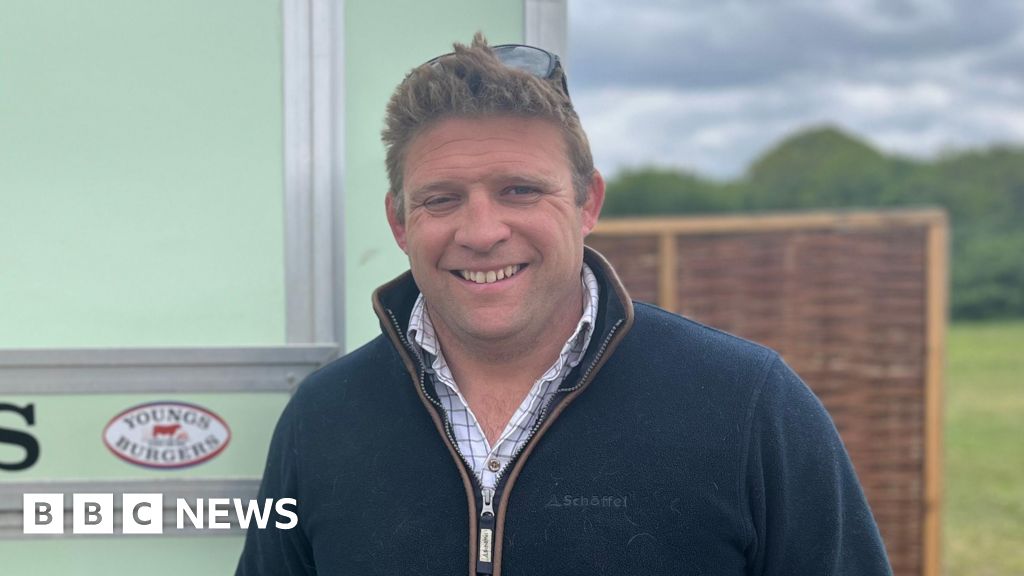
Ex-England and Leicester Tigers hooker Tom Youngs says the new venture brings families to the farm.

Continue Reading

Business

Verizon Down for Hundreds on May 13 as Users Report Service Issues Across U.S.

Published

on

The tech sector led record gains in the S&P 500 index. Pictured: a man with umbrella walks past the New York Stock Exchange.

NEW YORK — Verizon Communications is experiencing service disruptions affecting hundreds of subscribers Wednesday, May 13, 2026, according to real-time alerts and user reports circulating online, though the issues appear limited in scope rather than a repeat of the massive nationwide outages that plagued the carrier earlier this year.

The outage monitoring account @status_is_down on X posted at 14:22 GMT, stating “Verizon is down for hundreds of subscribers right now. Are you one of them?” and linking to a community forum discussion titled “Is Verizon down May 13 2026?” The post quickly gained traction among frustrated customers seeking confirmation that their connectivity problems were not isolated.

Downdetector and similar platforms showed elevated but not catastrophic reports for Verizon wireless and 5G home internet in the past 24 hours. Most complaints clustered around mobile phone service and data connectivity rather than a complete network failure. Verizon’s official status dashboard indicated normal operations across major regions as of mid-morning Eastern time, with no broad alerts posted.

This latest flare-up comes months after Verizon’s infamous January 14 nationwide outage that left millions in “SOS-only” mode for nearly 10 hours. That incident, blamed on a software issue rather than a cyberattack, prompted account credits, an FCC investigation and heightened scrutiny of the carrier’s reliability claims. Smaller disruptions have occurred since, including a May 5 fiber-cut event in Western Pennsylvania that affected eastern U.S. customers.

Advertisement

Today’s reports appear more regional or device-specific. Customers in various markets described dropped calls, slow data speeds, failed texts and intermittent 5G connections. Some noted their phones switching to Wi-Fi calling automatically or displaying error messages. The volume of complaints — hundreds rather than the millions seen in January — suggests localized congestion, maintenance activity or a targeted software glitch rather than a core network collapse.

Verizon has not issued a public statement specific to May 13 issues. The company’s support pages encourage users to check network status via the My Verizon app or website. Standard troubleshooting steps recommended by the carrier include restarting devices, toggling airplane mode, updating software and testing Wi-Fi calling as a temporary workaround.

For those still affected, experts advise patience. Many such incidents resolve within minutes to a few hours as automated systems reroute traffic or engineers address underlying causes. Verizon typically credits accounts when outages exceed certain thresholds, though no formal announcement has been made for today’s reports.

The timing coincides with peak weekday usage across the U.S., when streaming, remote work and commute-related data demands strain networks. Verizon serves more than 146 million wireless subscribers and continues expanding its 5G Ultra Wideband footprint. Rapid growth in data consumption from AI applications, video calls and connected devices has increased pressure on infrastructure even as the carrier invests billions in upgrades.

Advertisement

Industry observers note that occasional service hiccups have become an unfortunate reality for all major carriers. AT&T and T-Mobile have faced similar scattered complaints in recent months. No network achieves perfect uptime given the complexity of modern telecommunications systems involving thousands of cell sites, fiber backhaul and software layers.

Customer frustration is understandable. Mobile service has become essential for everything from emergency calls to daily banking and navigation. When issues arise, even limited ones affecting hundreds can generate widespread social media buzz and anxiety, especially after high-profile outages earlier in 2026. Many users maintain backup options such as secondary SIM cards from competitors or satellite messaging features on newer phones.

Verizon has emphasized network reliability in marketing campaigns, positioning itself as the “most reliable network.” Today’s reports, however minor, risk reigniting debates about whether such claims hold up under real-world stress. Consumer advocates continue pushing for automatic compensation during disruptions and greater transparency from carriers.

For businesses and enterprise customers relying on Verizon, any downtime carries higher stakes. Dedicated support lines and service-level agreements often provide faster resolution, but consumer accounts depend on self-service tools and general updates. The company’s Fios fiber internet service appeared less impacted today, with reports focusing primarily on wireless.

Advertisement

As of late morning on May 13, the situation remained fluid. Some users reported partial restoration while others continued experiencing problems. Monitoring accounts like @status_is_down play a valuable role in crowdsourcing real-time information when official channels lag. The linked forum thread on DesignTaxi showed users sharing screenshots of error messages and discussing potential fixes.

Looking ahead, Verizon is expected to continue its aggressive rollout of advanced 5G and future 6G technologies. These expansions aim to reduce future incidents while supporting exploding data demands. In the meantime, customers can stay informed through Verizon’s outage map, the My Verizon app and third-party trackers like Downdetector.

The May 13 reports serve as a reminder of how dependent modern life has become on seamless connectivity. While not rising to the scale of January’s crisis, the issues affecting hundreds highlight ongoing challenges in maintaining flawless service across a vast network. Verizon has historically resolved such matters quickly and offered goodwill gestures to impacted subscribers.

Users are advised to document any prolonged disruptions for potential credits and to explore alternative communication methods until service stabilizes. The carrier’s commitment to network investments suggests these types of events will become less frequent over time, though complete elimination remains unlikely in such a complex system.

Advertisement

For now, most Verizon customers appear unaffected, with the reported problems limited to a subset of subscribers. The situation underscores the importance of diversified connectivity options and staying informed during peak usage periods. As the day progresses, further updates from Verizon or monitoring services will clarify the full scope and resolution timeline.

Continue Reading

Business

10 Key Things to Know About Trump-Xi Summit in Beijing as High-Stakes Talks Begin

Published

on

Trump's team denies he wrote or signed the letter from 2003

BEIJING — President Donald Trump arrived in the Chinese capital Wednesday for a two-day summit with President Xi Jinping, the first U.S. presidential visit to China since 2017, as the world’s two largest economies navigate trade tensions, the Iran conflict and technology competition in a dramatically changed global landscape.

Here are 10 essential things to understand about the high-stakes meeting:

1. Modest expectations replace grand ambitions. Unlike Trump’s 2017 trip billed as a celebratory “state visit-plus” with lavish pageantry and headline-grabbing deal announcements, this summit is more restrained. Officials on both sides describe it as a “risk-management” exercise focused on stabilizing relations rather than resetting them. No major structural breakthroughs are anticipated on core disputes.

2. Trade tops the agenda with limited deliverables. Trump is seeking Chinese purchases of U.S. agricultural products, Boeing aircraft and energy exports to show tangible wins for American workers. Beijing is expected to announce some buys and possibly new trade and investment forums, but analysts doubt anything approaching the scale of past promises that often went unfulfilled. Tariffs remain a sticking point after recent escalations and partial rollbacks.

Advertisement

3. Iran and the Strait of Hormuz loom large. With the U.S.-Israel conflict against Iran disrupting global oil flows, Trump is pressing China — Iran’s top oil buyer — to help reopen the Strait of Hormuz and support diplomatic efforts. Beijing has resisted deeper involvement but may offer symbolic gestures to maintain stability and protect its energy imports.

4. Taiwan remains highly sensitive. Discussions on arms sales and Beijing’s claims over the self-governing island are expected. China wants U.S. restraint on military support for Taiwan, while Trump’s team views it as leverage. Any movement here could have outsized implications for regional security.

5. Tech and AI feature prominently. The summit includes rare earths and critical minerals access, export controls and artificial intelligence cooperation or guardrails. Trump brought a delegation of U.S. tech executives, including Elon Musk and Tim Cook, signaling interest in business deals alongside government talks.

6. China holds a stronger hand than in 2017. Beijing’s economy is less dependent on the U.S. market, with diversified trade partners and advances in self-reliance. Xi enters talks with greater confidence despite domestic challenges, while Trump faces domestic pressure from inflation and the Iran conflict.

Advertisement

7. Security is unprecedented. Beijing has locked down parts of the capital, closed tourist sites and tightened airspace. The welcome includes formal ceremonies but scaled-back pomp compared to nine years ago, reflecting cooler bilateral ties.

8. Business leaders join the trip. The presence of high-profile CEOs underscores the economic focus. Announcements involving Tesla, Apple, Boeing and others could emerge, blending government diplomacy with commercial opportunities.

9. Domestic politics shape both sides. Trump needs visible wins ahead of midterm elections. Xi seeks stability to focus on China’s economic recovery. The summit offers optics of engagement even if substance is limited.

10. Long-term impact may be incremental. Analysts describe the gathering as a checkpoint rather than a turning point. Progress on fentanyl precursors, detainee releases or rare earths extensions is possible, but deep structural issues like industrial subsidies and technology competition will persist beyond these two days.

Advertisement

Trump touched down Wednesday evening local time and was greeted with a formal welcome ceremony. Formal meetings with Xi are scheduled for Thursday and Friday at the Great Hall of the People. The visit was delayed from earlier in the year due to the Iran conflict.

The summit occurs against a backdrop of cautious optimism mixed with deep mutual suspicion. Both leaders have met multiple times since Trump’s return to office, including in Busan last year, establishing a working rapport built on transactional deal-making. Yet underlying strategic competition defines the relationship.

U.S. officials emphasize reciprocity and fairness. Chinese counterparts stress mutual respect and non-interference. Public readouts will likely differ, with each side highlighting its priorities. Markets are watching closely for any signals on tariffs, supply chains or investment flows.

Security around the event is tight, reflecting the stakes. Beijing has imposed restrictions on movement and heightened digital monitoring. For Trump, the trip offers a chance to project strength on the global stage while addressing domestic economic concerns. For Xi, hosting the first U.S. presidential visit in nearly a decade projects China’s centrality in world affairs.

Advertisement

The two-day schedule includes bilateral meetings, possible cultural elements and business engagements. Outcomes could include memorandums on specific sectors, extensions of existing critical minerals agreements and commitments to future dialogue. However, few expect resolution of fundamental differences over technology competition, human rights or geopolitical flashpoints.

Global reactions have been mixed. Allies monitor for impacts on supply chains and security commitments. Emerging markets hope for reduced tensions that could stabilize commodity prices. The summit’s success will be measured in incremental steps rather than sweeping agreements.

As talks unfold, all eyes remain on whether the leaders can manage competition without confrontation. The Trump-Xi relationship has defined much of global politics in recent years. This Beijing meeting, though scaled back, continues that legacy at a pivotal moment for the international order.

Advertisement
Continue Reading

Business

Almond Board of California adds new leaders

Published

on

Almond Board of California adds new leaders

Hires to drive global growth, lead research for California almonds group.

Continue Reading

Trending

Copyright © 2025