

Politics
Belfast extended shopping hours debate rages


Belfast City Council is continuing to pursue its aim of ceaseless consumerism by extending shop opening hours within its area of influence. The move began last year in July 2025, when a majority of councillors (32 to 21) backed holding a public consultation on the proposed scheme. That consultation has now arrived with the council seeking:
…feedback from residents, visitors and business representatives on extending Sunday trading hours across the city during periods of high tourist and visitor numbers.
The North of Ireland has the most restrictive Sunday opening hours rules across Britain and Ireland, with shops over 280 square metres only permitted to open from 13:00 to 18:00. There are some exceptions, such as shops at transport hubs like railways and airports, or areas designated ‘holiday resorts’. England and Wales permit large shops to open for six hours, usually from 10:00 to 16:00, or 11:00 to 17:00. In the Republic of Ireland, no restrictions apply.
The new law will seek to designate the Belfast City Council area as a holiday resort, and allow large shops to:
…open at any time on up to 18 Sundays between 1 March and 30 September each year (excluding Easter Sunday).
Belfast and the neoliberal agenda
Sinn Féin councillor Natasha Brennan, whose party u-turned to back the proposed change, said the plan would:
…extend and enhance Belfast’s retail and hospitality experience on Sunday mornings to benefit residents, businesses and the increasing numbers of visitors to our city.
She also harped on about the need to “compete with other cities”, “boost visitor and tourism spending” and enable “additional trading opportunities for retailers.” Essentially a series of market-centric rather than human-centric arguments. The latter were provided in the earlier July 2025 debate around the plan, which was opposed by the Democratic Unionist Party (DUP), the Green Party, the Social Democratic and Labour Party (SDLP) and People Before Profit (PBP).
Séamas de Faoite of the SDLP said:
It is ironic we are being told this is what the people of Belfast want, when in fact the trade unions who represent the store workers of Belfast have made it very clear they don’t want it, and Retail NI who represent the small businesses of Belfast have made it very clear they don’t want it.
And we’ve had feedback from arts and community organisations to say they want to be involved in an animation programme that holds up the work they are doing in the city, that isn’t distracted by the opening of large retail.
He added:
Countless European cities operate on a model of having Sunday reserved for something different – for family time, for free time, for time when people can enjoy culture and the arts, where people who have a faith can have an opportunity to practice that faith. Why is it that Belfast continuously has this discussion?
Germany’s “shopping hell” – the way to go
The plan even managed to turn the DUP into budding Marxists, with Alderman Dean McCullough saying:
What can you say to the Alliance Party and Sinn Féin, who make even myself look left wing on this. I am a capitalist, because I have common sense, but I have a social conscience, and that means I want workers to have a day off on a Sunday. They work hard and tirelessly throughout the week, and throughout the year. They deserve a break.
The Canary can non-exclusively report that McCullough does in fact not typically possess common sense, but on this issue he is correct.
Meanwhile, Germany is the sort of European example de Faoite was alluding to. Described as “shopping hell” by TIME magazine, Germany forbids virtually all shops from opening on Sunday, under its catchily titled Ladenschlussgesetz law. Given Time magazine represents neoliberal hell, we’ll take their view as a ringing endorsement of the policy.
It was brought in during 1956 under the initiative of trade unions who argued Sunday should be used to give workers a break from ceaseless grind. A majority of Germans are still in favour of the law, which enables people to engage in more civilised pursuits like resting, leisure, and spending time with friends and family.
As mentioned by de Faoite, trade unions in the Six Counties (a decolonial term for the north of Ireland) still don’t want an extension of their potential working hours. The Union of Shop, Distributive and Allied Workers (USDAW) said:
USDAW opposes this. Members have told us that they already feel pressure to work on a Sunday, and that increasing trading hours will add to this. As well as retail workers themselves having concerns, smaller retailers have stated that they worry their trade will be taken by the bigger stores which could have a longer term detrimental impact.
Indeed, as it’s a lot harder for a family owned shop run by a couple to keep running seven days a week than it is for Tesco.
You don’t have to be religious to oppose Sunday opening hours. You just have to reject the inhumane demand of capitalist logic – that of being forced into an endless rat race only billionaires can win.
Featured image via the Canary


The post ‘Starmer is weak, unprincipled and utterly unremarkable’ appeared first on spiked.

Labour’s catastrophic showing in last week’s local elections has predictably shifted the attention to Westminster, where UK prime minister Keir Starmer is – for now – clinging on to power. Yet it would be a mistake to brush over the elections that have pushed Starmer to the precipice, or to view them only through the narrow lens of Labour’s woes.
Last Thursday’s local elections were highly significant for another reason – they were dominated like no other ballot before them by Islamic sectarian grievances. It was, to borrow a phrase from Starmer himself, every bit the ‘island of strangers’ election.
According to analysis by the Henry Jackson Society, 572 ‘Muslim sectarian’ candidates were elected to 58 local councils across England. These are defined as candidates who ‘repeatedly and saliently’ emphasised ‘Muslim communal grievances’ and ‘transnational Muslim issues’ during their campaign. Two organisations, the Muslim Vote and Vote Palestine, were the driving force behind these campaigns. As revealed in a new report from Policy Exchange, the Muslim Vote viewed the local elections as an opening salvo in, as it sees it, a ‘five-election plan spanning 25 years’ to establish political Islam at the heart of British democracy.
The rise of Islamic sectarianism has been visible for a little while now. In the 2024 General Election, four Muslim independents were elected with the support of the Muslim Vote. In February, in the Gorton and Denton by-election, the Green Party – again with the blessing of the Muslim Vote – harnessed the constituency’s large Muslim voter base to claim a stunning victory over Labour. But last week’s local elections have brought into focus the true force and scale of this movement.
Birmingham was one of the epicentres of the sectarian earthquake. Here, 19 members of the Greens were elected, along with 13 Muslim independents who campaigned under the banner of the Independent Alliance. The success of the latter led to jubilant scenes on Birmingham’s streets, although not of the kind you might expect to see following a council election in England. Newly elected Harris Khaliq was garlanded with flowers and led on a horse by his fellow Muslims to the sound of drums through a residential street.
Elsewhere, another crowd of Muslim men gathered in a Birmingham park cheering, dancing and raising the successful candidates on one another’s shoulders. Akhmed Yakoob, a co-leader of the Independent Alliance, released a video of himself being driven down a main street in Birmingham, standing through the car’s sun roof alongside another of his party’s successful candidates, as if he was part of a papal procession.
In Greater Manchester, we saw similar scenes. Baggy Khan, a new Green Party councillor, posted a video of himself driving a bright orange, gas-guzzling Lamborghini Huracán Spyder – which is an odd look for a representative of the supposed party of the environment.
Down in London, things weren’t much better. In Tower Hamlets, Lutfur Rahman’s Aspire party – an exclusively Bangladeshi Muslim organisation, endorsed by the Muslim Vote – won 33 of 55 seats, with Rahman returned to the mayoralty on a 16,000-strong majority. In neighbouring Newham, the ‘Newham Independents’ – like Aspire, a political movement more or less totally comprised of Bangladeshi Muslims, and also endorsed by the Muslim Vote – won 24 council seats. The Muslim Vote endorsed the Green Party in Hackney and Waltham Forest, achieving significant success in both.
These are clear victories for sectarian division. Both Aspire and the Newham Independents are almost exclusively male, Bangladeshi and Muslim. The Independent Alliance in Birmingham is the same, with the only difference being that its candidates are primarily of Pakistani origin. Both parties ran on – and succeeded with – what was effectively a pro-Gaza, ‘anti-Zionist’ platform.
These are not political parties or coalitions organised around shared interests that cut across cultural and ethnic divides. They are movements that cater explicitly to the interests of particular religious and ethnic identity groups.
One of the most striking symptoms of the rise of sectarian politics was the extent to which candidates and parties campaigned in languages other than English. Members of the Greens, the Muslim independent parties and even Labour were all recorded giving impassioned speeches in various languages. There was also a proliferation of leaflets and political advertising written in languages other than English.
Some of the candidates were not even British citizens. In Scotland, where Holyrood elections were held on the same day, Q Manivannan was elected on the Green Party ticket in Edinburgh and Lothians. Manivannan, a self-described ‘queer Tamil immigrant’, is a 30-year-old university student who has only lived in Scotland since 2021, the year he arrived from India. As if the situation could hardly become any more absurd, Manivannan can only work 20 hours a week under the terms of his student visa, which is due to expire in any event before the end of his five-year parliamentary term.
British politics may be dominated by the rise of Reform UK, and the demise of Labour. But there are other forces at play, too – and they threaten to break our nation up into parallel societies, separated by language, religion and ethnicity. We must be alive to the threat of sectarianism before it’s too late.
Hugo Timms is a staff writer at spiked.
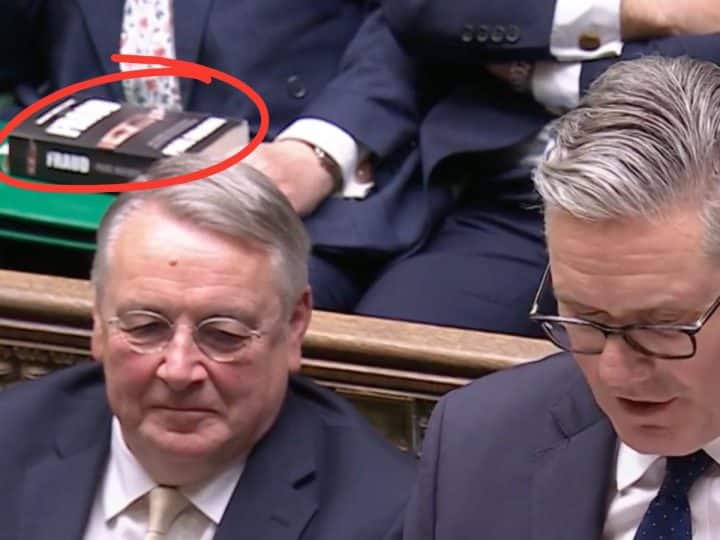

Labour MP Barry Gardiner used to be known for elegantly eviscerating anti-Corbyn TV interviewers. But today, 13 May 2026, he instead made a silent, brilliant point to the appalling fraud Keir Starmer today in the House of Commons.
Starmer’s mini-me Wes Streeting will make a move to topple him tomorrow. But as Starmer still tried to quip with MPs who despise him, as part of a feeble ‘king’s speech’ tradition, Gardiner sat quietly behind him. And all the while, positioned to be caught every time the Commons cameras did a close-up of the PM, was a book on Gardiner’s lap.
Not just any book, but Paul Holden’s brilliant exposé of Starmer and his faction, The Fraud:
Bravo Barry Gardiner. You spoke for all of us.
Featured image via the Canary
By Skwawkbox
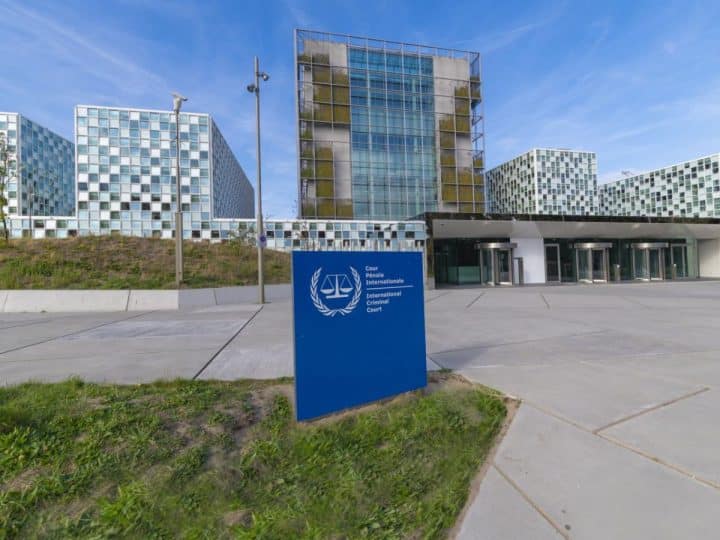

A Dutch government security agency claims UK spy firms gathered information on International Criminal Court (ICC) staff and their families. The main target was a lawyer who had filed a sexual abuse complaint against ICC prosecutor Karim Khan. Khan denies any wrongdoing.
NL Times, a Dutch outlet, wrote on 12 May:
The Dutch National Coordinator for Counterterrorism and Security investigated a secret intelligence operation in which two private intelligence bureaus based in London collected sensitive personal information for months on employees of the International Criminal Court in The Hague, their children, and other family members.
The paper claimed:
The main target was a 38-year-old lawyer at the International Criminal Court who filed a sexual abuse complaint against British prosecutor Karim Khan in spring 2024. Khan, who was then the court’s chief prosecutor, stepped down in May 2025 and remains on leave pending the outcome of the misconduct inquiry.
Other court employees targeted in the operation were linked to those same allegations against Khan or to the handling of the case, according to documents and recordings reviewed by NRC as part of the Dutch inquiry.
NL Times mentioned that two UK are firms alleged to have spied on ICC staff and their families. One is Highgate, based in London’s Mayfair.
The firm describes itself as:
a strategic advisory firm expert in dispute resolution and special situations.
And claims it has an “international team”:
drawn from the best talent in intelligence, law, government, finance, media and the military.
The other spy firm is not named by NL Times.
NL Times said:
Private detectives reportedly sought information that could suggest a cover-up or connections to Israel or its intelligence service, the Mossad. The operation came more than a year after the International Criminal Court issued an arrest warrant for Israeli Prime Minister Benjamin Netanyahu.
The website said the Dutch agency has spoken to “several ICC employees” about the spy firm’s activity:
In a confidential letter to the court, seen by the newspaper, the agency said it had forwarded information from those discussions to Dutch intelligence services and police.
Police are reportedly investigating for potential criminal offences:
The agency declined to comment to the NRC on the outcome or status of the probe, and police would not answer questions.
NL Times claimed:
The Guardian reported in November 2025 that the purpose of the operation was to collect information that could be used to undermine the sexual abuse complaint filed by the alleged victim. Documents and recordings reviewed during the Dutch investigation show the private detectives specifically searched for evidence of a possible cover-up or any links to Israel or its intelligence service, the Mossad.
a diplomatic unit within the Qatari state paid for the operation.
The Qatari’s have denied involvement in this latest chapter of a story which has gone on for two years. Karim Khan strenuously denies any wrongdoing and his lawyers said any suggestion he had been involved in the operation was “completely incorrect”. Khan was part of the ICC tribunal which issued an arrest warrant for Israeli prime minister Benyamin Netanyahu.
Featured image via NL Times
By Joe Glenton
Politics
Trump’s counter-terror czar thinks arch-conservative Tucker Carlson is an extremist Sharia law fanboy


Donald Trump was always a thin-skinned bully-boy. His hypersensitivity informs his worldview. And now his bizarre worldview informs a globe-spanning US counter-terror policy. His administration is now so addled it has decided hyper-conservative podcaster Tucker Carlson is some sort of terrorist-sympathizer.
Why, you might ask? Well, it is a result of Carlson’s criticism of Trumpian policies. Welcome to Trumpland 2026.
US journalist Ken Klippenstein noticed that Trump’s British counter-terror czar, Sebastian Gorka, was doing the rounds on US talk shows. Gorka just authored the new US counter-terrorism policy which brands antifascists, the left and trans people as terrorists.
But Trump’s cronies also see their critics on the right as enemies:
Between grandiose monologues about his vision of a crusade to save Western civilization from “anti-American” and “anti-Christian” extremism, Gorka let slip that the administration’s war on “domestic terrorism” isn’t just aimed at the left.
Klippenstein continued:
It targets anyone who isn’t in line with the broader MAGA agenda. While Trump’s national security directive NSPM-7 explicitly singles out the left with its list of so-called terrorism indicators, many of them could describe people on the right as well.
Asked by Breitbart editor-in-chief Alex Marlow if there’s any “right-wing terror” or “right-wing extremism” threat, Gorka replied by pointing to former Fox News host Tucker Carlson and streamer Nick Fuentes — both of whom have become vocal critics of the Trump administration — arguing they aren’t actually conservatives anyway.
Okay, mate…
Gorka told Marlow:
…I’m not sure that Nick Fuentes or Tucker Carlson are conservatives. If you are lauding Sharia law, if you are saying that there are Muslim states that seem to be better qualitatively than America in terms of freedom and prosperity, I’m not sure that means you’re part of the conservative movement. So if you remove those individuals and you understand that they’re not conservatives, what’s left?”
Carlson supports Sharia law?! Klippenstein posted Carlson’s exact words from the media interview Gorka was citing:
CARLSON: “But you go to a country like Japan or the Emirates or Qatar, Saudi Arabia, and you see that when people are self-confident, when they’re really pleased with what they’re doing, and they believe their system is the right system — that self-confidence results in a kind of welcoming attitude. So you’ll be sitting at dinner in Riyadh, Saudi Arabia, and you’ll say, you know, I just, I’m really kind of pro-Jesus, like I’m a Christian. They’ll be like, ‘That’s so great!’
HOST: And they don’t have the same beliefs?
CARLSON: No, they’re Muslims. It’s a country governed by Sharia law! — [laughs] — I mean, and they’re like, ‘That’s great!’
Klippenstein wrote:
Is Carlson naive for mistaking his Four Season’s experiences in whatever Gulf monarchy with an egalitarian society? Absolutely. But “lauding Sharia law?” Come on.
A quick caveat here. The US and UK right-wing have a massive complex about Sharia law. It’s one of their favourite bogeyman. Here’s a little primer on it from fact-checkers at Factually:
Common misconceptions about Sharia center on it being a single, draconian legal code that uniformly oppresses women and mandates extreme corporal punishments; authoritative analyses show Sharia is a plural, principle‑based system whose interpretation and application vary widely across time, schools, and states.
Not quite so simple, after all.
Klippenstein is right though. Gorka’s comments are a massive, bad-faith reach. But Trump’s henchman is also telling a story we need to hear. Trump’s authoritarian impulses, paired his child-like sensitivity to criticism, are a deadly combination. The primary enemies of the far-right are still the organised working class, the political left and marginalised groups. But right-wing critics are also intolerable to the US regime.
And nobody needs to hear that more than the political right. Nobody is safe from this radical right-wing agenda — not even conservatives. To quote the fash in their own conspiracist terminology: time to wake up, sheeple.
Featured image via LA Times
By Joe Glenton

DAYS THE BUDGET IS LATE: 43
PRIMARY COLORS: Republican Assemblymember Robert Smullen sat down with Rep. Elise Stefanik five years ago to talk about a rural development bill, but instead he made a bold claim: He intended to challenge her in a GOP primary.
The previously unreported meeting, according to two people with direct knowledge of the private conversation who were granted anonymity to discuss it, occurred in July 2021.
Smullen never followed through with a Stefanik primary challenge. And in a statement, he denied ever planning to challenge her for the nomination.
“I’ve never planned to primary Elise Stefanik,” he said in a statement. “I have too much respect for her, her leadership, and the job she has done fighting for NY-21 and Upstate New York.”
According to the people, the sitdown occurred as Republican House members in deep blue New York were bracing for what was expected to be a challenging round of redistricting. Smullen’s primary threat against Stefanik was based, in part, on the potential of her home being drawn out of the sprawling North Country seat she’s represented since 2015.
“To have the audacity to do that — to not read the room, but also not read the polling,” one of the people said. “By the end of the meeting he was set straight.”
It also came months after Stefanik replaced then-Rep. Liz Cheney as the Republican House conference chair following the Wyoming Republican’s emergence as an outspoken critic of President Donald Trump. Stefanik had previously emerged as a prominent Trump ally in Congress.
Yet Smullen over the years has donated frequently to Stefanik’s campaigns — including thousands of dollars between 2020 and 2024.
She also frequently appeared alongside Smullen at events, like at an October 2022 fundraiser for his Assembly reelection campaign as well as a rally a month later.
“I have known Elise personally for years, supported and donated to her campaigns, and appreciated her support for me during my own races,” Smullen said. “Like many elected officials and political allies do over the years, we had conversations about the future and the importance of continuing strong Republican representation for this district someday. That is very different from this narrative POLITICO is trying to create.”
He added, “What is especially disappointing is that my opponent and his operatives are trying to drag Elise into a primary she has made clear she is staying out of so voters can make their own decision.”
Smullen also told Playbook that Stefanik comforted his family when his son was hospitalized and later died after he was struck by a car.
“During the hardest time in my family’s life, Elise was there for us while my son AJ was in the hospital and after we lost him. Those are not the actions of people involved in some fabricated political feud,” Smullen said. “I am focused on earning the support of voters across NY-21 and fighting for the conservative values that unite Republicans across Upstate New York.”
The state lawmaker is now running for the House seat Stefanik is vacating this year, competing for the nomination against Republican Anthony Constantino, the Trump-endorsed candidate in the June 23 primary.
Stefanik has not endorsed in the primary to succeed her. But her support is highly coveted by both Republican candidates.
She’s represented the House district for the last decade, building up a base of ardent supporters and aligning herself closely with the president’s MAGA movement.
Stefanik bowed out of running for reelection after scuttling a short-lived bid for governor.
Her decision not to run for another term has ignited a heated Republican primary to succeed her in a ruby red House seat that Trump has handily won three times.
Constantino, the CEO of the merchandise and printing company Sticker Mule, has marshaled the backing of Trump-allied luminaries like political operative Roger Stone, former New York City Mayor Rudy Giuliani and retired Gen. Michael Flynn.
His candidacy has split Empire State Republicans, however.
The New York Republican Committee in April formally endorsed Smullen — a rare nod by the party’s statewide leadership in a GOP primary. — Nick Reisman
FROM THE CAMPAIGN TRAIL

HOCHUL FILMS VIDEO FOR LASHER: Gov. Kathy Hochul, Rep. Jerry Nadler, Assemblymember Micah Lasher and political strategist Morris Katz all walked into a bagel shop.
It’s not the start of a joke, it’s what happened Tuesday at Tal Bagels on 90th and Broadway.
The three elected officials were spotted with the wunderkind political strategist filming a video together for Lasher’s run for Congress, according to two Playbook spies and a third person who confirmed the events. State Sen. Brad Hoylman-Sigal and Council Member Gale Brewer were also there.
Lasher is running for the Manhattan seat held by Nadler, his former boss, and was already endorsed by Hochul, also his former boss, last month.
But the soon-to-be released video will mark a unique level of involvement for Hochul in the race.
In the 2024 Democratic primaries, Hochul held a strict no-primary-endorsements policy, even though she privately fundraised for some candidates. Now, she’s filming Katzian videos over lox & schmear for Lasher in a competitive primary, where he’s up against Assemblymember Alex Bores, Kennedy scion Jack Schlossberg and anti-Trump commentator George Conway.
The meeting also shows a sort of détente in the political consulting world. In the bruising battle in neighboring NY-10, Katz’s Fight Agency is backing former city comptroller Brad Lander’s primary challenge of Rep. Dan Goldman, whose campaign is powered by consultants Haley Scott and Mark Guma.
Guma and Scott both work on Lasher’s campaign, which now can officially count Katz as a partner.
Behind the scenes, Katz, a key strategist on Mayor Zohran Mamdani’s campaign, has already been boosting Lasher. In February, POLITICO reported Katz was making calls to progressives to line up support for Lasher, identifying himself as “Morris Katz with the mayor” on the phone.
In a statement, Lasher spokesperson Caroline Crowell celebrated how the great bagel confab represented a unity between the rival consultants.
“Team Lasher is thrilled to welcome Fight Agency to our team that includes powerhouses Mark Guma and Haley Scott,” Crowell said. “We can’t wait for you to see what we’ve been cooking up. Stay tuned!” — Jason Beeferman and Irie Sentner
RELATED: It’s unclear if Mamdani is going to wade into the primary for Nadler’s seat — and there haven’t been any significant signs that he will. But in an interview with the New York Editorial Board, Bores said he would “love” to have the mayor’s endorsement.
“I haven’t talked to him about an endorsement,” Bores said, adding that he would “welcome his endorsement, just like I welcome the endorsement of any voter in the district.”
“That’s a little lukewarm,” journalist Ben Smith replied.
“Given the opportunity to ask and, yes, I would love to have his endorsement, but I don’t expect that he will get involved in this race,” Bores, who often likes to mention that he and Mamdani were basketball buddies in Albany, continued.
Bores has raked in some eye-catching progressive endorsements, including from Our Revolution, the group founded by Sen. Bernie Sanders (I-Vt.).
At a recent forum at a synagogue, both Bores and Lasher were asked if they regretted endorsing Mamdani in the general election; neither said no, but both qualified their support for the mayor, who has drawn the ire of some Jewish voters. NY-12 has a prominent Jewish constituency. — Madison Fernandez
From the Capitol

CLOCK’S TICKING: The state Capitol is starting to take on some post-budget vibes — despite the fact that budget talks haven’t yet concluded.
“This is later than usual,” Assemblymember David Weprin said of this year’s spending plan. “It took a long time till we were going to start doing regular bills because we thought we were going to have a budget relatively on time. Once that became a reality, we started taking up more regular bills.”
The advocacy focus in the halls near the Legislature’s chambers has increasingly moved away from last-minute budget pleas to stand-alone bills. Weprin joined former Charlotte Hornets forward Michael Kidd-Gilchrist today to push for more insurance coverage for stuttering. Other groups pushed for bans on data centers, a herbicide prohibition and new regulations on gun safes.
Both houses of the Legislature, meanwhile, are increasingly spending their days plowing through dense agendas.
“Would I have wanted to be at this point in session?” Senate Majority Leader Andrea Stewart-Cousins said while announcing a consumer protection package Tuesday. “No, I would hope as always that we were able to get an on-time budget and that we were able to accomplish what we needed to accomplish sooner than now. But that has not stopped us from paying attention to the things we care about.”
But time is still clearly running out — even if the budget is wrapped up next week, there will only be eight remaining session days. “We’re just going to run out of time,” Assemblymember Anna Kelles said.
And while legislative leaders have been adamant that June 4 will remain the last day, that pinch is stirring talks of overtime.
“I think we will have some special session after our session ends before the end of the year to do some bills we haven’t done,” Weprin predicted. — Bill Mahoney
FROM THE DELEGATION

BELTWAY VITRIOL: Rep. Mike Lawler called antisemitic insults hurled at him by William Paul, the son of Sen. Rand Paul, “reprehensible” and “fucking disgusting.”
NOTUS reported on Wednesday that last night, the younger Paul “confronted Lawler about Rep. Thomas Massie’s GOP primary election in Kentucky next week” and said that if he loses, it’s going to be because of “your people” — which he followed by saying “you Jews.”
Speaking to reporters in Washington, Lawler said Paul “went on a roughly 10 minute diatribe about Israel and about Jews, about Paul Singer and accusing Jews of being responsible for so many things, playing right into the typical antisemitic tropes that so many people rely on.”
Lawler is not Jewish. His district, just north of New York City, has a large Jewish population.
“It speaks to a larger issue, obviously, in society and what we’re seeing among young people and what we see online,” he said. “This is the level of hatred and vitriol, frankly, that some of my Jewish colleagues experience, but many of my constituents experience.”
Paul responded to the incident in an X post, writing that he “had too much to drink and said some things that don’t represent who I really am. I’m sorry and today I am seeking help for my drinking problem.” — Madison Fernandez
IN OTHER NEWS
— WALDEN IN THE WATERS: A coalition of wealthy donors has raised over $1 million to oppose Mamdani’s agenda. (The New York Times)
—COURTSIDE CONGESTION: The Knicks’ playoff run could collide with World Cup transit restrictions, creating a major commuting problem for Penn Station. (Gothamist)
—MAYOR TAKES AIM: Mamdani is urging state regulators to block Western Union’s $500 million merger with Intermex, warning it could raise costs for immigrant New Yorkers. (Semafor)
Missed this morning’s New York Playbook? We forgive you. Read it here.


A new poll has shown that most NHS workers think health secretary Wes Streeting is failing the NHS, badly.
The NHS is suffering, and Streeting is making things worse
YouGov has reported that:
87% of NHS staff describe the NHS as currently being in a weak state
- Wes Streeting specifically has been doing a bad job (53% – up 13% from last year).
- Labour is handling healthcare badly (66% – up 13% from last year).
- A continuation of Labour’s current policies will make the NHS even worse (40% – up 14% from last year).
Streeting — who has the support of millionaire donors and private healthcare lobbyists — has long coveted the job of Labour Party leader. But he barely won his own constituency in 2024, and his race-baiting local party has been haemorrhaging votes ever since.
The new poll of NHS workers, meanwhile, is a damning assessment of Streeting’s record as health secretary. And it should make any Labour MP think twice before trying to force him onto the country as prime minister.
NHS staff increasingly believe Wes Streeting is doing a bad job as health secretary and that the Labour government is handling the NHS badly
Streeting as health secretary Labour handling of NHS — YouGov (@YouGov) May 13, 2026
Good job: 22% (-3 from 19-28 Feb 2025)
Bad job: 53% (+13)
Well: 24% (-6)
Badly: 66%… pic.twitter.com/HCTlxa1kMQ
Stop Wes Streeting. Stop the privatisation.
Only 22% of NHS workers think Streeting has been doing a good job. And most essentially perceive there to have been almost no difference between conditions under the previous Conservative government and conditions under the current Labour government.
That’s hardly surprising when even the Guardian has been saying:
Labour is privatising the NHS in plain sight
EveryDoctor, meanwhile, has been insisting:
The NHS is being privatised, and it is so important that we pay attention to the way money is moving through Westminster…
And if we follow the money, we see that Wes Streeting is at the top of the list, having received at least £224,575 from people and corporations with private healthcare interests. EveryDoctor adds that:
Labour MPs received almost five times as much in donations from donors connected to private healthcare as all other MPs combined, according to EveryDoctor’s analysis of the MPs’ register of financial interests. We must ask why this is happening, at the same time as the Labour government has chosen to divert billions more into the private healthcare sector
Streeting has also been schmoozing with big technology firms, being particularly secretive about the dodgy NHS contract with evil tech giant Palantir.
As NHS staff know all too well, a Streeting government is bad news for the NHS. Because just like Tony Blair’s Labour previously, Labour today is also siphoning money away from the NHS and into the pockets of private healthcare corporations.
To stop this privatisation and save the NHS, we need to stop Wes Streeting.
Featured image via the Canary
By Ed Sykes


Nigel Farage could finally face his comeuppance as the Parliamentary Standards Commissioner launches one investigation, while a further probe may follow after a complaint from the Conservatives.
Following reports and widespread coverage of Farage taking a ‘gift’ of £5m from foreign-based crypto-billionaire Christopher Harborne, which he failed to declare, the commissioner is now finally investigating the Reform UK leader for breaching the code of conduct.
Nevertheless, the millionaire’s woes likely won’t end there — as the Guardian’s Pippa Crerar has said a second investigation by the Electoral Commission might indeed be on its way.
Whether that will take place will be known by the end of this week.
— Politics UK (@PolitlcsUK) May 13, 2026
 BREAKING: Nigel Farage is now being investigated by the Parliamentary Standards Commissioner for not declaring the £5m gift he received from billionaire Christopher Harborne
Followed by:
NEW: A second investigation into Nigel Farage could be on the cards – I'm told the Electoral Commission has told the Tories they are still looking at their complaint and will come back by the end of this week.
— Pippa Crerar (@PippaCrerar) May 13, 2026
When it rains, it pours — eh, Nigel?
This is sure to be a week that the Reform leader would like to forget — not that we will let him, that’s for sure. After all, Farage is well overdue for an investigation and with any justice, be kicked out of British politics. Nevertheless, we will have to see how the investigations play out as to whether we will see this super-rich racist facing accountability in our democracy.
However, officials only agreed to take up this investigation after pretty significant pressure. For instance, we have been reporting for quite a while on the huge, and questionable, funding going into this billionaire-interested business of a party.
Our own Alex/Rose Cocker wrote in March — way before the local elections on May 7:
On 5 March, the Electoral Commission published its records of political donations in the last quarter of 2025. And, surprise surprise, Reform UK has taken yet another massive crypto donation from Thai-based billionaire Christopher Harborne.
Last quarter’s £3m donation joins the record-breaking £9m that the cryptocurrency investor already gifted to the far-right party. Likewise, on top of the £3m, Reform also received a further £2.5m from other sources.
Back in May [2025], Farage told the Las Vegas Bitcoin Conference that his party would launch a “crypto revolution”. On the same day, Reform announced that it would start accepting donations in crypto.
Then, in the very next financial quarter, Harborne’s major £9m donation to Reform rolled in on 1 August. It was the largest ever gift from a private individual to a political party.
At the time, the Canary highlighted that Harborne also donated millions to the Brexit Party in 2019, as well as to the Conservatives between 2001 and 2022. While Harborne is British, he’s now based in Thailand.
Sky News spoke to political donation expert professor Justin Fisher, who told them:
It exposes the fact that this is a person who is a British citizen but is able to influence British politics without being subject to the laws that any Reform government might bring in, any tax arrangements that a Reform might bring in.
This is foreign money by any other name.
When the crypto donation revelation surfaced, Farage insisted that Harbourne “wants nothing from me”.
Farage facing investigation is a welcome sight
Consequently, this announcement of an investigation — and another possibly to come — has come as good news for quite a few.
Not Nige, obviously:
The sun is breaking through the dark clouds ….. https://t.co/RanA87wKo1
— Alan Thompson (@AlanThompson58) May 13, 2026
This would only seem strange to the small minority of people who have never received a no strings attached £5m cash gift from a friend.
It surely can’t be a political bribe…… https://t.co/5YiC2J9fp7
— Brian (@FrenScottish) May 13, 2026
Our own Willem Moore reported on a possible impending by-election in Nigel Farage’s constituency after complainants, including the Tories, submitted allegations to the Electoral Commission and the Parliamentary standards watchdog.
He wrote:
Clearly, voters should know that Farage took £5m from a wealthy crypto-enthusiast given his recent support for the scam-linked financial tech. And as the Observer reported, he now faces:
two possible probes: one by the Electoral Commission, which has been considering whether his failure to declare the sum may have breached electoral law; and a standards commissioner investigation to see whether Farage has breached the members’ code of conduct.
The Electoral Commission will decide whether to launch a formal investigation as early as this week, The Observer understands, with the team weighing up the extent to which the cash was used for Reform party purposes.
No one ‘gifts’ millions for nothing in return
We understand, as it’s pretty obvious, that the super-rich have precious little appreciation for the value of money. However, it’s abundantly clear to everyone else that no one donates over £10m to a political leader unless they are going to get something of far greater value in return. The fact that he was ‘gifted’ it prior to him becoming MP is surely just indicative of the intention to get the far-right businessman a foothold in British politics.
Subsequently, it clearly worked as Farage became an MP. More recently, the millionaire worked to get huge numbers of abusive, racist men — and women — made councillors in the recent local elections. As a result, Reform UK has brought huge instability and division to the UK, and we already know how the super-rich profit from destabilised societies and economies.
Furthermore, we mustn’t forget how super-rich corporates dodge taxes and social justice, whilst the budgets of ordinary people continue to tighten ever further.
Therefore, it is good news that Farage now faces
Featured image via the Canary

(Alamy)
2 min read
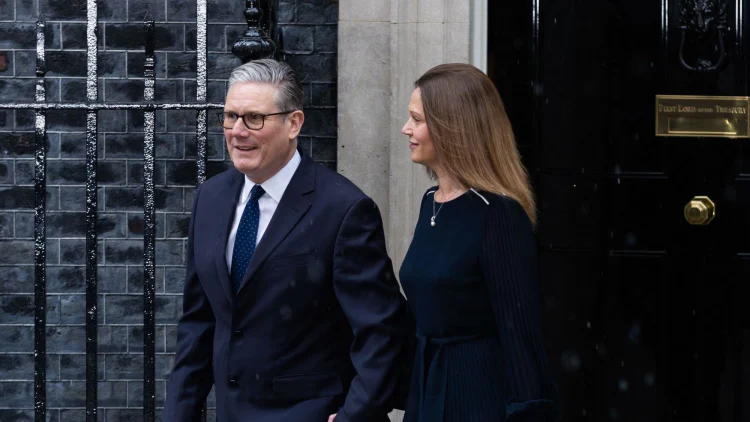
Exclusive: A junior minister called for Keir Starmer to step down as Prime Minister and set out a departure timetable in a private meeting on Wednesday afternoon, PoliticsHome understands.
It is understood that Josh Macallister, Labour MP for Whitehaven and Workington, told the Prime Minister to set out a timetable for his departure during a meeting with ministers. Starmer told the meeting that if there was a challenge, the NEC would set out an appropriate timetable.
When approached for comment, Macallister refused to comment on a private meeting.
There have been reports that other ministers have called for Starmer to set out a timetable for departure, including Shabana Mahmood, the Home Secretary.
Wes Streeting, the health secretary, is expected to launch a leadership bid on Thursday and formally challenge the Prime Minister. He met Starmer in Downing Street on Wednesday morning for a meeting which lasted less than 20 minutes.
To date, more than 90 MPs have called on Starmer to step down, while four ministers have resigned from government in protest.
Meanwhile, Andy Burnham is in the process of lining up a seat in Greater Manchester. Afzal Khan told PoliticsHome he would not be standing aside, but it has been reported that he is considering vacating his seat to let the Manchester Mayor into Parliament.
Ed Miliband has the numbers to stand in a leadership contest if Andy Burnham is unable, his allies have told PoliticsHome. The Energy Secretary is understood to be considering running for Labour leader if Streeting triggers a contest.


A chronic condition which affects 1 in 8 people with ovaries worldwide is to be renamed to better reflect symptoms and hopefully lead to a higher diagnosis rate. Following a fourteen-year patient-led campaign, polycystic ovary syndrome (PCOS) will be renamed polyendocrine metabolic ovarian syndrome (PMOS).
The name change was announced in a paper published in The Lancet and presented at the European Congress of Endocrinology in Prague. Experts said that by focusing only on cysts, the previous name meant many struggled to get a diagnosis and have their condition treated.
The paper says:
The term PCOS is inaccurate, implying pathological ovarian cysts, obscuring diverse endocrine and metabolic features, and contributing to delayed diagnosis, fragmented care, and stigma, while curtailing research and policy framing.
PCOS gets a new name
PMOS will be characterised by fluctuations in hormones, affecting metabolic and mental health, skin, and the reproductive system, irregular menstrual cycles, difficulty getting pregnant, and links to type 2 diabetes and cardiovascular disease, not just ovaries and cysts.
What is often missed is that because it affects hormones, people with the condition often have a higher resistance to insulin. This can mean a higher chance of type 2 diabetes, and it can be harder to treat.
Despite the condition previously having the word ‘polycystic’ in it, experts were particularly keen to change the name as it’s been proven that people with PMOS don’t have any increase in abnormal cysts on the ovaries.
By including polyendocrine, the new name recognises that it’s a condition that affects the endocrine system, the network which creates and releases hormones around the body, not just the reproductive system.
The name change was the result of 14 years of global collaboration, led by endocrinologists working with 56 patient and professional organisations around the world. After a survey answered by 22,000 people and multiple international workshops, 86% of participants agreed the condition needed a new symptom-based name.
Professor Helena Teede, endocrinologist and director of Monash University’s Monash Centre for Health Research & Implementation, spearheaded the campaign after decades of researching the condition.
What we now know is that there is actually no increase in abnormal cysts on the ovary, and the diverse features of the condition were often unappreciated. It was heartbreaking to see the delayed diagnosis, limited awareness and inadequate care afforded those affected by this neglected condition.
While international guidelines have advanced awareness and care, a name change was the next critical step towards recognition and improvement in the long-term impacts of this condition.
Supporting ALL women
While participants and experts knew a name change was needed, it was important that the new name reflected all involved from all over the world and didn’t create further stigma.
As Teede explained at the conference:
While ‘reproductive’ may be a more accurate direct term to cover all of the abnormalities in the ovary, but also in the endometrium and in the reproductive health during pregnancy, it also carries very significant stigma,” Teede said.
There are parts of the world where labelling a woman as having a reproductive condition is directly related to her value and worth in society, where cultural implications were enormous. For that reason, we spent a great deal of time on this, both in the surveys and also in the workshops. The terms that were agreed on were polyendocrine, metabolic, and ovarian. The next step was to bring them together in a new name.
Professor Terhi Piltonen, International Androgen Excess and Polycystic Ovary Syndrome Society (AE-PCOS Society) President, said:
It was essential that the new name was scientifically correct but also considered across diverse cultural contexts to avoid certain reproductive terms that could heighten stigma and be harmful for women in some countries
Rachel Morman, of Verity, the UK PMOS charity, said:
This shift will reframe the conversation and demand that it is taken as seriously as the long-term, complex health condition it is.
There will be a three-year transition period for the new name, which will be supported by a global education and awareness campaign aimed at health professionals, governments and researchers around the world. The new name will be fully implemented in the 2028 International Guideline update.
Featured image via Tribune

Nakamoto revenue jumps, but Q1 loss hits $238.8M

Phillies’ Alec Bohm gets expected trade update after years of rumors

M5 Max 16-inch MacBook Pro vs Samsung Galaxy Book6 Ultra: Compared

Manchester United reach agreement with Casemiro over contract clause amid transfer speculation

US brings back mandatory military draft registration

Steven Gerrard disagrees with Gary Neville over ‘shock’ Chelsea and Arsenal claim | Football


-
 Crypto World6 days ago
HarrisX Poll Found 52% of Registered Voters Support the CLARITY Act
-

 Fashion6 days ago
Weekend Open Thread: Marianne Dress
-

 Crypto World7 days ago
Upbit adds B3 Korean won pair as Base token gains Korea access
-
 NewsBeat7 days ago
NCP car park operator enters administration putting 340 UK sites at risk of closure
-

 Fashion3 days ago
Coffee Break: Travel Steam Iron
-

 Tech4 days ago
Auto Enthusiast Carves Functional Two-Stroke Engine from Solid Metal
-

 Fashion3 days ago
What to Know Before Buying a Curling Wand or Curling Iron
-

 Politics2 days ago
What to expect when you’re expecting a budget
-
 Business5 days ago
Ignore market noise, India’s long-term story intact, say D-Street bulls Ramesh Damani and Sunil Singhania
-

 Politics5 days ago
Politics Home Article | Starmer Enters The Danger Zone
-

 Tech3 days ago
GM Agrees To Pay $12.75 Million To Settle California Lawsuit Over Misuse Of Customers’ Driving Data
-

 Politics7 days ago
Simon Cowell Says He Was ‘Horrible’ To Susan Boyle During BGT Audition
-

 Entertainment6 days ago
General Hospital: Ric & Ava Bombshell – Ric’s Massive Secret Exposed!
-

 Entertainment7 days ago
Why David Letterman Called CBS ‘Lying Weasels’
-
Entertainment7 days ago
Hayden Panettiere reveals she's estranged from mom, addresses brother Jansen's sudden death: 'I was floored'
-
 Entertainment7 days ago
Paramount+’s ‘Landman’ Season 3 Gets Promising New Update From Returning Director
-

 Sports6 days ago
Bayern Munich vs PSG UEFA Champions League SF2 live match time, streaming | Football News
-

 Entertainment5 days ago
YNW Melly Denied Bond Again Ahead Of Double Murder Retrial
-

 Tech2 days ago
GM agrees to $12.75M California settlement over sale of drivers’ data
-

 Politics7 days ago
Euphoria Creator Praises Sydney Sweeney Amid Season 3 Scenes Backlash
You must be logged in to post a comment Login