
Business
Is Kuwait International Airport Open Today? Airport Remains Closed to Commercial Flights Due To Drone Strikes


KUWAIT CITY — Kuwait International Airport (KWI) stayed largely closed to regular commercial passenger traffic Monday as authorities continued safety assessments and repairs following a series of Iranian-linked drone attacks that damaged radar systems, fuel storage facilities and infrastructure since late February 2026.

The Directorate General of Civil Aviation (DGCA) and the Public Authority for Civil Aviation have suspended most operations, with no confirmed reopening date announced. Flight tracking sites and the official airport website showed virtually no scheduled arrivals or departures, displaying messages prompting travelers to contact airlines directly. Kuwait Airways has suspended all flights indefinitely from KWI, rerouting some operations through alternative hubs such as King Fahd International Airport in Dammam, Saudi Arabia.
The troubles escalated with multiple drone strikes reported in late February and early March, including attacks on March 28 that damaged radar systems and sparked fires at fuel depots. Additional strikes in early April targeted fuel tanks, causing large fires and further structural damage to Terminal 1 and runways. Officials described one incident as a “brazen attack” on critical infrastructure, with smoke visible from affected areas and emergency teams responding to contain blazes.
As of April 6, 2026, the airport has been effectively shut to standard commercial traffic for more than five weeks. Some limited cargo or military-related movements may continue under strict controls, but civilian passenger flights remain heavily disrupted or canceled. FlightStats reported excessive and increasing delays where any activity occurred, while Flightradar24 and other trackers showed near-zero commercial operations.
Travelers face significant chaos. Hundreds of passengers have been stranded or forced to rebook through neighboring countries. Kuwait Airways advised customers to check with local offices or the airport for updates, with many long-haul routes to destinations such as London, New York, Geneva and regional hubs either canceled or suspended. Some airlines have implemented hybrid ground-and-air transfer arrangements via Saudi Arabia to maintain limited connectivity.
The closures stem from both physical damage and precautionary airspace restrictions imposed amid heightened regional tensions involving the U.S., Israel and Iran. Kuwait’s airspace has been closed to most commercial civilian flights since late February, with air defense operations taking priority. Even after repairs, full resumption will require safety inspections, clearance of restricted airspace and confirmation that infrastructure meets international aviation standards.
Kuwait International Airport, one of the busiest in the Gulf with millions of passengers annually before the crisis, serves as a key hub for Kuwait Airways and several international carriers. The prolonged shutdown has sent shockwaves through regional travel, affecting tourism, business travel and expatriate movements in a country heavily reliant on foreign labor and oil-driven commerce.
Authorities have held cabinet-level meetings focused on aviation recovery, economic safeguards and coordination with international partners. Repair timelines remain unclear, with estimates ranging from several weeks to months depending on the extent of damage to radar, terminals, runways and fuel systems. No casualties were reported in the strikes, but the psychological and economic impact on travelers and the aviation sector has been significant.
Regional ripple effects include increased pressure on alternative airports in Saudi Arabia, the UAE, Bahrain and Qatar. Some carriers have added or expanded flights from those hubs to accommodate displaced passengers. Jazeera Airways and other low-cost operators have adjusted networks, with some launching or restarting routes that bypass Kuwait temporarily.
For passengers holding tickets involving KWI, airlines recommend checking flight status frequently and preparing for rebooking or refunds. Many have faced difficulties contacting customer service amid high call volumes. Travel insurance claims related to disruptions are expected to rise, while some governments have issued or updated advisories urging caution in the region.
The situation highlights the vulnerability of Gulf aviation infrastructure to geopolitical conflicts. Previous incidents, including temporary airspace closures and refueling interruptions, caused shorter disruptions, but the current series of drone attacks has caused more sustained damage. Smoke from fuel facility fires and reports of panic in terminals during incidents underscored the severity.
Kuwait’s government has activated emergency response protocols, with civil defense and military units involved in securing the site and supporting repairs. International aviation bodies are monitoring developments, though no formal global alerts beyond standard conflict-zone advisories have been issued.
As Monday progressed, scattered reports mentioned temporary refueling interruptions causing further delays on any limited departing flights, according to statements from the General Authority for Civil Aviation. However, the broader picture remained one of suspended operations rather than normal activity with delays.
Travelers planning trips to or through Kuwait are urged to contact their airlines well in advance and monitor official channels, including the Kuwait Airport website and Kuwait Airways updates. No immediate resumption of full services is expected, with some advisories suggesting the situation could persist into mid-April or beyond.
The prolonged closure has broader economic implications for Kuwait, a nation where aviation supports significant expatriate flows and business ties. Oil sector workers, medical tourists and family visitors have been particularly affected.
While exact repair costs and timelines remain undisclosed, officials emphasize that safety remains the top priority. Full operations will resume only after comprehensive assessments confirm the airport meets all required standards.
In the meantime, passengers are advised to explore alternative routes via neighboring Gulf states. Some carriers have offered flexible rebooking policies or compensation where applicable under international regulations.
The events at Kuwait International Airport serve as a stark reminder of how regional conflicts can rapidly disrupt global travel networks. As repairs continue and diplomatic efforts unfold, travelers and airlines alike await clearer signals on when normal operations might return to this vital Gulf hub.
Anyone affected by cancellations should retain all documentation for potential claims and stay updated through reliable sources. The situation remains fluid, with new developments possible as assessments progress.


Long Player believes oil and gas is a boom-bust, cyclical industry. It takes patience, and it certainly helps to have experience. He has been focusing on this industry for years. He is a retired CPA, and holds an MBA and MA.
He leads the investing group Oil & Gas Value Research. He looks for under-followed oil companies and out-of-favor midstream companies that offer compelling opportunities. The group includes an active chat room in which Oil & Gas investors discuss recent information and share ideas. Learn more.
Analyst’s Disclosure: I/we have a beneficial long position in the shares of XOM CVX either through stock ownership, options, or other derivatives. I wrote this article myself, and it expresses my own opinions. I am not receiving compensation for it (other than from Seeking Alpha). I have no business relationship with any company whose stock is mentioned in this article.
Disclaimer: I am not an investment advisor, and this article is not meant to be a recommendation for the purchase or sale of stock. Investors are advised to review all company documents and press releases to see if the company fits its own investment qualifications.
Seeking Alpha’s Disclosure: Past performance is no guarantee of future results. No recommendation or advice is being given as to whether any investment is suitable for a particular investor. Any views or opinions expressed above may not reflect those of Seeking Alpha as a whole. Seeking Alpha is not a licensed securities dealer, broker or US investment adviser or investment bank. Our analysts are third party authors that include both professional investors and individual investors who may not be licensed or certified by any institute or regulatory body.
Business
GameStop Shares Dip Slightly as Ryan Cohen Acquisition Buzz Keeps Meme Stock Volatile in 2026
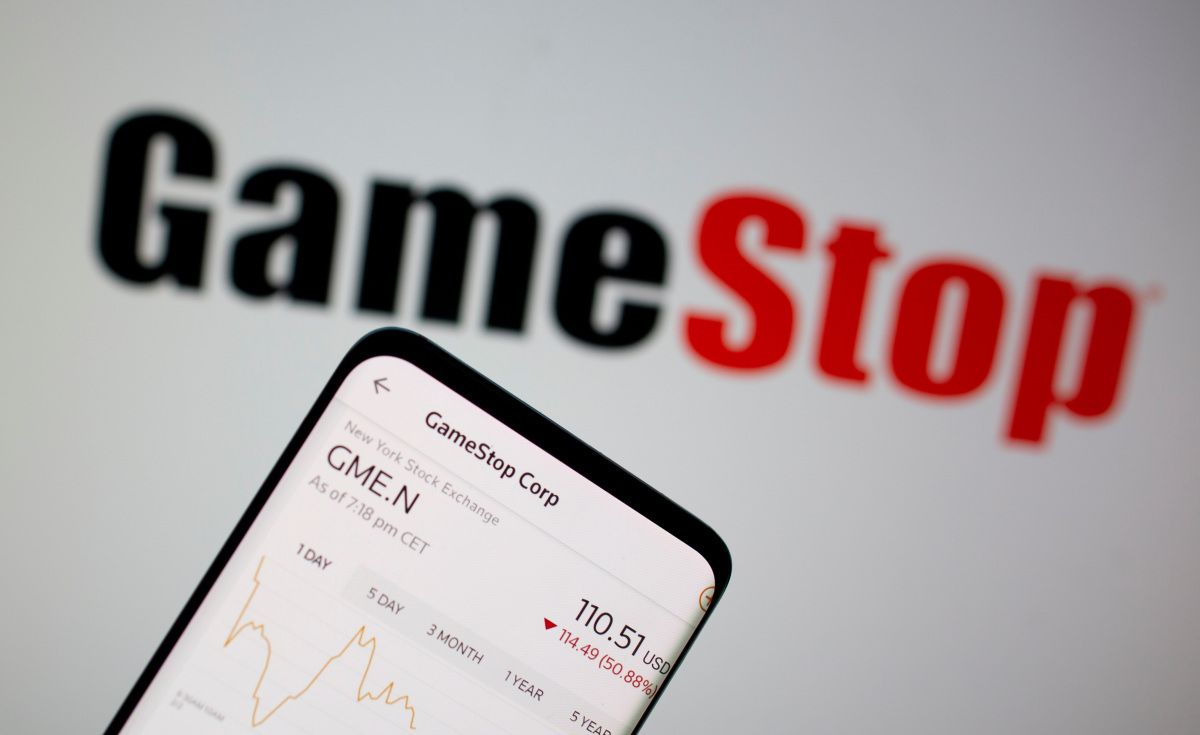
NEW YORK — GameStop Corp. shares traded near $23.12 in afternoon action Monday, down $0.24 or 1.01%, as the video game retailer continued to draw intense investor attention amid speculation over CEO Ryan Cohen’s plans for a major acquisition and the company’s massive cash reserves.

The stock has shown resilience in early 2026, up roughly 15-20% year-to-date despite ongoing declines in core retail sales. Trading remained relatively light on the post-holiday Monday, with volume below recent averages, reflecting the meme stock’s sensitivity to news flow rather than broad market moves.
GameStop’s transformation under Cohen has shifted focus from traditional brick-and-mortar video game sales to a potential holding company model. The company ended fiscal 2025 with a “fortress” balance sheet boasting approximately $8.83 billion in cash and equivalents, providing significant dry powder for strategic moves.
In late March 2026, GameStop reported fourth-quarter and full-year results. Net sales for the fourth quarter fell to $1.104 billion from $1.283 billion a year earlier, missing some expectations. However, gross profit rose 6.4% to $386.8 million, operating income increased to $135.2 million, and adjusted net income showed strength. For the full fiscal year, net income reached $418.4 million compared with $131.3 million previously.
Cohen, who also serves as chairman, has signaled ambitious plans. In interviews, he described pursuing a “very, very, very big” acquisition of a larger consumer or retail company that could prove “transformational.” Analysts and investors speculate the deal could deploy a substantial portion of the cash pile and aim to elevate GameStop’s market value toward $100 billion over time.
The board granted Cohen a landmark performance-based stock option award in January 2026 — entirely “at-risk” compensation tied to ambitious market capitalization targets starting at $20 billion and scaling up to $100 billion. Cohen has put his own capital behind the vision, purchasing additional shares in early 2026, including blocks worth millions at average prices around $21.
Short interest and retail investor enthusiasm remain key drivers of volatility. While the intense 2021 short squeeze has cooled, GME continues to rank among meme stocks with dedicated online followings. Year-to-date performance has outpaced several other former meme names, fueled by acquisition rumors and Cohen’s conviction signals.
Core retail operations face ongoing challenges. Revenue has declined as consumers shift toward digital downloads and new console cycles mature. The company has reduced its physical store footprint while exploring e-commerce, collectibles and potential new ventures. Bitcoin holdings have also been noted as a diversifying asset on the balance sheet.
Wall Street coverage remains limited and mixed. Some analysts maintain “Hold” ratings with price targets near $26, citing the cash hoard and optionality from Cohen’s strategy. Others highlight risks: declining sales trends, execution challenges in any large acquisition, and the stock’s history of sharp swings driven by sentiment rather than fundamentals.
Options activity shows mixed sentiment, with notable interest in both calls and puts reflecting uncertainty over the next catalyst. The 52-week range has spanned roughly $19.93 to $35.81, underscoring persistent volatility.
Supporters view Cohen’s Chewy background and activist roots as assets for reinventing GameStop beyond gaming retail. Critics argue the company risks overpaying in a deal or failing to stem core business erosion while chasing growth. Regulatory notes include a recent FTC settlement related to reporting matters.
As of early April 2026, no specific acquisition target has been confirmed. Cohen has canceled some interviews citing inability to discuss “monumental” plans, adding to speculation. A special shareholder meeting expected around March or April was anticipated to address aspects of the performance award.
For long-term holders from the pre-2021 era, the stock remains dramatically higher than levels a decade ago, though far below 2021 peaks near $86 (split-adjusted). Recent performance has been more measured, with sideways trading punctuated by rumor-driven spikes.
GameStop’s story continues to captivate retail investors on platforms where community sentiment can influence short-term price action. The combination of a strong balance sheet, activist-style leadership and legacy brand keeps it on watchlists despite shrinking traditional revenue.
Looking ahead, investors await any updates on acquisition talks, first-quarter results later in 2026, and progress on strategic initiatives. Cohen’s all-at-risk compensation structure aligns his incentives closely with significant value creation, raising stakes for the coming months.
The broader market environment, including interest rates, consumer spending and tech/AI trends, could indirectly affect any pivot GameStop attempts. For now, the stock trades as a high-conviction, high-risk name where news on Cohen’s “big” plans could trigger sharp moves in either direction.
GameStop, founded in 1984 and headquartered in Grapevine, Texas, operates hundreds of stores across the U.S. and internationally, selling video games, consoles, accessories and collectibles. Under Cohen since 2021, it has raised capital, strengthened its balance sheet and reduced debt while exploring diversification.
Monday’s modest decline occurred against a backdrop of broader market caution, with the S&P 500 showing limited movement. GME’s price action remains largely detached from traditional retail metrics, driven instead by narrative and anticipation.
As April trading continues, all eyes remain on Grapevine for the next chapter in GameStop’s evolution from meme stock darling to potential diversified powerhouse — or the risks that come with such ambition.


Terry Chrisomalis is a private investor in the Biotech sector with years of experience utilizing his Applied Science background to generate long term value from Healthcare. He is the author of the investing group Biotech Analysis Central which contains a library of 600+ Biotech investing articles, a model portfolio of 10+ small and mid-cap stocks with deep analysis for each, live chat, and a range of analysis and news reports to help Healthcare investors make informed decisions.
Analyst’s Disclosure: I/we have no stock, option or similar derivative position in any of the companies mentioned, and no plans to initiate any such positions within the next 72 hours. I wrote this article myself, and it expresses my own opinions. I am not receiving compensation for it (other than from Seeking Alpha). I have no business relationship with any company whose stock is mentioned in this article.
Seeking Alpha’s Disclosure: Past performance is no guarantee of future results. No recommendation or advice is being given as to whether any investment is suitable for a particular investor. Any views or opinions expressed above may not reflect those of Seeking Alpha as a whole. Seeking Alpha is not a licensed securities dealer, broker or US investment adviser or investment bank. Our analysts are third party authors that include both professional investors and individual investors who may not be licensed or certified by any institute or regulatory body.


Other writing on Substack: https://yieldstrategies.substack.com/I am currently focused on income investing through either common shares, preferred shares, or bonds. I will occasionally break away and write about the economy at large or a special situation involving a company I’ve been researching in. I target two articles per week for publication on Monday and Tuesday.About My Background: Bachelors in history/political science, Masters in Business Administration with a specialization in Finance and Economics. I enjoy numbers. I have been investing since 2000. Professionally, I am the CEO of an independent living retirement community in Illinois.
Analyst’s Disclosure: I/we have no stock, option or similar derivative position in any of the companies mentioned, and no plans to initiate any such positions within the next 72 hours. I wrote this article myself, and it expresses my own opinions. I am not receiving compensation for it (other than from Seeking Alpha). I have no business relationship with any company whose stock is mentioned in this article.
Seeking Alpha’s Disclosure: Past performance is no guarantee of future results. No recommendation or advice is being given as to whether any investment is suitable for a particular investor. Any views or opinions expressed above may not reflect those of Seeking Alpha as a whole. Seeking Alpha is not a licensed securities dealer, broker or US investment adviser or investment bank. Our analysts are third party authors that include both professional investors and individual investors who may not be licensed or certified by any institute or regulatory body.

CBS to sell late-night hours to Byron Allen as Colbert show ends

The New Divide In ASEAN Debt
Business
Sydney House Prices Dip in Early 2026 as Affluent Suburbs Feel Pinch Amid Rate and Geopolitical Pressures
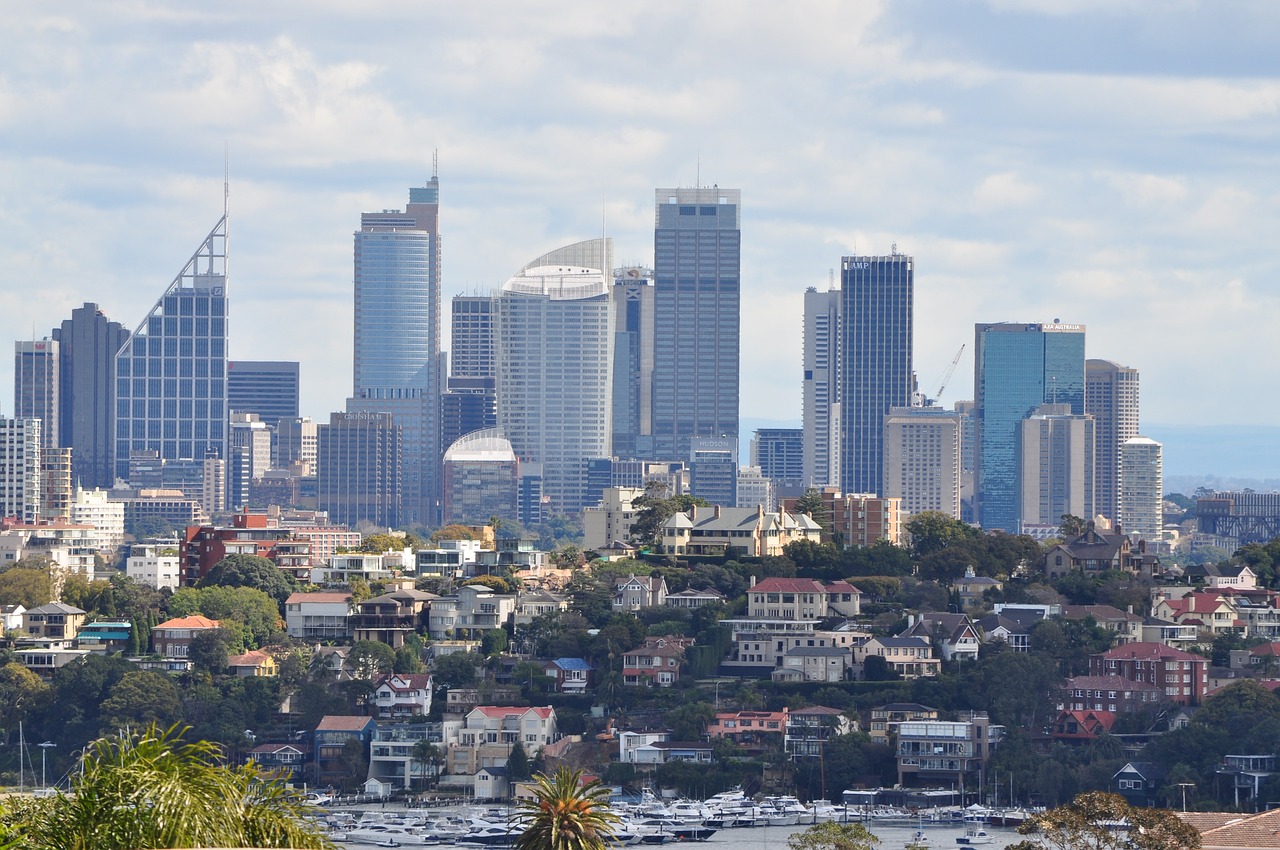
SYDNEY — Sydney’s housing market has hit a speed bump in the first quarter of 2026, with home values falling modestly as buyers grapple with higher borrowing costs, cost-of-living pressures and uncertainty from the Middle East conflict, according to the latest data from major property analysts.

Pixabay
Cotality’s Home Value Index showed Sydney dwelling values edged down 0.1% in February and 0.2% over the March quarter, with affluent suburbs hit hardest. The median dwelling value stood at approximately $1.296 million as of early April, reflecting annual growth of around 6% but a clear slowdown from stronger gains in 2025. House values softened more than units, with upper-quartile properties declining while more affordable segments showed relative resilience.
The downturn contrasts with optimistic forecasts issued at the start of the year. Domain’s 2026 Forecast Report predicted Sydney house prices would rise 7% over the calendar year, pushing the median toward $1.924 million by year-end and edging closer to the symbolic $2 million mark. KPMG projected more moderate growth of 5.8% for houses and 5.3% for units, while several major banks forecasted between 3% and 5% overall.
Analysts attribute the recent softness to the Reserve Bank of Australia’s February rate hike, which tightened serviceability and dampened buyer sentiment. Higher fuel prices linked to Middle East tensions have further squeezed household budgets, prompting some sellers to list properties preemptively in case values fall further. Affluent eastern and northern suburbs have seen the steepest quarterly declines, while outer western and southwestern areas with more affordable stock have held up better.
Despite the quarterly dip, longer-term fundamentals remain supportive. Chronic undersupply of housing, strong population growth driven by migration, and low vacancy rates in the rental market continue to underpin demand. Rental growth has remained robust, with house rents up around 5.7% annually, reinforcing investor interest particularly in units.
SQM Research’s Louis Christopher revised forecasts downward in March, warning of potential falls of up to 6% in Sydney over 2026 if interest rate hikes materialize as priced by futures markets. Other voices, including PropTrack and Domain, maintain that any correction will be mild and that growth should resume as the year progresses, especially if inflation moderates and rate relief eventually arrives.
The market split is widening. Lower-quartile house values in Sydney rose 0.8% in one recent month while upper-quartile values fell 0.9%, highlighting how affordability constraints are shifting competition toward cheaper segments. First-home buyers face particular challenges, with entry-level house prices around $1.15 million requiring years of saving for a deposit.
Units have shown greater resilience than detached houses. The median unit value sits near $903,000, with some analysts forecasting 5-6.5% growth in 2026 as investors seek relatively more accessible entry points and stronger rental yields.
Auction clearance rates have moderated from peaks seen in late 2025, and days on market have edged higher in premium segments, signaling a more balanced dynamic between buyers and sellers. Listings remain relatively constrained overall, which has prevented sharper declines.
Economists note that Sydney’s position as Australia’s largest jobs hub and gateway for international talent provides underlying support. However, persistent affordability issues — with median prices more than 10 times average household incomes in many areas — continue to limit participation from younger buyers and upgraders.
Perth, Brisbane and Adelaide have outperformed Sydney and Melbourne so far in 2026, with stronger monthly gains driven by tighter stock levels and more affordable entry points relative to the eastern capitals. This fragmentation underscores how national trends mask significant regional variations.
Looking ahead, forecasts for the remainder of 2026 vary widely. Bullish projections from Domain see Sydney house prices climbing toward $1.92 million by December, assuming steady income growth and continued supply constraints. More cautious outlooks, including those adjusted for geopolitical risks and potential further rate hikes, point to flat or slightly negative growth.
Buyers entering the market are advised to focus on areas with strong infrastructure links, such as Western Sydney near the new airport or established inner-ring suburbs with good amenity. Investors may find better value and rental returns in units, particularly in high-demand precincts.
Sellers in premium markets are encouraged to price realistically, as evidence shows over-ambitious listings are taking longer to sell. First-home buyers and investors alike should factor in potential interest rate volatility and prepare for a market that rewards patience and thorough due diligence.
The broader Australian property story in 2026 remains one of divergence. While Sydney and Melbourne have cooled, resource-driven and more affordable capitals continue posting solid gains. National house prices are still expected to rise overall, with KPMG forecasting 7.7% growth across the country, led by Perth and Brisbane.
For Sydney specifically, the coming months will test whether recent softness evolves into a deeper correction or proves a temporary pause before renewed upward momentum. Chronic supply shortages and demographic pressures suggest prices are more likely to moderate than crash, but elevated borrowing costs and external shocks could prolong the current flat period.
Prospective buyers and sellers should monitor Reserve Bank decisions, inflation data and global energy prices closely. Professional advice from mortgage brokers and property experts remains essential in a market where local conditions can vary dramatically between suburbs.
Sydney’s housing market, long one of the world’s most expensive, continues to evolve under the twin pressures of demand and affordability. While the dream of home ownership grows more distant for many, the city’s enduring appeal as an economic powerhouse ensures it will remain a focal point for property investors and families alike.
As April trading in the property sector unfolds, the latest data suggests caution in the short term but guarded optimism for the longer horizon — provided global and domestic headwinds do not intensify further.

I ventured into investing in high school in 2011, mainly in REITs, preferred stocks, and high-yield bonds, starting a fascination with markets and the economy that has not faded despite the years. More recently I have been combining long stock positions with covered calls and cash secured puts. I approach investing purely from a fundamental long-term point of view. On Seeking Alpha I mostly cover REITs and financials, with occasional articles on ETFs and other stocks driven by a macro trade idea.
Analyst’s Disclosure: I/we have no stock, option or similar derivative position in any of the companies mentioned, and no plans to initiate any such positions within the next 72 hours. I wrote this article myself, and it expresses my own opinions. I am not receiving compensation for it (other than from Seeking Alpha). I have no business relationship with any company whose stock is mentioned in this article.
Seeking Alpha’s Disclosure: Past performance is no guarantee of future results. No recommendation or advice is being given as to whether any investment is suitable for a particular investor. Any views or opinions expressed above may not reflect those of Seeking Alpha as a whole. Seeking Alpha is not a licensed securities dealer, broker or US investment adviser or investment bank. Our analysts are third party authors that include both professional investors and individual investors who may not be licensed or certified by any institute or regulatory body.


Exclusive-Amazon says it has reached deal with US Postal Service on package deliveries

Asset Class Scoreboard: March 2026

Hess Midstream: The Issue Continues To Be The Bakken Upstream Business (NYSE:HESM)

Blockchain and Stablecoins Bring New Competition to Banks

Victoria Woods Addresses Why She Refuses To Pay Father’s Bills


-

 NewsBeat4 days ago
Steven Gerrard disagrees with Gary Neville over ‘shock’ Chelsea and Arsenal claim | Football
-

 Business4 days ago
No Jackpot Winner and $194 Million Prize Rolls Over
-

 Fashion3 days ago
Weekend Open Thread: Spanx – Corporette.com
-

 Crypto World5 days ago
Gold Price Prediction: Worst Month in 17 Years fo Save Haven Rock
-

 Business21 hours ago
Three Gulf funds agree to back Paramount’s $81 billion takeover of Warner, WSJ reports
-
Crypto World6 days ago
Dems press CFTC, ethics board on prediction-market insider trades
-

 Sports2 days ago
India men’s 4x400m and mixed 4x100m relay teams register big progress | Other Sports News
-

 Business5 days ago
Login and Checkout Issues Spark Merchant Frustration
-

 Tech6 days ago
EE TV is using AI to help you find something to watch
-

 Sports6 days ago
Tallest college basketball player ever, standing at 7-foot-9, entering transfer portal
-
Tech7 days ago
Daily Deal: StackSkills Premium Annual Pass
-

 Tech7 days ago
Flipsnack and the shift toward motion-first business content with living visuals
-

 Sports7 days ago
Women’s hockey camp eyes fitness boost, tactics ahead of WC 2026 campaign | Other Sports News
-

 Crypto World7 days ago
U.S. rule change may open trillions in 401(k) funds to crypto
-

 Tech6 days ago
How to back up your iPhone & iPad to your Mac before something goes wrong
-

 Politics7 days ago
Usha Vance: Disney Hats Over MAGA Caps?
-
Crypto World7 days ago
Valinor raises $25m to put private credit on-chain
-

 Business7 days ago
Functional benefits brewing in coffee innovation
-

 Tech7 days ago
What Are The Biggest Limitations Of Supercomputers?
-

 Crypto World6 days ago
Bitcoin enters the public bond market as Moody’s gives a first-of-its-kind crypto deal a rating
You must be logged in to post a comment Login