The Betfred Grand National betting offer is one of the biggest promotions available in the run up to this year’s race at Aintree, with punters able to claim £50 in free bets from a £10 wager.
The welcome offer is one of the biggest available on UK betting sites, and the £50 bonus can be used entirely to bet on the Grand National meeting.
Betfred have a selection of other Grand National betting offers available for the meeting too, including enhanced odds, money back specials, extra places and winnings boosts.
Here’s how to claim Grand National free bets from Betfred, as well as more information on all their promotions for the Aintree spectacular.
What is the Betfred Grand National offer?
Advertisement
The Betfred Grand National offer is a ‘bet and get’ promo, with customers receiving £50 in free bets once they deposit £10 and place a £10 bet online. New customers must use either a debit card, bank transfer or Apple Pay to make their first deposit.
The Betfred welcome bonus has a low odds threshold, requiring a bet on a market with evens or greater to unlock the welcome bonus.
There are few stipulations regarding the Grand National bonus, with punters free to bet on whatever sport they wish when qualifying.
Free bets are available to use on all sports and are paid within 10 hours of settlement of your qualifying wager.
Advertisement
Grand National free bets are paid out as 5x £10 tokens and are available to use on horse racing. Three £10 tokens are for straight sports bets, while the other two are reserved for acca bets (minimum four selections). All can be used on the 2026 Grand National meeting.
Is there a Betfred bonus code for Grand National betting?
No. There’s no Betfred promo code required to unlock this offer. By clicking here – or any other Betfred links within this article – bettors will be taken straight to the sign-up page for the bet £10, get £50 offer.
Advertisement
Betfred Grand National betting offers and promotions
Like a lot of the top horse racing betting sites, Betfred have a range of Grand National betting offers that cover all three days of the meeting, not just Saturday’s big race.
BOG – Best odds guaranteed dictates that if your selection wins or places and the SP is greater Betfred will pay you out at bigger odds for bets made after 8am on the day of the race.
Extra places – Get extra places on Aintree races, offering greater chances for each-way payouts.
Advertisement
Multiply Your Odds – Betfred customers that place a Lucky 15/Lucky 31/Lucky 63 can get five times the odds even if they only get one winner on their Aintree multiples.
Lucky Bonus – Place a Lucky 15/31/63, Yankee, Canadian, or Heinz bet, and if all selections win, you’ll receive a 25 per cent winnings boost.
Rewards4Racing – Collect 1 Rewards4Racing point for every £1 staked on sports when you link your Rewards4Racing account to your Betfred account. Points can be used to purchase tickets for the big meetings, including Cheltenham, Royal Ascot and the Grand National.
10% Winning Tricast Bonus – Place a Tricast on any race and if all your selections run and win, Betfred pay you a bonus in cash of up to 10% on your total winnings.
Advertisement
Racing live streaming – All Cheltenham races will be streamed live on Betfred’s website and app.
Please gamble responsibly
Always remain within a budget and never exceed it. No matter what the circumstances, never chase your losses.
Anyone can lose a bet, even if they know a lot about horse racing. It is easy to get carried away when events such as the Grand National are taking place, so make sure to remain in control of your time and betting.
Advertisement
Whether you’re using betting sites, online casinos, slot sites or poker sites, bettors can use responsible gambling tools such as deposit limits, loss limits and self-exclusion among others.
In the UK there are a number of gambling addiction charities ready and prepared to help you with counselling, support groups and practical advice on how to help you recover if you do lose control:
We may earn commission from some of the links in this article, but we never allow this to influence our content. This revenue helps to fund journalism across The Independent.
AUGUSTA, Ga. — As our gaze returns to Augusta National this week, it’s easy to believe the most famous golf club in the world is rigid. That its traditions are intractable. That everything it owns behind the gates of 2604 Washington Road is unchanging.
The reality is “everything Augusta National owns” changes basically every month, and has been changing, quietly but significantly, for the last 25 years. In total, Augusta National-owned property has aggregated into a roughly $500 million empire thanks to more than $280 million in property acquisitions. But importantly — and perhaps unsurprisingly from such an exclusive and private club — these purchases are made under the veil of real estate secrecy, via obscurely named LLCs, which GOLF.com tracked and assembled, both in this map and in the video below.
It started a lot like most things Augusta National does, through a goal made with Masters patrons in mind:
Free parking.
Advertisement
The Masters has offered free parking as a patron perk for decades, but throughout the 80s and 90s, that parking space was limited. The lot would reach capacity early on its first-come, first-served basis, forcing those who arrived late to look for spots n the neighborhoods across Washington Road.
At the turn of the 21st century, the majority of patron parking was on what was then the northwest corner of the property — which you can see below — where the driving range and media center now exist. It’s impossible to know when the club decided it needed more parking, but an inflection point seemed to arrive around then. On July 3, 2001, an LLC named “Berckman Residential Properties” was formed, according to state corporation documents, and has been amassing parcels in the proximity of Augusta National ever since.
Masters parking circa 2004.
Google Earth
The same plot in 2025.
Google Earth
To the Augusta National newbie, Berckman Residential might be a curious name, but not to Masters regulars. In the late 1800s and early 1900s, the Berckman family owned the land that Augusta National now sits on, operating a horticultural nursery on these hills, introducing many species to the American South, some that serve as the floral inspiration to the most famous golf tournament in the world. Berckmans Place is the luxe hospitality hangout for Masters VIPs, in the southwest corner of the club. And Berckmans Road is the the street that was rerouted along the club’s western flank, around which new parking would manifest in the 2010s.
Advertisement
Berckman Residential Properties bought many homes and land plots west of the club, rezoning them for commercial use and repurposing them — with permission from city leaders — for Masters parking. The other 51 weeks of the year, the land sits largely vacant. The grass gets mowed, the edges stay trimmed. But until the aggregation of land was officially parked upon, it wasn’t always clear that Augusta National was the buyer, because the club never put its name on the purchases.
Only its address.
Buried in the property sale records of the vast majority of the parcels purchased near the club are near-constant references to the land’s true owner. In most cases, the owner’s address is listed as “2604 Washington Road,” the official address of Augusta National. In other cases, it’s P.O. Box 2086, the commercial P.O. Box of Augusta National.
Over the years, many obscurely named LLCs have used those addresses in official records filed in the Georgia Corporations Division. As the years have passed — allowing for dust to settle on certain purchases — those LLCs have been merged into Berckman Residential Properties before becoming something new from Augusta National.
Advertisement
Take “Big Tree LLC” and “The Greens on Washington Road Ventures LLC,” which combined to spend more than $16 million to displace what was an IHOP and a strip mall to build the Masters’ palatial global broadcast compound and content center. It’s impressive and industry-leading. It also was just the start.
One of those tracts of land was bought in 2000, just as the club started making moves on parking expansion along its opposite border. Most of the housing plots west of the course were purchased in the last 15 years, often in the $300,000 to $500,000 price range, according to hundreds of sale records reviewed by GOLF.com. While the sale prices often are two to three times the appraised values, a handful of properties have fetched a much steeper rate, like one holdout plot across the street from Berckmans Place. In 2012, the lot was privately owned, as its neighbors were being purchased and leveled. In 2013, the land sold for $3.56 million. In 2015, a new road had been paved right through the lot’s backyard, where a swimming pool once existed.
Land west of Augusta National circa 2008.
Richmond County Board of Assessors
Land used for parking west of Augusta National circa 2025.
Richmond County Board of Assessors
One homeowner famously refused to sell to Berckman Residential. The house at 1112 Stanley Road has seen almost all of its neighboring homes be razed to make way for Masters parking. The house is still there because its long-time and now late owners, Herman and Elizabeth Thacker, declined all of Augusta National’s advances.
Advertisement
“Where are we going to go?” Herman, who died in 2019, told GOLF.com in a 2017 interview. “This is home. We love it here.”
Still, there’s a Father Time element to ANGC’s real estate pursuits: the golf club will be here long after any of its neighbors.
Elizabeth owned the house until she died last summer. It is unclear to whom the Thackers passed down the land and home, or what will come of it. But many of the homes in the area are transferred into a trust or an estate and often are sold in the years that follow an original owner’s death. Some agreements are made to transfer the homes to Augusta National immediately upon their passing. As of the 2026 Masters, only a handful of properties southwest of the course remain unowned by Berckman Residential.
GOLF.com spoke with one of the holdouts: George Ransom, who lives on nearby Margate Drive. Ransom has seen the meaning of the Masters change to those in the area over the years. It was once a “giant party,” he said. Now, it feels like a “giant attraction, like Disneyland,” he said. While that shift has cost the club a pretty penny, Ransom said ANGC has been “very reasonable [neighbors] in every respect.”
Advertisement
But he also teased something important.
“They’ve got a 50-year plan,” Ransom said, “which we are a very small part of.”
Ah yes, The Plan.
In general terms, one could describe Augusta National’s reported “plan” as building outward, as Golf Digest writer Joel Beall extensively reported in 2024. Beall spoke with various club members and former employees to understand what the club and its crown jewel tournament could look like on a 30- or 40-year horizon. In essence, that will require accumulating even more property in every direction.
Advertisement
The club bought a public park in 2024 along its eastern border, and nearly every other parcel adjacent to it. Through WSQ, LLC, the club acquired the National Hills Shopping Center across Washington Road, turning one corner of the building into a new corporate hospitality named “Map and Flag.” Down Washington Road, WSQ, LLC also purchased the land that currently houses a Publix, next to where rideshare apps like Uber and Lyft drop off patrons. ANGC hasn’t pushed out Publix yet, but the bottom line is obvious. Club operations follow directly along these property purchases, even if just one week a year.
There used to be a Hooters on Washington Road, on land owned by WSQ, LLC. That was until Hooters in America filed for bankruptcy in early 2025 and decided to downsize its national footprint. Eight months later, the Hooters was leveled and graveled over. If nothing replaces it, no one will blink. If something does, it’ll be decided by Augusta National. That is how most things go in the area around the most famous club in the world. Tracking it all takes near-constant attention. And a calculator. One line in particular from that Golf Digest report rings most true. In regards to the money spent, one member said, “Whatever you want to guess, it’s going to be wrong.”
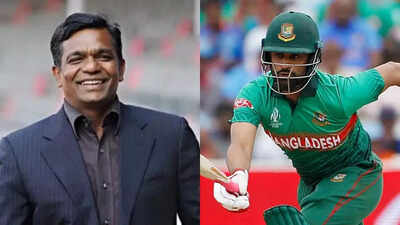
NEW DELHI: The Bangladesh government on Tuesday appointed former cricketer Tamim Iqbal as the president of the Bangladesh Cricket Board (BCB), and dissolved the current board of directors of the country’s cricketing body.The current president of BCB, Aminul Islam Bulbul, has been removed by the country’s National Sports Council (NSC), which formed an ad-hoc committee to run the day-to-day affairs till fresh elections are held.This development comes days after the BCB reached out to BCCI requesting the revival of bilateral ties.Tamim, 37, is the youngest BCB chief and will lead an 11-member ad-hoc committee that includes former Bangladesh captain Minhajul Abedin and former cricketer and TV commentator Athar Ali Khan.As per a report by news agency PTI, Bulbul was removed primarily due to the fiasco during the T20 World Cup where erstwhile interim government advisor Asif Nazrul didn’t allow the national team to visit India for the global event.Nazrul’s stand was to shift Bangladesh’s games from Kolkata and Mumbai to Sri Lanka as a mark of protest for removal of Mustafizur Rahaman from the IPL.During the whole issue, Bulbul was a mere bystander and over the past few days, six directors of the BCB resigned because of him.Former Bangladesh skipper and country’s greatest opener Tamim Iqbal has been named as head of the 11-member ad-hoc committee, whose duty would be to hold the cricket board’s election in the next 90 days (three months).According to NSC Director Aminul Ehsan, the decision to dissolve the current BCB board and put forth an ad-hoc committee has been informed to the International Cricket Council (ICC).While the ICC charter doesn’t allow government or external interference in board matters, it is unlikely that the global body will ban the Bangladesh board as a timeline to hold the elections has already been announced by the NSC.The 11 member ad-hoc committee comprise Tamim Iqbal (president), Athar Ali Khan, Rashna Imam, Mirza Yasir Abbas, Syed Ibrahim Ahmed, Minhazul Abedin Nannu, Ishrafil Khusroo, Tanzim Choudhury, Salman Ispahani, Rafiqul Islam, Fahim Sinha.
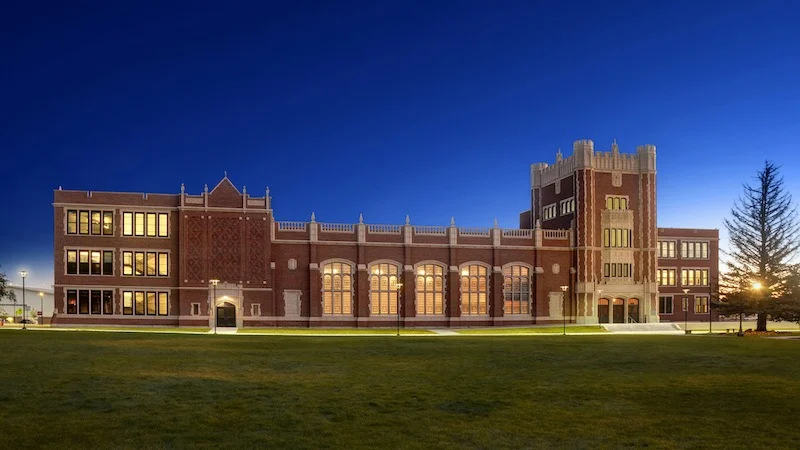
Here’s an up-to-date list of all NFL Players from Natrona County High School, Casper, Wyoming.
The list includes only those players who have played in a regular-season NFL game. Consequently, players taken in the upcoming draft will not be included until they have seen the field.
The League does not officially recognize players who appeared only in preseason exhibition games.
Natrona County High School is ranked as the No. 4 pro football player-producing high school in the state.
Advertisement
Wyoming has produced a total of 31 NFL players from 21 schools, with 4 pros currently active.
See where all the other schools in the Cowboy state rank here, with links to their respective players.
Hello, friends. And welcome to another edition of random Masters facts, tidbits of trivia that you can toss out at a watch party, apropos of nothing. They’re guaranteed to impress (or annoy) your friends.
Fun, right? Let’s play away.
1. Jack Nicklaus, who holds the record for most Masters wins (6), also shares the record for most Masters runner-ups: 4. Those close calls put him in good company. Ben Hogan and Tom Weiskopf were also four-time bridesmaids in the event.
2. The first Masters was held in 1934. But it wasn’t called the Masters. At its birth, it was known as the Augusta National Invitation Tournament.
Advertisement
3. In 1997, the year of his first Masters win, Tiger Woods opened with a 40 on the front side, then turned on the afterburners with a 30 coming in. Along the way, he played the par-5 15th with a driver and a wedge, stuffing his approach to six feet to set up eagle. Efforts to “Tiger-proof” the course weren’t far away.
4. In that same tournament, Woods played the back nine in a cumulative 16 under, one of 27 Masters records he set or tied that year.
5. Eagle roars sound different than other cheers. We hear them every at the Masters. But never were there more on a single hole in a single week than in 2015, when the 13th hole yielded 20 eagles, a championship record that still stands.
6. There have been four double eagles in Masters history, one on each of the par 5s. The first was by Gene Sarazen in 1935, with a 4-wood from 235 yards on the 15th hole. The most recent was Louis Oosthuizen in 2012, with a 4-iron from 253 yards on the 2nd hole.
Advertisement
7. After carding his deuce, Oosthuizen tossed his ball into the gallery, where it was caught by Wayne Mitchell of Pennsylvania, who didn’t hang on to the souvenir for long. At the request of then-Augusta National Chairman Billy Payne, Mitchell donated the ball to the club, and was reportedly given two lifetime badges to the tournament and a round at Augusta in return.
8. The record for most birdies in a single round is held by Anthony Kim, who bagged 11 on Friday in 2009. He also made two bogeys and a double for a seven-under 65.
9. In 1931, Augusta National co-founders Bobby Jones and Clifford Roberts purchased the original 365-acre property for $70,000. In 2025, Shane Lowry received $77,700 for finishing T42 in the event.
10. The highest score ever recorded on a single hole in the Masters? Unlucky 13. Three players lay claim to that dubious achievement. The first was Tommy Nakajima, who made a hash of the 13th hole in 1978, followed by Tom Weiskopf on the 12th hole in 1980. Then came Sergio Garcia in 2018. The Spaniard made his trece on the 15th hole.
Advertisement
11. A green jacket goes to the winner. Everybody knows that. But it wasn’t always so. That tradition didn’t start until 1949, the year Sam Snead collected the first of his three Masters titles, earning a colorful piece of apparel along the way.
12. Every year, the reigning champion hosts a dinner for all past champs. Everybody knows that. But it wasn’t always so. That tradition didn’t start until 1952, at Ben Hogan’s suggestion. The main dish that year: steak.
13. The single-round Masters scoring record, shared by Greg Norman and Nick Price, is 63, two more than the original number of Magnolia trees along Magnolia Lane.
Advertisement
14. Speaking of Magnolia Lane, the famed entrance road leading to the clubhouse measures 330 yards, just 20 yards shorter than the par-4 3rd hole.
15. The Masters begins with ceremonial tee shots. Everybody knows that. But it wasn’t always so. Honorary starters made their debut at the 1963 Masters, when Jock Hutchinson and Fred McLeod struck the opening salvos. The formal ceremony, though, had informal origins more than two decades prior. In 1941, the amateur great Francis Ouimet, fulfilling a request by Bobby Jones, served as the unofficial honorary starter. It was Ouimet’s only appearance at the Masters.
16. Jordan Spieth holds the record for most birdies in a single Masters (28). Nicklaus holds the record for most career birdies in the event (506).
17. In 2005, a 74-year-old Billy Casper shot a 34-over 106 in the opening round of the Masters, a score that would be a record-setting worst if it had in fact ever been recorded. Casper did not turn in his scorecard and withdrew from the event before his second round. So that 106 never became official. Neither did the 14 he carded on the par-3 16th hole.
Advertisement
18. They say the Masters doesn’t start until the back nine on Sunday. But at the inaugural Masters, in 1934, the back nine was the front nine and the other way around. In that first addition, today’s 10th hole served as the first hole. The nines were flipped the following year.
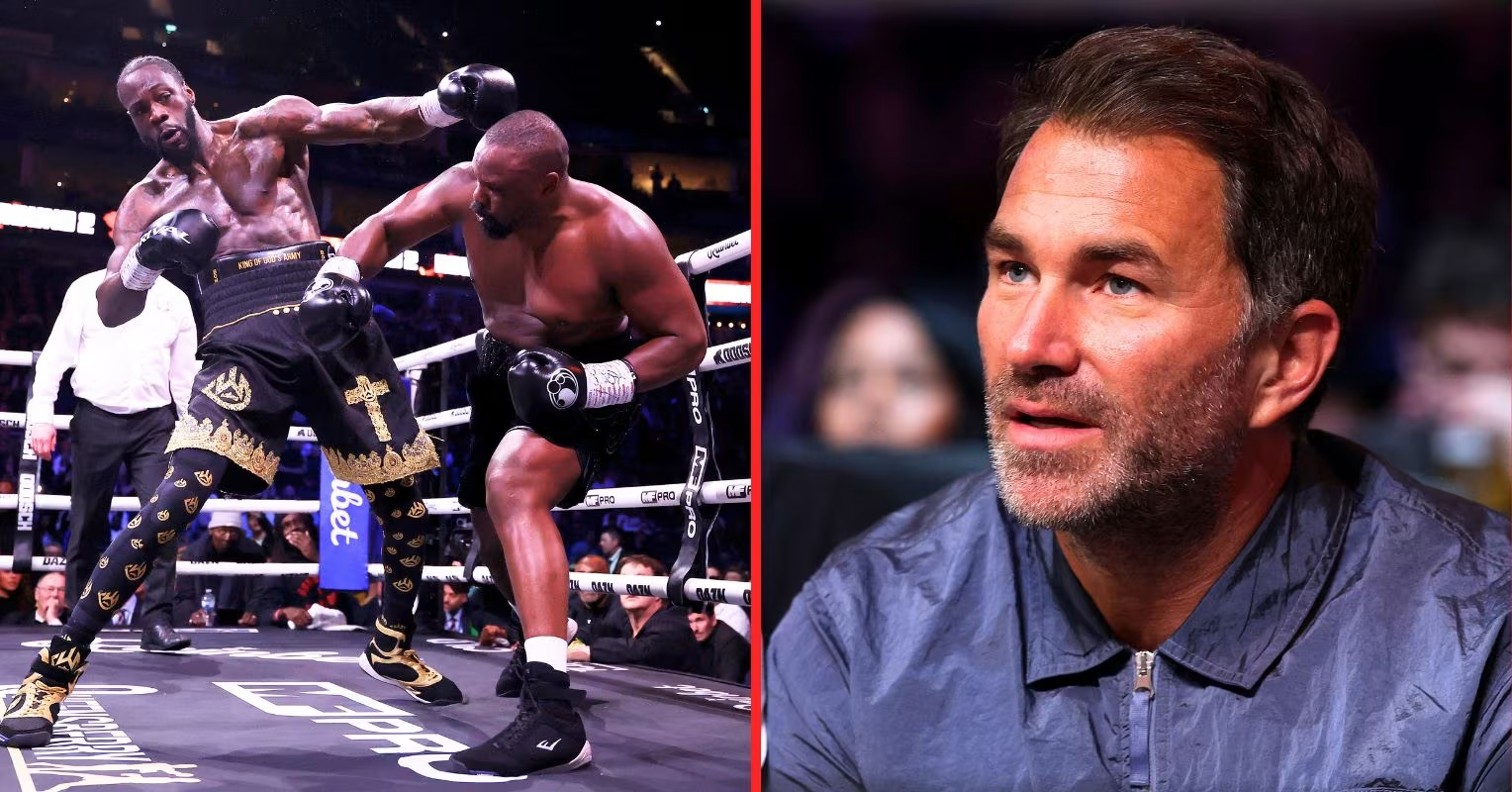
In what he has promised would be his farewell fight, Derek Chisora was trumped via split-decision on home turf by Deontay Wilder. Eddie Hearn, who promoted Chisora for some of the second half of his career, has revealed how he scored the bout.
In a drama-filled clash, it was 42-year-old Chisora who twice dropped to the canvas, with those two knockdowns ultimately costing ‘Del Boy’ the fight – although he could have been disqualified earlier on when his cornerman entered the ring.
Still, the bout seems to be a fitting end to the near two-decade long career of Britain’s cult hero heavyweight, but his retirement is yet to be formally confirmed, possibly due to the belief that he could have got the decision on Saturday night.
Advertisement
Speaking to Boxing King Media, Hearn admitted that he felt as though ‘The Bronze Bomber’ did enough to win the contest by two or three rounds.
“[It was] entertaining. I thought Wilder won by two or three rounds but it was a good fight, a competitive fight.”
In an interview with The Stomping Ground, Hearn expanded further on his verdict, disagreeing with the view of judge Phil Edwards, who scored the bout 115-112 in Chisora’s favour.
“It was tough for Del, I thought the right man won. Close fight, Del was amazing and I thought Wilder boxed well to be fair. He was under a lot of pressure, took some good shots and I thought he started to get his confidence a little bit, because his confidence has been lacking.
“I didn’t think that Del Boy won it by three rounds, what was it 115-112? I thought that he closed well and won the last round.”
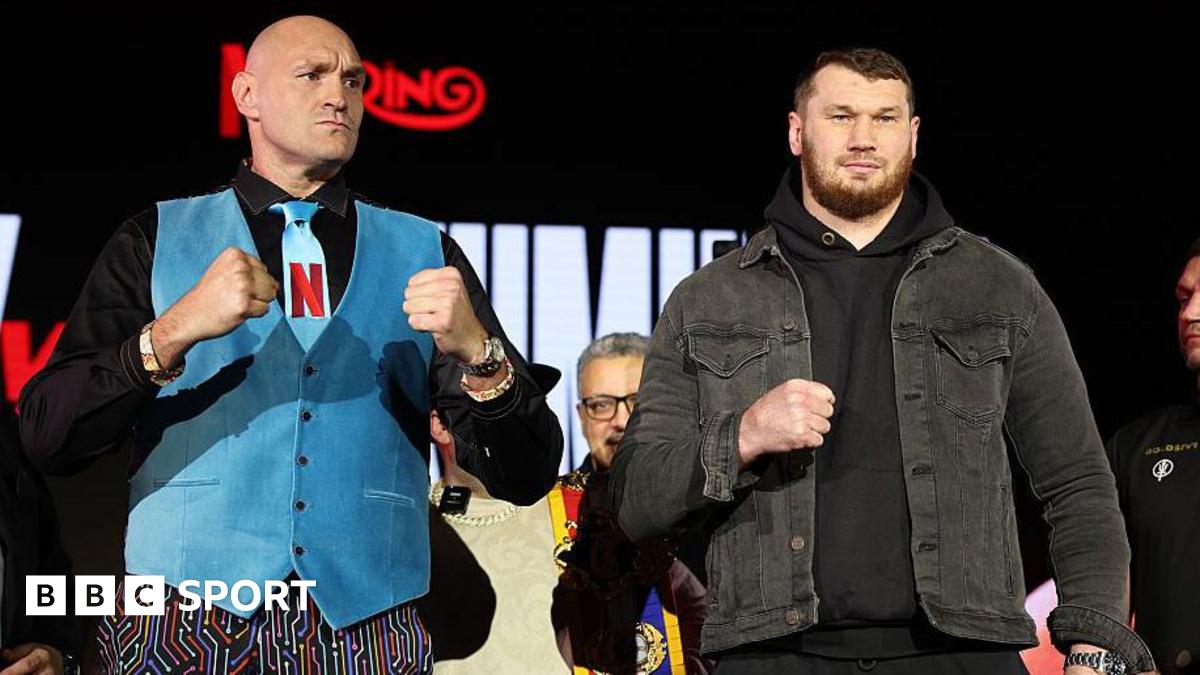
Despite only being a year apart in age, Fury and Makhmudov’s careers have followed very different paths.
Fury claimed the unified heavyweight title in 2015 by beating Wladimir Klitschko and then the WBC world title in 2020 when he beat Deontay Wilder.
The Briton has the better names on his record, having fought Usyk (twice), Derek Chisora (three times) and Dillian Whyte.
Makhmudov has a win over Dave Allen and Carlos Takam but has two losses in his career, to Guido Vianello and Agit Kabayel.
Advertisement
The Russian has stumbled when asked to step up to genuine contender level and was in truth a surprise opponent for Fury considering his lack of star quality and pedigree.
But he does have one advantage and that is activity. While Fury has sat on the sidelines for 15 months, Makhmudov fought twice in 2025 and 2024 and three times in 2023.
Fury is fighting in his 38th contest, while Makhmudov is in his 24th. There are a lot fewer miles on the clock for the away fighter, who has fought 69 rounds compared with Fury’s 254.
While he has fought far less impressive opponents, Makhmudov’s knockout rate is excellent at 90% while Fury’s is 71%.
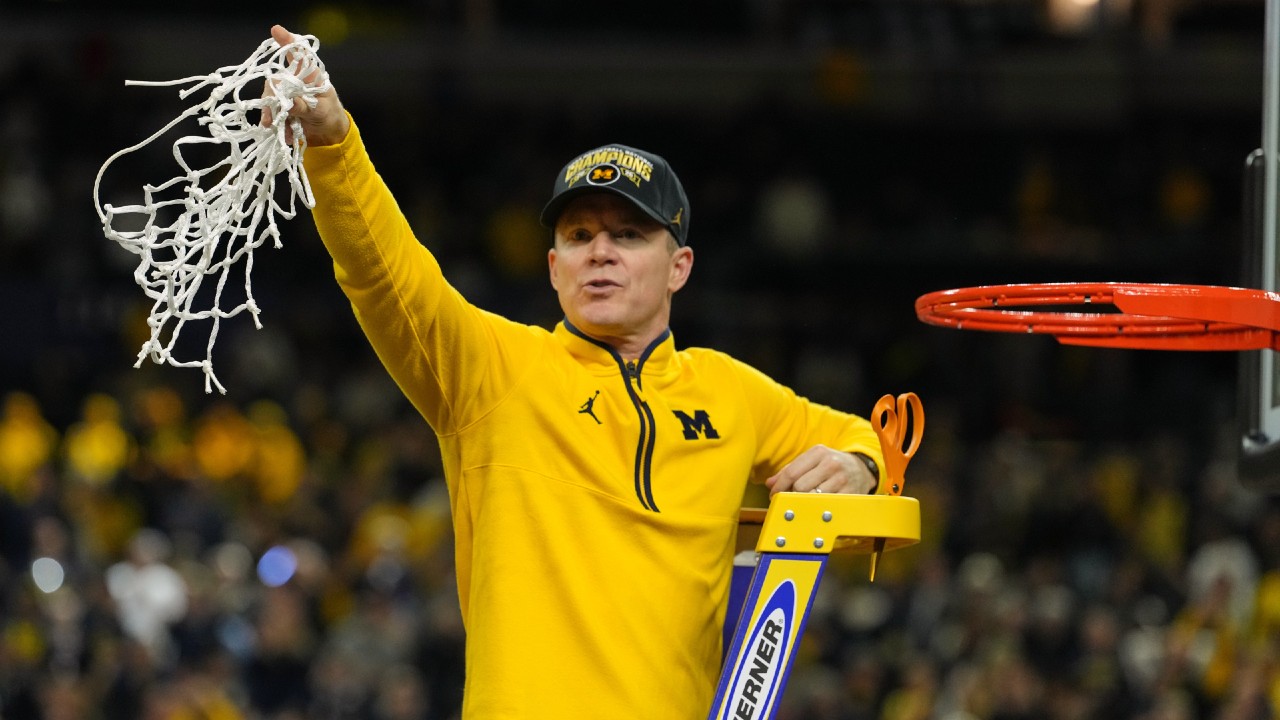
Elliot Cadeau scored 19 points to lead the University of Michigan Wolverines to a 69-63 victory Monday night over the University of Connecticut Huskies and capture the school’s first NCAA Men’s Division I national championship since 1989.
Yaxel Lendeborg, who suffered an injury during Michigan’s national semifinal against Arizona Saturday and whose status was up in the air leading into Monday’s national title game, added 13 points, while Morez Johnson Jr. had a 12-point, 10-rebound double-double in the win.
UConn was led by Alex Karaban’s 17 points and 11 rebounds.
The win cements a sterling start to coach Dusty May’s Michigan tenure. Just a year after leading the Wolverines to the Sweet 16, May captured his first-ever national title in just his second Final Four appearance — he previously reached the Final Four with Florida Atlantic in 2023.
Advertisement
May took over a floundering Michigan basketball program that had failed to reach the NCAA Tournament in the past two seasons, leading to coach Juwan Howard’s dismissal.
Interestingly enough, senior Connecticut centre Tarris Reed Jr. just missed out on being coached by May. He initially played his first two seasons of college basketball for the Wolverines under Howard, but transferred to the Huskies in the 2024 off-season.
Cadeau was named the Final Four’s Most Outstanding Player.
The national championship win caps off an outstanding season for the Wolverines that saw them finish with a 37-3 record and battle with Duke and Arizona all season long as the best team in the nation.
Advertisement
Considering the fact that the Wolverines blew the doors off Arizona and were able to handily control Dan Hurley and UConn, who were appearing in their third national championship game in four years, it’s safe to say that the 2025-26 NCAA season belonged to Michigan.
Here are a few more takeaways from the game.
Super-sized Wolverines prove to be too much
For all the strategy and scheme that can go into a game plan, basketball is actually a very simple game.
Advertisement
If you have a team that’s bigger, faster and stronger than the other guys, you’re probably going to win.
That was the case for Michigan for nearly every game it played this season, and Monday night’s national championship was no different.
Michigan’s starting five was monstrous, made up of seven-foot-three centre Aday Mara, six-foot-nine forwards Lendeborg and Johnson, six-foot-five guard Nimari Burnett and the lone non-huge exception being six-foot-one Cadeau, who still plays bigger and more physically than he actually is.
The game plan for the Wolverines against UConn, as it had been all season, was as simple as it gets: Pound the ball inside, kick it out for open threes if they’re there and run as much as possible because the team’s size, speed and strength can’t be contested against any other in the college game.
Advertisement
For proof of this, look no further than the fact that Michigan was abysmal from three-point range in the final, going 2-for-15 from the floor after coming into the game making 11.4 threes per contest during the tournament. But the Wolverines absolutely swallowed up the paint, outscoring UConn 36-22 inside and, most importantly, getting fouled as they went to the basket.
As well, the size of the Wolverines managed to come away with six blocks on the evening, neutralizing Reed’s post-up game, in particular, who finished just four-for-12 from the floor as the Huskies, in general, shot just 31 per cent from the field.
And the length and athleticism of Michigan seemed to bother Connecticut’s guards, as the Huskies made a number of uncharacteristic turnovers in the game.
Size matters in basketball, and while UConn isn’t exactly small, it’s nowhere near as big as Michigan is.
Advertisement
The bigger, better team won.
With that said, there is the elephant in the room and that’s the foul disparity between the two sides.
Michigan shot 28 free throws to UConn’s 16, making 25 of them, including a streak that saw them hit 20 straight.
Cadeau, alone, went eight-for-nine from the charity stripe, contributing to his big game.
Advertisement
There was also the matter of the controversial flagrant foul called on Karaban with just a little over three minutes to play in the first half that flipped the game on the Huskies a little, turning a 25-23 lead into a 27-25 deficit, allowing the Wolverines to go into halftime with a 33-29 lead.
To say nothing of the early foul trouble this all put UConn into, including forcing key Connecticut guard Solo Ball to sit with four fouls at the 16:20 mark of the second half.
All of what has been described happened in Monday’s game.
So then, was Michigan gifted this championship by the officiating? Absolutely not.
Advertisement
The Wolverines recognized that their threes weren’t dropping and instead played an aggressive style of basketball to put the onus on the officials, sending them to the line where they converted.
The Huskies have no one to blame but themselves as their aggressive “hands-y” defence ended up getting exploited by Michigan.
If they didn’t want to give up that many free throws, they should have, perhaps, tried playing some defence without fouling.
Dan Hurley’s still a pretty good coach
Advertisement
Despite how apparently overmatched the Huskies were in Monday’s game, it was still a close affair, with UConn fighting and scrapping right to the very end, even making it as close as a four-point game with 37 seconds to play.
This was a testament to Hurley’s game plan, which largely worked.
Given the differences in sheer, raw physicals between Michigan and UConn, the only way the Huskies were going to win was if Hurley could dial up some magic.
The spell he chose to weave on Monday appeared to be to try to drag Michigan into the mud and hopefully make enough shots to win it.
Advertisement
Neither team cracked 70 points on the evening, so Hurley did effectively manage to slow the game down to give his team a shot at the end. The second part of that equation proved to be the real kicker, however.
After going five-for-15 from three-point range in the first half, UConn went ice cold in the second half, going four-for-18 from distance, including a streak that saw them miss 11 straight triples over nearly the first 15 minutes of the second half.
No matter how well you do the other things, if you don’t hit shots, you aren’t going to win. Something that even the bombastic Hurley was able to live with.
“We just had to make more shots,” Hurley said on the national championship’s post-game broadcast. “We had great opportunities, I thought, from three.”
Advertisement
And love him or hate him, Hurley, objectively, is a good coach and likely isn’t going anywhere anytime soon.
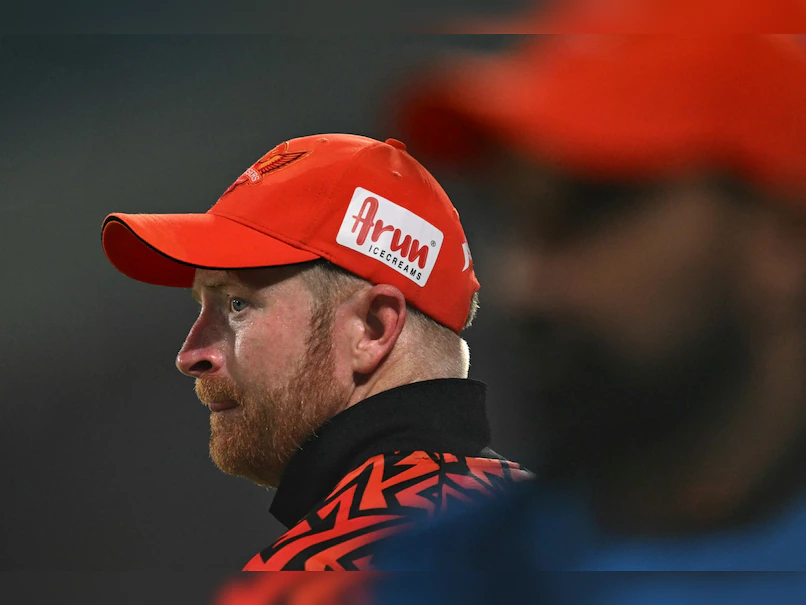
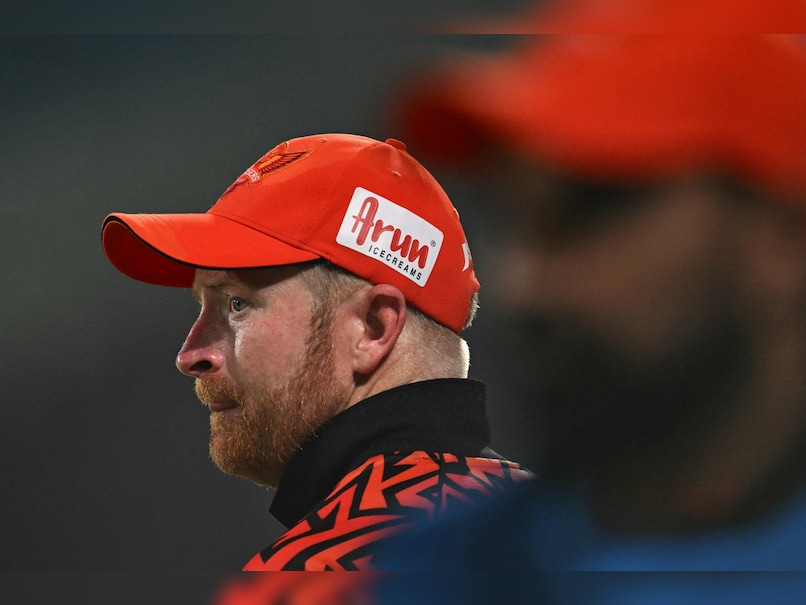
Arguably the most fearsome team in the Indian Premier League (IPL) from the batting standpoint, Sunrisers Hyderabad (SRH), haven’t enjoyed a particularly pleasant start to the 2026 season. With two defeats in three matches, SRH have plenty to improve on, as far as the remainder of the campaign is concerned. As pundits sit down and dissect the issues within the Hyderabad roster, the lack of experience in the bowling unit is clearly visible. With Pat Cummins not available for selection yet, the bowling unit becomes weaker. But the team’s hard-hitting wicket-keeper batter Heinrich Klaasen feels the batters are as much to blame for the poor start.
Responding to a query by NDTV, Klaasen stressed that the batters have been about 40 runs shy of their desired target in the first three games of the season. With Pat Cummins yet to be declared fit and the franchise losing Brydon Carse, sustaining an injury, SRH have had to rely on some rookie bowlers to step up.
Yet, Klaasen isn’t blaming the bowling unit for the two defeats, saying the batters have also not been able to hit the desired targets.
Advertisement
“I think we have messed up about 40 runs over the last three games, so there is still a lot of work for our batters to do. Obviously, if you miss a player like Pat Cummins in any team or any format, that is a big loss,” Klaasen said. Heinrich Klaasen spoke on JioStar Press Room ahead of TATA IPL 2026 – Rivalry Week, starting from 12th to 18th April.
“Losing Brydon Carse as well, after he got hit on the hand, really did not help our plans either. However, the rest of the group is super experienced, especially our pace department. The wickets have been good in the two games where we struggled, we simply did not execute with the bat like we wanted to,” he added.
The South African further explained the team’s philosophy, saying putting 220-230 runs on the board in every single match is the job of the batting team, post which the role of the bowlers comes into play. Hence, calling the bowling lineup ‘weak’ isn’t right according to Klaasen.
“It is easy to say our bowlers lack experience or are under the pump, but in the two games we lost, the batters left about 20 to 30 runs on the board. When we played KKR, we put enough runs on the board and that is our job. We need to reach that 220 or 230 mark, as that is why we set up the team the way we did, to give our bowlers a proper chance of defending,” he concluded.
Advertisement
Catch TATA IPL 2026’s Rivalry Week, April 12-18, LIVE and Exclusive on JioHotstar and Star Sports Network
Featured Video Of The Day
IPL 2026 News | RCB Outplay CSK For 2nd Win On Trot, Ruturaj Gaikwad & Co Suffer 3rd Loss
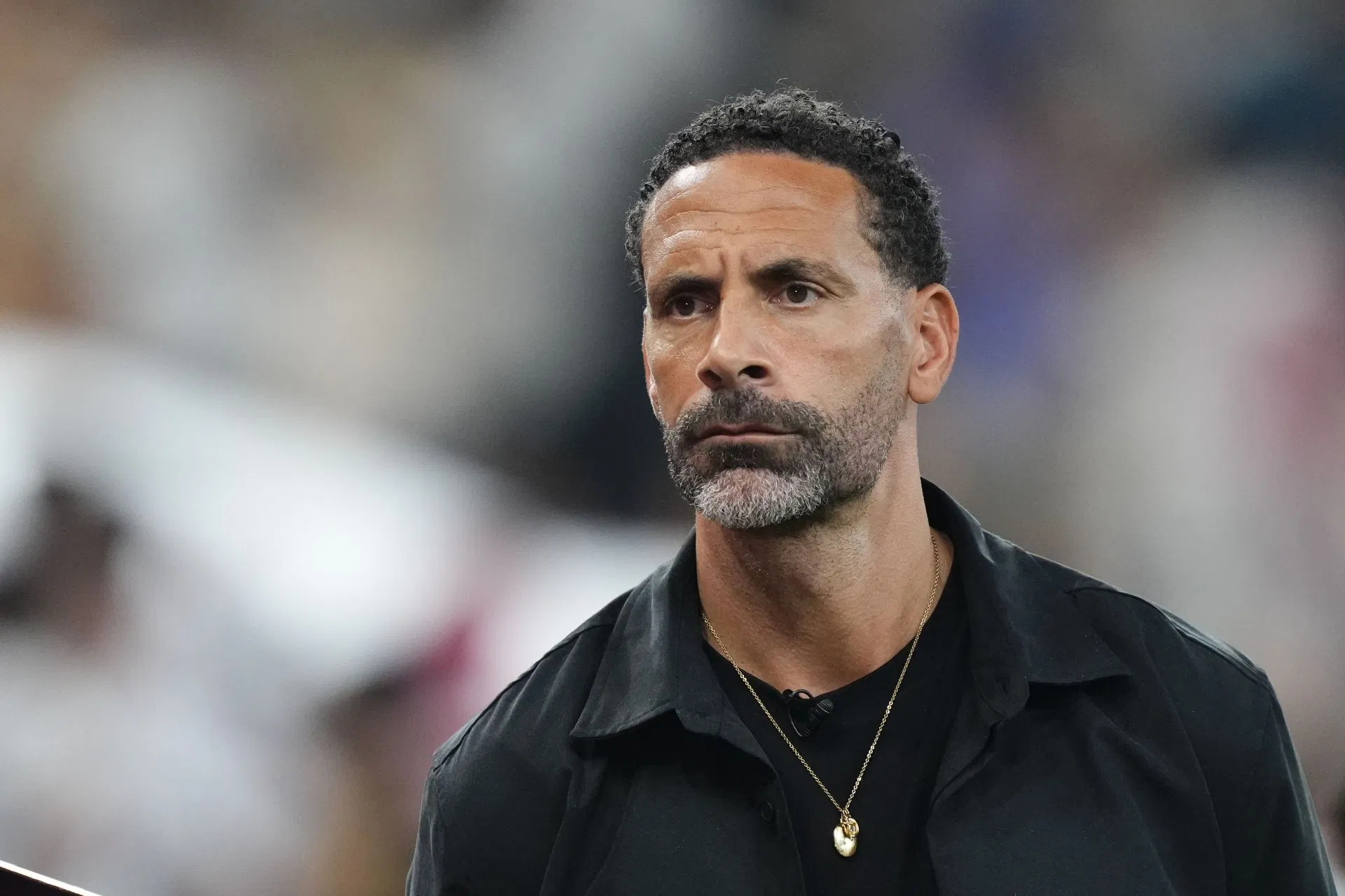
Rio Ferdinand has doubled down on his demand for Manchester United to look into signing AZ Alkmaar star Kees Smit, insisting that his former side cannot afford to lose the young midfielder to another club.
Smit, 20, has taken the Eredivisie by storm and has emerged as one of the promising prospects in the league. Speaking on his Rio Ferdinand Presents podcast in February, Ferdinand urged Manchester United to sign Smit, saying he likes the youngster and claimed he was performing at a high level.
Thanks for the submission!
Advertisement
In the latest episode of his podcast, the former defender reiterated his stance, making it clear that Smit is a talent worth investing in, even if he is not expected to make an instant impact at Old Trafford.
Advertisement
“Kees Smit is the truth, man! I’m telling you,” Ferdinand said. “He’s one you go…. I’m buying him, it doesn’t have to be right for now. And I hope he comes in and takes the world by storm. But if we’ve got to wait six months to a year for him, I do not care because we can’t let him go elsewhere. Kees Smit is the truth, man! I’m telling you. This kid… I’ve seen him play a couple of times now and that’s all I need to see and I’ve seen the clips. I’ve spoken to some guys in Holland, friends. The kid’s got it.”
So far this season, Smit has registered 12 goal contributions in 41 appearances across all competitions. He came through the ranks at AZ Alkmaar, and his current market value stands at €25 million, according to Transfermarkt.
Ferdinand’s previous message to Manchester United about Smit
Following Manchester United’s 1-0 win over Everton at the Hill Dickinson Stadium, Ferdinand encouraged the Red Devils while speaking on his YouTube channel to look into signing Smit. Ferdinand was suggesting a list of young midfielders that United could sign in the summer before mentioning Smit.
“The are others in the market as well, a couple of young ones,” Ferdinand said. “Kees Smit, I like him a lot. If you don’t know who he is, go and have a look at him, guys! Kees Smit is a player. He’s a young midfielder, he can do a bit of everything really and he’s performing to a very good standard.”
Smith enjoyed a breakout season in the Eredivisie last term, and according to The Athletic, Manchester United were among the clubs that showed interest in the Netherlands international in the January transfer window.




;)
;)
;)
;)

;)



































You must be logged in to post a comment Login