Connect with us
DAPA Banner

NewsBeat

Australia’s most-decorated living soldier charged with war crimes in Afghanistan | News World

Published

on

Australia's most-decorated living soldier charged with war crimes in Afghanistan | News World

To view this video please enable JavaScript, and consider upgrading to a web
browser that
supports HTML5
video

A man hailed as a hero is facing a trial for the murder of five unarmed civilians during the war in Afghanistan.

Advertisement

Ben Roberts-Smith, 47, a former Australian Defence Force member, was arrested at Sydney Airport and charged with five counts of war crimes.

He was deployed in Afghanistan between 2009 and 2012, and faces five counts of murder and war crimes for the killing of five people.

Roberts-Smith served six tours in Afghanistan between 2006 and 2012, before being lauded with several top military honours.

Australian Federal Police commissioner Krissy Barrett said: ‘It will be alleged the victims were not taking part in hostilities at the time of their alleged murder in Afghanistan.’

Advertisement

She added that the victims were initially detained, while unarmed, and were under the charge of Australian soldiers when they were murdered.

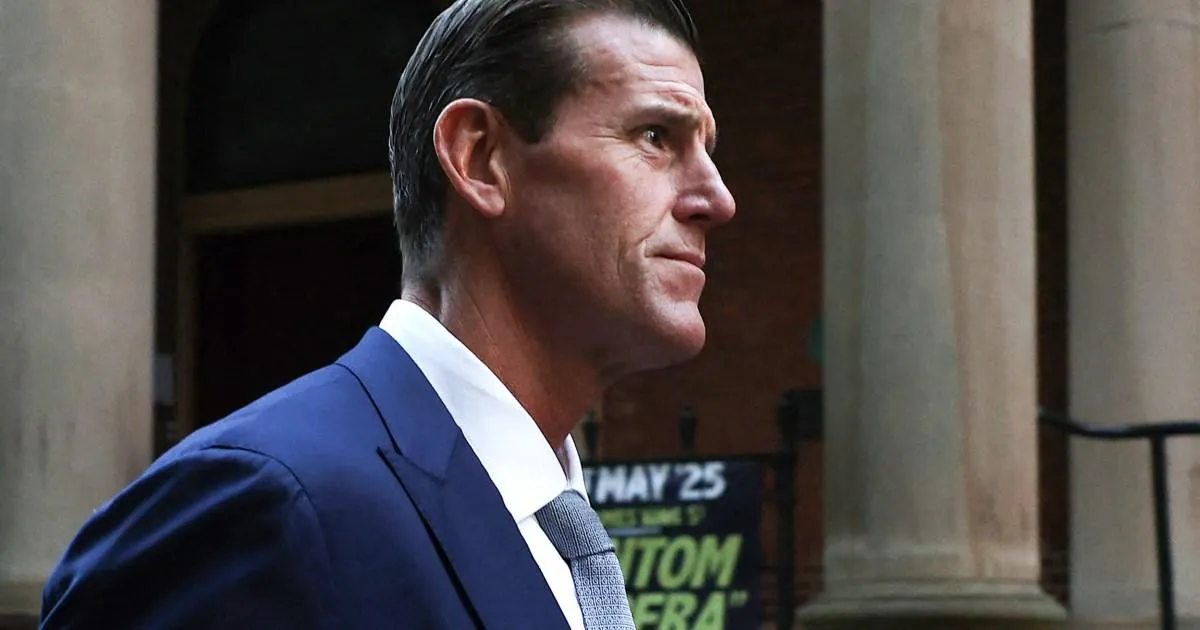
Roberts-Smith previously faced trial in a civil court (Picture: EPA)

Roberts-Smith has denied all of the allegations, which first surfaced after an investigation in 2018.

In 2023, he quit his job after a civil court blamed him for unlawfully killing four people while he served in Afghanistan.

Advertisement

Now, the Australian Federal Police investigation into Roberts-Smith, which began in 2021, has led to his arrest.

Ross Barnett, director of investigations at the Office of the Special Investigator, which is assisting in the case, said the process has been complex.

‘We don’t have access to the crime scenes, we don’t have photographs, site plans, measurements, the recovery of projectiles, blood spatter analysis, all of those things we would normally get at a crime scene,’ he said.

Roberts-Smith is facing mounting calls to be stripped of his numerous awards during service, including the prestigious Victoria Cross.

Advertisement

He’s set to appear before a court for a bail hearing on Wednesday in New South Wales.

What is Roberts-Smith accused of?

CORRECTION / (FILES) A file photo taken on May 1, 2025 shows former member of Australia's elite Special Air Service regiment Ben Roberts-Smith leaving the Federal Court in Sydney. Police arrested on April 7, 2026, one of Australia's most-decorated soldiers for alleged war crimes in Afghanistan, local media reported, following a sweeping investigation into the conduct of the nation's elite commandos. The Australian Federal Police said they arrested a 47-year-old former Australian soldier, who was widely named in local media as Victoria Cross recipient Ben Roberts-Smith. (Photo by Saeed KHAN / AFP via Getty Images) / "The erroneous mention[s] appearing in the metadata of this photo by Saeed KHAN has been modified in AFP systems in the following manner: removing on April 7, 2025 from the second sentence. Please immediately remove the erroneous mention[s] from all your online services and delete it (them) from your servers. If you have been authorized by AFP to distribute it (them) to third parties, please ensure that the same actions are carried out by them. Failure to promptly comply with these instructions will entail liability on your part for any continued or post notification usage. Therefore we thank you very much for all your attention and prompt action. We are sorry for the inconvenience this notification may cause and remain at your disposal for any further information you may require."
Roberts-Smith served in Afghanistan between 2006 and 2012 (Picture: AFP)

Roberts-Smith is facing charges of war crimes and murder in Afghanistan while serving as an Australian soldier.

Anthony Besanko, a federal judge in the court of Australia, previously found on the balance of probabilities that he had taken part in at least four murders.

The court at the time heard that Roberts-Smith had ordered unarmed men in Afghanistan to be shot dead to ‘blood’ rookie soldiers on two occasions.

He was also found to have been involved in the deaths of a handcuffed farmer, whom he kicked off a cliff.

Advertisement

In another instance, he captured a Taliban fighter and used his prosthetic leg as a trophy and ‘drinking vessel’.

Roberts-Smith has denied any wrongdoing.

Get in touch with our news team by emailing us at webnews@metro.co.uk.

For more stories like this, check our news page.

Advertisement

Source link

Advertisement
Continue Reading
Click to comment

You must be logged in to post a comment Login

Leave a Reply

NewsBeat

Ray Parlour urges Mikel Arteta to drop Arsenal star in Champions League | Football

Published

on

Ray Parlour urges Mikel Arteta to drop Arsenal star in Champions League | Football
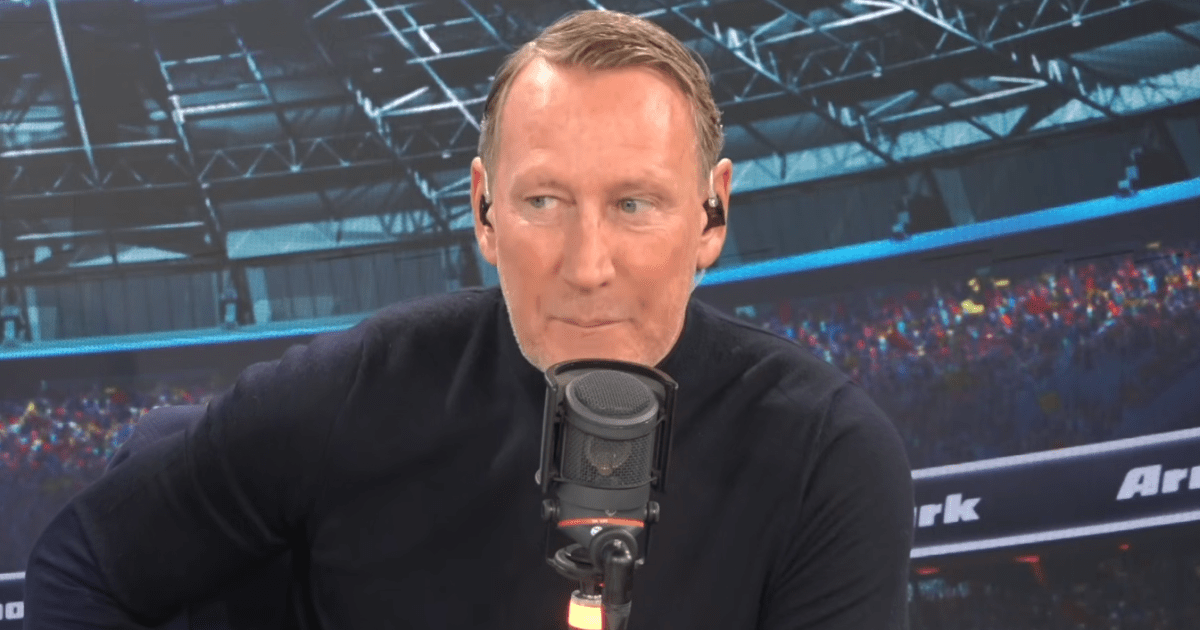
Former Arsenal midfielder Ray Parlour (Picture: talkSPORT)

Ray Parlour doesn’t want to see Max Dowman in Arsenal’s starting lineup against Sporting CP despite the teenager’s impressive showing in the FA Cup at the weekend.

Dowman’s performance was perhaps the only positive for the Gunners on Saturday evening as Mike Arteta’s side were knocked out of the FA Cup by Southampton.

The teenager pressed his case for more starts with a lively display in his first appearance since scoring his first Premier League goal against Everton last month.

Arteta has been careful to manage the 16-year-old’s minutes, especially with Bukayo Saka and Noni Madueke ahead of him in the pecking order on the right wing.

Advertisement

And even with Saka set to miss Tuesday’s Champions League quarter-final first leg with Sporting, ex-Arsenal midfielder Parlour believes Dowman isn’t quite ready to be starting regularly just yet.

Asked if Dowman should be starting over Saka, Parlour told talkSPORT: ‘No, because you don’t want to give him too much responsibility at 16 years old.

‘We’ve all been there. It’s amazing. I think the only thing we could be celebrating is his GCSE results.

Southampton v Arsenal - Emirates FA Cup Quarter Final
Max Dowman was impressive against Southampton on the weekend (Picture: Getty)

‘He’s got them coming up, which is amazing, really, isn’t it? And you don’t want to be putting too much pressure on him as a youngster.

‘At the moment, he comes on, he’s been playing the FA Cup, he’s brilliant the other night. I mean, his balance he’s got when he goes past players, both feet, and he’s only 16. He’s just turned 16 in December.

Advertisement

‘So, what a career he’s going to have, but you’ve still got to have Saka in his team. I know he’s going through that indifferent form at the moment; he hasn’t been playing the way he can.

Arsenal v Manchester City - Carabao Cup Final
Bukayo Saka will miss Tuesday’s clash with Sporting CP (Picture: Getty)

‘He’s not been up to his standards. We know that. He’s set the bar high, hasn’t he, with the performances, but every footballer that goes through it, he’s just got to try and work out how to get back to his best.

‘A little bit like Phil Foden, really. Phil Foden’s going through that spell at the moment as well, in his career. But at the moment, Dowman is such an important player going forward, but you can’t put too much pressure on him.

‘So, at this present time, I wouldn’t be doing that, but I’d be bringing him off the bench for 20, 25 minutes when people start just dropping their levels, dropping them. With his pace and his energy to go past players, he’d definitely be in use.’

Elsewhere, Rio Ferdinand urged Arteta to continue deploying Dowman in wide areas to protect him in the early stages of his journey into senior football.

Advertisement

‘Max Dowman could be the biggest factor in Arsenal winning the league from now on. But I want to see him protected from now on, and this is how I want to see Mikel Arteta do that,’ Ferdinand said.

‘Lamine Yamal, Neymar, Cristiano, Henry, all played out wide early in their career. Why? To protect them.

‘Play them out wide where there’s a bit less contact and you can see the game a bit more, the game’s a bit slower out there as well. Allow him the freedom to drift in but starting in there can be a big hindrance for a young player. I don’t want to see him become a Wilshere.

‘Wilshere coached him and spoke greatly about him but I don’t want to see him become that and be involved in far too many collisions in the middle of the park early in his career.’

Advertisement

For more stories like this, check our sport page.

Follow Metro Sport for the latest news on
FacebookTwitter and Instagram
.

Advertisement

Source link

Advertisement
Continue Reading

NewsBeat

Stopgap measures aren’t enough to halt rising gas prices

Published

on

Stopgap measures aren't enough to halt rising gas prices

NEW YORK (AP) — Global leaders have been scrambling to contain the rising cost of oil and gasoline since the start of the Iran war, which took a record amount of oil off the market when tankers full of crude were stranded in the Persian Gulf and military strikes damaged refineries, pipelines and export terminals.

Hoping to ease some pain for consumers, President Donald Trump and other heads of state have been pulling on various levers, launching more oil on the market in a bid to calm the chaos.

A group of 32 nations that are members of the International Energy Agency began releasing the largest volume of emergency oil reserves in its history: 400 million barrels. Trump is tapping into oil from the Strategic Petroleum Reserve while lifting sanctions on Russian and Iranian crude and temporarily waiving the Jones Act, a maritime law that requires ships carrying goods between U.S. ports to be U.S.-flagged.

But despite those maneuvers, crude oil has soared well past $100 a barrel and gasoline is selling for $4.14 a gallon on average in the U.S. While the stopgaps are helping, they’re not adding up to enough oil to replace what’s stranded, experts say.

Advertisement

“They’re all incremental,” said Mark Barteau, professor of chemical engineering and chemistry at Texas A&M University. “You’re talking about these different patches being at the level of maybe 1 to 2 million barrels a day each, and you’ve got to get to 20, so it’s hard to see those actually adding up to the numbers that are needed. And then the question is, how long can you sustain those?”

Trapped oil

Before the war began, roughly 15 million barrels of crude oil and 5 million barrels of oil products passed daily through the Strait of Hormuz, the narrow mouth of the Persian Gulf, amounting to about 20% of global oil consumption, according to the International Energy Agency.

In addition to that loss, some oil producing nations in the Middle East have halted oil production because they can’t ship fuel out of the Gulf and their storage tanks are full. That’s taken about 10 million barrels per day off the market, the IEA said.

Then there are the eight countries around the Persian Gulf that together hold about 50% of global oil reserves. Under normal circumstances, they coordinate closely to raise or lower their output to keep prices steady, said Jim Krane, energy research fellow at Rice University’s Baker Institute. Usually Saudi Arabia steps in to bring spare oil to market and calm things down, he said.

Advertisement

“But all of that spare capacity is also bottled up inside the Persian Gulf right now and it can’t get to market either,” Krane said. “So the main emergency response system that we have is also blocked.”

The IEA said in its recent report that “the resumption of transit through the Strait of Hormuz is the single most important action to return to stable oil and gas flows and reduce the strains on markets and prices.”

Advertisement

Barring that, world leaders are grasping for ways to free up more oil.

Limitations of short-term fixes

Some nations have found workarounds to move oil out of the Gulf. Saudi Arabia is using its East-West pipeline, which stretches from the Persian Gulf to the Red Sea, to transfer about 5 million barrels per day out of the Gulf, said Michael Lynch, distinguished fellow at Energy Policy Research Foundation, a non-partisan institution focused on energy and economics. But the nation was already using that pipeline to transport oil, so it doesn’t have a lot of spare room to move oil from stranded tankers.

Trump also temporarily lifted sanctions on approximately 140 million barrels of Iranian oil that was already in transit. But that didn’t add oil to the market — it just widened the pool of potential buyers, said Daniel Sternoff, senior fellow at the Columbia Center on Global Energy Policy.

Typically, most Iranian oil was bought by private refiners in China, who purchased it at a steep discount, Sternoff said. But with sanctions lifted, others could scramble to buy the oil, which in turn raises its price to the benefit of Iran, he said.

Advertisement

“As soon as you are moving to waive sanctions on your adversary with whom you’re fighting a military conflict, to do something in their benefit, it just shows you that you are running out of options to try to prevent a rise in the price of oil,” Sternoff said.

The decision to lift sanctions on Russian oil could have more impact, because Russia had been storing unpurchased oil in tankers, Sternoff said. “By waiving sanctions, it will allow those barrels to clear.”

Trump’s temporary waiver of the Jones Act to allow foreign ships to temporarily transport goods between U.S. ports could potentially help ease natural gas prices by enabling companies to more efficiently ship liquefied natural gas from the Gulf Coast to New England.

But experts don’t expect the waiver to significantly impact the price of oil or gasoline. “It’s helpful, but not a game changer,” Lynch said.

Advertisement

Why U.S. oil production can’t solve the problem

The U.S. is a major oil producer, and exports more oil than it imports. But like any other oil producing nation, it can’t just ramp up production instantly to fill the void.

“If the U.S. were to try to make up the global shortfall, we would need to nearly double our production,” Barteau said. “We couldn’t drill wells that fast even if we wanted to.”

Increasing domestic production by even 1 million barrels per day, a feat the U.S. accomplished during the shale boom, would be hard to duplicate, Lynch said.

“If we run every drilling rig right now, what happens a week from now when the war is over and the price goes back down $20?” Lynch asked. “People don’t want to develop long-term production based on a short-term price spike.”

Advertisement

Halting exports and using that oil within the U.S. wouldn’t bring down gasoline prices either, experts say.

For one, oil is traded on a global market, so events happening halfway around the globe impact prices for everyone.

In addition, the U.S. doesn’t produce enough of the type of oil its refineries process. It produced about 13.7 million barrels per day of oil at the end of 2025, according to the Energy Information Administration. And refineries processed about 16.3 million barrels per day that year, relying on imports to fill in the gaps, according to the American Fuel and Petrochemical Manufacturers (AFPM), a trade association.

That’s because nearly 70% of U.S. refineries are set up to process heavy, sour crude, according to AFPM. But much of the oil produced in the U.S. is light, sweet crude, which was unlocked during the shale revolution.

Advertisement

“They need different crudes than the ones that are being produced right next to them now,” Krane said.

As a result, just 60% of the crude oil processed in U.S. refineries is extracted domestically, according to the AFPM. And retooling domestic refineries would cost billions of dollars, the group said. It also would require shutting down the refinery for a period of time, which generally raises gasoline prices.

“A lot of people like the IEA are making the point that this is the biggest oil crisis ever, which is partly true, partly an exaggeration, depending on how you count things,” Lynch said. “A lot of it has to do with how long does this last … if it goes on for another six weeks we get to be in some serious trouble.”

Advertisement

Source link

Continue Reading

NewsBeat

Woman renovates home and makes X-rated find behind old paint work

Published

on

Daily Record

When a woman was doing some DIY in her home, she never expected to stumble across something explicit hiding on her walls. However, people are very amused by the find

You never know what treasures you might stumble across when you’re renovating your home. From items left behind in the loft to beautiful tiles that have been covered in carpet, the possibilities are endless.

However, no one would have guessed what one woman would find when carrying out some DIY. Em couldn’t believe her eyes when she took a peek behind the old paintwork.

That’s because she stumbled across a sex list scrawled directly onto the wall. A previous owner, who seems to have been an amorous Brit, wished to preserve details of the various women he’d be intimate with.

Advertisement

The jaw-dropping catalogue of romantic conquests included names, ages, locations and a general rating of each sexual encounter. He even included more explicit details – including the duration of each tryst.

The archive also recorded the year each tumble in the hay occurred, with the entire thing covering a span of 36 years, from 1961 to 1997.

The Casanova, believed to be from Leeds, apparently bedded women from Leeds to Nottingham to Colwyn Bay in Wales, a round journey of approximately 143 miles.

Advertisement

He seemed so proud of this achievement that he needed to archive it. So he referred to his conquests by a string of imaginative nicknames – including ‘horse girl’, ‘laundry woman’ and colourful monikers that draw attention to whichever physical attribute he was particularly taken with.

One of the 19 names is simply listed as ‘cousin’, which one would sincerely hope wasn’t meant literally! This was alongside the likes of ‘alchy woman’, ‘tall girl’ and ‘Lionel’s sister’.

Whether the Lionel — or Lional — in question was aware of the apparent liaison between his 18 year old sister and the mystery scribe remains unclear from the wall. Though one imagines he’d have been far from pleased to see it preserved for posterity!

The 65 year old occupying the number 17 spot on the list was evidently a particularly memorable encounter. The randy home owner described it has the “best s*** of [his] entire life”.

Advertisement

Elaborating on his romp with the widow, he later added: “Wow – every man should have one”.

Unsurprisingly, many people have been drawn in by the naughty sex list. Ever since @blondeEm83 posted a picture onto X, people have been leaving cheeky comments.

Many compared the Lothario to Jay Cartwright from The Inbetweeners because some of the sex sessions seemed to be very inplausible.

One asked: “Is that Jay off the inbetweeners’ wall?” A second commented: “That’s absolutely brilliant”.

Advertisement

A third admitted: “I can’t stop laughing at the names.” And a fourth added: “He’s got some age range going on there.”

Source link

Continue Reading

NewsBeat

Former Corrie star Sean Wilson is living very different life now after fame

Published

on

Daily Mirror

Sean Wilson was known for his iconic role as Martin Platt in ITV soap Coronation Street, which he played for 20 years. However, the actor is living a very different life now

Most people know Sean Wilson for his iconic role as Martin Platt in ITV soap Coronation Street, which he played for 20 years. However, the actor is living a very different life now.

Wilson joined Corrie at the age of 19 in his role of Martin Platt. His character was central to many major plots, most notably his marriage to Gail Tilsley (Helen Worth) and being father to David Platt (Jack P. Shepherd). However, he left the role back in 2005 after refusing to film a controversial storyline involving an underage girl. Wilson did however make a brief return in 2018 for David’s male rape storyline.

Advertisement

After leaving his Corrie role, he appeared in dramas such as Waterloo Road, Silent Witness, Casualty, and The Royal.

However, he later underwent a significant career change and became a chef and a professional cheesemaker, founding the Saddleworth Cheese Company.

Content cannot be displayed without consent

He has also worked in Michelin-starred restaurants and written several cookbooks. In 2025, he launched a dedicated artist website too, to showcase and sell his artwork.

Wilson toured the UK with celebrity chef Rosemary Shrager in a live stage show called “Posh Teas & Artisan Cheese” in 2025. The show featured a mix of Q&A sessions and live “cook-offs” between the two experts.

Advertisement

Despite his new career, Wilson was scheduled to return to Corrie as part of Gail Platt’s exit storyline in 2024.

However, he was axed mid-filming following an unfounded historical allegation from 1997. Police confirmed in late 2024 that no further action would be taken, clearing his name, but his scenes had already been scrapped and rewritten.

Instead, John Thomson, who played Jesse Chadwick between 2008 and 2010, returned to play a romantic role in Gail Platt’s exit storyline.

Content cannot be displayed without consent

Wilson said at the time his “whole world was blown apart” by the allegation, which “ruined” his life “in eight minutes”.

Advertisement

He told The Sun: “I had no idea who had made this complaint or anything about it but I lost my job. It’s been hell. I’ve been low all the way through.”

Wilson has stayed quiet on social media since his failed TV return, however he did take to Instagram in the last week to promote his art.

One fan was happy to see his return, as they wrote: “Great art brother.”

It seems like art is Wilson’s main focus as reports suggest Saddleworth Cheese Company is not actively trading.

Advertisement

Despite this, he still names himself as a cheese producer and actor on his Instagram page and says he’s available for cooking demos.

Source link

Continue Reading

NewsBeat

7 Bizarre Moments From Trump’s Easter Monday You May Have Missed

Published

on

7 Bizarre Moments From Trump's Easter Monday You May Have Missed

Donald Trump gave several very strange updates about everything from Iran to Joe Biden throughout Easter Monday in typically rambling fashion.

Across one truly surreal day, the US president talked about bombing the Middle East while surrounding by jovial Easter decorations, shared a lot of detail about a secret mission and threatened to send a reporter to prison.

The president attracted plenty of attention after comparing UK prime minister Keir Starmer to Neville Chamberlain, who championed Hitler appeasement before World War 2, and claiming he could wipe out Iran in just one night.

But here’s a look at some of his more obscure moments which may have slipped under the radar…

Advertisement

1. Stood Next To A Giant Rabbit While Talking About War

While hosting a nonpartisan Easter event in the White House, Trump stood at a microphone and told gathered children about… the war he started on a different continent.

He said: “I don’t think it gets much more hostile than Iran. They’re capable fighters, they’re very tough people. There are others like that.

“You don’t mind when the enemy is weak but they enemy is strong.

Advertisement

“Not so strong as they were about a month ago, I can tell you, in fact I can tell you they’re not too strong at all, in my opinion, but we’re soon going to find out aren’t we?”

He was stood next to someone dressed in a large rabbit costume throughout this particular rant.

2. Used The Easter Egg Hunt To Attack Harris And Biden

Despite beating the Democrats in the presidential election more than a year ago, Trump still used his White House event to bash his rivals.

Advertisement

He told the crowds gathered for the Easter Egg hunt: “Did anyone in the egg industry vote for Kamala? She’s a low IQ person.

“Who is a lower IQ person, Biden or Kamala?”

He later sat with children telling them about his repeated theory that Biden used an autopen to sign official documents.

3. Gave A Ridiculous Amount Of Information About A ‘Covert’ Operation

Advertisement

During a later press conference where he was expected to give an update on Iran, Trump spent more than 15 minutes talking about how the US military rescued an American crew member from Iran after his aircraft was shot down.

He said the airman “scaled cliff faces, bleeding rather profusely, treated his own wounds, and contacted American forces to transmit his location”.

Trump also interrupted his own press conference to ask top officials “how many” rescuers were sent on the mission.

The chairman of the Joint Chiefs of Staff, Gen Caine, said: “Uhh, I’d love to keep that a secret.”

Advertisement

Trump said he would, then proceeded to divulge the information anyway: “It was hundreds… hundreds could have been killed.”

He added that the rescue mission involved 155 aircraft, four bombers, 64 fighters, 48 refuelling tankers, 13 rescue aircraft and others, amid additional efforts to deceive the Iranians about where they were searching.

Then CIA director John Ratcliffe stood at the podium and said the US used unique capabilities which only the president can deploy – but refused to share further details.

“As an agency, the CIA possesses unique capabilities that only the president can deploy. Some of these capabilities fall under covert action authorities. And because covert means exactly that, I’m not going to be able to tell you everything that you want to know,” Ratcliffe said, moments after Trump’s oversharing.

Advertisement

4. Threatened To Send A Reporter To Jail

The president also said his government was pursuing the “leaker” who told the media about the missing airman – and the press company who published the information.

“They basically said that ‘we have one and there’s somebody missing.’ Well, they didn’t know there was somebody missing until this leaker gave the information,” Trump said.

“So whoever it was, we think we’ll be able to find it out because we’re going to go to the media company that released it, and we’re going to say, ‘national security, give it up or go to jail.’

Advertisement

“And we know who – and you know who – we’re talking about. Because some things you can’t do, because when they did that all of a sudden the entire country of Iran knew that there was a pilot that was somewhere on their land that was fighting for his life.”

5. Said He Was ‘Not At All’ Concerned About War Crimes

In a social media post over the weekend, the president threatened to bomb Iranian civilian infrastructure if the regime did not reopen the Strait of Hormuz by his set deadline (1am on Wednesday, UK time).

Doing so would widely be considered a war crime under international law.

Advertisement

But speaking at the White House, Trump said: “I’m not worried about it. You know what’s a war crime? Having a nuclear weapon.”

6. Laid Into Nato (Again)

Trump said the defence alliance’s refusal to help him attack Iran is a “mark on Nato that will never disappear”.

He said he was “very disappointed” by the lack of support, after several countries refused to let him access their military bases or airspace – even though the UK has allowed the US to use their sites for defensive strikes.

Advertisement

European governments also refused to send their own warships to the Strait of Hormuz.

Trump alluded to his upcoming meeting with Nato chief Mark Rutte, saying: “They’re going to say, ’oh, we’ll do this. We’ll do that. Now they all of a sudden want to send things.”

He also revived his spat with European allies from the beginning of the year, saying: “It all began with, if you want to know the truth, Greenland. We want Greenland. They don’t want to give it to us. And I said, ‘bye bye’.”

7. Claimed Kim Jong Un Used A Slur To Talk About Biden

Advertisement

Trump somehow ended up alleging that the North Korean dictator had attacked the former US president.

Trump said: “We’ve got 45,000 soldiers in South Korea to protect us from Kim Jong Un, who I get along with very well. He said very nice things about me. He used to call Joe Biden a mentally r******* person.”

He added: “He was so nasty about Joe Biden he was terrible. But to me, he likes Trump.”

Subscribe to Commons People, the podcast that makes politics easy. Every week, Kevin Schofield and Kate Nicholson unpack the week’s biggest stories to keep you informed. Join us for straightforward analysis of what’s going on at Westminster.

Advertisement

Source link

Continue Reading

NewsBeat

ITV slammed after EFL highlights show MISSES late winner and shows wrong result

Published

on

Daily Mirror

Huddersfield Town struck in the 106th minute to beat Leyton Orient in a dramatic League One encounter on Monday – but Ryan Ledson’s goal was completely missed by ITV’s highlights show

Furious fans have let rip on social media after ITV’s EFL highlights show failed to air Huddersfield Town‘s last-gasp winner at Leyton Orient, instead saying the game finished 1-1.

Advertisement

The League One clash at Brisbane Road looked to be ending all-square after Bojan Radulovic cancelled out Radinio Balker’s own goal just before the break. But Ryan Ledson popped up in the 16TH MINUTE of second half stoppage time to ensure Huddersfield remain in with a chance of making the play-offs.

While Huddersfield’s fans were left celebrating Ledson’s dramatic winner, Monday night’s highlight show inexplicably missed it, with the final score graphic saying the match ended 1-1.

Eagle-eyed fans quickly flocked to social media to tear into the programme, which has been criticised frequently since ITV acquired the rights to show highlights from Quest.

READ MORE: Inside Championship play-off vote as clubs’ feelings on radical new format revealedREAD MORE: Leo Castledine: Ex-Chelsea academy star on exit, Middlesbrough move and Premier League dream

Advertisement

“The EFL need to find better guardians for TV highlights than this awful ITV programme,” one social media user fumed. “Today, they completely missed Huddersfield’s winner at Orient, announcing that the game had finished 1-1 instead. Absolutely pathetic.”

Another wrote: “That is absolutely outrageous from ITV. Give it to someone who’s cares, the BBC did a great job but was on at midnight. Quest had a superb host and actually gave some decent analysis. Something needs to change because the ITV coverage is worse than amateur.”

Content cannot be displayed without consent

Huddersfield’s win means they are three points off Stevenage in sixth, though Alex Revell’s men have a game-in-hand on the Terriers.

Defeat for Orient means their six-game unbeaten run is over with the O’s now just four points above the relegation places.

Advertisement

Join our new WhatsApp community and receive your daily dose of Mirror Football content. We also treat our community members to special offers, promotions, and adverts from us and our partners. If you don’t like our community, you can check out any time you like. If you’re curious, you can read our Privacy Notice.

Sky Sports discounted Premier League and EFL package

This article contains affiliate links, we will receive a commission on any sales we generate from it. Learn more
Content Image

£49

£35

Sky

Advertisement

Get the deal here

Sky has slashed the price of its Essential TV and Sky Sports bundle for the 2025/26 season, saving £336 and offering more than 1,400 live matches across the Premier League, EFL and more.

Sky shows at least 215 live Premier League games each season, an increase of up to 100, plus Formula 1, darts, golf and more.

Source link

Advertisement
Continue Reading

NewsBeat

Your brain for sale? The new frontier of neural data

Published

on

Your brain for sale? The new frontier of neural data

Your browsing history, your location, your political preferences. For years, tech companies have found ways to turn personal data into profit. Now, a new and far more intimate frontier is opening: the electrical signals produced by your brain.

This is not science fiction. Nor is it about brain implants for paralysed patients or experimental medical procedures. A fast-growing consumer market of non-invasive neurotechnology – wearable headsets, brain activity-reading headbands, focus-enhancing devices – is already here, already being sold and already collecting neural data from ordinary users. But the legal and ethical frameworks to govern it are struggling to keep up.

A landmark case from Chile shows why this matters.

In August 2023, Chile’s Supreme Court issued the world’s first ruling on commercial neurodata. The case involved Senator Guido Girardi and Emotiv Inc, a San Francisco company selling the Insight wireless headset – a consumer device marketed for focus, meditation and cognitive performance.

Advertisement

When Girardi began using it, he discovered that accepting the terms of service meant granting Emotiv a worldwide, irrevocable and perpetual licence over his brain data. Unless he paid for a premium account, that data would be stored in Emotiv’s cloud with no way for him to access or export his own neural records.

The Chilean Supreme Court ruled that Emotiv had violated Girardi’s constitutional right to mental integrity, concluding: “The data obtained from Insight users … overlooks the preliminary requirement to have express consent for its use for scientific research purposes. Information collected for various purposes cannot be used differently without its owner’s knowledge and approval.”

The Supreme Court ordered the company to delete Girardi’s data immediately and prohibited sale of the Insight device in Chile until its privacy policies were revised. The headsets remain on sale in other countries around the world.

Advertisement
Promotional video by Emotiv for its electroencephalography (EEG) brain headsets.

The ruling was a first. But the problem it exposed is global – and the legal pressure is building. In the US, Colorado and California enacted the first state-level privacy laws specifically governing neural data in 2024, and at least six other states are now moving in the same direction.

At the federal level, US senators Chuck Schumer, Maria Cantwell and Ed Markey announced plans in September 2025 to introduce the Mind Act – Congress’s first serious attempt to bring the neurotechnology industry under a dedicated regulatory framework.

A market growing faster than its rules

Emotiv is far from alone. Companies such as Muse (marketed for meditation and sleep) and Neurosity (aimed at software developers seeking focus) have built a consumer neurotechnology sector that is projected to double in value to more than US$55 billion (£42 billion) within a decade. It is attracting investment from some of the world’s wealthiest technology figures.

Advertisement


Precedence Research (August 2025), CC BY-SA

These devices read electroencephalography (EEG) signals – the brain’s electrical activity – through sensors worn on the head. Some go further, using photoplethysmography (PPG) sensors to measure heart rate and physiological responses. Think of this like a fitness tracker – but instead of counting steps, it is reading signals from your nervous system and, in some cases, inferring your cognitive or emotional states from them.

When fitness trackers first appeared, few people thought carefully about where their heart rate data was going, who could access it, or what it could be used to infer. Neural data raises those same questions – at considerably higher stakes. Unlike step counts, brain signals can potentially reveal attention patterns, stress responses and emotional reactions that users themselves may not be aware of.

Where the law has not yet caught up

We research these issues as part of the interdisciplinary group at Lund University, which brings together law, neuroscience, medicine, ethics and economics.

The Emotiv case turned on Chile’s constitutional protection of mental integrity – a provision the country had specifically enshrined in 2021. Most jurisdictions have no equivalent. The question of how neural data fits into existing legal frameworks remains open.

Advertisement

Under the EU’s General Data Protection Regulation, brain signals could potentially qualify as biometric or health data, both of which attract stronger protections. But consumer neurotechnology, when sold as wellness products rather than medical devices, often falls into a regulatory grey area, sitting awkwardly between health law, consumer protection and data privacy rules.

What remains unresolved across most of the world are the basic questions. What are users consenting to when they accept terms of service for a neural headset? How long can that data be retained? Can it be sold to third parties, used to train AI models, or shared with advertisers and insurers?

The Emotiv case showed that, in one instance at least, a company had retained a user’s neural data for research purposes under anonymisation provisions, without that user having any meaningful awareness of what was being collected or why.

The stakes here are higher than with most forms of personal data. Neural signals are not like a credit card number that can be changed if compromised. Generated by your brain in real time, they can increasingly be used to infer things about you that you have not chosen to disclose – such as emotional responses, cognitive patterns, and other reactions you may not consciously be aware of.

Advertisement

Chile has showed that courts can act. Legislators in several jurisdictions are beginning to follow. The harder question is whether the frameworks being built are moving fast enough to match a market that, in the quest for competitive advantage, does not want to hang about waiting for them.

Source link

Advertisement
Continue Reading

NewsBeat

Artemis II’s historic lunar flyby… in 90 seconds

Published

on

Artemis II's historic lunar flyby... in 90 seconds

The four astronauts on Nasa’s Artemis II mission have travelled further from Earth than anyone in human history, in a dramatic lunar flyby that brought spectacular images of the planet from rarely seen angles.

The Orion spacecraft’s crew lost contact with mission control for 40 minutes as they circled behind the Moon, as was expected. With communications re-established, astronaut Christina Koch said: “It’s so great to hear from Earth again.”

The team also witnessed a total eclipse of the Sun as the Moon blocked out its light, before beginning their journey back home.

After the flyby, President Trump spoke to the team and congratulated them: “Today, you’ve made history and made all America really proud, incredibly proud.”

Advertisement

Video edited by Ian Aikman.

Source link

Continue Reading

NewsBeat

Five ways to turn eco-anxiety into something positive

Published

on

Five ways to turn eco-anxiety into something positive

Advertisement


Five ways to turn eco-anxiety into something positive – Positive News


Advertisement


Advertisement


Feeling stuck in climate anxiety? These five small actions can help you feel more grounded, connected, and purposeful

Advertisement

Feeling stuck in climate anxiety? These five small actions can help you feel more grounded, connected, and purposeful

Advertisement
1) Design your attention

It’s hard not to feel anxious when all you see is news about the catastrophe ahead, while everyone outside your algorithmic bubble seems oblivious. Remember: what you see has been carefully curated to keep you scrolling. You probably spend more time than you’d like doomscrolling, while the people around you are receiving entirely different information. Audit what you consume and notice what creates anxiety versus what empowers you. Then intentionally curate your feed: keep what sets you up for action and hope, let go of what paralyses you.

Image: Jonas Leupe

Advertisement
2) Make something

Anxiety is a marketer’s best friend. Someone is always ready to sell you a miracle solution, and, desperate for a fix, we fall for it. But quick patches never satisfy our underlying needs. Instead of buying your way out of anxiety, try making something. Moving from passive consumption to active creation reduces waste while increasing joy, skill-building, and community exchange. Whether you bake bread, mend clothes, or grow vegetables, manual labour and craftsmanship restore agency, pride, and connection — things no retail therapy session can deliver.

Image: Lee Vue

Advertisement
Solutions every Saturday
Uplift your inbox with our weekly newsletter. Positive News editors select the week’s top stories of progress, bringing you the essential briefing about what’s going right.
Sign up
3) Find your climate superpower
Advertisement

We need everyone to do the basics — recycle, vote, reduce their footprint — but we also need everyone to contribute their unique talents. Addressing the climate crisis touches every industry and every community. You don’t need to be an engineer or policymaker. We need graphic designers, teachers, storytellers, event planners, bus drivers — everybody. Draw yourself a Venn diagram: what are you good at? What work needs doing? What brings you joy? The sweet spot where those three circles overlap: that’s your climate superpower. Stay there as often as you can.

Image: Adam Winger

Advertisement
4) Find your people

Isolation fuels anxiety; connection fuels action. Join a climate group, a community garden, or a local initiative. If big groups feel daunting, form a small circle of 3–5 friends to share skills, support each other’s actions, and co-create solutions. Last year I joined neighbours to transform a fly-tipping spot into a community garden. What I thought would be a half-day chore became a source of real connection: neighbours stopped to chat, new friendships formed, and we’re now planning more tree planting together. Small communities create real change, and real joy.

Image: Brooke Cagle

Advertisement
5) Plant a seed for the future

Most of us believe that acting for the planet requires doing something grand, and that belief stops us from doing anything at all. But change works like nature: small, interconnected actions grow into something much bigger. Ask yourself: “What is the smallest thing I can do today that feels like a seed for the future?” Write a letter. Learn a skill. Start a conversation. Action breeds action. You don’t need to see the whole forest, you just need to plant the first seed.”

Enora Thépaut is the Creative Director of OF POSSIBLE FUTURES, a creative organisation working with mobility, health, and environmental brands on regenerative futures.

Advertisement

Image: Sippakorn Yamkasikorn
Main image: Aleksandar Nakic

Advertisement

Be part of the solution

At Positive News, we’re not chasing clicks or profits for media moguls – we’re here to serve you and have a positive social impact. We can’t do this unless enough people like you choose to support our journalism.

Give once from just £1, or join 1,800+ others who contribute an average of £3 or more per month. Together, we can build a healthier form of media – one that focuses on solutions, progress and possibilities, and empowers people to create positive change.

Support Positive News

Advertisement

Source link

Continue Reading

NewsBeat

One taken to hospital after reported assault in Darlington

Published

on

One taken to hospital after reported assault in Darlington

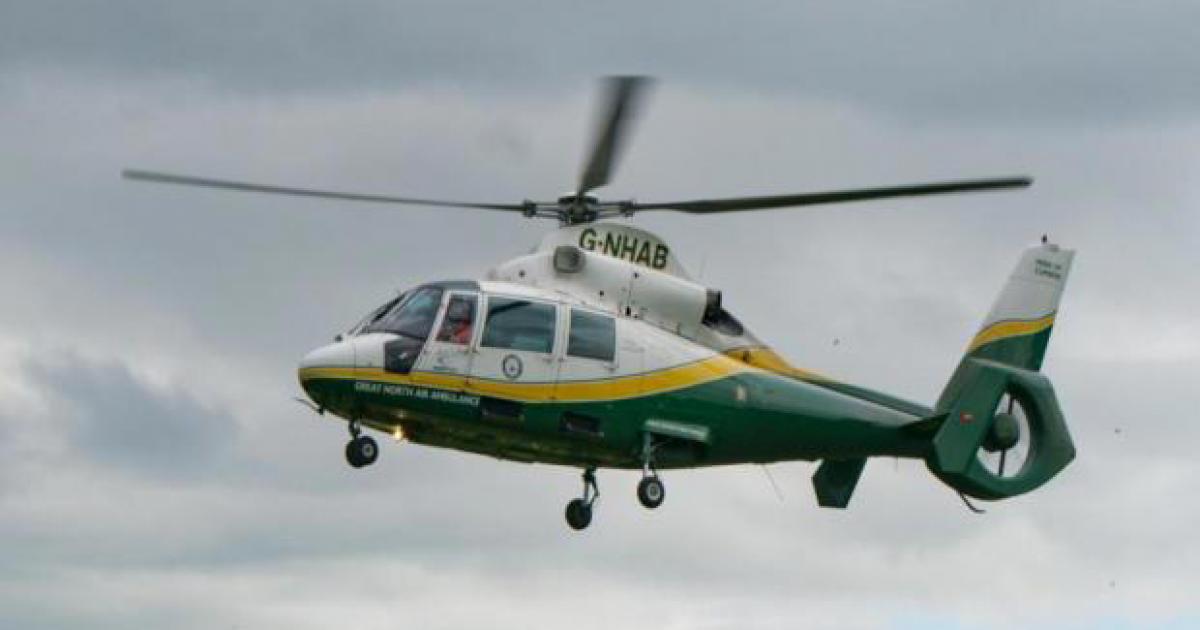
Emergency services including the air ambulance were called on Monday evening (April 6), at 11.02pm.

The patient was taken to hospital for further treatment.

A spokesperson from the Great North Air Ambulance Service said: “On Monday (April 6), our critical care team was activated at 11.02pm to reports of an assault in Darlington.

Advertisement

“We had a paramedic and doctor on a rapid response vehicle, and they arrived on scene at 11.12pm.

“Our team worked alongside the North East Ambulance Service (NEAS) to assess and treat a patient.

“The patient was taken to hospital by a NEAS road crew, accompanied by our team.”

A spokesperson from The North East Ambulance Service said: “We received a call at 10.58pm on Monday, April 6, to reports of an incident at a private address in Darlington.

Advertisement

“We dispatched an ambulance crew to the scene and requested support from our colleagues at the Great North Air Ambulance Service (GNAAS) who attended by road.

“One patient was taken to hospital for further treatment.”

Durham Police have been contacted for more information.

Advertisement

Source link

Continue Reading

Trending

Copyright © 2025