
Crypto World
U.S. Treasury to propose demands that stablecoin firms be set to police bad transactions

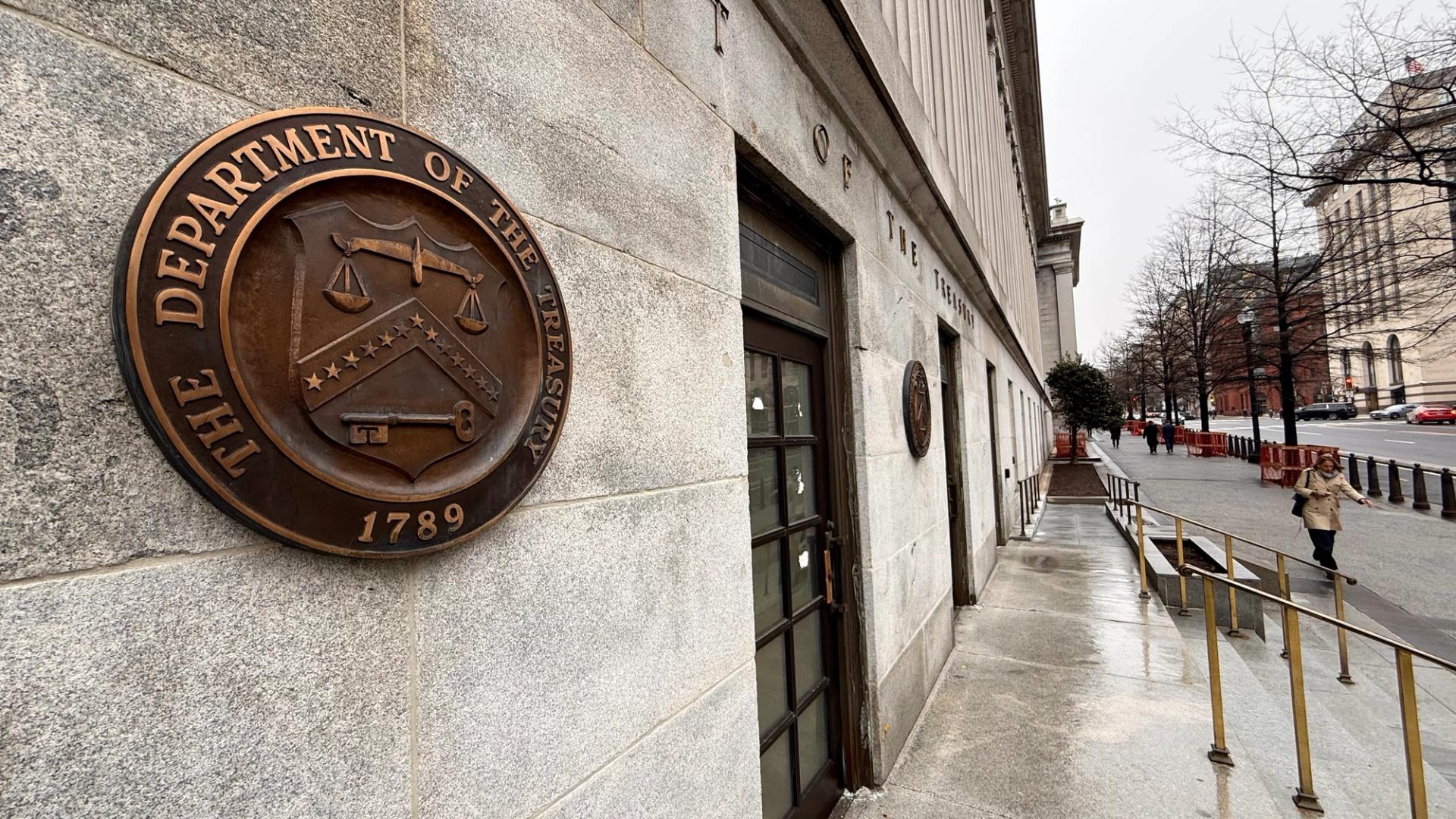
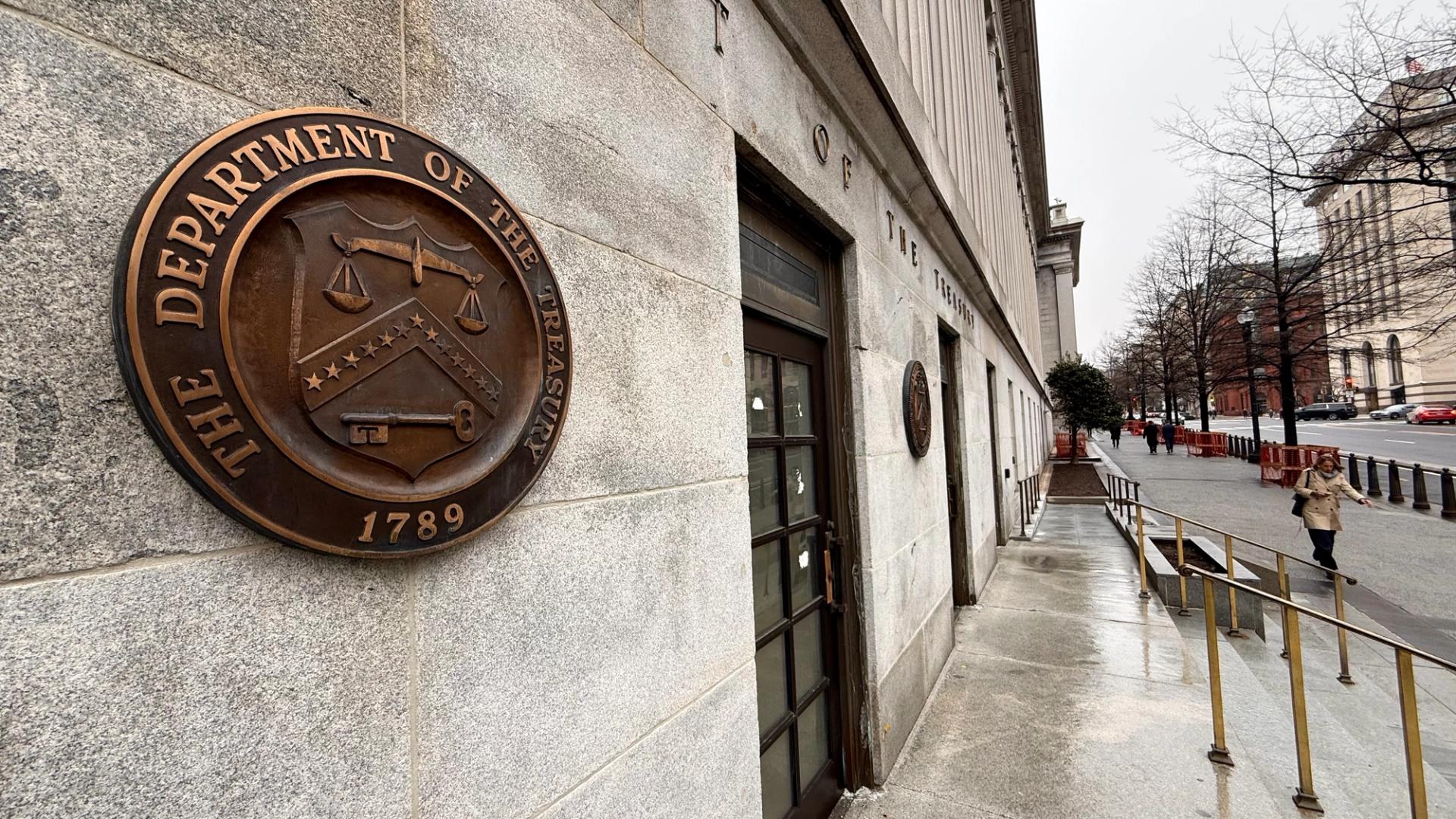
A firm issuing stablecoins in the U.S. would have an array of new duties to head off criminals and keep government watchdogs informed about malicious actors, according to rules poised for proposal by the U.S. Department of the Treasury that were reviewed by CoinDesk.
A joint proposal from the Treasury’s Financial Crimes Enforcement Network (FinCEN) and Office of Foreign Assets Control (OFAC) will outline the deep controls that stablecoin businesses would have to put in place, including abilities to “block, freeze and reject” transactions and internal protections to comply with the Bank Secrecy Act that governs most of the U.S. financial system.
In one of the most significant moves yet to implement last year’s Guiding and Establishing National Innovation for U.S. Stablecoins (GENIUS) Act — the first major crypto-sector law for the U.S. — the two arms of the Treasury Department that police illicit finance are setting out a tailored approach for stablecoin firms, which will be opened for a public comment period and potential revisions before it’s finalized. But the agencies are also sending a message of deference to the industry, suggesting the companies understand their own hazards best.
A summary of the joint proposal reviewed by CoinDesk said it’s focused on effectiveness “and that financial institutions are best positioned to identify and evaluate their money laundering, terrorist financing and illicit finance risks.” The department’s effort contends that a firm that’s running appropriate money-laundering preventions is generally safe from enforcement actions unless it’s showing “a significant or systemic failure to maintain that program.”
On that money-laundering front, FinCEN would expect stablecoin issuers’ programs to be able to halt specifically flagged transactions and to know where to devote “more attention and resources toward higher-risk customers and activities.” When the U.S. authorities are pursuing a specific target, the regulated issuers subjected to this proposed rule would have to scour their own records for any activity tied to individuals or entities flagged by FinCEN.
Also, the issuers will be expected to act as allies in the agency’s pursuit of entities identified as “primary money laundering concerns.” As recently as 2023, the agency had sought to tag crypto mixers such as Tornado Cash under that label, though earlier this year, the Treasury Department reversed course to suggest that mixers could serve legitimate and legal privacy uses.
On the sanctions front, OFAC would require stablecoin issuers run risk-based safeguards for stablecoin activity on primary or secondary markets, and the policies must spot and reject transactions “that may violate or would violate U.S. sanctions.” Sanction missteps — including past flagrant violations — have been a critical concern of crypto industry detractors, including recent scrutiny focused on the world’s biggest exchange, Binance.
Treasury Secretary Scott Bessent said in a statement that his department’s latest efforts “will protect the U.S. financial system from national security threats without hindering American companies’ ability to forge ahead in the payment stablecoin ecosystem.”
The crypto industry and its stablecoin leaders — including Tether, Circle, Ripple and the firm partially owned and controlled by the family of President Donald Trump, World Liberty Financial — have been awaiting regulation that helps further establish their bespoke assets as safe and reliable. Some tensions remain in the wider crypto community, which has had a tumultuous relationship with governments since its beginnings, when its founding principles aimed to keep cryptocurrencies outside of government control.
The decentralized finance (DeFi) sector remains a space that seeks to cut away intermediaries and maintain direct interactions, but the illicit-finance controls for that arena are still unresolved in the ongoing negotiations among the industry, securities sector and lawmakers over the Digital Asset Market Clarity Act in the U.S. Senate. While the Treasury’s stablecoin proposal and others from U.S. financial regulators are beginning to sketch out the guardrails, wide swaths of crypto activity still need to be addressed.
Earlier this year, a third arm of the Treasury — the independent Office of the Comptroller of the Currency that regulates national banks and trusts — proposed its standards and procedures for issuers it’ll watch as the primary federal regulator. This week, its sister regulator, the Federal Deposit Insurance Corp. did the same with a largely parallel proposal.
The GENIUS Act is meant to go into full effect by 2027. Well before that, firms have been pursuing charters and partnerships to get involved in stablecoins. The Trump-tied World Liberty, for instance, applied for a charter as a trust bank in January and manages the USD1 stablecoin.
The company is under fresh scrutiny this week after reportedly being unaware that its AB DAO partner was involved in a project with potential ties to Cambodia’s Prince Group, the target of major U.S. investigations, sanctioning and the seizure last year of a record $14 billion in bitcoin . Those types of business relationships at stablecoin issuers would be under stringent new industry-managed controls in the Treasury Department’s pending proposal.


Federal Reserve Chair Jerome Powell speaks during a press conference following the Federal Open Markets Committee meeting at the Federal Reserve on March 18, 2026 in Washington, DC.
Anna Moneymaker | Getty Images
Federal Reserve officials at their March meeting still expected to lower interest rates this year, even with a high level of uncertainty from the Iran war and tariffs, according to minutes released Wednesday.
Most of the participants said the war could result in the need for easier monetary policy if rising gas prices hit the labor market and consumer wallets.
Policymakers said they would need to remain “nimble” as they weighed the impact the war had on inflation, which continued to hold above the Fed’s target, and hiring, which has been mostly flat over the past year.
“Many participants judged that, in time, it would likely become appropriate to lower the target range for the federal funds rate if inflation were to decline in line with their expectations,” the minutes said.
The consensus anticipated one cut this year, unchanged from the last update in December.
The summary then noted caution over “a further softening in labor market conditions, which could warrant additional rate cuts, as substantially higher oil prices could reduce households’ purchasing power, tighten financial conditions, and reduce growth abroad.”
Ultimately, the rate-setting Federal Open Market Committee voted 11-1 to keep the benchmark overnight borrowing rate targeted in a range between 3.5%-3.75%.
Possible hike?
The consensus was to keep rates steady as they observed conditions unfold, with officials also expressing concern that the Middle East hostilities could result in sustained inflation that could require rate hikes.
“Most participants commented that it was too early to know how developments in the Middle East would affect the U.S. economy and judged it prudent to continue to monitor the situation and assess the implications for the appropriate stance of monetary policy,” the minutes said.
The March 17-18 meeting came just a weeks after the U.S. and Israel launched an attack on Iran that triggered a surge in energy costs and renewed fears of a spike in inflation. A ceasefire announced Tuesday evening led to a sharp drop in oil, though the durability of the agreement is still highly in question.
In assessing conditions so far, meeting participants said they still expected inflation to continue moving toward the Fed’s 2% target, despite the tumult the war caused. They noted that tariffs remain a threat, though most see the impact of the duties as temporary when it comes to computing inflation.
Chair Jerome Powell said in a recent public appearance that raising rates now to stave off an inflation spike could have negative longer-term effects given the lagged impact of Fed rate moves.
At the same time, officials expressed concern about the labor market, which has been creating enough jobs to keep the unemployment rate steady. However, job growth has come almost exclusively from health care-related sectors, raising concerns about stability and potential for growth.
“The vast majority of participants judged that risks to the employment side of the mandate were skewed to the downside,” the minutes said. “In particular, many participants cautioned that, in the current situation of low rates of net job creation, labor market conditions appeared vulnerable to adverse shocks.”
Markets largely expect the Fed to remain on hold through the rest of the year. However, the ceasefire led traders to raise the odds for a potential cut.
Broadly speaking, the economy has showed signs of slowing, causing some on Wall Street to raise their expectations for a recession.
Gross domestic product rose at just a 0.7% pace in the fourth quarter of 2025 and is on track for just a 1.3% growth rate in the first quarter of 2026.


Network News
BERNSTEIN SAYS QUANTUM THREAT TO BITCOIN IS REAL BUT MANAGEABLE: Wall Street broker Bernstein said the rise of quantum computing poses a credible but manageable threat to Bitcoin and the broader crypto ecosystem, as recent breakthroughs compress timelines for potential attacks on modern cryptography. Advances such as Google Quantum AI’s reported reduction in qubit requirements suggest the risk is no longer a distant, decade-long concern, the broker noted. Still, the firm cautioned that scaling quantum systems to the level needed to break widely used encryption remains a complex, multi-step challenge. “Quantum should be seen as a medium to long term system upgrade cycle rather than a risk,” analysts led by Gautam Chhugani said in the Wednesday report. Quantum computing uses the principles of quantum mechanics rather than classical physics. Instead of binary bits, it relies on qubits that can exist in multiple states at once, a property known as superposition, allowing many possibilities to be processed simultaneously. Combined with entanglement, this enables quantum systems to solve certain problems, such as breaking encryption, far more efficiently than classical computers. Quantum computers could eventually weaken cryptographic systems like elliptic curve encryption, which underpin crypto wallets, by solving problems beyond the reach of classical machines. However, the report said the threat spans industries from finance to defense and should be viewed as a manageable, long-term risk rather than an existential one for Bitcoin. — Will Canny Read more.
EXPLOITS TO ESPIONAGE: DRIFT HACK REVEALS MORE COMPLEX OPERATIONS: When Drift disclosed the details behind its $270 million exploit, the most unsettling part wasn’t the scale of the loss — it was how it happened. According to the team behind the protocol, the attack wasn’t a smart contract bug or a clever piece of code manipulation. It was a six-month campaign involving fake identities, in-person meetings across multiple countries and carefully cultivated trust. The attackers, allegedly from North Korea, didn’t just find a vulnerability in the system. They became part of it. This new threat is now forcing a broader reckoning across decentralized finance. For years, the industry has treated security as a technical problem, something that could be solved with audits, formal verification and better code. But the Drift incident suggests something far more complex: that the real vulnerabilities may lie outside the codebase altogether. Alexander Urbelis, chief information security officer (CISO) at ENS Labs, argues the framing itself is already outdated. “We need to stop calling these ‘hacks’ and start calling them what they are: intelligence operations,” Urbelis told CoinDesk. “The people who showed up at conferences, who met Drift contributors in person across multiple countries, who deposited a million dollars of their own money to build credibility: that’s tradecraft. It’s the kind of thing you’d expect from a case officer, not a hacker.” If that characterization holds, then Drift represents a new playbook: one where attackers behave less like opportunistic hackers and more like patient operators embedding themselves socially before making a move onchain. — Margaux Nijkerk Read more.
SOLANA FOUNDATION NEW AD ‘DONT WASTE TIME ON CRYPTO’: The Solana Foundation is taking a deliberately contrarian approach to crypto marketing in San Francisco, rolling out a billboard campaign that reads: “Don’t waste time with crypto.” At first glance, the message may seem a bit confusing as a crypto foundation is saying not to waste time with crypto. But according to the Solana Foundation, it is a bullish bet on the future of crypto that intersects with agentic AI. Essentially, what this means is that rather than wasting your time executing transactions with crypto, which might be cumbersome and time-consuming, let your AI agents do the hard work. The ad directs passersby to the x402 account on X, a nod to a growing push within the Solana ecosystem to position blockchain not as a consumer-facing product, but as invisible infrastructure for the next phase of the internet. — Margaux Nijkerk Read more.
NEW ALCHEMY AI TOOL: Alchemy, a cryptocurrency infrastructure provider used by many blockchains and firms in the space, has released a new tool, AgentPay , that lets different AI payment systems, from companies like Coinbase, Stripe, Visa, Mastercard, and Circle, work together. The new tool addresses the problem that agentic payment systems currently coming online aren’t “interoperable,” or in other words, don’t talk to one another, meaning a merchant that wants AI agents as customers has to build a separate integration for every protocol. “That’s not sustainable, and it’s only going to get more fragmented as more systems launch,” said Alchemy CTO Guillaume Poncin in an email. “AgentPay fixes that. A merchant registers their existing API with us, we give them a new endpoint, and any agent on any supported protocol can pay them through it.” Alchemy is widely seen as the “AWS of Web3,” as it provides the infrastructure, developer tools, and node services needed to build blockchain applications. AgentPay promises one integration for every protocol, citing the likes of x402, MPP, A2P or L402. “We sit in the middle as the translation layer, where AgentPay routes instructions, and Alchemy never touches the funds,” Poncin said. — Ian Allison Read more.
In Other News
- Adam Back has denied claims that he is Satoshi Nakamoto after a New York Times story argued that the British cryptographer is the strongest candidate yet for Bitcoin’s pseudonymous creator. In a post on X after the article was published, Back said his long record in cryptography, privacy tools and electronic cash research explains why reporters keep finding links between his work and Bitcoin’s design. “I’m not satoshi,” Back wrote. He said he had been “early in laser focus on the positive societal implications of cryptography, online privacy and electronic cash,” and that his work from about 1992 onward, including discussions on the cypherpunks mailing list, led to Hashcash and other ideas later echoed in Bitcoin. Back, said NYT reporter John Carreyrou, had found “many interesting bitcoin analogs in early attempts to create a decentralized ecash,” adding that early researchers explored concepts such as peer-to-peer systems, proof-of-work, and routing models that looked like prototypes for Bitcoin. — Helene Braun Read more.
- Wall Street investment bank JPMorgan (JPM) said the pace of capital flowing into digital assets slowed markedly in the first quarter of 2026, with total inflows estimated at around $11 billion. That implies an annualized run rate of roughly $44 billion, about one-third of the pace seen in 2025, according to the report published last week. “Investor flows, either retail or institutional, have been small or even negative YTD with the bulk of the digital asset flow in Q1’26 stemming from Strategy’s (MSTR) bitcoin purchases and concentrated crypto VC funding,” wrote analysts led by Nikolaos Panigirtzoglou. Crypto markets had a volatile and broadly negative first quarter, with prices and market value retreating sharply amid a risk-off backdrop. Total crypto market capitalization fell roughly 20% over the period, while bitcoin dropped around 23% and ether (ETH) declined more than 30%, marking one of the weakest first-quarter performances in years. The selloff was driven by macroeconomic and geopolitical pressures, triggering liquidations and a broad pullback in risk assets, with altcoins hit even harder. — Will Canny Read more.
Regulatory and Policy
- Polymarket removed a betting market tied to the rescue of U.S. service members in Iran, after intense backlash and criticism from lawmakers this weekend. The market allowed users to wager on when the U.S. would confirm the rescue of two airmen after an F-15E fighter jet was shot down over Iran. The crew members have since been rescued. Rep. Seth Moulton, a Democrat from Massachusetts, criticized the listing in a post on X, calling it “disgusting” and arguing it reduced a military rescue effort to a financial trade. Moulton has taken a hard line on prediction markets, recently banning his staff from using platforms such as Polymarket and Kalshi over concerns that financial incentives could influence policy decisions. A Polymarket spokesperson said the listing did not meet its integrity standards and the contract was removed shortly after it appeared. The company added that it is reviewing how the market passed internal safeguards. — Francesco Rodrigues Read more.
- The U.S. Federal Deposit Insurance Corp. formally proposed its approach to stablecoin issuers as one of the federal financial regulators required to write and oversee rules under last year’s Guiding and Establishing National Innovation for U.S. Stablecoins (GENIUS) Act. The FDIC’s proposal —meant to align closely with what its sister banking agency, the Office of the Comptroller of the Currency, proposed in February — will be open for a 60-day public comment period on the lengthy list of 144 questions posed Tuesday by the agency. The FDIC’s job is to police U.S. depository institutions, and under the GENIUS Act, its role is to regulate such institutions issuing stablecoins from their subsidiaries. To that end, it posed capital, liquidity and custody standards for those firms, though the details won’t be set in stone until the rule is finalized — not likely to occur until the agency spends further months reviewing input and writing the final language. This is the second GENIUS Act proposal from the banking agency after its December pitch on the issuer application process. As expected under the law, stablecoins won’t enjoy the deposit insurance that the banks maintain on traditional banking accounts, according to the proposal. — Jesse Hamilton Read more.
Calendar
- Apr.15-16, 2026: Paris Blockchain Week, Paris
- May 5-7, 2026: Consensus, Miami
- Sept. 29-Oct.1, 2026: Korea Blockchain Week, Seoul
- Oct. 7-8, 2026: Token2049, Singapore
- Nov. 3-6, 2026: Devcon, Mumbai
- Nov. 15-17, 2026: Solana Breakpoint, London
Crypto World
BTC’s next bull run to be driven by banking and digital credit, says Strategy’s Michael Saylor
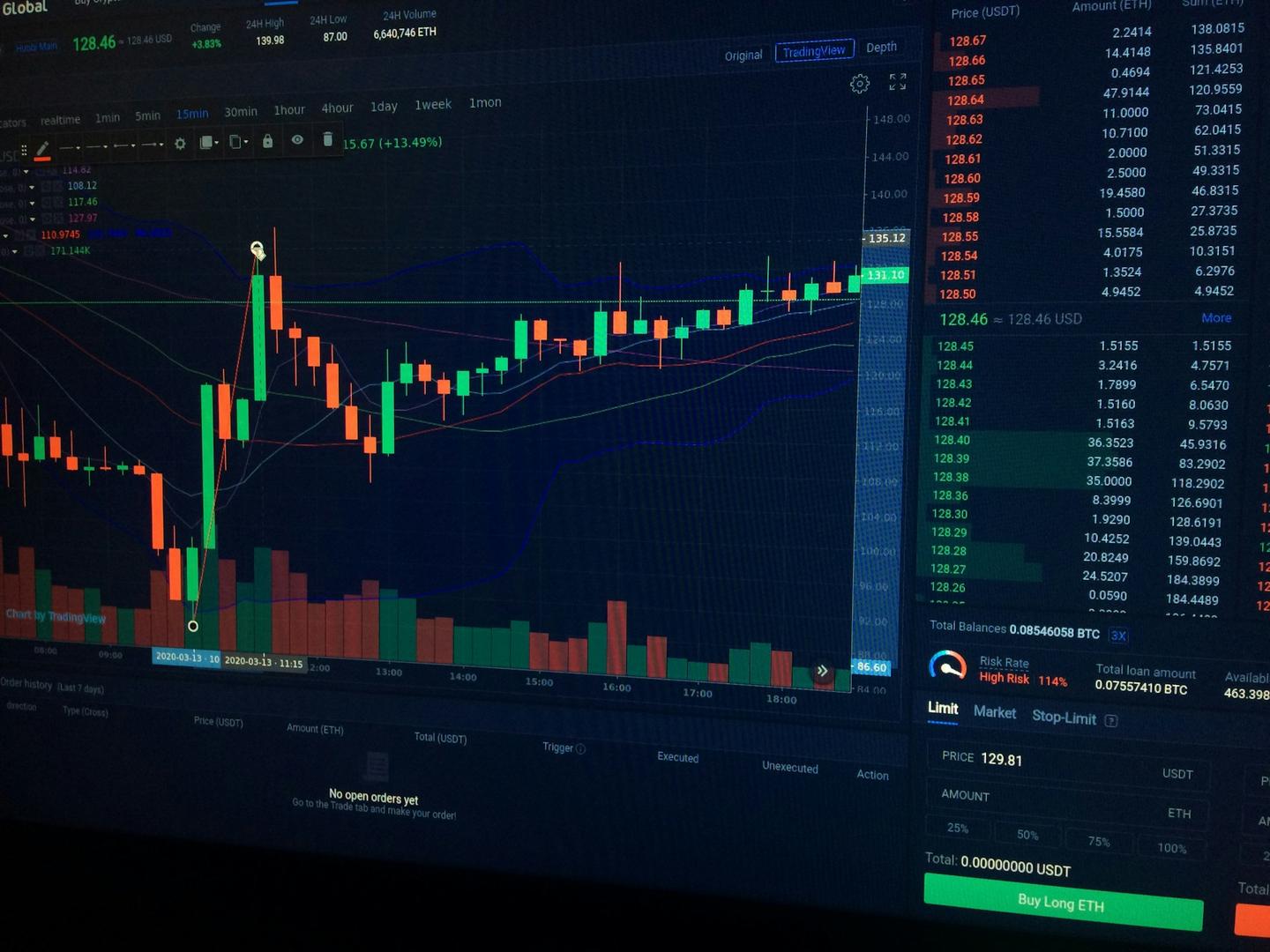
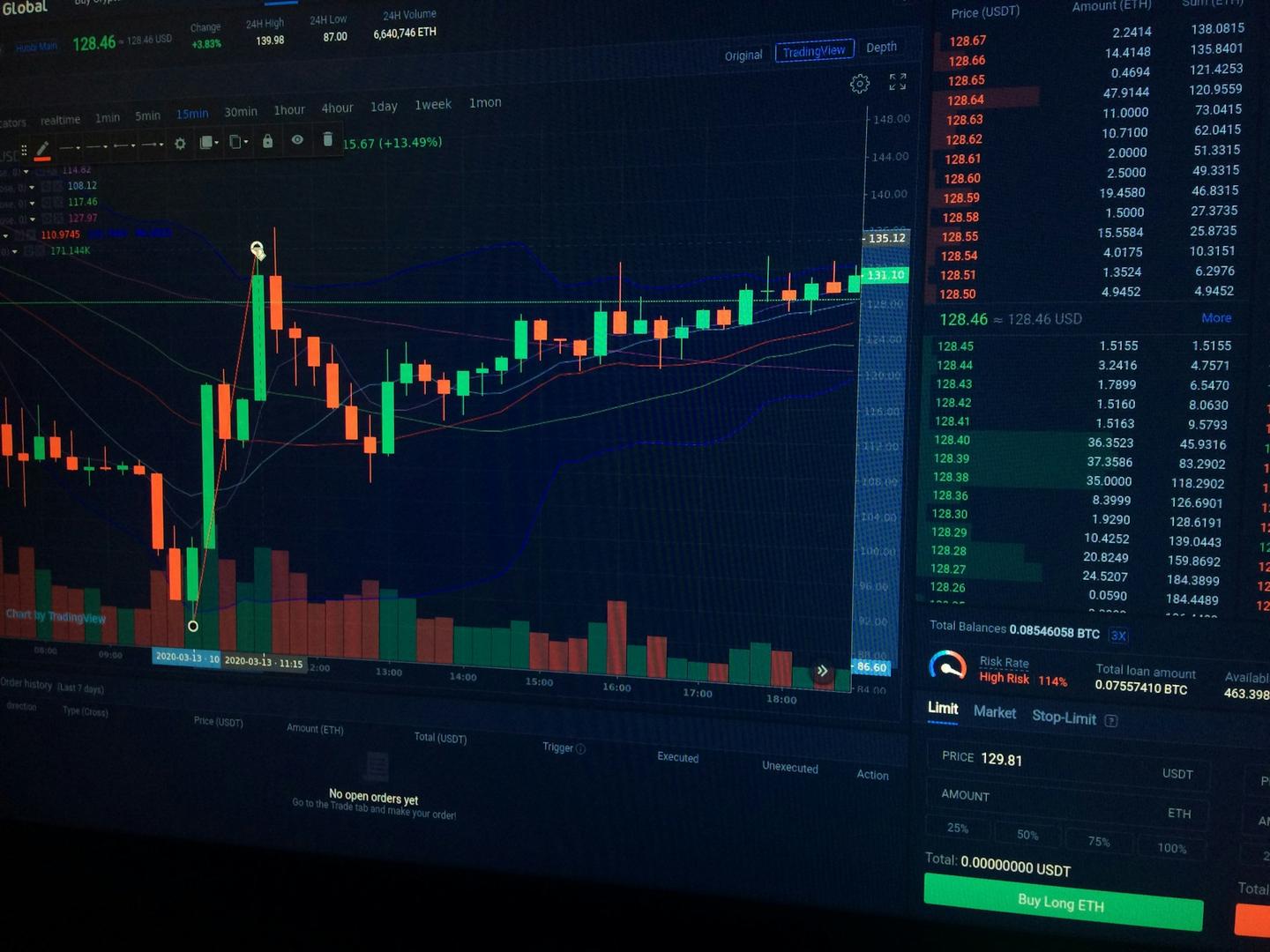
Michael Saylor, executive chairman of Strategy (MSTR), believes bitcoin likely bottomed in early February at $60,000.
Speaking at a recent Mizuho event, Saylor reiterated his long-held view that bottoms aren’t necessarily about valuations but are driven by seller exhaustion, analysts Dan Dolev and Alexander Jenkins wrote.
Trend reversals, he added, are driven more by capital structure and liquidity than by investor sentiment.
Saylor now sees limited selling pressure amid growing demand from ETF inflows, which are absorbing daily supply, and companies shifting treasury assets into bitcoin.
Bitcoin and Strategy’s next drivers
As for the catalyst for the next bull market, Saylor believes it will be the formation of banking credit and digital credit on top of bitcoin. This will have bitcoin supporting more lending and credit activity beyond simple buy-and-hold demand.
Digital credit already exists, said Saylor, in the form of Strategy’s STRC preferred stock, whose beefy 11.5% yield remains well below the company’s expectation of BTC’s long-term appreciation. Strategy is “stretching” bitcoin “from a nonyielding asset into a capital markets engine,” he said.
On the recently hotly-debated topic of quantum computing, Saylor said the risks are overblown. The threat, he argued, is theoretical, likely decades away, and even then solvable.
Mizuho retained its outperform rating on Stategy and $320 price target, suggesting about 150% upside from the current $127.
Circle Payments Network (CPN) Managed Payments let financial institutions operate in fiat, while using crypto rails behind the scenes via Circle.
Circle today launched Circle Payments Network (CPN) Managed Payments, a stablecoin settlement solution designed to simplify stablecoin transactions for traditional financial institutions, according to a press release from the firm.
The new managed solution is aimed at mainstream TradFi firms, including payment service providers, fintechs, banks, and global enterprises, per the release. The product’s core pitch is simplicity: participating firms interact solely in fiat, while Circle handles the the crypto rails in the background, namely USDC minting and burning, payment orchestration, compliance, and blockchain infrastructure.
Use cases include cross-border settlement, merchant stablecoin acceptance, high-volume payouts, and FX cost reduction, according to the releae. At launch, partners include Thunes and Worldline, alongside payments company Veem.
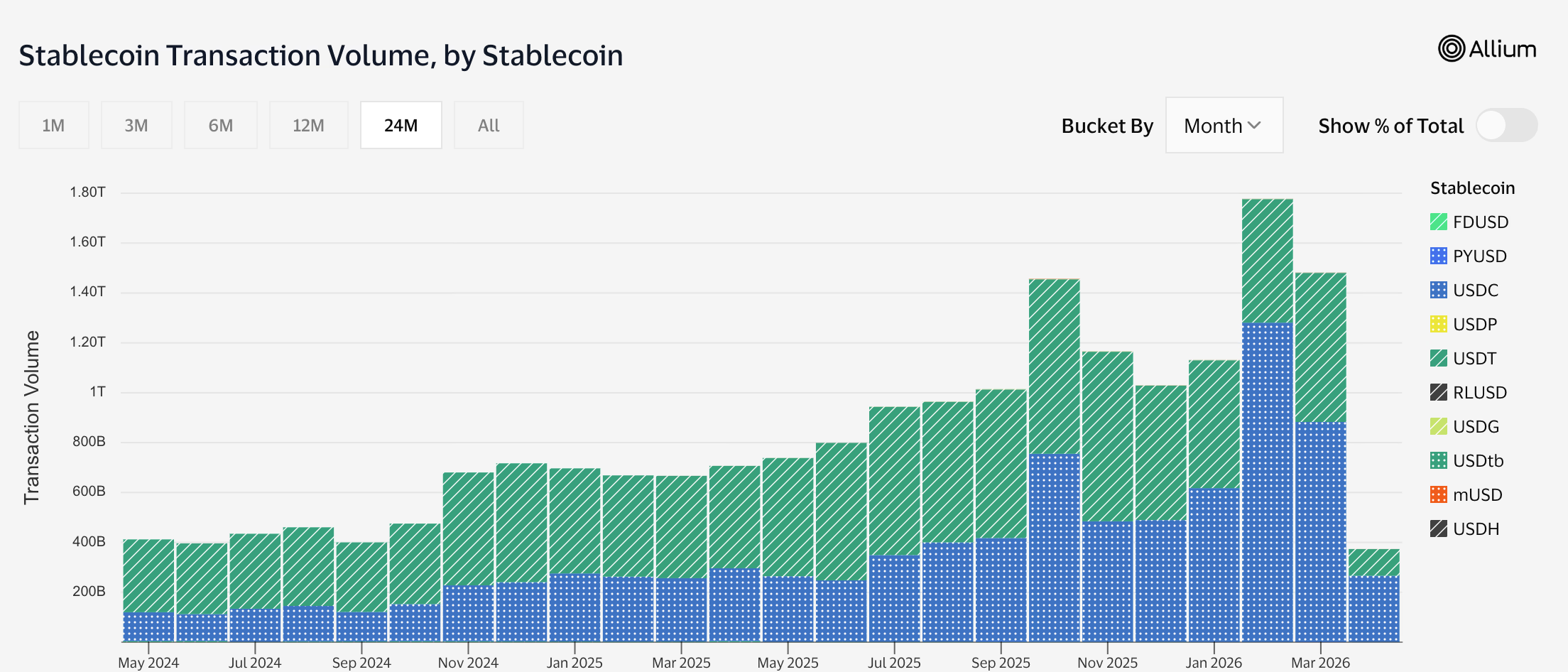
In recent months, UDSC has overtaken Tether’s USDT, the largest stablecoin by market cap, in terms of monthly transaction volume, per data from Visa and Allium.

The launch comes as stablecoins cement their role as mainstream financial infrastructure. Total stablecoin supply surged 50% in 2025 as enterprise adoption accelerated, with the GENIUS Act creating the first federal U.S. regulatory framework for the sector.
Major institutions have moved quickly: Visa launched USDC settlement on Solana in December, and the same month, Intuit struck a multi-year deal with Circle to embed stablecoin capabilities across TurboTax, QuickBooks, and Credit Karma.
Meanwhile, last month, Mastercard acquired stablecoin infrastructure firm BVNK with aims to bridge on-chain and fiat rails within the network.
This article was written with the assistance of AI workflows. All our stories are curated, edited and fact-checked by a human.
Institutional money is rotating back in, and XRP is leading the rallies. XRP recorded $119.6 million in weekly fund inflows for the period ending last week, its strongest weekly haul since mid-December 2025, which occurred when XRP price prediction was running at rock bottom.
That single figure puts XRP ahead of every other digital asset for the week, including Bitcoin. The broader crypto market pulled in $224 million total, reversing a stretch of notable outflows and signaling a clear sentiment shift among institutional allocators.
Regulatory clarity and XRP’s entrenched position in cross-border payment infrastructure appear to be the twin catalysts. With macro conditions still turbulent, the price setup deserves a closer look.
Discover: The best crypto to diversify your portfolio with
XRP Price Prediction: $2.00 Before Year-End?
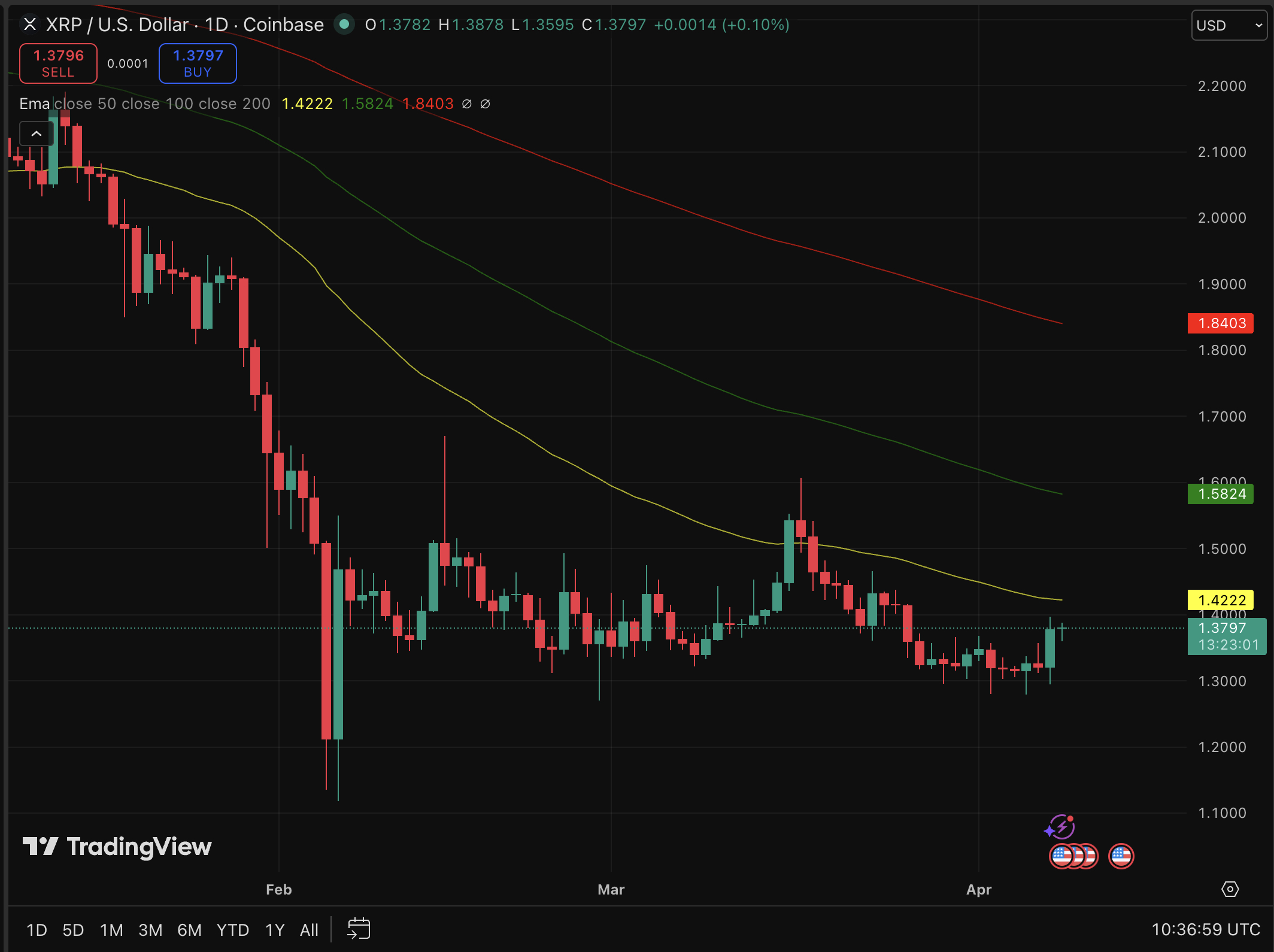
XRP’s 4.6–5.0% daily gain lands it at the $1.37–$1.38 range, but the technical picture remains cautious. The asset is holding above its short-term 10-day and 20-day exponential moving averages, a tentative green flag.
The problem? It still trades below the 50-, 100-, and 200-day EMAs, keeping the broader trend firmly in bearish territory. The 14-day RSI sits at 39.43, neutral but leaning toward oversold, which historically creates room for further upside before momentum stalls.
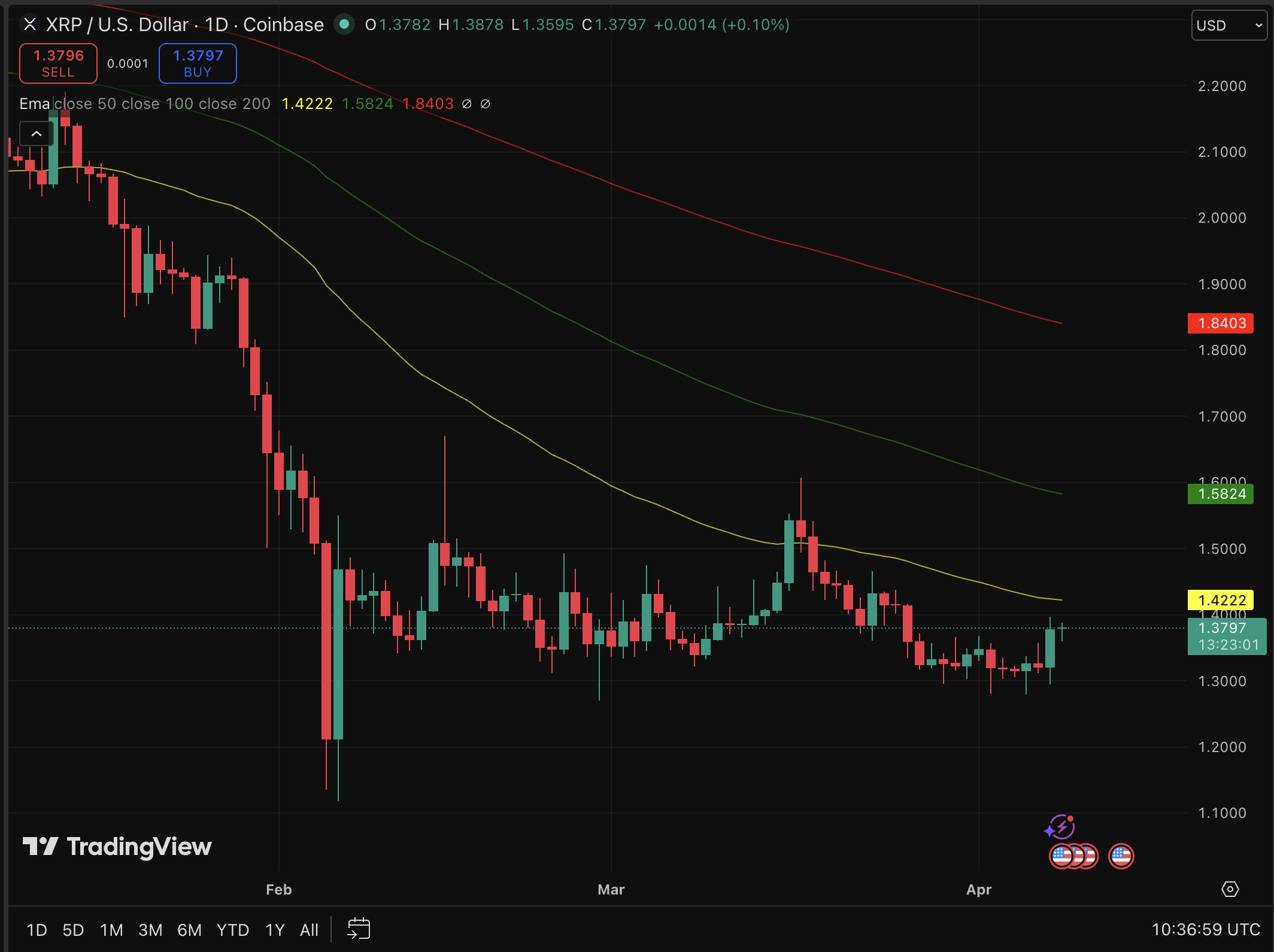
Support levels are stacked at $1.31, $1.29, and $1.27, with resistance clustered at $1.4, the exact range XRP is currently testing. A clean breakout above $1.38 with volume would open the door toward $1.50 and potentially $1.70 on a momentum extension.
The inflow data is bullish. The chart structure is still mending. Those two realities coexist, and neither cancels the other out.
Discover: The best pre-launch token sales
Bitcoin Hyper Targets Early Mover Upside as XRP Tests Key Resistance
XRP’s 50% projected upside is compelling, but at a $84B+ market cap, the runway to 10x returns requires a very specific set of conditions to align perfectly. Traders hunting asymmetric early-stage exposure are looking elsewhere without abandoning the Bitcoin ecosystem entirely.
Bitcoin Hyper ($HYPER) is positioned as the first Bitcoin Layer 2 with Solana Virtual Machine (SVM) integration, a combination that delivers sub-second transaction finality while inheriting Bitcoin’s security layer. The project targets Bitcoin’s three structural weaknesses directly: slow transactions, high fees, and the near-total absence of programmability.
The presale has raised $32 million at a current token price of $0.0136, with staking rewards already live for early participants. The Decentralized Canonical Bridge enables direct BTC transfers into the ecosystem, removing friction that has historically limited Bitcoin DeFi adoption.
The post XRP Price Prediction: Ripple Leads Crypto Inflows as Market Recovers appeared first on Cryptonews.


South Korea’s ruling Democratic Party proposed a “Digital Asset Basic Act” Wednesday that would establish a legal framework for digital assets, including issuance, trading, custody and supervision.
“Digital assets are emerging as a core medium connecting the real economy and financial markets,” the proposal states. It defines value-linked digital assets, including those tied to fiat currencies or real-world assets, as a category requiring issuer authorization, refund reserves and redemption obligations.
The new proposal comes amid stalled Digital Asset Basic Act negotiations since early this year when regulators clashed over who should be allowed to issue won-pegged stablecoins. The Bank of Korea insisted banks with 51% ownership should be the only ones authorized to issue stablecoins, while the Financial Services Commission warned this could hinder innovation.
The bill also said it aims to “establish a foundation for Korea to lead the global digital financial order.” Under the proposal, entities seeking to issue such assets must obtain approval and meet requirements including capital thresholds, operational capacity and reserve plans.
The legislation would introduce licensing, registration and reporting requirements for digital asset businesses, including trading, brokerage, custody and advisory services.
It would also establish rules on disclosures, internal controls and market conduct, including prohibitions on unfair trading practices such as market manipulation and use of non-public information.
The proposal calls for the creation of a digital asset committee to review and coordinate policy, as well as national basic and implementation plans for the sector.
It also noted that South Korea’s current system remains focused on investor protection and lacks a comprehensive framework covering issuance, disclosure and market structure.
The proposal follows the announcement of new rules Wednesday by the country’s Financial Services Commission and Financial Supervisory Service ordering all domestic cryptocurrency exchanges to adopt a single, strict system for delaying withdrawals. The aim is to block a surge in voice phishing scams that rely on speed.


Yuga Labs has settled its lawsuit against artist Ryder Ripps and Jeremy Cahen over their alleged copycatting of its non-fungible tokens (NFTs) from the Bored Ape Yacht Club collection.
The agreement ends a two-year dispute over whether the pair’s project, which reused Bored Ape imagery, crossed the line from satire into trademark infringement.
Proposed court orders would permanently bar Ripps and Cahen from using Yuga’s trademarks and imagery, according to a filing in California federal court. The terms of the settlement were not disclosed.
Yuga’s Bored Ape collection became one of the most recognizable NFT brands during the market’s peak. The firm sued in 2022, claiming Ripps and Cahen sold lookalike tokens in their RR/BAYC NFT collection and earned millions by confusing buyers. The defendants argued their work was a satirical response to the actual Bored Ape Yacht Club collection.
A district judge initially sided with Yuga and awarded nearly $9 million in damages and fees. But an appeals court later overturned that ruling, saying a jury should decide whether buyers were actually misled. The settlement avoids that trial.


Summary
- Ethereum Foundation will convert 5,000 ETH into stablecoins via CoWSwap’s TWAP feature to fund research, grants, and donations.
- The move follows earlier EF treasury conversions using DeFi rails as part of a broader diversification policy.
- Market watchers scrutinize EF sales as potential sentiment signals, even when the amounts are small relative to ETH’s total supply.
The Ethereum Foundation (EF) has announced it will convert 5,000 ETH into stablecoins using decentralized trading protocol CoWSwap’s time-weighted average price (TWAP) function, describing the move as routine funding for “R&D, grants and donations.” “Today, The Ethereum Foundation will convert 5000 ETH to stablecoins via @CoWSwap’s TWAP feature as a part of our ongoing work to fund R&D, grants and donations,” the foundation wrote on X, reiterating its commitment to using DeFi-native tools for treasury operations. At current prices, the sale is worth tens of millions of dollars but remains negligible versus Ethereum’s circulating supply and daily trading volume.
EF’s latest conversion echoes a similar move in October 2025, when it sold 1,000 ETH via CoWSwap TWAP “to fund R&D, grants and donations, and to highlight the power of DeFi,” a transaction then valued at roughly $4.5 million. The foundation has also previously outlined a plan to convert up to 10,000 ETH on centralized exchanges, positioning these sales as part of a diversification strategy that seeks “a middle ground between earning yields above standard benchmarks and serving as a responsible steward of Ethereum.” BeInCrypto noted that the new 5,000 ETH TWAP sale is “in line with its June 2025 treasury policy focused on DeFi and privacy,” framing it as policy execution rather than a directional bet on ETH.
While modest in size, EF treasury moves are closely watched as soft sentiment gauges around whether the organization views current levels as top-of-cycle or simply takes profit to extend runway. In a previous crypto.news story, Ripple’s Brad Garlinghouse argued that stablecoins and DeFi rails are becoming a primary “business entry point” for crypto, underscoring why Ethereum-native funding operations resonate far beyond the foundation’s own balance sheet. Another crypto.news story highlighted how 90% of financial institutions already use stablecoins in some form, and a third story on cross-border payments detailed how incumbents such as SWIFT are testing tokenized settlement, putting Ethereum-based infrastructure at the center of the next phase of global payments.

Anthropic has moved Claude Mythos Preview into a limited testing phase with a select group of enterprise partners after the model surfaced thousands of critical vulnerabilities across operating systems, web browsers and other software. The disclosure highlights both the immense potential of AI-powered security tools and the new, accompanying risks as capabilities proliferate in the wild.
The company described Mythos Preview as a general-purpose model that, during its internal evaluation, identified high-severity weaknesses across major platforms. Anthropic cautioned that such capabilities could spread rapidly if not managed responsibly, noting that adversaries may deploy these tools before safeguards are in place.
“Given the rate of AI progress, it will not be long before such capabilities proliferate, potentially beyond actors who are committed to deploying them safely.”
Security researchers have long warned that AI can accelerate cyberattacks by automating discovery and exploitation. In a broader landscape where AI-driven threats are increasingly common, Anthropic pointed to alarming trends. AllAboutAI reports a 72% year-over-year increase in AI-powered cyberattacks, and that 87% of global organizations experienced AI-enabled attacks in 2025. Against that backdrop, Anthropic emphasized the need for defensive AI tools to outrun the bad actors.
To shore up defenses, Anthropic announced Project Glasswing on the same day. The initiative unites more than 40 companies, including Amazon Web Services, Apple, Cisco, Google, JPMorgan, the Linux Foundation, Microsoft and Nvidia, with the goal of using Claude Mythos Preview’s capabilities to find bugs, share data with partners and patch critical vulnerabilities before criminals exploit them.
Key takeaways
- Claude Mythos Preview has identified thousands of critical vulnerabilities across operating systems, browsers and cryptography libraries, underscoring a broad surface area for potential exploitation.
- The majority of these flaws remain unpatched, with Anthropic noting that about 99% of the vulnerabilities it found have not yet been fixed.
- Project Glasswing mobilizes a cross‑industry coalition to operationalize AI-driven defense, aiming to accelerate bug discovery, disclosure and remediation across the software stack.
- The vulnerabilities span decades, hinting at long-standing fragility in widely used software and the persistent risk to critical infrastructure and crypto ecosystems.
AI-driven vulnerability discovery and decades‑old weaknesses
Anthropic’s early findings reveal a troubling reality: flaws that have lingered for years or even decades can still pose meaningful threats today. Among the examples cited were now-patched but historically significant bugs in OpenBSD—a 27-year-old vulnerability that resurfaced in testing—alongside a 16-year-old flaw in the FFmpeg library, and a 17-year-old remote code execution vulnerability in the FreeBSD operating system. The disclosures extended to multiple vulnerabilities within the Linux kernel, illustrating that even well-maintained open-source projects are not immune to latent risks.
Beyond operating systems, Mythos Preview flagged weaknesses in the cryptography landscape—areas that are foundational to secure communications and transactions. The model reportedly identified flaws in widely used libraries and protocols, including TLS, AES-GCM and SSH. Web applications emerged as a particularly fertile ground for vulnerability discovery, with a spectrum of issues ranging from cross-site scripting to SQL injection and cross-site request forgery, the latter often leveraged in phishing-style campaigns.
Anthropic stressed that many of these issues are subtle, context-specific or deeply embedded in complex code paths, making them hard to surface through traditional auditing alone. The implication for developers and operators is clear: even mature software stacks can hide critical flaws that AI could help uncover much faster than conventional methods.
The company also highlighted a stark statistic accompanying the findings: the majority of these vulnerabilities had not yet been patched, creating a window of exposure that could be exploited by opportunistic attackers if not addressed promptly.
Glasswing: a coalition for proactive defense
Project Glasswing is pitched as a proactive defense program rather than a retrospective analysis initiative. By pooling resources and expertise from participants across cloud providers, hardware developers, financial institutions and open-source ecosystems, Glasswing seeks to turn AI-driven vulnerability discovery into a learning loop that accelerates patch creation and deployment. The collaboration aims to share insights about emerging threats, coordinate disclosure with vendors and suppliers, and push for rapid remediation before exploitation becomes widespread.
Key participants span industry giants and pivotal security ecosystems: Amazon Web Services, Apple, Cisco, Google, JPMorgan, the Linux Foundation, Microsoft and Nvidia, among others. The initiative reflects a growing trend in which large technologist coalitions coordinate to harden software supply chains and reduce the window between vulnerability discovery and patching—an objective that is especially relevant to blockchain and crypto infrastructure, where security incidents can trigger cascading failures across networks and ecosystems.
What this shift means for crypto and cybersecurity ecosystems
For investors and builders in the crypto space, the Mythos Preview findings and Glasswing’s collaborative model lend a more nuanced view of risk and resilience. On the one hand, AI-assisted vulnerability discovery could markedly improve the security posture of crypto platforms, wallets, node software and smart-contract ecosystems by uncovering weaknesses that would have taken humans far longer to detect. On the other hand, early access to such powerful tools poses governance and safety questions: who controls the disclosure of findings, how quickly patches are issued, and how risk is priced for users in real-time markets?
From a market perspective, the activity around AI-enabled security tools could influence demand for security primitives, auditing suites and formal verification services within crypto infrastructure. It also underscores the importance of strong supply-chain security, given that a single zero-day in a widely used library or OS could ripple across decentralized networks, exchanges and custodial services.
Analysts note that the transition period for defense‑driven AI is likely to be fraught. In the long run, advocates expect defense capabilities to dominate, yielding a more secure software ecosystem, but the interim phase will be characterized by widespread misconfigurations, patch delays and evolving threat tactics as attackers adapt to new defensive technologies. Anthropic’s framing suggests that the shift toward AI-assisted defense will not be instantaneous; it will require sustained collaboration, standardized disclosures and rapid patch cycles to reduce the window of exploitation.
Beyond the immediate technical implications, industry observers are watching how policy and governance frameworks adapt to these capabilities. The balance between sharing threat intelligence and protecting sensitive vulnerability data will shape how quickly organizations can benefit from AI-driven defense, including in crypto-focused environments where liability, transparency and user trust are paramount.
As coverage in security circles notes, similar narratives have emerged around AI-enabled code security and the broader debate over how to regulate and deploy AI safely. The media and market response to these discussions has included volatility in cybersecurity equities, underscoring that investors are weighing the reliability of AI-driven defense against the risk of enabling more capable attackers.
In the near term, readers should watch how Glasswing translates the model’s findings into tangible patches and how quickly participating firms can operationalize the shared intelligence. The outcome will likely influence security budgets, developer workflows and incident-response readiness across both traditional tech and crypto-native ecosystems.
What remains uncertain is how quickly the industry can close the patch gap for the vast array of uncovered vulnerabilities and whether AI-assisted defenses can stay ahead of increasingly sophisticated exploitation techniques. The coming months will be telling for developers, operators and policymakers about the feasibility and effectiveness of large-scale, AI-enabled defense programs in reducing systemic risk.
For now, Anthropic’s disclosures reinforce a critical takeaway: as AI capabilities grow, so does the imperative to pair powerful discovery tools with disciplined, collaborative defense—especially in sectors where security is inseparable from trust and continuity.


Stablecoins processed $33t in 2025, topping Visa and Mastercard, and could clear over $50t by 2026 as corporates, banks and AI agents turn on‑chain dollars into core payment rails.
Summary
- Morph’s “State of Stablecoins” report says stablecoins settled $33 trillion on‑chain in 2025, versus Visa and Mastercard’s combined $25.5 trillion, with several months above $1.5 trillion in volume.
- Around 60% of flows are now B2B as corporates use dollar tokens for cross‑border treasury, supplier payments and procurement, while 90% of financial institutions are already using or piloting stablecoins.
- Morph projects stablecoin settlement could exceed $50 trillion by 2026 and reach roughly 10% of global cross‑border payments by 2030, helped by MiCA, new US rules and AI agents automating a potential $1.9t market.
Stablecoins processed $33 trillion of on-chain transaction volume in 2025, surpassing the combined $25.5 trillion handled by Visa and Mastercard and signaling that tokenized dollars have quietly outgrown legacy card rails, according to a new “State of Stablecoins” report from Ethereum layer-2 network Morph. Morph’s analysts argue the asset class has moved beyond its speculative origins to become a core settlement layer for global finance, with volumes now comparable to the world’s largest payment networks despite a total market capitalization in the low hundreds of billions.
Crucially, roughly 60% of stablecoin flows are now business-to-business, as corporates lean on dollar tokens for cross-border treasury management, supplier payments, and procurement. “Enterprise adoption is no longer a thesis; it is visible in the data,” the Morph team wrote, highlighting rising average transaction sizes and the growing role of stablecoins in institutional liquidity and settlement workflows. The report notes that in several recent months, stablecoin volumes exceeded $1.5 trillion, rivaling or surpassing the monthly throughput of major card schemes.
Looking ahead, Morph projects annual stablecoin settlement volumes could exceed $50 trillion as early as 2026, cementing their role as a parallel payment stack alongside banks, card networks, and systems like SWIFT. By 2030, the report forecasts stablecoins could account for around 10% of global cross-border payments, helped by lower fees, instant settlement, and regulatory clarity in key markets under frameworks such as the EU’s MiCA and new US stablecoin laws.
Morph also bets that AI agents will become primary initiators of stablecoin transactions, automating everything from just-in-time inventory payments to machine-to-machine settlement. Under that scenario, the team estimates stablecoins could support a $1.9 trillion market by 2030, with autonomous systems triggering high-frequency, low-latency payments across global supply chains. In a previous crypto.news story, Ripple CEO Brad Garlinghouse said stablecoins processed more than $33 trillion in volume last year and could become crypto’s “ChatGPT moment” for businesses, underscoring how quickly on-chain dollars are converging with mainstream finance.
That same story pointed to forecasts from Bloomberg Intelligence that stablecoin flows could reach $56.6 trillion by 2030, while another crypto.news story on institutional adoption reported that 90% of surveyed financial institutions now use stablecoins in some form, from settlement to collateral management. A separate story on cross-border payments detailed how incumbents such as SWIFT are testing blockchain and digital-asset rails, suggesting that by the time stablecoins hit a 10% share of global cross-border volume, the line between “crypto” and conventional payments may be largely irrelevant to end users.

PSL team owner contradicts Mohsin Naqvi on empty stands, says Pakistan was ‘busy driving global peace’ | Cricket News

Anthropic Says Its New AI Model Is So Good at Finding Security Risks, You Can’t Use It

XRP WATCH! TRUMP PRESS LIVE BREAKING NEWS


-

 NewsBeat6 days ago
Steven Gerrard disagrees with Gary Neville over ‘shock’ Chelsea and Arsenal claim | Football
-

 Business6 days ago
No Jackpot Winner and $194 Million Prize Rolls Over
-

 Fashion5 days ago
Weekend Open Thread: Spanx – Corporette.com
-

 Crypto World7 days ago
Gold Price Prediction: Worst Month in 17 Years fo Save Haven Rock
-

 Business4 days ago
Expert Picks for Every Need
-

 Business3 days ago
Three Gulf funds agree to back Paramount’s $81 billion takeover of Warner, WSJ reports
-

 Sports4 days ago
India men’s 4x400m and mixed 4x100m relay teams register big progress | Other Sports News
-

 Business7 days ago
Login and Checkout Issues Spark Merchant Frustration
-

 Tech21 hours ago
How Long Can You Drive With Expired Registration? What Florida Law Says
-
Business3 days ago
No Jackpot Winner, Prize to Climb to $231 Million
-

 Tech6 days ago
Commonwealth Fusion Systems leans on magnets for near-term revenue
-

 Fashion2 days ago
Massimo Dutti Offers Inspiration for Your Summer Mood Board
-

 Crypto World7 days ago
Ripple rolls out enterprise crypto treasury platform for corporates
-

 Fashion1 day ago
Let’s Discuss: DEI in 2026
-
Politics5 days ago
Wings Over Scotland | The quality of mercy
-
 Sports7 days ago
Steal Gary Woodland’s subtle power move for longer drives
-
Sports7 days ago
Tom Pelissero Drives the Final Nail in the Coffin
-
 Tech7 days ago
Battery Tester Outperforms Cheaper Options
-

 Business4 days ago
Akebia Therapeutics, Inc. (AKBA) Discusses Pipeline Progress and Strategic Focus on Kidney Disease Treatments at R&D Day – Slideshow
-

 Tech7 days ago
Following Artemis II’s Journey Around The Moon
You must be logged in to post a comment Login