Connect with us
DAPA Banner

Tech

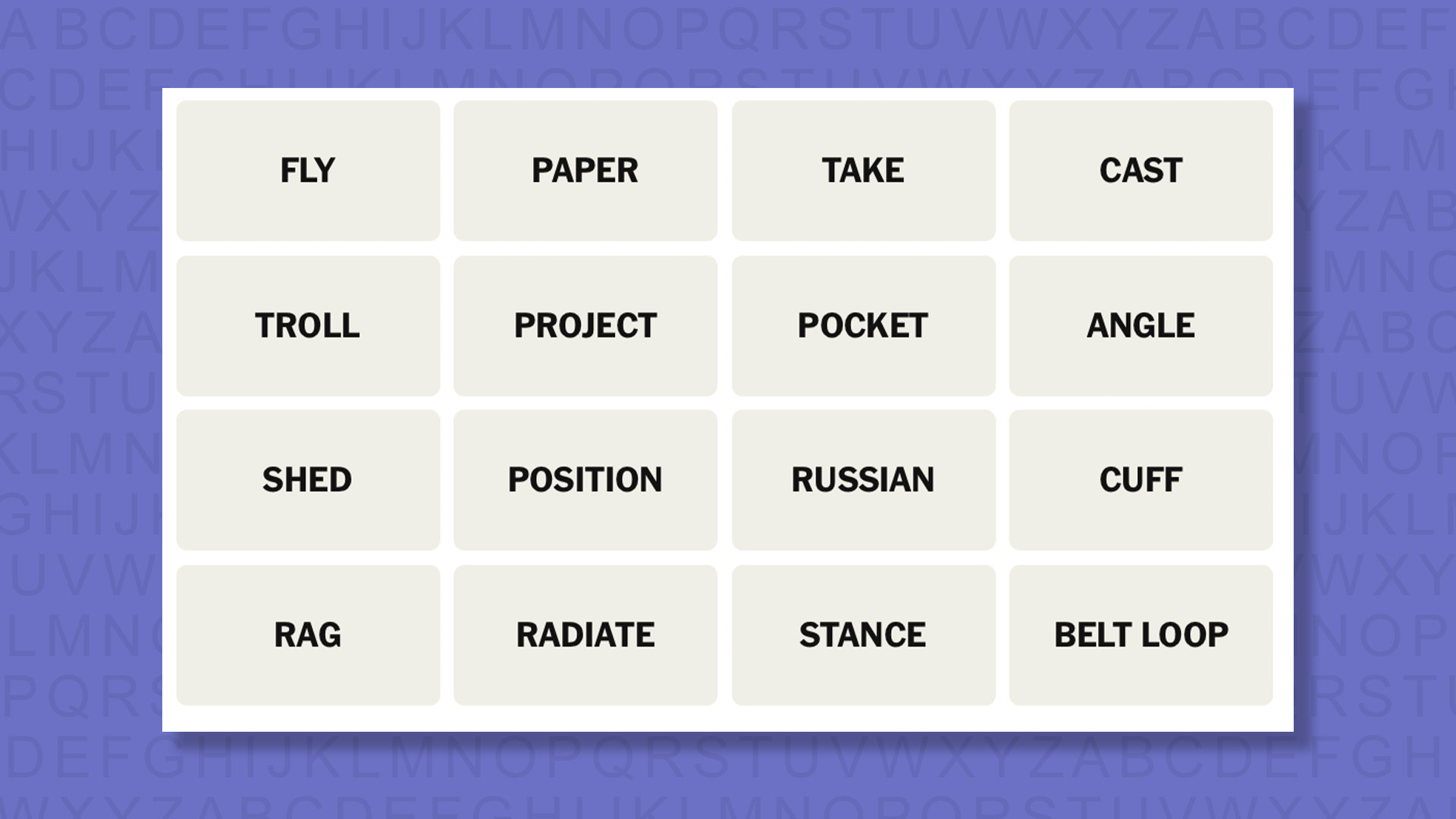
NYT Connections hints and answers for Sunday, April 12 (game #1036)

Published

on

Looking for a different day?

A new NYT Connections puzzle appears at midnight each day for your time zone – which means that some people are always playing ‘today’s game’ while others are playing ‘yesterday’s’. If you’re looking for Saturday’s puzzle instead then click here: NYT Connections hints and answers for Saturday, April 11 (game #1035).

Good morning! Let’s play Connections, the NYT’s clever word game that challenges you to group answers in various categories. It can be tough, so read on if you need Connections hints.

Advertisement

Source link

Advertisement
Continue Reading
Click to comment

You must be logged in to post a comment Login

Leave a Reply

Tech

AMC will stream ‘The Audacity’ premiere in 21 parts on TikTok

Published

on

While it’s not unusual for networks to promote new shows by releasing full episodes on YouTube, AMC is doing something a bit different for its Silicon Valley-focused comedy “The Audacity.”

The show’s premiere will be available on TikTok, starting on Sunday morning. It will be split into 21 segments, each lasting about three minutes, according to Deadline. The segments will be numbered, allowing users to watch the premiere in its entirety if they choose.

This could be a smart way to build buzz among younger viewers for a show that AMC’s chief marketing officer described as the network biggest launch of the year. Or it might just be an odd attempt to recreate Quibi.

Created by Jonathan Glatzer and starring Billy Magnussen and Sarah Goldberg, “The Audacity” doesn’t depict real companies or executives, but it aims to provide a darkly comedic look at many issues created by today’s technology.

Advertisement

And if you don’t want to watch in three-minute segments, you can catch the full premiere on AMC and its streaming service AMC+. It will also stream simultaneously on Samsung’s free service Samsung TV Plus.

Source link

Continue Reading

Tech

Webinar: From noise to signal

Published

on

Threat intel

Cyberattacks rarely come out of nowhere—threat actors often leave behind signals long before an intrusion begins.

On Thursday, April 30, 2026 at 2:00 PM ET, BleepingComputer will host a live webinar titled “From noise to signal: What threat actors are targeting next” with Tammy Harper, Threat Intelligence Researcher at RansomLook.

The webinar explores how security teams can monitor early warning signs across underground communities and translate them into actionable defense.

We will examine how threat actors use dark web forums, Telegram channels, and access broker marketplaces to coordinate attacks, share vulnerabilities, and advertise compromised access, often revealing their intentions weeks before an attack is launched.

Advertisement

Flare Systems, a threat intelligence firm specializing in monitoring external threat surfaces, helps organizations detect these early signals across the dark web and other hidden channels. By providing visibility into attacker behavior and emerging threats, Flare enables security teams to move from reactive defense to proactive risk reduction.

In this session, attendees will learn how to identify meaningful signals within online “chatter,” track evolving adversary tactics, and turn intelligence into prioritized defensive actions before attackers gain a foothold.

Flare webinar

Threat actors don’t operate in silence

From vulnerability discussions and leaked credentials to access broker listings and Telegram coordination, attackers frequently communicate and prepare in ways that can be observed.

However, these signals are often fragmented, noisy, and difficult to interpret without the right approach.

Advertisement

This webinar will explore how to cut through that noise, identify patterns, and understand what truly indicates an impending attack versus background activity.

The upcoming webinar will cover:

  • How to monitor underground forums, dark web sites, and Telegram channels for early attack signals
  • How to identify shifts in attacker tactics and priorities
  • How to translate threat intelligence into defensive priorities
  • How to proactively reduce risk before intrusions begin

Don’t miss this opportunity to learn how to move from reactive defense to proactive security strategy.

Register now to secure your spot!

Source link

Advertisement
Continue Reading

Tech

AI health tech is booming. The cures are not.

Published

on

The drug discovery revolution is real but radically overstated, the health chatbots are a documented hazard, and the diseases that matter most remain stubbornly unsolved.

At Novartis, sometime in late 2025, a team of researchers working on Huntington’s disease used generative AI to computationally design 15 million potential compounds for a type of molecule called a molecular glue degrader, one that could cross the blood-brain barrier and attack a protein implicated in the illness.

From those 15 million candidates, the team synthesised roughly 60 in the laboratory. They arrived at a promising scaffold now moving forward for further optimisation. Fifteen million possibilities narrowed to 60. It is, by any honest measure, an extraordinary feat of computational triage. It is also, by any honest measure, not a cure for Huntington’s disease.

That gap, between what AI can do in a laboratory and what it has actually delivered to patients, is the defining tension of health technology in 2026. The industry speaks in the language of revolution. The evidence speaks in the language of incremental, uncertain, and frequently disappointing progress. 

Advertisement

Somewhere between the two, more than 40 million people a day are typing their symptoms into ChatGPT, and patient safety organisations are warning that this might be the single most dangerous use of the technology in existence.

The 💜 of EU tech

The latest rumblings from the EU tech scene, a story from our wise ol’ founder Boris, and some questionable AI art. It’s free, every week, in your inbox. Sign up now!

The pitch for AI in drug discovery is seductive and, in its narrow terms, accurate. Traditional drug development takes 10 to 15 years and costs an average of $2.5 billion per successful compound, with approximately 90 per cent of candidates failing in clinical trials.

Advertisement

AI can compress early discovery timelines by 30 to 40 per cent and reduce preclinical candidate development from three to four years to as little as 13 to 18 months. Insilico Medicine brought an AI-discovered drug for idiopathic pulmonary fibrosis from target identification to Phase II trials in under 30 months, a process that traditionally takes six to eight years.

As of January 2024, at least 75 drugs or vaccines from AI-first biotechs had entered clinical trials, according to Boston Consulting Group.

These are real achievements. They are also achievements that stop well short of the finish line. As of December 2025, no AI-discovered drug has received FDA approval. Not one. The pharmaceutical industry’s 90 per cent clinical failure rate has not demonstrably improved.

Scientific commentary has noted that AI-discovered compounds appear to show progression rates similar to traditionally discovered ones, meaning the technology is getting us to the starting gate faster without improving our odds of crossing it.

Advertisement

Dr Raminderpal Singh, writing in Drug Target Review in February 2026, offered a summary that should be required reading for anyone tempted to confuse acceleration with transformation: the most important question for this year, he argued, is not whether AI can speed up preclinical timelines (it can) but whether it can improve clinical success rates.

Until Phase III data and regulatory approvals answer that question, the pharmaceutical industry’s cautious approach to AI investment appears, in his words, “entirely justified.” One unnamed CEO was blunter: “AI has really let us all down in the last decade when it comes to drug discovery. We’ve just seen failure after failure.”

There is a reason no amount of computation has cured Alzheimer’s, or pancreatic cancer, or ALS, or Huntington’s, or any of the diseases that continue to kill people while AI companies raise billions. The reason is not a lack of processing power. It is that human biology is irreducibly complex. Diseases with poorly understood mechanisms do not become well understood simply because you can screen millions of compounds faster.

The blockage was never the speed of molecular screening. It was, and remains, our fundamental ignorance of how these diseases work at the cellular level, how animal models fail to predict human outcomes, and how clinical trials must unfold over years to determine whether a compound is safe and effective in a living body.

Advertisement

AI cannot bypass biology. It cannot shorten a five-year clinical trial to five months. It cannot make a patient’s immune system behave like a predictive model. Novartis, to its credit, acknowledged this plainly at the World Economic Forum in January 2026: human biology remains deeply complex, translating research into clinical studies takes time, and for many diseases, long and rigorous trials are still needed. AI, the company said, is not a magic wand. It is a tool for navigating complexity more intelligently.

That is a defensible claim. It is also a profoundly different one from the narrative that Sam Altman floated when he mused that one day we might simply ask ChatGPT to cure cancer.

If AI’s performance in drug discovery is a story of genuine but overstated progress, its performance as a health assistant is something closer to a cautionary tale.

In January 2026, the patient safety organisation ECRI ranked the misuse of AI chatbots in healthcare as the number one health technology hazard for the year. The tools, ECRI noted, are not regulated as medical devices, not validated for clinical use, and increasingly relied upon by patients, clinicians, and healthcare staff.

Advertisement

ECRI documented cases in which chatbots suggested incorrect diagnoses, recommended unnecessary testing, promoted substandard medical supplies, and, in at least one instance, invented a body part. More than 40 million people turn to ChatGPT daily for health information, according to OpenAI’s own analysis. A quarter of its 800 million regular users ask healthcare questions every week.

The most rigorous test of whether this actually helps anyone came in February 2026, when researchers at the University of Oxford published a randomised controlled study of 1,298 participants in Nature Medicine. The results were sobering. When tested alone on medical scenarios, the LLMs performed impressively, correctly identifying conditions in 94.9 per cent of cases.

When real people used the same models to assess their own symptoms, performance collapsed: participants identified relevant conditions in fewer than 34.5 per cent of cases and chose the correct course of action in fewer than 44.2 per cent. These results were no better than the control group, which used traditional resources like web searches and their own judgement.

The study’s lead medical practitioner, Dr Rebecca Payne of Oxford’s Nuffield Department of Primary Care, was direct. “Despite all the hype,” she said, “AI just isn’t ready to take on the role of the physician.”

Advertisement

The problem, she explained, is that medicine is not a knowledge retrieval exercise. It is a conversation. Doctors probe, clarify, check understanding, and guide, actively eliciting information that patients often do not know is relevant. The chatbots do not do this.

They respond to whatever the user types, and users, understandably, do not know what to type. The result is a two-way communication breakdown in which the model sounds authoritative and the patient walks away with a mix of good and dangerous advice they cannot tell apart.

The mental health space is arguably worse. The American Psychological Association issued a health advisory noting that generative AI chatbots were not created to deliver mental health care and wellness apps were not designed to treat psychological disorders, yet both are being used for exactly those purposes.

Stanford researchers found that therapy chatbots exhibited measurable stigma toward conditions like alcohol dependence and schizophrenia, and that this stigma persisted across newer and larger models. The default industry response, that the problems will improve with more data, was not supported by the evidence.

Advertisement

None of this means AI is useless in healthcare. That would be as dishonest as the hype in the opposite direction. AI-powered imaging tools are improving early detection of certain cancers. Administrative applications, transcribing consultations, generating referral letters, summarising patient records, are saving clinicians genuine time.

Drug discovery, despite its failure to produce an approved drug, is becoming faster and more computationally sophisticated in its early stages. These are real contributions. They are also, notably, contributions that fall into the category of assistance rather than intelligence: the technology is at its best when it is doing clerical work, not clinical reasoning.

Dr Payne framed it with a precision that the industry would do well to adopt. The proper role for LLMs in healthcare, she said, is as “secretary, not physician.” That single sentence captures something the billions in investment have not: a realistic assessment of where these tools actually belong.

Alzheimer’s is expected to affect 78 million people worldwide by 2030. Parkinson’s, according to a 2025 BMJ study, is projected to reach 25 million by 2050. Pancreatic cancer’s five-year survival rate has barely moved in decades.

Advertisement

These are the diseases that AI was supposed to be our best hope for cracking.

Instead, three years into the generative AI era, the most visible health application of the technology is 40 million people a day asking a chatbot whether their headache means something serious, and a patient safety organisation telling them to be very, very careful about the answer.

Source link

Advertisement
Continue Reading

Tech

Rockstar Games has confirmed it was hit by third-party data breach

Published

on

An experienced hacking group has claimed to have infiltrated Rockstar Games‘ cloud servers, while the game publisher has confirmed that there was a “third-party data breach.” ShinyHunters, a hacker group that’s been linked to data breaches targeting Microsoft, Google, Ticketmaster and others, posted a message on its website with a final warning to Rockstar to “pay or leak.” The hack was first spotted by Hackread and the Cybersec Guru.

ShinyHunters didn’t detail what Rockstar data it gained access to, only adding that the company had until April 14 to reach out or that the group would leak the compromised info that would lead to “several annoying (digital) problems.” Rockstar Games confirmed the breach to Kotaku, explaining that “a limited amount of non-material company information was accessed in connection with a third-party data breach,” and that the incident had “no impact on our organization or our players.”

Previously, Rockstar had to deal with a major hack that led to a leak including plenty of gameplay footage and assets for Grand Theft Auto VI in 2022. Following the hack, one of the 18-year-old members of the Lapsus$ group responsible for the leak, was sentenced to an “indefinite hospitalization.”

Source link

Advertisement
Continue Reading

Tech

Flight Path Data Shows How Mosquitoes Target Humans

Published

on

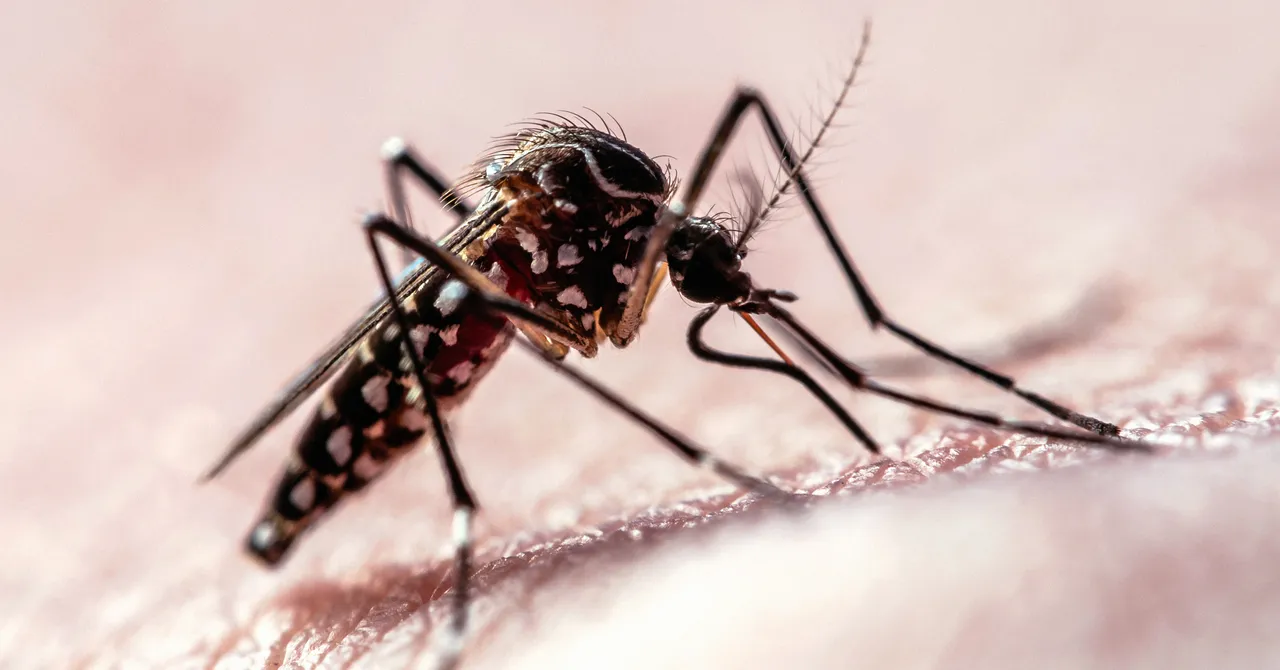
Infectious diseases borne by mosquitoes—such as malaria, dengue fever, and Zika fever—claim more than 770,000 lives worldwide each year. Understanding how mosquitoes find humans has long been a challenge in controlling the spread of these diseases. However, little has been known about how mosquitoes integrate multiple cues, including visual information and carbon dioxide, to approach their targets.

In this context, a research team led by the Georgia Institute of Technology and Massachusetts Institute of Technology has succeeded in automatically deriving a dynamic model governing mosquito flight by applying Bayesian inference statistical methods to a vast amount of data recording mosquito movements.

Bayesian inference is a statistical technique that probabilistically determines the most plausible model parameters from observed data. Using this method, the researchers were able to construct a mathematical model that could reproduce experimental results with high accuracy while compressing mosquito behavior to fewer than 30 parameters.

“The big question was, how do mosquitoes find a human target?” explains Cheng-Yi Fei, a postdoctoral researcher at MIT. “There were previous experimental studies on what kind of cues might be important. But nothing has been especially quantitative.”

Advertisement

Mosquitoes Have Two Modes of Flight

The research team released two female Aedes aegypti mosquitoes into a sealed experimental space and recorded their flight paths in 0.01-second increments using two infrared cameras. The data obtained from a total of 20 experiments exceeds 53 million points, with more than 400,000 flight paths recorded. This represents the largest dataset ever collected for a study quantitatively measuring mosquito flight.

The experiment began by photographing mosquitoes flying around human subjects, who were dressed in dark-colored clothing. This observation revealed that Aedes aegypti mosquitoes were concentrating their approach on human heads. This was a fundamental discovery that served as the starting point for the entire study.

Next, the researchers experimented with subjects dressed in black on one side and white on the other. They found that although carbon dioxide and body odor were emitted equally from both sides of the body, the mosquitoes’ flight trajectories were concentrated only on the black side. Although strange at first glance, this result vividly demonstrated that visual stimuli play an important role in the search for targets in a windless environment.

Furthermore, a detailed analysis of mosquitoes flying in a stimulant-free environment revealed that their flight patterns could be broadly classified into two types. One was the active state, in which they actively explored the space while maintaining a speed of approximately 0.7 meter per second. The other was the idle state, in which they flew almost without using thrust. The idle state is thought to be a preparation stage for landing and was observed more frequently near the ceiling of the experimental space.

Advertisement

Analysis of mosquito responses to visual stimuli revealed that mosquitoes are attracted to dark objects and slow down when they get within about 40 centimeters. However, without additional cues such as body odor, humidity, or heat, mosquitoes often flew away even after approaching their target. This suggests that visual stimuli alone are insufficient to induce landing and blood-sucking.

The response to carbon dioxide sources was entirely different. Mosquitoes that entered within a radius of about 40 centimeters of the carbon dioxide source suddenly slowed to 0.2 m/s and began flying erratically, swaying without a clear direction. Numerical simulations also showed that mosquitoes can detect carbon dioxide concentrations as low as 0.1 percent and that their detection range extends to approximately 50 centimeters from the source.

Furthermore, the mosquito response changed even more dramatically when visual stimuli and carbon dioxide were presented simultaneously. The mosquitoes began to circle around the target, and significantly more mosquitoes concentrated near the target than when either stimulus was used on its own.

Source link

Advertisement
Continue Reading

Tech

There’s a sneaky way to watch UFC 327 really cheap…

Published

on

UFC 327 promises high-stakes drama as Jiří Procházka takes on Carlos Ulberg for the vacant UFC light heavyweight championship at Miami’s Kaseya Center. With Alex Pereira moving up to heavyweight, the division is wide open, and Procházka has a golden opportunity to reclaim the belt he never truly lost in the Octagon.

And with analysts like Dustin Poirier, Din Thomas, and Michael Chiesa predicting a comfortable win for the Czech former champion – who’s coming off the back of two knockout wins – Ulberg will have a point to prove, especially since he’s on a red-hot nine-fight winning streak.

Source link

Continue Reading

Tech

Anti-data center vote in Wisconsin puts future AI projects on notice

Published

on


Residents of Port Washington, Wisconsin, have done something no other community in the country has done with data centers: They’ve voted to put the brakes on future development in the region by approving a referendum. From now on, city officials require voter approval before handing out tax incentives worth more…
Read Entire Article
Source link

Continue Reading

Tech

How Russia’s SU-34 Flies So Far Without Refueling

Published

on


Back during World War II, Adolph Hitler dreamed of bombing the United States, but technology at the time literally couldn’t deliver. Nowadays, intercontinental flights are easy, thanks to aerial refueling. That’s how most aircraft in the United States Air Force operate, but the Russian Federation’s Su-34 is a completely different type of jet. The Su-34 Fullback can fly from Moscow to Washington, D.C. without refueling, which is impressive, seeing as that’s a distance of 4,867 miles.

There are several reasons why the Su-34, which Russia has used in the Russo-Ukrainian War, can fly so far. For one, it’s a massive aircraft, measuring 76.5 feet in length with a 48-foot wingspan. Under normal operations, it doesn’t need to go that far. In cases where it might be needed, it can add three PTB-3000 external fuel tanks to its hard points, which normally accommodate weapons, significantly increasing its range. Each of those tanks holds 793 gallons of fuel, which is added to the bomber’s internal fuel capacity.

Advertisement

That fuel capacity gives the Su-34 a ferry range of 2,485 miles. Once you add the external fuel and push the Su-34 to its limits, its range can exceed 4,971 miles. That puts it in range to strike Washington, D.C., though it wouldn’t be able to make a return trip home without refueling. Granted, it’s unlikely that Russia would ever use its Su-34 fleet in such a manner, but it could, making the Su-34 one of the most powerful non-American fighter jets in service.

Advertisement

The Su-34 is the world’s longest-range fighter (currently)

With its added drop tanks, the Su-34 is the world’s longest-range fighter, and it’s not even close. The United States’ longest-range fighter is the F-35C Lightning II, which has an internal fuel capacity of 3,002 gallons. That gives it a range of 1,381 miles. The F-35 doesn’t have drop tanks, but they are being designed for the Block 4 upgrade that’s expected to be complete no sooner than 2031. Of course, aerial refueling can indefinitely extend the F-35’s range.

Still, it pales in comparison to the Su-34. Additionally, the Su-34 will likely receive an upgrade in the form of the AL-51F engine, which was developed for the Su-57 5th-generation fighter. The Su-34 is a 4.5-generation fighter (sometimes referred to as a 4++ generation), thanks to various upgrades that keep it flying. With the introduction of a more fuel-efficient engine, it’s likely that the aircraft’s range will increase significantly, making it a truly intercontinental strategic aircraft.

The Su-34 first entered the Russian inventory in 1990, and it has a proven track record. While it’s unclear how many Russia has, estimates put the Russian Air Force’s inventory at around 123 Su-34s. Production continues, and several have been lost in Ukraine, so the total number in the inventory fluctuates over time. Regardless, Russia probably sees a future where the Su-34 remains an important part of its strategic focus, so it’s likely that the country will continue producing its intercontinental fighter for the foreseeable future.

Advertisement


Source link

Advertisement
Continue Reading

Tech

Your Push Notifications Aren’t Safe From the FBI

Published

on

Amid horrific threats from United States president Donald Trump as the US and Iran negotiated a ceasefire, the US government warned this week that Iran-linked hackers were carrying out attacks against US energy and water infrastructure targets. With nearly one in five people in Lebanon displaced by Israeli attacks, the government is attempting to manage the crisis without modern digital infrastructure and an emergency system that is barely hanging on. Plus, a WIRED analysis looked at Syrian government account hijacks in March and the inadequacies they expose in Syria’s baseline cybersecurity defenses.

Amid rising fears of political violence, a WIRED investigation found that US political candidates are spending more on security, including purchasing equipment like home alarms and bulletproof vests. And recent research looking at Telegram groups found that men are sharing thousands of nonconsensual images of women and girls, purchasing spyware to use against their wives and friends, and engaging in doxing and sexual abuse. Meanwhile, as governments scramble to address growing industrial scamming originating from Southeast Asia, China has emerged as the biggest enforcer, but also a selective one, resulting in crime syndicates shifting their focus abroad to avoid Chinese targets.

Anthropic formally announced its new Claude Mythos Preview model this week and said that for now it will only make the model available to a select group of a few dozen leading tech and financial organizations, including Apple, Microsoft, Google, and the Linux Foundation. The consortium, dubbed Project Glasswing, will explore Mythos Preview’s advanced hacking and other cybersecurity capabilities and assess the best ways to improve software and hardware defenses before capabilities like the ones in Mythos Preview proliferate more broadly across other models and inevitably end up in the hands of attackers. The announcements sparked controversy about whether Mythos Preview and similar capabilities will truly be as consequential for cybersecurity as Anthropic says. Experts told WIRED that while it may not be a dramatic catastrophe, it is important for defenders to come together and use their early access to make changes in how software is developed and how organizations around the world invest in patching.

Finally, a WIRED investigation found that nonprofit groups linked to Customs and Border Protection facilities were selling challenge coins that celebrated the Trump administration’s immigration raids, including one coin that depicted Charlotte’s Web characters in riot gear.

Advertisement

And there’s more. Each week, we round up the security and privacy news we didn’t cover in depth ourselves. Click the headlines to read the full stories. And stay safe out there.

The FBI recently got its hands on copies of encrypted Signal messages being sent to a defendant’s iPhone because the contents of those messages were included in push notifications, 404 Media reports. Even though Signal had been removed from the phone prior to it being seized by the FBI, the notifications still lived on in the phone’s internal memory.

The issue affects all apps that send push notifications, not just Signal, but users of that app can adjust their settings to not show the content of a message or the name of the sender in push notifications. To adjust your settings for notifications going forward, open Signal and go to Settings, then Notifications, and change the option to Name Only or No Name or Content.

Despite the tenuous and contested ceasefire enacted in the US-Israel war with Iran, tens of millions of ordinary Iranians are still without regular and reliable internet connectivity. The regime-imposed internet blackout, which started during the first hours of the war on February 28, is now reaching the 1,000 hour point, according to internet monitoring group NetBlocks. In recent weeks, the internet shutdown has become the longest in Iranian history and one of the longest worldwide—depriving Iranians of accurate news about the war, stopping them contacting family and loved ones, and causing further economic harm to the nation. US-based Iranian digital rights project Filter Watch has detailed how the Iranian regime, while being bombarded during the conflict, has labeled anti-censorship tools as “malicious” and claimed to have arrested individuals using Starlink internet connections to get around the block.

Advertisement

The FBI’s annual internet crime report typically paints a bleak picture: year-on-year, the number of cybercrime reports increases and the amount of money lost by Americans shoots up. Unfortunately, 2025 was no different. Last year, according to the FBI’s annual report, losses reported to the Internet Crime Complaint Center topped $20 billion—an increase of 26 percent compared to 2024. More than half of these reported losses ($11.3 billion) were linked to cryptocurrency scams, often through fraudulent investment schemes, according to the FBI. Business email compromise, tech and customer support scams, personal data breaches, and confidence or romance scams, make up the other most common crime reports. Crimes mentioning AI led to $893 million in losses.

Google this week expanded Gmail’s end-to-end encryption to its Android and iOS apps, allowing enterprise users to compose and read E2EE messages natively on mobile for the first time without separate apps or mail portals required. Encrypted emails appear as standard threads in the Gmail app for recipients using Gmail, while those on other providers can access them via a secure browser view. This rollout builds on the client-side encryption model introduced to Google Workspace web users in April 2025, where messages are encrypted with customer-controlled keys, preventing Google from accessing their contents. The approach is particularly appealing for organizations with strict compliance requirements, including HIPAA, export controls, and data sovereignty regulations.

Access, however, remains limited: The feature is available only to Google Workspace Enterprise Plus customers with the Assured Controls or Assured Controls Plus add-on, and is not supported for personal Gmail accounts. Administrators must also explicitly enable the Android and iOS clients in the admin interface before eligible users can access the feature, which is off by default. End users then toggle encryption per-message by tapping the lock icon and selecting “Additional encryption,” mirroring the web workflow. The rollout is available immediately to both Rapid Release and Scheduled Release domains.

Source link

Advertisement
Continue Reading

Tech

A Suction-Driven Seven-Segment Display | Hackaday

Published

on

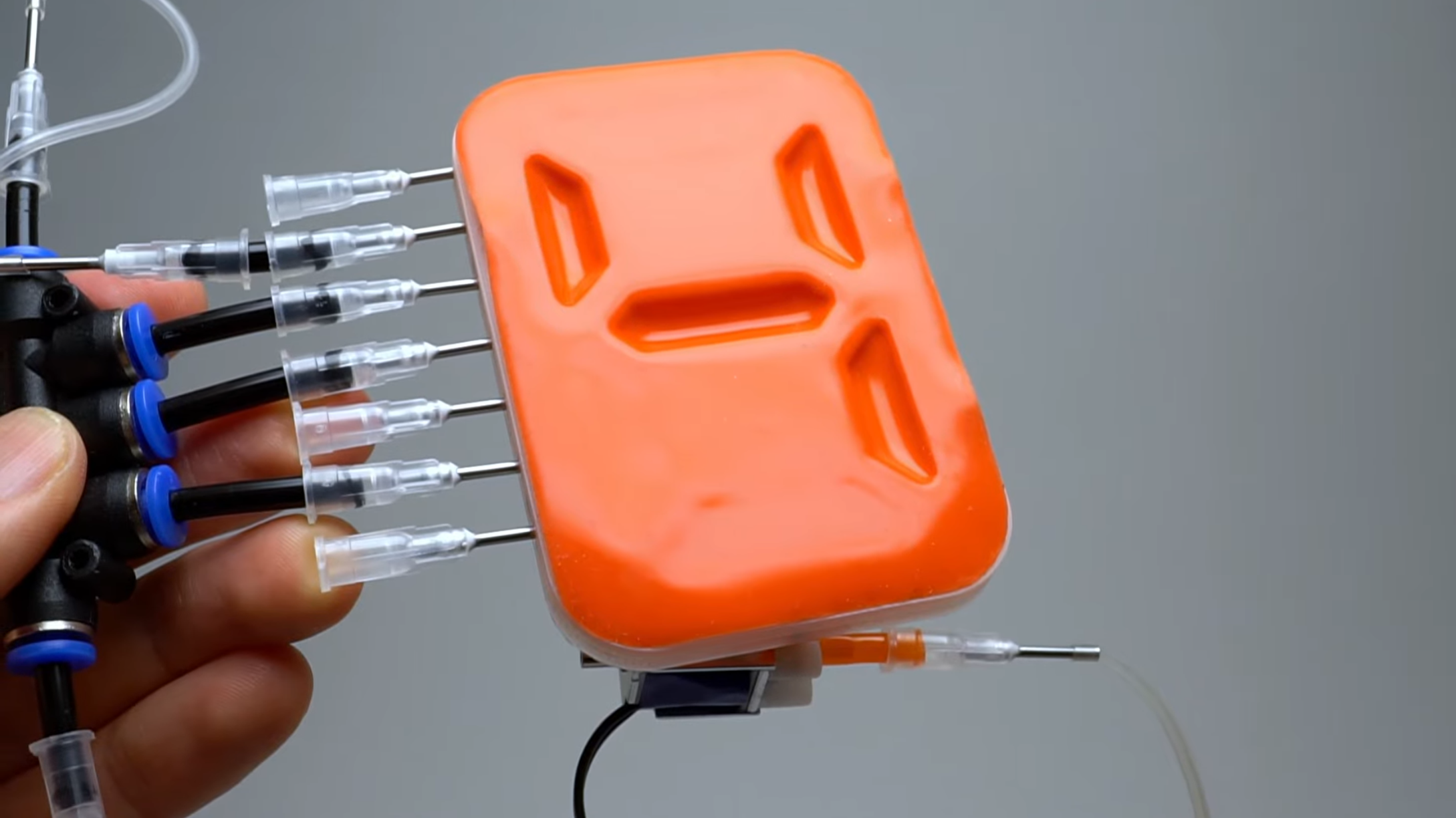
There’s a long history of devices originally used for communication being made into computers, with relay switching circuits, vacuum tubes, and transistors being some well-known examples. In a smaller way, pneumatic tubes likewise deserve a place on the list; [soiboi soft], for example, has used pneumatic systems to build actuators, logic systems, and displays, including this latching seven-segment display.

Each segment in the display is made of a cavity behind a silicone sheet; when a vacuum is applied, the front sheet is pulled into the cavity. A vacuum-controlled switch (much like a transistor, as we’ve covered before) connects to the cavity, so that each segment can be latched open or closed. Each segment has two control lines: one to pressurize or depressurize the cavity, and one to control the switch. The overall display has four seven-segment digits, with seven common data lines and four control lines, one for each digit.

The display is built in five layers: the front display membrane, a frame to clamp this in place, the chamber bodies, the membrane which forms the switches, and the control channels. The membranes were cast in silicone using 3D-printed molds, and the other parts were 3D-printed on a glass build plate to get a sufficiently smooth, leak-free surface. As it was, the display used a truly intimidating number of fasteners to ensure airtight connections between the different layers. [soiboi soft] used the display for a clock, so it sits at the front of a 3D-printed enclosure containing an Arduino, a small vacuum pump, and solenoid valves.

This capacity for latching and switching, combined with pneumatic actuators, raises the interesting possibility of purely air-powered robots. It’s even possible to 3D-print pneumatic channels by using a custom nozzle.

Advertisement

Thanks to [Norbert Mezei] for the tip!

Source link

Advertisement
Continue Reading

Trending

Copyright © 2025