


Connect with us
DAPA Banner

Tech

‘Marshals’ Release Schedule: When Episode 7 Hits Paramount Plus

Published

on

Marshals, a new Yellowstone spinoff starring Luke Grimes as Kayce Dutton, is airing on CBS right now. You can also tune in with Paramount Plus. The Yellowstone sequel series sees Grimes’ former Navy SEAL join an elite unit of US Marshals to bring range justice to Montana, according to a synopsis from CBS.

The show includes Yellowstone actors Gil Birmingham as Thomas Rainwater, Mo Brings Plenty as Mo and Brecken Merrill as Tate. Spencer Hudnut is the showrunner of Marshals — formerly known as Y: Marshals — and Taylor Sheridan is an executive producer.

Advertisement

When to watch new Marshals episodes on Paramount Plus

Episode 7 of Marshals airs on CBS on Sunday, April 12. Viewing options for Paramount Plus customers vary by subscription tier. You can watch the episode live if you have Paramount Plus Premium, which includes your local CBS station. If you subscribe to Paramount Plus Essential, you can watch the installment on demand the following Monday, but not live on Sunday.

Here’s a release schedule for the next two episodes of Marshals.

  • Episode 7, Family Business: Premieres on CBS/Paramount Plus Premium on April 12 at 8 p.m. ET/8 p.m. PT/7 p.m. CT. Streams on Paramount Plus Essential on April 13.
  • Episode 8, Blowback: Premieres on CBS/Paramount Plus Premium on April 19 at 8 p.m. ET/8 p.m. PT/7 p.m. CT. Streams on Paramount Plus Essential on April 20.

You can also watch CBS and the seventh episode of Marshals without cable with a live TV streaming service such as YouTube TV, Hulu Plus Live TV or the DirecTV MyNews skinny bundle. In addition to offering a lower-cost option, Paramount Plus lets you watch the other two Yellowstone spinoffs: the prequels 1883 and 1923.

Advertisement

James Martin/CNET

After a price increase in early 2026, the ad-supported Essential version runs $9 per month or $90 per year. The ad-free Premium version runs $14 per month or $140 per year. Paying more for Premium gives you downloads, the ability to watch more Showtime programming than Essential and access to your live, local CBS station.

Source link

Advertisement
Continue Reading
Click to comment

You must be logged in to post a comment Login

Leave a Reply

Tech

Three Apple Stores closing in June, one was unionized

Published

on

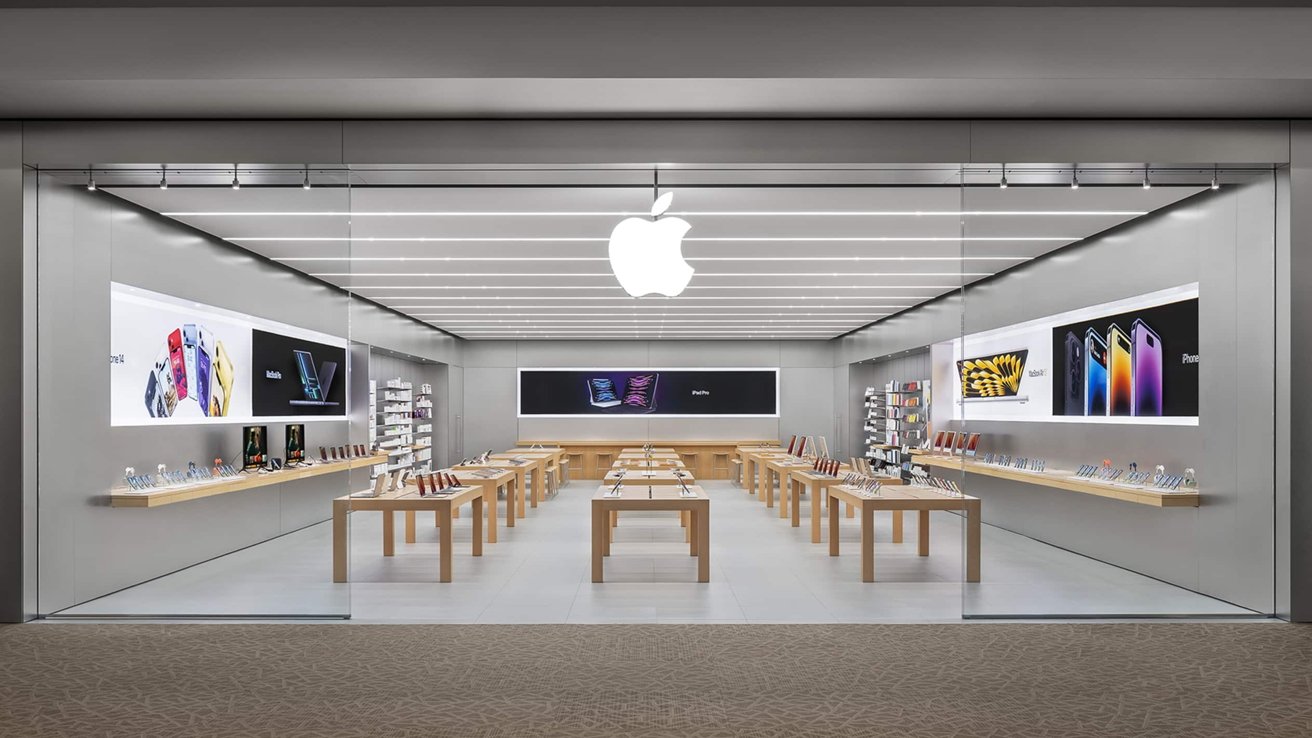
Three Apple Store locations in struggling malls are set to close permanently as summer kicks off, with one of them the controversial unionized store in Towson, Maryland.

Bright modern Apple retail store with glass front, wooden tables displaying iPhones, iPads, laptops and accessories, illuminated product posters on both walls, and large glowing Apple logo overhead
Apple Trumbull | Image Credit: Apple

The stores in question are Apple North County, in Escondido, California, Apple Trumbull in Trumbull, Connecticut, and Apple Towson Town Center in Towson, Maryland. Notably, Apple Towson was Apple’s first unionized store.
Most employees will be shifted to nearby locations with no further action required by the employee, provided they agree to stay with the company. The unionized Towson employees will be eligible to apply for open roles at Apple, as per the existing bargaining agreement.
Continue Reading on AppleInsider | Discuss on our Forums

Source link

Continue Reading

Tech

Today’s NYT Mini Crossword Answers for April 13

Published

on

Looking for the most recent Mini Crossword answer? Click here for today’s Mini Crossword hints, as well as our daily answers and hints for The New York Times Wordle, Strands, Connections and Connections: Sports Edition puzzles.


Need some help with today’s Mini Crossword? Read on for all the answers. And if you could use some hints and guidance for daily solving, check out our Mini Crossword tips.

If you’re looking for today’s Wordle, Connections, Connections: Sports Edition and Strands answers, you can visit CNET’s NYT puzzle hints page.

Advertisement

Read more: Tips and Tricks for Solving The New York Times Mini Crossword

Let’s get to those Mini Crossword clues and answers.

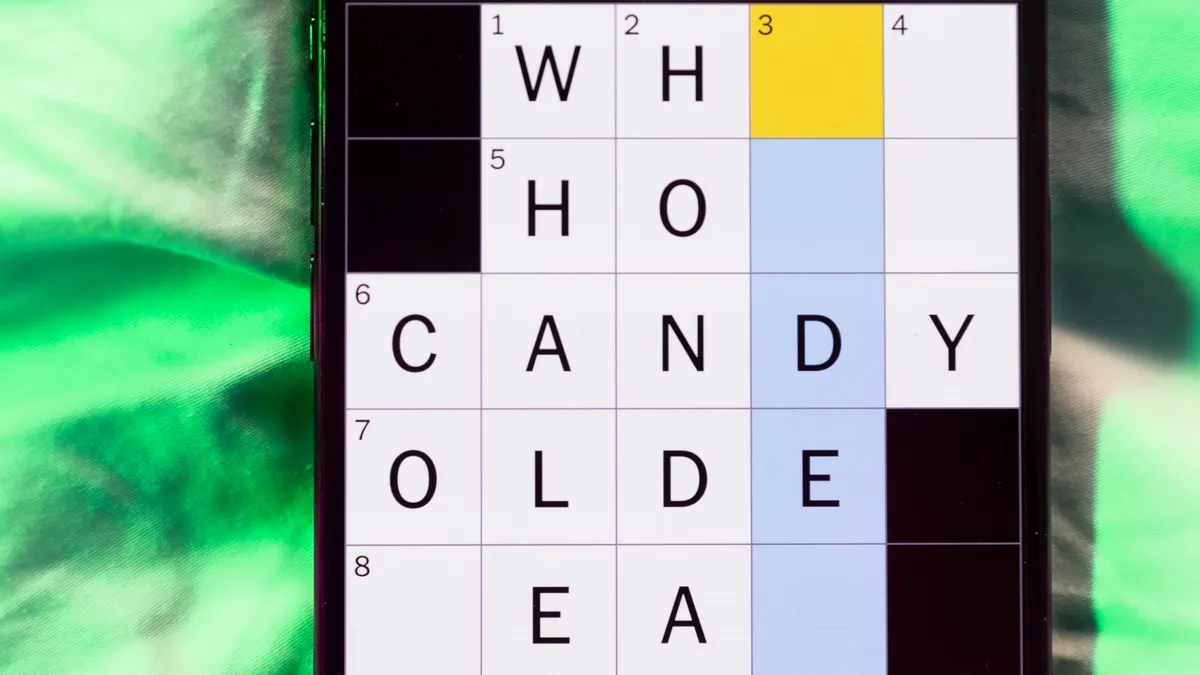
completed-nyt-mini-crossword-puzzle-for-april-13-2026.png

The completed NYT Mini Crossword puzzle for April 13, 2026.

Advertisement

NYT/Screenshot by CNET

Mini across clues and answers

1A clue: Symbol in the middle of Captain America’s shield
Answer: STAR

5A clue: Chanel’s interlocking C’s, e.g.
Answer: LOGO

6A clue: Content creator’s output
Answer: VIDEO

Advertisement

7A clue: Two-word denial
Answer: IDONT

8A clue: Fits one inside of the other
Answer: NESTS

Mini down clues and answers

1D clue: Part of an office presentation
Answer: SLIDE

2D clue: List that might have check boxes
Answer: TODOS

Advertisement

3D clue: Contract negotiator
Answer: AGENT

4D clue: Jimmy Fallon’s house band, with “The”
Answer: ROOTS

6D clue: French for “wine”
Answer: VIN

Advertisement

Source link

Continue Reading

Tech

Why Google’s Nano Banana Pro Image Model Has Such A Weird Name

Published

on


Naming AI products is a bit hit-or-miss. Some names sound as if they were polished in a branding lab for six months, while others feel as though they were just pulled from a hat. Claude has a certain elegance. Gemini is fine. ChatGPT, on the other hand, is a rubbish name and only became familiar through brute force when it was suddenly absolutely everywhere

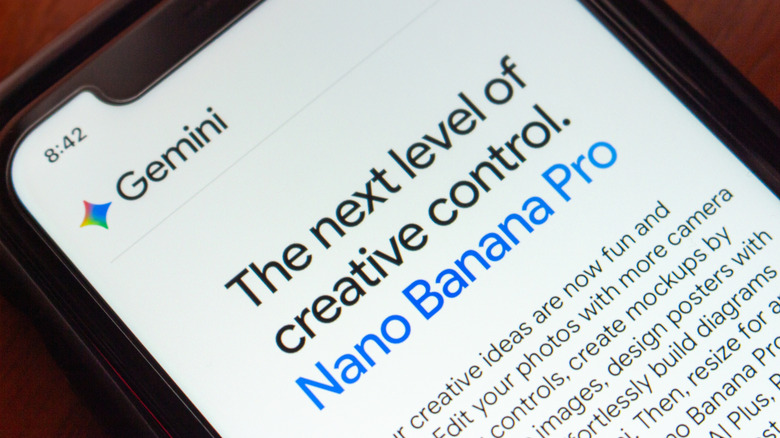
Nano Banana, Google Gemini’s AI image generator that enables anyone to create realistic-looking pictures, is called Gemini 3 Pro Image Preview in Google’s technical documentation. However, the name “Nano Banana” is both more official and less official than you might think. Google openly calls it Nano Banana Pro — and even Nano Banana 2, now — but that wasn’t the original plan. 

Nano Banana Pro has such a weird name because that moniker was never intended to be taken seriously. The team needed a temporary name for Arena.ai (then called LMArena), the crowdsourced model-testing platform where systems are compared anonymously. The codename wasn’t chosen until the last minute. Product Manager Naina Raisinghani was pushed to come up with something on the spot and suggested Nano Banana. It was a combination of two of her nicknames. “Some of my friends call me Naina Banana, and others call me Nano because I’m short and I like computers. So I just smushed my two nicknames together,” Naina revealed on Google’s blog, The Keyword.

Advertisement

Nano Banana quickly caught on

Despite Google’s attempts to keep its identity secret on Arena.ai, some people were quick to speculate that the highly rated new image generation and editing tool was a Google product. It was initially uploaded to Arena.ai on August 12, 2025. Within days, users were sharing their AI-generated creations on social media. After a week of speculation, a couple of X posts fueled users’ suspicions. Product Lead for Google AI Studio, Logan Kilpatrick, posted a banana emoji, and Naina Raisinghani, the developer behind the name, shared a picture of a banana gaffer-taped to a wall. Nano Banana was officially launched on August 26, 2025, upstaging ChatGPT as the most popular AI image generator.

It’s not the first tech product with “banana” in its name. We might be more familiar with Apple, Blackberry, and Raspberry Pi, but you can also purchase a bananaphone — a banana-shaped Bluetooth headset to pair with your smartphone. There’s also a 2019 research paper with a BANANAS algorithm, which stands for Bayesian Optimization with Neural Architectures for Neural Architecture Search. (You have to respect the contrivance even if it doesn’t quite work.) Tech companies are still naming things after fruit. OpenAI internally used “Strawberry” for the project that became o1, and Meta is currently working on an AI model nicknamed “Avocado.”

Nano Banana may not have been meant as the official name, but it stuck because people liked it. Companies spend fortunes chasing that kind of stickiness, and Google stumbled into it. The model got noticed, the odd codename was memorable, and Google was smart enough not to crush the joke with a committee-approved replacement.

Advertisement


Source link

Advertisement
Continue Reading

Tech

Today’s NYT Connections: Sports Edition Hints, Answers for April 13 #567

Published

on

Looking for the most recent regular Connections answers? Click here for today’s Connections hints, as well as our daily answers and hints for The New York Times Mini Crossword, Wordle and Strands puzzles.


Today’s Connections: Sports Edition is a tough one. If you’re struggling with it but still want to solve it, read on for hints and the answers.

Connections: Sports Edition is published by The Athletic, the subscription-based sports journalism site owned by The Times. It doesn’t appear in the NYT Games app, but it does in The Athletic’s own app. Or you can play it for free online.

Advertisement

Read more: NYT Connections: Sports Edition Puzzle Comes Out of Beta

Hints for today’s Connections: Sports Edition groups

Here are four hints for the groupings in today’s Connections: Sports Edition puzzle, ranked from the easiest yellow group to the tough (and sometimes bizarre) purple group.

Yellow group hint: Get your glove ready!

Advertisement

Green group hint: Sweat equity.

Blue group hint: There used to be a ballpark.

Purple group hint: Not night.

Answers for today’s Connections: Sports Edition groups

Yellow group: Field a baseball.

Advertisement

Green group: Work hard.

Blue group: Former MLB stadiums.

Purple group: ____ day.

Read more: Wordle Cheat Sheet: Here Are the Most Popular Letters Used in English Words

Advertisement

What are today’s Connections: Sports Edition answers?

completed NYT Connections: Sports Edition puzzle for April 13, 2026

The completed NYT Connections: Sports Edition puzzle for April 13, 2026.

NYT/Screenshot by CNET

The yellow words in today’s Connections

The theme is field a baseball. The four answers are catch, field, pick and scoop.

The green words in today’s Connections

The theme is work hard. The four answers are grind, labor, strain and toil.

Advertisement

The blue words in today’s Connections

The theme is former MLB stadiums. The four answers are Polo, Shea, Turner and Veterans.

The purple words in today’s Connections

The theme is ____ day. The four answers are draft, game, opening and Ryan.

Source link

Advertisement
Continue Reading

Tech

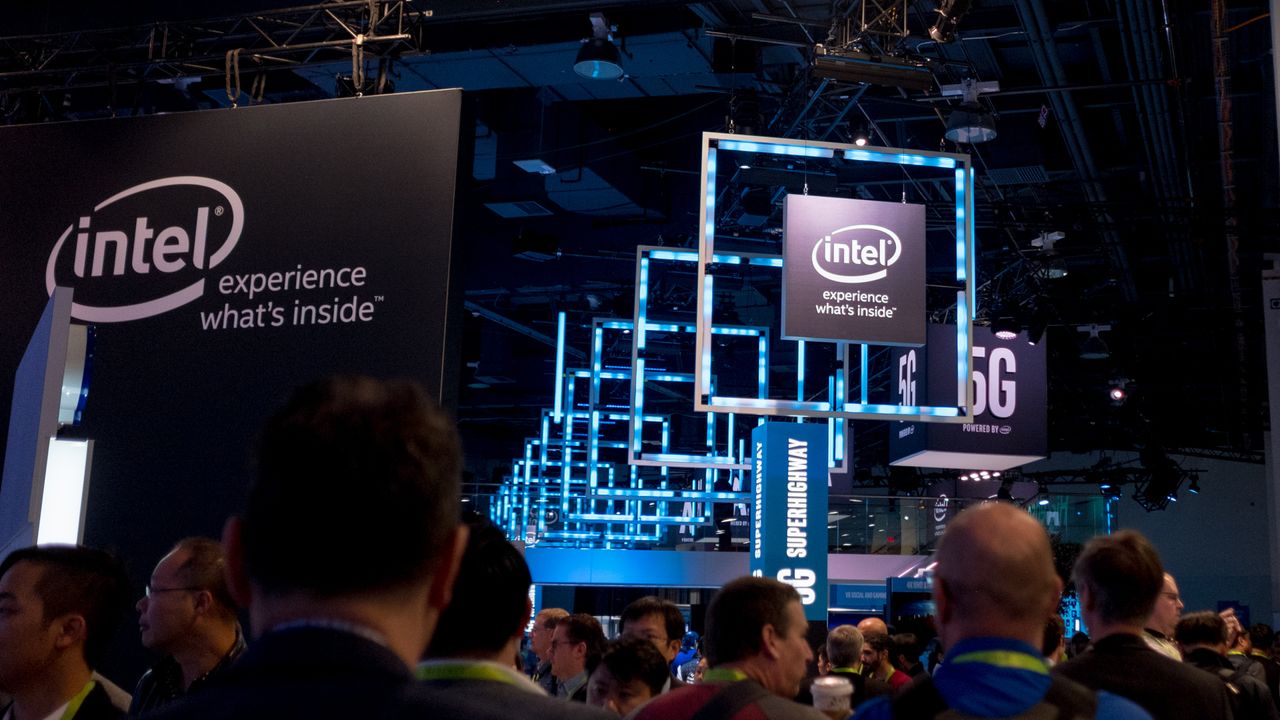
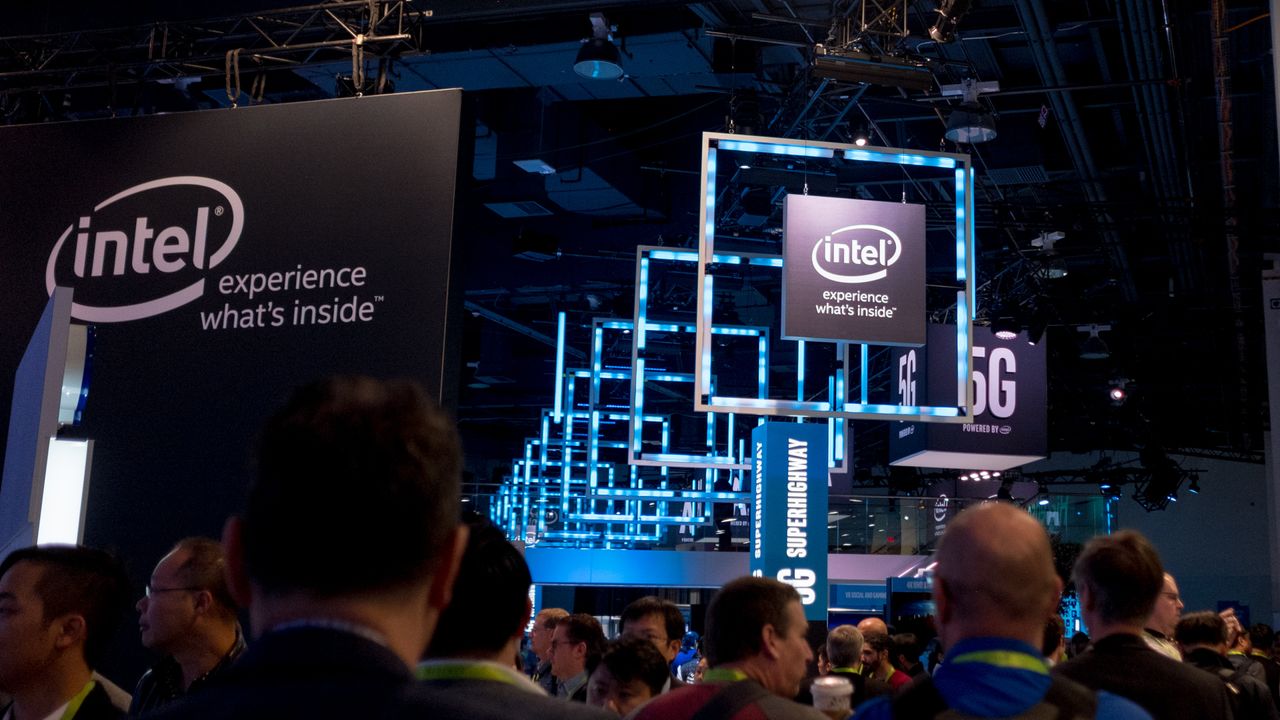
Intel and SambaNova just built a three-chip AI machine that splits work between GPUs, RDUs, and Xeon

Published

on


  • GPUs handle prefill operations by converting prompts into key-value caches
  • SambaNova RDUs generate tokens at high throughput and low latency
  • Intel Xeon 6 processors manage workload distribution and execute compiled code

Intel and SambaNova Systems have introduced a joint hardware blueprint combining GPUs, SambaNova RDUs, and Intel Xeon 6 processors for large-scale inference workloads.

The system assigns GPUs to prefill operations, RDUs to decoding, and Xeon CPUs to execution and orchestration tasks across agent-driven environments.

Source link

Advertisement
Continue Reading

Tech

Amazon laid off 30,000 workers while CEO Andy Jassy got a 30% pay bump

Published

on


Amazon published its annual proxy statement yesterday, revealing Jassy’s compensation for last year.
Read Entire Article
Source link

Continue Reading

Tech

Green Powered Challenge: Solar Powered Pi Hosts Websites In RAM

Published

on

If you started with computers early enough, you’ll remember the importance of the RAMdisk concept: without a hard drive and with floppies slow and swapping constantly, everything had to live in RAM. That’s not done much these days, but [Quackieduckie]’s solar powered Pi Zero W web server has gone back to it to save its SD card.

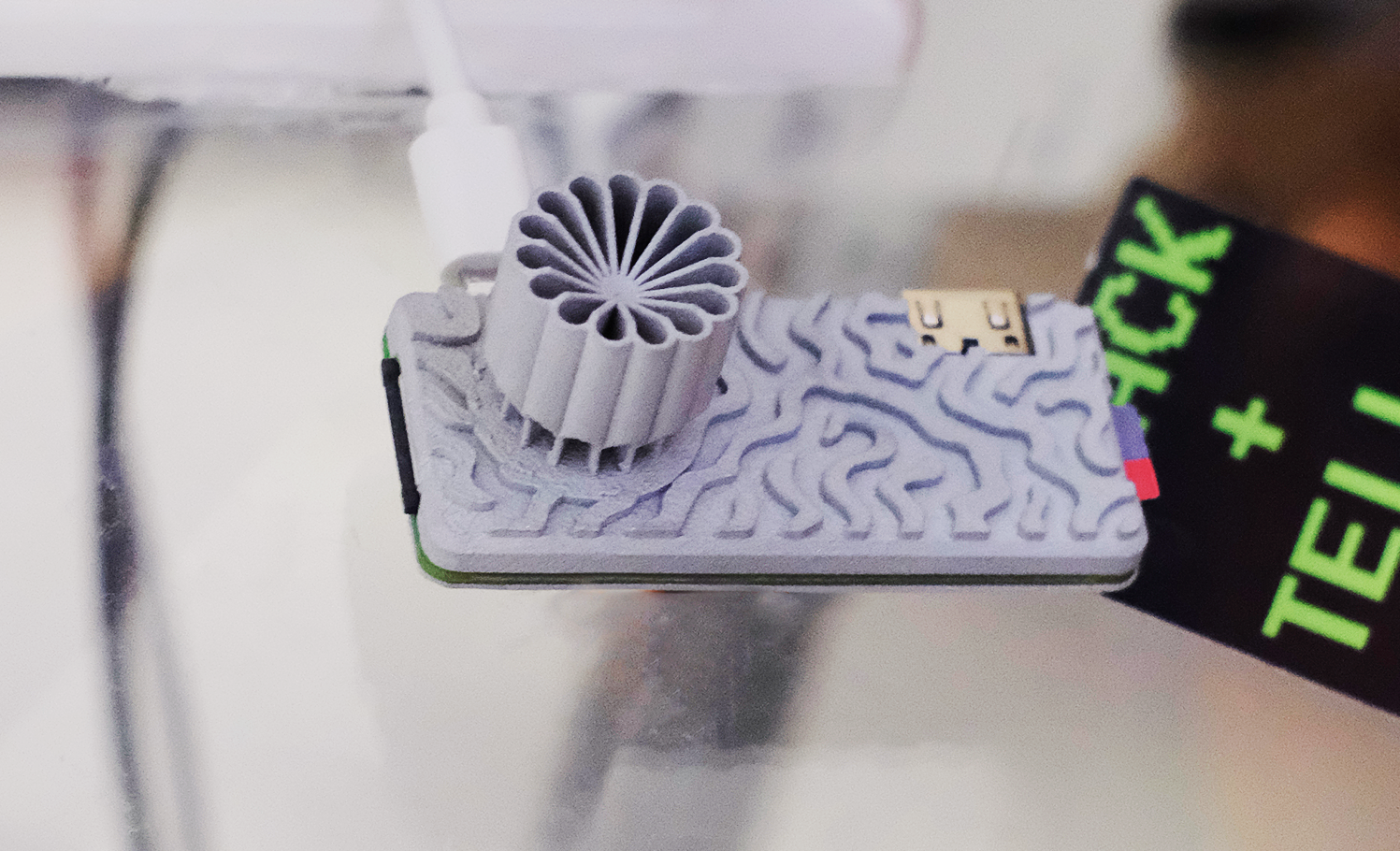
Sustainability and low power is the name of the game. Starting with a Pi Zero W means low power is the default; a an SLS-printed aluminum case that doubles as the heat sink– while looking quite snazzy–saves power that would otherwise be used for cooling. The STLs are available through the project page if you like the look and have a hankering for passively cooled Pi. Even under load [Quackieduckie] reports temperatures of just 29.9°C,  less than a degree over idle.

The software stack is of course key to a server, and here he’s using Alpine Linux running in “diskless mode”– that’s the equivalent of what us oldsters would think of as the RAMdisk. That’s not that unusual for servers, but we don’t see it much on these pages. It’s a minimal setup to save processing, and thus electrical power, with only a handful of services kept running: lighttpd, a lightweight webserver, and duckiebox, a python-based file server, along with SSHD and dchron; together they consume 27 MB of RAM, leaving the rest of the 512 MB DDR2 the Pi comes with to quickly serve up websites without the overhead of SD card access.

As a webserver, [Quackieduckie] tested it with 50 simultaneous connections, which would be rather a lot for most small, personal web sites, and while it did slow down to an average 1.3s per response that’s perfectly usable and faster than we’d have expected from this hardware. While the actual power consumption figures aren’t given, we know from experience it’s not going to be drawing more than a watt or so. With a reasonably sized battery and solar cell– [Quackieduckie] suggests 20W–it should run until the cows come home.

Advertisement

This isn’t the first solar-powered web server we’ve seen, but this one was submitted for the 2026 Green Powered Challenge, which runs until April 24th.

Source link

Advertisement
Continue Reading

Tech

The Complex Transformations Underlying MC Escher’s Works

Published

on

Self-similar images are rather common, which are images in which the same image is repeated on a smaller scale somewhere within the image that one is looking at, something which is also referred to as the Droste effect. Yet in [MC Escher]’s 1956 Prentententoonstelling (‘picture gallery’) drawing, this self-similar image is somehow also the foreground image, from where it just keeps looping around in an endless dance. How this effect is accomplished and what the mathematical transformations behind it are and how they work is explained in a recent video by [3Blue1Brown].

The video uses previous work by [B. de Smit] and [H. W. Lenstra Jr] whose 2003 paper detailed the underlying transformations, as well as the mystery of the center of the work.

Although [MC Escher] created a transformation grid with square rectangles into which a non-transformed image could be copied verbatim, he left the center as a void with just his signature in it, leaving many to guess how one might be able to fill in this area with something that made sense. In the work by [Smit] et al. it was postulated that by treating the work as having been drawn on an elliptic curve over a field of complex numbers this might be possible.

While the transformation is simple enough at first, with just four rectangles at different zoom levels to make up the corners, the trick is to connect these rectangles. Using the demonstrated complex method this can be automated, with the central void now filled in and creating its own Droste effect. This once again demonstrates the beautifully complex mathematics in [Escher]’s works, despite him never having had any formal mathematical education.

Advertisement

Source link

Advertisement
Continue Reading

Tech

Best 2-in-1 Laptops (2026): Microsoft, Lenovo, and the iPad

Published

on

There will always be a use case for owning both a laptop and a tablet as stand-alone products. But the 2-in-1 laptop is the utopian dream of combining these two into a single device.

Of all the models I’ve tested, no 2-in-1 laptop is equally good at being both a tablet and a laptop. They always lean toward one or the other. But that doesn’t mean you shouldn’t buy one, especially since the convenience of having both in one device makes it an easier pill to swallow, price-wise.

The products below should meet most people’s needs. But if none are a fit for you, check out our other computer buying guides, including the Best Cheap Laptops, the Best Tablets, and the Best iPad.

Table of Contents

Advertisement

Detachable Tablets

Microsoft

Surface Pro 13-inch (11th Edition, 2024)

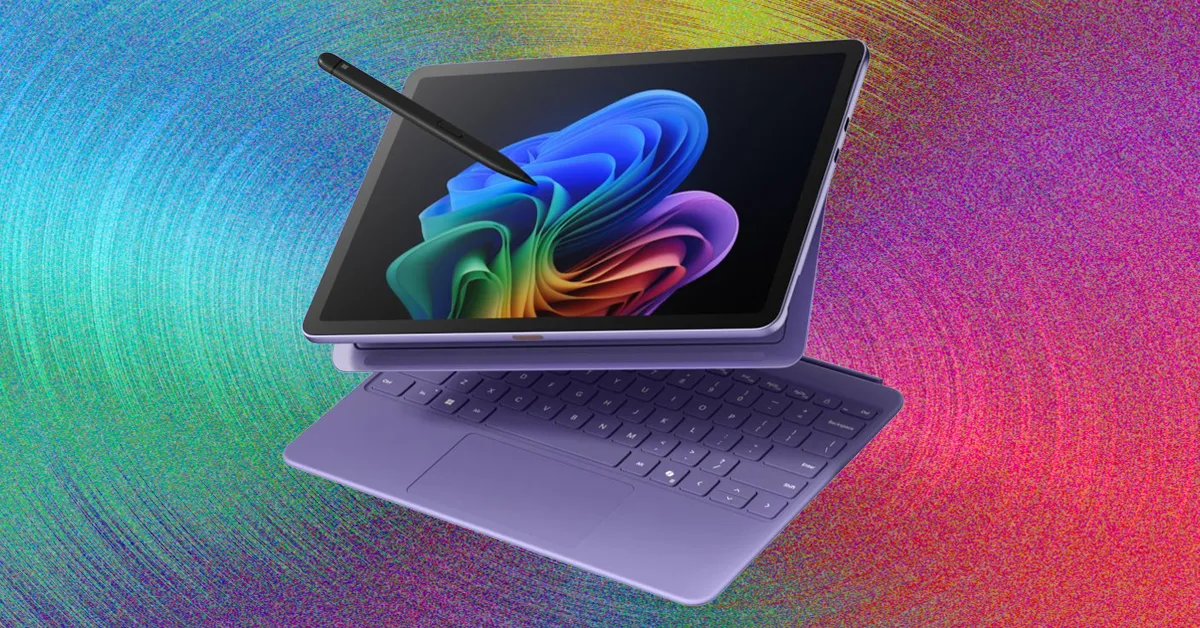
If you want a 2-in-1, think first about a detachable tablet. These are basically tablets that attach to a keyboard. This form factor emphasizes being able to switch between tablet and laptop modes. It’s just as functional as a tablet as it is as a laptop. The Surface Pro is the epitome of this design, pioneering the idea of a tablet with a built-in kickstand that runs a full version of Windows.

Advertisement

Microsoft has refined the hardware over the years, but it wasn’t until the 2024 model that it came into its own. That’s largely thanks to the Qualcomm Snapdragon X Elite (and Plus) processor, which finally gave the device an appropriate amount of performance and battery life. While it’s not cheap (especially once you include the Type Cover), I love that you can now use the keyboard while detached from the screen, making it even more adaptable in scenarios away from a desk. To compete with the iPad Pro, there’s even an OLED model (with 120-Hz refresh rate) available, which really brings visuals on the display to life.

Last year, Microsoft came out with a smaller and more affordable model, the Surface Pro 12. This is the most successful small tablet Microsoft has ever made, and a big reason is because it doesn’t cheap out on quality or shrink down the size too much. With a 12-inch screen, it still allows the keyboard to be large enough to be comfortable typing on. It doesn’t have the option for an OLED screen, but this is still a surprisingly premium-feeling device that is even more portable than its older sibling.

Not only is the Surface Pro 12 cheaper overall, it’s also the only 256-GB storage model on offer. Because Surface devices run a full version of Windows, they are the best 2-in-1 devices to use as full laptop replacements. While the hardware is there to make for a good tablet, Windows isn’t so friendly with touch and doesn’t have a touch-first app ecosystem to support it. That’s where iPads come into play.

The iPad Air and iPad Pro are the best tablets you can buy, largely thanks to the breadth of touch-first apps available in the App Store. In many ways, that’s what makes an iPad such an ideal 2-in-1 laptop, especially if you actually want to use it as a tablet. They are also easier to hold in one hand, as they are lighter than the Surface devices. These days, these iPads are increasingly legitimate laptop replacements too. With the Magic Keyboard attachment, you can add an additional USB-C port and a full-size keyboard and trackpad. I like that this design doesn’t rely on a kickstand either, which makes it easier to use on your lap than the Surface.


Advertisement

iPadOS still isn’t perfect, but with the introduction of windowing and better cursor support, they work as laptops better than ever. The latest model I tested, the M4 iPad Air, is immensely powerful, and with the Magic Keyboard attached, it’s a really solid 2-in-1 laptop that comes in cheaper than the Surface Pro with the keyboard included. It’s plenty of performance for just about anything you’d want to do with an iPad, especially if you opt for the larger 13-inch model. My only real complaint is that the palm rests on the Magic Keyboard are quite small.

Source link

Continue Reading

Tech

Historic China-Europe Space Mission Hopes To Collect Pivotal Data Never Seen Before

Published

on


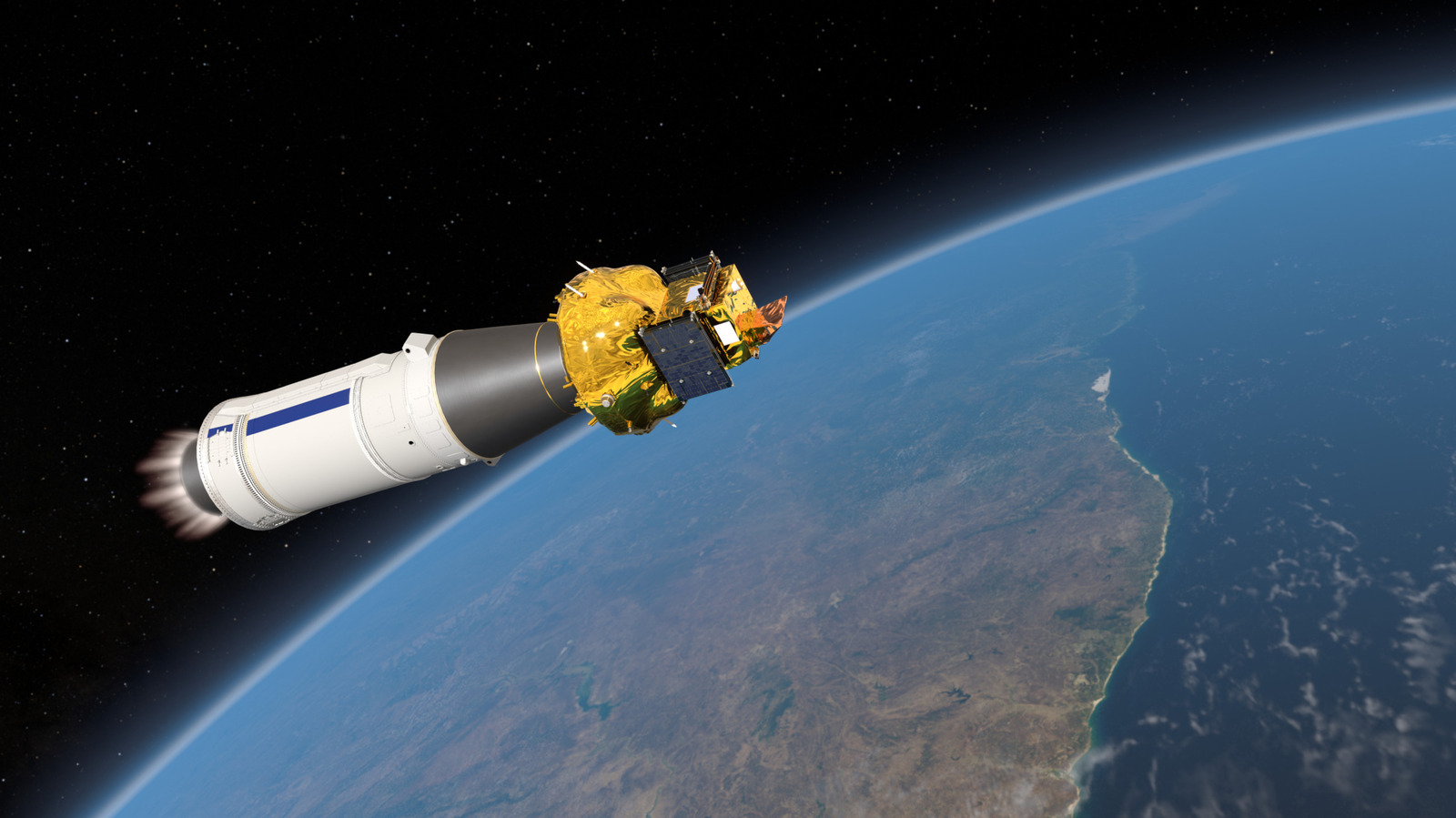
There are now thousands of satellites orbiting Earth, but there’s still a surprisingly basic thing we haven’t yet targeted well. The Earth is often bombarded with solar storms, but so far, we’ve yet to observe the planet’s magnetic field respond to them in real time. Now, a spacecraft built jointly by China and Europe is on the verge of doing just that. The spacecraft is launching as part of SMILE, which stands for Solar wind Magnetosphere Ionosphere Link Explorer.

The venture is the first comprehensive, mission-level space science partnership between the Chinese Academy of Sciences and the European Space Agency. That includes designing, building, and operating the whole thing. The collaboration actually traces back to 2015. That’s when ESA and CAS put out a joint call for mission ideas. SMILE was picked from 13 proposals and entered its study phase a decade ago, in early 2016.

Advertisement

Once SMILE launches, it will head for an unusually elliptical orbit that will swing from just 5,000 kilometers over the South Pole to a whopping 121,000 kilometers above the North Pole. The point of the wider arc is to give the instruments a better vantage point for watching how solar wind slams into Earth’s magnetosphere. That’s important because when that interaction is strong enough, it can trigger geomagnetic storms, which can sometimes be dangerous. Moreover, solar storms can even be a problem for satellites in low-Earth orbit.

Scientists currently have a decent understanding of how the interaction takes place. But the picture is incomplete. There are existing missions like the NASA MMS and the ESA-NASA SOHO spacecraft built for similar purposes. But they’re designed for individual events affecting localized areas, rather than a broad global perspective.

Advertisement

What SMILE aims to learn

Since none of the existing solutions can show the full picture at once, SMILE is designed to fill in this gap. It features a soft X-ray imager, which will map the boundaries of the magnetosphere globally for the first time. The goal is to watch how Earth’s magnetic shield changes shape when solar eruptions pass by.

Better observations could also help predict geomagnetic storms before they hit. Some of these storms are powerful enough to disrupt satellite navigation and radio communications around the world. The last notable one, which hit in May 2024, did just that. Then there was the much worse one from back in 1989, which actually knocked out Quebec’s entire power grid for nine hours, leaving millions without electricity. It’s a reminder of why solar storms affect power grids in the first place. Problems like these can be prevented with better forecasting, as they would give operators time to shut down vulnerable systems in advance.

That said, as is often the case with ambitious space missions, SMILE has run into some snags. It was supposed to lift off on April 9 from Europe’s spaceport in French Guiana. However, ESA announced that the launch had been postponed due to a technical issue on a subsystem component production line. As of writing, we don’t have a new launch date yet.

Advertisement


Source link

Advertisement
Continue Reading

Trending

Copyright © 2025