
Politics
The House Article | Cutting leave to remain is a morally and legally dubious choice



4 min read
Recently, the Home Secretary announced a detrimental change to refugee policy: the period of leave to remain that will be given to people with a recognised need for protection will be cut from five years to just 30 months.
Those who wish to remain in the UK will be required to reapply for leave every two and half years for a total of 20 years and their protection status could be revoked if their home country is judged to be “safe” at the point of renewal. To someone with little experience of the UK’s asylum system or the struggle that refugees face to rebuild their lives, this policy might sound reasonable. But, in reality, this ill-thought-through policy punishes people who have already suffered profound hardship, adding insecurity at precisely the moment stability is most needed.
The damage caused when lives are held in limbo by delays in asylum decision-making is already well documented. So too is the harm inflicted when survivors of trauma are forced to relive the most unimaginable horrors as they repeat their story of torture or trafficking in order to prove their need for protection. And the poor quality of asylum decisions has not only sparked much criticism but has burdened the appeal courts with an unmanageable backlog. This policy will intensify all of these failings – introducing more frequent reviews of the ongoing need for protection while placing additional strain on an already overstretched asylum system. The likely result is more delays, more backlogs, more unsafe decisions and more uncertainty.
For those who have fled torture and persecution, the fear of return is not abstract. It is deep and long-lasting. This policy risks transforming what should be a time of joy – the recognition of refugee status and the granting of protection – into the beginning of a new cycle of fear.
Specialist services working with survivors of torture across the UK, including Freedom from Torture, have warned that shorter periods of leave to remain keep alive the very real prospect of return to the place where people were harmed. Recovery depends on a sense of safety and predictability. By contrast, repeated reviews of status reinforce powerlessness and hopelessness, exacerbating conditions like Post Traumatic Stress Disorder, anxiety and depression.
The impact will not be limited to individuals. Families will be forced to live with constant instability and dread that will permeate their daily lives. Children who are beginning to settle into schools and communities will inevitably absorb their parents’ fears. The inability to plan for the future – whether in relation to housing, education or employment – undermines the very foundations of family life.
There are also significant practical consequences. Immigration status shapes access to housing, work and education. A 30-month grant of leave will make it markedly harder for refugees to secure a tenancy, find stable employment or pursue study thereby undermining the Government’s own goal of integration. This policy comes at the same time as the Government is changing its approach to providing financial support and accommodation to asylum seekers who would otherwise be destitute. The changes they are making to asylum support will increase the risk that government assistance is withdrawn from vulnerable people who, banned from working, have no other means of supporting themselves. Taken together, these policies risk pushing people further into destitution. The consequences – homelessness, exploitation and increased vulnerability – are entirely foreseeable.
There are also serious legal questions. Article 14 of the United Nations Convention Against Torture requires states to provide the means for as full rehabilitation as possible. Rehabilitation is not simply clinical; it depends on relationships, purpose and the ability to imagine a future. These are extraordinarily difficult to sustain when protection is temporary and uncertain.
More broadly, this policy signals a troubling shift away from the UK’s longstanding commitment to offering durable protection. While the 1951 UN Refugee Convention recognises that refugee status is by its nature temporary, it requires States to “as far as possible facilitate the assimilation and naturalization of refugees” and “in particular make every effort to expedite naturalization proceedings…” It outlines rights to employment, welfare, housing, education and social security – all of which are harder to realise with shorter periods of leave.
It is also deeply concerning that such a significant change has been introduced without parliamentary debate or vote. When decisions affecting people’s rights and safety are made with minimal scrutiny, Parliament is denied the opportunity to evaluate the consequences or propose safeguards. This weakens democratic oversight and creates confusion for those navigating an already complex asylum system. This is why myself and colleagues will be asking important questions regarding these changes in the House this week.
The aspirations of those seeking sanctuary are, by and large, the same as anyone else’s. They want security, the chance to work, to contribute and to build a future for themselves and their families, free from fear. We should be enabling these ambitions, not undermining them.
A humane and effective asylum system would support people to integrate and thrive. Policies that are punitive and short-sighted will do the opposite: forcing unwell, vulnerable people into destitution, or worse, back into danger. Protection, once granted, must be meaningful and it must endure.
Baroness Lister of Burtersett is a Labour peer and an officer of the all-party parliamentary groups on migration and refugees.


According to London Centric’s Jim Waterson, the Sun is in dire straits:
The Sun’s accounts are out and I haven’t seen anyone report on them so…*Pre-tax loss of £31m*Revenue down from £296m to £273m (Sub now in the same ballpark as the Guardian)*Phone hacking costs (now into its third decade) of £36.6m*Big fall in audience but still claim to be UK’s number one brand
— Jim Waterson (@jim.londoncentric.media) 2026-04-14T05:37:11.975Z
Of course, none of this means the rag is at risk of shutting down. As we all know, the Sun doesn’t exist to publish news or even make money; it exists to bully politicians into listening to owner Rupert Murdoch.
The Sun is a propaganda paper
Over on X/Twitter, the popular Flying Rodent account asked the following:
It’s been a long time since the Sun made a profit, which raises questions like “what is the paper’s actual purpose, if it isn’t for making money”.
As Waterson noted, the Sun has incurred phone hacking costs of £36.6m. This substantial figure makes it abundantly clear that something is not right in media land. Despite this, political scrutiny on the matter has dried up.
As we reported in November 2025:
The Sun newspaper has yet again agreed to pay through the nose because of its past reporting. In this instance, they’ve apologised to Christopher Jefferies and paid him “substantial damages”.
Despite this happening fairly frequently, Keir Starmer has abandoned completing the Leveson 2 inquiry into press standards. It would be pretty awkward if he didn’t, of course, given the fact that he occasionally writes for the Sun now.
Starmer began his Labour leadership campaign with a promise to never speak to the Sun. He would betray that promise as soon as he could, jumping into bed with the Sun at the first available opportunity.
He did this despite how unpopular the tabloid has always been with Labour members. Now, Labour have found themselves having to draft national MPs to canvass for London councils in the local elections because so many of their activists have moved on:
So hardly any volunteers left in Labour, they’re having to press gang MPs to save their council seats in London. This has been a long time coming. https://t.co/mfF8POIjec
— Cllr Alastair Binnie-Lubbock 💚🌍 🍉 (he/they) (@alastairis) April 10, 2026
The point we’re making is that it was never in Starmer’s political interests to ally himself with the Sun. Presumably, he felt like he would suffer more damage if he spurned the Murdoch rag. This ended up proving false, but it still demonstrates how well trained our politicians have become by the Sun.
Turning the page
We’re now in a moment where the British press aren’t just failing financially. The Greens have overtaken Labour in the polls, and leader Zack Polanski has shown you can stand up to the tabloids without suffering political consequences. If anything, it seems that pushing back against the billionaire-owned media is viewed as a selling point.
That future: Lower bills. Tax billionaires. End Rip off Britain.
Who’s in? pic.twitter.com/O7WnMH45Rn
— Zack Polanski (@ZackPolanski) April 14, 2026
In other words, Murdoch may be happy to lose money now, but that situation won’t last forever.
Featured image via Hudson Institute (Wikimedia)

Climate change is no longer just an environmental challenge far removed from the stadiums; it has become a direct threat to one of the world’s largest industries.
A recent report published by Reuters reveals that the global sports economy, valued at approximately $2.3 trillion annually, is facing risks that could derail its growth trajectory in the coming years.
The report paints a clear picture of a sector accustomed to rapid growth, with projections indicating its value will reach $3.7 trillion by 2030 and $8.8 trillion by 2050. However, these ambitious figures are now clashing with the volatile reality of climate change, which threatens to transform growth into losses.
$500 billion at risk
According to the data, extreme weather events, from heat waves to floods and snow shortages, could lead to losses exceeding $500 billion by 2030, resulting from the disruption of tournaments, declining attendance, and disruptions to broadcasting and sponsorship revenues.
The impact extends beyond direct losses, reaching supply chains and the sports equipment industry, highlighting the vulnerability of the sports economy to any climate disruption.
The report reveals that the economic power of sports lies not only in professional competitions but in a broader system. This system is spearheaded by sports tourism, valued at $672 billion, followed by merchandise and equipment at $612 billion, and professional sports at $140 billion.
Ironically, the fastest-growing sector, sports tourism, is also the most vulnerable to climate change. It is projected to account for approximately 60% of revenue growth until 2030, placing it squarely in danger.
Outdoor sports
The industry relies heavily on outdoor sports, which constitute more than 90% of television broadcasting revenue and around 76% of sponsorship revenue.
This dependence means that any climate disruption, even a temporary one, can trigger a cascade of losses that severely impacts the core of revenue.
From local losses to a global threat: The figures paint a clearer picture of the crisis, with estimates suggesting that bad weather costs community sport in Britain alone around $433 million annually.
Globally, losses could reach 14% of revenue by 2030, potentially reaching $1.6 trillion by 2050.
Featured image via the Canary

German coach Marie-Louise Eta quickly found herself embroiled in controversy just hours after being appointed head coach of Union Berlin, becoming the first woman to lead a team in Europe’s top five leagues. She was subjected to a barrage of sexist and abusive comments on social media.
The German club was quick to respond, issuing a firm statement on its official accounts, affirming that “the Union family stands behind its coach,” in a clear message rejecting any questioning of Etta’s competence based on her gender. The club emphasized that the criteria for employment within the team remain performance and technical ability, not background or gender.
Union Berlin head off ‘blatant sexism’
The criticism was particularly striking, with some users questioning the players’ ability to accept instructions from a female coach, while other comments went so far as to mock the idea of male coaches losing to her. The club described this as “blatant sexism,” emphasizing its complete rejection of such rhetoric.
Eta, who rose through the ranks at Union Berlin, possesses a wealth of experience, having previously managed the under-19 team and served as an assistant coach for the first team. This strengthens the management’s confidence in her ability to lead the team through this current phase.
The new coach’s first test will be against Wolfsburg in the Bundesliga, a match with implications far exceeding the three points. It presents Eta with a dual challenge: doing her job on the field and effectively silencing the criticisms circulating off the pitch.
Eta will take over temporarily until the end of the season, as Union Berlin strives to secure its Bundesliga status. The team currently occupies a mid-table position, relatively clear of the relegation zone. She will then transition to managing the women’s team, as per the pre-established plan.
The affair, which began with a historic appointment, has quickly transformed into a true test of European football’s capacity to embrace change, amidst persistent discrimination and institutional efforts to establish clear boundaries: competence first.
Featured image via the Canary
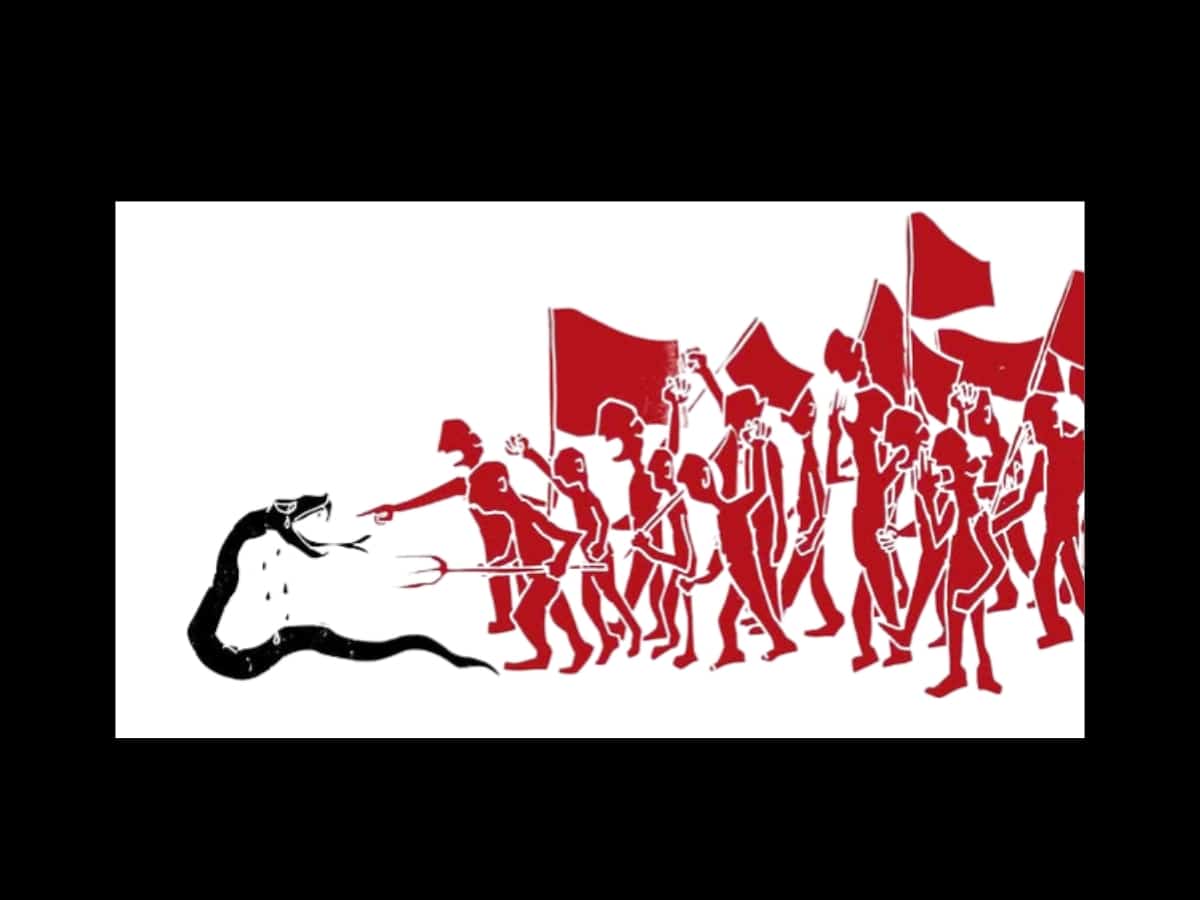
Hundreds of anti-fascists will assemble at 11.30am on Saturday 18 April, in Manchester’s Piccadilly Gardens. They’ll be aiming to resist the presence of fascist group Britain First, which is coming to the city for a second ‘March for Remigration’.
Britain First is a fascist group looking to ‘remigrate’ people of colour and cut our already-failing state infrastructure by 50%. Their activities include harassing and intimidating asylum seekers at local hotels, attempting to force entry into the buildings, and organising transphobic protests in the town centre.
Resist Britain First brings Manchester activists together
In February, a coalition of community and left-wing groups from Manchester united under the banner ‘Resist Britain First’. This counter-protest brought in over 1,000 demonstrators, severely disrupting the Britain First march. It led the co-leader of Britain First, Paul Golding, to say he’d ‘never seen anything like it’.
This event, however, saw attendees of Britain First’s march take part in several racist attacks on members of the public, clearly proving that their platform is one of racism and violence. Nothing makes this clearer than the words of Britain First’s co-leader Ashlea Simon, who said in 2020: “English people can’t be black, English blood is white.”
The February mobilisation also raised serious concerns about the conduct of Greater Manchester Police. Officers ignored a young woman who raised concerns about fascist protesters threatening sexual violence. Anti-fascist protesters were also subjected to serious police violence, with at least three requiring A&E treatment, including one protester whose head was split open by a baton.
A spokesperson for Resist Britain First said:
Britain First’s march in February showed that Britain First are not the party of concerned ‘patriots’ they claim to be, but violent racists.
Their attendees engaged in multiple violent hate crimes, attacking non-white people they came across unprovoked and showing the nasty street presence of Britain First’s hatred.
Resist Britain First came together to show that Manchester will not allow the ongoing spread of fascism and hatred to continue on our streets. As long as fascists try to march here, the people of Manchester will rise up and oppose them to make it clear that they have no place in our city.
Celebrating that Manchester is a city united against fascism, the Resist Britain First coalition is calling for everyone who opposes racism, fascism and the rise of hatred to gather in Piccadilly Gardens at 11.30am on Saturday 18 April.
Resist Britain First includes:
- Salford Anti-Fascists.
- Manchester Feminist Coalition.
- No Borders Manchester.
- Young Struggle Manchester.
- Red Roots Collective.
- RS21 Manchester.
- Northern Police Monitoring Project.
- Anti-Fascist Action Manchester.
- Manchester Trans Liberation Assembly.
- South Asian Liberation Movement.
- Migrant Justice Manchester.
Fenna, from the Resist Britain First coalition, says:
As the child of a migrant, I am proud to live in a multiracial, working-class, and radical city like Manchester. We showed the fascists that they weren’t welcome in February, and we’ll show them again. Let’s all Resist Britain First.
Jai, from the Resist Britain First coalition, says:
The fascists like to pretend they represent us, but they don’t. I’m working class and proud to be part of the whole working class: that means people of all races and ethnicities. This April, we’ll show fascists Britain First exactly how class unity is the best defence against their racism and fascism.
Featured image via Resist Britain First
The 2026 FIFA World Cup represents an unprecedented economic milestone in the history of global tournaments, with total revenues expected to exceed $80 billion. This is driven by the expansion of the tournament to 48 teams and the accompanying surge in fan engagement and investment.
According to joint reports issued by FIFA and the World Trade Organization, the tournament is expected to attract approximately 6.5 million visitors to 16 cities across the United States, Canada, and Mexico, with direct spending approaching $13.9 billion.
This spending will contribute an estimated $40.9 billion to global GDP, in addition to creating more than 824,000 full-time jobs in the tourism, transportation, retail, and service sectors.
The tournament kicks off on June 11 at the Azteca Stadium, with 104 matches scheduled – a historic first that reflects the scale of FIFA’s expansion.
US World Cup is money-making enterprise
Despite the shared nature of the event, the United States is projected to capture the largest share of the economic benefits, with an expected output of $17.2 billion, in addition to $3.4 billion in tax revenue and the creation of approximately 185,000 jobs.
Los Angeles stands out as one of the biggest beneficiaries, expected to generate $594 million from hosting eight games, surpassing the figures from Super Bowl 2022.
Meanwhile, the New York-New Jersey area will host the final on July 19.
High costs for fans
On the other hand, the tournament presents increasing financial challenges for fans, given the rising costs of travel, accommodation, and tickets. The average daily expenditure for an international visitor is estimated at $416, with an average stay of 12 days.
In Los Angeles, hotel prices are expected to jump by up to 90%, reaching approximately $480 per night, compared to normal rates.
The “dynamic pricing” system adopted by FIFA also contributes to raising ticket prices according to demand. Tickets for group stage matches start at around $700, while premium tickets for the final exceeded $10,000 during the final stages of sales.
While the 2026 World Cup represents a massive economic leap for the host countries, it also raises questions about the ability of fans to keep up with the escalating costs, which could reshape fan attendance at one of the world’s biggest sporting events.
In this context, FIFA President Gianni Infantino affirmed that this edition “will be the biggest in the tournament’s history, not only in terms of sporting impact, but also in terms of global economic impact,” noting that the World Cup represents “a real engine for growth, job creation, and strengthening interconnectedness between economies.”
Featured image via the Canary
Amidst escalating discussions about the readiness of the teams participating in the 2026 World Cup, the Italy national football team has once again become a focus of media analysis. This isn’t due to any direct sporting developments, but rather to hypothetical scenarios related to potential changes outside the traditional sporting context.
According to some media analyses, one of the proposed scenarios involves the possibility of Iran’s participation being affected by the escalating geopolitical tensions between Iran, the United States, and Israel. This factor is being viewed from the perspective of “organizational possibility,” not as an official decision issued by any party so far.
Italy holding out hope
From an organizational standpoint, FIFA has several mechanisms in place to deal with exceptional circumstances that may arise before the start of major tournaments, particularly regarding the withdrawal or inability of a team to participate after the list of qualified teams has been finalized. This theoretically opens the door to alternative options for filling any vacant spots.
An analytical reading of these scenarios indicates that the available options typically revolve around three main paths: maintaining continental balance by selecting a replacement team from the same continent; resorting to the FIFA rankings to select the highest-ranked team among those not qualified; or adopting an exceptional solution such as a playoff or a decisive match held before the tournament begins if time is short.
Within this context, Italy’s name emerges as one of the teams that might be discussed theoretically, given its high international ranking, footballing history, and technical and marketing weight. However, this proposal is not based on any official decision or announcement from FIFA so far, but rather on a potential scenario for dealing with a possible gap in the list of participants.
Continental representation
Conversely, FIFA’s priority in such cases seems to be maintaining balanced continental representation, which might lead to the option of replacing a team from the same continent in the event of any withdrawal. Here, the UAE’s national team is a prominent candidate, before considering more complex solutions related to rankings or organizing playoff matches.
The idea of an “emergency playoff” before the tournament begins is raised in some analytical discussions as an exceptional solution to the time constraints, but it remains a complex option from an organizational and logistical standpoint, especially for a tournament the size of the World Cup and its associated marketing arrangements, global broadcasting, and meticulous scheduling.
Therefore, Italy’s return to the World Cup remains, for now, within the realm of theoretical assumptions linked to uncertain possibilities. The only certainty is that the list of participating teams in the 2026 World Cup remains as it was based on the official qualifiers, without any announced changes to date.
Featured image via the Canary
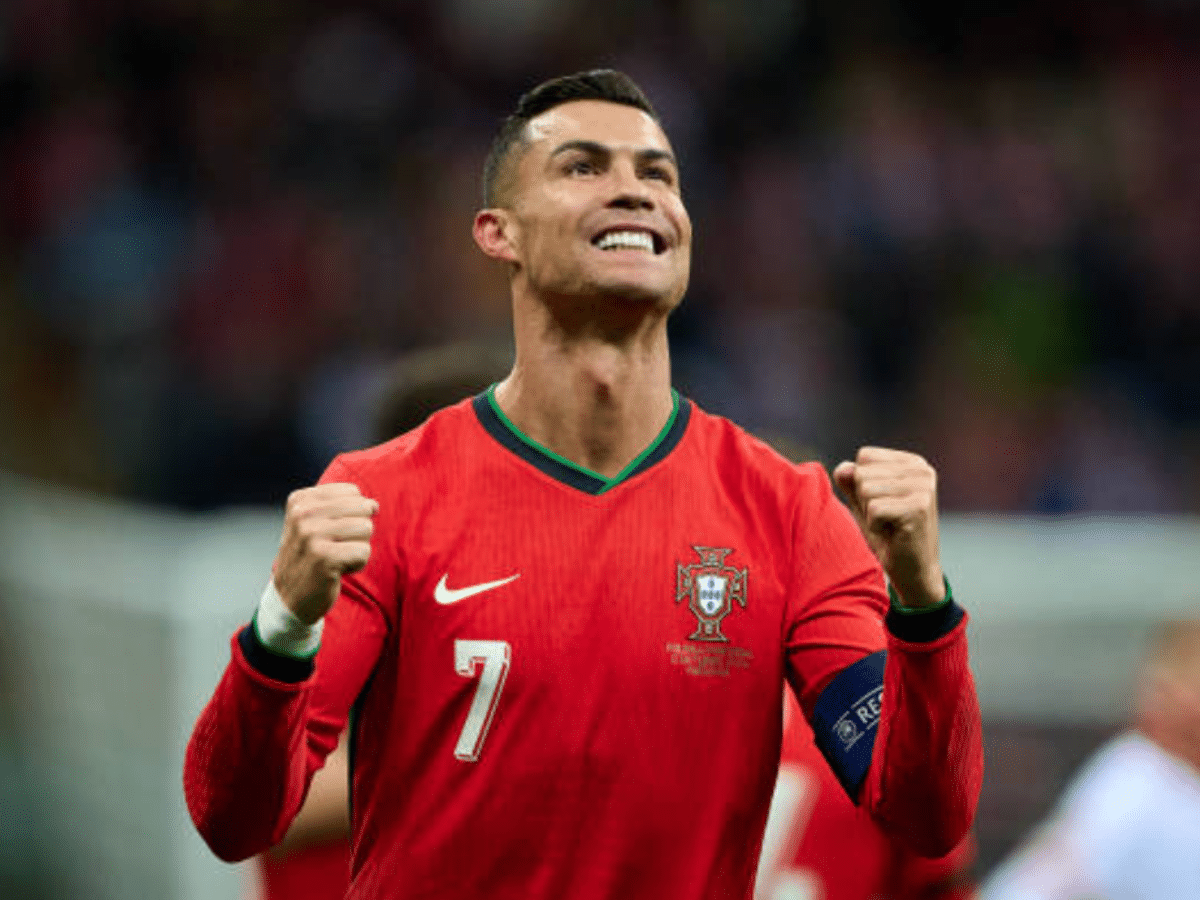
A report by Sportico reveals a radical shift in the income structure of top athletes throughout history. On-field earnings are no longer the sole determining factor in wealth creation, as income from outside competitions now exceeds 70% in many cases, driven by sponsorship deals, licensing agreements, and investments.
According to the ranking, which is based on adjusted total earnings for inflation, along with precise estimates including salaries, prize money, and commercial revenue, basketball legend Michael Jordan tops the list with a total of €3.011 billion, ahead of golf star Tiger Woods. Cristiano Ronaldo, captain of Saudi Arabia’s Al-Nassr, comes in third.
This ranking not only reflects athletic excellence but also reveals the exceptional ability of some stars to transform their careers into sustainable business ventures.
Off-the-field revenue: the new centre of gravity
The report confirms that the majority of athletes’ wealth now comes from outside of competition, as the sports industry expands and transforms into a massive entertainment and investment sector.
This shift isn’t limited to retired athletes; it’s also evident among stars still at the peak of their careers, such as Lionel Messi and LeBron James.
Despite the significant increase in player salaries and contracts in the modern era, a number of sports legends have maintained their prominent positions thanks to long-term investments and extensive commercial partnerships.
In terms of distribution, golf and football have the most prominent presence in the top ten.
Highest Earning Players of All Time (according to Sportico):
1. Michael Jordan – €3.011 billion
2. Tiger Woods – €2.503 billion
3. Cristiano Ronaldo – €2.190 billion
4. LeBron James – €1.764 billion
5. Lionel Messi – €1.729 billion
6. Arnold Palmer – €1.607 billion
7. Jack Nicklaus – €1.590 billion
8. David Beckham – €1.460 billion
9. Roger Federer – €1.455 billion
10. Floyd Mayweather – €1.364 billion
Featured image via the Canary

Liverpool don’t need reminding what a European night at Anfield can do but they’ll need every watt of that electricity to overturn a 2–0 deficit against Paris Saint‑Germain. Arne Slot has spent the week insisting his team’s history is their fuel, not their burden.
In his pre-match press conference, Liverpool manager Slot said:
The answer is already in the history of Liverpool. This group has shown it can come back after setbacks. This club has also shown it can do very special things in difficult moments.
Liverpool face a PSG with no fear
Meanwhile, Luis Enrique, Slot’s counterpart has been calm, bullish and utterly unmoved by the Anfield mythology. He said:
We know how difficult this game will be, I think tomorrow will be a very tight match. Our mentality is to win every match.
He also welcomed the challenge of the Anfield atmosphere:
We know how difficult it is to play here at Anfield, but it’s also a source of motivation for us.
Liverpool is a very high‑level team and thinking you’re the favourite is the best way to fail. For me, there isn’t one.
Salah’s Champions League curtain call
Mohamed Salah steps into Anfield tonight carrying more than Liverpool’s Champions League hopes. He carries a decade of expectation, a legacy, and the possibility that this may be the last time he hears the Champions League anthem in Liverpool red under the famous Anfield lights.
If it is his final Champions League night for the club, it comes with a strange balance: the danger of what could be lost, and the comfort of what he has already given. Since 2017, Salah has helped shape Liverpool’s modern European identity. Kyiv, Madrid, Barcelona, Rome, his mark is firmly stamped on the biggest nights of the Jürgen Klopp era. He became the symbol of Liverpool’s return to the top, the player who made extraordinary numbers feel normal, and who turned pressure into performance.
Salah has never relied on sentiment. He deals in decisive moments. He can take control of a match with one run, one finish, one touch. If Liverpool are to turn the tie against PSG and keep their season alive, it will likely come through him: his movement, his composure, and his gift for making a small chance feel inevitable.
Whatever the result, Anfield will see him differently tonight. As they did against Fulham, grateful, anxious, and aware that eras rarely end with speeches. They end on nights like this.
The stakes
Liverpool must begin with intensity to build momentum, while PSG should stay composed and settle into the match. Both teams have experience in these situations. Slot needs confidence, and Enrique must maintain control. One team is fighting for survival, while the other seeks victory. Tonight, Anfield will determine the outcome.
Featured image via the Canary
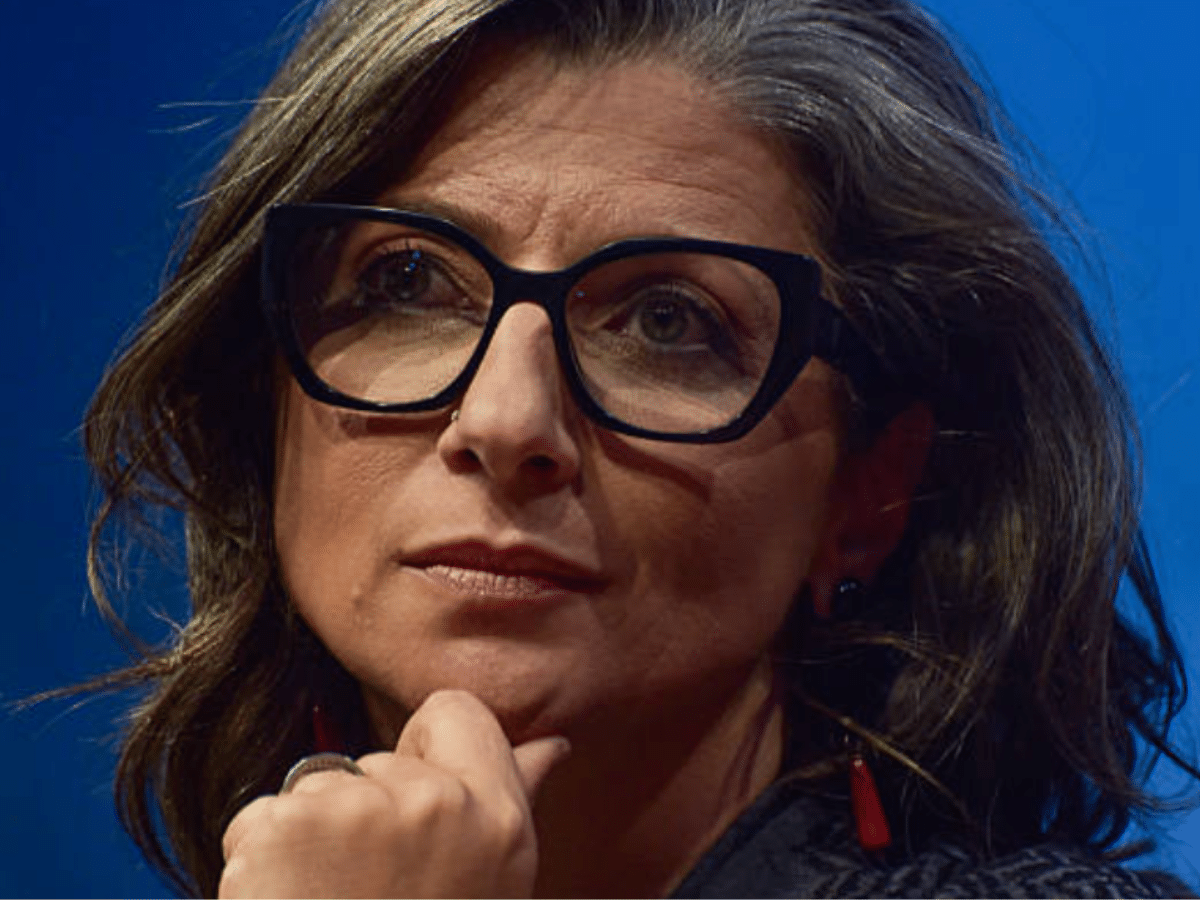
UN Special Rapporteur for Palestine Francesca Albanese has spoken about the “rollercoaster” her life has become since standing up against Israel’s genocide in Gaza.
Albanese and opposition to genocide
Francesca Albanese has been personally sanctioned by the US and targeted by the Israel lobby for her refusal to back down in her condemnation and her calls for justice. Yet even in an article that flirts with accepting that Albanese’s lionisation by opponents of genocide is merited – and even uses the word genocide itself without ‘distancing-by-speech-marks’ – Guardian writer Julian Borger can’t quite resist the corporate urge to regurgitate debunked Israeli narratives.
Borger introduces the carnage in Gaza not as war crimes and genocide but as an “untreated wound of Israel-Palestine [that] has shown its capacity every generation to give the rest of the world a fever”, as if opposition to colonisation, apartheid, and slaughter is some kind of disorder.
He recycles Israel’s claim of the 2023 “Hamas attack…which killed about 1,200 people, provok[ing] a ferocious Israeli response”. Israel was known, very soon after October 2023, to have killed hundreds of its own citizens in ‘Hannibal’ attacks during the raid; the raid consisted of other groups, not just Hamas. Israel has killed hundreds of thousands of Palestinians since the raid, not the 75,000 Borger quotes – as the subject of his interview has frequently pointed out.
Yet he mentions none of that, despite its obvious aptness in his article. Not opposing genocide is the disease and its symptoms reach very far into Western and especially UK ‘mainstream’ media.
Steadfast
Borger also fails to point out the illegality of the sanctions the US has imposed on Albanese. But he does at least give some attention to their impact on the steadfast UN volunteer. And that’s where Albanese’s courage is given chance to shine through. Trump’s sanctions are massive blow to any prospect of a normal life – Albanese is unable to use a credit card, is severely limited in access to banking and relies on cash lent by family members. Yet she is without self-pity, even as she honestly describes the blow and its injustice:
It was bad. That sort of puts you together with mass murderers and drug dealers of international proportions. It was a paradox of facing one of the harshest forms of punishment without due process, because I’ve not even been afforded the possibility to defend myself. I’ve just been sanctioned without trial.
The article does address the Israel lobby’s threats against Albanese – and her 13-year-old daughter – and the cowardice of the World Bank, where her husband works. It mentions the Zionists’ threat to rape her child. But Borger expresses all of these impersonally and without attribution, like acts of God or natural disasters:
One anonymous caller said her daughter would be raped, giving the name of the school she attended in Tunis, Tunisia, where the family lives. Albanese went to the police for protection. While she doesn’t give details of the arrangements, she says: “I have what I need.”
Craven corporate media
Borger doesn’t make even a passing reference to the mass rapes of Palestinian prisoners that are common in Israeli concentration camps. He doesn’t mention Zionist death threats against other opponents of genocide, such as Hind Rajab Foundation director Dyab Abou Jahjah and his family. He doesn’t examine the UK government’s lawfare war on anti-genocide speech and activism, an obvious relative of Trump’s state terror – though Albanese refers to and condemns it, as well as the “monster” behind it, Keir Starmer.
But the cravenness of corporate media makes the courage of those who do stand up shine all the brighter – and so it is here. Albanese freely admits that the impact of the sanctions has been “brutal” enough to make her pause and consider, but she is unbowed:
That is when I started wondering: is it worth it? I have two kids. What if they harm them? I cannot take this responsibility. There is a lot that I’m putting on the line, but, at the same time, I don’t have any alternative. I still need to continue to throw water on the fire and I have a bigger bucket right now … and strong arms.
And Francesca Albanese finishes with a lesson for all of us as well as for the spineless establishment media, not to let fear stop us being free, and to stand in solidarity with those who need it:
My life has become a rollercoaster. I never imagined living without a bank card, but I do. People help me.
My freedom is stronger than my fear. You are defeated the moment you stop fighting.
Featured image via the Canary

Palantir’s UK head Louis Mosley – grandson of infamous British fascist Oswald Mosley – was forced to sit and take it on BBC television today, 13 April 2026, as former parliamentary candidate Faiza Shaheen told viewers some hard truths about his company.
The pair were on the programme to discuss Green party leader Zack Polanski’s call for the spyware company – which aids Israel in its slaughter of civilians in Palestine and Lebanon – to be removed from its contract to handle NHS patient data.
How could anyone argue? But they did, claiming that NHS data is in a mess and therefore Palantir is needed. But Shaheen wasn’t having it that a firm whose founders boasted about killing people and refused to say that the human race should survive should be anywhere near the NHS. So she let the rictus-faced Mosley have both barrels:
Featured image via X

How to feed your garden birds without spreading disease

Beyond Meat, Inc. unveils plant-based breakfast sausages

Ethereum revisits 2025 fractal that previously fueled a 250% rally


-

 Politics4 days ago
US brings back mandatory military draft registration
-
 Sports4 days ago
Man United discover Nico Schlotterbeck transfer fee as defender reaches Dortmund agreement
-

 Fashion4 days ago
Weekend Open Thread: Veronica Beard
-

 Tech7 days ago
How Long Can You Drive With Expired Registration? What Florida Law Says
-

 Politics5 days ago
Malcolm In The Middle OG Turned Down ‘Buckets Of Money’ To Appear In Reboot
-

 Politics2 days ago
World Cup exit makes Italy enter crisis mode
-

 Crypto World5 days ago
Canary Capital Files SEC Registration for PEPE ETF
-

 Business4 days ago
Tesla Model Y Tops China Auto Sales in March 2026 With 39,827 Registrations, Beating Cheaper EVs and Gas Cars
-

 Crypto World23 hours ago
The SEC Conditionalises DeFi Platforms to Be Avoided for Broker Registration
-

 Crypto World20 hours ago
SEC Signals Exemption for Crypto Interfaces From Broker Registration
-

 Crypto World6 days ago
Bitcoin recovers as US and Iran Agree a Ceasefire Deal
-
 NewsBeat2 days ago
Pep Guardiola and Gary Neville agree over Arsenal title problem that benefits Man City
-

 Business4 days ago
OpenAI Halts Stargate UK Data Centre Project Over Energy Costs and Copyright Row
-

 Business3 days ago
Ireland Fuel Protests Enter Day 5 as Blockades Spark Shortages and Government Prepares Support Package
-

 Politics5 days ago
LBC Presenter Mocks Trump Over Iran War Failures
-

 Crypto World4 days ago
Federal judge blocks Arizona from bringing criminal charges against Kalshi
-

 Tech5 days ago
A version of Windows 10 released a decade ago is now eligible for additional security patches
-
 NewsBeat2 days ago
JD Vance announces ‘no agreement’ with Iran over nuclear weapons fear
-

 Business4 days ago
IMF retains floor for precautionary balances at SDR 20 billion
-

 Crypto World12 hours ago
SEC Proposes Certain Crypto Interfaces Don’t Need to Register as Brokers
You must be logged in to post a comment Login