India’s equity outlook has turned more cautious after the recent crude oil spike, with BNP Paribas trimming its optimism for 2026 and cutting its Nifty target, even as it highlights a fresh set of stock picks positioned to navigate the evolving macro landscape.
In its latest India strategy report, the brokerage flagged that the surge in oil prices amid the Middle East conflict could have a lingering impact on the economy, similar to past episodes in 2008, 2011 and 2022. While the ceasefire offers some relief, it does not fully reverse the macro risks triggered by elevated energy prices.
BNP Paribas has cut its 2026 Nifty target by 11% to 25,500, factoring in weaker earnings growth and a moderation in valuation multiples. The report underlined that higher crude prices could strain India’s fiscal and trade balances, potentially forcing a reduction in government spending and dampening consumption.
Foreign institutional investor (FII) sentiment has also weakened, with India seeing limited participation in the global AI-driven rally and facing concerns around slowing earnings momentum. Additionally, structural risks such as AI-led disruption in service employment could weigh on medium-term growth.
Advertisement
Against this backdrop, the brokerage has shifted its sectoral stance, favouring defensives and segments that historically perform better during periods of high crude prices. It prefers staples, telecom and utilities, citing their resilience, while maintaining a positive view on private sector banks over PSU lenders and NBFCs. IT services, after recent corrections, are also seen as offering value, aided by currency tailwinds.
Live Events
On the other hand, sectors sensitive to rising input costs — including autos, cement and consumer durables — are expected to face pressure. Infrastructure could also see headwinds due to a potentially tighter fiscal environment. Historically, oil shocks have had a direct correlation with weaker macro indicators and equity market performance. BNP Paribas noted that prolonged periods of elevated crude prices tend to result in sustained pressure on inflation, currency and consumption, with markets typically underperforming for several quarters.Despite these near-term risks, valuations have corrected to more reasonable levels, offering selective opportunities for investors willing to take a medium-term view.
Among its top 9 stock ideas, BNP Paribas has highlighted Mahindra & Mahindra, Infosys, Persistent Systems, Britannia Industries, Titan, Bharti Airtel, HDFC Bank, ICICI Bank and Axis Bank as preferred picks. These companies are seen as relatively better positioned to deliver earnings resilience and navigate macro headwinds.
At the same time, the brokerage has flagged select underperformers, including TVS Motor, Wipro, AU Bank and IndusInd Bank, where upside appears limited under current conditions.
(Disclaimer: The recommendations, suggestions, views, and opinions given by the experts are their own. These do not represent the views of The Economic Times.)
FTSE Russell is a leading global provider of index and benchmark solutions, spanning diverse asset classes and investment objectives. As a trusted investment partner we help investors make better-informed investment decisions, manage risk, and seize opportunities.Market participants look to us for our expertise in developing and managing global index solutions across asset classes. Asset owners, asset managers, ETF providers and investment banks choose FTSE Russell solutions to benchmark their investment performance and create investment funds, ETFs, structured products, and index-based derivatives. Our clients use our solutions for asset allocation, investment strategy analysis and risk management, and value us for our robust governance process and operational integrity.For over 40 years we have been at the forefront of driving change for the investor, always innovating to shape the next generation of benchmarks and investment solutions that open up new opportunities for the global investment community.
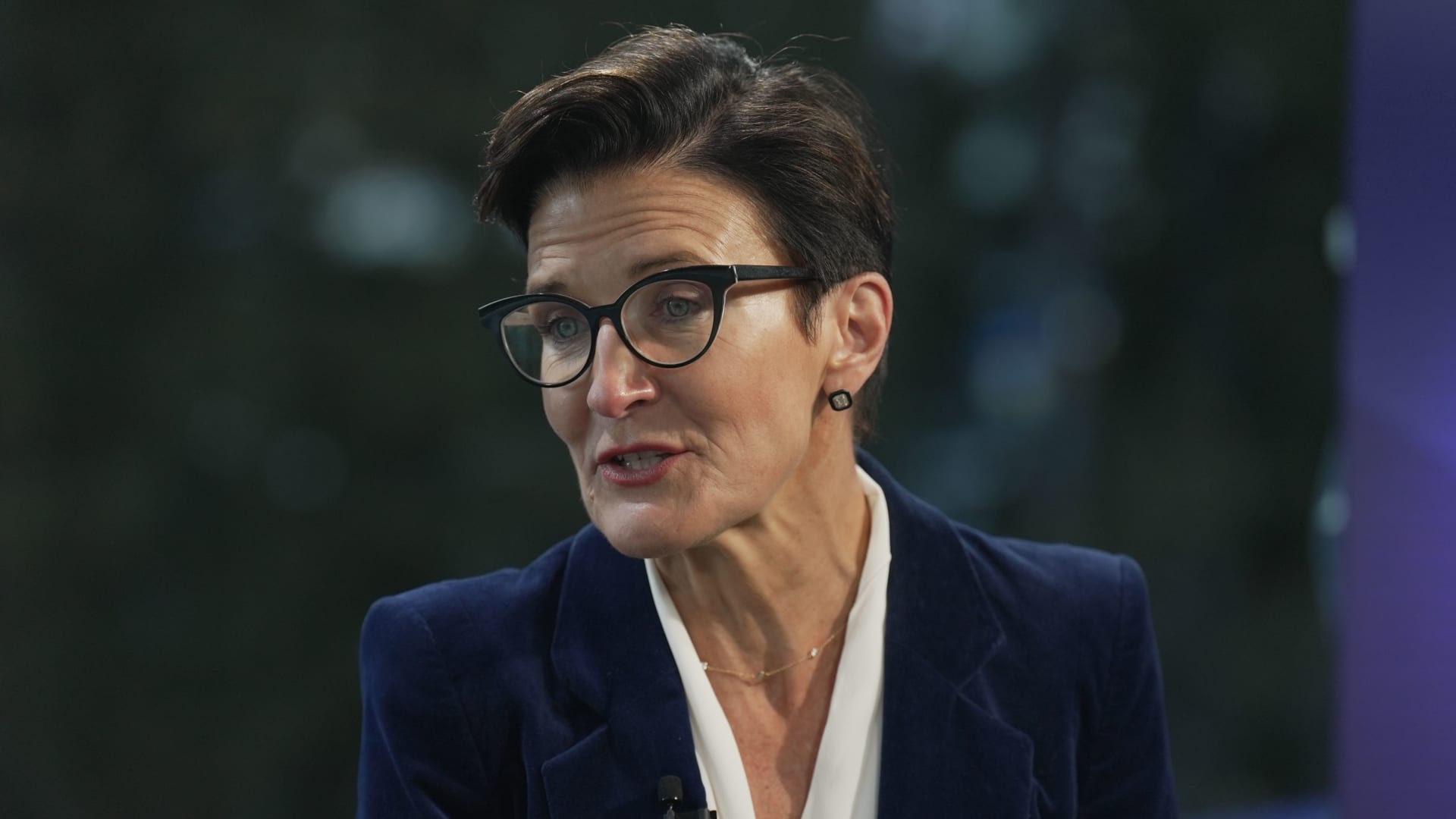
Jane Fraser, CEO of CitiGroup, speaking at the World Economic Forum in Davos, Switzerland on Jan. 20th, 2026.
Oscar Molina | CNBC
Citigroup beat on the top and bottom lines during the first quarter.
Advertisement
Here’s what the firm reported on Tuesday, compared with Wall Street estimates compiled by LSEG:
Earnings per share: $3.06 vs. $2.65 estimate
Revenue: $24.63 billion vs. $23.55 billion estimate
Those results marked the firm’s best quarterly revenue in a decade and a 56% year-over-year jump in earnings per share.
Citigroup posted net income of $5.8 billion, or $3.06 per share, compared with $4.1 billion, or $1.96 per share, a year earlier. Revenue rose 14% to $24.63 billion.
Citigroup’s return on tangible common equity, a measure of profitability, came in at 13.1%, the highest since 2021 and above the firm’s goal of between 10% and 11% ROTCE.
CEO Jane Fraser said in a statement the bank is on track to deliver that ROTCE target this year and said of the firm’s recent streamlining, “We’ve entered into the final phase of our divestitures and 90% of our transformation programs are now at or near our target state.”
Advertisement
Citigroup, whose stock is the best performer year to date among the large banks, has gotten a boost from its turnaround effort and relatively low valuations. The firm has been streamlining its operations and working through several regulatory consent orders, which it reportedly expects to complete this year.
However, with its global footprint, Citigroup is also perceived to be more impacted by the geopolitical environment than many of its peers.
The bank’s markets division was a big driver of its first-quarter beat, with its larger, fixed income division gaining 13% to $5.2 billion in revenue, topping the StreetAccount estimate of $4.68 billion. Equities jumped 39% to $2.1 billion, beating the estimate by about $500 million.
Investment banking came in light compared with estimates, except for equity underwriting, which was $208 million and beat estimates of $186.3 million, according to StreetAccount. The unit comprising services showed revenue that increased by 17% in the quarter to $6.1 billion and surpassed Wall Street expectations of $5.8 billion.
Advertisement
Citi’s wealth and U.S. consumer cards divisions were slightly reconfigured in the quarter and not comparable to estimates. However, they each saw gains thanks to Citigold and retail banking.
The firm’s provision for credit losses was higher than expected — at $2.81 billion versus $2.64 billion expected, per StreetAccount — due to net credit losses in consumer cards and an allowance for credit loss build of $579 million.
Expenses were higher by 7% due to severance and foreign exchange translation.
— CNBC’s Laya Neelakandan contributed to this report.
FOX Business’ Gerri Willis joins ‘Varney & Co.’ to report on South Hadley, Massachusetts, residents voting on a 50% property tax hike as retirees warn of being priced out and a broader tax revolt grows nationwide.
A Massachusetts town is asking homeowners to absorb what many are calling a staggering increase, a proposed 50% increase in property taxes that could add thousands of dollars to annual bills and intensify pressure on already strained household budgets.
FOX Business’ Gerri Willis joined FOX Business’ Stuart Varney on “Varney & Co.” to report on a contentious vote in South Hadley, where the proposal is exposing a widening gap between rising municipal costs and what residents say they can realistically afford.
FOX Business’ Gerri Willis joins ‘Varney & Co.’ to report on the growing red vs. blue state divide over taxes, as new wealth levies target billionaires, property tax revolts spread nationwide and a wave of income tax cuts reshapes the economy
The scale of the increase stands out even as property taxes climb nationwide. Homeowners collectively paid nearly $400 billion in property taxes in 2025, with the average bill rising to more than $4,400, according to ATTOM data. At the same time, home values dipped slightly last year, creating a disconnect that is leaving many taxpayers paying more on assets that are not gaining value.
Voting booth at a polling location during early voting in North Carolina. (Getty Images)
In South Hadley, officials argue the hike is necessary to keep pace with sharply rising expenses, including employee health care costs that have surged more than 40%. Without additional revenue, local services, from school programs to public safety, could face cuts.
Those pressures are not unique. As pandemic-era federal aid fades, municipalities across the country are increasingly leaning on property taxes to close budget gaps, particularly in the Northeast and Midwest, where rates are already among the highest.
New York gubernatorial candidate Bruce Blakeman discusses how he plans to defeat Kathy Hochul and addresses New York tax and regulatory issues on ‘Mornings with Maria.’
That reliance is raising broader concerns about sustainability.
Government Finance Officers Association CEO Chris Morrill said relying heavily on property taxes to fund local governments is “not sustainable” long-term and could lead to more referendums like the one currently underway in South Hadley.
The debate unfolding in one small town is quickly becoming part of a much larger national conversation over how far property taxes can be pushed before homeowners push back.
SYDNEY — Kesha Oayda, the 21-year-old skier-turned-singer from Jindabyne, was crowned Australian Idol 2026 on Tuesday night in a historic grand finale that ended an 18-year drought for female winners, while runners-up Harlan Goode and Kalani Artis prepare to capitalize on their top-three exposure through the show’s expanded career support package and their own “Idol Collection” releases.
Kesha Oayda Wins $100,000 Cash Plus Career-Boosting Prize Package as Australian Idol 2026 Champion
Oayda claimed victory in the two-night finale broadcast on Channel 7 and 7plus after delivering standout performances including a powerful rendition of “The Climb” dedicated to her father and a show-closing collaboration with Vanessa Amorosi on “Shine.” Her smoky, emotional vocals and genuine stage presence resonated strongly with voters, making her the first woman to win the revived competition since 2007. Harlan Goode, the polished 18-year-old from Brisbane, finished as runner-up, while Kalani Artis, the 23-year-old soulful landscaper from the NSW Central Coast, placed third.
The announcement capped an emotional evening that included a group performance of Donna Lewis’ “I Love You Always Forever” with the top 12 returnees, heartfelt judge feedback, and tributes from eliminated contestants. Hosts Ricki-Lee Coulter and Scott Tweedie guided the results show as public votes poured in during the Monday performance episode, where the top three delivered final solo sets and duets that showcased their growth since auditions began in February.
For Oayda, the win triggers an immediate and comprehensive prize package designed to fast-track her professional career. She receives $100,000 in cash, an exclusive recording package at Hive Sound Studios, entry into a songwriting camp with Sony Music Publishing, marketing and social media development support from The Annex, and VIP tickets to the ARIA Awards and TV WEEK Logie Awards. The package emphasizes long-term artist development rather than short-term fame, reflecting producers’ focus on sustainable success in the modern music industry.
All three top finalists will benefit from shared post-show opportunities. Their key performances have been compiled into “The Idol Collection,” a digital album set for release across streaming platforms via The Orchard, providing instant exposure and potential royalty income. The emphasis on songwriting camps, studio time and branding support applies broadly, giving Goode and Artis tools to build on their momentum even without the title.
Advertisement
Oayda’s victory carries extra cultural weight as the first female winner in nearly two decades. Growing up in a musical family while pursuing competitive skiing in the Snowy Mountains, she brought a unique blend of raw talent, resilience and storytelling to the competition. Her journey included overcoming a bottom-four placement earlier in the season, which fans cited as evidence of her determination. In pre-finale interviews, she described herself as “ready to go on tour” and eager to release original material, signaling ambitious plans for the coming months.
Runner-up Harlan Goode impressed throughout with consistent vocal delivery and emotional ballads, including a memorable Elton John tribute. At just 18 and still finishing high school when he auditioned, Goode’s polished presence and range positioned him as a potential pop star. Industry watchers expect him to leverage the runner-up spotlight for independent releases or collaborations, with the shared Idol Collection and possible Sony Publishing connections providing early professional validation.
Third-place finisher Kalani Artis connected deeply with audiences through heartfelt, soul-infused performances that highlighted his storytelling ability. The landscaper from the Central Coast brought authenticity and emotional depth, resonating with viewers who valued genuine artistry. His post-show path may include original song releases and touring opportunities, bolstered by the marketing support offered through The Annex.
The 2026 season marked a renewed commitment by producers to career outcomes. Unlike earlier iterations that sometimes left contestants without structured follow-up, this year’s partnerships with Hive Sound Studios, Sony Music Publishing and The Annex aim to equip finalists with practical skills in recording, songwriting, branding and audience building. Contestants participated in workshops throughout the competition to prepare them for the industry beyond the television stage.
Advertisement
Immediate next steps for the top three include media rounds, potential live performances at shopping centres and community events, and the rollout of their digital album. Oayda is expected to enter the studio soon to begin work on original material, with the songwriting camp offering opportunities to co-write with established professionals. All three will attend major industry events as VIP guests, providing valuable networking chances at the ARIAs and Logies.
Public reaction to Oayda’s win has been overwhelmingly positive, with fans celebrating the historic female victory and praising her authentic journey from the ski slopes to the national stage. Social media has been flooded with congratulations, fan edits of her performances, and calls for her to tour regional areas. The finale drew strong viewership, continuing the show’s solid engagement on the Seven Network.
For Goode and Artis, the exposure from reaching the top three already translates into increased streaming numbers and public recognition. Past Australian Idol contestants have used similar platforms to launch touring careers, secure independent deals or transition into television and live performance work. The structured support this season increases the likelihood of sustained activity for all three.
Broader industry context shows Australian Idol adapting to a streaming-dominated landscape where visibility on the show serves as a launchpad rather than a guaranteed career. The prize package’s focus on songwriting and marketing addresses common post-reality TV pitfalls, where many contestants struggle with audience retention without professional infrastructure.
Advertisement
Oayda has spoken about her readiness to embrace the spotlight, noting she has been writing songs daily and feels prepared for the demands of touring and releasing music. Her “secret weapon” in the finale — a combination of emotional delivery and stage command — translated into voter support that secured the crown.
As the immediate post-finale dust settles, the top three will shift from competition mode to career-building mode. Oayda’s $100,000 prize provides financial breathing room to focus on creativity, while the studio package and songwriting camp accelerate her entry into professional recording. Goode and Artis are expected to pursue similar independent or collaborative paths, potentially collaborating with each other or other Idol alumni on future projects.
The grand finale also featured emotional reunions and judge tributes, underscoring the bonds formed during months of intense rehearsals, workshops and live shows. Eliminated contestants expressed pride in their journeys and excitement for the top three’s futures, highlighting the camaraderie that defined the 2026 season.
Looking ahead, Australian Idol 2026’s emphasis on post-show development could serve as a model for future seasons. By partnering with established industry players, the production aims to improve long-term success rates and justify the show’s role as a genuine talent incubator in an increasingly competitive entertainment landscape.
Advertisement
For Kesha Oayda, Harlan Goode and Kalani Artis, the competition may be over, but their musical journeys are just beginning. With cash prizes, studio access, songwriting opportunities, industry events and a shared digital release, the top three now step into the next chapter equipped with tools, exposure and public goodwill to turn their Idol moment into lasting careers.
Oayda’s historic win not only ends a long wait for a female champion but also signals a new era for the franchise — one focused on nurturing talent beyond the finale lights and into the Australian music industry.
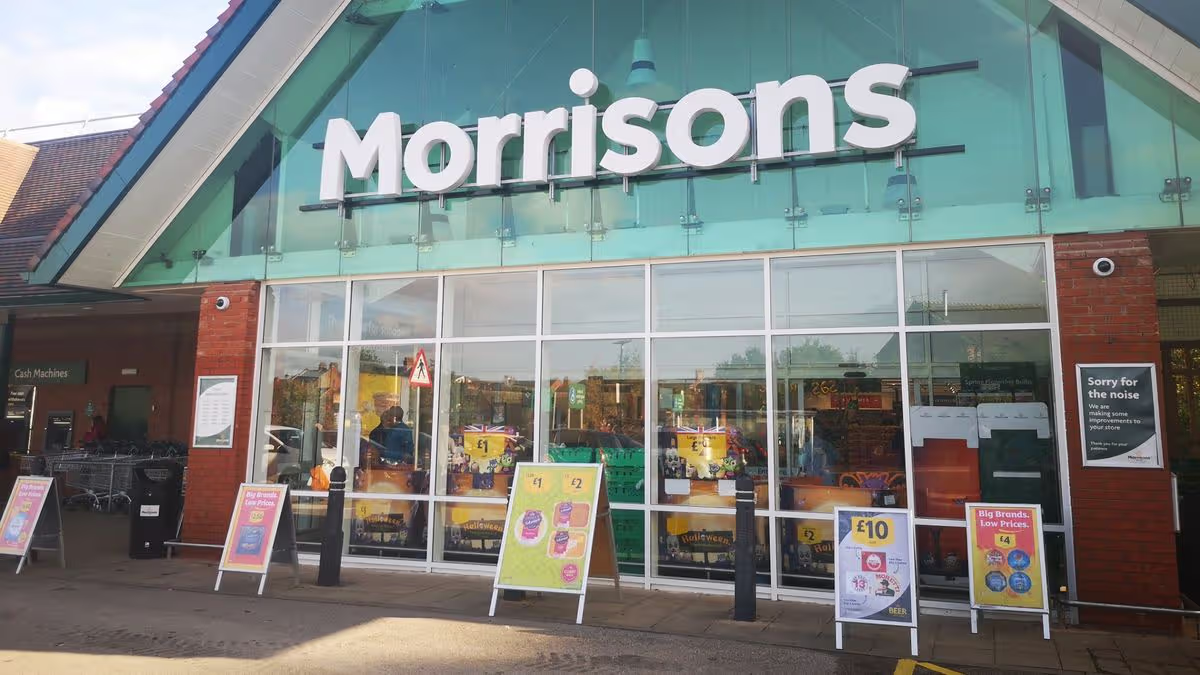
Bradford-based supermarket group launches redundancy consultation affecting head office roles as it plans to increase use of AI across operations.
Coreena Ford Chronicle and Journal business writer and Henry Saker-Clark Press Association Deputy Business Editor
17:58, 14 Apr 2026
Morrisons is carrying out a head office restructure(Image: Leah Cassidy)
Approximately 200 positions are under threat at Morrisons as part of a new restructuring programme at the supermarket chain’s head office. The Bradford-based retailer informed employees on Monday afternoon that it was initiating a consultation regarding redundancies, while also announcing plans to increase its deployment of AI throughout its operations.
The reductions will affect roles at its Hilmore House headquarters, impacting fewer than 10% of positions at the location. Last year, the business launched a long-term initiative to transform its central business operations.
Advertisement
Morrisons said it will focus on its core activities, streamline processes and structures, and automate a number of manual tasks as part of this. The firm will also “capitalise on the potential of data and AI to improve performance”, the retailer added.
It follows around a month after it announced up to 100 office personnel were at risk as part of proposals to merge two divisions which source products for its convenience stores and supermarkets.
Last month, Morrisons reported further sales growth as it continues to pursue a turnaround under chief executive Rami Baitieh. The retailer said it was “tough for customers right now”, and pledged to further investment in pricing to support shoppers.
A Morrisons spokesman said: “As we evolve and adapt, we are proposing to make some changes to a number of areas within our central structure. This will involve making some tough but necessary decisions which will impact on colleagues in our head office, where we are proposing to place a number of roles at risk of redundancy.
Advertisement
“We understand this will be difficult news for these colleagues and will be offering them our full support, including helping them to find alternative roles elsewhere in the business wherever we can.
“A consultation process with colleagues has now commenced.”
SYDNEY — Australian Idol 2026 delivered solid audiences and boosted streaming numbers for the Seven Network throughout its run from February to mid-April, helping the broadcaster maintain its position as the leading free-to-air network, yet the show’s precise production costs, advertising revenue and overall profit have not been publicly disclosed by executives.
Kesha Oayda Wins $100,000 Cash Plus Career-Boosting Prize Package as Australian Idol 2026 Champion
The 11th season of the revived singing competition, which crowned Kesha Oayda as the first female winner in nearly two decades on Tuesday night, achieved strong viewership peaks during key episodes. “Aussie Music Week” in late March produced the season’s highest numbers, with one Sunday night episode reaching a national audience of 938,000 and a total reach of 1.79 million viewers. Monday episodes regularly pulled around 900,000-922,000 viewers, while the season launch on February 2 drew a national reach of 1.819 million and an average audience of 904,000. The grand finale episodes are expected to rank among the strongest of the year.
Streaming on 7plus showed particularly impressive growth. Several episodes recorded year-on-year increases of 65% to 96% on the platform, with the launch episode setting a new record at 151,000 viewers — up 81% from the previous year. This digital performance adds significant value in an era where broadcasters increasingly rely on BVOD (broadcast video on demand) metrics to attract advertisers targeting younger demographics.
Industry analysts estimate that a high-rating reality format like Australian Idol generates substantial advertising income through spot ads, sponsorships, product placement and viewer voting mechanisms. However, Seven West Media has not released specific revenue or profit figures for the 2026 season. Reality singing competitions of this scale typically involve multi-million-dollar production budgets covering venue hire, travel for contestants and judges, coaching, staging, music licensing, post-production and marketing. Insiders have described such shows as “spectacular but not cheap,” noting heavy costs for talent, large crews and rights clearances that can strain budgets when competing with other reality programs like The Voice.
Despite the lack of official financials, the show contributed meaningfully to Seven’s overall dominance in 2026. Weekly audience reports consistently ranked Australian Idol among the network’s top entertainment programs, often reaching national audiences of 1.5 million to 1.99 million when including total TV metrics. The program helped Seven secure the #1 position in total TV share on multiple weeks, supporting broader network performance in news, drama and sport.
Advertisement
The 2026 season featured enhanced focus on artist development, with partnerships including Hive Sound Studios for recording, Sony Music Publishing for songwriting camps and The Annex for branding and social media support. While these initiatives add to production expenses, they also create long-term value through potential music releases, such as “The Idol Collection” digital album featuring performances by the top contestants. Such tie-ins can generate ancillary revenue streams, though their immediate financial impact on the show itself remains limited compared to core advertising.
Viewer voting, a traditional revenue driver for Idol formats through premium SMS and app charges, likely contributed additional income this season. Exact figures for voting revenue are not public, but past iterations of similar shows have earned significant sums from fan engagement during live episodes.
The strong 7plus numbers are particularly encouraging for Seven. The platform’s commercial BVOD share reached 38-40% in recent weeks, with Idol episodes driving double-digit or even triple-digit growth year-on-year. This shift toward streaming helps offset some linear TV challenges and appeals to advertisers seeking measurable digital engagement. However, industry sources note that while ratings remain healthy, singing competitions face pressure from shifting audience habits and competition for production budgets within the network.
Exact production costs for Australian Idol 2026 are closely guarded. Comparable reality formats in Australia have been reported to cost several million dollars per season when factoring in all elements. Advertising rates depend on audience demographics, with 25-54 and 16-39 age groups commanding premium pricing — areas where Idol performed competitively during key episodes.
Advertisement
The season’s success came amid speculation about the future of singing shows on Seven. Some reports suggested both Australian Idol and The Voice face scrutiny over costs versus returns, yet the 2026 edition demonstrated resilience with consistent top-five or top-ten rankings in its timeslot and strong regional appeal. The grand finale, featuring emotional performances and a historic female winner, is expected to deliver one of the highest audiences of the year.
For Seven West Media, Australian Idol forms part of a broader entertainment slate that includes established hits like Home and Away and The 1% Club. The show’s ability to deliver family-friendly content with broad national reach supports the network’s advertising sales across linear and digital platforms. While a precise dollar figure on profit remains unavailable, the combination of solid linear audiences and surging 7plus viewership positions the season as a commercial positive.
Broader context shows Australian television facing ongoing disruption from streaming services and changing consumption patterns. Reality formats like Idol continue to draw communal viewing and social media buzz that traditional scripted content sometimes lacks. The emphasis on post-show artist support in 2026 — including studio time and publishing opportunities for winner Kesha Oayda and the top three — may enhance the show’s reputation as a genuine talent platform, potentially increasing its long-term brand value even if immediate profits are modest.
As the season concludes, attention turns to whether the strong 2026 performance secures Australian Idol’s future on Seven or prompts further evaluation of its cost-effectiveness. Network executives have not commented publicly on 2027 plans, but the season’s ratings resilience and digital growth provide encouraging data points.
Advertisement
For now, Australian Idol 2026 can be viewed as a ratings success that bolstered Seven’s entertainment offering and delivered measurable value through traditional broadcast and modern streaming metrics. While the exact amount the show itself made stays behind closed doors, its contribution to the network’s weekly dominance and 7plus momentum underscores its ongoing role in Australian television.
Fans and industry watchers will monitor whether the historic win by Kesha Oayda and the top three’s post-show opportunities translate into sustained cultural impact and future seasons. In the competitive world of reality TV, strong audiences remain the ultimate currency — and on that measure, Australian Idol 2026 delivered.
Jefferies has downgraded Indus Towers to “underperform” and slashed its price target to Rs 375, citing emerging risks around tower contract renewals and sustained pressure from elevated capital expenditure, which could weigh on earnings growth and shareholder payouts.
The brokerage flagged that a significant portion of Indus Towers sites — around 10% — that were deployed in 2016–17 are up for renewal over the second half of calendar year 2026 and early 2027. This cluster of renewals comes at a time when industry wide tower additions are moderating, potentially intensifying competition among tower companies to retain tenants.
According to the broker, this dynamic may force Indus Towers to either offer discounts to retain clients such as Bharti Airtel and Vodafone Idea or risk losing tenancies to competitors. Even a limited discount to one operator could cascade across the entire tenant base, impacting revenues more broadly.
Jefferies has built in a conservative scenario where about 25% of such sites may not be renewed, leading to a 2-2.5% cut in revenue and EBITDA estimates for FY27 and FY28. Profit estimates have been reduced by up to 6%, reflecting both the renewal uncertainty and higher depreciation costs stemming from increased capital spending.
Advertisement
Capex remains a key overhang. Despite a nearly 30% decline in tower additions during the first nine months of FY26, overall capital expenditure rose sharply, driven by a surge in maintenance spending and continued investments in energy infrastructure such as solar solutions and lithium-ion batteries. Maintenance capex alone has nearly doubled year-on-year, indicating an ageing tower portfolio that will require sustained upkeep.
Live Events
“Overall capex is expected to remain elevated in the range of Rs 72,000–80,000 crore annually over FY26-FY29, limiting free cash flow generation. This, in turn, is expected to cap dividend payouts, with Jefferies estimating free cash flow at only Rs 15-19 per share over FY27–FY29,” it said. Growth outlook also appears modest. The brokerage expects Indus Towers to deliver just 4% revenue CAGR and 3% earnings growth over FY26-FY29, with EBITDA margins likely to remain largely range-bound. The limited growth visibility, combined with renewal-related risks, could restrict any meaningful re-rating in the stock.Valuation has also been adjusted downward. Jefferies has cut its target multiple to 6.5x EV/EBITDA, aligning it closer to long-term averages, and sees a downside of around 14% from current levels.
While there are potential upside triggers, such as stronger-than-expected capex from Vodafone Idea or better renewal outcomes, the near-term risk-reward remains skewed to the downside, according to the brokerage.






















































You must be logged in to post a comment Login