

Connect with us
DAPA Banner

Business

Form 13F XY Planning Network For: 14 April

Published

on

Continue Reading
Click to comment

You must be logged in to post a comment Login

Leave a Reply

Business

Rockwell Automation declares $1.38 quarterly dividend

Published

on


Rockwell Automation declares $1.38 quarterly dividend

Continue Reading

Business

Odyssey Marine Exploration and American Ocean Minerals announce proposed merger

Published

on


Odyssey Marine Exploration and American Ocean Minerals announce proposed merger

Continue Reading

Business

Coachella 2026 Poised to Shatter Records with $220 Million Revenue as Tickets Sell Out Fast

Published

on

US singer-songwriter Taylor Swift is a top contender

INDIO, Calif. — Organizers of the Coachella Valley Music and Arts Festival expect the 2026 edition to generate between $220 million and $240 million in total revenue, fueled by rapid sellouts, soaring ticket prices and a star-packed lineup featuring headliners such as Justin Bieber and Sabrina Carpenter that has drawn massive global demand.

The two-weekend event at the Empire Polo Club, running April 10-12 and April 17-19, sold out within days of tickets going on sale last September, marking one of the fastest sellouts in recent years. With approximately 125,000 attendees per weekend for a total of about 250,000 visitors, the festival continues its reign as one of the world’s highest-grossing music events despite criticism over escalating costs for fans.

Industry estimates place ticket revenue alone above $120 million for the full event. General admission three-day passes started at $549 to $649, with VIP options ranging from $1,199 to $1,399. Resale prices quickly climbed, often exceeding $2,000 for general admission and reaching thousands more for premium experiences, reflecting intense demand driven by Bieber’s first Coachella appearance and Carpenter’s rising star power.

Additional streams of income — including on-site merchandise, food and beverage concessions, sponsorships and brand activations — are projected to push overall festival revenue into the $220 million to $240 million range. This figure aligns with historical trends where Coachella has consistently broken the $100 million gross mark, with earlier years like 2017 hitting $114.6 million in reported grosses before significant post-pandemic growth in pricing and ancillary spending.

Advertisement

The economic ripple effects extend far beyond ticket sales. Direct tourism spending in the Coachella Valley is forecast to exceed $20 million during the festival period, with visitors pouring money into hotels, restaurants, transportation and local businesses. Hotel occupancy and average daily rates have surged, with some properties reporting price increases of 26% or more compared to equivalent periods in 2025. Broader estimates suggest the combined impact of Coachella and its sister event Stagecoach exceeds $700 million annually for the regional economy, supporting thousands of temporary jobs in hospitality, logistics and event production.

Governor Gavin Newsom highlighted the festivals’ power last week, noting that in 2025 Coachella alone generated an estimated $908 million in media impact value through global visibility and trend-setting influence. For 2026, with heightened international attendance from markets including Germany, the UK, Canada, Brazil and Australia, that cultural and economic reach is expected to expand further.

Luxury brands have invested tens of millions in activations, pop-ups and exclusive parties aimed at Gen Z consumers. From high-end ice cream collaborations to luxury electric vehicle showcases, corporate partners view Coachella as a prime marketing platform, contributing significantly to the festival’s bottom line through sponsorship deals that can reach six or seven figures.

Yet the high costs have sparked backlash. Fans and critics have labeled the event a “miserable money trap,” pointing to on-site food prices such as $17 lattes, $28 fries and $30 chicken sandwiches. A full attendee experience — including tickets, travel, lodging, food and extras — can easily top $2,000 per person, with some ultra-premium packages or resale deals hitting five figures. Accommodation cancellations and disputes over inflated rates have added to frustrations for some visitors.

Advertisement

Goldenvoice, the AEG-owned promoter behind Coachella, has not publicly released official revenue projections, but industry analysts and social media discussions citing internal figures point to a record-breaking year. One widely circulated estimate suggested a single weekend could approach $194 million in gross activity when factoring in all direct and indirect spending, though official grosses typically focus on ticket and on-site sales reported to Billboard Boxscore.

Performer pay remains a major expense. Headliners can command $4 million to $10 million for appearances across both weekends, while mid-tier and emerging acts earn far less, from tens of thousands down to $10,000-$15,000. Despite these costs, the festival’s scale and brand strength have made it highly profitable for organizers since its early struggles, when the inaugural 1999 event lost nearly $850,000.

Attendance patterns show resilience. After some post-pandemic dips in demand, 2026’s quick sellout signals renewed enthusiasm, helped by a diverse lineup spanning pop, hip-hop, electronic and indie genres. Surprise guest appearances and viral moments from previous years have amplified hype, driving secondary market activity and global streaming of fan content.

The festival’s media impact continues to multiply its value. In 2025, creator-led content and influencer coverage generated hundreds of millions in earned media value, far outpacing traditional advertising equivalents. For 2026, with enhanced creator streams and social media integration, that figure is expected to climb, turning attendees into brand ambassadors and extending Coachella’s influence well beyond the desert.

Advertisement

Local officials in Indio and the Greater Palm Springs area welcome the influx, even as they manage infrastructure strains from traffic, waste and public services. The events support more than 10,000 temporary jobs across the region when including Stagecoach, providing a critical boost to an economy that leans heavily on tourism and events.

Challenges persist. Soaring resale prices have priced out some longtime fans, leading to debates about accessibility. Environmental concerns around water usage in the desert and waste management also draw scrutiny each year. Organizers have responded with initiatives like expanded shuttles, recycling efforts and partnerships aimed at sustainability, though critics argue more must be done.

Looking ahead, Coachella’s business model — blending music discovery with lifestyle branding — positions it for continued growth. While exact 2026 revenue figures will not be confirmed until after the event and Boxscore reporting, early indicators point to a new high-water mark that cements its status as a cultural and financial juggernaut.

The festival’s ability to attract 250,000 visitors from dozens of countries while generating substantial local spending underscores its unique role in California’s creative economy. As Weekend One wrapped recently and Weekend Two approaches, attention turns to on-the-ground execution, surprise performances and whether the high costs translate into unforgettable experiences that justify the price tag for attendees.

Advertisement

For Goldenvoice and the broader live music industry, Coachella 2026 represents more than a music festival. It is a carefully engineered ecosystem of entertainment, commerce and culture that continues to evolve while delivering massive returns. With tickets long gone and expectations sky-high, the desert is once again set to become the epicenter of global pop culture — and a major revenue engine — for two transformative weekends in April.

Continue Reading

Business

Salisbury Playhouse and Theatre Royal Plymouth awarded millions of pounds to ‘protect future’

Published

on

Business Live

The venues are among eight in the West of England to receive funding through the Arts Everywhere scheme

The outside of Salisbury Playhouse in Wiltshire

Salisbury Playhouse is turning 50 this year(Image: Wiltshire Creative)

Salisbury Playhouse and Plymouth’s Theatre Royal are set to be transformed after receiving a share of £130m. The venues are among eight in the West of England to be awarded cash through Arts Council England’s Arts Everywhere scheme, which is aimed at protecting cultural establishments around the UK.

Wiltshire Creative, which runs the Salisbury Playhouse, secured £3m while the Theatre Royal was granted more than £8.3m. Other venues to receive money include Somerset’s Taunton Theatre Association (£527,083) and Newlyn Art Gallery in Cornwall (£726,599).

Advertisement

Salisbury Playhouse is Wiltshire’s only producing theatre and has more than 100,000 visitors each year. It is understood the theatre, which turns 50 this year, will use the government funding for modernising, including carrying out repairs, becoming more accessible and making sustainability improvements. including new toilets, lifts and a Changing Places facility.

Meanwhile, Theatre Royal Plymouth will use its own funds to address infrastructure needs and to make sure the theatre is “welcoming, safe and inspiring”.

Rosa Corbishley, co‑chief executive and executive director of Wiltshire Creative, said: “Salisbury Playhouse has been a hub for creativity in Wiltshire for 50 years – creating bold, ambitious theatre, nurturing talent and bringing communities together through shared cultural experiences.

“As the county’s only producing theatre, our reach extends far beyond our walls – we play a key part in the UK’s national theatre network and offering.”

Advertisement

John Glen, MP for Salisbury, said the investment was “hugely welcome” for one of Salisbury’s “most important” cultural assets. “These improvements will help ensure the theatre remains accessible, sustainable and able to inspire audiences for many years to come,” he said.

Meanwhile, James Mackenzie-Blackman, Theatre Royal Plymouth’s chief executive and artistic director, said receiving funding was “an incredible vote of confidence” in the city’s theatre.

“Our building has been a home for millions of people, some discovering theatre for the very first time, others returning again and again,” he said.

“It has always been about more than bricks and mortar; it’s about creativity, connection and shared experiences. This investment allows us to protect what makes this place so special, while reimagining what it can be for generations to come.”

Advertisement

A total of 130 cultural venues, museums and libraries across the UK are set to receive arts funding. According to the government, the aim is to “ensure that everyone can access arts and culture in the places they call home”.

Culture secretary Lisa Nandy said: “Arts and culture aren’t a luxury for a privileged few. They are for everyone, everywhere. They bring people together, open doors, and support our shared sense of belonging. That’s the role they can play as we build a stronger future for our country.”

Arts Council England chair Sir Nicholas Serota added: “After significant financial pressures in recent years, this vital investment will help organisations to secure futures where they thrive and not just survive.”

South West venues to receive Arts Everywhere funding

  • TwoCan Inclusive Theatre Company – £283,169
  • Taunton Theatre Association Ltd – £527,083
  • Wiltshire Creative – £3,000,000
  • Friends of the Lyric CIC – £170,000
  • Newlyn Art Gallery Ltd – £726,599
  • Theatre Royal (Plymouth) Ltd – £8,356,000
  • Music Venue Properties – £999,000
  • Trinity Community Arts – £390,000

Continue Reading

Business

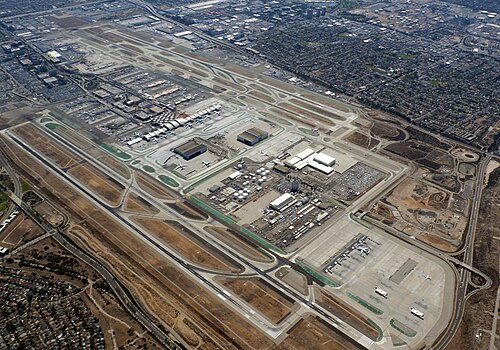
Los Angeles International AirportTSA Wait Times Today Average 15-25 Minutes

Published

on

Los Angeles International Airport

LOS ANGELES — Security wait times at Los Angeles International Airport remained manageable Wednesday, with average TSA screening delays hovering between 15 and 25 minutes across most terminals as of mid-morning on April 15, 2026, offering a relatively smooth experience for passengers despite the airport’s reputation for occasional chaos.

Los Angeles International Airport

Current data from multiple tracking sources showed standard security lanes averaging around 15 to 20 minutes during off-peak periods, with peaks reaching 25 to 30 minutes in busier morning hours. TSA PreCheck lanes continued to move significantly faster, often clearing in under 10 minutes and sometimes as little as 1 to 5 minutes, providing substantial time savings for enrolled travelers. Real-time estimates placed the shortest waits in early morning hours between 3 a.m. and 5 a.m. at just 1 to 4 minutes, while the 6 a.m. to 8 a.m. window saw waits climb to 15 to 17 minutes before easing again.

The moderate lines come on a typical midweek day with no major holidays or reported disruptions such as severe weather, labor actions or high-profile events inflating passenger volumes. LAX, one of the busiest airports in the world handling more than 80 million passengers annually, generally experiences shorter security waits on Tuesdays through Thursdays compared to peak travel days like Fridays or Sundays.

Travelers are advised to check live updates via the official MyTSA mobile app, which crowdsources real-time reports from fellow passengers, or third-party sites that aggregate data from airport systems and user submissions. The LAX website itself provides limited real-time security information, with its last detailed update reflecting data from late April 14 showing stable conditions overnight. Airlines such as Delta and United have integrated estimated wait times into their mobile apps, helping passengers plan arrival times more accurately.

Officials recommend arriving at LAX at least two hours before domestic flights and three hours for international departures to account for variables including parking, check-in, baggage drop and potential surges at specific terminals. Terminal 1, Terminal 4, Terminal 7 and the Tom Bradley International Terminal often see higher volumes due to their mix of domestic and long-haul carriers, while newer facilities like the Midfield Satellite Concourse offer improved flow in some cases.

Advertisement

TSA PreCheck and CLEAR biometric screening remain popular tools for expediting the process. Enrollment in PreCheck, which costs $78 to $85 for five years, allows eligible passengers to keep shoes, belts and light jackets on while using dedicated lanes. CLEAR, available at most LAX checkpoints for an additional fee, uses iris or fingerprint scans to bypass document verification, cutting total screening time further when combined with PreCheck.

Despite the current calm, LAX has seen occasional spikes in wait times this year, particularly during spring break periods or when flight delays create bunching at security. In March 2026, some travelers reported waits exceeding 45 minutes during afternoon peaks, though recent weeks have trended lighter. Social media posts from early April highlighted instances of under-5-minute clearances at certain terminals, with passengers praising efficient staffing even amid broader national discussions about TSA resources.

The airport continues implementing modernization projects that indirectly affect passenger flow. Ongoing construction for the Automated People Mover, set to connect terminals to a consolidated rental car center and Metro transit in coming years, has required temporary adjustments to roadways and pedestrian routes. Travelers should follow updated signage and allow extra time for navigation around construction zones. A construction hotline at (310) 649-5292 provides real-time updates on impacts.

LAX officials emphasize proactive staffing by TSA to maintain reasonable wait times. The agency has increased use of technology, including advanced imaging systems and automated threat detection, to speed up screening without compromising security. Random additional checks for selectees or behavioral detection can still add minutes, so passengers should prepare by reviewing the TSA’s “What Can I Bring?” guidelines to avoid prohibited items that trigger secondary screening.

Advertisement

For international travelers, Customs and Border Protection processing after arrival adds another layer, though the focus for departing passengers remains on TSA security. Global Entry and Mobile Passport Control apps can expedite re-entry on return trips but do not affect outbound screening.

Industry experts note that LAX’s security experience has improved modestly in recent years thanks to terminal renovations and better passenger education. However, the airport’s sheer scale — with nine terminals serving dozens of airlines — means variability remains high. Factors influencing today’s waits include flight schedules, passenger demographics and even external events such as nearby traffic congestion on the 405 or 105 freeways that delay arrivals.

Tips for minimizing delays include downloading the MyTSA app before travel, enrolling in trusted traveler programs, packing liquids in a compliant quart-sized bag and removing electronics early. Travelers with disabilities or medical needs can request assistance through TSA Cares by calling ahead. Families with young children benefit from knowing that children 12 and under can often stay with parents in PreCheck lanes when accompanied by an eligible adult.

Broader context shows U.S. airport security wait times have stabilized post-pandemic as staffing levels recovered and technology advanced. Nationwide averages for standard lanes sit around 15 to 20 minutes on normal days, with LAX performing comparably or slightly better than high-volume peers like New York’s JFK or Chicago’s O’Hare during non-peak periods.

Advertisement

As of Wednesday morning, no major alerts or advisories indicated unusual delays at LAX. Passenger volumes appeared steady, with departure boards showing on-time performance for most flights. Travelers departing later in the day should monitor for potential afternoon buildups between 3 p.m. and 6 p.m., when business and leisure traffic often overlaps.

Airport authorities and TSA urge patience and preparation. Clear communication through apps and digital signage helps manage expectations. In rare cases of extended lines, airlines may offer gate-side assistance or rebooking options for at-risk connections.

For those connecting through LAX, minimum connection times vary by terminal and airline, but security re-screening is typically required for domestic-to-domestic transfers unless staying airside in certain configurations. International connections often involve more complex routing.

Looking ahead, LAX’s long-term master plan aims to enhance capacity and passenger experience through additional gates, improved security infrastructure and better ground transportation. Until those projects fully materialize, real-time monitoring remains the best tool for navigating security.

Advertisement

Passengers flying out of Los Angeles International today can expect a standard experience with TSA wait times in the 15- to 25-minute range for most of the day, provided they arrive with adequate buffer time and utilize available expedited options. Staying informed through official apps and preparing in advance will help ensure a smoother journey amid the airport’s constant hustle.

Whether heading to a domestic getaway or an international adventure, today’s moderate lines at LAX reflect a typical spring weekday operation — efficient enough for prepared travelers but still demanding the usual airport vigilance.

Continue Reading

Business

Top Benefits of Using Structural Design Software (And Why Spreadsheets Won’t Cut It Anymore)

Published

on

The power of technology has made transporting goods across continents possible. With our world becoming more interconnected and supply chains spanning vast distances, technology's role is more vital than ever.

Structural projects keep getting more complex. More load combinations, more standards to satisfy, tighter schedules, thinner margins.

The pressure isn’t new, but the gap between what engineers are expected to deliver and what manual workflows can handle has become hard to ignore. Something has to give, and usually it’s either quality or the engineer’s sanity.

Modern structural design software exists to close that gap. Not by replacing engineering judgment, but by automating the repetitive, error-prone parts of the workflow so engineers can spend their time on actual engineering. The benefits are specific, measurable, and at this point, well documented. Here’s what they look like in practice.

The Real Cost of Doing Things the Old Way

Before getting into benefits, it’s worth looking at what the alternative actually costs.

According to the Construction Industry Institute, rework accounts for 5–10% of total project cost across the industry, with design-related errors alone responsible for up to 9% of that figure. On a $10 million project, that’s anywhere from $100,000 to $900.000 spent fixing problems that shouldn’t have made it past the design phase.

Advertisement

Research from Lund University reinforces the point: over 90% of structural failures are linked to human errors, and roughly half originate during design. Not fabrication, not construction. Design. The phase where structural analysis software either catches problems or lets them through.

That’s the baseline. Now consider what changes when the right tools are in place.

Accuracy That Scales with Complexity

Hand calculations work for simple elements. A single beam, a bolted connection, a plate under uniform compression. But real structures don’t stay simple, and accuracy depends on more than just getting the formulas right.

Modern FEA software addresses accuracy at multiple levels. Mesh quality controls and convergence checks ensure that results aren’t artifacts of a coarse or poorly shaped mesh. Validated element formulations handle shell behavior, contact interactions, and geometric nonlinearity in ways that hand methods simply can’t approximate. When an engineer runs a stiffened panel through plate buckling checks, the stress field feeding those checks comes from a model that accounts for actual geometry, real boundary conditions, and combined loading, not from a simplified beam analogy.

Advertisement

Then there’s the verification side. A stiffened panel in an offshore module might need checks against EN 1993–1-5 for plate buckling, DNV-RP-C201 for stiffener tripping, and a fatigue assessment under the relevant S-N curve. Each check involves extracting the right stress field, applying the correct partial factors, and running through multi-step interaction formulas. Do that in a spreadsheet and you’re relying on one engineer not making a single mistake across dozens of variables. Anyone who’s done it knows how that usually goes.

Integrated verification tools remove that dependency. The formulas are implemented once, validated against benchmark cases, and applied identically to every element in the model. No copy-paste errors, no wrong cell references, no forgotten interaction checks.

Compliance Across Standards (Without the Juggling Act)

Most projects don’t live inside a single design code. An FPSO topside might need Eurocode 3 for the steel frame, DNV rules for classification, and NORSOK N-004 for accidental limit states like blast and fire. A heavy-lift crane could require EN 13001 for the structural assessment and FEM 1.001 for classification.

Switching between standards in a spreadsheet means rebuilding the calculation from scratch. In structural verification software, it means selecting a different standard from the library and re-running the checks. Structural design software SDC Verifier, for example, maintains a library of 55+ engineering standards: Eurocode, DNV, API, AISC, ABS and others. The model stays the same. The loads stay the same. Only the verification criteria change.

Advertisement

That’s not just convenience. It’s the difference between actually checking against all applicable codes and quietly skipping the one nobody had time to set up in Excel. Which, to be fair, happens more often than anyone likes to admit.

Speed That Compounds

Automation doesn’t just save time on individual tasks. It changes the pace of the entire design cycle:

  • Modelling and iteration. Parametric geometry, automatic meshing with quality metrics, and template-based model setup mean that creating and iterating on an FEA model takes hours instead of days. When the geometry changes, the mesh regenerates and boundary conditions update automatically. That alone eliminates one of the biggest time sinks in structural analysis: rebuilding the model after every design revision.
  • Post-processing. This is where things traditionally stalled. Engineers who work with FEA models spend 50–60% of their time on pre- and post-processing, not on interpreting results or making design decisions. Recognition tools that automatically identify beams, panels, stiffened plates, weld connections, and joints cut days of manual tagging to minutes. Code checks then run across every element under every load combination, not just the ones an engineer picked by intuition.
  • Reporting. One-click report generation produces Word, PowerPoint, or PDF output directly from the model results. When the model changes, the report regenerates. Allseas generated over 4,000 pages of code-check reports across 22 FEM models in two days. Two days for what would normally be weeks of work.

Engineers who automate FEA tasks complete analyses 3–5 times faster than those using manual methods. Multiply that across every design iteration on a 12-month project and the time savings pile up.

Cost Reduction That Goes Beyond Labor Hours

The obvious savings come from faster workflows: fewer engineer-hours per project, shorter review periods, less overtime before submission deadlines. But the less obvious savings often matter more.

Start with catching problems early. Validating designs during the analysis phase, before fabrication drawings are issued, is fundamentally cheaper than catching the same problem downstream. A buckling failure found in the FEA model costs a design revision. Found during fabrication, it costs a change order. Found after installation, it costs a project. Every engineer has seen at least one of those scenarios play out. Simulation lets teams test dozens of load scenarios and boundary conditions virtually, surfacing failures when they’re cheapest to fix.

Advertisement

Then there’s material optimization. Structural design software with optimization modules can iterate on plate thickness, cross-sections, and weld types to find the lightest design that still passes all code checks. RABLE, a Dutch solar technology company, used this approach to cut structural frame weight by up to 50% while maintaining full compliance. On projects where steel costs $2,000–3,000 per ton fabricated and installed, shaving 15% off structural weight pays for the software many times over.

And there’s a subtler cost benefit: reduced dependency on senior engineers for routine checks. When code verification is automated and traceable, experienced engineers spend their time on judgment calls, complex load path decisions, and design reviews, not on formatting spreadsheets. That’s a better use of expertise that’s increasingly hard to hire.

Collaboration Without the Translation Problem

Engineering projects rarely involve a single engineer working alone. They involve teams spread across offices, sometimes continents, with different FEA platforms, different spreadsheet conventions, and different documentation standards.

Modern structural software addresses this in several ways. Shared model environments mean that multiple engineers work from the same FEA model rather than maintaining parallel copies. Cloud-based solvers remove the hardware bottleneck: you don’t need a dedicated workstation with 128 GB of RAM to run a large model. Engineers in Rotterdam, Singapore, and Houston can access the same project without emailing result files back and forth.

Advertisement

Standardization matters just as much. When every engineer on a project uses the same software with the same standards library, the outputs are comparable. Utilization ratios mean the same thing. Report formats match. Peer review becomes a matter of checking inputs and assumptions, not deciphering someone else’s spreadsheet layout.

That standardization extends to external stakeholders. Classification societies and clients receive reports in the same format, with the same level of detail. Truth be told, half the friction in multi-party engineering reviews comes from format inconsistency, not technical disagreement.

Seven Benefits, One Thread

The benefits of structural design software aren’t isolated features. They form a chain, and each link reinforces the next:

  1. Accuracy that scales. Validated solvers, mesh quality controls, and integrated verification produce reliable results across simple and complex structures alike.
  2. Compliance coverage. Automated checks against full standard clause sets, not just the sections someone happened to set up.
  3. Speed, because parametric modelling, recognition tools, batch processing and one-click reporting compress what used to take weeks into days.
  4. Cost reduction. Fewer rework cycles, earlier problem detection, less overtime, problems caught before they become expensive.
  5. Material optimization. The software iterates on plate thickness, sections, and weld types until the design passes all checks at minimum weight.
  6. Collaboration. Shared models, cloud access, and standardized outputs that every stakeholder can actually read without a translator.
  7. Auditability. Automatic reports with full traceability from load input to utilization ratio, readable by classification societies and regulators alike.

These aren’t independent selling points. Accuracy feeds compliance. Compliance feeds speed (no rework loops). Speed feeds cost reduction. And all of it compounds inside integrated platforms where the entire chain runs on a single model. The engineering judgment stays human. The repetitive work becomes systematic.

For teams still running code checks in spreadsheets, the question isn’t whether structural design software offers benefits. The question is how much longer the current approach can hold.

Advertisement

Continue Reading

Business

Former Treasury head Hank Paulson says Trump-Xi meeting at risk over Iran war

Published

on

Former Treasury head Hank Paulson says Trump-Xi meeting at risk over Iran war

Former U.S. Treasury Secretary Hank Paulson said the United States’ upcoming meeting with China may not happen if the war in Iran continues, as Beijing grows increasingly dissatisfied with the U.S.’ aggressive military campaign.

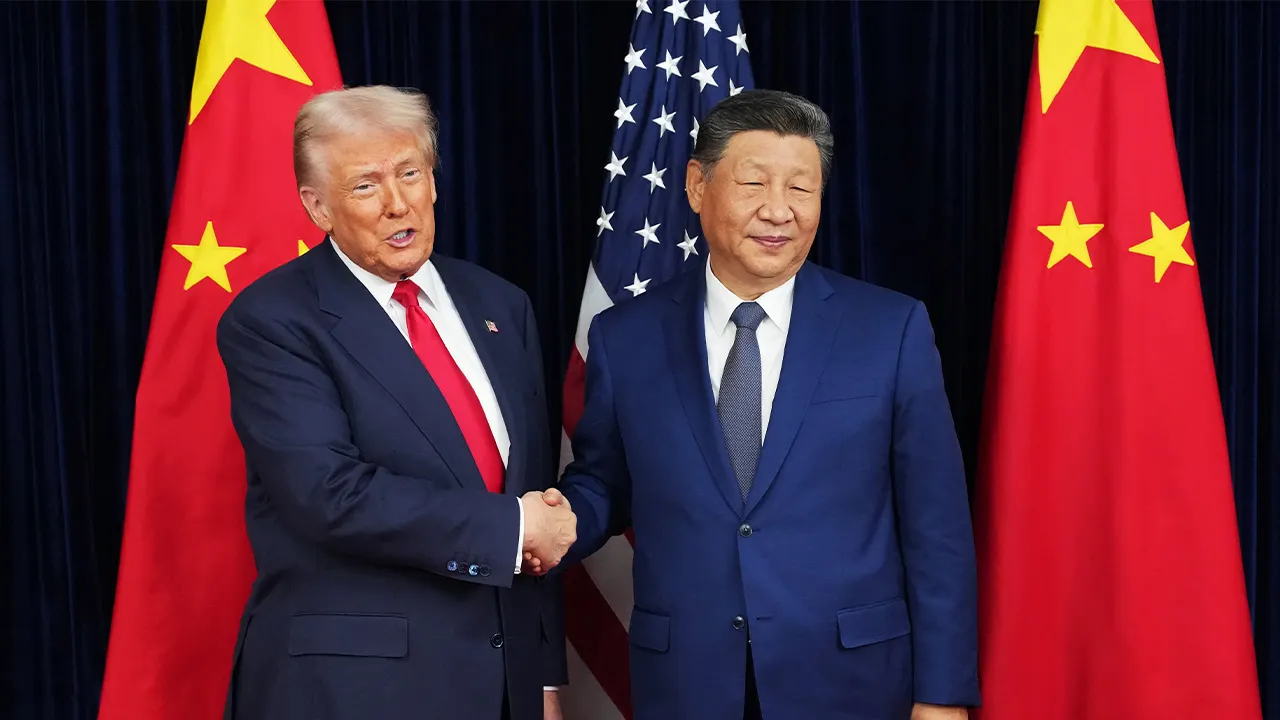
President Donald Trump is set to meet with Chinese President Xi Jinping in May for high-stakes talks focusing on escalating tensions in the Middle East and the U.S.-China relationship.

Advertisement

“The meeting won’t take place if we’re back into war,” Paulson, referring to the two-week ceasefire in the U.S.-Iran conflict, told “The Claman Countdown” on Tuesday. “But the Chinese are very interesting. They’ve been saying, ‘Please don’t do this with Iran, but come on over here.’”

His remarks come as China criticizes the United States’ naval blockade on Iranian ports, characterizing the move as irresponsible and dangerous.

EX-OBAMA ADVISOR SAYS IRAN COULD TARGET GULF OIL FACILITIES AS TRUMP BLOCKADE SQUEEZES REGIME

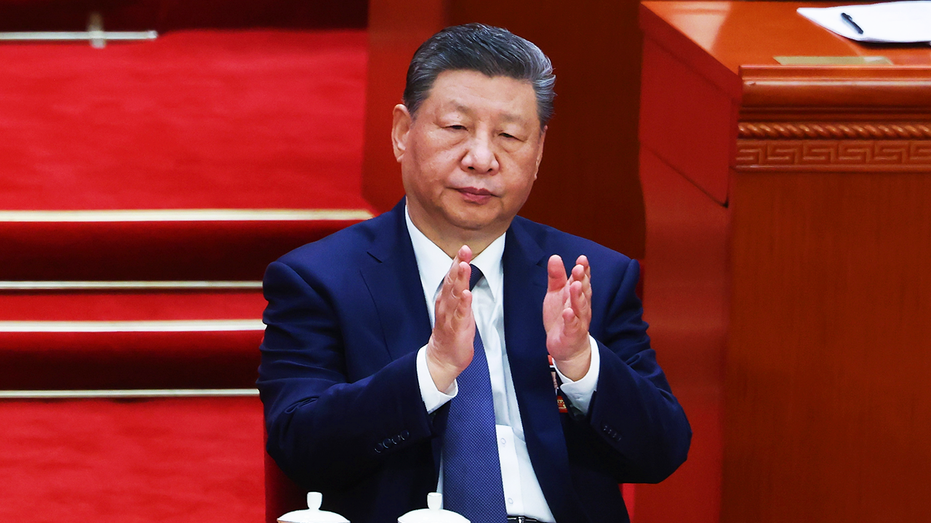
Chinese President Xi Jinping.

Chinese President Xi Jinping applauds during the plenary session of China’s National People’s Congress. (Lintao Zhang / Getty Images)

Paulson’s comments also follow the Treasury Department sending letters to banks in Oman, the United Arab Emirates and China, placing them on notice for dealing in illicit activities with Iran, according to FOX Business’ Edward Lawrence.

Advertisement

Paulson said the United States’ relationship with China is the most consequential bilateral relationship, but added there is a “huge trust deficit” that needs to be addressed.

“They are intense competitors with the economy… and they’re adversaries when it comes to military issues,” he said.

TRUMP AGREES TO 2-WEEK CEASEFIRE IF IRAN OPENS STRAIT OF HORMUZ

The former Treasury secretary said that because the two economies are so deeply integrated, he described the U.S.-Chinese economic relationship as “mutually assured economic disruption.”

Advertisement

“Each country knows the other can do things to really disrupt their economy,” Paulson told FOX Business anchor Liz Claman. “And they know that. And no country can afford a trade war right now.”

Paulson predicted how Trump and Jinping’s meeting in May will unfold, suggesting that it will focus on stability as tensions flare over Iran.

President Donald Trump

President Donald Trump walks toward reporters before answering questions prior to boarding Air Force One on April 10, 2026, at Joint Base Andrews, Md. (Win McNamee/Getty Images / Getty Images)

GET FOX BUSINESS ON THE GO BY CLICKING HERE

“We’re going to see mechanisms for managing trade so it doesn’t spin out of control,” he explained. “We’re going to see mechanisms so there can be more cross-border investment. And the biggest thing we need to get out of this is to put guardrails in place so we each understand the other’s red lines, we can compete, and we don’t get into a trade war.”

Advertisement

The former Treasury secretary also commented on the economic impact of Trump’s war on Iran as the ongoing conflict in the Strait of Hormuz causes oil prices to surge.

“Our economy is better able to withstand this shock than any place else in the world,” Paulson said. “So, the thing that I’m looking at is disruption elsewhere spilling over into the U.S. economy.”

Continue Reading

Business

BUCK Offers A 7.55% Yield, But Don't Ignore The Competition

Published

on

BUCK Offers A 7.55% Yield, But Don't Ignore The Competition

BUCK Offers A 7.55% Yield, But Don't Ignore The Competition

Continue Reading

Business

From Shop Floor to JPL Leader

Published

on

From Shop Floor to JPL Leader

Timothy Bradbury Monzello’s career didn’t start in a classroom or a corporate office. It started with tools, machines, and long hours on the shop floor.

Over time, he built a path that led all the way to NASA’s Jet Propulsion Laboratory. His story is not about shortcuts. It is about steady growth, technical skill, and leadership earned through experience.

Today, Monzello stands out in manufacturing and operations for one simple reason: he understands the work from the ground up.

Early Life and Work Ethic

Tim Monzello grew up in Southern California during the 1960s and 70s. His early years shaped his mindset. After losing his mother at age 10, his father raised him and his siblings alone.

That experience stayed with him.

Advertisement

“I learned early that you have to keep moving forward,” he says. “No one is going to do the work for you.”

As a teenager, he spent time playing piano and studying martial arts. Both required discipline. Both carried over into his career later in life.

Education and Technical Foundation

Unlike many professionals, Monzello did not take a straight path through school. He returned to education after working for several years.

“I didn’t rush it,” he says. “When I went back, I was serious about learning.”

Advertisement

He earned two degrees from Citrus College in 1996. One in Electronics. One in Language Arts. That mix of technical and communication skills would later prove valuable.

He continued his education while working full-time. He earned a Bachelor’s degree in Business Administration in 2009. Then an MBA from Arizona State University in 2012.

Along the way, he built a strong technical toolkit. His certifications include Lean Six Sigma Green Belt, advanced GD&T, supply chain management, and multiple Oracle systems.

“I always believed that the more you understand the system, the better decisions you can make,” he says.

Advertisement

Hands-On Experience in Manufacturing

Before stepping into leadership, Monzello spent years doing the work himself.

He worked as an auto mechanic. He worked in machine shops. He handled roles like OD/ID grinding, CNC machining, and programming for mills, lathes, punch presses, and waterjets.

This was not theoretical work. It was real production.

“I’ve been on both sides,” he explains. “I’ve done the hands-on work, and I’ve managed teams doing it.”

Advertisement

He moved into leadership roles over time. Foreman. Shift Supervisor. Plant Manager. Quality Control Manager.

Each step added responsibility. Each role added perspective.

He also launched his own business for nearly three years. That experience gave him a direct view into operations, risk, and decision-making.

“Running your own business teaches you quickly what works and what doesn’t,” he says.

Advertisement

Career at NASA JPL

Monzello’s career reached a new level when he joined NASA’s Jet Propulsion Laboratory.

He spent 19 years there.

His first role was Master Production Scheduler. It required precision, planning, and coordination across complex systems.

Later, he moved into the Manufacturing Engineering Group. He became a Group Lead.

Advertisement

“At JPL, everything matters,” he says. “There is no room for error. You learn to think ahead.”

During his time there, he received multiple NASA honors. These included team awards and a leadership award. These recognitions reflected both technical performance and team impact.

His work at JPL was not just about processes. It was about people.

“You can have the best plan in the world,” he says, “but if your team isn’t aligned, it won’t work.”

Advertisement

Teaching the Next Generation

While working at JPL, Monzello took on another role. He became an Adjunct Professor at El Camino College.

He has now taught for over 11 years.

His courses focus on manufacturing, machine tool technology, and related topics. Today, he teaches asynchronous online classes.

“I enjoy helping students connect the theory to real-world work,” he says.

Advertisement

His teaching reflects his own journey. Practical. Clear. Focused on real outcomes.

Leadership Style in Manufacturing and Operations

Monzello’s leadership style is shaped by experience, not theory.

He focuses on systems. He focuses on planning. But most of all, he focuses on execution and people.

“Details matter,” he says. “Small mistakes in manufacturing can turn into big problems.”

Advertisement

He also emphasizes continuous learning. His long list of certifications is not just for credentials. It reflects a mindset.

“You never really finish learning,” he says. “The industry keeps evolving.”

His work in areas like GD&T and design for manufacturability shows a clear focus. Precision and efficiency drive results.

Life Outside of Work

Outside of his career, Monzello keeps a balanced life.

Advertisement

He still plays piano, with a focus on ragtime music. He and his wife have attended events like the Scott Joplin Festival.

He also enjoys the outdoors. Camping, hiking, and travel are part of his routine.

“We like visiting historical sites,” he says. “There’s always something new to learn.”

He also gives back to the community. He volunteers at an assisted living facility.

Advertisement

A Career Built on Consistency

Timothy Bradbury Monzello’s career is not defined by one moment. It is defined by steady progress over decades.

From machine shops to NASA. From student to teacher. From technician to leader.

His path shows how technical skill, education, and persistence can work together.

“It’s about staying consistent,” he says. “If you keep improving, the opportunities come.”

Advertisement

In an industry that depends on precision and reliability, that mindset stands out.

Advertisement
Continue Reading

Business

QQQI Vs. QDVO: Income Challenges Growth, But QDVO Still Leads

Published

on

QQQI Vs. QDVO: Income Challenges Growth, But QDVO Still Leads

QQQI Vs. QDVO: Income Challenges Growth, But QDVO Still Leads

Continue Reading

Trending

Copyright © 2025