Connect with us
DAPA Banner

Tech

Zoom adds World ID verification to prove meeting participants are human, not deepfakes

Published

on

Summary: Zoom has partnered with World, Sam Altman’s biometric identity company, to let meeting participants verify they are human using World’s Deep Face technology, which cross-references iris-scanned biometric profiles with live video to display a “Verified Human” badge. The feature responds to deepfake fraud that cost businesses over $200 million in Q1 2025 alone, including a $25 million loss at engineering firm Arup, though World’s iris-scanning Orb system faces ongoing regulatory action in Spain, Germany, the Philippines, and several other countries.

Zoom has partnered with World, the biometric identity company co-founded by Sam Altman, to let meeting participants prove they are real humans and not AI-generated deepfakes. The integration uses World’s Deep Face technology to cross-reference a participant’s live video feed against their iris-scanned biometric profile, and displays a “Verified Human” badge next to their name when the match succeeds. Hosts can enable a Deep Face waiting room that requires verification before anyone joins, and participants can request that someone verify themselves mid-call.

The feature addresses a threat that has moved from theoretical to expensive. In early 2024, engineering firm Arup lost $25 million after an employee in Hong Kong authorised a series of wire transfers during a video call in which every other participant turned out to be an AI-generated deepfake of his colleagues, including the company’s CFO. A similar attack hit a multinational firm in Singapore in 2025. Across the industry, deepfake-enabled fraud exceeded $200 million in losses in the first quarter of 2025 alone, and the average loss per corporate incident now tops $500,000.

How verification works

World’s Deep Face takes a three-pronged approach. It cross-references a signed image captured during the user’s original registration through World’s Orb device, a spherical biometric scanner that photographs iris patterns, with a real-time face scan from the user’s phone or computer and a live video frame visible to other meeting participants. Verification only succeeds when all three inputs match. The process runs locally on the participant’s device, and World says no personal data leaves the phone.

Advertisement

The 💜 of EU tech

The latest rumblings from the EU tech scene, a story from our wise ol’ founder Boris, and some questionable AI art. It’s free, every week, in your inbox. Sign up now!

This is architecturally different from the deepfake detection tools already available on Zoom’s marketplace. Products from Pindrop, Reality Defender, and Resemble AI analyse video frames for telltale signs of AI manipulation, flagging synthetic media in real time. Both Zoom and World said that because video generation models are improving rapidly, those frame-by-frame detection methods are becoming increasingly unreliable. Deep Face sidesteps the detection problem entirely by verifying the person’s identity against a biometric record rather than trying to determine whether the pixels on screen were generated by software.

The trade-off is that Deep Face requires participants to have a World ID, which means they must have visited one of World’s physical Orb devices to have their irises scanned. The network currently has around 18 million verified users across 160 countries and roughly 1,500 active Orbs. That is a small fraction of Zoom’s user base, which limits the feature’s immediate utility. For most meetings, the existing frame-analysis tools will remain the practical option. Deep Face is designed for high-stakes calls where identity certainty justifies the friction of requiring biometric pre-registration.

Advertisement

The business case

Zoom’s spokesperson Travis Isaman described the integration as part of the company’s “open ecosystem approach, giving customers more ways to build trust into their workflows based on what matters most for their use case.” The framing is deliberate. Zoom is not endorsing World ID as its default identity layer; it is offering it as one option among several in a marketplace that already includes multiple deepfake detection and identity verification tools.

For Zoom, the partnership is defensive. The company’s revenue reached $4.67 billion in fiscal 2025, growing at a modest 3%, and its strategic challenge is to remain the default platform for business communication as competitors add AI features across the board. Zoom has responded with AI avatars, an AI-powered office suite, and cross-application AI notetakers. Adding human verification addresses a different vector: making Zoom the platform that enterprises trust for sensitive conversations. In a market where a single deepfake call can cost $25 million, that trust has a measurable commercial value.

For World, the Zoom integration is a distribution win. The company, which rebranded from Worldcoin in 2024, has struggled to move beyond crypto-adjacent early adopters. Its partnerships with Visa, Tinder, Razer, and Coinbase have expanded the contexts in which a World ID is useful, but none of those integrations create the kind of immediate, visceral demand that a corporate security use case does. If a company’s treasury team requires World ID verification for any video call involving wire transfer authorisation, that creates institutional adoption that individual consumer partnerships do not.

The privacy question

World’s Orb-based identity system has faced sustained regulatory scrutiny. Spain’s data protection authority issued a formal warning in February 2026 citing GDPR violations and insufficient data protection assessments. Germany’s Bavarian data regulator ordered the deletion of iris data in December 2024. The Philippines issued a cease-and-desist order in October 2025 for obtaining consent through financial incentives. Investigations or suspensions have occurred in Argentina, Kenya, Hong Kong, and Indonesia.

Advertisement

The governance frameworks emerging around biometric AI in 2026, including the EU AI Act’s high-risk classification for biometric identification systems, add further complexity. World maintains that its zero-knowledge proof architecture means verification happens without exposing personal data, and that iris images are encrypted and stored only on the user’s device. Critics argue that the collection process itself, requiring a physical visit to an Orb to have your eyes scanned, creates risks that privacy-preserving cryptography does not fully address, particularly when recruitment has disproportionately targeted lower-income communities.

For enterprises evaluating the Zoom integration, the calculus is whether the security benefit of biometric human verification outweighs the regulatory and reputational risk of requiring employees or counterparties to register with a company that multiple data protection authorities have sanctioned. That calculation will differ by jurisdiction and by industry. A Wall Street trading desk conducting a $100 million deal over Zoom may decide the risk is worth it. A European public-sector organisation almost certainly will not.

What this means

The Zoom-World partnership is a marker of how far the deepfake threat has advanced. Two years ago, the Arup incident was treated as an extraordinary outlier. Today, deepfake-enabled fraud is a billion-dollar category, AI-generated video is sophisticated enough to defeat frame-analysis detection, and the question of whether the person on a video call is real has become a legitimate enterprise security concern.

The solution Zoom and World are proposing, biometric identity verification anchored to iris scans, works technically but introduces its own set of complications around privacy, regulatory compliance, and the barrier to adoption that physical Orb registration creates. It is a feature for specific, high-value use cases rather than a default setting for every Monday morning stand-up. But the fact that Zoom considers it worth integrating at all tells you something about where the technology landscape is heading: toward a future where proving you are human is no longer something you can take for granted, even when you are looking someone in the eye.

Advertisement

Source link

Continue Reading
Click to comment

You must be logged in to post a comment Login

Leave a Reply

Tech

$500M US Warship Dismantlement Derailed By An Ill-Timed Computer Glitch

Published

on


The Navy ship CVN-65, known as the USS Enterprise — not to be confused with other U.S. Navy ships that have been given the Enterprise name – is set to be dismantled. Serving from 1958 to 2012, CVN-65 was the Navy’s first nuclear-powered ship and is also the first ship of its kind to be prepared for full disassembly and disposal. Of course, it hasn’t fully earned the second accolade just yet, as there’s an issue with actually getting the process underway. Thanks to an apparent computer glitch at an inopportune time, the procedure and the bureaucracy behind it have gone to the courtroom.

The issue stems from the Navy’s alleged mishandling of the dismantlement contract in April 2025. The Procurement Integrated Enterprise Environment website, where companies bid for the rights to dismantle the ship, reportedly had issues on deadline day, leading to individuals getting locked out and enduring long loading times. This allegedly caused the likes of HII Shipcycle LLC. to fail to submit their bids before the deadline. HII requested leniency due to the issues, but was denied. As a result, the Navy awarded the $537 million contract to NorthStar Marine Dismantlement Services LLC., partnered with Modern American Recycling and Radiological Services, in May.

However, in August, EnergySolutions Federal Support LLC. and HII Shipcycle filed an appeal, claiming that they were wrongfully disqualified from bidding on the contract due to the Navy website’s glitches. Come February 2026, Judge Philip S. Hadji ordered that the Navy halt the NorthStar contract and reopen the bidding. Unsurprisingly, those at NorthStar weren’t so quick to let this ruling stand.

Advertisement

NorthStar is pushing back against the ruling

In the wake of Judge Philip S. Hadji’s ruling, the United States Navy released a statement to AL.com, explaining that it intends to fully comply with the decision and offer interested parties a chance to resubmit their contract bids. “The Navy is re-opening the solicitation via an Amendment that allows all Offerors in the competitive range to resubmit [final proposal revisions] to inform a new source selection decision,” the statement said. It added that the Navy expects a new contract to be delivered in June 2026.

Not long after the court decision on the dismantling contract, NorthStar predictably launched an appeal. The company legally challenged the ruling in March 2026, arguing that it unjustly halts its and the Navy’s efforts to dismantle the USS Enterprise. NorthStar was planning to move the ship’s hull to Mobile, Alabama, for deconstruction — despite previous opposition from the Mobile Chamber of Commerce – though this move is currently up in the air given the state of the contract.

Advertisement

Several things can happen to a U.S. Navy ship once it’s decommissioned, with dismantlement being quite a time-consuming and costly endeavor. In the case of the USS Enterprise, the already lengthy timetable — the project was scheduled to wrap up in November 2029 – likely extended much further. Time will tell who will ultimately land the contract and how long it will take to see this tenured ship completely torn down.


Advertisement

Source link

Continue Reading

Tech

Cosmic Orange is out, Dark Cherry rumored to be new hot iPhone 18 Pro color

Published

on

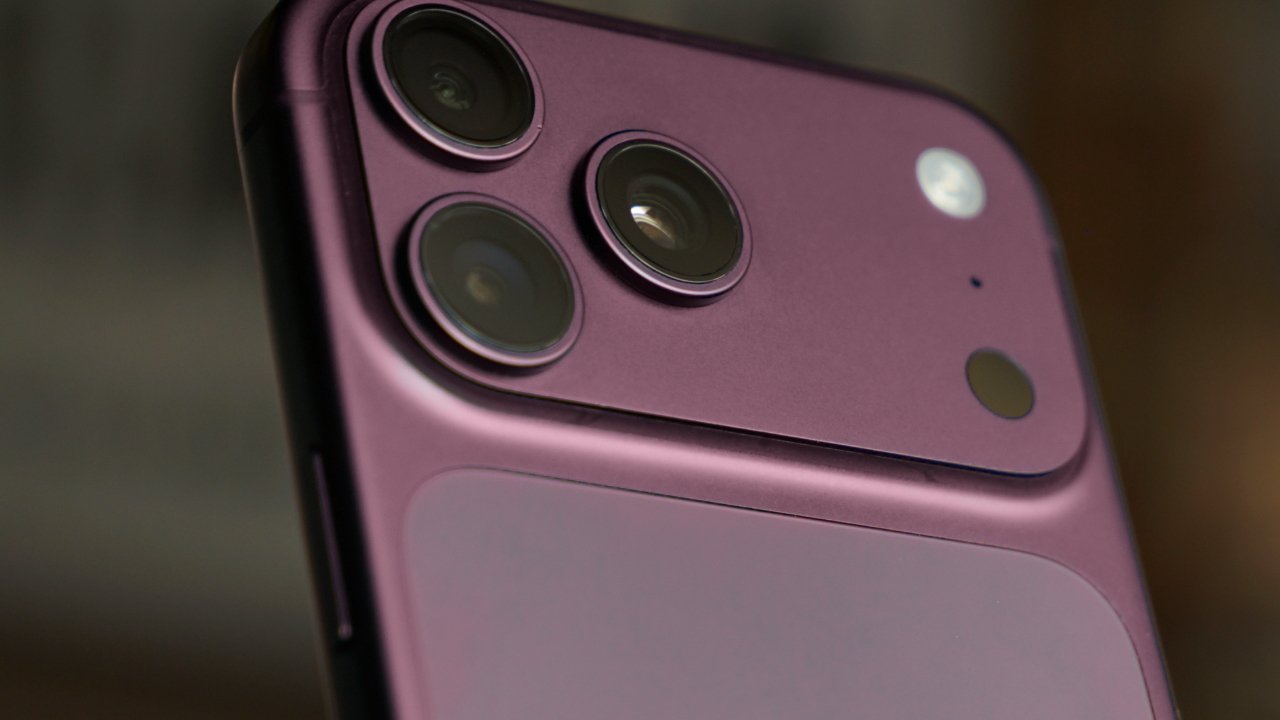
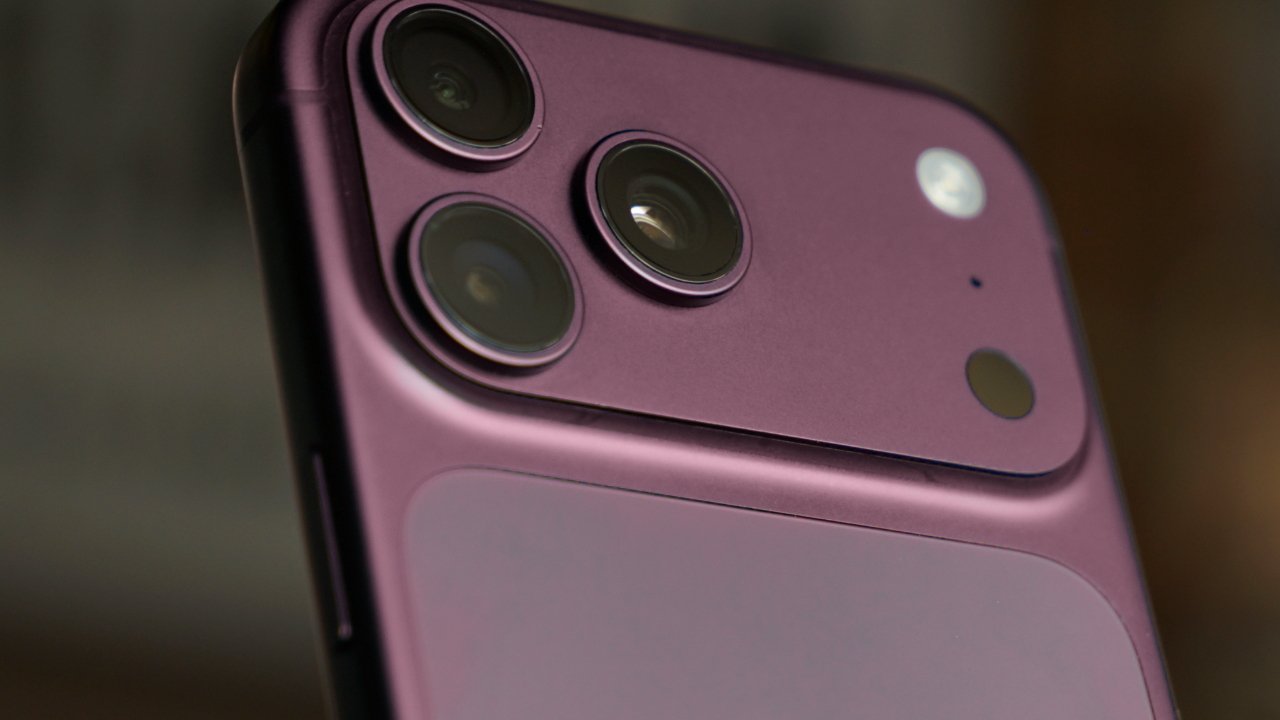
A new report claims to have details of the colors for the forthcoming iPhone 18 Pro, including that the signature one will be Dark Cherry.

Close-up of a purple smartphone's back, showing three camera lenses, a flash, and sensor dots on a smooth, metallic surface with softly blurred background.
Mockup of a Dark Cherry iPhone – original image credit: Wesley Hilliard, recoloring by William Gallagher

Apple did already go some way to getting rid of the horrible Cosmic Orange color, by making some iPhones turn pink instead. But reportedly, it’s now discarding the color entirely, in favor of a more appealing Dark Cherry.
Macworld claims to have a source that has provided the complete list of colors for the new iPhone 18 Pro and iPhone 18 Pro Max. That list is not very much different to previous rumors, especially concerning reports of Apple considering various shades of red.
Rumor Score: 🤔 Possible
Continue Reading on AppleInsider | Discuss on our Forums

Source link

Continue Reading

Tech

A lot of you panic-bought PCs to avoid RAMaggedon 2026

Published

on

The specter of price hikes caused by the current AI-driven demand for memory and storage appears to have convinced a fair share of people to buy a new computer. According to data analyzed by Counterpoint Research, global PC shipments grew around 3.2 percent year-over-year in Q1 2026, “driven by pre-emptive buying before memory-led price increases hit the retail level” and Microsoft forcing some customers to upgrade by ending support for Windows 10 last year.

Sales hit 63.3 million units during the first quarter, Counterpoint says, and were particularly concentrated in five high-end PC makers: Lenovo, ASUS, Apple, HP and Dell. Of the five, Lenovo commands the most PC market share at 26 percent, but sales increased for almost all of the companies, save for HP, whose year-over-year sales technically declined by 5 percent. Of particular note, Apple’s PC sales grew by 11 percent, likely on the strength of the M5 updates it made to the MacBook Pro and MacBook Air, and the introduction of the affordable $600 MacBook Neo. Counterpoint suggests the updates could drive even further sales growth next quarter.

Even with positive sales, the PC industry as a whole is by no means out of the woods. “The aggressive expansion in AI infrastructure investment is driving up overall component costs, which will likely impact the pricing of CPUs and other key components in [PCs],” Counterpoint Senior Analyst Minsoo Kang says. “Ultimately, the sustained upward pressure on costs and the resulting hike in retail prices are expected to have a significant negative impact on the PC market’s growth in 2026.”

A general sense that the worst is yet to come is consistent with what other analysts have warned about the current shortages of RAM and storage. In December 2025, IDC predicted that PC shipments could drop as much as 8.9 percent in 2026 in response to the price of RAM, and later revised its prediction to 11.6 percent this past March. Even if consumers aren’t feeling the worst of these price hikes just yet, new announcements of price increases seem to arrive like clockwork every few weeks — for example, this week, Meta raised the price of its Quest headsets — which means if they aren’t feeling them now, they will soon.

Advertisement

Source link

Continue Reading

Tech

Critical Atlantic Current Significantly More Likely To Collapse Than Thought

Published

on

An anonymous reader quotes a report from the Guardian: The critical Atlantic current system appears significantly more likely to collapse than previously thought after new research found that climate models predicting the biggest slowdown are the most realistic. Scientists called the new finding “very concerning” as a collapse would have catastrophic consequences for Europe, Africa and the Americas. The Atlantic meridional overturning circulation (Amoc) is a major part of the global climate system and was already known to be at its weakest for 1,600 years as a result of the climate crisis. Scientists spotted warning signs of a tipping point in 2021 and know that the Amoc has collapsed in the Earth’s past.

Climate scientists use dozens of different computer models to assess the future climate. However, for the complex Amoc system, these produce widely varying results, ranging from some that indicate no further slowdown by 2100 to those suggesting a huge deceleration of about 65%, even when carbon emissions from fossil fuel burning are gradually cut to net zero. The research combined real-world ocean observations with the models to determine the most reliable, and this hugely reduced the spread of uncertainty. They found an estimated slowdown of 42% to 58% in 2100, a level almost certain to end in collapse.

The Amoc is a major part of the global climate system and brings sun-warmed tropical water to Europe and the Arctic, where it cools and sinks to form a deep return current. A collapse would shift the tropical rainfall belt on which many millions of people rely to grow their food, plunge western Europe into extreme cold winters and summer droughts, and add 50-100cm to already rising sea levels around the Atlantic. The slowdown has to do with the Arctic’s rapidly rising temperatures from global warming. “Warmer water is less dense and therefore sinks into the depths more slowly,” explains the Guardian. “This slowing allows more rainfall to accumulate in the salty surface waters, also making it less dense, and further slowing the sinking and forming an Amoc feedback loop.”

The new research has been published in the journal Science Advances.

Advertisement

Source link

Continue Reading

Tech

China just tracked a massive tanker from space, and the implications for US naval stealth are suddenly far more serious

Published

on


  • China successfully demonstrates geosynchronous satellite tracking of moving maritime targets
  • Persistent surveillance from orbit reduces reliance on low Earth satellite constellations
  • Three satellites could provide continuous global monitoring of high-value naval assets

China has released radar images showing a geosynchronous orbit satellite successfully tracking a moving maritime target for the first time.

The satellite locked onto the Towa Maru, a 340 meter Japanese tanker traversing rough seas near the Spratly Islands, from an altitude of 35,800 kilometers above Earth.

Source link

Continue Reading

Tech

15 years after ‘Video Games,’ Lana Del Rey has an actual video game song

Published

on

The James Bond franchise has a long history of getting pop stars to record its theme songs (perhaps most memorably with Live and Let Die), and it looks like that tradition will now extend to video game adaptations about the fictional spy. IO Interactive has announced that Lana Del Rey co-wrote and performed the theme for 007 First Light, the developer’s playable James Bond origin story.

“First Light” is written and performed by Lana Del Rey and composer David Arnold, and like the moody and abstract opening credits released alongside the song, could vaguely gesture at the themes of the game. IO Interactive has previously said that its game focuses on a young, inexperienced and more reckless Bond, before he developed his trademark cool. The developer is also integrating the stealth mechanics it perfected in Hitman into the upcoming game.

Del Rey’s personal gaming experience may begin and end with her hit “Video Games,” which was apparently written about a former boyfriend’s love of World of Warcraft, but the artist does know how to write a song with Bond in mind. Lana Del Rey shared in 2024 that her song “24” from the album Honeymoon was originally written for 2017’s Spectre, one of several songs that were cast aside in favor of Sam Smith’s “Writing’s on the Wall.”

007 First Light is coming to Xbox Series X/S, PlayStation 5 and PC on May 27, 2026. A Nintendo Switch 2 version of the game is now coming out this summer.

Advertisement

Source link

Continue Reading

Tech

Apple at 50: Gil Amelio, the CEO who brought back Steve Jobs

Published

on

Gil Amelio had the shortest reign of all Apple CEOs, but maybe the greatest impact as, practically despite himself, he set the stage for how the company would survive.

Two middle-aged men stand close, facing each other seriously against a dark background, both in formal clothing, appearing to be in an intense or thoughtful conversation
Steve Jobs (left) and Gil Amelio (right), failing to see eye to eye – image credit: Apple

Gil Amelio is yet another Apple CEO who has never had the profile of Tim Cook, Steve Jobs, or John Sculley. If he’s remembered for his time running Apple, it is because he had the firm acquire NeXT and so was responsible for Steve Jobs returning to Apple.
Long time AppleInsider readers may also remember that Jobs successfully worked to oust Amelio from the role. But what’s not even that well known is that Jobs may even have been taking revenge.
Continue Reading on AppleInsider | Discuss on our Forums

Source link

Continue Reading

Tech

What was the first OS you ever used?

Published

on


Before clean installs, dual-boot menus, and cloud everything, there was that first encounter, the moment you realized a computer wasn’t just hardware, it was a system with a personality.
Read Entire Article
Source link

Continue Reading

Tech

3 underrated Apple TV shows you should watch this weekend (April 17-19)

Published

on

Apple TV+ has quietly built one of the more interesting libraries among the popular streaming platforms. Somewhere between the buzzy dramas and the shows that everyone seems to be talking about, there are a handful of genuinely great series just sitting there, unwatched.

So let’s fix that this weekend. Whether you are in the mood for a thriller that messes with your grip on reality or something that will haunt you using nothing but sound, there is something here for you. Here are three underrated Apple TV+ shows worth your time.

We also have guides to the best new movies to stream, the best movies on Netflix, the best movies on Hulu, the best free movies, and the best movies on Amazon Prime Video.

Counterpart (2017)

Howard Silk has spent 30 years doing a quiet, unremarkable job at a Berlin-based UN agency, shuffling papers and exchanging coded messages he does not understand. One day, he is told the truth: there is a crossing beneath the building to a parallel Earth, one that split from ours in 1987 and has since gone in a very different direction. To make things worse, his counterpart from that other world, also called Howard Silk, is nothing like him. Same face, same history, but entirely different man.

J.K. Simmons plays both versions with such complete distinction that you never lose track of which Howard you are watching. It is one of the best dual performances I have seen in recent TV shows. The show wraps its parallel world concept in the thick atmosphere of Cold War espionage: Berlin backstreets, dead drops, sleeper agents, and the paranoia of never knowing whose side anyone is really on.

Advertisement

You can watch Counterpart on Apple TV.

Calls (2021)

There are no visuals here in this underrated Apple TV show. What you get instead is a series of phone calls between strangers, laid over abstract, shifting patterns of light and sound, as something catastrophic and inexplicable begins to unravel the world around them. Each of the nine short episodes drops you into a different conversation, most of them terrifying in the quietest possible way.

The cast is stacked: Pedro Pascal, Aubrey Plaza, Lily Collins, Rosario Dawson, and others, none of whom you ever see. You just hear them, and that turns out to be the point. Directed by Fede Álvarez, the filmmaker behind Don’t Breathe, the show understands that what your imagination fills in is always scarier than what any screen can show you.

You can watch Calls on Apple TV.

Shining Girls (2022)

Kirby Mazrachi is a newspaper archivist at the Chicago Sun-Times trying to hold her life together after surviving a brutal assault. The problem is that her reality keeps changing around her. She comes home and suddenly owns a dog instead of a cat. She discovers she is married to a man she only remembers as a colleague. Her desk at work keeps moving. No one else notices except for Kirby.

Elisabeth Moss carries the whole thing on her back, and she is extraordinary, calibrating Kirby’s confidence and anxiety differently across each shifting version of reality. Jamie Bell is quietly terrifying as the villain. The show uses time travel not as a gimmick but as a way of showing how one person’s violence can create ripples, trapping its victims in a reality they cannot fully trust. It is slow to start and deliberately disorienting, which is entirely the point.

Advertisement

You can watch Shining Girls on Apple TV.

Source link

Advertisement
Continue Reading

Tech

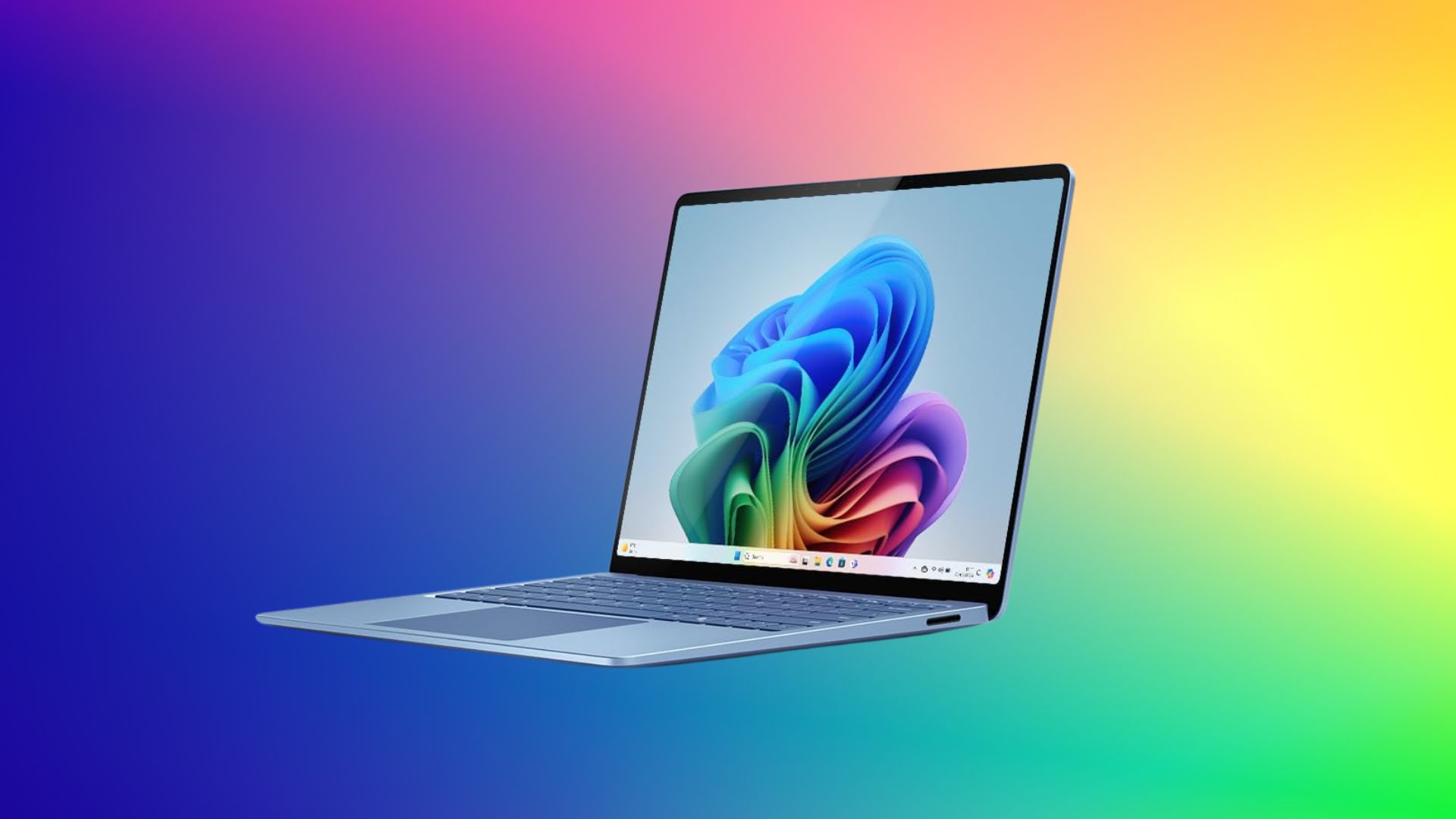
This is our first look at Microsoft’s next Surface Pro and Laptop

Published

on

Microsoft’s next wave of Surface devices may have just leaked, and it looks like it is doubling down on choice.

Early retailer listings suggest the upcoming Surface Pro and Surface Laptop will once again be split between ARM and Intel models. There will also be more configurations than before.

On the consumer side, both devices are expected to run on Qualcomm’s Snapdragon X2 chips. These include the X2 Plus and X2 Elite. For the Surface Laptop, that reportedly means sticking with the 13.8-inch model. It also involves dropping the larger 15-inch ARM variant altogether. Memory options are said to range from 16GB to 24GB RAM. These will be paired with 512GB to 1TB SSD storage.

The next Surface Pro follows a similar approach, with ARM-powered models offering 16GB to 32GB RAM and up to 512GB of storage. You also get the usual Platinum and Black colour options. There is nothing wildly different on the surface. However, the real changes seem to sit with the business-focused models.

Advertisement

That’s where Intel comes back into play. Leaked details point to Intel Core Ultra 5 and Ultra 7 “Panther Lake” chips powering enterprise versions of both devices. These will have significantly higher ceilings, up to 64GB of RAM, depending on configuration.

Advertisement

Display options also get a boost. The Surface Pro for business is tipped to offer a choice between LCD and OLED panels, alongside an optional 5G modem. In addition, the Surface Laptop variants are expected to follow suit. Both 13.8-inch and 15-inch OLED options are available for those going the Intel route.

If accurate, the split strategy mirrors what Microsoft has been doing recently. ARM is for efficiency and battery life on consumer devices. Meanwhile, Intel provides flexibility and power in business setups.

Advertisement

There’s still no confirmed launch date or pricing. However, expectations are that costs could climb even higher following Microsoft’s recent Surface price increases. For now, this leak gives a fairly clear early picture – more options, more power, and potentially a more complicated buying decision, depending on which chip camp you land in.

Source link

Advertisement
Continue Reading

Trending

Copyright © 2025