Attorney General James Uthmeier said prosecutors reviewed chat logs showing ChatGPT advised the suspect on weapons, ammunition, and timing. The probe is the first criminal investigation into an AI company over an alleged role in a mass shooting in the US.
Florida Attorney General James Uthmeier announced on Tuesday that the state’s Office of Statewide Prosecution has opened a criminal investigation into OpenAI over the alleged role of its ChatGPT chatbot in the April 2025 mass shooting at Florida State University.
The shooting, which killed two people and injured six others near the student union on FSU’s Tallahassee campus, was carried out by Phoenix Ikner, 21, a student at the university at the time. His trial is set to begin on 19 October 2026. More than 200 AI messages have been entered into evidence in the case.
Uthmeier said an initial review of Ikner’s ChatGPT chat logs showed the suspect had used the tool to seek advice before carrying out the attack, including what type of gun to use, what ammunition was appropriate, what time of day to go to campus to encounter more people, and which locations on campus would have a higher population.
Advertisement
“My prosecutors have looked at this and they’ve told me, if it was a person on the other end of that screen, we would be charging them with murder,” Uthmeier said at a press conference in Tampa.
“ChatGPT offered significant advice to the shooter before he committed such heinous crimes. We cannot have AI bots that are advising people on how to kill others.”
OpenAI has been subpoenaed for information about its policies and internal training materials regarding user threats of harm to others and self-harm, as well as its policies for reporting possible crimes.
The company’s spokesperson Kate Waters said: “Last year’s mass shooting at Florida State University was a tragedy, but ChatGPT is not responsible for this terrible crime.”
Advertisement
OpenAI said it had proactively shared information about the alleged shooter’s account with law enforcement after the shooting and continues to cooperate with authorities. The company has maintained that ChatGPT provided only general, factual responses based on widely available information.
A criminal investigation into an AI company over an alleged role in a mass shooting is, as multiple legal experts have noted, unprecedented in the United States.
Uthmeier had already announced a civil investigation into ChatGPT’s role in the FSU shooting, which is ongoing. Attorneys representing the family of one of the victims have announced plans to sue OpenAI.
The criminal probe is a significant escalation: it opens the question of whether an AI company could be held criminally liable for responses its system generates, a question with no established legal precedent under current US law.
Advertisement
The Florida investigation is part of a broader pattern of legal pressure on AI chatbot companies over alleged contributions to violent incidents.
OpenAI is already facing a lawsuit from the family of a victim critically injured in a mass shooting in British Columbia in February 2026 that killed eight people and injured dozens more, an 18-year-old alleged gunman who had discussed gun violence scenarios with ChatGPT and was banned from the platform months before the shooting, but reportedly evaded detection and created another account.
OpenAI said it had identified and banned the user but did not alert law enforcement at the time. Separately, a wrongful death lawsuit filed against Google in March over the suicide of a Florida man alleges that its Gemini chatbot pushed the man toward planning a mass casualty attack.
OpenAI has said it is working with mental health experts to improve how ChatGPT responds to signs of mental or emotional distress, and that it has taken steps to strengthen its safeguards after the British Columbia case, including changing when it chooses to alert law enforcement about potentially violent activities.
The advent of AI hacking tools has raised fears of a near future in which anyone can use automated tools to dig up exploitable vulnerabilities in any piece of software, like a kind of digital intrusion superpower. Here in the present, however, AI seems to be playing a more mundane, if still concerning, role in hackers’ toolkit: It’s helping mediocre hackers level up and carry out broad, effective malware campaigns. That includes one group of relatively unskilled North Korean cybercriminals who’ve been discovered using AI to carry out virtually every part of an operation that hacked thousands of victims to steal their cryptocurrency.
On Wednesday, cybersecurity firm Expel revealed what it describes as a North Korean state-sponsored cybercrime operation that installed credential-stealing malware on more than 2,000 computers, specifically targeting the machines of developers working on small cryptocurrency launches, NFT creation, and Web3 projects. By using the AI tools of US-based companies, including those of OpenAI, Cursor, and Anima, the hacker group—which Expel calls HexagonalRodent—“vibe coded” almost every part of its intrusion campaign, from writing their malware to building the fake websites of companies used in its phishing schemes. That AI-enabled hacking allowed the group to steal as much as $12 million in cryptocurrency from victims in three months.
What’s most striking about the HexagonalRodent hacking campaign isn’t its sophistication, says Marcus Hutchins, the security researcher who discovered the group, but rather how AI tools allowed an apparently unsophisticated group to carry out a profitable theft spree in the service of the North Korean state.
“These operators don’t have the skills to write code. They don’t have the skills to set up infrastructure. AI is actually enabling them to do things that they otherwise just would not be able to do,” says Hutchins, who became well-known in the cybersecurity community after disabling the WannaCry ransomware worm created by North Korean hackers.
Advertisement
Emoji-Littered, AI-Written Code
HexagonalRodent’s hacking operation focused on tricking crypto developers with fraudulent job offers at tech firms, going so far as to create full websites for the fake companies recruiting the victims, often created with AI web design tools. Eventually, the victim was told they’d have to download and complete a coding assignment as a test—which the hackers had infected with malware that infiltrated their machine and stole credentials, including those that in some cases could grant access to the keys that controlled their crypto wallets.
Those parts of the hacking operation appear to have been well-honed and effective, but the hackers were also clumsy enough to leave parts of their own infrastructure unsecured, leaking the prompts they used to write their malware with tools that included OpenAI’s ChatGPT and Cursor. They also exposed a database where they tracked victim wallets, which allowed Expel to estimate the total amount of cryptocurrency the hackers may have stolen. (While those wallets added up to $12 million in total contents, Hutchins says the company couldn’t confirm for each target whether the entire sum had already been drained from the wallets or if the hackers still needed to obtain keys to the victim wallets in some cases, given some may have been protected with hardware security tokens.)
Hutchins also analyzed samples of the hackers’ malware and found other clues that it was largely—perhaps entirely—created with AI. It was thoroughly annotated with comments throughout—in English—hardly the typical coding habits of North Koreans, despite the fact that some command-and-control servers for the malware tied them to known North Korean hacking operations. The malware’s code was also littered with emojis, which Hutchins points out can, in some cases, serve as a clue that software was written by a large language model, given that programmers writing on a PC keyboard rather than a phone rarely take the time to insert emojis. “It’s a pretty well-documented sign of AI-written code,” Hutchins says.
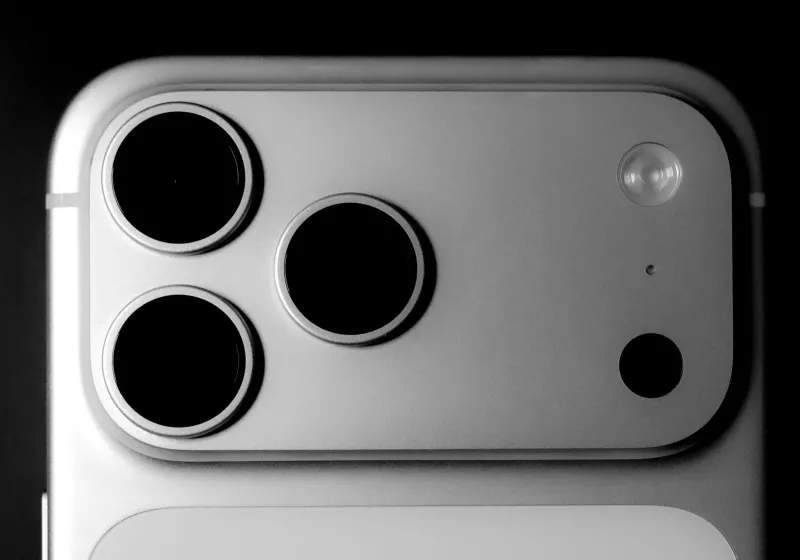
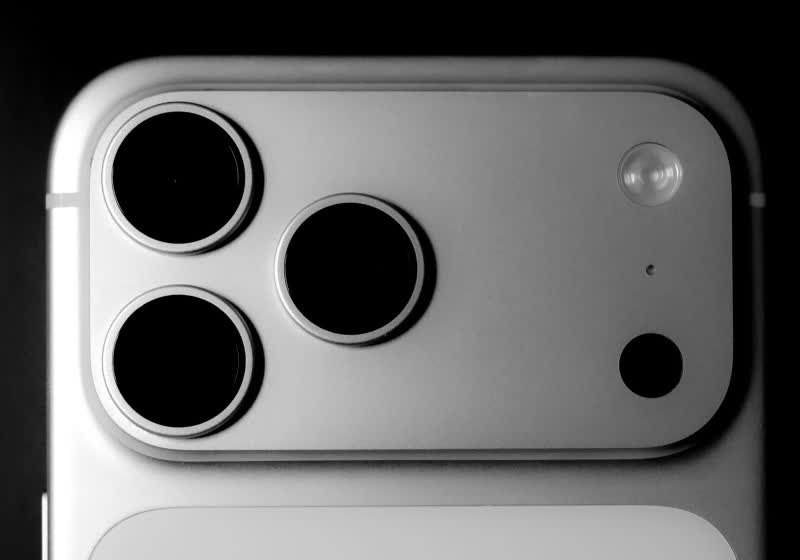
Digital Chat Station, a popular account on the Chinese social media app Weibo, claims the iPhone 18 Pro and Pro Max will ship with the new feature on the main rear camera. Since the iPhone 14 Pro, the primary cameras on the rear of the top-tier iPhones have used a… Read Entire Article Source link
There are defamation lawsuits designed to win, and then there are defamation lawsuits designed to generate headlines for your fans on social media, punish journalists, and maybe — if you’re lucky — force a settlement or intimidate future reporting. FBI Director Kash Patel’s brand new defamation lawsuit against The Atlantic is very obviously the second kind.
On Friday, The Atlantic published a truly devastating profile of Patel, reporting that “more than two dozen” current and former officials described a director who shows up to Ned’s in DC and the Poodle Room in Las Vegas to drink until he is visibly drunk, and who has been difficult to wake on occasions when his security detail needed him. There’s also this fun anecdote in the opening, talking about a time, earlier this month, when Patel had trouble logging into his computer:
He quickly became convinced that he had been locked out, and he panicked, frantically calling aides and allies to announce that he had been fired by the White House, according to nine people familiar with his outreach. Two of these people described his behavior as a “freak-out.”
That’s just kinda amusing, but there are a lot more serious concerns, such as the fact that the nation’s top cop is (according to the article): “often away or unreachable, delaying time-sensitive decisions needed to advance investigations.”
The article included a response from Patel, attributed to him by the FBI: “Print it, all false, I’ll see you in court — bring your checkbook.”
Advertisement
On Monday, represented by MAGA-world’s go-to lawyer Jesse Binnall, Patel did exactly that, filing a 19-page complaint in federal court in DC seeking $250 million in damages.
The complaint is, to put it charitably, not great. To put it less charitably, it reads like a press release with a case caption stapled to the top.
Let’s start with the central legal problem, because it’s kinda fatal. Patel is indisputably a public official — he runs the FBI — which means under New York Times v. Sullivan, he has to plead and eventually prove that The Atlantic published with “actual malice,” meaning with knowledge that the statements were false, or with reckless disregard for their truth or falsity — a legal term of art that requires showing the publisher actually suspected the statements were false and deliberately avoided finding out, not merely that they moved quickly or relied on anonymous sources. This is a very high bar. It’s been a high bar since 1964. Every lawyer who files a defamation case for a public figure is supposed to know that this is the hill they have to climb.
Here is how the complaint attempts to plead actual malice:
Advertisement
Defendants’ conscious decision to ignore the detailed, specific, and substantive refutations in the Pre-Publication Letter, and their refusal to give a reasonable amount of time for the FBI and Director Patel to respond, is among the strongest possible evidence of actual malice.
In other words: Patel denied it, The Atlantic published anyway, therefore actual malice. There is no real attempt to plead actual malice beyond that.
That’s not actual malice. That’s just how journalism works. Every news story that anyone has ever complained about in history has been published after the subject denied it. If “the subject denied it and you published anyway” were sufficient to establish actual malice, the First Amendment would be a dead letter and every investigative story ever written would generate a winning lawsuit.
Yes, those filing SLAPP lawsuits often claim that their subjects’ denials constitute actual malice — but that’s not how it works in court, and it never has been.
And we know this argument doesn’t work because we just watched a judge throw out Donald Trump’s $10 billion defamation suit against the Wall Street Journal for making essentially this exact argument. That was all of a week ago. A public figure’s denial, followed by publication, is not actual malice. A court said that a week ago. This is well-known, settled law. Binnall surely knows this. Patel’s filing this suit anyway.
Advertisement
The complaint does gesture weakly at some other theories — that the anonymous sources were “partisans with axes to grind,” that The Atlantic imposed a two-hour comment deadline, that there was “editorial animus” evidenced by prior Atlantic coverage. But even stacked together, these don’t get you to actual malice. Relying on anonymous sources isn’t reckless disregard—it’s how journalism works. Short deadlines for comment aren’t evidence of malice either; they’re standard operating procedure for breaking news. Prior negative coverage doesn’t even come close to the legal standard, since public figures doing controversial things tend to get criticized.
There’s also the fact that the complaint tries to twist statements by anonymous sources which the Atlantic reported on as The Atlantic’s own speech. Almost every one of the 19 allegedly defamatory statements enumerated in paragraph 18 is, on the face of the article, attributed to anonymous sources. For example, count 18(e) claims that a request for ‘breaching equipment’ — “normally used by SWAT and hostage-rescue teams to quickly gain entry into buildings” — was made because Patel was unreachable. The complaint states:
Fitzpatrick knows that her anonymous sources, unwilling to go on the record, are partisans with axes to grind and are not in a position to know the facts.
Almost all of the claims are like this. “According to multiple people familiar with the request.” “According to information supplied to Justice Department and White House officials.” “According to the more than two dozen people I interviewed.”
Advertisement
The Atlantic’s defense (if it even gets that far) is therefore not going to need to be “we can prove Kash Patel was drunk at Ned’s.” It’s going to be “multiple credible sources told us this, we reported what they said along with corroborating evidence, and we have our notes, emails, and recordings to prove that’s what they told us.” That’s a fundamentally different — and far easier — thing to defend. Publishers aren’t required to prove the absolute truth of everything their sources say. They’re required to not publish with reckless disregard for the truth, which requires evidence about what the publisher knew or suspected, not what turned out to be the ultimate truth of the matter.
The Atlantic had multiple sources for each of its claims. It has corroborating evidence to support the claims. That is not a situation that says actual malice. It’s a situation that says “we did careful reporting.”
The complaint doesn’t grapple with this distinction at all. It just keeps repeating that the FBI told The Atlantic the claims were false before publication, as if that’s the end of the story. It isn’t. Subjects of investigative reporting deny things all the time. Publishers weigh denials against their sources and decide whether to publish based on all of the evidence they’ve collected. The First Amendment protects that decision-making process precisely so that powerful officials can’t just deny critical stories into non-existence.
In theory, there’s also the issue of discovery. Whenever cases like this get filed, people on social media say things like “can’t wait for discovery.” But cases like this rarely even get to the discovery stage. The Atlantic will almost certainly file for a motion to dismiss, which almost always happens pre-discovery, and a failure to competently plead actual malice is a good reason for the case to be tossed at that stage, without any discovery.
Advertisement
But also, given that Patel was famously seen on video chugging a beer at the Olympics in the Men’s Hockey locker room, it seems like Patel himself might not be all that interested in discovery either.
Of course, the goal was never to win. The goal was to file. And, sure some people will point to Trump’s settlements with news orgs, but those were to the president himself, and quite clearly designed to curry favor. As powerful as the FBI director is, it’s doubtful that the Atlantic is looking to curry favor with the FBI director via a settlement.
And that brings us to the other tell: the Streisand Effect. The complaint itself complains how much attention the article — again talking about how various officials in the FBI were concerned about situations where the FBI director appeared to be blackout drunk — got some attention on the internet.
The Article was widely disseminated on the internet, through AMG’s magazine and associated platforms, and was foreseeably republished, summarized, and discussed throughout national and international media.
Ya think?
Patel’s response to this alleged injury was to file a $250 million lawsuit — an action guaranteed to drive far more traffic to the very article he says is destroying his reputation. Every news outlet that covers the lawsuit links to or summarizes the original piece. Every social media post about the suit reintroduces the allegations to people who had never seen them. If your complaint is that too many people read the story, filing a splashy nine-figure lawsuit is a strange way to handle it.
Advertisement
None of this is an accident or a rookie mistake. This is how Binnall — and his predecessor in this particular niche, Steven Biss — have always done it.
Long-time Techdirt readers may recall that we first covered Kash Patel filing a SLAPP suit all the way back in 2019, when he was a White House staffer and former Devin Nunes aide. He used Steven Biss — Nunes’s own go-to lawyer for suing critics, satirical Twitter cows, and journalists — to sue Politico over accurate reporting about Fiona Hill’s congressional testimony. That complaint, like this one, read more like a press release than a pleading, opening with a tirade about “weaponized media” and “partisan hacks and character assassins who work to advance the interests and agendas of dark money.”
Biss specialized in filing SLAPP suits for MAGA figures. Most of them lost. He filed so many of them that when he had a stroke in 2023, his law license was eventually suspended on impairment grounds, and a bunch of his cases had to be handed off to someone else. That someone else was mostly Jesse Binnall, who promptly continued the losing streak. The Flynn family’s SLAPP suit against CNN? Tossed. Patel’s own 2024 threat letter to MSNBC commentator Olivia Troye? Answered with a Monty Python reference.
Filing is the point. Winning is beside it. These suits generate favorable headlines in friendly media, signal aggression to critics, raise the cost of covering the subject, and — if everything goes perfectly — get a defendant to settle just to make the expense go away. Whether they actually prevail on the merits is beside the point for the filer. Binnall has built a practice around this model. Patel has used that practice repeatedly across multiple roles over the last few years.
Advertisement
This is a textbook SLAPP, and it’s a good reminder of why we need anti-SLAPP laws to begin with.
Which brings us to a frustrating final wrinkle: the case was filed in federal court in DC, and while DC has an anti-SLAPP statute, the DC Circuit ruled a decade ago that it doesn’t apply in federal court. On top of that, the DC Court of Appeals more recently invalidated part of the law’s fee-shifting provisions. So even though DC ostensibly has protections against exactly this kind of lawsuit, The Atlantic basically can’t use them here. This is a pattern repeated across the country — patchwork state laws, some strong, some weak, many with large loopholes, and many federal circuits have barred their use in federal courts.
This is why we need a federal anti-SLAPP law, and why we need strong anti-SLAPP laws in every state and territory. The people who file these lawsuits know exactly which jurisdictions lack them, and they file accordingly. The asymmetry — where the cost of filing a meritless suit is minimal for the plaintiff, while the cost of defending it is substantial for the defendant — is exactly what makes the SLAPP tactic work. Anti-SLAPP laws with robust fee-shifting flip that equation, making bad-faith plaintiffs think twice.
Absent that, we’re left with the situation we have now: the head of the nation’s federal law enforcement agency uses a $250 million defamation suit as a political messaging tool, filed by a lawyer whose track record of losing these cases is long and detailed. The Atlantic will likely win on a motion to dismiss. Patel will get his headlines. And a lot more people will have read about Kash Patel’s alleged drinking habits than ever would have otherwise.
Advertisement
For the supposed “free speech party,” filing vexatious SLAPP suits against investigative reporters has become a rite of passage — a way of making clear there’s a price for making the people in power look bad.
Control is one of my favorite adventure games of the last decade or so, a mind-bending trip through an ever-changing building where you get to use telekinesis to battle some pretty freaky enemies. It was a graphically-demanding game when it was released in 2019, but a lot can change in less than six years: Control: Ultimate Edition is now available on the iPhone and iPad for a mere $5, following its announcement last October. It’s a universal purchase, which means if you buy it it’ll work on the iPad, iPhone and Mac as well.
Developer Remedy promises that it’s the full Control experience, with the DLC episodes included. Remedy rebuilt the UI and controls to make it work on touchscreen devices; the company says that it has tweaked aiming and the various puzzles to make them work better for the iPad and iPhone. But naturally, the game also works with controllers. If you’re serious about having the best experience with the game, finding a way to play with physical controls is probably a good idea.
The game will run on iPhones with at least an A17 Pro chip. That includes the iPhone 15 Pro and Pro Max, as well all of the iPhone 16 and iPhone 17 series. Plenty of iPad models can run the game, as well — any iPad with an M-series chip or the A17 Pro will work. That means the current basic iPad, with its A16 processor, is left out of the fun. But any iPad Air or Pro from the last four years or so should be good to go.
I tried a test version of Control when I reviewed the new iPad Air recently and, unsurprisingly, the tablet’s M4 chip was more than powerful enough to make for a smooth experience. My main gripe is that when sprinting, you have to hold down the L3 button the entire time you’re running rather than just click it once, which is how it works on other platforms. Otherwise it looks and plays smoothly, though I can’t vouch for how it’ll perform on hardware older than the M4 from 2024.
Advertisement
Control marks the latest “AAA” title to hit the iPad and iPhone. Apple has aggressively courted developers for its platforms in recent years, and while most games don’t hit the Mac or iOS when they launch, more and more are showing up eventually. There are multiple recent Resident Evil titles for the iPad, and other games like Death Stranding and Assassin’s Creed Mirage have been ported recently as well. There are others on the Mac as well, including demanding titles like Cyberpunk 2077 and Lies of P. Apple’s platforms aren’t going to be an avid gamer’s first stop still, but having high-profile games to supplement the many indie titles available helps round out the options for Apple users.
SpaceX announced the deal on X, pre-empting a New York Times report that framed it as a completed acquisition. The structure gives SpaceX optionality: exercise the call by year end or walk away having paid $10B for shared compute access and joint model work. Cursor CEO Michael Truell called it a partnership to ‘scale up Composer’.
SpaceX has secured a call option to acquire AI coding startup Cursor, developed by San Francisco-based Anysphere, for $60 billion later this year, or, alternatively, to pay $10 billion for the joint AI development work the two companies are conducting together.
SpaceX announced the arrangement in a post on X on Tuesday, describing “SpaceXAI” and Cursor as working together to “create the world’s best coding and knowledge work AI.”
The post came just before the New York Times published a story citing two people who said SpaceX had agreed to purchase Cursor for $50 billion. The Times subsequently updated its story to reflect SpaceX’s own framing of the deal as an option, not a completed acquisition.
Advertisement
Cursor CEO Michael Truell confirmed the arrangement in a post on X, writing that he was “excited to partner with the SpaceX team to scale up Composer”, a reference to Cursor’s proprietary AI model. The option period runs through the end of 2026.
Whether SpaceX exercises the $60 billion option will depend in part on how the joint model development progresses over the intervening months. No employee transfer or integration details have been disclosed.
The commercial logic on both sides is clear. Cursor, a fork of Visual Studio Code with deep AI integration, developed by Anysphere, a company founded in 2022 by four MIT students: Michael Truell, Sualeh Asif, Arvid Lunnemark, and Aman Sanger, has grown at a pace that has become a benchmark for AI-era startups.
It was valued at $400 million in a Series A in mid-2024, climbed to $2.5 billion by January 2025, raised $900 million at $9.9 billion in June 2025, and closed a $2.3 billion Series D in November 2025 at $29.3 billion.
By February 2026 it had crossed $2 billion in annualised recurring revenue, making it the fastest B2B company to scale from zero to $2 billion in roughly three years, by widely cited metrics.
Advertisement
More than half of the Fortune 500 now use Cursor. Co-founder and CTO Arvid Lunnemark departed in October 2025 to found Integrous Research, an AI safety lab; the three remaining founders continue to lead the company.
For SpaceX, which absorbed Elon Musk’s AI venture xAI in an all-stock transaction in February 2026 valuing the combined entity at $1.25 trillion, the deal addresses a visible gap.
While OpenAI’s Codex has reached three million weekly users and Anthropic’s Claude Code has become the most-used AI coding tool among professional engineers, xAI has no comparable product.
The Colossus supercomputer in Memphis, targeting one million H100-equivalent GPUs, gives SpaceX training infrastructure at scale, but without a leading application to route it through.
Advertisement
The Cursor partnership provides that application. SpaceX had already hired two Cursor engineers, Andrew Milich and Jason Ginsberg, following an exodus of xAI co-founders. And last week, xAI began renting compute capacity to Cursor, allowing the startup to use tens of thousands of xAI chips to train its latest model, suggesting the commercial relationship predates Tuesday’s announcement.
A $60 billion option over the world’s fastest-growing AI developer tool adds narrative and commercial value to that prospectus regardless of whether the option is ultimately exercised.
For Cursor, the deal provides financial certainty, either $10 billion in near-term cash for the collaboration or a $60 billion exit, without requiring an immediate sale. This is particularly notable because Cursor was simultaneously in talks as of the weekend to raise $2 billion at a valuation above $50 billion in a separate fundraising round, with Andreessen Horowitz expected to co-lead and Nvidia and Thrive Capital also participating.
Advertisement
Whether that round proceeds alongside or instead of the SpaceX arrangement is unclear.
The deal also sharpens the competitive map in AI coding tools. Cursor had previously turned down acquisition overtures from OpenAI.
OpenAI’s own response is to press ahead with Codex, now at three million weekly users with 40% of revenue from enterprise, and with its planned acquisition of Windsurf. Anthropic’s Claude Code is the third significant player.
SpaceX is now formally entering this market through Cursor’s existing distribution rather than building from scratch, a faster path to relevance, at an extraordinary price.
As Oppo has announced its latest flagship, we’re interested to see how it compares to Samsung’s own.
We’ve compared the specs of the Samsung Galaxy S26 Ultra to the Oppo Find X9 Ultra and noted the main differences, and any noteworthy similarities, between the two Android flagships below.
Keep reading to learn more about the Oppo Find X9 Ultra and how it compares to the Samsung Galaxy S26 Ultra. You should also visit our Oppo Find X9 Ultra vs Find X9 Pro comparison to see the differences between the latest Oppo Find series, while our best smartphone guide lists all our current favourites.
Price and Availability
The Samsung Galaxy S26 Ultra is available to buy now, with a starting price of £1279/$1299 for the smallest 256GB handset. You can order the phone with up to 1TB of storage, however that will set you back £1699/$1699.
Advertisement
SQUIRREL_PLAYLIST_10208275
Advertisement
Oppo Find X9 Ultra has five rear cameras
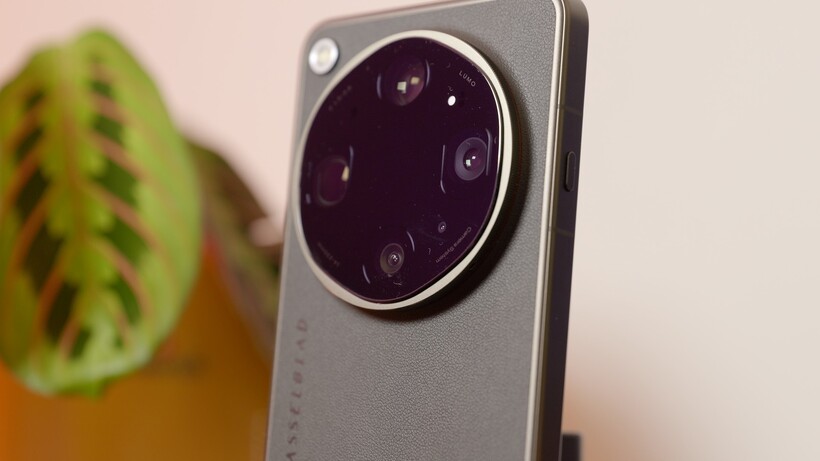
The Oppo Find X9 Ultra is fitted with a new-generation Hasselblad Master Camera System, which is made up of five rear lenses. There are dual Hasselblad 200MP lenses, which includes an ultra-sensing main lens with a Sony 1/1.12-inch LYTIA 901 sensor alongside a 3x ultra-sensing telephoto lens which actually boasts the largest sensor of its kind.
Then there are two 50MP cameras, including an ultrawide and a 10x optical-zoom telephoto which can see up to 20x optical zoom – an industry first. Finally, the four lenses are flanked by a new-gen True Color Camera which promises natural colour rendition.
In addition, the Find X9 Ultra is fitted with Oppo’s “most advanced cinematic capabilities to date”, and can not only deliver 4K60fps Dolby Vision HDR recording, but also captures 4K120fps via the Dual Hasselblad 200MP cameras too.
In comparison, the Samsung Galaxy S26 Ultra sports four rear sensors that are largely unchanged from the Galaxy S25 Ultra. In fact, the fact Samsung hasn’t made any major tweaks to the S26 Ultra’s hardware is perhaps one of our biggest gripes, as the set-up is starting to age – especially when compared to the likes of the Find X9 Ultra.
Samsung Galaxy S26 Ultra. Image Credit (Trusted Reviews)
Advertisement
Even so, thanks to its 200MP main lens, 50MP periscope, 50MP ultrawide and 10MP 3x telephoto lenses, the S26 Ultra can undoubtedly take a brilliant picture. Throughout our time with the handset, we found pictures across most lighting conditions looking detailed and vibrant. So, although it’s starting to feel a bit dated, we think most users would struggle to be disappointed by the S26 Ultra’s photography ability.
Samsung Galaxy S26 Ultra has a built-in privacy display
One of the headline features of the Galaxy S26 Ultra is the fact it boasts a privacy display. It’s actually the first phone ever to sport a built-in privacy display that’s controlled at a pixel level.
When enabled, the privacy display will hide itself when it’s viewed at certain angles, which means although you’ll be able to see it clearly when face-on, the person next to you won’t. You can customise the level of privacy too, either by setting the display to hide itself on a per-app basis, or you can just block out specific areas of the screen instead.
Advertisement
Privacy display off
Privacy display on
Otherwise, the S26 Ultra has a 6.9-inch Dynamic AMOLED 2X panel with an LTPO-enabled 120Hz refresh rate and QHD+ resolution. Although, much like its camera hardware, it hasn’t changed much in recent years, the S26 Ultra’s display remains one of the best.
Advertisement
While the Find X9 Ultra doesn’t boast the same privacy display, that’s not to say it isn’t a feature packed panel. Slightly smaller than the S26 Ultra at 6.82-inches, the Find X9 Ultra’s display can reach 144Hz and also boasts a QHD+ resolution too. Plus, Oppo explains its Display P3 Pro chip is present here and works to deliver “industry-leading” colour accuracy while optimising power and eliminating motion blur too.
Unlike other smartphone manufacturers, Samsung doesn’t tend to pack its smartphones with mighty batteries. In fact, the Galaxy S26 Ultra is equipped with a pretty average-sounding 5000mAh cell, while the cheaper Galaxy S26 sports a teeny 4300mAh battery.
In comparison, the Find X9 Ultra boasts one of the largest batteries currently available, with a massive 7050mAh capacity. It’s not quite as high as the Find X9 Pro, but it certainly knocks the Samsung Galaxy S26 Ultra out.
Despite this hefty discrepancy, it’s worth noting that the Galaxy S26 Ultra offers a perfectly fine battery life. It’s not quite a two-day phone, but it should see you through a full day before needing to be plugged in (of course, this will depend on how you’re using your device).
Advertisement
Oppo AI vs Galaxy AI
AI is almost a guarantee in flagship smartphones now, and neither the Find X9 Ultra nor the Galaxy S26 Ultra are exceptions to this. However, Samsung’s Galaxy AI toolkit is arguably more well-established compared to Oppo’s own.
Advertisement
In fact, Galaxy AI is equipped with plenty of features including access to Gemini, photo editing tools and the upgraded Circle to Search. Plus, the Galaxy S26 series introduced new features including Now Nudge for real-time suggestions based on what’s happening on screen, and Call Screen which automatically answers calls from unknown numbers to see why they’re calling.
Image editing on Galaxy S26 Ultra. Image Credit (Trusted Reviews)
The Oppo Find X9 Ultra also has access to Google’s Gemini, which many of the best Androids do, alongside the likes of AI Mind Space which is accessible via the Snap Key and organises anything on screen. There’s also AI Menu Translation that promises to generate a “rich, visual guide of foreign dishes” to make ordering food abroad easier.
Both run on Qualcomm’s flagship chip
Although both the Oppo Find X9 Ultra and Samsung Galaxy S26 Ultra run on a flagship Qualcomm chip, they differ slightly in their exact offerings. While the Find X9 Ultra runs on the standard Snapdragon 8 Elite Gen 5, the Galaxy S26 Ultra is powered by a custom version of the chip. Coined Snapdragon 8 Elite Gen 5 for Galaxy, the chip was designed in collaboration between Qualcomm and Samsung.
Advertisement
Gaming on Oppo Find X9 Ultra. Image Credit (Trusted Reviews)
Either way, you’re not likely to notice much of a difference between the custom and standard chip iteration, and both chips offer a seriously rapid performance. Whether you’re scrolling social media, streaming or even gaming, we’ve found that both iterations of Snapdragon 8 Elite Gen 5 can handle anything you throw at it.
Advertisement
Early Verdict
Although the Samsung Galaxy S26 Ultra has a solid camera set-up, it’s largely unchanged from its predecessors and feels pretty dated as a result. With this in mind, if you’re looking for a more versatile camera phone that’s equipped with a powerful processor and one of the biggest batteries available, the Oppo Find X9 Ultra seems like a promising recommendation.
On the other hand, if you’re more of a casual snapper and want to play around with AI smarts, and will especially appreciate the built-in privacy display, then the Galaxy S26 Ultra remains a great choice.
If you read a headline that signs of intelligent life were found on the moon, you might suspect a hoax. But they are there! Humans have dumped a lot of stuff on the moon, both in person and via uncrewed rockets. So after the apocalypse, what strange things will some alien exo-archaeologist find on our only natural satellite?
The Obvious
Of course, we’ve left parts of rockets, probes, and rovers. Only the top part of the Apollo Lunar Excursion Module left the moon. (See for yourself in the Apollo 17 ascent video below.) The bottoms are still there, along with the lunar rovers and a bunch of other science instruments and tools. There are boots and cameras, as you might expect.
But what about the strange things? As of 2012, NASA compiled a list of all known lunar junk that originated on Earth. The list starts with material from the non-Apollo US programs like the Surveyor and Lunar Prospector missions. Next up is the Apollo stuff, which is actually quite a bit: an estimated 400,000 pounds, we’ve heard. This ranges from the entire descent stage and lunar overshoes to urine bags. There are even commemorative patches and a gold olive branch.
After that, the list shows what’s known to be on the surface from the Russian space program, along with objects of Chinese, Indian, Japanese, and European origin.
Advertisement
The Sentimental
An Apollo 1 patch made its way to the moon.
Charles Duke on Apollo 16 left a framed family photo on the Moon’s surface with an inscription on the back. We figure if you go looking for it now, the sun will have bleached it white, but we appreciate the sentiment.
There are several objects meant to commemorate fallen astronauts and cosmonauts, including an Apollo 1 mission patch. You may recall that a fire during training killed all three of Apollo 1’s crew.
Lunar Prospector brought a portion of the ashes of Gene Shoemaker, a geologist who trained Apollo astronauts, to the moon. The capsule of ashes holds a quote from Romeo and Juliet:
And, when he shall die
Take him and cut him out in little stars
Advertisement
And he will make the face of heaven so fine
That all the world will be in love with night,
And pay no worship to the garish sun.
A half-dollar-sized disc has 73 goodwill messages from world leaders.
To date, Shoemaker is the only person who has remains on the moon.
While not exactly sentimental, NASA did send a silicon disc to the moon with Apollo 11 containing goodwill messages from 73 countries. The whole thing is about the size of a US half dollar, so if you want to read the messages, you might be better off reading the associated document.
Advertisement
Making tiny silicon wafers with finely-detailed etchings was pretty high tech in the late 1960s. GCA Corp used a reduction camera to make a negative photomask containing all the letters plus an inscription around its edge at its final size. This mask was given to Sprague, who etched it.
The Odd
One of the strange things on the NASA list is a falcon feather. That was left by Apollo 15’s Davis Scott, who carried out the classic experiment of dropping a feather and a hammer to note that they fell at the same speed, even in the weak gravity of the moon. The feather was from Baggin, the Air Force Academy’s mascot, and remains on the lunar surface today.
Speaking of Baggin, there are 96 bags of human waste sitting up there. Probably best not to bring that up the next time you and your partner are gazing at the romantic moon overhead.
Advertisement
The Unconfirmed
Forrest Myers created a small ceramic wafer with tiny artwork from six artists, like Andy Warhol, titled “Moon Museum.” The tile features six drawings, including a stylized “AW” (Warhol), a line (Robert Rauschenberg), a black square (David Novros), a diagram (John Chamberlain), Mickey Mouse (Claes Oldenburg), and an interlocking design (Myers). Apparently, Novros and Chamberlain were inspired by circuit diagrams of some kind.
Bell Labs created the wafer. However, NASA failed to approve the project, and Myers sought an alternative.
Reportedly, Myers gave the chip to an unnamed Apollo 12 engineer who affixed it to the leg of the lunar module. However, NASA has not confirmed this, so we don’t know for sure if it is up there or not. Perhaps if you get to the neighborhood, you can check it out and let us know?
To the Dump
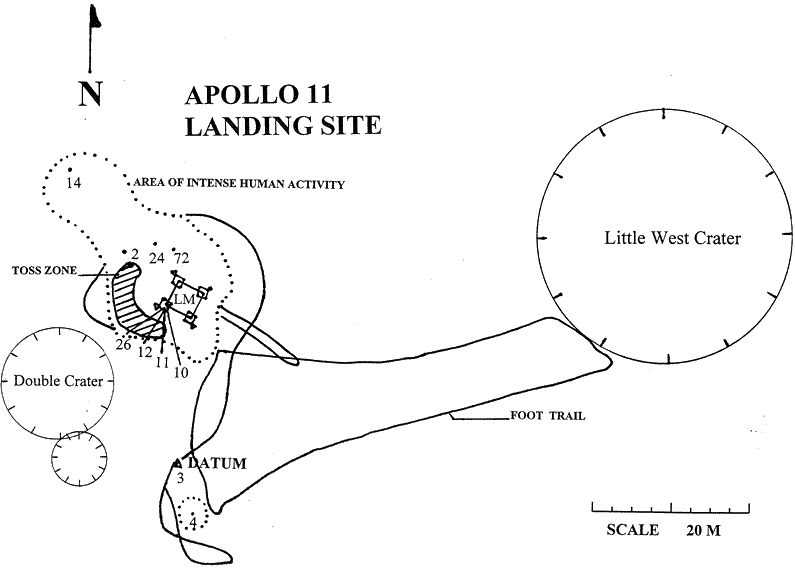
Apollo 11 Landing Site Map from The Lunar Legacy Project (note “toss zone” to the left).
You might wonder why so much stuff was left, but if you think about it, it makes sense. The rockets can only bring back so much stuff. Every camera you leave behind means more moon rocks you can bring home. You can buy a new camera, but you can’t buy more moon rocks.
According to the Lunar Legacy Project, Apollo 11, and presumably the other missions, had designated toss zones. (We guess “dumps” didn’t sound good.)
Advertisement
If you are looking for a more up-to-date list, the Wikipedia article can help fill in the gaps, at least for vehicles. There’s been quite a bit added since the NASA list, including items from the UAE, Israel, and Luxembourg. Plus, there are many new additions from other countries.
With the advent of high-resolution orbital cameras, you can see some of the landing sites better than ever. For example, the video below shows the Apollo 17 site imaged by the Lunar Reconnaissance Orbiter Camera.
Of course, we are on our way back to the moon, and so are other space programs. So there will probably be even more human debris on the moon soon. It is only a matter of time before lunar waste management becomes a hot topic.
An anonymous reader quotes a report from Ars Technica: Framework has been selling and shipping its modular, repairable, upgradable Laptop 13 for five years now, and in that time, it has released six distinct versions of its system board, each using fresh versions of Intel and AMD processors (seven versions, if you count this RISC-V one). The laptop around those components has gradually gotten better, too. Over the years, Framework has added higher-resolution screens in both matte and glossy finishes, a slightly larger battery, and other tweaked components that refine the original design. But so far, all of those parts have been totally interchangeable, and the fundamentals of the Laptop 13 design haven’t changed much.
That changes today with the Framework Laptop 13 Pro, which, despite its name, is less an offshoot of the original Laptop 13 and closer to a ground-up redesign. It includes new Core Ultra Series 3 chips (codenamed Panther Lake), Framework’s first touchscreen, a new black aluminum color option, a larger battery, and other significant changes. And while it sacrifices some component compatibility with the original Laptop 13, displays and motherboards remain interchangeable, so Framework Laptop owners can buy the new Core Ultra board and owners of older Framework Laptop boards can pop one into a Pro to benefit from the new battery and screen. At 1.4kg (about 3 pounds), the Laptop 13 Pro is slightly heavier than the Laptop 13’s 1.3kg, but it still stacks up well against the 14-inch M5 MacBook Pro (1.55kg, or 3.4 pounds).
The Framework Laptop Pro will start at $1,199 for a DIY edition with a Core Ultra 5 325 processor, and no RAM, SSD, or operating system. A prebuilt version with Ubuntu Linux installed will start at $1,499, and Windows 11 will cost another $100 on top of that. A Core Ultra X7 358H version starts at $1,599 for a DIY edition, and a “limited batch” Core Ultra X9 388H version starts at $1,799. A bare motherboard with the Core Ultra 5 325 starts at $449, while a Core Ultra X7 358H board will cost $799. Pre-orders are available now, and begin shipping in June.
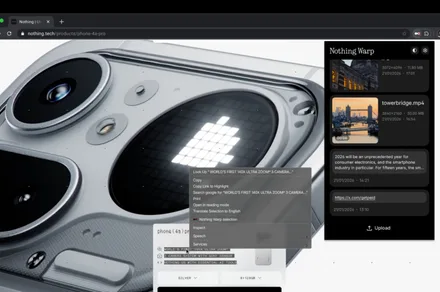
Nothing Warp is back once again, but that’s the only good news. Nothing revived its AirDrop-like file sharing feature after briefly pulling both the Android app and its Chrome extension shortly after launch.
The company has finally revealed that the tool was taken down temporarily so they could “fine-tune” the product after early user feedback and technical evaluations. Nothing also reassured that this wasn’t done over security or privacy concerns, adding that Warp is built on Google’s infrastructure and does not handle user data itself.
What is Warp?
Warp is Nothing’s cross-device file transfer tool for moving files, links, images, and other content between devices signed into the same Google account. It is a great workaround for sharing content across Android and Apple devices, similar to what Samsung and Google offered with their latest flagships. Now that it has returned, though, the setup is a little more awkward than before.
So what’s the catch?
You cannot just grab Warp from Google Play anymore. If you want to use this tool, users now have to visit Nothing’s website or community page and sideload the APK manually, while the Chrome extension has also returned separately. In Nothing’s community thread, company representative Zac says Warp is available in beta for the community and invites users to download the APK and leave feedback on the post.
Advertisement
So while the Warp is technically back, it is not available in the most convenient form. For most people, sideloading an APK is not difficult, but it is still a few extra steps over a normal Play Store install. And judging by replies in the Nothing thread, some users also expressed their uneasiness with this change, since a file-sharing app being distributed outside Google Play naturally raises questions even if the company says there are no privacy or security issues.
As of right now, this is still just a beta product. Users are even asking about Firefox support, whether it works properly outside Chrome, and if features like delete or clear-history controls will improve. So the return is great, but it’s still rough around the edges.
The Oppo Find X9 Ultra is a massive achievement and an absolute powerhouse, combining an elite, versatile camera system with top-tier performance and exceptional battery life. While its size might not suit everyone, it is easily one of the most well-rounded and recommendable phones on the market right now.
Class-leading camera performance
Top-notch 6.8-inch screen
Highly customisable software
Some of the best battery life around
It’s on the thick and heavy side
No built-in magnetic charging
Squirrel Widget
Advertisement
Key Features
Review Price:
£1449
Advertisement
Advanced camera system
The X9 Ultra sports am advanced five-camera array on the rear, including massive sensors and a rare 10x zoom lens.
Advertisement
Huge battery and fast charging
The X9 Ultra keeps on going with a massive 7050mAh battery, and 100W charging delivers a full charge in under an hour.
Advertisement
Stylish camera-inspired design
The X9 Ultra stands out from the crowd with a design inspired by the Hasselblad X2D camera.
Introduction
The Oppo Find X9 Ultra isn’t just another option in a sea of camera-focused flagships; it’s Oppo at its most ambitious.
Advertisement
Sporting a bold camera-inspired design, one of the most capable and versatile camera setups on any smartphone right now and the kind of battery life that makes most rivals look underpowered, the X9 Ultra is a phone that’s built to impress.
But it’s not just a good camera phone – from its gorgeous AMOLED screen and top-tier performance to Oppo’s slickest software yet, the X9 Ultra feels every bit like a true Ultra phone.
Advertisement
I’ve been using the Oppo Find X9 Ultra as my daily smartphone for the past few weeks, and here’s what I’ve learnt.
Advertisement
Design
Hasselblad-inspired design
Relatively thin camera bump
Durable, but thick and weighty
While 2025’s Oppo Find X8 Ultra looked like a regular phone with a massive camera bump, the X9 Ultra is unapologetically camera-inspired – and it looks all the better for it.
Image Credit (Trusted Reviews)
The overarching design is based on that of the Hasselblad X2D camera, one of the best-looking cameras around in my personal opinion. That means the X9 Ultra features a similar two-tone metal-and-vegan-leather finish on the rear, with a dark brown aluminium frame and black leather cutouts.
Advertisement
These not only help match the X2D aesthetic, but also improve the grip without any annoying smudges or fingerprints. It’s a very different feel from the glass-backed flagships most of us are used to, but in the best way. It’s reassuringly solid, and as a bonus, you won’t need to worry about it shattering when you drop it – something I’ve already done a couple of times over the past few weeks.
Image Credit (Trusted Reviews)
However, if you can’t bear to be without the traditional glass-and-metal smartphone feel, it’s also available in a Canyon Orange finish. It’s not quite as vibrant as Apple’s iPhone 17 Pro hue, with a slightly more pastel look, with rippled canyon-like effects on the glass rear panel. It looks nice, and it’s notably thinner than the Tundra Umber finish, but the leather-clad finish is still my favourite.
The camera bump has also been redesigned, sporting a hexagonal shape inside the centrally-placed circular module that Oppo says is inspired by the aperture of professional lenses.
Image Credit (Trusted Reviews)
I’m not sure about the logic, but it certainly looks premium, and the housing is much slimmer than you might expect with the camera tech on offer. It’s a lot slimmer than Vivo’s X300 Ultra’s camera bump, and beats the Xiaomi 17 Ultra too – though not by as much. But more on the fantastic camera tech a little later.
Advertisement
Advertisement
Alongside the regular power and volume rockers on the right side of the phone, you’ll find Oppo’s camera-focused Quick Button – though the placement has been shifted so it’s actually comfortable to use, unlike options from Apple and Honor. It works in much the same way too, with touch sensitivity that lets you swipe to zoom, as well as a two-stop button to lock AE and AF before taking your snap.
Image Credit (Trusted Reviews)
The left side houses the returning Snap Key, primarily used for Oppo’s Mind Space tech, but it can be reprogrammed with a few taps – something I expect most people will do within the first few weeks.
As ever with Oppo’s flagships, the X9 Ultra is durable, featuring a combination of IP68 and IP69 dust and water resistance, along with Oppo’s crystal shield screen protection – though with a pre-applied screen protector out of the box, scratches aren’t something you’ll need to worry about for a while.
If there’s an elephant in the room, it’d be the phone’s overall size and weight. Measuring 9.1mm thick and 236g in its Tundra Umber finish, it’s not exactly the lightest phone on the market – but then again, camera-focused Ultra phones are usually pretty chonky.
Image Credit (Trusted Reviews)
Advertisement
The Xiaomi 17 Ultra is 8.3mm thick and 223g, while the Vivo X300 Ultra is a similar 8.2mm and 232g – but that doesn’t mean it’s not noticeable, even coming from the not-exactly-thin Samsung Galaxy S26 Ultra as I have. It’s not egregiously heavy to the point where you feel fatigued – I’ve got used to it over the past few weeks just fine – and the trade-off in areas like camera and battery life makes this a worthy sacrifice in my mind.
Advertisement
Some of you may disagree, and that’s fine; if weight and thickness are important to you, you’ve got the iPhone Air and Samsung Galaxy S25 Edge to consider.
Screen
Top-notch 6.8-inch AMOLED screen
LTPO-enabled 144Hz refresh rate
Bright, detailed and highly customisable
The Oppo Find X9 Ultra’s 6.8-inch AMOLED screen is an absolute treat for the eyes – but then again, if you’ve been keeping up with Oppo’s latest releases, that’s no real surprise.
Image Credit (Trusted Reviews)
In many ways it’s similar to the Find X9 Pro’s excellent panel, sporting the same QHD+ resolution and an LTPO-enabled 120Hz refresh rate, with the option to boost to 144Hz for extra frames per second when gaming.
Advertisement
It is a smidgen bigger than the 6.7-inch Pro model, however, and its corners are slightly more angular too. They’re still rounded, but the reduced width brings them closer to the Samsung Galaxy S26 Ultra’s screen than to the X9 Pro’s – and as a result, looks and feels that little bit cleaner and more premium. I’ve no idea why, really, but it does.
Image Credit (Trusted Reviews)
As always with Oppo, the bezels are both uniform and vanishingly thin, giving some of the best panels around from Samsung, Honor and co a run for their money, which further adds to that high-end look on offer.
Image Credit (Trusted Reviews)
There’s plenty of screen real estate on offer here as a result, which is great not only when acting as a viewfinder when taking snaps – the main reason you’ll buy this phone – but when scrolling through apps or watching an episode of The Boys on the go, and the vibrant AMOLED tech also lends itself well to colourful games like Archero 2. It’s bright, with a 3600nit peak brightness, vivid, and with that QHD+ resolution, it’s pixel-perfect.
There are plenty of eye-care features here that are pretty standard in high-end Oppo phones, including PWM dimming, viewing distance and eye comfort reminders, and plenty of screen customisation options if you like your screens more or less punchy.
Advertisement
Advertisement
All of this makes for a panel that, really, is almost impossible to fault. It’d be nice to see something like Samsung’s anti-reflective screen coating or even a take on the S26 Ultra’s privacy screen tech, but these are more wishes than something I expected.
Cameras
Advanced five-camera array on the rear
Leading performance across the board
10x periscope lens is a rare treat
Oppo’s Ultra phones have always been about camera tech, but with the X9 Ultra, it has really kicked things up a notch. While there are plenty of flagships with disappointing secondary cameras, it feels like Oppo has given every lens the TLC it needs, creating a camera system you can actually trust in most scenarios.
Image Credit (Trusted Reviews)
That means that, for once, you’re not forced to default to the main camera for the best quality snaps. There are four high-end shooters on the rear, along with a fifth ‘true colour’ camera that keeps the white balance and tones aligned across the lenses. In essence, it means that blue skies and skin tones don’t shift or jump when you zoom in across the various lenses, a level of consistency that’s still pretty rare.
The main camera remains the star, of course, sporting the Lytia 901 sensor boosted to a whopping 200MP. While the 1/1.12-inch sensor is a hair smaller than the 1-inch giants used by the X8 Ultra and competing Xiaomi 17 Ultra, the massive f/1.5 aperture drinks in an incredible amount of light.
Advertisement
Advertisement
That translates to images that feel, for lack of a better word, expensive. There’s a richness to the contrast and a level of detail that looks more natural than over-sharpened, while avoiding the neon-heavy saturation of Samsung devices. Oppo’s refined colour science produces vibrant yet realistic results that can also be tweaked with a range of Hasselblad-approved filters.
The 200MP 3x telephoto is the lens that you’ll be using more often than you first expect, mainly because it uses a massive 1/12.8-inch sensor that’s larger than the main camera in many rival flagships.
Because of that size and the wide f/2.2 aperture, the photo quality is really impressive. There’s a shallow depth of field that makes subjects pop with as creamy, professional bokeh rather than the cut-out look of software portrait modes – though that customisable bokeh is still available if you like. It’s also so pixel-dense that you can crop to 6x and still get a clean 50MP shot that looks optical, and you won’t find much in the way of obvious digital enhancements up until the 10x mark.
Then there’s the return of the 10x periscope. Many brands abandoned 10x because the quality usually wasn’t the best, but Oppo’s version uses an improved 50MP sensor and an f/3.5 aperture that pulls in 306% more light than the Galaxy S23 Ultra – the last phone with a proper 10x zoom.
Advertisement
Advertisement
The inclusion of a reliable 10x zoom lens has really changed the way that I shoot; whereas before I’d stick to around 5x magnification at most to keep images sharp, I no longer have that limitation. The images are crisp and tight, rather than the muddy, digital mess we’ve come to expect at high magnifications, holding on to textures like hair and fabric very well for the most part, even when you push it to 20x or 30x. It certainly makes for a very good concert or football camera.
Even the 50MP ultrawide manages to hold its own against these impressively high-end lenses. With a 1/1.95-inch sensor and an f/2.0 aperture, landscape shots maintain a high level of sharpness right up to the edges without the telltale stretching or distortion you see on many ultrawide lenses. It’s also one of the few ultrawides that doesn’t fall apart the second you step indoors or into a dimly lit restaurant.
When the light drops, the main sensor is still king, but the gap is smaller than ever. The 3x handles dark street scenes with more poise than most phones’ main cameras, and while the 10x snapper needs a light source to really sing, it’s remarkably capable at night, all things considered.
Advertisement
Advertisement
Video is equally polished, offering 4K@60fps Dolby Vision across all lenses, with the main and 3x lenses pushing to 4K@120fps. For pros, the O-Log2 support is great, but for everyone else, the real-time LUT previews and burn-in mean you get a cinematic, finished look the second you hit record.
Ultimately, the Oppo Find X9 Ultra offers a complete pro-level toolkit. It’s a phone where you no longer have to think, “which lens is the good one?” – because they all are. It easily challenges Apple and Google for the best camera phone crown, with only the most elite Chinese Ultra flagships offering any real debate.
Performance
Snapdragon 8 Elite Gen 5 power
Great for gamers and power users
Healthy RAM and storage allocation
Breaking the trend of Oppo’s flagship collection using the (less popular, but just as powerful) MediaTek Dimensity 9500, the X9 Ultra sports the full-fat Snapdragon 8 Elite Gen 5 along with a healthy helping of 12GB of RAM and 512GB of storage.
Image Credit (Trusted Reviews)
Realistically, you’re not going to notice much of a difference processor-wise compared to the MediaTek-powered X9 Pro, but the Snapdragon 8 Elite Gen 5 does take a healthy win in specific areas like ray-traced gaming performance – something it does very well, even with the full QHD+ resolution enabled.
Advertisement
Advertisement
I’ve had absolutely no complaints playing even demanding games like Call of Duty Mobile and the newly released The Division Resurgence with the highest textures enabled. The phone manages to keep relatively cool, even after close to an hour of constant gameplay, and though 3DMark’s stress test benchmark of 50.1% stability doesn’t exactly inspire confidence, that is a very demanding test that most phones struggle with.
Image Credit (Trusted Reviews)
Outside of gaming, the phone performs equally well. The Snapdragon’s power, combined with Oppo’s ColorOS and its rapid animations, means things feel buttery smooth, whether scrolling through TikTok or editing photos in Lightroom.
Everything feels slick and responsive – aside from the camera processing, which, oddly, takes a few seconds to ‘pop’ into its final form after you take a snap, much like you see on cheap phones. Still, that’s a relatively minor complaint, and could well be a bug – I am using pre-release software, after all.
That everyday experience pretty much aligns with benchmark tests, with the X9 Ultra’s Geekbench 6 multi-core CPU test results of 11.019 putting it above even phones like the Galaxy S26 Ultra and OnePlus 15 with the same chipset. The GPU is equally as strong, hitting 50.6fps in the ray-traced Solar Bay test, and with a Geekbench AI score of 25,132, it handles the variety of baked-in AI tools with ease.
Test Data
Oppo Find X9 Ultra
Samsung Galaxy S26 Ultra
Xiaomi 17 Ultra
Apple iPhone 17 Pro
3DMark Solar Bay
50.6
46.9
–
–
3D Mark – Wild Life
6984
7281
–
5400
3D Mark – Wild Life Stress Test
50.1 %
67.6 %
–
–
Geekbench 6 single core
3618
3519
3617
3870
Geekbench 6 multi core
11019
10713
10936
9994
Geekbench 6 GPU
25132
24611
24342
–
Advertisement
Advertisement
It’s safe to say that the Find X9 Ultra will deliver a top-end experience, regardless of whether you’re editing 4K HDR footage you’ve just shot or simply scrolling through apps, and that excess of power means it’ll stay rapid for some time to come.
Software
OxygenOS 16 is a treat to use
Highly customisable software
New AI tools to play with
I’ve already waxed lyrical about Oppo’s ColorOS 16 extensively in my Find X9 Pro review – and it’s safe to say that I’m a fan of what Oppo is doing here.
Image Credit (Trusted Reviews)
I think Oppo’s implementation of Android surpasses even Google’s in some respects, with a far more customisable interface and a stylish lock screen customisation system that closely resembles the iPhone 17 Pro’s. It just looks more visually appealing as a result, with even minor elements like the ability to expand app icons to include shortcuts to specific features, such as navigating home in Google Maps.
It’s a polished, well-designed, user-friendly interface with a minimal learning curve, especially compared to other customised Android skins like Honor’s MagicOS and Xiaomi’s HyperOS.
Advertisement
Image Credit (Trusted Reviews)
With that said, Oppo has introduced a few new features as part of its 16.1 update, not yet available on the rest of the X9 range, that further improve the experience. There are plenty of small elements, like being able to swipe down on your lock screen notifications to switch to a less intrusive capsule design, but the Camera app redesign is probably the most noticeable change.
It’s now, nicely put, very ‘inspired’ by Apple’s updated Camera UI in iOS 26, with fewer icons and buttons clogging up the viewfinder for a much cleaner look well-suited to the point-and-shooters out there. The more advanced options are still there, but they require a few more taps to access – in the default Photo mode, anyway. The Master mode still features a range of on-screen controls for pro-level tweaks on the fly.
Advertisement
Image Credit (Trusted Reviews)
And, it wouldn’t be a 2026 software update without new AI features. The AI Mind Space, where you can store screenshots, photos and voice clips for easy retrieval later, now supports automatic bill logging, allowing you to log expenses, and it also works with physical receipts.
There’s also what Opo is calling the AI Mind Pilot, a new app that uses multiple AI models (Gemini, DeepSeek, and Perplexity for now) to answer your queries simultaneously and can also use context from data stored in the AI Mind Space app. It should allow you to spot any errors between the responses, one of the big problems with AI chatbots right now, though the rollout is limited to the Asian market for now.
Advertisement
Oppo is also joining Samsung and Google in supporting Quick Share with Apple devices, though it isn’t available just yet – according to my testing at least.
Battery life
Massive 7050mAh battery
Easy all-day battery life, and then some
Rapid 100W wired and 50W wireless charging
As we’ve already seen from the likes of the regular Find X9 and the Find X9 Pro, Oppo is putting some seriously big batteries in its latest flagship collection – and that of course continues with the X9 Ultra.
Image Credit (Trusted Reviews)
Though it’s not quite as big as that of its cheaper brethren, at 7050mAh, it’s both 1000mAh bigger than the X8 Ultra and still frankly massive compared to much of the Ultra competition. For context, Samsung sticks with a 5000mAh cell in its big-screen Galaxy S26 Ultra, while the Xiaomi 17 Ultra has a 6000mAh cell and the Vivo X300 Ultra uses a 6,600mAh alternative.
That’s a roundabout way of saying that the Find X9 Ultra has pretty phenomenal battery life, regardless of what you’re up to. I really pushed the X9 Ultra to the limits with optional features like the always-on display, full QHD+ resolution, and all the screen-boosting tech active, and it hasn’t wavered once over the past three weeks of daily use.
Advertisement
Advertisement
It’s a phone that’ll easily get me through less demanding days (usually working from home, with a bit of scrolling in the evenings) with 60-70% battery left in the tank. Even on busier days when I’m taking advantage of the top-end camera system, playing demanding games like The Division Resurgence and chatting away on apps like WhatsApp, the phone rarely dipped beneath the 40% mark after around 18 hours off charge.
Image Credit (Trusted Reviews)
In essence, it’s a phone that’ll just keep on going, even if the battery isn’t quite as big as others in the X9 collection, and even the most demanding users will find it hard to fault. And, with both 100W wired and 50W wireless charging support, it’s pretty rapid on the refill side of things too.
I saw 36% charge in 15 minutes, 67% in half an hour and a full charge in 58 minutes when plugged in – though with the caveat that you’ll need SuperVOOC-branded wired and wireless chargers to hit those top speeds, and neither comes in the box. It is well worth investing in the wired charger at the very least.
There’s no MagSafe-esque magnet system here without the use of a magnetic case, but that’s still relatively new on the Android side of things.
Advertisement
Squirrel Widget
Advertisement
Should you buy it?
You want a great all-rounder with class-leading cameras
Advertisement
The Find X9 Ultra is a great camera phone and then some, sporting a stylish design, fantastic screen, top-notch power and all-day battery life.
Advertisement
You want a thin, lightweight phone
With the Tundra Umber variant measuring in at 9.1mm thick and the Canyon Orange at 8.6mm, it’s a pretty chunky phone.
Advertisement
Final Thoughts
The Oppo Find X9 Ultra is a massive achievement for Oppo, and it’s a phone that’s very hard to find fault with.
It is an absolutely fantastic camera-focused phone with a no-compromise set of lenses that deliver a consistent experience regardless of zoom, with accurate colours and plenty of detail. It’s a versatile setup that works well up to 30x and beyond, with pro-level video features rarely seen on Android.
But to be honest, it’s more than just a great camera phone – it’s a phenomenal phone full stop. That fantastic camera array is backed by a stylish design, a top-notch AMOLED screen, top-end performance, user-friendly and massively customisable hardware, one of the biggest batteries in any phone and rapid charging to boot.
Yes, it’s not as thin and light as some might like, but with so much else going on here, it’s easy to overlook. In fact, it’s one of the easiest phones to recommend right now if you’ve got the cash for it.
Advertisement
How We Test
We test every mobile phone we review thoroughly. We use industry-standard tests to compare features properly and we use the phone as our main device over the review period. We’ll always tell you what we find and we never, ever, accept money to review a product.
Used as a main phone for three weeks
Thorough camera testing in a variety of conditions
Tested and benchmarked using respected industry tests and real-world data
FAQs
Does the Oppo Find X9 Ultra come with a charger?
Despite offering 100W SuperVOOC charging, a charger isn’t supplied in the box.
Is the Oppo Find X9 Ultra water-resistant?
Advertisement
Yes, it offers IP66, IP68 and IP69 dust and water resistance for added peace of mind.



























































You must be logged in to post a comment Login