
Crypto World
SEI price surges to $0.062: can bulls sustain upward momentum?

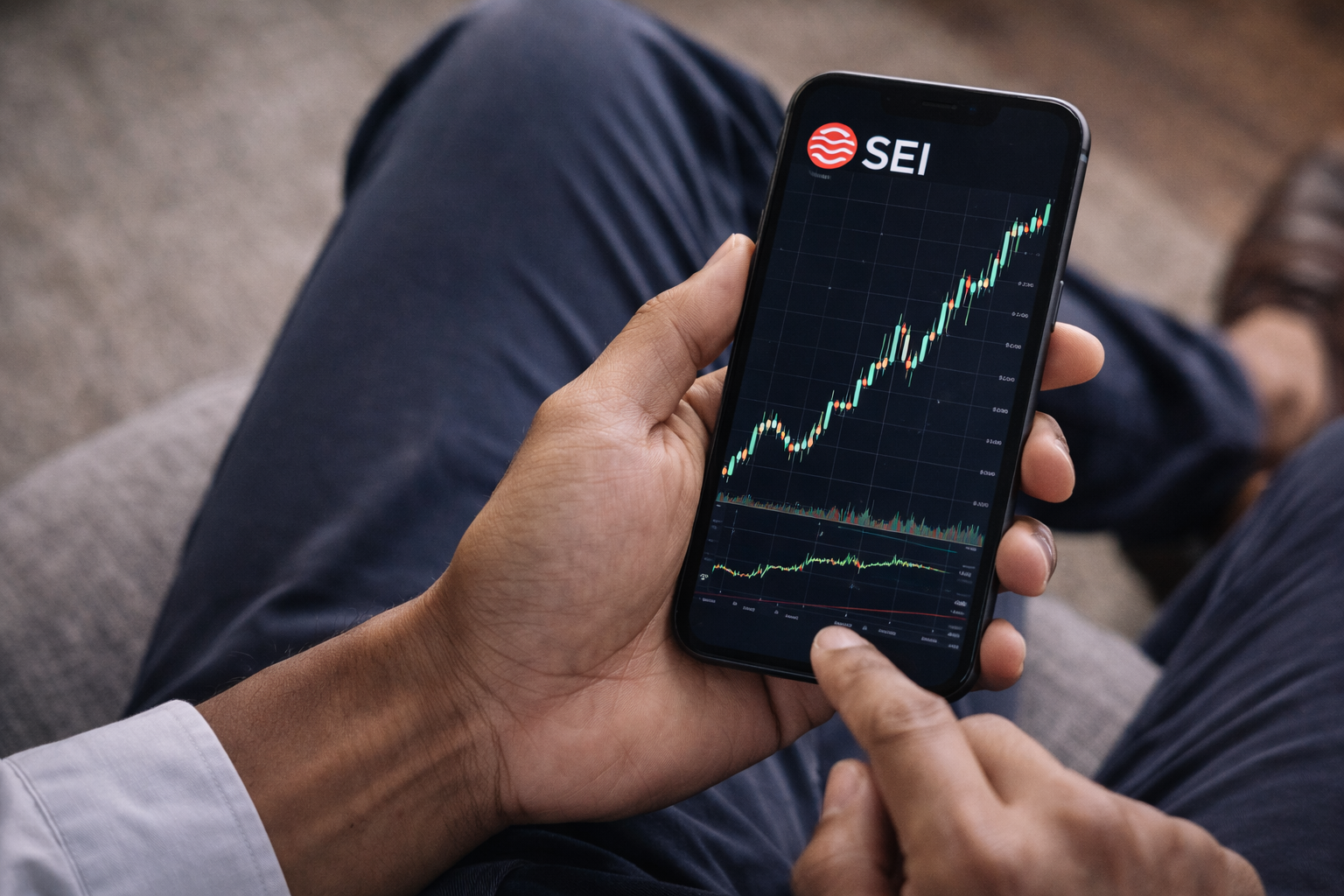

- SEI gained 10% to $0.062, fueled by Bitcoin’s $78k retest and positive risk sentiment.
- Rising TVL, stablecoin growth, and Giga upgrade are bullish metrics.
- A breakout from the long downtrend could allow for a retest of $0.10.
The SEI token has surged to the pivotal $0.062 level, with gains in the past 24 hours hitting double digits amid overall optimism among traders and analysts.
With Bitcoin topping $78,000 and risk appetite up, the potential for a reversal could accelerate ahead of a key network upgrade.
Sei price touches $0.062 as Bitcoin, crypto record gains
SEI token climbed to $0.062 on April 22, 2026, marking a sharp 10.5% gain over the past 24 hours amid a widespread crypto rally. Bitcoin led the charge, retesting $78,000 after consolidating near key support levels, while Ethereum and other majors posted similar advances.
The fresh uptick stems from improved global risk sentiment, as investors monitored the Iran ceasefire and its potential implications for the global economy.
Eased geopolitical tensions look to have boosted equities worldwide, with the S&P 500 and digital assets following suit.
In fact, the crypto markets’ mirroring of the positivity has pushed the total capitalization up 3% to $2.63 trillion.
The crypto fear & greed index hovers around 63, signalling overall greed.
For SEI, the uptick underscores both sensitivity to risk-on sentiment and network fundamentals.
Why are analysts bullish on SEI?
SEI bulls are largely upbeat due to robust on-chain metrics and strategic network developments.
Network activity has shown steady gains, bolstering the token’s recent price recovery. Total Value Locked (TVL) in DeFi now stands at over $146 million as fresh capital flows into DeFi protocols on the chain.
Stablecoin market cap hovers near $181 million, reflecting a 2% daily rise and solid liquidity. Meanwhile, USDY dominance at 59.43% points to efficient, concentrated capital deployment, reducing volatility risks.
A standout catalyst could emerge, as Token Relations noted recently, via Sei’s impending sunset of its Cosmos layer ahead of the Giga upgrade.
This is after Sei Labs rolled out system version 6.4, initiating a migration to Ethereum Virtual Machine (EVM) compatibility.
Developers eye the eventual decoupling of the network from Cosmos dependencies, streamlining architecture for broader interoperability.
The Giga upgrade, the next major milestone, promises transformative scalability by elevating throughput, slashing block times, and accelerating finality.
These improvements will empower high-frequency apps like decentralized exchanges, gaming platforms, and consumer dApps, potentially driving explosive demand for SEI tokens through increased usage and staking rewards.
Sei price analysis
SEI’s chart reveals a breakout to above $0.060 for the first time since late March. Although the downtrend remains, trading to highs of $0.062 could buoy bulls.
The token’s rebound from lows of $0.055 also means bulls need to clear primary resistance around $0.063-$0.065 to confirm shifting momentum.
From a technical view, gains have pushed the token above the 20-day and 50-day Exponential Moving Averages (EMAs), affirming short-term buyer control.
Volume spikes during the rally suggest conviction, with RSI climbing out of oversold territory to 60 and MACD flipping bullish.

If upside momentum holds, buyers will eye $0.078 resistance and year-to-date highs above $0.107 next.
However, a drop below $0.055 could invalidate the bullish setup and allow bears to target $0.049.



Stablecoin issuer argues Aave’s interest rate curve is failing to clear the $1.89B pool after four days at full utilization.
Circle has proposed an emergency overhaul of the interest rate parameters on Aave V3 Ethereum Core’s USDC pool, which has been pinned at 99.87% utilization for four days in the wake of the April 18 KelpDAO exploit.
In a governance post published Tuesday, Circle Chief Economist Gordon Liao argued Aave’s current interest rate mechanism is failing to clear the market. The pool holds $1.89 billion in supply against $1.89 billion in borrows, with less than $3 million in available liquidity. Borrow rates are flat at the post-kink ceiling of roughly 14%, and the pool has contracted about $60 million in the last 24 hours as repayments are matched dollar-for-dollar by queued withdrawals.
Liao’s proposal would raise the pool’s Slope 2 parameter for USDC deposits interest rate, from roughly 10% to 40% immediately, via a Risk Steward action. That would be followed by governance ratification of a 50% target within five to seven days.
Optimal utilization would fall from 92% to 87% on an interim basis and 85% on ratification. Under the target parameters, the maximum supply rate at 100% utilization would climb from roughly 12.6% to 48.2%.
Liao’s diagnosis is that current borrowers are using USDC borrowing as a queue-bypass mechanism to exit trapped positions and are insensitive to rates at current levels. The active lever, he argued, is supply attraction: yields in the 40–50% range should pull USDC from allocators within hours, restoring healthy utilization.
The proposal also recommends pausing Aave’s Slope 2 Risk Oracle for USDC, citing its documented underperformance during a February WETH spike and the April 6 offboarding of its maintainer, Chaos Labs.
Circle’s intervention is unusual: the stablecoin issuer is formally telling Aave that the market for its asset is broken.


Elon Musk’s Tesla’s (TSLA) bitcoin holdings were unchanged in the first quarter of 2026, with the company continuing to hold its 11,509 BTC stockpile.
The company booked an after-tax impairment loss of $173 million on its digital asset holdings, according to its first quarter earnings report.
The value of that stash declined as bitcoin fell from around $90,000 at the start of the year to roughly $68,000 by the end of March.
Tesla reported better-than-expected earnings but missed on revenue. For the first quarter, the firm reported revenue of $22.39 billion, slightly below than analyst estimates of $22.71 billion. Earnings per share came in at $0.41, higher than consensus forecast of $0.37.
TSLA stock was trading 4% higher in after-hours trading.
Tesla’s bitcoin journey
Tesla initially bought bitcoin in February 2021, acquiring 43,200 BTC for roughly $1.5 billion. About a month later, the company sold around 4,320 BTC, roughly 10% of its position, to test market liquidity.
By July 2022, amid the bear market, Tesla had cut its position to 9,720 BTC. A small increase in January 2025 brought holdings to 11,509 BTC, where they have remained since.
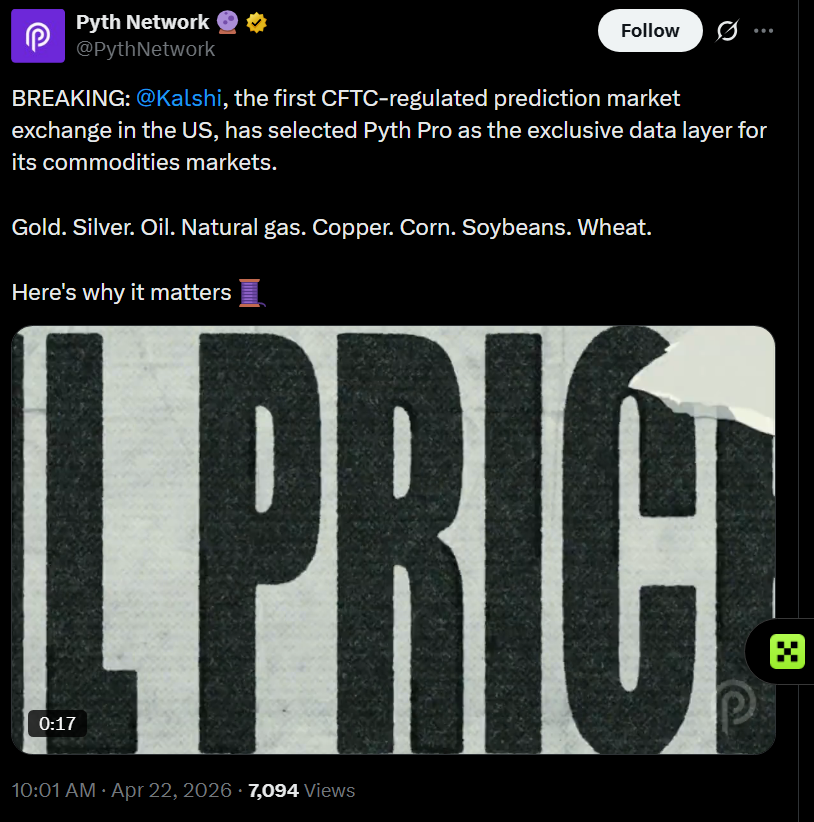
Oracle network Pyth Network has been selected as the resolution data source for Kalshi’s expansion into commodities markets, underscoring the growing focus on reliable pricing infrastructure in event-based trading.
Kalshi said on Wednesday that Pyth will supply real-time pricing data for its newly launched commodities hub, which debuted in April. The data will be used to determine how event contracts tied to commodity prices are settled.
The move reflects a broader push among prediction market platforms to strengthen backend infrastructure as they expand into more complex asset classes. Accurate, tamper-resistant data feeds are critical for ensuring fair and transparent contract resolution, particularly in markets tied to real-world financial benchmarks.
Kalshi’s commodities hub allows users to trade event contracts linked to physical assets, including gold, silver, oil, copper and key agricultural products. Pyth’s price feeds will serve as the source of truth for determining contract outcomes.

Pyth has also been selected by rival prediction market Polymarket to provide price feeds for equities and commodities.
Pyth Network is a decentralized oracle that delivers real-time market data to blockchain applications. As Cointelegraph recently reported, Pyth has also recently deployed infrastructure that enables institutions to publish and monetize proprietary data across multiple networks.
Related: Kalshi mulls crypto expansion with perpetual futures launch: Report
Kalshi’s federal status faces state pushback
Kalshi is rolling out these changes as it seeks to bring more structure to the fast-growing prediction market sector. The company is regulated by the US Commodity Futures Trading Commission as a designated contract market, meaning it is approved to offer trading in derivatives contracts under federal oversight, similar to a traditional exchange.
State regulators have pushed back on Kalshi and other prediction platforms, arguing that some contracts resemble unlicensed gambling or fall outside existing derivatives rules.

However, the US Department of Justice and the CFTC recently asked a federal court to block Arizona from enforcing state gambling laws against Kalshi’s contracts, signaling support for federal jurisdiction in this area.
The dispute comes as prediction market activity has grown sharply over the past two years, drawing in new entrants from both traditional finance and the crypto sector.
Related: After Kalshi appeal, prediction markets fight could head to US Supreme Court


Two CIA officers were killed in a car crash in the Mexican state of Chihuahua on April 20 while returning from a counternarcotics operation to destroy a clandestine drug lab, igniting a sovereignty dispute between Washington and Mexico City.
Summary
- Two CIA officers and two Mexican law enforcement agents died when their vehicle crashed in rugged mountain terrain in Chihuahua state.
- The crash occurred after an operation to dismantle what authorities described as one of the largest clandestine drug labs found in Mexico.
- Mexican President Claudia Sheinbaum has launched an investigation into whether US agents violated Mexican law by operating without federal authorization.
Two CIA officers were killed alongside two Mexican law enforcement officials in a vehicle crash in Mexico’s Chihuahua state, following an operation targeting a large clandestine drug processing lab, multiple sources briefed on the matter confirmed to CBS News and CNN. The CIA declined to comment on the identities of the officers. Their truck crashed in rugged mountain terrain connecting Chihuahua to Sinaloa state while traveling in the middle of the night after the operation.
CIA Agents Killed in Mexico as Sovereignty Row Erupts
The crash occurred following what Chihuahua Attorney General César Jáuregui described as an operation to dismantle one of the largest clandestine chemical drug production sites ever found in the country. CBS News reported that the vehicle appears to have skidded on a mountain road and fallen into a ravine, causing it to explode. Mexican President Claudia Sheinbaum confirmed on April 21 that federal prosecutors have launched an investigation to determine whether any laws were violated, specifically whether US agents participated in operations on Mexican territory without authorization from the federal government.
Mexico Questions Legality of US Presence
Sheinbaum was pointed in her public response, stating that any joint operations between local governments and the US without federal authorization would constitute a violation of Mexican law and of the constitution. CNN reported that the CIA has significantly expanded its operations inside Mexico under Director John Ratcliffe, including covertly flying MQ-9 Reaper drones over Mexican territory to monitor cartel activity, and has undertaken a review of its authorities to use lethal force against drug cartels. Sheinbaum has previously insisted that there are “no joint operations on land or in the air” in Mexico, describing US involvement as limited to information sharing within an established legal framework.
The Broader Stakes for US-Mexico Relations
The deaths come at a highly sensitive moment in US-Mexico relations. The Trump administration has designated several Mexican cartels as foreign terrorist organizations, a classification that Mexico’s government has pushed back against strongly, viewing it as a potential pretext for direct US military action on Mexican soil. The incident adds fresh pressure to a bilateral relationship already strained by tariffs, immigration enforcement, and the extent of American intelligence activity inside Mexico. How both governments respond to the investigation’s findings is likely to shape the trajectory of counternarcotics cooperation between the two countries for the near term.
The CIA has not confirmed the identities of the two officers or commented on the nature of their role in the operation that preceded the crash.

The Thai Securities and Exchange Commission (SEC) has opened a public consultation on proposed rule changes aimed at letting licensed digital asset businesses apply directly for derivatives licenses. The move would remove the current requirement to establish separate entities for derivatives activities and would extend the use of digital assets as eligible underlying assets for futures contracts. The proposed framework also introduces more stringent measures to manage conflicts of interest and bolster supervisory oversight. Public feedback is welcome through May 20, 2026, and will shape the final rule set.
According to the Thailand SEC, the revisions are designed to broaden access to the country’s derivatives market while safeguarding investors. By enabling existing license-holders to extend into derivatives within their current corporate structures, regulators hope to lower entry barriers for crypto firms seeking to offer hedging tools and other risk-management products. The changes also aim to elevate standards for derivatives exchanges and clearing houses in line with international practice, creating a more coherent and resilient market infrastructure.
Key takeaways
- Thailand proposes direct derivatives licensing for licensed crypto firms, eliminating the need for standalone entities.
- Digital assets would be recognized as eligible underlying assets for futures, expanding the scope of Thailand’s derivatives market.
- New rules emphasize conflict-of-interest controls and stronger regulatory oversight of exchanges and clearing houses.
- Public comment runs through May 20, 2026, with decisions likely to influence regional standards and market access.
Thailand’s plan to streamline crypto derivatives licensing
At the heart of the proposal is a practical shift in how crypto firms can participate in the derivatives segment. Instead of having to spin up a separate corporate vehicle solely to handle derivatives activities, licensed digital asset businesses could apply to offer derivatives services within their existing entities. The SEC frames this as a way to reduce bureaucratic friction while keeping activities under tighter regulatory scrutiny, rather than loosening controls.
The proposed regime would also codify the use of digital assets as underlying assets for futures contracts, a step that regulators argue will modernize the financial toolkit available to Thai investors. By broadening the instrument base, the SEC intends to improve hedging options for portfolios and provide more robust risk-management tools for both retail and institutional participants. Still, the draft rules introduce enhanced safeguards—such as stronger conflict-of-interest provisions and clearer delineation of responsibilities among exchanges, clearing houses, and market participants—to preserve market integrity as activity migrates into the derivatives space.
The Thai move aligns with a broader trend in Asia toward formalizing crypto derivatives under conventional financial-market standards. Regulators in several jurisdictions have pursued a balance between enabling sophisticated products and maintaining guardrails to mitigate systemic risk, particularly given the volatility inherent in digital assets. In Thailand’s case, the next milestone is the public consultation window, which will solicit input from market participants, lawyers, and other stakeholders before a final framework is published.
Global derivatives expansion: what the US could unlock
The Thai proposal arrives as the global derivatives landscape around crypto continues to evolve. In a parallel development, perpetual futures—positions that can be held around the clock—are gaining traction across major platforms as firms prepare for potential regulatory approvals in the United States. Blockchain.com, for example, recently launched perpetual futures trading within its self-custody wallet, enabling users to open leveraged BTC-denominated positions without transferring funds to an exchange. The feature, built on Hyperliquid’s execution layer, provides access to more than 190 markets with up to 40x leverage.
Other major exchanges have pursued similar offerings for non-US clients, expanding 24/7, multi-asset trading access. Kraken and Coinbase each introduced perpetual futures tied to equities for non-US users in earlier waves of product development. While these products remain largely inaccessible to U.S. residents for now, the regulatory outlook in Washington could shift the landscape. In March, comments from CFTC Chair Rostin Behn suggested the agency is actively considering crypto perpetual futures, indicating a potential move to enable such products within the coming months. If realized, the change could unlock a new cadre of venues and liquidity for U.S. traders seeking non-traditional hedges and speculative tools beyond spot markets.
The market has already seen strategic moves that hint at anticipated regulatory alignment. Payward, the parent company of Kraken, agreed to acquire Bitnomial, a U.S.-regulated derivatives venue, a deal framed as expanding access to regulated crypto derivatives for U.S. clients. The consolidation signals a broader industry push to anchor crypto derivatives in compliant, well-governed venues, which could appeal to institutional participants wary of regulatory risk and counterparty risk in less-regulated trading environments.
Taken together, the Thai consultation and the broader push in the United States underscore a shared objective: to mature crypto derivatives into reliable, capital-efficient tools for hedging, risk management, and yield generation. Regulators appear to be calibrating the balance between broad market access and robust oversight, with a clearer emphasis on standardized governance for exchanges and clearing environments worldwide.
Industry implications and what to watch next
For investors and builders, Thailand’s proposed changes could reduce the friction for legitimate crypto firms to offer derivative products within a familiar corporate structure, potentially accelerating the regional adoption of hedging strategies and complex financial products tied to digital assets. If implemented with rigorous oversight, the framework could also reassure institutional players seeking compliant venues and clear risk frameworks, contributing to a more resilient regional market.
From a global angle, the emergence of perpetual futures and regulatory-adjacent activity in major markets raises questions about the pace of U.S. approvals and the boundaries of permissible products. Regulators are balancing the desire to protect investors with the benefits of more transparent, regulated marketplaces that can deliver access to mainstream participants. As the U.S. debate advances, exchanges and liquidity providers will likely continue expanding offerings for non-U.S. customers while preparing for potential U.S. entry points.
Market participants will be keenly watching several milestones: the final shape of Thailand’s derivatives licensing rules after the May 20 consultation; any formal guidance on the treatment of digital assets as underlying assets in Thai futures markets; and the timing and scope of any U.S. regulatory green lights for crypto perpetual futures. Together, these developments could influence where liquidity flows, how risk is managed, and which platforms gain prominence as the global crypto derivatives ecosystem evolves.
For readers tracking regulatory trajectories and product innovation, the Thai process offers a concrete example of how a jurisdiction can ease access to advanced financial instruments while preserving rigorous governance standards. The convergence of regional reform and global product experimentation suggests a maturation phase for the crypto derivatives arena, one that could redefine hedging options and capital efficiency for years to come.
The public consultation in Thailand runs through May 20, 2026. As industry participants prepare feedback, observers should monitor how the final framework handles cross-border activity, conflicts of interest, licensing eligibility, and the interplay with existing securities and futures regimes. The outcome could both unlock new pathways for Thai crypto firms and accelerate the global shift toward regulated, investor-protective derivatives infrastructure.
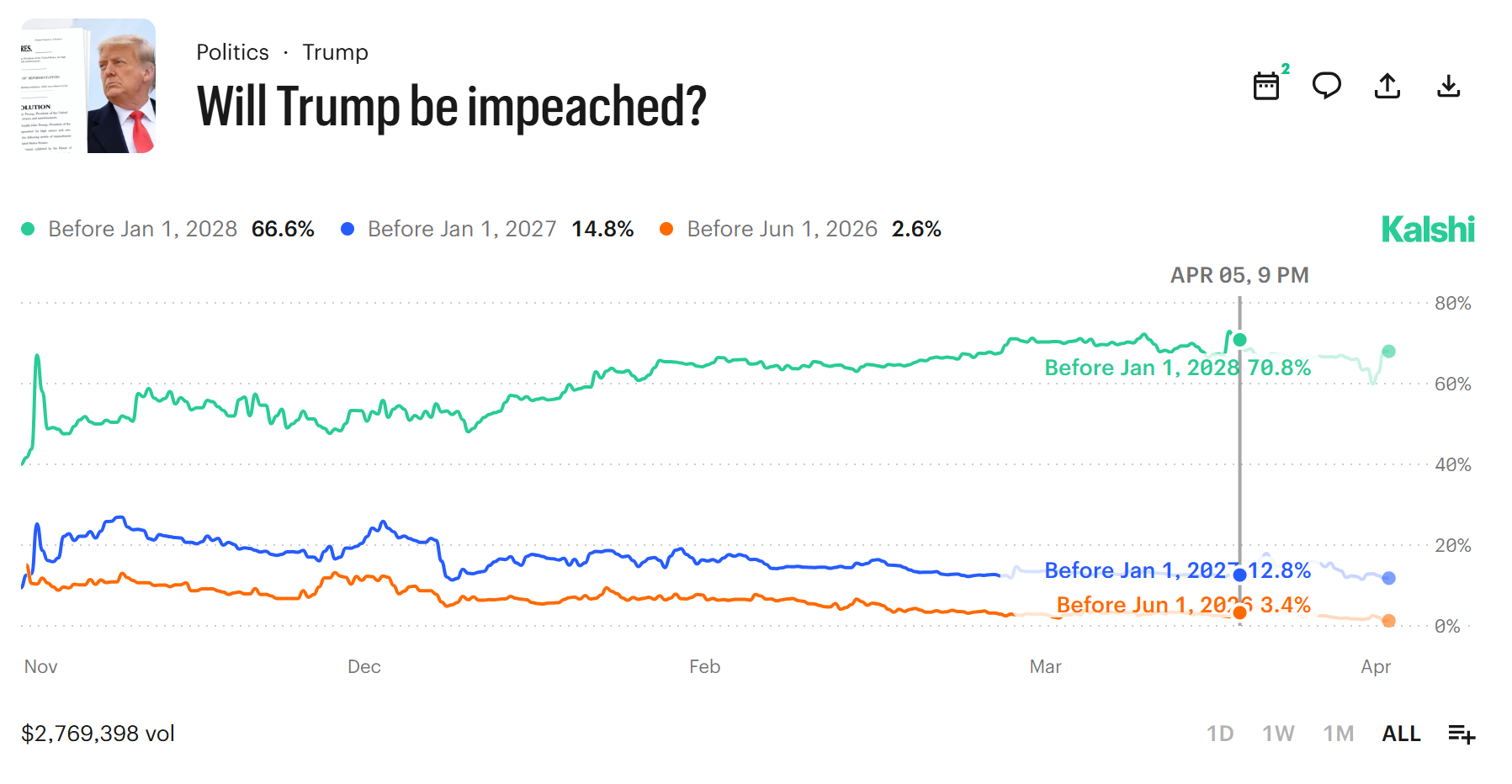
Traders on Kalshi, a regulated US prediction market, now assign a 66.6% probability that President Donald Trump will be impeached before January 2028. The contract has attracted more than $2.76 million in trading volume.
The odds have more than doubled since November 2025, when the market opened near 30%. The contract peaked above 70% in March before pulling back slightly to its current level.
Midterm Risk Fuels the Bet
Kalshi’s impeachment contract resolves “Yes” if the US House of Representatives passes articles of impeachment, verified through congress.gov. It does not require Senate conviction or removal from office.
“The shift suggests growing expectations of political trouble ahead, though outcomes remain uncertain,” stated Walter Bloomberg, a popular account on X.
The steady climb reflects trader expectations around the 2026 midterms. Separate prediction markets give Democrats roughly a 71% chance of retaking the House.
A Democratic majority would likely pursue impeachment proceedings, mirroring the two House votes during Trump’s first term.
Geopolitical tensions have also contributed to the rise. Trump’s rhetoric on Iran and the Strait of Hormuz prompted renewed calls from Democratic lawmakers for impeachment or invoking the 25th Amendment.
However, a separate Kalshi market on full removal, which requires a two-thirds Senate vote or the 25th Amendment, trades far lower at roughly 27%.
Prediction markets can also misfire, as traders learned during the 2016 presidential election.
No formal impeachment proceedings are underway as of April 22, 2026.
Whether the odds continue rising will depend largely on November’s midterm results and how Congress responds to the administration’s foreign policy decisions.
The post Markets Anticipate Political Trouble for Trump As Impeachment Odds Rise to 70% appeared first on BeInCrypto.
Coinbase listed Tokenised GBP (tGBP) on April 22, making it the exchange’s first British pound-backed stablecoin available to users globally.
The tGBP stablecoin is issued by FCA-registered BCP Technologies and fully backed 1:1 by cash and short-term UK government bonds.
Why the tGBP Stablecoin Matters for the UK
The listing gives UK users a way to hold and transfer value in their local currency on the Coinbase exchange without converting to dollar-pegged stablecoins.
That removes foreign exchange friction for British traders and businesses.
Keith Grose, Coinbase’s UK lead, wrote that locally denominated stablecoins are essential for the country’s role in the on-chain economy.
Users can now buy, sell, convert, send, and receive tGBP through the Coinbase app and Coinbase Exchange.
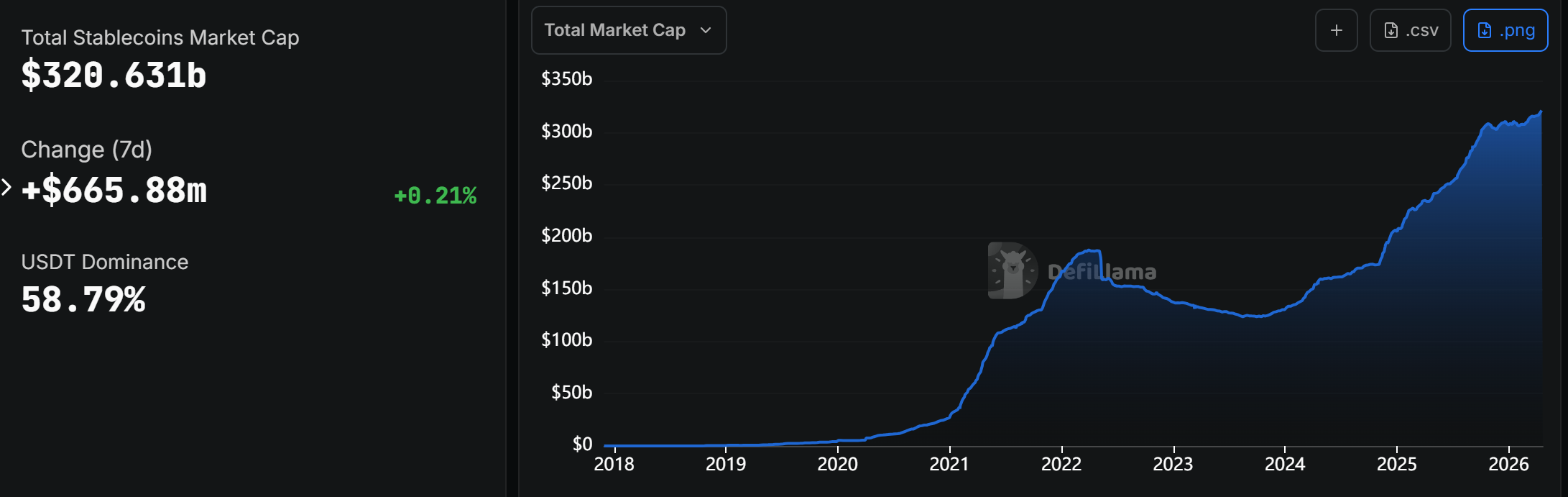
The broader stablecoin market has grown past $320 billion in total capitalization.
In 2025 alone, stablecoins settled over $30 trillion in transactions, with usage largely uncorrelated to crypto price swings.
Industry Leaders Back the Move
Coinbase CEO Brian Armstrong endorsed the listing, calling stablecoins “the best form of money.”
Polygon Foundation CEO Sandeep Nailwal offered a broader warning about adoption timelines.
“Countries slow to adopt stablecoins will face the same problem as late internet adopters,” he wrote.
Nailwal noted that cross-border payments still cost 6% and take days, while stablecoins settle in seconds for fractions of a cent.
The UK’s regulatory framework for stablecoins remains in development, with full implementation expected by late 2026.
Whether tGBP gains meaningful traction may depend on how quickly the FCA finalizes those rules.
The post Coinbase Lists First GBP Stablecoin as UK Push Accelerates appeared first on BeInCrypto.
Crypto World
The $292 million Kelp DAO exploit shows why crypto bridges are still one of the industry’s weakest links


The $292 million exploit tied to KelpDAO is the latest in a long line of crypto bridge hacks, underscoring how the systems designed to connect blockchains have become some of the easiest ways to break them.
The incident involved KelpDAO’s use of LayerZero’s cross-chain messaging system, a type of infrastructure widely used to move data and assets between blockchains.
Bridges are meant to let users move assets from one blockchain to another, like from Ethereum to a different network. But instead of acting as seamless connectors, they have repeatedly turned into weak points, draining billions of dollars over the past few years.
So why does this keep happening?
Crypto ecosystem leaders say the answer is not just bad code or careless mistakes. The problem is more fundamental; it is in how bridges are built in the first place.
The core problem: trusting the middleman
To understand the issue, it helps to look at what a bridge actually does.
If you move tokens from one blockchain to another, the second chain needs proof that your tokens existed and were locked on the first one. In an ideal world, it would verify that itself. In reality, that is too expensive and complex.
“Most bridges don’t fully verify what happened on another chain,” said Ben Fisch, CEO of Espresso Systems. “Instead, they rely on a smaller system to report it. That [second] system becomes the thing you trust.”
So instead of independently checking the truth, bridges outsource it, often to small validator groups or external networks like LayerZero or Axelar. That shortcut creates risk. In the Kelp DAO-related exploit, attackers targeted the data feeding into the bridge.
“Attackers compromised nodes and fed the system a false version of reality,” Fisch said. “The bridge worked as designed. It just believed the wrong information.”
Bridge hacks often look different on the surface. Some involve stolen keys, others faulty smart contracts. But experts say those are symptoms of a deeper issue. The real problem lies in how the systems are designed.
“Anything that can go wrong will go wrong, and bridge hacks are a perfect example,” said Sergej Kunz, co-founder of 1inch. “You see code vulnerabilities, centralization issues, social engineering, even economic attacks. Usually it’s a mix.”
How bridges work
For users, bridges look simple. You click a button and move assets from one blockchain to another. Behind the scenes, the process is more complicated.
First, your tokens are locked on the original blockchain. Then a separate system confirms that the tokens are locked. This system usually consists of a small group of operators or validators. Those operators then send a message to the second blockchain saying the tokens were locked so new ones can be issued. If that message is accepted, the second chain creates a new version of your tokens. These are wrapped tokens, like rsETH or WBTC.
The problem is that this process depends on trusting whoever sends that message. If attackers compromise that system, they can send a false message and create tokens that were never backed on the original chain.
“The worst case is when the system isn’t really checking anything,” Fisch said. “It’s just trusting someone else’s version of events.”
When one failure spreads
Given how often bridges fail, why has the industry not fixed them?
Part of the answer comes down to incentives. “Security is often not the top priority,” Kunz said. “Teams focus on launching quickly, growing users and increasing total value locked.”
Building secure systems takes time and money. Many DeFi projects operate with limited resources, making it difficult to invest heavily in audits, monitoring and infrastructure.
At the same time, projects are racing to support more blockchains. Each new integration adds complexity. “Every new connection adds more assumptions,” Fisch said.
Bridge hacks rarely stay contained. Bridged assets are used across lending protocols, liquidity pools and yield strategies. If those assets are compromised, the damage spreads.
“Other platforms may treat a hacked asset as legitimate,” Kunz said. “That’s how contagion happens.” Users are rarely told how a bridge actually works or what could go wrong.
There are ways to make bridges safer. Fisch says one key step is removing single points of failure by relying on independent data sources rather than shared infrastructure.
In practice, these “data sources” are computers that watch blockchains and report what happened. They might be run by the bridge itself, by outside networks like LayerZero, or by infrastructure providers. But many rely on the same underlying services, meaning a single compromised source can feed bad data across multiple systems.
“If everyone is relying on the same source, you haven’t reduced risk,” he said. “You’ve just copied it.”
Other approaches include hardware protections and better monitoring to catch misconfigurations early. Some developers are also working on designs that verify data directly using cryptography instead of intermediaries.
Kunz believes a more fundamental shift is needed. “As long as we rely on validator-based bridges, these problems will continue,” he said.
Read more: North Korea’s crypto heist playbook is expanding and DeFi keeps getting hit
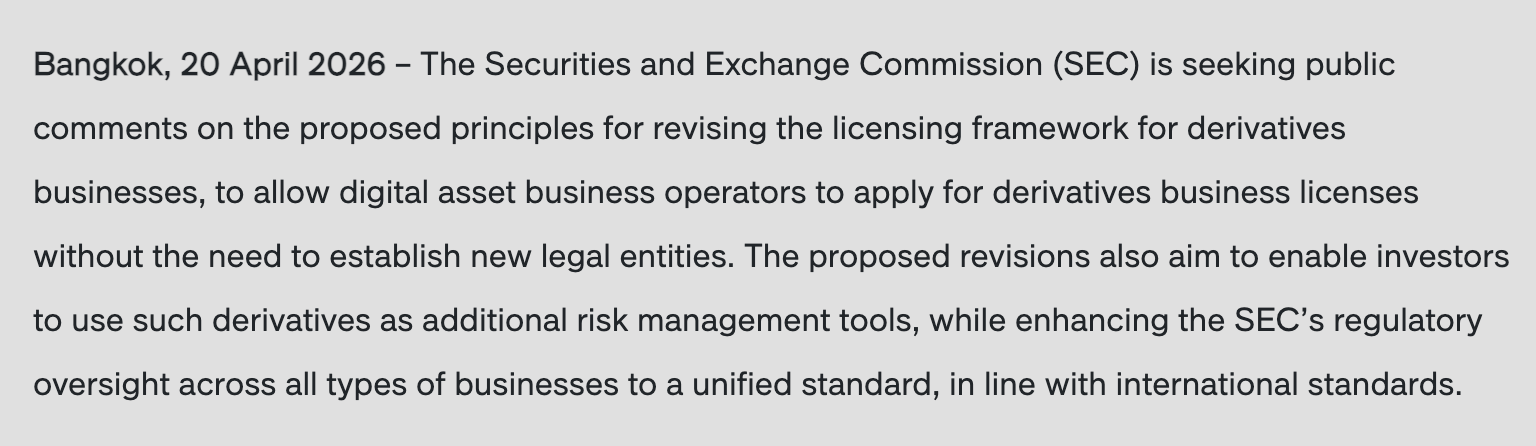
Thailand’s Securities and Exchange Commission (SEC) is seeking public comment on proposed rule changes that would allow licensed digital asset businesses to apply directly for derivatives licenses, removing the requirement to establish separate entities.
The proposed revisions would build on earlier changes recognizing digital assets as eligible underlying assets for futures contracts, expanding the scope of Thailand’s derivatives market while introducing additional requirements to manage conflicts of interest and strengthen oversight.

The proposal could lower barriers for crypto companies to enter the derivatives market by allowing them to apply for licenses within existing entities, rather than establishing separate companies, while bringing those activities under tighter regulatory oversight.
The regulator said the changes are intended to provide investors with additional tools for hedging and portfolio management, as well as bringing standards for derivatives exchanges and clearing houses in line with international practices.
The proposed changes are open for public consultation until May 20, with feedback from industry participants expected to inform the final framework.
Related: Thailand proposes tighter scrutiny of funders behind crypto firms
Crypto derivatives expand as US moves toward approval
Thailand’s proposal comes as crypto derivatives expand globally and momentum builds toward regulatory approval in the United States.
On Tuesday, Blockchain.com introduced perpetual futures trading in its self-custody wallet, allowing users to open leveraged positions using Bitcoin (BTC) as collateral without transferring funds to an exchange. Underpinned by Hyperliquid, the feature offers access to more than 190 markets with as much as 40x leverage.
Other exchanges have taken a similar approach. Earlier this year, both Kraken and Coinbase launched perpetual futures tied to equities for non-US users as part of a broader push toward 24/7, multi-asset trading.
While most of these products remain largely unavailable in the United States, that could change soon. In March, Michael Selig said the Commodity Futures Trading Commission is working to enable crypto perpetual futures, adding the agency could move on the products “within the next month or so.”
In the meantime, exchanges appear to be positioning for potential approval. Last week, Kraken parent Payward agreed to acquire Bitnomial, a US-regulated derivatives venue, in a move aimed at expanding access to products including perpetual futures for US clients.
Magazine: How to fix insider trading on platforms like Polymarket and Kalshi
Circle’s Chief Economist Gordon Liao has proposed a major recalibration of Aave’s USD Coin (USDC) interest rate model. The proposal aims to restore Aave USDC liquidity on Ethereum after days of full utilization.
Circle CEO Jeremy Allaire endorsed the governance proposal on X, calling attention to Liao’s recommended parameter changes.
Why Aave USDC Liquidity Dried Up
USDC on Aave v3 Ethereum Core has been pinned at 99.87% utilization for four consecutive days. Available liquidity sits below $3 million, while total supply contracted by roughly $60 million in 24 hours.
The freeze traces back to the April 18 KelpDAO rsETH exploit, which triggered approximately $300 million in incremental borrowing.
Trapped suppliers began borrowing stablecoins against their own deposits to exit via decentralized exchanges.
These borrowers are structurally rate-insensitive, according to Liao’s analysis.
At 14%, one week of carry costs just 27 basis points. That makes the current rate ceiling insufficient to deter borrowing or attract new capital.
A Two-Step Rate Fix
Liao proposed a two-phase approach. The first step involves a same-day Risk Steward action to raise Slope 2 to 40% and lower optimal utilization to 87%. A full governance vote within five to seven days would then push the parameters to final targets.
At the proposed 50% Slope 2, the maximum supply rate would reach approximately 48%. Liao argued that level should pull capital from allocators across venues within hours, pushing utilization back below the kink.
Aave Working Toward Resolution
Meanwhile, Aave founder Stani Kulechov said the team is working around the clock on multiple paths forward. He noted the Arbitrum Security Council recovered $70 million in ETH, which could meaningfully reduce exposure.
“Every decision we are making is aimed at an orderly return to normal market conditions and the best possible outcome for everyone involved,” wrote Kulechov in a post.
The proposal now awaits input from LlamaRisk, Aave’s remaining risk service provider since Chaos Labs departed earlier this month.
Whether the interim parameters take effect depends on a Risk Steward multisig action.
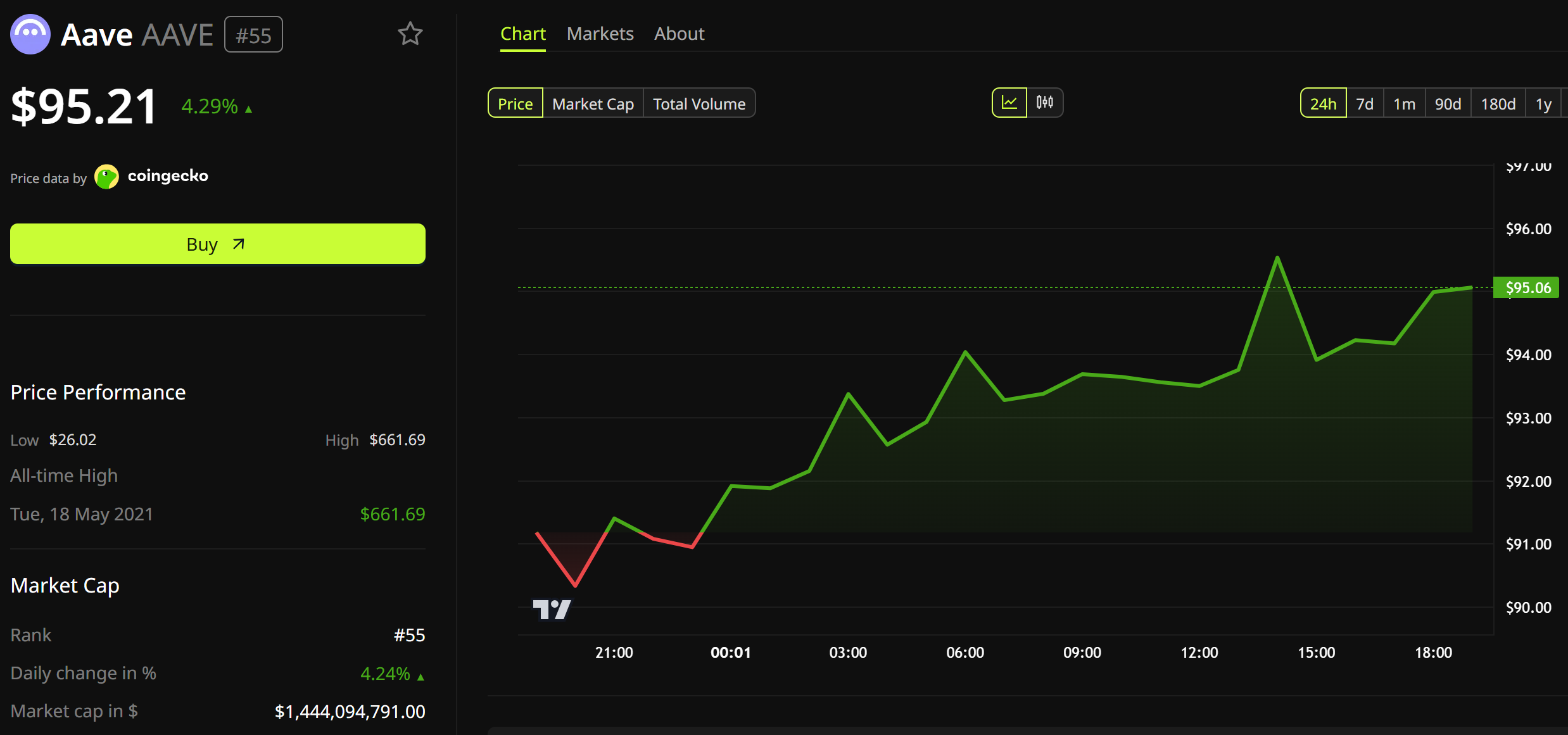
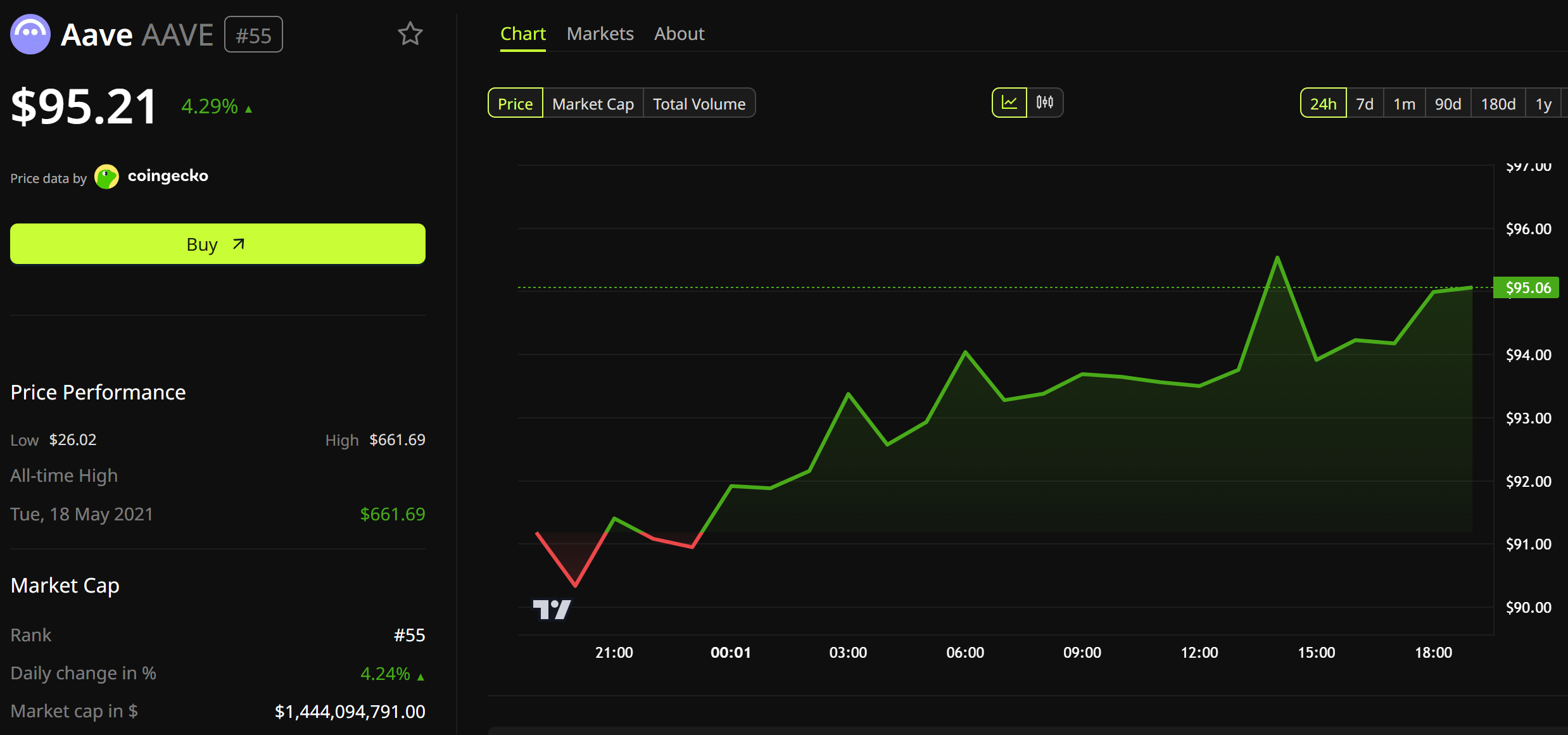
Despite this news, AAVE token price is up by nearly 5% in the last 24 hours, and was trading for $95.21 as of this writing.
The post Circle Proposes Aave Rate Overhaul to Fix USDC Liquidity Crisis appeared first on BeInCrypto.

My First Financial Breakthrough

Unchosen ending explained as menacing Netflix thriller drops major twist

Only a handful of traders power India’s F&O volumes, highlights Zerodha’s Nithin Kamath

Manchester United reach agreement with Casemiro over contract clause amid transfer speculation

Steven Gerrard disagrees with Gary Neville over ‘shock’ Chelsea and Arsenal claim | Football

US brings back mandatory military draft registration


-

 Fashion5 days ago
Weekend Open Thread: Theodora Dress
-

 Sports5 days ago
NWFL Suspends Two Players Over Post-Match Clash in Ado-Ekiti
-

 Politics5 days ago
Palestine barred from entering Canada for FIFA Congress
-
Entertainment3 days ago
NBA Analyst Charles Barkley Chimes in on Ice Spice McDonald’s Fiasco
-

 Business3 days ago
Powerball Result April 18, 2026: No Jackpot Winner in Powerball Draw: $75 Million Rolls Over
-

 Tech4 days ago
Auto Enthusiast Scores Running Tesla Model 3 for Two Grand and Turns It Into Bare-Bones Go-Kart
-

 Politics3 days ago
Zack Polanski demands ‘council homes not luxury flats for foreign investors’
-

 Crypto World5 days ago
Russia Pushes Bill to Criminalize Unregistered Crypto Services
-

 Politics2 days ago
Gary Stevenson delivers timely reminder to register to vote as deadline TODAY
-

 Tech7 days ago
‘Avatar: Aang, The Last Airbender’ Leaked Online. Some Fans Say Paramount Deserves the Fallout
-
 Business6 days ago
Creo Medical agree sale of its manufacturing operation
-

 Business11 hours ago
Rolls-Royce Voted UK’s Most Iconic Trade Mark as IPO Register Hits 150
-

 Crypto World5 days ago
Russia Introduces Bill To Criminalize Unregistered Crypto Services
-

 Politics3 hours ago
Starmer handler McSweeney to be dragged from shadows by Foreign Affairs Committee
-

 Politics3 hours ago
Zack Polanski responds to home secretary’s taser threat
-
Politics4 hours ago
Wings Over Scotland | How To Get Away With Crimes
-
 Crypto World4 days ago
Kelp DAO rsETH Bridge Hack Drains $292M as DeFi Losses Top $600M in Two Weeks
-

 Tech7 days ago
Ford EV and tech chief leaving automaker
-

 Sports7 days ago
British climbers complete new route in Swiss Alps
-

 Sports7 days ago
“Felt Much Better Today”: Josh Hazlewood Opens Up On His Recovery Win Over LSG
You must be logged in to post a comment Login