
Business
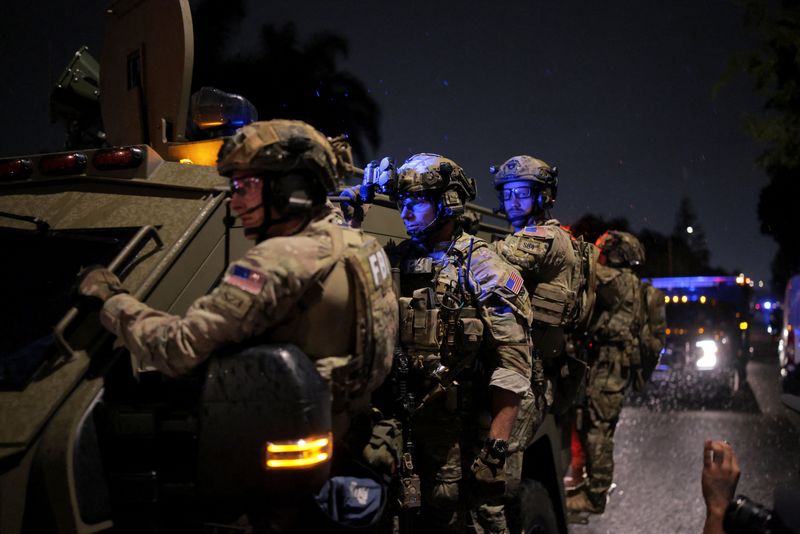
Acting US attorney general says WHCD suspect was likely targeting Trump administration officials





The Investment Doctor is a financial writer, highlighting European small-caps with a 5-7 year investment horizon. He strongly believes a portfolio should consist of a mixture of dividend and growth stocks.
He is the leader of the investment group European Small Cap Ideas which offers exclusive access to actionable research on appealing Europe-focused investment opportunities not found elsewhere. The a focus is on high-quality ideas in the small-cap space, with emphasis on capital gains and dividend income for continuous cash flow. Features include: two model portfolios – the European Small Cap Ideas portfolio and the European REIT Portfolio, weekly updates, educational content to learn more about the European investing opportunities, and an active chat room to discuss the latest developments of the portfolio holdings. Learn more.
Analyst’s Disclosure: I/we have a beneficial long position in the shares of MET.PR.F either through stock ownership, options, or other derivatives. I wrote this article myself, and it expresses my own opinions. I am not receiving compensation for it (other than from Seeking Alpha). I have no business relationship with any company whose stock is mentioned in this article.
I also have a small long position in MET.PR.E, and may initiate a long position in the common shares in the next few weeks.
Seeking Alpha’s Disclosure: Past performance is no guarantee of future results. No recommendation or advice is being given as to whether any investment is suitable for a particular investor. Any views or opinions expressed above may not reflect those of Seeking Alpha as a whole. Seeking Alpha is not a licensed securities dealer, broker or US investment adviser or investment bank. Our analysts are third party authors that include both professional investors and individual investors who may not be licensed or certified by any institute or regulatory body.


Palestinian leader’s loyalists win local elections, including some seats in Gaza

PM Images/DigitalVision via Getty Images

Investment Research Best Practices: Our Resources for Analysts and Readers
We recently came across a resource provided several years ago to analysts and readers, an article presenting details and suggestions on how to approach investment analysis. And we’ve updated that article here.
The key takeaways: Research approaches evolve for the best analysts. There’s always room for improvement. And make sure to keep an open mind and be receptive to other ideas when it comes to sharpening research skills around investment ideas.
We asked analyst Thomas Lott to share his investment research process in this article from August, which may provide another perspective for analysts and readers.
We also have other resources available on our Analyst Connect article page.
The Positives of Presenting Previous Coverage in Follow-Up Articles
We encourage analysts to present follow-up coverage of stocks and investments they analyze for readers. As part of that follow-up effort, we ask analysts to mention previous coverage of a stock they covered in a past article.
There are benefits to referencing past articles in a new article covering a stock. The mention helps remind readers what was covered in the last article, presents a platform for outlining what may have changed (or not changed) since the previous analysis, and what may happen next for the investment in focus. Analysts also benefit from additional pageviews when readers are provided access to an older article.
The reference to past coverage should be at the start of the article. The link to that earlier article and the reference do not need to be in the first paragraph (though this is strongly encouraged) but should be included in the second or third paragraph.
Reference to past coverage is a key component of our follow-up article guidelines.
Our guidelines for follow-up coverage of an investment:
-
The follow-up focuses on a key material development or news that could impact the investment premise. This should go beyond just a change in sentiment or rating. And the follow-up should avoid any recap of any new development: The analysis should present a forward-looking angle on how a new development may impact the investment idea.
-
The follow-up article should advance the investment narrative. Avoid the use of old data or repurposed content from a previous article. Essentially, the new submission should present something fresh for reader consideration.
-
An analyst does not need to present a new rating or sentiment around a material change or catalyst that could impact the premise. But the analyst needs to clearly explain the reason for follow-up coverage, not only for readers but also for editors. Provide a note to editors explaining the need for follow-up coverage.
Our follow-up guidelines can be found here.
Looking for Your Best Commodity-Focused Investment Idea
Do you have high conviction behind a commodity-focused investment idea?
Seeking Alpha is inviting analysts to present their analysis of a commodity idea for its latest article competition. This includes stocks and ETFs. Inverse ETFs are not part of the competition, and the investment vehicle must trade in the US or Canada and have a ticker page on our site.
Analysts can send in an exclusive article with their idea. Add a comment in the “note to the editor” section requesting that the article is entered into the competition. The deadline is midnight, May 31.
Details on the competition can be found here.
Assessing the Energy Business: Tips and Details on Evaluating the Sector
The energy industry is big, with several moving parts within each sector. Valuating investments requires knowledge of the companies operating within the energy sphere. And how investors look at energy companies is influenced by the constantly changing geopolitical scene.
Seeking Alpha analyst Power Hedge, the Investing Group leader behind the Energy Profits in Dividends service, provides details on the different parts of the energy industry, how to evaluate companies within the sector, and how to assess the impact of macro developments on the business.
Power Hedge provides this primer and an assessment of the energy industry here.
Looking Ahead to May
May sees the earnings calendar get busier in the first few weeks, but it hits a peak in week two. The macro story surrounding the war in the Middle East continues to weigh on the market, and each day seems to add to the uncertainty. The economic reports that are released in May will reflect the impact the war is having on a number of different economic indicators, and this could create more volatility.
Seeking Alpha Earnings Calendar
Week 1 (May 1-8)
Even though May kicks off on a Friday, it comes with a number of big earnings reports before the open. At the top of the list, both in terms of market cap and potential importance, are Exxon Mobil (XOM) and Chevron (CVX). These two energy behemoths should show some benefits from the elevated oil prices that started in March. In addition to these icons, we will get reports from Aon (AON), Colgate-Palmolive (CL), and Dominion Energy (D), among others. Shifting our focus to Monday, May 4, we expect to hear from AI industry darling Palantir (PLTR), Vertex Pharmaceuticals (VRTX), The Williams Companies (WMB), and ON Semiconductor (ON), among the many.
Looking out to Tuesday, and the docket just gets busier. Among the companies expected to report are Advanced Micro Devices (AMD), Arista Networks (ANET), Shopify (SHOP), Eaton (ETN), and Pfizer (PFE). Looking at Wednesday and Thursday, we see the highest totals of companies for the entire earnings season, with 356 and 443 reports expected, respectively. For Wednesday, the biggest names are Disney (DIS), Arm Holdings (ARM), AppLovin (APP), Uber (UBER), and Marriott (MAR). For Thursday we expect to hear from household names such as Shell (SHEL), McDonald’s (MCD), Airbnb (ABNB), Monster Beverage (MNST), and Warner Bros. Discovery, among many others. Friday has a handful of big reports expected, and they’re led by Toyota (TM), Sony (SONY), AngloGold Ashanti, and EchoStar (SATS).
Week 2 (May 11-15)
This is where the dates of the reports become a little less certain, as many companies don’t announce the exact date of earnings until two to three weeks ahead of the report. Monday shows Constellation Energy (CEG), Fox Corporation (FOXA), and Circle Internet Group (CRCL) as reports we should expect. Looking out to Tuesday, Sea Limited (SE), Vodafone (VOD), AST Spacemobile (ASTS), and Venture Global (VG) are among the most highly followed companies reporting. Wednesday is highlighted by Cisco Systems (CSCO), Sumitomo Mitsui (SMFG), Takeda Pharmaceuticals (TAK), and Honda Motor Co. (HMC). Thursday features a couple of tech heavyweights with Alibaba (BABA) and Applied Materials (AMAT) expected to report, along with JD.Com (JD) and Copart (CPRT). The only names that jumped out for Friday were Mitsubishi UFJ Financial Group (MUFG) and RBC Barings (RBC).
Week 3 (May 18-22)
Monday, May 18, has a few reports investors will likely be interested in, starting with Trip.com (TCOM) and Ryanair (RYAAY). EV manufacturer XPeng (XPEV) is also on the docket. We see a shift in the focus on Tuesday as retail names start to step into the earnings confessional. The group is led by Home Depot (HD), Target (TGT), and Urban Outfitters (URBN). We also expect to hear from PDD Holdings (PDD) and Keysight Technologies, among others. Wednesday is arguably the biggest date in the second half of the month, with Nvidia (NVDA) on the docket along with Analog Devices (ADI), Palo Alto Networks (PANW), and Snowflake (SNOW) from the tech sector. In addition to the tech names, retailers are in the spotlight with The TJX Companies (TJX) and Lowe’s (LOW) expected to report.
The retail theme carries over to Thursday with the likes of Walmart (WMT), Ross Stores (ROST), Ralph Lauren (RL), and BJ’s Wholesale (BJ) joining the fray. We also see Deere & Company (DE) and Intuit (INTU) on the calendar. Friday only brings a few reports, with HEICO (HEI), Zoom Communications (ZM), and Williams Sonoma (WSM) being the most prominent.
Week 4 (May 25-29)
US markets will be closed on Monday, May 25, in observance of Memorial Day. For Tuesday we see a few reports scheduled with AutoZone (AZO), Autodesk (ADSK), Agilent (A), Workday (WDAY) and Dick’s Sporting Goods (DKS) among the biggest. Moving out to Wednesday, we get a few from the tech sector once again, with Salesforce (CRM), Synopsis (SNPS), and Everpure (P) leading the charge.
Thursday brings reports from some pretty big names in terms of market cap. We see Costco (COST), Dell Technologies (DELL), Marvell Technology (MRVL), and NetEase (NTES) among the most notable. Friday’s calendar shows Zscaler (ZS), MongoDB (MDB), and HP Inc. (HPQ) as possibly reporting, but that doesn’t seem likely, and those dates are estimates.
May Investor and Industry Events
May 2 – Berkshire Hathaway annual meeting without Warren Buffett
May 3-6 – Milken Global Conference
May 4 – Fed SLOOS report expected
May 4 – IBM Think event
May 5- American Express annual meeting
May 6 – Anthropic Code with Claude SF event
May 7 – Manheim Used Car Index report
May 7 – Citi Investor Day
May 8-10 – IEEE Conference on AI
May 11-14 – Red Hat Summit
May 12 – WASDE report on major crops
May 13 – BMO Farm to Market Conference
May 14 – Ford annual meeting
May 15 – 13F filings due from hedge funds
May 18-20 – JPMorgan Global Technology, Media, and Communications Conference
May 18-19 – Gamesbeat Summit
May 18-21 – Dell Technologies World
May 19 – Google I/O event
May 20 – Amkor Technology Investor Day
May 20 – B. Riley Securities Investor Conference
May 21 – Stellantis Investor Day
May 21 – Cummins Analyst Day
May 22 – Russell Index changes announced
May 25 – Deutsche Bank European Champions Conference
May 26 – Wells Fargo & Company Bernstein Strategic Decisions Conference
May 27 – Meta Platforms annual meeting
May 27-28 – Jefferies Software, Internet, and AI Conference
May 28 – ASCO meetings
May 28 – Salesforce annual meeting
May 29 – MSCI quarterly review
May 30 – Nvidia at the Cisco Live Conference
May 31 – Morgan Stanley Travel & Leisure Conference
May 31-June 4 – Cisco Live event
Major Economic Reports and Events
May 1 – ISM Manufacturing, Construction Spending
May 5 – Trade Balance, ISM Services
May 6 – ADP Employment Change
May 7 – Q1 Productivity, Q1 Unit Labor Costs
May 8 – April Employment Report, Univ. of Michigan Consumer Sentiment
May 11 – Existing Home Sales
May 12 – CPI, Treasury Budget
May 13 – PPI
May 14 – Retail Sales
May 15 – Industrial Production, Capacity Utilization
May 19 – Building Permits, Housing Starts, Pending Home Sales
May 22 – Univ. of Michigan Consumer Sentiment
May 25 – Memorial Day Holiday, US markets closed
May 26 – S&P/Case-Shiller Housing Index, Conference Board Consumer Confidence
May 28 – Durable Orders, PCE Price Index, Personal Income Personal Spending, New Home Sales
Business
Trump was likely target of shooting at White House correspondents’ dinner, US official says
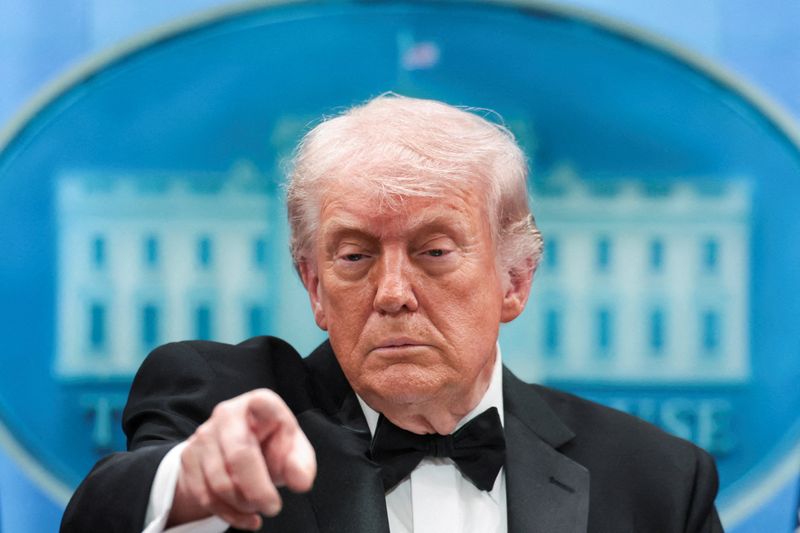

Trump was likely target of shooting at White House correspondents’ dinner, US official says

2 Magnificent Dividends To Buy And Hold Forever

TOKYO — As Sony continues to ride high on PlayStation 5 and PS5 Pro sales, fresh leaks and analyst reports have intensified speculation about the PlayStation 6, with insiders pointing to a potential launch window between late 2027 and 2029 amid ongoing chip shortages and ambitious hardware ambitions.

The next-generation console, internally referred to by codenames like Orion, remains unannounced by Sony as of late April 2026. However, a steady stream of credible leaks from industry sources suggests Sony is deep in development, targeting significant leaps in performance, artificial intelligence features and ecosystem expansion that could include a dedicated handheld.
Release Date Uncertainty Grows
The most consistent early rumors pointed to a 2027 launch, aligning with the traditional seven-year console cycle following the PS5’s 2020 debut. Leakers such as Moore’s Law Is Dead (MLID) and AMD insider KeplerL2 have claimed production could begin in mid-2027 for a holiday release.
Yet recent developments have clouded that timeline. Bloomberg reported in February 2026 that Sony is considering pushing the PS6 debut to 2028 or even 2029 due to a global memory chip crisis fueled by AI demand. Analyst David Gibson of MST Financial echoed concerns about rising RAM costs impacting Sony’s plans.
Despite the potential delays, some voices remain optimistic. Take-Two Interactive CEO Strauss Zelnick suggested next-generation consoles are unlikely to face major setbacks, while certain supply chain signals indicate Sony may still aim for 2027-2028. Sony has not commented officially, maintaining its pattern of secrecy until formal reveals.
Rumored Specs Promise Major Performance Jump
Leaked details paint an exciting picture for hardware enthusiasts. The PS6 is expected to feature a custom AMD Zen 6 CPU architecture paired with an advanced RDNA 5 (or UDNA) GPU, manufactured on TSMC’s 3nm process node. Reports suggest up to 8-10 CPU cores, with potential 3D-stacked cache for improved efficiency.
Memory could reach 24-32GB of high-speed GDDR7, a substantial upgrade enabling smoother multitasking, faster loading and more complex game worlds. Graphics performance targets include native 4K at 120 frames per second with advanced ray tracing, upscaled 8K capabilities and next-generation PSSR (PlayStation Spectral Super Resolution) AI upscaling.
Storage is rumored to start at 1-2TB SSD with expandable options and faster transfer speeds. Additional features may include Wi-Fi 7, HDMI 2.2 support and enhanced thermal management for quieter operation. Insiders claim the bill of materials could hit around $760, potentially leading to a $699-$999 retail price depending on configurations.
Backward Compatibility and Handheld Ambitions
One of the most welcome rumors centers on full backward compatibility with PS4 and PS5 games, ensuring access to vast libraries at launch. Leaked documents reportedly confirm this support extends to the rumored handheld variant, codenamed Project Canis.
The handheld, part of a broader PS6 ecosystem, is said to feature a smaller AMD APU with Zen 6 cores and RDNA 5 graphics, potentially outperforming the base PS5 while maintaining portability. Production costs for its chip are estimated as low as $47, raising hopes for an affordable companion device priced around $399. Sony has reportedly briefed internal studios on the project.
This dual-console strategy could mirror Nintendo’s approach while competing directly with rumored Xbox handheld efforts and existing devices like the PlayStation Portal.
AI, Features and Developer Focus
Sony is expected to double down on AI integration beyond upscaling, possibly including in-game assistance tools, procedural generation and enhanced NPC behavior. Larger “Neural Arrays” for AI processing appear in multiple leaks.
Developers have reportedly received early dev kits, with emphasis on easier cross-generation support and tools for creating expansive, high-fidelity experiences. The PS6 could emphasize sustainability, modularity (such as detachable disc drives) and cloud features.
Price and Market Challenges
Analysts predict a higher launch price than the PS5 due to advanced components and inflation. A base model around $599-$699 seems plausible, with premium or Pro variants potentially reaching $799-$999. Sony must balance innovation with accessibility amid economic pressures.
The PS5’s strong ongoing performance, bolstered by the Pro refresh, gives Sony breathing room to perfect the PS6. Extended PS5 support through 2028 or beyond appears likely regardless of the next-gen timeline.
What This Means for Gamers
For fans, the PS6 rumors signal an exciting evolution: more powerful hardware, seamless access to older games, potential portability and cutting-edge technology. However, delays could frustrate those eager for the next leap, while higher prices might spark debate about value.
Sony’s silence fuels speculation but also builds anticipation. History shows the company excels at polished launches with strong first-party titles. Until official confirmation, these leaks provide the best glimpse into PlayStation’s future.
As development continues behind closed doors, the gaming community watches closely. Whether arriving in 2027, 2028 or later, the PlayStation 6 promises to push boundaries in an increasingly competitive and technologically advanced industry. Gamers can expect more details to emerge gradually as Sony nears its reveal.

Mastercard's Earnings Preview: It's A Buy Once Again
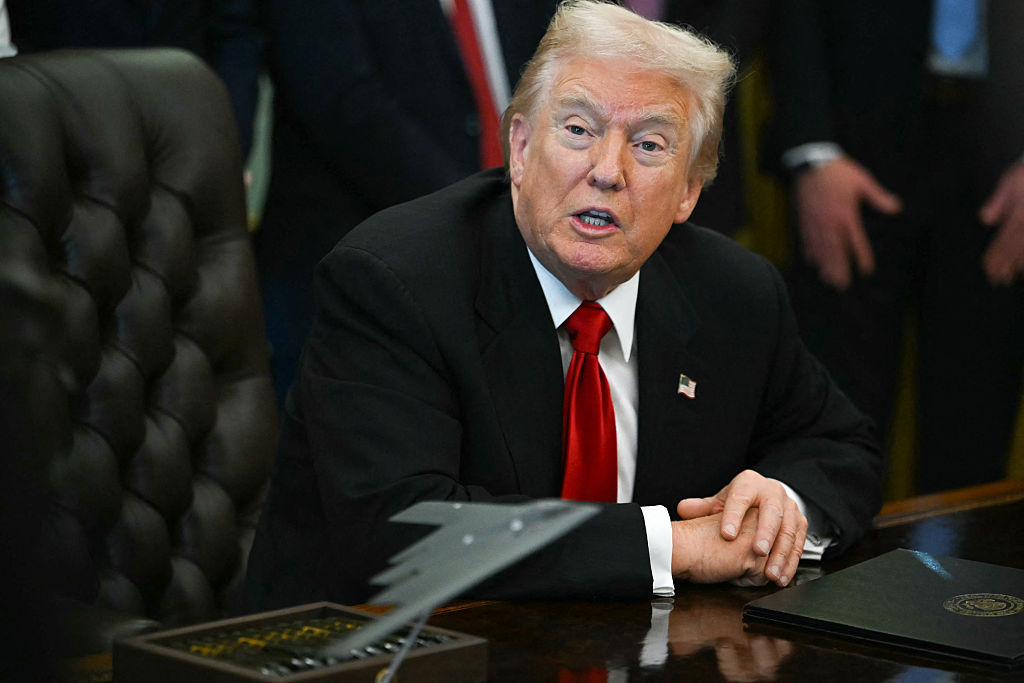
WASHINGTON — Among the three documented assassination attempts on President Donald Trump since 2024, the July 13, 2024, shooting at a campaign rally in Butler, Pennsylvania, stands as by far the most dangerous, with a gunman firing multiple shots that grazed the president’s ear, killed one spectator and injured two others in a stark security failure that came within inches of changing American history.

Security experts, congressional investigators and law enforcement officials who have reviewed the incidents rank the attempts by factors including proximity of the threat to Trump, whether shots were fired directly at him, actual harm inflicted, the scale of the security breach and evidence of premeditation. The Butler rally attempt tops the list for its lethal execution and narrow escape, followed by the April 25, 2026, incident at the White House Correspondents’ Dinner in Washington, where an armed suspect exchanged gunfire at a checkpoint near Trump and other top officials. The September 15, 2024, episode at Trump International Golf Course in Florida ranks least dangerous because the suspect was intercepted before any shots reached the president.
The Butler attack remains the only one in which Trump sustained an injury and a member of the public was killed. Twenty-year-old Thomas Matthew Crooks fired eight rounds from an AR-15-style rifle from a rooftop about 130 yards away while Trump spoke. A bullet grazed the upper part of Trump’s right ear. Corey Comperatore, a 50-year-old former fire chief, was killed shielding his family. Two other spectators were critically wounded. Crooks was fatally shot by Secret Service counter-snipers moments later.
Independent reviews and congressional task forces later highlighted multiple Secret Service lapses, including failure to secure the rooftop despite reports of a suspicious person with a rangefinder. The incident prompted the resignation of Secret Service Director Kimberly Cheatle and sweeping changes to protective protocols for high-profile events.
In contrast, the April 25, 2026, attempt at the White House Correspondents’ Dinner at the Washington Hilton ranked second in danger. Thirty-one-year-old Cole Tomas Allen of Torrance, California, charged a security checkpoint outside the ballroom armed with a shotgun, handgun and knives around 8:34 p.m. as Trump, First Lady Melania Trump, Vice President JD Vance and Cabinet members were inside. Shots were exchanged; one Secret Service officer was struck in a bullet-resistant vest but uninjured. Allen was quickly subdued and taken into custody. No one inside the ballroom was harmed, but the breach occurred in a confined, high-security indoor setting packed with 2,600 attendees.
Authorities described Allen as a lone actor whose motive remains under investigation. The incident echoed the 1981 Reagan shooting at the same hotel and renewed debates over venue security for major Washington events. Trump later posted video of the Secret Service response on Truth Social, calling it evidence of ongoing threats while praising agents.
The least dangerous of the three occurred on September 15, 2024, at Trump International Golf Course in West Palm Beach, Florida. Fifty-eight-year-old Ryan Wesley Routh was spotted with a rifle concealed in bushes roughly 300 to 500 yards from where Trump was golfing on the fifth fairway. Secret Service agents fired at Routh as he fled; he was arrested on Interstate 95 without having fired at the president. No shots reached Trump, and he was unharmed. Routh was later convicted on federal charges and sentenced to life in prison in February 2026.
Investigators found Routh had planned the attempt for months and expressed anti-Trump views online, but the early detection by agents prevented any direct threat from materializing. The episode occurred just two months after Butler and led to further perimeter security reviews at Trump properties.
Why Butler Remains the Clear No. 1 Threat
Experts say the Butler attempt scores highest on every metric of danger. The gunman not only reached a firing position but executed shots that struck Trump and bystanders in a crowded outdoor venue. Ballistic analysis confirmed the bullet that grazed Trump’s ear came within a fraction of an inch of being fatal. The presence of a lethal outcome for a spectator underscored the real-world risk to anyone nearby.
The 2026 dinner incident ranks second because, while shots were fired and the suspect was heavily armed, the attack occurred at an outer checkpoint rather than a direct line of sight to Trump. Evacuation protocols worked effectively once the threat was engaged, limiting exposure. Still, the proximity to a major presidential appearance inside a hotel ballroom made it more immediately threatening than the golf course plot.
The Florida golf course attempt ranks third because agents neutralized the threat before Routh could aim or fire toward the president. Distance and rapid intervention minimized the window of opportunity, though the premeditated nature of the plot showed clear intent.
Broader Security and Political Repercussions
Each attempt has reshaped Secret Service operations. Post-Butler reforms included expanded advance teams, drone surveillance and stricter rooftop protocols. The golf course incident highlighted challenges at private venues, while the 2026 dinner shooting has prompted reviews of indoor event screening amid high-profile gatherings.
Politically, the attempts have bolstered Trump’s narrative of resilience while intensifying national debates over political violence, rhetoric and Secret Service funding. Public polling after Butler showed a temporary unity spike, though polarization quickly returned. The 2026 incident, occurring during Trump’s second term, has drawn bipartisan condemnation but also questions about evolving threats in a divided nation.
FBI and Secret Service briefings continue to stress that threats against Trump remain elevated compared to historical norms. Additional plots, including foreign-linked ones, have been disrupted but not publicly detailed as full assassination attempts.
Lessons and Lingering Questions
Security analysts emphasize that the Butler attempt exposed systemic vulnerabilities in outdoor rally protection that have since been addressed but require constant vigilance. The rapid evolution from open-air events to high-security dinners to private properties illustrates the difficulty of protecting a president in an era of widespread firearms access and online radicalization.
As investigations into the 2026 dinner shooter continue, officials caution against speculation while urging the public to report threats. Trump has repeatedly described surviving the attempts as evidence of divine protection, using the experiences to advocate stronger law enforcement and border policies.
The ranking of these incidents underscores a sobering reality: even with elite protection, determined attackers can create moments of extreme peril. Butler’s deadly outcome remains the benchmark against which future threats are measured, serving as a permanent reminder of the personal risks faced by the nation’s leaders and the constant need to adapt security in a polarized political landscape.
For the American public, the three attempts have left an indelible mark on the 2024 campaign and Trump’s second term, highlighting both the fragility of democracy and the resilience required to sustain it amid violence. As new details emerge from ongoing probes, the focus remains on preventing the next close call.

Michael Kramer is the founder of Mott Capital, and is a long-only investor who focuses on macro themes and studies trends and options activities to identify and assess entry and exit points for investments in his long-term focused thematic growth strategy. He is a former buy-side trader, analyst, and portfolio manager with 30 years of experience tracking market technicals, fundamentals, and options.Michael Kramer leads the investing group Reading the Markets, where he helps a devoted following of members to better understand what is driving trading and where the market is likely heading, both the short and long-term. Features of the investing group include: daily written commentary and videos analyzing the driving factors behind price action; general macro trend education to help members make well-informed decisions based on market conditions, interest rates, currency movements and how they all interact; chat for questions and community dialogue; and regular Zoom videos sessions to discuss current ideas and answer questions. The level of access RTM subscribers and the expertise of the source are unprecedented given that the subscription price is a fraction of similar technical coaching and mentoring services. Learn more.
Analyst’s Disclosure: I/we have no stock, option or similar derivative position in any of the companies mentioned, and no plans to initiate any such positions within the next 72 hours. I wrote this article myself, and it expresses my own opinions. I am not receiving compensation for it (other than from Seeking Alpha). I have no business relationship with any company whose stock is mentioned in this article.
This report contains independent commentary to be used for informational and educational purposes only. Michael Kramer is a member and investment adviser representative with Mott Capital Management. Mr. Kramer is not affiliated with this company and does not serve on the board of any related company that issued this stock. All opinions and analyses presented by Michael Kramer in this analysis or market report are solely Michael Kramer’s views. Readers should not treat any opinion, viewpoint, or prediction expressed by Michael Kramer as a specific solicitation or recommendation to buy or sell a particular security or follow a particular strategy. Michael Kramer’s analyses are based upon information and independent research that he considers reliable, but neither Michael Kramer nor Mott Capital Management guarantees its completeness or accuracy, and it should not be relied upon as such. Michael Kramer is not under any obligation to update or correct any information presented in his analyses. Mr. Kramer’s statements, guidance, and opinions are subject to change without notice. Past performance is not indicative of future results. Neither Michael Kramer nor Mott Capital Management guarantees any specific outcome or profit. You should be aware of the real risk of loss in following any strategy or investment commentary presented in this analysis. Strategies or investments discussed may fluctuate in price or value. Investments or strategies mentioned in this analysis may not be suitable for you. This material does not consider your particular investment objectives, financial situation, or needs and is not intended as a recommendation appropriate for you. You must make an independent decision regarding investments or strategies in this analysis. Upon request, the advisor will provide a list of all recommendations made during the past twelve months. Before acting on information in this analysis, you should consider whether it is suitable for your circumstances and strongly consider seeking advice from your own financial or investment adviser to determine the suitability of any investment.
Seeking Alpha’s Disclosure: Past performance is no guarantee of future results. No recommendation or advice is being given as to whether any investment is suitable for a particular investor. Any views or opinions expressed above may not reflect those of Seeking Alpha as a whole. Seeking Alpha is not a licensed securities dealer, broker or US investment adviser or investment bank. Our analysts are third party authors that include both professional investors and individual investors who may not be licensed or certified by any institute or regulatory body.

NEW YORK — World oil prices remained elevated near multi-year highs Sunday as geopolitical risks in the Middle East continued to dominate trading, with Brent crude settling above $105 per barrel amid persistent concerns over disrupted supplies through the Strait of Hormuz and stalled U.S.-Iran diplomatic efforts.

As of late April 24 trading, the global benchmark Brent crude closed at $105.33 per barrel, up slightly for the session but reflecting a volatile week marked by sharp swings. West Texas Intermediate crude, the U.S. benchmark, settled at $94.40, down more than 1.5% on the day after earlier gains evaporated on hopes for renewed talks.
The premium between Brent and WTI has widened notably, underscoring regional supply dynamics and strong demand for non-U.S. crudes amid ongoing disruptions. Both benchmarks have surged more than 50% from year-ago levels, driven primarily by conflict-related risks rather than pure fundamentals.
Geopolitical Drivers Dominate
Tensions surrounding Iran have been the primary catalyst. Reports of Iranian actions in the Strait of Hormuz, a critical chokepoint carrying about one-fifth of global oil supply, have kept traders on edge. The waterway remains largely restricted, with U.S. naval presence and Iranian responses limiting crude exports.
Hopes for de-escalation surfaced late in the week as the White House signaled envoys would head to Pakistan for potential indirect talks with Iranian officials. However, cautious tones from Tehran and the absence of confirmed formal negotiations limited downside pressure. Analysts note that even if the strait reopens, full normalization of flows could take months.
This geopolitical premium has pushed prices well above levels justified by current demand and non-OPEC supply growth. The International Energy Agency and other forecasters have warned that prolonged conflict could permanently alter demand patterns while tightening near-term availability.
Market Reactions and Volatility
Oil futures showed mixed performance throughout the week. Brent topped $106 at points before pulling back, while WTI flirted with $97 before Friday’s reversal. Weekly gains remained robust, with WTI posting one of its strongest performances in recent months.
Trading volumes were elevated as hedge funds and speculators adjusted positions. Options markets reflected heightened uncertainty, with implied volatility spiking on Middle East headlines. Energy stocks broadly followed the commodity, though some producers hedged against potential sharp reversals if diplomacy advances.
Supply and Demand Fundamentals
Beyond geopolitics, underlying balances show resilience. OPEC+ production cuts have helped support floors, while U.S. shale output remains robust despite higher costs. Global inventories are tighter than in prior years, particularly for sour crudes favored by Asian refiners.
Demand holds steady with economic activity in Asia providing a buffer. However, high prices are beginning to weigh on some consumers. India, a major importer, has sought alternative supplies, while European nations continue diversifying away from Russian and Middle Eastern sources.
Longer-term forecasts vary. Some analysts, including those at JPMorgan, see potential for further upside if risks persist, while others warn of demand destruction above $110-$120 per barrel. Seasonal summer driving demand in the Northern Hemisphere could add upward pressure in coming months.
Impact on Consumers and Economy
Elevated oil prices are rippling through global economies. Gasoline prices at U.S. pumps have climbed, adding to household budgets ahead of the summer travel season. Airlines and shipping firms face higher fuel surcharges, potentially feeding into broader inflation concerns.
Emerging markets with high energy import bills feel the pinch most acutely, with some currencies under pressure. Central banks monitor energy costs closely as they balance growth and price stability. In the U.S., the rise has drawn political attention, though direct intervention remains limited.
Industry and Investment Implications
Oil majors have benefited from the price environment, posting stronger cash flows that support dividends and buybacks. Exploration and production spending is increasing selectively, though capital discipline remains a watchword after past boom-bust cycles.
Renewable energy advocates argue high fossil fuel prices accelerate the transition, boosting interest in alternatives. Yet near-term, oil’s dominance in transportation and petrochemicals ensures continued relevance.
What Lies Ahead
As markets open Monday, traders will scrutinize any updates from U.S.-Iran channels and fresh data on inventories from the American Petroleum Institute and EIA. Upcoming OPEC+ meetings could provide further signals on output policy.
Technical levels are being watched closely: Brent faces resistance near recent highs around $107-$110, while support sits lower. A breakthrough in diplomacy could trigger a swift correction, but persistent disruptions suggest elevated trading ranges for the foreseeable future.
The current environment highlights oil’s sensitivity to headlines over pure supply-demand math. With summer approaching and geopolitical risks unresolved, volatility is likely to remain a feature. Consumers, businesses and policymakers alike are bracing for an uncertain energy landscape where prices above $100 per barrel have become the new normal.
Global energy markets will continue balancing these forces in the weeks ahead, with every development in the Middle East capable of moving the needle on one of the world’s most vital commodities.

Lisa Kudrow Says ‘Friends’ Feels Off Without Perry

A Weekend in the Big Apple
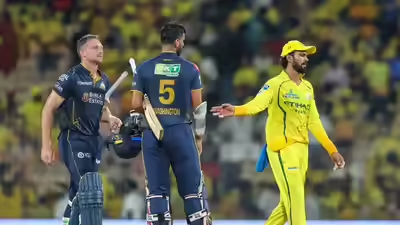
IPL 2026: ‘I hate to … ‘: Captain Ruturaj Gaikwad’s blunt verdict after Chennai Super Kings loss | Cricket News

Manchester United reach agreement with Casemiro over contract clause amid transfer speculation

US brings back mandatory military draft registration

Steven Gerrard disagrees with Gary Neville over ‘shock’ Chelsea and Arsenal claim | Football


-

 Fashion2 days ago
Weekend Open Thread – Corporette.com
-
 Crypto World20 hours ago
Hyperliquid $HYPE Rally Builds Momentum as AI Sector Enters Prove-It Phase
-
Entertainment7 days ago
NBA Analyst Charles Barkley Chimes in on Ice Spice McDonald’s Fiasco
-

 Politics6 days ago
Gary Stevenson delivers timely reminder to register to vote as deadline TODAY
-
Crypto World6 days ago
Bank of Hawai’i (BOH) Q1 2026: Net Income Drops to $57.4M as Net Interest Margin Expands
-

 Politics4 days ago
Making troops accountable for war crimes threatens US alliance, ex-SAS colonel warns
-

 Politics4 days ago
Disabled people challenge government SEND proposals over segregation concerns
-

 Business4 days ago
Rolls-Royce Voted UK’s Most Iconic Trade Mark as IPO Register Hits 150
-

 Politics4 days ago
Zack Polanski responds to home secretary’s taser threat
-

 Politics4 days ago
Starmer handler McSweeney to be dragged from shadows by Foreign Affairs Committee
-
Politics4 days ago
Wings Over Scotland | How To Get Away With Crimes
-
 Sports2 hours ago
IPL 2026: Ruturaj Gaikwad registers slowest fifty of the season, enters all-time unwanted list | Cricket News
-
 Crypto World5 days ago
Five Value Stocks with Recovery Potential in 2026: PayPal (PYPL), Nike (NKE), and More
-

 Crypto World5 days ago
New York sues Coinbase, Gemini over prediction market offerings
-

 Politics4 days ago
‘Iran is still a nuclear threat’
-
 Sports3 days ago
Tim Bradley names the current best in the world: “Better than Inoue and Usyk”
-
 Business4 days ago
HCL Tech share price tank over 9% after weak Q4. JPMorgan, HSBC & 3 others cut target price
-

 NewsBeat6 hours ago
LK Bennett closes all stores after entering administration
-

 Crypto World5 days ago
Crypto’s great hope in Senate’s Clarity Act still has a path to survive tight calendar
-

 Business4 days ago
The Job Benefits Most Men Don’t Know to Negotiate
You must be logged in to post a comment Login