
Crypto World
PI outshines major altcoins as crypto market nears $2.7T



Pi Network’s PI (PI) token recovered over the weekend as several altcoins moved higher. PI rose more than 5% in 24 hours and traded above $0.18.
Summary
- PI token gained over 5% in 24 hours, trading above $0.18 during weekend recovery move.
- Bitcoin briefly touched $78,200 before settling near $78,000 after several days of rangebound trading action.
- Crypto market cap neared $2.7 trillion as select altcoins gained and Bitcoin dominance topped 58%.
The rebound followed recent weakness in the Pi Network token. STABLE led the daily gainers with a 7% move to $0.034, while PI ranked among the stronger performers.
Bitcoin (BTC) also moved higher after a quiet weekend. The asset briefly touched $78,200 before easing back near $78,000, keeping its market value around $1.56 trillion.
The move came after Bitcoin traded in a narrow range for several days. It held between about $77,000 and $78,500 after failing to extend an earlier rally toward $79,600.
Trump event report adds market attention
Reports said U.S. President Donald Trump was evacuated from the White House Correspondents’ Dinner after gunfire near the event venue. Authorities later said a 31-year-old California man was taken into custody with multiple weapons.
Bitcoin rose by about $1,000 within minutes after the report before pulling back. The move kept traders focused on how political and security events may affect short-term crypto prices.
Altcoins show mixed weekend moves
Several altcoins posted gains alongside PI. XMR and SKY rose more than 4% on the day, while ETH, TRX, and DOGE traded slightly higher.
Other large tokens moved lower. XRP, BNB, SOL, HYPE, and BCH recorded small losses, while RAIN fell 5% in the same period.
The total crypto market value moved back near $2.7 trillion after adding about $40 billion from the previous day’s low. Bitcoin’s market share remained above 58%, showing that traders still focused on BTC during the weekend recovery.


Quick Summary
- SIMO shares climbed 8.07% as traders positioned themselves before the company’s Q1 2026 earnings announcement on April 28
- Wall Street expects Q1 revenue to reach $299.4 million with earnings per share of $1.31
- The stock’s momentum reflects strong AI data center appetite for SIMO’s PCIe Gen5 SSD controller technology
- Analysts have increased full-year 2026 EPS projections by 3.58% to $5.78 over the last two months
- Shares have skyrocketed 222.3% in the past year, significantly outperforming the sector’s 157.6% increase
Silicon Motion (SIMO) experienced an 8.07% surge on Thursday as market participants bought into the stock in anticipation of its Q1 2026 financial results, set for release on April 28.
Silicon Motion Technology Corporation, SIMO
The upward movement reflects growing confidence in demand for the company’s solid-state drive controllers, especially from hyperscale data centers focused on artificial intelligence applications.
Analyst consensus from Zacks projects Q1 revenue of $299.4 million alongside earnings of $1.31 per share. Looking at the full year, 2026 EPS forecasts have been upgraded 3.58% during the past 60 days to reach $5.78, while 2027 projections jumped 8.75% to $7.83.
Silicon Motion has exceeded earnings forecasts in three of its previous four quarterly reports, posting an average positive surprise of 23.34%. The single miss occurred in the most recent quarter, falling short by 2.33%.
A broader semiconductor sector rally contributed additional momentum to the stock. Chipmakers have attracted renewed investor attention as spending on AI infrastructure continues accelerating.
Gen5 Technology and Enterprise AI Storage Expansion
Earlier this quarter, Silicon Motion unveiled the SM8008 — an advanced SSD controller manufactured using TSMC’s 6nm technology. The chip specifically targets enterprise data center applications and aims to reduce energy consumption while delivering consistent performance under demanding AI processing conditions.
The company is strategically aligning itself with NVIDIA’s initiative to utilize NAND flash storage as an active memory tier within AI computing systems — a development that could substantially broaden the total available market for SSD controller solutions.
Its MonTitan enterprise controller family directly addresses the AI data center storage sector, a market segment viewed as both larger and more profitable than Silicon Motion’s conventional consumer-oriented business lines.
Silicon Motion has also announced that its UFS solution successfully passed compatibility testing on Qualcomm’s Snapdragon Cockpit SA8295P platform, creating new opportunities in the automotive storage market.
Over the trailing twelve months, SIMO has advanced 222.3%, substantially exceeding the industry’s 157.6% appreciation. The stock has outperformed Marvell (MRVL), which posted 188.8% gains, though it lags Western Digital (WDC), which rocketed 903.5%.
Potential Headwinds to Consider
Competitive pressures represent a genuine concern. Marvell maintains a dominant position in enterprise and cloud SSD controller markets. Western Digital leverages vertical integration — developing complete storage systems internally — eliminating dependence on external controllers like those produced by Silicon Motion.
This industry trend toward integrated storage solutions presents obstacles for Silicon Motion’s expansion in particular market segments.
The company additionally confronts macroeconomic and geopolitical challenges. Its Taiwan headquarters introduces political exposure given persistent tensions with China. Supply chain disruptions and cyclical consumer demand patterns in PCs and smartphones contribute additional volatility.
From a valuation perspective, SIMO currently trades at 22.1x forward earnings — exceeding the sector average of 11.8x and surpassing its own historical median of 21.65x.
Zacks presently assigns a Rank #3 (Hold) rating to SIMO, accompanied by an Earnings ESP of 0.00%, indicating their quantitative model doesn’t forecast a definitive earnings beat for Q1.
Silicon Motion has also announced its upcoming quarterly dividend of $0.50 per ADS, payable on May 21, 2026, to investors of record as of May 7.

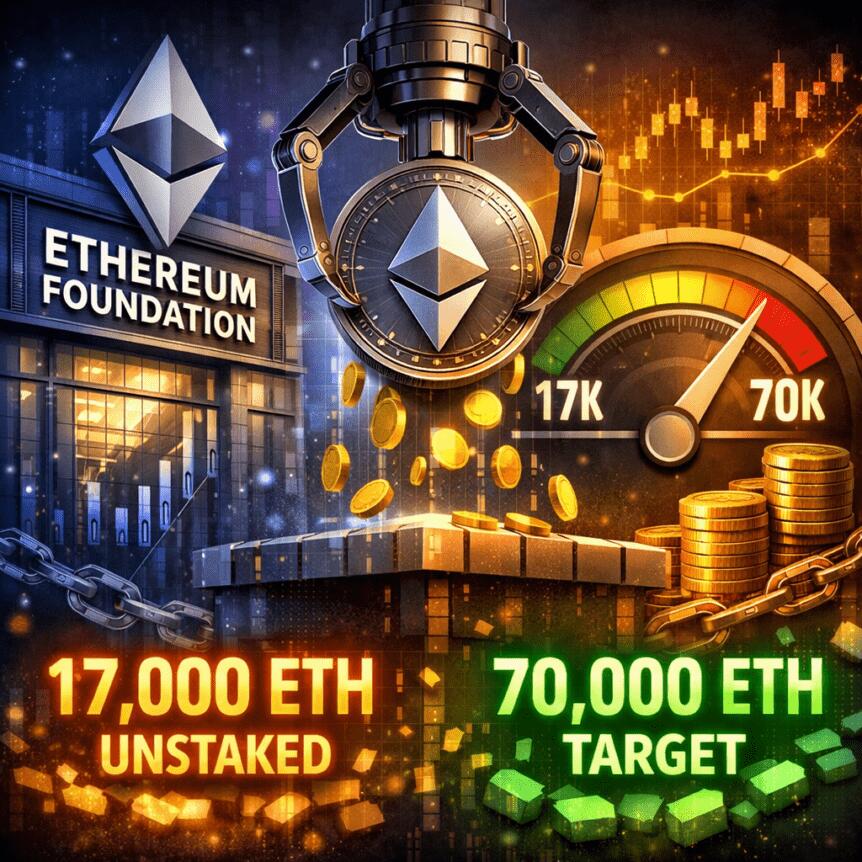
The Ethereum Foundation has quietly trimmed a portion of its staking exposure just as its cumulative stake edged toward the project’s own 70,000 ETH target. Arkham data shows the foundation unstaked 17,035.326 ETH, valued at about $40 million at the time, by moving wrapped staked ETH (wstETH) into Lido’s unstETH contract. The underlying ETH is expected to be released once the withdrawal queue clears, marking a notable shift in the foundation’s on-chain posture.
Unstaking ETH in Ethereum’s ecosystem is the process of pulling tokens back from the Beacon Chain, where staked ETH is locked to secure the network and earn rewards. A withdrawal request triggers a queuing period, after which funds are released back to the user. In this instance, the foundation’s funds transitioned via the Lido staking liquid wrapper, a move that can obscure immediate liquidity signals while still aligning with a staged exit plan.
Key takeaways
- The Ethereum Foundation unstaked 17,035.326 ETH (roughly $40 million), converting it into wstETH and routing into Lido’s unstETH contract, per Arkham data.
- The move occurs just as the foundation approaches its internal milestone of around 70,000 staked ETH, a target the group has pursued since formalizing staking as a funding mechanism for protocol research and ecosystem grants.
- The foundation has not publicly disclosed a rationale for this particular unstake, prompting market talk about potential liquidity needs or strategic repositioning.
- Governance and neutrality concerns persist: Ethereum co‑founder Vitalik Buterin has warned that large-scale staking by a single entity could complicate neutrality during contentious hard forks, a theme occasionally revisited as staking grows.
- In the DeFi world, the rsETH ecosystem remains under pressure from a recent $293 million restaking platform exploit. Backers have pledged more than 43,500 ETH (about $101 million) in a coordinated relief effort led by Aave and supported by Lido DAO, Golem Foundation, EtherFi Foundation, and Mantle.
Near-70,000 ETH: the staking trajectory and what it signals
The Ethereum Foundation began staking ETH after updating its policy in June 2025. In its own framing, staking and participation in decentralized finance would help fund protocol research, development, and ecosystem grants, aligning the foundation’s activities with long-term network security while fueling broader innovation.
Since February, the foundation has incrementally expanded its position. It started with a modest 2,016 ETH, then added 22,517 ETH in March. Earlier in the month in question, the foundation staked more than 45,000 ETH, pushing total staked holdings to roughly 69,500 ETH—just shy of its internal 70,000 ETH target. That proximity to the goal underscores how the foundation has positioned staking as both a governance and funding mechanism, rather than a purely technical endeavor.
What makes the near-70,000 milestone meaningful goes beyond a headline figure. For supporters, it signals a significant concentration of stake within a single influential actor, potentially affecting governance dynamics and the network’s perceived neutrality in the event of major protocol shifts. Vitalik Buterin has previously warned that large-scale staking by a foundation-like entity could complicate neutrality during hard forks, a consideration that continues to shape discussions about governance and decentralization as staking scales.
Unstaking activity and liquidity considerations
The decision to unstake a sizeable tranche of ETH, especially in a market where liquidity and price dynamics can react to large on-chain moves, invites scrutiny of the timing and intent. By converting the ETH into wstETH and routing it through Lido’s unstETH channel, the foundation may be seeking to manage liquidity risk or to position funds for a potential future deployment without triggering immediate market impact through straightforward sales. The withdrawal queue mechanism means the timetable for full liquidity remains uncertain, introducing a measured exit rather than an abrupt sale.
Analysts will be watching whether any further unstaking follows this episode. If additional withdrawals occur in the near term, traders might interpret them as signals of a broader liquidity plan or a repositioning strategy. On the other hand, a one-off move could reflect a temporary liquidity need or a precautionary rebalancing rather than a strategic pivot.
DeFi response: rsETH relief and broader market implications
Parallel to the staking narrative, the DeFi ecosystem has been navigating the fallout from a major restaking platform exploit. A $293 million incident on the Kelp restaking platform triggered market disruption, with attackers siphoning restaked ETH tokens and leveraging them as collateral to borrow funds. The fallout strained Aave’s lending market and left a sizable amount of bad debt in its wake.
In response, a coalition of DeFi protocols has rallied around the rsETH resilience effort. Backers pledged more than 43,500 ETH, roughly $101 million at the time, in a coordinated initiative dubbed “DeFi United.” The push is led by Aave, with substantial participation from Lido DAO, the Golem Foundation, and additional backing from EtherFi Foundation and Mantle. The objective is to stabilize rsETH and prevent spillover risks from the restaking ecosystem into major DeFi lending protocols.
For investors and builders, the episode underscores a broader theme: the health of ETH’s staking ecosystem and the resilience of restaking derivatives matter for liquidity, collateral quality, and risk management in DeFi. The coordinated response highlights how interoperable infrastructure—staking protocols, liquidity providers, and risk-sharing platforms—needs to function cohesively when stress arrives. It also illustrates the growing importance of governance-enabled collaboration to safeguard the ecosystem during shocks.
What readers should watch next
As the Ethereum Foundation’s withdrawal queue progresses, observers will want to see whether more ETH moves emerge and how management of the unstaking process unfolds. The unfolding path toward the 70,000 ETH milestone will continue to be a barometer for how centralized or foundation-led actions interact with a decentralized network’s long-term security and governance dynamics.
Meanwhile, rsETH stability remains a live concern for DeFi markets. The DeFi United initiative will be watched for liquidity resilience, collateral quality, and any further measures from participating protocols to mitigate systemic risks stemming from restaking disruptions. Market participants should also remain attentive to any regulatory or policy updates that could influence staking incentives, governance rights, or cross-chain risk management.
In aggregate, the episode reflects a broader narrative: as ETH staking scales and restaking ecosystems mature, on-chain actions by major actors will continue to reverberate through liquidity, governance, and DeFi risk management. Until more clarity surfaces from the Ethereum Foundation and the DeFi coalition, investors should monitor not only the size of stake movements but also the transparency of the rationale behind them and the evolving guardrails designed to safeguard network resilience.
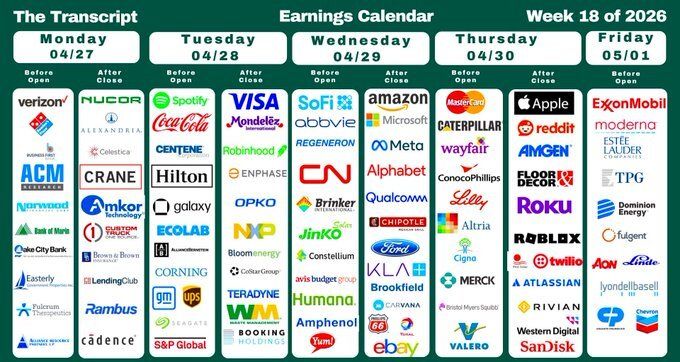
Five of the largest US technology companies report quarterly results this week, and the outcomes could push Bitcoin (BTC) and broader crypto markets in either direction, given the unusually tight link between digital assets and Nasdaq equities.
Microsoft, Alphabet, Meta, and Amazon release Q1 figures after the closing bell on Wednesday, April 29, with Apple following on Thursday. Investors are focused on revenue growth, profit margins, and AI capital expenditure plans for the rest of 2026.
Big Tech AI Capex Will Drive the Reaction
Capital expenditure guidance has overtaken headline earnings as the most market-sensitive line item. Meta has targeted $115 billion to $135 billion for 2026, an increase of at least 59% year over year.
Microsoft, meanwhile, is on track to spend roughly $146 billion on AI and cloud infrastructure in fiscal 2026.
Alphabet has maintained a $175 billion to $185 billion capex range. Amazon, by comparison, is planning a $200 billion outlay, more than 50% higher than in 2025.
Combined hyperscaler AI spending is expected to exceed $160 billion this quarter alone.
Bitcoin Tracks Nasdaq More Closely Than Ever
BTC’s average correlation with the Nasdaq 100 climbed to 0.52 in 2025, up from 0.23 the year before. However, the link tightened further in early 2026, with one analyst tracking the rolling correlation at 0.75 in January.
That coupling has already produced direct contagion this year. After Microsoft’s January earnings stoked concerns about AI spending, the stock fell more than 10% in after-hours trading. Bitcoin briefly slipped to about $83,460 the same day.
A repeat of that pattern is possible if any of the five reports disappoint on capex returns. Strong results, by contrast, could lift risk appetite across both equities and crypto markets in the coming sessions.
The post Five Big Tech Earnings Could Decide Bitcoin’s Next Move This Week appeared first on BeInCrypto.

Key Highlights
- First-quarter comparable operating profit surged 54% to €281M, surpassing Wall Street expectations
- Revenue from AI and cloud infrastructure customers increased 49%, with €1B in fresh orders secured
- The company elevated its Network Infrastructure outlook to 12–14% growth and Optical+IP guidance to 18–20%
- Shares reached their highest point since 2010, climbing nearly 7% during Helsinki trading
- Northland lifted its target to $13; major institutional investors including Calamos, Millennium, and Goldman Sachs expanded stakes
The Finnish telecommunications equipment manufacturer reached a 16-year peak in share price following robust first-quarter results, powered by surging demand for AI and optical networking infrastructure.
Comparable operating profit for the first quarter of 2026 reached €281 million, representing a 54% increase from the prior year and exceeding the €250 million analyst consensus. Total net sales hit €4.5 billion, reflecting 4% annual growth.
Earnings per share aligned with the $0.06 Wall Street estimate. Revenue totaling $5.27 billion significantly exceeded analyst projections of $4.59 billion.
Shares climbed nearly 7% during early trading in Helsinki on April 23, marking the highest valuation since April 2010. On the New York Stock Exchange, NOK advanced 1.4% to $10.48 on Friday, within its 52-week trading range of $4.00 to $10.90.
Revenue generated from AI and cloud infrastructure customers expanded 49% during the three-month period. The company secured €1 billion in new AI and cloud contracts, achieving a book-to-bill ratio exceeding 1.0.
Expanded AI Market Opportunity Projections
Nokia updated its addressable market forecast for AI and cloud infrastructure to reflect a 27% compound annual growth rate spanning 2025 through 2028. This represents a substantial increase from the 16% projection presented during its November 2025 investor presentation.
Guidance for the Network Infrastructure division was elevated to 12–14% growth in 2026, versus the previous 6–8% forecast. The Optical and IP segment outlook rose to 18–20%.
The Optical Networks division posted 20% revenue expansion in Q1. Integration of Infinera is proceeding faster than anticipated, and the company introduced an updated product strategy featuring a multi-rail amplifier and modular optical engines.
Chief Executive Justin Hotard noted the organization is “currently tracking somewhat above the mid-point” of its annual comparable operating profit guidance range of €2.0–2.5 billion.
A second indium-phosphide manufacturing facility in San Jose is scheduled to begin production later this year to increase optical component capacity.
Wall Street Upgrades and Institutional Investment
Northland elevated its price objective on NOK to $13 from $10, pointing to accelerating demand for AI optical connectivity solutions. Bank of America upgraded shares to “buy” with a $12.40 target in early April.
The equity currently carries a “Moderate Buy” consensus rating from 17 Wall Street analysts, comprising 10 buy recommendations, 6 hold ratings, and 1 sell rating. The mean price target stands at $8.83, although multiple recent targets have surpassed this benchmark.
Regarding institutional activity, Calamos Advisors expanded its NOK holdings by 28.1% during Q4 to approximately 1.95 million shares. Millennium Management increased its position by more than 6,500% in Q1, adding nearly 2.8 million shares. Goldman Sachs acquired just over 1 million shares in Q1, elevating its total stake to 12.55 million.
The company also increased its quarterly dividend to $0.0468, up from $0.04. The annualized distribution of $0.19 translates to approximately 1.8% yield, with a record date of April 28 and distribution scheduled for May 12.
Executives identified semiconductor supply limitations and extended order cycles as potential near-term headwinds. Fixed Networks revenue declined 13%, reflecting intentional portfolio optimization efforts.
Short interest in NOK increased roughly 24% during April to approximately 68.2 million shares, while the days-to-cover metric remains modest at 0.7.
The company’s market capitalization stood at roughly $60 billion as of Friday’s closing bell, with a price-to-earnings ratio of 65.29.
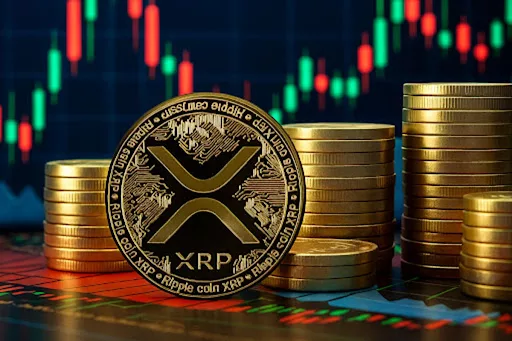
Spot XRP ETFs recorded a new all-time high in cumulative net inflows after investor demand returned in April.
Summary
- Spot XRP ETFs reached $1.29 billion in cumulative inflows after April demand returned strongly again.
- XRP stayed near $1.43 despite fresh ETF inflows and renewed investor demand this week recently.
- Nearly 35 million XRP left exchanges, raising hopes of lower sell pressure ahead for traders.
Data from SoSoValue showed total net inflows rising to $1.29 billion by the end of the latest business week. The funds added $15.74 million during the week ending April 24. April inflows reached $81.63 million, making it the strongest month for XRP ETFs since December.
XRP ETFs had a strong start after launching in mid-November. The funds quickly crossed the $1 billion mark and avoided net outflow days for nearly two months.
That trend changed in March as market uncertainty pushed some investors away from risk assets. March became the first negative month for XRP ETFs, with more than $31 million leaving the products.
The return of inflows followed easing geopolitical tension linked to the US-Iran ceasefire. The week ending April 17 recorded the highest weekly net inflow in three months.
XRP price fails to follow ETF demand
XRP has not matched the renewed demand for spot XRP ETFs. The token recently faced rejection near $1.46 after earlier failing to hold a move toward $1.60.
At the time of the report, XRP traded near $1.43. The price showed little change from the previous week, despite fresh ETF inflows and stronger market interest.
Market analyst Crypto Tony described XRP’s recent price action as “boring few months.” The token has traded between $1.20 and $1.60 for more than 60 days.
Exchange outflows raise rally hopes
XRP also saw large exchange outflows in the latest market data. Nearly 35 million XRP reportedly left exchanges within 24 hours, marking the sixth-largest outflow this year.
Some analysts view large exchange withdrawals as a possible sign of lower sell pressure. Similar spikes in February and March came before 20% to 50% XRP rallies, according to the report.
However, XRP still needs a clear breakout above its recent range to confirm stronger momentum. Analyst Ali Martinez has offered a more bullish long-term view, but said XRP could first drop toward $0.90 before any larger move.
Disclosure: This article does not represent investment advice. The content and materials featured on this page are for educational purposes only.
Crypto World
BWX Technologies (BWXT) Stock Expands Nuclear Capabilities with Precision Components Acquisition

Key Takeaways
- On April 20, BWX Technologies revealed plans to acquire Precision Components Group (PCG), a specialized US manufacturer of heavy-walled components and heat-transfer equipment.
- This acquisition brings more than 500,000 square feet of domestic heavy-manufacturing infrastructure and over 400 skilled workers into BWXT’s operations.
- PCG recorded approximately $125 million in annual revenue and will integrate into BWXT’s Commercial Operations division.
- BWXT exceeded fourth-quarter projections, delivering EPS of $1.08 compared to the anticipated $0.91, alongside revenue of $885.8M versus the $837.5M forecast, with FY2026 EPS guidance projected between $4.55 and $4.70.
- Institutional investors control approximately 94.39% of shares, with Alkeon and Invesco notably expanding their holdings, while company insiders offloaded roughly 13,327 shares valued at $2.73M during the past 90 days.
BWX Technologies (NYSE: BWXT) is strategically expanding its commercial nuclear operations through the acquisition of Precision Components Group.
Revealed on April 20, this transaction will incorporate PCG along with its operating subsidiaries—Precision Custom Components and DC Fabricators—into BWXT’s organizational structure. PCG will become part of BWXT’s Commercial Operations division while maintaining operations at its current production sites.
According to BWXT, this strategic move delivers more than 500,000 square feet of domestic heavy-manufacturing infrastructure. The acquisition also integrates a highly trained workforce exceeding 400 employees.
PCG generated approximately $125 million in annual revenue, representing a substantial addition to BWXT’s financial performance. Company leadership positions this acquisition as an initial phase in expanding domestically-based commercial nuclear manufacturing capabilities.
According to John MacQuarrie, President of Commercial Operations at BWXT, the deal “builds on BWXT’s strong performance in the commercial nuclear industry” and addresses “the accelerating needs of US commercial nuclear customers.”
Robust Financial Performance Supports Expansion
BWXT entered this acquisition from a position of financial strength. The company surpassed analyst projections in its latest reporting period, delivering EPS of $1.08 versus the consensus estimate of $0.91. Revenue reached $885.8 million, exceeding the anticipated $837.5 million.
This revenue represented an 18.7% increase compared to the previous year, and across fiscal 2025, BWXT achieved 18% total revenue growth to $3.19 billion. Earnings per share expanded 20% during the same timeframe with a net profit margin of 10.3%.
Looking ahead to FY2026, management established EPS guidance ranging from $4.55 to $4.70. Market analysts maintain a consensus “Moderate Buy” recommendation with an average price target of $207.60.
BWXT stock commenced trading Friday at $223.54, positioned above both its 50-day moving average of $211.42 and its 200-day moving average of $198.99. The stock trades within a 52-week range spanning $102.42 to $241.82 and maintains a market capitalization of $20.48 billion.
The company also incrementally increased its quarterly dividend from $0.25 to $0.27, equating to an annualized $1.08 with approximately 0.5% yield.
Institutional Investors Maintain Strong Presence
Institutional stakeholders control approximately 94.39% of BWXT shares. Multiple major investment firms expanded their positions during recent quarters. Alkeon Capital Management increased its holdings by 163% in Q3, accumulating over 1.57 million shares valued at roughly $291 million. Invesco boosted its stake by 60.1% to surpass 2.5 million shares.
B. Metzler seel. Sohn & Co. AG established a new position during Q4, acquiring 9,481 shares worth approximately $1.64 million.
Conversely, company insiders reduced holdings by roughly 13,327 shares totaling $2.73 million throughout the previous 90 days. CAO Kevin James Gorman divested 1,344 shares in early March at an average price of $214.71. Insider ownership currently represents about 0.60% of total shares.
Regarding analyst perspectives, Wells Fargo launched coverage with an “underweight” designation and $200 price objective. TD Cowen assigned a “buy” rating with a $230 target. Zacks Research elevated BWXT from “hold” to “strong-buy” status in January.
BWXT maintains its position as the exclusive provider of naval nuclear reactors for US submarines and aircraft carriers, having manufactured over 400 naval reactors since the commissioning of the USS Nautilus.
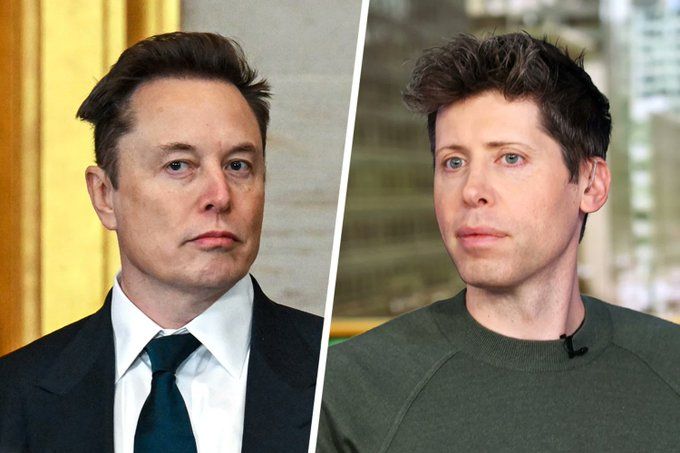
Elon Musk’s $134 billion lawsuit against OpenAI, Sam Altman, and Microsoft goes to trial Monday in federal court in Oakland, California, after the billionaire dropped his fraud claims days before jury selection.
US District Judge Yvonne Gonzalez Rogers approved Musk’s request Friday to narrow the case from 26 original claims down to two surviving counts of unjust enrichment and breach of charitable trust.
A Trial Years in the Making
Musk filed suit in November 2024 after donating roughly $38 million in seed funding to OpenAI. It launched as a nonprofit research lab in 2015.
He alleges Altman and co-founder Greg Brockman induced that backing with explicit promises that the organization would never pursue commercial profit.
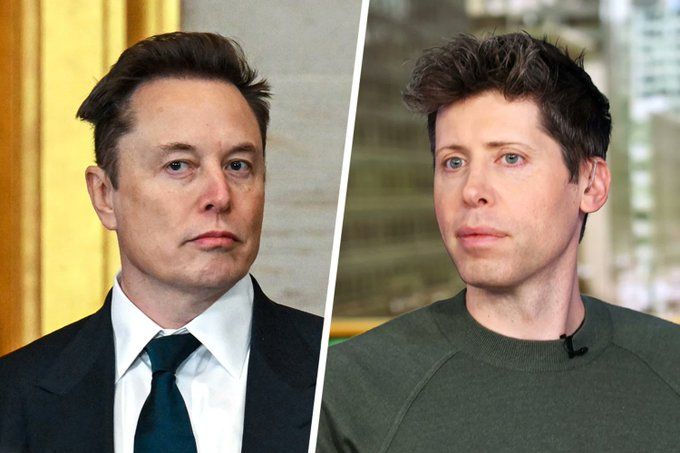
OpenAI later restructured into a capped-profit entity and accepted more than $13 billion from Microsoft. The shift, Musk argues, enriched insiders at the expense of early donors and the public mission they were told they were funding.
In February 2025, Musk led a $97.4 billion consortium bid to take control of OpenAI’s nonprofit arm. Altman rejected the offer publicly.
What the Jury Will Decide
The trial examines whether OpenAI and Microsoft were unjustly enriched by the company’s shift to a for-profit model. It also focuses on whether OpenAI breached the terms of its original charitable mission. The second claim accuses Microsoft of aiding and abetting.
If Elon Musk prevails, his attorneys have asked that any damages flow to OpenAI’s charitable arm rather than to him personally.
Musk is separately pursuing an antitrust case against Apple and OpenAI and continues to develop xAI as a direct rival to Altman’s company.
Jury selection begins Monday morning before Judge Gonzalez Rogers, who previously presided over the Epic Games antitrust case against Apple. The proceedings are expected to expose internal communications between Musk, Altman, and Brockman from OpenAI’s earliest years.
The post Elon Musk’s $134 Billion OpenAI Fight Heads to Trial appeared first on BeInCrypto.

Key Takeaways
- Pavel Durov, founder of Telegram, attributes the spike in cryptocurrency kidnappings across France to compromised tax databases
- Approximately 41 digital currency investors have been abducted in France during early 2026 — averaging one incident every 2.5 days
- Ghalia C., a former tax administration employee, faces charges for allegedly providing cryptocurrency investor information to criminal organizations in 2025
- Notable incidents involve Ledger co-founder David Balland’s abduction and a Burgundy family taken hostage
- The Telegram chief states his platform would withdraw from French operations before permitting government access to encrypted communications
A disturbing pattern of violent attacks against digital currency investors has emerged across France. Pavel Durov, the founder of Telegram, has directly connected this alarming trend to breached government databases and suspected misconduct by a former tax administration employee.
In a statement shared on X, Durov revealed that approximately 41 cryptocurrency investors have fallen victim to kidnapping schemes in France since January 2026. The frequency translates to one abduction occurring approximately every 60 hours.
“More data = more victims,” Durov stated, highlighting what he characterized as widespread compromises of tax information systems and the exploitation of cryptocurrency holder records by criminal enterprises.
The underlying risk is clear. Once criminals obtain personal identifiers, residential locations, and wealth information, they can systematically identify high-value cryptocurrency owners and execute targeted physical attacks.
Durov explicitly referenced Ghalia C., a former employee within France’s tax authority who was arrested in June 2025. Prosecutors allege she provided sensitive information about cryptocurrency investors and industry professionals to organized crime networks. This intelligence was subsequently used to orchestrate violent robberies and extortion campaigns.
Notable Incidents
Multiple cases have captured public attention and concern. David Balland, co-founder of cryptocurrency security firm Ledger, was abducted along with his spouse in January 2025. During the harrowing ordeal, Balland suffered severe injury to his hand before law enforcement successfully intervened.
In April 2026, criminals kidnapped a woman and her 11-year-old child in the Burgundy region. Four individuals demanded 400,000 euros from the child’s father, identified as a cryptocurrency business owner.
Another home invasion in Ploudalmézeau resulted in a mother, two children, and their grandparents being held against their will for multiple hours. These criminal operations have spread across numerous French departments.
May 2025 saw an attempted daylight abduction of a cryptocurrency company executive’s daughter in Paris. Another case involved the kidnapping of a digital asset investor’s family member, with perpetrators demanding payment in cryptocurrency.
These events demonstrate a troubling evolution from sporadic occurrences to a systematic campaign by organized criminal networks specifically targeting the cryptocurrency community.
Government and Industry Action
French government officials have acknowledged the severity of the situation. Jean-Didier Berger, minister delegate to the interior minister, addressed concerns during Paris Blockchain Week on April 16, announcing that protective protocols are being implemented for cryptocurrency investors.
Blockchain security researcher ZachXBT has also elevated these cases in his investigative work. “I prioritize these types of cases as they have grown more frequent,” he shared on X, encouraging victims to make immediate contact.
Durov, meanwhile, rejected suggestions that expanding government surveillance capabilities would mitigate the problem. He contends that increased data collection amplifies vulnerability and declared Telegram would exit the French market entirely before granting French officials access to encrypted user communications.
By April 2026, French law enforcement has verified active investigations and numerous apprehensions connected to organized criminal operations, including groups with international ties.
Crypto World
Can Bitcoin Price Continue Its Push To The Upside? Varntix Investors Buyout 24% Savings Plan In Just 7 Hours!

Bitcoin pushed back toward the $79,000 level as easing geopolitical tension driven by the potential extension of the U.S. Iran ceasefire talks lifted overall risk sentiment. The move was supported by renewed ETF inflows and increased derivatives activity, reinforcing short-term momentum.
At the same time, recent pullbacks tied to geopolitical uncertainty have highlighted how quickly sentiment can shift. Sharp reversals remain a defining feature of the market, and that volatility is starting to influence how investors position capital.
Rather than relying solely on price movement, a growing share of capital is moving toward structured income strategies. Platforms like Varntix reflect this shift, offering fixed-term allocations with predefined stablecoin payouts. The aim is not to replace exposure to assets like Bitcoin, but to introduce a more predictable income layer alongside ongoing market fluctuations.
Can Bitcoin Price Sustain Momentum Amid Macro Uncertainty?
According to the New York Post, Trump has indicated that U.S.–Iran peace negotiations could restart as early as Friday, following a decision to extend the truce indefinitely.
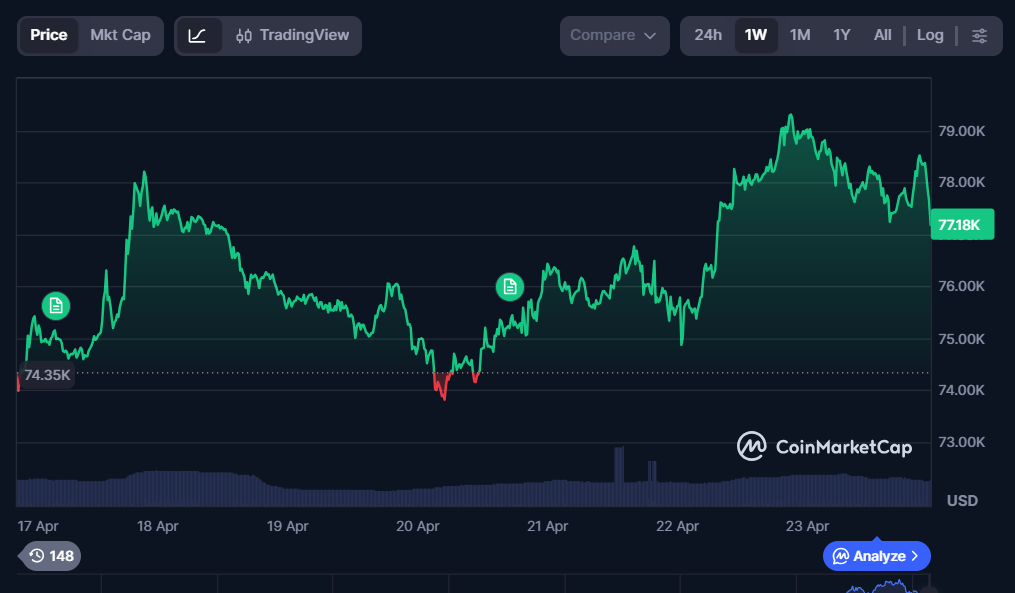
Bitcoin responded with a modest rebound, gaining over 1% and pushing its 24-hour advance beyond 4%, with price hovering near $78,900. The intraday range has been relatively wide, with a low around $74,852 and a high near $78,728. However, the move comes alongside a sharp drop in trading volume down roughly 32% suggesting that traders remain cautious despite the upward momentum.
Source: CoinMarketCap
Grayscale Research has suggested that Bitcoin could find a bottom in the $65,000 to $70,000 range, pointing to a more cautious near-term outlook. At the same time, the Bitcoin Bull Index has shifted to neutral for the first time in six months, reflecting a cooling in overall sentiment.
Despite this, derivatives activity is picking up. CoinGlass data shows a notable increase in futures positioning, with total open interest rising more than 9% in the past 24 hours to exceed $62 billion, indicating growing participation even as directional conviction remains mixed.
Structured Crypto Income: The Varntix Approach
While Bitcoin continues to react to geopolitical headlines and liquidity shifts, not all investors are positioning around direction alone. A growing share of capital is moving toward structures that don’t depend on whether price moves up or down next.
That’s where Varntix is starting to stand out. It offers a structured approach to earning yield on digital assets through dedicated savings plans, where capital is allocated for set periods and returns are defined upfront.
Payouts are made in stablecoins like USDT or USDC, creating a more predictable experience. Instead of reacting to market swings, investors know what they are committing, how long it is allocated and what it is expected to return over that period.

Varntix introduces flexibility through a savings structure that offers two distinct approaches. Fixed plans are designed for investors who want higher returns over longer timeframes, while flexible accounts prioritise liquidity, allowing withdrawals when needed even if the yield is lower.
The contrast becomes clearer when you look at a simple $2,500 allocation. With Bitcoin, the outcome is entirely dependent on price movement. If the price rises by 20%, the position gains around $500. If it falls by the same amount, the loss is similar. If the market moves sideways, there is no return at all. Everything depends on timing and direction.
Varntix removes that dependency by defining the return in advance. A fixed plan can generate roughly $600 over a year regardless of how the market performs. A flexible plan produces a lower but steady return, typically between $107 and $162 annually, while still allowing access to the capital when required.
The key difference is predictability. Instead of outcomes shifting with market volatility, investors receive stablecoin-based income that follows a clear structure, making it easier to plan around both growth and liquidity even in uncertain market conditions.
Take a closer look at Varntix if you want your crypto to work harder.
FAQs
Q1: What is Varntix in relation to Bitcoin price movements?
Varntix is a fixed-income crypto model that operates independently of Bitcoin price direction, offering stablecoin returns instead of market-dependent gains.
Q2: How does Varntix make returns different from trading Bitcoin?
Bitcoin returns depend on price fluctuations, while Varntix provides predefined yields over fixed terms, paid in stablecoins like USDT or USDC.
Q3: Why are investors considering Varntix during volatile Bitcoin markets?
Because Bitcoin price is highly reactive to geopolitical and macro news, Varntix offers a way to earn a predictable income without needing to time market swings.
Disclaimer: This is a Press Release provided by a third party who is responsible for the content. Please conduct your own research before taking any action based on the content.
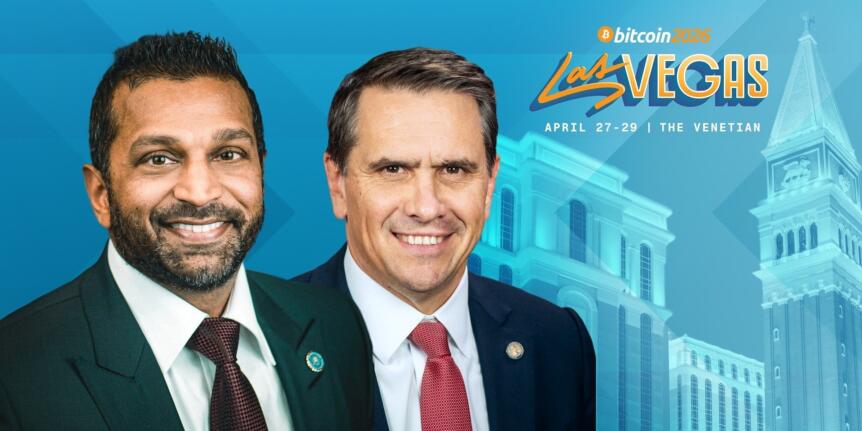
Nashville, TN — April 22, 2026 — Bitcoin 2026, the world’s premier Bitcoin conference, today announced that Acting Attorney General Todd Blanche and FBI Director Kash Patel will join an elite lineup of speakers at this year’s landmark event, taking place April 27–29, 2026 at The Venetian, Las Vegas.
AG Blanche and Director Patel will appear as part of Code & Country 2026, the conference’s flagship policy forum taking place on April 27 starting at 10:30 AM, open to Pro Pass and Whale Pass holders. The forum is designed to facilitate direct engagement between Bitcoin builders and U.S. policymakers, with no intermediaries, on the legislative and regulatory issues shaping technology, civil liberties, and digital assets.
Acting Attorney General Todd Blanche and Director Patel will participate in a fireside chat moderated by Paul Grewal. The broader Code & Country 2026 track features an exceptional roster of policymakers and regulators, including Senator Cynthia Lummis (R-WY), the architect of landmark Bitcoin legislation in Congress; SEC Chairman Paul Atkins; CFTC Chairman Mike Selig; and Patrick Witt, Executive Director of the President’s Council of Advisors for Digital Assets at the White House, among others. The full conference speaker lineup also includes Michael Saylor, Founder & Executive Chairman of Strategy, Robert Mitchnick, Head of Digital Assets at BlackRock, Caitlin Long, Founder & CEO of Custodia Bank, Arthur Hayes, CIO of Maelstrom, and Aleš Michl, Governor of the Czech National Bank.
Director Patel’s fireside chat, titled “Code is Free Speech: Ending the War on Bitcoin,” is expected to be one of the most anticipated sessions of the forum, offering attendees a rare and candid conversation with the nation’s top federal law enforcement official on the intersection of open-source software, civil liberties, and digital assets.
The announcement signals a watershed moment for the Bitcoin community, reflecting growing recognition at the highest levels of government of Bitcoin’s role in the future of finance and free expression. Code & Country 2026 comes at a pivotal moment, during a U.S. election year when congressional agendas, committee priorities, and regulatory frameworks are actively taking shape.
“We are honored to welcome Acting Attorney General Todd Blanche and FBI Director Kash Patel to the Bitcoin 2026 stage,” said Brandon Green, CEO of BTC Inc. Bitcoin 2026 organizer. “Their session promises to deliver extraordinary insight into how federal policy is evolving around Bitcoin development, free speech, and the ability to build great products in America that people need. Alongside Senators Lummis and Moreno and Representatives Nunn, Lawler, Miller-Meeks, Begich, and the rest of our policy lineup, this is shaping up to be the most consequential policy forum in Bitcoin’s history.”
Code & Country was formally launched as a branded track in 2025, building on programming that featured senior U.S. political leaders including Vice President J.D. Vance, White House AI & Crypto Czar David Sacks, House Majority Whip Tom Emmer, and SEC Commissioner Hester Peirce, among others. The 2026 edition expands on that foundation with a focus on energy infrastructure, stablecoin regulation, and civil liberties in the digital age.
Director Patel’s appearance comes amid significant community interest in open-source software rights and the legal treatment of Bitcoin developers. His fireside chat is expected to shed light on the federal government’s posture toward the Bitcoin development community going forward. Further speaker and programming details will be announced ahead of the event.
About The Bitcoin Conference
The Bitcoin Conference, organised by BTC Inc, a Nakamoto Inc. (NASDAQ: NAKA) company, is a global event series featuring notable industry speakers, workshops, exhibitions, and entertainment. These events serve as vital platforms for Bitcoin industry leaders, developers, investors, and enthusiasts to gather, network, and exchange ideas. The Bitcoin Conference hosted approximately 67,000 attendees in 2025 across its events in the United States, Asia, Europe, and the Middle East.
Bitcoin 2026 will be held in Las Vegas, April 27–29. The international event series continues with Bitcoin Hong Kong (August 27–28, 2026), Bitcoin Amsterdam (November 5–6, 2026), and Bitcoin MENA in Abu Dhabi (December 2026).

Farage furious at ‘disturbing’ postman who ‘binned’ Reform flyers | News UK

Peru’s Fujimori, leftist Sanchez deadlocked in presidential runoff poll
Silicon Motion (SIMO) Stock Surges 8% on AI Data Center Storage Momentum

Manchester United reach agreement with Casemiro over contract clause amid transfer speculation

US brings back mandatory military draft registration

Steven Gerrard disagrees with Gary Neville over ‘shock’ Chelsea and Arsenal claim | Football


-

 Fashion2 days ago
Weekend Open Thread – Corporette.com
-
Crypto World21 hours ago
Hyperliquid $HYPE Rally Builds Momentum as AI Sector Enters Prove-It Phase
-
Entertainment7 days ago
NBA Analyst Charles Barkley Chimes in on Ice Spice McDonald’s Fiasco
-

 Politics6 days ago
Gary Stevenson delivers timely reminder to register to vote as deadline TODAY
-
Crypto World6 days ago
Bank of Hawai’i (BOH) Q1 2026: Net Income Drops to $57.4M as Net Interest Margin Expands
-

 Politics4 days ago
Making troops accountable for war crimes threatens US alliance, ex-SAS colonel warns
-

 Politics4 days ago
Disabled people challenge government SEND proposals over segregation concerns
-

 Business4 days ago
Rolls-Royce Voted UK’s Most Iconic Trade Mark as IPO Register Hits 150
-

 Politics4 days ago
Zack Polanski responds to home secretary’s taser threat
-

 Politics4 days ago
Starmer handler McSweeney to be dragged from shadows by Foreign Affairs Committee
-
 Sports3 hours ago
IPL 2026: Ruturaj Gaikwad registers slowest fifty of the season, enters all-time unwanted list | Cricket News
-
Politics4 days ago
Wings Over Scotland | How To Get Away With Crimes
-
 Crypto World5 days ago
Five Value Stocks with Recovery Potential in 2026: PayPal (PYPL), Nike (NKE), and More
-

 Crypto World5 days ago
New York sues Coinbase, Gemini over prediction market offerings
-

 Politics4 days ago
‘Iran is still a nuclear threat’
-
 Sports4 days ago
Tim Bradley names the current best in the world: “Better than Inoue and Usyk”
-
 Business4 days ago
HCL Tech share price tank over 9% after weak Q4. JPMorgan, HSBC & 3 others cut target price
-

 NewsBeat7 hours ago
LK Bennett closes all stores after entering administration
-
 Crypto World5 days ago
Crypto’s great hope in Senate’s Clarity Act still has a path to survive tight calendar
-

 Business4 days ago
The Job Benefits Most Men Don’t Know to Negotiate
You must be logged in to post a comment Login