
Politics
Keir Starmer Faces Possible Sleaze Probe Over Mandelson Scandal


Keir Starmer is facing yet another bruising week over the Peter Mandelson vetting scandal.
Parliament’s Foreign Affairs Committee will continue its probe into the affair, with the prime minister’s former chief of staff, Morgan McSweeney, giving evidence on Tuesday.
But it is the possibility of Starmer being investigated by the cross-party Privileges Committee for misleading parliament which is causing most concern inside 10 Downing Street.
Commons Speaker Lindsay Hoyle is expected to announce on Monday afternoon if MPs will be given a vote tomorrow on whether the PM should be referred to the powerful committee.
Here, HuffPost UK explains the background to the latest controversy to hit Starmer and assesses the damage it could do to the beleaguered PM.
What Is Starmer Accused Of?
There are two strands to the accusations against the PM.
His critics say he misled the Commons by previously insisting that “due process” was followed when Mandelson was vetted for the role of UK ambassador to Washington.
It has subsequently emerged that UK Security Vetting had recommended the then Labour peer be denied clearance to take up the role.
However, the Foreign Office decided that the risks highlighted over his business links to Russia and China could be mitigated, and he was given the highest security clearance, known as “developed vetting”.
The second accusation centres around comments Starmer made at prime minister’s questions last week.
He said that “no pressure existed whatsoever” in getting the Foreign Office to give Mandelson security clearance.
But that had been contradicted the previous day by Sir Olly Robbins, who was sacked by Starmer for not telling him about UK Security Vetting’s concerns.
Giving evidence to the Foreign Affairs Committee, Sir Olly said there was “constant pressure” on his department from No.10 and there was an “atmosphere of constant chasing”.
What Has Starmer Said?
In a Sunday Times interview, the PM insisted there was no inconsistency between his comments and Sir Olly’s.
He said there was “different types of pressure” in government.
“There’s pressure – ’Can we get this done quickly?’ – which is not an unusual pressure. That is the everyday pressure of government,” he said.
Starmer said a pressure “essentially, to disregard the security vetting element and give clearance” would be something different, and that Sir Olly “was really clear in his mind that wasn’t pressure that was put on him”.
Will He Face A Sleaze Probe?
Even if Hoyle grants MPs a vote on referring the PM to the Privileges Committee, it would require a huge Labour rebellion for it to pass.
According to The Times, No.10 is planning to whip Labour MPs to vote against a probe, making it a major test of the under-fire prime minister’s authority.
One Labour MP told HuffPost UK the issue was a “complete waste of time” and insisted there was no comparison with the Privileges Committee investigation Boris Johnson faced over partygate.
He said: “Boris Johnson’s parties in breach of lockdown rules were of a wholly different magnitude of severity. Besides, the PM has been truthful about due process throughout.”
Emily Thornberry, the Labour MP who chairs the Foreign Affairs Committee, accused the Tories of playing political games ahead of the elections on May 7.
She said: “It may be that at some stage in the future some of the questions haven’t been answered and it is decided that they are of sufficient importance that the Privileges Committee should be involved but I don’t really see why we are doing it at the moment apart from potentially people trying to score points in advance of the local elections.
“I’m sorry to say that and I’m not supposed to be partisan on this but it is plain as the nose on my face what’s going on here.”
Subscribe to Commons People, the podcast that makes politics easy. Every week, Kevin Schofield and Kate Nicholson unpack the week’s biggest stories to keep you informed. Join us for straightforward analysis of what’s going on at Westminster.

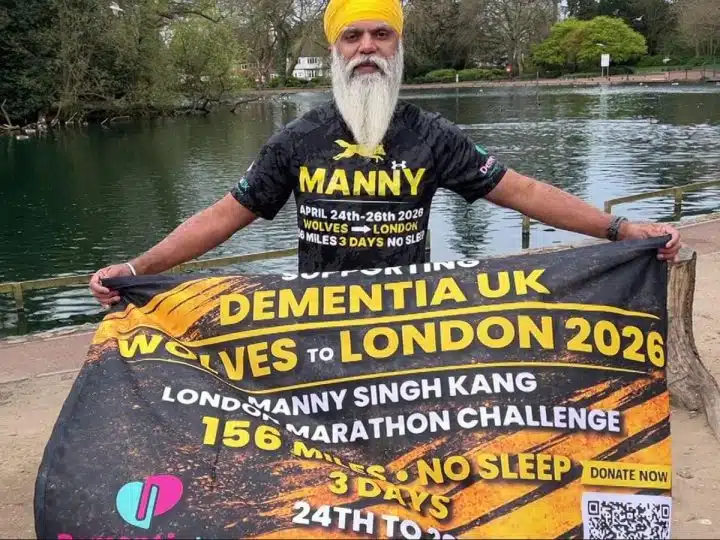

Manny Singh Kang set off before dawn from the Billy Wright statue outside Molineux. He was wearing a faded Wolves scarf knotted at his throat and his trainers were engraved with the names of people affected by dementia.
Kang was walking to London – a planned 135‑mile trek to Greenwich Park followed by the London Marathon. His journey would see him travel a total of 156 miles, all without sleep, to raise money for Dementia UK.
He planned to walk through Birmingham, Warwickshire, Oxfordshire and Buckinghamshire before reaching Milton Keynes and then north London, arriving at Greenwich for his seventh London Marathon. Express
Dubbed Manny’s Marathon Madness
The walk had been a preface, a way to arrive with a story in his bones and a cause on his feet. Every mile he carried forward was a donation, a memory, and a medal.
Kang said:
It will be the toughest, hardest challenge that I’ve ever faced, but I still reflect on the people we’re helping who face tough, hard challenges every day.
He added:
You don’t need to know somebody to help them, go out and do something good to affect your community positively.
Manny’s Struggle
For seven years, Manny has turned personal grit into public good, raising money and awareness for Dementia UK and its Admiral Nurses. He has also served as a Volunteer Ambassador for the charity.
Over that time, his fundraising has helped generate hundreds of thousands of pounds for families affected by dementia.
He told the BBC:
I came up with this quite bonkers super challenge but I think it’s possible. Human capabilities are much stronger than sometimes our thoughts let us experience so it’s about taking those negative thoughts away focusing on the positivity.
Along the route
Manny recorded short messages for his mother on his phone. He also carried a laminated photograph tucked into his pack – a reminder of why he kept moving when the miles blurred. His trainers carried names of dementia patients and family members – a literal imprint of the cause he was walking for.
People who recognised the Wolves scarf stopped to donate, to cheer, to tell him their stories. Local businesses printed event shirts and followers tracked his progress.
It’s important to note that the attention was not what he initially sought, but these are the types of challenges that bring communities together.
During the current rise of the far right in particular, this is what many need – a positive cause to unite for.
Reaching London
When Manny reached London, volunteers wrapped him in foil, offered water, and guided him to the marathon village. His legs were heavy, but the ache was worth the triumph.
He laced up again and stepped to the start line of the London Marathon, not as a man who had missed a train but as a Wolves fan who had walked his team’s colours into the heart of the capital.
Featured image via the BBC
By Faz Ali


Gianluca Prestianni, the Benfica winger, has been handed a six-match ban by UEFA for discriminatory conduct following an incident involving Real Madrid forward Vinicius Junior. The incident took place during their Champions League knockout play-off in Lisbon on February 17.
The decision follows an ethics and disciplinary investigation into comments made during the match that led Vinicius to leave the field in protest.
What UEFA found
UEFA’s investigation concluded that Prestianni’s conduct amounted to homophobic abuse, rather than racist abuse, and imposed a six-match suspension.
The ruling includes the one match Prestianni had already missed while provisionally suspended in February.
Three of the six matches are suspended for two years, meaning they will only be enforced if further misconduct occurs. UEFA has requested that FIFA extend the ban worldwide.
The incident and immediate aftermath
During the Lisbon tie, Vinicius reported alleged abuse to referee François Letexier. He subsequently left the pitch, prompting a stoppage of play that lasted around ten minutes.
Reports at the time indicated a heated exchange in which Prestianni later told UEFA he had used a homophobic slur rather than a racial one.
The episode reignited debate about how on-field confrontations should be handled when players cover their mouths while speaking to opponents.
Wider implications for football rules
The case has fed into a broader conversation about officiating and disciplinary measures.
The International Football Association Board (IFAB) was set to meet to consider whether covering the mouth while speaking to an opponent should carry an automatic red card, if the content is later judged to be discriminatory.
FIFA president Gianni Infantino publicly argued that a player who covers their mouth and says something that has a racist consequence should be sent off, suggesting a presumption that the act of hiding speech implies wrongdoing.
These discussions could lead to changes in how referees and governing bodies interpret and sanction off-the-ball verbal exchanges.
What this means for players and clubs
The ruling underscores that governing bodies are prepared to treat discriminatory language seriously, even when the precise nature of the slur is contested.
For players, the case is a reminder that words and gestures, especially those concealed from cameras, can carry severe professional consequences.
For clubs, it highlights the reputational and competitive risks of incidents that escalate into disciplinary proceedings. It also highlights the importance of internal education and clear codes of conduct to prevent similar episodes.
Looking ahead
Although the suspended portion of Prestianni’s ban reduces the immediate number of matches he will miss, the decision sets a precedent in how UEFA frames and punishes discriminatory conduct.
The request to extend the ban worldwide through FIFA signals an intent to ensure consistency across competitions. Meanwhile, the IFAB and FIFA conversations could produce rule changes that make it easier for referees to act decisively when players attempt to conceal verbal exchanges.
The outcome of those deliberations will be closely watched by players, clubs, and fans who want clearer protections against abuse on the pitch.
Conclusion
The Prestianni case is more than a single disciplinary ruling; it is a flashpoint in football’s ongoing struggle to stamp out discrimination.
UEFA’s sanction, the international reaction, and the potential rule changes under consideration together reflect a sport grappling with how to police language and intent in an era of instant replay and intense scrutiny.
Whatever the next steps, the message from governing bodies is increasingly unambiguous: discriminatory conduct will be investigated and punished, and the mechanisms for doing so may soon become stricter.
By Faz Ali

There’s no denying romantic heartbreak is tough (as anyone who’s been through a situationship will know).
But friendship breakups can sting too, says therapist Erin Pash.
“Romantic breakups come with a script: breakup songs, therapy language, social permission to fall apart. Friendship loss has almost none of that,” she said.
Here, we spoke to Pash about when she sees the most friendship breakups, why they sting so much, how to move on from them, and when self-reflection might be needed.
Most friendship breakups happen in people’s late 20s and midlife, said the therapist
When HuffPost UK asked Pash when she sees the most friendship breakups, she answered: “The late 20s/early 30s and midlife are the biggest hotspots”.
In your 30s, she explained, “life starts diverging fast – different relationship choices, kids or no kids, career paths, values. The friendship that worked at 22 doesn’t always survive who you’re becoming at 32”.
And at midlife, people might start reconsidering huge parts of their lives.
Maybe “someone gets sober, leaves a marriage, stops people-pleasing – and when you finally show up as your real self, some friendships can’t handle it.
“Both stages come down to the same thing: when you get clearer on who you are, relationships that required a smaller version of you start to crack.”
Why do friendship breakups hurt so much?
Part of the reason is that they’re not really as acknowledged as romantic separations, said Pash.
“There’s no ceremony, often no clean ending, and the world doesn’t really acknowledge the grief. But the intimacy in a close friendship can actually run deeper,” she said.
“Your best friend may have known you in ways a partner never did, without the performance of attraction or the weight of shared finances. When that’s gone, you lose both a person and the version of yourself they reflected back to you.”
How can I move on from a friendship breakup?
It’s important not to try to ignore your pain, the therapist advised.
“Give it real grief. Don’t minimise the loss just because it wasn’t romantic.”
Then, consider what it is that’s actually upsetting you about their absence.
“Did that friend make you laugh harder than anyone? Hold your history? Challenge you?
“Naming what you’ve lost helps you heal it with precision instead of just sitting with a vague ache. And resist the urge to immediately fill the void. Rushed replacements rarely fix the real wound.”
When should I begin self-reflecting?
It’s common to wonder what role you played in a friendship breakup. And provided you aren’t spiralling about whether the whole thing was your fault (Pash says that’s “just shame”), self-reflection can actually be healthy.
“Every ending has data in it,” the therapist stated.
“Ask: what patterns am I noticing? If the same dynamic keeps showing up across multiple friendships, that’s a signal worth paying attention to.
“Even simple journaling, like ‘What did I bring to this friendship that helped? What didn’t?’ can open real self-awareness without beating yourself up. The goal is growth, not guilt.”
Remember, she added, that friendship breakups can be healthy.
“Not every relationship is meant to last forever, and outgrowing a friendship isn’t a failure. It’s often a sign you’re evolving. The most honest thing you can do for yourself and someone else is stop maintaining a connection that’s become performative.
“Letting go with intention and care is an act of integrity, not abandonment.”
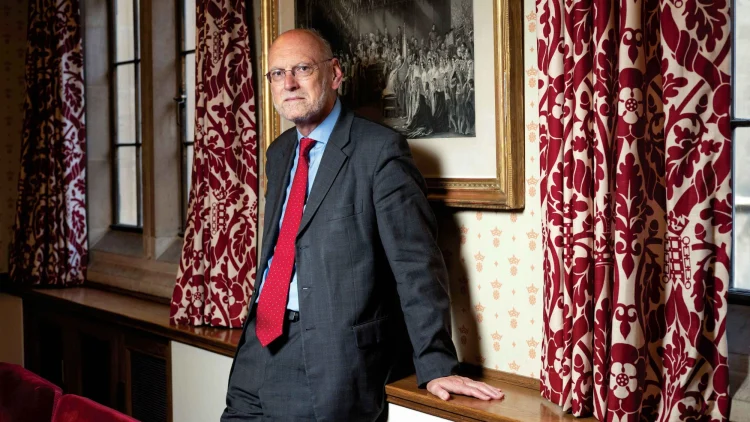

Conservative peer Lord Biggar | Image by: Jeff Gilbert / Alamy

6 min read
This indispensable book makes clear what society has to lose if we do not fight ideological conformity and find the courage to publicly defend the right to disagree
In The New Dark Age, Nigel Biggar poses a startling question. Is his book really necessary given that “the ground of the culture wars is already well-trodden”?
In short, yes. Because he’s personally been engaged in the “colonial front of the culture wars” (a polite description of the vicious way he endured a decade of being cancelled, traduced and hounded), his ‘lived experience’ has given rise to reflections and insights “that are not… common”. Moreover, his unique observations offer solutions, not just complaints.
Describing the visceral way that ‘cancel culture’ works in practice is a public service. It sends a particular shiver to read, “my book was cancelled – and I was, so my wife tells me, devastated”.
It’s a riposte to sneering accusations that culture wars are phoney, artificially created by ‘victims’ for bad faith political ends. Shooting down these straw men can be exhausting. Reading the shocking details of how uninvited and poisonous the two main ‘cancel Biggar’ campaigns were should be a lesson for all who imagine that they won’t ever become targets.
A brief study of Biggar’s résumé might suggest he’s an unusual recipient of vitriolic political hate, more donnish than activist. Today he’s well-known as a Conservative peer, an internationally renowned heterodox academic, described by one reviewer as “a sort of British Jordan Peterson in less interesting suits”. But actually, he voted Labour for 13 years, remain in 2016 and, until recently, was a Guardian subscriber. He is an avowed liberal, carefully dissecting the differing way that word is used, and settling on John Stuart Mill’s idea “that a free marketplace of ideas is the best way of testing and correcting prevailing orthodoxies”.
Some of the book’s vigour is undoubtedly driven by personal retribution against each of the academic critics he puts “in the dock”, whose intellectual dishonesty about his work he dissects remorselessly, even if he refers to himself in third person during chapter five “not to defend myself but rather to display the symptoms of academic corruption”. But mainly the book is a call to arms to create “liberal citizens who have the strength of character – the virtues – that make them capable of responding to alien viewpoints thoughtfully and civilly”. One of the barriers to that are institutions so in thrall to progressivism that they have created a culture which prefers to compel the iteration of dogma than encourage the discovery of “the truth of things”.
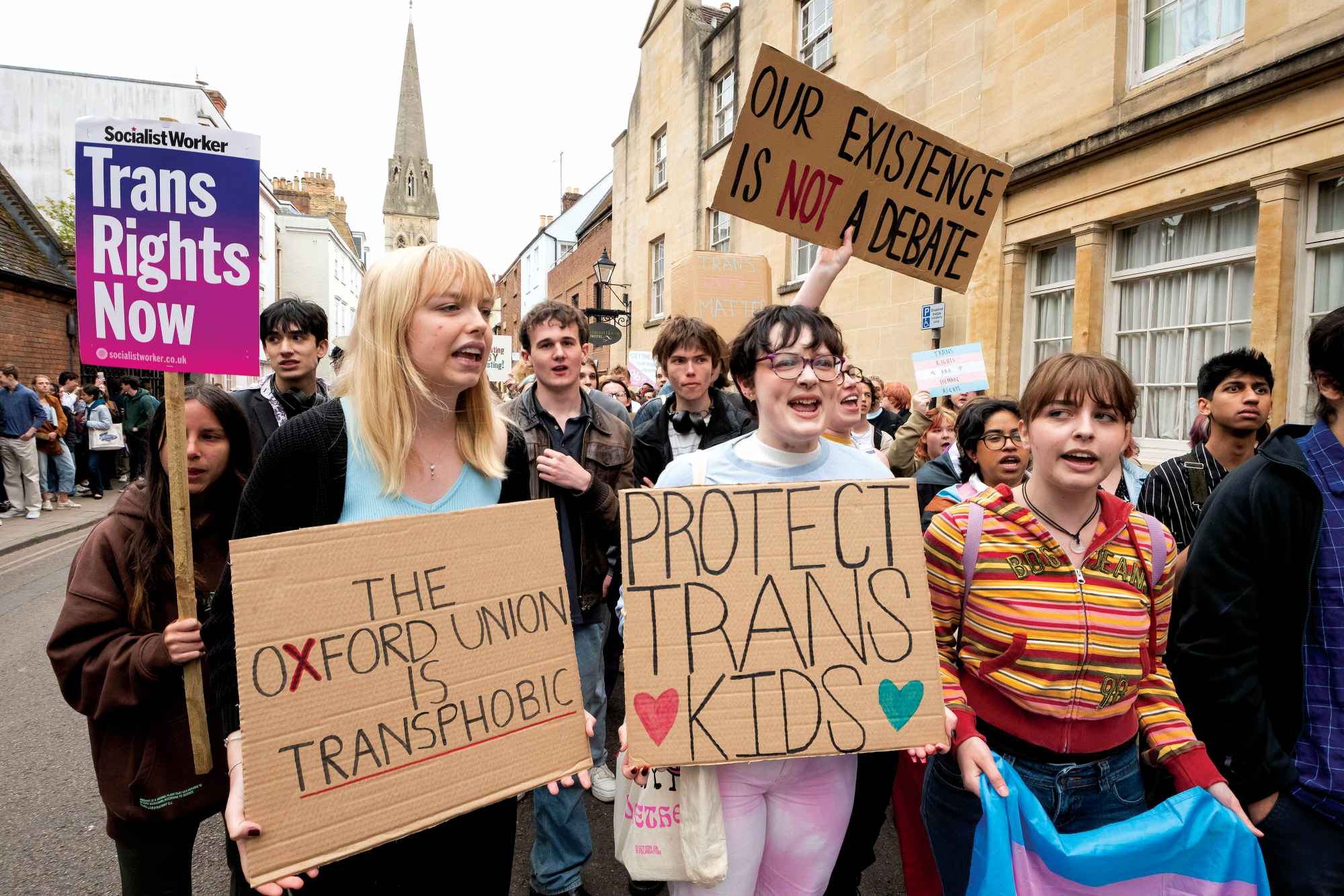
Image by: Image by: Stephen Bell / Alamy
The imposition of policies that discourage and penalise those who dare to express “reasonable doubts” – let alone speak “unfashionable truths” – creates a chilling climate in which “most would-be dissenters will tie their tongues and move into internal exile”, rather than risk their career and their reputation. This is catastrophic for freedom of speech; but he goes further to argue that “what we dare not stay out loud becomes, over time, too burdensome to carry on thinking”.
Understandably, the book focuses on universities as he’s most familiar with their practices – but also because these institutions “form the minds of graduates, who, now more than ever, go on to lead and manage the rest of society”.
The book made me think, even when I argued with it
However, the book demonstrates that institutional rot runs far beyond university campuses, citing similar corrosion in publishing, journalism, book reviewing (!), museums and the NHS gender services.
It would be good to cut and paste his solution into the political realm: “Developing a custom of appointing to positions of authority not just managers but leaders… people who are not just preoccupied with keeping their show on the road but who also have a firm grasp of why the show deserves to be kept there at all”.
The book’s soul is about the current lack of, and need for, courage. Even when staff know of an egregious institutional betrayal of values, they surmise it “will cost less to pay lip service or work around the latest bureaucratic requirement than fight it”. They fear going public. The reaction of Cambridge academics in 2020 to the university’s censorious proposal to insist that they “respect” each other was largely silence, beyond a brave few. Yet in a secret ballot, the proposal was defeated 1,378 to 208, suggesting “a small and vociferous minority had cowed a liberal but risk-averse majority out of speaking its mind”.
Biggar’s tale, of having his scholarship misrepresented while being unjustly labelled a racist bigot, is all too familiar. But what makes for disturbing reading is the insidious and cowardly ways that victims of cancel culture are treated by colleagues. Even friends look the other way, “passively mute” in the face of injustice. Biggar himself says of his experience: “It was as if I had become diseased, and they were terrified of contagion”. Even those who were supportive did so furtively, rendezvousing in “deserted cafes… at tables behind screens where no-one could see”.
I usually disapprove of comparisons with the Nazi era, but Biggar effectively uses the analogy – with evidence – when it comes to academic cowardice in 1930s Germany: the “fear of contagion by association” led most ‘Aryans’ to shun and isolate ‘discredited professors’, leftists and Jews. He notes: “I am not saying that academics today tend to be Nazi. I am saying that many Nazi Party members were not in fact convinced Nazis; they simply wanted to get on with their lives and careers, undisturbed. Just like academics today.”
The book made me think, even when I argued with it.
 If you want to know more about contested truth claims around colonial history, this is a great taster. I may not be persuaded by all of Biggar’s evidenced claims about ‘Empire’. I’m more sympathetic to much of Frantz Fanon’s revolutionary anti-imperialism (as distinct from many of today’s post-colonial charlatans). But where we agree is on the dangers of using history for activist ends rather than presenting “the past on its own terms”.
I may not share his “monotheistic conviction” but I loved his moral clarity in detailing the virtues we should teach new generations. Finally, I’m keener on passionate discourse than Biggar, who lists it as a vice. But this work with its call to reinvigorate a liberal conviction in Enlightenment reason – now freshly under assault from as many on the right as the leftist cultural theorists this book skewers – is indispensable.
Baroness Fox of Buckley is a non-affiliated peer
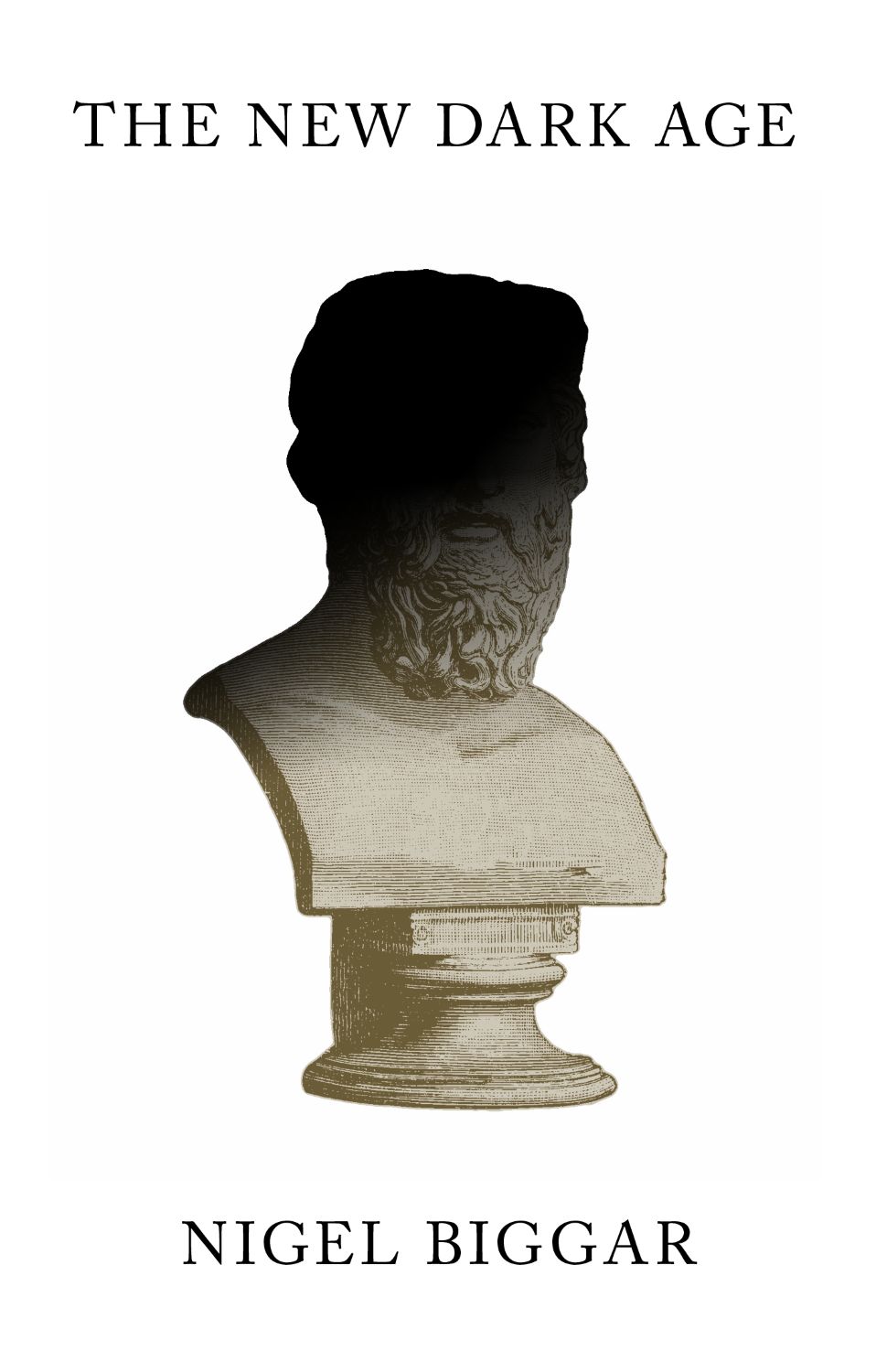
The New Dark Age: Why Liberals Must Win the Culture Wars
By: Nigel Biggar
Publisher: Polity

Regular exercise can help to manage blood pressure, because it makes our hearts stronger.
But according to a huge 2023 study, which looked at 270 trials from 1990-2023, “isometric” exercises might be the most effective at the job, with “wall sits” the best performer among these.
Researchers found that isometric exercise was more likely, on average, to lower blood pressure than aerobic exercise training, dynamic resistance training, combined training, and high-intensity interval training, though all forms were still immensely helpful.
What is isometric exercise?
It involves keeping your body still while you tense specific muscles for a set period of time. You don’t move your joints during the movement.
“Isometric exercise” is sometimes called “static” exercise.
It is the opposite of “dynamic,” or “isotonic” exercise, which involves little load and consistent pressure on various muscles. For example, running and swimming.
Most forms of exercise involve a combination of isometric and isotonic exercise, though some are 100% one or the other.
What are some examples of isometric exercises?
- Wall sits
- Planks
- Glute bridges
- Side planks
- V-holds
- Calf raises
- Hollow holds
- Copenhagen planks.
In the 2023 study we mentioned earlier, published in the BMJ, wall sits (placing your back against a wall with your thighs parallel to the ground) were the most effective of the isometric exercises for lowering blood pressure.

Does that mean I should only do isometric exercises?
The best approach to exercise seems to be a mixture of weight training and aerobic training. This has been linked to increased longevity compared to sticking to one or the other.
Speaking to the British Heart Foundation, senior cardiac nurse, Joanne Whitmore, said: “Exercise is good for your heart health and health in general. It can reduce the risk of heart and circulatory diseases by up to a third.
“Aerobic exercise in particular can help the heart and circulatory system work better through lowering blood pressure. Current guidelines also encourage muscle-strengthening exercises, like yoga or Pilates.
“It’s encouraging to see other forms of exercise explored in this research as we know that those who take on exercise they enjoy, tend to carry on for longer, which is key in maintaining lower blood pressure.
“However, there are other lifestyle choices that can benefit your blood pressure. These include keeping to a healthy weight, eating a balanced diet, cutting down on salt, not drinking too much alcohol and taking any prescribed medication”.
Speak to your doctor if you have a heart condition and want to take up new exercise, she added.
Politics
Scottish election candidate slams Gordon Ramsay over ‘deeply disturbing’ seabird hunt footage


A Scottish parliament candidate has criticised celebrity chef Gordon Ramsay for participating in “one of the most shameful activities in Scotland.”
Robert Pownall, standing in the Edinburgh Central seat, has called on Ramsay to “do the right thing”. This is after footage resurfaced from an episode of Ramsay’s show, The F Word. In it, he travels to the Isle of Lewis to cook and eat young gannet chicks – known as “guga”.
In the segment, Ramsay is seen recoiling from the bird’s carcass. He describes the smell as “worse than rotten eggs” and says it “looks like something out of an Alien film.”
Pownall said the footage was “deeply disturbing and disrespectful.”
The criticism comes as Pownall launches his bid for Scottish parliament. He’s campaigning as a giant gannet, demanding the removal of the legal exemption that allows the guga hunt to continue.
Each year, a group of hunters travels to the uninhabited island of Sula Sgeir. They take gannet chicks from their nests using poles and nooses before killing them with blows to the head. They take the birds, who aren’t yet old enough to fly, back to the Isle of Lewis where they sell and consume them as a local delicacy.
The guga hunt is Scotland’s last remaining legal seabird hunt. It’s legal due to a special exemption in the Wildlife and Countryside Act.
Gordon Ramsay accused of ‘celebrating cruel activity’
Speaking on 27 April, independent candidate Pownall said:
Gordon Ramsay travelled hundreds of miles to take part in the killing of defenceless seabird chicks and turned it into entertainment. That is shameful.
This cruel activity should be challenged, not celebrated.
The comments come amid growing concern over the status of gannets and other seabirds.
Sula Sgeir, the island where the hunt takes place, is the only Special Protection Area for Gannets in Scotland to have shrunk while others grow. That’s according to documents which Pownall’s organisation Protect the Wild obtained. Pownall says this shows the hunt is undermining the colony’s ability to recover.
Gannets have also been hit hard by avian flu, with populations declining significantly in recent years. Pownall added:
Gannets are already under extreme pressure from disease, climate change and industrial fishing. They cannot afford another threat – least of all one driven by human greed.
This practice is not about survival, necessity, or nourishing communities. It is about killing wild animals for tradition and taste. And that is simply not okay.
The candidate has now issued an open letter to Gordon Ramsay, accusing him of turning the hunt into a “spectacle” and calling on him to now publicly oppose the practice.
Pownall is aiming to bring national attention to the issue ahead of the 2026 Scottish Parliament election, and is calling on all parties and the future government to commit to ending the guga hunt.
Featured image via the Canary
By The Canary


There are policies in what we condescendingly call ‘developing countries’ that actually make them more advanced than the UK in crucial ways.
Developing countries and home ownership
Things like homes and utilities are the basics of life, yet countries we refer to as ‘developing’ often have better models than nations we call ‘advanced’.
Many lower-income countries have high rates of home ownership. Kazakhstan tops the table with 98% of the population owning their own home. In Laos, it’s 96%, and in India, it’s 87%. Many countries in Eastern Europe also have home ownership rates of above 90%.
And then there’s the UK, where 65% of people own their own home. Actually owning the place one lives in makes sense because one isn’t renting and has a place to call their own. It’s a better option than private or state landlordism.
Water ownership
Water is another essential and in developing countries, 90% have water in public ownership.
While state ownership doesn’t solve everything on its own, it’s more efficient to remove profit from essentials or natural monopolies. Non-effective management or a lack of investment can happen in the public or private sector.
Then there’s the UK, where water and sewage is privatised and investment goes to dividends rather than fixing issues.
As stated, ‘developing countries’ with public ownership can also suffer from a lack of investment but the basic policy of non-privatisation is more advanced for utilities.
Electricity ownership
Further, in surveyed developing countries, 71% had electricity in majority public ownership.
What about the UK? Well, even the national grid is privatised. The grid infrastructure made £5 billion in profit in 2025.
The UK previously had publicly owned utilities and a higher home ownership rate. So we’ve actually ‘advanced’ in the wrong direction, while ‘developing’ countries are ahead in some quite critical ways.
Featured image via Pixabay/ sarangib
By James Wright
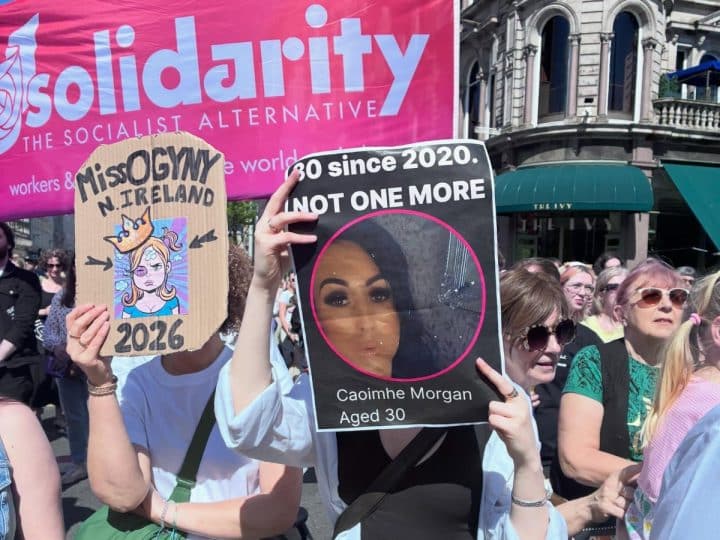

Thousands of protestors marched in Belfast at the weekend to condemn the north of Ireland’s appalling rates of violence against women. Between 2020 and 2025, a shocking 30 women were murdered. This is the highest rate across Britain and Ireland, and over three times the figure in the south of Ireland for the same period.
The socialist-feminist movement ROSA organised the march. The route went from the Royal Courts of Justice to City Hall. Protestors held banners reading “Not One More”, meaning no one else should suffer the fate of women like Natalie McNally. She was horrifically murdered by her partner in 2022 while 15 weeks pregnant.
Natalie’s brother Brendan spoke at the City Hall. He said of his sister:
I knew her as the gentlest of people who would have sympathised for anyone in a difficult situation. She worked here in Belfast and supported and was involved in various activist movements.
“Criminal negligence”: vulnerable women left exposed by housing shortage
People Before Profit’s Fiona Ferguson cited the economic factors endangering women under our cruel capitalist model:
In 2026, violent misogyny and sexism should be a relic of the past, it should be a matter for the dustbin of history. But the reality is that right now, today, far too many women in our society are living in violent homes that they cannot escape from.
There are no public houses available because the waiting lists are too long. Refuges are oversubscribed because cuts have been made by the storming executives to services like women did. And women do not have economic freedom because of cuts to social security and they cannot escape. That’s criminal negligence.
The latest horrendous figures show 50,000 people waiting for a home. Ferguson’s comments echo those we previously reported from Sinn Féin MLA Deirdre Hargey, who called out:
…blockages in housing for women who are in situations where there is violence perpetrated against them.
ROSA themselves have cited the need to “end poverty wages” and fight back against an economic order that:
…allows wealthy and powerful men to abuse ordinary people rampantly.
Ferguson also slammed the far-right who falsely claim to act as the protectors of women and children:
We are facing a growing global right-wing movement that is coming for our rights. Fuck them! Right here in Ireland, North and South, there are people who want to see the politics of Donald Trump brought to our streets and brought to our doorsteps.
We cannot let them. Some of those people are organising far-right rallies in our city centre. Some of them are writing laws in Stormont.
One of the ways that the far-right are trying to grow is by using the fear that women face every day. Fear of violence, fear of sexual harassment, fear of rape and fear of femicide. And they want us to blame migrants and they want us to blame trans people. We won’t do it.
Research by The Detail found that:
Almost half those arrested for race hate disorder in Belfast last August had previously been reported to the PSNI for domestic abuse…
Continuing austerity in Belfast impacting women
ROSA asked women why they were marching in Belfast. One activist said:
I’m marching against gender-based violence because Stormont claims to care about violence against women and girls while making cuts to vital voluntary and charitable services that support victims and survivors.
This is likely a reference to changes the Department of Health made to grant allocation in 2023, that resulted in some women’s support charities losing money.
Another recent change by Westminster resulted in a nearly £16 million drop to funding of voluntary and community sector organisations in the Six Counties, particularly those providing support for unemployed people. Stormont has not found a way to plug the gap. The Northern Ireland Council for Voluntary Action (NICVA) specifically cited the impact this would have on women.
Despite the many moving placards at the protest, ROSA used their Facebook platform to call for people to get actively involved in campaigning for an end to misogynistic violence:
Not one more can’t just be a slogan – it must be a call to action! DM this page if you want to be involved in a campaign against gender based violence.
Featured image via ROSA


Donald Trump has made clear that he believes ‘shooter’ Cole Allen’s ‘manifesto‘ comments about a “paedophile rapist and traitor” were about him. The slip came as a rattled Trump denied any wrongdoing during a 60 Minutes interview after the event.
Trump: yes, the manifesto was about me…
Trump’s interviewer Norah O’Donnell asked about Allen’s “stunning” document, which was sent to family members minutes before the incident. She then noted that it said Allen was “no longer willing to permit a paedophile, rapist and traitor to coat my hands in his crimes”.
Trump lashed out, claiming he was being asked this because the 60 Minutes crew are “horrible people”. But, as O’Donnell pointed out, he had immediately assumed the “paedophile rapist and traitor” in the comment was him. Cue more tantrums and denial:
Trump even claimed he had been “totally exonerated”. Not quite. He appears thousands of times in the Epstein files, even though his Department of Justice has released only two percent of them, in heavily redacted form. And he is accused in those files, among other things, of raping and beating at least one thirteen-year-old child and watching as the same or another thirteen-year-old’s baby was dumped in a lake.
Jean Carroll also won almost $90m in damages from the president in a civil case after she accused him of sexual assault. Although the case did not prove rape according to New York State’s narrow definition of penetrative sex, appeal judge Lewis A Kaplan said that the allegation of rape was “substantially true” and Trump’s appeal argument was “entirely unpersuasive“. “Totally exonerated”? Right.
Even CBS, now owned and run by pro-Trump fanatical Israel supporters, can rattle Trump into such telling give-aways.
Featured image via the Canary
By Skwawkbox
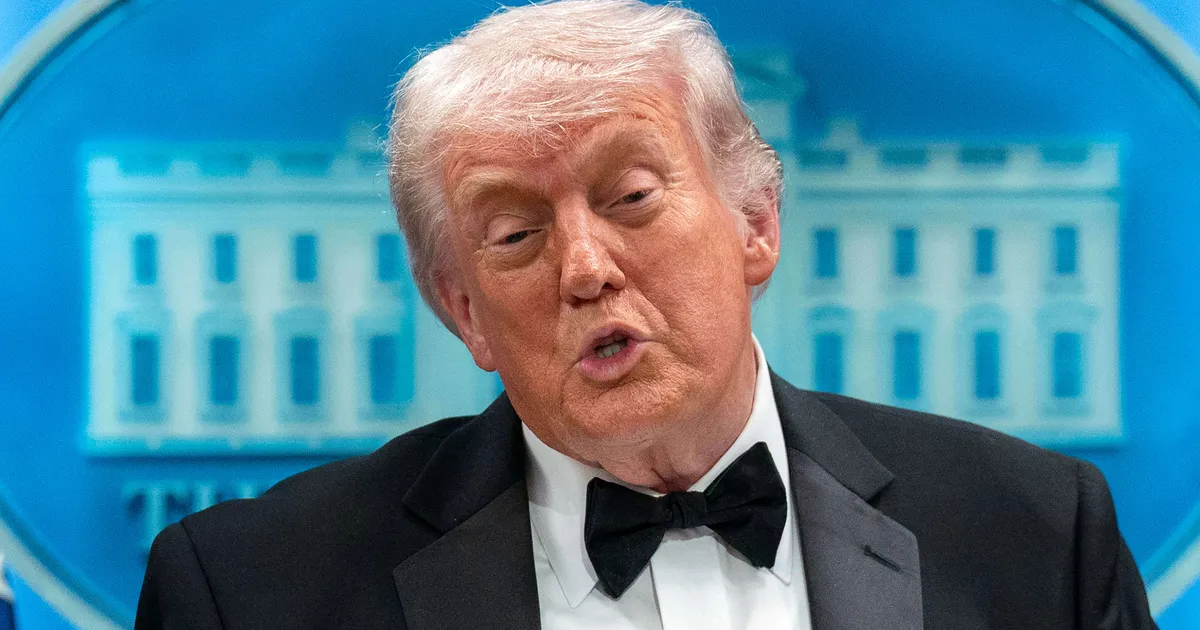
Donald Trump has falsely accused the BBC of using AI to fake his comments in a Panorama programme about January 6.
The US president has a multi-billion dollar lawsuit out against the corporation after it spliced together different sections of a speech he gave on the day of the 2021 Capitol riot.
Trump is suing for defamation, claiming the edits suggest he had directly encouraged his supporters to storm the government building.
The lawsuit, filed in the US, already accuses the BBC of “intentionally, maliciously and deceptively doctoring” the president’s speech.
Trump has now insisted AI was used to alter his words altogether.
“The BBC has me – actually AI.” he told CBS’s 60 Minutes. “They have me saying a horrible statement. I said, ‘I never said that.’
“It turns out they gave me an AI. They had my lips speaking words of hate, tremendous hate, which I never said.
“They don’t know what to do. They’ve admitted they’re wrong, they just don’t know what to do.
“They actually had me making a major statement, and it wasn’t me. It was my face, it was my lips. My lips were perfectly in sync with the words.
“I said, ‘I can’t believe it, I can’t believe it.’”
The Panorama clip showed the president as saying: “We’re going to walk down to the Capitol… and I’ll be there with you. And we fight. We fight like hell.”
Trump did say those words during his speech – but in two separate segments.
He told the crowd: “We’re going to walk down to the Capitol, and we’re going to cheer on our brave senators and congressmen and women.”
More than 50 minutes later, he said: “And we fight. We fight like hell.”
The BBC has been approached for comment.
The corporation has previously apologised to the White House over the edit but rejected calls for compensation.
Subscribe to Commons People, the podcast that makes politics easy. Every week, Kevin Schofield and Kate Nicholson unpack the week’s biggest stories to keep you informed. Join us for straightforward analysis of what’s going on at Westminster.
How to watch every Studio Ghibli movie in order

Nipper Wagon: Parents Love This Trolley For Festivals And Beach Days

Crispr gene editing treatment from Intellia succeeds in Phase 3 trial

Manchester United reach agreement with Casemiro over contract clause amid transfer speculation

US brings back mandatory military draft registration

Steven Gerrard disagrees with Gary Neville over ‘shock’ Chelsea and Arsenal claim | Football


-

 Politics7 days ago
Gary Stevenson delivers timely reminder to register to vote as deadline TODAY
-

 Fashion3 days ago
Weekend Open Thread – Corporette.com
-
 Crypto World2 days ago
Hyperliquid $HYPE Rally Builds Momentum as AI Sector Enters Prove-It Phase
-
Crypto World7 days ago
Bank of Hawai’i (BOH) Q1 2026: Net Income Drops to $57.4M as Net Interest Margin Expands
-

 Politics5 days ago
Making troops accountable for war crimes threatens US alliance, ex-SAS colonel warns
-

 Politics5 days ago
Disabled people challenge government SEND proposals over segregation concerns
-

 Business5 days ago
Rolls-Royce Voted UK’s Most Iconic Trade Mark as IPO Register Hits 150
-

 Business4 days ago
Patterson-UTI Energy, Inc. (PTEN) Q1 2026 Earnings Call Transcript
-

 Politics5 days ago
Zack Polanski responds to home secretary’s taser threat
-
 Crypto World6 days ago
Five Value Stocks with Recovery Potential in 2026: PayPal (PYPL), Nike (NKE), and More
-

 Politics5 days ago
Starmer handler McSweeney to be dragged from shadows by Foreign Affairs Committee
-
 Sports1 day ago
IPL 2026: Ruturaj Gaikwad registers slowest fifty of the season, enters all-time unwanted list | Cricket News
-
Politics5 days ago
Wings Over Scotland | How To Get Away With Crimes
-

 Crypto World6 days ago
New York sues Coinbase, Gemini over prediction market offerings
-
 Business5 days ago
HCL Tech share price tank over 9% after weak Q4. JPMorgan, HSBC & 3 others cut target price
-

 Politics5 days ago
‘Iran is still a nuclear threat’
-
Entertainment6 days ago
Sydney Sweeney cameo cut from “The Devil Wears Prada 2”, source explains why (exclusive)
-
 Crypto World6 days ago
Crypto’s great hope in Senate’s Clarity Act still has a path to survive tight calendar
-
 Sports4 days ago
Tim Bradley names the current best in the world: “Better than Inoue and Usyk”
-

 NewsBeat1 day ago
LK Bennett closes all stores after entering administration
You must be logged in to post a comment Login