
Politics
No Mow May: 6 Benefits Of A Wilder Garden


Good news for tired gardeners: no-mow May is upon us.
Experts like Monty Don recommend leaving our strimmers and mowers in the shed this month – even as late as the end of June – and letting our gardens grow wild instead.
Here are 13 bee-rilliant (sorry) reasons to lay down the blades:
1) Dandelions are brilliant for bees
Because of their open shape, bees find it really easy to extract much-needed pollen from yellow dandelions.
Calling the so-called “weed” our “most undervalued wildflower,” the Scottish Wildlife Trust added they also fuel other pollinators like butterflies, hover flies, day flying moths and solitary bees.
2) Longer grass provides much-needed shelter
The Wildlife Trust for Lancashire, Manchester and Merseyside said that long grass is important for invertebrates, like insects, that “in turn provide food for birds and mammals such as hedgehogs″.
Additionally, some species, like craneflies and sawflies, which rely on longer grass to flourish, are “particularly important for the survival of young chicks”.
The common meadow brown butterfly lays its eggs in taller grass clumps, too.
3) It could help to absorb carbon
Speaking to The Yorkshire Wildlife Trust, wildlife gardener Jack Wallington explained that “Wilder lawns are probably the most sustainable usable surface people can create because they absorb carbon as they grow”.
The Royal Horticultural Society added that “when you stop weekly mowing, your lawn starts on its journey to becoming natural grassland – one of the world’s most efficient carbon sinks, able to lock up over three tonnes of carbon per hectare”.
4) It can make gardening easier
Yes, of course, you’re already down one task: mowing. But speaking to HuffPost UK previously, Helen Bostock, a senior wildlife specialist at the Royal Horticultural Society (RHS), said that letting your garden grow wild can make it more self-sufficient.
“A vibrant garden ecosystem is one that requires [fewer] inputs from gardeners – when natural predators are keeping the aphids in check, [fewer] sprays are needed,” she shared.
“It is also more productive – when insect pollinators are in abundance, our fruit trees will set heavier, higher quality fruit.”
5) It can help to restore the UK’s dying grassland meadows
Plantlife, the organisation that invented No Mow May, did so in response to the UK losing 97% of its grassland meadows since the 1930s.
Letting your lawn breathe increases its biodiversity and number of wildflowers.
6) No-mow May can look however you want it to
Not only is it adaptable to a range of environments (native wildflowers flourish in “poor” soil), but it can suit all different needs, too.
If you need to keep a path or verge clear, that’s OK: it’s not an “all or nothing” policy.
The RHS said that “You can ‘no mow’ your whole lawn or just part of it. Leave it long until at least August for maximum wildlife benefit.”

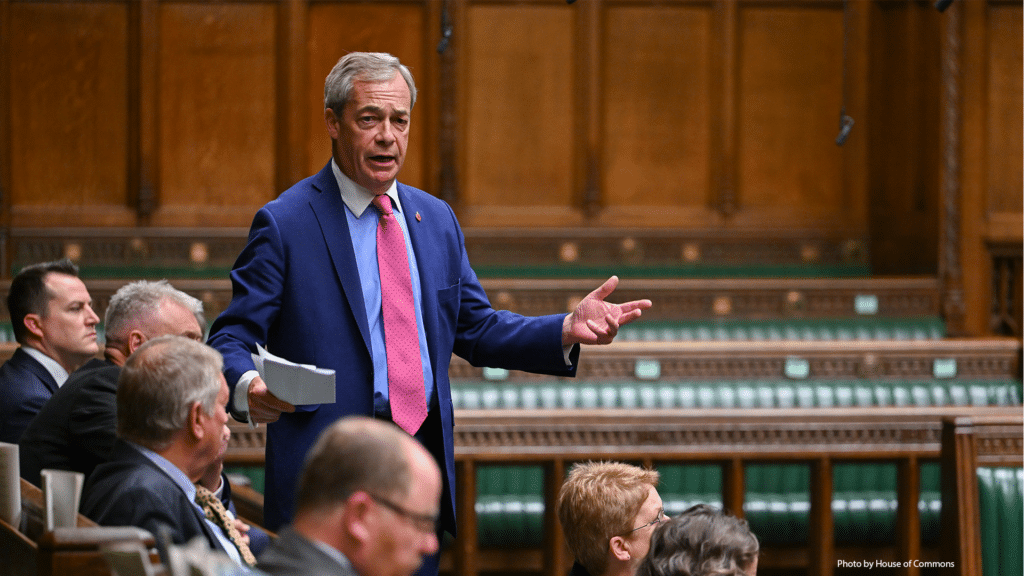
Claire Burchett asks how can UK institutions and parties adapt to Reform UK gaining more power at a national and local level and considers what can be learned from countries in Western Europe where far-right parties have typically been more electorally successful.
On 7 May 2026, local elections will be held in the UK for over 4,850 councillors against the backdrop of increasing dissatisfaction with the Labour government, and a growing broader appeal of the Greens and of the far-right party Reform UK. The UK’s first-past-the-post (FPP) electoral system has historically prevented far-right parties from gaining substantial power at a national or local level. However, if this were to change, the UK has limited experience in monitoring and managing the far right.
Reform UK, and UKIP before it, have obtained the most substantial results for a far-right party under FPP. The more overtly racist British National Party (BNP) peaked in the 2006-2007 local elections with dozens of local councillors but never had a sitting Member of Parliament (MP). Following the 2024 general election and high-profile defections from the Conservative Party, there are now 8 Reform UK MPs. The upcoming local elections are likely to strengthen the party further. This raises the question of how UK institutions and parties will adapt to this.
Far-right parties in Western Europe have generally been more electorally successful in Proportional Representation (PR) systems on the continent. This means institutions and mainstream political parties have had to learn to adapt to a far-right presence through institutional safeguards and political strategies. Despite variation in the radicality of these far-right parties, and differences in historical context and party systems, what can the UK learn, if anything, from these experiences?
The most common strategy is that of a refusal to cooperate, known as the “Brandmauer” in Germany or the “cordon sanitaire” in France. While the PR system gives the far-right easier access to institutions, other parties refusing to cooperate with them means they are often kept away from any real power. This kept the French National Rally in third place in the 2024 elections, and largely holds in Germany. The UK has some experience with this strategy: the two BNP Members of the European Parliament were isolated by other UK parties in 2009, and in last year’s elections local councillors in Cornwall refused to work with Reform UK. It is, however, a divisive strategy: it risks boosting the ‘victimhood’ narrative of the far right and can increase voter alienation. However, without it there is the risk of normalising the far right. Another problem is one of containment. It is easy to isolate a party when it has only a few seats in parliament, but this is much harder to do as the party gains seats. Under FPP, it is even more fragile, as Reform UK could eventually win a majority. Finally, isolating the far right only works if all other parties agree to do so, and is undermined by the increasing adoption and mainstreaming of far-right discourse.
A more extreme tool is that of banning a party. This remains controversial, with sceptics pointing to the anti-democratic implications of banning a party with substantial electoral support. There is also no guarantee that a ban would remove a party. In Belgium, the Flemish Bloc was effectively forced to disband after the Belgian High Court ruled that it was racist, but was then able to rebrand as Flemish Interest. In the UK, the most common way to ban a political party would be its proscription under the Terrorism Act 2000 or de-registration by the Electoral Commission, which would prevent it from running in elections. The latter is usually used to punish parties for not following the Political Parties, Referendums and Elections Act (PPERA). The BNP was de-registered under PPERA in 2016 for not paying the annual £25 registration fee, but reinstated a month later. With much less precedent in the UK and with Reform UK currently polling at 25%, this would be highly contested and not prevent a future iteration of the party.
There is also a role to play for public sector institutions. For instance, the media can contribute to increasing the salience and acceptability of far-right issues. In Francophone Belgium, the media refuses to platform far-right politicians and this has had a significant impact on their popularity. While effective, this would not be possible in the UK due to the BBC’s impartiality. Moreover, Reform UK may now be too big to be contained in such a way, and this would not prevent its visibility on social media.
Another tool, which is unique to Germany, is that of monitoring extremist groups and parties. The domestic intelligence authority, the Federal Office for the Protection of the Constitution (BfV), can observe parties and pass surveillance and reporting to the police. The UK’s closest equivalent to the BfV is the Security Service (MI5), although the BfV specifically focuses on anti-constitutional behaviour, while MI5’s focus remains broader national security and terrorism. Individual cases can be reported to the police for, for example, inciting racial hatred, as was done for UKIP’s notorious “Breaking Point” poster in 2016. Thus, reporting is ad hoc and reactive, and there is a limited institutional framework for monitoring potential anti-democratic behaviour, which Reform UK has already demonstrated through social media posts containing support for far-right activist Tommy Robinson and overtly racist and misogynistic views, and its status as a private company with limited transparency over decision-making.
While the BNP gave the UK some experience of managing a far-right party in governmental institutions, the party never left the electoral margins, so Reform UK presents a novel challenge. The tools developed in France, Germany, and Belgium have emerged from decades of managing a far-right presence, which FPP has so far prevented in the UK. However, while these can curb the far right, they cannot remove it completely, especially in the face of deeper political trends like dissatisfaction with democracy and the mainstreaming of far-right ideas. The UK would be well advised to reflect on how to develop its own democratic resilience, for instance, through guidelines for the media on how to report on the far right, a cross-party consensus on how to respond to the far right in local councils and parliament, and an infrastructure for oversight and monitoring of anti-democratic behaviour. The local elections will be a good time to start this process.
By Claire Burchett, PhD Candidate, Department of European & International Studies, King’s College London.

Netflix has announced that its hit spy drama The Night Agent is coming to an end.
But first, the show will go out with a bang, with one last season.
On Monday, the streaming giant announced that the fourth run of The Night Agent had begun production, and that this would be the show’s final outing.
Creator Shawn Ryan said in a statement: “Ever since the initial success of The Night Agent, I’ve been obsessed with eventually delivering a proper and thrilling conclusion to the show and to Peter Sutherland’s journey.
“I’m so grateful to Netflix and Sony Pictures Television for partnering with me on The Night Agent and for giving us the space to deliver a definitive final season to our worldwide legion of fans.”
“We are hard at work to complete our story and to make our final season one our fans will never forget,” he added.

Christopher Saunders/Netflix
Based on the novel of the same name, The Night Agent premiered in 2023, introducing Gabriel Basso as FBI agent Peter Sutherland.
It eventually became something of a sleeper hit, with its first season notably becoming the third most-watched inaugural run for any Netflix original at that time, as well as becoming one of the most-watched shows of that year.
A second and third season followed in 2025 and 2026, respectively, with Netflix renewing it for a fourth run back in March.
Ryan said at the time: “It’s been a wild ride filming The Night Agent in five countries across three continents to this point and we’re so thrilled that the adventures of Peter Sutherland will continue into season four.
“Our writers, our cast and our crew stand ready to answer the call to bring our incredible fans even more twists, turns and thrills.”
The first three seasons of The Night Agent are now streaming on Netflix.
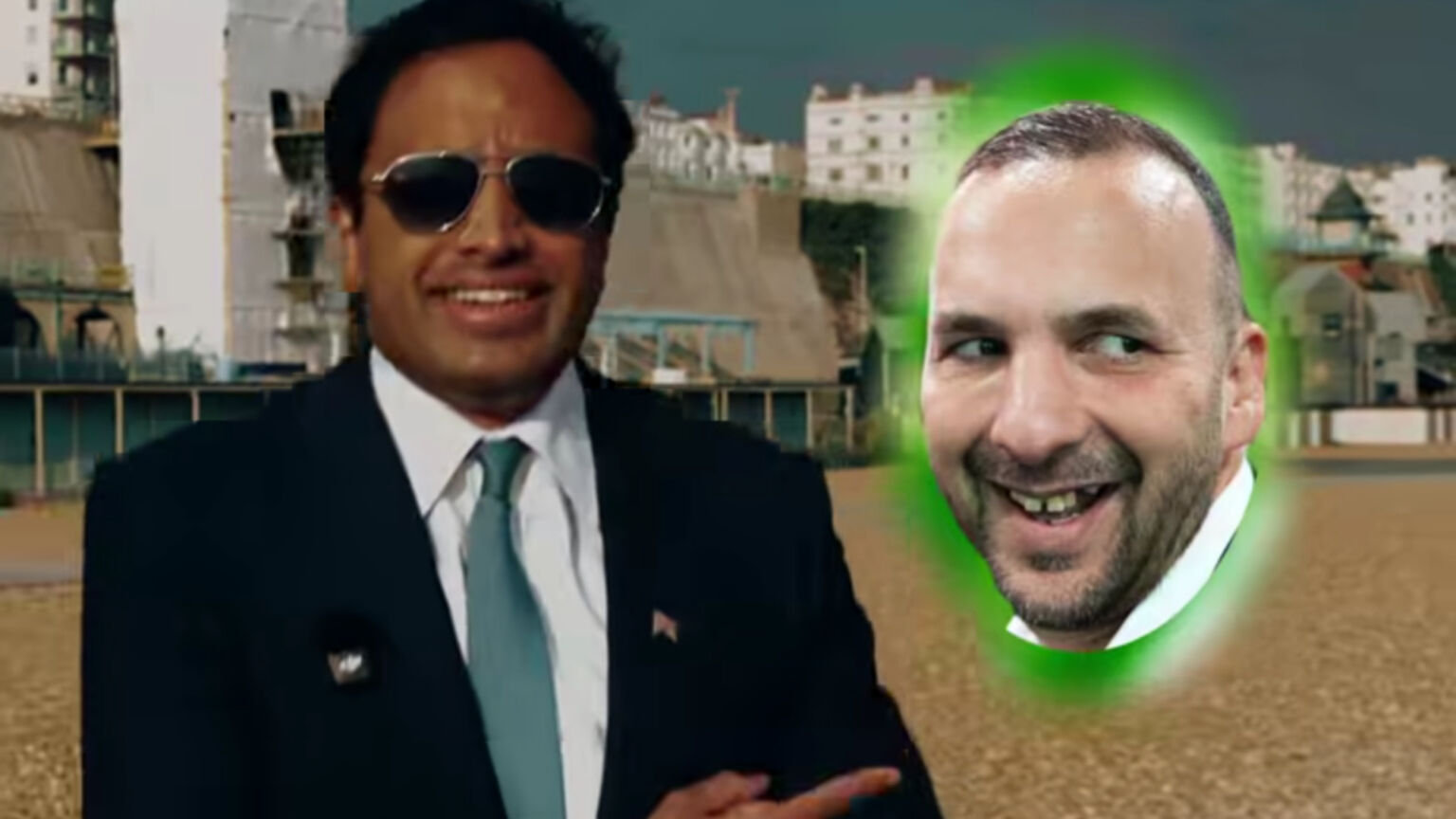
I want to be honest with you, because I think you deserve that. When I first heard about Reform UK’s new ‘Vote Green, Get Illegals’ policy – the plan to put migrant detention centres in Green-held constituencies rather than Reform ones – my instinctive reaction was discomfort. Real discomfort. I sat with it. I turned it over. I talked it through with friends, with colleagues. Because that is what you do when something troubles you, rather than simply reaching for the nearest banner and marching.
And what I found, when I sat with it long enough, was that my discomfort was pointing in entirely the wrong direction.
Reform’s plan, announced over the weekend by party chairman Zia Yusuf and leader Nigel Farage, is straightforward: a future Reform government would build detention centres capable of holding at least 24,000 illegal immigrants awaiting deportation. No such facility will be placed in any Reform-held constituency or council area. Green seats and councils, whose constituents voted for what the Green Party calls ‘a world without borders’, will be prioritised for detention centres. Reform has already published a draft Mass Deportation Detention Act. It means business.
The reaction has been, and I say this as someone who tries very hard to take other people’s feelings seriously, extraordinarily overwrought. The word ‘dystopian’ has been used so many times this week that it has lost whatever meaning it once had. The left has reached, with impressive reflex speed, for comparisons that I will not dignify by repeating. I understand why people feel strongly. I genuinely do. Strong feelings about where people live, about community, about safety – these are not irrational. They are, in fact, exactly the point.
What I find harder to understand, and this is where I have had to really interrogate my own instinct to be fair to everyone in the room, is the complaint from Rupert Lowe’s direction. Lowe, who now leads the Restore Britain party (having departed Reform in some acrimony), called the policy ‘petty nonsense’. He accused Reform of ‘vindictively target[ing] Brits in potential Green constituencies’. I have read this several times, because I wanted to make sure I was being fair to him. But Lowe’s own published proposals speak of making conditions so deliberately harsh that migrants leave voluntarily. His objection is not that Reform is being too tough. It is something more personal than that, and I think most reading this will recognise the dynamic: it is the complaint of someone who wanted a fight on his own terms, furious that someone else has set the agenda.
But here is the question I cannot stop asking, and it is not a comfortable one: who has been living with the consequences of our immigration policy up to now, and did anyone ask them how they felt about it? Because I know the answer, and it troubles me more than any detention centre ever could.
Those women and men who noticed, who raised their hands and said, quietly at first and then less quietly, that something in their street or their town or their child’s school had changed in ways nobody had prepared them for, were not treated with the seriousness their observations deserved. They were instead managed. They were reassured. They were, in the particular way that our political culture has perfected over 30 years, made to feel that their anxiety was the problem. The mothers tracking pressure on GP appointments, the women on night shifts noticing the changed texture of their neighbourhoods, the daughters trying to navigate social housing for elderly parents in areas absorbing numbers nobody had thought to mention: their experience was real. Their discomfort was not a personality defect.
‘Refugees Welcome’ signs, meanwhile, have long appeared in windows of houses in postcodes where no refugees were being sent. The consensus in favour of open borders was built by people whose daily lives were not affected by it. I do not say this in bitterness – I say it because it is simply, plainly true, and pretending otherwise has been doing real harm to real people for a very long time.
I worry about things. That is not something I apologise for. And what I worry about, when I think about this policy, is not the Green voter in a comfortable suburb who will write a strongly worded letter, and man a street stall. It is the woman in a town that has been absorbing dispersed asylum seekers through hotels and HMOs (houses in multiple occupation) for years – without consultation, without notice, without so much as a community meeting. The chaos of the status quo is not neutral. It is not kind. It has consequences, and those consequences have been falling on the people least able to make them stop.
Secure detention before orderly deportation is not, whatever this week’s headlines suggest, a form of cruelty. It is a form of clarity. It is the managed, legal and humane alternative to the sprawling and unaccountable system we have been living with. It is not ‘barbarism’ to detain people who have broken the law – it is administration. The barbarism has been the pretence that the current system is working.
And should democratic choices carry consequences? I think, if we are honest with ourselves, the answer has to be yes. We accept it everywhere else. We accept that communities voting for development get development, that those who choose certain policies inherit their results. The Greens have been entirely transparent about what they want: more asylum seekers and no borders. That is their honest position and voters are free to choose it. But the idea that you can vote for a borderless world and be wholly shielded from its practical consequences – the holding facilities and the processing centres – asks rather a lot of those who voted differently.
I have spoken this week with Reform members in areas their party doesn’t yet control. I expected anxiety. I found something closer to practicality – several have even written to suggest local former Royal Air Force bases they felt would be appropriate. People are more resilient, and more reasonable, than the people who claim to speak for them tend to assume.
I did not come to this position easily. I sat with my discomfort, as I said at the start, and I took it seriously. But sometimes what feels uncomfortable is simply the sensation of something true pressing against something we would prefer not to examine. The fury of the response to this policy has been, in the end, the most persuasive argument for it. Those who have spent 30 years ensuring that the consequences of their choices fell on other people are not well placed to lecture the rest of us about fairness.
I think you know that. I think you’ve known it for a while.
Gawain Towler is a commentator and an elected board member of Reform UK.
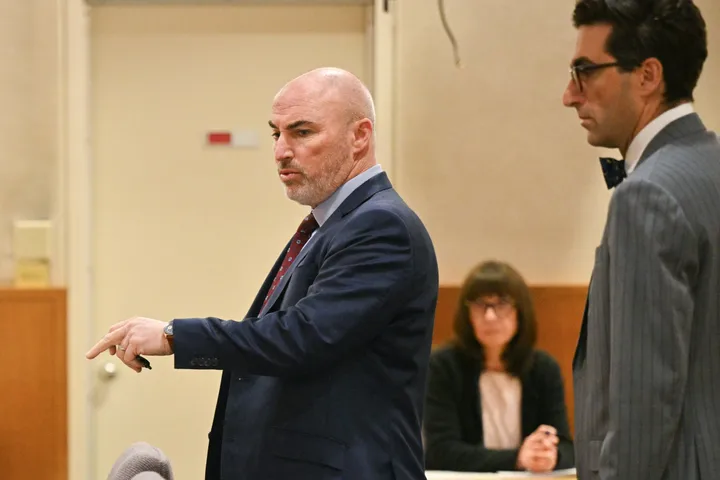
Britney Spears’ legal team has spoken out after the pop star pleaded guilty to reckless driving.
In early March, the chart-topping singer was pulled over by the police and arrested while out driving in California.
After checking herself into a rehab treatment facility, it was subsequently announced that Britney had been charged with a misdemeanour of driving while under the influence.
Her lawyer, Michael A. Goldstein, told Rolling Stone on Monday that Britney’s DUI charge had been “dismissed” at a hearing – where she was not in attendance – and that she had instead pleaded guilty to reckless driving.
“She’s doing well,” Goldstein said outside the courthouse. “It was reduced. The DUI was dismissed. She entered a plea to reckless driving.”

He continued: “We appreciate the district attorney recognising the positive steps Britney has taken to help herself, and we expect that she’ll continue to do so.”
Per Rolling Stone, Britney has been sentenced to 12 months of summary probation, during which she will be subjected to searches by law enforcement while driving.
She must also continue her “mental health and substance treatment”, which is said to include “weekly meetings with her psychologist and twice-monthly visits with her psychiatrist”, in addition to a three-month DUI course.
Following her arrest, Britney’s spokesperson told HuffPost UK: “This was an unfortunate incident that is completely inexcusable. Britney is going to take the right steps and comply with the law and hopefully this can be the first step in long overdue change that needs to occur in Britney’s life.
“Hopefully, she can get the help and support she needs during this difficult time. Her boys are going to be spending time with her. Her loved ones are going to come up with an overdue needed plan to set her up for success for well being.”
Over the weekend, Britney returned to Instagram for the first time since entering rehab, posting footage of herself and her son, as well as an old clip of her dancing at her home from a year earlier.
She also posted a graphic with the slogan: “Your energy is magnetic, goddess.”

The Pussycat Dolls have announced they’ll no longer be moving forward with the planned American leg of their world tour.
Back in March, it was confirmed that the chart-topping girl group would be reuniting as a three-piece for a string of shows that would take them across North America and Europe, concluding with a run of performances around the UK and Ireland.
However, following poor sales for their shows in the US and Canada, the group announced on Monday night that they’d had to make a tough decision.
“We want to share an important update with you,” they began. “When we announced the PCD Forever Tour, we hoped to bring the show to fans across the world.
“After taking an honest look at the North American run, we’ve made the difficult and heartbreaking decision to cancel all but one of the North America dates.”
While a one-off performance at WeHo Pride in Los Angeles is still going ahead in June, the PCD Forever tour will officially now kick off in Copenhagen, Denmark in September.
“Our UK and European dates are still moving forward as planned,” the band insisted, pointing out that the “response has been incredible, with several shows already sold out”.
They added: “We are putting everything into making this show a true celebration of the music and the memories, for the fans who have been with us from the beginning and those discovering us for the first time.“We’re working hard to create the kind of show we’ve always dreamed of bringing to you. We cannot wait to bring this reunion to Europe and make these nights unforgettable.”
The current line-up of the Pussycat Dolls consists of Ashley Roberts, Kimberley Wyatt and frontwoman Nicole Scherzinger.
Former band member Carmit Bachar recently admitted she was disappointed to not be invited back for the planned reunion.
Meanwhile, Jessica Sutta – who now describes herself as a “mommy, wife and activist”, and is outspoken in her pro-MAGA and anti-vaccine stances – also insisted that while she was “never planning to return” to the Pussycat Dolls “under the current circumstances”, and is “still unable to dance due to ongoing health issues”, the reunion announcement still proved “difficult” for her.
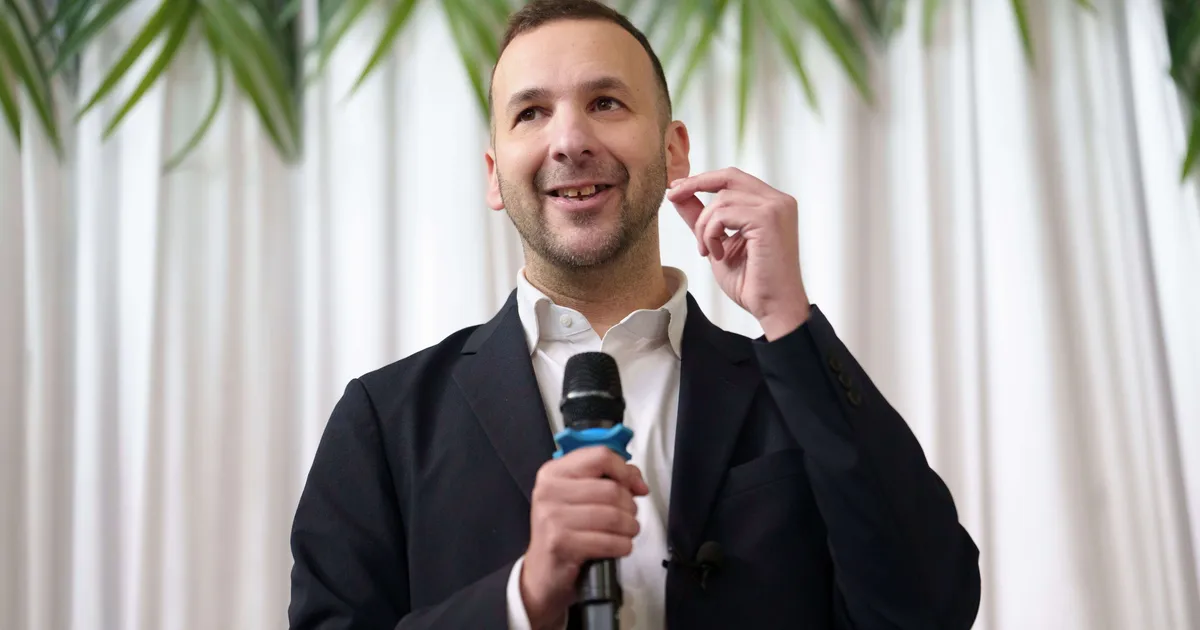
Zack Polanski’s popularity has plummeted in the wake of the row over his reaction to the Golders Green attacks.
The Green Party leader was forced to apologise after appearing to criticise the police’s response to the incident.
Shilome Rand, 34, and Moshe Shine, 76, were left seriously injured in what police have described as a terrorist incident last Wednesday.
A video of the incident posted showed Metropolitan Police apprehending the man suspected of carrying out the attacks.
Polanski retweeted a post on X which said: “So essentially [Met commissioner Mark Rowley’s] officers were repeatedly and violently kicking a mentally ill man in the head when he was already incapacitated by taser.”
That led to criticism from Rowley, who wrote to Polanski condemning “observers with little experience of policing in the real world” for criticising his officers.
Polling released by More in Common on Tuesday – two days before voters go to the polls in crucial elections across the UK – showed the Green Party leader’s approval rating has fallen by 14 points to minus 27 in the past week.
It means he now has a lower rating than Kemi Badenoch, Ed Davey and Nigel Farage, though remains comfortably ahead of Keir Starmer, who is by far the least popular leader with an approval rating of minus 45.
Responding to the findings, More in Common director Luke Tryl said the row was making some people “think twice” about voting Green.
He said: “Two things have happened. Zack Polanski’s negatives have gone up but some people, particularly younger people, have moved to being neutral about him.
“The Greens are seen as a hopeful party, quite a nice party. I just think that what some of the candidates have said about antisemitism and Zack perhaps not being robust enough on that, and responding in the way he did to the police, is making some people think twice.”
However, despite the row, the Greens are still forecast to gain round 600 English council seats in Thursday’s elections.
Subscribe to Commons People, the podcast that makes politics easy. Every week, Kevin Schofield and Kate Nicholson unpack the week’s biggest stories to keep you informed. Join us for straightforward analysis of what’s going on at Westminster.
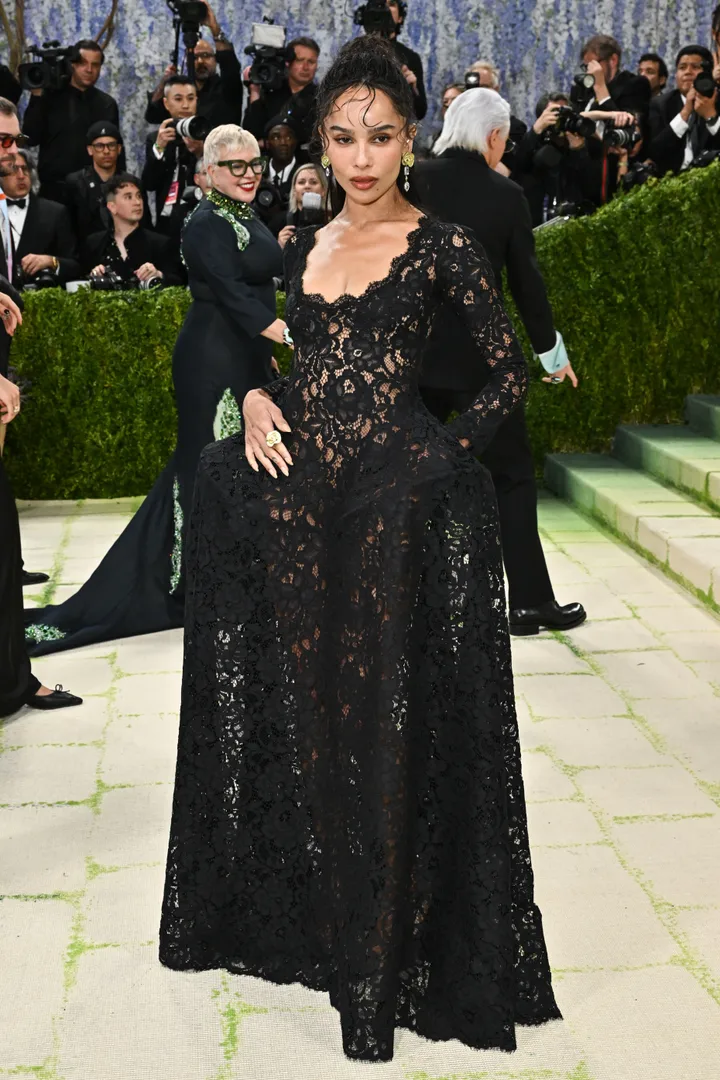
With speculation mounting about whether or not she and Harry Styles are engaged, Zoë Kravitz had a fun way of keeping the rumours at bay while attending this year’s Met Gala.
Zoë and Harry were first linked in the press in the summer of 2025, and found themselves at the centre of even more rumours last month, when the Big Little Lies star was pictured wearing what appeared to be an especially eye-catching engagement ring.
Following this, People magazine cited an undisclosed “source” who claimed the couple had told a “small circle” around them that they were engaged after around eight months of dating.
Since then, both she and the As It Was singer have kept schtum about the rumours, and – perhaps sensing it could be a moment on the Met Ball red carpet, decided to take matters into her own hands.
Or, rather, her own hand. Because Zoë’s Met Gala look for 2026 consisted of a black lace dress boasting both pockets and long sleeves, so she spent the whole night posing with her left hand completely obscured.

In other words, photographers couldn’t get a shot of what may or may not have been an engagement ring (although pictures taken from inside the event showed that she was not wearing the ring in question for the event).
Zoë has previously dated Penn Badgley and Karl Glusman.
She previously directed in the film Blink Twice, and was engaged to co-star Channing Tatum between 2023 and 2024.
Meanwhile, Harry has previously been linked to a number of famous faces, including Olivia Wilde, Taylor Russell, Olivia Dean and Taylor Swift.

Earlier this year, Harry told Apple Music’s Zane Lowe while promoting his latest album Kiss All The Time. Disco, Occasionally: “I had a real honest conversation with myself about, ‘OK, in five years, what do I want my life to look like?’. And then how do I make changes to aim at that?
“I want to have great friendships with people. I want a family. I want these things. It just allowed me to go like, ‘Okay, what do I have to do to create space to allow these things to happen? I can’t just expect them to just happen to me’.”
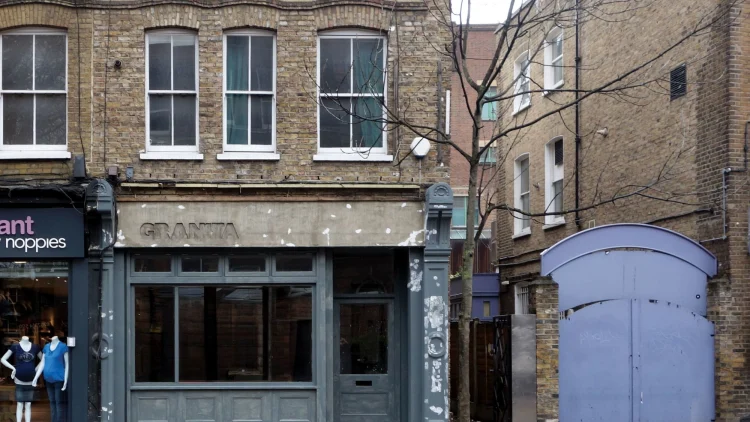
Granita restaurant facade

4 min read
Politicians making a meal of it. This week: a fateful dinner in Islington
The only thing that everyone agrees about the Granita pact is that, whatever it was, it wasn’t negotiated at Granita. In May 1994, the Islington restaurant was the site of one of the most famous, and disputed, meals in British politics. Two and a half weeks earlier the Labour Party’s leader, John Smith, had died of a heart attack. Now two of the favourite candidates to succeed him, shadow home secretary Tony Blair and shadow chancellor Gordon Brown, were meeting to decide which of them would stand aside in favour of the other.
The deal had two outcomes: first, Blair went on to lead his party to three election victories, while Brown became a chancellor who would dominate domestic policy for a decade; more dangerously for their partnership, it left a festering sore between the two men about what exactly each had promised the other.
The Granita restaurant, which served theatregoers and north Londoners who fancied a bit of Eastern Mediterranean sophistication, has now closed, and even its Wikipedia page has been deleted. But the bitterness over what happened that night remains, certainly if Brown’s memoirs are anything to go by.
The meeting in the restaurant was actually the last of a series of conversations between the pair in London and Edinburgh. They’d long agreed that only one of them should stand for any leadership vacancy, to avoid splitting the modernising vote. For all of that time, Brown had assumed that the one would be him, and for much of that time Blair had agreed. In the years before Smith’s death, his view had changed, but he’d seen no point in mentioning this to Brown, his closest friend in politics.
If the Brownite narrative is one of scheming and betrayal, the Blairite one is of a man trying to let his friend down easily. Blair didn’t just want Brown to step aside, he wanted him to be able to do it with dignity. In this telling, the meetings were about helping Brown to understand that he lacked the support to win. If Brown accepted that then, he certainly doesn’t now, as his memoirs make clear. Published in 2017, they show he still believes he was outmanoeuvred by Blair and cheated of the top job that was rightfully his. Nevertheless, he’d already told his team that he wouldn’t stand when he walked into the restaurant.
With him that evening was Ed Balls. “I could tell from the moment we walked in that it was not his type of place,” he wrote in his own memoir. “‘What exactly is polenta?’ he asked me gruffly.” It’s not clear what Balls’ function was there beyond explaining the menu, and he left when the starters arrived. Brown clearly didn’t eat much: afterwards he returned to Westminster for steak and chips.
The bitterness over what happened that night remains, certainly if Brown’s memoirs are anything to go by
With him he took an agreement about the shape of policy under the government that the pair would form, but he took something else, too: the belief that Blair had promised to step aside after two terms and endorse Brown as his successor. Blair’s account of this is cloudy. Certainly it doesn’t dispel the idea that just as he’d allowed Brown to believe things about which of them would run for leader, he now allowed him to believe things about the future.
The Granita dinner exposed flaws in both its participants. Brown comes out of it as a man who misunderstood his own position and bears deep grudges. But he would not, by some distance, be the last person to leave a meeting with Blair under the impression that they’d been promised something they hadn’t.
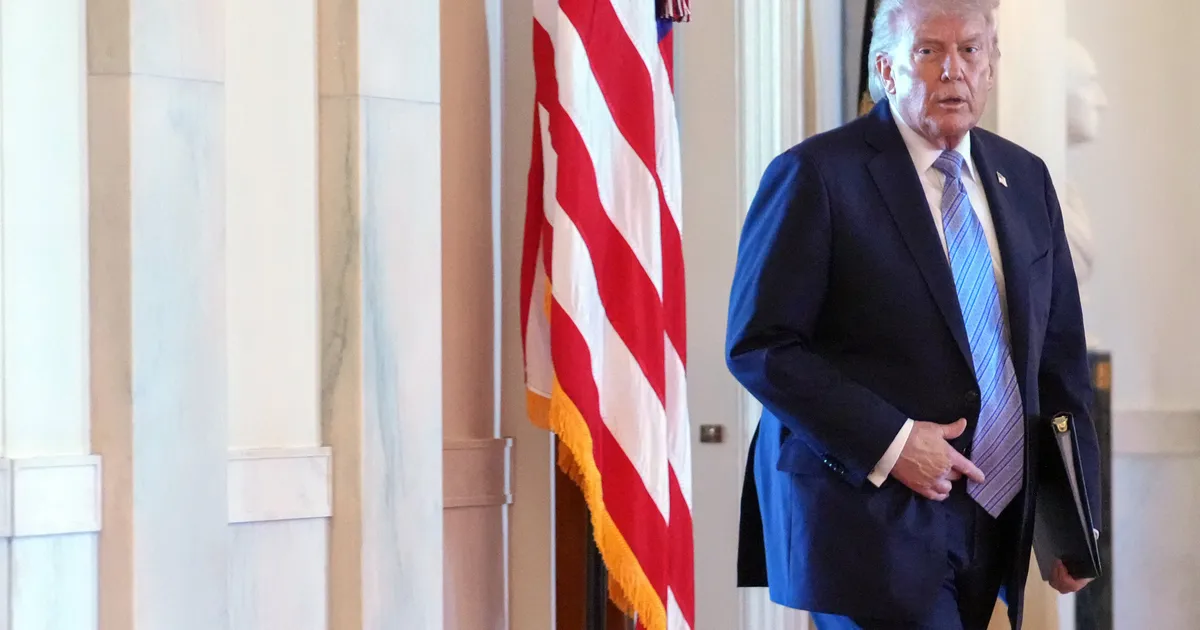
Donald Trump is now paying the price of going to war with Iran “without thinking through the consequences”, a senior BBC journalist has declared.
Jeremy Bowen, the corporation’s international affairs editor, also warned that the US president’s attempts to re-open the Strait of Hormuz could see a return to all-out war.
His comments came as Iran’s foreign minister warned that America could be “dragged back into quagmire”.
Trump launched “Project Freedom” at the weekend, vowing that the United States would “guide” stranded ships through the Strait, which has been effectively closed by Iranian attacks since the war began.
That has led to a spike in oil prices and triggered fears of a global economic crisis.
Two US-flagged ships are reported to have passed through the key waterway.
However, the United Arab Emirates (UAE) – a Gulf ally of the US – said a tanker affiliated with its state-owned oil company, had been targeted by two drones as it transited the Strait.
On Radio 4′s Today programme, Jeremy Bowen said “Iran was always going to react” to Trump’s plan and warned that it could lead to the collapse of the uneasy ceasefire which has been in place in recent weeks.
“The question is does it end there, or does it slide both of them back into all-out war,” he said.
“This is territory for misperceptions and miscalculations which have been made, and these are the factors which are classic ways of driving the ways that wars escalate, even out of ceasefires.
“The length of time that the Strait of Hormuz stay closed will determine how much more severe this becomes for all of us, as well as the Gulf states.
“You heard President Trump, as ever, being very bullish, but what is happening is [the Gulf states] are seeing the consequences of going to war, assuming an easy victory and without thinking through the consequences of what happens and what to do if it turns out, as has occurred, that it’s not easy.”
Subscribe to Commons People, the podcast that makes politics easy. Every week, Kevin Schofield and Kate Nicholson unpack the week’s biggest stories to keep you informed. Join us for straightforward analysis of what’s going on at Westminster.
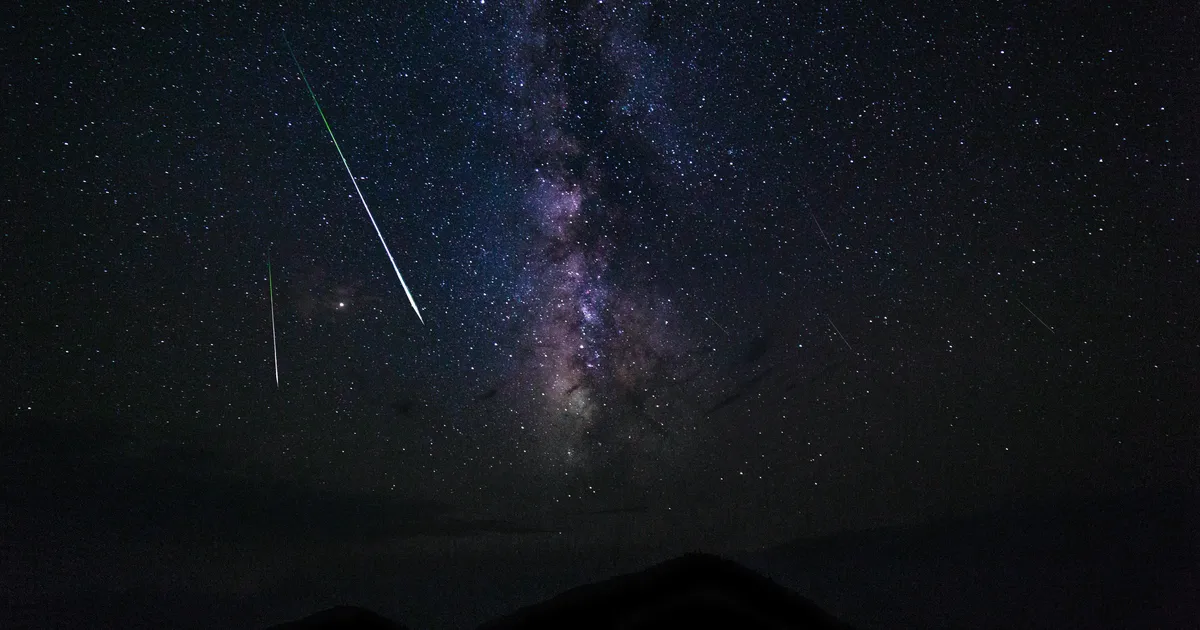
In April, stargazers got to enjoy the Lyrid meteor shower.
But if you missed it, don’t worry: since April 18, the Eta Aquariid meteor shower has also been falling, and it’s set to peak this week.
Here’s why it happens, when it’ll be at its brightest in the UK, and how to catch it:
What is the Eta Aquariid meteor shower?
As with the Lyrid meteor shower, it’s not that the comets are “shooting” towards us.
They’re part of the debris following a comet (in this case, comet Halley); in our journey around the sun, we pass through this space rubble, some of which then enters our atmosphere.
When they do that, they move so quickly that they compress and superheat the air surrounding them.
That leads to a glowing “head” and, sometimes, a streaking “tail” that stargazers will recognise as part of a meteor shower.
Royal Museums Greenwich (RMG) said on its site, “the beautiful streaks we see in the night sky can actually be caused by particles as small as a grain of sand.”
The debris of Halley’s comet is associated with two meteor showers. The other one, Orionid, is due in October 2026.
When will the Eta Aquariid meteor shower peak in the UK?
In the UK, your best odds are on Wednesday, 6 May, from midnight to dawn. But don’t despair if you miss it.
One of the things that makes the Eta Aquariid meteor shower distinct is that it doesn’t have a “sharp peak”, RMG said.
Instead, brilliant shows tend to cluster around a particular week. In 2026, that’s this week (May 4-10).
How can I see the 2025 Eta Aquariid meteor shower?
Look towards the Eastern horizon in the wee hours of Wednesday.
Steer clear of sources of light pollution, like street lamps, and wait. (Unfortunately, the peak of this meteor shower occurs alongside quite a bright moon, which might make the display less obvious).
The meteors should be visible to the naked eye, so you won’t need any special tools like binoculars.

The ocean system that shapes Europe’s climate

Nvidia, Pulte partner with Span to put mini data centers on homes

Andreessen Horowitz’s new $2.2 billion crypto fund is chasing stablecoins, DeFi, and the builders no one is watching

Manchester United reach agreement with Casemiro over contract clause amid transfer speculation

US brings back mandatory military draft registration

Steven Gerrard disagrees with Gary Neville over ‘shock’ Chelsea and Arsenal claim | Football


-

 Business7 days ago
Most Commercial Energy Audits Miss the Real Losses
-

 Fashion7 days ago
Kylie Jenner’s KHY Enters a New Era with ‘Born in LA’
-

 NewsBeat2 days ago
Channel 5 – All Creatures Great and Small series 7 new post
-
 Tech4 days ago
Trump’s 25% EU auto tariff breaches Turnberry Agreement that also covers semiconductors and digital trade
-
 Sports4 days ago
Paul Scholes issues Marcus Rashford reality check as agreement emerges over Man United star
-

 Crypto World7 days ago
CFTC’s AI will review U.S. crypto registration applications, chairman tells CoinDesk
-

 Business6 days ago
Barclay Brothers Avoid Bankruptcy: HSBC Drops High Court Petitions After IVA Deal
-
 Business6 days ago
Tesla Officially Registers Elon Musk’s Stock: What Investors Need to Know
-

 Tech7 days ago
Get Ready for More Brain-Scanning Consumer Gadgets
-

 Business5 days ago
Two Powerball Tickets Split $143 Million Jackpot in Indiana and Kansas
-

 Tech6 days ago
Texas Instruments made a new flagship graphing calculator: the TI-84 Evo
-
 Crypto World5 days ago
CoreWeave (CRWV) Stock Climbs 8% Despite $45M Insider Share Dump
-
Business2 days ago
Winning Numbers Drawn as Jackpot Resets to $20 Million
-
 Crypto World6 days ago
Securitize and Computershare Enable Tokenized Equity Issuance for Over 25,000 U.S.-Listed Stocks
-

 Crypto World6 days ago
Gibraltar Proposes Tokenized Funds Regulation to Bolster Compliance
-

 Entertainment5 days ago
Celebrities Who Are Attending the 2026 Met Gala Event
-

 Business6 days ago
Alexandria Real Estate Equities, Inc. (ARE) Q1 2026 Earnings Call Transcript
-
 Entertainment5 days ago
Insider Claims Reason Behind Key & Peele Split
-

 Fashion3 days ago
Mary J. Blige Vegas Residency Looks: Crystal-Embellished Fjolla Haxhismajli, Todd Fisher, and More!
-

 Tech5 days ago
Official SAP npm packages compromised to steal credentials
You must be logged in to post a comment Login