






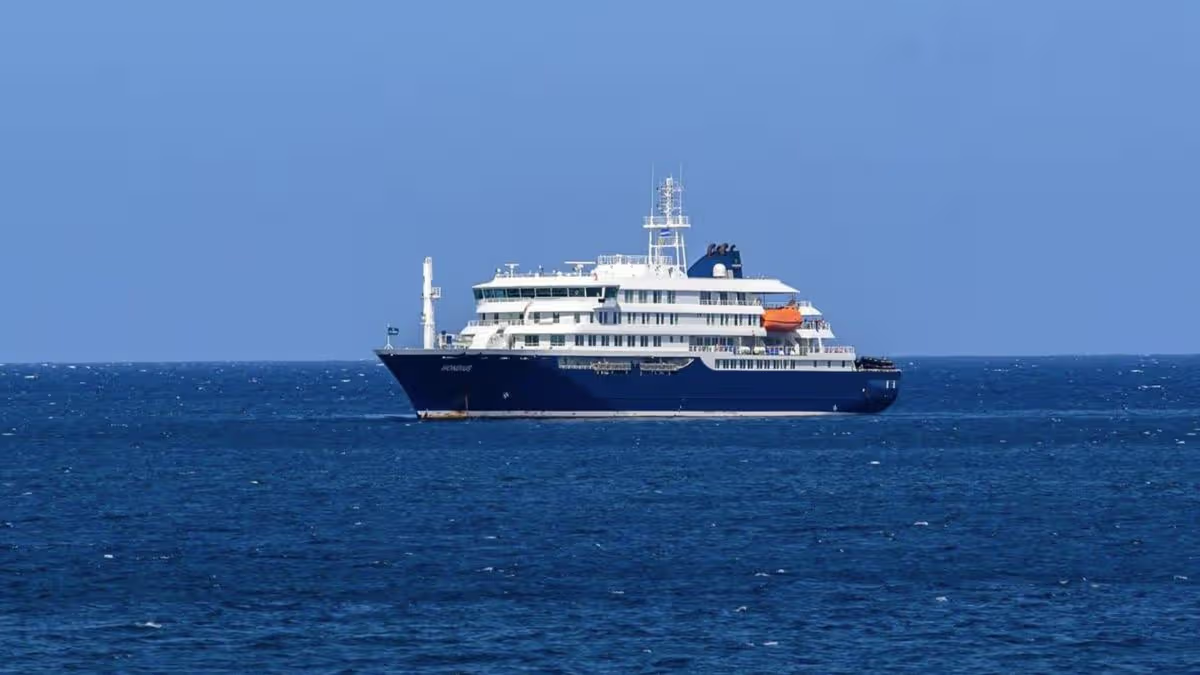
An expert has explained the chances of hantavirus spreading from the ship
An expert has said that the risk of hantavirus spreading is ‘essentially zero’, after three people died from a suspected outbreak on a cruise.
It comes as a British crew member is being prepared for medical evacuation from the Dutch-flagged cruise ship MV Hondius, which is currently anchored off the coast of Cape Verde. The crew member, a Dutch colleague and a passenger are set to be taken to the Netherlands.
A Dutch passenger died on board the ship on April 11. On April 27, the wife of the passenger died, and authorities confirmed a variant of hantavirus. On May 2, a German passenger on board died, though the cause has not yet been confirmed.
Click here to get the biggest stories straight to your inbox in our Daily Newsletter
A total of seven suspected cases have been identified in total, including the three deaths. Two of these cases have been confirmed as hantavirus.
Now, Professor Sir Andrew Pollard, director of the Oxford Vaccine Group at the University of Oxford, said that the virus is “rarely” spread between people.
The Andes virus, which has been identified as the variant behind the outbreak, is “known very rarely to spread between people with close contact”, Sir Andrew said.
“It means it is very easy to isolate people who are unwell and to follow quarantine and so on to avoid spread to other people,” he said.
Once these passengers have been evacuated the ship will start the three-day journey to the Canary Islands, docking in either Gran Canaria or Tenerife.
An update from health officials in Spain on Tuesday said: “The World Health Organisation has explained that Cape Verde cannot carry out this operation. The Canary Islands are the closest place with the necessary capabilities.
“Spain has a moral and legal obligation to help these people, among whom are also several Spanish citizens.”
But the leader of the regional government of the islands have expressed concern over the plan, with its leader Fernando Clavijo writing on X: “Our position is clear regarding any decision made by the WHO and the State: safety and guarantees for the passengers and for the people of the Canary Islands.”
Some 19 British nationals were listed as passengers on the ship, which was sailing from Argentina to Cape Verde, with four British crew members.
A British passenger and the British crew member are among those taken ill in the suspected outbreak, which has been linked to three deaths.
The World Health Organisation (WHO) said on Tuesday that it has been notified of seven suspected cases.
The British passenger was medically evacuated from the ship on April 27 and remains in isolation in hospital in Johannesburg, South Africa.
Prime Minister Sir Keir Starmer has said plans are being made for the “safe onward travel” of Britons on the ship.
And the Foreign Office has confirmed that it has been directly in touch with all British passengers on board the ship, which was sailing from Argentina to Cape Verde.
Professor Sir Andrew Pollard, director of the Oxford Vaccine Group at the University of Oxford, told BBC Radio 4’s Today programme: “The Andes strain of this virus is common amongst rodents in countries like Argentina in South America.
“It’s an infection which actually doesn’t cause much harm to the rodents, but it can be acquired by humans who are in close contact with the environment around the rodent, because it’s spread in saliva and urine and faeces from those animals.
“With this particular hantavirus, the Andes virus, it is known very rarely to spread between people with close contact, usually symptomatic individuals who are in close contact with each other.
“And that’s important because it means it is very easy to isolate people who are unwell and to follow sort of quarantine and so on to avoid spread to other people.
“It’s not like the situation we had with Covid-19 in the pandemic where people could spread even without symptoms, and therefore it was able to spread very easily in the population.”
He added: “The authorities will be very familiar with managing respiratory virus infections on cruise ships, because every year there are outbreaks of influenza on cruise ships, for example, and so working out the public health interventions to isolate the cases, make sure that there isn’t any onward transmission to people, will have really good protocols already in place.
“I think the risk is essentially zero of spread outside of this particular outbreak, because the authorities have recognised this and they know exactly what to do to make sure that the individuals are isolated and there’s no-one with transmission now that we know what we’re dealing with.”
Dr Jacqueline Weyer, acting deputy executive director for National Institute for Communicable Diseases in South Africa, said that Andes virus is a “slow burner” and “moves really slowly” which “allows a window of opportunity to contain the outbreak”.
Get MEN Premium now for just £1 HERE – or get involved in our WhatsApp group by clicking HERE
But she told Sky News that the British passenger in hospital in Johannesburg will be under “strict isolation precautions to ensure that we don’t see onward transmission”.
She said that investigations have found no rodent infestations on the ship itself and that the “exposure event” was probably through rodent exposure in Argentina.
Asked about passengers on board the ship, she told the broadcaster: “I’m not sure at this stage if the patients will actually be allowed to disembark or if the isolation will be continued, we are waiting for the directive on that.
“Of course, when these individuals are allowed to disembark, it will also be with some measures in place to ensure that we don’t have a wider scale outbreak when they try to return home.”
Passengers are currently confined to their cabins while “disinfection and other public health measures are carried out”, the WHO said.
Hantavirus infections, which are usually spread by infected rodents’ urine or faeces, can lead to severe respiratory illness and can sometimes be fatal. While it is rare, hantavirus infections can spread between people, according to the WHO.
There is no specific treatment or cure, but patients have a better chance of survival if they receive medical attention early.














































You must be logged in to post a comment Login