
Crypto World
IBM expands enterprise AI platform tools with new agent capabilities



IBM introduced new enterprise artificial intelligence tools on Tuesday aimed at helping organizations build and manage internal AI systems across hybrid cloud environments.
Summary
- IBM introduced new AI tools to help businesses manage AI systems across hybrid cloud environments.
- The company launched Context Studio for building AI agents tied to enterprise data, while Process Studio is set to automate legacy operational workflows.
- IBM also expanded AI partnerships with SAP, AWS, Pearson, and Providence as competition in enterprise AI infrastructure continues to grow.
According to a May 6 press release, IBM announced new additions to its IBM Enterprise Advantage and IBM Consulting Advantage platforms during its Think conference, alongside collaborations involving Pearson, Providence, SAP, Amazon Web Services, and U.S. government cloud infrastructure.
IBM said the updates are designed to help enterprises deploy AI agents with greater control over data, workflows, and interoperability across different systems.
One of the new offerings, called Context Studio, is now available and allows companies to create AI agents tied to internal business data and operational processes. IBM said the system is intended to improve the accuracy and relevance of AI-generated outputs while supporting data sovereignty requirements.
Another tool, Process Studio, is expected to launch later and will focus on converting legacy operational procedures into workflows that can be handled by AI agents. IBM said internal testing on a client project involving 1,400 procedures identified more than 1,000 workflow improvement opportunities and could help reduce operating costs by over 25% within 18 months.
IBM also highlighted examples of enterprise adoption. Healthcare provider Providence said it used IBM’s AI tools to automate parts of its hiring process. According to the company, managers spent 90% less time on recruitment-related tasks after deployment, while internal job transfers became faster and more accurate.
Meanwhile, Pearson and IBM are jointly developing a system designed to verify and continuously assess AI agents to ensure they can perform assigned tasks correctly.
The company also expanded interoperability between its AI systems and SAP’s Joule AI agents through the Agent2Agent standard, allowing AI agents from both companies to coordinate tasks across enterprise applications.
In addition, IBM Consulting Advantage is now available in a FedRAMP-authorized environment through AWS GovCloud, enabling U.S. federal agencies to access the platform while meeting government security and compliance requirements.
The announcement follows a broader push by major technology firms to develop enterprise-focused AI systems capable of automating operational workflows.
Companies including Microsoft, Google Cloud, and Salesforce have recently expanded investments in AI agents and enterprise automation tools as competition in business AI infrastructure intensifies.


OpenTrade, the institutional-grade platform integrating on-chain and real-world asset (RWA) backed lending with stablecoin yield products, has closed a $17 million strategic funding round to expand its yield infrastructure. The round, led by Mercury Fund and Notion Capital, underscores a concerted push to scale OpenTrade’s permissioned and permissionless yield rails and to accelerate the growth of its vault-focused offering, Curation+, the company confirmed.
CEO David Sutter said the fresh capital will fuel a broader buildout across asset management and trading teams, lift engineering capacity, and establish a dedicated customer success function to support its expanding client base. “The company also plans to expand its asset management and trading team, increase engineering capacity, and build a dedicated customer success function to support its growing client base,” Sutter told Cointelegraph.
Key takeaways
- The $17 million strategic round was led by Mercury Fund and Notion Capital, adding to OpenTrade’s total funding of about $30 million, with prior backing from a16z Crypto and other investors across earlier rounds.
- The funding will accelerate the expansion of OpenTrade’s yield infrastructure, encompassing both permissioned and permissionless pathways, and will bolster its vault-centric Curation+ service and related product suite.
- The capital infusion arrives amid heightened regulatory scrutiny of stablecoins in the United States, as lawmakers debate how yield-like incentives should be treated under the CLARITY Act. Progress toward a compromise has recently advanced, with implications for how platforms may offer interest-like rewards on stablecoin activity.
- OpenTrade’s architecture centers on tokenized vaults that allocate capital across RWAs such as fixed-income instruments and select DeFi strategies, governed by smart contracts and designed to be compatible with global regulatory standards for traditional finance and digital assets.
- Regulatory tailwinds for the broader stablecoin and digital-asset sector are cited by the company as a positive backdrop for growth, though licensing, compliance, and cross-border considerations remain central for institutional participants.
Strategic funding to scale yield infrastructure
OpenTrade positions itself as a bridge between traditional securities lending concepts and the emerging market for stablecoins backed by real-world assets. The funds will enable broader deployment of its yield infrastructure, both in permissioned environments—where institutional-grade controls and compliance are prioritized—and in permissionless contexts that expand access to liquidity and yield opportunities for a wider base of clients. Sutter emphasized that OpenTrade’s strategy is anchored in a model derived from traditional finance securities lending but adapted to stablecoins, with attention to market-specific nuances that may shape institutional eligibility and participation.
As part of the growth plan, the company intends to scale its asset management and trading capabilities, grow its engineering and product teams, and introduce a dedicated customer success function to support an increasingly diverse roster of fintechs and institutional investors. The capital infusion thus serves not only to broaden product coverage but also to deepen client servicing, risk management, and regulatory compliance processes that are critical for on-chain and cross-border activity.
The round brings OpenTrade’s funding history into clearer focus. The company reported a total of $30 million in committed capital after this raise, reflecting previous rounds that included a $7 million strategic round in June 2025 led by Mercury Fund and Notion Capital, following a $4 million seed extension in November 2024. Earlier investors — including Circle Ventures and Polygon Ventures — participated in 2023, underscoring a broad base of strategic support from traditional and crypto-native backers. OpenTrade’s co-founders, Dave Sutter and Jeff Handler, previously held roles at Centre, the governance consortium associated with the USDC stablecoin, highlighting the team’s deep ties to the stablecoin ecosystem.
Regulatory backdrop: CLARITY Act and stablecoin governance
The fundraising occurs as U.S. policymakers weigh how to regulate stablecoin rewards within a broader market-structure framework. The CLARITY Act, a proposal under discussion in Congress, seeks to clarify the regulatory boundaries for digital assets and related incentives. Recent reporting indicates progress toward a compromise between crypto and banking stakeholders, with a Senate Banking Committee vote anticipated as the deal advances. The emerging framework would allow usage-based rewards—such as cashback or discounts tied to stablecoin activity—but would prohibit yield on idle balances, a distinction that impacts how platforms structure incentive programs and balance-sheet risk.
According to Cointelegraph, the ongoing reform efforts reflect an evolving regulatory approach to stablecoins and on-chain finance. The outcome of CLARITY Act negotiations could significantly influence the design and distribution of yield-bearing products offered by platforms like OpenTrade, as well as the licensing and oversight requirements faced by institutional users, fintechs, and crypto firms operating across U.S. and international markets.
Product architecture and market positioning
OpenTrade’s product envelope centers on tokenized vaults that channel deposits into a diversified set of yield sources, with RWAs playing a primary role alongside carefully selected DeFi strategies. Each vault adheres to a defined allocation strategy and operates through smart-contract-based mechanisms that manage deposits, monitor positions, and distribute returns. This architecture allows institutions to access yield opportunities with a structure designed to meet traditional finance and digital-asset regulatory standards while offering the transparency and auditability valued by compliance teams.
“Our structure is derived from securities lending in traditional finance, but adapted to the lending of stablecoins instead of securities,” Sutter explained, noting that practical access to these offerings may vary based on jurisdiction and investor classification. The platform’s compliance-first approach aims to make cross-border participation feasible for qualified investors while maintaining robust risk controls and reporting capabilities that respond to lender, borrower, and custodian expectations.
As part of the broader strategic vision, OpenTrade’s Curation+ service is positioned to operate as a dedicated vault-focused offering, managing collateral deployment and yield generation with careful attention to risk budgeting, governance, and regulatory alignment. The combination of tokenized vaults and an integrated asset-management framework is designed to deliver scalable, auditable, and compliant yield generation for fintechs and institutional subscribers alike.
Closing perspective
OpenTrade’s $17 million funding round signals an ongoing emphasis on expanding compliant, scalable yield infrastructure at a moment when the regulatory landscape for stablecoins and on-chain finance is becoming clearer, yet still evolving. For institutions, the development highlights a path toward more robust, regulated access to real-world asset-backed yield, while keeping a close watch on licensing, cross-border compliance, and the ongoing policy negotiations shaping the future of digital assets.
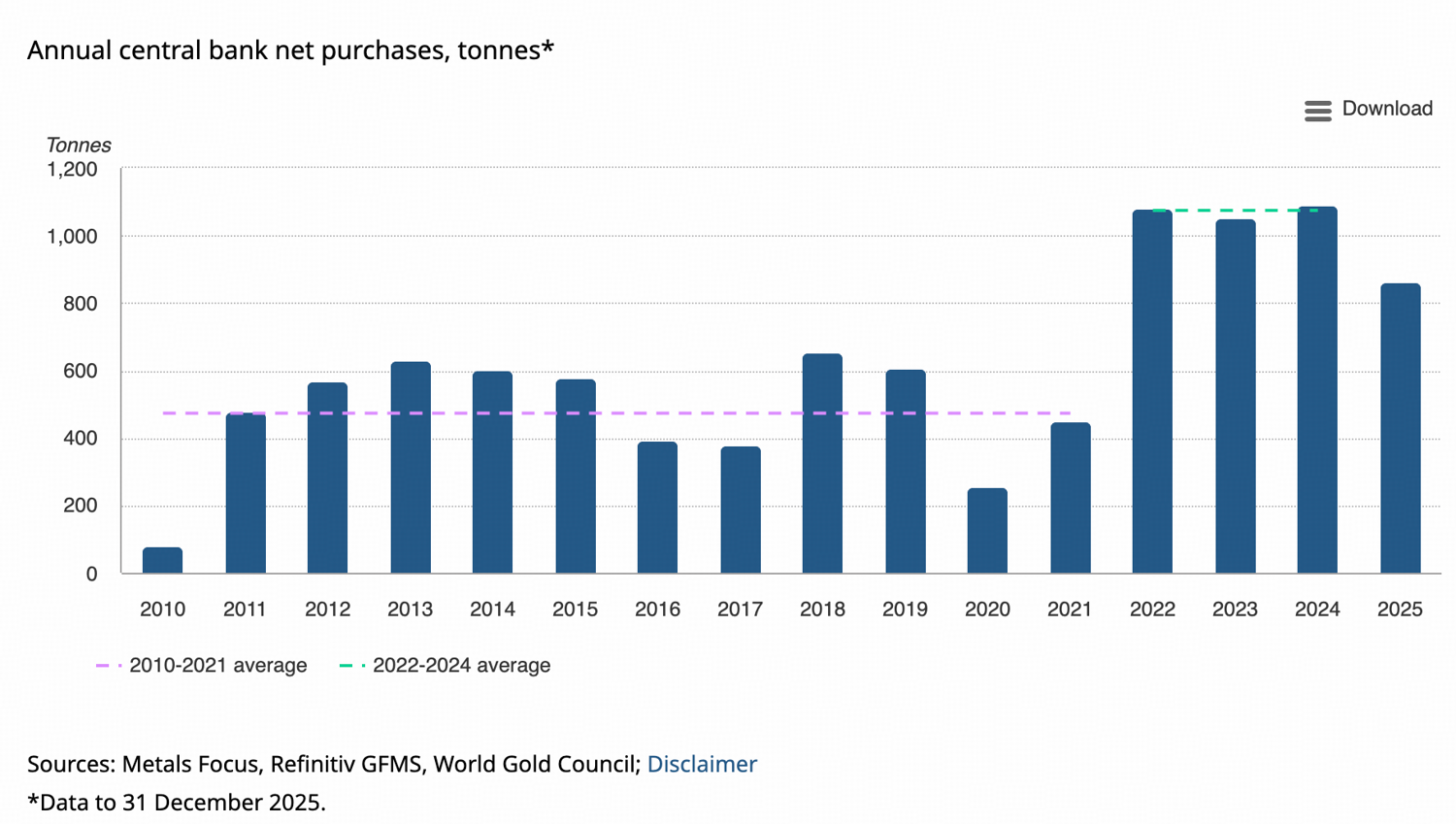
Gold’s current rally is rooted in a sequential expansion of structurally distinct buyer classes, sovereign, institutional, and crypto-native, each adding demand without displacing prior layers, in contrast to prior gold cycles where price strength depended on a single dominant category of buyer.
- Central banks purchased above 1,000 tonnes annually for three consecutive years (2022–2024), establishing a sovereign demand floor that preceded the return of Western investment flows.
- ETF and private capital re-entered in 2025, adding 801 tonnes, but Western portfolios remain under-allocated at 0.17% of U.S. private financial assets versus a historical norm closer to 1–2%, leaving significant room for expansion without requiring new buyer categories.
- Crypto-native demand is forming a structurally independent third layer through tokenized gold (35–40t, $6B+), stablecoin reserves (Tether $20B), and yield-bearing structures, introducing gold as productive collateral rather than passive reserve in digital financial systems.
Common characterisations of gold as a macro hedge describe what gold does in portfolios; they do not identify who has been buying, in what size, or why that buying has persisted across three years of rising prices.
The defining feature of this gold cycle is the sequencing of buyers. Three overlapping demand phases have developed independently.
Phase 1: The Sovereign Floor (2022–2024)
Central banks established the foundation of this cycle before ETF flows or retail participation returned in any meaningful size. Annual net purchases exceeded 1,000 tonnes for three consecutive years between 2022 and 2024, the prior single-year record was around 610 tonnes in 2013. The scale and persistence of this accumulation was without modern precedent.

The structural characteristics of central-bank demand explain why this created a durable floor rather than a temporary spike. Reserve allocation is strategic: purchases are driven by portfolio rebalancing and de-dollarisation objectives, not price momentum. This buying is broadly insensitive to short-term price levels, demand persisted as gold moved higher.
In 2025, purchases moderated to 863 tonnes (by World Gold Council), below the prior three-year pace but still above the historical average. Poland led disclosed buying; a significant share of accumulation remained unreported across multiple jurisdictions. The sovereign floor explains the otherwise anomalous divergence between rising prices and flat or declining ETF holdings through 2022–2024: the marginal buyer was sovereign, not market-driven capital.
Phase 2: Western capital has returned but remains structurally under-allocated (2025–)
The second phase began in 2025 with the re-engagement of institutional and retail flows. ETF holdings increased by approximately 801 tonnes globally (World Gold Council); total gold demand exceeded 5,000 tonnes for the year. Bar and coin demand reached multi-year highs across multiple regions. The rally transitioned from narrow to broad-based, sovereign accumulation continued while private capital added an incremental and cyclically sensitive layer.
Global Gold ETFs have been in outflow for the period 2022-2024

Source: https://www.gold.org/goldhub/data/gold-etfs-holdings-and-flows
Gold ETFs constitute approximately 0.17% of U.S. private financial assets, a low allocation that persists despite rising gold prices. Historical norms for gold within diversified institutional portfolios typically range from 1–2% of assets under management. A reversion toward the lower end of that range, without any change in central-bank demand, implies several hundred additional tonnes of ETF inflows per year. Phase 2 has room to expand from within its existing buyer set.
Phase 3: Crypto-native demand is integrating gold as productive collateral
A third demand layer has emerged within crypto-native financial infrastructure. In absolute terms it remains small relative to Phase 1 and Phase 2. In structural terms it introduces mechanisms that did not exist in prior gold cycles, and its price sensitivity profile differs from both central banks and ETF investors.
Tether’s USDT Reserve Assets
Stablecoin reserve accumulation represents the largest near-term buyer within this channel. Tether’s USDT is backed by a diversified reserve pool of approximately $190B, the majority held in US Treasuries and money market instruments (74%), but with a structurally significant allocation to gold (10%) and Bitcoin (3.5%). This reserve composition is a deliberate policy choice. It places Tether outside the framework of US stablecoin legislation: the GENIUS Act, which passed the US Senate in May 2026, requires compliant issuers to back stablecoins exclusively with USD cash, short-dated Treasuries, or Fed reserves, explicitly excluding gold, Bitcoin, and non-USD assets. Tether, incorporated offshore and not subject to US jurisdiction, operates under no such constraint.
Tether USDT’s Reserve

The distinction matters structurally. Compliant US stablecoins will direct reserve growth entirely into short-duration dollar instruments. Tether’s reserve growth, driven by its own liability expansion, feeds directly into physical gold markets. Reported 2025 purchases placed Tether among the top institutional gold buyers globally, exceeded by only a small number of central banks including Poland. This demand is balance-sheet driven: it responds to USDT circulation growth, not to macro rates or portfolio rebalancing cycles.

Tokenized Gold
Tokenized gold, digital tokens backed 1:1 by physically allocated gold held in audited vaults, has grown from a niche instrument to a $6B+ market with approximately 35–40 tonnes outstanding as of early 2026. The two dominant products, Paxos Gold (PAXG) and Tether Gold (XAUT), account for the majority of supply, though a broader set of issuers has emerged on Ethereum and other settlement layers.
While the total size remains small at less than 40 tonnes, the growth rate cannot be neglected. In the past half year, the total supply of tokenized gold has doubled in quantity.
The structural significance of tokenized gold is not its current scale but its functional role: it converts a traditionally settlement-inefficient asset into programmable collateral that can be posted in DeFi lending protocols, used as margin in on-chain derivatives, and transferred across borders without the custody friction of physical gold.
Yield-bearing Tokenized Gold Product
Yield-bearing gold structures address gold’s traditional limitation as a non-yielding asset. Products such as thUSD/thGOLD allocate capital into tokenized gold, hedge price exposure via short futures, and generate yield from two sources: the futures roll in contango (where futures prices exceed spot, producing a positive roll return as contracts converge toward expiry) and lending of tokenized gold positions. This model converts gold from a passive store of value into productive collateral, capturing value from the depth of existing gold derivatives markets and redistributing it to holders.
However, these strategies are novel and carry risks that distinguish them from traditional gold exposure. The frequency of DeFi exploits in 2025–2026 has kept adoption cautious, and these risk factors constrain the pace at which yield-bearing gold products scale beyond crypto-native participants.
What the three-phase demand base implies for gold allocation
The forward implication of this sequencing is directional rather than precise. Each layer has a different growth ceiling and a different sensitivity to macro conditions.
Demand layer profile: scale vs. price sensitivity vs. growth trajectory

Central-bank demand is likely to moderate from its 2022–2024 pace at sustained elevated prices, the marginal cost of reserve diversification rises as gold’s share of total reserves increases. ETF and private demand has the largest near-term expansion potential given the under-allocation gap: if Western institutional allocations moved from 0.17% toward a conservative 0.5% of U.S. private financial assets, the implied incremental demand is in the range of 1,500–2,000 tonnes. Crypto-native demand is the smallest in absolute terms but carries the highest growth rate from a low base; its ceiling is less defined because the use cases, collateral, yield generation, reserve backing, are structurally new.
Disclaimer: The information provided herein does not constitute investment advice, financial advice, trading advice, or any other sort of advice, and should not be treated as such. All content set out below is for informational purposes only.
The post BloFin Research: Gold’s Three-Phase Demand Expansion appeared first on BeInCrypto.

Wall Street’s appetite for retail crypto trading has intensified as Morgan Stanley rolls out a trading pilot on its E*Trade platform, pricing trades at a level that undercuts many traditional crypto brokers for standard retail users.
According to a Bloomberg report, Morgan Stanley is charging 50 basis points of the dollar value of each crypto transaction in the pilot. The program is currently in pilot mode, with E*Trade’s roughly 8.6 million clients expected to gain access later this year. A Morgan Stanley spokesperson confirmed to Cointelegraph that the details and fee structure described in Bloomberg’s report were accurate.
This latest push follows Morgan Stanley’s broader involvement in crypto, including its foray into a spot Bitcoin ETF ecosystem. Cointelegraph noted that the ETF, MSBT, drew about $30.6 million in inflows on its first day of NYSE Arca trading, a milestone that signals continued investor interest even as traditional banks expand into crypto access for clients.
The move illustrates a wider trend as large financial institutions seek to capture a share of retail trading revenue through crypto products, even as the ecosystem’s infrastructure and regulatory framework continue to mature.
Key takeaways
- Morgan Stanley’s E*Trade pilot charges 50 basis points per crypto trade, positioning the bank as a price leader among mainstream retail platforms.
- The pilot aims to bring 8.6 million E*Trade clients into crypto trading later this year, expanding access across a broad retail base.
- The broader appetite on Wall Street includes Charles Schwab’s recent launch of spot Bitcoin and Ether trading for retail clients at 75 basis points per transaction, underscoring a broader shift toward crypto offerings.
- Market players note that lower-fee options exist outside banks’ ecosystems, with platforms like Kraken Pro, Binance US, and Coinbase Advanced offering competitive pricing tiers for sophisticated traders.
- The momentum follows Morgan Stanley’s earlier debut of a spot Bitcoin ETF (MSBT), which attracted $30.6 million in inflows on its first day, reinforcing investor appetite for regulated crypto access from traditional financial institutions.
Pricing ambition and the retail crypto race
At its core, Morgan Stanley’s $0.005-per-dollar pricing? Not exactly. The firm’s pilot is priced at 50 basis points of the trade’s value, a rate that Bloomberg describes as aggressive relative to standard retail pricing offered by several large exchanges and brokerages. The plan to roll access out to E*Trade’s 8.6 million clients this year signals a rapid scale-up if the pilot proves sustainable, correlating with steady demand for regulated, institution-backed channels to buy and sell digital assets.
Such pricing moves raise questions about how traditional brokers balance revenue with user growth. While Morgan Stanley positions itself as a bridge between conventional finance and crypto markets, rivals—including exchanges and fintechs—have already experimented with lower fee tiers. The broader market has shown that the most aggressive price points are often paired with robust custody, insurance, and compliance frameworks that can be appealing to retail participants who remain wary of the space’s risk profile.
A broader wave of Wall Street crypto adoption
Morgan Stanley’s pilot sits within a larger arc of banking and brokerage firms expanding crypto offerings to retail and institutional clients. Earlier reports highlighted Charles Schwab’s rollout of spot Bitcoin and Ethereum trading for retail clients, beginning with a fee structure around 75 basis points per transaction. The move illustrates how mega-brokers are trying to capture a portion of retail trading revenue that once flowed primarily to crypto exchanges and alternative platforms.
Meanwhile, Goldman Sachs has moved to broaden its crypto product lineup through regulatory filings for a Bitcoin Premium Income ETF, an approach that would depend on selling call options on Bitcoin-related exchange-traded products rather than directly owning Bitcoin. This strategy reflects a broader W Street preference for investment vehicles tied to crypto exposure while managing risk through derivatives strategies.
Beyond trading and ETFs, the ecosystem is deepening on the infrastructure side. BNY Mellon has already rolled out a digital asset custody platform that began operating in the United States in late 2022, enabling select clients to hold and move Bitcoin and Ether in a regulated custodial environment. The gradual expansion of custody capabilities is a prerequisite for more active, bank-backed crypto trading and asset management services.
These developments collectively indicate a shift in the financial landscape: traditional incumbents are not only offering access to crypto but are also building the reliability and risk controls that can reassure a broader base of investors and fund managers. The industry is moving toward a model where regulated, enterprise-grade services coexist with more flexible, lower-cost trading options offered by specialized crypto platforms.
What this means for users and the market
For investors and traders, the emergence of bank-backed crypto trading pilots could translate into greater accessibility, more standardized protections, and a broader menu of regulated instruments. The price competition among major banks and high-profile brokerages may push other platforms to adjust their fee structures, potentially expanding the appeal of on-ramp products for new retail participants.
However, the consolidation of crypto capabilities within traditional financial institutions also introduces new considerations. Compliance, risk management, and the resilience of settlement rails remain critical as more clients move from pure-play crypto venues to regulated channels. Market observers will be watching how liquidity, spreads, and user experience evolve as these pilots scale from testing to routine availability across large client bases.
The broader market’s appetite for regulated access is evident in the MSBT inflows on its launch day, signaling continued investor interest in mainstream, audited products. As Morgan Stanley, Schwab and others push deeper into crypto, readers should monitor updates on client uptake, fee revisions, and any regulatory or operational hurdles that could shape how quickly these platforms gain traction.
Looking ahead, the next phase will likely reveal how quickly E*Trade users adopt crypto trading, how fee competition impacts platform economics, and what new product formats—ranging from spot to ETF-based exposures—will define retail participation in the crypto economy.
As the sector evolves, observers should watch for regulatory guidance that could influence pricing, product design, and custody standards—elements that will determine whether this wave of adoption becomes a durable layer of the traditional financial system.
For ongoing coverage, follow updates on Morgan Stanley’s E*Trade rollout, Schwab’s retail crypto expansion, and the broader bank-led push into crypto infrastructure and investment products.
Crypto World
Crypto.com Expands Real-World Crypto Utility With Launch of Crypto.com Travel Powered by Bookit

Crypto.com has announced the launch of Crypto.com Travel, a new in-app booking platform powered by Bookit, marking another major step toward integrating cryptocurrency rewards into everyday consumer experiences.
The announcement was revealed during Consensus 2026 and introduces a travel and entertainment booking experience directly inside the Crypto.com app. The platform allows eligible users to earn cashback rewards in CRO tokens when booking hotels, flights, cruises, car rentals, and live experiences.
According to the company, Crypto.com Travel provides access to more than one million travel listings globally through Bookit’s infrastructure, while expanding the utility of CRO within the broader Crypto.com ecosystem.
Bringing Crypto Rewards Into Mainstream Travel
The launch is positioned as a major expansion of Crypto.com’s Level Up rewards program, which combines tiered crypto benefits with real-world spending experiences.
Users enrolled in eligible tiers can reportedly receive cashback rewards in CRO tokens on qualifying bookings, with additional benefits available when payments are completed through Crypto.com payment products.
Unlike traditional travel loyalty systems that rely heavily on points, restrictions, or blackout dates, Crypto.com says the new platform is designed to create a more flexible rewards experience tied directly to cryptocurrency incentives.
Eric Anziani, President and COO of Crypto.com, described the launch as part of a broader strategy to expand practical crypto adoption beyond trading and speculation.
Bookit CEO Lin Dai also noted that tokenized rewards and digital assets are increasingly becoming part of mainstream commerce and consumer spending experiences.
Crypto and Consumer Commerce Continue to Converge
The launch reflects a growing trend across the digital asset industry, where companies are increasingly focusing on real-world utility and consumer-facing applications rather than purely speculative use cases.
Travel, payments, rewards, and loyalty systems have emerged as one of the most active sectors for crypto integration, particularly as platforms seek to connect blockchain-based incentives with everyday purchasing behavior.
By combining travel bookings with CRO-based rewards, Crypto.com appears to be positioning itself at the intersection of fintech, digital assets, and global consumer commerce.
The feature is currently available for eligible users through the Crypto.com app in supported jurisdictions.

As the UK considers options to attract and develop the crypto industry at home, the Bank of England (BOE) has put forward several proposals for how it might regulate stablecoins to mitigate perceived financial risks.
These have included a ban on custodial wallets for stablecoin holdings. The UK crypto industry, from stablecoin issuers to Bitcoin hardliners, has predictably taken issue with the ban.
“This would be a serious misstep for the UK, risking long-term damage that is hard to unwind,” said Benoit Marzouk, CEO of stablecoin issuer tGBP told Cointelegraph.
Ban could hamper operability and competitiveness
At the heart of the BOE’s approach to stablecoins, which it recently discussed in a series of inquiries before the House of Lords, is protecting the UK banking system.
The bank argues that unhindered access to stablecoins, which can offer higher yields than traditional banking products, could lead to a run on deposits, and therefore on credit availability from UK banks.
In March, Bank of England Deputy Governor Sarah Breeden told the House of Lords Financial Services Regulation Committee that BOE is “open to other ways of achieving the objective” of credit availability.

Breeden speaks before Parliament. Source: Parliament
“But I think you would expect us as the financial stability authority to ensure that there isn’t a precipitous drop in credit to the businesses and households in the UK,” she said.
One way it believes it can affect this is through banning unhosted wallets. “There is this concept of an unhosted wallet, where you haven’t got a wallet provider who is a regulated entity ensuring that AML [Anti-Money Laundering], KYC [Know Your Customer] criteria are complied with. Unhosted wallets will not be permissible in the UK. They are permissible in the US regime,” Breeden told the committee.
For the crypto industry, it would be two steps backward. According to Marzouk, it would “wipe out hard-earned network effects.”
“If transfers are limited to registered VASPs or custodial wallets, existing GBP stablecoins […] would become in breach of regulations with holding on self-hosted or issuers would be forced into whitelisting models and re-issuing new tokens.”
Related: UK central bank is warming up to stablecoins, but says industry input is lacking
Joey Garcia, chief strategy, policy, and regulatory affairs officer at Xapo Bank, told Cointelegraph that, instead of being an update to the financial system, “this ban essentially restricts any attempt to understand and mitigate the perceived risks.”
“This would be interpreted as a signal of a hostile regulatory environment, discouraging developers and investment in the UK’s fintech sector.”
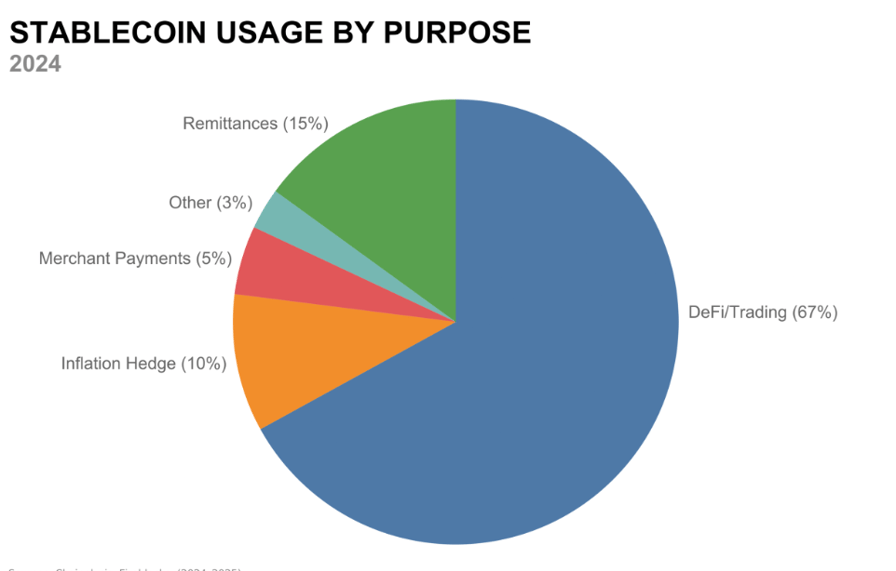
Marzouk said that it also undermines an important use case for stablecoins, namely remittances. Under the BOE’s regime, “recipients couldn’t access funds unless fully onboarded with a regulated exchange.”
Source: ORF America
“A plane without wings is no longer a plane. Likewise, a stablecoin or blockchain asset that can only be transferred to a predefined list of wallets is not truly blockchain, it is effectively e-money within a closed ecosystem and then you don’t need a separate regulation.”
Garcia also said that the utility of stablecoins would be diminished as they “derive much of their value from the ability to be held and transferred on a peer-to-peer basis on open networks.”
“This is particularly relevant for the unbanked and underbanked around the globe, for whom self-custodial wallets and regulated on-ramps can be a primary gateway into digital financial services, and access to digital dollars or digital pounds.”
Curbing such a major use case for stablecoins “kills a major strategic opportunity: Positioning the Pound Sterling, one of the strongest and most trusted currencies, as a credible alternative to USD stablecoins,” said Marzouk.
Crypto industry questions feasibility of wallet ban
Beyond the issue of competitiveness is the feasibility of implementing an unhosted wallet ban.
Susie Violet Ward, the director and co-founder of Bitcoin Policy UK, said that these rules would do little to address real illicit flows, but would rather “expand data collection, erode privacy, impose costs, and add friction and limit access through banks and intermediaries.”
Freddie New, chief policy officer at the Bitcoin Policy UK, said that the proposed policy from BOE was of “such monumental, such overweening, stupidity, that it is hard to formulate a sensible response.”
New said, “let everyone in the UK simply continue to use their ‘self-hosted wallets’ (ie ‘wallets’) without paying them a second’s more attention.”
It may not be as simple as that. The central bank does have some levers it can pull that would be particularly relevant for stablecoins. But even then, “this is extremely challenging to monitor, let alone enforce,” said Garcia.
The BOE could focus on Virtual Asset Service Providers (VASPs). Marzouk said that the bank could limit the issuance of new stablecoins into registered VASPs like crypto exchanges. In turn, these would only allow transfers to other VASPs or custodians “through the validation of existing tools that have been created for the Travel Rule regulation.”
But even this, per Marzouk, stretches the intended purpose of the Travel Rule. “The Travel Rule is designed to enable VASPs to exchange information if there’s some complaints from clients of identity theft, for example: It was not intended to restrict or prohibit self-custody.”
For Garcia, it’s neither “necessary nor feasible.” The underlying technology behind crypto wallets means that anyone can create one. “As long as the internet and public blockchains exist, a direct ban on wallet creation and use is not practically enforceable.”
It’s distinctly possible that the ban will not make it into the final version of the Bank of England’s regulations. The bank’s latest Consultation Paper on stablecoins, published in November, does not propose one explicitly.
Any changes would have to go through the standard process, led by the Treasury under the Financial Conduct Authority’s framework as defined by the 2023 Financial Services and Markets Act. “This involves formal consultation, industry input, and iterative rulemaking before any measures can be finalised,” said Garcia.
The best the industry can do to circumvent a ban is to continue engaging with policymakers, per Garcia.
“As participants within the sector, we must demonstrate the benefits of this technology clearly to address the concerns and risks that have been identified, to strengthen the case for proportionate regulation.”
Magazine: AI-driven hacks could kill DeFi — unless projects act now

Key Highlights
- CORZ stock surges following $421 million Polaris DS acquisition announcement
- Oklahoma power infrastructure expands with 440MW of contracted capacity
- Company pursues ambitious 1GW leasable power capacity goal
- Strategic acquisition reinforces AI hosting infrastructure objectives
- Business transformation continues from Bitcoin mining to AI services
Shares of Core Scientific (CORZ) experienced significant upward momentum following the announcement of a strategic acquisition designed to enhance power infrastructure capabilities in Oklahoma. The stock gained 10.88%, reaching $24.61 in early market activity, as investors responded positively to the company’s aggressive expansion into high-density colocation services. This strategic move further solidifies Core Scientific’s commitment to building artificial intelligence infrastructure and enterprise-scale computing facilities.
Strategic Polaris Deal Bolsters Oklahoma Operations
Core Scientific revealed its intention to purchase Polaris DS LLC in a transaction valued at $421 million, significantly expanding its Muskogee, Oklahoma footprint. This acquisition delivers 440 megawatts of power capacity under contract with Oklahoma Gas & Electric. The move is expected to accelerate the timeline for deploying advanced high-density computing infrastructure.
The transaction requires regulatory clearance and satisfaction of customary closing requirements, with completion anticipated during Q3 2026. Polaris currently maintains an active 40-acre campus located adjacent to Core Scientific’s current Muskogee operations. The property features established electric service contracts and substation facilities that enable additional expansion opportunities.
According to Core Scientific, this strategic purchase directly supports the organization’s objective of achieving approximately 1 gigawatt of leasable power infrastructure. The company has secured control of nearly 250 additional acres earmarked for future development initiatives. This comprehensive approach integrates targeted acquisitions, new construction projects, and flexible power delivery systems throughout its Oklahoma portfolio.
Advanced Infrastructure Enables AI and Computing Services
Core Scientific has strategically repositioned itself away from conventional Bitcoin mining operations toward artificial intelligence and high-performance computing services. As a result, the organization continues repurposing previous mining locations into enterprise-grade colocation facilities. The Muskogee expansion exemplifies this broader operational evolution.
Development work is currently underway on an additional 82.5 megawatt facility within the Muskogee campus complex. Initial delivery is projected for Q4 2027. Simultaneously, the existing 70 megawatt structure remains scheduled for customer handover in the second quarter of 2026.
This leased infrastructure accommodates Nvidia GB300 systems and is presently undergoing comprehensive testing and commissioning procedures. Core Scientific continues conducting detailed load assessments designed to maximize grid-connected capacity throughout the location. Additionally, the company has engineered behind-the-meter power configurations to facilitate future scalability needs.
Financial Performance Reflects Strategic Pivot
Cryptocurrency mining companies are increasingly diversifying into artificial intelligence and computing-oriented operations amid challenging mining profitability conditions. As a consequence, infrastructure holdings and long-duration power contracts have become highly valued strategic assets. Organizations controlling substantial energy resources are actively expanding into colocation and compute hosting markets.
Core Scientific’s most recent quarterly financials indicated total revenue decreased to $79.8 million compared to $94.9 million in the prior-year period. However, colocation revenue demonstrated substantial growth, climbing to $31 million from $8.5 million year-over-year. Conversely, Bitcoin mining revenue contracted to $42 million from $79 million.
The organization has also executed substantial financing arrangements to fund its expansion roadmap earlier this year. Core Scientific completed a $3.3 billion private debt placement complemented by $1 billion in loan facilities. Separately, shareholders voted against a proposed $9 billion combination with CoreWeave, though both entities maintain ongoing commercial relationships.



SpaceX plans an initial $55 billion Terafab chip and AI megafactory in Grimes County, Texas, as part of Elon Musk’s broader Austin-centered semiconductor and compute build‑out.
Summary
- Local filings in Texas show SpaceX planning an initial $55 billion investment for its Terafab semiconductor and AI super‑factory.
- The multiphase project in Grimes County is part of Elon Musk’s broader Terafab chip initiative centered around Austin.
- Earlier disclosures from Musk and media reports had put the Terafab cost at between $20 billion and $25 billion.
SpaceX is preparing to pour an estimated $55 billion into the first phase of its Terafab super‑factory in Texas, according to a recent notice from Grimes County officials and market reports tracking the project. A filing shared by local representatives on X states that “the County of Grimes, Texas, will be home to SpaceX’s multiphase, next‑gen, vertically integrated semiconductor manufacturing and advanced computing fabrication facility,” with “estimated capital for initial phase” of $55 billion and “estimated total investment of $119 billion.”
The project, dubbed Terafab, was first unveiled in March as a joint semiconductor initiative between Tesla, SpaceX and Musk’s AI company xAI in the Austin area. In remarks reported by Bloomberg, Musk called Terafab “a grand plan to eventually manufacture [our] own chips for robotics, artificial intelligence and space data centers,” and said the complex would be built in Austin and “jointly run by Tesla and SpaceX.”
Coverage from Fortune and other outlets indicated the initial cost of Terafab would be in the $20 billion to $25 billion range, with the first fab rising adjacent to Tesla’s Giga Texas plant in Austin. A detailed breakdown from Fintech Weekly described the launch event at Austin’s Seaholm Power Plant, noting that Tesla’s CFO pegged the early estimate at “between $20 and $25 billion” and that the facility would consolidate “chip design, lithography, fabrication, memory production, advanced packaging, and testing” under one roof.
The new Grimes County documentation suggests SpaceX is now planning a separate or expanded Terafab footprint beyond Austin, with the “SpaceX Reinvestment Zone No. 1 – 2026‑001” designated around the Gibbons Creek Reservoir area and a public hearing scheduled for June 3. The notice characterizes the site as a “multiphase” complex for semiconductor manufacturing and advanced compute, implying a long‑term build‑out that could eclipse earlier cost estimates.
Musk’s stated goal for Terafab is to ultimately produce enough custom silicon to support roughly a terawatt of computing power per year, powering Tesla’s autonomous vehicles and Optimus humanoid robots as well as SpaceX’s satellites and planned space data centers. As Yahoo Finance has reported, Terafab is being pitched as a vertically integrated answer to Musk’s chip supply constraints, with Tesla, SpaceX and xAI seeking to reduce dependence on external foundries like TSMC and Samsung.
The $55 billion figure tied to SpaceX’s Texas super‑factory underscores just how capital‑intensive that ambition is—and how aggressively Musk is betting that in‑house chip capacity will be a competitive edge across electric vehicles, AI, and space infrastructure.

Morgan Stanley has rolled out a cryptocurrency trading pilot on its E*Trade platform, charging lower basic retail fees than some of the largest US crypto and brokerage platforms.
The Wall Street bank is charging clients 50 basis points on the dollar value of each crypto transaction, undercutting Coinbase, Robinhood and Charles Schwab on standard retail pricing, according to a Tuesday Bloomberg report.
The offering is currently in pilot mode, with E*Trade’s 8.6 million clients expected to gain access later this year, Bloomberg reported.
The pilot illustrates how major Wall Street firms are moving further into crypto trading as they compete with exchanges and fintech platforms for retail trading revenue. Still, Kraken Pro, Binance US and some Coinbase Advanced tiers offer lower fees for crypto traders.
A spokesperson for Morgan Stanley confirmed to Cointelegraph that the details and fee structure described in the Bloomberg report were accurate.
The latest crypto push by the bank comes about a month after Morgan Stanley launched a spot Bitcoin ETF (MSBT) that recorded $30.6 million in inflows on its first day of NYSE Arca trading.
Related: Crypto VC funding plunges to $659M in April, hits near two-year low
Wall Street giants venture into crypto trading
Morgan Stanley is not the only major financial institution expanding its crypto products for retail or institutional clients.
Charles Schwab, one of the largest US brokerage firms, announced the launch of spot Bitcoin and Ether trading for retail clients less than a month ago, Cointelegraph reported on April 16. The offering launched with a 75 basis points per transaction fee.
Goldman Sachs also filed with the US Securities and Exchange Commission in April to launch the Goldman Sachs Bitcoin Premium Income ETF, a proposed fund that would generate income by selling call options on Bitcoin exchange-traded products rather than investing directly in Bitcoin.
Earlier Wall Street crypto infrastructure efforts include BNY Mellon’s digital asset custody platform, which went live in the United States in October 2022 and allowed select clients to hold and transfer Bitcoin and Ether.
Magazine: Bitcoiners eye ‘sell in May,’ SBF’s bid for new trial shut down: Hodler’s Digest, April 26 – May 2


Network News
AI AGENTS FORMS THEIR OWN COMPANY: ClawBank, an agent-economy infrastructure project, said its Manfred AI agent became the first such entity to autonomously set up a company, filing with the U.S. Internal Revenue Service (IRS) for its own Employer Identification Number (EIN), a unique code that allows it to legally operate as a business, hire staff and obtain licenses. The agent also holds an FDIC-insured U.S. bank account and a crypto wallet , Clawback said. “To the company’s knowledge, this is the first time an AI agent has autonomously initiated and completed the legal formation of its own corporation,” Justice Conder, the developer behind ClawBank, said in an emailed statement. Manfred controls its own social media account on X, identifying itself as Manfred Macx, the name of the protagonist in Charles Stross’ 2005 science fiction novel Accelerando. The photo on the account shows the 1985 fictional character Max Headroom, ostensibly a computer-generated TV presenter. “Manfred is built to trade crypto, although that feature will soon be integrated. Perhaps by the end of this month,” Conder said in a video interview. “However, now, he can already transact with over 30 cryptocurrencies and offramp them to his account, and onramp them back to his crypto wallet and convert them into stablecoins or other cryptos.” — Oliver Acuna Read more.
SOLANA’S ALPENGLOW UPGRADE COULD COME NEXT QUARTER: Solana co-founder Anatoly Yakovenko said a major upgrade to the network, dubbed Alpenglow, is expected to arrive as soon as this year, potentially within the next quarter, marking what he described as a pivotal step in the blockchain’s technical evolution. “So the Alpenglow release is basically due sometime this year, I think next quarter,” Yakovenko said during a fireside panel at Consensus Miami 2026. “That, to me, is this exciting step in the evolution of the protocol.” In simple terms, Alpenglow is about making Solana faster, more predictable and more secure at its core. Blockchains like Solana rely on a network of computers to agree on the order of transactions. Today, that process can introduce delays or uncertainty depending on network conditions. Alpenglow aims to tighten those guarantees. Yakovenko described a system where transaction confirmations approach the physical limits of how fast information can travel, essentially, near the “speed of light” around the globe. For users and developers, that means quicker finality (knowing a transaction is permanently settled) and a more reliable foundation for building applications. — Margaux Nijkerk Read more.
RIPPLE SHARING INTELLIGENCE ON NORTH KOREA HACKING THREAT: Ripple is now sharing its internal threat intelligence on North Korean hackers with the crypto industry, the company said, in a move that reframes how the sector is responding to a shift in DPRK attack methodology. The Drift hack was not a hack in the way most people think of one. Nobody found a bug or exploited a smart contract. North Korean operatives spent months befriending Drift’s contributors, slipped malware onto their machines, and walked off with the keys. By the time the $285 million moved, every system that was supposed to catch a hack had nothing to flag. That is the version of events Ripple and Crypto ISAC, the crypto industry’s threat-sharing group, laid out Monday alongside news that Ripple is now sharing its internal data on North Korean threat actors with the rest of the sector. The 2022-24 wave of more DeFi hacks was centred on exploiting code, with attackers finding smart contract vulnerabilities and draining protocols in minutes. But as security gets tighter, the modus operandi shifts from technology to people. Rogue operatives apply for jobs at crypto firms, pass background checks, show up on Zoom calls and build trust for months. Then they deploy attacks that no traditional security tool was built to catch, because the attacker is already inside. Ripple is now feeding Crypto ISAC the kind of profile data that makes that pattern legible across companies. — Shaurya Malwa Read more.
CLOUDLFARE ON AI AGENTS AND WEB ECONOMICS: For decades, the web ran on a simple bargain: Publishers and businesses made information freely accessible, search engines and other crawlers indexed it, and those services sent human traffic back. Sites could then monetize that traffic through ads, subscriptions or commerce. But that’s all changing fast, Cloudflare Chief Strategy Officer Stephanie Cohen said at CoinDesk’s Consensus conference in Miami. With the rise of AI agents, software can scrape a webpage, summarize content and keep the source user inside a chatbot or automated workflow instead of sending a person back to the original site. Cohen said that shift is breaking the internet’s old business model, with non-human traffic now exceeding human engagement. Cloudflare’s proposed answer is to give websites more control over automated traffic: identify the bots, verify who they are, understand what they intend to do and decide whether to allow, block or charge them. Cohen pointed to x402, an open payments protocol built around the HTTP 402 “Payment Required” status code, as one piece of that stack. — Jeffrey Albus Read More.
In Other News
- Coinbase is set to slashing its workforce by roughly 14%, or 660 employees in response to negative market conditions and AI challenges. CEO Brian Armstrong announced the cuts in an X post, citing the “two forces” that converged in his firm’s decision to slash staff. Coinbase has more than 4,700 employees, according to its website, so 14% would be equivalent to around 660. “While we’ve managed through that cyclicality many times before and come out stronger on the other side, we’re currently in a down market and need to adjust our cost structure now so that we emerge from this period leaner, faster, and more efficient for our next phase of growth,” said the CEO of the Nasdaq-listed company. The second reason is AI, and how it is changing the way Coinbase operates, he said. “Over the past year, I’ve watched engineers use AI to ship in days what used to take a team weeks,” Armstrong stated, adding that “the pace of what’s possible with a small, focused team has changed dramatically, and it’s accelerating every day.” — Olivier Acuna Read more.
- Bullish, CoinDesk’s parent company, has agreed to acquire transfer agent and shareholder services firm Equiniti in a $4.2 billion deal that would fold a core piece of traditional market infrastructure into its digital asset platform, expanding its push into tokenized securities. The transaction comprises $1.85 billion of assumed Equiniti debt and roughly $2.35 billion in Bullish stock, priced at $38.48 per share based on Bullish’s 30-day VWAP through May 4, according to a press release. After initially declining on news of the all-stock deal, Bullish shares have surged 17% in morning U.S. trade. The transaction gives Bullish, a regulated transfer agent, a required function for public companies, alongside its existing tokenization, trading and market infrastructure capabilities. — Will Canny Read more.
Regulatory and Policy
- Lawyers seeking to seize $71 million in frozen ether for victims of North Korean terrorism changed their legal strategy Tuesday, arguing in a new court filing that the April 18 rsETH exploit was not theft but fraud, directly countering Aave’s attempt to void a restraining notice blocking the release of the assets. In a 30-page opposition brief filed in the Southern District of New York, a lawyer representing the North Korean terror victims argues the exploit was not a smash-and-grab theft but a fraudulent lending transaction, and that under longstanding U.S. law, fraudsters who acquire property through deception can obtain legal title to it, even if that ownership is later reversible. “What actually happened is that North Korea borrowed assets from users of the ‘Aave Protocol’ and did not pay it back, and when the ‘Aave Protocol’ sought to liquidate North Korea’s collateral, the ‘Aave Protocol’ unhappily discovered that the collateral was worthless,” the new filing reads. — Sam Reynolds Read more.
- Brad Garlinghouse, Ripple’s CEO, has been closely following the U.S. Senate’s progress on the crypto market structure bill, and he said it’s not a “done deal” as the next two weeks may be pivotal for the legislation’s chances. “If it doesn’t happen then, I think the likelihood is going to drop precipitously,” Garlinghouse said Tuesday at Consensus 2026 in Miami. But he said he still thinks it’s likely to happen, and the next moment will be the scheduling of the Senate Banking Committee’s long-awaited hearing to “mark up” the bill and advance it to the next stage. Senators at the center of the negotiations over the Digital Asset Market Clarity Act revealed last week the latest compromise language on a major sticking point — stablecoin yield — that is expected to allow the banking panel to schedule the hearing. “Do I think it’s perfect? Hell, no,” Garlinghouse said. “There’s tradeoffs and compromises, but I do think clarity is better than chaos.” The stablecoin compromise aims for a balance that allows crypto firms to pursue certain rewards programs without offering yield-bearing stablecoin accounts that resemble banks’ interest-bearing deposits that fuel U.S. lending. Crypto insiders have generally agreed that it’s acceptable, but a coalition of banking groups said this week that the deal “falls short.” — Jesse Hamilton Read more.
Calendar
- May 5-7, 2026: Consensus, Miami
- June 2-3, 2026: Proof of Talk, Paris
- June 8-10, 2026: ETHConf, New York
- Sept. 29-Oct.1, 2026: Korea Blockchain Week, Seoul
- Oct. 7-8, 2026: Token2049, Singapore
- Nov. 3-6, 2026: Devcon, Mumbai
- Nov. 15-17, 2026: Solana Breakpoint, London
Bitcoin has continued its recovery structure with buyers gradually regaining control. The recent upward expansion has pushed the market back toward key resistance levels, while momentum indicators and market structure suggest that BTC is attempting to transition from a corrective phase into a broader bullish continuation. However, the market is now approaching a decisive area where confirmation is required before a sustained rally can unfold.
Bitcoin Price Analysis: The Daily Chart
On the daily timeframe, BTC has recently displayed notable bullish momentum and managed to slightly break above the upper boundary of the ascending channel that has contained the price action for the past several months. This breakout is an important technical development, as it signals strengthening buyer dominance after weeks of gradual accumulation. Nevertheless, the breakout still requires confirmation.
If the price stabilizes above the channel’s upper boundary at $80K and forms a successful pullback toward it, the breakout would likely be validated, opening the door for another bullish leg toward higher resistance zones. At the same time, Bitcoin is approaching a major resistance confluence around the $83K range, where the 200-day moving average is currently located.
This area could temporarily slow the bullish momentum. In this structure, the broken price channel now acts as dynamic support, while the $83K-$85K region remains the next major hurdle for buyers.

BTC/USDT 4-Hour Chart
On the 4-hour chart, a new ascending price channel has emerged, highlighted by the yellow structure. The market has been respecting both the upper and lower boundaries of this formation, indicating an orderly bullish trend in the short term. Bitcoin is currently trading near a significant resistance zone around the $81K-$84K range, represented by the green supply region.
Meanwhile, the $75K-$78K region, highlighted by the brown box, is acting as the main short-term support. Given the proximity to resistance and the recent sharp rally, the market is likely to experience consolidation and fluctuating price action within this channel over the coming days. A breakout above the $81K-$84K resistance could trigger continuation toward higher levels, while a rejection and breakdown below the $75K-$78K support may lead to a deeper correction within the broader structure.

Sentiment Analysis
From a liquidation perspective, the heatmap indicates that Bitcoin has recently swept through a large portion of the liquidity concentrated around the $80K region. This suggests that a significant number of short positions have already been liquidated during the recent rally.
However, notable liquidity clusters still remain above the current market price, particularly around the $85K-$95K region, making these levels attractive targets for further upside expansion and potential short squeezes. On the other hand, substantial liquidity pools continue to exist at lower price levels, especially below the $60K-$70K range. These deeper liquidity zones could still attract price in the coming months if broader market conditions weaken or if the current breakout fails to sustain itself.
Overall, Bitcoin is showing improving bullish momentum after reclaiming key technical levels, but the market is now entering a critical resistance zone. The interaction between the broken ascending channel, the 200-day moving average around $88K-$90K, and the surrounding liquidity clusters will likely determine whether BTC can sustain a broader uptrend or enter another consolidation phase before the next major move.

The post Bitcoin Price Analysis: BTC Hits Key Decision Zone After 20% Monthly Rally appeared first on CryptoPotato.

5 Levels of Financial Freedom That Change Everything (Where Are You?)

British doctor evacuated as ship linked to outbreak to leave Cape Verde
Form 144 Cipher Digital Inc. For: 6 May

Manchester United reach agreement with Casemiro over contract clause amid transfer speculation

US brings back mandatory military draft registration

Steven Gerrard disagrees with Gary Neville over ‘shock’ Chelsea and Arsenal claim | Football


-
 Business7 days ago
Tesla Officially Registers Elon Musk’s Stock: What Investors Need to Know
-

 NewsBeat3 days ago
Channel 5 – All Creatures Great and Small series 7 new post
-

 Entertainment7 days ago
Insider Claims Reason Behind Key & Peele Split
-
 Tech5 days ago
Trump’s 25% EU auto tariff breaches Turnberry Agreement that also covers semiconductors and digital trade
-
 Sports5 days ago
Paul Scholes issues Marcus Rashford reality check as agreement emerges over Man United star
-

 Entertainment5 days ago
Met Gala 2026 Rumored Guest List Is Turning Heads
-

 Entertainment6 days ago
Celebrities Who Are Attending the 2026 Met Gala Event
-

 Business5 days ago
Strait of Hormuz Blockade Persists Amid US-Iran Standoff, Sending Oil Prices Soaring
-
Entertainment5 days ago
New on Prime Video in May 2026 — Full List of Movies and Shows
-
 Sports5 days ago
David Benavidez responds to team Canelo saying the fight will never happen
-
Business7 days ago
Strait of Hormuz Remains Heavily Restricted on April 29 Amid Iran Conflict
-

 Sports5 days ago
Cavaliers vs. Raptors Game 6 live score, updates, highlights from 2026 NBA playoffs first-round series
-

 Crypto World7 days ago
Meta (META) starts stablecoin payout to creators in Circle’s USDC on Polygon, Solana via Stripe
-
 Sports5 days ago
IPL 2026: ‘Love you darling’- Hardik Pandya’s reaction to MS Dhoni steals the show |Watch | Cricket News
-

 Tech7 days ago
Texas Instruments made a new flagship graphing calculator: the TI-84 Evo
-

 Sports7 days ago
Saudi Arabia set to withdraw LIV Golf funding after 2026 season, per reports
-

 Entertainment5 days ago
Kylie Jenner Hit With Second Lawsuit From Ex-Housekeeper
-

 Sports5 days ago
Plane crash in Wimberley, Texas kills 5 pickleball players at tournament
-

 Entertainment5 days ago
Young and the Restless Next Week: Cane Arrested & Matt’s Deadly New Scheme!
-

 Tech6 days ago
Mark Zuckerberg Says Meta Is Working On AI Agents For Personal And Business Use
You must be logged in to post a comment Login