

Politics
Thomas Heald: Devolution has not failed in Scotland – yet

Councillor Thomas Heald is a Scottish Conservative councillor for Dunblane and Bridge of Allan, a former Scottish Conservative and Unionist candidate for the Scottish Parliament, and a former political advisor in the Scottish Parliament.
It has been quite the week in UK politics, and none more so than here in Scotland.
For nearly twenty years, Scotland has been governed by a party that has mastered the art of escaping accountability. Well-documented declining public services, stagnant economic growth, ferries with painted-on windows, growing NHS waiting lists, and a school system sliding down the international league tables. Yet instead of a deserved hammering at the ballot box, all we saw last week was the nationalists being rewarded by the electorate with a fifth term in office.
At some point, as democrats, we have to confront an uncomfortable question: what exactly does the SNP have to do to lose?
Because under normal democratic conditions, two decades in power would bring scrutiny. Instead, the SNP benefits from a political culture where constitutional grievance too often overrides governmental competence. Failure is excused because the argument is never about delivery; it is always redirected back towards independence.
That has trapped Scottish politics in a permanent holding pattern.
Responsibility for changing the cycle does not rest with the SNP. They are content to remain in government as long as possible. Instead, it rests with the opposition, particularly the Scottish Conservatives.
As the dust settles on a, not particularly unexpected, poor result, we need to ask ourselves a more fundamental question: do we actually want to govern Scotland?
That may sound absurd.
Of course, political parties exist to govern, otherwise what is the point? It may be uncomfortable for those involved in party strategy, but too often the Scottish Conservatives have behaved like a party content to merely oppose, survive, and occasionally exceed expectations. This is, to a certain extent, a result of the circumstances following the 2014 independence referendum. Scotland needed a strong Unionist Party then, and we delivered that. But the results of last week have shown that, by and large, the electorate believes the threat of a repeat of 2014 is off the table, at least for the foreseeable future.
Unionism matters enormously to the Scottish Conservative and Unionist Party; the clue is in the title, but opposition to independence is not a programme for government.
If the Scottish Conservatives want to become a serious political force again, we must start acting like a party that believes Scotland can and should be governed differently, not simply managed slightly better.
That means we must clearly express a distinctive, positive vision for Scotland’s future—one that addresses the needs and aspirations of all Scots, beyond the perpetual constitutional debate.
A Scotland with lower taxes and faster growth. A Scotland that builds homes instead of blocking them. A Scotland where aspiration is encouraged rather than viewed with suspicion. A Scotland where public services are judged on outcomes rather than slogans.
The manifesto for Holyrood 2026, entitled ‘Get Scotland Working’, was a genuine step in the right direction and one that I was proud to stand on. It was more optimistic, more serious and more policy-driven than those that have gone before. But manifestos alone do not change political fortunes. The brutal reality is that almost no one outside the political class reads them.
Politics is driven by perception, emotion and identity long before policy detail enters the conversation.
For years, the Scottish Conservatives have struggled with an image problem that no manifesto can fully address. Too often, we seem defensive, managerial, and reactive, qualities that do not attract optimism or confidence.
And voters notice.
The SNP, for all its failures, still projects belief. Labour at least attempts to project change. The Conservatives frequently project caution.
That is not enough in a political environment where voters are increasingly angry, volatile and impatient.
The rise of Reform UK should be understood in that context. Not necessarily as an ideological shift, but as a warning sign that many centre-right voters no longer believe mainstream conservatism is prepared to fight for anything meaningful.
But the answer is not to simply imitate Reform or chase every populist impulse. Ruth Davidson understood that the Scottish Conservatives only become electorally relevant when we build a broad coalition that reaches beyond the party’s traditional base and appeals to mainstream Scotland.
That means listening carefully to the frustrations driving voters towards Reform, whether that be concerns about economic insecurity, political detachment, cultural alienation or the sense that too many institutions no longer work for ordinary people. This can all be achieved without abandoning the moderate voters who ultimately decide elections in Scotland.
The Conservatives achieved their greatest modern success when we looked optimistic, competent and outward-looking: patriotic without sounding angry, serious without sounding technocratic, conservative without appearing reactionary.
Many centrist voters now feel politically homeless, too. They are frustrated by declining public services, over-government, identity politics and economic stagnation. But they are equally wary of politics that feels permanently furious or defined entirely by grievance.
The Scottish Conservatives cannot out-Reform Reform. Nor should we try.
We must articulate and champion a serious centre-right alternative rooted in aspiration, competence, and a clear vision for Scotland. One which is capable of appealing to both voters frustrated by the status quo and those weary of polarisation.
This will not be fixed by a one-hour meeting with party strategists, but at least if we can establish our end goal, we can implement a five-to-ten-year strategy.
In establishing this goal, we as Scottish Conservatives now face an existential choice. We can continue operating as a party primarily defined by resistance to independence, hoping SNP fatigue eventually delivers office by default. Or we can become a movement that genuinely seeks to reshape Scotland politically, economically and culturally.
One path leads to managed decline.
The other at least offers the possibility of relevance, at least outside the Scottish Borders and the North East.
Because devolution itself has not failed, not yet. But if Scotland continues to reward governmental failure indefinitely, faith in the institutions of devolution will eventually.


After three delightful seasons on the small screen, The Mandalorian is about to hit cinemas for the first time.
Later this month, Pedro Pascal and his right-hand man Grogu will be starring in the hit Star Wars spin-off’s first feature-length adventure, which had its world premiere in Los Angeles on Thursday night.
And it probably goes without saying that all eyes were on one man in particular at The Mandalorian And Grogu’s debut.
Yes, we’re obviously talking about Grogu.
The adorable alien was pictured stealing the show on the event’s red carpet, with video footage also showing striking a pose for photographers.
Naturally, it was all too much for some fans to take…
And if you liked that, you’ll love these dancing droids busting a move on the red carpet, too…
Disney’s official synopsis for the new movie in the Star Wars franchise teases: “The evil Empire has fallen, and Imperial warlords remain scattered throughout the galaxy.
“As the fledgling New Republic works to protect everything the Rebellion fought for, they have enlisted the help of legendary Mandalorian bounty hunter Din Djarin and his young apprentice Grogu.”
In addition to Pedro reprising his role as Din Djarin from the original TV series, The Mandalorian And Grogu will feature appearances from several Star Wars regulars, plus Sigourney Weaver as a new character, Ward, a former Rebel Alliance pilot.
Meanwhile, Emmy winner Jeremy Allen White will also be lending his voice to Rotta the Hutt, son of Jabba, with Jon Favreau – who previously helmed Iron Man and Disney’s Jungle Book and Lion King remakes – on writing and directing duties.

Originally, a fourth season of The Mandalorian was planned, but these plans were put on ice in favour of making a film.
Speaking to SFX magazine, Jon Favreau explained that he had to “start from scratch” when putting together The Mandalorian And Grogu, rather than adapting his planned scripts for season four.
“[Season four] would have heavily linked to Ahsoka season two,” he explained. “You can’t just take those scripts and turn them into a movie. There were a lot of characters, it assumed you’d watched the whole show, and it was teeing up what was happening moving into [season two of] Ahsoka.
“It was about Grand Admiral Thrawn and following the larger storyline [of this era of the Star Wars timeline]. This is a completely different medium. So I had to start from scratch, essentially.”
It’s still unclear whether The Mandalorian could get a fourth season, after its creator gave a rather cryptic answer when asked about it on the red carpet.

This month’s dry, sunny weather might be good news to sunbathers, but it can be tough on gardeners – plants may be missing the much-needed rain.
But sometimes, even when you do everything right, your garden still looks a little… lacklustre.
That’s partly because, as the Royal Horticultural Society writes, watering during a hot spell (or at all) is a delicate thing.
Flowers, raised beds, potted plants, and grass all have different needs, for instance. Even within those, not all soils are created equal.
So it’s a good thing Montana State University has a solution involving a pan and some water.
Mark the top of the water
Cheryl Moore-Gough, a horticulturalist at the university, says that those wanting to figure out exactly how much soil their specific garden is losing should try a “simple pan test.”
Using a straight-sided pan, she says you should fill it with water and mark the top of the liquid.
Then, you should watch it for “a week.”
“The amount that has evaporated is about the amount of evaporation that has occurred from the soil profile,” she explains.
“You’ll need to water that much to make up for evaporation plus the amount the plant has lost due to transpiration.”
This is especially useful in the sort of unpredictable and unseasonable warmth and dryness we’re seeing now, because it reveals how much moisture the weather has drawn out of your specific garden in your exact location.
Any other hot weather watering tips?
Speaking to HuffPost UK previously, gardening expert Chris Cooper from Hayter, manufacturer of battery lawnmowers, said that you should water in the morning when it’s hot out to prevent evaporation.
“When the sun begins to rise, your grass and plants will begin to soak up the water for healthy growth – so make sure they start the day with a decent breakfast,” he added.
“This is especially important in a heatwave, as the weather will be much cooler in the morning than at midday when the temperature is at its peak.”
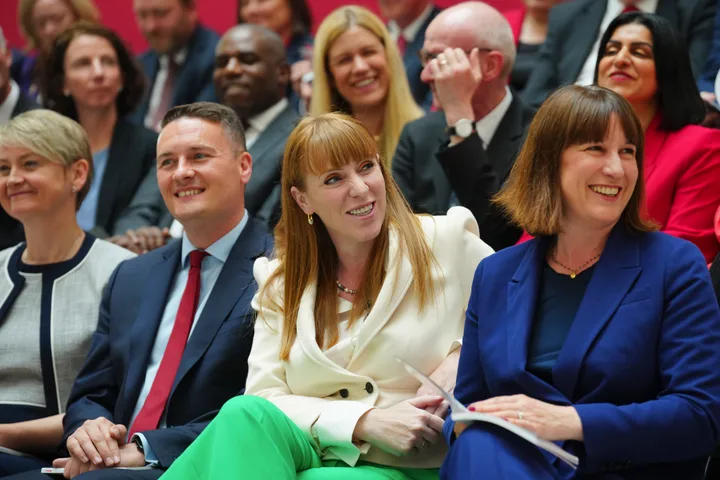
Keir Starmer’s premiership is hanging by a thread following Labour’s disastrous performance in the local elections.
A growing body of MPs are calling for the prime minister to resign, less than two years into the role, but Starmer is digging in.
With no clear successor putting their head above the parapet for the mutinous party to rally behind, MPs are in limbo.
So what might happen next? Here’s what you need to know.
How Did We Get To This Point?
Starmer became prime minister in July 2024 after Labour won a landslide victory in the general election.
But within weeks, his government was plunged into crisis by the decision to scrap winter fuel payments for 10 million pensioners and a row over free clothes and hospitality accepted by Starmer and other senior Labour figures.
A series of messy U-turns on things like the two-child benefit cap, digital ID and the farmers’ inheritance tax also led to the prime minister’s approval rating plummeting.
The controversy over his decision to make Peter Mandelson the UK’s ambassador to Washington also helped push the PM’s unpopularity to new depths.
In Labour’s biggest electoral test since the 2024 election last week, voters overwhelmingly rejected the party in England, Scotland and Wales – triggering further anger towards the PM from the party’s MPs.
More than 50 of then have called on Starmer to stand down following the devastating bloodbath.
What Might Happen Next?
It’s incredibly hard to predict exactly what happens next, especially Labour Party makes it difficult to oust the party’s leader.
But here are the options MPs are considering, as of Monday…
A Labour MP Challenges Starmer
Under the party’s rules, a challenger needs the backing of at least 20% of Labour MPs to trigger a leadership contest. That currently works out to 81 MPs.
Even then, the sitting leader would automatically be put on the ballot paper.
Former Foreign Office minister Catherine West stunned Westminster on Saturday by announcing she would challenge the PM if the cabinet did not choose someone to replace Starmer.
But by Monday she had backed down, instead calling for MPs to sign a letter urging Starmer to set out a timetable to allow him to be replaced by September.
Among others thought to be weighing up a leadership bid are former deputy prime minister Angela Rayner and health secretary Wes Streeting.

A Labour MP Stands Aside For Andy Burnham
Starmer’s other major opponent is the mayor of Greater Manchester, Andy Burnham.
However Burnham left Westminster in 2017 and would have to become an MP again in order to stand.
Labour’s ruling National Executive Committee (NEC), blocked him from running as the party’s candidate in the Gorton and Denton by-election in February – at the behest of Starmer.
On Thursday, Labour MP Josh Simons announced he agreed to stand down from his Makerfield seat to make way for the Greater Manchester mayor, less than two years after being elected.
However, there are no guarantees Burnham would win the subsequent by-election.
His decision to stand would also trigger a mayoral contest in Greater Manchester – which could give rival parties another chance to hammer Labour at the ballot box.
Wes Streeting mounts leadership challenge
Wes Streeting will definitely run in the upcoming Labour leadership contest, his allies have told HuffPost UK.
It is the first confirmation that he plans to mount a bid to replace Keir Starmer as prime minister.
Starmer Agrees To Step Down As MP Backlash Mounts
As the number of MPs calling on him to resign rises, the PM could decide he doesn’t need the hassle and announce he is quitting.
However, he has insisted he “won’t walk away” from the job, and in an interview with The Observer insisted he still planned to be prime minister for 10 years.
Starmer Clings On
With the PM’s opponents apparently racked with indecision about what to do next, there is a world in which he rides out his latest leadership crisis.
In his make-or-break speech on Monday setting out how he plans to turn around Labour’s fortunes, Starmer said: “I know that people are frustrated by the state of Britain, frustrated by politics, and some people – frustrated with me.
“I know I have my doubters and I know I need to prove them wrong, and I will.”
Subscribe to Commons People, the podcast that makes politics easy. Every week, Kevin Schofield and Kate Nicholson unpack the week’s biggest stories to keep you informed. Join us for straightforward analysis of what’s going on at Westminster.

A big section of the SpaceX rocket Falcon 9 is predicted to crash into the moon on August 5, astronomer Bill Gray said on his site, Project Pluto.
Gray is the creator of various software, some of which tracks “near-Earth” objects, asteroids, comets, and items in orbit.
His calculations found that the “upper stage” part of the rocket – or the bit which carries the “payload” of the vessel, where the important part, be it people or tracking equipment, lies – should hit the Einstein crater of the moon next month.
There are no people on board. Per ScienceAlert, the Falcon 9 is a partially reusable rocket, which means “its first, larger stage returns to Earth and alights on a barge so it can be refilled and re-flown, while the second stage remains in orbit”. That second part is the bit that’s set to hit the moon.
When exactly will the collision happen?
The astronomer’s best estimation so far is August 5, 7:44am UK time.
Will we be able to see the crash from Earth?
Not without special equipment, BBC Sky At Night suggests.
Why is the rocket section loose?
It’s normal to leave this part of a rocket in orbit. They’re often designed to detach.
Hundreds of Falcon 9 rockets have been launched, Gray added, with many of their upper stages orbiting or falling back down to Earth. Some are orbiting the sun.
The one projected to hit the moon in August has been orbiting the Earth for about a year. It was the 10th rocket launched by the company, whose CEO is Elon Musk, in 2025.
Gray called loose bits of spacecraft and other manmade debris in orbit “space junk” and said the issue is increasing “steeply”.
How big is the upper stage of the rocket?
It’s about the size of a five-storey building, the astronomer said.
Why do we think it’s going to crash into the moon?
Gray used his own software to identify the predicted trajectory. “Space junk”, he explained, usually behaves quite predictably: it’s guided by the gravity of celestial bodies around it, like the Earth and moon. That should make tracking and predicting their movements easy.
But these objects are also “pushed around by sunlight,” he added. This is a very slight force, but it adds up over time, and as the object moves around, it’s hard to say exactly how much sun will hit it.
As a result, the astronomer explained, “I can be sure it will impact near the time and place I’ve predicted, but those varying forces mean that the actual impact will be at least a little off from that time and place”.
How fast will the rocket be?
It’s predicted to zip along at 8,700km an hour.
Which part of the moon will the rocket hit?
It’s set to hit the “Einstein crater,” which BBC Sky At Night said sits at a “10 o’clock” position from the perspective of the Earth.
Will this be dangerous?
Almost certainly not, the expert said. We’ve even sent items to crash into the moon on purpose before.
But the broader issue of “space junk” might be something we should worry about more, Gray stated.
It can ruin stargazers’ view, might pollute our upper atmosphere on re-entering Earth, and crash into other bodies and other bits of “junk” too.
“The worst-case scenario would be the Kessler effect: we have enough junk in orbit so that a few collisions generate shrapnel that causes more collisions, generating still more shrapnel until just about everything is colliding,” Gray said.

Budget airline Ryanair has announced that it will no longer run flights from its Greek Thessaloniki base.
It will also reduce its capacity for Athens Airport during the upcoming winter season (2026), and plans to suspend operations at Crete airports, Chania and Heraklion, in the off-peak season too.
Overall, the site reads, these changes will result in the loss of about 700,000 inbound and outbound flights and 12 routes.
The company’s chief commercial officer, Jason McGuinness, claimed that Ryanair had been responsible fo 90% of international capacity to Thessaloniki.
He added that they will be reallocating the aircraft no longer used for these locations to Albania, regional Italy and Sweden.
Why are Ryanair cutting so many seats in these airports?
Though jet fuel costs have ballooned since the US-Iran conflict, Ryanair cited another price hike here.
The company said on their site that “This devastating loss in off-peak winter connectivity is the direct result of the hopelessly uncompetitive costs charged at the German-run Fraport Greece monopoly and Athens Airport”.
They stated that the Greek government reduced Airport Development Fees from €12 (£10.40) to €3 (£2.60) in 2024. Ryanair called this change “wise”.
But they said these savings haven’t been passed on to consumers and alleged that some Greek airports have “continued to increase charges, which are now +66% above their pre-Covid levels”.
They added that Athens airport will see fee hikes this winter, too.
In response, Fraport Greece has said, “Any claims linking this decision to airport charges or the airport development fee imposed by the Greek state are entirely unfounded”.
They added that it has invested millions to upgrade its Thessaloniki airport.
Which Ryanair routes are affected?
will be shut entirely during the off-season of 2026 (winter), per Ryanair.
And Ryanair said the following routes have also been canned entirely for now:
- Thessaloniki to Berlin,
- Thessaloniki to Frankfurt-H,
- Thessaloniki to Gothenburg,
- Thessaloniki to Niederrhein,
- Thessaloniki to Poznan,
- Thessaloniki to Stockholm,
- Thessaloniki to Venice-T,
- Thessaloniki to Zagreb,
- Athens to Milan-M,
- Chania to Paphos,
- Thessaloniki to Heraklion,
- Thessaloniki to Chania.
Will these routes be shut forever?
We don’t know for sure.
Fraport Greece has called Ryanair an “important partner”.
And Ryanair said that the flight and aircraft losses were “preventable” and have only shared these updates for winter 2026 so far.
They shared, “Regrettably, Greece will continue to miss out on investment opportunities, tourism and traffic development until Fraport Greece and Athens abandon their shameless practice of pocketing this tax cut.”
And McGuinness added, “There is an opportunity for Greece to secure significant year-round traffic growth; however, this investment can only be realised once the German-run Fraport Greece monopoly fully passes through the Greek Govt.’s sensible tax cut from November’24”.
He continued to say that the aircraft lost to other countries as a result of this process will be moving to areas “where airports have passed on their Govt’s aviation tax savings”.
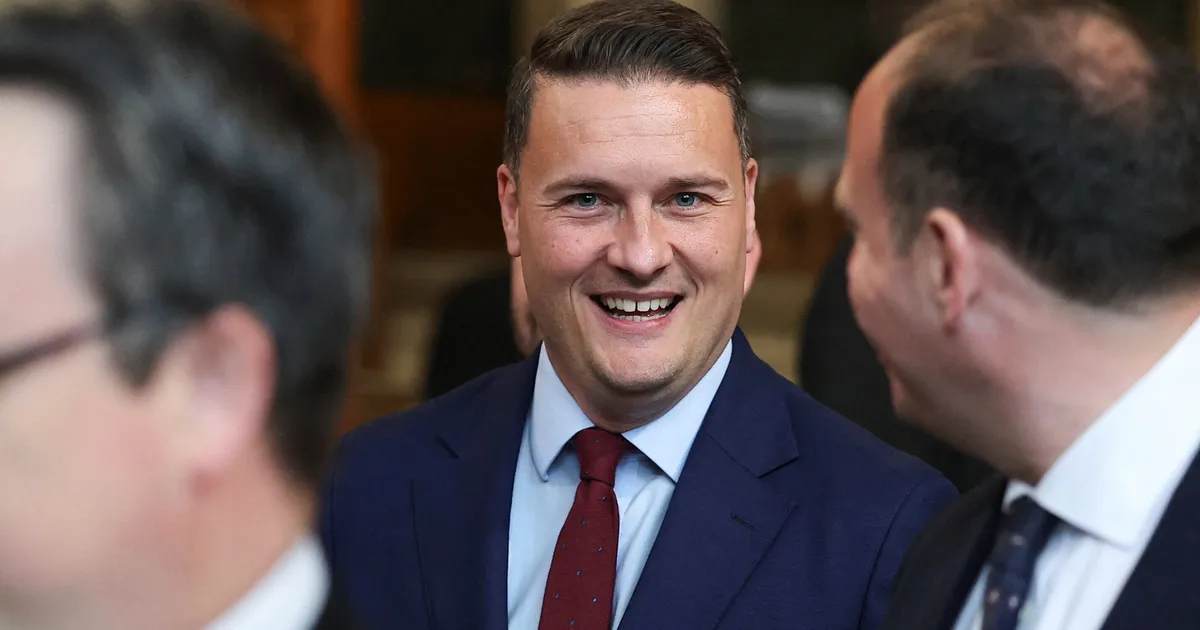
Wes Streeting will definitely run in the upcoming Labour leadership contest, his allies have told HuffPost UK.
It is the first confirmation that he plans to mount a bid to replace Keir Starmer as prime minister.
Supporters of Starmer have claimed that the former health secretary – who resigned with a ferocious attack on the prime minister yesterday – does not have enough support from Labour MPs to mount a challenge.
Under Labour Party rules, any candidate must have the support of at least 20% of its MPs to make it onto the ballot paper. At the moment, that is 81 MPs.
Starmer allies have claimed that Streeting currently only has 43 names, leaving him well short of the number required.
They said that was why he did not formally trigger a contest when he quit the cabinet, as had been expected.
But a source close to Streeting told HuffPost UK: “He has the numbers and will be a candidate when there’s a contest.”
In his resignation letter, Streeting stopped short of saying he would challenge the PM.
But he said: “It is now clear that you will not lead the Labour Party into the next general election and that Labour MPs and Labour unions want the debate about what comes next to be a battle of ideas, not of personalities or petty factionalism.
“It needs to be broad, and it needs the best possible field of candidates. I support that approach and I hope that you will facilitate this.”
A leadership contest appears inevitable, despite Starmer insisting he “won’t walk away” from No.10.
Cabinet ministers, including home secretary Shabana Mahmood and foreign secretary Yvette Cooper, have personally told the PM to set out a timetable for his departure.
More than 90 Labour MPs have so far publicly called on him to quit, while four junior ministers have also resigned from the government.
Andy Burnham kicked off his own attempt to be the next PM when it was announced that Labour MP Josh Simons is standing down to let the Greater Manchester mayor stand in his Makerfield seat.
Labour’s ruling national executive committee (NEC) is not expected to block Burnham’s bid to be the party’s candidate in the resulting by-election.
However, he faces a huge challenge to see off Reform UK and be elected the new MP for the constituency.
If Burnham wins, he is expected to immediately challenge Starmer, triggering a full leadership contest.
Others who could throw their hats into the ring include former deputy PM Angela Rayner, defence secretary John Healey, energy secretary Ed Miliband, Mahmood, Cooper and junior defence minister Al Carns
Subscribe to Commons People, the podcast that makes politics easy. Every week, Kevin Schofield and Kate Nicholson unpack the week’s biggest stories to keep you informed. Join us for straightforward analysis of what’s going on at Westminster.
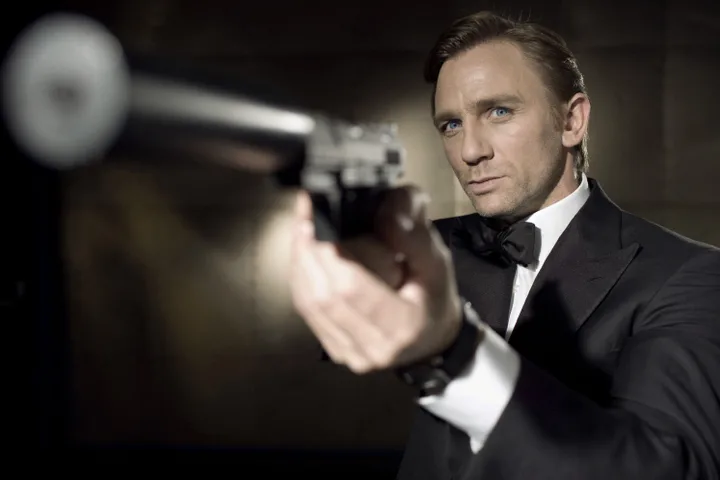
James Bond bosses have shared an update on the search for the next 007 – and unfortunately, it sounds like we might still be in for a bit of a wait.
And while recent rumours indicated that Aaron Taylor-Johnson, Callum Turner and Jacob Elordi were all in the running, it seems that production company Amazon MGM Studios is still a little way off casting anyone.
On Friday morning, the studio shared an “update on the search for the next James Bond”, confirming that the casting process has only just begun.
“The search for the next James Bond is underway. While we don’t plan to comment on specific details during the casting process, we’re excited to share more news with 007 fans as soon as the time is right,” a spokesperson said.
A press release noted that work has been underway on the film “has been taking shape over the past several months”, albeit without a leading man.

Eon/Danjaq/Sony/Kobal/Shutterstock
Last month, Amazon MGM Studios’ head of film Courtenay Valenti told fans: “I know you’re all wondering when we’re going to announce who’s playing James Bond.
“Please know that we’re taking the time to do this with care and deep respect. It is the dream of a lifetime for all of us to bring audiences this next chapter, and it’s a responsibility we don’t take lightly.”
It was already confirmed that Oscar nominee Denis Villeneuve, who has recently enjoyed huge success with his Dune movies, will be on directing duties, while the script has been penned by Steven Knight.
Steven Knight is best known as the creator of Peaky Blinders, but has also helmed shows like A Thousand Blows for Disney+ and House Of Guinness for Netflix.


It is estimated that each year there are 4,400 new cases of someone sustaining a spinal cord injury (SCI). For these people, it is crucial they receive specialist treatment not only when they are first injured, but also as they embark on their journey living with such complex disabilities.
Careful monitoring
Why SCI are such complex injuries is they involve damage to the spinal cord or nerves. This can often result in life-changing issues with a loss of sensory and motor function below their injury causing problems such as paralysis, breathing issues, and loss of bowel/bladder control.
This means such patients need careful monitoring from one of the 12 Spinal Cord Injuries Centres (SCIC) based across the country. These centres of excellence monitor SCI patients and can be accessed whenever there is a problem.
This is part of the NHS National Strategy for Spinal Cord Injuries:
The service provides care to people who have sustained an injury to the spinal cord as a result of injury or disease. It encompasses acute care following the injury, surgical or non-surgical stabilisation of the spine, rehabilitation and reintegration into the community, life-long follow-up of people living with spinal cord injury, and further admission if necessary for medical or surgical management. Ventilation is provided to people with higher level injuries.
The service provides a wide range of services to meet the special needs of people with spinal cord injury, including urology, respiratory, psychology, physiotherapy, occupational therapy, sexual and fertility advice, reintegration planning, and the management of spasticity, pressure ulcers and other complications.
‘Keep it together’
But this National Strategy is under threat, as the current plan is to move away from a national approach to local Integrated Care Boards (ICB) in 2027.
Such a move could lead to concerns about a postcode lottery and the loss of both specialist staff and centres. It is why, on Friday 15 May 2026, which is Spinal Cord Injury Awareness Day, the message was:
keep it together.
Cross-party MPs have also warned that these proposals by NHS England to move spinal cord injury services from national to local commissioning risks taking care “in the wrong direction”, directly contradicting recommendations from a major parliamentary inquiry.
Building a National SCI Strategy
The All-Party Parliamentary Group on Spinal Cord Injury raised the alarm in a meeting with Public Health Minister Sharon Hodgson MP, following publication of its report, From Fragmented to Coordinated: Building a National Spinal Cord Injury Strategy.
The report calls for greater national coordination, consistent standards, and long-term system reform. This is in direct contrast to the NHS proposals that would shift responsibility to Integrated Care Boards (ICBs).
The Spinal Injuries Association (SIA) have also sent an open letter signed by nearly 100 signatures, including 6 Spinal Cord Injury Centres to the (now former) Secretary of State for Health and Social Care, Wes Streeting, urging the Department of Health and Social Care, NHS England and Parliament to ensure that spinal cord injury services remain within national specialised commissioning.
The immediate concern of moving from a national service to community services is patients are at risk of a ‘postcode lottery’. This is because those patients who already live in an area that has strong local services will fare much better than those living in more remote areas or where services have been depleted due to the harsh austerity years.
Kayles’ story

Kayles is one of those patients where her geographical area means there were no local specialist services available to her when she sustained her SCI due to a slipped disc. She lives in Tavistock, so attended her local hospital, where her pain was dismissed by doctors.
Fighting to get the right diagnosis of SCI took Kayles six long months with a further 16 months waiting to get referred to the SCIC in Salisbury.
Kayles said:
The fact is we don’t have that many hospitals down here that can deal with any spinal cord injured patients. This is the area we live in. We have cobblestones, no dentist, and after they shut half the hospitals, the hospitals are overwhelmed.
There is also concern about losing specialist doctors and nurses.
Shirley’s story

Shirley has been receiving specialist care through her nearest SCIC for degenerative cervical myelopathy. Shirley has valid concerns regarding the move from specialist care from the SCIC to being community based.
She said:
My worry is, if you bring it to a more community-based thing, you’re diluting knowledge. When you’ve got people in centres of excellence, they’ve got access to a huge multidisciplinary team. They’re geared up for anything that comes through the door.
Shirley thinks this level of collaboration will be lost if there’s a move to the community and that will be to the detriment of patients.
She said:
That’s why you need to hang on to the centres of excellence because you need them to actually set the standards for care that everyone in the NHS or Health & Social Care professions or private sector should all be following.
Shirley also argued that the lack of district nurses has had a knock-on impact on the quality of everyday nurses in the community. Such staff are more likely to be health care assistants or carers in the social care sector.
But if these plans go ahead, it will need specialist nurses who can look after patients with SCI otherwise there’s a danger they can ‘do more harm than good.’
Doing more harm than good
That phrase doing more harm than good will resonant with many of those who have SCI. Patients with a SCI who had been an in-patient of a local hospital, an environment not equipped for them, found the lack of knowledge left them exposed to poor care.
In the community, it can be very scary when specialist treatment is required but the carers have sparse knowledge about SCI and how to carry out this care.
This lack of knowledge across the whole of the UK, with the need for services to remain nationally coordinated, is one of the reasons why the National Strategy of 2013 needs updating. The Spinal Injuries Association produced a National Strategy 2030 to give guidance to policy leaders in both the government and NHS. It can be read here.
But such a national strategy is at risk of being ignored if the move to ICB happens. The NHS argument is that transferring from national commissioning to local and regional ICBs in April 2027 is intended to support a better integration of NHS services within an area.
The SIA said:
We have serious concerns that transferring commissioning responsibility to ICBs could place Specialist Spinal Cord Injury Centres at further risk of underfunding if highly specialised SCI service deprioritised within local commissioning systems.
This concern from SIA about the underinvestment in the current specialist spinal centres is borne out from what patients have reported, such as a ‘slippage’ in standards, a lack of capacity, resulting in delays, and the decline in the general upkeep of these centres.
A backward step
It will be such a backward step to lose these centres of excellence and the national oversight of both the care of patients and patients themselves.
With concerns about a possible postcode lottery, losing specialist staff, and the underinvestment and demise of these spinal units, the major concern is what becomes of the care for these complex patients if the plans happen.
For patients now, they feel there is a system that ‘has their back’ to help them achieve what they want to achieve, safe in the knowledge they have this support, not just from their nearest SCIC, but a national strategy that underpins their care.
Losing this for such complex patients will put them at risk.
Featured image via the Canary
By Ruth Hunt


On May 14th, Jerusalem Day, which marks the reunification of the city under Israeli rule in the 1967 Six-Day War, local Israeli media reported, like the Times of Israel and +972 Magazine, chanted slogans of “death to Arabs” and “may your villages burn” during the nationalist Flag March.
Thousands marched through Jerusalem today for the annual Flag Day, with National Security Minister Itamar Ben-Gvir among them. The march was marked by participants chanting anti-Arab and anti-Palestinian slogans.
: Oren Ziv, Charlotte Ritz-Jack, and Standing Together pic.twitter.com/Yo2KMlHeQG
— +972 Magazine (@972mag) May 14, 2026
An Israeli journalist posted footage of his phone being covered by the right-wing mob at the march as they sang “death to Arabs.”
Before the official Jerusalem Day Flag March, religious Zionist youth chant “death to Arabs,” try to cover up my phone camera lens.
The Old City is largely empty aside from extremist youth and reporters. Palestinian residents have locked themselves inside their homes pic.twitter.com/LyNYBcG9uA
— charlie summers (@cbsu03) May 14, 2026
Another Israeli journalist complained about being trapped by mobs during the march.
Israel, after all, does have a penchant for disdain for journalists
2024 and 2025 were the deadliest years for journalists worldwide since the Committee to Protect Journalists (CPJ) began documenting these cases in 1992. In both years, Israel was responsible for 70% of the recorded deaths, according to the organization. In addition to the 264 journalists who were killed, 174 were wounded and 106 imprisoned since the start of the war in Gaza.
The annual assertion of Jewish control over Palestinian East Jerusalem has grown more extreme in recent years, the Guardian reported.
Jerusalem Day brings out Zionist monsters Gvir and Smotrich
Israeli politicians were also marking the day with their usual genocidal tactics.
National Security Minister Itamar Ben Gvir stormed the Al-Aqsa compound under heavy military protection during the day to wave the Israeli flag.
Meanwhile, finance Minister Bezalel Smotrich called to annex the entirety of the West Bank during a speech at a Jerusalem Day rally on Thursday night.
Finance Minister Bezalel Smotrich calls to annex all of the West Bank, citing the approval of 60,000 new housing units and plans to erase Areas A, B, and C, at a Jerusalem Day address. National Security Minister Itamar Ben-Gvir calls to settle Lebanon.https://t.co/zVVdaMFcNy
— The Jerusalem Post (@Jerusalem_Post) May 15, 2026
.
These genocidal slogans and actions continue unabated, with full backing and encouragement from Western governments
Featured image via X/Quds News Network
By The Canary


Luke Humphries arrived in Birmingham with his Premier League campaign wobbling. Five weeks earlier he sat seventh and staring at elimination.
By the end of Night 15 he had not only won his first weekly title of the season but also clinched a place at Finals Night in London with a week to spare. The turnaround was emphatic. Humphries beat Stephen Bunting, Luke Littler and Gerwyn Price in succession. As a result, he sealed qualification and momentum.
The numbers don’t lie
Humphries didn’t scrape through, he dominated. Across the quarter-final, semi-final and final he posted averages of 107.36, 110.98 and 100.16 respectively. This sequence underlined a late-season peak in scoring and finishing. Those three ton-plus nights in a row are the kind of form that turns a nervous title defence into a genuine threat.
There’s a difference between form and timing. Humphries’ run reads like a player who has deliberately dialled his game back in and is peaking at the right moment. After changing equipment and tweaking his routine mid-season, he has produced the kind of composed, clinical performances that make the O2 final look reachable again. The comeback from seventh to the top four wasn’t accidental. Instead, it was a sustained response under pressure.
Moments that swung the night
The semi-final against Luke Littler was the pivotal moment. Littler had two darts at double 10 to lead 4-0 and effectively put Humphries on the ropes. He missed, and Humphries rattled off six legs in a row to flip the match. That swing, from near-defeat to control, is the hallmark of a player who can handle Finals Night intensity. The final against Gerwyn Price was tighter, but Humphries closed it out 6-4. Therefore, the Birmingham run wasn’t a flash in the pan.
With the top four now confirmed. Luke Littler, Jonny Clayton, Gerwyn Price and Luke Humphries. The only remaining question is seeding and who avoids whom in the semis. Humphries’ late surge gives him two advantages: form and psychological edge. He arrives in London battle-hardened and confident. As a result, opponents must now plan for a Humphries who has rediscovered his scoring rhythm and finishing touch.
Short, sharp verdict
Is he timing his title defence to perfection? The record speaks for itself. Humphries has engineered a peak when it counts, converting pressure into performance. He has turned a season that looked in jeopardy into a genuine title defence. If he carries this Birmingham form to the O2, he won’t just be defending, he’ll be hunting.
Humphries’ Night 15 was more than a win, it was a statement. Timing, momentum and a late-season scoring surge have shifted the balance. As a result, the Premier League title race just got a lot more interesting.
Featured image via the Canary
By Faz Ali

How to buy Nations Championship 2026 tickets as Wales prepare to host Fiji and New Zealand

Detroit automakers have cut over 20,000 U.S. salaried jobs as AI looms

Can BNB price break above $750 as double bottom pattern forms?

Manchester United reach agreement with Casemiro over contract clause amid transfer speculation

US brings back mandatory military draft registration

Steven Gerrard disagrees with Gary Neville over ‘shock’ Chelsea and Arsenal claim | Football


-

 Fashion7 days ago
Weekend Open Thread: Marianne Dress
-

 Fashion4 days ago
Coffee Break: Travel Steam Iron
-

 Fashion4 days ago
What to Know Before Buying a Curling Wand or Curling Iron
-

 Politics4 days ago
What to expect when you’re expecting a budget
-

 Tech5 days ago
Auto Enthusiast Carves Functional Two-Stroke Engine from Solid Metal
-
 Business6 days ago
Ignore market noise, India’s long-term story intact, say D-Street bulls Ramesh Damani and Sunil Singhania
-

 Politics6 days ago
Politics Home Article | Starmer Enters The Danger Zone
-

 Tech4 days ago
GM Agrees To Pay $12.75 Million To Settle California Lawsuit Over Misuse Of Customers’ Driving Data
-

 Crypto World5 days ago
CZ says US crypto rivals tried to block Trump pardon
-

 Crypto World6 days ago
PROS explodes 48% as Upbit and Bithumb listings ignite demand
-

 Entertainment7 days ago
YNW Melly Denied Bond Again Ahead Of Double Murder Retrial
-

 Tech4 days ago
GM agrees to $12.75M California settlement over sale of drivers’ data
-

 Crypto World7 days ago
Kraken Parent Seeks OCC Charter, Signaling Regulated Banking Access
-
Crypto World7 days ago
The Hantavirus Danger: Can a Potential Outbreak Spark a New Meme Coin Frenzy?
-

 Sports7 days ago
After Waka Waka, Shakira now drops first teaser for FIFA WC 2026 song | FIFA World Cup 2022
-
Crypto World2 days ago
Bitcoin Suisse expands with Digital Asset License and Investment Business Act Registration Approval in Bermuda
-

 Crypto World7 days ago
Solana UFO Meme Coins Surge After Pentagon Reveals Alien Files
-

 Entertainment6 days ago
Bethenny Frankel Says She Loves ‘Torturing’ Men
-

 Sports7 days ago
Why Nathan Mackinnon Remains the Hart Trophy Favourite over Connor McDavid and Nikita Kucherov | NHL
-

 Politics3 days ago
Pakistan to enter Chinese capital market as war inflation bites
You must be logged in to post a comment Login