

Crypto World
Strive (ASST) Stock Climbs on Daily Dividend Strategy and Bitcoin Holdings Growth


Key Highlights
-
ASST stock climbs as Strive introduces daily SATA dividend structure alongside bitcoin treasury expansion.
-
Company’s SATA preferred shares transition to daily cash distributions beginning June 16.
-
ASST advances following complete debt retirement and enhanced bitcoin accumulation strategy.
-
Strive now controls 15,009 BTC while ASST rallies on innovative income structure announcement.
-
New daily payout mechanism positions Strive distinctively within bitcoin treasury company landscape.
Shares of Strive (ASST) climbed after the firm combined balance sheet improvements with an innovative income-generating offering. ASST reached $17.97, posting a 7.32% gain, while maintaining strength throughout the trading session. The upward movement coincided with regulatory filings detailing debt elimination and modifications to preferred share terms.
Strive announced that its subsidiary, Semler Scientific, finalized the buyback and cancellation of all outstanding 2030 convertible notes. This transaction eliminated liabilities associated with the 4.25% Convertible Senior Notes scheduled to mature in 2030. Furthermore, the trustee validated that all indenture requirements were met and discharged.
Eliminating this debt provides Strive with increased financial flexibility for its capital allocation initiatives. Additionally, the firm currently maintains a minimal debt-to-equity ratio of 0.01, based on InvestingPro metrics. This metric underscores the company’s recent deleveraging efforts and improves its overall financial positioning.
SATA Preferred Shares Transition to Daily Payment Model
Strive revised the conditions governing its Variable Rate Series A Perpetual Preferred Stock, designated as SATA. The firm submitted the modified certificate to Nevada’s Secretary of State on May 13. Accordingly, these revisions alter the methodology for computing and distributing preferred share dividends.
Beginning June 16, 2026, SATA will distribute cash dividends on every business day. Shareholders registered on the preceding business day will be eligible for each distribution. Nevertheless, dividend declarations will continue on a monthly basis for subsequent monthly dividend cycles.
The board preserved SATA’s yearly dividend rate at 13.00% for monthly intervals commencing after May 16. Moreover, any unpaid regular dividends will generate additional accumulating dividends if Strive fails to make scheduled distributions. The revised provisions also address dividend postponements, notification procedures, and restrictions on specific payments.
Bitcoin Accumulation Strategy Generates Investor Attention
Strive disclosed the dividend modification concurrent with its first-quarter financial results and bitcoin treasury report. The company purchased 6,001 bitcoin throughout the first quarter. This amount comprised 5,048 bitcoin obtained through Semler Scientific and 953 bitcoin acquired via open-market transactions.
Between April 1 and May 12, Strive accumulated an additional 1,381 bitcoin for its holdings. As a result, the firm’s aggregate bitcoin position reached 15,009 bitcoin. This figure establishes Strive among publicly traded entities employing bitcoin as a primary treasury reserve.
This approach also amplified earnings volatility during the reporting period. Strive disclosed a GAAP net loss of $265.9 million for the quarter ending March 31. The majority of this loss stemmed from fair-market value adjustments to its bitcoin position.


Crypto World
Bitcoin’s recent $80,000 breakout was led by something other than U.S. spot buyers, data show


The rally was led by leveraged traders and not U.S.-based spot buyers. Hence, its. sustainability is being questioned.


Bitcoin’s $79,000 defense proves that the Coinbase discount is driven by stablecoin volatility rather than a lack of institutional demand.


Tokenization has been the narrative of 2026. Executing on that narrative is trickier, but proponents say the benefits are massive if they pull it off.


Lido’s Network Expansion Committee chose Chainlink CCIP to bridge its staking token across chains, citing security lessons from $3 billion in cross-chain bridge exploits.
TLDR
- The Senate Banking Committee advanced the Clarity Act in a 15-9 vote with two Democrats joining Republicans.
- The bill would split crypto oversight between the SEC and the CFTC and set rules for exchanges and brokers.
- Lawmakers rejected several Democratic amendments related to sanctions, ethics, and anti-money laundering measures.
- A DeFi safe harbor amendment passed 18-6 after support from a bloc of Democrats and Republicans.
- The Clarity Act will merge with the Agriculture Committee version before heading to the full Senate.
The Senate Banking Committee approved the Digital Asset Market Clarity Act in a 15-9 vote on Thursday. Sens. Ruben Gallego and Angela Alsobrooks joined 13 Republicans to move the bill forward. The measure now heads toward a merger with the Senate Agriculture Committee text before a floor vote.
Clarity Act Clears Committee With Bipartisan Support
Lawmakers advanced the Clarity Act after months of cross-party negotiations and revisions. Chair Tim Scott said the bill ends a “regulatory gray zone” for crypto firms. He added that the framework would protect consumers and keep innovation in the United States.
Sen. Cynthia Lummis called the proposal “the hardest piece of legislation” of her career. She said the bill fits new digital assets into an older regulatory system. The text splits oversight between the SEC and the CFTC and sets rules for exchanges, brokers, and custodians.
The committee rejected several Democratic amendments during the markup session. Sen. Elizabeth Warren opposed the bill and called it “a bill written by the crypto industry.” She argued that the draft weakens securities law protections that date to 1929.
Warren also warned that the bill allows banks to increase crypto exposure. She linked that risk to practices before the 2008 financial crisis. Republicans voted down her amendments in 11-13 votes.
Ethics, Sanctions, and DeFi Debates Shape Vote
Democrats raised concerns about illicit finance and stablecoins during the hearing. Sen. Jack Reed said Iranian actors use stablecoins to buy drone components. He sought authority for regulators to block foreign illicit stablecoin flows, but the amendment failed.
Sen. Chris Van Hollen cited estimates that over $150 billion moved through illicit wallets last year. He proposed penalties for releasing DeFi protocols designed for money laundering. Republicans rejected his measure and said current criminal laws already cover such conduct.
Ethics issues tied to President Donald Trump also shaped debate. Van Hollen proposed barring elected officials from crypto business ties. Sen. Bernie Moreno opposed the amendment and said it belonged in the Judiciary Committee, and the panel defeated it 11-13.
A key vote came on Lummis Amendment 122 regarding DeFi safe harbors. The committee adopted the amendment 18-6 after a technical revision. Warner, Cortez Masto, and Alsobrooks joined Republicans to support the compromise language.
Earlier, Chair Scott limited the number of amendments under committee rules. He later reinstated selected proposals to secure bipartisan backing. By the final vote, Gallego and Alsobrooks provided the Democratic support needed for the 15-9 outcome.


Bitcoin rose 3% and Coinbase stock surged more than 8% as the Senate Banking Committee advanced the most consequential crypto market structure bill in U.S. history. Substantial hurdles remain before it becomes law.
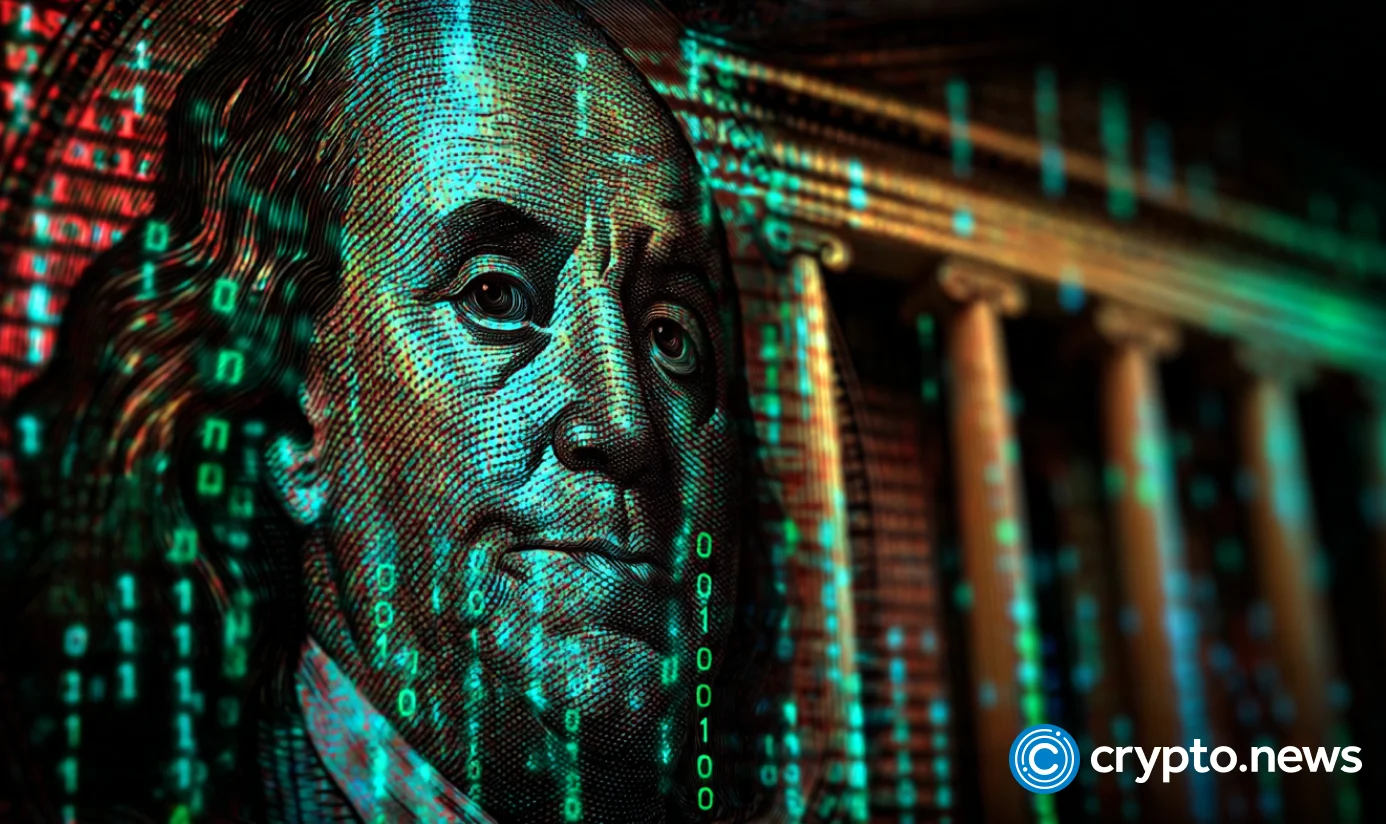
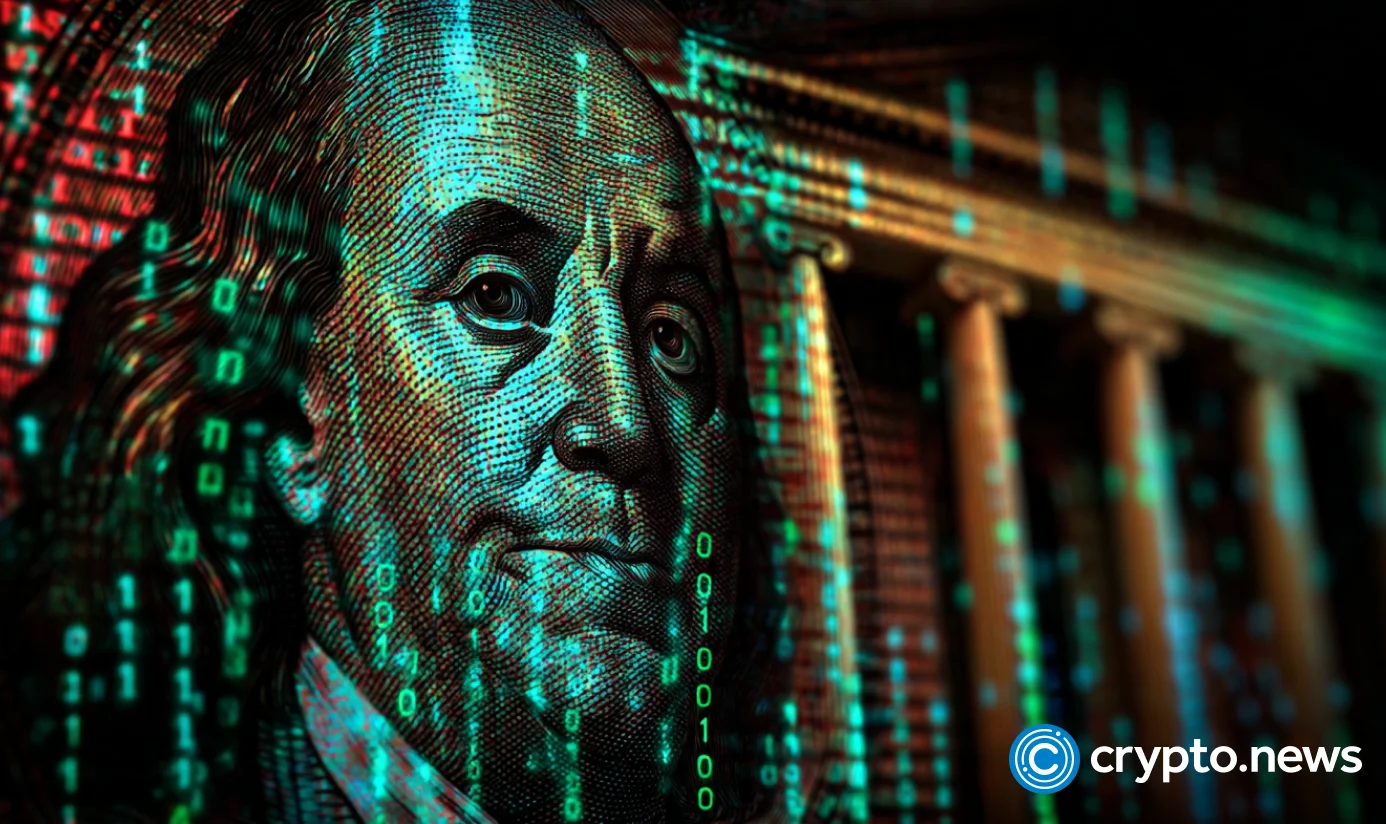
The company said the program is designed to promote institutional yield generation and cross-chain returns for a wider range of users through stablecoin-based lending and liquidity strategies.
Summary
- TownSquare launched a $100 million liquidity program centered on the USD1 stablecoin from World Liberty Financial.
- The initiative aims to expand institutional yield strategies and cross-chain lending opportunities in DeFi.
- TownSquare previously partnered with World Liberty Financial to deploy USD1 on the Monad blockchain.
TownSquare announced the launch of a $100 million liquidity program tied to the USD1 stablecoin as the decentralized finance platform seeks to expand institutional yield opportunities and cross-chain lending infrastructure. According to reports from ChainCatcher, the initiative will use USD1, the stablecoin developed by World Liberty Financial, to provide broader access to institutional-grade DeFi strategies.
TownSquare focuses on institutional yield infrastructure and brokerage services spanning multiple blockchain ecosystems.
The announcement follows TownSquare’s earlier collaboration with the World Liberty Financial DeFi team to introduce the USD1 token to the high-performance EVM blockchain Monad. The project also received incentives from the Monad Foundation as part of that integration effort.
Institutional DeFi competition accelerates
TownSquare said the new liquidity initiative reflects its long-term commitment to expanding decentralized finance adoption and bringing institutional trading and yield strategies to additional blockchain ecosystems. The company’s platform has already launched cross-chain lending functionality, while a dedicated yield-generating product remains in development.
According to official project information, TownSquare previously secured backing from major crypto-focused investors and ecosystem participants including Andreessen Horowitz, Monad, Aptos, and Solana-linked Bonk contributors, alongside several European and U.S.-based venture capital firms and angel investors.
The project’s team reportedly includes former employees from Coinbase, Meta, and Accenture, as well as market-making firms involved in crypto liquidity infrastructure.
The launch comes amid rising competition among stablecoin issuers and DeFi protocols seeking to attract institutional capital. In a previous crypto.news story, Circle expanded its partnership with Hyperliquid to strengthen USDC’s role in decentralized trading and cross-chain liquidity.
Institutional demand for blockchain-based yield products has also accelerated alongside the growth of tokenized assets and stablecoin markets. Another crypto.news story detailed Grove’s launch of a $1 billion liquidity network supporting tokenized Treasury funds including BlackRock’s BUIDL product.
As DeFi platforms increasingly compete for institutional users, TownSquare’s USD1 liquidity initiative signals growing efforts to merge traditional yield strategies with on-chain lending and stablecoin infrastructure.

North Korea’s state-affiliated hackers intensified their footprint in the crypto ecosystem during 2025, delivering losses exceeding $2 billion and marking a 51% year-over-year rise, according to CrowdStrike’s 2026 Financial Services Threat Landscape Report. The findings position DPRK-linked actors as the largest threat by the dollar value of assets stolen, underscoring a shift toward high-value targets and increasingly sophisticated operational security.
According to the report, the DPRK threat network pursued fewer campaigns than in previous years but achieved substantially higher returns by focusing on high-value targets and tightening the chain from theft to cash-out. The stolen proceeds are believed to be laundered to fund the regime’s military programs, a pattern CrowdStrike notes as a persistent objective of these actors. The group’s emphasis on centralized, high-impact operations contrasted with a broader spread of lower-value incidents seen in earlier years.
Key takeaways
- DPRK state-affiliated actors caused more than $2 billion in crypto losses in 2025, up 51% from the previous year, per CrowdStrike’s 2026 report.
- The DPRK remains the largest threat group by the dollar value stolen, reflecting a strategic pivot toward high-value targets and efficient monetization.
- Web3 projects and cryptocurrency exchanges were favored targets due to easier liquidity and greater anonymity when cashing out, according to the threat landscape findings.
- Stolen funds are likely laundered to fund military programs, with fewer campaigns delivering markedly higher returns, signaling a shift in attack economics.
- Infiltration and social engineering efforts extend beyond cyberspace, with offline touchpoints and third-party intermediaries playing a role in more sophisticated operations.
Escalating losses and a high-value playbook
CrowdStrike’s assessment highlights a paradox at work: even as the number of campaigns declined, the financial impact surged because the group prioritized larger, more lucrative targets. The firm notes that stolen assets are largely funneled into channels that maximize anonymity and liquidity, enabling quicker conversion to usable funds while evading traditional financial controls. The recurrence of such patterns suggests a deliberate shift to maximize value per operation rather than sheer volume of incidents.
“Stolen proceeds are almost certainly laundered to fund the regime’s military programs. Compared to 2024, DPRK-nexus adversaries conducted fewer campaigns but achieved significantly higher returns by prioritizing high-value targets.”
These conclusions come as the threat landscape signals a maturation of DPRK-linked operations, with investigators pointing to an expanding toolkit that blends traditional intrusion with social engineering and supply-chain-style compromises. The report also emphasizes that the group’s willingness to exploit weaknesses in crypto firms—ranging from project teams to exchanges—illustrates a broad targeting strategy that aims to maximize both access and monetization opportunities.
Why Web3 and exchanges remain focal points
Wednesday’s security discourse around DPRK actors centers on the economics of crypto theft. The report notes that high-value wallets and centralized exchanges offer deeper liquidity and faster exit routes, which reduces the time funds spend exposed to tracing and seizure risks. In this sense, the attraction of Web3 projects and crypto platforms is not merely about theft but about the ability to convert stolen assets into spendable currency with less friction than traditional financial rails.
Beyond the direct thefts, the broader ecosystem should watch for evolving social engineering strategies designed to exploit the trust networks around developing protocols and governance processes. As the threat model grows more sophisticated, the importance of robust security practices—such as rigorous vendor risk management, code review, and phishing-resistant authentication—takes on renewed urgency for builders and operators across the crypto space.
Infiltration, online and offline: notable incidents
In April, the Ethereum Foundation, which oversees Ethereum’s development, publicly flagged the scale of DPRK involvement in Web3 intrusions, identifying a substantial cohort of DPRK-backed operatives infiltrating various crypto projects. The implication is that the group maintains persistent, multi-pronged access to target ecosystems, combining remote intrusions with on-the-ground networking to extend influence.
One widely cited episode involves Drift Protocol, a decentralized exchange, where attackers purportedly infiltrated and compromised developer environments after forming relationships with the project’s team. The Drift Protocol team reported that the attackers were introduced to the project during a prominent crypto industry conference and cultivated a working relationship over six months. During this engagement, malware was deployed against developer machines, contributing to approximately $280 million in losses. Drift’s leadership stressed that the individuals who appeared in person were not North Korean nationals, but noted that DPRK actors often rely on third-party intermediaries to facilitate face-to-face contacts.
The broader narrative around offline reconnaissance and in-person recruitment is reinforced by separate industry observations, including reports of North Korean IT workers engaging with technology companies and leveraging legitimate employment channels to facilitate illicit activities. Researchers such as ZachXBT have highlighted cases where DPRK-linked IT workers earned substantial monthly sums in related schemes, underscoring the cross-cutting nature of the threat across online and offline environments.
For investors, builders, and operators, these incidents signal an ongoing arms race between threat actors and the security teams safeguarding crypto platforms. The Drift episode, in particular, demonstrates how attacker footholds can be planted through trusted development channels, turning core software supply chains into vectors for large losses. The broader warning is clear: even seemingly trusted community interactions and third-party engagements can become risk surfaces if due diligence and security hygiene are not robustly maintained.
What comes next for the market and defense strategy
As the threat landscape crystallizes around DPRK-backed operations, market participants should expect continued emphasis on high-value theft and sophisticated monetization techniques. Regulators, security firms, and platform teams are likely to double down on governance controls, supply-chain security, and enhanced monitoring of on-chain flows associated with known DPRK-linked wallets and entities. The convergence of cyber intrusions, social engineering, and high-ROI theft strategies points to a persistent, dynamic risk that will test the resilience of crypto infrastructure and compliance programs alike.
Going forward, observers will be watching for more granular disclosures from threat intelligence firms and platform operators about the operational patterns of DPRK actors, including any new countermeasures that successfully disrupt the most lucrative channels. The Ethereum Foundation’s identification of hundreds of DPRK-backed operatives and Drift Protocol’s post-incident reflections may foreshadow a broader push for transparency and proactive defense across the ecosystem. For readers, the key question remains how quickly the industry can translate these insights into concrete security improvements that reduce both the frequency and impact of future breaches.
As the year unfolds, the crypto community will need to monitor both governance responses and technical safeguards. Investors and users should maintain vigilance around project security audits, multi-party computation protections, and robust incident-response planning—areas where the cost of inaction can be measured in millions of dollars along with potentially lasting reputational damage.


Kraken is deprecating its existing cross-chain infrastructure and moving exclusively to Chainlink CCIP to secure Kraken Wrapped Bitcoin (kBTC) and all future wrapped assets.

A US federal judge has sentenced the former chief revenue officer of defunct cryptocurrency lending platform Celsius to time served after almost three years following his arrest on fraud and conspiracy charges.
In a sentencing hearing in the US District Court for the Southern District of New York on Wednesday, Judge John Koeltl ordered that Roni Cohen-Pavon be sentenced to time served and one year of supervised release for his role in manipulating the price of Celsius’s CEL token and fraud on the platform.
The former chief revenue officer initially pleaded not guilty to four charges following his arrest in September 2023, changing his plea to guilty about a week later.

Alex Mashinsky at the Bitcoin 2021 conference in Miami. Source: Cointelegraph
Cohen-Pavon was indicted along with former CEO Alex Mashinsky in July 2023 after the 2022 collapse of Celsius, which led to billions of dollars’ worth of investor and user losses.
Cohen-Pavon, an Israeli citizen and resident, was outside the US when prosecutors filed the indictment, but later reentered the country for his arraignment. He posted a $500,000 bond in September 2023 and has been free to travel with some restrictions.
With the sentencing of Cohen-Pavon and Mashinsky, who is already serving 12 years following his guilty plea, the criminal cases involving Celsius are winding down. The former CEO was ordered to pay $48 million as part of a forfeiture in his criminal case, while Cohen-Pavon agreed to pay more than $1 million and a $40,000 fine.
Related: Celsius founder Alex Mashinsky settles FTC case with $10M payment
“Whatever sentence the Court imposes, the deeper obligation will remain the same,” said Cohen-Pavon in a letter to Koeltl before his sentencing. “I will have to spend the rest of my life becoming, through my conduct, the husband, father, and man my family had every right to expect from me all along.”

The sentencing memorandum for Roni Cohen-Pavon. Source: Court Listener
Tornado Cash co-founder still potentially looking at SDNY retrial
Roman Storm, the co-founder of crypto mixing service Tornado Cash, still faces a possible retrial on two charges in the Southern District of New York after a jury failed to reach a verdict in his trial last year.
Prosecutors requested that a judge schedule the proceedings in October to retry Storm on money laundering and sanctions violation conspiracy charges, for which the jury deadlocked.
The terms of Storm’s $2 million bail restrict the Tornado Cash co-founder to certain areas of New York, Washington and California. However, on Thursday, a federal judge granted him permission to “attend his niece’s high school graduation” in El Dorado Hills, California.
Magazine: eToro founder timed Bitcoin top perfectly due to belief in 4 year cycles

The 25 confirmed countries appearing in Eurovision 2026 final – full list

U.S. reports no hantavirus cases from cruise outbreak, monitors 41

Bitcoin’s recent $80,000 breakout was led by something other than U.S. spot buyers, data show

Manchester United reach agreement with Casemiro over contract clause amid transfer speculation

US brings back mandatory military draft registration

Steven Gerrard disagrees with Gary Neville over ‘shock’ Chelsea and Arsenal claim | Football


-
 Crypto World7 days ago
HarrisX Poll Found 52% of Registered Voters Support the CLARITY Act
-

 Fashion6 days ago
Weekend Open Thread: Marianne Dress
-

 Fashion3 days ago
Coffee Break: Travel Steam Iron
-

 Fashion4 days ago
What to Know Before Buying a Curling Wand or Curling Iron
-

 Tech5 days ago
Auto Enthusiast Carves Functional Two-Stroke Engine from Solid Metal
-

 Politics3 days ago
What to expect when you’re expecting a budget
-
 Business5 days ago
Ignore market noise, India’s long-term story intact, say D-Street bulls Ramesh Damani and Sunil Singhania
-

 Politics6 days ago
Politics Home Article | Starmer Enters The Danger Zone
-

 Tech4 days ago
GM Agrees To Pay $12.75 Million To Settle California Lawsuit Over Misuse Of Customers’ Driving Data
-

 Crypto World5 days ago
PROS explodes 48% as Upbit and Bithumb listings ignite demand
-

 Crypto World5 days ago
CZ says US crypto rivals tried to block Trump pardon
-

 Sports7 days ago
Bayern Munich vs PSG UEFA Champions League SF2 live match time, streaming | Football News
-

 Entertainment6 days ago
YNW Melly Denied Bond Again Ahead Of Double Murder Retrial
-

 Tech3 days ago
GM agrees to $12.75M California settlement over sale of drivers’ data
-
Entertainment7 days ago
Hantavirus — cause of death for Gene Hackman's wife — at the center of Dutch cruise outbreak
-
Crypto World6 days ago
The Hantavirus Danger: Can a Potential Outbreak Spark a New Meme Coin Frenzy?
-

 Politics7 days ago
David Attenborough ‘Overwhelmed’ By Love Shown Ahead Of 100th Birthday
-
Tech7 days ago
The Most Exciting Apple Products In The Pipeline For 2026 And Beyond
-

 Sports6 days ago
After Waka Waka, Shakira now drops first teaser for FIFA WC 2026 song | FIFA World Cup 2022
-

 Sports7 days ago
Ibom Air Anniversary Football Tournament Begins May 9 in Uyo
You must be logged in to post a comment Login