OpenAI is exploring possible legal action after users did what they wanted with Apple’s ChatGPT integrations and didn’t sign up for enough paid accounts, instead of doing what CEO Sam Altman expected.
A May 14 Bloomberg report says OpenAI has enlisted outside legal counsel and discussed options that could include sending Apple a breach-of-contract notice. OpenAI reportedly expected deeper ChatGPT integration across iOS, iPadOS, and macOS to drive large subscription growth through Apple’s ecosystem.
Executives at OpenAI now believe the partnership has been financially disappointing and far more limited than anticipated. Apple and OpenAI entered the agreement with distinct priorities.
Apple needed a recognizable AI partner while major Siri upgrades and Apple Intelligence features were still under development. OpenAI sought access to hundreds of millions of Apple users, believing the iPhone could become a significant source of recurring ChatGPT subscriptions worth billions annually.
Advertisement
Internally, the companies reportedly viewed the OpenAI agreement as a potential counterpart to Apple’s enormously profitable Google Search deal in Safari. The ChatGPT partnership never came close to generating that level of revenue or strategic value.
Neither company structured the partnership around large direct payments. Instead, both sides expected strategic benefits. OpenAI expected customer growth and subscriptions, while Apple gained an interim AI solution as it continued building its own generative AI systems.
Apple kept ChatGPT available, but tightly controlled
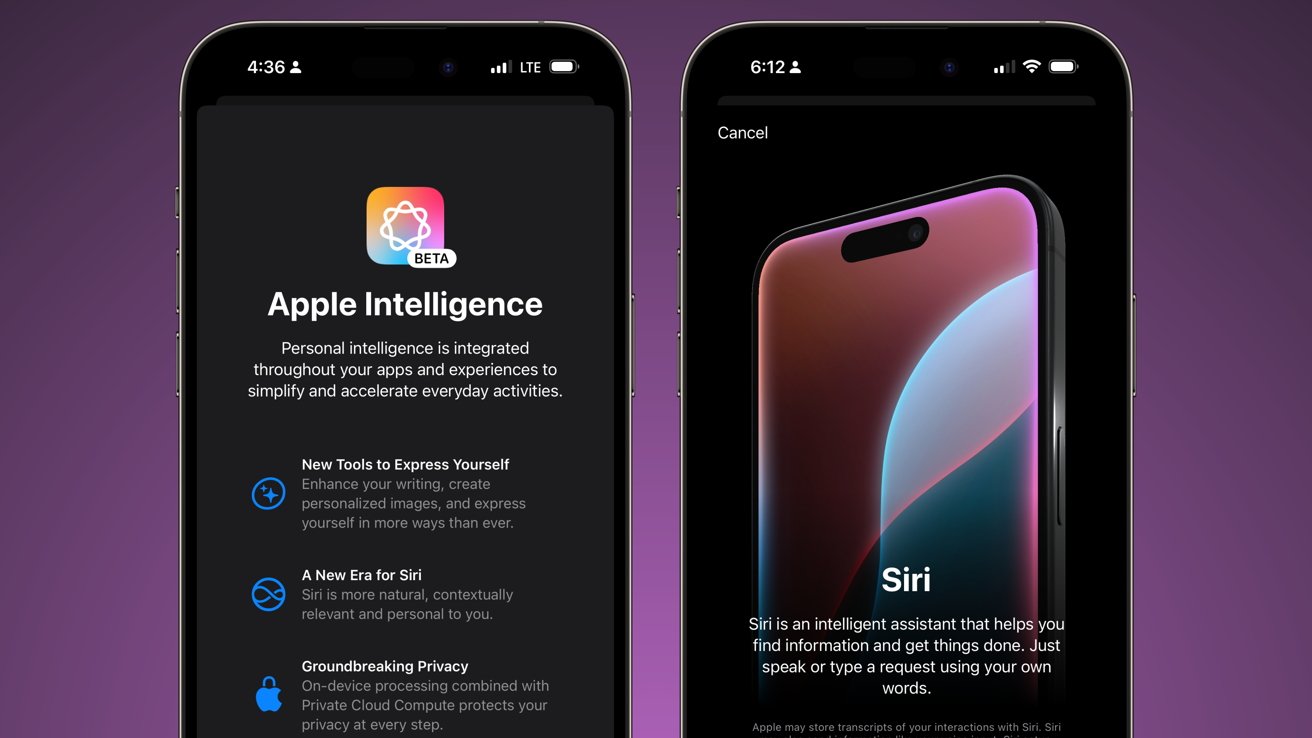
Despite Apple’s high-profile WWDC 2024 announcement, ChatGPT inside Apple’s software exposes fewer features than OpenAI’s standalone app and operates within much tighter limits.
Users often need to explicitly invoke “ChatGPT” inside Siri prompts before requests route to OpenAI’s systems. Responses also appear inside smaller interface windows with less information than the standalone app typically provides.
Advertisement
OpenAI’s internal studies found users overwhelmingly preferred the standalone ChatGPT app over Apple’s built-in integrations.
Apple’s version resembles a tightly managed Siri extension rather than a deeply integrated AI layer across the operating system. The standalone app offers features unavailable in Apple’s implementation, such as persistent memory, wider model access, advanced voice tools, custom GPTs, and direct subscription management.
OpenAI executives reportedly expected broader integration across Apple apps and more prominent placement inside Siri. Apple instead kept the implementation relatively narrow while continuing development of its own Apple Intelligence systems.
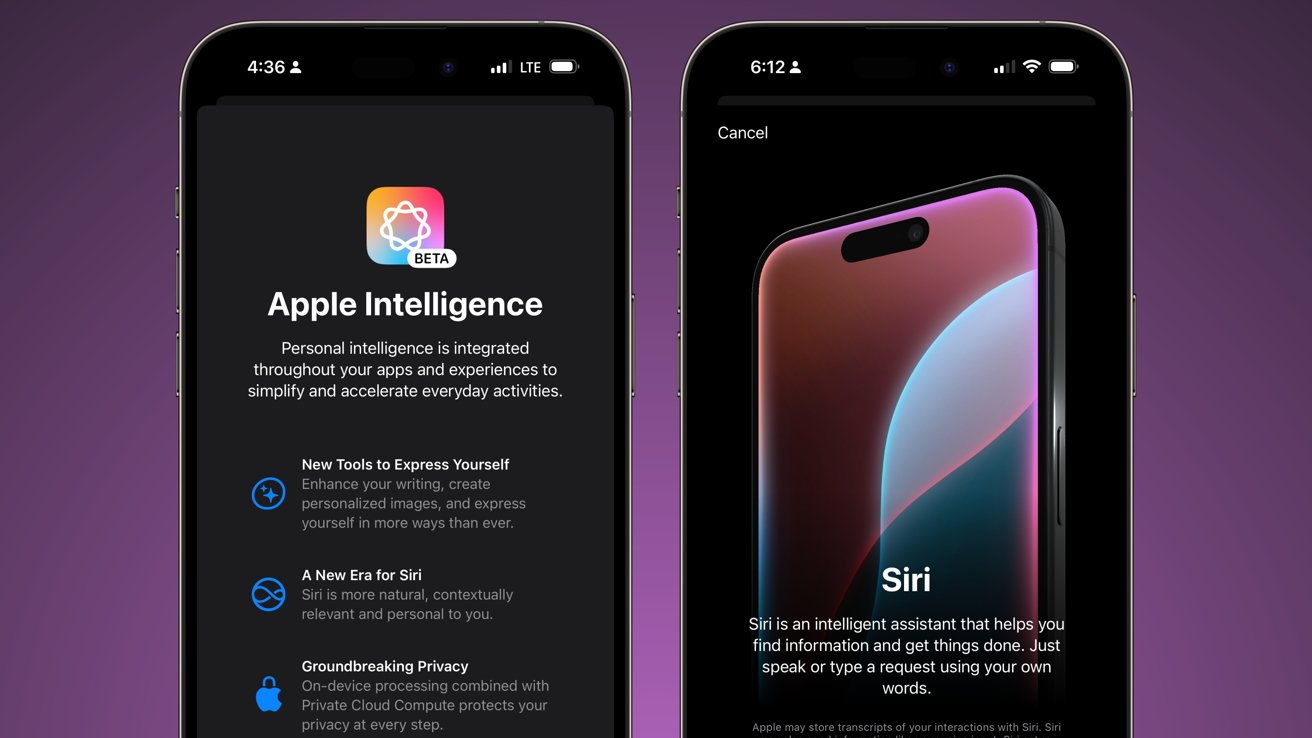
Apple reportedly worried internally about OpenAI’s privacy standards while negotiating the partnership. The company built Apple Intelligence around on-device processing and Private Cloud Compute to keep more user data inside Apple-controlled infrastructure.
Advertisement
Apple Intelligence
That tension over data control goes to the heart of why the two companies were never fully aligned. OpenAI’s cloud-focused systems operate very differently, leaving Apple with less direct control over how outside AI models process user information.
OpenAI increasingly looks like a future Apple competitor
The relationship between the companies has also become more complicated outside software. OpenAI acquired Jony Ive’s AI hardware startup and has aggressively recruited Apple engineers for its growing device ambitions.
OpenAI offered some Apple recruits compensation packages worth millions more than Apple provided. Those moves increasingly position OpenAI as a competitor rather than a partner.
Apple is also building new hardware efforts tied to Jony Ive‘s AI startup while preparing for a future where outside AI providers become interchangeable services inside iOS.
Apple plans to introduce an “Extensions” system in iOS 27 that will let users choose among multiple outside AI models. ChatGPT, Anthropic’s Claude, and Google Gemini are all expected to be part of the system.
Advertisement
Outside AI models are becoming interchangeable services inside iOS rather than central platform features. ChatGPT appears set to operate alongside Siri and Apple Intelligence instead of becoming a dominant layer across Apple’s ecosystem.
Any legal case could still prove difficult. Large platform agreements often give companies like Apple broad control over implementation details, placement, and product design decisions. And, users will do what they want, regardless of Silicon Valley expectations.
OpenAI still hopes to resolve the disagreement privately and may wait until after its legal fight with Elon Musk concludes before taking formal action against Apple. A lawsuit isn’t guaranteed at this stage.
Earlier this week, OpenAI became the latest tech company to publicly endorse KOSA, the Kids Online Safety Act. The company, conveniently, tries to frame this as being about its support of child safety. It’s not. It’s about political horse trading, desperation for good publicity, and building a regulatory moat.
KOSA would help create stronger online protections for young social media users through safer default settings, expanded parental controls, and greater accountability for online harms.
The path forward on kids safety, however, also requires AI-specific rules. And we believe KOSA is complementary to the work we’re doing at the federal and state level. Young people should be able to benefit from AI in ways that are safe, age-appropriate, and grounded in real-world support, including referrals to crisis resources and parental notifications in serious safety situations. That means building safeguards from the start, giving families better tools, and taking responsibility for reducing risks before they become harms.
The broader point is an important one: AI companies still have the opportunity to build protections early, before these technologies become fully embedded in everyday life. As OpenAI Chief Global Affairs Officer Chris Lehane has put it, “We can’t repeat the mistakes made during the rise of social media, when stronger safeguards for teens weren’t put in place until the platforms were already deeply embedded in young people’s lives.”
All of this is, of course, nonsense. As we’ve explained repeatedly, the underlying mechanisms of KOSA are deeply problematic and will do real damage. It will, inherently, make the internet worse for everyone. At its heart, KOSA is a surveillance and censorship bill, and it’s the last thing that we need for the internet today.
While it’s positioned as being about something no one can be against (“kid safety!”), that is all too often the facade with which terrible rights-killing laws are passed. And KOSA is no exception.
But a bunch of tech companies have endorsed it anyway. Why? Because they know it makes life way more difficult for smaller upstart competitors. The additional compliance costs it will add for companies will be ruinous to smaller, less well-resourced companies. For big companies with big bank accounts, however, it gives them a leg up.
Advertisement
OpenAI, perhaps more than most others in the space, needs that kind of government-backed protection against growing competition.
Almost exactly three years ago, I wrote a piece about Sam Altman going to Congress and asking for the federal government to regulate the AI space, calling it Sam Altman Wants The Government To Build Him A Moat. As I pointed out at the time, AI researchers were coming to the conclusion that there was little to no real competitive advantage that any frontier AI model could really have for any extended period of time. That situation has only gotten worse since then. The jockeying between the various leading AI models has meant that they’re all effectively comparable, and more and more builders are realizing that since you can separate out the context, the computer, and the agentic tools from the underlying LLM, that technology is quickly turning into a commodity where any one will do (and this situation is becoming even more tenuous as open weight/local models are getting better and better).
While OpenAI has a huge number of users (one of the fastest growing tech companies in history), it’s unclear if those users are particularly loyal. Indeed, there are a few indications that when OpenAI does something stupid, a large segment of users will quickly leave.
Given that, all of the large AI companies keep looking for ways to create some sort of lock-in for users. Most of them haven’t gone down the fully siloed path (knowing at this stage that would probably drive away their most valuable users). For the most part, the focus between the likes of OpenAI, Anthropic, Google and others is to build in more features to make it more convenient to stay than to swap out an underlying LLM. That and the continued leapfrogging, combined with various experiments regarding how much they’re willing to subsidize with their subscription plans.
Advertisement
But having the government wipe out competitors, or create “mandatory” tools that create lock-in, might be another path towards such a result. And that’s exactly what KOSA would lead to. It certainly wouldn’t protect kids. Indeed, all evidence suggests it would put plenty of marginalized kids at much greater risk.
However, it would create something of a regulatory moat for those larger companies.
On top of that, is there any company more desperate for a headline talking about how it’s “helping” protect children than OpenAI? The company has been accused of being “responsible” for suicide and other harmful behavior. And, even if those claims and lawsuits are misleading (they are!), culturally that message has been sticking. I’ve heard multiple people refer to ChatGPT as a suicide machine.
So, if you need a good headline to claim that you’re “protecting children” and doing so in a way where the law will have little direct impact on your business, but will damage some of your competitors in the space (not to mention the wider open internet), why not? It’s hard not to be cynical about OpenAI’s reasoning here.
Advertisement
Separately, it’s likely that the AI companies see this as a bit of political horse trading. While KOSA would have some impact on AI tools, it’s much more directed at social media platforms than AI. And it’s likely that the bet being made by OpenAI here is “hey, we’ll back KOSA for you, and you get rid of the AI-specific bills.” OpenAI’s Chris Lehane, who announced the endorsement and is featured in every press release about it, is infamous as a political trickster. He’s a political operator, not a tech or policy expert. You roll him out to cut a deal, not to advance a principled position on child safety. And that’s exactly what’s happening here.
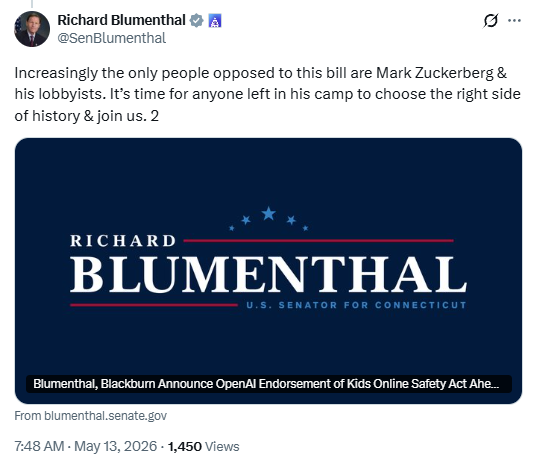
You can see the KOSA authors gleefully using the OpenAI endorsement to falsely claim that only Mark Zuckerberg now opposes the law:
Yeah, that’s Senator Richard Blumenthal choosing to spend time on X, a site run by a guy who has made it clear he thinks Blumenthal’s political party is evil and needs to be wiped out, using that platform to lie and claim that the only people opposed to KOSA are “Mark Zuckerberg & his lobbyists.” That ignores the long list of civil society and public interest groups who have made it clear just how dangerous the law would be.
Marsha Blackburn (who has been vocal about how she wants KOSA to silence LGBTQ voices) put out a silly press release about this endorsement, saying:
“Lip service won’t save lives – Congress must take action to establish guardrails in the virtual space. I look forward to chairing a hearing on why the verdicts in California and New Mexico should spur Congress to hold Big Tech accountable for exploiting children to turn a profit.”
What? As bad as the rulings in California and New Mexico are, they seem to suggest that the courts already think they have the authority to order companies to do the impossible and magically stop anything bad from ever happening to kids who also (incidentally) use the internet.
Advertisement
All of this is for show. No one is being honest. Blackburn wants to censor LGBTQ speech she considers “dangerous to kids” because it terrifies her. Blumenthal wants to end encryption and the ability of tech companies to keep information, because he’s always been a cop and wants the ability to spy on your kids. And OpenAI wants Congress to direct their bad policies at social media companies rather than AI companies.
And all of us internet users are simply collateral damage for the mad power dreams of those in charge.
Netflix has spent years using AI to make sure you never leave the couch. Making AI-based content is the next step, I guess.
The streaming giant is staffing up a new internal studio called INKubator to produce animated short films and specials using generative AI (via TheVerge).
The project never got an official announcement from Netflix. Instead, it surfaced through a series of recently published job listings seeking producers and CGI artists. These listings paint a pretty clear picture of where the company is headed.
What exactly is INKubator, and who is running it?
Based on LinkedIn profiles, INKubator quietly launched in March 2026 and is led by Serrena Iyer, who previously held strategy and operations roles at DreamWorks Animation, MRC Studios, and A24 Films. That is not a lineup you put together for a throwaway experiment.
The job listings describe the studio as a next-generation, creativity-first operation built entirely around generative AI. The studio’s long-term technology strategy covers generative AI workflows, artist tooling, and scalable multi-show environments.
Advertisement
Interestingly, INKubator is not the first AI studio to be acquired by Netflix. Earlier this year, the streaming giant acquired InterPositive, an AI startup founded by actor Ben Affleck, which is centred on AI usage in post-production.
Could AI-generated shows end up in your Netflix feed?
For now, INKubator seems to be focused strictly on shorts and experimental animated specials, rather than full-length features. That said, the job listings hint at longer-form ambitions down the line.
Netflix has also been making a push into kids’ programming, positioning itself as a family-friendly YouTube alternative. It also launched a standalone app for kids called Netflix Playground. Generative AI could surely help it scale that kind of content much faster.
Whether you are ready for AI-made Netflix shows or not, INKubator suggests the streamer has already made up its mind.
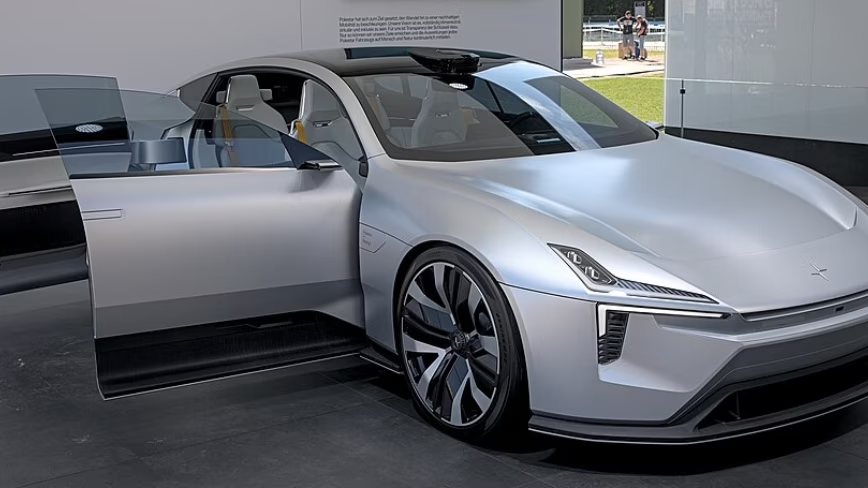
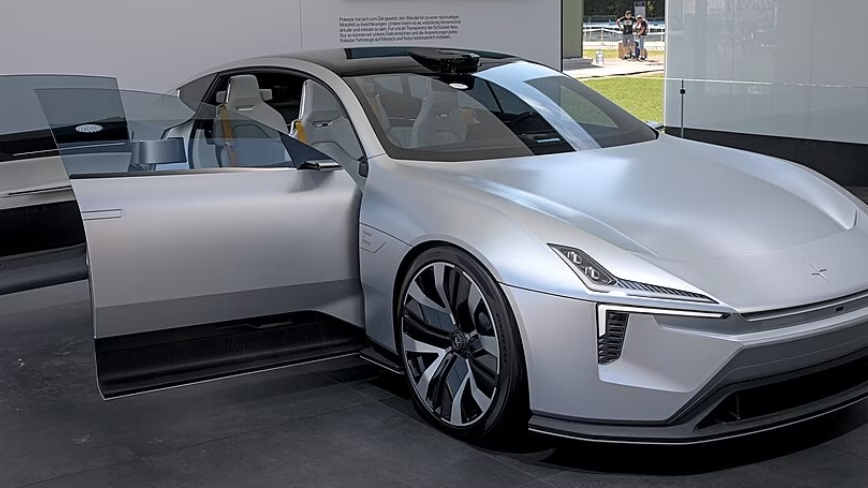
Polestar CEO Michael Lohscheller told CNBC that “pump anxiety” has replaced range anxiety as the dominant consumer concern, with rising fuel prices from the Iran war and Strait of Hormuz closure driving a measurable shift toward EV demand. EU EV registrations jumped 51% in March. Polestar reported a widening Q1 net loss of $383 million on flat revenue of $633 million despite record deliveries of 13,126 vehicles, with gross margins swinging negative due to pricing pressure, tariffs, and currency effects.
Advertisement
For years, the electric vehicle industry’s biggest problem had a name: range anxiety. Now, according to the chief executive of Polestar, the anxiety has moved to the other side of the forecourt. “People are concerned, ‘how much do I pay at the gas station?’” Michael Lohscheller told CNBC’s Squawk Box Europe on Wednesday, coining a phrase “pump anxiety” that captures a shift the entire automotive industry is struggling to absorb.
The context is not subtle. Since the United States and Israel launched strikes against Iran on 28 February, the Strait of Hormuz, the narrow waterway that carries roughly a fifth of the world’s oil supply, has been effectively closed to commercial shipping. Brent crude has surged past $100 a barrel. In the United Kingdom, average petrol prices have risen by more than 25 pence per litre since early March, with diesel tracking nearly 45 pence higher, according to RAC Fuel Watch. Across the European Union, petrol has breached €2 per litre in several markets. The result is a measurable, continent-wide recalculation of what it costs to drive.
The economics have flipped
Lohscheller’s argument is that the cost equation has inverted. “In the past, people considered EVs for idealistic reasons, and now the decision is all about money,” he said. The claim is supported by the numbers. EU electric vehicle registrations jumped 51% in March compared with the same month a year earlier, with Italy recording a 65.7% increase in battery-electric registrations in the first quarter, France following at 50.4%, and Germany at 41.3%, according to industry data compiled by the European Automobile Manufacturers’ Association. In the United Kingdom, Polestar’s home market in operational terms, Chinese EV manufacturers and European incumbents alike are reporting surges in online inquiries and test-drive bookings.
The shift is not uniform. In the United States, where petrol prices have topped $4 per gallon for the first time in four years, the effect has been more muted. Used EV sales rose 12% year on year in the first quarter, and 17% over the previous quarter, but new EV sales have not yet shown the same spike. Lohscheller cited disappearing federal tax incentives and broader consumer uncertainty as factors dampening American demand.
A company under pressure
The pump-anxiety thesis arrives at a moment when Polestar could use some good news. The Geely-controlled, Sweden-headquartered company reported a widening net loss of $383 million in the first quarter, more than double the $166 million loss in the same period last year. Revenue was flat at $633 million despite a 7% increase in deliveries to a record 13,126 vehicles. Gross margins swung to negative 3.2%, down from positive 10.3% a year earlier, a deterioration the company attributed to pricing pressure, EU and US tariffs, lower carbon-credit sales, and unfavourable foreign-exchange movements driven by the weakening Chinese yuan.
Advertisement
The financial picture reveals the paradox at the heart of the EV industry in 2026. Demand is rising, but so is the cost of competing. Polestar manufactures primarily in China, which makes its vehicles subject to both American and European tariff regimes designed to counter the competitive advantage of Chinese production. The company described China’s domestic market as “hyper competitive” and suggested Europe needed to “speed up” its own response.
Range anxiety is over. What comes next is harder.
Lohscheller, who previously ran Opel and Vauxhall, was blunt about the range question. “Range anxiety, I think this has gone,” he said at the Financial Times Future of the Car conference, also held on Wednesday. The cheapest Polestar 2 now offers 344 miles of official range on the WLTP test cycle. The dual-motor Polestar 3 SUV manages 402 miles. An 82-kilowatt-hour Polestar 2 can be fully charged overnight on a domestic EV tariff in the UK for roughly £15, a fraction of what a comparable petrol car costs to refuel at current prices.
But lower running costs have not yet translated into lower purchase anxiety. Lohscheller acknowledged that EV residual values remain a pain point, lagging behind equivalent combustion cars. New-car pricing pressure, driven by manufacturers scrambling to meet the UK’s zero-emission vehicle mandate quotas or face fines, has led to aggressive discounting that erodes used-EV values further. “I’m asking for stability,” he said of the regulatory environment. “Every three months to have a new debate about these rules changing is not helping anybody.”
The bigger picture
The fuel-price shock is reshaping automotive markets well beyond Polestar’s niche. BYD exported more than 120,000 electric and hybrid vehicles in March alone, a 65% increase year on year. Renault has described the Middle East conflict as having triggered a “seismic shift” in EV adoption. The International Energy Agency’s chief, Fatih Birol, has said countries are likely to pivot to renewables as a way to mitigate geopolitical risk, calling the Hormuz disruption the largest supply disruption in the history of the global oil market.
Advertisement
The irony is that the crisis most likely to accelerate the transition to electric vehicles is also the crisis most likely to punish the companies trying to lead it. Higher energy costs raise manufacturing expenses. Tariff walls make cross-border competition more expensive. Currency volatility erodes margins on vehicles built in one country and sold in another. Polestar’s first-quarter results are a case study in all three dynamics operating simultaneously.
Lohscheller’s framing, that the conversation has moved from range to price, from ideology to arithmetic, is probably correct. The question is whether Polestar, a company losing money on every percentage point of margin while navigating tariffs, competition, and a war-driven energy shock, is positioned to benefit from the shift it is describing. Pump anxiety may be good for EVs in the aggregate. Whether it is good for Polestar depends on whether the company can turn rising demand into something its balance sheet has not yet demonstrated: a sustainable business.
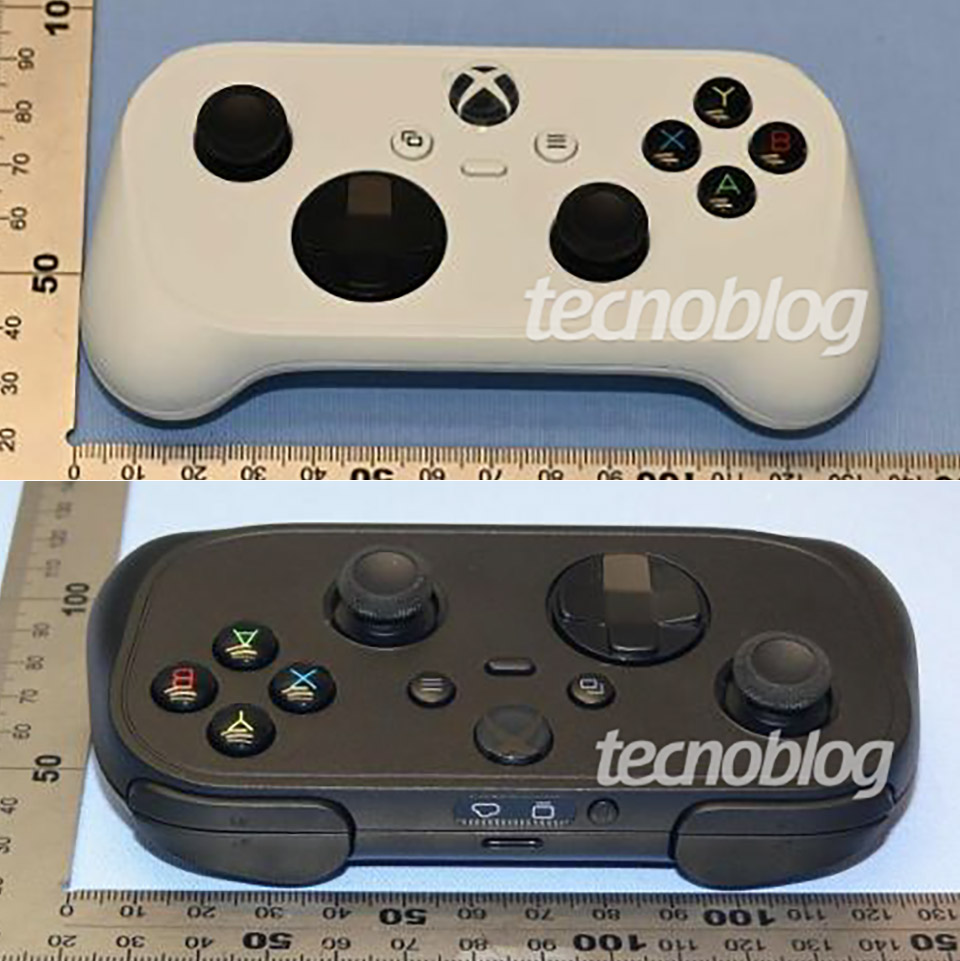
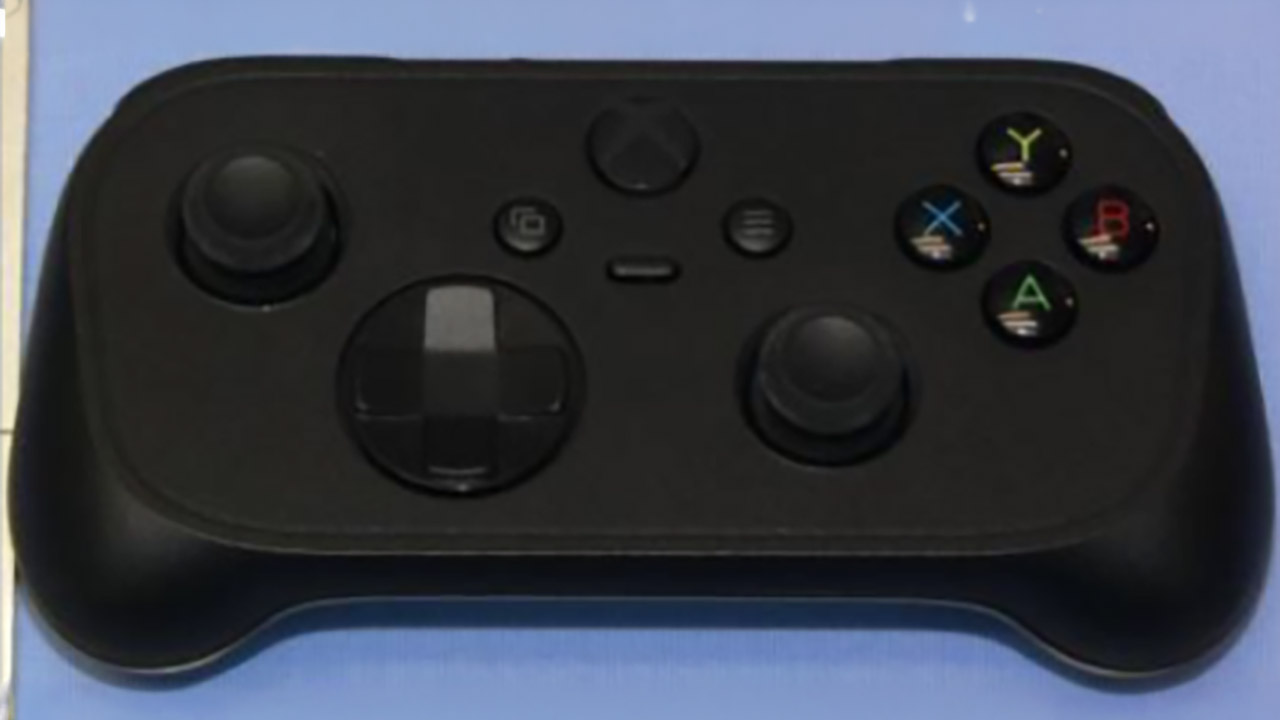
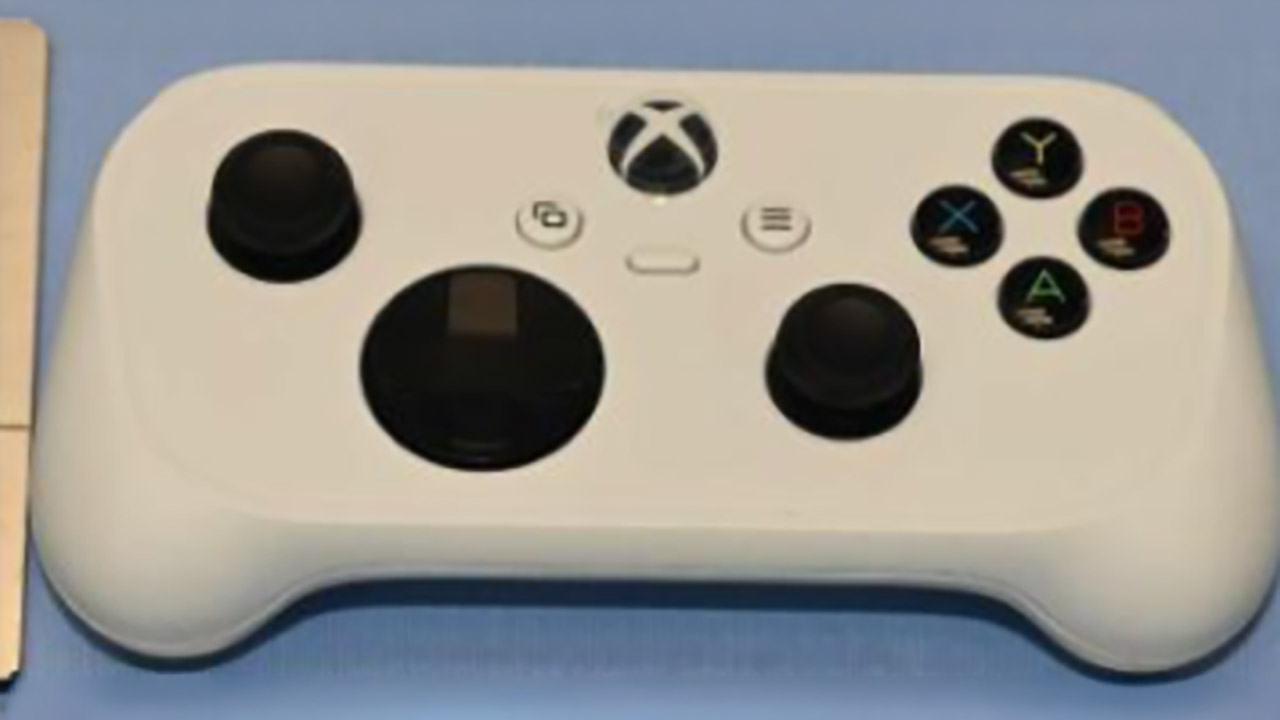
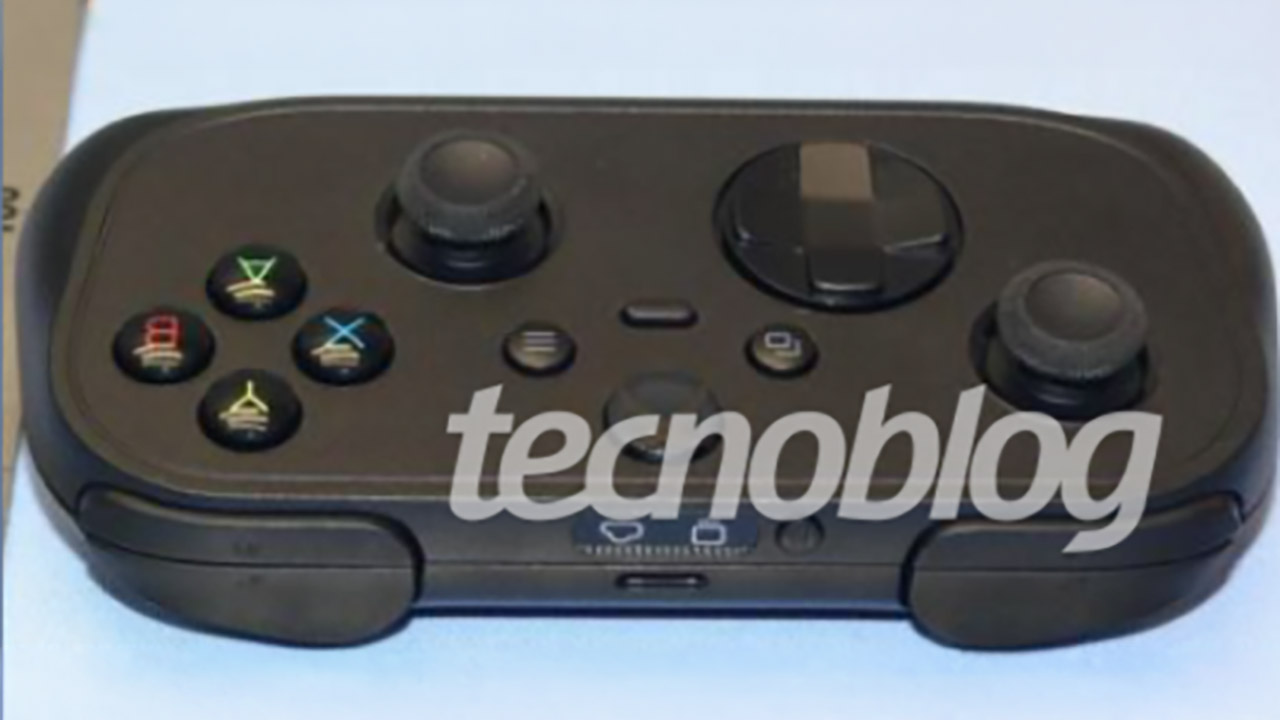
Photo credit: Everton Favretto/Tecnoblog Leaked images from a Brazilian certification lab capture Microsoft readying a gamepad built from the ground up for streaming. Compact and straightforward, the device shrinks the familiar Xbox layout into something pocket friendly while keeping every essential control intact. White and black versions appear in the shots, both sporting a clean rectangular body with short grips that suggest easy one handed carry for travel or couch sessions alike.
Compact dimensions define the entire piece. Side by side with a standard Xbox controller, this one sits noticeably smaller yet retains the same staggered thumbstick positions and full button array, including the standard face buttons A B X Y, arranged in their diamond formation, while the shoulder bumpers and triggers line the top edge unchanged. A central Xbox logo button sits in the center, flanked by the conventional menu and view keys, as well as a handy share button for rapidly capturing screenshots while playing.
XBOX EXPERIENCE BROUGHT TO LIFE BY ROG The Xbox gaming legacy meets ROG’s decades of premium hardware design in the ROG Xbox Ally. Boot straight into…
XBOX GAME BAR INTEGRATION Launch Game Bar with a tap of the Xbox button or play your favorite titles natively from platforms like Xbox Game Pass…
ALL YOUR GAMES, ALL YOUR PROGRESS Powered by Windows 11, the ROG Xbox Ally gives you access to your full library of PC games from Xbox and other game…
A closer look from different angles reveals a USB C charging connector on the top edge, as well as a tiny button that appears to be dedicated to pairing or switching between connection modes. The section below the main face contains markings for light indicators; it appears that there will be a visual signal to indicate whether the pad is in cloud mode or connected to a console. The materials are all incredibly smooth and matte, like some third-party pads, but the design remains faithful to Microsoft’s in-house flair.
Connection choices are where things get really interesting, as this controller features built-in Wi Fi compatibility, allowing you to connect directly to the Xbox cloud servers without the need for a phone or laptop in between. There’s also mention of Bluetooth 5.3 and Wi Fi 6 technology, and while the Realtek RTL8730E chip inside only supports a 20 megahertz band, it appears to promise fewer hops and shorter delay, which is a significant victory for anyone who has ever experienced lag in streamed gameplay on mobile or browser setups. The good news is that it can still be paired with ordinary devices, giving you plenty of options for streaming and everyday gaming.
Power comes from a sealed 500 milliamp hour rechargeable battery that fits snugly inside the shell. Microsoft controllers typically have AA slots, so this onboard battery is a significant shift, as it provides ease for on-the-go users. We’re talking about extended periods without the need to swap cells, and the USB C connector allows you to recharge with any standard cable.
No official word from Microsoft has followed, yet the details line up with earlier hints about hardware tuned for cloud services. The design appears to have been developed for a specific purpose rather than just converted for cloud streaming, with the goal of getting you set up and playing as quickly and easily as possible. Details remain thin on launch timing or price, but the certification trail points toward an imminent reveal. [Source]
Intel and Apple chip-producing agreement has reportedly started with a test run of select older chipsets made on Intel’s newest process, launching a testing roadmap extending well into 2029.
The relationship between Apple and Intel goes back over 40 years. It seemed to have ended with the advent of Apple Silicon, but the political climate may have tilted things back into Intel’s favor.
According to a report from supply chain analyst and leaker Ming-Chi Kuo, Intel has begun the testing process for building Apple chips on its 18A-P process. This is seemingly the equivalent process used by TSMC for modern Apple chipsets like the A18 Pro.
It will take some time for Intel to ramp up to full production. Kuo suggests that 2026 is the testing ramp with 2027 as the target for full production and shipment.
Advertisement
However, Intel’s output will only be at 50% to 60% in 2027. It will continue to ramp through 2028 where it will hit peak production and slow output through 2029.
That lifecycle fits Apple’s needs for its older processors. It will need chips like the A18 Pro for some time for low-end iPhones and Macs. The chip seems likely for an upgraded Apple TV set top box too.
Kuo says that roughly 80% of the order is for iPhone chips.
TSMC is still the chipset leader
Of course, all of this barely makes a dent in Apple’s overall chip needs. TSMC is still expected to supply over 90% of Apple’s processors, and that won’t change anytime soon.
Advertisement
There is some pressure to diversify from TSMC as 60% of its production takes place in Taiwan. Even as I type this, US President Trump is in talks with Chinese leader Xi Jinping regarding how the US views Taiwan.
Things don’t seem to be going Taiwan’s way.
Apple is under additional political pressure from forces in its home country. The US expects Apple and others to bring more manufacturing and assembly back stateside. The deal with Intel might satisfy the Trump administration, and it may not.
To complicate things further, the Trump administration took out a 10% stake to help keep Intel afloat when it appeared ready to dissolve. Since then, Trump and the Intel CEO have been going door to door asking American companies to invest directly in Intel.
Advertisement
For Apple, the choice is easy and clear. It won’t hurt to have some small percentage of older chips made by Intel in the US.
The move is an obvious political win that checks all of the boxes at once. Intel is a US company backed by the Trump administration, and Apple is placing orders with them.
Moves like these have kept Apple out of hot water with the controversial administration so far. If it wants to keep up business as usual, similar actions will have to be taken on a regular basis.
Eric Park tells us he doesn’t plan to wear his modified cap to commencement, but his code’s available for anyone with no such qualms and an upcoming ceremony
College graduation season has begun in the United States, and one soon-to-graduate computer science student has decided to decorate his graduation cap in the way any good maker would: by writing some Rust code and wiring it up with LEDs that light up when the tassel moves from right to left.
Eric Park, due to walk in his commencement ceremony on Friday at Purdue University, published a blog post this week explaining the project, which he said he undertook as an alternative to building a contraption that would set his mortarboard aflame when the tassel was moved.
Advertisement
Unfortunately for Park, many American universities (and some in other countries like the UK) require college students who want to walk in commencement ceremonies to rent their gowns and mortarboards. It’s not uncommon for students to be charged a ludicrous amount to rent the set, and in many cases, rental companies require students to return their mortarboards and gowns alike, as is the case for Park.
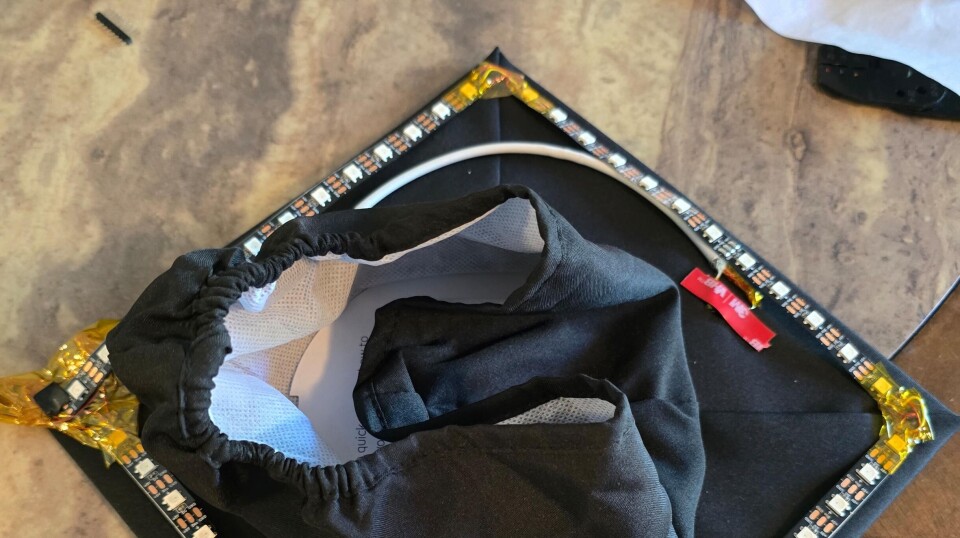
“The rental agreements clause 98.c.2 probably forbids [burning a rented mortarboard], and I don’t think Purdue would like it very much if I set the stage on fire,” Park said in the post. An easier-to-remove version consisting of LED strips, a reed switch, and a magnet, controlled by a super-tiny Digispark ATtiny85, presented itself as the alternative.
The result, as demonstrated in a YouTube video, is a mortarboard that is all aglow, and flameless, as soon as the reed switch is activated by the magnet placed on the left-hand side of the hat.
Advertisement
“The entire thing was stuck on with double-sided tape and Kapton tape, and I tried a small patch just to make sure it wouldn’t rip up the fabric,” Park told The Register in an email.
The lightweight and easy-to-remove design also necessitates a compact power source. Unfortunately, Park had to settle for an external battery pack carried in the pocket to power the unit. “It was going to be all self-contained with a 21700 cell, but I didn’t have a boost converter on hand so I decided to make do with the power bank solution,” the soon-to-be graduate told us.
Advertisement
According to Park, the build was relatively quick: Hardware took a bit more than three hours, and that was largely because he no longer had access to a full lab and was stuck working with his home toolset. Writing the code took a couple of hours, which Park attributed to his insistence on using Rust.
“It probably would’ve been easier if I didn’t use Rust and just used the Arduino libraries, or if I used a different board,” Park explained in his blog post. “But I was really married to this blog post title … and I was pretty sure an ESP32 board would’ve been overkill and wouldn’t have stayed on the cap properly.”
Eric Park’s finished mortarboard. Credit: Eric Park
For those who haven’t clicked through to read his blog post, its headline is simply “my graduation cap runs Rust.” That’s a pretty solid title – at the very least, it’s going to get people to read it, and read they have.
“I’ve read through the comments on Hacker News and I’m happy and thankful about all of the positive comments,” Park told us. “It’s great to see a silly but fun project like this reach a wide audience.”
Advertisement
“I particularly liked the guy that was reminded why he got into this field through my project,” Park added.
So, will Purdue students graduating alongside Park get treated to a surprise light show? Sadly, no – he said in the blog post, and reiterated to us, that he’s probably not going to wear it during the ceremony.
“I thought about it but decided it looks pretty tacky,” Park wrote in his blog post. “It looks like what kids would think of as a gaming PC and what boomers would think of as a seizure.”
He might toss it on for photo ops after the ceremony, but that’s about it, Park told us.
Advertisement
That said, Park did publish the code on Github, so if some other all-but-commenced college student were to take it upon themselves to build their own copy and wear it during their ceremony, that’s on them.
If I were graduating, I’d consider adding some speakers to the setup and piping in some music, too. Don’t come running to El Reg if such a move gets you in trouble, though: We claim no responsibility for commencement shenanigans. ®
The 1985 Talking Heads anthem is built on contradiction — upbeat and anxious at the same time. Songwriter David Byrne once described it as “a resigned, even joyful look at doom.”
That paradox felt especially relevant this week as two headlines collided.
Gene Balk reported in The Seattle Times that Seattle ranked fourth among large U.S. cities for population growth. At nearly the same moment, KUOW’s Monica Nickelsburg reported that Washington ranked second nationally in tech layoffs.
So, what is it? Are we growing, or dying?
Advertisement
Are cracks beginning to form beneath one of the country’s most successful innovation economies?
Maybe a little of both.
For three decades, Seattle’s tech industry has been an extraordinary economic engine, transforming the region into a global center for cloud computing, e-commerce and artificial intelligence. The construction cranes that once dominated the skyline became symbols of seemingly unstoppable momentum.
But momentum and durability are not the same thing.
Advertisement
And the Seattle psyche — especially in the innovation community we closely follow — is ruptured.
The office towers are still here. So are Amazon, Microsoft and a deep pool of engineering talent. But something less tangible — confidence — has shifted.
In nearly 30 years covering the tech industry, I’ve never sensed this level of uncertainty among founders, investors and business executives about Seattle’s long-term trajectory. Former business leaders, once proud to call Seattle home, now write op-ed pieces in The Wall Street Journal about how the city lost its way.
It’s a bad look.
Advertisement
At the GeekWire Awards last week, a longtime entrepreneur-turned-venture capitalist told me Washington state is “squandering its edge.” Over the past year, we’ve heard versions of that concern repeatedly from startup founders, investors, and technology leaders questioning whether Seattle still wants to compete as aggressively as other innovation hubs.
That doesn’t mean Seattle is collapsing. Far from it.
The region still possesses enormous advantages: world-class research institutions, elite technical talent, major AI leadership and one of the strongest concentrations of cloud and AI expertise anywhere in the world.
But successful cities often make the same mistake successful companies do: They assume the conditions that created prosperity will naturally continue.
Advertisement
History suggests otherwise.
And in this period of change, our political leaders wave goodbye to entrepreneurs and job creators — smugly taking for granted our past success and essentially fumbling the ball on the 1-yard line.
Earlier this year on the GeekWire Podcast, Cleveland Mayor Justin Bibb reflected on what happened when one of America’s great industrial cities of the 1950s and 1960s failed to adapt as the economy changed.
Advertisement
“We didn’t pivot fast enough, and the world left us behind,” Bibb told GeekWire. “Now we’re a comeback story built on reinvention and resilience.”
Seattle is not Cleveland. The economic dynamics are different, the industries are different, and the scale of innovation here remains immense.
But the warning isn’t about collapse. It’s about complacency.
Artificial intelligence is already reshaping the industry that built modern Seattle. Venture capitalists are funding leaner startups with fewer employees. Large tech companies are reassessing hiring needs and organizational structures. Entire categories of work are being reevaluated in real time.
Advertisement
At the same time, Seattle faces growing questions around affordability, public safety, regulation, permitting, and whether political leaders fully appreciate how fragile innovation leadership can become once momentum shifts.
Other cities are competing aggressively for talent and investment.
San Francisco Mayor Daniel Lurie has been relentlessly promoting a simple message: “We are a city on the rise.” Miami, Austin, New York and emerging startup hubs across the country and planet are doing the same.
No one talks like that in Seattle.
Advertisement
We feel oddly uncertain about the industry that helped build Seattle’s modern identity.
That uncertainty matters.
Because the danger facing Seattle is not sudden decline. It’s the slower erosion that happens when a region begins to take its advantages for granted while competitors grow hungrier.
Population growth alone is not proof of long-term economic strength. Neither are cranes, soaring valuations or the presence of a few corporate giants.
Advertisement
The real question is whether Seattle still has the ambition — and civic alignment — to remain one of the world’s leading innovation capitals as the AI era reshapes everything around it.
Cities rarely see the inflection point in the windshield.
Usually, they only recognize the road has changed once the exit is in the rearview mirror.
“Well, we know where we’re going But we don’t know where we’ve been And we know what we’re knowing But we can’t say what we’ve seen“
Advertisement
[Editor’s note: Tech veteran and angel investor Charles Fitzgerald — who wrote the guest commentary earlier this year, “A warning to Seattle: Don’t become the next Cleveland”— and GeekWire co-founder John Cook will spend time next month in Cleveland examining what happened there and what lessons Seattle might draw from it. Contact john@geekwire.comto share perspectives or lessons from the Rust Belt that may apply to Seattle’s future.]
A code migration agent finishes its run, and the pipeline looks green. But several pieces were never compiled — and it took days to catch. That’s not a model failure; that’s an agent deciding it was done before it actually was.
Many enterprises are now seeing that production AI agent pipelines fail not because of the models’ abilities but because the model behind the agent decides to stop. Several methods to prevent premature task exits are now available from LangChain, Google and OpenAI, though these often rely on separate evaluation systems. The newest method comes from Anthropic: /goals on Claude Code, which formally separates task execution and task evaluation.
Coding agents work in a loop: they read files, run commands, edit code and then check whether the task is done.
Claude Code /goals essentially adds a second layer to that loop. After a user defines a goal, Claude will continue to turn by turn, but an evaluator model comes in after every step to review and decide if the goal has been achieved.
Advertisement
The two model split
Orchestration platforms from all three vendors identified the same roadblock. But the way they approach these is different. OpenAI leaves the loop alone and lets the model decide when it’s done, but does let users tag on their own evaluators. For LangGraph and Google’s Agent Development Kit, independent evaluation is possible, but requires developers to define the critic node, write up the termination logic and configure observability.
Claude Code /goals sets the independent evaluator’s default, whether the user wants it to run longer or shorter. Basically, the developer sets the goal completion condition via a prompt. For example, /goal all tests in test/auth pass, and the lint step is clean. Claude Code then runs, and every time the agent attempts to end its work, the evaluation model, which is Haiku by default, will check against the condition loop. If the condition is not met, the agent keeps running. If the condition is met, then it logs the achieved condition to the agent conversation transcript and clears the goal. There are only two decisions the evaluator makes, which is why the smaller Haiku model works well, whether it’s done or not.
Claude Code makes this possible by separating the model that attempts to complete a task from the evaluator model that ensures the task is actually completed. This prevents the agent from mixing up what it’s already accomplished with what still needs to be done. With this method, Anthropic noted there’s no need for a third-party observability platform — though enterprises are free to continue using one alongside Claude Code — no need for a custom log, and less reliance on post-mortem reconstruction.
Competitors like Google ADK support similar evaluation patterns. Google ADK deploys a LoopAgent, but developers have to architect that logic.
Advertisement
In its documentation, Anthropic said the most successful conditions usually have:
One measurable end state: a test result, a build exit code, a file count, an empty queue
A stated check: how Claude should prove it, such as “npm test exits 0” or “git status is clean.”
Constraints that matter: anything that must not change on the way there, such as “no other test file is modified”
Reliability in the loop
For enterprises already managing sprawling tool stacks, the appeal is a native evaluator that doesn’t add another system to maintain.
This is part of a broader trend in the agentic space, especially as the possibility of stateful, long-running and self-learning agents becomes more of a reality. Evaluator models, verification systems and other independent adjudication systems are starting to show up in reasoning systems and, in some cases, in coding agents like Devin or SWE-agent.
Sean Brownell, solutions director at Sprinklr, told VentureBeat in an email that there is interest in this kind of loop, where the task and judge are separate, but he feels there is nothing unique about Anthropic’s approach.
Advertisement
“Yes, the loop works. Separating the builder from the judge is sound design because, fundamentally, you can’t trust a model to judge its own homework. The model doing the work is the worst judge of whether it’s done,” Brownell said. “That being said, Anthropic isn’t first to market. The most interesting story here is that two of the world’s biggest AI labs shipped the same command just days apart, but each of them reached entirely different conclusions about who gets to declare ‘done.’”
Brownell said the loop works best “for deterministic work with a verifiable end-state like migrations, fixing broken test suites, clearing a backlog,” but for more nuanced tasks or those needing design judgment, a human making that decision is far more important.
Bringing that evaluator/task split to the agent-loop level shows that companies like Anthropic are pushing agents and orchestration further toward a more auditable, observable system.
OpenAI is so frustrated with Apple over a ChatGPT integration that failed to deliver the subscribers and prominence it expected that the company is now actively exploring legal action against the iPhone maker, Bloomberg News reported Thursday, citing people familiar with the matter.
According to Bloomberg, OpenAI has enlisted an outside law firm to work through its options, which could include sending Apple a formal breach-of-contract notice without necessarily escalating to a full lawsuit (at least not immediately). Any legal move would likely wait until after the conclusion of OpenAI’s ongoing trial with Elon Musk.
Still, it’s a reminder of what a difficult partner Apple can be for major software companies. The iPhone is an enormously attractive platform for growth, but it’s fully under Apple’s control — and companies that build there are only guests. From Google to Adobe, there’s a long history of Apple showing guests the door when they seem as if they’re getting too comfortable.
TechCrunch has reached out to both OpenAI and Apple for comment.
Advertisement
The OpenAI partnership, announced at Apple’s Worldwide Developers Conference in June 2024, wove ChatGPT into Apple’s operating systems as an option within Siri and as part of the iPhone’s Visual Intelligence feature (allowing users to use their camera to analyze their surrounds and send photos to ChatGPT with related questions).
OpenAI, along with industry watchers, expected the deal might eventually funnel billions of dollars in new subscriptions its way and give the company prime real estate across one of the world’s most-used mobile ecosystems. Instead, Bloomberg reports, OpenAI has grown increasingly aggravated, complaining that the integration has been buried, its features hard to find, and that revenue from the tie-up is nowhere close to projections. “They basically said, ‘OpenAI needs to take a leap of faith and trust us,’” one OpenAI executive told Bloomberg. “It didn’t work out well.”
Apple, for its part, has its own grievances, including concerns about OpenAI’s privacy standards and, according to Bloomberg, irritation over OpenAI’s push into hardware, an effort led by former Apple executives including ex-design chief Jony Ive.
Either way, OpenAI is hardly the first partner of Apple to regret hitching its wagon to the company. Apple has a long history of embracing partners and then alienating them. The most famous case is Google Maps, which was a flagship feature of the original iPhone. It was so central to the device’s appeal that its removal in 2012 — replaced by Apple’s markedly inferior Apple Maps product — became one of the biggest tech fiascos of the decade, prompting a rare public apology from CEO Tim Cook. The friction between the two companies had been building for years at that point, thanks to the rollout of Google’s Android phone a year after the iPhone’s 2007 debut; after Google’s then-CEO Eric Schmidt stepped down from Apple’s board in 2009, that rivalry only intensified.
Advertisement
Adobe has some scar tissue, too. Steve Jobs refused to support Flash on the iPhone and iPad, publishing a famous open letter in 2010 explaining why and effectively dooming the technology. Flash never recovered its footing on mobile.
Then there’s Spotify, which spent years arguing that Apple leveraged its control over the App Store to disadvantage rival music streaming services after launching Apple Music in 2015. The European Commission agreed, fining Apple nearly €1.8 billion in March 2024.
Sometimes these rifts can be overcome in the name of commercial interests. Google is now Apple’s AI infrastructure partner, having struck a multiyear deal in January to power the next generation of Apple Intelligence with Gemini models. Apple is paying Google roughly $1 billion a year.
In the meantime, OpenAI has had its own share of strained relationships lately. Elon Musk’s lawsuit against the company — which accuses OpenAI of abandoning its nonprofit founding mission and operating in bad faith — is currently at trial.
Advertisement
The company has also reportedly navigated tensions with Microsoft, its biggest backer and infrastructure partner, as it pushes for greater independence ahead of its own IPO ambitions.
When you purchase through links in our articles, we may earn a small commission. This doesn’t affect our editorial independence.
The TWS earbuds category, at least in India, is a tricky business. There are too many players, each with their specific appeal. Noise is one such homegrown brand that’s always appealed to budget-conscious buyers. I was one of the early adopters when they first started doing smart bands. Their earphones have been solid overall, but have struggled to stand out among more established players like OPPO and OnePlus. On the flip side, Bose is the most recognized player in the premium headphone space, as they essentially invented ANC back in the 90s.
So, what if you combine the value proposition of Noise with the premiumness and sound of Bose? You get the Noise Master Buds. The first generation of these unique collaboration earbuds was a hit, with experts praising the sound quality and the ANC capabilities. Fast forward to today, and the second generation of the Master Buds are out, bringing some meaningful updates in the sound department. And I called Noise to get these for a review. It’s been a month since that call, and I even took them with me to Thailand. Spoiler alert: these earbuds are a hit. Here’s why.
Noise Master Buds 2
Hisan Kidwai
Advertisement
Summary
With the Master Buds 2, the design alone is a conversation starter. The Bose-tuned sound signature focuses on balance rather than overwhelming bass, making everything from vocals to instruments sound clean and detailed. ANC performance is strong enough for everyday commutes and flights, the gesture controls are surprisingly useful, and the companion app is genuinely well-designed rather than feeling like an afterthought.
Advertisement
Design & Comfort
When I first got the Master Buds 2, I was genuinely in awe of the design. I genuinely haven’t seen a case this pretty before, yet still functional. The concentric circle pattern on the front is a really nice touch that adds character to the stale world of TWS earbuds. The semicircle shape is also unique and something I have yet to see from other makers. One more benefit of this shape is that you can keep the case standing vertically, almost resembling the clocks of the past, or maybe I’m just too old at this point.
Nevertheless, I was constantly asked by my friends and family what earbuds I was using, all of whom adored the design, so you know it’s not just me yapping. I’d recommend sticking to the silver color, as it’s the best and doesn’t pick up random scratches, but the black also looks pretty decent. There’s a diagonal white LED strip that’s meant to indicate when the earbuds are on. You also get a dedicated pairing button, so no hand gymnastics is needed. Still, the best part of the design for me is the opening/closing mechanism. There’s a good amount of weight behind it, which makes that heavy thud that I love.
I do, however, have a problem with the size. I know these earbuds pack a lot of hardware, but the case size is just massive. I’ve been daily driving the Enco Buds 3 Pro+ for months, and compared to them, the Master Buds feel huge.
Moving to the earbuds themselves, comfort is highly subjective, as everyone’s ears are different. All that being said, though, the first day of me using the Master Buds wasn’t the best. My ears are small, and the medium-sized tips that come pre-installed were just too big for my liking. Thankfully, when I put on the small eartips, the experience was much better. You’ll still feel them sticking out, but the rubber fins work well to keep them from falling out during my everyday gym struggles with weights. It’s been a couple of hours since I started writing this review, and the Master Buds 2 are still sitting comfortably in my ears.
Sound Quality & Battery Life
Often, budget earbuds lean heavily towards bass and compromise everything else. Well, that’s not the case with the Master Buds 2. The 10 mm drivers tuned by Bose prioritize balance over everything else, and I love that. The mids, where most of the vocals live, are crisp, with you being able to hear the small nuances of a singer’s voice. The highs are decent without that sharpness that pinches through, and I love the separation between the different elements. Everything is placed perfectly, and that’s what many earbuds fail to do. Bass isn’t the selling point of the Master Buds, but the lows are still there, working hard in the background. Just don’t expect a rumble.
If you’re not happy with the signature Bose tuning, which would be surprising, Noise does bundle a few different listening modes like Jazz, Club, and Rock, each with its unique style. For audiophiles, there’s also a custom equalizer. Beyond the basics, Noise has bundled spatial audio with head tracking. I tried some songs on Apple Music, and it works great with instruments placed around you that change as you move your head. Call quality was excellent, with the other person hearing me loud and clear. Speaking of loud, though, there’s a new feature called Sidetone that lets you hear yourself on calls to check if you’re talking too loudly. Honestly, I can think of a lot of people needing that feature.
The Master Buds 2 use their 6 microphones for up to 51dB of active noise cancellation, and I put that number to the test. Using the ANC at Max, the buds do a stellar job of quietening the everyday hum of an AC or fan without a hitch. Voices were muffled enough that I couldn’t hear someone talking near me at half volume. For commuters, the Master Buds 2 will be enough to block out the chatter of a metro, but sudden loud noises, like a horn, will still find their way through. Last but not least, the battery on the buds is very decent. I got about 4-5 hours of use on a single charge. The case can recharge the buds at least 3 times, and once you do run out, fast charging should come to the rescue.
Advertisement
Companion App
It’s no secret that controls are super easy to mess up. Fortunately, that’s not the case with the Noise Master Buds. In fact, there’s a lot going on. Everything is controlled via the Noise Audio app, and it looks really well designed. It’s sophisticated, and everything is laid out neatly. Still, there are plenty of ways you can control music.
The obvious choice is the touch controls on the earbuds themselves. You can configure a single touch, a double touch, a triple touch, a quadruple touch, and even a tap-and-hold. But that’s not it. Noise has incorporated motion controls, meaning if you nod your head twice, you can play/pause the music. Beyond that, shaking your head twice to the right will skip to the next track and vice versa. This is a pretty niche feature that I thought would be a gimmick at best. Surprisingly, it works quite well, except for the occasional misses. You can also nod to accept calls.
No review of a 2026 product will be complete without mentioning AI, and the same is true here. Noise has bundled something called Noise AI, which, in theory, is meant to answer your questions. I gave it a go with one of the recommended questions: suggesting a good cafe near me. The answer was that it doesn’t have access to live restaurant listings and that I should search Google instead. If I have to search Google, then what’s even the point?
Verdict
At ₹8,999, the Noise Master Buds 2 sit in a very competitive segment, but they do enough differently to stand out. The design alone is a conversation starter, and unlike many flashy earbuds, these actually back it up with substance. The Bose-tuned sound signature focuses on balance rather than overwhelming bass, making everything from vocals to instruments sound clean and detailed. ANC performance is strong enough for everyday commutes and flights, the gesture controls are surprisingly useful, and the companion app is genuinely well-designed rather than feeling like an afterthought.
Of course, they aren’t perfect. The case is noticeably larger than most competitors, and bass lovers might find the tuning a little too restrained. Noise AI also feels half-baked right now and adds very little to the experience. Still, if you’re shopping in this segment, the Master Buds 2 are a must-consider.























































You must be logged in to post a comment Login