Connect with us
DAPA Banner
DAPA Coin
DAPA
COIN PAYMENT ASSET
PRIVACY · BLOCKDAG · HOMOMORPHIC ENCRYPTION · RUST
ElGamal Encrypted MINE DAPA
🚫 GENESIS SOLD OUT
DAPAPAY COMING

NewsBeat

Palestinians in Gaza mark anniversary of 1948 mass expulsion

Published

on

Palestinians in Gaza mark anniversary of 1948 mass expulsion

DEIR AL-BALAH, Gaza Strip (AP) — Blink and you might miss the few stone walls that are all that’s left of the village that Yusuf Abu Hamam’s family was forced to flee when he was an infant in 1948.

The village, al-Joura, was demolished by the Israeli military at the time. It has since vanished under neighborhoods of the southern Israeli city of Ashkelon and the grounds of a national park.

The neighborhood where Abu Hamam’s family ended up — and where he spent most of his life — now lies also largely in ruins. Buildings in the Shati Camp in the northern Gaza Strip have been razed and wrecked by Israeli bombardment and demolitions during the past 2½ years of war.

On Friday, Abu Hamam and millions of Palestinians mark the 78th anniversary of the Nakba, Arabic for “catastrophe,” referring to the mass expulsion and flight of some 750,000 Palestinians from what is now Israel during the 1948 war surrounding Israel’s creation. It’s the third commemoration of the Nakba since the war in Gaza began.

Advertisement

The 78-year-old Abu Hamam, one of a dwindling number of Nakba survivors, says the current war is an even greater catastrophe.

More than six months after an October ceasefire, he and the rest of Gaza’s more than 2 million people are now crammed into less than half of the 25-mile-long strip along the Mediterranean coast, surrounded by an Israeli-controlled zone encompassing the rest of the territory.

“There is no country left,” Abu Hamam said, speaking next to his home, which was heavily damaged by Israeli shelling earlier in the war. “A square kilometer and a half extending from the sea, this is what we are living in … It’s indescribable, unbearable.”

Advertisement

What was the Nakba?

For Palestinians, the Nakba meant the loss of most of their homeland. Some 80% of the Palestinians who lived in the area that became Israel were driven from their homes by forces of the nascent state before and during the war. The fighting began when Arab armies attacked following Israel’s establishment as a home for Jews in the wake of the Holocaust. Palestinians who remained behind hold Israeli citizenship.

After the war, Israel refused to allow Palestinian refugees to return to ensure a Jewish majority within its borders. Palestinians became a seemingly permanent refugee community that now numbers some 6 million, with most living in refugee camps in the Israeli-occupied West Bank, Lebanon, Syria, Jordan and Gaza.

Around 530 Palestinian villages in what became Israel were destroyed, according to the Palestinian Bureau of Statistics.

Abu Hamam’s birth village was one of them. Al-Joura was seized by the Israeli military as it advanced against Egyptian forces in November 1948. Soldiers were ordered to destroy every home in al-Joura and neighboring villages to ensure their Palestinian populations couldn’t come back, according to military archives cited by Israeli historian Benny Morris.

Advertisement

Refugees swelled the population of the tiny patch of territory along the southern coast that became the Gaza Strip. They stayed in tent camps, run by a newly created U.N. agency for Palestinians, UNRWA, which provided aid and schooling. Those camps, like Abu Hamam’s Shati Camp, grew into dense urban neighborhoods over the decades, before many were flattened during the latest Gaza war by Israeli bombardment.

In Gaza, Palestinians live a new Nakba

The ancestors of Ne’man Abu Jarad and his wife, Majida, were already living in what would become the Gaza Strip in 1948. They both recall stories from their families about refugees streaming in by foot from areas further north, like the village Abu Hamam came from.

Though they avoided the original Nakba, there was no escaping from what Majida now calls “our Nakba.”

Their hometown has been wiped off the map. Over the past year, Israeli bulldozers and controlled detonations have razed nearly every building in the northern Gaza towns of Beit Lahiya and Beit Hanoun. A new Israeli military base stands about 700 meters (765 yards) from where the Abu Jarads’ house once stood, according to satellite photos.

Advertisement

Also gone is the southern Gaza city of Rafah, once home to a quarter million people, and other villages and neighborhoods located in the Israeli-held half of the Gaza Strip. The military says it is destroying positions used by Hamas and preparing the area for reconstruction. Satellite photos show nearly every structure reduced to rubble.

Over the last 31 months of war, the Abu Jarads and their six daughters have been displaced more than a dozen times as they fled Israeli bombardment and offensives. They currently live in a camp in the southern city of Khan Younis. Their tent offers little shelter from biting winter winds or summer heat, Majida said.

Their daughters have been out of school for over two years now.

“The Nakba of ’48, I don’t think it can be compared to our Nakba,” Majida said. “In ’48, they say people were displaced once and settled in one place, and they are still there until now. But our Nakba, honestly, is more severe because our displacement has happened multiple times. There is no stability.”

Advertisement

Around 90% of Gaza’s more than 2 million people have lost their homes, according to U.N. estimates, with most of them now sheltering in huge tent camps with rat infestations and pools of sewage. They are dependent on aid to survive.

Israel’s offensive has killed over 72,700 Palestinians, according to local health officials. It was triggered by Hamas’ Oct. 7, 2023, attack on southern Israel that killed some 1,200 people. Militants also abducted 251 hostages.

In the northern West Bank, tens of thousands of Palestinians are entering their 15th month of displacement, after the Israeli military ordered them out of their refugee camps as it launched an operation it said was targeting militant groups.

Since then, troops have demolished or heavily damaged at least 850 structures across the refugee camps of Nur Shams, Jenin and Tulkarem, according to an analysis of satellite imagery by Human Rights Watch released in December.

Advertisement

Saving what was lost, again and again

The 1948 Nakba also brought the loss of Palestinians’ history, as those fleeing struggled to keep hold of the documents and possessions tying them to their homes.

One of the largest archives of Palestinian documents dating back to the Nakba belongs to UNRWA.

UNRWA staff members, who fled their offices in Gaza after Israel ordered the north evacuated, had to leave behind the agency’s extensive archive.

The staff then launched a mission to rescue the most crucial documents — birth, death and marriage certificates and refugee registration cards, according to Juliette Touma, a former senior UNRWA official.

Advertisement

Without those documents, Palestinians could lose their rights and refugee status. Staffers crammed their personal suitcases full of papers and carried them through checkpoints and out of the territory, Touma said.

The current war has cost Palestinians in Gaza what little remained of their personal histories. Majida’s parents’ home in Beit Hanoun was destroyed, and with it family photos.

“There is nothing left,” she said.

Abu Hamam, too, says everything has been lost.

Advertisement

“When this war came, it devoured trees, stones and people,” he said. “Entire families were erased from the civil registry. Hundreds of families are still buried under the rubble.”

Source link

Advertisement
Continue Reading
Click to comment

You must be logged in to post a comment Login

Leave a Reply

NewsBeat

Gaelic footballer and teacher with 94k TikTok fans and passion for chicken wings shortlisted for Love Island

Published

on

Belfast Live

Gaelic footballer Sean Fitzgerald has been nominated as a potential participant on the popular reality TV programme Love Island.

The 25-year-old has been selected on a shortlist for the hugely successful series, which is set to launch on ITV on 1 June.

He has amassed a significant following on TikTok, where his account Fitzy has attracted an impressive 94,100 followers. He posted a video to the platform in February in which he expressed his ambition to take part in Love Island.

Fitzgerald was absent from Galway’s Connacht Final loss to Roscommon last Sunday, having most recently appeared for Padraic Joyce’s team in the semi-final win over Leitrim.

Advertisement

The footballer made his senior debut for Galway in 2022 and also featured in the 2024 All-Ireland final against Armagh, complementing his haul of four Connacht SFC championship medals.

When asked about the greatest love of his life by RSVP in March of last year, Fitzgerald replied: “Coppers, Boojum and the chicken wings from Seven, in that order.”

During the same interview, the primary school teacher was questioned about which characteristics he finds most disagreeable in others.

The Bearna clubman responded: “It would have to be cockiness or people who are two-faced. There’s a fine line between confidence and cockiness and when people are on the side of cockiness, it’s very off-putting.

“With regard to two-faced people, I can’t stand them. If I find out someone who I’m friendly with is bad mouthing me behind my back, I won’t talk to them again.”

He is represented by the Irish talent and influencer management agency Marvel, whose profile describes him as follows: “Fitzy isn’t afraid to give his opinion on topical subjects in his humorous way on TikTok.

Advertisement

“His content is very much Gen Z in its approach. He loves travelling, music, sport and fashion.”

Click here to sign up to our sport newsletter, bringing you the latest sports news, headlines and top stories

Source link

Advertisement
Continue Reading

NewsBeat

What is Eid Al-Adha 2026 and when is the Dhul Hijjah moon sighting?

Published

on

Cambridgeshire Live
What is Eid Al-Adha 2026 and when is the Dhul Hijjah moon sighting? | Cambridgeshire Live

reach logo

At Reach and across our entities we and our partners use information collected through cookies and other identifiers from your device to improve experience on our site, analyse how it is used and to show personalised advertising. You can opt out of the sale or sharing of your data, at any time clicking the “Do Not Sell or Share my Data” button at the bottom of the webpage. Please note that your preferences are browser specific. Use of our website and any of our services represents your acceptance of the use of cookies and consent to the practices described in our Privacy Notice and Terms and Conditions.

Source link

Advertisement
Continue Reading

NewsBeat

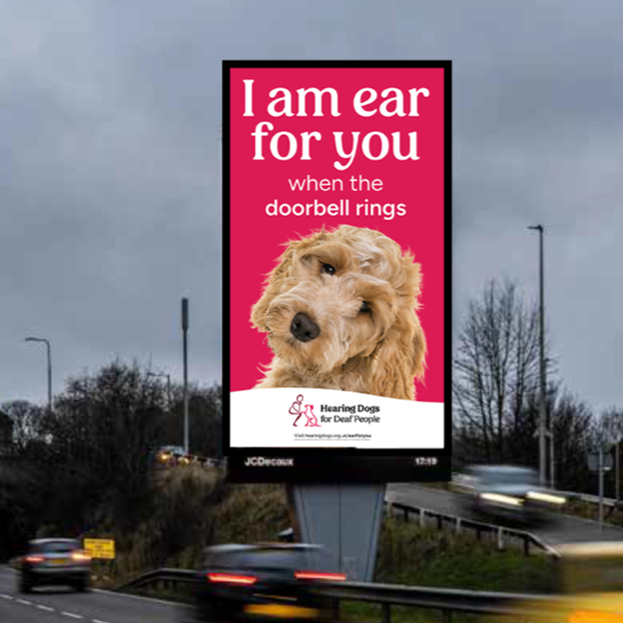
'I am ear for you': Hearing Dogs campaign comes to Portsmouth

Published

on

'I am ear for you': Hearing Dogs campaign comes to Portsmouth

Residents of Portsmouth will be among the first to spot a heart-warming new advertising campaign from charity Hearing Dogs for Deaf People this month, supported by the JCDecaux Community Channel, as striking images of life-changing hearing dogs pop up on digital screens across the UK throughout May.

Source link

Continue Reading

NewsBeat

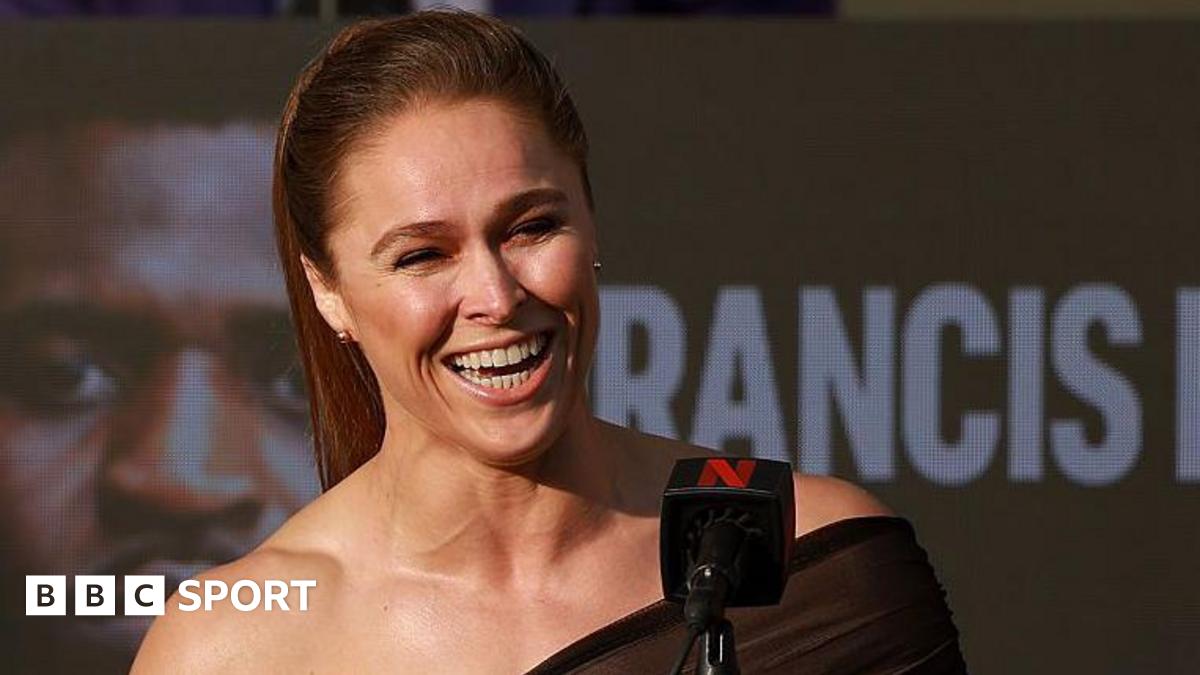
Rousey vs Carano: Fighter, trailblazer, promoter – welcome to the Ronda Rousey show

Published

on

Ronda Rousey at a news conference to promote her bout with Gina Carano

The event is being promoted by Jake Paul’s Most Valuable Promotions (MVP) and will be broadcast live on Netflix.

It also features former UFC heavyweight champion Francis Ngannou taking on Philipe Lins and fan favourite Nate Diaz facing Mike Perry.

Nakisa Bidarian, who co-founded MVP alongside Paul, compares the event with Paul’s fight with Mike Tyson in 2024, which was the first boxing contest broadcast live on Netflix and laid the foundations for future events on the platform.

Not only is Rousey headlining the card, she has played a key role in shaping it, playing the role of promoter and matchmaker behind the scenes.

Advertisement

This isn’t just a Ronda Rousey fight, it is the Ronda Rousey show.

“Her quote was, ‘I can’t be your Conor [McGregor], but I can be your Dana [White]’,” said Bidarian.

“She has demonstrated an ability to own the promotion, to deliver unbelievable, engaging content, and most importantly, she loves the game.

“She’ll text me 20, 30 times every other day around specific fighters, or specific fights, and why this match-up would be great.”

Advertisement

Rousey has criticised how much the UFC pays its fighters, saying she wants to help “challenge the monolith” it has become.

In the UFC, under 20% of revenue goes to fighter pay while in boxing, fighters can expect to receive as much as 60% of event revenue.

Bidarian says the minimum payment for every fighter on the card will be $40,000 (£28,800), before performance-based bonuses.

In comparison, the UFC pays about $12,000 (£8,960) to $20,000 (£14,900), plus performance-based bonuses, to its entry-level fighters.

Advertisement

“It’s so much more meaningful now because previously it would have just affected our careers but now it’s affecting the sport’s future,” said Rousey.

“It has become bigger than us.

“It’s about giving them their power back and reminding people it’s about the fighters.”

Source link

Advertisement
Continue Reading

NewsBeat

Championship play-off final: Tickets on sale despite Southampton’s Spygate uncertainty

Published

on

Hull defender Charlie Hughes has his left hand on the right shoulder of Southampton player Leo Scienza, who is wearing gloves

The one thing that is guaranteed is that Hull will be in the final. But the uncertainty over next Saturday’s staging of the game is not helpful for their supporters, many of whom want to book travel and accommodation to get to London.

“We’re basically being told, buy a ticket and you’re taking a gamble,” BBC journalist and Hull supporter Bobbi Huyton told BBC Radio 5 Live.

“It might not even take place next week. Just nothing but frustration and I’m honestly disgusted with how it’s been handled.”

The Hull City Official Supporters’ Club also issued a statement in which they expressed concern at how the play-off final could be moved at short notice.

Advertisement

“This is a situation in which we have had no influence but in which we are, both as a football club and supporters, being penalised,” they said.

“Any decision to move the date of the final will result in many of our supporters not only losing out financially, but then facing the prospect of being unable to attend the re-arranged fixture.

“Given that this is a situation which has largely resulted from the EFL’s own error in failing to publish the sanctions for a breach of the rule regarding ‘spying’ on opposition teams, we feel this is manifestly unfair.”

Source link

Advertisement
Continue Reading

NewsBeat

Democrats back independents in some red state races

Published

on

Democrats back independents in some red state races

NEW YORK (AP) — Democratic leaders, desperate to compete in red states where their party brand is toxic, are embracing something new this midterm season: Not backing Democrats.

In states like Nebraska, Idaho and Alaska, Democratic officials are, in some cases, looking past their own party’s candidates while subtly encouraging — or even openly promoting — independent candidates they hope can outperform the Democratic label. The Democratic National Committee and some of its allies in Washington are quietly supporting the new strategy.

Meanwhile, some of the independent candidates are chatting in a group text about their approach as they plot a path that could shake up Congress, which is consumed by partisan gridlock.

Nebraska Democrats this week chose a nominee for U.S. Senate, Cindy Burbank, who said a major campaign priority was to ensure a Democrat wouldn’t be on the fall ballot to pull support from independent Dan Osborn. Shortly after polls closed, Burbank reiterated her plan to drop out in the coming weeks during a private conversation with a party official, according to state Democratic chair Jane Kleeb.

Advertisement

Democratic leaders believe Osborn, who came within 7 points of winning a Senate seat in 2024, has the best chance to defeat Republican Sen. Pete Ricketts.

Democrats’ pivot toward independents is part of an intentional strategy in some places — and something closer to a wink and a nod in others — that covers a handful of high-profile Senate and House and even statehouse contests. Independent Senate candidates are also running in states like Idaho, South Dakota and Montana, where Democratic leadership has so far been unwilling to fully embrace the independents, although many view them as the Democrats’ best chance to stop Republicans this fall.

“For some states, and Nebraska is one of them, where Democrats are 32% of the electorate, this is a long-term strategy for us,” said Kleeb, who also serves as a vice chair to the Democratic National Committee.

Kleeb said her state party is backing independents in at least four state legislative seats in addition to the U.S. Senate: “We have to build a coalition with independents in order to win elections so we can do good work for the people. Period.”

Advertisement

Some of the Democratic Party’s national political machine appears to be on board.

The Democrats’ fundraising site, ActBlue, serves some of the independent candidates, as do popular Democratic-allied website builders. At the same time, some of the party’s campaign committees in Washington quietly provide logistical support in some cases, while avoiding public criticism of the independent candidates even in some races where there is a Democratic nominee.

“The Democratic Party’s brand is awful right now,” said Democratic strategist Josh Schwerin. “The combination of the brand problem and the existential nature of the threat that our country is facing requires us to have a big tent and look for candidates who can win.”

There are risks

for the Democratic Party

Some Democratic donors, strategists and party leaders from other states have privately pushed back, insisting Democrats should not look past their own nominees for short-term political gain. They want Democratic officials, in Washington and on the ground in red states, to work harder to make the Democratic brand more attractive — even if it takes several more years to be competitive.

Advertisement

“What’s the independent going to do for the Democratic Party if they win?” asked Democratic strategist Mike Ceraso, who sees the shift toward independents as an attempt to disguise Democrats in some cases. “We’re the party of truth and honesty and integrity, but we’re playing these stupid political games?”

And there is no guarantee that the independent candidates, if elected, would support all of the Democrats’ policy priorities or even Democratic leadership in Congress.

In Idaho, independent Senate candidate Todd Achilles, an Army veteran and former Democratic state legislator, said he won’t be caucusing with either party if elected. He explained his politics as “straight down the middle,” and said he believes in individual liberties.

“Idahoans should be able to live how they want,” he said. But the Democratic Party was a bad fit because it “has given up on little red states like Idaho.”

Advertisement

On his list of problems with Democrats is that the party made a big mistake by initially running Joe Biden again for president in 2024. But he also said “the shine is coming off” Trump, whom Idaho voters backed by 36 points in 2024.

Achilles said he and other military veterans running for Senate as independents chat in the text chain and are “very much on the same page.” He says the group wants to see “guardrails,” including term and age limits and campaign finance reform.

“The priority is to get Congress functioning again,” he said. “We gotta break the grip of the two-party system.”

‘I’ll never vote for a Democrat’

In South Dakota, Navy and Air Force veteran Brian Bengs has launched an independent bid to defeat Republican incumbent Sen. Mike Rounds, who’s seeking a third term this fall.

Advertisement

Bengs ran as a Democrat against Senate Majority Leader John Thune four years ago and lost by 43 points.

A lifelong independent, he said he got turned down by the party this time when he sought to run with its organizational support but without the label. Still, he insists he can win without the party’s formal backing.

One key lesson from his 2022 campaign, he says, was how hard it was to break through with the Democratic Party label.

Voters would immediately ask, “What are you?” he recalled.

Advertisement

“When you say, ‘I’m a lifelong independent running as a Democrat,’” Bengs said, the response was quick. “‘I’ll never vote for a Democrat.’ And that was it,” he said.

“So that takeaway soured me on running again in any party system, because it was just a soul-sucking experience.”

In Alaska, some Democrats believe that commercial fisherman Bill Hill, a retired school superintendent, may represent their best hope in defeating first-term Republican Rep. Nick Begich for the state’s only House seat.

Hill, a lifelong independent, raised more than $780,000 in the first three months of the year, besting Democrat Matt Schultz, a pastor, who raised $578,000.

Advertisement

The state Democratic Party declined to endorse Schultz at its recent convention, which Hill also attended. The House Democrats’ campaign committee in Washington has also declined so far to promote Schultz’s candidacy. Hill, meanwhile, is racking up local union endorsements.

Hill’s message to voters, he said, is the same for Republicans, Democrats and independents: “You need to be pragmatic about who you choose to support in this election cycle, because at the end of the day, we need a change in the House seat in Alaska.”

A spokeswoman for the National Republican Senatorial Committee criticized independents like Osborn, Bengs, Achilles and Seth Bodnar, who is running in Montana, as “fake Independents who would push liberal Democratic policies in the Senate.”

Currently, there are two independents in the Senate: Maine Sen. Angus King and Vermont Sen. Bernie Sanders. Both caucus with Democrats.

Advertisement

In an interview, Hill said he’s unlikely to caucus with Republicans in Washington if elected, but he’s not committing to joining Democrats either. He was reluctant to criticize the Democratic Party or Trump.

Hill acknowledged the challenge of running for Congress as an independent, but said there are benefits, too.

“There’s freedom,” he said. “I can truly represent the working people of Alaska.”

Advertisement

Source link

Continue Reading

NewsBeat

Pep Guardiola surprise, training switch, cramps – inside Man City FA Youth Cup final win

Published

on

Manchester Evening News

Manchester City felt like favourites coming into the FA Youth Cup final. The Under-18s have been the best team in the league this season again and had star quality they could bring in for knockout games that have spent the season training and playing up.

In the case of Ryan McAidoo, there was a winger who had scored on his senior debut for City and on the opposite flank Reigan Heskey had also given United Under-21s plenty of problems last week in a semi-final defeat. These were two of the players who everybody in the squad knew would be in the starting XI as soon as Oliver Reiss’s side had booked their place in the final.

However, they were also strong favourites last year when they went to Aston Villa on an obscene run of 27 games won in a row and then proceeded to lose. Shortly after, they lost the league championship match to the same opponents and a phenomenal season had a sour ending.

Advertisement

Click here to find out the latest Manchester United news in our daily newsletter

As good as City were then ahead of facing local rivals United – 40 years on from the first Manchester derby to grace the FA Youth Cup final – there was that nagging doubt in the mind of Reiss and his players: what if they lost again? What if all the high standards of the last nine months led to no silverware again?

Those doubts were enough to make sure that City made full use of the home advantage that they kept despite not having the Etihad available to play at. The players are far more at home with the Joie Stadium than they would have been at Old Trafford, yet still the squad went the extra mile and trained on the pitch ahead of the game rather than their usual spots at the training ground.

And while Reiss wanted to build the game up for the young Blues, he deliberately did not tell any of his players that Pep Guardiola was among the watching crowd on the night. They found out for the first time after the match, meaning they had not had to process that during the game and risk it impacting their performance.

Advertisement

There were nerves out there regardless, and that manifested physically for several players as the celebrations for Heskey’s late winner turned into a mass stretch before Heskey and McAidoo were replaced with cramp. Another player went down at the full-time whistle as the bodies of the players betrayed their state.

“I think the main part of the cramps maybe at the end were of course the energy and the intensity we had in the second half but also again when you are a little bit nervous, everything is a little tougher for your body and that’s why it’s so important to play in these games where we have a little more pressure, there are more supporters around us and things like this,” said Reiss.

“This is also the reason why we are not talking about, ‘Hey guys, stay calm, it’s a normal game.’ It isn’t a normal game, so I like to increase it a little bit, to make it maybe bigger – not bigger than it is, but just to be realistic, it is a big game, and a lot of people are watching, and this is what happens with you here. But next time it’s not the first time again, so this is then development and learning, and they need games like this to develop, especially these things.”

Reiss has known all season of the special talents at his disposal – particularly for this competition – but he also learned from the final defeats last year that such individual skill is not enough. The team were not enough of a collective, and that has been addressed this season.

Advertisement

The spirit in the group has been excellent all year, and Reiss has put more emphasis on the players simply enjoying being in training together with their mates. High standards have always been demanded, but steps were taken consciously to make sure it has been an environment where the players can enjoy their football and being with each other.

If Heskey’s winner took the headlines, the goal was made by left-back Jake Wain pouncing on a loose ball near the centre-circle and first playing McAidoo through in the box and then receiving the ball back and slipping it to his other winger. Wain’s only previous minutes in the competition this season were two minutes against Fulham and six against Everton, yet a player who has not been one of their most regular contributors saved one of his best moments for the biggest occasion.

For all the controversy around not playing the game at a big stadium, Reiss had made clear that winning is an important part of development as well. Especially after losing those finals, getting over the line in whatever fashion possible feels significant to the players.

“I’m over the moon,” said captain Kaden Braithwaite. “Obviously, last year we fell so short, so to do it this year with this group of players is a real good feeling. Obviously I think this year we’re as close as ever, our group is as close as ever. The relationships we have are worth a whole life, so yeah, we’re so good to do with the team we have.

Advertisement

“I feel like football, especially in the academy, you need to be winners – that’s what drives you to the next point of your career. So obviously to win today is a really good feeling and a step forward in the right direction.

“Everyone has different pathways, the next step for all of us is to play professional football at the end of the day, no matter how long it takes us, we all want to be at the top and we’ll all give 100% to be on that top, so yeah I think that’s the next step.”

Before that, two days of celebrating and then another final awaits as City head down to Stamford Bridge next Friday to face Chelsea. That will be another tough test against one of the best academy sides in the country, but once again City will feel ready for it – and now those nagging doubts about winning will have gone away.

Source link

Advertisement
Continue Reading

NewsBeat

Indonesia’s first giant panda cub Rio set for historic public debut

Published

on

Indonesia’s first giant panda cub Rio set for historic public debut

Indonesia’s first giant panda cub is thriving and preparing for his public debut later this month, veterinarians have confirmed.

The furry cub, nicknamed “Rio,” was observed squirming during a recent check-up where his hearing and eyesight were assessed, confirming his healthy development.

At 169 days old, Satrio Wiratama, or Rio, now weighs 10 kilograms (22 pounds) and has begun walking independently, climbing on his mother, and sampling bamboo shoots. His growth, particularly his teeth, is noted to be faster than average.

Veterinarians are closely monitoring his progress to ensure he adapts well to crowds ahead of his introduction at the Indonesian Safari Park, located outside the capital, Jakarta.

Advertisement

Bongot Huaso Mulia, a veterinarian overseeing Rio’s development, stated: “What’s important to note is that all of Rio’s senses are active; he has the ability to understand the environment, assess the situation, adapt to more people, and hear sounds, even in certain levels of noise. We will train him gradually.”

Rio was born on 27 November to 15-year-old pandas Hu Chun and Cai Tao. The pair arrived in Indonesia in 2017 as part of a 10-year conservation partnership with China, residing in a specially built enclosure at the park in Cisarua, West Java province, approximately 70 kilometres (43 miles) from the capital.

Satrio Wiratama, nicknamed
Satrio Wiratama, nicknamed “Rio,” the first giant panda cub born in Indonesia, bites a bamboo stick during a media preview at Indonesia Safari Park in Bogor, West Jav (AP)

The two adult pandas have a large fan base in Indonesia. Rio’s birth has drawn many panda enthusiasts, and his public debut has been eagerly anticipated, with numerous requests on social media to see him soon.

The three of them are living in a three-tier temple known as the Panda Palace on a hill surrounded by about 5,000 square meters of land (1.2 acres) and equipped with an elevator, sleeping area, medical facilities and indoor and outdoor play areas.

Rio’s name symbolizes the hope, resilience, and shared commitment of Indonesia and China in protecting endangered species.

Advertisement

Pandas are China’s unofficial mascot and Beijing‘s loans of the animals to overseas zoos have long been seen as soft-power “panda diplomacy.”

Rio’s birth has drawn many panda fans, and his public debut has been eagerly anticipated, with numerous requests on social media to see him soon
Rio’s birth has drawn many panda fans, and his public debut has been eagerly anticipated, with numerous requests on social media to see him soon (AFP/Getty)

Giant pandas have difficulty breeding and births are particularly welcomed. There are less than 1,900 giant pandas in their only wild habitats in the Chinese provinces of Sichuan, Shaanxi and Gansu.

Rio was born through artificial insemination. Besides having a new individual, Rio also provides new genetic data on giant pandas, which can help research in Indonesia and in China, said Aswin Sumampau, president director of the park.

“This is the moment we’ve all been waiting for, a small victory for us, as we’ve managed to breed a species that is extremely difficult to breed.

“Just imagine, for the past two years, no pandas were born at any ex-situ conservation facility worldwide. Taman Safari has managed to do that,” Sumampau said.

Advertisement

Source link

Continue Reading

NewsBeat

here’s what runners need to know

Published

on

here’s what runners need to know

Sebastian Sawe ripped open a carbohydrate gel sachet and slurped it five minutes before the start of the 2026 London Marathon. Sixty minutes later, he inhaled another one before smashing through the two-hour marathon barrier.

Sawe might have been the first sub-two-hour marathon runner, but he’s certainly not the first to be powered by an energy gel. It’s estimated that over 70% of marathon runners use gels.

Long before energy gels were a thing, endurance athletes used all sorts of foods to fuel their athletic feats – from sugar lumps and coffee, to chocolate, beer, wine and even egg whites and brandy.

But from the 1970s scientists caught up with athletic practice. Research demonstrated that carbohydrates were effective in fuelling prolonged endurance exercise, with foods containing glucose and fructose (forms of sugar) proving to be the most effective fuels.

Advertisement

Thanks to decades of research, athletes today can use energy gels to provide fuel. These are precise, scientifically-calibrated carbohydrates in the form of maltodextrin and fructose blends encapsulated in a hydrogel.

But while these modern gels promise fast energy and improved performance, not all scientists are convinced they live up to the hype – and for many athletes, they come with uncomfortable side-effects.

So are gels really worth it, or should athletes stick to simpler, if less glamorous, sources of fuel?

Fuelling with energy gels

When we eat a meal, our bodies steadily breakdown the carbohydrates from food in the stomach. These carbohydrates are then gradually turned into glucose (simple sugar) in the blood.

Advertisement

Glucose is typically then transported to the muscles and liver where it’s stored as glycogen. This makes it easy for the body to access the stored energy when needed.

But our glycogen stores only last around 90 minutes before being depleted. Once it runs out, it can affect your performance. So many endurance athletes need to reach for carbs during long races and training runs to ensure they don’t run critically low on fuel.

In practical terms, energy gels offer a fast, convenient and concentrated source of carbohydrates that can be consumed mid-race without slowing down. Compared with whole foods, they’re easier to digest and more precisely dosed, helping runners maintain a steady energy supply.

However, this convenience comes at a cost. Gels can be expensive, some athletes find them unpalatable and they’re often associated with gastrointestinal discomfort – especially when taken in large amounts or without sufficient water.

Advertisement

Simpler options such as sports drinks or sugary foods may deliver similar energy, but typically lack the portability and precision that gels provide.

Research also shows there’s a lot of variation between available products. A survey of 31 gel product ranges (51 flavours total) across 23 brands found extreme variation in serving size, carbohydrate content, free sugars and especially osmolality (how concentrated a solution is). This has implications for how and when you should use gels and the effects they might have on your body.

Gels also may not really offer any additional benefits over other products, such as sports drinks.

A 2010 study found that gels and drinks deliver carbohydrates to the muscle at the same rate. This was later supported by a 2022 study which found drinks, gels and chews ingested were also no different in the benefits they conferred.

Advertisement
Gels can be a convenient way to fuel.
frantic00/ Shutterstock

The only real advantage of using gels is their convenience, as they can be easily stored and consumed mid-run.

Gels may also have downsides. The most commonly reported issue is gastrointestinal distress, affecting around 10-20% of people according to one study.

Hydrogel drinks and products form gels in the stomach. The idea is that by encapsulating carbohydrates it helps to reduce the amount of water that crosses the intestinal barrier. This is supposed to prevent bloating and cramps. It’s also claimed that this enables more effective transport of carbs into the bloodstream.

But studies have not consistently shown better performance or less gastrointestinal distress compared with standard carbohydrates, even when calories are matched.

Advertisement

Concentrated gels make their way to small intestine but their sugar concentration is higher than surrounding blood and tissue so water is pulled into the gut. This may be why gels cause bloating and cramps if you don’t drink water alongside them.

How to use gels effectively

If your run is under 60 minutes, you probably don’t need gels.

If your run is 60-90 minutes or more, fuel before you feel empty. Aim for around 30-60g of carbs per hour.

Even if you don’t feel hungry, taking on small, regular amounts of carbohydrate – for example a few sips or a partial gel every 15–20 minutes – can help maintain energy levels before fatigue sets in

Advertisement

For very long races, you should aim for around 60-90g of carbs per hour. A mix of glucose and fructose appears to be most useful when intensity is high.

The most important thing is to test gels while training. Don’t use them for the first time on race day. This is to ensure your body can tolerate them and you know whether they effectively benefit your performance or not.

A small proportion of runners are much more prone to gastrointestinal issues, so if you experience this switching brands can make a big difference.

But if you find gels bother you no matter what, you could always reach for some of the foods endurance athletes used before gels were ever a thing – such as bread, fruit, sugar lumps, bananas, dates and rice cakes. Just make sure you practice with these in training as well to know how they work for your body.

Advertisement

While these foods work well when training at lower intensities, gels remain popular because they provide standardised dosing and are easy to consume at speed.

Source link

Advertisement
Continue Reading

NewsBeat

Carolyn Wood Sherif, pioneer of feminist psychology who foresaw the risks of scientific bias

Published

on

Carolyn Wood Sherif, pioneer of feminist psychology who foresaw the risks of scientific bias

In the US state park of Robbers Cave, Oklahoma, Carolyn Wood Sherif is standing squinting up at the sun. The two wooden cabins before her rattle with shrieks and cries from excited 11-year-old boys. They have been split into two groups of 11 and encouraged to bond.

Over three long, laborious weeks in the summer of 1954, Wood Sherif watches as these boys become enthusiastically dedicated to their allocated groups. When instructed to compete for resources, they grow hostile towards their opponents. The experiment descends into inter-group violence and aggression.

This research was among the first naturalistic psychological studies to show how group formation can lead to prejudice and intense conflict. It is considered a classic study upon which the subdiscipline of social psychology – how mind and behaviour are influenced by the presence of other people – was born. Wood Sherif should have made her academic career from it.

But in many ways, scientific research is a culture, a club. There are people with the power to warmly invite others to participate, and others who are intentionally kept out. Many female scientists have suffered because of this power imbalance.

Advertisement

Video: Cummings Center for the History of Psychology.

‘A wife helping her husband’

Wood Sherif ran the Robbers Cave study with her longstanding collaborator, colleague and husband, Muzafer Sherif. Yet while he enjoyed an illustrious career, her intellectual contributions to social psychology were literally written out of the historical record.

Wood started working as Sherif’s research assistant in 1944. At the time, his department at Princeton University did not allow women to be faculty members or graduate students, but he had the power to make an exception. They married a year later.

The pair collaborated extensively for over a decade. Wood Sherif was often the driving force behind their research, yet her scientific writing was often attributed solely to her husband. Wood Sherif’s name was removed from academic papers when they were circulated. “I was seen as a wife helping her husband,” she later recalled.

Advertisement

After her husband was awarded the American Psychological Association’s Distinguished Scientific Contribution Award in 1968, Wood Sherif began to realise that social psychology might never welcome her in the same way. She joined the American women’s movement, a national campaign for legal, social and political gender equality. This connected her with more women in her discipline who were having similar frustrated experiences. Finally, Wood Sherif found a welcoming academic home.

She turned her focus sharply to identifying and exposing the presence of bias in psychology. Her core thesis was that it was flawed because most research was based on men’s experiences and treated male behaviour as the “normal” standard, leading to distorted and damaging views of women.


This series is dedicated to lesser-known, highly influential scientists who have had a powerful influence on the careers and research paths of many others, including the authors of these articles.

Advertisement

In 1979, Wood Sherif wrote my favourite psychological paper of all time. The paper, titled Bias in Psychology, offered a demolition job of psychological science over 16 glorious pages.

She warned that psychologists had gone awry by attempting to mimic the methodologies of the “hard sciences”, such as physics and chemistry, without first considering how these standards did not naturally apply to the scientific study of human beings in context.

Wood Sherif argued that people should be studied within their social context. She criticised psychologists for reducing complex human experiences into compartmentalised units that might have been easier to study, but were disconnected from real life.

She explicitly rejected the discipline’s reliance on experimental methods. Rather, she implored her peers to embrace the messy human aspects of their work in order for it to be useful, writing:

Advertisement

What goes on in our laboratories, clinics and classrooms must be seen for what it is: cultural phenomena and events where we can learn about individuals, provided we understand the times and the larger societies of which they are parts.

Wood Sherif set the agenda for a new, critical subdiscipline: feminist psychology. This includes analyses of how gender shapes both our experiences as people and the work we do as psychologists. Longstanding male bias in psychology has served as its manifesto.

As she pivoted away from social psychology, Wood Sherif’s work became funny, personal and prophetic. In their 1998 reappraisal of her seminal 1979 paper, psychologists Rhoda Unger and Arnold Kahn noted how her writing “provokes and excites as well as amuses”.

Sadly, this writing was also largely ignored. Cited predominately by feminist scholars, it never gained the discipline-wide impact it deserved.

The story of Wood Sherif, and psychology’s longstanding rejection of her work, has had a powerful impact on me. She helped me understand that we cannot evaluate the state of our science without first evaluating who is welcome within it. This is the crux of my own research, which I categorise as “feminist metascience”.

Advertisement

The garden of forking paths

Wood Sherif died in 1982 aged 60, but her ideas are arguably more relevant now than ever. Following widespread concerns about the replicability of psychological research in the 2010s, many psychologists are realising their research may be less objective than was previously believed.

Issues such as confirmation bias and the “garden of forking paths” (the many flexible decisions researchers make during analysis that can produce misleading results) are receiving widespread attention.

But while psychology is now in an era of science reform, there are two parallel conversations going on – by those who continue to insist upon reproducibility to strengthen psychological research, and those trying to reform the science as communal, compassionate and open to issues of bias.

The latter approach has been championed by a new generation of women in the discipline. They are forced to repeat the same critiques Wood Sherif made decades ago, because her warnings about bias and objectivity were not heeded.

Advertisement

There are, of course, many other examples of women’s contributions being written out of the scientific record. As I document in my new book Absent Minds: The Untold Story of the Women who Changed Psychology Forever, women have time and again been relegated to supporting roles as wives, secretaries or assistants of scientists, rather than scholars in their own right.

There is one, simple, enduring lesson that stories like Wood Sherif’s tell us: listen to women.


This article features a reference to a book included for editorial reasons, and a link to bookshop.org. If you click on this link and go on to buy something from bookshop.org, The Conversation UK may earn a commission.

Advertisement

Source link

Continue Reading

Trending

Copyright © 2025