A commissioned initial strategic assessment into a potential bid for the 2040s, led by UK Sport, will examine whether the UK could host the Games again following the success of London 2012 and whether a northern bid could deliver major regeneration and economic growth.
The assessment will examine factors including potential costs, the socioeconomic benefits of hosting and the likelihood of a successful bid.
Ministers say the move is part of a wider effort to use major sporting events and facilities to boost local economies, strengthen communities and enhance the UK’s global appeal.
In the letter, The Great North, which is chaired by North East mayor Kim McGuinness, also ask the Government to work with them and support proportionate feasibility and preparatory work.
Kim McGuinness says the North has the passion and the sporting pride to deliver a world-class Olympic and Paralympic Games (Image: SARAH CALDECOTT)
Ms McGuinness said: “From our great cities and towns to our coastlines and countryside, the North has the venues, the passion and the sporting pride to deliver a world-class Olympic and Paralympic Games that showcases the very best of Great Britain to the world.
“A Great North Olympics would be a global showcase, leaving a legacy of prosperity, unity and renewal.
“It’s an opportunity not to be missed, delivering transformational investment in transport, regeneration and public spaces across the North of England. This could become the most people-powered Games ever hosted – inspiring millions of people into sport, volunteering and community action.
Advertisement
“Mayors and leaders across the North have made the case to Government, and I’m delighted ministers and sporting bodies are now exploring how we could turn this ambition into a reality.
“We stand ready to work together to develop a credible, deliverable vision that can make the case to the International Olympic Committee.”
Culture Secretary Lisa Nandy said London 2012 had demonstrated the transformative potential of the Olympics but that the North had long been overlooked as a potential host.
She added: “London 2012 showed what the Olympics can do for our country. It inspired a generation through sport, attracted huge investment and showed the best of Britain to the world.
Advertisement
Fireworks at Tower Bridge in central London to mark the start of the London 2012 Olympic Games. (Image: PA)
“But while the North of England has driven so much sporting excellence, no matter the talent we produce, the sporting moments we create, and the world-class events we attract – for too long we have been told the Olympics is simply too big and too important to be hosted in the North.
“Not any more. It’s time the Olympics came North and we showed what we can offer to the world. I couldn’t be more pleased to announce that we’re starting the firing gun on a long overdue vote of confidence in the North.”
Chancellor of the Exchequer Rachel Reeves said sport could play a central role in boosting economic growth.
She said: “Britain’s sporting prowess is recognised and respected around the world. It’s something we are determined to capitalise on to breathe life into our communities and build a stronger and more secure economy.
Advertisement
“That’s why we’re throwing our full support behind bringing the Games back home which will boost our Northern Growth Corridor. It’s also why we’re backing stadium regeneration plans, like at Elland Road, to deliver new homes, business opportunities and public spaces in Leeds and beyond.”
The plans form part of a wider government push to use sport as a catalyst for regeneration in towns and cities.
A new Stadium Regeneration Accelerator programme will work with sporting bodies on priority sports infrastructure projects that could unlock housing, jobs, apprenticeships, transport improvements and community sports facilities.
The programme will not provide direct funding for stadium redevelopment but will seek to remove barriers to large scale development by working with sports organisations and investors.
Advertisement
Government departments including DCMS, HM Treasury, the Office for Investment and the Ministry for Housing, Communities and Local Government will collaborate with organisations such as the Premier League, the English Football League and the Women’s Super League.
Projects across England being considered include proposals in Greater Manchester, Birmingham, Newcastle, Leeds, Liverpool and London, with ministers saying they could help drive regeneration in surrounding areas.
I’ve spent many years cycling to work, I get it. We’re in a rush, we left it a little too late to get to work for the customary pat-dry-chemical-shower-get-dressed-get-breakfast etc. Maybe the kids were playing up, and no one wanted to put their shoes on. Maybe you wanted to beat that guy who’s been tailing you for the last few kilometres. I never ran red lights; the jeers from other cyclists scare me into submission. I also catastrophised more than a few times about being knocked over by a lorry and no one mourning me because it was all my fault.
Last week, during a bank holiday, at a well-marked crossing outside a school, at the entrance to a busy park, exactly that happened. Having been raised on “green means go!”, my two-year-old waited patiently for the green man, and then pushed off across the road on his scooter. A cyclist crashed into him. Cycling down a busy road, he did not stop for a red light — instead sailing straight through it and into my toddler, who was thankfully wearing a fluorescent yellow helmet.
He did not stop for a red light — instead sailing straight through it and into my toddler
My child hit his head and the cyclist came off his bike flexing his injured wrist. As I berated him, while holding my wailing child and gathering my eldest to cross the road safely, all he could say was, “I apologised, OK! It was an accident!”. It is not OK, nor is it an accident. He ran a red light, he caused an injury. An accident implies there was nothing he could have done to prevent it, but there was, and that’s obeying the road laws. Nothing he could have said would have appeased me, but the defensiveness was even more of an affront.
Advertisement
As he got back on his bike and cycled off and my toddler eventually calmed, a lady gave us a bottle of water and an ice cream she had run to the shop to buy. Another lady, standing with her children, sighed heavily and said, “Thank god your child was wearing his helmet.” For the cyclist’s part, he’s lucky I had children to look after.
Giving cyclists a bad name
Now, when I ruminate on the event — did I handle it correctly? What could I have done differently? Should I have called the police? Should I report it to the council? One lady took a picture of the offender; what could I have done with it? What condition would my child have been in if he hadn’t been wearing his helmet? What if he’d broken bones? I wonder if the cyclist has been reflecting on his actions.
Cycling is a lovely hobby, a great and eco way to get around the city, but many have long-lamented the various sub-groups of cyclists that give us all a bad name. The weekend half-cut Lime-bikers, the MAMILs riding four abreast on country lanes, the commuters running red lights, the delivery e-bikers riding pavements, and countless other stories from pedestrians about the 1.2 million daily cycle journeys in our city.
Advertisement
Cyclist crosses red light in Piccadilly Circus
DENIS JONES
The reasons go deeper than mere impatience; delivery drivers are fighting algorithms that set tight deadlines and are distracted by phones that direct them to their next job. Payments per delivery make speed more important than safety. There is a human cost to our desire for food and groceries to be delivered into our waiting hands.
The two-wheeled conundrum
There’s also a lack of cycling know-how; with Lime, Forest and Voi now deployed in the majority of London boroughs, there are absolutely no restrictions as to who can ride them amid traffic in the busiest parts of the city. The popularity is so great that Labour used Lime bikes coming to Waltham Forest as a vote-earning pledge before last week’s local elections.
Advertisement
The conundrum is in plain sight; cycling is a brilliant and eco way to get around the city, especially with clogged roads and expensive public transport, and anyone can do it if they can buy a bike or download an app and pay for a ride; but they can also be a danger to pedestrians due to largely unenforceable rules being ignored. Two truths can be recognised at once — we need our city to be cycle-friendly for the masses of benefits it not only gives the riders, but also the environment; and that cyclists who ignore the road rules everyone else has to follow should face consequences that aren’t limited to a puce mother telling them off.
We need our city to be cycle-friendly for the masses of benefits
The solution is unclear. Do we need more TfL THINK! road safety ads that show the grave consequences, like they did with cars and motorbikes? Do we need more legislation around delivery services? Fixed penalty fines of £50 are only enforceable when traffic police are around, and the City of London certainly doesn’t have enough resources to man every red light.
But for the everyday riders, even if you don’t believe in self-preservation, if you’re convinced you’re invincible — can you say the same about the two-year-old you might crash in to?
Manchester City beat Chelsea in the FA Cup final at Wembley on Saturday but now turn their attention to Bournemouth in the Premier League
Manchester City claimed their eighth FA Cup on Saturday and immediately turned their focus to Bournemouth.
Advertisement
The Blues made it a domestic cup double by beating Chelsea 1-0 at Wembley thanks to Antoine Semenyo’s superb backheeled flick.
But the hectic schedule of the final week of a campaign that could yet end with a Premier League title means there is no time to bask in the cup glory. City are two points behind Arsenal with two games to go and head to the Vitality Stadium on Tuesday. That fixture has the full focus of Blues and here are three reasons why.
Click here to find out the latest Manchester City news in our daily newsletter
Rest and recover
City face a familiar gripe now as they prepare for a game with Bournemouth on the back of an FA Cup final.
Advertisement
12 months ago City played an FA Cup final at Wembley and Bournemouth the following Tuesday. Guardiola was unhappy at the scheduling then and he is again now. A year ago the Bournemouth game was at the Etihad, the concern for City this time around is another long journey and such a condensed fixture list in the final week of the campaign. The club offered alternatives to the Premier League, including a Thursday night, but those pleas fell on deaf ears.
City flew back from Wembley straight after the game and will have a recovery day on Sunday before flying down to Bournemouth on Monday afternoon. There’s no time for training and the message from Guardiola to his squad is rest and recover.
Andoni Iraola’s side were beaten 3-1 last season. City would love a repeat outcome.
Selection hint
Guardiola sprung a huge surprise with his team selection as Rodri was handed his first start since coming off injured in the win over Arsenal last month. The Spaniard had barely trained ahead of the Wembley final and will surely not start when City face Bournemouth on Tuesday night having lasted a little over an hour against Chelsea.
Advertisement
Gianluigi Donnarumma was among the subs at Wembley and will return, while the quick turnaround might also see the likes of Phil Foden and Rayan Cherki in the XI against the Cherries, particularly after the latter influenced the final.
Guardiola may well take into account Arsenal’s result against Burnley on Monday night before settling on an XI but Tijjani Reijnders and Savinho will also be eyeing starts.
Momentum
It might not count for much given there’s nothing City can do to win the title unless they get a favour from Burnley or Crystal Palace, but as things stand the Blues have taken the two trophies on offer so far this term.
Arsenal can match that haul and trump it on pecking order should they complete a Champions League and Premier League double, but Mikel Arteta’s side will be under no illusions that any slip and City are poised and ready.
Advertisement
The Blues have also captured two trophies in what could be argued is a transitional season, given the troubles of last term and the influx of new players over the last three windows.
The new breed of City, the future spine that will shape the club for the next five to 10 years, has got that winning feeling. Abdukodir Khusanov, Marc Guehi, Antoine Semenyo and Rayan Cherki now know what it takes to win silverware and win big games. It might be too late for this year, but it bodes well for next.
Pregnancy is often regarded as a time to prepare the nursery, but it is also a useful moment to get the kitchen ready.
For many expectant parents, the months before a baby arrives are filled with practical jobs: buying clothes, assembling a cot, choosing a pram, packing a hospital bag. Yet one of the most important forms of preparation happens somewhere less photogenic: in the cupboards, the fridge and the daily routines of the home.
Research Peles and colleagues conducted suggests that pregnancy can be a powerful moment for change. During pregnancy, food becomes about more than personal preference. It is bound up with the health of the developing baby, the wellbeing of the mother, and the kind of family life parents hope to create.
The idea of nutritional nesting is useful here. It describes how first-time parents begin shaping the home food environment during pregnancy. It means the food world a baby will eventually be born into: what is bought, what is visible, what is easy to reach, what gets cooked, what is eaten together, and what becomes normal.
Advertisement
Healthy habits begin before a baby first tastes puree or sits in a high chair. They begin in the rhythms and environment parents establish before birth. Vegetables in the fridge may technically be available, but they are unlikely to be chosen by exhausted parents looking for something quick. Fruit on the counter, chopped vegetables ready to use, batch-cooked meals in the freezer and simple ingredients within reach make healthier eating easier when energy is low.
The distinction between availability and accessibility matters. Availability means the food is present in the home. Accessibility means it is easy to see, easy to reach and easy to eat. Research on the home food environment suggests that what is available at home, what parents eat themselves, and family eating routines all play a role in the overall healthiness and variety of children’s diets. Shloim describes this as healthy mealtime interactions, accounting for what and how the family eats.
Kitchens are shaped by more than mothers alone. Pregnancy can be an especially useful time to think about food because many parents, including fathers and partners, are already imagining the family they want to become. Peles’ work with first-time expectant fathers suggests that men often see pregnancy as a turning point: a chance to take more responsibility, support their partner, and help create a healthier home. Good intentions, though, do not chop vegetables, plan meals or fill a freezer. Fathers and partners may need practical support to turn motivation into everyday action.
Nutrition support during pregnancy should involve the household, not only the pregnant mother. The home food environment is usually shaped by more than one person. Partners influence shopping, cooking, budgeting, snacking and the emotional tone around food. Treating food preparation as a shared parental responsibility, rather than another task added to the mother’s mental load, makes it more realistic and fair.
Advertisement
The point is to make nutrition advice more useful, rather than more judgmental. Lists of foods to eat or avoid have their place, but they rarely solve the daily problem of what tired people can afford, cook and face eating. Families also need help with the basics: planning meals, preparing quick options, shopping on a budget and making nutritious food convenient before the sleep deprivation of early parenthood begins.
For many parents, the second trimester may be a useful period for this kind of preparation. For some women, though not all, the nausea and exhaustion of early pregnancy may have eased, while the physical demands of late pregnancy have not yet fully arrived. That can make it a more realistic time to ask: what will make daily eating easier when life gets harder?
The answer does not have to be complicated. Parents might reorganise the fridge so healthier foods are visible, learn a few reliable recipes that can be cooked quickly, prepare snacks that do not depend on willpower at 3pm, or decide together how meals will work when the baby arrives. These small changes are not glamorous, but they reduce the number of decisions tired parents have to make.
Pregnancy may be a good time to reorganise the fridge so healthier foods are visible. nelic/Shutterstock
Early family food culture is about nutrients, but it is also about relationships. Children learn from what is served and from how meals feel.
Advertisement
Shloim suggests that a calm, responsive feeding relationship means paying attention to a child’s hunger and fullness cues, offering food without pressure, and making mealtimes feel safe rather than stressful. Evidence suggests that these early interactions can support children’s ability to regulate their own eating. They also support overall positive interactions.
Early-life conditions, including the period before birth, can influence health later in life. A child’s future is not fixed before birth, but early environments matter, and supporting families before and during pregnancy can be a practical way to improve long-term health.
Expectant parents do not need a perfect diet or a perfect kitchen. Nutritional nesting is about making ordinary healthy choices more visible, more convenient and more shared. Its value is practical: reducing friction before the exhausting early months begin.
The nursery matters. But the kitchen may be where some of the most important family interactions begins.
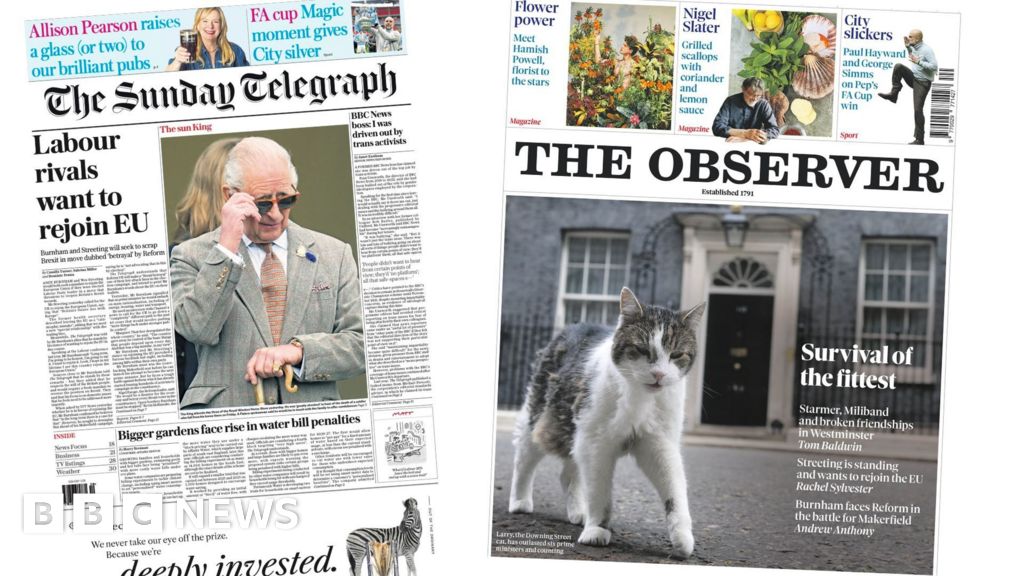
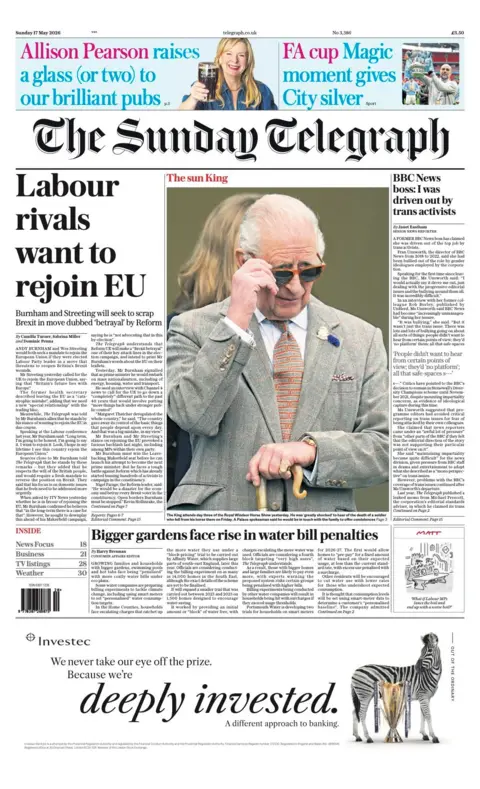
The position of Wes Streeting and Andy Burnham on rejoining the European Union dominate Sunday’s papers. Both Streeting and Burnham, who are both expected to try to replace Sir Keir Starmer as leader, would seek to rejoin the EU if they were to become prime minister, the Sunday Telegraph reports. Meanwhile, Reform UK leader Nigel Farage has said Burnham as PM would “betray every Brexit voter in the constituency”, the paper reports.
ABUJA, Nigeria (AP) — WHO Director-General Tedros Adhanom Ghebreyesus declared the Ebola disease outbreak in Congo and Uganda a public health emergency of international concern on Sunday after more than 300 suspected cases and 88 deaths.
In a post on X, the World Health Organization said the outbreak does not meet the criteria of a pandemic emergency like the COVID-19 pandemic, and advised against the closure of international borders.
Health authorities have confirmed the current outbreak is caused by the Bundibugyo virus, a rare variant of the Ebola disease that has no approved therapeutics or vaccines. Although more than 20 Ebola outbreaks have taken place in Congo and Uganda, this is only the third time the Bundibugyo virus has been reported.
Officials first reported the spread of the disease in Congo’s eastern province of Ituri, close to Uganda and South Sudan, on Friday. On Saturday, the Africa Centres for Disease Control and Prevention reported 336 suspected cases and 87 deaths.
Advertisement
Congo accounts for all except two of the cases, both of which were reported in neighboring Uganda, the WHO said.
Uganda on Saturday confirmed one case it said was imported from Congo, and said the patient died at a hospital in Uganda’s capital, Kampala, and the WHO said that a second case has been reported in Kampala. The two cases had no apparent links to each other and both patients had traveled from Congo, it added.
The Bundibugyo virus was first detected in Uganda’s Bundibugyo district during a 2007-2008 outbreak that infected 149 people and killed 37 people. The second time was in 2012 in an outbreak in Isiro, Congo, where 57 cases and 29 deaths were reported.
“By standing for first minister, I want to show how Scottish Liberal Democrats envisage that change.”
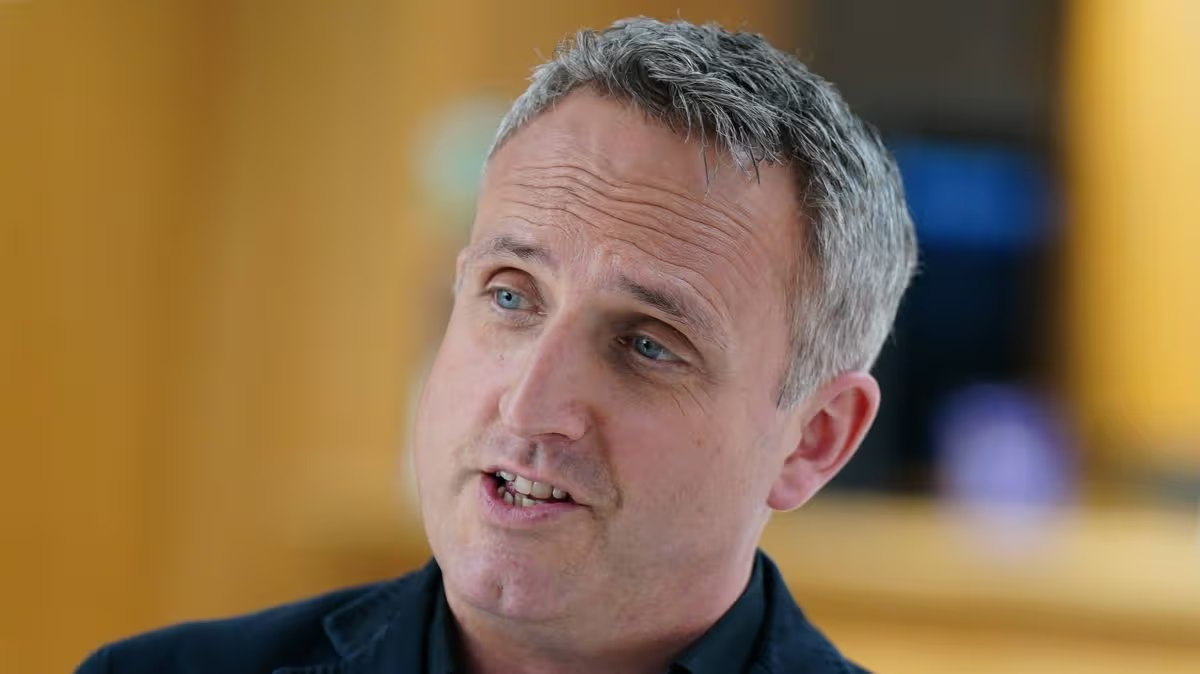
Scottish Liberal Democrat leader Alex Cole-Hamilton has confirmed he will be running for first minister when MSPs vote on who should have the top job next week.
Advertisement
SNP leader John Swinney – who currently holds the post – is certain to be re-elected as his party is the largest in the Scottish Parliament. Mr Cole-Hamilton said it “would be an insult to democracy” if Tuesday’s vote is taken as “some kind of done deal”.
He said the ballot is a “key part of our parliamentary democracy”, as well as being the chance for him to “make the case for a liberal vision of Scotland”. Mr Cole-Hamilton said he will put himself forward to be first minister after “phenomenal” results for his party in the Holyrood election.
The Liberal Democrats increased their tally of MSPs from four in 2026 to 10, claiming victories in the Strathkelvin and Bearsden and Edinburgh Northern constituencies as well as ousting the SNP in Skye, Lochaber and Badenoch, and Caithness, Sutherland and Ross.
Advertisement
Mr Cole-Hamilton said: “I understand that the outcome of this election has been decided, but no party has won a majority.
“If our democracy is about anything, it is about the exchange of ideas for what our country can become. By standing for first minister, I want to show how Scottish Liberal Democrats envisage that change.
“Scottish Liberal Democrats want a government that is focused every single day on fixing the NHS, on addressing the cost-of-living crisis, on getting Scottish education back to its best.
“We want a government that respects the needs of people in every corner of this country, that will end the ferries chaos, upgrade dangerous roads and get Scotland moving again.”
Get more Daily Record exclusives by signing up for free to Google’s preferred sources. Click HERE
The artificial intelligence boom is leading to fights in some states over growing utility profits, as governors, attorneys general and others protesting rising electricity bills say cash-strapped residents are stuck in a broken system.
Officials and lawmakers in at least six states — including Arizona, Indiana, Maryland, New Jersey, New York and Pennsylvania — are going to new lengths to try to block rate increases proposed by utilities. Some are pressing utilities to completely change their model for financing major system upgrades.
The push comes during a midterm election year in which affordability is the leading theme in Democrats’ attempts to loosen Republicans‘ control of Washington.
Arizona Attorney General Kris Mayes, a Democrat who is seeking reelection this year, is challenging two utility rate increase requests in front of the state’s utility regulatory board.
Advertisement
“I felt like it’s never been more important to stand up against the blatant corporate greed of our monopoly utilities in Arizona,” Mayes said in an interview.
The fights are getting noticed on Wall Street
The voracious energy demands of AI data centers have driven up electric prices in some regions and launched a moneymaking energy-sector construction boom.
For years, consumer advocates have tried to challenge the size of a utility’s investment return in front of regulators. But maybe not like this, consumer advocates say.
Advertisement
“We’ve entered into this era of expensive energy and (demand) growth, and we’re seeing utility profits at record highs and rising utility bills,” said Matt Kasper of the Energy and Policy Institute, which pushes utilities to keep rates low and use renewable energy sources.
Utilities were long viewed as a stable haven for investors, with a reliable source of income and predictable demand. Because of that lower risk, the utility’s sector investment returns are typically on the low end compared to other sectors, analysts say.
However, utilities — many of which are owned by multibillion-dollar, for-profit parent companies — have seen share prices perform particularly well during the data center expansion.
The investment returns that utilities get from regulators aren’t the sole reason consumers’ bills are rising, but researchers suggest they are a contributing factor. In March, the Energy and Policy Institute issued a report that said the profits of 110 for-profit utilities rose from just under $39 billion in 2021 to over $52 billion in 2024.
Advertisement
Mark Ellis, a former utility executive-turned-consumer advocate, said about 10% of the typical customer bill is what he called a for-profit utility’s “excess profit,” above what might be considered reasonable under long-standing Supreme Court precedent.
Instead of regulators setting returns above what the market might require, utilities should instead shop for the lowest-cost investor cash, much like someone might shop for the lowest interest rate on a loan, Ellis said.
Paul Ferraro, an economics professor at Johns Hopkins University, said that targeting utility investment returns is a political action, not an economic action.
“That’s an action that’s aiming to address the deep social disagreements we have about who should benefit from essential infrastructure,” Ferraro said. “But it’s not going to address the key challenges that the electricity sector is facing.”
Advertisement
That includes investment in modernization, expansion, renewable energies and distributed sources of power, Ferraro said.
‘Affordability’ has reached corporate earnings calls
Travis Miller, an energy and utilities analyst for Morningstar, said utility executives on earnings calls are emphasizing efforts to cut costs or protect residential customers from the cost to supply electricity to data centers.
“Affordability is probably the number one issue that executives and investors are thinking about right now in the utility sector,” Miller said.
Advertisement
If rates aren’t affordable currently, there’s no way that utilities can get the rate increases they need to boost earnings and dividends for investors, Miller said.
Utilities point to federal data showing that home electricity bills as a proportion of household income have fallen in the past couple decades. They defend the investment returns they are granted by state regulators as critical to raising the cash they need to appropriately maintain electric grids and ensure reliability for millions of people.
They also warn that investors will simply send their cash to utilities in other states that promise higher returns.
Critics call that fearmongering.
Advertisement
Earlier this month, the New Jersey Board of Public Utilities launched what its president, Christine Guhl Sadovy, called one of the most consequential regulatory reviews in a generation, to question how utilities “should earn revenue in a modern energy system.”
In recent weeks, Pennsylvania Gov. Josh Shapiro pressured PECO, the Philadelphia-area utility subsidiary of Exelon Corp., to withdraw a 12.5% rate increase, or $20 per month extra for the average residential customer. Shapiro, a Democrat running for reelection this year, then issued a letter to utility executives, taking a whack at utility profits and saying that the “20th century utility model is broken.”
“We can no longer simply prioritize corporate profitability to drive infrastructure development,” Shapiro wrote.
In a note to investors, one analyst called it “Quaker State Sticker Shock,” and the share prices of companies that own Pennsylvania-based utilities lagged their peers in the following days.
Advertisement
For its part, Exelon — the Chicago-based parent of Commonwealth Edison, PECO, Baltimore Gas and Electric and several other utilities — emphasized that it recognizes the importance of affordability.
Calvin Butler, Exelon’s president and CEO, told analysts on its first-quarter earnings call May 6 that it was committed to justifying what it spends and keeping energy bills as low as possible. Its decision to withdraw its rate increase request came after conversations with “stakeholders” who said, “Hey, if you could partner with us to address the affordability issue and lean in, timing is not the best right now,” Butler said.
In Indiana, Republican Gov. Mike Braun appointed a new slate of utility commissioners with a mission to face down rate increases.
Their first big test is a request by AES Indiana for a 10.1% increase, or $193 million a year more from ratepayers, said Ben Inskeep, program director for the Indianapolis-based consumer advocate Citizens Action Coalition.
Advertisement
As part of it, AES Indiana — whose parent company is being taken private in a $33.4 billion deal led by private investment giant BlackRock — sought a 10.7% return on its cash.
Inskeep said an 8% return — instead of 10.7% — would slash the proposed rate increase nearly in half.
In Arizona, Mayes is challenging a pair of 14% proposed increases that she said could be dramatically reduced if the companies are simply paid the cost to maintain reliable service.
“It’s becoming unbearable for the people in Arizona,” Mayes said. “And I think we have to fight back.”
Advertisement
___
Follow Marc Levy at http://twitter.com/timelywriter
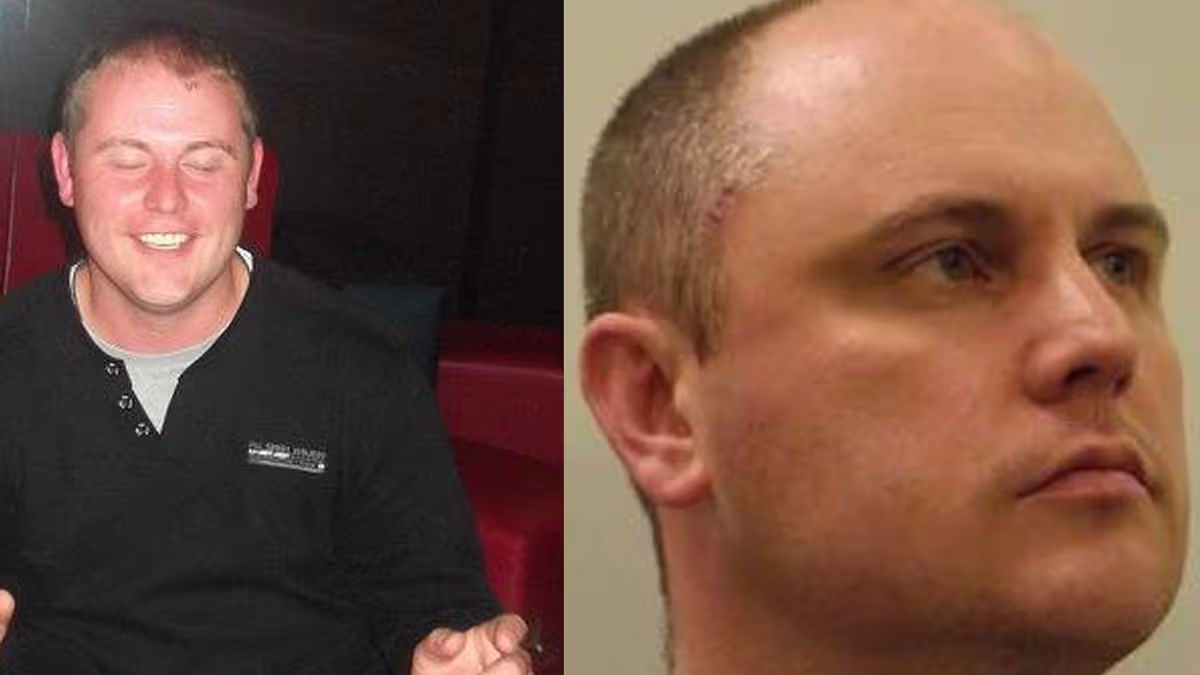
Robert McGregor filmed himself raping three boys, aged three, six and 12, then shared the videos with other paedophiles online.
The family of a child rape victim say they fear the attacker could be freed back to their community on release from prison this month.
Advertisement
Robert McGregor filmed himself raping three boys, aged three, six and 12, then shared the videos with other paedophiles online. The delivery driver from Inverness was jailed for 10 years in April 2017.
The family of one victim was notified by letter last week from the Scottish Prison Service, telling them that the 45-year-old is due to be released on May 29.
They are terrified of coming face to face with their son’s attacker as authorities would not confirm if McGregor will be allowed to return to their home town.
The mum said: “In November he was denied parole and the letter from the board stated he would be released in April 2027 so we thought we had a year. It turns out there was an error in the paperwork because they hadn’t taken into consideration his time on remand.
Advertisement
“So when that letter dropped on the doormat saying he will be released in weeks, I collapsed. No sentence is going be enough for what he did but we’ve been fighting to keep him inside through parole hearings. We are living in fear that any of our family could come face to face with him at any time.”
The letter confirming McGregor’s release failed to mention that the paedophile was ordered to be supervised for five years upon release. The family have since received an apology.
The mum said: “We went the police station, we waited for hours.
Advertisement
“There’s been no support. The justice system is failing people. We are living a nightmare. He raped and sold videos of innocent children all over the world. He is pure evil. I’ve no doubt he is still a danger.”
The Sunday Mail previously told how the family’s online petition calling for McGregor to be denied release when he applied for parole in 2021 won 3500 signatures.
McGregor abused children in the Highlands for 13 years, starting in 2001. He duped families into trusting him, took the boys on trips or to his home, then raped them.
Scottish Tory justice spokesman Liam Kerr said: “It is appalling that the family appear to have been the victim of an admin error and are also being kept in the dark about where this dangerous criminal will be when he is released soon.”
Advertisement
The SPS acknowledged the family’s concerns, adding: “We would encourage anyone in this situation to contact organisations such as Victim Support Scotland.” The Parole Board for Scotland does not comment on individual cases.
Police Scotland said it and other agencies “use professional assessment, robust risk assessment processes, and the latest technologies to manage registered sex offenders, mitigate risk and properly target appropriate resources”.
Get more Daily Record exclusives by signing up for free to Google’s preferred sources. Click HERE
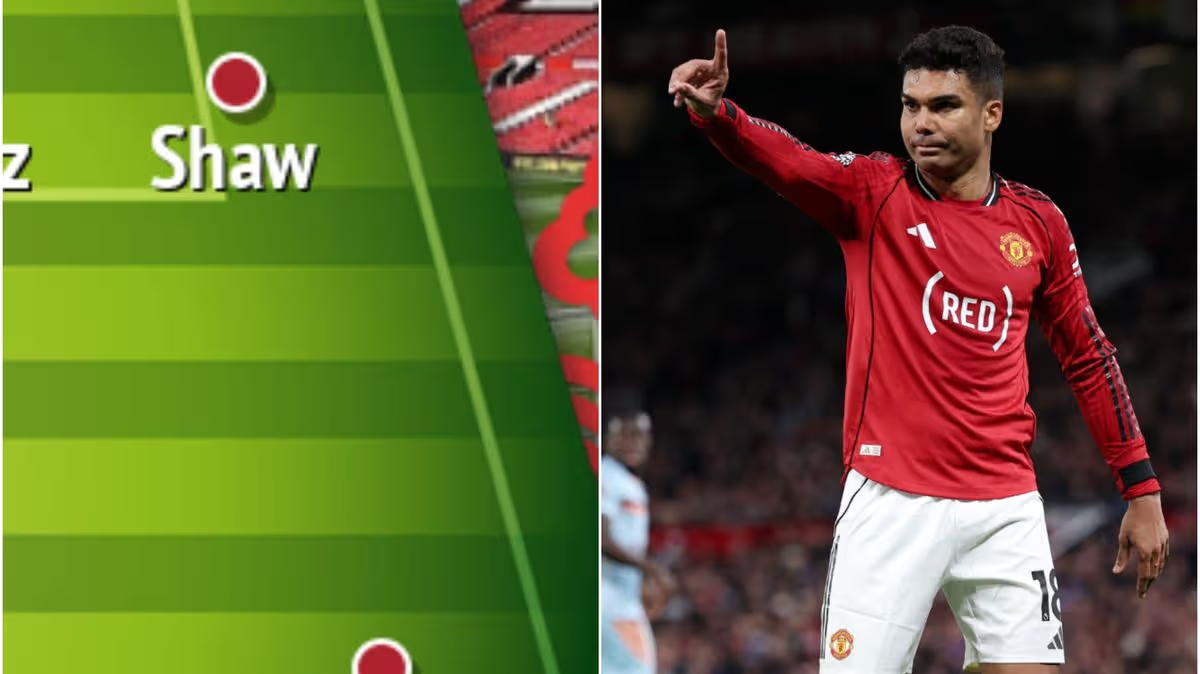
Manchester United midfielder Casemiro will play his final game at Old Trafford for the Reds this afternoon.
Manchester United will play their final match of the season at Old Trafford this afternoon when they host Nottingham Forest in the Premier League. After last season’s disappointment, there will be a feel good feeling inside the stadium as the Reds gear up for a return to the Champions League next year.
Advertisement
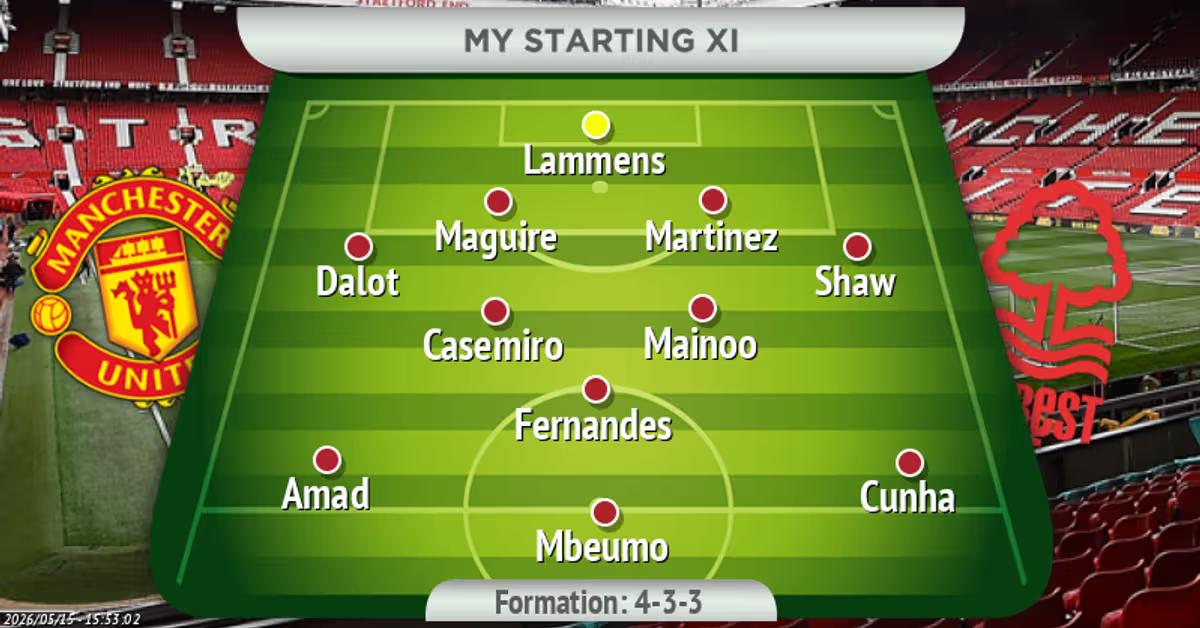
Forest are safe and may choose to make changes ahead of their final match of the season at the City Ground next week. However, United should go for a strong starting line-up. Senne Lammens is guaranteed to start in goal.
Diogo Dalot and Luke Shaw have solidified themselves as the starting full-backs this season. Shaw’s fitness has been particularly pleasing considering his injury issues over recent campaigns. He is just two starts away from starting every Premier League match for United this season.
Click here to find out the latest Manchester United news in our daily newsletter
Carrick has favoured Harry Maguire since returning and there is little evidence to suggest he will deviate from that stance. Partnering him could be Leny Yoro or Ayden Heaven but the most likely choice will be Lisandro Martinez.
Advertisement
The midfield two pick themselves. Casemiro is fit and Carrick will not deny him a start on his final Old Trafford appearance. Partnering him will be Kobbie Mainoo who has played so well in 2026 he has been nominated for the Premier League’s Young Player of the Year award.
In front of them will be Bruno Fernandes. The captain has been superb this season and without him this would have been a very different season.
Benjamin Sesko’s injury means the three attackers pick themselves. Bryan Mbeumo will lead the line, albeit Matheus Cunha is an option for that role.
Amad will begin on the right flank. He has hit a difficult patch of form and desperately needs a goal.
Advertisement
United’s predicted XI vs Forest: Lammens; Dalot, Maguire, Martinez, Shaw; Casemiro, Mainoo; Amad, Fernandes, Cunha; Mbeumo
Manchester United have a huge summer transfer window ahead after qualifying for the Champions League once again
Michael Carrick is already being offered transfer opportunities after reports that Manchester United have reached an agreement to make the interim head coach their permanent successor to Ruben Amorim.
Advertisement
United are said to be offering Carrick a two-year contract, with an option to extend it by another 12 months. Once that deal is signed, attention will turn to this summer transfer window.
Qualifying for the Champions League presents the club with an opportunity to overhaul their squad ahead of next season, and a midfield revamp is in the offing. Here, Mirror Football looks at some of the biggest headlines surrounding United.
Benfica would consider selling United target Richard Rios for just £26million this summer, according to A Bola. They are said to be weighing up a significant departure, with Andreas Schjelderup and Vangelis Pavlidis also potential options.
Advertisement
A rebuild is required after a disappointing season domestically, finishing well adrift of champions Porto after drawing too many matches. As a result, they will reportedly be willing to move on Rios for just £26million, a figure that falls well below the Colombia international’s £87million release clause.
United are one of several clubs credited with an interest ahead of the summer. With the club eyeing multiple midfield reinforcements, signing Rios at a reduced rate could enable them to afford Elliot Anderson’s asking price.
Making the Colombian their first summer signing could also be beneficial because of the upcoming World Cup. Striking any deal before the action begins would avoid any price hike based on his performances in North America.
Rivals to United are said to include Napoli, who are due to pay them £38million for Rasmus Hojlund this summer. That amount would effectively cover the costs of any deal for Rios.
Advertisement
Rashford risks unwritten rule break
Marcus Rashford could end up swapping Barcelona for Real Madrid this summer, according to the Independent. They cite sources close to the situation when reporting that the Spanish club’s prospective new head coach, Jose Mourinho, could go for Rashford.
With their rivals yet to trigger their £26million option to sign the England international permanently, there may be an opening for Madrid to make a move. Mourinho is said to still have a good relationship with Rashford from their time working together at United when the Portuguese replaced Louis van Gaal.
However, any switch would prove highly controversial, as it is rare for any player to represent both, let alone swap one for the other in the space of a summer. Luis Figo is the most infamous example, and Luis Milla also did so before the Portuguese, like Rashford, after only a season at Barcelona.
Advertisement
Michael Laudrup is another example, but he only lasted a season at Madrid after the move, while Luis Enrique went in the opposite direction during the 1990s. Rashford would become the first senior player to follow in their footsteps since Javier Saviola. The Argentine left Barcelona for Spain’s capital city, but, like Laudrup, left after just a year.
Join our new WhatsApp community and receive your daily dose of MirrorFootball content. We also treat our community members to special offers, promotions, and adverts from us and our partners. If you don’t like our community, you can check out any time you like. If you’re curious, you can read our Privacy Notice.
Sky Sports discounted Premier League and EFL package
This article contains affiliate links, we will receive a commission on any sales we generate from it. Learn more
Sky has slashed the price of its Essential TV and Sky Sports bundle ahead of the 2025/26 season, saving members £192 and offering more than 1,400 live matches across the Premier League, EFL and more.
Sky will show at least 215 live Premier League games next season, an increase of up to 100 more.























































You must be logged in to post a comment Login