

Business
Reeves Set to Scrap Autumn Budget Fuel Duty Hike After FairFuelUK Push


For the umpteenth time in 16 years of campaigning, the Westminster fuel-tax script appears to be writing itself again.
According to Treasury sources briefing the FairFuelUK campaign, Chancellor Rachel Reeves is preparing to drop the planned fuel duty rise from her Autumn Budget, though insiders caution that any reprieve is unlikely to survive beyond the March 2027 Financial Statement.
The retreat, if confirmed at the despatch box, will be the latest chapter in a saga that has become a fixture of every fiscal event since George Osborne first froze the duty in 2011. It will also be a notable, if temporary, win for Britain’s 5.5 million small businesses, many of whom now describe forecourt costs as the single biggest unhedgeable line in their operating budgets.
A £3bn pump tax raid since the Iran crisis began
Since hostilities flared in the Gulf, drivers have paid an estimated £3 billion more to fill up, while the Treasury has banked close to an additional £500 million in VAT receipts off the back of higher pump prices alone. Oil majors, predictably, have reported bumper margins. The motorist, equally predictably, has been left to foot the bill.
That contrast – soaring corporate profits set against a stagnating consumer economy – is what has put fuel duty firmly back on Reeves’s desk. As Business Matters reported last month, the Middle East flare-up has dragged headline inflation back to 3.3 per cent, hitting transport-heavy SMEs hardest of all.
71,000 emails, 148,000 signatures and counting
FairFuelUK says more than 71,000 of its supporters have now emailed their MPs urging the Chancellor to abandon the Budget hike. A separate petition, which has gathered more than 148,000 signatures, will be hand-delivered to the Treasury in the coming weeks. The campaign is calling not only for the freeze to be extended but for an immediate cut in fuel duty, in line with measures taken by more than 40 other countries.
The lobbying push echoes the cross-party effort earlier this year, when MPs delivered an earlier tranche of FairFuelUK signatures to Downing Street. That campaign cited Centre for Economics and Business Research analysis suggesting any short-term Treasury bounce from raising duty would be wiped out by a collapse of more than 60 per cent in fuel-tax income within five years as drivers cut mileage and shift to EVs.
“Cut all fuel taxes now,” says Cox
Howard Cox, founder of FairFuelUK, was characteristically blunt. “This clueless, bankrupting net-zero-driven Government remains stuck in a state of torpor, keeping the UK economy virtually stagnant,” he said. “Time and again, over 16 years of campaigning, we have shown that lower fill-up costs deliver more tax to the Treasury by boosting other revenue streams. The current cost of petrol, particularly diesel, is crippling motorists’ and small businesses’ ability to spend in the economy. When will these ignorant Treasury politicians understand that more money in people’s pockets drives growth? For goodness’ sake, cut all fuel taxes now.”
His frustration is shared in the haulage yards, trades vans and rural high-street economies that keep much of the SME sector ticking. Diesel, the lifeblood of British logistics, remains stubbornly above £1.55 a litre in many regions, and as Business Matters has previously documented, small employers lack both the financial resilience and the pricing power of their corporate counterparts to absorb or pass on the cost.
The international comparison: Britain stands almost alone
What is striking about Cox’s argument is not the rhetoric but the international evidence behind it. The International Energy Agency’s 2026 Energy Crisis Policy Response Tracker lists more than 40 countries that have actively cut, suspended or capped fuel taxes since the Iran conflict began. Britain is conspicuously not on the list.
Among the most striking moves logged by the IEA as of late April:
- Germany has cut petrol and diesel duty by roughly 14–17 euro cents a litre.
- Spain has slashed fuel VAT from 21 to 10 per cent and suspended its hydrocarbon excise duty.
- Poland has cut fuel VAT from 23 to 8 per cent and reduced excise duty to the EU minimum.
- Ireland has trimmed excise on petrol and diesel by €0.15–0.20 a litre, plus related levies.
- India has taken excise duties on petrol and diesel close to zero in some categories.
- Canada has suspended its federal fuel excise tax.
- Australia, Austria, Belgium, Croatia, Cyprus, Czechia, Hungary, Iceland, Italy, Korea, Latvia, Lithuania, the Netherlands, Norway, Portugal, Romania, Serbia, Slovenia, South Africa, Sweden and Türkiye have all implemented some form of fuel-tax or duty relief.
- Emerging markets including Argentina, Brazil, Cambodia, Ghana, Kenya, Lao PDR, Namibia, the Philippines, Saint Kitts and Nevis, Vietnam and Zambia have followed suit, often with measures targeted at hauliers and small operators.
By contrast, the UK has so far stuck rigidly to the 5p Spring 2022 cut and a series of frozen rates, an approach that according to Office for Budget Responsibility forecasts is already pencilled in to deliver a £2.2 billion uplift in fuel duty receipts in 2027–28 once the 5p cut is fully unwound and RPI indexation resumes.
What it means for SMEs
For business owners, the politics matter less than the planning. A scrapped Autumn hike will provide short-term breathing room for fleet operators, tradespeople and rural businesses heading into the winter, but the OBR’s own numbers make clear that the reckoning has merely been postponed. Any operator modelling 2027 cash flow would be wise to assume duty rates will rise sharply once the temporary cut expires and indexation kicks back in.
The deeper question for the SME community is whether the Chancellor is prepared to follow the IEA-tracked majority and use fuel taxation as an active lever to support growth, or whether she will continue to treat the duty as a guaranteed revenue stream to be quietly squeezed. On the evidence of 16 years of campaigning, FairFuelUK is bracing for the latter – even as it prepares to claim a tactical victory in the Autumn.
For now, Britain’s van drivers, hauliers and white-van entrepreneurs can breathe a cautious sigh of relief. The bigger fight, as ever, is in the spring.

Amy Ingham
Amy is a newly qualified journalist specialising in business journalism at Business Matters with responsibility for news content for what is now the UK’s largest print and online source of current business news.



Wolf Report is a senior analyst and private portfolio manager with over 10 years of generating value ideas in European and North American markets, and the owner of Wolf of Value, a service focusing on international dividend-paying value investments.He further covers the markets of Scandinavia, Germany, France, UK, Italy, Spain, Portugal and Eastern Europe in search of reasonably valued stock ideas.
Analyst’s Disclosure: I/we have no stock, option or similar derivative position in any of the companies mentioned, and no plans to initiate any such positions within the next 72 hours. I wrote this article myself, and it expresses my own opinions. I am not receiving compensation for it (other than from Seeking Alpha). I have no business relationship with any company whose stock is mentioned in this article.
While this article may sound like financial advice, please observe that the author is not a CFA or in any way licensed to give financial advice. It may be structured as such, but it is not financial advice. Investors are required and expected to do their own due diligence and research prior to any investment.
Short-term trading, options trading/investment and futures trading are potentially extremely risky investment styles. They generally are not appropriate for someone with limited capital, limited investment experience, or a lack of understanding for the necessary risk tolerance involved.
I own the European/Scandinavian tickers (not the ADRs) of all European/Scandinavian companies listed in my articles. I own the Canadian tickers of all Canadian stocks I write about.
Please note that investing in European/Non-US stocks comes with withholding tax risks specific to the company’s domicile as well as your personal situation. Investors should always consult a tax professional as to the overall impact of dividend withholding taxes and ways to mitigate these.
Seeking Alpha’s Disclosure: Past performance is no guarantee of future results. No recommendation or advice is being given as to whether any investment is suitable for a particular investor. Any views or opinions expressed above may not reflect those of Seeking Alpha as a whole. Seeking Alpha is not a licensed securities dealer, broker or US investment adviser or investment bank. Our analysts are third party authors that include both professional investors and individual investors who may not be licensed or certified by any institute or regulatory body.

Asia FX muted, yen on intervention watch as dollar recoups recent losses

Running a business requires more than just hard work—it also requires smart financial management. Whether you’re a startup founder, freelancer, online seller, contractor, or owner of a growing SME, having the best business credit card in the Philippines can help improve cash flow, earn valuable rewards, simplify expense tracking, and even provide emergency funding when needed.
Business credit cards have become an essential financial tool for entrepreneurs because they offer benefits that personal credit cards often don’t. From cashback on office supplies to travel rewards for business trips and extended payment terms for inventory purchases, choosing the right card can save your business thousands of pesos every year.
In this guide, we’ll discuss how business credit cards work, their advantages, and the factors you should consider before applying.
Why Your Business Needs a Business Credit Card
Many Filipino entrepreneurs still rely on personal credit cards for business expenses. While this may work initially, it often creates accounting problems and makes expense tracking difficult.
A dedicated business credit card allows you to:
- Separate personal and business expenses.
- Improve bookkeeping and accounting.
- Manage company cash flow more effectively.
- Build your business credit profile.
- Earn cashback, travel miles, or reward points.
- Receive purchase protection and insurance benefits.
- Access installment plans for large purchases.
For businesses that regularly purchase supplies, pay for digital advertising, or travel frequently, these benefits can quickly outweigh the annual fees.
Benefits of Business Credit Cards
1. Better Cash Flow Management
One of the biggest advantages is extending your payment period. Instead of paying suppliers immediately, you can use your credit card and pay during the next billing cycle.
This provides additional working capital that can be used for inventory, payroll, or operational expenses.
2. Cashback Rewards
Many business credit cards offer cashback on categories such as:
- Fuel
- Office supplies
- Utilities
- Dining
- Online advertising
- Telecommunications
These savings accumulate over time and reduce overall operating costs.
3. Reward Points
Reward points can often be redeemed for:
- Gift certificates
- Office equipment
- Travel vouchers
- Airline miles
- Cash credits
For businesses with high monthly spending, rewards can become a valuable source of additional savings.
4. Travel Benefits
Business owners who travel frequently can enjoy:
- Airport lounge access
- Travel insurance
- Airline miles
- Hotel discounts
- Priority check-in
These perks improve the overall travel experience while reducing travel expenses.
Features to Look for in a Business Credit Card
Low Annual Fees
Compare annual membership fees and determine whether the benefits justify the cost. Some banks waive annual fees based on spending requirements.
High Credit Limits
Businesses with significant monthly expenses should look for higher credit limits to avoid maxing out their cards.
Flexible Installment Options
Installment conversion allows businesses to spread payments over several months without straining cash flow.
Expense Management Tools
Some banks provide online dashboards and downloadable statements that simplify accounting and tax preparation.
Fraud Protection
Choose cards with:
- Real-time SMS alerts
- Mobile app controls
- Purchase protection
- Zero liability protection
Common Business Expenses You Can Charge
- Office rent
- Utilities
- Internet subscriptions
- Software subscriptions
- Facebook Ads
- Google Ads
- Office furniture
- Laptops
- Printers
- Business travel
- Hotel bookings
- Fuel
- Inventory purchases
- Courier services
- Employee meals during meetings
How to Choose the Right Business Credit Card
Not every business has the same spending habits.
Consider these questions:
- Do you spend heavily on fuel?
- Do you travel frequently?
- Do you run online advertisements?
- Do you need installment financing?
- Do you prefer cashback over reward points?
- Will multiple employees use supplementary cards?
Answering these questions helps narrow down the most suitable option.
Tips for Using Business Credit Cards Responsibly
Pay the Full Balance Every Month
Avoid carrying balances whenever possible. Interest charges can quickly outweigh any cashback or rewards earned.
Track Employee Spending
If your company issues supplementary cards, establish clear spending limits and regularly review transactions.
Keep Receipts
Maintain receipts for accounting, tax filing, and auditing purposes.
Monitor Your Statements
Review your monthly statement to identify unauthorized transactions and billing errors.
Who Should Get a Business Credit Card?
Business credit cards are ideal for:
- Small business owners
- Freelancers
- Online sellers
- Importers
- Contractors
- Consultants
- Professionals with business expenses
- Corporations
- Partnerships
- Startups
Common Requirements When Applying
Although requirements vary by bank, applicants are commonly asked to provide:
- Government-issued IDs
- Business permits
- SEC or DTI registration
- BIR Certificate of Registration
- Latest Income Tax Return
- Bank statements
- Financial statements
- Proof of business income
Some banks may also require a minimum annual business revenue or years in operation.
Mistakes to Avoid
- Using business cards for personal shopping.
- Making only minimum payments.
- Applying for multiple cards simultaneously.
- Ignoring annual fees.
- Missing payment due dates.
- Not monitoring employee purchases.
- Exceeding your available credit limit.
Frequently Asked Questions
Can sole proprietors apply?
Yes. Many Philippine banks allow sole proprietors with registered businesses to apply, provided they meet income and documentation requirements.
Can freelancers get a business credit card?
Yes. Freelancers with consistent income and proper business registration may qualify depending on the bank’s underwriting policies.
Is a business credit card different from a corporate card?
Yes. Business credit cards are generally intended for small businesses and entrepreneurs, while corporate cards are designed for larger companies with multiple employees and centralized expense management.
Does using a business credit card improve credit history?
Responsible usage, such as paying on time and maintaining low balances, can strengthen your financial profile with the issuing bank and may support future financing applications.
The right business credit card is more than just a convenient payment method—it is a valuable financial tool that helps entrepreneurs manage cash flow, simplify accounting, earn rewards, and finance business growth.
Before applying, compare annual fees, interest rates, reward programs, cashback categories, travel benefits, and eligibility requirements. The best choice depends on your company’s spending habits and financial goals.
Used responsibly, a business credit card can become an important part of your company’s financial strategy while helping you save money, improve operational efficiency, and access additional purchasing power whenever opportunities arise.

Business News Philippines was launched in October 2015 as a portal for readers to learn more about operating a business in the Philippines.

This is the forum for daily political discussion on Seeking Alpha. A new version is published every market day.
Please don’t leave political comments on other articles or posts on the site.
The comments below are not regulated with the same rigor as the rest of the site, and this is an ‘enter at your own risk’ area as discussion can get very heated. If you can’t stand the heat… you know what they say…
More on Today’s Markets:
Moderation Guidelines:
We remove comments under the following categories:
- Personal attacks on another user account
- Anti-Vaxxer or covid related misinformation
- Stereotyping, prejudiced or racist language about individuals or the topic under discussion.
- Inciting violence messages, encouraging hate groups and political violence.
Regardless of which side of the political divide you find yourself, please be courteous and don’t direct abuse at other users.
For any issue with regards to comments please email us at : moderation@seekingalpha.com.
Seeking Alpha’s Disclosure: Past performance is no guarantee of future results. No recommendation or advice is being given as to whether any investment is suitable for a particular investor. Any views or opinions expressed above may not reflect those of Seeking Alpha as a whole. Seeking Alpha is not a licensed securities dealer, broker or US investment adviser or investment bank. Our analysts are third party authors that include both professional investors and individual investors who may not be licensed or certified by any institute or regulatory body.
Business
(VIDEO) Erling Haaland Scores Twice as Norway Stuns Brazil 2-1 to Reach First-Ever World Cup Quarterfinal

EAST RUTHERFORD, N.J. — Erling Haaland scored two goals in the final stretch of Sunday’s match to lift Norway past Brazil 2-1 in a Round of 16 upset at the 2026 World Cup, sending the five-time champions home earlier than they have exited in more than three decades.
The victory, secured at New York New Jersey Stadium, marks Norway’s first-ever appearance in a World Cup quarterfinal. Brazil’s exit is its earliest since 1990, extending a difficult recent pattern for the storied program: it has now been eliminated by European opposition in six consecutive World Cup tournaments.
Norway goalkeeper Orjan Nyland was the standout performer for much of the match, delivering a string of key saves that kept Brazil off the scoreboard for most of regulation. Early in the second half of a scoreless opening period, Nyland stopped a penalty kick from Bruno Guimaraes, diving to his left to push away a tame attempt from the Newcastle midfielder. That save came after Brazil had been awarded the penalty when defender Kristoffer Ajer collided with forward Matheus Cunha inside the box. Referee Ismail Elfath initially waved off Brazil’s appeal, but the call was overturned following a video review.
Nyland continued to frustrate Brazil’s attack throughout the match, getting a decisive touch on a low drive from Arsenal winger Gabriel Martinelli to deny Guimaraes an easy tap-in, and later sticking out a leg to stop a shot from Vinicius Junior after Norway captain Martin Odegaard lost possession near his own box. The goalkeeper also made a diving stop to deny a powerful strike from Rayan and reached back to prevent a scramble in his own box from turning into an own goal off Ajer late in the match.
Norway’s best chance in the first half came when Haaland, who had otherwise struggled to find space against Brazil’s central defenders Gabriel Magalhaes and Marquinhos, created an opening that fell to Odegaard. Brazil goalkeeper Alisson made a strong save to keep the match level heading into halftime.
Brazil made a lineup change ahead of kickoff, inserting Martinelli for the injured Lucas Paqueta, while Norway welcomed back defender Julian Ryerson, who had missed the team’s previous two matches with a thigh injury. Norway’s head coach, Stale Solbakken, made two substitutions at halftime, bringing on Oscar Bobb and Andreas Schjelderup in place of Antonio Nusa and Alexander Sorloth.
Brazil manager Carlo Ancelotti, hired in part to help end the country’s lengthy wait for a sixth World Cup title, turned to teenage forward Endrick shortly after the break in search of a breakthrough. The substitution nearly paid off immediately when Vinicius Junior threaded a clever pass to Endrick with the outside of his foot, but the young striker’s effort drifted wide as Nyland rushed out to close down the angle.
The match’s deadlock was finally broken in the second half when Schjelderup rose above Brazil’s Gabriel to head home a cross delivered from the left flank, giving Norway a 1-0 lead. Brazil brought on forward Neymar in the 67th minute to a loud ovation from a crowd that skewed heavily in support of the South American side, but the hosts’ rescue effort did not immediately materialize.
Haaland put the result further out of reach in the 90th minute, driving a low shot into the corner of the net from the edge of the penalty area to make it 2-0. The goal was his second of the match and gave him seven for the tournament, pulling him level with Lionel Messi atop the World Cup’s scoring charts.
Brazil was awarded a second penalty deep into stoppage time after a physical incident involving an elbow on midfielder Casemiro, and a tense exchange followed between Neymar and Nyland before the veteran forward converted the spot kick in the 10th minute of stoppage time to pull Brazil within one. The late goal proved to be only a consolation, as Norway held on to secure the win and advance in the tournament.
Norway will now face the winner of the Round of 16 match between co-hosts Mexico and England in the quarterfinals, a game scheduled to take place in Miami on July 11. The result sets up what would be a historic run for Norway, a team long known for producing individual talent but which had never previously advanced past the Round of 16 stage at a men’s World Cup.
For Brazil, the loss raises fresh questions about the team’s ability to translate individual star power into deep tournament runs, a challenge that has now persisted across multiple coaching changes and generations of talent. Ancelotti, one of the most decorated club managers in the sport’s history, was brought in with the explicit goal of ending Brazil’s championship drought, which now stretches back more than two decades. Sunday’s defeat means that goal will have to wait at least another cycle, as the team heads home earlier than it has since a 1-0 loss to archrival Argentina in the Round of 16 36 years ago.
Norway’s win has already resonated well beyond the stadium. Video circulating from Oslo showed large crowds gathering to celebrate the result with an impromptu, viral display of synchronized cheering following the final whistle, reflecting the significance of the moment for a country making its first appearance in a World Cup quarterfinal.
With the result finalized, attention now shifts to Sunday night’s late Round of 16 match between Mexico and England in Mexico City, the winner of which will meet Norway in next weekend’s quarterfinal in Miami. The broader knockout stage continues through the coming days, with additional Round of 16 matches, including Portugal against Spain, still to be played before the tournament moves into the quarterfinal round.

Edited excerpts from a chat:
Following 4 consecutive weeks of gains, what levels is Nifty eyeing in the July series?
Despite the consecutive weeks of gains, Nifty has only reached the April’s highest closing figure from where a multi month downtrend had begun. Friday’s pull back is good in a way, because it keeps the uptrend from premature collapse, as the oscillators had begun to show signs of exhaustion. We see the near term base getting higher from 23800 to 24170 now, thus making 23800 a strong downside marker while we chase short term upsides with an eye on 24170. Expect whip saw moves to 24600, which may not be sustainable initially. However, a close above 24400 could render the trend stable for a 24800-24250 move.
Nifty IT index hit fresh multi-year lows in the week but displayed signs of bottom-fishing in previous 2 days. Is this bounce sustainable?
The Nifty IT index may have finally found near-term support after slipping to fresh multi-year lows, but the sustainability of the rebound remains uncertain. Technically, the setup has improved meaningfully. A Morning Star pattern on the daily chart, coupled with a weekly pin-bar doji after a prolonged decline, indicates strong bottom-fishing interest at lower levels. Momentum indicators are also turning constructive, with the weekly MACD nearing a bullish signal crossover, often an early sign of trend stabilization.
However, derivatives data presents a mixed picture. Nearly 60% of IT stocks witnessed short covering on Friday, supporting the sharp rebound, but a similar proportion still carries week-on-week short additions, suggesting that bears have not completely exited their positions. This indicates that the current move could still be a combination of bargain hunting and short-covering rather than a confirmed trend reversal.

Overall, the odds favour an extension of the recovery in the coming week, particularly if follow-through buying emerges. Yet, the durability of the bounce remains clouded as long as the index trades below the 28,200 zone, which is likely to act as a key resistance. A decisive close above this level would strengthen the case for a sustainable reversal; until then, the move is best viewed as a tactical rebound within a corrective trend.
PSU banks were among the biggest losers in the week. How would you go about trading the pack?
PSU Banks were among the weakest pockets of the market this week, and the technical as well as derivative setup suggests traders should continue to maintain a cautious bias. The PSU Bank index formed a bearish Marubozu candle on Friday, highlighting aggressive selling pressure, while the daily MACD generated a bearish signal crossover earlier in the week. More importantly, a failed weekly MACD crossover attempt indicates that bullish momentum lacked conviction and sellers have regained control.The derivatives picture reinforces this weakness. Around 70% of PSU bank stock futures witnessed either short addition or long unwinding on Friday, while a similar proportion carried net short positions on a week-on-week basis. This suggests traders are not merely booking profits but are actively holding on to bearish bets, increasing the probability of further downside.
From a trading perspective, rallies should be viewed as opportunities to reduce longs or initiate selective shorts until the sector shows signs of stronger accumulation. Stocks such as Bank of Baroda, PNB, Indian Overseas Bank and Indian Bank appear particularly vulnerable and could continue to weigh on the index.
Unless the index quickly reclaims recent breakdown levels, the path of least resistance remains lower, with 8,250 emerging as the next key downside objective.
GE Vernova, Hitachi and Siemens Energy fell on Friday amid negative news flow around Chinese firms being allowed in India in the power equipment sector. Do you think that these stocks can bounce back and those who missed the rally can buy now?
Their turn lower follows an RSI negative divergence signal, suggesting that downtrend could have more legs. But as they all are near or at their respective 20 week SMA, we might expect some respite early next week However, they have all formed topping patterns, and favoured view sees them unlikely to get back to a sustainable uptrend right away.
Give us your top ideas of the week ahead.
SUMICHEM (LTP: 502)
View: Buy
Target: 540
SL: 480
Sumichem has delivered a strong bullish breakout after spending the past few weeks in a corrective phase. The stock witnessed a decisive daily Supertrend breakout, signaling a potential shift in the short-term trend from bearish to bullish. This move was further reinforced by a positive MACD signal crossover, indicating improving momentum and the possibility of sustained follow-through buying.
What stands out is the exceptional surge in volumes, with trading activity reaching multi-year highs. Such volume expansion accompanying a sharp price breakout often reflects strong institutional participation and lends greater credibility to the move.
The stock has also reclaimed the psychologically important 500 mark and closed near the day’s highs, suggesting that buyers remained in control throughout the session. If the breakout sustains, the stock could target the 540 zone over the coming weeks.
That said, given the magnitude of the single-day rally, some consolidation or profit booking cannot be ruled out in the near term. Any pullback towards the 490 could attract fresh buying interest. As long as the stock holds above the breakout zone, the bias remains bullish with scope for further upside.
AZAD (LTP: 2149)
View: Buy
Target: 2255
SL: 2090
Azad Engineering is showing early signs of a bullish turnaround after a period of consolidation. The stock has attracted strong buying interest, as evident from a multi-session volume breakout, indicating renewed participation and strengthening conviction behind the recent move.
Momentum indicators are also turning supportive. The MACD is on the verge of a bullish signal crossover, suggesting that downside momentum is fading. Additionally, the RSI has crossed above its moving average, reflecting improving relative strength and a shift in momentum in favour of the bulls.
Price action has also seen the stock reclaim the 2,100 zone, which could act as an important support area in the near term. Sustaining above this level may pave the way for a move towards the 2,255-2,300 zone.
Overall, the near-term bias appears positive, with traders likely to focus on follow-through buying and the stock’s ability to sustain above key support levels.
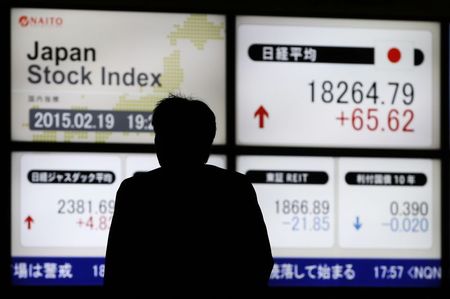
Japan defense stocks jump on report govt is planning export-focused bureau

Perth-based Equatorial Resources is in a $4.85 million scrap with its former legal advisers Clifford Chance over allegedly unpaid bills.
Business
Bonus issue alert! Last day to buy this Ashish Kacholia-backed multibagger stock for 5:1 bonus reward. Do you own?

Only those shareholders who hold V Marc India shares in their demat accounts as of Tuesday will be eligible to receive the bonus shares. Due to SEBI’s T+1 settlement norm, investors must purchase the company’s shares at least one trading day before the record date so they are credited to their demat accounts by that date and qualify for the corporate action. This effectively makes today the final day for investors to buy the shares to be eligible for the bonus issue.
All about V Marc India’s bonus issue
V March India in May announced that its board of directors have considered and approved the plan to issue bonus shares in the ratio of 5:1. This means that an eligible shareholder will get 5 new bonus shares with a face value of Rs 10 each, for every share held in the company as on the record date.
The cable maker proposed to issue 12.21 crore shares out of its free reserves or share premium as available on March 31, 2026, which stood at more than Rs 143 crore. “The bonus issue shall be implemented within two months from the date of the meeting of its board of directors wherein the decision to announce the bonus issue was taken subject to shareholders’ approval through Postal Ballot,” the company had said.
This marks the company’s first ever bonus issue. A bonus issue consists of free shares distributed by a company from its reserves and is often seen as a sign of strong financial health and growth prospects. While the issue of bonus shares increases the total number of outstanding shares, it does not change the company’s market capitalisation. However, it can improve liquidity and affordability, allowing more investors to add shares of the company to their portfolio.
Also read: Canara Bank, Bank of Baroda, Indian Bank pay Rs 7,023 cr dividend to govt for FY26
V Marc India shareholding pattern (6,61,000)
Ace investor Ashish Kacholia owned 2.71% stake in V Marc India, as per data on the company’s shareholding pattern as on March 31, 2026. At the previous closing price of Rs 1,546.35 apiece on NSE, his total stake in the company would be worth more than Rs 102 crore.
Around 2,331 retail shareholders held nearly 14% stake in the company as at the end of the financial year 2026. Promoters and promoters meanwhile held nearly 65% stake.
V Marc India share price
V Marc India shares have jumped around 128% in 2026 so far. In the longer term, the shares of the cable maker have delivered stellar returns of 288% in one year, 1,828% in three years and 4,691% in five years.
The shares have fallen around 3% in one week but gained around 7% in one month. The company currently has a market capitalisation of nearly Rs 3,756 crore.
Also read: Bajaj Auto’s Rs 5,633 crore buyback opens. How much profit can retail investors make by tendering shares?
(Disclaimer: Recommendations, suggestions, views and opinions given by the experts are their own. These do not represent the views of The Economic Times)

Japan, South Korea lead Asia lower as chipmakers pull back after rebound
Erling Haaland scores twice to send Norway past Brazil at World Cup

Hundreds Support Legal Defense for Engineer Charged with Destroying Flock Surveillance Cameras

Harry Kane loses his voice in hilarious post-match interview at the Azteca – but Jordan Henderson is taken away on a stretcher


-

 Fashion2 days ago
Weekend Open Thread: High Hopes
-

 Politics3 days ago
The House | “Reframing the debate from a binary discussion of winners and losers”: Yuan Yang reviews ‘We Are Not Machines’
-

 Crypto World6 days ago
Strategy authorizes up to $1.25B in Bitcoin sales under new capital plan
-

 News Videos6 days ago
How to Build INSANE Live Financial Dashboards With Claude
-

 Tech6 days ago
Anonymous researcher drops 0-day ‘exploitarium’ repo
-

 Business6 days ago
Australia treasurer says alleged access of prime minister’s bank data ’incredibly concerning’
-
 NewsBeat1 day ago
Taylor Swift and Travis Kelce wedding staffer hilariously struggles to keep her cool while checking in megastars
-
 Business6 days ago
The AI boom won’t burst all at once. It will pop in ‘rolling bubbles’: Macquarie
-

 Sports5 days ago
Broncos roster: OL Ben Powers (No. 74) entering final year of contract
-
 Crypto World5 days ago
Airdrop Registration Becomes Key Focus For Remittix As RTX Launch Updates Approach
-

 NewsBeat5 days ago
Presenter Caroline Flack’s brother Paul Flack dies aged 55
-

 Crypto World4 days ago
Binance stock trading tops $1B in first month after launch
-

 Crypto World4 days ago
Alibaba-affiliate Ant Group enters the humanoid robot market with 12 deals
-
 NewsBeat4 days ago
New exhibition reflects five decades of movement between island of Ireland and GB
-

 Crypto World14 hours ago
South Africa proposes crypto tax guidance under existing rules
-

 Tech17 hours ago
Lenovo laptops are now shipping with YMTC SSDs, a sign of Chinese NAND entering the mainstream
-

 Business3 days ago
What a 10 Percent Drop Means for Buyers, Sellers and Renters
-

 Crypto World2 days ago
Standard Chartered Secures MiCA License as ESMA Adds 37 New Crypto Firms
-

 Business4 days ago
Meta Platforms Stock Jumps 7% Today as Bloomberg Reports Company Plans to Enter the Cloud Business
-

 Crypto World3 days ago
Binance Re-Enters Philippines As EU MiCA Rules Restrict Access
You must be logged in to post a comment Login