

Connect with us
DAPA Banner
DAPA Coin
DAPA
COIN PAYMENT ASSET
PRIVACY · BLOCKDAG · HOMOMORPHIC ENCRYPTION · RUST
ElGamal Encrypted MINE DAPA
🚫 GENESIS SOLD OUT
DAPAPAY COMING

Business

As chip industry chases AI, U.S. national labs look to newcomers for supercomputers

Published

on

As chip industry chases AI, U.S. national labs look to newcomers for supercomputers
Continue Reading
Click to comment

You must be logged in to post a comment Login

Leave a Reply

Business

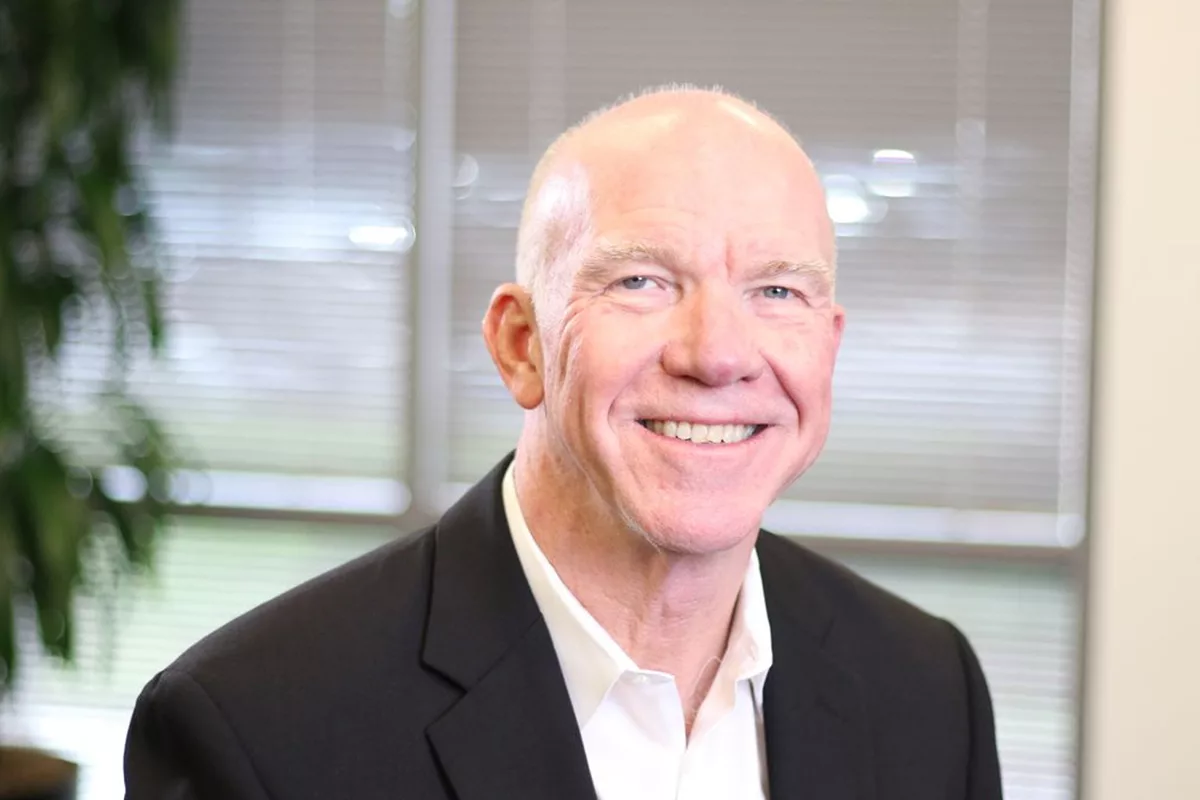
Ajinomoto Foods North America names new CEO

Published

on

Ajinomoto Foods North America names new CEO

Dave Gardner promoted from chief supply chain officer.

Continue Reading

Business

Never sit still: Agent’s Paul Corcoran on AI, the four-day week and surviving 20 years in business

Published

on

Business Live

North West marketing business was one of the first to move into emerging Baltic Triangle regeneration zone

Agent Marketing chief executive Paul Corcoran

Agent’s chief executive Paul Corcoran(Image: Agent)

“It’s unbelievable how much you can fit in in 20 years” – that might be an understatement from Agent Marketing boss Paul Corcoran as he looks back on the 20th anniversary of a firm that survived Covid and the credit crunch while striving to grow the North West ’s marketing sector.

Paul is one of the best-known names in marketing in the North, thanks to his work at Agent, its training academy and beyond. His work at Agent has seen the business lead the move to Liverpool’s famous Baltic Triangle regeneration zone and promote socially responsible business, while it has also weathered the big storms that have battered the British economy.

Advertisement

As he marks Agent’s 20th anniversary this month, Paul talked to BusinessLive about everything from AI and flexible working to the strength of the creative and digital sector in the North West as a whole.

Paul and his then business partners started Agent in 2006 after spotting a gap in the Liverpool market for an integrated marketing agency bringing together disciplines from PR to marketing and design.

He recalled: “When I look back at it now, back to the very beginning, at the tenacity that went into getting something going… wow. And (there was) loads of naivety, definitely. But I am glad that I did it.”

At Agent, Paul and the team aimed to create a business where “clients weren’t having to go to lots of different people – they could come and you were able to deliver it all.” That, he said, is much more common now but was rare two decades ago.

Advertisement

Credit crunch and never sitting still

Just two years into Agent’s existence, the business had to weather the credit crunch and resulting economic downturn. The Agent team got through it, Paul said, by “digging deep and working hard”.

He added: “No one was going to turn up and say to me ‘oh here’s all your work’. You had to go out, you had to meet people, you had to be at events. I was going to things and being eager and learning, learning, learning – never, ever, ever sitting still.

“And then, like everybody else, we were taking a punt on what were the best types of businesses to be around, and what were the ones that were going to weather that storm.”

‘It felt exciting’: Betting on Baltic Triangle regeneration

Paul bought out his original business partners in 2011 and the business continued its growth. And after a few moves around Liverpool, in 2012 the business moved to the emerging creative quarter around the Baltic Triangle, as the first tenant in the Baltic Creative warehouse on the corner of Jamaica and Jordan Streets.

Advertisement

Why did Paul consider the Baltic so early? “Because I’m really nosy,” he laughed.

That meant he saw the area’s early potential as Jayne Casey, Mark Lawler and other Baltic pioneers began developing buildings in the area through the Baltic Creative CIC.

He said: “I’d been to see a client and I’ve been down in the Baltic – and remember the Baltic was almost redundant, it was going to be a red light zone! Then I saw what Jayne and Mark and others were doing down there, restoring these old warehouses.”

A page from the Liverpool Post in August 2012 featuring Agent Marketing's move to the Baltic Triangle

A page from the Liverpool Post in August 2012 featuring Agent Marketing’s move to the Baltic Triangle. Original photo by Julie Lowe(Image: Reach plc)

Paul told Baltic Creative he wanted to move in, and that he had ambitious plans for the space. He remembered: “They asked, ‘Why would you need pretty much 4,000 sq ft for 10 people?, and I said ‘We’re going to fill it’. And we absolutely have.”

Advertisement

At first, with the Baltic still being a half-empty industrial zone, Agent was somewhat on its own.

“When we went down there,” Paul recalled, “Our clients would say. We’re not coming down there. We’re not leaving our cars down there’.

“But it felt exciting. The team really enjoyed it. We had a big massive space, as much car parking as you could possibly want.”

Later that year Baltic Creative opened officially, complete with flagship coffee shop and wooden shed offices for its tenants, and the area’s rebirth stepped up a gear.

Advertisement

The Covid ‘storm’

Meanwhile Agent was growing its work across the North West and beyond, and five years ago opened a Manchester base at Bruntwood’s Portland Street office building. That came at a time when Agent was dealing with the effects of the Covid pandemic.

“I made the decision at the very beginning that you plan for rainy days in business,” he said. “And that was a storm. But I always believe that you have a moral obligation to look after your team. Even when you feel uncertain you have to make everyone feel as safe and secure as they possibly can. And what I didn’t want to do was say ‘let’s put everyone on furlough’.

“For us it was hard because we were so used to being a face-to-face agency, where we would always have clients in big working sessions with noise and collaboration, to then being completely separated.

“But we weathered that storm and when it was safe to do so, we all came back to the studio. And then that’s when we opened the Manchester studio.”

Advertisement

‘You almost become used to the shocks’

There’s another set of storms right now, with businesses still facing high costs across the board while the war in Iran is causing more economic uncertainty. But Paul hopes his and Agent’s experiences in previous tough times will help see them through this time too.

He said: “It would be ridiculous to say ‘We found a sector that isn’t affected by this’, but we are in clean growth, we’re in net zero, logistics, tech for good, general ‘good business’.

“When you’ve been doing it for this amount of time, you almost become used to the shocks. So when they do come, you’re winded for a short period of time, and then you go, ‘well, what lessons did we learn last time? Okay, well, we’ll apply them in a different guise’.”

Lessons from AI and the four-day week

All firms in the digital and creative sector are now wrestling with using AI. Paul is confident that creative workers don’t have to panic about technology just yet.

Advertisement

“AI will be fantastic for troubleshooting and making sure that things are accessible and tested and everything else,” he said.

“But will it ever be the person in the room that will connect you to your next big client? No. Is it going to be the person that’s going to showcase amazing ingenuity when it comes to a marketing strategy or a piece of creative or anything else? No, it’s not.

“So that’s a challenge but also an opportunity.”

For the last three years, Agent has offered its staff a four-day week. “That works really well,” said Paul. “Our retention is amazing… when we recruit, people really value it.”

Advertisement

Agent Academy: Helping young people into the sector

For the last 12 years, Agent has also tried to help the talent of the future get started in the industry, through its sister social enterprise Agent Academy CIC. That academy is focused on helping young people into the creative sector, especially people from diverse and under-represented backgrounds.

Paul said: “We are going to help young people get into the digital and creative sector and to get long-term, permanent jobs. Not going on a course, not anything other than getting them into good jobs.

“There are people who are now marketing directors and communications directors who were on zero hour contracts, working in Tesco or Sainsbury’s, or working behind a bar and thinking. ‘How am I going to get out of this? Because I know I can do something else.’”

North West creative sector on the rise

Beyond Agent, Paul spent four years as deputy chairman of Liverpool Everyman and Playhouse theatres, and chaired the School for Social Entrepreneurs North West. Paul also served as the co-chair of the Creative and Digital Board at the Liverpool City Region Local Enterprise Partnership from 2017 to 2023, helping “bang the drum” for the sector.

Advertisement

“I love to see the collaboration across the city region and the North West,” he said. “It’s great to see because we need an ecosystem here.”

And he added: “Liverpool’s creative sector is much more commercial than it’s ever been. It is much more confident as a city region.”

Asked what’s next, Paul joked “a rest”. But that’s not likely, particularly with Agent’s latest Good Growth summit coming up in Manchester in July. Agent itself became a B Corp last year, and Paul says the conference will focus on “being good citizens as well as a good business”.

He said: “There is an amazing lineup of people who are travelling from all over the country – senior CEOs, CMOs, investors – all coming to the North West to celebrate what we do best, which is good business that benefits people and place, and hopefully leaves the planet a little bit better than how we found it.”
Advertisement
Continue Reading

Business

why Vladyslav Vlasiuk’s story is not just a matter of individuals, but also of the quality of corporate governance within the state sector

Published

on

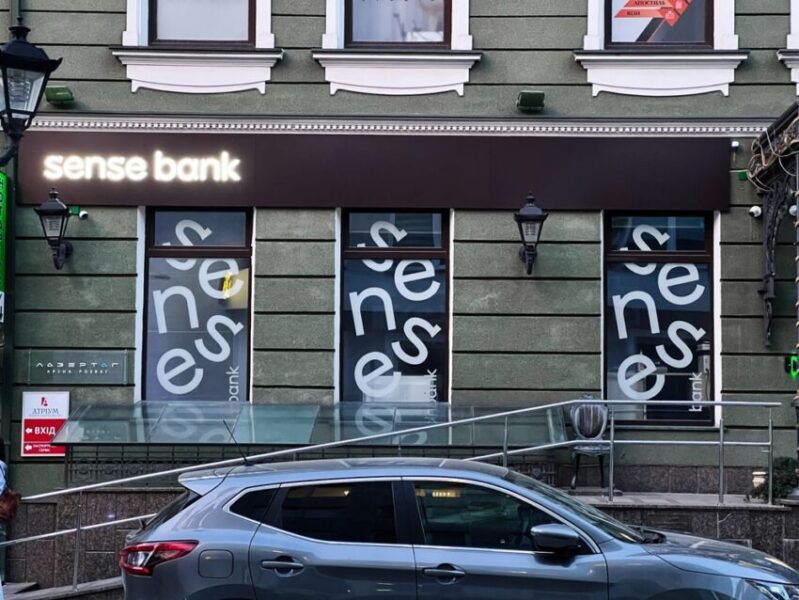
The nationalisation of Sense Bank in 2023 was intended to serve as an example of how, in a wartime context, the state is capable of taking control of a systemically important financial asset swiftly, in a legally sound manner and with institutional accountability.

The nationalisation of Sense Bank in 2023 was intended to serve as an example of how, in a wartime context, the state is capable of taking control of a systemically important financial asset swiftly, in a legally sound manner and with institutional accountability.

However, just two years later, another question has arisen regarding the bank: has nationalisation shifted from being a tool for financial stability to a mechanism for certain individuals to bolster their political influence for their own interests, exert control over personnel appointments, and undermine corporate governance standards?

One of the key figures in this debate is Vladyslav Vlasiuk—a member of the Supervisory Board of Sense Bank and an adviser to the President of Ukraine on sanctions policy. He was appointed to the Supervisory Board of Sense Bank on 22 July 2023 — effectively at the very moment the bank was transferred into state ownership. It is known that Vlasiuk has served as a non-staff adviser to the Office of the President since May 2022, and on 16 August 2024 he was appointed the President’s adviser and commissioner for sanctions policy.

This in itself does not constitute evidence of a breach of the law. However, for a state-owned bank—especially one that is due to be sold—it is not just a matter of formally complying with procedures. An impeccable reputation is essential. The supervisory board of a state-owned bank should act as an institutional safeguard against political influence from both the state and from private individuals, rather than serving as a conduit through which extraneous private interests might infiltrate the management of the financial institution.

A state-owned bank cannot be an extension of the cabinet of government

Sense Bank has been transferred to state ownership following changes to the law, a resolution of the Cabinet of Ministers and a share purchase agreement between the Ministry of Finance and the Deposit Guarantee Fund for Individuals. The dossier also states that, pursuant to a resolution of the Cabinet of Ministers dated 1 October 2025, preparations were initiated for the sale of stakes in Sense Bank and Ukrgasbank with the aim of reducing the state’s share in the banking sector and raising funds for the budget.

Advertisement

That is precisely why the composition of Sense Bank’s Supervisory Board is a matter of strategic, rather than technical, importance. Before a state-owned bank is sold, potential investors assess more than just its balance sheet, capital, profitability or customer base. They assess the quality of governance, the independence of supervisory bodies, the transparency of appointments, reputational risks and the degree of political distance between the bank and the government.

If a member of the Supervisory Board is also linked to the political decision-making centre, a legitimate question arises: is such a person capable of performing an independent supervisory role? This is particularly true in a bank where the state is the owner, the government is the seller of the asset, and the political authorities have a potential interest in controlling the process.

Remuneration, status and the question of proportionality

The issue of remuneration warrants special attention. According to his 2024 tax declaration, Vladyslav Vlasiuk’s salary at the State Administration of Affairs was 393,905 UAH, whilst his salary from his secondary employment at Sense Bank JSC was 5,878,484 UAH. The declaration also lists income from the Kyiv School of Economics Charitable Foundation amounting to 1,058,142 UAH, Bitcoin holdings worth 610,000 UAH, funds in bank accounts in UAH, euros and US dollars, as well as 40,000 US dollars in cash.

A high level of remuneration for a member of a state-owned bank’s Supervisory Board is not a problem in itself, provided it is in line with market rates, the scope of responsibility and performance. However, in a state-owned bank during wartime, such remuneration must be as transparent as possible and properly explained to the public. Especially when it comes to someone who also holds a political post within the President’s office.

Advertisement

This raises more than just the question, “How much does a member of the Supervisory Board earn?” The key question is a different one: for what results, for what added value, and according to what performance criteria are such funds paid out? Have the KPIs been published? Was the work of the Supervisory Board assessed independently? Were the Board’s decisions aimed at increasing the bank’s value ahead of a future sale? Or, conversely, is the bank becoming part of an opaque system of state control over personnel?

Network of connections as a reputational risk

A detailed map of organisational and family connections can be found in the media. Vladyslav Vlasiuk and his brother Vitaly Vlasiuk are involved in a number of non-profit organisations, particularly those focused on the development of artificial intelligence, legal initiatives, the environment and restoration. Both also hold a 20% stake each in Professional Support of Medicine Office LLC.

The mere fact of participating in public organisations or business entities does not constitute a breach. However, for an official who is also involved in the supervision of a state-owned bank, such a network must be assessed in terms of potential conflicts of interest. A state-owned bank is a financial institution that deals with major clients, budgetary flows, state support, lending, restructuring, compliance and sanctions risks. Therefore, any links with the business world, politics, government officials or public bodies should not be concealed but should be openly examined.

It is worth noting that Vitaly Vlasiuk served as Deputy Head of the Kyiv Regional State Administration in 2022–2023, and has held the post of Deputy Head of the Khmelnytskyi Regional State Administration for Digital Development since July 2024. In 2023, he was a candidate for the post of director of NABU.

Advertisement

Taken together, this shapes not only the family context but also the administrative and political context. For the purposes of corporate governance, it is important that such circumstances are properly verified, documented and taken into account when assessing the independence of a member of the Supervisory Board.

Family assets and the issue of public trust

The most sensitive issue concerns family property. There is information to suggest that Vladyslav Vlasiuk is the son of Viktor Vlasiuk, the former head of the Vinnytsia Medical and Social Expertise/Assessment Commission. It is also noted that, according to his declaration, Viktor Vlasiuk works as a general practitioner at the Vinnytsia Regional Centre for Medical and Social Assessment, and his income for 2024 comprised his salary, income from business activities, and other income from ENERA VINNYTSIA LLC. The ultimate beneficiary of this company is Konstantin Grigorishin, who has been subject to sanctions imposed by the National Security and Defence Council since 19 January 2025.

There is evidence of a substantial property portfolio owned by Viktor Vlasiuk: residential houses, flats in Kyiv and Vinnytsia, plots of land, commercial premises, as well as three Tesla Model S cars and a trailer. Again, mere ownership of property does not in itself prove any wrongdoing. But in a country that has been rocked by a major scandal surrounding the Medical-Social Expert Commissions (MSEK), such figures require a public explanation. It is not because a relative of a public official is automatically liable for the debts/assets of their father or other family members. It is because public confidence in the state-owned bank, its Supervisory Board and the future sale of the asset depend on whether there are any individuals within the management structure who are unduly vulnerable in terms of their reputation.

An article should not substitute a court’s findings with evidence from the press. But it is entirely legitimate to ask whether a full investigation was carried out into the origins of assets linked to the family circle. Have the reputational implications for Sense Bank been assessed? Was the link between the role of sanctions policy, membership of the bank’s Supervisory Board, and the family and financial circumstances mentioned in the dossier taken into account?

Advertisement

Sense Bank as a litmus test for public administration

The issue with Sense Bank goes beyond any one individual. It highlights a general trend: state assets are increasingly falling under the influence of political appointments. Formally, appointments may be made in accordance with the procedures. But corporate governance is not just about procedures. At its core lie independence, integrity, professionalism and accountability.

A seat on the Supervisory Board of a state-owned bank should not be a reward for political loyalty. It should not serve as a platform for representatives of informal interest groups. Its role is to protect the bank, its depositors, the state as a shareholder, and the future value of the asset. If, however, the members of the Supervisory Board are perceived as having political ties, this undermines confidence in the bank even before the sale process has begun.

In the case of Sense Bank, the situation is particularly delicate. The bank was nationalised during the war. This means that the public has, in effect, accepted the government’s argument: that the intervention was necessary in the interests of financial stability and national security. But in that case, the state has a heightened obligation to prove that, following nationalisation, the bank did not become the subject of political redistribution of power.

What needs to be done

Firstly, an independent assessment must be carried out of the composition of Sense Bank’s Supervisory Board to ensure it complies with the principles of independence, integrity and reputational soundness.

Advertisement

Secondly, the criteria for remunerating members of the Supervisory Board must be made public: KPIs, assessment criteria, decisions on awarding bonuses, comparison with market practices and the bank’s performance results.

Thirdly, prior to privatisation or the sale of the state’s stake, a separate audit of Sense Bank’s corporate governance must be carried out. A potential investor should look not only at the financial statements, but also at the quality of the governance structure.

Fourthly, the state should introduce a clear rule: individuals holding political or quasi-political positions within the President’s Office, the government or other centres of power must not simultaneously perform independent supervisory functions in state-owned banks. Otherwise, the concept of independence loses its meaning.

Fifthly, all potential conflicts of interest involving members of the supervisory boards of state-owned banks must be identified, verified and disclosed to the extent permitted by law. In the public sector, reputational risk is not a private matter, but a question of trust in institutions.

Advertisement

It is well known that such investigations often serve as a means of glossing over the problem, delaying a resolution and diverting public attention away from unpleasant facts. It seems that this approach is not acceptable in the case of Sense Bank. However unpleasant the potential findings of the investigation may be, it must be conducted swiftly, thoroughly, independently and transparently. The abscess must be lanced and, if necessary, excised, otherwise there is a risk of further systemic infection. This will not weaken Ukraine; on the contrary, it will enhance its standing in the eyes of its partners and allies.

Conclusion

Vladyslav Vlasiuk’s story at Sense Bank is not just the story of a single member of the Supervisory Board. This is a story about whether the Ukrainian state is capable of distinguishing between corporate governance and political patronage.

A state-owned bank must not be used as a tool for personnel appointments within the government hierarchy. If Sense Bank is to be sold, the government must first demonstrate that it is managed professionally, transparently and independently. Otherwise, the sale of the state-owned asset will be overshadowed by doubts as to whether the state actually turned the bank around following its nationalisation, or merely shifted the centre of influence over it.

The key question today is this: is the state prepared to apply to itself the same standards of integrity that it demands of private businesses, bankers and international partners? Sense Bank could become the answer. Or it could become yet further proof that corporate governance in Ukraine remains a mere façade, behind which political expediency continues to prevail.

Advertisement

Continue Reading

Business

Federal jury delivers verdict in Elon Musk’s lawsuit against OpenAI

Published

on

Elon Musk seeks $150B from OpenAI, claims company abandoned mission for profit

A federal jury ruled against Elon Musk in his lawsuit accusing OpenAI of abandoning its nonprofit roots, finding that neither the tech company nor CEO Sam Altman could be held liable in the matter because Musk waited too long to bring the case.

The jury delivered a unanimous verdict after deliberating for less than two hours on Monday morning, following 11 days of testimony and arguments in Oakland, California. They found all of Musk’s claims against the company and Altman to have exceeded the statute of limitations.

Advertisement

Musk was a co-founder of OpenAI in 2015, but left the artificial intelligence (AI) startup in 2018 after he was unable to persuade its other leaders to have OpenAI merge with Tesla or create a for-profit entity led by him to attract the investment needed to meet the company’s technological needs.

In his lawsuit, Musk accused OpenAI of violating its founding mission as a nonprofit to develop AI for the benefit of humanity when the startup created a for-profit entity in 2019.

ELON MUSK ATTORNEY CLAIMS OPENAI, SAM ALTMAN ‘STOLE A CHARITY’ AS HIGH-STAKES LEGAL FIGHT BEGINS

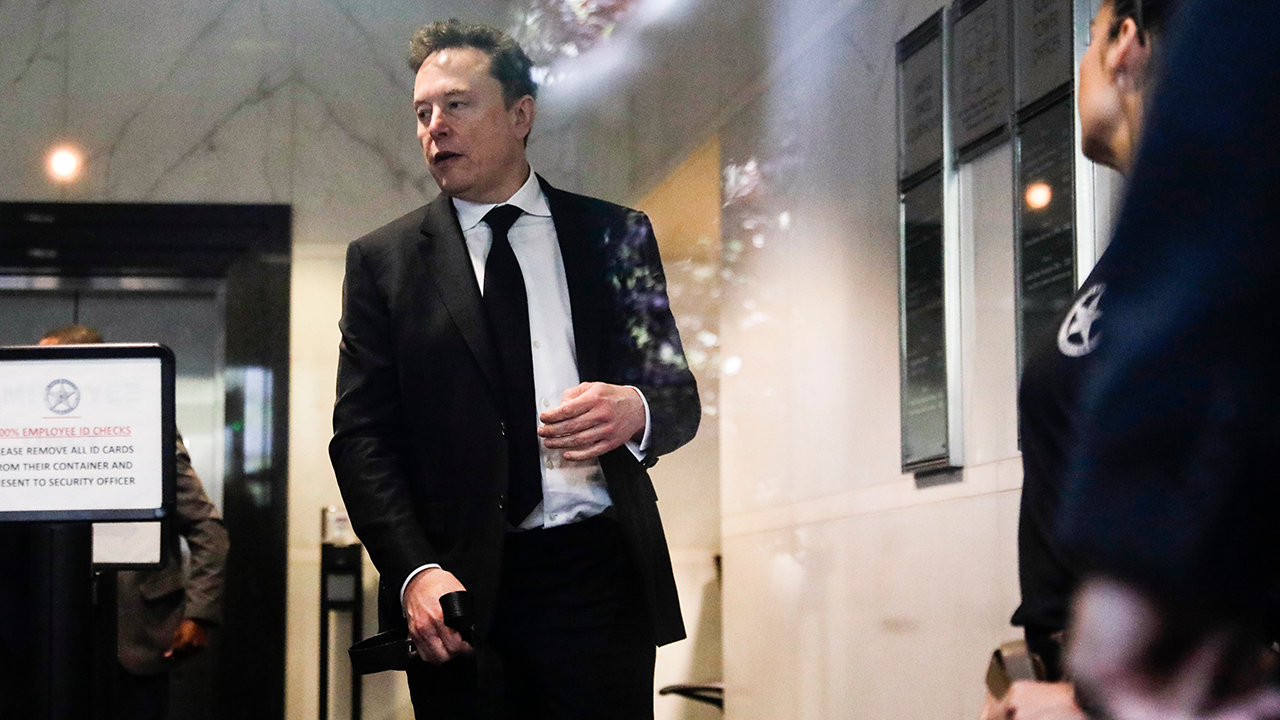
Elon Musk arrives for the trial

Elon Musk sued OpenAI seeking the removal of CEO Sam Altman and President Greg Brockman, as well as monetary damages he said he would give to OpenAI’s nonprofit. (Jessica Christian/San Francisco Chronicle via Getty Images)

His lawsuit sought the removal of OpenAI CEO Sam Altman and President Greg Brockman from their roles at the company. He also sought over $150 billion in damages from OpenAI and Microsoft, which Musk said he would provide to OpenAI’s nonprofit entity. Altman and Brockman were among OpenAI’s co-founders.

Advertisement

ELON MUSK SAYS HE WAS A ‘FOOL’ FOR FUNDING OPENAI: REPORT

Sam Altman is dark suit walking into courthouse

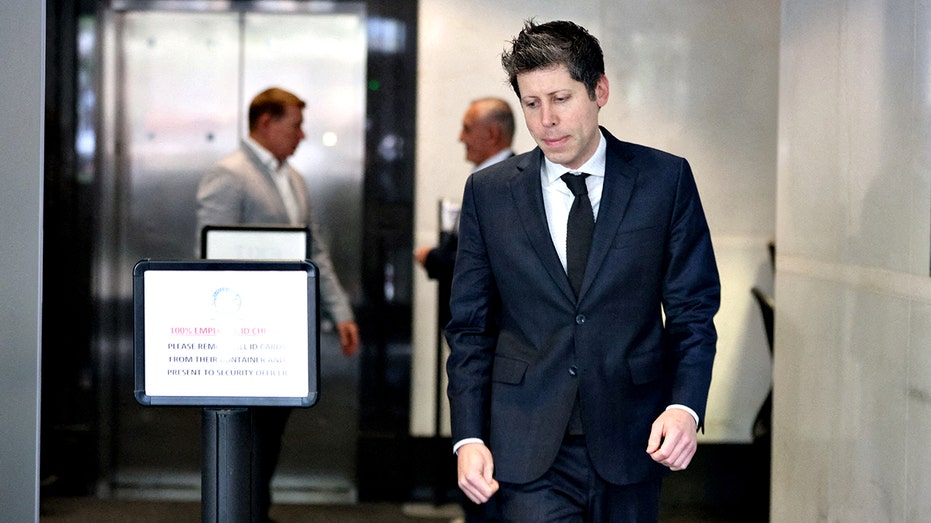
OpenAI CEO Sam Altman arrives at the federal courthouse, as the trial in Elon Musk’s lawsuit over OpenAI’s for-profit conversion continues, in Oakland, California, on May 14, 2026. (Reuters/Manuel Orbegozo / Reuters Photos)

Altman and OpenAI, now a company valued at $852 billion, argued there was never a promise to keep the company nonprofit permanently.

Elon Musk's lawsuit

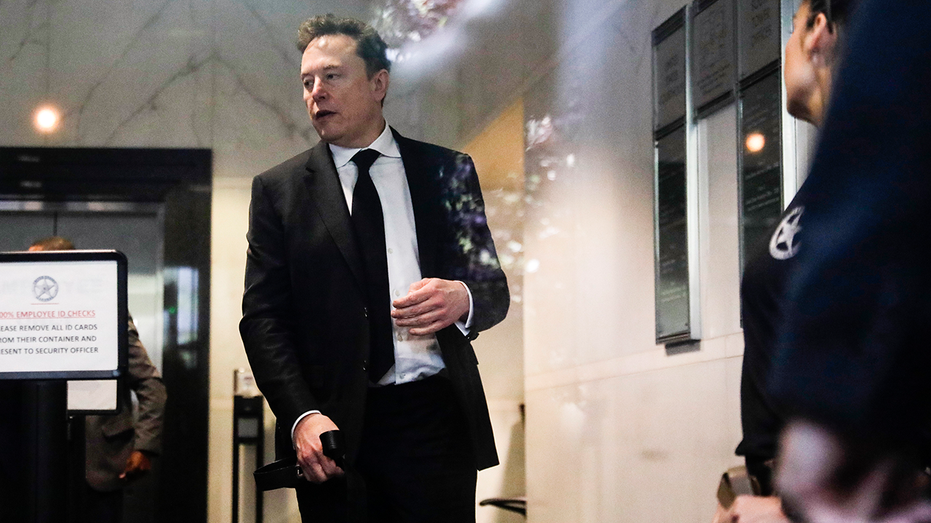
Elon Musk stands in an elevator to attend the trial in his lawsuit over OpenAI for-profit conversion at a federal courthouse, in Oakland, California, U.S., April 30, 2026. (Reuters/Manuel Orbegozo / Reuters)

CLICK HERE TO GET FOX BUSINESS ON THE GO

The company behind ChatGPT further countered Musk’s claims by noting that the Tesla CEO pursued a merger with OpenAI and was involved with discussions about creating a for-profit entity for the company before his departure from its board of directors. They also said they viewed the lawsuit as a tactic to boost his own AI startup, xAI, as a competitor to OpenAI.

Advertisement
Continue Reading

Business

Online Rumors Swirl Around Daughter Annie and Son-in-Law

Published

on

Zayed International Airport Abu Dhabi International Airport

TUCSON, Ariz. — More than 100 days after 84-year-old Nancy Guthrie vanished from her Catalina Foothills home, fresh online speculation has intensified around her daughter Annie Guthrie and son-in-law Tommaso Cioni, with unverified claims they have not been seen at their nearby Arizona residence for over a week.

Authorities have not publicly linked the couple to any wrongdoing, and no arrests have been made in the high-profile case involving the mother of NBC “Today” show co-anchor Savannah Guthrie. Pima County Sheriff’s Department officials continue to describe the investigation as active and ongoing, with FBI assistance, but have released limited new details amid efforts to protect leads.

Nancy Guthrie was last seen after a family dinner on Jan. 31, 2026. She was reportedly dropped off at her home by Annie and Tommaso Cioni. The next morning, family members reported her missing. Investigators found signs of forced entry, blood evidence at the property and a tampered doorbell camera showing a masked individual, according to details shared in media reports and family statements.

Self-described investigative commentator Jonathan Lee Riches, active on X, recently posted claims that Annie Guthrie and Cioni’s home appeared unoccupied, with their vehicle missing. Neighbors and online observers echoed similar observations, fueling theories on social media platforms like Reddit and X. However, mainstream outlets and journalists covering the case, including NewsNation’s Brian Entin, have reported no evidence implicating family members.

Advertisement

Sheriff Chris Nanos and the Pima County Sheriff’s Department have emphasized that the case began as a suspected abduction. DNA samples, including hair and blood from the scene, were sent to the FBI for advanced testing. A $1 million family reward remains active for information leading to Nancy Guthrie’s safe return.

Savannah Guthrie has maintained a relatively low public profile while balancing work and family pleas. On Mother’s Day 2026, she posted an emotional message urging prayers and sharing memories. She recently announced a new game show project but continues to advocate for her mother’s return. “We miss you with our every breath,” she wrote in one update.

The case has drawn intense media attention and amateur sleuth involvement, leading to complaints about trespassers and vloggers in the neighborhood. Officials have urged the public to avoid speculating and to report credible tips directly to law enforcement or the FBI tip line.

Early in the investigation, cryptocurrency ransom demands surfaced but went unresolved without proof of life. Searches have covered desert areas, with volunteers and law enforcement pursuing thousands of leads from surveillance footage and tips. As the case enters its fourth month, some former investigators suggest it may be shifting toward recovery efforts, though officials maintain hope.

Advertisement

Annie Guthrie and Tommaso Cioni were reportedly among the last to see Nancy alive. Their home has undergone consented searches by investigators in the past. Online speculation persists partly because of their proximity and family connections, but authorities and journalists stress the absence of public evidence tying them to foul play.

Pima County officials have conducted door-to-door inquiries and analyzed extensive video evidence. Sheriff Nanos has said investigators are “definitely closer” but has slowed public updates to safeguard the probe. The FBI’s involvement includes forensic work on items from the home.

The disappearance has captivated true-crime audiences nationwide, with figures like Khloé Kardashian publicly discussing it on podcasts. Amateur theories proliferate online, ranging from targeted abduction to more speculative family-related claims, but law enforcement has not named suspects.

Nancy Guthrie, described as active despite health challenges, lived independently in the Tucson area. Her vanishing without medication, shoes or other essentials raised immediate red flags. Family members, including Savannah, have highlighted inconsistencies in the timeline that continue to haunt the case.

Advertisement

As days stretch into months, the emotional toll on the Guthrie family is evident. Savannah returned to “Today” after an initial absence and has used her platform sparingly to appeal for information. The family’s reward offer underscores their desperation for answers.

Broader questions linger about security in the affluent Catalina Foothills neighborhood. The tampered camera and blood evidence suggest a deliberate act, yet the lack of immediate witnesses or clear motive puzzles investigators and the public alike.

Community vigils and independent searches continue, blending awareness efforts with criticism over potential interference. Officials caution that unverified social media claims can hinder progress by spreading misinformation or harassing those close to the case.

The Pima County Sheriff’s Department and FBI continue sifting through tips. Anyone with information is encouraged to contact authorities rather than engage in public speculation. A dedicated tip line and anonymous reporting options remain available.

Advertisement

Nancy Guthrie’s case highlights the challenges of high-profile missing persons investigations in the social media age. While digital sleuths generate leads, they also complicate official work. As the search surpasses 100 days with no confirmed proof of life, the focus remains on bringing resolution to the Guthrie family.

For now, the disappearance of Nancy Guthrie stands as an unresolved mystery. Law enforcement urges patience and vigilance, reminding the public that credible information could still break the case open. The family’s public appeals and private anguish continue amid a nationwide watch.

Continue Reading

Business

Starbucks prices tender offer for up to $1.32 billion in notes

Published

on


Starbucks prices tender offer for up to $1.32 billion in notes

Continue Reading

Business

GIFT Nifty jumps nearly 1% after reports of US relief on Iran oil sanctions

Published

on

GIFT Nifty jumps nearly 1% after reports of US relief on Iran oil sanctions
GIFT Nifty surged nearly 1% after reports suggested the United States may temporarily ease sanctions on Iranian oil exports as part of ongoing diplomatic discussions. The sharp move higher signalled a positive start for Indian equities after volatile trading in the earlier session, when concerns over rising crude oil prices and escalating tensions in West Asia had weighed heavily on market sentiment.

According to reports, Iran’s foreign ministry spokesperson said the country remains focused on ending the ongoing conflict. Iranian news agency Tasnim also reported that the US has proposed a temporary waiver on sanctions related to Iranian oil exports until a final agreement is reached.

The developments raised hopes that additional Iranian crude supply could return to global markets, easing pressure on oil prices and reducing fears of a prolonged energy shock.

Global crude prices have surged sharply in recent sessions amid concerns that tensions involving Iran could disrupt supplies in the Middle East, a region critical to global oil flows. India, which imports more than 80% of its crude oil requirements, remains particularly sensitive to rising oil prices because they directly impact inflation, the rupee and fiscal balances.

Advertisement

The latest reports therefore triggered relief buying across risk assets, especially in Asian markets and equity futures.


On Monday, benchmark indices had witnessed extreme volatility before recovering losses toward the close. BSE Sensex ended 77 points higher at 75,315 after falling more than 1,100 points during intraday trade. Nifty 50 closed nearly flat at 23,650 after staging a late recovery.
Vinod Nair, Head of Research at Geojit Investments, had said the prolonged US-Iran stalemate continued to cloud near-term market sentiment, while higher bond yields, elevated crude prices and rupee weakness reinforced inflation concerns.Hariprasad K, Research Analyst and Founder of Livelong Wealth, said markets witnessed aggressive short covering and selective value buying after the early panic selling phase.

He noted that export-oriented sectors such as information technology were increasingly being viewed as defensive allocations during periods of geopolitical uncertainty.

Analysts believe any diplomatic breakthrough involving Iran could reduce pressure on global crude prices and improve risk appetite across emerging markets including India. Brent crude had climbed above $110 per barrel during the previous session as investors feared possible disruptions to Middle East oil supplies.

Analysts said the market will continue to closely track developments around Iran-related negotiations because oil prices remain one of the biggest near-term risks for inflation and equity valuations globally.

Advertisement

(Disclaimer: Recommendations, suggestions, views and opinions given by the experts are their own. These do not represent the views of Economic Times)

Continue Reading

Business

IOC Q4 results: Cons PAT surges 78% YoY to Rs 14,458 crore, revenue rises 7%

Published

on

IOC Q4 results: Cons PAT surges 78% YoY to Rs 14,458 crore, revenue rises 7%
Indian Oil Corporation (IOC) reported a consolidated net profit at Rs 14,458 crore in the March-ended quarter versus Rs 8,124 crore in the year ago period, implying a 78% surge. The profits are attributable to the equity holders of the parent.

The revenue from operations posted a revenue growth of 7% to Rs 2,36,899 crore in Q4FY26 was versus Rs 2,21,360 crore posted by the company in the corresponding quarter of the previous financial year.

The company’s board also recommended a final dividend of Rs 1.25 per equity share subject to the approval of the shareholders at the upcoming Annual General Meeting (AGM). The final dividend will be paid within 30 days from the date of declaration at the AGM. The record date for payment of final dividend would be fixed and intimated in due course.

The company’s profit after tax (PAT) grew 11% on a sequential basis versus Rs 13,007 crore in Q3FY26 while the topline saw a marginal uptick of 0.27% quarter-on-quart versus Rs 2,36,257 crore in the October-December quarter of FY2026.

Advertisement

The state-run oil marketing companies incurred expenses of Rs 2.19 lakh crore in the quarter under review versus Rs 2.20 crore and Rs 2.12 crore in the corresponding quarter of the last financial year. The expenses were made on ithe heads like ‘Cost of Materials Consumed’, excise duty, purchase of stock in trade, employee benefits and finance cost, among other things.


The profit before tax (PBT) in the quarter under review stood at Rs 19,791 crore in Q4FY26 versus Rs 17,827 crore in Q3FY26 and Rs 10,044 crore in Q4FY25.
The company assets as on March 31, 2026 stood at Rs 5,28,956 crore versus Rs 5,07,200 crore as on March 31, 2025.The company in its filing to exchanges said the conflict in Middle East region which began in February, led to supply uncertainties and resultant volatility in the price of crude oil and petroleum products in the international market. However, the profitability for the year 2025-26 was largely insulated from the impact of these developments due to inventory procured at normal prices before the conflict, the filing said.

The company improved its debt-to-equity ratio to 0.53 in Q4FY26 versus 0.60 in Q3FY26 and 0.75 in Q4FY25.

The profit margin stood at 6.41% in Q4FY26 versus 5.72% in Q3FY26 and 3.78% in Q4FY25 while operating margin stood at 8.40% in Q4FY26 versus 7.94% in Q3FY26 and 4.96% in Q4FY25.

(Disclaimer: The recommendations, suggestions, views, and opinions given by the experts are their own. These do not represent the views of The Economic Times.)

Advertisement
Continue Reading

Business

NextEra Acquires Dominion in $67B Deal, Forging World’s Largest Utility Giant for AI Power Boom

Published

on

NextEra Acquires Dominion in $67B Deal, Forging World's Largest Utility

JUNO BEACH, Fla. — NextEra Energy Inc. announced Monday it has agreed to acquire Dominion Energy Inc. in an all-stock transaction valued at approximately $67 billion, creating the world’s largest regulated electric utility by market capitalization and a powerhouse positioned to meet surging electricity demand driven by artificial intelligence and data centers.

The deal, one of the largest in U.S. utility history, combines NextEra’s leadership in renewables and Florida operations with Dominion’s substantial regulated assets in Virginia and the Carolinas. The combined company will serve about 10 million customer accounts across four fast-growing states, own roughly 110 gigawatts of generation capacity and boast a diversified platform spanning regulated utilities, renewables, nuclear, gas and transmission infrastructure.

Under the terms, Dominion shareholders will receive a fixed exchange ratio of 0.8138 shares of NextEra Energy for each share of Dominion, resulting in NextEra shareholders owning approximately 74.5% of the combined entity and Dominion shareholders owning 25.5%. A small cash component includes a one-time $360 million payment to Dominion shareholders at closing. The transaction is expected to be tax-free to shareholders and immediately accretive to adjusted earnings per share.

NextEra, already the largest U.S. utility by market value with a market capitalization near $195 billion, will operate the new entity under its name on the New York Stock Exchange. The companies will maintain dual headquarters in Juno Beach, Florida, and Richmond, Virginia, along with Dominion Energy South Carolina’s operational headquarters in Cayce. Local utility brands — including Dominion Energy Virginia, Dominion Energy North Carolina and Dominion Energy South Carolina — will remain unchanged.

Advertisement

John Ketchum, NextEra’s chairman, president and CEO, will lead the combined company. Robert Blue, Dominion’s current chair, president and CEO, will serve as president and CEO of regulated utilities and join the board. The transaction has unanimous board approval and is expected to close in 12 to 18 months, subject to shareholder votes, regulatory approvals from the Federal Energy Regulatory Commission, Nuclear Regulatory Commission, state commissions in Virginia, North Carolina and South Carolina, and antitrust clearance.

The strategic rationale centers on scale amid unprecedented power demand. Data centers and AI infrastructure are driving electricity needs higher than at any time in decades. NextEra and Dominion together bring complementary strengths: NextEra’s expertise in large-scale renewables, battery storage and efficient operations pairs with Dominion’s strong presence in the PJM Interconnection, home to massive data center clusters in Northern Virginia.

The combined platform will feature more than 80% regulated operations, a $138 billion rate base expected to grow at about 11% annually through 2032, and over 130 GW of large-load opportunities in its pipeline. Executives project 9%+ adjusted earnings per share growth through 2032, supported by diversified growth across regulated utilities and long-term contracted businesses.

To benefit customers directly, the companies pledged $2.25 billion in bill credits for Dominion’s customers in Virginia, North Carolina and South Carolina, spread over two years after closing. Additional commitments include enhanced charitable giving, retention of approximately 15,000 Dominion employees with current compensation and benefits, and continued focus on reliability, storm resiliency and affordability.

Advertisement

Ketchum emphasized the customer-first approach. “Scale matters more than ever — not for the sake of size, but because scale translates into capital and operating efficiencies,” he said in a statement. “This enables us to buy, build, finance and operate more efficiently, which translates into more affordable electricity for our customers in the long run.”

Blue echoed the sentiment, highlighting shared commitments to reliable, affordable energy. “This combination brings together two strong operating platforms and creates an even stronger energy partner for Virginia, North Carolina, South Carolina and Florida,” he noted.

Wall Street reacted positively to the news. NextEra shares traded higher in early sessions, while Dominion shares jumped significantly on the premium implied by the exchange ratio. Analysts view the deal as transformative, positioning the new entity as a dominant player in the energy transition and the AI-driven power surge.

The merger caps years of consolidation pressures in the utility sector. NextEra had previously pursued large deals, including an unsuccessful attempt for Duke Energy. Dominion has been streamlining operations, including asset sales in recent years to focus on core regulated businesses.

Advertisement

Regulatory scrutiny will be a key hurdle. The transaction requires approvals across multiple jurisdictions, but executives expressed confidence given the complementary footprints with minimal overlap and the pro-customer elements like bill credits. The deal also aligns with broader industry trends of utilities scaling up to finance massive grid and generation investments.

Environmental and consumer groups are expected to weigh in during regulatory reviews. NextEra’s strong renewables portfolio could help address concerns about carbon emissions, while critics may question market concentration in certain regions. The companies stressed their track records in safety, reliability and community engagement.

For the broader energy sector, the combination signals confidence in long-term demand growth. Hyperscalers and tech giants are signing massive power purchase agreements, restarting nuclear plants and pushing for faster transmission builds. A larger, better-capitalized utility could accelerate these efforts while maintaining affordability.

The deal also highlights NextEra’s evolution from a Florida-focused utility to a national energy leader. Its unregulated renewables arm, one of the world’s largest, will complement Dominion’s regulated strengths, creating what executives call “North America’s premier energy infrastructure platform.”

Advertisement

Shareholders of both companies stand to benefit from enhanced scale, improved credit profiles and a robust dividend policy. NextEra plans 6% annual dividend growth through 2028. The combined entity targets a payout ratio below 55% by 2030.

As the utilities prepare for regulatory filings and integration planning, the announcement marks a pivotal moment in U.S. energy history. In an era of exploding electricity demand, the new NextEra-Dominion powerhouse aims to deliver the generation, transmission and innovation needed to power America’s future while keeping costs in check for millions of households and businesses.

The coming months will test whether this vision withstands regulatory review and delivers on promises of affordability and reliability. For now, the deal positions the combined company at the forefront of the industry’s most significant transformation in decades.

Advertisement
Continue Reading

Business

Bookmakers Threaten Legal Action Over Gambling Commission Affordability Checks

Published

on

Betting chief warns thousands of UK jobs at risk as online gaming tax doubles

Britain’s biggest bookmakers are squaring up for a High Court fight with the Gambling Commission over a controversial new regime of so-called affordability checks, in a row that threatens to drag the regulator into yet another costly courtroom battle and reopen one of the most contentious debates in UK consumer-facing business.

Industry chiefs say the checks, which would block customers from placing further bets once they cross specific loss thresholds, contain “serious failings” and risk pushing hundreds of thousands of punters into an unregulated black market that is already mushrooming online. With the Gambling Commission expected to decide this week whether to impose the rules unilaterally, the Betting & Gaming Council (BGC) has put the regulator on formal notice that legal action is now firmly on the table.

A flagship reform under fire

Affordability checks – formally known as financial risk assessments (FRAs), sit at the heart of the biggest overhaul of British gambling laws in a generation, introduced under the previous Conservative government in 2023. The intention was straightforward: identify high-spending customers who may be in financial difficulty and intervene before harm escalates. The political promise that accompanied it was equally clear – any such checks would be “frictionless”, invisible to the ordinary punter.

Under the proposed regime, an FRA would be triggered when a customer loses £1,000 or more in 24 hours, or £2,000 over 90 days. Operators that fail to carry out the checks risk regulatory action; customers who refuse to comply face being locked out of their accounts.

The Commission has leant heavily on the results of its pilot, which ran from September 2024 to April 2025 and used around 800,000 historical data points. According to its own published findings, only 3 per cent of gamblers would face an assessment, and 97 per cent of those would be “frictionless” – meaning the customer would not have to lift a finger.

Advertisement

The BGC disputes almost every part of that picture.

“Serious failings” and a 20% problem

In a letter dated 21 April and addressed to the interim chair of the Gambling Commission, seen by The Sunday Times, the BGC set out “grave concerns about the wider ramifications” of the FRA proposals. The trade body argues that once you strip out customers spending less than £200 a year on betting – essentially casual punters who place the occasional flutter, the true proportion of regular customers caught up in checks could be closer to 20 per cent, not 3 per cent.

It also flagged stark inconsistencies in data drawn from the three credit-reference agencies involved in the pilot. In more than half of some cases, the BGC said, a risk flag was raised by only one of the three agencies, a finding that, if accurate, undermines the central claim that the system can reliably distinguish a vulnerable customer from a comfortable one.

Grainne Hurst, BGC chief executive, did not mince her words: “Given the serious concerns raised by operators, there is a real risk that the industry could ultimately be left with little choice but to consider legal challenges if these proposals proceed without further scrutiny.”

Advertisement

The Commission, the BGC told The Sunday Times, has not yet responded to the April letter.

One senior industry source put it more bluntly: “It’s ridiculous that we’ve been forced to consider such a dramatic step. I hope the Gambling Commission and government see sense. They’re blind to the damage these checks could cause.”

The black market gathering pace

The commercial backdrop for the dispute is what makes it a story for British business, not just the gambling lobby. The Commission’s own reforms, first unpacked by Business Matters, have already raised the cost of compliance for licensed operators and tightened the screws on bonusing, customer interaction and product design – a trend examined in more detail in our analysis of the 2026 gambling reforms.

The fear inside the regulated industry is that affordability checks tip an already finely balanced equation in the wrong direction. The BGC estimates that the offshore black market has more than tripled in size since 2022 and that unlicensed operators could be spending £1 billion a year on advertising by 2028, more than the entire regulated UK market combined. The trade body warns that as much as £300 million in tax receipts could be lost as customers migrate to operators that ask no questions and offer no protections.

Advertisement

Critics counter that the industry is talking up the black-market threat to protect incumbents. Either way, as our earlier reporting on the business of British bookmakers made clear, the licensed sector is a meaningful contributor to the Treasury, to racing’s levy and to high-street employment – and few in Whitehall want to be seen handing market share to operators based in jurisdictions Britain does not regulate.

“The evidence so far suggests these proposals are not fit for purpose and risk driving people away from the regulated market towards the growing illegal online black market, where there are no protections and no safeguards,” Hurst said.

A regulator on the back foot

For the Gambling Commission, the prospect of another High Court fight is awkward, to put it mildly. The regulator has been at the centre of an unusually heavy caseload in recent months, including a bruising dispute with Richard Desmond, the billionaire former proprietor of the Daily Express, over the awarding of the multibillion-pound National Lottery contract, and a separate privacy case brought by executives from Entain, the parent company of Ladbrokes and Coral.

It is also rudderless at the top. Andrew Rhodes, the Commission’s chief executive, departed abruptly earlier this month to join Hawkbridge, the new advisory arm of law firm Harris Hagan – a firm that has acted for several of Britain’s largest bookmakers. The optics of the departure are not lost on operators now contemplating litigation.

Advertisement

In a statement, the Commission defended its approach: “A pilot was used to test how frictionless the White Paper policy could be and give us useful findings on how it could be implemented. We have been rigorously assessing that work in detail throughout the pilot, drawing upon a range of evidence and input from pilot participants and advised by NatCen. The proposed approach has been subject to significant scrutiny already and we have published findings during the process.”

What to watch this week

For the SME-heavy supply chain that hangs off Britain’s regulated betting industry, from data providers and payments firms to marketing agencies and the racing sector, this week’s decision matters. A green light without industry buy-in raises the prospect of months of legal uncertainty, suspended investment and contractual disputes. A pause or a redesign would buy time but extend the regulatory grey zone that has already prompted operators to scale back UK exposure.

What is harder to dispute is that the Commission’s room for manoeuvre is shrinking. With High Court action threatened, a chief executive gone and a black market growing in confidence, the regulator’s next move will be watched not just by bookmakers but by every consumer-facing business that depends on a stable, proportionate licensing regime.


Amy Ingham

Amy is a newly qualified journalist specialising in business journalism at Business Matters with responsibility for news content for what is now the UK’s largest print and online source of current business news.

Advertisement

Continue Reading

Trending

Copyright © 2025