
Connect with us
DAPA Banner
DAPA Coin
DAPA
COIN PAYMENT ASSET
PRIVACY · BLOCKDAG · HOMOMORPHIC ENCRYPTION · RUST
ElGamal Encrypted MINE DAPA
🚫 GENESIS SOLD OUT
DAPAPAY COMING

Tech

Sonus faber Lets Il Cremonese Ex3me Lamborghini Edition Buyers Spec Their Supercar Speakers

Published

on

Sonus faber doesn’t do partnerships for the sake of headlines. The Vicenza loudspeaker maker has a long history of bringing its sound into Italian automotive design, including systems inside the Maserati Grecale Trofeo and other Maserati models we drove across Northern Italy, so the Lamborghini collaboration was never going to be a one off stunt.

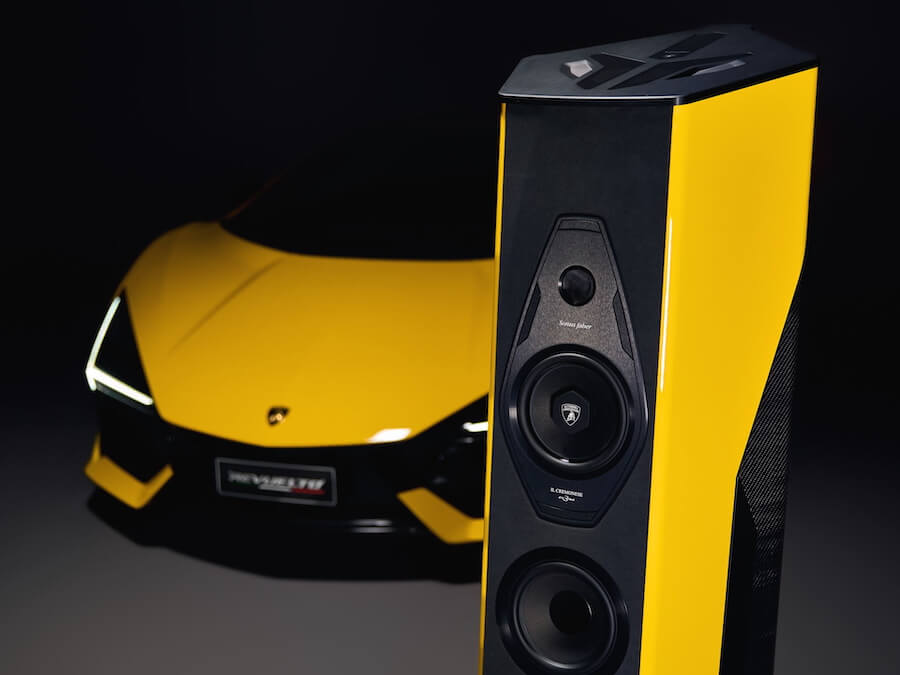
When the Il Cremonese Ex3me Automobili Lamborghini Edition launched in 2025, it was limited to just 50 pairs. For 2026, Sonus faber is handing buyers the keys to the design studio. Through a new Digital Configurator, customers can now create a bespoke version of the flagship loudspeaker, leaning even harder into Italian craftsmanship, personalization, and the kind of performance obsession both brands treat like religion.

sonus-faber-il-cremonese-ex3me–automobili-lamborghini-edition-loudspeaker-car

Il Cremonese Ex3me Automobili Lamborghini Edition Highlights

For the full technical breakdown, refer to our companion article published when the Il Cremonese Ex3me Automobili Lamborghini Edition was first announced in 2025. The key features and specifications are summarized below.

The Il Cremonese Ex3me Automobili Lamborghini Edition is a para-aperiodic vented, 3.5-way floorstanding loudspeaker designed for precision, scale, and serious dynamic output. Sonus faber says the driver components were selected for low distortion, low resonance, and long-term reliability, which is exactly what one expects when Italians put carbon fiber near anything expensive.

Advertisement

High frequencies are handled by a 30 mm Diamond Like Carbon Beryllium dome tweeter, while the midrange is covered by a 180 mm driver with a neodymium magnet system. Bass output comes from dual 180 mm woofers and dual 220 mm honeycomb long throw subwoofers using Nanocarbon Fiber and Nomex construction for a combination of stiffness, low mass, and control.

The crossover points are set at 80 Hz, 250 Hz, and 2,500 Hz to manage the transition between drivers. Claimed frequency response is 25 Hz to 35 kHz, with 92 dB sensitivity, a 4 ohm nominal impedance, and recommended amplifier power from 100 to 800 watts. Translation: bring real amplification, not a polite little amp wearing loafers.

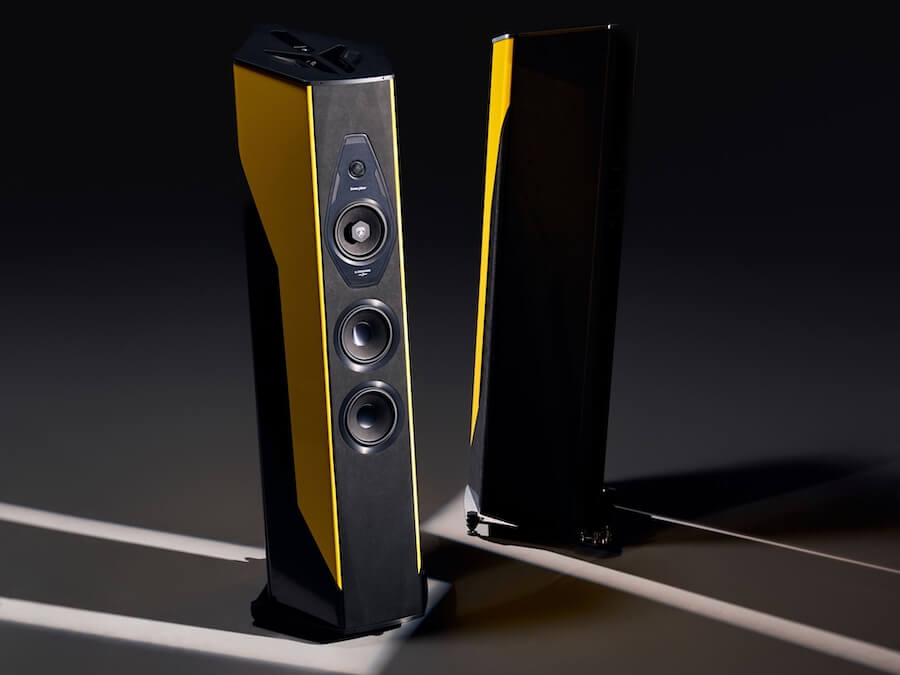
The cabinet uses Sonus faber’s five-sided rhomboidal diamond shape, blending acoustic control with Lamborghini inspired design cues. The standard version of the collaboration features a carbon fiber finish, Lamborghini paint, Corsatex by Dinamica, and black aluminum accents. Subtle? Not exactly. But neither is a Lamborghini.

sonus-faber-il-cremonese-ex3me–automobili-lamborghini-edition-loudspeakers
Sonus faber Model Il Cremonese Ex3me Automobili Lamborghini Edition 
Product Type Floorstanding Speaker
Price $130,000 / Pair
Speaker Configuration 3.5-way, full para-aperiodic vented box
Tweeter 1 x 30 mm, Diamond-Like Carbon Beryllium dome diaphragm.
Midrange 1 x 180 mm, Neodymium Magnet System.
Woofer 2×180 mm.
Subwoofer 2×220 mm Nanocarbon Fiber/Nomex Honeycomb Long Throw Subwoofer.
Crossover Points 80, 250, 2500 Hz
Frequency response 25 Hz – 35000 Hz
Sensitivity 92 dB SPL (2.83V/1 m)
Nominal impedance 4 ohm
Recommended Amplifier Power 100W – 800W, undistorted signal
Dimensions (HWD) 1450 x 490 x 636 mm / each

57 x 19.3 x 25 in / each

Advertisement
Weight 84 kg / each
185 lbs / each
Cabinet Rhomboidal diamond shape
Carbon fiber / Lamborghini paint
Corsatex by Dinamica
Finish Black aluminum
Sonus faber Il Cremonese Ex3me Loudspeaker custom configurator

The Custom Program 

The Il Cremonese Ex3me Automobili Lamborghini Edition Custom Program gives buyers the ability to personalize their loudspeakers through a curated selection of colors, materials, and finishes, including select shades from Lamborghini’s Ad Personam range.

Each design is intended to become a bespoke expression of Italian luxury, performance, and sound.

The Custom Program lets owners create a one of a kind Il Cremonese Ex3me Automobili Lamborghini Edition loudspeaker while preserving Sonus faber’s sonic signature and design language.

Using the Digital Configurator, customers can personalize materials and finishes, add metallic accents, choose exclusive surface treatments, and select from a curated color palette inspired by Lamborghini’s automotive heritage.

Advertisement. Scroll to continue reading.
Advertisement

The goal is straightforward: give buyers a more engaging way to shape the look of a very serious loudspeaker. Because apparently even a Lamborghini themed Sonus faber needed more Italian attitude.

Can Be Customized Online or at Lamborghini Ad Personam Lounges

Clients can configure their speakers either directly via the Sonus Faber online configurator or through selected Lamborghini Ad Personam lounges. From color combinations and material choices to the smallest decorative details, every option is carefully curated to ensure a harmonious and emotionally resonant result.

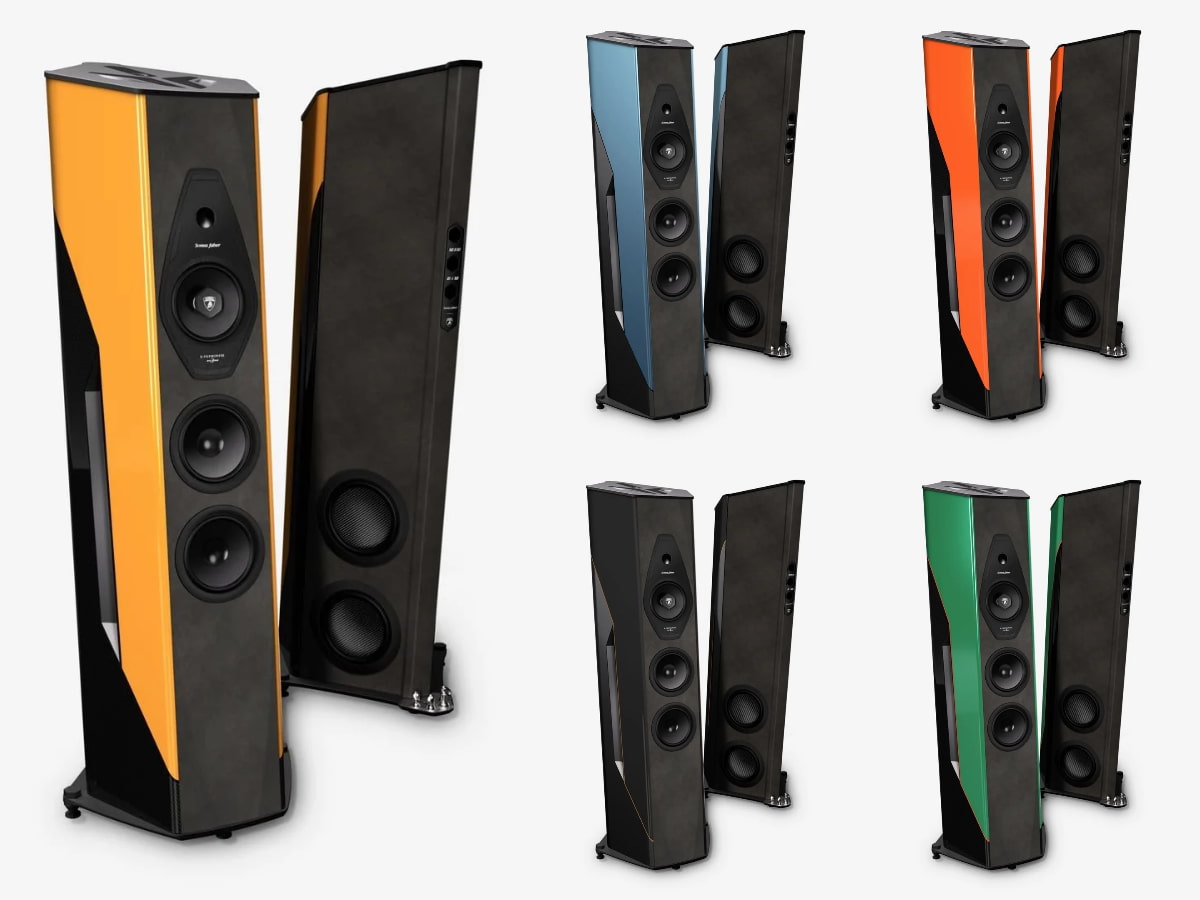
Developed between Sant’Agata Bolognese and the Sonus faber atelier in Vicenza, Italy, the Custom Program transforms the Il Cremonese Ex3me Automobili Lamborghini Edition into a personal creation. The Digital Configurator provides a curated palette of 30 side panel colors — among them a selection of iconic Ad Personam finishes.

The front baffle cover can be selected in CorsaTex by Dinamica, for a technical, performance-driven aesthetic, or in genuine leather, for a more refined and tactile luxury finish. Metal details, including the top, phase plug, flange, base, feet, and back plate can be finished in Nero, Gun Metal, Silver, or Bronze, allowing every element to become part of a cohesive personal expression.

Advertisement

For customers, the result is more than a customized loudspeaker. It is a bespoke meeting of two Italian brands, Lamborghini and Sonus faber, where performance, design, and personal expression all get a seat at the table.

Sonus faber Il Cremonese Ex3me Loudspeakers Standard Edition
Standard Edition – Sonus faber Il Cremonese Ex3me Loudspeakers

The Bottom Line 

The Il Cremonese Ex3me Automobili Lamborghini Edition Custom Program is not just Sonus faber offering a louder paint menu. It builds on one of the Italian manufacturer’s most ambitious loudspeakers, shaped by the design mind of Livio Cucuzza, and wraps it in a level of personalization normally reserved for six figure cars with very angry engines.

The appeal is obvious: this is a serious Sonus faber loudspeaker first, with Lamborghini design language, materials, finishes, and Ad Personam access layered on top. The price has not been announced, but with the standard Il Cremonese Ex3me at $75,000 per pair and the 2025 Lamborghini Edition at $130,000 per pair, nobody should expect a coupon code. This is for high end audiophiles, Lamborghini loyalists, and collectors who want Italian performance with their fingerprints all over it. Bring a polishing rag. Nobody wants prosciutto fingerprints on Italian sculpture.

sonus-faber-il-cremonese-ex3me-loudspeakers-lamborghini-automobili-edition-colors
Automobili Lamborghini Edition – Sonus faber Il Cremonese Ex3me Loudspeakers

Price & Availability

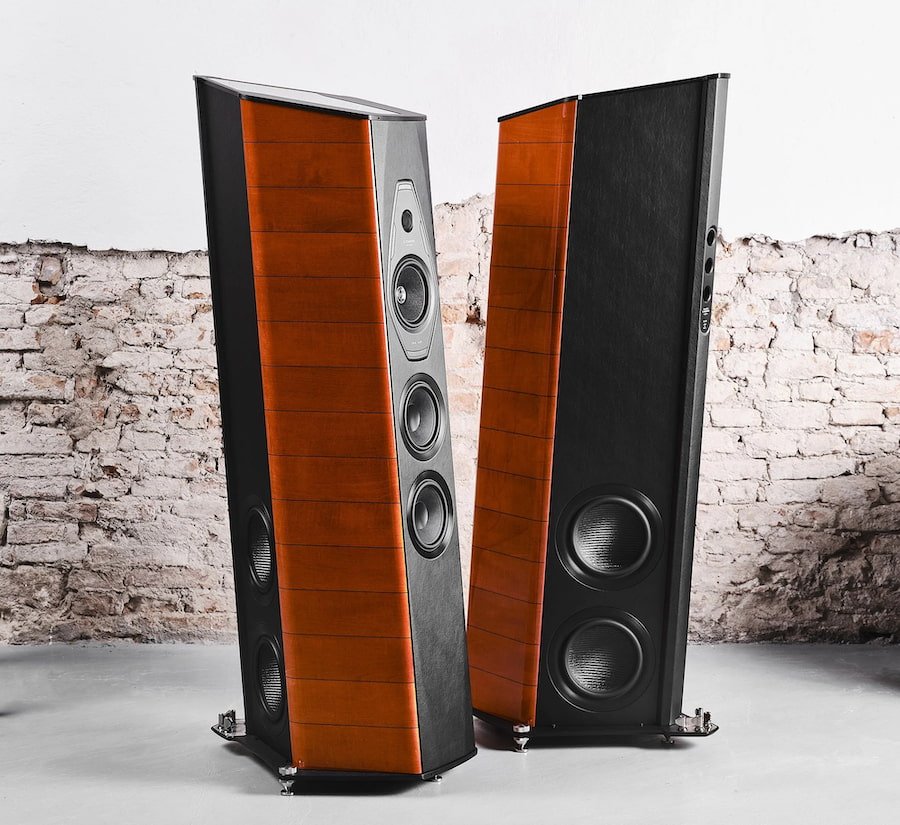
The “Standard Edition” Sonus faber Il Cremonese Ex3me loudspeakers in in red violin high gloss wood finish are available for $75,000 USD per pair.

Advertisement

The “Automobili Lamborghini Edition” jumps to $130,000 per pair in five colors options.

Pricing is unavailable for the “Custom Edition”, but you can select your finishes and colors at configurator.sonusfaber.com and await an email reply.

For more information: sonusfaber.com

Advertisement

Source link

Continue Reading
Click to comment

You must be logged in to post a comment Login

Leave a Reply

Tech

Meta Is Reportedly ‘Reassigning’ 7,000 Employees To AI-Focused Roles

Published

on

The company is also expected to lay off 8,000 workers this week.

Meta is not only laying off thousands of workers on Wednesday due to artificial intelligence, it’s also moving thousands to new roles within the company. According to Reuters and The New York Times, Meta HR head Janelle Gale has notified employees that 7,000 of them will be moved to four new organizations focused on building new AI tools and apps. Gale reportedly wrote in the internal memo seen by the publications that the restructuring “will make [the company] more productive and make ⁠the ​work more rewarding.” 

The new organizations will use “AI native design structures” and will not have as many layers of management per employee, Gale reportedly wrote. She told employees to work from home on Wednesday, May 20, and to wait for Meta’s email about their possible new roles, though some of the workers had already been transferred. The company will also be sending out notifications to some of the people that will be laid off that day. 

If you’ll recall, Meta told employees in late April that it’s cutting 8,000 jobs and will also be closing 6,000 open jobs. Gale reportedly told them in a memo at the time that it was “part of [Meta’s] continued effort to run the company more efficiently” and will allow it to offset its other investments. While she didn’t elaborate, Gale was most likely talking about Meta’s bets on artificial intelligence. Companies across the tech industry have been actively laying off workers for a while now to put more of their money into their AI endeavors. 

Advertisement

Meta is betting big on AI after winding down its plans for the metaverse, which didn’t quite take the world by storm as it had hoped. It’s planning to build data centers with “tens of gigawatts” within this decade. It created a “superintelligence” team of AI experts, with company chief Mark Zuckerberg even hand-picking potential recruits and inviting them to his home. It’s building AI agents and putting its AI chatbot in several of its products. The Times says Zuckerberg told investors the company is planning to spend between $115 billion to $135 billion this year, mostly on AI development. 

By the end of 2025, Meta had around 78,000 employees. The layoffs affecting 8,000 workers will, thus, eliminate nearly 10 percent of the current roles within the company. Reuters says Meta will even cut more jobs later this year. Workers affected by the layoffs will get 16 weeks of severance pay, with an additional two extra weeks for every year they’d been with the company. 

Advertisement

Source link

Continue Reading

Tech

Lenovo G02 is the Retro Handheld You Probably Never Knew Just Launched

Published

on

Lenovo G02 Handheld Game Console
Lenovo quietly launched the G02 into online marketplaces a few weeks ago, and it has already piqued the interest of retro gaming fans. Aside from being lightweight (around half a pound), you can get it in black, white, or, if you’re feeling daring, a bright red and black combination. The packing is entirely Lenovo, and when you boot it up, the splash screen matches.


On board, there is a single analog stick as well as a full complement of buttons, including a directional pad with some clever subtle illumination. This tiny guy has shoulder triggers on the top edge, as well as volume and power controls on the side. There are two USB-C connections for charging and data transfer, a headphone socket for music playback, and a microSD slot that can accept a 1 terabyte card, providing peace of mind for those with extensive game collections. As an aside, the charger that comes with it is very slow, so you may find yourself searching for a faster charger from another device.

Sale


R36MAX Retro Gaming Console, 4.0 Inch 720×720 IPS Screen Retro Handheld Game Console with 18,000+ Classic…
  • High-Performance Open-source Linux System: The Linux open source system runs smoothly, with 30+ emulators. Powered by a 1.5GHz 64-bit RK3326 CPU with…
  • 4.0-inch IPS HD Screen: The 4.0-inch IPS screen with 720 x 720 resolution looks super bright and sharp, it offers vivid colors and a very clear image…
  • 4000mAh Battery Lasts A Long Time: The 4000 mAh battery lasts a long time, which is perfect for road trips, downtime, or reliving your favorite games…

Lenovo G02 Handheld Game Console
The 4.5-inch IPS screen has a typical 4:3 aspect ratio with a resolution of 1024 x 768. It does a good job of highlighting the colors, while some early users have noticed a minor wash in bright settings. Brightness is only changeable in the menu; I can’t find a quick toggle, however it remains readable in most indoor lighting.

Lenovo G02 Handheld Game Console
A Rockchip RK3326 CPU and 1GB of RAM power a lightweight Linux installation with an EmulationStation interface. The device comes pre-loaded with tens of thousands of titles from a variety of classic platforms. Users can easily replace out the included generic storage card for a better one and load up their own collections.

Lenovo G02 Handheld Game Console
The battery life is decent, lasting 3-6 hours depending on what you’re playing and how bright the screen is. Given the lightweight OS, it manages to go a little further than some of the bulkier Android or Windows handhelds with comparable technology. You can get your hands on this for roughly $60 on big import sites (AliExpress), but prices drop considerably lower if you buy in volume.

Lenovo G02 Handheld Game Console
There are still unanswered questions about whether Lenovo actually created this device. They have not published a public comment, and there is no product page on the main websites. It’s possible that some customers simply purchased the Lenovo branding on the side, given the box and emblem appear to be legitimate, while others believe it was a third-party operation that slapped the Lenovo label on the thing.
[Source]

Advertisement

Source link

Continue Reading

Tech

Amazon's Alexa can now generate podcasts on whatever topic you want. But, will anyone listen?

Published

on


Prime subscribers in the US can now ask Alexa to create audio podcasts on virtually any topic. To provide the AI with reliable sources, Amazon has partnered with The Washington Post (owned by CEO Jeff Bezos), Reuters, the Associated Press, TIME, Forbes, Business Insider, Politico, USA Today, Vox, and more…
Read Entire Article
Source link

Continue Reading

Tech

Gas Networks Ireland to connect Cork waste-to-energy plant to national gas grid

Published

on

Stream BioEnergy’s project is set to become Ireland’s largest biomethane plant using mixed food and garden waste.

Gas Networks Ireland has signed an agreement with Stream BioEnergy that will see the national energy provider connect a new €80m biomethane facility in Little Island, Cork, to the national gas network. 

Stream BioEnergy’s new facility in Little Island is expected to become operational in 2027 and when completed will process roughly 90,000 tonnes of domestic and commercial food and garden waste yearly. 

Using anaerobic digestion technology, the plant will produce 80 GWh of renewable biomethane each year, which is enough renewable gas to meet the annual heating demand of approximately 6,000 homes.

Advertisement

The project will be Ireland’s largest biomethane plant using mixed food and garden waste and represents a significant step forward in the country’s transition to renewable energy and circular waste management. 

The facility will also reduce the reliance on fossil fuels and artificial fertilisers and is expected to reduce greenhouse gas emissions by approximately 40,000 tonnes of carbon dioxide annually. 

The Stream Bioenergy Little Island facility is the seventh biomethane production plant to be contracted to connect to the national gas network in the last three years with further contracts currently at an advanced stage of discussion.

Commenting on the announcement Gas Networks Ireland’s head of business development Karen Doyle said: “This agreement with Stream BioEnergy marks another important milestone in the development of Ireland’s renewable gas sector. Biomethane has a vital role to play in supporting Ireland’s transition to a lower-carbon energy system while also delivering sustainable solutions for organic waste management.

Advertisement

“Connecting facilities such as this to the national gas network demonstrates how existing infrastructure can support Ireland’s climate action targets, energy security and circular economy ambitions.”

Morgan Burke, the chief operating officer of Stream BioEnergy, added, “Our project in Little Island will provide for sustainable management of organic waste, enhance energy security, whilst contributing to our energy transition and decarbonisation targets in a meaningful way.”

Also in Cork, a new onshore renewable energy company has launched following the completion of Copenhagen Infrastructure Partners (CIP)’s acquisition of Ørsted’s European onshore business. Cork was chosen as the European headquarters. Perigus Energy, formerly part of Ørsted, has 373MW of operational onshore wind farms across the island, with a further 179MW currently under construction.

Don’t miss out on the knowledge you need to succeed. Sign up for the Daily Brief, Silicon Republic’s digest of need-to-know sci-tech news.

Advertisement

Source link

Continue Reading

Tech

Apple was dying by the end of the 90s, but then it opened its first ever Apple Store 25 years ago – and the rest is history

Published

on

These days, there are about 550 Apple Stores around the world, with locations popping up in countless major cities and across five of the planet’s continents. They are, in other words, a serious success story for Apple.

Today marks the 25th anniversary of the opening of the world’s first two Apple Stores. Found in McLean, Virginia, and in Glendale, California, they were opened on this day way back in 2001.

Source link

Continue Reading

Tech

LG’s UltraGear Is A Native 1,000Hz Full HD Gaming Monitor

Published

on

The company has yet to reveal its price and availability.

LG has introduced what it claims is the world’s first Full HD (1,920 x 1,080) gaming monitor with a native 1,000Hz refresh rate. The company designed the new LG UltraGear with fast-paced first-person shooters in mind, where accurate aiming and speedy reaction times are of utmost importance. It’s most likely overkill for most people, even gamers who play just for the pleasure of it. For competitive players who value high refresh rates in monitors the most, however, the UltraGear seems to be a good model to consider. 

Samsung and Acer had launched 1,000Hz models over the past months, but they’re dual-mode monitors that require players to lower their resolution in order to enjoy the highest refresh rate they’re capable of. Players can only activate their 1,000Hz refresh rate capability if they switch to 720p in resolution. In Acer’s case, its monitor switches to 500Hz if it’s at 1440p. LG says the UltraGear can achieve native 1,000Hz at Full HD resolution, which means its screen updates 1,000 times per second. 

The higher the refresh rate, the less a screen lags. Monitors with high refresh rates can show moving objects to the users more clearly with less motion blurring and stuttering. Further, it reduces the delay between physical mouse movements or keyboard clicks and the action on screen. Most monitors these days top out at 240Hz, and that’s perfectly fine for most users, even gamers who play FPS titles. Since 1,000Hz monitors are rare, we can’t quite say if they deliver a noticeably better experience that would make them a must-have. Again, LG’s potential customers for this model are mostly highly competitive gamers and actual esports players. 

Advertisement

The UltraGear has a 24.5-inch display with an IPS panel and low-reflection film. It has a small base so it doesn’t take up a lot of space and allows users to adjust its tilt and height for the perfect view. It also has an integrated hook for headset storage. Like a lot of devices released these days, UltraGear comes with AI capabilities. It has on-device AI Scene Optimization that adjusts picture settings according to genre, as well as AI Sound for spatial audio. Unfortunately, LG has yet to reveal the model’s pricing and availability. 

Source link

Advertisement
Continue Reading

Tech

Tim Cook, the man who grew Apple by trillions of dollars

Published

on

Tim Cook on stage at Apple Park- image credit: AppleTim Cook on stage at Apple Park- image credit: Apple

He was a businessman instead of a designer, but as Apple CEO, Tim Cook also had to become far more of a politician than any of his predecessors. Here’s how he started at Apple, ran the company, and will end his career.

Tim Cook was Apple’s seventh CEO, he was the longest-serving, and he was only the third who wasn’t fired. Then it’s true that like every Apple CEO before him, he was white, male, and a similar age, but in business terms, he was also the most transformative of them all.

That includes being more business and financially transforming than Steve Jobs. Where Cook will never be as much remembered for products as Jobs still is, he was more of a businessman and, latterly, vastly more of a politician.

Advertisement

It is because of Tim Cook that Apple became the most valuable company in the world. It is because of him that Apple’s valuation topped $4 trillion.

And it is also because of both his politics and his logistical skill that Apple weathered Trump’s tariffs.

Rehearsal for success

Arguably Mike Markkula effectively had the role and responsibilities of a chief executive officer while he was recruiting Michael Scott to be the first official CEO. Following that, Markkula became Apple’s second CEO, while he was recruiting John Sculley.

Two middleaged men stand close together indoors, conversing; one faces forward with arms crossed, the other in glasses and dark clothing holds a white mug, background slightly blurred

Tim Cook (left) with Steve Jobs- image credit: Apple

Advertisement

But Tim Cook was officially acting CEO twice before getting the role full time. That’s because he filled in for Steve Jobs on at least the two extended periods when Jobs was on sick leave.

Then once more with the arguable exceptions of Markkula and Jobs, Tim Cook was the first Apple CEO to be promoted from within the company. He came in hot, then, knowing the company, and having been a key part of its success in the Steve Jobs years.

What Cook brought to the CEO role

Just as with John Sculley before him, Tim Cook needed no persuading to meet with Steve Jobs. And just as with Sculley, Cook had no intention of actually joining Apple afterwards.

Both men were just interested to meet with the near-legend who was Jobs. Then just as Sculley hadn’t planned to leave Pepsi, this was now 1998 and Cook was too well established as vice president of corporate materials for Compaq, after years being with IBM.

Advertisement
Two middleaged men with short gray hair sit onstage against a dark blue background, one speaking while holding a cup, both wearing glasses and dark casual tops

Tim Cook (left) with Steve Jobs- image credit: Apple

Professionally and financially, Cook was heading to what looked like the top of his field. It sounds now as if the sole person telling him he should join Apple was Steve Jobs, and it’s certain that everyone else Cook asked advice from winced at the idea.

Yet once more there was the allure of Jobs’s powers of persuasion. Jobs presumably wouldn’t have been thinking ahead to his successor as CEO yet, but still he managed to make Chief Operating Officer sound irresistible.

Apparently, the key to that was how strongly Jobs was directing Apple and conveying the kind of company he was making it into.

Advertisement

“[So] I was never going to find my purpose working some place without a clear sense of purpose of its own,” Cook said in a commencement speech in 2017. “I tried meditation, I sought guidance and religion.”

“I read great philosophers and authors,” he continued. “In a moment of youthful indiscretion, I might even have experimented with a Windows PC, and, obviously, that didn’t work.”

It’s easy to say now in hindsight that he made the right choice because of what Apple did become, and what he became within Apple. But it didn’t take years for hindsight to kick in, as a suddenly struggling Compaq was acquired by Hewlett-Packard in 2002.

Perhaps if Cook had stayed, Compaq might have better managed the price war it got into with Dell. But whether he could have mitigated against Compaq’s dark days, he joined Apple when it was only just out of its own worst time.

Advertisement

Steve Jobs had got Apple into safer waters by cutting away at costly niche products. Then Cook cut away at what he considered to be unnecessary expense.

Three men sit on stools on a stage; the middle man gestures while holding a water bottle, and all wear casual clothes with jeans and microphones attached

L-R: Tim Cook, Steve Jobs, Phil Schiller- image credit: Apple

Most specifically, this is the point when Apple moved away from owning its own factories. That itself was a risky move because you’re only deferring costs by renting, and the new owners need to make a profit too.

But in Apple’s case, relying on third-party factories meant that it was no longer tied to its own expensive plants and facilities. It could change suppliers incredibly quickly, if necessary, and also order only what it needed, when it is needed.

Advertisement

This Just in Time manufacturing system puts the onus on these third-party firms to deliver components. That in turn meant that suddenly Apple no longer needed to hold stock, either of components or finished devices.

It was dependent on those suppliers, certainly, but before Apple, only Dell had seen the real benefits of this. “If I’ve got 11 days of inventory and my competitor has 80,” said Michael Dell in the late 90s, “and Intel comes out with a new 450 megahertz chip, that means I’m going to get to market 69 days sooner.”

Bold choices

Whether you rate Tim Cook or not, he doesn’t tend to come across as someone who makes wild decisions as CEO. But he did gamble as COO.

Specifically, when the iMac was being developed, it was Cook who booked an enormous amount of space on freight aircraft. He spent millions when conceivably the iMac might not have been finished in time.

Advertisement
Smiling man in glasses and dark turtleneck sits cross-legged on a table, holding a colorful translucent CRT desktop computer against a dark background

Steve Jobs (pictured) and Jony Ive are the nest-known reasons for the iMac’s success, but Cook was also integral – image credit: Apple

It was, and the iMac was also a hit, so even at first glance, it looks like Cook’s gamble paid off. Apple had a huge success and also had the ability to ship that device to people.

Yet there was more to it. Cook had gambled on securing all of that freight space, true, but he also did it early enough that he shut out rivals.

Consequently, even if a PC maker had created a true iMac rival, they would not have been able to get it to customers. This was specifically because of Cook’s grasp of what could sound like a dull and insignificant topic, his expertise in business.

Advertisement

Apple had previously had CEOs who technology visionaries such as Steve Jobs, and it had also had business CEOs like John Sculley. During the 2000s, it looked as if Apple would have the partnership of visionary CEO Jobs and businessman COO Cook forever.

But then by the time of WWDC 2008, Apple was having to reassure people that Steve Jobs had just been feeling a little under the weather.

Not a product person

Now, of course, we know that Jobs was succeeded by Cook, but at the time, there were years of speculation. It was also different to today in that this time Apple seems to have managed announcing the handover from Cook to incoming CEO John Ternus, very well.

Back in the late 2000s, the change from Jobs to Cook was much more startling. Or at least, it was for everyone outside of Apple.

Advertisement
Middleaged man with short gray hair and glasses speaks onstage, wearing a dark buttondown shirt, against a plain dark blue background.

Tim Cook presenting at WWDC- image credit: Apple

Jobs had continued to be visibly ill for some years, but accounts at the time were frustrated with how Apple appeared to have no plan. Of course it did, and that plan was surely always to have Tim Cook take over permanently.

It was only as he actually took over, though, that the plan was revealed, and later we learned of Steve Jobs’s assertion that Cook “can do everything.”

Yet that quote from Jobs was said to his biographer, who reports that it wasn’t all the Apple co-founder said about Cook. Most significantly, Jobs is said to have been concerned that Cook “is not a product person.”

Advertisement

Jobs meant this in the way that someone like himself or Jony Ive would obsess over the details of a product. By all accounts, Cook certainly wasn’t like that, and it may well be that John Ternus is.

Yet arguably, Ternus can now be like this — and towards the end Jobs could be too — because of Cook’s business acumen. Clearly he wasn’t alone, and a 2025 estimate put the number of people working on logistics and operations at 7,895.

But where Jobs had grown Apple enough to make it safe from bankruptcy, when Cook was Chief Operating Officer, he grew it still further. Then when he became CEO, Cook drove the company to the unimaginable size it is today.

It’s that size and that bank balance that means, for instance, that only Apple has been able to even briefly ride out the current shortages of memory and processors without raising prices.

Advertisement

The time will come when it has to, and Apple has already cut various configurations of Macs as a result of the shortages. But it has been weathering this storm, and right before it, Apple also weathered Trump’s illegal tariffs.

We may never know even a fraction of what Apple did to minimize the impact of those tariffs that were so steep, and so changeable. But we do know that in the first few months of the situation, Apple spent $900 million revamping its supply and delivery chains around the world.

That’s a staggeringly low sum for a global reorganization, especially when the situation was one that would change at Trump’s whims. But of course it is also a staggeringly huge sum that would and probably did mean the end for other firms.

Under Tim Cook, if Apple never sold another device, it would still run at full capacity with its 164,000 employees, for around five years.

Advertisement

But if it is Cook’s leadership and expertise that meant Apple has escaped a lot of costs, it’s Cook’s leadership that has left it with reputational damage.

Cook and Trump

When Tim Cook steps down in September 2026, he is officially going to become Apple Executive Chairman. But really the job title should be Executive in Charge of Trump.

Steve Jobs never supported politicians or gave them random trophies, but then he never needed to. We can only guess how Jobs would have worked with Trump, if he even would.

Several men in business suits tour a busy electronics factory, examining a large metallic device while workers and computer equipment appear in the background

Tim Cook (left) shows Trump the Mac Pro – image credit: Apple

Advertisement

Whereas we know that Tim Cook, in the main, has been willing to work with the administration more than some. He’s also been able to work with it more than most, to the extent that Trump has praised him for coming to “kiss my ass.”

Your opinion of how Cook works with Trump depends greatly on your opinion of both men. But if there’s any question over how differently things could have gone for Apple, there’s at least one clue.

In May 2025, Trump visited the Middle East, and reportedly told Cook to come with him. Because Cook didn’t, Trump announced a 25% tariff on every iPhone imported into the US.

Trump also took the unusual step of admitting that it would be Apple, a US company, that paid the tariff bill. Up to then he’d falsely claimed that it was foreign firms that would.

Advertisement
Two men in suits sit at a conference table, smiling and talking animatedly, with microphones, papers, and a glass of water in front of them and a U.S. flag behind.

Tim Cook (left) with Trump- image credit: Apple/White House

But then for all of the outcry and criticism over, for instance, Cook attending the controversial screening of the “Melania” documentary at the White House, Cook has resisted more pressures than some. Unlike very many US corporations, for instance, Apple has refused to drop its DEI program.

Cook’s products

Similarly, Cook may have accelerated or rearranged Apple’s investment in US manufacturing, but he’s refused direct orders to stop production in India. He has told Trump why the iPhone can’t be made in the US, and even convinced him of that.

Cook also showed Trump around a US factory that was assembling the Mac Pro. That isn’t an Apple product that has fared well during Cook’s time, but that’s chiefly because of something that did do spectacularly.

Advertisement

Under John Sculley’s time, Apple moved from Motorola processors to the PowerPC and saw a great performance boost. Under Steve Jobs’s time, Apple moved from PowerPC to Intel, and saw an even greater one.

Two men in blue sweaters stand talking inside a brightly lit textile factory, surrounded by fast-moving orange threads and large spools on complex weaving machinery

Tim Cook in Japan, visiting Inoue, which manufactures Apple Watch Ultra bands – image credit: Tim Cook

But it was under Tim Cook that Apple moved to its own Apple Silicon, and the result was dramatic. Suddenly the new Apple Silicon Mac mini, the lowest-cost Mac, was able to go up against the most costly Mac Pro, at least in certain circumstances.

But still Apple Silicon simultaneously boosted the performance of every Mac, and levelled the playing field for them all too. The Mac Pro’s true competitor, the device that ultimately caused its downfall, was the Mac Studio which Cook launched.

Advertisement

During his time, he also launched the Apple Watch, AirTags, and AirPods. He launched the iPhone X in 2017, which became the model for all smartphones, just as the original iPhone had ten years before.

He did also then launch the Apple Vision Pro which, for all its marvels, is not quite as visibly a ubiquitous global hit as the rest.

But then they may not appear to get as much attention as devices like the Apple Vision Pro, yet Apple’s services have grown into a gigantic part of the company’s business. Under Tim Cook, we got Apple Pay, Apple Card, Apple Music, and the superb Apple TV.

Smiling man with short gray hair in a black T-shirt sits relaxed at an outdoor cafe, surrounded by people at white tables under trees on a sunny day

Tim Cook around 2014 when he came out as gay- image credit: Apple

Advertisement

We did also get the reportedly struggling service of Apple Fitness+, and Apple News+ which is limited unless you’re in the US. And we also got Apple Arcade, which is fine, plus Apple Maps which ultimately became great.

For a man who isn’t into products, Tim Cook saw a lot of them launch during his time. He perhaps won’t be remembered for them as much as he will for how he worked with Trump.

But neither specific products nor particular administrations are what Cook himself believes his time will be remembered for. Describing Apple as a whole, rather than his own contribution in particular, Cook often said that it would be health that the firm will be known for.

“If you zoom out into the future, and you look back, and you ask the question, ‘What was Apple’s greatest contribution to mankind?’ it will be about health,” he said in 2019.

Advertisement

He said that at what would turn out to be just about the midpoint of his 15 years as Apple CEO. That’s one year longer than Steve Jobs, and Cook’s influence is not over.

Several of Apple’s previous CEOs stayed with the company after stepping down or being removed, but it was chiefly a contractual thing where they had no responsibilities. In Tim Cook’s case, the new CEO John Ternus is going to have him around as Apple Executive Chair to consult with.

Middle-aged man with short dark hair, light stubble, and a friendly smile, wearing a black crew-neck shirt against a plain light gray background

Apple’s next CEO, John Ternus- image credit: Apple

At least for the first two years of his time in that role, though, it now appears that Cook’s job will be handling Trump. He’s demonstrated that he can do it, and do it over the long term.

Advertisement

But then Cook has also demonstrated more altruism than might be expected from the CEO of the most profitable company in the world. He’s repeatedly donated to charities, for instance, and while his salary was far from the highest for a US CEO, he has at times asked for it to be cut.

Then while the focus of this piece has been on Cook’s role as Apple CEO, he has himself used that role for a wider purpose. In 2014, he came out as gay, saying that he did so in the hopes that it might help people struggling with their own sexuality.

“Being gay has given me a deeper understanding of what it means to be in the minority and provided a window into the challenges that people in other minority groups deal with every day,” Cook wrote in an open letter. “It’s made me more empathetic, which has led to a richer life. It’s been tough and uncomfortable at times, but it has given me the confidence to be myself, to follow my own path, and to rise above adversity and bigotry.

“It’s also given me the skin of a rhinoceros, which comes in handy when you’re the CEO of Apple.”

Advertisement

Apple at 50: How each of its CEOs shaped the company

Source link

Continue Reading

Tech

Game Dev Streisands Negative Reviews After Asking For One To Be Deleted

Published

on

from the oops dept

In the online world, we certainly have seen some companies make very poor decisions when it comes to dealing with negative reviews of their products or services. While it can be very frustrating to see this sort of online negativity pop up, the response to a negative review can be as telling as the review itself. So, when companies go on the attack, often times with threats of fees for leaving bad reviews, or even lawsuits, it’s never a good look. Tough as it might be, resorting to threats over this sort of thing rarely works out in the favor of the company.

This is not the story of a company threatening anyone. In fact, game developer Square Glade Games, maker of recent indie game Outbound, were downright pleasant when they responded to one negative review for their beleaguered game. Unfortunately, with all of their politeness, they also had one itty bitty request that came along with the response.

That familiar launch reception would have put Outbound in the company of thousands of other Steam games if not for what the developers at Square Glade Games did next. As shared in a screenshot on the Steam subreddit, the studio at one point responded to one of the negative reviews with an offer to refund the player’s purchase and a request that they delete their negative review from the game’s Steam page.

“Sorry to hear that Outbound is not your cup of tea,” the response read. “But that is of course totally understandable. No hard feelings. Feel free to send a support request to the Steam support to get a full refund on your purchase. If you do so, we would appreciate if you would update or remove your negative review. Thanks a lot.”

You simply cannot do this sort of thing. The backlash among the Steam community was ferocious and immediate. And, frankly, deservedly so. The request to disappear a negative review, even while encouraging the use of Steam’s refund system, is plainly antithetical to the very point of a community review system to begin with, as one subsequent reviewer pointed out.

Advertisement

“Negative reviews exist for a reason. It’s not a good look when developers ask players to change or remove criticism instead of addressing the actual issues being raised,” one read. “Reviews help consumers decide what they’re spending their money on, and trying to silence criticism only damages trust. It’s also frustrating to see the developer mainly respond to negative reviews while largely ignoring the people leaving positive ones. If you want a strong community, show appreciation to everyone supporting the game, not just the people you want to convince to change their opinion.”

And so the result has primarily been to both engender additional negative reviews from the backlash to the developer’s request and to put the original negative review in a spotlight as the online gaming news media did its thing. That puts us squarely in Streisand Effect territory, even as the developer clearly made an effort not to be jerks over the negative review.

Square Glade Games is now operating in damage control mode. They’ve apologized for ever having made the request to begin with. They’ve opened up about the chaos and pressure that has come along with the launch of this game in the first place. They’ve promised never to ask anyone to delete a review in the future.

But the damage is largely already done. These folks don’t seem like horrible people, but asking for negative reviews to be changed or removed is simply one of those third-rail things in the gaming industry that you just can’t touch, or you’re going to get hurt.

Filed Under: outbound, reviews

Companies: square glade games

Advertisement

Source link

Continue Reading

Tech

The class of 2026 has heard enough about AI, thanks

Published

on

AI + ML

From campus ceremonies to Linux communities and academic journals, resistance to LLM evangelism is getting louder

It’s exam and graduation time in the academic year, and some
students are making their anti-AI feelings heard. It’s not the only place.

Former Google CEO Eric Schmidt gave the commencement speech to the
graduating class at the University of Arizona on Sunday, and his line “The question is whether you will have shaped artificial intelligence” was met with a loud chorus of boos and jeering, as The
Guardian reports
. Not for the first time: last week, students
at the University of Central Florida also booed
real estate executive Gloria Caulfield
for calling AI “the next
industrial revolution.”

Advertisement

NBC’s report
on Schmidt’s speech
has a video clip that includes both reactions, as well as a similarly negative reception to pro-AI remarks
by record producer Scott Borchetta, giving another commencement
speech
 at Middle Tennessee State University.
Borchetta is the boss of Big Machine, the former label of Taylor Swift, whose six-year
battle with the company
has its own
compendious Wikipedia article
.

As no stranger to controversy, Schmidt is probably not too worried. The Register reported on him blaming working from
home for Google’s stumbles
in the AI race
in 2024. However, it’s notable that these
captains of industry appear surprised by anti-AI sentiment.

Granted, this vulture is an arch-skeptic in this matter, but we are
noticing increasing levels of resistance and pushback against the rise
of LLM bots.

Earlier this month, we reported that both
Fedora and Ubuntu were planning to include more AI
. Since then,
there has been sufficient negative sentiment from the Fedora community
that the Fedora
AI Developer Desktop Initiative
community initiative proposal,
approved at the start of May, is now blocked by two “-1” votes. One of
these is from Justin Wheeler, who, as we noted, wrote a blog
post about Fedora’s
AI-Assisted Contributions Policy
. He and Red Hatter Miro Hrončok
both changed their votes.

Advertisement

Other examples of recent writing about the changing positions on AI
that we’ve seen in the software development world include “I
don’t think AI will make your processes go faster
,” and a long and
thoughtful piece from Baldur Bjarnason called “The
old world of tech is dying and the new cannot be born
.”

Related news comes from the scientific preprint site arXiv.
The chair of its Computer Science section, Professor Thomas
Dietterich
, announced both on X and
on
Bluesky
that arXiv will ban authors who include LLM hallucinations
for a full year. Springer journal Social Indicators
Research
is going further, with a lifetime
ban
for LLM-generated submissions. ®

Source link

Advertisement
Continue Reading

Tech

Why Screwdriver Handles Got Their Signature Shape

Published

on

Why Screwdriver Handles Look Like That
Screwdrivers sit quietly in toolboxes around the world, and most people reach for one without ever wondering about the handle. Yet that handle carries a design story that stretches back more than 150 years and explains every curve, flute, and flat surface on the tool you use today.


Woodworkers in 19th-century Sheffield, England were the first to use the London pattern to produce chisel handles. It had a rounded end, eight flat sides, and a small section in the centre. They wanted something they could grab onto for hours of precise cutting, and the design worked well, with no tiredness and complete control. As the number of machine-made screws increased, screwdrivers began to use the same handle style, as you can see. Early versions were simply files converted into improvised drivers, but the chisel-inspired grip proved to be exactly what was required to spin screws without stripping the slot or losing hold.

Sale


HOTO 25-Piece Upgraded Electric Screwdriver Kit, 1/4” Hex, Magnetic Lid, 1500mAh Rechargeable Cordless…
  • Premium 25-Piece Screwdriver Set: Includes 25 S2 steel bits with 60HRC hardness for exceptional durability, featuring 1 extended PH2 bit and…
  • Three Torque Settings: Offers three adjustable torque levels for different applications. Electric mode delivers up to 4 N·m, while manual mode…
  • Long-Lasting 1500mAh Battery: Powered by a 1500mAh high-capacity rechargeable battery for consistent performance. The Type-C charging port allows a…

Why Screwdriver Handles Look Like That
Each section of this handle serves a specific role. The flutes running down the sides prevent the tool from rolling off the workbench and provide something substantial to press against, allowing the handle to generate greater torque than a simple cylinder. At the same time, such flutes make a large handle feel smaller and more comfortable in your palm, which makes a significant difference while driving hundreds of screws in a succession. There is a thin waist near the metal bit, which provides a natural place for your thumb and forefinger. From there, you may spin the driver with one hand for speed or wrap your other hand over the pommel for more power on stubborn fasteners.

Why Screwdriver Handles Look Like That
The pommel itself sits slightly flattened so it rolls smoothly against your palm when you push and turn at the same time. All these details add up to several different ways to hold the tool, each suited to a different job. These early screwdrivers already exhibited hints of this type of thinking. Some manufacturers would grind flat spots onto the blade so that pliers could clamp on and multiply the force, and the handle would then follow the chisel handle design because delicate screws in tight spaces required careful control, and if you applied too much pressure or it slipped, you’d destroy the screw head – the eight-sided grip helped prevent that from happening.

Why Screwdriver Handles Look Like That
Plastic appeared in the middle of the twentieth century and revolutionized everything. Wood handles functioned well, but they could crack, swell, or require regular finishing. However, with cellulose acetate and later polymers, companies were able to cast complex structures in one go. Flutes became much deeper and sharper without compromising the grip, and the waist could curve exactly as a hand expected it to. The coating also securely secured the steel shaft in place, ensuring that the driver never came loose even after heavy use. Suddenly, the previous form became even more useful and reasonably priced for everyday tool packs.

Why Screwdriver Handles Look Like That
Later on, some makers experimented with sand-coated grips, spiral grooves, and even devices. However, none of those were particularly long-lasting. The fluted plastic handle with six sides was the clear winner because it retained all of the functionality of the previous design, and those six flat faces even allow a regular wrench to slide over the handle and be used as a cheater bar when extra leverage is required, a trick that many people discover by accident but is perfectly consistent with the tool’s long history of clever ideas and modifications.
[Source]

Advertisement

Source link

Continue Reading

Trending

Copyright © 2025