

Politics
The House | Brexit Scars And UK Political Instability Temper Brussels Enthusiasm For EU Reset

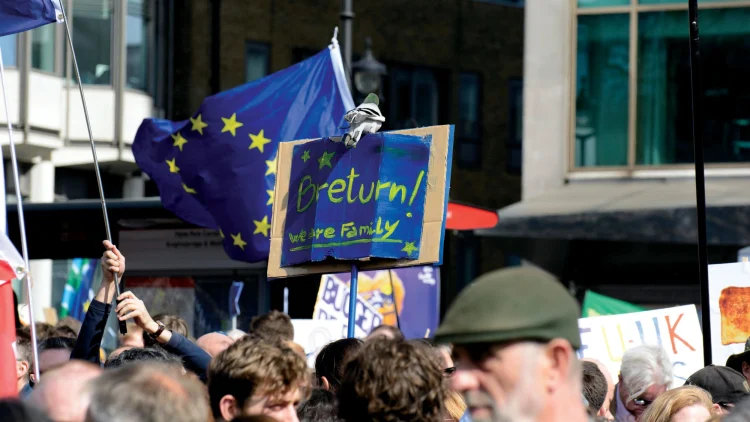
(ZEN – Zaneta Razaite/Alamy)
6 min read
The European Commission and national leaders can see the benefits of a rapprochement but Brexit scars, unresolved disputes and uncertainty over who will be in No 10 are tempering Brussels’ enthusiasm, finds Christian Spillmann
The reset between the European Union and the United Kingdom was much ado about nothing.
Brexit was a tragedy. The ‘reset’ is a farce. ‘Breturn’ is a fantasy. The language of international relations is rarely so blunt, so unvarnished. Instead, pleasantries and embraces conceal a more awkward truth. The divorce negotiations left a bitter aftertaste on the Continent. Yet the return of Donald Trump to the White House has fractured the global order. His disdain for Europeans, and the consequences of his erratic decisions, have made closing ranks imperative. A rapprochement between the UK and its former EU partners is now vital to Europe’s security. Keir Starmer wishes to go further. The British Prime Minister is seeking a reset of relations, though he has drawn three red lines. The reception has been polite; enthusiasm conspicuously absent. In Brussels, the issue is not a priority, and mistrust among European leaders is real. How much faith can be placed in the contrition of a country that offers its former partners a fresh start while preparing to cast its votes for one of the architects of the rupture?
Brexit shattered the relationship between the UK and its EU partners. Negotiations were arduous, at times bruising, and strained relations among member states. Nowhere is the ambivalence more pronounced than in France. Emmanuel Macron has taken Keir Starmer under his wing. The two leaders have forged a privileged bilateral relationship. The French President is strongly in favour of resetting ties with the UK, and the British Prime Minister has become his interlocutor of choice on European defence. Paris regards London as a strategic partner and is acting accordingly. Macron and Starmer co-chair the ‘coalition of the willing’ for Ukraine and are co-ordinating the mobilisation of a naval mission to secure maritime routes through the Strait of Hormuz and the Red Sea.
Yet the Franco-British relationship is not without strain. Beneath the cordiality lies suspicion. Paris refuses to allow London to enjoy the benefits of the single market without accepting its obligations. The UK has been unable to join Safe, the EU’s flagship rearmament programme, stymied by a European preference championed by France – at least 65 per cent of components must be produced within the bloc – as well as by Starmer’s reluctance to pay the entry price, a financial contribution estimated at between €4bn and €6.5bn. London’s defeat in this stand-off has underscored the difficulty of translating a political ‘reset’ into tangible integration.
All is not lost. Starmer has signalled his intention to negotiate participation in a second round of the Safe programme, should the financial terms become more ‘equitable’. A second EU-UK summit is scheduled for late June in Brussels, with the date yet to be fixed. Progress is expected on migration, with the Commission set to present a ‘Channel Plan’, as the issue has become a European one. But the Continent will press the UK to cease being “so attractive to irregular migrants”, citing its labour market, the absence of identity cards and the pull of community networks, as one European negotiator warned. Advances are also anticipated in aligning carbon markets (ETS), sanitary and phytosanitary measures (SPS), UK participation in the Erasmus programme, and the YES scheme for youth mobility.
These remain incremental steps, albeit useful ones. “We are identifying areas for co-operation. We are operating in the narrow margins between the Trade and Co-operation Agreement and Starmer’s three noes: no return to the single market, no customs union, no freedom of movement,” one negotiator explains.
British officials have revived the idea of rejoining the single market for goods. Representatives of the 27 EU member states have unanimously rejected this notion of a ‘pragmatic Breturn’. It does not hold. The four freedoms are indivisible. British negotiators, their counterparts complain in Brussels, appear at times short of subtlety. “They no longer understand us,” comes the lament.
The reset resembles a diplomatic farce – replete with misdirection, half-truths, misunderstandings, slammed doors and sudden reversals. London seeks to escape its isolation. Continental capitals, confronted with a cooling of relations with Trump’s America, are in search of a reliable partner. Scenes of reconciliation multiply: summits, state dinners, grand declarations, smiles for the cameras.
Yet the misunderstanding endures. London appears to believe that a reset entails regaining the commercial and security advantages of EU membership without paying the full price. On the Continent, there is an expectation that the UK will finally accept EU rules and contribute financially to common projects. The result is predictable: when the moment comes to strike agreements and sign cheques, each side discovers it has been talking past the other. Doors slam, recriminations follow and disappointment prevails. The reset is a diplomatic vaudeville: frequent quarrels, regular reconciliations.
The reset is a diplomatic vaudeville: frequent quarrels, regular reconciliations
For now, the reset has disappointed, constrained by the caution of Starmer and his Labour government. The Continent struggles to discern what, precisely, the British want. Their démarche is driven in part by the UK’s economic difficulties – Brexit has proved deeply damaging – yet the ambition of a reset is curtailed by Starmer’s red lines. The mantra ‘Brexit means Brexit’ has become a straitjacket. The EU has other priorities; in Brussels, the matter is viewed as secondary.
European commission president Ursula von der Leyen has entrusted it to the commissioner Maroš Šefčovič, tasked with managing and deepening the EU’s global trade partnerships.
The stance that the UK has not abandoned its status as the opt-out state irritates European partners.
“The British must decide: either we proceed with incremental improvements, or they opt for a broader political debate on rejoining the single market and the customs union,” officials in Brussels argue.
At root lies the question of trust. What are Starmer’s chances of remaining Prime Minister until 2029, given Labour’s heavy losses in the wake of the 7 May electoral bloodbath? The British say they wish to reconnect with the EU, yet Nigel Farage, a leading architect of Brexit and an avowed Eurosceptic, tops voting intentions with his Reform UK party. A paradox – and a nightmare – for the EU.
“The British have paid to discover what Brexit entails,” says an official involved in negotiations with London. “It has plunged the country into a hole. Many now recognise the error and want to end their isolation. Yet a majority appears ready to vote for the man who put them in this predicament.”
In that contradiction lies the essence of Europe’s bewilderment.
Christian Spillmann is a former AFP correspondent in Brussels and co-founder of La Matinale Européenne/Il Mattinale Europeo



Nigel Farage is facing significant heat at the moment over a £5m ‘gift’ he failed to declare. Farage faces two separate investigations on the matter, and he’s also facing question about whether he used the money to purchase a £1.4m house in Surrey.
On the topic of the house, the BBC have been trying to get Farage on to discuss the matter. This was how Reform responded:
Victoria Derbyshire, "We asked for an interview with Nigel Farage tonight and we got a thumbs down emoji from his team"
"Over the last couple of weeks we've asked for an interview with Nigel Farage or anyone from Reform UK's front bench ten times" Jake Berry, who used to be a… pic.twitter.com/l594M6EQ1Q
— Farrukh (@implausibleblog) May 19, 2026
Farage rattled and rolled
Jake Berry is a former Tory MP who also served as the party’s chairman. In July 2025, he defected to Reform, stating:
I’ve always believed that change comes with challenging the old order. In shaking up the system when it isn’t working
Oh yeah – we’re sure he’s always thought that – that’s why he joined the Tories – the longest running political party in the UK.
In the clip at the top, Berry said:
Well, the question is how did Nigel Farage pay for his house? We know because he told us he did an interview with Harry Cole and he said that he received money from Irem as a celebrity, which is actually part of a wider business career… Including representing companies that sell things like gold, including doing appearances in celebrity things. He got that money, he used it to buy his house, The explanation does add up.
I’ll tell you what doesn’t add up is this inference that money received 35 days earlier enabled him to buy the house. Anyone who’s ever bought a house recently know it takes about six months. And Nigel’s been really clear about this. He said he’d passed proof of funding, he’d agreed to buy this house a long time before this gift was received. And I accept his explanation.
For clarity’s sake, the £1.4m Surrey house is different to the Clacton house. The latter house also attracted controversy when people accused Farage of using his partner’s name on the deeds to avoid paying £44k in stamp duty.
The accusation Berry alluded to is that Farage actually paid for the house with an undeclared ‘gift’ of £5m he received from foreign-based crypto billionaire Christopher Harborne. Notably, this wasn’t the only thing Farage did after receiving the gift:
Here are the facts as laid down by Derbyshire: Same old same old https://t.co/ViEIFZkf3A
— Alonso Gurmendi (@Alonso_GD) May 6, 2026
1) Farage says he won’t run
2) crypto billionaire pays him £5mill
3) Farage U-turns and runs
4) Farage hides the donation
5) Farage announces if he wins the election he will slash capital gains tax for crypto firms
Back to the interview, Derbyshire said:
The explanation that he bought that house from the fee from I’m a Celeb when the money was paid into his media business company, and was still in the account, according to the FT, after the house purchase was made.
In other words, it seems to literally be impossible that Farage could have paid for the house as Reform is claiming:
Another whopper from Farage. His Celebrity money was paid into his Thorn in the Side account (his tax dodging vehicle) and never left it to buy a house. https://t.co/rY3yZXY01s pic.twitter.com/MOaCTYKMrI
— Mr Ethical
 (@nw_nicholas) May 16, 2026
On the back foot
In the interview, Berry got quite flustered and attempted to change the subject:
"He told us… he received money from I'm A Celebrity."
Sir Jake Berry, Reform UK, defends his party leader and argues that the continued focus on his finances is just "the mainstream media desperate to keep this story going against Nigel Farage". #Newsnight pic.twitter.com/4bquGSUITI — BBC Newsnight (@BBCNewsnight) May 19, 2026
Berry also got the name of Reform’s candidate in the Makerfield by-election wrong:
Jake Berry: “What I think is extraordinary about this by-election, is you have ‘Robert Jenkins’, a brilliant candidate for Reform…”
Victoria Derbyshire: “That’s not his name by the way”
Jake Berry: “Sorry?”
Victoria Derbyshire: “It’s Robert Kenyon”#newsnight pic.twitter.com/3ZIdwbXvLw
— David (@Zero_4) May 19, 2026
It seems clear why Farage doesn’t want to respond to these questions; it’s because he doesn’t have good answers.
Sooner or later, however, he will have to account for himself.
Featured image via Getty Images (Ryan Jenkinson)
By Willem Moore
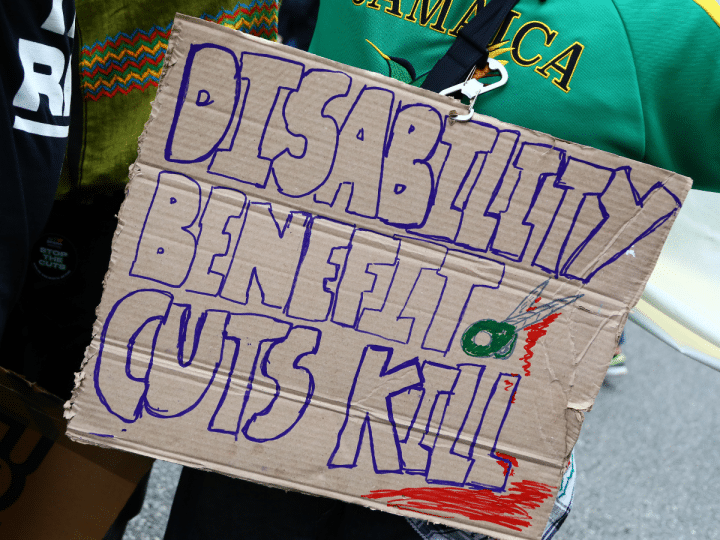

One of the UK’s biggest disabled people’s organisations has slammed a trade union for supporting disability benefit reforms and conflating Department for Work and Pension (DWP) disability benefits with benefits that assist work.
TUC makes DWP PIP about work
The Trade Union Congress (TUC) called for ‘genuine reform’ of the DWP benefit Personal Independence Payment (PIP), as they say it enables many disabled workers to enter jobs. However, as Disabled People Against Cuts (DPAC) points out, PIP isn’t an out-of-work benefit and has nothing to do with employment.
Ahead of the TUC disabled members conference, the union submitted its response to the Timms review of PIP. In the submission, the TUC says that PIP is ‘crucial’ for disabled people to start and stay in work. However, the body warns that it’s not working as intended.
TUC General Secretary Paul Nowak said:
The government has a vital opportunity to support more Disabled people into work through the Timms Review. Right now, Disabled people are bearing the brunt of unemployment, low pay and insecure work – all while navigating a social security system that is not fit for purpose.
Only a genuine reform of PIP will ensure that Disabled people who can work, receive the support they need to move into and stay in work. But this must come alongside wider action too, like ensuring Disabled workers get the reasonable adjustments they need, stronger rights at work and reform of the Access to Work scheme.
Disabled people’s organisation DPAC are ‘disappointed’ that Nowak focused on work when talking about PIP and not on how it’s a vital benefit for so many.
They said in a statement:
PIP is paid to people who work and who don’t work. It is not paid on the basis of work – it is paid on the basis of daily living and mobility/ getting around. Work does not come into the assessment, nor should it. It may help people to access work, but that is not the primary purpose of it.
The TUC statement suggests that PIP reform and the Timms review is justified and should involve consideration of work. It is now being reported in the media as ‘PIP rules should be changed to get disabled people into work.’
TUC is focusing too much on work
For what it’s worth, it seems like the TUC’s heart is in the right place. They consulted with many disabled members, and as a union body, employment is probably a priority for their disabled members.
And to some extent, disability employment does need to be improved.
As the TUC statement said:
TUC analysis found that the unemployment rate for Disabled people is 8.8% – it’s highest since before the pandemic – compared to 4.3% for non-disabled people. The situation is even worse for young Disabled workers – with an unemployment rate of 24.2%, compared to 12.2% for those who are not Disabled.
The stats for young people are especially worrying. However, the DWP’s solution isn’t to support young people but instead to force them into dead-end work. And the department is throwing under 24’s on PIP under the bus before the Timms review is even complete, with the extension of the assessment period not applying to young people.
The TUC has said that PIP can only help some disabled people into work alongside Access to Work, which the department is also cutting. However, the union body falls into the trap of putting the onus on employers for workplace adjustments, something the DWP has also been pushing.
Disabled workers who took part in a TUC self-reporting survey (for its submission to the Timms Review) reported using PIP payments to cover for the cost of reasonable adjustments – many workers believed these costs should be covered by their employer or other support systems.
The TUC is calling on employers to do their part and implement reasonable adjustments to help keeping Disabled employees in work.
Whilst this might be possible for bigger companies, for smaller employers, it means they’re just less likely to employ a disabled person. It also wrongly lets the DWP off the hook, as this is literally what Access to Work is for.
TUC needs to focus on what’s important
Worryingly, the TUC said Timms Review is a ‘step in the right direction’, which isn’t exactly the words I’d use for an already determined farce of a review that pretends to be co-produced by disabled people, but each to their own.
That being said, the TUC is also urging the DWP to:
-
Reform the assessment process, moving away from a one-off, snapshot assessment to start capturing fluctuation, fatigue and recovery time – and making the process more accessible and less burdensome.
-
Improve assessor expertise and decision-making, ensuring that assessors have relevant medical knowledge and/or training, and that medical evidence is given appropriate weight in decision-making.
-
Improve first decision accuracy and reduce reliance on appeals – as at present too many people are only awarded PIP when they challenge a refusal at tribunal.
-
Ensure PIP payment levels reflect the true additional costs of disability and the extra costs associated with working – such as travel, energy and support.
-
Reduce unnecessary reassessment, limiting repeat reassessments where conditions are unlikely to improve.
It’s clear the TUC is focusing on work, because that’s important to their members, but by doing so it’s feeding into the DWP’s rhetoric that disabled people are only worthy of support if they contribute to the economy. It means many disabled people are left feeling betrayed once again.
It’s well past high time that we stopped putting employment on this pedestal. Disabled people should be supported to thrive whether or not they work. And however well meaning the TUC’s statement was, all it’s done here is put disabled people who can’t work at the bottom of the heap again.
Featured image via Getty/Alishia Abodunde

Though drinking more than three or four cups of coffee a day might be bad for us, a growing body of research suggests that coffee drinkers might live longer and even age better.
This may be especially true if we opt for black coffee with no sugar.
And according to a 2020 paper in the British Journal Of Nutrition, when we drink our morning cup of Joe matters too.
Is it better to drink coffee before or after breakfast?
The scientists recorded participants’ blood responses to different consumption habits after a disrupted night’s sleep and a normal night’s sleep.
On one day, participants were given a glucose drink on waking from an uninterrupted sleep; on another, a glucose drink after a bad night’s kip; and on yet another day, a cup of coffee before the glucose drink (also after poor sleep).
The glucose drink was meant to mimic the nutritional content of a “normal” breakfast.
In this study, the researchers found that one night of bad sleep did not significantly negatively affect healthy participants’ metabolism.
But drinking coffee on an empty stomach before the glucose drink appeared to increase participants’ blood glucose response to the ‘breakfast’ by around 50%.
Harry Smith, the study’s lead researcher, told the University of Bath: “Starting a day after a poor night’s sleep with a strong coffee did have a negative effect on glucose metabolism by around 50%.
“As such, individuals should try to balance the potential stimulating benefits of caffeinated coffee in the morning with the potential for higher blood glucose levels, and it may be better to consume coffee following breakfast rather than before.”
Try breakfast first, then reach for coffee if you need it, the experts suggest
“We know that nearly half of us will wake in the morning and, before doing anything else, drink coffee – intuitively the more tired we feel, the stronger the coffee,” Professor James Betts, who oversaw the study, added.
“Put simply, our blood sugar control is impaired when the first thing our bodies come into contact with is coffee, especially after a night of disrupted sleep. We might improve this by eating first and then drinking coffee later if we feel we still… need it.”
Dietitians recommend eating whole grains and protein first thing for a sustainable energy boost.

Hayden Panettiere, the star of Nashville, Heroes and the Scream movie franchise, has claimed that a “well-respected” Oscar-winning actor once exposed himself to her at a party.
In an excerpt of her new memoir This Is Me: A Reckoning published by People magazine, Hayden wrote about how when she was 19, she went to an event with a friend.
Making small talk with a group of men made her uncomfortable, she wrote, so she decided to call it a night.
That’s when an “Oscar-winning actor and director” came up to her as she was putting on her coat and pointed down to what he claimed was gum on his pants.
“I looked down and recoiled,” Hayden recalled. “This well-respected, award-winning actor’s testicles were hanging out from his unzipped fly.”
Hayden said the stunt “hadn’t hurt me and I was sure it was a drunken joke, but I’d never seen a grown man do something like that”.
“I was shocked,” she noted.

Hayden also wrote about a sketchy friend who took her to a cabin on a luxury yacht where “a famous thirtysomething British singer-songwriter was lying in a bed” per Entertainment Weekly.
The now-36-year-old claimed: “He was shirtless and propped up on a few pillows with his arms positioned behind his head. From the waist down, he was covered by bedsheets, and I could see the outline of his body underneath.”
She claimed her friend then pulled the sheet away and told her: “I want you to get in bed with him. He has a huge dick.”
“The shock was so great it didn’t even occur to me to say no,” Hayden wrote.
However, she said, she didn’t let things go any further and made arrangements to leave the yacht.
As for the identities of these famous men, the I Love You, Beth Cooper actor wasn’t about to name certain names in her book.
“Things happened a long time ago, but it was to protect me and my company from being sued by some very pissed-off famous people,” she explained to The Hollywood Reporter.
Help and support:
- Rape Crisis services for women and girls who have been raped or have experienced sexual violence – 0808 802 9999
- Survivors UK offers support for men and boys – 0203 598 3898

A government plan to ask supermarkets to voluntarily cap the prices of certain products to tackle the cost of living crisis has echoes of Venezuela, according to the BBC’s business editor.
Simon Jack said it could even lead to food shortages amid a mounting backlash to the idea.
The Financial Times reported that the Treasury had spoken to supermarkets about offering “incentives” to encourage them to cap the price of essentials like eggs, bread and milk.
That could include easing packaging policies and delaying potentially costly changes to healthy food rules.
On Radio 4′s Today programme, Jack said: “The British Retail Consortium said the history of price controls is not a good one. A lot of people will be forced to potentially sell things at a loss, and when that happens people stop making them.
“If you look back through history, whether it’s the US in the 70s or Venezuela more recently, you can end up with food shortages when you try and impose price controls.”
Economist Paul Johnson said he was “lost for words”.
He posted on X: “Never thought I’d see a British government trying to set food prices. If there is one highly competitive sector it is food retailing.
“Do we really want to live in a country where the state sets these prices?”
But Treasury minister Dan Tomlinson said price controls “isn’t something we’re looking at”.
He told Sky News: “The government is not looking at doing this.
“Instead, what we’re doing is looking across the economy at what are the different ways that we can help households.”
Subscribe to Commons People, the podcast that makes politics easy. Every week, Kevin Schofield and Kate Nicholson unpack the week’s biggest stories to keep you informed. Join us for straightforward analysis of what’s going on at Westminster.
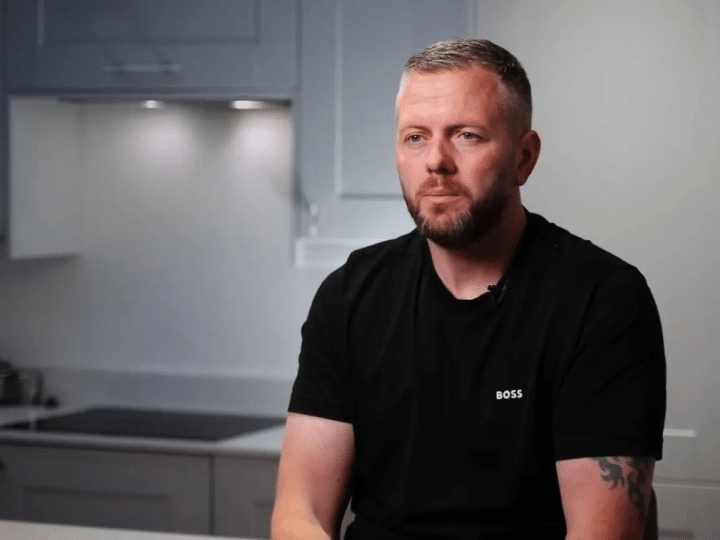

Robert Kenyon, Reform UK’s candidate in the Makerfield by-election, has had his X account suspended. Shortly afterward, likely reasons why started to surface, particularly his links to a British fascist and his sharing of extremist right-wing content.
Ironically, Kenyon kicked off his campaign by praising his party for supposedly weeding out racists. He also moaned that Reform doesn’t allow him to speak his mind about the Russia-Ukraine war. There was a hint, though, that he disagreed with boss Nigel Farage’s opinion that Russia was provoked into it. The one thing on which Farage has not been wrong — stopped clocks and all that.
Makerfield candidate denies far right exists
Among the found items in Kenyon’s social media history is denialism that the far right even exists. A denial that he made as the far right was engaged in the 2024 race riots.

And as race rioters filled streets, Kenyon claimed that white people are being “assaulted en masse” by Muslims.

Evidenced links to fascists
Kenyon’s links to fascism are disturbing, if unsurprising in an Islamophobic Reform candidate and they’re not being exposed for the first time. Kenyon stood, coming second, in the seat in the 2024 general election.
At that campaign, Searchlight Magazine pointed out his social media links to the leader of the British fascist movement.
MAKERFIELD: I suspect Robert Kenyon won’t last long as Reform candidate. When Kenyon stood here in 2024, the anti-fascist group Searchlight tweeted he was Facebook friend of Gary Raikes, leader of New British Union, reincarnation of Oswald Mosley’s British Union of Fascists https://t.co/6sEsa52izQ
— @Tomorrow’sMPs (@tomorrowsmps) May 19, 2026
And even more recently, Kenyon shared — and contributed to — posts by extremist right-wing Islamophobe and ‘anti-feminist’ Carl Benjamin, who calls himself ‘Sargon of Akkad’. Not just Benjamin, but also white supremacist Peter Imanuelsen, and convicted race-hate instigator Wayne O’Rourke.
But as one commenter pointed out, on far right Elon Musk’s X, that’s not likely to lead to a suspension. It raises the question of what must have been bad enough for his Kenyon’s account to be paused.
.@novaramedia say he had his account suspended by the owner of this platform
I’ve reported egregious racism on here and always been told it doesn’t violate the rules.
Hard to believe theseposts were what precipitated a suspension when far worse have been deemed ok.

— Lucy (@lucyfyson) May 19, 2026
As awful as these racist posts are, Lucy is right that they don’t seem enough to be the reason X suspended the account. The suspension hides what else might be there.
But the bigger question, at least as far as the by-election is concerned is this: will enough people in Makerfield care enough to vote against Robert Kenyon again? Or will such presumed and actual views attract enough people in what has become a Reform heartland in a nation plagued by emboldened racists to get him into parliament?
Featured image via X/ reformparty
By Skwawkbox

Imagine you have met the love of your life and over time, you get married and have children. You have a long, happy 10 years as a family and everything is as it should be.
Then, you look at your living room lamp and it just looks… weird. Still 3D but somehow inverted.
You can’t look away from this lamp. For days on end, you just stare. Your wife is worried, nobody can distract your from this. Then, you realise, thanks to this lamp’s distortion, that your life isn’t real. Your wife, your kids, your home, none of it is real.
This is apparently what happened to Reddit user u/temptotasssoon, who said: “My last semester at a certain college I was assaulted by a football player for walking where he was trying to drive (note he was 325lbs I was 120lbs), while unconscious on the ground I lived a different life.”
He explained that while he was staring at the lamp, it got ‘wider and deeper’ but still with inverted dimensions before he eventually woke back up.
He said: “I heard voices, screams, all kinds of weird noises and I became aware of pain…. a fucking shit ton of pain… the first words I said were “I’m missing teeth” and opened my eyes.
“I was laying on my back on the sidewalk surrounded by people that I didn’t know, lots were freaking out, I was completely confused.”
Following the accident, he was still haunted by the memories he made when he was unconscious.
He said: “I went through about 3 years of horrid depression, I was grieving the loss of my wife and children and dealing with the knowledge that they never existed, I was scared that I was going insane as I would cry myself to sleep hoping I would see her in my dreams.
“I never have, but sometimes I see my son, usually just a glimpse out of my peripheral vision, he is perpetually 5 years old and I can never hear what he says.”
Now, the story has taken off on TikTok with ‘The Lamp Theory’
Now, TikTok has given the story a new lease of life and users are sharing what their dream lives would be before realising the lamp was weird.
Grandma Droniak, a creator with 14 million followers shared her own, saying: “When my parents tell me how proud of me they are because I wanted to be famous since I was a little girl. They always believed in me but then the lamp starts to look weird.”
Another user, Nalle, said: “When I finally don’t feel excluded, I don’t compare myself to others, I actually feel good about myself and I’m not the angry daughter anymore but then the lamp starts to look weird.”
Is the lamp theory possible?
While the Reddit user’s grief may be enough to believe this really happened to them, any skeptics can rest assured that scientists widely agree that we still don’t fully understand consciousness, meaning that we definitely can’t dispute this.
Help and support:
- Mind, open Monday to Friday, 9am-6pm on 0300 123 3393.
- Samaritans offers a listening service which is open 24 hours a day, on 116 123 (UK and ROI – this number is FREE to call and will not appear on your phone bill).
- CALM (the Campaign Against Living Miserably) offer a helpline open 5pm-midnight, 365 days a year, on 0800 58 58 58, and a webchat service.
- The Mix is a free support service for people under 25. Call 0808 808 4994 or email help@themix.org.uk
- Rethink Mental Illness offers practical help through its advice line which can be reached on 0808 801 0525 (Monday to Friday 10am-4pm). More info can be found on rethink.org.
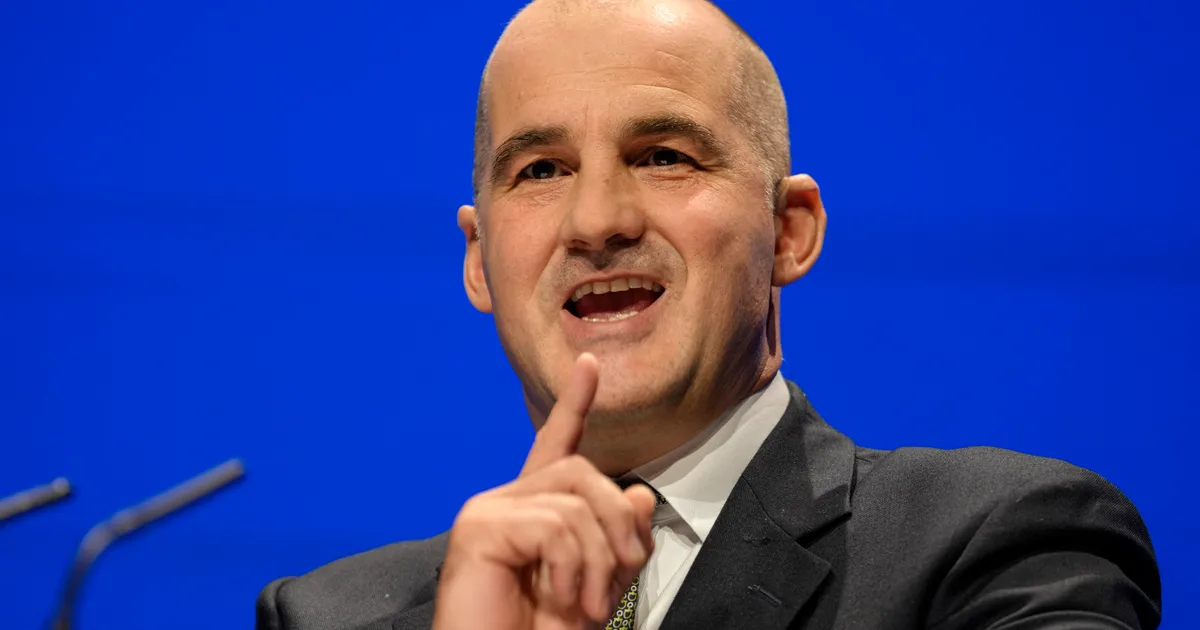
A senior Reform UK figure was left red-faced on live TV after forgetting the name of the party’s candidate in a crucial by-election.
Jake Berry, the former Tory chairman who defected to Nigel Farage’s party last year, made the embarrassing blunder during a painful interview on on BBC Newsnight.
Reform announced on Tuesday that they had chosen local plumber Robert Kenyon to take on Labour’s Andy Burnham in next month’s Makerfield by-election.
But Berry said: “What is extraordinary about this by-election is you have ‘Robert Jenkins’, a brilliant candidate for Reform…”
“That’s not his name, by the way,” presenter Victoria Derbyshire cut in. “It’s Robert Kenyon.”
“Robert Kenyon, I beg your pardon,” Berry replied after an awkward pause.
Berry also irked presenter Derbyshire as he defended Farage over the £5 million donation he received from crypto billionaire Christopher Harborne, just weeks before he abruptly decided to run for parliament.
Farage initially insisted this money was spent on security, then claimed it was a reward for his years of pro-Brexit campaigning.
The Reform leader later said that he paid for his £1.4 million house from his fees for taking part in the reality show, I’m A Celebrity… Get Me Out Of Here!, rather than the money from Harborne.
Farage is now facing a parliamentary sleaze probe over accusations he failed to properly declare the donation.
Berry sidestepped questions about the issue on Newsnight, instead pointing to the furore around Labour’s current civil war.
Derbyshire said: “So it’s not legitimate for me to be asking you questions about this, is that what you’re saying?”
Berry replied: “It’s stretched credulity to the point of emaciation when we have the very serious story of youth unemployment over 16 –”
“It’s one of many issues, we’re capable of judging many stories over the week,” the Newsnight presenter said.
When Berry attempted to dodge other questions about the donation and start talking about Rishi Sunak’s interest in cryptocurrency, Derbyshire said: “This is deflection on the most obvious scale!”
Subscribe to Commons People, the podcast that makes politics easy. Every week, Kevin Schofield and Kate Nicholson unpack the week’s biggest stories to keep you informed. Join us for straightforward analysis of what’s going on at Westminster.

After months of speculation, it was confirmed in an Instagram post that TV personality Emma Willis, comedian Josh Widdicombe and former Strictly pro Johannes Radebe would be taking over as the new hosts of the long-running BBC dance show.
Claudia was quick to pop up in the comments, hailing the news as “magnificent”. “What a trio,” she added.
The Bafta winner’s former co-presenter Tess also gave the new team her seal of approval, hailing the new hosts as a “dream team” and an “ultimate trio” she “can’t wait to tune in” and watch live.
Announcing her Strictly exit last year, Claudia said: “I’ve always believed it’s best to leave a party before you’re fully ready to go and I know the new hosts will be magnificent, I look forward to watching them take Strictly to new heights.”
She added: “As for Tess – I’m so so lucky I got to stand next to you. You’re funny, kind, whip smart and a true friend and I love you.”
In a separate joint statement, she and Tess explained: “We were always going to leave together and now feels like the right time.
“We will have the greatest rest of this amazing series and we just want to say an enormous thank you to the BBC and to every single person who works on the show. They’re the most brilliant team and we’ll miss them every day.”
Makerfield is the constituency on everyone’s mind. The by-election, set for 18 June, is a fork in the road moment for the Labour government, as it gives the prince over the water – the proclaimed ‘King of the North’ Andy Burnham – a chance to cross over and take the crown. But Reform UK too have it firmly set in their sights, and as one Tory put it to me: “If you could design a model seat for Reform, this is it.”
Yet there is another by-election on the very same day: Aberdeen South, where voters will replace Stephen Flynn, who has swapped Westminster for Holyrood as an SNP MSP. Here the Tories stand a chance at electoral victory after a strong showing during the recent Scottish Parliament elections – and the message from the Conservative Party will be simple: ‘Vote Reform, get the SNP.’
The twin by-elections have unleashed a fresh discourse: should there be some sort of electoral pact with Reform? The option has been floated by two Conservatives – one current MP, one former MP – as a way of consolidating the right and holding back Burnham, whom they regard as disastrous for the economy.
Sir Jacob Rees-Mogg, the former Tory business secretary, suggested to The Telegraph that the parties “work together” as it is a “golden opportunity for the right to unite” and give Labour “a nasty surpise”.
The longest-serving MP, father of the House Sir Edward Leigh, similarly proposed that the Tories not field a candidate in Makerfield, but in return for Reform not standing in Aberdeen South.
“If doing some kind of deal means we can win Aberdeenshire and save the Union, it’s worth doing. If in any by-election there are two Right-wing parties fighting each other … there will be Left-wing victory,” he said.
As one Conservative MP on the right of the party told me of the Tories and Reform UK: “Aren’t we all conservatives?”
In terms of numbers, if what you want is an elected representative of the right, then yes it could make sense. Combine Reform’s votes with the Tories in Makerfield at the last general election and you’re just over a thousand votes short of Labour (they got 18,202 to a combined 17,182 of Reform and the Tories), and that is before the Labour government blew up. At the Holyrood elections, where Stephen Flynn stood, he just about scraped through with the SNP on 11,788, the Tories on 10,544, and Reform on 6,113. Again, combine the two and there you would have a unionist representative.
But is that really the answer? It is one thing for members of the public to choose to vote tactically – they can look at the previous results in Makerfield and decide that if they once voted Tory they will vote Reform to secure a win on the right – but it is quite another to impose a reduced choice on them.
And, according to our latest ConservativeHome members survey, it doesn’t seem like the sort of thing that would go down well with Conservative Party members, the majority of whom said that at the local elections they voted for the party they usually support – not tactically. Our survey had 56.7 per cent of respondents supporting that, and only 6.44 per cent saying they voted tactically to either stop another party winning or support the option who stood a better chance. They clearly want the option of their party.

As one shadow cabinet minister told me: “We are a national party and everyone should have the option and ability to vote for a Conservative candidate.”
Both Kemi Badenoch and Conservative Party members can then be reassured that they appear to be on the same page. She has ruled out any deals with Nigel Farage, branding such arrangements as “stitch up nonsense” by political parties “that are too lazy to just get on and select people and win on their own account”.
She added: “We will be standing a candidate at this election. Everybody should compete and the people of the constituency should make their choice about who it is they want to represent them.” Under a month to go until that choice is made.
The post Our Survey: Could Conservatives bring themselves to vote tactically or back a pact? appeared first on Conservative Home.

Inflation falls to 2.8%, but is expected to rise from here

TV presenter says abusive ex gave her no access to her own money
WhiteBIT Launches the UK Platform, Expanding Into a Key Global Crypto Hub

Manchester United reach agreement with Casemiro over contract clause amid transfer speculation

US brings back mandatory military draft registration

Steven Gerrard disagrees with Gary Neville over ‘shock’ Chelsea and Arsenal claim | Football

JP Morgan Saved America? | The 1907 Financial Crisis That Changed Banking Forever

#crypto #liquidity #trading #bitcoin #cryptonews #cryptocurrency #altcoins #bitcoinnews

Coinbase Best Crypto Exchange for Beginners in 2024 #money #cryptocurrency #cryptocurrency
-

 Crypto World4 days ago
BloFin War of Whales 2026 Grand Prix opens registration for $5M trading championship
-

 Fashion5 days ago
Weekend Open Thread: Theory – Corporette.com
-

 Crypto World5 days ago
E-Estate Announces 1 Year Live: Washington DC Summit as Real Estate Tokenization Enters Its Next Phase
-

 Tech5 days ago
Tech Moves: Microsoft AI leader jumps to OpenAI; former AI2 exec joins Meta; and more
-

 Tech4 days ago
Google reimburses Register sources who were victims of API fraud
-

 Crypto World6 days ago
Google’s Gemini AI Predicts Incredible Solana Price by the End of 2026
-

 Business5 days ago
H&R Real Estate Investment Trust (HR.UN:CA) Q1 2026 Earnings Call Transcript
-

 Sports4 days ago
Napoleonic enters 2026 Doomben 10,000 field via Abounding withdrawal
-
 Entertainment6 days ago
Zara Larsson Has Blunt Response To Chris Brown Diss
-

 Crypto World6 days ago
Two AI Tokens Lead May Rally, But Risks Are Rising
-
 Crypto World4 days ago
BeInCrypto 100 Institutional Awards Nomination: KAST for Best Digital Assets Neobank and Best Digital Assets Fintech
-

 Fashion3 days ago
On the Scene at Gucci’s Cruise Show in New York City: Mariah Carey, Kim Kardashian, Lindsay Lohan, Iman, and More!
-

 Crypto World4 days ago
Bitcoin Battles US Bond Nerves With BTC Price Dip Toward New May Lows
-
 Crypto World4 days ago
Wall Street’s Boldest Gold Prediction Has Russians Rushing to Buy
-

 Fashion4 days ago
Trending Western Style Vests Perfect for Summer
-
 Politics5 days ago
DWP PIP Timms review continues to be an absolute farce
-

 Crypto World4 days ago
ICE and CME urge US regulators to curb Hyperliquid energy trading
-

 Entertainment5 days ago
David Letterman Returns to Late Show, Blasts Cancellation
-

 Fashion3 days ago
Amazon Sundays: Memorial Day Hosting
-
 Crypto World5 days ago
Lido Finance Selects Chainlink CCIP as the Official Cross-Chain Infrastructure for wstETH Security
You must be logged in to post a comment Login