A decision to apply and leave restraints on the prisoner overnight while he was in hospital was found to be “not justified”
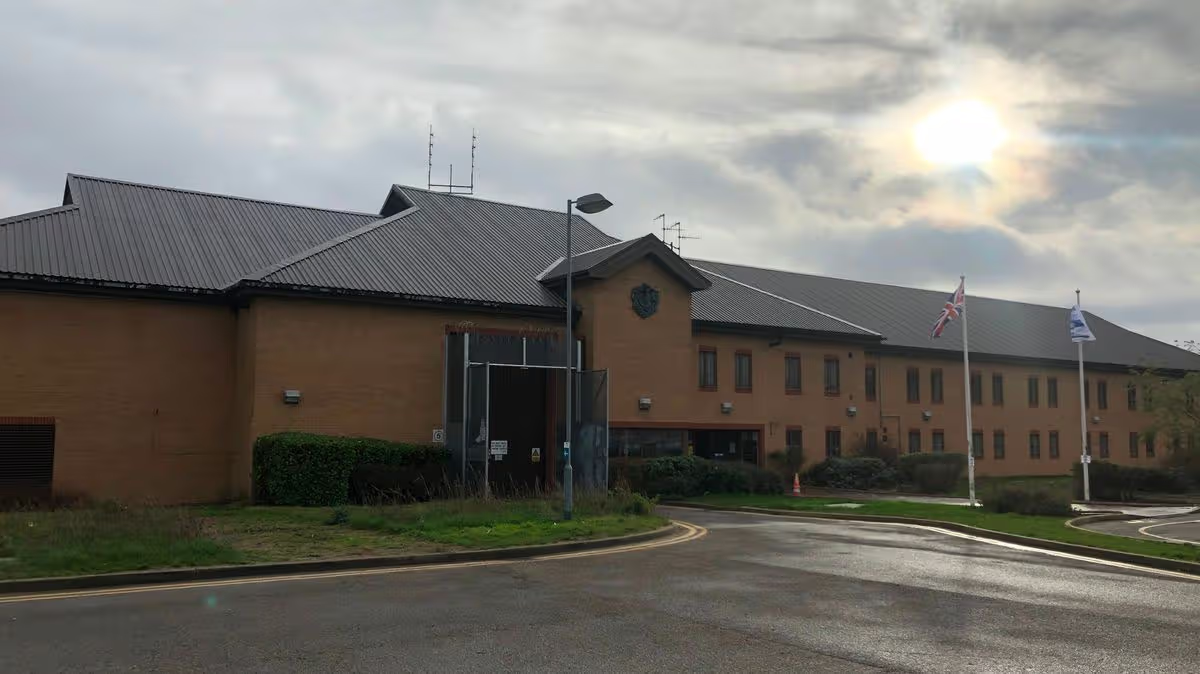
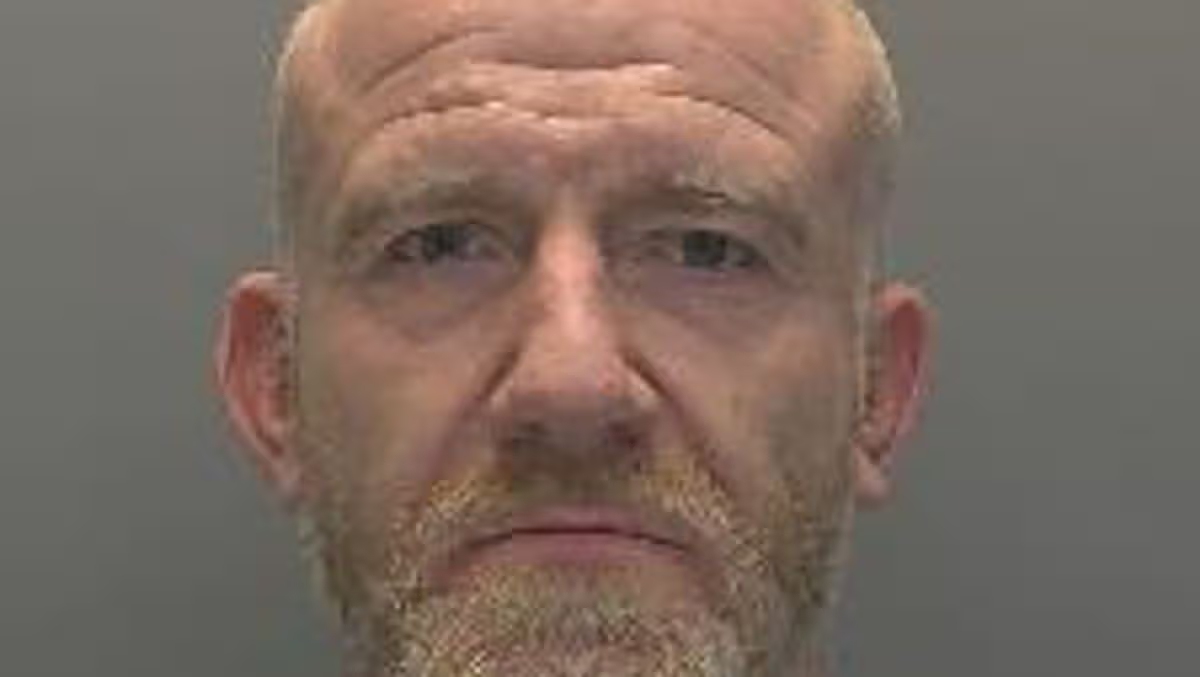
A sex offender serving a sentence at a Cambridgeshire prison died in his cell. Peter Williams died aged 67 on August 3, 2025 while serving his sentence at HMP Littlehey in Perry, according to a recent report.
Advertisement
Williams was sentenced to Imprisonment for Public Protection with a minimum of three years for a sexual offence in August 2010. In June 2019, Williams was diagnosed with prostate cancer.
In March 2022, was transferred to HMP Littlehey. Despite undergoing surgery and chemotherapy, Williams’ cancer progressed and in May 2025, it was deemed that chemotherapy was no longer effective.
On May 12, Williams was escorted to hospital by two officers who applied an escort chain. According to the report, Williams complained about the cuffs being too tight. No evidence was found to show that anyone adjusted the handcuffs.
The following day the restraints were removed and Williams later returned to prison on May 17. His health continued to deteriorate and on August 3, Williams died in his cell.
Advertisement
A family member was contacted by a family liaison officer. A report by the Prisons and Probation Ombudsman stated that Williams died of advanced bladder cancer.
A clinical review identified that a decision to apply and leave restraints on Williams until the following day was “not justified”. The report said managers responsible for authorising restraints should consider the healthcare and base their decision on the actual risk the prisoner poses at the time.
Authorising Managers have also received training to assess the correct level of restraint for all escorts. A Prison Service spokesperson said: “Following the recommendations made by the Prisons and Probation Ombudsman, HMP Littlehey has improved restraint procedures by increasing training and oversight”.
A clinical reviewer found no evidence that Williams was discussed in a Palliative Care Team multi-disciplinary meeting, in line with the Littlehey Palliative Care Protocol. Due to this, it was recommended that the Head of Healthcare ensures patients with “complex health needs” are discussed in a meeting.
Advertisement
The Ministry of Justice said it is continuing to work closely with healthcare providers to ensure all relevant information is shared and properly recorded. The clinical reviewer concluded that the care Williams received at the prison was of a “reasonable standard” and “equivalent to that which he could have expected to receive in the community”.
An inquest into his death was held on March 23, 2026. The coroner concluded that Williams died from natural causes.
Stephen Guard explains why it is so “important” for him to attend Iraq15 organised by the Royal British Legion to honour those who served during the conflict.
A former soldier says he will be attending the Royal British Legion’s Iraq15 event on Friday to honour his fallen colleague who died after bravely stepping forward to volunteer.
Advertisement
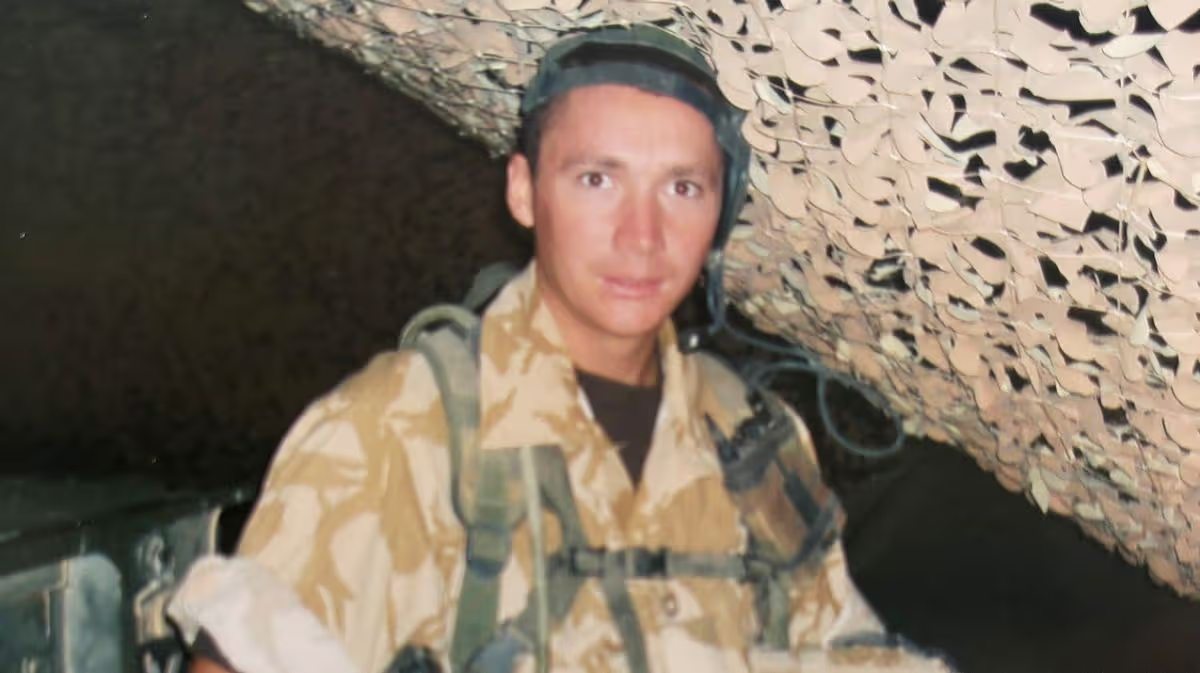
Former Fusilier Stephen Guard, 44, from Rugby ,told The Mirror: “It could have been me. I was right next to him in that line. We were all standing there when they asked for two volunteers.
“The two new guys, they went. They were young and keen and stepped forward. One came back and one didn’t. It always seemed to be the people who volunteered or who stayed a bit longer.”
His friend who stepped forward was Fusilier Stephen Robert Manning, 22, from Erith in Kent, who was killed alongside Fusilier Donal Anthony Meade, from south east London, aged 20.
They died in Iraq on September 5th 2005, after a roadside bomb detonated while they were out on patrol in the Basrah province. They were both acting as ‘top cover sentries’ in the first of two vehicles when they were struck by the improvised explosive device, a terror for every soldier sent out on patrol in Iraq.
“They were in my platoon. They asked for volunteers and the two new guys volunteered and I thought I’m not going to volunteer because I think I’ve been there a bit longer and we’re going to be going next year anyway,” Stephen told The Mirror.
“If I had stepped forward that could have been me. That’s why it’s important I go on Friday. That’s why I’m going to honour them. I could have been the one that didn’t come home. It was a lottery and there was quite a high chance you wouldn’t come back.”
Advertisement
Now a window fitter and reservist Stephen will be attending the Royal British Legion event to mark the 15th anniversary of the Iraq War with a service at the National Memorial Arboretum.
The RBL will lead commemorations marking 15 years since the end of Operation TELIC, paying tribute to all who served, their families, and the bereaved. There 1500 veterans and their families are expected to attend.
Advertisement
It will be a poignant day and even more so for Stephen, who will lay a wreath at the service, when he finds the names of his fallen comrades etched on the Armed Forces memorial wall.
Tragically they were among the 179 British Armed Forces personnel who lost their lives in the conflict and more than 6,000 who were injured.
Stephen was 24 years old when he went to Iraq in 2006, a year after his pal’s death. He survived but his platoon suffered devastating losses.
Advertisement
“I left. I knew I had been lucky during my time out there and I didn’t want to push my luck further. But my other mates stayed on and went to Afghan and a lot of them didn’t come back.
“I did feel guilty. I felt like I’d let them down. In 2009, about 11 died from my battalion, it was a bad year. You feel guilty that you’ve left and you should be helping them. I was gutted hearing the names of people I was close to.”
It was not only overseas they suffered losses, as his platoon were struck by the tragedy that shocked the nation, the murder of Lee Rigby, who was killed in 2013 on the streets of London.
“He was a bit younger than me so I didn’t know him well but I knew the name. He was in my battalion. I was leaving and he was just getting in.
“I just remember looking for him one day when he was supposed to be on guard and he wasn’t. I think he was at home, I just remember the name, and saying ‘where is he? He’s supposed to be on guard today.’
“Then five years later I heard his name again all over the news when he got killed. It made my blood boil to hear it was happening on our own streets.”
Stephen knows only too well how lucky he is to escape with his life, having had “three or four” near misses including just after he arrived in Iraq.
Advertisement
“I’d been out in Jordan on an exercise for a few months and I think the army was stretched so half of us went to Iraq and half to Afghanistan. At that time they were both as bad as one another.”
He recalls:“We’d gone to the main place called the ‘A-pod’ in Basra Iraq but then we all separated and went to smaller bases, flying in at night.
“We were just following the moonlight on the river and it was swaying left and right. It felt like it was a scene from the Predator with red lights in the helicopter, when special forces are hunting for missing people.
“All the alarms were going off, something had locked onto our helicopter. So we started deploying these flares, and we were all looking at each other as if we were kind of excited but scared at the same time.”
Advertisement
Stephen and his 15 colleagues survived the landing and ended up in a British camp based around a hotel complex. They were targeted by mortars at first light and then last light.
“It seemed to be a pattern. At first we just got on the floor and hoped for the best but then they ordered a load of big blocks and we put them around our bed. We’d make a sort of brick wall underneath our bed and crawl through a little gap. The mortar blast kind of goes up in a fountain shape. As long as it doesn’t land on top of you, you should be alright.
“One morning when the mortars were very close, you could hear the detonations go off about a mile away and then the explosions land closer and closer. You’d sometimes hear ten in a row and then wait for them to arrive.
“One hit our tent entrance, 30 metres from where we were sleeping. A few guys got lacerations and blown up, it wasn’t a good day. We’d all hidden under our little coffin type beds whilst it was going off and the siren was blaring. We then heard the sergeant shouting ‘medic’ so you know someone had been hurt. “
Advertisement
Two guys had been struck, including one casualty from another regiment who ‘didn’t look great’. Stephen said: “I had three or four close calls like that, things blowing up near me. It kind of made me get my faith back.
Stephen has been married now for nearly 10 years, with two boys, one’s 16 doing GCSEs and the other is eight. “It might never have happened with one step forward or I could have stepped in the wrong spot, it could have been me that never came home. This is why it is important for me to be there on Friday, to remember those who didn’t.”
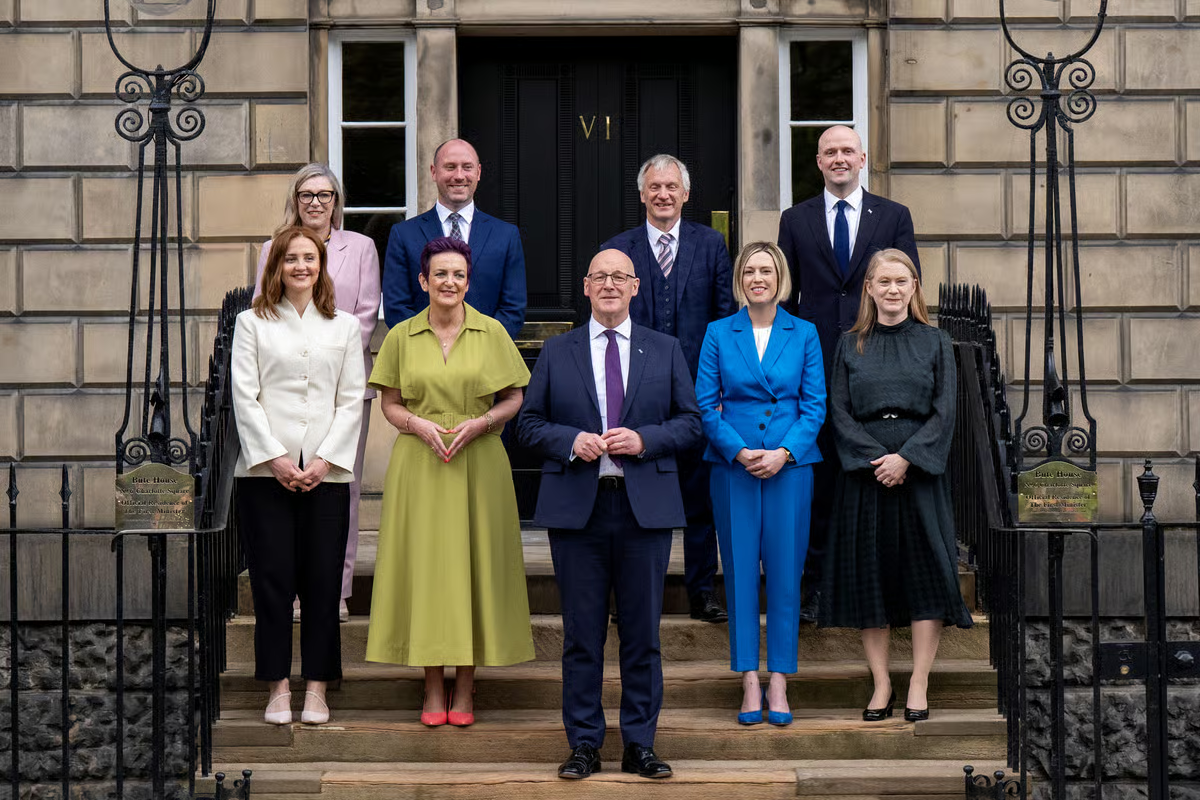
“What my team will do with the focused leadership of Jenny Gilruth as Deputy First Minister, Ivan McKee as the Cabinet Secretary for Public Sector Reform, working right across Government to make sure that we are reforming the public sector, we will be taking the steps, and it should be seen as a very clear signal from the announcements that I have made today of a Government that’s focusing on ensuring fiscal sustainability and meeting the needs of the public.”
In a 2026 study I conducted with colleagues on people with peripheral arterial disease, one participant described how leg pain had disrupted his golf for years. It forced him to stop mid-round, shake his leg and apologise to his playing partners while he waited for the pain to pass. He found it mortifying. Then he tried a small electrical device that delivered gentle pulses through pads stuck to his skin. He still had pain. But he could get round the course.
When we measured his walking on a treadmill, we found no improvement. He had not noticed. That was not the outcome that mattered to him. Before the study ended, he had already gone out and ordered his own device.
A different participant reached the opposite conclusion. The pain was still there when he used the device, he said. It had not done him any good. And he was right, in a narrow sense. The device had not eliminated his pain. What it had done was reduce its intensity and delay its onset, allowing him to walk measurably further. His expectation of complete relief meant that genuine, partial relief felt like failure. He concluded the treatment did not work.
The study did not tell a simple story of success or failure. For some participants, standard treadmill measures did not capture what had changed in daily life. For others, measurable improvements still failed to feel meaningful because they fell short of what the person had hoped for. The difference was not only the treatment, or the severity of their condition. It was what each person had been led to expect.
Advertisement
Recognising relief
Both men were living with peripheral arterial disease, a condition caused by a build-up of fatty deposits inside the arteries that supply the legs. It affects an estimated 236 million people worldwide. Its hallmark symptom is a cramping pain in the calf during walking that eases with rest. Over time, it can shrink a person’s world, limiting independence and increasing the risk of serious cardiovascular problems.
The recommended first-line treatment is supervised exercise therapy: structured exercise sessions led by trained professionals. But in many countries, access to supervised exercise therapy remains patchy and under-resourced. That gap is fertile territory for the wellness market.
Transcutaneous electrical nerve stimulation, or Tens, delivers small electrical impulses through electrode pads on the skin to interfere with pain signals travelling to the brain. There is evidence that it can help with some kinds of pain, and it is used in hospital pain management settings. It is not a wellness product. In our study, we explored what happened when people with peripheral arterial disease used TENS independently at home, outside the controlled conditions of a clinical trial.
The findings point to something standard clinical tests rarely capture. Expectation can shape whether useful relief is recognised as useful.
Advertisement
That finding matters well beyond this particular device or condition. The global wellness industry is worth over a trillion dollars and operates with minimal regulatory oversight. People living with painful long-term conditions are among its most heavily targeted consumers. Companies sell electrical stimulation devices, supplements and wearable gadgets to people in chronic pain, using influencer testimonials in place of evidence and social media algorithms to reach people who are frightened, frustrated or in pain.
When a product fails to deliver the transformation it promised, patients rarely conclude they were misled. They conclude that nothing can help them. In conditions where reduced physical activity carries real health consequences, that conclusion is not merely disappointing. It is dangerous.
Poor communication can hinder treatment results
This is where the study speaks to a much wider problem. Whether a person is using a clinical device, a wearable gadget or a supplement sold online, they are often asked to judge it against expectations they did not set for themselves. Even legitimate, clinically tested treatments can be undermined by poor communication about what to expect.
The golfer’s experience illustrates this clearly. He valued an outcome that no clinical trial had thought to measure: the ability to play a round of golf without humiliation. Once he understood the device could offer that, it worked for him. His fellow participant was never given the chance to find his equivalent.
Advertisement
A market built around selling hope is poorly equipped for that kind of honesty. But the same danger can appear even when the person giving advice has medical credentials. Research shows that even medically qualified doctors who become prominent wellness influencers on social media are subject to many of the same pressures as their unqualified counterparts: to build a personal brand, produce content constantly, stand out from competitors and make advice sound more certain than it really is. Having a medical degree does not make someone’s Instagram post better at managing a patient’s expectations. It just makes it more convincing.
What actually helps requires something platforms cannot provide: time, a genuine clinical relationship and communication that is not contingent on making a sale. It requires asking a patient not just whether their pain has reduced, but what they were hoping to do that pain had been stopping them from doing. It requires explaining that partial relief is still relief and that the outcome worth measuring might not be the one on the form.
That kind of honesty does not feature in any influencer’s discount code, medical degree or otherwise. But for the person who just wants to get round the golf course, it might be the most important part of the treatment.
The Council Chambers site on Front Street in Stanley is Grade II listed and was first built in 1911.
The building, which previously housed Stanley Urban District Council, has been included in Historic England’s Heritage Investment Prospectus in the hope that it can be sold.
Inside, the building remains largely intact with an elegant staircase and hall, and an ornate council chamber.
The former Stanley Council Chambers on Front Street. (Image: Historic England)
The property is considered suitable for a wide range of uses, including residential, commercial, retail, leisure, community or mixed-use development (subject to planning).
Advertisement
The site has also been the subject of pre-application discussions and feasibility work, which indicate it is suitable for a range of potential uses, including residential, retail or commercial, food and beverage, or community-based functions.
Stanley is currently benefiting from substantial regeneration activity, including £20 million of Pride in Place funding from the Government and major investment by housing provider Karbon Homes on the former Board School site.
Initial options for the site proposed by the developer in 2023 included creating a youth hub, housing, a business and community hub, or a community cafe. A mixed-use venue hosting pop-up events and traders was also proposed.
The former Stanley Council Chambers on Front Street. (Image: Historic England)
Historic England said: “This is strengthening the location’s appeal and reinforcing long-term confidence in the town centre. The building is part of a community that has demonstrated strong involvement in shaping local priorities through the Stanley Strategic Place Plan, with heritage emerging as a key theme.
Advertisement
“With excellent access, strong local amenities and a supportive policy and investment context, the property offers an exceptional opportunity to contribute meaningfully to the ongoing regeneration of Stanley.”
The Heritage Investment Prospectus showcases historic sites and buildings across England, where owners are actively seeking investment partners or buyers.
Only Freiburg stand in his way. The German side finished seventh in this year’s Bundesliga and have impressed throughout this campaign, beating the likes of Braga, Celta Vigo, Lille and Nice en route to the final. They were playing second-tier football in Germany just a decade ago but have hardly looked back since winning the 2. Bundesliga in 2016, and today face their first-ever European final.
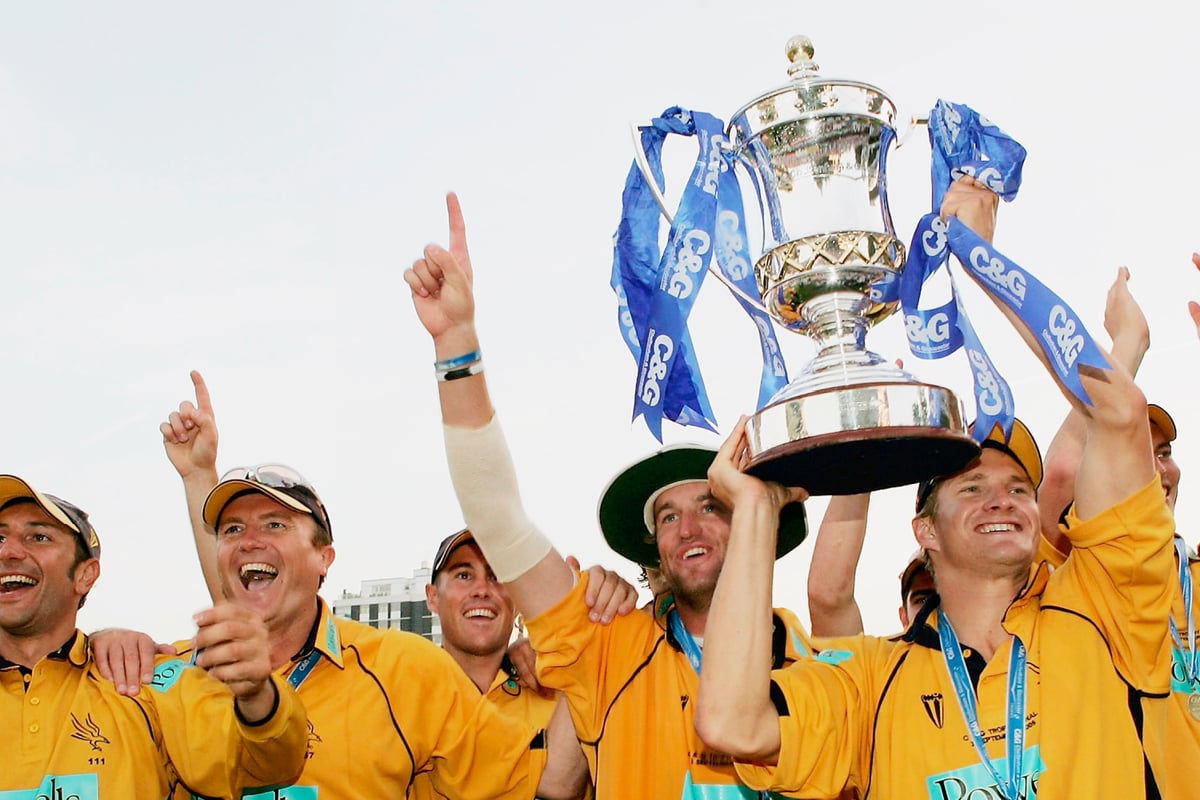
The highlight of 2005, after 13 barren years, came when Hampshire won silverware by defeating Warwickshire in the C&G Trophy Final at Lord’s. Since they also finished runners-up to County Champions Nottinghamshire, it was a successful season although the Championship conclusion brought frustration.
Bayliss lied to the victim’s workplace and said she had stolen drugs and was involved in money laundering.
A man who said he would ensure his victim “doesn’t have another relationship” has been jailed. Christopher Bayliss, 44, of Caroline Hart Walk, Cambridge, threatened to kill himself after finding out his former partner had started dating again.
Advertisement
He hacked into her dating and social media accounts with his behaviour getting worse when she started a new relationship. On November 15, he showed up at the victim’s home and demanded money.
The victim initially refused but later sent £25 to make him leave. At around 4am the following day, he returned and banged on the door threatening to kill himself.
In two days, Bayliss sent 92 WhatsApp messages, left 71 voicemails, and made 32 unanswered calls. He also contacted the victim’s daughter and told her it was her mother’s fault that he turned to drugs and said he would “make sure she doesn’t have another relationship to destroy another man”.
In another call, Bayliss asked the daughter to pass the phone to her mum. He then told her “you need to get the dog; I am going to kill myself” and threatened to destroy her job “so she doesn’t have her friends”.
Advertisement
He went on to blackmail the victim and demanded £50, threatening to contact her employer with false allegations that she had been stealing cash and drugs. He later emailed her workplace and claimed she had stolen drugs and was involved in money laundering.
In four days at the end of November, Bayliss sent over 200 messages and made more than 60 calls and voice messages to the victim. On December 2, he sent a message that he was monitoring her movements and said he assumed she had been suspended as he could see she was not at work.
The victim had left her home and had been staying elsewhere, in fear for her own safety, and parked her car out of sight so he couldn’t find her. Bayliss was arrested later that day.
Bayliss was sentenced to two years and seven months in prison after pleading guilty to stalking involving serious alarm or distress, harassment without violence, and blackmail at Cambridge Crown Court on Thursday, May 14. A charge of controlling or coercive behaviour in an intimate or family relationship, along with a further stalking offence, was ordered to lie on file.
Advertisement
He was also made subject to a ten-year restraining order.
Detective Constable Abbie Ellis, who investigated, said: “Bayliss’ behaviour was relentless, manipulative and deeply distressing for the victim and her family. He used threats, intimidation and harassment in an attempt to control her life even after their relationship had ended.
“Stalking is a serious offence that can have a devastating impact on victims. I would encourage anyone experiencing similar behaviour to report it to police – you will be taken seriously and supported.”
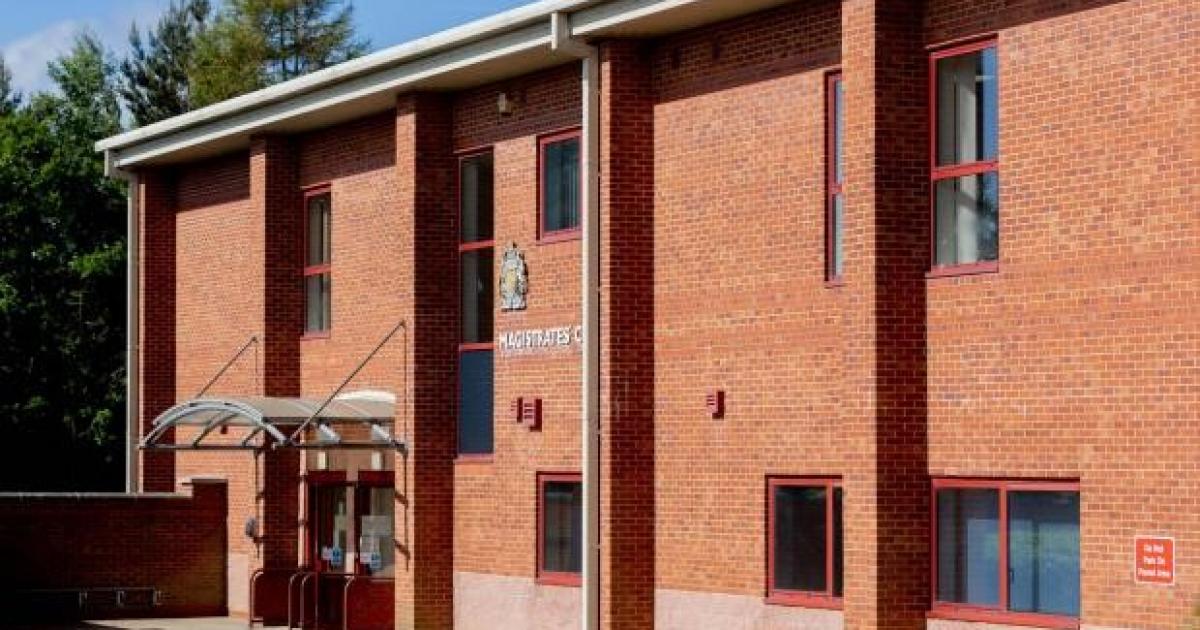
Tristan Gott, 22, Burnopfield, pleaded guilty to the offence when he appeared at Peterlee Magistrates’ Court on Friday, April 10.
The court was told he was driving a red Yamaha XJ9 on Front Street, Dipton, when he failed to show due care and attention, on November 27, 2025.
Magistrates did not find grounds for “exceptional hardship”, meaning Gott was disqualified from driving for six months under the totting up of penalty points.
Advertisement
He also received three notional penalty points.
A fine of £156 was imposed, with £85 in costs to the Crown Prosecution Service and a £62 victim surcharge.
Several people pointed out that they had seen Dubai-based Lee was logged into the Messenger service yesterday – despite going missing days earlier.
19:36, 20 May 2026Updated 19:42, 20 May 2026
Katie Price has responded to claims that her missing husband Lee Andrews has been online using Facebook. Several people pointed out that they had seen Dubai-based Lee was logged into the Messenger service yesterday, despite having disappeared nearly a week earlier after sending a series of chilling messages to his wife Katie.
Former Apprentice star Luisa Zissman was among those posting about him being online even though Katie is desperately trying to find him and fears that she has been kidnapped. Luisa said: “He was seen as active on Facebook Messenger six hours ago which does indicate that his kidnappers are definitely letting him have access to social media.”
However, Katie tonight insisted that it was her causing his Facebook account to appear as active to people around the world. She shared a screenshot of his page writing: “I have Lee’s Facebook it’s not him on this it’s me.” The profile showed Lee’s 13,000 followers, location as Dubai and bio describing himself as an “Investor CEO” and “Married to the beautiful Katie Price.”
The players’ campaign, which began in late 2025, is being spearheaded by former WTA chairman and chief executive Larry Scott.
The American will be in Paris on Friday for a meeting with French Open tournament director Amelie Mauresmo and FFT president Gilles Moretton.
Meetings are also planned with representatives of the All England Club (AELTC) and the US Tennis Association later in the fortnight.
The players’ action is designed to put pressure on the AELTC, with prize money for Wimbledon not due to be announced for another three weeks.
Advertisement
Last year, the Wimbledon prize fund rose by 7% to £53.5m – double the amount on offer a decade earlier.
Players look enviously, however, at the revenues generated by the Grand Slams and feel entitled to a larger slice of the cake.
The AELTC’s financial statement for the year to July 2025 showed revenue of £427m and profit after tax of £39.7m.
Players have asked the Slams to pay 22% of their revenue in prize money by 2030.
Advertisement
They are also asking that tens of millions of dollars are paid towards pension, healthcare and maternity benefits, and that they are consulted more widely on scheduling and other key decisions.
At this month’s Italian Open, world number one Aryna Sabalenka said she believes players will “at some point” boycott one of the majors.
World number three Iga Swiatek felt that would be a “bit extreme”, but defending French Open champion Coco Gauff said she would support strike action “if everyone were to move as one and collaborate”.
Men’s world number one Jannik Sinner also claimed players are not getting the respect they deserve when it comes to prize money at the majors.
Advertisement
An FFT statement on Wednesday read: “We regret the players’ decision, which impacts all of the tournament’s stakeholders: the media, broadcasters, the FFT and the entire tennis community, all of whom follow each edition of Roland Garros with great enthusiasm.
“The French Tennis Federation recognises the importance of the players’ contribution to the tournament’s success, and wishes to maintain close ties with them.”
The French Open takes place from 24 May to 7 June.













































You must be logged in to post a comment Login