

Politics
UK loosens Russian oils sanction under pressure from US-Israeli war on Iran



The UK has loosened crude oil sanctions on Russia due to the disastrous US-Israeli war on Iran. The UK has been very vocal over Russia’s war on Ukraine, but that conviction seems to be slipping as the closure of the Strait of Hormuz, a vital global energy channel, hits supplies.
The Guardian reported on 20 May that relaxing the sanctions will allow for:
the import of jet fuel and diesel refined in third countries amid surging costs.
A trade licence came into effect on 20 May which:
permits the imports indefinitely and will be reviewed periodically.
As the Guardian correctly points out the UK has repeatedly committed itself to harsh sanctions on Russia following the illegal 2022 invasion of Ukraine:
For years the UK has led international efforts to put economic pressure on Russia over its war on Ukraine. On Tuesday it signed a G7 statement reaffirming its “unwavering commitment” to imposing “severe costs” on Russia. It had previously announced it would block Russian oil refined in other countries to “further restrict the flow of funds to the Kremlin”.
Under pressure due to the predictable outcomes of the Trump-Netanyahu attack on Iran, that commitment appears to have cracked.
Disappointment in Ukraine
Foreign affairs committee chair Emily Thornberry told the BBC:
I’ve heard from people in Ukraine overnight and I know that they are very disappointed and have been asking me why it is that Britain is doing this.
She said people in Ukraine had fought Russia for many years and looked upon the UK as:
one of their most important allies and they don’t understand… In fact, it seems to have got worse. People feel very let down.”
The terms of the new licence are available to read on the UK government’s website.
And Tory leader Kemi Badenoch was flabbergasted that the Labour government chose buying Russian-sourced oil over drilling the North Sea:
After 18 months of “standing up to Putin” the Labour govt quietly issued a licence allowing imports of Russian oil refined in third countries.
Yesterday Labour MPs voted AGAINST UK oil and gas licences.
We are now importing from Russia instead of drilling in the North Sea.… https://t.co/UBOyWRRiEt — Kemi Badenoch (@KemiBadenoch) May 20, 2026
The UK has already deployed ships and personnel as part of a taskforce to open up the Straits. The international focus has been on work-arounds while never talking about the elephant in the room: the US and Israel are to blame for the energy crisis and an end to the attack would be the main step towards alleviating it.
A negotiated settlement
US-Israel attacked Iran first on 28 February without provocation. Iran was offering unprecedented concessions in negotiations at the time. The Pentagon has since stated there was no imminent threat from Iran. And the UN’s atomic watchdog, the IAEA, has said there is no evidence Iran was developing a nuclear weapon.
The US has achieved none of its original war aims. Iran predictably closed the Strait of Hormuz, a vital oil channel, once attacked — creating a global energy crisis. Far from being defeated, Iran has said the war will continue until “the enemy’s inevitable and permanent humiliation, disgrace, regret, and surrender”. Trump came to power on an anti-war ‘America First’ ticket. He now faces worldwide humiliation.
Pakistan has made a series of attempts to broker peace. The US-Israeli attack has faltered, with Donald Trump left scrambling for an off-ramp.
Simply put, there is a way to relieve the crisis: an end to hostilities, a negotiated settlement and the restoration of the full rights of those countries under attack. Until then, the tremors of the Iran war will continue to be felt throughout the global economy.
Featured image via Ezra Acayan/Getty Images
By Joe Glenton

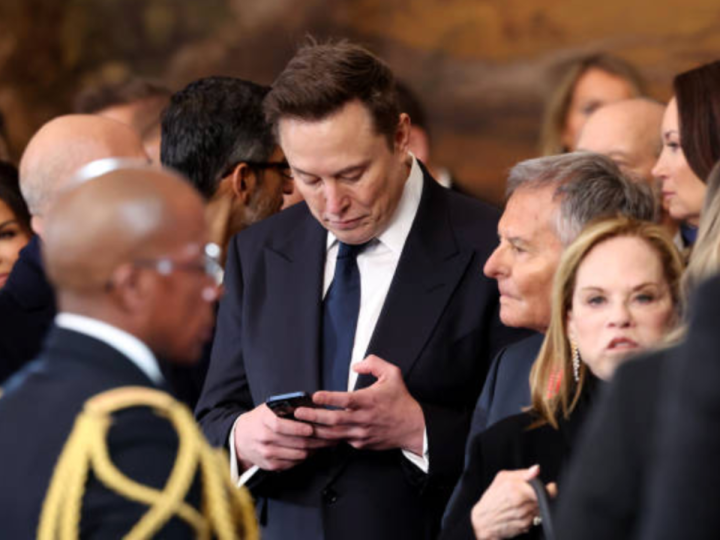
West Belfast MLA Gerry Carroll has suggested that the world’s wealthiest man, Elon Musk, should pay for the massive damage caused in Belfast by racist mobs. This is after the billionaire used his X social media to encourage the carnage.

Musk is a white supremacist vomited up by apartheid-era South Africa 54 years ago. He is currently using his wealth and X reach to ensure the continuation of that vile regime’s politics, only now on a global scale.
Carroll shared the following message:
How about he reaches into his very deep pockets to pay for the damages? For the lost pay, damaged public transport, burnt homes and displaced families. To say nothing of the widespread trauma.He can afford it. But he won’t. Last night’s pogrom was carried out on the streets of Belfast, but it was encouraged and greenlit by the rich and powerful and stoked by well-known figures on the far right.As they have many times in the past, capitalists are energetically trying to divide people here for their own ends. We live in one of the most unequal societies in Europe—with a failing NHS, a low wage economy, crumbling public services and a manufactured housing crisis. Trump, Farage and Musk laugh all the way to the bank, while the despair eating away at working class areas is directed against vulnerable migrants.
A second night of racist rioting
As previously reported by the Canary, Musk promoted the protests to his 240 million followers on the social media hell-site. People Before Profit man Carroll was speaking before a second night of rioting by hooligans in the north of Ireland.
The disorder was less severe than on Tuesday June 9, with the main flashpoint being in Glengormley, a suburban area to the north of Belfast. There, masked thugs attempted to conduct a further pogrom at the Chimney Corner Hotel. However, racists have frequently protested at the site in the past. This is due to it housing asylum seekers.
On this occasion, a heavy police presence prevented rioters from accessing the hotel. The Police Service of Northern Ireland (PSNI) deployed a water cannon to push back would-be ethnic cleansers. This granted them their first shower of the year.
In Portadown, incompetent hoods might have wished for said hosing down. This is because they set themselves on fire while attempting to petrol bomb police. Pogrom enthusiasts Official Protestant Coalition provided footage of the mess their incitement helped produce. It showed a town centre strewn with broken glass and burning barricades.
The real state failure isn’t immigration
Musk has continued a relentless stream of messages fear mongering about immigration. This includes a thread from failed parliamentary candidate Matt Goodwin. In it, Goodwin got perilously close to forming a coherent thought. He seemingly didn’t need machine doping to help him this time.
The walking charisma vacuum lamented that:
We’ve entered a new phase of ‘anarcho-tyranny’ where the state is now failing to perform its basic duties like controlling the borders while oppressing its own people.
Veering close to one of his twice-daily broken clock moments, Goodwin was correct to identify that the British state — to which the north of Ireland is still sadly tied – no longer functions properly. However, this isn’t the fault of immigrants. It’s the result of now almost two decades of austerity, kicked off in 2010 by the Conservatives. These policies have seen the lives of those within Westminster’s influence grow progressively worse. They have to put up daily with the very things Carroll cited:
…a failing NHS, a low wage economy, crumbling public services and a manufactured housing crisis.
While there has been deranged fury about a single act of violence from a single Sudanese man, the reality is you’re much more likely to be killed by a billionaire than a migrant. Structural violence is a far greater threat to the people of Belfast than any refugee or asylum seeker. That’s when harm is done to you by systemic failures, those created from political decisions shaped by the ultra-wealthy who buy off our politicians.
When those politicians underfund the NHS, you get fewer ambulances. You get fewer doctors, and nurses, and less up-to-date diagnostic systems. That means, when someone suffering a medical emergency needs an ambulance that never arrives, they die. When someone needs cancer treatment but their under-resourced hospital can’t provide it, they die. In both cases, the harm can be traced to a billionaire. This is just as surely as the wounds of the victim in Belfast can be traced to his attacker’s blade.
Musk aims to distract with race panic
Hadi Alodid, alleged to have been the assailant in question, almost killed one man. Austerity is estimated to have killed at least 330,000. Elon Musk is set to become the world’s first trillionaire. With a fraction of that wealth, and a similar amount taken from all other capitalist robber barons, virtually all those deaths could have been averted.
In a fairer economy, where wealth is collectively owned rather than hoovered up by the worst people imaginable, we could heal and house the entire native population of these islands, and generously welcome those who arrive from abroad.
Musk and his ilk want to continue hoarding wealth, beyond the dreams of avarice, rather than allow that reality to emerge.
In the meantime, the working class of Belfast and beyond, of all colours, will pay in myriad ways while the ultra-rich get off scot-free.
Featured image via Kevin Lamarque / Getty Images
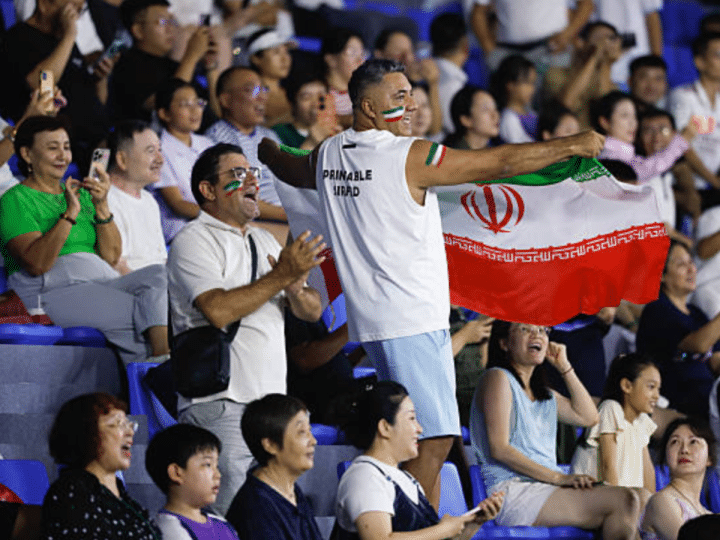
Iran is warning that it will suspend its team’s matches at the 2026 World Cup if “unofficial” flags or political slogans are seen or heard at stadiums. Moreover, the team is referring to the Lion and Sun flag. The flag in question is recognised as an anti-government symbol. It is popular among some — though not all — dissidents and supporters of the Pahlavi monarchy.
Reuters quoted Iranian media as saying Sports Minister Ahmad Donyamali confirmed that Iran had informed FIFA of the need to prevent such incidents. In addition, he said:
We have informed FIFA that if unofficial flags are raised or slogans against the national team are chanted in the stadiums where Iran is playing, the team manager will bear responsibility for halting the match.
Donyamali added that authorities have received assurances that such incidents would not take place on 26 June during Iran’s match against Egypt in Seattle.
Rising US-Iran tensions
These latest snags appear against a high tide of US-Iran tensions. Additionally, FIFA is the governing body responsible for maintaining a clear separation of football and politics. It has stood by Iran and protected its right to participate in the 2026 World Cup tournament. However, how FIFA will now tackle crowd control remains unclear.
Reuters reported that protesters gathered outside the FIFA Congress in Vancouver in April. They called for the exclusion of the Iranian national team. The protesters argued that it represents the proscribed Iranian Revolutionary Guard Corps. Moreover, they claim that it doesn’t represent Iranian people.
The agency also noted that the Iranian and Egyptian football federations had asked FIFA to ban LGBTQ+ related activities during their match in Seattle, which local organisers have included as part of Pride Week events.
Iran begin their Group G campaign against New Zealand in Los Angeles on 15 June, before facing Belgium on 21 June, and Egypt on 26 June.
Featured image via Lintao Zhang / Getty Images
By Alaa Shamali
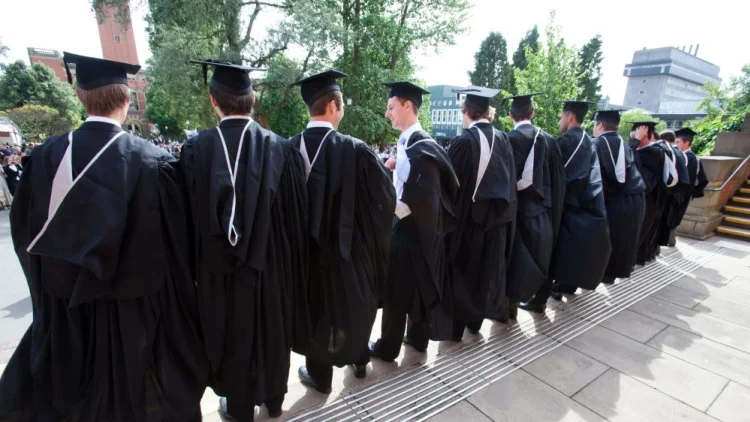

(Alamy)

Dr Michael Spence, President and Provost
4 min read
It is time to consider what a graduate is actually for.
On Monday, a new Policy Exchange report added to the ever-growing pile of literature and comment about whether too many young people are going to university. It is a question that deserves serious consideration and practical answers. If graduates are struggling to find good jobs, as the recent Milburn review concluded, universities cannot dismiss those concerns. If employers say they cannot find the skills they need, we must listen.
Before concluding that Britain needs fewer graduates, however, it is worth considering the world that today’s students are preparing to enter. We must consider seriously what a graduate is for.
The world they will inherit is likely to need more highly skilled people than the one we inhabit now. A QS report in March identified that among the 1,436 occupations essential to the delivery of the Industrial Strategy, 80 per cent require level six skills or above. In common parlance, that’s a bachelor’s degree or higher. From healthcare and education to science, engineering and professional services, we require more high-skilled workers, not fewer. Advances in artificial intelligence are also increasing the value of capabilities that remain distinctly human: judgement, creativity, communication and the ability to work effectively with others.
That picture feels familiar to me. UCL educates future clinicians, engineers, teachers, architects, data scientists, entrepreneurs and public servants. When I speak to employers, I rarely hear them asking for graduates who know less. More often, I hear them asking for graduates who are better able to apply what they know. They want people who can work effectively in teams, communicate clearly, manage projects and adapt when circumstances change.
None of this means concerns about graduate outcomes should be waved away. Quite the opposite. An economy can need more graduate-level skills and still leave some graduates struggling to make the transition into good work.
Universities are asking themselves what more they can do to close that gap. For many years, employability was often treated as something that happened alongside a degree rather than through it. Students would study their subject, then visit the careers service towards the end of their course and think about what came next. That model became outdated some time ago.
Universities cannot become strictly vocational training providers. A university education ought to expand horizons, cultivate intellectual confidence and encourage students to think critically about the world around them. The graduates Britain needs are those who are prepared not only for the workplace as it currently stands, but also for the workplaces of the future. That is where an education from a university like UCL has a distinct value add. Students benefit from learning alongside people who are helping to shape the future of their disciplines, whether that means developing new technologies, advancing medical treatments or exploring solutions to complex social problems.
Yet there is plenty of room to be more ambitious about helping students connect those qualities and experiences to life beyond the campus. Students should encounter more opportunities to work on real-world problems before they graduate. Increasingly, at UCL, we are experimenting with ways of doing that. For example, through our ExtendEd programme, every student is now given the opportunity to take part in industry challenges, community projects and collaborative problem-solving activities alongside their academic studies.
I am proud that our graduates enjoy some of the strongest outcomes in the country. Yet spending time with students and employers leaves me convinced that this conversation cannot stop at employment statistics. The economy is changing too quickly for that. Many of today’s students will move between organisations, sectors and technologies that do not yet exist. Preparing them for that future involves more than helping them secure a first job after graduation. It means equipping them with the knowledge, judgement and adaptability to navigate a lifetime of change.
Britain faces genuine skills shortages. Employers need talent. Young people need opportunities. Universities have a responsibility to work with both of these groups to be part of the solution.
Britain’s economy will continue to need graduate-level skills in the years ahead. The task for universities is to ensure that more graduates are equipped to make use of their knowledge, contribute in meaningful ways and adapt as the world changes around them.
Dr Michael Spence is president and provost of UCL
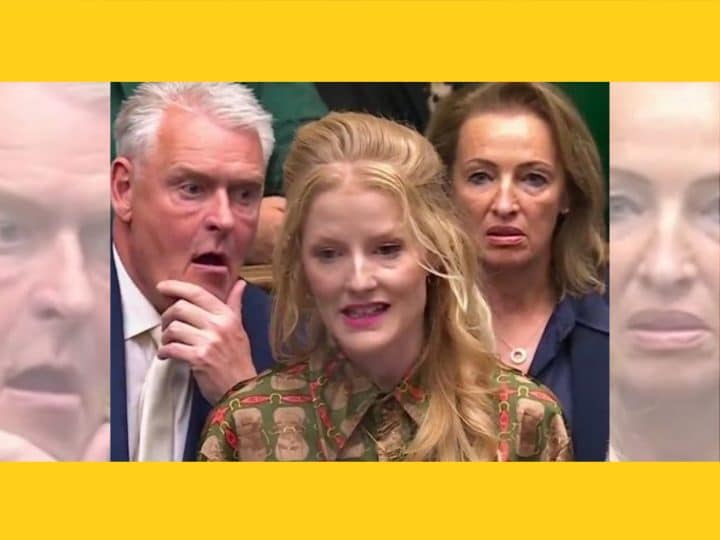
On 11 June, Hannah Spencer caused quite the commotion in parliament for vocalising a popular-held sentiment about Reform UK. Here’s what went down:
"There's plenty of dirty grubbiness behind me." Look at their faces. — Oliver (@OWS1892) June 10, 2026
 Well said Hannah. #PMQs pic.twitter.com/9oD2OrP4KR
Presumably, that’s ‘dirty’ to the left of her and ‘grubby’ to the right.
But what did Spencer say exactly?
It’s a filthy job
The offending comment in full was:
Running a business as a plumber, I was well used to dealing with dirty grubbiness, and there is still plenty of that dirty grubbiness behind me.
Given that Spencer sits directly in front of the Reform mob, the assumption is she was accusing them of being ‘dirty’ and ‘grubby’. We’re not quite sure why she’d say that, but it could have something to do with stories like the following:
- Farage bought £1.4m house after undeclared £5m ‘gift’.
- Former Reform leader Gill sentenced to 10.5 years for taking bribes.
- Reform councillor fined £40,000 for hiring ‘illegal’ workers.
- Reform candidate Goodwin took fat salary from Hungarian far-right.
- Former Tory donors flock to Reform, including a massive donation from Thai-based billionaire.
- Reform candidate became councillor despite antisemitism exposé.
Spencer’s comments went down well online:
She shoots, she scores!@SarahForRuncorn’s face *chef’s kiss*
Well done, Hannah Spencer! @McrGreenParty pic.twitter.com/wV0QhJ8VIa
— James Foster (@JamesEFoster) June 10, 2026

Well, the comments mostly went down well. Brain genius Lee Anderson hit back at the insinuation with the following:
Dirty Grubbiness.
Today one of the Green MPs spoke of the dirty grubbiness sat behind her. She must've been talking about the Lib Dems sat behind us.
Vote @reformparty_uk pic.twitter.com/4aMtK4pbdM
— Lee Anderson MP (@LeeAndersonMP_) June 10, 2026
They’re calling it the comeback of the century.
‘Dirty grubbiness, is it? Yeah? Well, actually, she probably meant someone else.‘
Another retort was that Spencer appeared to be “draped in exquisite Gucci”:
At PMQs, Green MP Hannah Spencer, draped in exquisite Gucci, accused Lee Anderson and Sarah Pochin of being “dirty and grubby.” But Starmer landed the line, calling out Zack Polanski’s absence and asking if he’d swapped his houseboat for a submarine. pic.twitter.com/EliuXmu6ID
— Crewkerne Man (@CrewkerneMan) June 10, 2026
You’ll notice that the right are so riled by what Spencer said that they’re defending Starmer to get at her. Unprecedented stuff.
We’ve contacted Spencer to get to the bottom of the Gucci accusation, and will let you know if she updates us. Regardless of whether it’s Gucci or not, it’s probably not smart to respond to the ‘dirty and grubby’ accusations by saying ‘yeah, well you’re stylish and well dressed!‘
Yellow-bellied submarine
What’s been under-reported is that Spencer was actually asking a question of Keir Starmer. That question in full was:
Running a business is tough, so will the Prime Minister join me in backing the “VAT’s the Problem” campaign to cut VAT rates in hospitality? He did not answer the question last week, so will he tell us today: yes or no?
Would you believe Starmer answered by not answering?
Specifically, he said:
I am very glad that we are cutting VAT over the summer with our summer savings programme, which I hope the hon. Lady will support. I note that we have not heard much from the Green party leader after he admitted he had not paid his council tax. Perhaps he has traded his houseboat for a submarine.
In our opinion, the joke didn’t land as well as Crewkerne Man suggested. We say this because Starmer’s anxiety and awkwardness have reached record highs. We can’t confirm this, but that could be because his party has unofficially given him the sack. And honestly, we’d feel awkward too if we had to stand before several hundred people and pretend to be the prime minister.
As Spencer noted, our temporary PM faced a similar question last week, which came from Rosie Duffield:
This week, Tom Kerridge and UKHospitality launched their “VAT’s the Problem” campaign, and yesterday my neighbour the right hon. Member for Herne Bay and Sandwich (Sir Roger Gale) and I hosted industry bodies, chefs Matt Tebbutt and Thomasina Myers and hospitality leaders from Manchester, Liverpool, London and Kent, including Andy Burnham’s night-time economy adviser Sacha Lord. They all agree with campaigners such as Andy Lennox that the UK’s rate of 20% VAT on hospitality is killing businesses daily. Does the Prime Minister agree that VAT’s the problem? Will he match the pledge of his candidate in Makerfield to slash VAT in line with the rest of Europe?
Ah, okay, so now we see why Starmer was nervous. The proposal is being promoted by his replacement, Andy Burnham, so obviously it must be a sore point.
Tinkering
For clarity, this was how Starmer responded to Duffield:
I thank the hon. Member for the question. I recognise the challenges that she identifies. That is why we are permanently lowering business rates for retail, hospitality and leisure businesses. Every pub will get 15% off its new business rates bill, and bills will be frozen in real terms for a further two years. In relation to VAT, she will see that we are offering support by cutting VAT on children’s meals in restaurants—particularly over the summer period—with those savings set out two weeks ago by the Chancellor.
What he’s saying is ‘no‘, he doesn’t have any plans to permanently reduce VAT. As a British politician, however, he can’t just give a straight answer. And as such, he’s going to keep facing the same question.
Featured image via X/Twitter
By Willem Moore
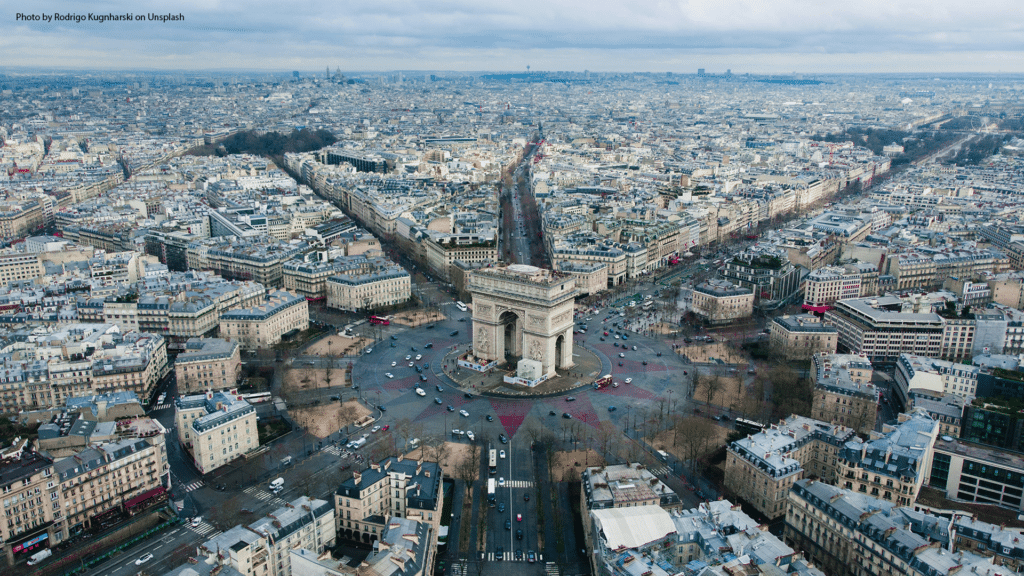
Philippe Marlière looks at the prospective candidates for the French presidential elections in 2027 for both the left and the right, as well as the key challenges they will have to overcome should they run.
As in 2017, the upcoming French presidential election will be a transitional one that could trigger further political upheaval. Emmanuel Macron, the incumbent President, is no longer eligible to run. His departure opens a wide range of contenders. Jordan Bardella (National Rally, RN) is leading in the polls and considered the frontrunner. But his election is far from certain. The campaign that has already unofficially begun could therefore hold a few surprises.
A disunited and historically weak left
What are the chances of the left? Very slim. It could be eliminated from the second round for the third consecutive time. It will be Jean-Luc Mélenchon’s fourth attempt since 2012. A powerful speaker, comfortable in the media, able to use the registers of radicalism and a unifying discourse, he is more than anyone else at ease in an election where personal capital and communication skills are key.
Mélenchon enters the fray with a disciplined movement. He could, as in 2017 and 2022, benefit from tactical voting from those who do not like him but desperately want the left to reach the second round. Will he succeed? It should not be ruled out in the context of a fragmented and evolving political landscape. However, his personal image is deeply tarnished. He is criticised for his ethnic factional rhetoric, authoritarianism, anti-European Union stance, conciliatory remarks towards Putin, al-Assad, and China; and numerous accusations of anti-Semitism are leveled against him. He is currently more “demonised” in the media and political class than the RN, which, for its part, has largely “de-demonised” itself. In a runoff between Mélenchon and Bardella, polls predict an emphatic victory for the RN leader.
The rest of the left claims to be organising a “unity primary”, intended to select a single left-wing candidate (outside of LFI). Negotiations between party leaders are stalled, the Socialist Party is divided on the issue, and the Communist Party refuses to participate. This primary will probably not happen, opening the door to multiple left-wing candidacies, including that of Raphaël Glucksmann, leader of the small Place Publique party, who is fiercely opposed to Mélenchon. If no non-LFI candidate gains traction in the polls by the end of 2026, the possibility of François Hollande, the former President, running as the saviour of the moderate left should not be ruled out.
Macronism rejected and the Republicans in decline
Who will embody the Macronist centre right? Two former Prime Ministers of Macron stand out: Édouard Philippe, president of the micro-party Horizons, and Gabriel Attal, president of Renaissance. A recent poll shows that the Macronist block is deeply fragmented: the “heirs” (35%) remain loyal to the centre right and will support either Philippe or Attal. Those “tempted by the right” (27%) could vote for Les Républicains (LR), or even the RN. Those “tempted by the left” (23%) are considering a return to the moderate left. Finally, the “disillusioned” (15%) appear disappointed by Macronism and politics in general and could abstain. Philippe is currently in second place in the polls behind Bardella, but he is being closely followed by Mélenchon. His stilted style is struggling to win people over, and he will find it difficult to distinguish himself from Macronism, which is now very unpopular.
The situation is hardly better within LR. Three main candidates are currently in the running: Bruno Retailleau, former Minister of the Interior and president of LR, was chosen by the party members in April 2026. David Lisnard, mayor of Cannes and a proponent of a broad right-wing coalition, is also a candidate. Xavier Bertrand, an elected Republican who opposes any alliance with the RN, could also run. None of them have the slightest chance of making it to the second round. In the event of a RN victory, will LR support the new far-right government? This is now a conceivable prospect for the (distant) heirs of Gaullism.
On the far right, there will be a new candidacy from Éric Zemmour, who has been convicted several times for racist comments and has popularised the themes of “great replacement” and “remigration” in the public debate.
Is the RN truly “de-demonised”?
We will have to wait until 7 July to find out if Marine Le Pen will be able to run, when the Paris Court of Appeal will issue a ruling concerning Le Pen’s conviction for illegal financing. If the appeal is upheld, she will be ineligible, and Bardella will be the candidate. Both are projected to win the election according to current polls, though Bardella appears slightly more popular. But Le Pen is experienced, while the young Bardella (31 years old) is not. Furthermore, she has a more “social” approach than Bardella, who has a neoliberal economic profile which could alienate part of the RN’s working-class electorate. He has already announced that the RN will backtrack on its proposal to return the retirement age to 62, a proposal which Le Pen still supports.
This is above all an historic election that could bring the far right to power in France for the first time since 1945. A RN presidency would have a significant impact on France’s domestic and foreign policy and would reinforce the nativist and nationalist camp in Europe.
The RN seems certain to qualify for the second round. Which other candidate will make it to the second round to challenge Bardella or Le Pen? A centre-left, pro-European candidate like Glucksmann or Hollande? That seems highly unlikely at present. A centre-right candidate like Édouard Philippe? It is a possibility, but he will have to overcome the widespread rejection of Macronism. A Bardella-Mélenchon showdown? That is a plausible scenario because Mélenchon excels in personalised elections and should still benefit from tactical voting on the left.
In this scenario, would we witness the return of the “Republican Front”, the alliance of all against the far right, in a great anti-fascist surge? This is indeed the great unknown of this election: has the RN definitively been “de-demonised”, like in other European countries, such as Italy? Or does a visceral aversion to it persist, leading “democrats of all stripes” to prefer, at the last minute, to support a candidate they dislike? This is Mélenchon’s hope. Is it realistic? Polls indicate that LFI is currently considered by voters to be “more dangerous for democracy than the RN”. It is therefore a slim hope.
By Philippe Marlière, Professor of French and European Politics at University College London.
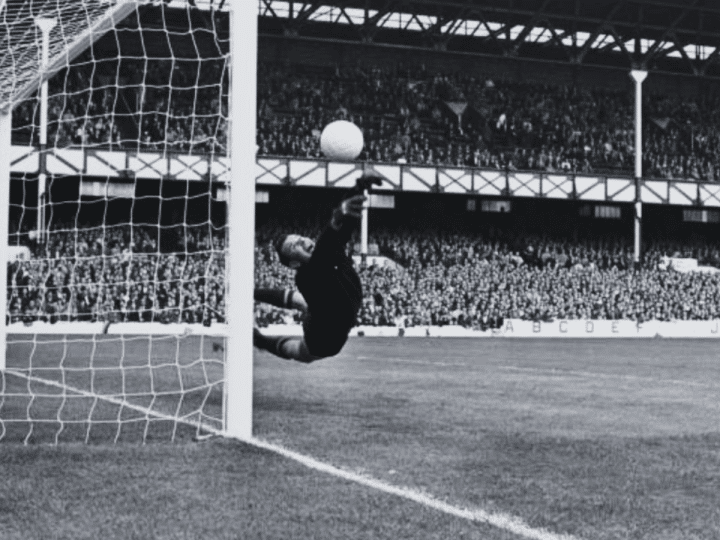
The year was 1930 and in Montevideo, Uruguay, the rain showed no signs of abating. Then, in an instant, the dreariness waned when young Frenchman Lucien Laurent scored the first goal in World Cup history . It was the start of a tournament, a ritual, and a sporting mania spanning continents and oceans.
When Mexico and South Africa walk out at the Azteca Stadium today, they won’t simply be kicking off another World Cup. Instead, they will be writing the latest chapter in a 100-year-old story. Since the opening France–Mexico match at the inaugural 1930 World Cup, audiences have learned that in those 90 minutes, part of the magic is that anything can happen. Across the 22 opening matches played in World Cup history, 60 goals have been scored. This is an average of 2.7 goals per match. Often, these games feature attacking moments and palpable pressure. It’s clear the world cup always brings anticipation and drama.
Opening the tournament
For decades, the privilege of opening the tournament went to the defending champions. Argentina stepped onto the pitch first in 1982, Germany in 1994, Brazil in 1998, and France in 2002. But in 2006, FIFA changed the rules — from then on, the host nation would take centre stage. Germany, South Africa, Brazil, Russia, Qatar, and now Mexico have carried the torch, welcoming the world to the first match.
Upsets and iconic moments
Opening matches have often defied expectations. In 1990, reigning champions Argentina were stunned 1–0 by Cameroon. Twelve years later, France, fresh off their 1998 triumph, fell 1–0 to Senegal in the first game of 2002. Even hosts have stumbled. In 2022, World Cup Host Qatar became the first host nation to lose an opening match. They fell 2–0 to Ecuador. Some matches, like South Africa’s 1–1 draw with Mexico in 2010, remain memorable for sheer energy and hope rather than shock. In the world cup, every opener has its surprises.
Goals that last
Lucien Laurent’s strike in 1930 may have been the first, but it set the tone. Decades later, in 2010, Siphiwe Tshabalala’s thunderous goal against Mexico became one of the most iconic opening goals in World Cup history, a reminder that the tournament’s first moments echo far beyond the scoreline.
Azteca Stadium makes history
Today, the Azteca Stadium becomes the first venue to host a World Cup opener for a third time, having done so in 1970 and 1986. And as Mexico and South Africa prepare to take the field, the pattern feels familiar: new players, new teams, new stories—but the same truth remains. The first whistle always carries promise, and the opening match always has the power to shape a tournament. The stadium’s connection to world cup tradition is truly remarkable.
From Uruguay to Mexico, across 96 years of history, World Cup openers have never been simple introductions. They are statements—sometimes shocking, sometimes symbolic, always unforgettable. Indeed, the world cup has become woven into the fabric of sports worldwide.
Featured image via Hulton Archive / Getty Images
By Alaa Shamali

The following is a call for evidence from The Fraud author Paul Holden into how Labour Together shaped the current crop of Labour MPs.
Call for Evidence: The Labour Together Parliament
Shadow World Investigations and Paul Holden – author of The Fraud: Keir Starmer, Morgan McSweeney and the Crisis of British Democracy – are today announcing a new investigative project
about the transformation of the Parliamentary Labour Party (PLP) under the Labour Together Project.
This long-germinating project is soliciting evidence about how Labour Party processes were used (and abused) to manipulate the selection of Labour MP candidates who now make up the majority of the PLP.
Keir Starmer was the frontman for a rotten political project that spent the best part of a decade remaking the Labour Party along rigidly factional and exclusionary lines.
The most consequential transformation was of the Parliamentary Labour Party.
Two thirds of the Labour MPs currently sitting in the House of Commons were selected through a process tightly controlled by Morgan McSweeney, reportedly with direct (albeit informal) input from Peter Mandelson.
Labour Together, and its key donors, then spent over £2m on getting this intake of MPs elected. The selection process that McSweeney oversaw was beset by allegations of misconduct and irregulates so widespread that veteran journalist Michael Crick described it as ‘corruption’.
One MP selection resulted in criminal charges being filed against Labour officials with close connections to key Labour Together figures.
These are the MPs that not just determine the future of the country but will play a key role in either making or breaking the political fortunes of whoever next succeeds Starmer.
In a follow up to The Fraud, my colleague Jessica Murray and I will be embarking upon ‘The Labour Together Parliament’ project to examine the legitimacy of the process that resulted in the current
Parliament, upon which any Labour government will rest.
What we need as a first step is information
We would like evidence of any wrongdoing or stitch-ups during the selection process. We would like to build a collection of evidence about the ways in which bureaucrats forced through or manipulated the selection process, including in the finalisation of longlists and shortlists, and, where it happened, the decision being removed from local democratic decision making altogether.
We’re particularly interested in the vote tallies from every Labour candidate selection between 2022 and 2024. These have not been routinely published. We are particularly interested in tallies
that distinguish between postal/online/and in-person votes.
These different vote tallies would have been provided to losing candidates. Sometimes they were only read out in selection meetings. We are not only looking for results that seem ‘dodgy’ – but all vote tallies, including those that are not in the least suspicious. This will allow us to build a holistic database and rigorously test different hypotheses.
We would also like tallies from candidate selections in seats that weren’t Labour targets and didn’t result in any MP. Ideally, it would be great if we could be provided with contemporaneous evidence of these vote tallies – such as a screenshot of a message or email relaying the result. We would also be interested in narrowing down which Constituency Labour Parties used Anonyvoter for MP selection, even if the vote tallies are not available.
We have set up an email account research@shadowworldinvestigations.org for any information to be submitted to. It would be much appreciated if this call for information could be shared widely.
Featured image via the Canary / Leon Neal – Getty Images / Dan Kitwood – Getty Images
By Paul Holden
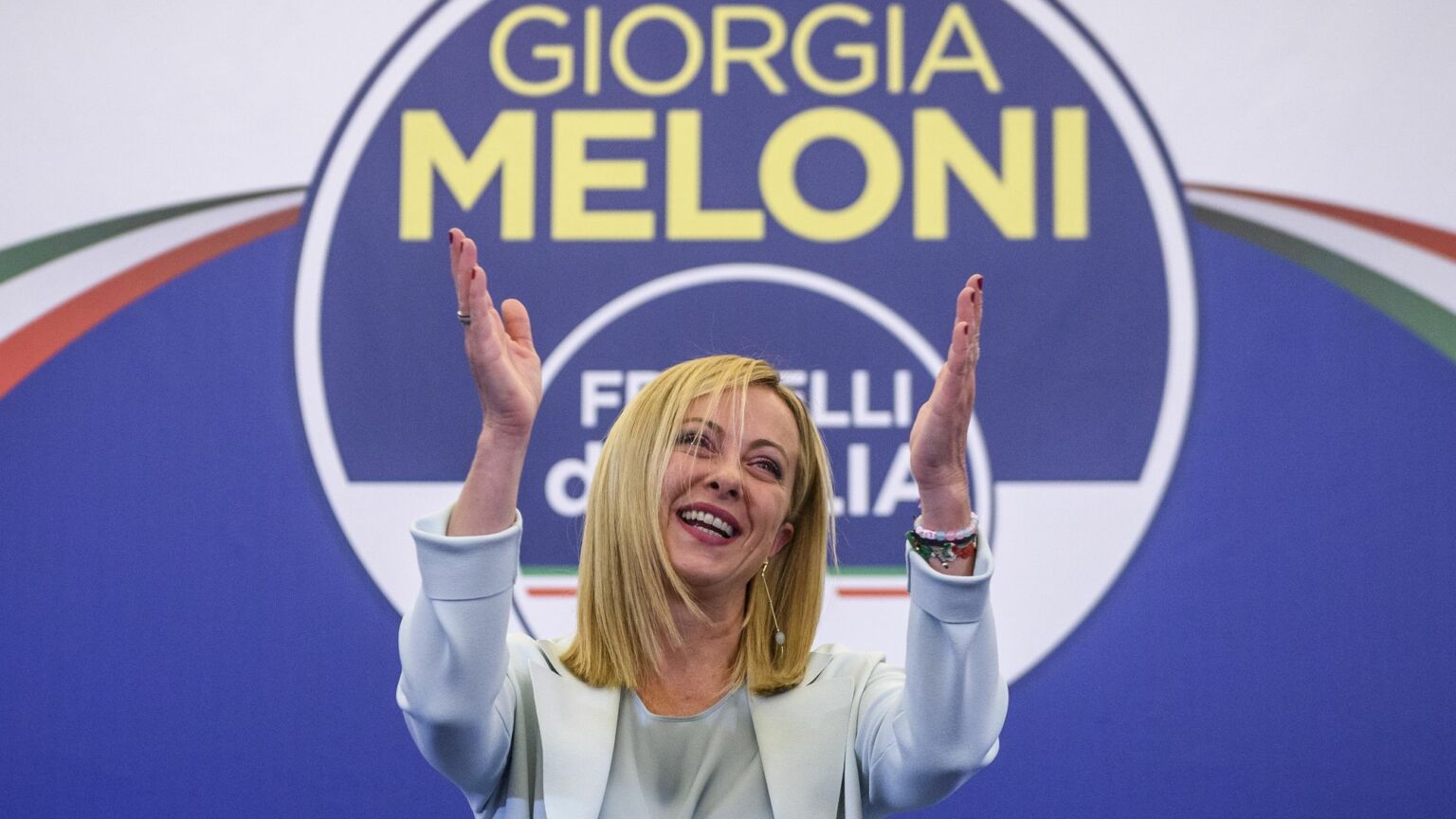
There’s a spectre haunting Europe – the spectre of fascism. Or at least that is what the Brussels establishment and its media allies seem to think. They never cease to liken the rise of national-populism to the movement that devastated the continent from the early 1920s until the end of the Second World War.
Yet is the right-wing, populist rebellion really a copy of 20th-century fascism? The Guardian, unsurprisingly, thinks so, raising the idea that Italian prime minister Giorgia Meloni, the one right-wing leader currently in office in a major country, represents a new version of Mussolini’s fascist movement. Much the same charge has been levelled at other Europeans labelled ‘far right’.
To be sure, many of the ascendant parties – the National Rally in France, Meloni’s Fratelli d’Italia, Germany’s AfD and even Nigel Farage’s Reform UK – have attracted some unpleasant figures, and even some genuine admirers of Mussolini. But are these parties and their supporters fascist in intent and tactics?
We certainly see nothing like the ecstatic crowds that came to hear Il Duce’s speeches. Right-wing protests do not generate anything like the enthusiasm that fascism inspired in Italian society, or later under Adolf Hitler in Germany.
Let’s look at Meloni, whose party has the closest historical ties to Mussolini’s movement. She hardly governs with dictatorial powers – she recently lost an important referendum on judicial reform and meekly accepted the result. She has also backed away from some of the promised crackdowns on immigration, largely at the behest of the business elite. ‘She has been about standing still’, suggests Mattia Guidi of the University of Siena. ‘She’s muddling through.’
When Meloni lost, no ‘blackshirts’ stormed the streets of Rome holding fasces or pictures of her. Likewise, when Viktor Orbán, often labelled a neo-fascist destroyer of democracy, lost this year’s Hungarian election, he simply yielded to the voters’ wishes and stepped down. He was then replaced by another rightist who promised to continue the country’s closed-door policy towards refugees and illegal migrants.
Yet the term ‘fascist’ does serve a purpose. It allows Europe’s elites, and their mimics in Britain, to deflect attention from the real cause of the rightward turn: their own failures.
In reality, the ‘far right’ of today does not resemble the fascists of the 1920s and 1930s. The son of a socialist blacksmith, Mussolini viewed himself as a revolutionary transforming society. Il Duce defined fascism as ‘organised, concentrated, authoritarian democracy’. His goal was to establish a ‘sublime totalitarian order’. During his heyday, he was widely admired in the West. The usually sober Times of London reported that under the fascists, ‘Italy has never been more united than she is today’, adding that the regime fostered a ‘spiritual revolution’.
The current far right lacks such a revolutionary vision. Italian fascism was profoundly future-oriented. Its ideological framework was captured well by leading Futurist Filippo Tommaso Marinetti, who embraced a vision that celebrated science, violence and a transhumanist ideal linked to technology. ‘War is beautiful’, he wrote, ‘because it initiates the dreamt-of metallisation of the human body’.
Fascism ‘drew in all class levels, from workers to the aristocracy’, notes Martina Caruso, whose great-uncle was persecuted by the regime, but who has been reading the letters of her grandfather, a particularly vicious fascist police commissioner. ‘It stirred people with a contemporary culture including the cult of beauty, the fetishisation of courage (and by extension violence), and the sense of belonging to a community. That’s how it gained hegemony – through symbols, mass rituals, the media and modernist architecture.’
In contrast, the populist right does not appeal to educated elites in the way that Mussolini and Hitler once did. Its appeal is centred more on those who might be considered the losers of globalisation.
Similarly, much of Reform’s base comes from what was once Labour’s bulwark among the working class. Hence Reform has grown most strongly in the once industrial north of England and even in Scotland – it now enjoys as much support among unionised workers as Labour.
Similarly, the AfD has recently made major gains in the Ruhr, the long-time linchpin of Germany’s fading industrial heartland. In Europe’s largest economy, the percentage claiming Germany is in decline rose from 47 per cent in 2021 to 53 per cent today. More than two-thirds of people in most European countries – despite the welfare state – feel that ordinary people matter little to political elites.
Like Hitler and Mussolini, the new right appeals to many people under 30. But unlike the 20th-century fascist movements, it appeals less to middle-class and educated youngsters than those struggling young people worried about their financial futures. And this is bearing electoral fruit, too. In recent elections, Germany’s AfD won more votes among the young than the Greens. Likewise, in Britain’s recent local elections, voters aged 25 to 49 supported Reform as much as the Greens.
There are, of course, some similarities between the fascist era and our own. People in the 1920s and 1930s also experienced economic dislocation and social unrest. There are parallels with the Biennio Rosso of 1919 and 1920, a two-year period marked by strikes and high unemployment that preceded the fascist takeover. This period was followed by two years of fascist oppression – the Biennio Nero of 1921 and 1922 – that all but obliterated Italian democracy.
Yet if the mood music is similar, the cure proposed by Europe’s populists today differs dramatically from that offered by the fascists. Few on the right today adopt the militancy or dictatorial inclinations of Hitler, Mussolini or Spain’s Francisco Franco. Nor do they embrace the idea that the state should become ‘the moving centre of economic life’ through a close alliance with the country’s leading companies.
‘At its fullest development’, writes Robert Paxton in The Anatomy of Fascism, ‘[fascism] redrew the frontiers between private and public, sharply diminishing what had previously been untouchably private’. Lenin was the politician Il Duce most admired.
Hitler’s Germany followed a similar trajectory. Like Mussolini, he made alliances with big business, but once in office, the direction of the economy fell largely to his key ally, Hermann Göring. Krupp, Siemens and AEG may have seen a bright future for themselves in a Greater Germany, but when it collapsed, they survived and prospered.
This model of state-business collusion characterises economies such as Russia, Iran and Saudi Arabia, but perhaps most of all China. The People’s Republic may identify as Marxist-Leninist, but it follows a distinctly Mussolinian approach of exploiting private greed to advance national ends. Since 2000, hundreds of billionaires from technology and other sectors have sat in the country’s Communist legislature, a development Mao Zedong would never have countenanced.
Such a co-dominion between big business and the state is unlikely to appeal to the motley collection of struggling shopkeepers, artisans, pensioners and underemployed young people who favour today’s populist right. In some respects, it is the EU bureaucracy that more closely resembles fascism’s economic essence through its top-down industrial policy.
Indeed, like Napoleon’s ‘European system’ or Hitler’s Festung Europa (Fortress Europe), the unelected EU, operating under what one observer described as ‘fortress liberalism’, seeks to strengthen the continent’s weak economies not through entrepreneurship, but through a cultivated form of corporate manorialism.
Across Europe, the bureaucracy constrains entrepreneurship, regulating small industries, farmers and logistics workers in pursuit of its ideological, and plainly unattainable, goal of Net Zero. This has sparked protests ranging from France’s gilets jaunes to farmers’ revolts in Portugal, the Netherlands and Poland. Not surprisingly, suggests Sebastiano Maffettone, a leading Italian political theorist, ‘there’s no deep love for Europe’.
Critically, parties of the populist right reject the militarism that characterised 20th-century fascism. Meloni and her counterparts, like most Europeans, tend towards caution rather than rearmament. Only 16 per cent of Italians, according to one poll, support higher defence spending.
Rather than ideology, the biggest reason for the rise of the populist right, notes author Frank Furedi in his new book, In Defence of Populism, lies elsewhere – in a grassroots cultural rejection of the globalist, identitarian values of European elites. This populist pushback has focussed above all on opposition to large-scale immigration, which many Europeans believe threatens what remains of the continent’s already beleaguered civilisation.
Some of this is linked to concerns about crime. Immigrants appear to play a disproportionate role in rising criminality in countries such as Spain, Sweden, France and Italy. Some critics regard such assertions as intrinsically racist because many newcomers come from outside Europe.
Ultimately, the populist right in Europe is not concerned with fascist dreams of global greatness. Its supporters are concerned rather with defending a way of life against globalist disruption, both cultural and economic. Europeans, whether on the right or the left, value a slower and more congenial society – even at the cost of economic growth and national power. This is a far cry from the ambitions of fascism.
For all the media hubbub, today’s so-called far right possesses relatively little of the ruthlessness or vast ambition that once defined fascism. Instead, it appears to be a desperate cry from neglected grassroots communities seeking not empire, but something closer to normality.
Joel Kotkin is a spiked columnist, a presidential fellow in Urban Studies at Chapman University in Orange, California, and a senior research fellow at the University of Texas’ Civitas Institute. Find him on Substack here.
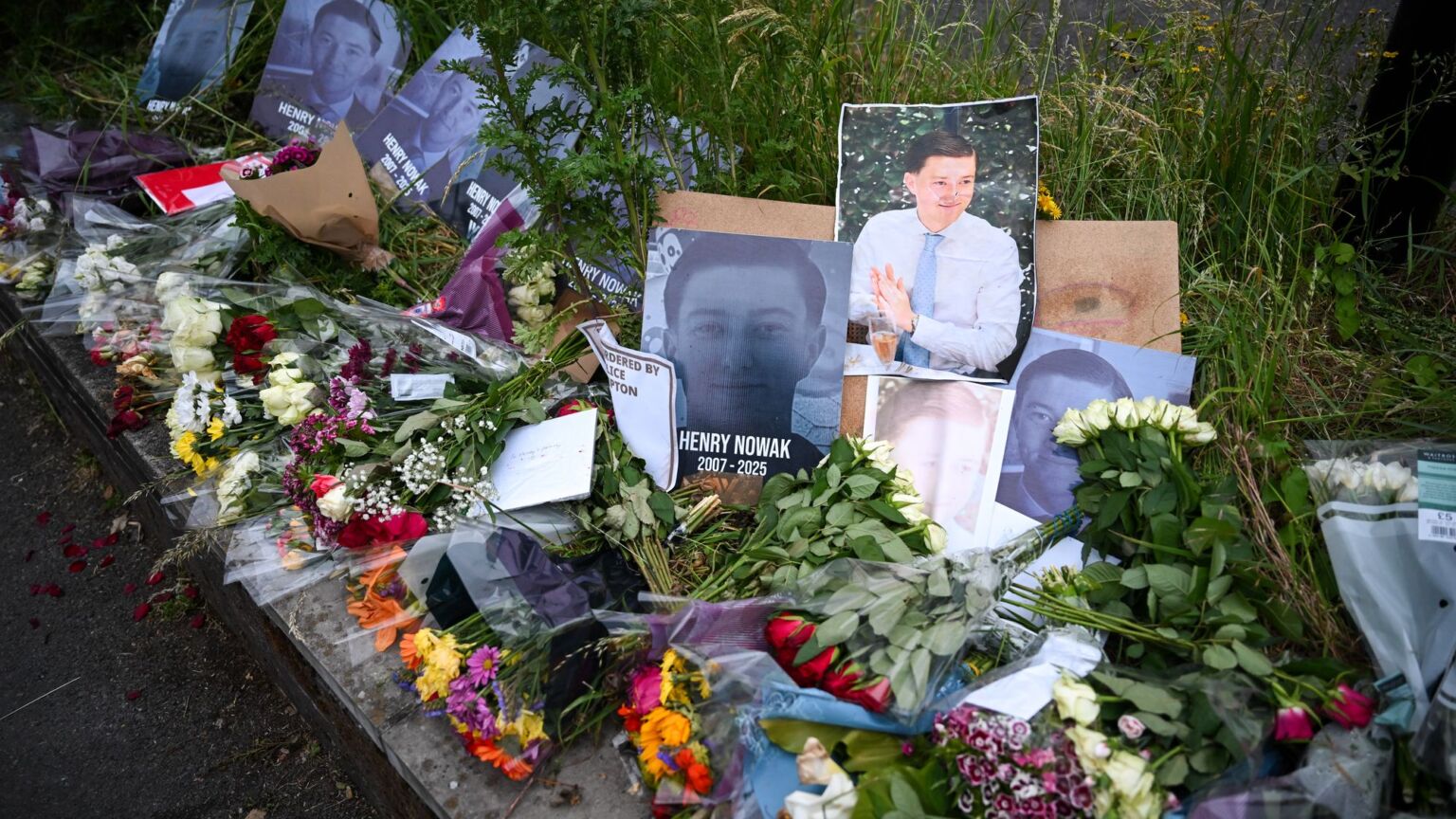
In the aftermath of Henry Nowak’s murder, many commentators have agreed that serious questions need to be asked about the influence of race-based diversity training within British policing. Invariably, this concession is followed by a familiar caveat. Whatever mistakes may have been made in the Nowak case, in treating him as a perpetrator of racism rather than a victim of violent crime, we are reminded that black people are still stopped and searched at far higher rates than white people.
The implication is clear. The pursuit of racial equity may sometimes produce errors or excesses, but the underlying project remains necessary because the statistics prove that racial disadvantage persists.
This argument has become so familiar that few people stop to examine its assumptions. Yet the limits of this framework are becoming increasingly obvious. At a time when anti-Semitism is a growing feature of British public life, it is striking how little such developments feature in discussions dominated by the language of disproportionality and equity. Some forms of prejudice fit comfortably within that framework – others do not.
But what exactly do the oft-quoted stop-and-search figures show? We are typically presented with a comparison between ‘black people’ and ‘white people’, as if these were coherent social groups whose members share broadly similar experiences.
Yet, as British writer Kenan Malik observed almost 20 years ago, racial categories often conceal more than they reveal. Minority populations are not homogeneous entities. They are divided by class, sex, age, locality and culture as much as any other population. Yet modern anti-racism increasingly encourages us to treat race as the decisive explanatory factor. Disparities are no longer viewed as phenomena requiring explanation. They become evidence of racism in themselves.
This way of thinking did not emerge from nowhere. The decisive turning point was the 1997 Macpherson Inquiry into the murder of Stephen Lawrence. The inquiry began as an examination of the police incompetence that had marred the Met’s investigation. But as the aristocrat Sir William Macpherson listened to a stream of race experts relate their experience, he became convinced that little had changed. A submission to the inquiry by one academic stated, ‘institutional racism in this sense is in fact pervasive throughout the culture and institutions of the whole of British society, and is in no way specific to the police service’. And so Macpherson formed the view that racism was the affliction of us all, whether we know it or not.
Macpherson encouraged institutions to see unequal outcomes as evidence of institutional racism and to treat disproportionality itself as evidence of discrimination. As such, the Macpherson principles became fertile soil on which American imports like Black Lives Matter and critical race theory could flourish decades later.
Perhaps the most influential expression of this shift was Macpherson’s definition of a racist incident as ‘any incident perceived to be racist by the victim or any other person’. The intention was understandable. Police forces had often failed to take allegations of racism seriously. But the effect was to blur the distinction between allegation and fact. Incidents were increasingly recorded according to perceptions.
The influence of this approach spread rapidly beyond policing. Through the amended Race Relations Act in 2000 and subsequent guidance, schools were encouraged to record racist incidents and promote anti-racist awareness. Teachers found themselves reporting playground disputes through racial frameworks that would previously have seemed extraordinary. Across the public sector, race increasingly became the preferred language through which social problems were understood.
The consequences were not always benign. Initiatives intended to reduce racism often encouraged people to think more consciously in racial terms. Children were encouraged to understand themselves through ethnic identities. Educational difficulties were increasingly interpreted through the language of racial disadvantage. Public institutions became more obsessed with racial categories than ever before.
What began as Sir William Macpherson’s attempt to combat legitimate racism in the 1980s gradually evolved into a culture of racial thinking. The Henry Nowak case should prompt us to ask whether that culture has now reached its limits.
The crucial question is not whether Britain suffers from ‘anti-white racism’, as claimed by some commentators. Britain remains one of the most tolerant and ethnically integrated societies in the world. Nor is the question whether racism has vanished altogether. The question is whether ethnicity and racism have become the default explanations for social disparities, institutional failures and human behaviour, and whether we have become so accustomed to viewing society through racial categories that we struggle to see anything else.
The tragedy of Henry Nowak suggests that we should be wary of replacing one form of racial thinking with another. If the answer to anti-racist identity politics is a competing white identity politics, then nothing fundamental has changed. We remain trapped within the same intellectual framework.
The alternative is older, simpler and ultimately more radical. It is to return to the universal principle that people should be judged as individuals rather than as representatives of racial groups. Equal treatment before the law. Equal dignity as citizens. And a willingness to investigate disparities without prejudging their causes.
The lesson of Henry Nowak is not that Britain needs a different racial settlement. It is that Britain needs the confidence to move beyond racial thinking altogether.
Adrian Hart is the author of That’s Racist!: How the Regulation of Speech and Thought Divides Us All.
Ahead of the ten year anniversary of the EU referendum on 23 June, UK in a Changing Europe experts have written a short series of blogs reflecting on some of the issues at the heart of Brexit then and now. Here, Nicola McEwen reflects on Brexit and devolution.
The UK voted to leave the European Union a decade ago while Scotland, along with Northern Ireland, voted to remain. Those divergent choices marked a shift not just in the UK’s relationship with its European partners, but in the political and institutional relationships between the constituent parts of these islands.
The implications of Brexit for Northern Ireland dominated Brexit negotiations. Accommodating its distinctive status has been a key aspect of the Trade and Cooperation Agreement. Considerably less effort went into accommodating Scotland’s distinctive preferences. Early proposals to facilitate a special relationship with the EU, including within the EU internal market, were quickly dismissed without much consideration. And over the past decade, the politics and process of leaving and living outside of the European Union have contributed to a weakening of the authority of the devolved institutions and perhaps of the Union itself.
EU law provided a regulatory architecture that supported devolution in the UK, limiting the likelihood of policy divergences producing market distortions. As a political community in which sovereignty was explicitly pooled, the EU also helped to reconcile the doctrine of Westminster parliamentary sovereignty with the principle of sharing political authority across the UK’s constituent units, while facilitating the plurality of political and territorial identities on these islands. The Brexit drive to reassert ‘national sovereignty’ and to ‘take back control’ sat uneasily alongside these shared sovereignty norms and self-government claims that underpinned devolution.
One manifestation has been a weakening of the Sewel convention. This convention held that, although its sovereignty was not affected by devolution, the UK Parliament would not normally legislate on devolved matters without the consent of the devolved legislatures. The corresponding process of securing legislative consent became a routine feature; consent was rarely withheld, and when it was, it was usually temporary pending a negotiated compromise.
That was until the Brexit referendum. When the UK government passed the EU (Withdrawal) Act 2018, it did so without the Scottish Parliament’s consent, which Lord Thomas of Cwmgiedd, former Lord Chief Justice of England and Wales, described as ‘a terrible precedent’. Breaching the convention became much more frequent as the Brexit process got underway. Then Welsh First Minister, Mark Drakeford noted: “The Sewel convention was never breached, not once, by Conservative Governments, as well as Labour Governments, for nearly 20 years… we now see… the breach of Sewel becoming almost normalised.”
Perhaps the most blatant breach was also the most controversial of the Brexit legislation introduced by the UK government. The four administrations had been working together to explore whether and how they might develop ‘common frameworks’ in some areas where EU law intersected with devolved law, to avoid unnecessary divergence after the UK left the EU. That cooperative process contrasted with UK government legislation to underpin the UK internal market.
The UK Internal Market Act (2020) was passed in the face of fierce opposition from the devolved institutions. It introduced two Market Access Principles (MAPs). The first ensures that goods and services that can be legally sold/provided in one part of the UK can be sold anywhere in the UK, without having to meet further requirements. The second protects businesses and professionals from being subject to direct or indirect discrimination that favours local goods or service providers.
The effect has been to erode the legal authority of the devolved parliaments and inhibit their ability to introduce distinctive legislation that regulates goods and services. A process was established to permit exclusions from the MAPs, but this delays law-making, creates uncertainty, masks accountability, and has, in effect, given the UK government a veto over devolved legislation that falls within the MAPs’ scope. ‘In effect’ because the UKIM Act does not explicitly curb the competence of the devolved legislatures to pass laws that regulate the market in distinctive and divergent ways, but in restricting the application of such laws to goods and services that originate in local markets, it renders them unworkable.
The most notable example of this process disrupting policy making emerged when the Scottish Government legislated for a deposit return scheme (DRS) to boost recycling. In so doing, they sought to move faster than similar schemes elsewhere in the UK and with a broader scope that included glass bottles. When the requested exclusion from the MAPs was eventually offered by the UK government, it was on a temporary basis and excluded glass, citing powerful business concerns about interoperability of DRS schemes and ‘unnecessary barriers to trade’. The Scottish Government subsequently put its scheme on hold, the company set up to administer it collapsed, and the waste firm, Biffa, sued the Scottish government – unsuccessfully – for £50 million in damages. These Brexit-related developments led to a significant deterioration in relationships between the UK government and its Scottish and Welsh counterparts.
As part of its ‘reset’ of intergovernmental relationships, Keir Starmer’s government has worked more cooperatively with the devolved governments in the implementation of the Sewel convention, despite negotiations to agree a new Memorandum of Understanding on how it should operate failing to reach agreement thus far.
The Labour government also brought forward the statutory review of the UKIM Act, softening some of its hard edges. Exclusion requests should now be considered within the cooperative common frameworks process, with evaluations of environmental protection and public health benefits to be weighed up against the economic costs of regulatory divergence.
But the government is committed to retaining the Act, despite it remaining deeply controversial and a barrier to strengthened relationships.
The Brexit referendum also had the immediate impact of reigniting the issue of Scottish independence. Its 62% Remain vote led to claims that Scotland was ‘being taken out of the EU against our will’, which then-First Minister Nicola Sturgeon said was a ‘significant and material change of the circumstances in which Scotland voted against independence in 2014’. Brexit also increased discussion among the ‘indycurious’ in Wales.
The recent election victories for Plaid Cymru and the Scottish National Party, the devastating defeats for the Labour Party, and the emergence of Reform UK as an electoral force are testament to some of the political legacies of Brexit. Though neither the Scottish nor Welsh parliaments have the constitutional competence to pursue the SNP and Plaid’s self-government ambitions, the vote to leave the European Union a decade ago continues to test the resilience of the UK Union today.
By Nicola McEwen, Professor of Public Policy and Governance, University of Glasgow Centre for Public Policy.

Knicks take Game 4 (June 10)

ASUS ROG Zephyrus Duo With RTX 5090 Now Available for Pre-Order in India

BFM Crypto : Cryptomonnaies, quel avenir pour le secteur ?



-

 Fashion6 days ago
Weekend Open Thread: Evereve – Corporette.com
-
 Crypto World6 days ago
Jensen Huang Approves Samsung, SK Hynix, and Micron for NVIDIA (NVDA) HBM4 Memory Supply
-
 Entertainment4 days ago
The Best Mystery Series of All Time Is Surging on Streaming 30 Years After It Ended
-

 Crypto World3 days ago
Anatomy of the June crypto crash: Fed, Iran, Saylor
-

 NewsBeat3 days ago
Alexander Zverev wins the French Open to finally earn a 1st Grand Slam title
-

 Tech5 days ago
Suspicious Polyfill login prompts pop up on Toshiba, Muji websites
-
 Crypto World5 days ago
Senator Cynthia Lummis Calls CLARITY Act the Most Consequential Financial Legislation of This Generation
-

 Tech4 days ago
Microsoft unveils seven homegrown AI models in new bid for ‘long term self-sufficiency’
-

 Tech6 days ago
Microsoft launches MXC, an OS-level sandbox for AI agents, with OpenAI and Nvidia already on board
-

 Business6 days ago
(VIDEO) Justin Bieber Delivers Surprise Happy Birthday Serenade to Diners at Los Angeles Mexican Restaurant
-
 Business4 days ago
The Pain Points Taking a Fragile Tech Rally Down a Notch
-

 Business3 days ago
High Stakes for Wembanyama as New York Pushes for 3-0 Lead
-
 Crypto World3 days ago
Eli Lilly (LLY) Stock Surges 4% Following Breakthrough Sleep Apnea Trial Results
-

 Tech5 days ago
Von der Leyen’s AI envoy pick draws conflict-of-interest fire
-
Crypto World6 days ago
LBank Surpasses 25 Million Users Worldwide as AFA Partnership Continues to Drive Global Growth
-

 Tech6 days ago
Meta steals a tactic from Tesla and builds data centers in tents
-

 Tech5 days ago
Hackers now exploit SolarWinds Serv-U flaw to crash servers
-

 Crypto World4 days ago
Trump’s AI Ownership Plan Could Benefit Anthropic at OpenAI’s Expense
-
 NewsBeat4 days ago
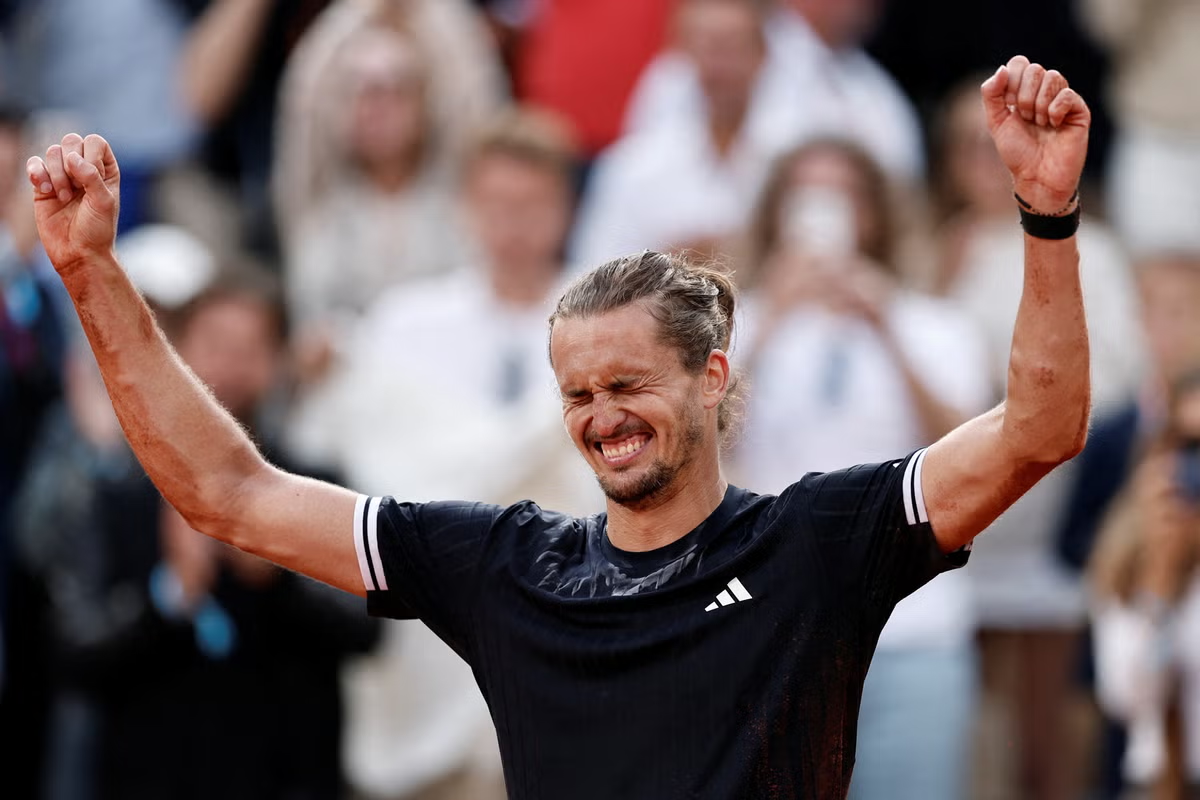
Alexander Zverev conquers demons and outlasts Flavio Cobolli to win French Open for first major title
-
 Sports2 days ago
Bangladesh beat Australia after 20 years in ODIs, register only their second win over six-time world champions | Cricket News
You must be logged in to post a comment Login