

Crypto World
Is the Wallet Disappearing as Crypto’s Main User Interface?



- Most users want crypto outcomes rather than wallet management.
- Wallets will remain part of the technical stack, while becoming less visible inside consumer products.
- Key management, seed phrases, gas fees, and network selection still create friction.
- Ownership, custody awareness, and transaction finality should remain visible.
- AI agents may become the next user interface for crypto transactions, with transparency and user control as core safeguards.
The crypto wallet has long served as the main entry point into Web3.
Wallets have traditionally stored assets, connected users to dApps, signed transactions, and given people control over their funds.
However, in 2026, crypto sits inside trading apps, payment products, exchange platforms, embedded finance tools, and AI-driven interfaces. Users still need ownership, security, and transaction clarity. But many of them prefer crypto functions without seed phrases, gas settings, network selection, and manual signing flows.
BeInCrypto spoke with Kevin Lee, Chief Business Officer at Gate, Federico Variola, CEO of Phemex, and Fernando Aranda, Marketing Director at Zoomex, about whether wallets are losing their place as crypto’s main user interface, which parts of the journey still feel too technical, and how AI agents could simplify the next stage of crypto interaction.
Users Want Crypto Functions Without Wallet Complexity
Kevin Lee, Chief Business Officer at Gate, sees the trend through familiar financial experiences. For him, users want results. Wallets can still power the product in the background, while the visible experience becomes simpler.
“Most users do not want to deal with wallets, they want outcomes. While wallets remain essential at the infrastructure level, the interface is increasingly abstracted away,” Lee told BeInCrypto.
He pointed to assets held in custody, linked to a payment card, and used through Apple Pay or Google Pay. In this setup, a person can spend crypto through an interface they already understand, without handling private keys, gas fees, or signing processes.
“This allows crypto to be embedded into familiar payment rails without exposing users to private keys, gas fees, or signing processes. Adoption improves because friction and complexity are removed,” Lee said.
For Lee, wallets are becoming less visible rather than disappearing. They still support custody and transactions, but the user sees a cleaner product experience.
“Wallets are not disappearing, but they are becoming invisible, sitting behind more intuitive interfaces that deliver crypto functionality without requiring users to understand the underlying mechanics,” he added.
Wallets and Apps Are Becoming One Product
Federico Variola, CEO of Phemex, sees wallet abstraction through product convergence. Users increasingly expect one app to handle storage, trading, transfers, and access to crypto markets.
“Users just want an app at this point. Whether it’s a trading app that also creates a wallet for you, or a wallet that allows you to trade, like MetaMask or Rabby,” Variola said.
This benefits users by reducing the number of separate tools they need before taking action. Wallet providers are adding trading functions. Exchanges and newer platforms are adding wallet creation inside their own products.
“This is a convergence of products, which is positive for users. It abstracts a lot of complexity and creates opportunities for both wallet providers and newer platforms that can create wallets directly for users. In the end, users benefit from this reduction in complexity,” he said.
Variola also sees a security risk when simplicity goes too far. Users still need to understand self-custody, fund protection, and custody models. A smooth mobile interface can hide weak security habits, especially when assets depend on one device.
“Abstracting too much complexity can also be a downside. Users should still be aware of self-custody, how to secure their funds, and that some custody methods are significantly safer than others,” he said.
He cited Phantom users and parts of the Solana DeFi ecosystem, where many people rely heavily on mobile access without stronger offline security. In his view, these setups can become more exposed to theft.
The User Journey Still Feels Too Technical
Fernando Aranda, Marketing Director at Zoomex, sees wallet usability as one of crypto’s main adoption challenges.
“Users don’t want wallets – they want outcomes. Wallets were a necessary bridge, not the end product,” Aranda told BeInCrypto.
For Aranda, the strongest products in 2026 will hide the wallet while preserving crypto’s main benefits, including control, speed, and ownership.
The most painful part of the journey remains key management. Seed phrases, gas fees, and network selection still ask users to understand crypto mechanics before they can complete basic actions.
“Key management is still broken. Seed phrases, gas fees, network selection – these are artifacts of infrastructure, not user needs. If a product requires users to ‘understand crypto’ to use it, it’s already lost,” Aranda said.
This creates a product challenge across the industry. Many users want to send, trade, store, or spend assets. Crypto products often ask them to make technical choices first. Each extra step adds confusion and increases the chance of error.
What Should Stay Visible?
Even as wallets become less visible, some parts of the experience should stay in front of the user.
Aranda pointed to ownership and finality as two areas which deserve clear communication.
“Ownership and finality. Users don’t need to see behind the curtain, but they must know what they own, where it sits, and when a transaction is irreversible,” he said. “Abstraction shouldn’t mean losing control – it should mean removing noise.”
Of course, a better interface can remove unnecessary technical work, while still showing custody, permissions, approvals, and irreversible actions. Hidden risk creates a smoother screen, but a weaker user.
Variola made a similar point from a security perspective. Users still need to understand self-custody and the differences between custody methods, especially when assets sit inside mobile-first environments.
The future wallet experience may look less like a standalone crypto app and more like a security and permissions system inside larger financial products.
AI Agents Could Become the New Wallet Interface
AI agents could push wallet abstraction further by taking over actions users currently perform by hand.
Instead of choosing networks, checking fees, approving routes, and comparing options, users could give an AI agent a goal. The agent could then execute, optimize, and route transactions in the background.
“AI agents will become the new interface layer – executing, optimizing, and routing transactions on behalf of users,” Aranda said.
This could make crypto easier to use, especially in multi-chain environments where users face too many choices. It also creates a new risk category.
“But this introduces a new challenge: trust. We’re replacing wallet complexity with agent risk. The winners will be those who make AI actions transparent, verifiable, and aligned with user intent,” he said.
If agents handle crypto transactions, users will need strong controls over permissions, spending limits, approvals, and decision logic. The interface may become simpler, but trust will depend on what the user can verify.
Final Thoughts
The crypto wallet will remain part of custody, permissions, and transaction execution. Its role as the main user interface, however, is becoming weaker.
To sum up our expert opinions:
- Gate’s Kevin Lee sees wallets becoming invisible inside familiar payment products.
- Phemex’s Federico Variola sees wallets and trading apps merging into simpler multi-function products.
- Zoomex’s Fernando Aranda sees AI agents becoming the next interface for crypto execution.
The next phase of wallet design depends on balance. Users want less complexity, while still needing clarity over ownership, custody, approvals, and irreversible transactions.
AI agents may simplify the experience further, but their success will depend on transparency, verifiable actions, and user control.
The post Is the Wallet Disappearing as Crypto’s Main User Interface? appeared first on BeInCrypto.

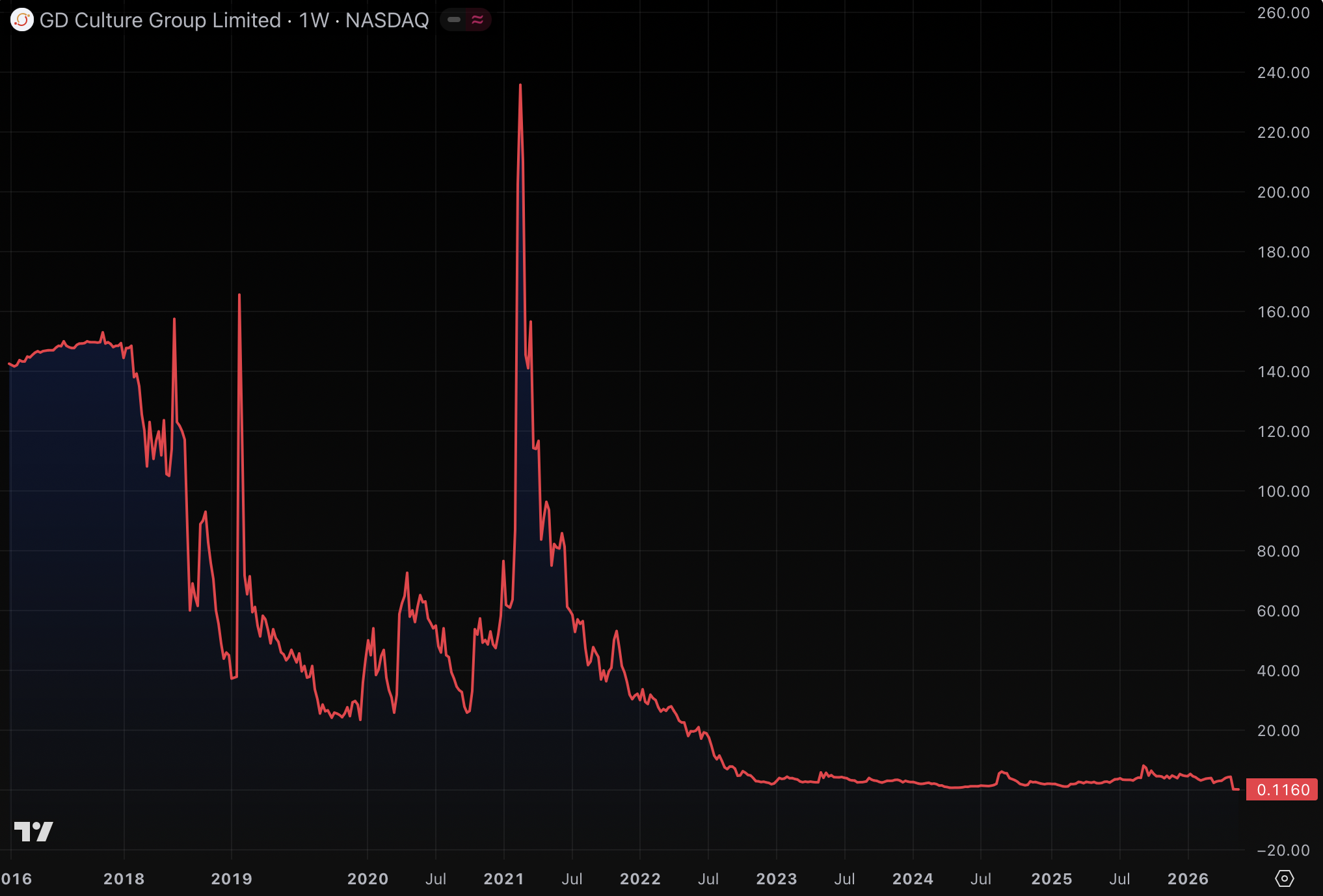
Two weeks ago, GD Culture Group (GDC), a bitcoin (BTC) treasury stock with ties to Donald Trump’s TRUMP memecoin, published a “going private proposal” of $10.75 per share. Yesterday, the stock traded to a 52-week low below $0.10.
Aside from evaluating that non-binding, going-private proposal roughly 88 times higher than its actual stock price, GDC says it will soon provide “digital human creation and customization for social media influencers.”
US representatives have also accused the China-backed company of funnelling money toward Trump in exchange for delaying his TikTok ban.
It’s all a little confusing.
On the day of the going-private proposal two weeks ago, shares spiked to $8.18 on momentary optimism that the deal was credible. Shares have subsequently crashed 98% as fact-checkers actually looked into the details.
Below is the rise and fall of a strange, China-linked, TikTok- and TRUMP-supporting, BTC treasury stock.
GD Culture Group and TRUMP
Days before Donald Trump’s May 2025 dinner at Mar-a-Lago for the top 220 holders of his TRUMP memecoin, GDC announced a $300 million stock purchase agreement with an unnamed buyer in the British Virgin Islands (BVI).
The stated purpose was a “crypto asset treasury strategy, including the purchase of BTC and TRUMP.”
At the time, GDC had essentially no revenue and less than 10 employees and its operations depended on TikTok, a Chinese-founded social media platform.
The generous announcement out of the BVI conveniently coincided with Trump’s decision to delay enforcement actions against TikTok.
The New York Times described GDC as one of the first China-linked companies to publicly acknowledge intentions to buy TRUMP.
Trump-controlled entities CIC Digital LLC and Fight Fight Fight LLC together held 80% of the post-ICO token supply of TRUMP. Therefore, any purchase funded by GDC or its BVI buyer would enrich the president directly through supply reduction and trading fees.
Soon after GDC’s dubious announcement, US representatives Adam Smith and Sean Casten led 35 House Democrats in a letter to the Department of Justice’s Public Integrity Section.
They demanded an investigation into whether GDC’s dinner-for-tokens scheme violated federal bribery laws or the foreign emoluments clause.
The representatives named GDC in their letter, noting its Chinese subsidiary’s disclosed exposure to government intervention, and connected the TikTok-delay timing to the $300 million pledge.
Based on public filings, it’s unclear whether GDC actually ended up purchasing TRUMP tokens, but the company did end up acquiring BTC through a circuitous path.
Specifically, a China-linked consortium sold 7,500 BTC to a GDC affiliate in September 2025. They received newly issued GDC stock in exchange for that disbursement.
Members of that same consortium recently announced their dubious going-private proposal.
GDC’s Q1 2026 quarterly report disclosed less than $50,000 in cash and a working capital deficit of $1.7 million. The 2025 annual report listed a mere five full-time employees.
The company has no substantial operating revenue.
Its only consequential asset is BTC acquired through a transaction that the company itself disclosed as a related-party deal.
Collapse of a TRUMP memecoin and BTC treasury scheme
A Nasdaq-listed penny stock, GDC closed yesterday’s trading session around $0.12, printing a fresh 52-week low yesterday near $0.09 during the day.
Its market capitalization is an embarrassing $7 million. Its 7,500 BTC holdings, if someone can even call them holdings at this point, are worth roughly over half a billion dollars at current prices.
That is a discount of more than 98% or a multiple-to-Net Asset Value (mNAV) of 0.02x.
In other words, a company holding more than half a billion dollars of BTC has a market cap worth less than an average New York City apartment.
Read more: Donald Trump Jr. proclaims he was “at the top of the Ponzi scheme”
GDC issued 39,189,344 new shares in exchange for the 7,500 BTC. The 10-Q records the BTC at a cost basis of $842 million, implying a share value of roughly $21.49 at issuance.
No cash changed hands. The same filing discloses the BTC acquisition as a related-party transaction.
No TRUMP memecoin purchase or holding has ever appeared in the company’s SEC disclosures.
By February 2026, with the stock languishing, the GDC board authorized BTC sales from the 7,500-coin reserve. Management earmarked the proceeds for a $100 million share repurchase program.
The board reserved discretion to sell at any time, in any number of transactions.
This abandoned the corporate BTC reserve doctrine that competitors like Strategy spent years promoting, yet any share buybacks have evidently not helped the stock price, which hit a 52-week low yesterday.
Got a tip? Send us an email securely via Protos Leaks. For more informed news and investigations, follow us on X, Bluesky, and Google News, or subscribe to our YouTube channel.
Crypto World
Ripple Price Analysis: Where’s XRP Going Next After Latest Rejection at the 100-Day MA?
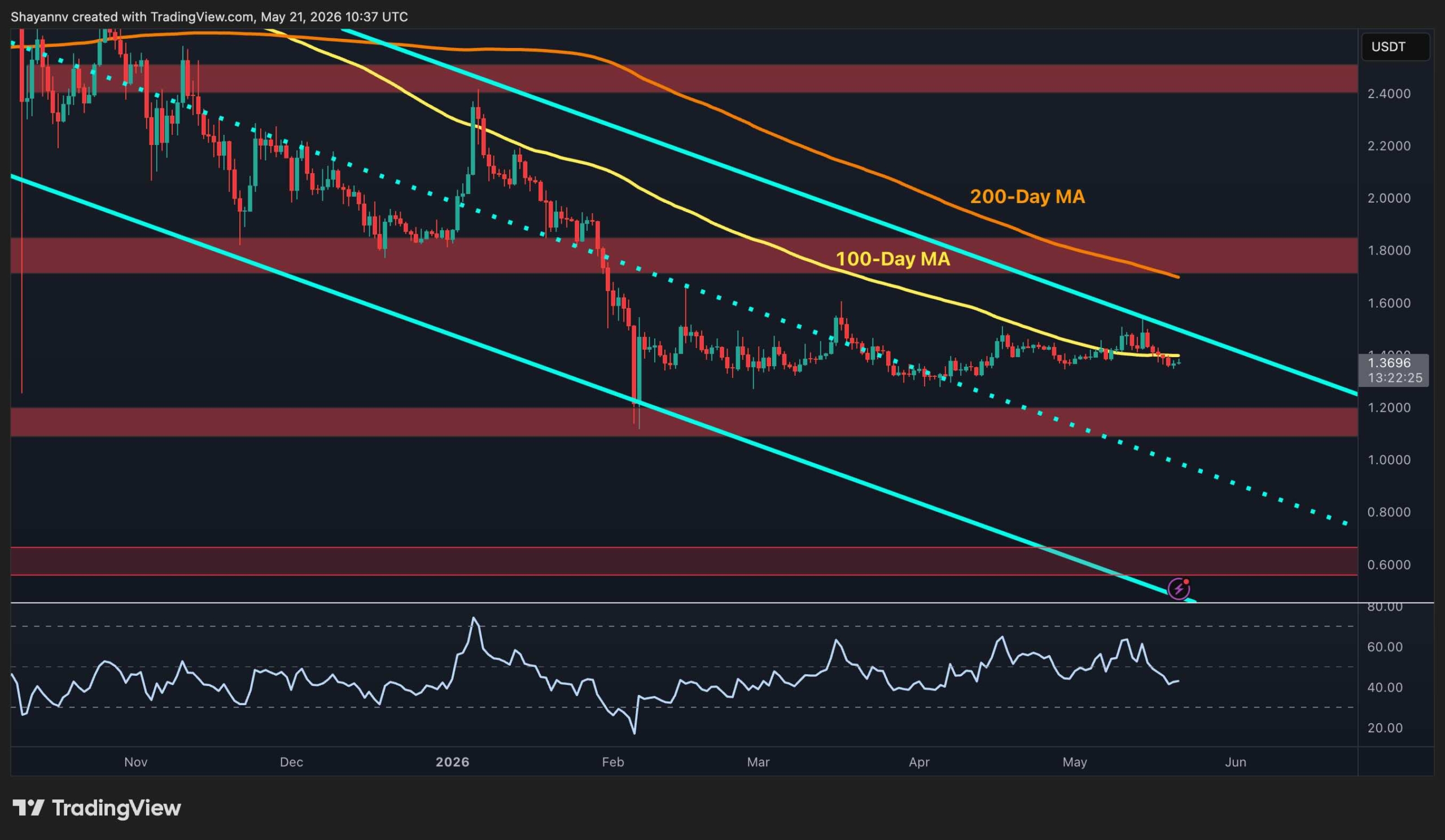
XRP is trading at $1.37 as May draws toward its final week, having erased every gain from what briefly looked like the most promising technical setup of the corrective cycle. The breakout above the 100-day MA on the USDT chart has failed to hold, and a lower high has formed on the BTC pair. The levels that looked like support last week are now the targets that bulls need to reclaim just to get back to where they started.
Ripple Price Analysis: The USDT Pair
The USDT pair’s daily timeframe setup looked compelling last week. The asset was pressing the upper boundary of the long-term descending channel and holding above the 100-day moving average at around $1.45, with an RSI climbing toward 65.
Yet, this move has played out as a textbook rejection. XRP failed to post a single candle close above the channel, and the subsequent sell-off has brought the price back to $1.37. The 100-day MA, which was seen as dynamic support just days ago, is now the nearby overhead resistance at $1.40, sitting just below the descending channel ceiling.
The RSI has faded from 65 back to the 40s, wiping out the momentum that made the setup optimistic. The $1.20 demand zone below should now be watched as the potential floor, while a recovery back above $1.45 and the 100-day MA remains the minimum requirement to rebuild any constructive case. Yet, with the broader altcoin market breaking down, the path of least resistance points toward another test of support rather than another attempt at resistance.
The BTC Pair
The brief breakout above 1,800 sats that appeared on the BTC pair last week has proven to be a fakeout. XRP/BTC has slipped back to around 1,770 sats, creating a lower high at around 1,800-1,900 sats. The RSI, which had recovered from the extreme low of ~25 all the way to above 50 while demonstrating a bullish divergence, has also faded back toward 40. The relief bounce is losing energy before it accomplishes anything structurally meaningful.
The failed reclaim of 1,800 sats is the defining development on this pair. It confirms that the oversold bounce was corrective rather than structural, and that the broader downtrend in the ratio remains intact. The 100-day moving average at ~1,900 sats and the 200-day moving average at ~2,100 sats continue to decline well above, offering no nearby reference for a recovery.
Below, the lower channel boundary near 1,550 sats and the 1,500 sat horizontal support band remain the next downside targets if the current level gives way. With altcoin sentiment deteriorating across the board, there is little in the near-term macro picture to suggest that pressure is about to ease.

The post Ripple Price Analysis: Where’s XRP Going Next After Latest Rejection at the 100-Day MA? appeared first on CryptoPotato.
Demand for Bitcoin (BTC) has decreased sharply over the last few days as the price ran into overhead resistance above $80,000. Analysts say BTC’s inability to hold key support levels may be paving the way for a prolonged consolidation.
Key takeaways:
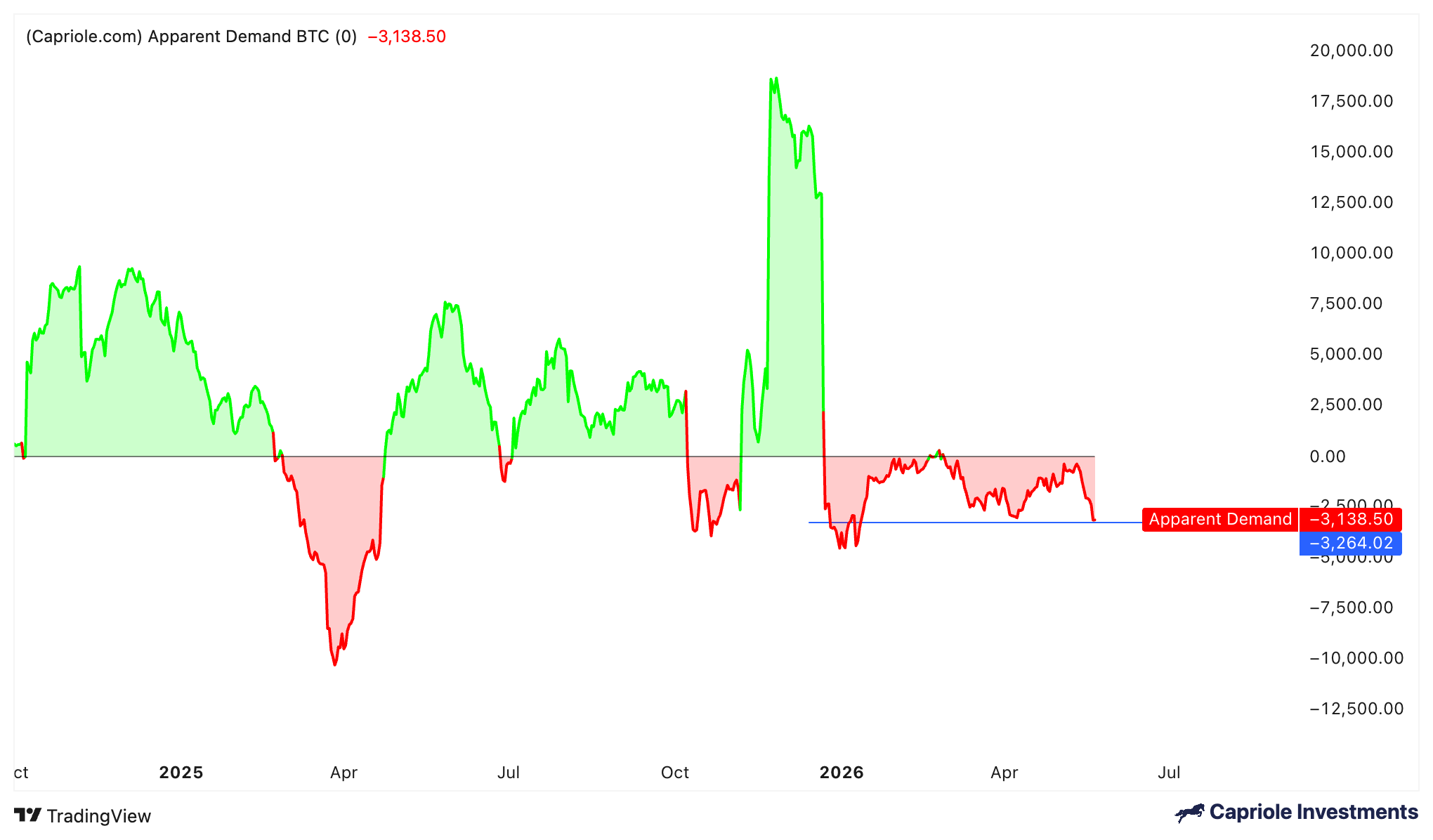
- Bitcoin’s apparent demand fell to -3,138 BTC, its lowest level in four months.
- Weak spot activity and negative ETF flows pressure the BTC price below $80,000.
- Analysts warn that Bitcoin risks prolonged consolidation or a deeper correction if $78,000 is not broken.
Bitcoin’s apparent demand has dropped to its lowest level since mid-January, as traders and investors adopted a risk-off approach due to geopolitical and macroeconomic uncertainties.
Related: Bitcoin rallies through $77K despite spot BTC ETF outflows topping $2B
Capriole Investment’s Bitcoin Apparent Demand metric shows that demand for Bitcoin has been negative since Dec. 22, 2025 and improved slightly in late February, before reversing sharply to -3,138 BTC on Thursday.
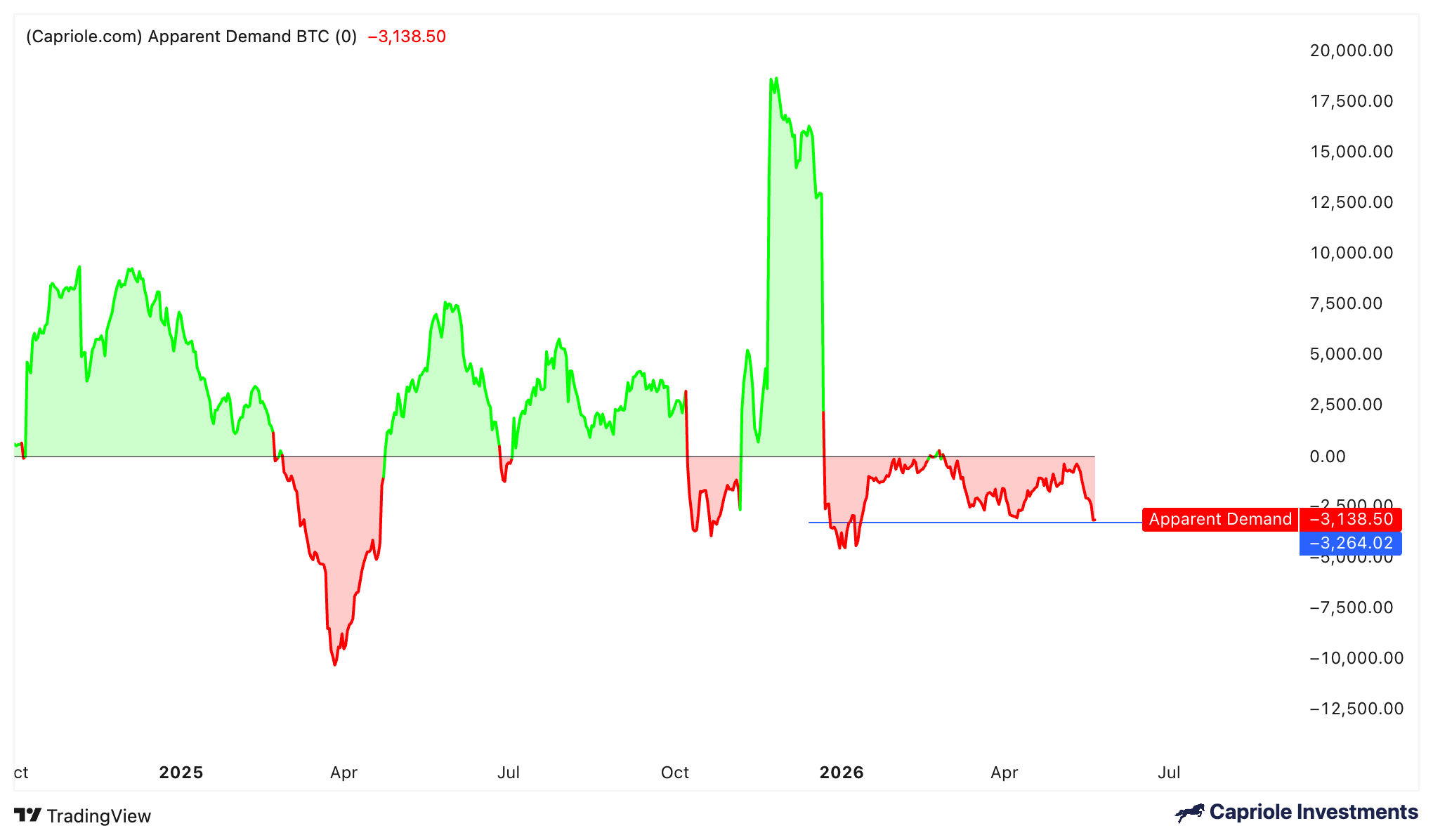
Bitcoin’s apparent demand. Source: Capriole Investments
“Bitcoin’s overall demand has flipped into net contraction,” CryptoQuant said in its latest Weekly Crypto report, adding:
“Spot apparent demand is contracting at a slightly faster pace than in prior weeks.”
Spot market activity has weakened in recent weeks, with the aggregate spot cumulative volume delta (CVD) across all exchanges “remaining negative into the recent pullback toward the high-$70K range,” Glassnode said in its latest Week On-chain newsletter, adding:
“Despite Bitcoin remaining relatively resilient structurally, the latest spot positioning data suggests broad-based spot accumulation has yet to re-emerge.”
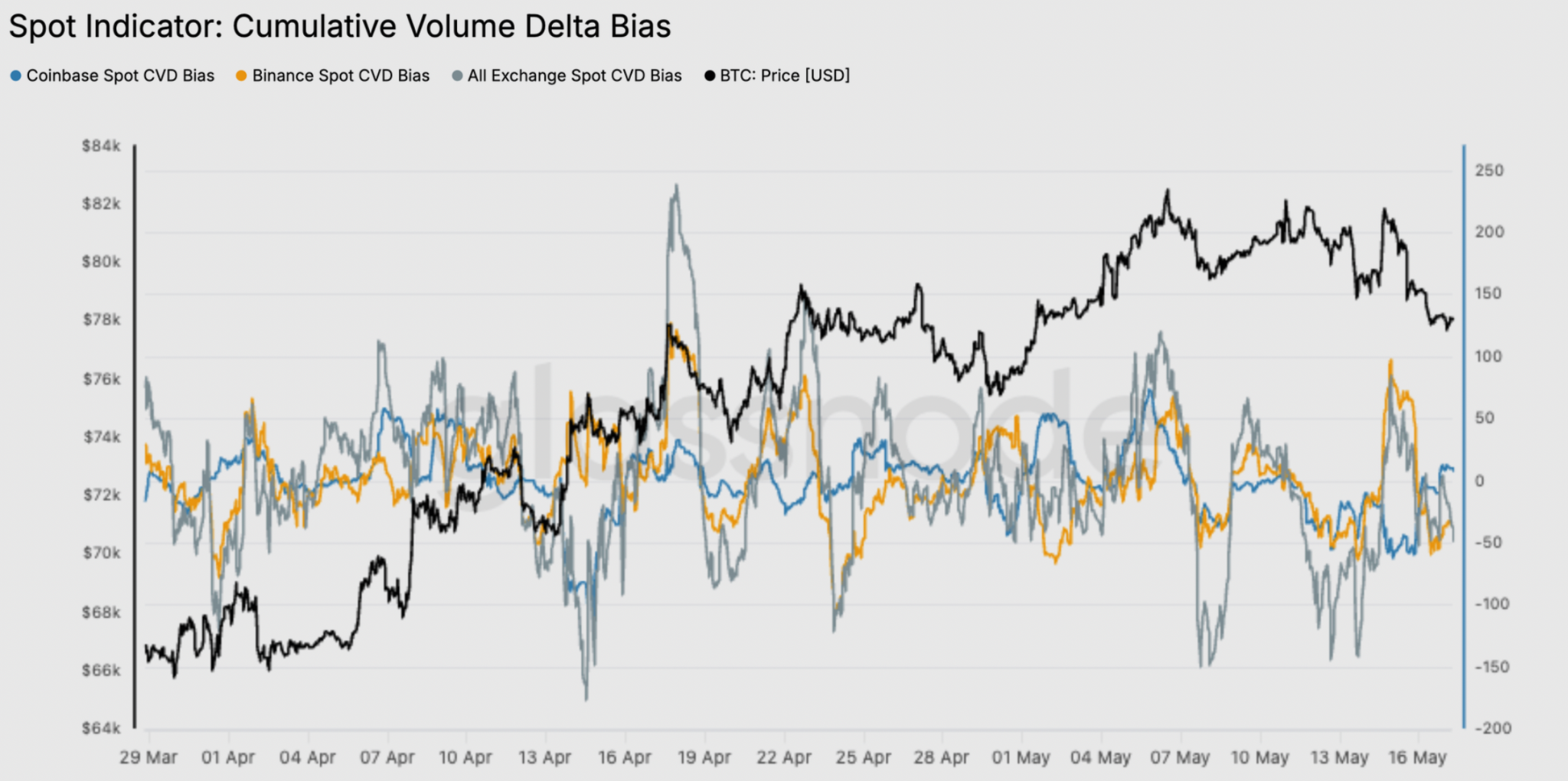
Bitcoin spot CVD. Source: Glassnode
Meanwhile, US-based spot exchange-traded funds (ETFs) also turned net sellers, with the 30-day change in ETF holdings falling to its lowest level in nearly three months.
This suggests that “outright spot demand is becoming less aggressive near the current range highs,” Glassnode added.
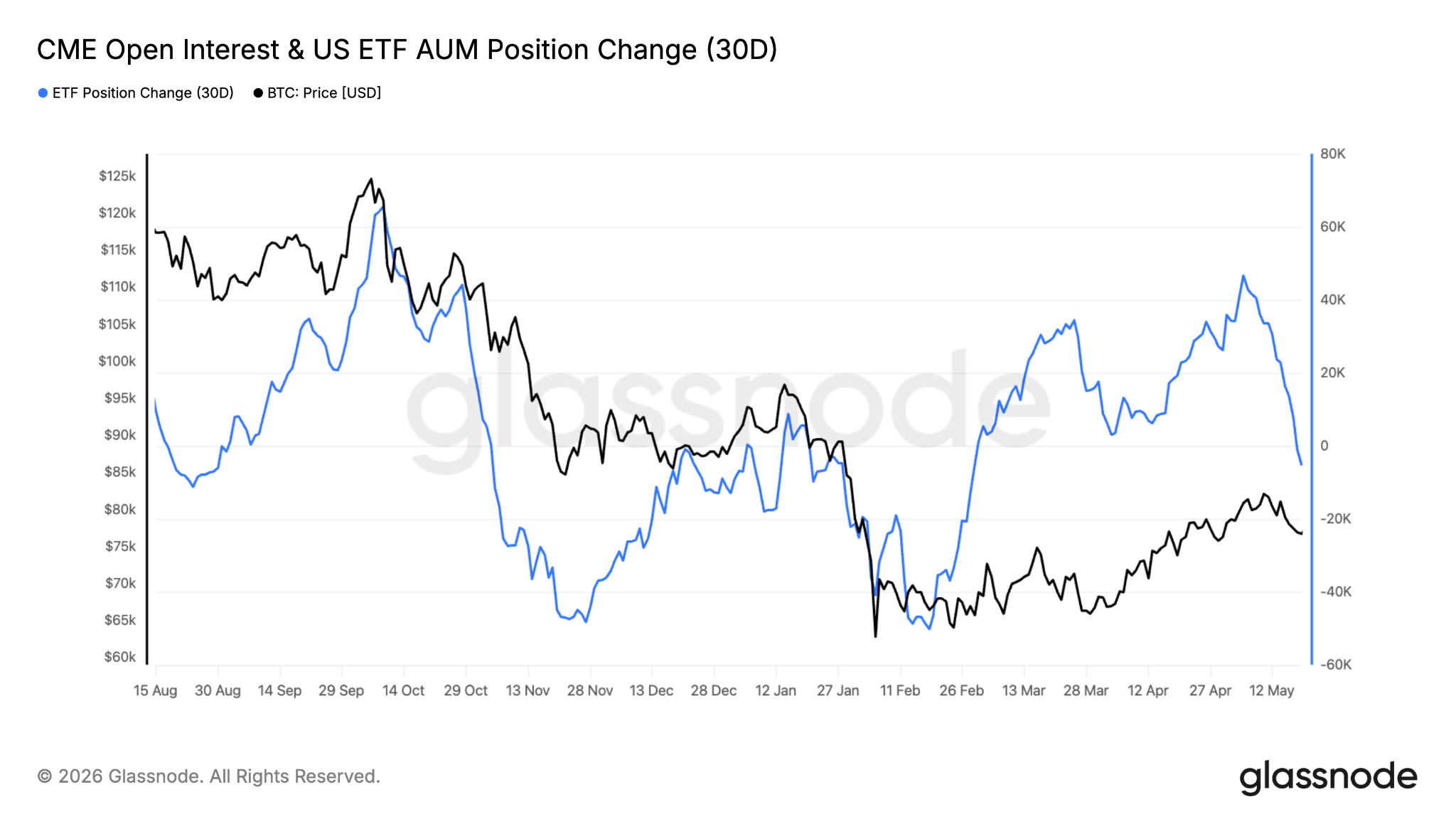
US ETF AUM position change. Source: Glassnode
The simultaneous deterioration across spot demand and ETF flows has “historically been more consistent with renewed price weakness than with stable consolidation,” CryptoQuant concluded.
Bitcoin’s price is at an inflection point
Bitcoin’s 38% rally to $82,800 from its $60,000 macro low marked a notable recovery above the true market mean, now sitting at $78,300.
The true market mean is a price model that tracks the average acquisition cost of actively transacted Bitcoin supply and “historically serves as the dividing line between bear and bull market regimes, according to Glassnode.
The onchain data provider said that reclaiming this level is a “necessary but not sufficient condition for a structural transition,” adding:
“Conventionally, pre-bull market phases require weeks to months of sustained consolidation around this model before a credible regime shift can be confirmed.”
Note that the price consolidated around the true market mean for over six months, between March and October 2021, before breaking into a 174% rally to its previous all-time high of $74,00 reached in March 2024.
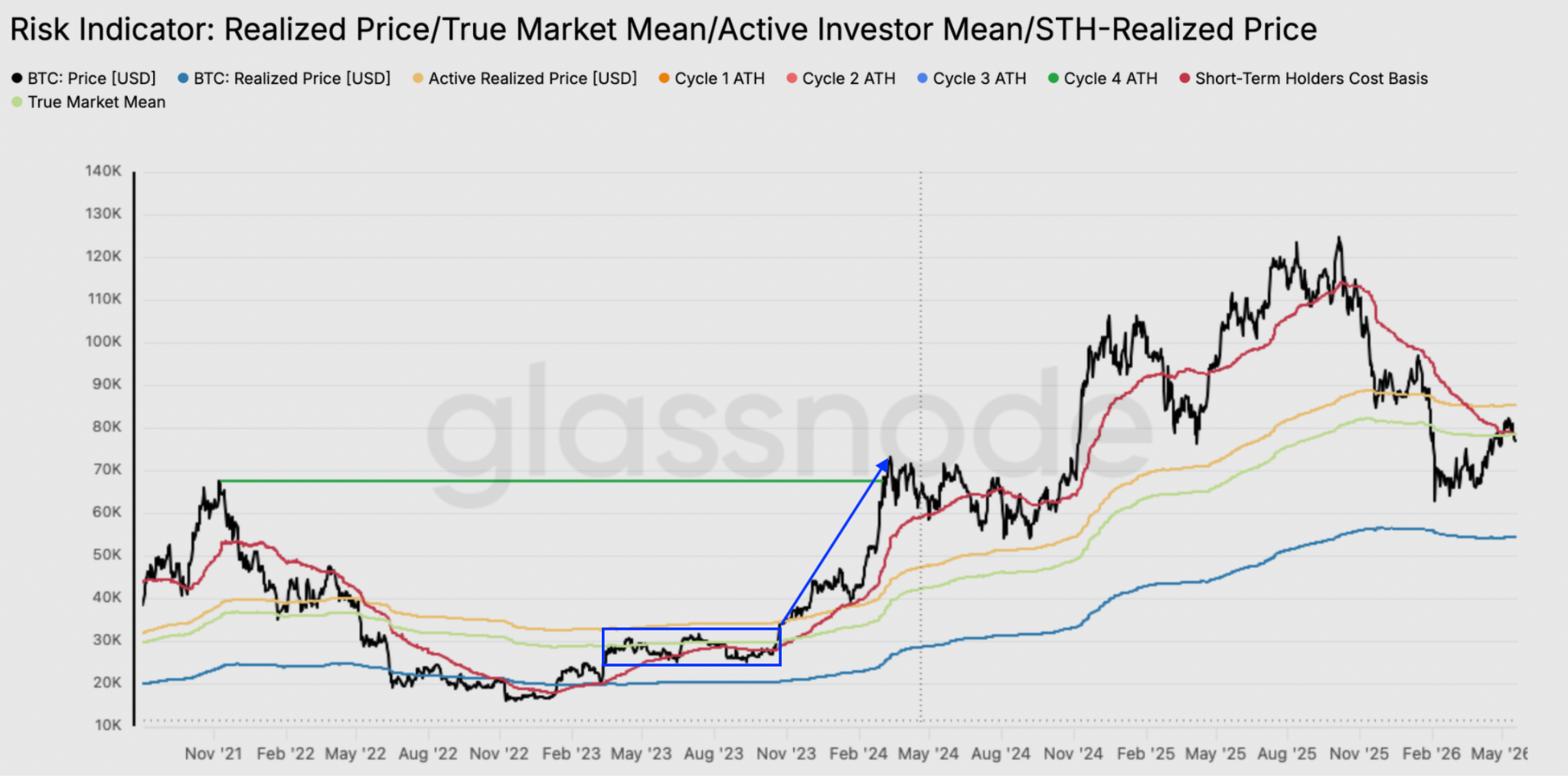
Bitcoin risk indicator. Source: Glassnode
Glassnode added:
“Any deeper correction from current levels would therefore reframe the recent rally as a local top within the ongoing bear market, a structure that has recurred multiple times in prior cycles and remains the higher probability outcome until price demonstrates sustained follow-through.”
Other analysts have highlighted weaknesses in Bitcoin’s market, including fading momentum, declining retail investor activity, aggressive selling in the futures markets and a weakening technical structure, putting BTC at risk of dropping to as low as $65,000 over the next few weeks.
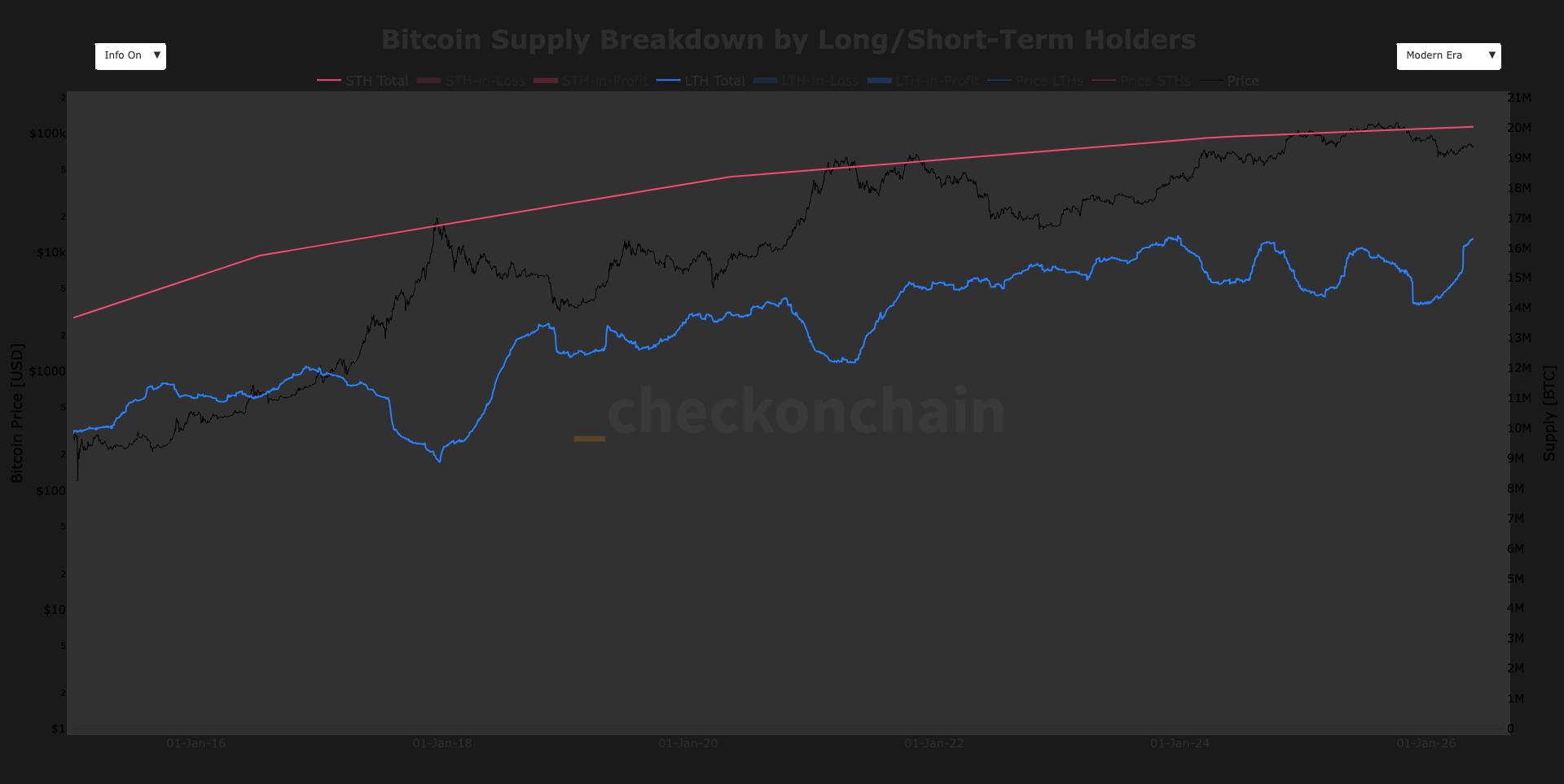

Bitcoin’s long-term holder (LTH) supply is approaching all-time highs. Currently, 16.3 million BTC is held by this cohort, defined as investors who have held bitcoin for at least 155 days.
LTH supply has increased from 14.12 million BTC around the time of bitcoin’s record high above $126,000 in October, to the current 16.3 million BTC. In the past month alone, LTH supply has risen by roughly 200,000 BTC.
The only other time LTH supply was higher was in January 2024, when it reached 16.4 million BTC ahead of the U.S. spot bitcoin ETF launch, one of the most anticipated events in bitcoin’s history. In the months that followed, nearly 2 million BTC was distributed by this cohort as bitcoin rallied.
Typically, during periods of price weakness or full bear market conditions, long-term holders, often viewed as the smarter money, begin increasing exposure after divesting during the previous bull market. During both the 2015 and 2019 bear markets, LTH supply increased as investors accumulated during price weakness.
However, since the ETF launch in January 2024, LTH supply has largely fluctuated between 14 million and 16 million BTC. Now, it appears to have broken out of a 2.5-year downtrend, suggesting long-term holders are once again accumulating rather than distributing during bitcoin’s depressed price levels.
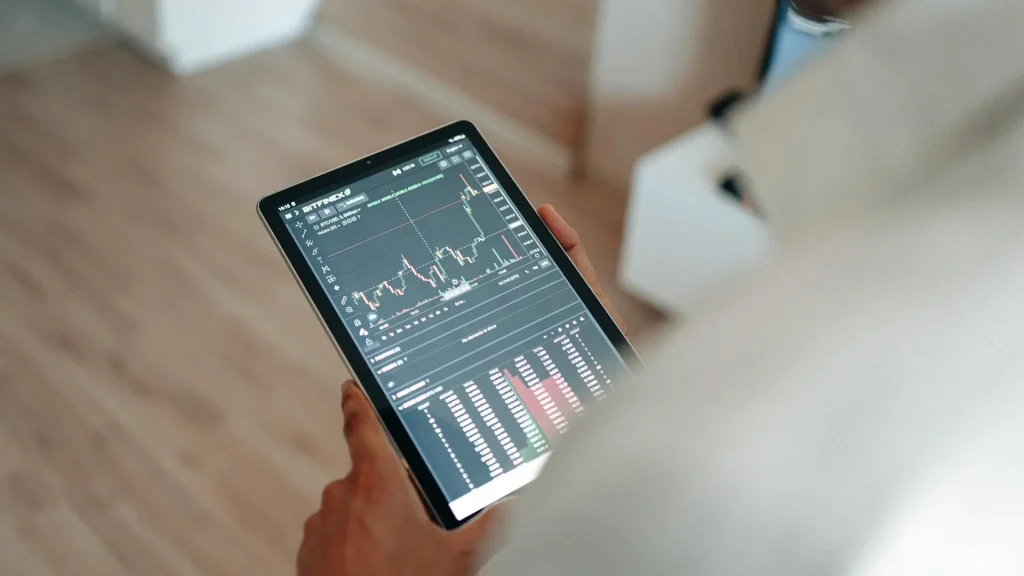
A single block trade on Deribit just sold 1.5 million Ripple XRP call and put contracts at the $1.40 strike, collecting $224,500 in premium and effectively declaring that XRP goes nowhere through June 26. The trade is structured as a short strangle bet on no volatility. Whether it is a correct bet or not, it would create a mechanical gravitational pull on the spot price.
XRP has already been pinned under $1.40 while derivatives activity explodes, and this trade adds structural weight to that ceiling.
DISCOVER: 15+ Upcoming Listings to Watch in 2025
Delta Hedging Mechanism to Pin Ripple
As XRP drifts above $1.40, market makers who are long calls accumulate positive delta and sell spot or perpetuals to neutralize it. As XRP dips below $1.40, its long puts generate negative delta, and they buy spot to rebalance. Both actions push the price back toward $1.40. The strike with the highest open interest concentration becomes the path of least resistance.

Selling 1.5 million contracts on each side creates a delta hedging overhang large enough to mechanically suppress volatility for weeks. XRP’s 30-day realized volatility has been printing in the mid-20% to low-30% annualized range since March 2026, while at-the-money implied volatility for one- to two-month maturities has stayed closer to the mid- to high-30s.
This structural IV premium is exactly the inefficiency this trade is harvesting, and the reason short-volatility strategies like strangles and straddles have attracted institutional trading interest in XRP options this year.
Discover: The best crypto to diversify your portfolio with
Institutional Behavior, the Clarity Act, and the Manipulation Question
Trades of this scale, single-block, OTC-negotiated, executed to avoid moving the tape, are institutional trading signatures. The structure implies a whale or a systematic volatility desk with enough conviction in XRP’s range to absorb unlimited downside risk in exchange for $224,500 in premium.
The tight reward-to-risk ratio only makes sense if the trader has high conviction that macro and regulatory noise won’t produce a decisive move.
However, the conviction could be tested. The Senate Banking Committee advanced the Clarity Act bill has now heads to a full Senate vote. Ripple’s chief legal officer Stuart Alderoty called the committee’s decision a “monumental outcome,” citing protection for 67 million American crypto holders.
— Money Ape (@TheMoneyApe) May 21, 2026
 SENATOR McCORMICK ON CLARITY ACT
SENATOR McCORMICK SAYS THE CLARITY ACT COULD REACH THE PRESIDENT’S DESK THIS SUMMER AS U.S. CRYPTO LEGISLATION MOVES FAST.
THE BIG QUESTION NOW IS, WHAT HAPPENS TO THE MARKET ONCE TRUMP PASSES THIS LAW? pic.twitter.com/JwEPwkT9LH
Ripple also received conditional OCC approval to establish the Ripple National Trust Bank, a development that makes XRP increasingly a U.S.-regulated institutional asset. Any of these catalysts, if they land with force, could break the $1.50 level and detonate the strangle.
The resolution window is defined: June 26. If the Clarity Act advances, if OCC approvals accelerate, or if macro volatility spikes before that date, we would likely see the pin break violently, and the trader who collected $224,500 in premium would face losses with no structural ceiling.
DISCOVER: 15+ Upcoming Listings to Watch in 2025
The post Ripple XRP Pinned as Massive Options Trade Bets Sideways Through June appeared first on Cryptonews.
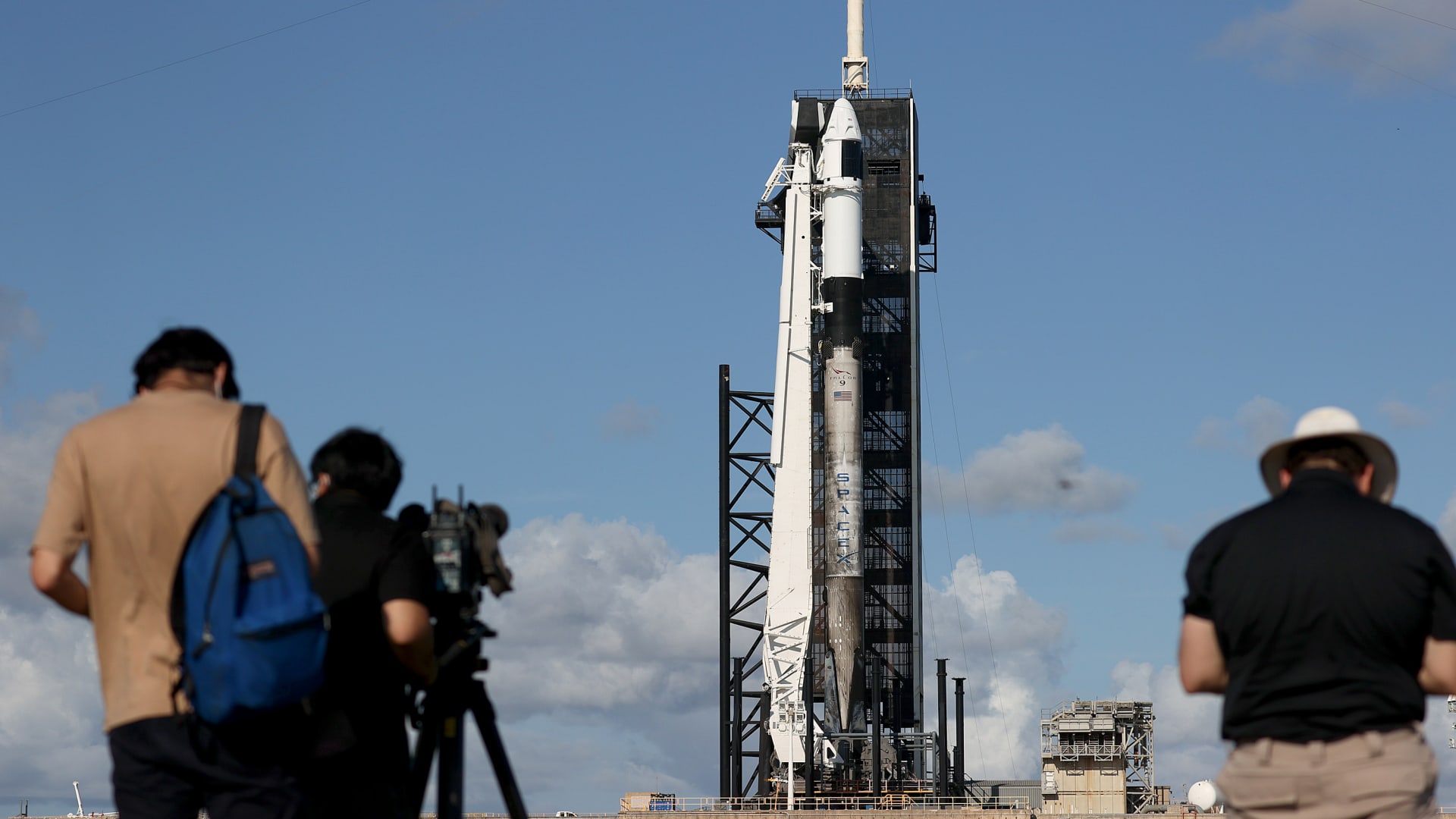
The SpaceX Falcon 9 rocket and Crew Dragon sit on launch Pad 39A at NASA’s Kennedy Space Center as it is prepared for the first completely private mission to fly into orbit on September 15, 2021 in Cape Canaveral, Florida.
Joe Raedle | Getty Images
Retail investors are getting a shot at one of the hottest IPOs in years.
Elon Musk’s SpaceX said a portion of shares in its blockbuster public offering will be sold directly through trading platforms including Robinhood, Fidelity and Charles Schwab, giving everyday traders access that has traditionally been reserved for Wall Street’s biggest clients, according to a prospectus with the Securities and Exchange Commission released Wednesday.
The move marks a departure from the traditional IPO process, where retail investors often receive limited allocations and typically end up buying shares only after trading begins, sometimes at sharply higher prices. SpaceX said retail buyers on those platforms would receive shares at the same IPO price and at the same time as institutional investors and other large purchasers.
Musk’s rocket and satellite company officially unveiled plans this week to go public under the ticker SPCX on Nasdaq. The company confidentially filed with regulators in April, and CNBC previously reported that SpaceX is expected to begin a tour presenting its plans to investors — known as a roadshow — on June 8.
Founded in 2002, SpaceX has evolved from an ambitious rocket startup into one of the world’s most valuable private companies. The company became NASA’s primary launch partner after the retirement of the space shuttle program and has built businesses spanning reusable rockets, national-security and defense contracts and its Starlink satellite internet network.
The company’s constellation of roughly 10,000 satellites has become a major growth engine, while Musk has also expanded into artificial intelligence through xAI, adding another high-growth business line under the broader corporate umbrella.
For retail investors, access may still come with constraints.
SpaceX said purchases through the brokerage platforms will remain subject to each firm’s own requirements and terms. IPO share allocations are often limited, and demand for SpaceX could substantially outstrip available supply.
— CNBC’s Lora Kolodny and Jordan Novet contributed reporting.
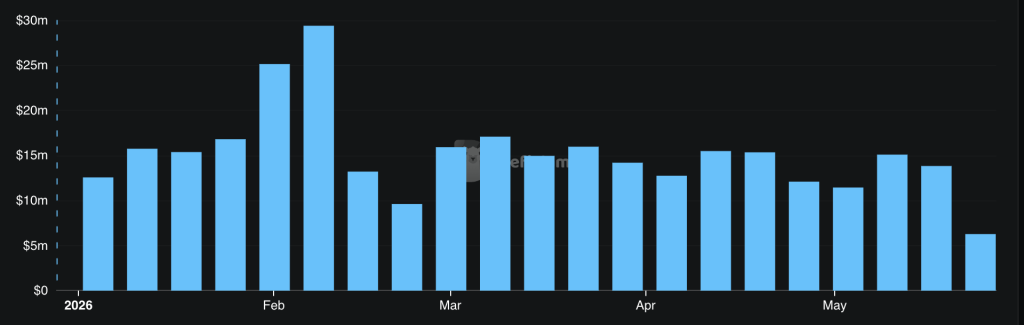
Hyperliquid’s fully diluted valuation has officially overtaken Solana’s, $50 billion to $56 billion, and the margin, however thin, is the market’s way of saying the ranking has changed.
The HYPE token is trading at $58.60, up 20% in 24 hours, while SOL managed just 2.20% on the same session.
That divergence in daily momentum is not noise. It is a directional statement from capital allocators who have spent the last 18 months watching a Perp DEX built on its own Mainnet dismantle the assumption that general-purpose L1s own the liquidity narrative.
Hyperliquid did not arrive here by accident. It launched a purpose-built L1 optimized for low-latency perpetual futures execution, captured institutional attention with sub-second finality, and then structured its token economics to funnel real protocol fees directly back to stakers, at yields that are currently outpacing Solana’s liquid staking derivatives by a meaningful spread.
Discover: The best crypto to diversify your portfolio with
Perp DEX Dominance: How Hyperliquid’s Fee Engine Actually Works, and Why DeFi Liquidity Concentration Is the Real Story
Hyperliquid is not a DEX bolted onto a general-purpose chain. It runs on its own L1, purpose-built for high-frequency derivatives execution, with taker fees of 0.045% and maker fees of 0.015% on perpetuals, meaningfully below what most centralized venues charge and structured to attract professional flow rather than retail speculation.
The result is a fee engine that has started producing numbers that force direct comparisons with Solana on-chain.
Data shows Hyperliquid surpassed Solana in 7-day protocol fees, $12.6 million versus Solana’s $11.8 million, a crossover that would have been dismissed as implausible 12 months ago.
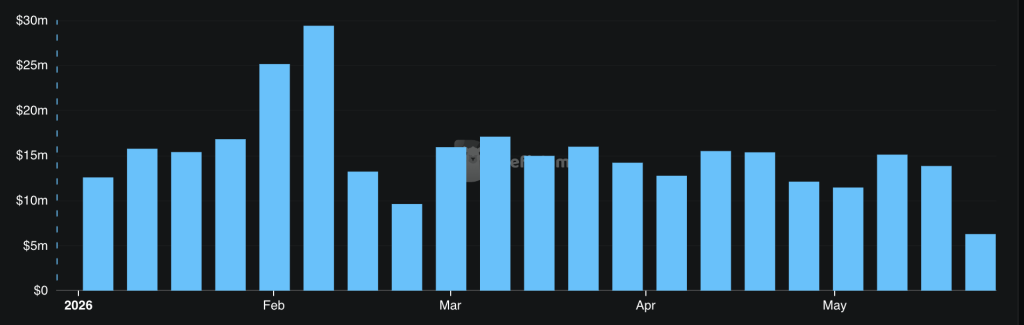
Artemis data puts Hyperliquid’s notional volume throughout 2025 at $26 trillion, scaling at a rate that has compressed years of typical DeFi adoption into a single cycle.
That ratio matters because it signals that DeFi liquidity on Hyperliquid is active and fee-generating, not passive capital sitting in yield farms waiting for an exit.
Solana vs. Hyperliquid: Where Each Chain Actually Stands Against the Other
The FDV crossover is real, but this comparison is not uniformly bullish for Hyperliquid across every dimension. Solana’s advantages are structural and deep.
The chain processes consumer applications, memecoins, payments infrastructure, and NFT settlement at a scale Hyperliquid has never targeted. Visa, PayPal, and Stripe are all settling on Solana, a fact that speaks to a breadth of institutional integration that a derivatives-first chain simply cannot replicate in the near term.
Amundi, Europe’s largest asset manager, has moved to put Solana in the same institutional allocation conversation as Ethereum and Bitcoin, and that institutional adoption story represents a capital channel that is largely independent of who wins the perps volume race.
Developer count, validator decentralization, and consumer app diversity all still favor Solana by a significant margin.
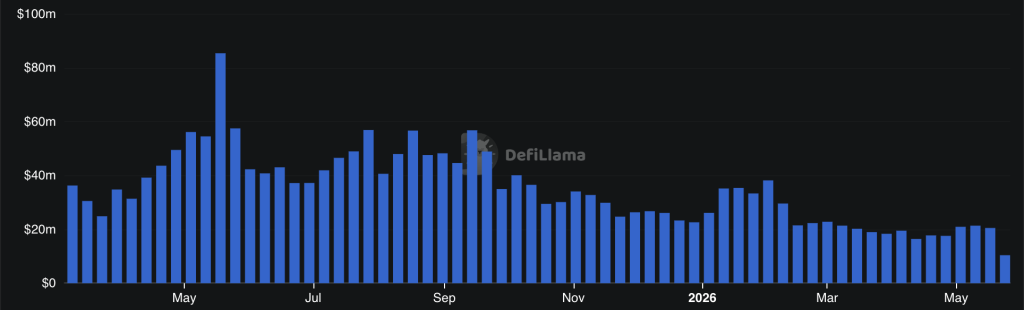
The backdrop is not uniformly bullish for Hyperliquid, however. Its app-specific L1 model creates concentration risk if perpetual sentiment turns or a competing perp infrastructure emerges at lower cost, Hyperliquid’s moat is narrower than Solana’s by design.
Jupiter and Drift on Solana are not standing still, and Solana’s own perp liquidity has been improving as trading activity is now a key battleground for chain relevance.
The structural implication for capital allocation is that these are increasingly different bets. Solana is a broad ecosystem play with institutional adoption across payments, consumer apps, and the wider competitive L1 landscape.
Hyperliquid is a concentrated bet on derivatives infrastructure capturing an outsized share of DeFi’s highest-margin activity. Both these can be simultaneously correct. They are not playing the same game.
Discover: The best pre-launch token sales
The post Hyperliquid vs. Solana: The Battle for ‘Liquidity King’ in 2026 appeared first on Cryptonews.

Key takeaways
- DOGE is up by nearly 1% and is now trading above $0.10.
- The rally comes as memecoins recorded gains amid the broader crypto market recovery.
Memecoins surge higher as market rebounds
Dogecoin (DOGE), Shiba Inu (SHIB), and Pepe (PEPE) are extending their recovery on Thursday following recent corrections.
The positive performance comes as market sentiment helps lift major meme coins. Renewed optimism around a potential peace agreement between the United States and Iran has also contributed to the broader rebound across crypto markets.
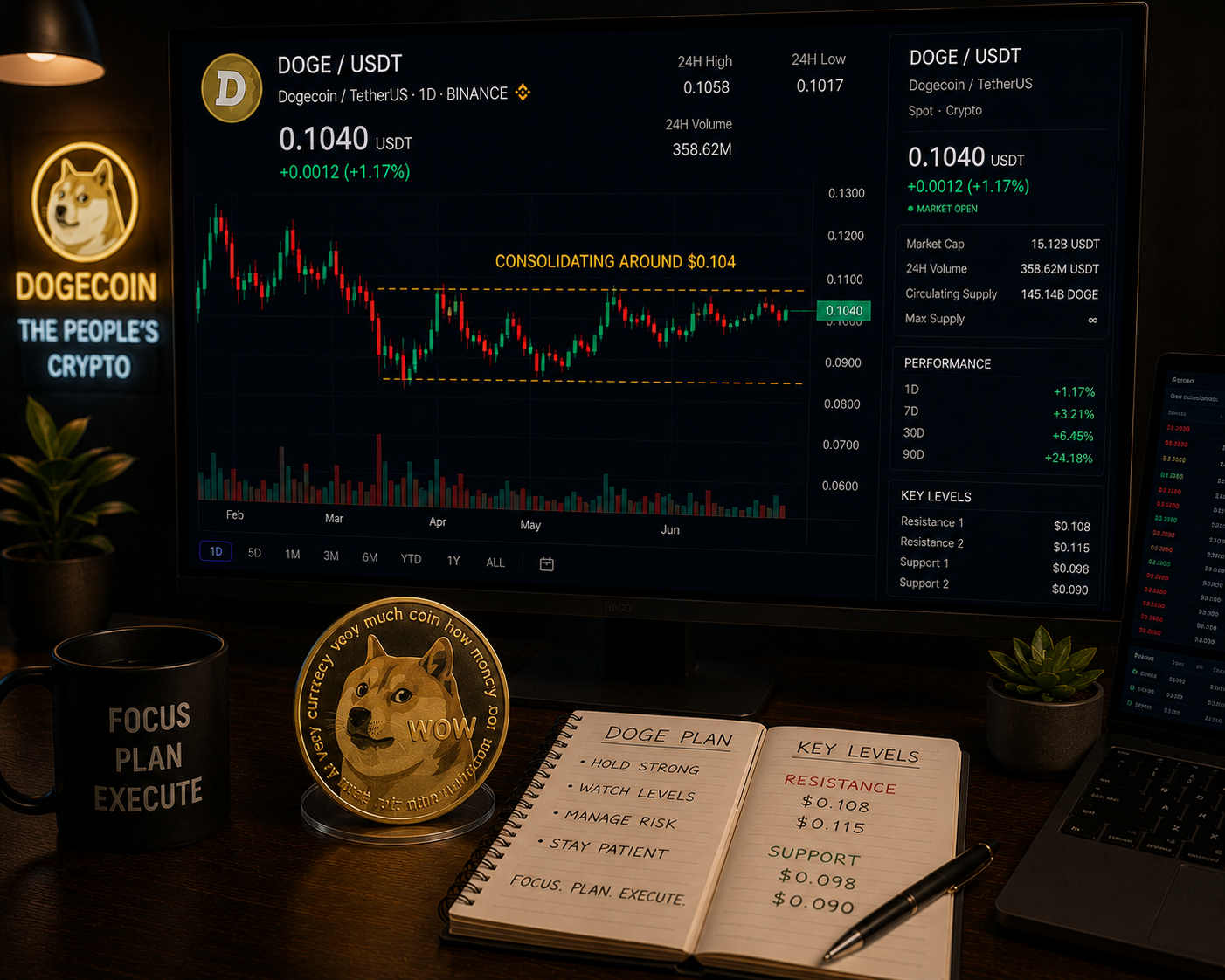
Dogecoin is showing a very strong technical structure after rebounding from a key support zone. The coin is now approaching a major moving average level that could determine its next directional move.
Dogecoin price outlook: DOGE rebounds from key support zone
The DOGE/USD 4-hour chart is bearish and efficient despite Dogecoin adding 1% to its value. The leading memecoin faced rejection at the weekly resistance level of $0.119 last week, triggering a decline of more than 11% through Tuesday.
However, it has now bounced back above $0.10 after retesting a key support area around the previous trendline breakout zone, which aligns with the daily support at $0.102,
At the moment, DOGE is approaching the 200-day Exponential Moving Average (EMA) at $0.106.
If the memecoin closes the daily candle above the 200-day EMA, it could strengthen its bullish momentum and open the path toward a retest of the $0.119 weekly resistance.
The momentum indicators suggest that the buyers are stepping in. The Relative Strength Index (RSI) is hovering near 43, indicating neutral conditions after the recent pullback.
Meanwhile, the Moving Average Convergence Divergence (MACD) remains in negative territory, suggesting that upside momentum is still fragile and could face resistance from overhead moving averages.

However, if the sellers return and DOGE drops below the $0.102 support, the bearish trend could push the price below the psychological level of $0.100.
Currently, DOGE remains in a short-term recovery phase, but traders are closely watching whether it can reclaim key technical levels to confirm a stronger bullish continuation.


Boerse Stuttgart Group’s Seturion has added Societe Generale, SG-FORGE and flatexDEGIRO to expand blockchain-based securities settlement across Europe.
Summary
- Boerse Stuttgart’s Seturion added SocGen, SG-FORGE and flatexDEGIRO for blockchain-based securities settlement across Europe.
- SG-FORGE will provide EURCV and USDCV stablecoins for settlement under the new Seturion partnership.
- Related reports show European banks are racing to build MiCA-ready stablecoin and tokenization rails.
The May 21 announcement said Seturion will provide settlement for tokenized securities transactions between the partners. The platform is part of Boerse Stuttgart Group and is designed as an open settlement network for banks, brokers and trading venues.
Seturion will support public and private blockchains. It will also allow settlement against onchain money, including MiCA-compliant stablecoins, and central bank money. Boerse Stuttgart said Nasdaq’s European trading venues will also connect to Seturion.
SocGen and SG-FORGE join tokenized securities plan
Societe Generale plans to issue tokenized structured securities through Seturion. These products include turbo warrants and investment certificates, which are expected to trade on European venues connected to the settlement platform.
SG-FORGE, Societe Generale’s crypto-asset unit, will provide its euro and dollar CoinVertible stablecoins for settlement. The release describes SG-FORGE as the first MiCA-compliant stablecoin issuer backed by a major European bank.
Jean-Marc Stenger, CEO of SG-FORGE, said the company aims to connect digital assets with traditional finance. He said “reference MiCA-compliant stablecoins” can help enable secure onchain settlement.
flatexDEGIRO brings retail investor flow
FlatexDEGIRO will connect its European retail investor flow to Seturion. The online broker serves more than 3.5 million customers across 16 countries and processed more than 75 million securities transactions in 2025.
The move gives Seturion access to retail trading activity tied to Societe Generale’s tokenized structured securities. It also gives flatexDEGIRO a role in testing how tokenized products can move through regulated European market pipes.
Europe’s stablecoin race adds pressure
The Seturion deal comes as European financial firms push deeper into stablecoins and tokenized finance. Related reports show Qivalis expanded to 37 member institutions after adding 25 banks across 15 countries ahead of its planned euro stablecoin launch in the second half of 2026.
Separate market coverage noted that dollar stablecoins still account for nearly all global stablecoin supply. Non-dollar stablecoins reached $771 million by April 2026, but held only 0.24% of the market. That gap keeps pressure on European firms to build deeper euro-denominated digital finance rails.
SG-FORGE has also expanded CoinVertible beyond Seturion. Earlier coverage said the firm deployed EURCV and USDCV on Canton Network for institutional collateral management and repo finance use cases.
For Boerse Stuttgart, the new partners bring issuers, stablecoin settlement and retail order flow into one structure. The project now gives Europe another test case for blockchain securities settlement under regulated market conditions.
Ripple has secured a spot in yet another prestigious ranking and locked in a new strategic partnership.
Meanwhile, its native token, XRP, is down 4% for the week, but the solid institutional interest suggests bearish pressure may soon ease.
In the Spotlight… Again
Just a few days ago, CNBC, the American business news channel, published its updated list of the top 50 disruptor companies for 2026. The ranking includes the most innovative, fast-growing, and industry-shaping firms worldwide, and Ripple was placed 16th.
On its way up, it has leapfrogged well-known names such as Canva, Samsara Eco, Harvey, Revolut, and more. Anthropic holds the first position, followed by OpenAI and Databricks.
Earlier in May, Ripple was also included among the top 10 entities on the Prime Unicorn Index. It was ranked sixth with a valuation of over $26 billion, while SpaceX (valued at more than $1.2 trillion) is the undeniable leader.
The index tracks the performance of US private companies worth over $1 billion. It serves as a benchmark for financial products tied to high-growth firms and includes 232 entities with a combined valuation exceeding $3.4 trillion.
The Latest Partnership
Ripple Prime (the company’s institutional-grade prime brokerage platform) recently collaborated with EDX Markets and EDX International. The development allows the entities’ clients to access EDX’s spot and perpetual futures liquidity for cryptocurrencies within a “unified, capital-efficient” framework. Speaking on the matter was Michael Higgins, International CEO of Ripple Prime:
“Building the next generation of prime brokerage requires partnering with venues that provide a secure, liquid bridge between traditional and digital markets. EDX is institutional-grade and delivers the performance, reliability, and depth that our clients expect.”
Additionally, the partnership lays the groundwork for the future integration of Ripple’s stablecoin RLUSD. Prior to that, the company secured a $200 million debt facility with Neuberger Specialty Finance. The new capital will enable Ripple Prime (formerly known as Hidden Road) to scale its platform and serve more institutional clients.
Green ETF Days
The spot XRP ETFs have enjoyed strong interest lately. SoSoValue’s data show that millions of dollars have flowed into these products over the past weeks, with the latest red day on April 30. In comparison, spot BTC and ETH ETFs have been bleeding recently.

This means that institutional investors (pension funds, hedge funds, and others) have increased their exposure to Ripple’s cross-border token, thereby setting the stage for a possible price recovery.
The issuers behind these products include heavyweights like Canary Capital, Bitwise, Franklin Templeton, Grayscale, and 21Shares. Collectively, they’ve brought in almost $1.4 billion in net inflows since debuting.
XRP Remains in Red Territory
Despite the advancement on the ETF front, Ripple’s native token is down about 4% for the week and is currently worth $1.36 (according to CoinGecko). However, that hasn’t stopped many analysts from making bullish predictions.
Recently, X user CoinForge argued that XRP looks “insane” and stands at a critical level that previously sent it up 700%. For their part, JAVON MARKS opined that the asset is still “holding broken out” against BTC and has the potential to outperform by nearly 800%.
The whale activity reinforces the bullish sentiment. Ali Martinez revealed that large investors have accumulated more than 71 million XRP over the last week. This shows that they might be positioning for a potential rally, which could encourage smaller players to hop on the bandwagon as well.
The post Ripple (XRP) News Today: May 21 appeared first on CryptoPotato.

Why Gilead Sciences Is Now A Hold (Rating Upgrade)

China-linked TRUMP treasury stock crashes 98% after wild buyout claim

Netflix’s Fan-Favorite Fantasy Series Unleashes the Fire Nation in Explosive New Trailer


-

 Crypto World6 days ago
BloFin War of Whales 2026 Grand Prix opens registration for $5M trading championship
-

 Fashion6 days ago
Weekend Open Thread: Theory – Corporette.com
-

 Crypto World6 days ago
E-Estate Announces 1 Year Live: Washington DC Summit as Real Estate Tokenization Enters Its Next Phase
-

 Tech6 days ago
Tech Moves: Microsoft AI leader jumps to OpenAI; former AI2 exec joins Meta; and more
-

 Tech6 days ago
Google reimburses Register sources who were victims of API fraud
-
 Crypto World7 days ago
Google’s Gemini AI Predicts Incredible Solana Price by the End of 2026
-

 Business6 days ago
H&R Real Estate Investment Trust (HR.UN:CA) Q1 2026 Earnings Call Transcript
-
 Entertainment7 days ago
Zara Larsson Has Blunt Response To Chris Brown Diss
-

 Sports6 days ago
Napoleonic enters 2026 Doomben 10,000 field via Abounding withdrawal
-

 Crypto World6 days ago
BeInCrypto 100 Institutional Awards Nomination: KAST for Best Digital Assets Neobank and Best Digital Assets Fintech
-
 Crypto World6 days ago
Bitcoin Battles US Bond Nerves With BTC Price Dip Toward New May Lows
-

 Fashion4 days ago
On the Scene at Gucci’s Cruise Show in New York City: Mariah Carey, Kim Kardashian, Lindsay Lohan, Iman, and More!
-
 Crypto World6 days ago
Wall Street’s Boldest Gold Prediction Has Russians Rushing to Buy
-

 Crypto World6 days ago
ICE and CME urge US regulators to curb Hyperliquid energy trading
-

 Politics7 days ago
DWP PIP Timms review continues to be an absolute farce
-

 Crypto World6 days ago
IREN closes $3 billion convertible notes deal amid AI infrastructure expansion
-

 Fashion5 days ago
Trending Western Style Vests Perfect for Summer
-

 Entertainment6 days ago
David Letterman Returns to Late Show, Blasts Cancellation
-
 Crypto World7 days ago
Lido Finance Selects Chainlink CCIP as the Official Cross-Chain Infrastructure for wstETH Security
-

 Fashion4 days ago
Amazon Sundays: Memorial Day Hosting
You must be logged in to post a comment Login